Plant Life Cycle Worksheet: Cut and Paste the Stages!
This worksheet helps children ages 3-5 learn the different stages of a plant's life cycle, from seed to sprout to full-grown plant, by coloring each stage and then cutting and pasting the pictures in the correct sequential order. Sequencing the stages builds early scientific reasoning about growth and change over time, a concept children can also observe in themselves.
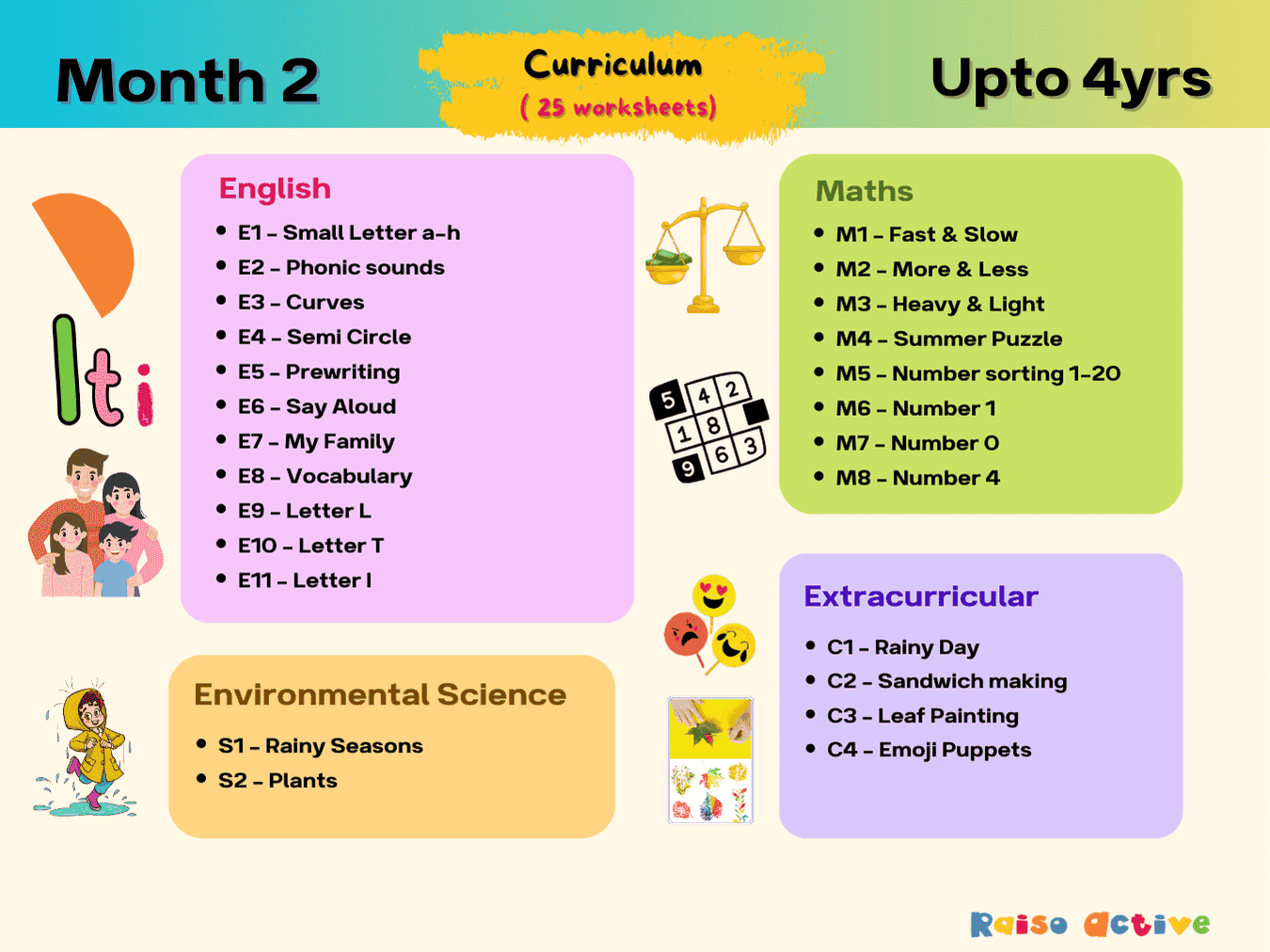
Part of the pack
Month 2: Learning & Development | Ages Up to 4
This is page 24 of the pack. Ages 3-4 · PreschoolAges 3-4 · NurseryAges 3-4
Curriculum
- Living Things - Plants > Plant Life Cycles
How to use this worksheet
Look at each stage of the plant life cycle together and talk about what's happening at each point, from a seed in the soil to a plant with flowers. Have your child color each stage's picture. Then help them cut out the individual stage pictures at the bottom of the page. Have your child paste the pictures in the correct growth order into the 'Paste here' box, checking the sequence together once finished.
Materials needed
- Pencil
- Crayons
- Scissors
- Glue
Extension activities
- 1Draw your own plant life cycle from memory, using the worksheet as a check afterward.
- 2Plant a real seed in a cup or garden and observe and record its growth over several weeks.
- 3Make a plant life cycle wheel using a paper plate divided into stages.
- 4Read a book about how plants grow and compare it to the stages shown on the worksheet.

Written by
Hemsweta Jain · Teacher Cheena
MBA and Early Childhood Educator, teaching since 2014 · Founder of RaisoActive, Mumbai
Every RaisoActive worksheet is designed and checked by the founder before publishing.
Published · Last reviewed
More from Month 2: Learning & Development | Ages Up to 4

Fast and Slow Sorting Worksheet for Preschoolers
Ages 3-5 · Preschool–Pre-KAges 3-5 · Nursery–ReceptionAges 3-5 · Nursery–LKGAges 3-5
This worksheet introduces the comparative concept of fast versus slow by having children sort pictures of animals, vehicles, or people into two categories based on speed. For three- to five-year-olds, sorting by a comparative quality like speed — rather than a fixed trait like color or shape — builds early reasoning skills, since children have to think about how something moves, not just what it looks like.

Small Letter a-h Matching Worksheet for Preschoolers
Ages 3-5 · Preschool–Pre-KAges 3-5 · Nursery–ReceptionAges 3-5 · Nursery–LKGAges 3-5
This worksheet builds lowercase letter recognition for a through h by having children match each letter to a picture whose name starts with that sound. For three- to five-year-olds, focusing on lowercase forms specifically matters because most of the text children encounter in books is written in lowercase, making this recognition more directly useful for early reading than uppercase alone.

Pre-Writing Practice: Trace the Lines and Shapes Worksheet
Ages 3-5 · Preschool–Pre-KAges 3-5 · Nursery–ReceptionAges 3-5 · Nursery–LKGAges 3-5
This worksheet builds pre-writing skills by having children trace a variety of lines and shapes — following dinosaurs, marbles, skateboarders, and cars along their paths — which develops the hand-eye coordination and pencil control needed before formal letter writing begins. For three- to five-year-olds, tracing varied line types like straight, curved, and zigzag paths builds the specific motor patterns that later show up in letter strokes like the curves in 'c' and 'o' or the straight lines in 'l' and 't.'

Fun Letter I & H Vocabulary Game Worksheet for Preschoolers
Ages 3-5 · Preschool–Pre-KAges 3-5 · Nursery–ReceptionAges 3-5 · Nursery–LKGAges 3-5
This board-game-style worksheet helps children ages 3-5 build vocabulary around the letters I and H by rolling a die, moving along a path, and generating additional words that share the same beginning sound as the picture they land on. Thinking of extra words on the spot pushes children beyond simple recognition into active word recall, a more advanced phonics skill.

Trace and Count: Learning the Number Zero Worksheet
Ages 3-5 · Preschool–Pre-KAges 3-5 · Nursery–ReceptionAges 3-5 · Nursery–LKGAges 3-5
This worksheet introduces the more abstract concept of zero by having children trace the numeral and then identify pictures showing an empty or 'zero' quantity, like a basket with no fruit or a jar with no candies. For three- to five-year-olds, zero is often trickier to grasp than other numbers since it represents an absence rather than a countable group, so tracing it alongside visual examples of 'nothing there' helps make the idea concrete.

Say Aloud and Match: Fun Worksheet for Young Learners
Ages 3-5 · Preschool–Pre-KAges 3-5 · Nursery–ReceptionAges 3-5 · Nursery–LKGAges 3-5
This worksheet builds sentence comprehension by having children listen to a full sentence and then find the picture that matches its meaning, rather than just recognizing individual words. For three- to five-year-olds, this task requires holding an entire sentence in mind and connecting it to a visual scene, an important early step toward reading comprehension beyond single-word recognition.

Trace the Letter T Worksheet: Practice Writing & Coloring Fun!
Ages 3-5 · Preschool–Pre-KAges 3-5 · Nursery–ReceptionAges 3-5 · Nursery–LKGAges 3-5
This worksheet builds recognition and formation of the letter T through guided tracing and by identifying pictures of words that start with T, like 'tiger' or 'turtle.' For three- to five-year-olds, the letter T's simple cross-shaped stroke — one straight line down, one straight line across — makes it a good letter for practicing controlled, confident pencil strokes.

Phonics Fun: Beginning Sound Circle Worksheet for Kids
Ages 4-5 · Pre-KAges 4-5 · ReceptionAges 4-5 · LKGAges 4-5
This worksheet builds phonemic awareness by having children say a picture's name aloud and then circle the letter that makes its beginning sound from a set of options. For four- and five-year-olds, choosing the correct letter from several choices is a step up from simply naming a letter, since it requires isolating just the first sound in a word and matching it to a specific written symbol.
Related worksheets

Plant Life Cycle Worksheet: Cut and Paste the Stages!
Ages 4-6 · Pre-K–KindergartenAges 4-6 · Reception–Year 1Ages 4-6 · LKG–UKGAges 4-6
Children ages 4-6 learn the sequential stages of a plant's life cycle — from seed to sprout to full-grown flower — by cutting out and correctly ordering picture cards. Understanding that living things grow through a fixed, predictable sequence is an early science concept that also reinforces sequencing and ordering skills useful well beyond biology.

Lifecycle Circle Book: Cut & Paste Activity for Preschoolers
Ages 3-5 · Preschool–Pre-KAges 3-5 · Nursery–ReceptionAges 3-5 · Nursery–LKGAges 3-5
Building this circle book helps children ages 3-5 understand that a plant's life cycle is a repeating loop rather than a straight line — a seed grows into a sprout, then a mature plant, which produces seeds of its own to start the cycle again. Cutting out and assembling the circles in order also develops scissor control and hand-eye coordination. Framing the plant's growth as a 'book' gives children a tangible object they can flip through to retell the sequence in their own words.
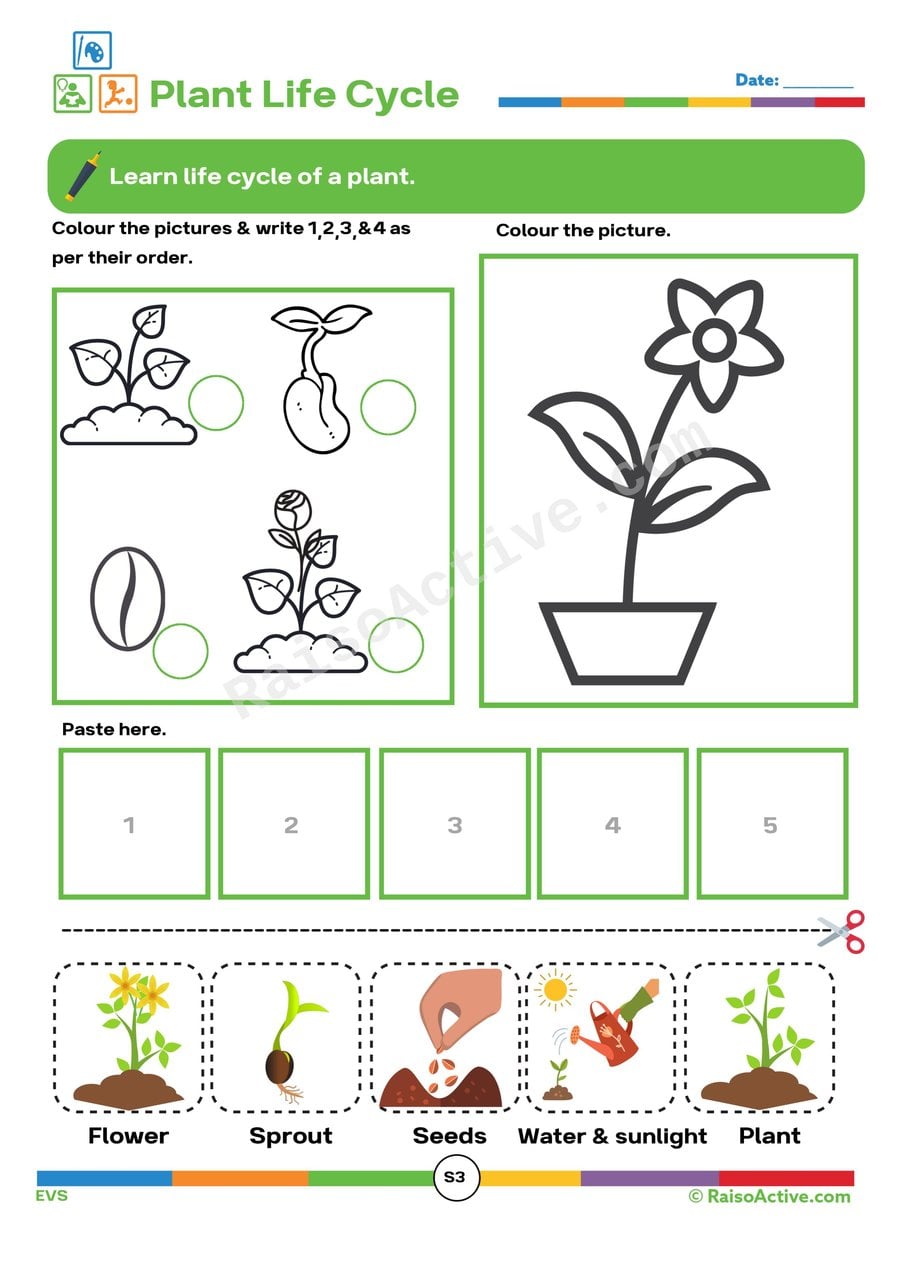
Plant Life Cycle Worksheet: Learn and Color!
Ages 3-5 · Preschool–Pre-KAges 3-5 · Nursery–ReceptionAges 3-5 · Nursery–LKGAges 3-5
Sequencing the stages of a plant's life cycle — from seed to sprout to full-grown flower — introduces children ages 3-5 to the science concept that living things grow and change in a predictable order over time. Numbering the stages before coloring also builds early sequencing and observation skills, since children must look closely at each picture to judge which comes before the next.
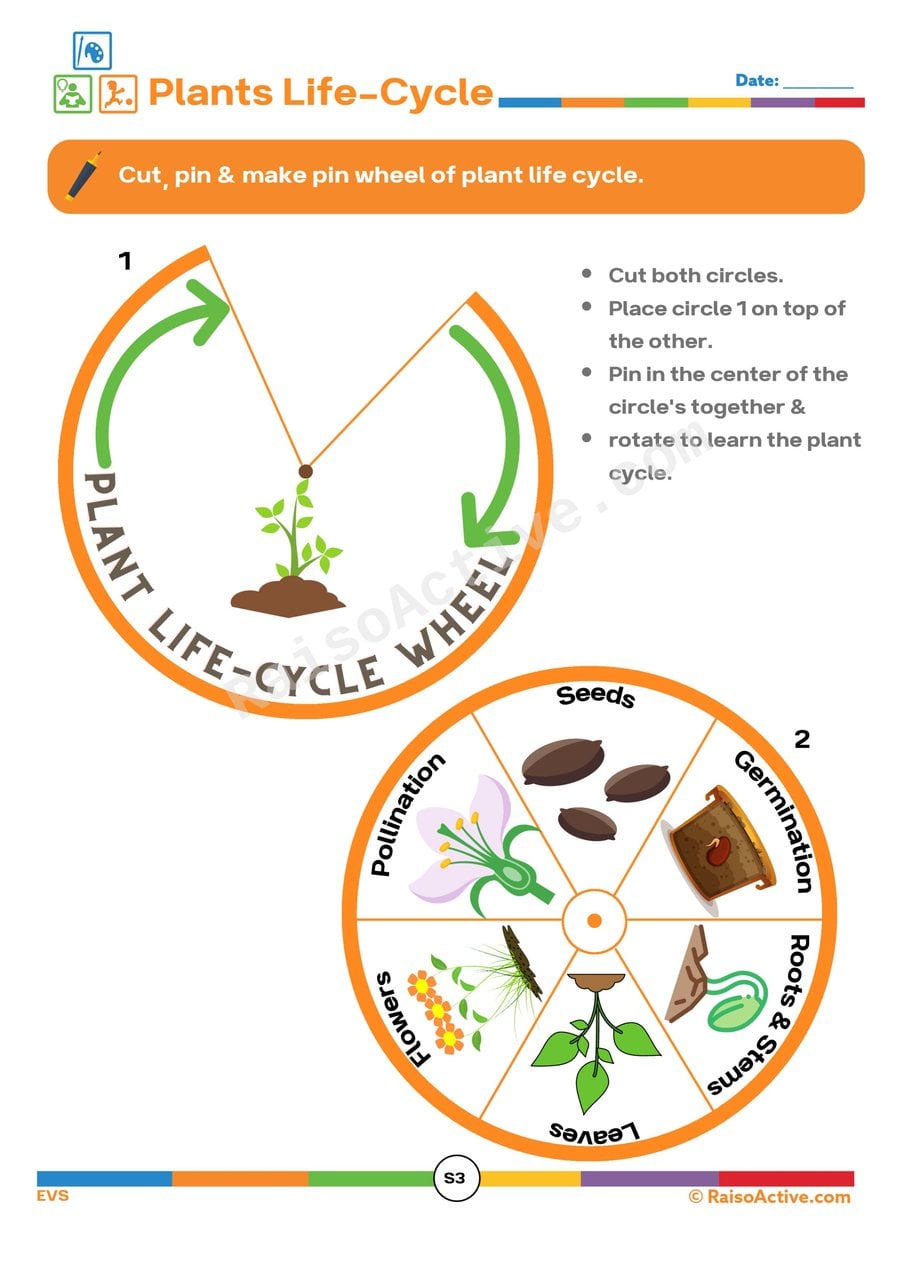
Plant Life Cycle Wheel: Cut, Pin & Learn!
Ages 4-6 · Pre-K–KindergartenAges 4-6 · Reception–Year 1Ages 4-6 · LKG–UKGAges 4-6
Building a spinning wheel that shows a plant's life cycle helps children ages 4-6 understand that growth happens in a repeating sequence of stages — seed, sprout, growing plant, flower — rather than as a single instant event. This hands-on 3D craft turns an abstract scientific process into something children can physically rotate and observe, which suits how young learners grasp sequence and cause-and-effect best. Assembling the two-circle wheel with a paper fastener also builds fine motor precision beyond typical flat cut-and-paste tasks.
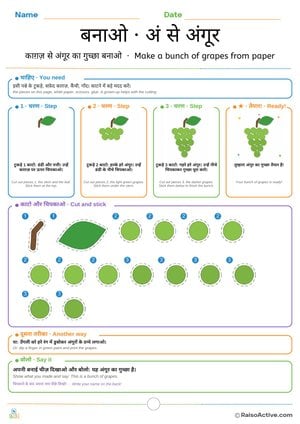
Make a Bunch of Paper Grapes: Hindi Letter अं (am) Cut and Stick Craft | बनाओ · अं से अंगूर
Ages 4-7 · Pre-K–Grade 1Ages 4-7 · Reception–Year 2Ages 4-7 · LKG–Class 1Ages 4-7
Children cut out the numbered pieces and stick them in order to make a bunch of grapes from light and dark green circles, then show it and say a full sentence about it. It links the letter अं with a real picture word, अंगूर, and practises scissor control and following steps.
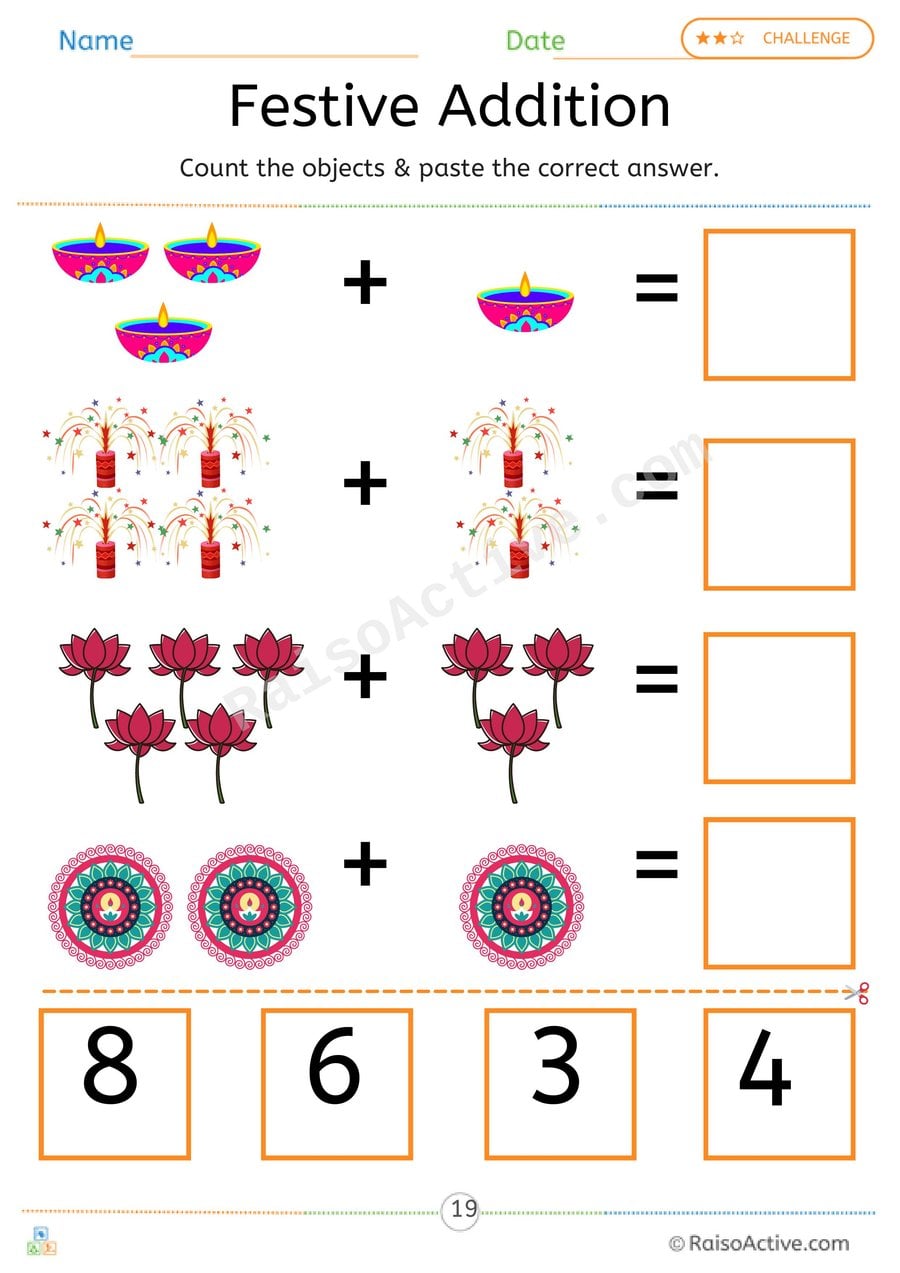
Festive Math: Count and Add Objects Worksheet
Ages 4-8 · Pre-K–Grade 2Ages 4-8 · Reception–Year 3Ages 4-8 · LKG–Class 2Ages 4-8
Children count festive objects in each picture sum, add the two groups and paste the right answer card, practising addition within 10.

Rocking Santa Card Craft Worksheet for Preschoolers
Ages 3-5 · Preschool–Pre-KAges 3-5 · Nursery–ReceptionAges 3-5 · Nursery–LKGAges 3-5
This rocking Santa card craft has children ages 3-5 cut out individual shape pieces and assemble them onto a folded card base, combining scissor control with an early understanding of how folding creates movement, since the 'rocking' effect comes from the card's fold. Following the assembly steps in order also reinforces sequencing and attention to visual instructions.
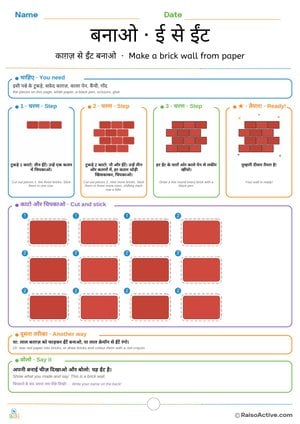
Make a Paper Brick Wall: Hindi Letter ई Craft | बनाओ · ई से ईंट
Ages 3-7 · Preschool–Grade 1Ages 3-7 · Nursery–Year 2Ages 3-7 · Nursery–Class 1Ages 3-7
Children cut out the pieces, put them together following three step pictures and make a paper brick wall. Saying the word ईंट as they make it links the sound ई to something they built themselves.
Guides for this topic

Coding Activities for Preschoolers: Building Tomorrow's Thinkers Today
Discover 15+ unplugged and screen-based coding activities for preschoolers that build sequencing, logic, and problem-solving skills through play. NEP 2020 aligned.

Discovering Wonder: Nature-Based Learning Activities That Captivate Young Children
Explore nature-based learning activities for children ages 2–7 — leaf rubbings, bug hunts, nature journals, and seasonal Indian outdoor ideas that spark wonder.

Christmas and Winter Activities That Combine Fun and Learning: Creating Magical Educational Experiences
Discover Christmas and winter activities that combine festive fun with real learning. Crafts, counting, literacy, and printable worksheets for ages 2 to 8 — perfect for home and school.
Reviews
Every worksheet for ages 3–5, no watermark
Members download the full library of 1,000+ worksheets and every activity pack without watermarks or daily limits. One year costs ₹999 in India or $20 elsewhere.
See membership plansOr download any worksheet free with a watermark (5 a day).