
Trace and Count: Learning the Number Zero Worksheet
This worksheet introduces the more abstract concept of zero by having children trace the numeral and then identify pictures showing an empty or 'zero' quantity, like a basket with no fruit or a jar with no candies. For three- to five-year-olds, zero is often trickier to grasp than other numbers since it represents an absence rather than a countable group, so tracing it alongside visual examples of 'nothing there' helps make the idea concrete.
Part of the pack
Month 2: Learning & Development | Ages Up to 4Curriculum
How to use this worksheet
Have your child trace the number zero along the dotted lines. Next, look at the picture of fingers together and ask your child to count how many are raised, then circle the number that matches — which should be zero if none are raised. Have them circle the basket that has zero fruits in it, and finally, have them color the jar that has zero candies inside.
Materials needed
- Pencil
- Crayons
Extension activities
- •Have the child find other examples of zero around the house, like an empty cup or an empty box.
- •Ask the child to draw a picture that includes zero of something, like a plate with zero cookies on it.
- •Practice writing the number zero on a whiteboard or in a sand tray.
- •Compare a group with zero objects to a group with one or two objects, talking about the difference.
- •Play a simple game asking 'how many' of something you're holding, with the answer sometimes being zero.
Tips for parents and teachers
Encourage the child to say the number zero aloud while tracing and counting, and expect it to take a bit more explanation than other numbers since 'nothing' is a more abstract idea than a countable group. Provide positive reinforcement for correct answers, and use plenty of real, visible 'empty' examples to make the concept land.

Written by
Hemsweta Jain · Teacher Cheena
MBA and Early Childhood Educator, teaching since 2014 · Founder of RaisoActive, Mumbai
Every RaisoActive worksheet is designed and checked by the founder before publishing.
Published · Last reviewed
Related worksheets
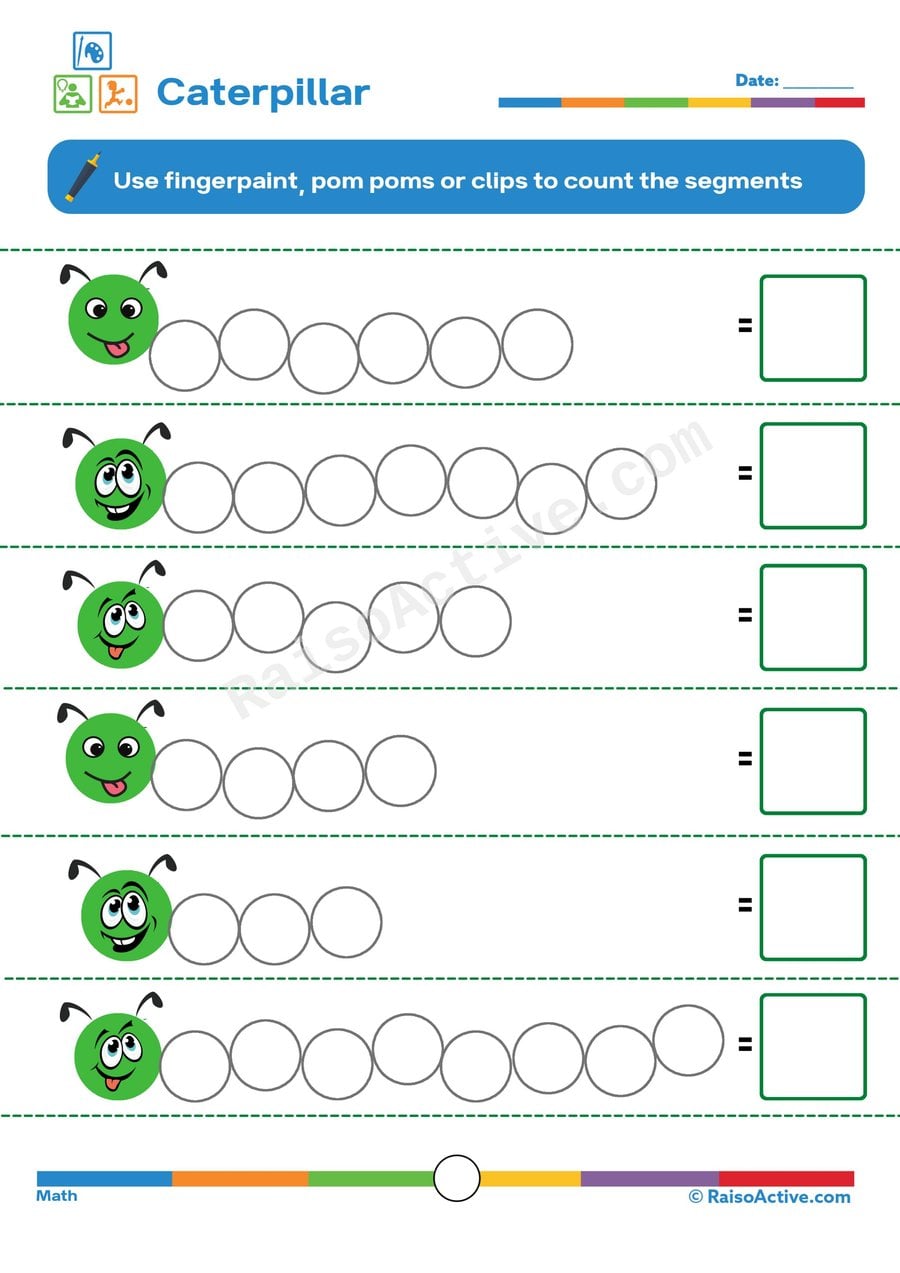
Caterpillar Counting Worksheet for Preschoolers
Counting the segments of each caterpillar teaches children ages 3-5 one-to-one correspondence — touching or marking each segment exactly once while saying a number — which is the core skill underlying accurate counting. Writing the final total in a box also connects the physical act of counting to its written numeral, reinforcing early number-writing practice.
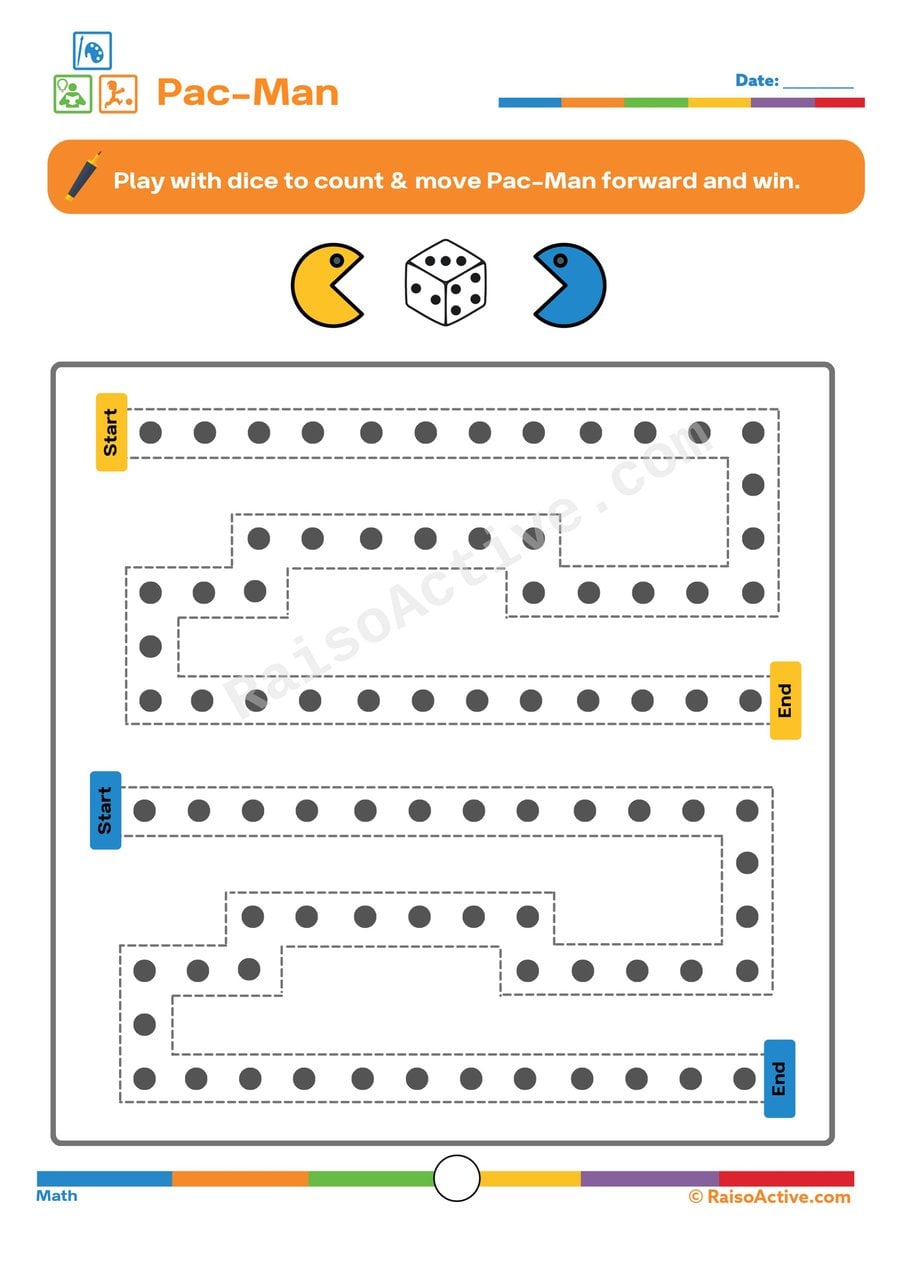
Pac-Man Maze Worksheet: Count and Move!
This dice-counting maze gives children ages 3-5 repeated practice matching a rolled number to the correct number of moves, reinforcing accurate counting under a bit of playful pressure. Tracking Pac-Man's current position after each roll also builds short-term spatial memory, since children must remember where they left off before moving again.
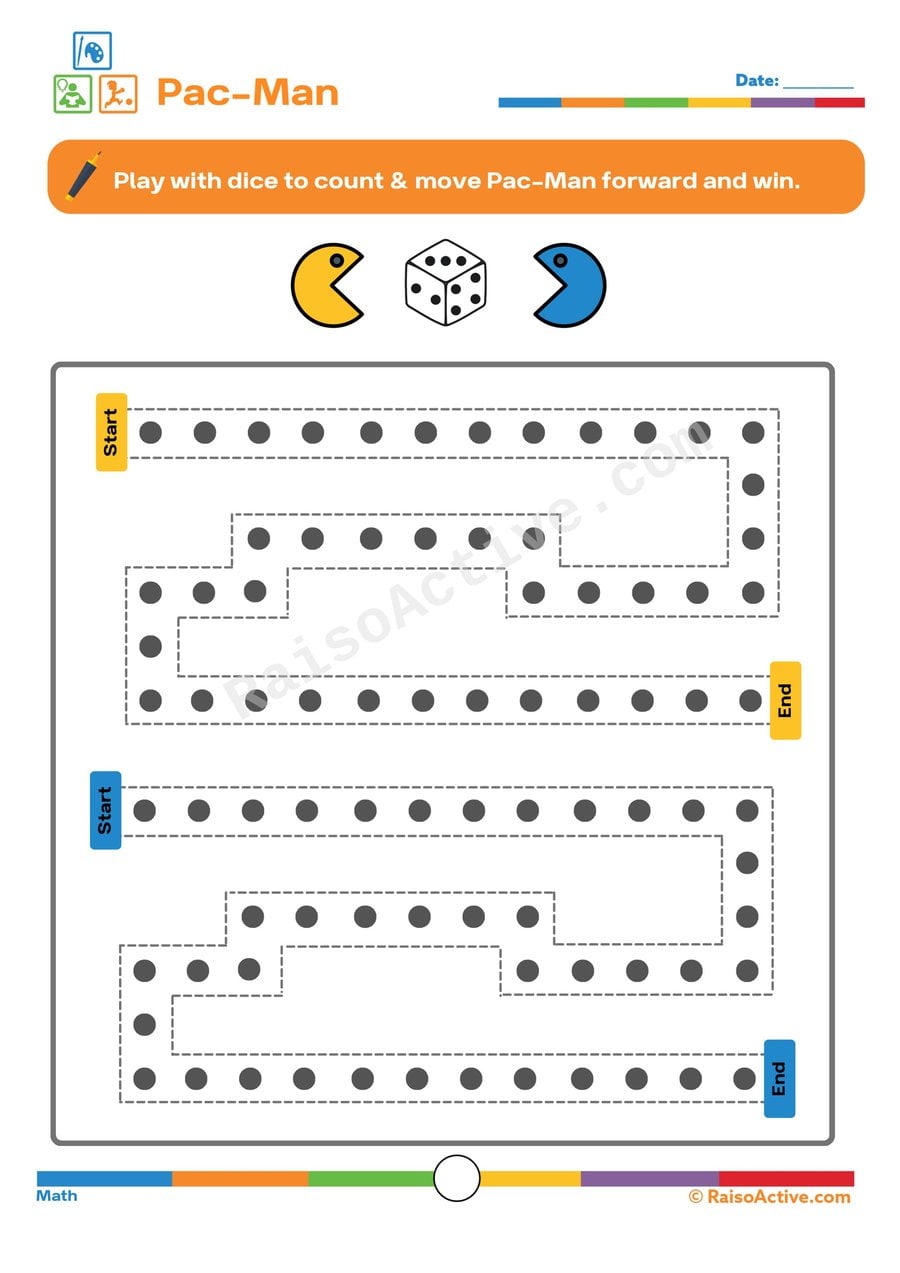
Pac-Man Maze Worksheet: Count and Move!
This dice-driven maze combines counting practice with path-following for children ages 3-5, since they must accurately count dots on a die before moving Pac-Man the matching number of spaces forward. Deciding how far to move and staying on the correct path also builds early strategic thinking, as children track their current position within the maze after each turn.
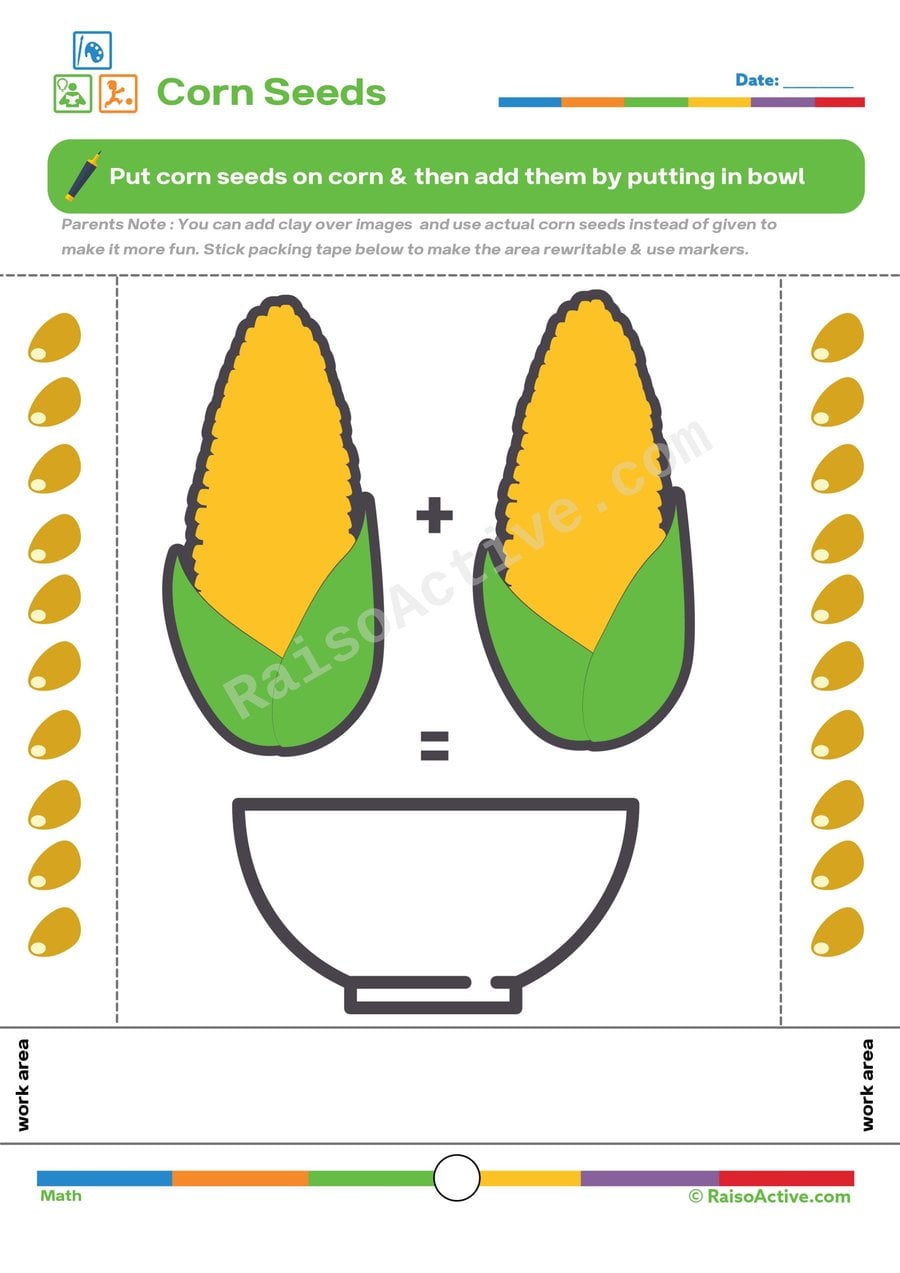
Corn Seed Addition Worksheet for Preschoolers
Counting corn seeds on two ears of corn and combining them into one total teaches children ages 3-5 the core concept of addition as joining groups together, using a concrete, countable image rather than abstract numerals alone. This worksheet also builds one-to-one correspondence, since accurate addition depends on touching or pointing to each seed exactly once while counting.
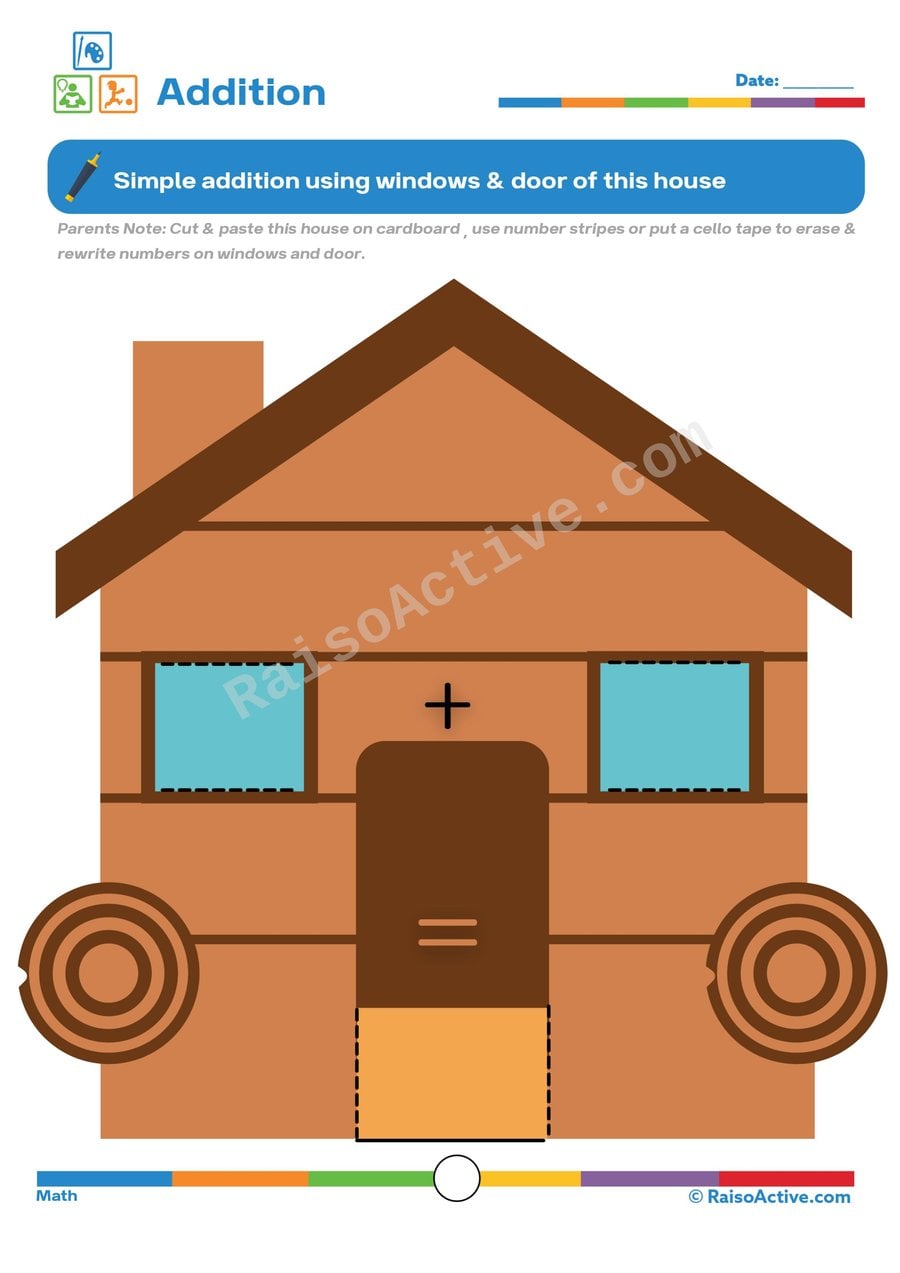
Addition House Worksheet for Preschoolers
This hands-on craft turns simple addition into a reusable game, as children ages 4-5 build a paper house with numbered windows and a door that can be changed with tape or number stripes. Physically swapping numbers to create new addition problems (like 2 windows + 1 door) helps children grasp that addition means combining separate groups into one total, rather than just memorizing facts.

Festive Math Fun: Counting and Addition Worksheet for Kids
Children ages 4-6 sharpen counting accuracy and practice basic addition using festive Christmas visuals, including a snowman scene where sums are recorded directly on its body. This worksheet also introduces subtraction-style thinking by having children count what remains after some objects are 'struck out,' giving an early, concrete preview of take-away math.
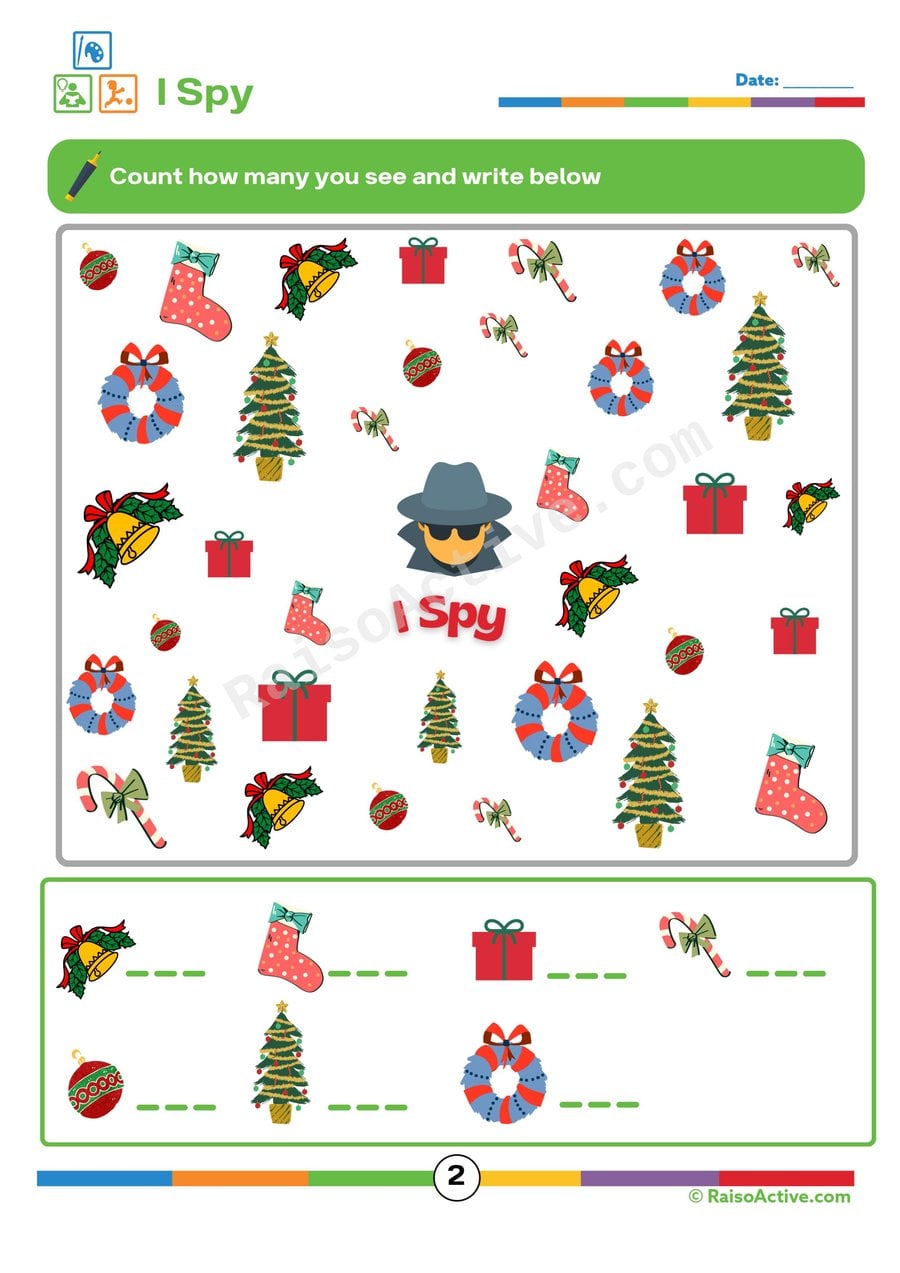
I Spy Christmas Worksheet: Count and Write!
This worksheet strengthens counting accuracy and number writing in children ages 3-5 as they search a busy Christmas scene for specific items and record how many they find. The 'I Spy' search format adds a visual scanning challenge on top of basic counting, since children must first locate every instance of an item scattered across the picture before counting it.

Spring Table Color by Number Worksheet for Preschoolers
This color-by-number worksheet has children ages 3-5 practice matching numerals to a specific color key and then applying that color accurately across a picture, reinforcing both number recognition and one-to-one correspondence between a symbol and an action. Rolling a dice to determine which color to use next also adds an element of chance that keeps the repetitive coloring task engaging.
Guides for this topic
Number Formation Rhymes 0–9 and How to Fix Reversals
Original number formation rhymes for 0–9, the correct stroke order for each digit, why 3, 5 and 7 get reversed most often, and multisensory fixes that work.
Christmas and Winter Activities That Combine Fun and Learning: Creating Magical Educational Experiences
Discover Christmas and winter activities that combine festive fun with real learning. Crafts, counting, literacy, and printable worksheets for ages 2 to 8 — perfect for home and school.
Age-Appropriate Halloween Learning Activities: Balancing Spooks and Skills for Young Learners
Discover fun, age-appropriate Halloween learning activities for young children. Spooky crafts, counting games, literacy ideas, and printable worksheets for ages 2 to 8.
Reviews
Every worksheet for ages 3–5, no watermark
Members download the full library of 1,000+ worksheets and every activity pack without watermarks or daily limits. One year costs ₹1,000 in India or $20 elsewhere.
See membership plansOr download any worksheet free with a watermark (5 a day).