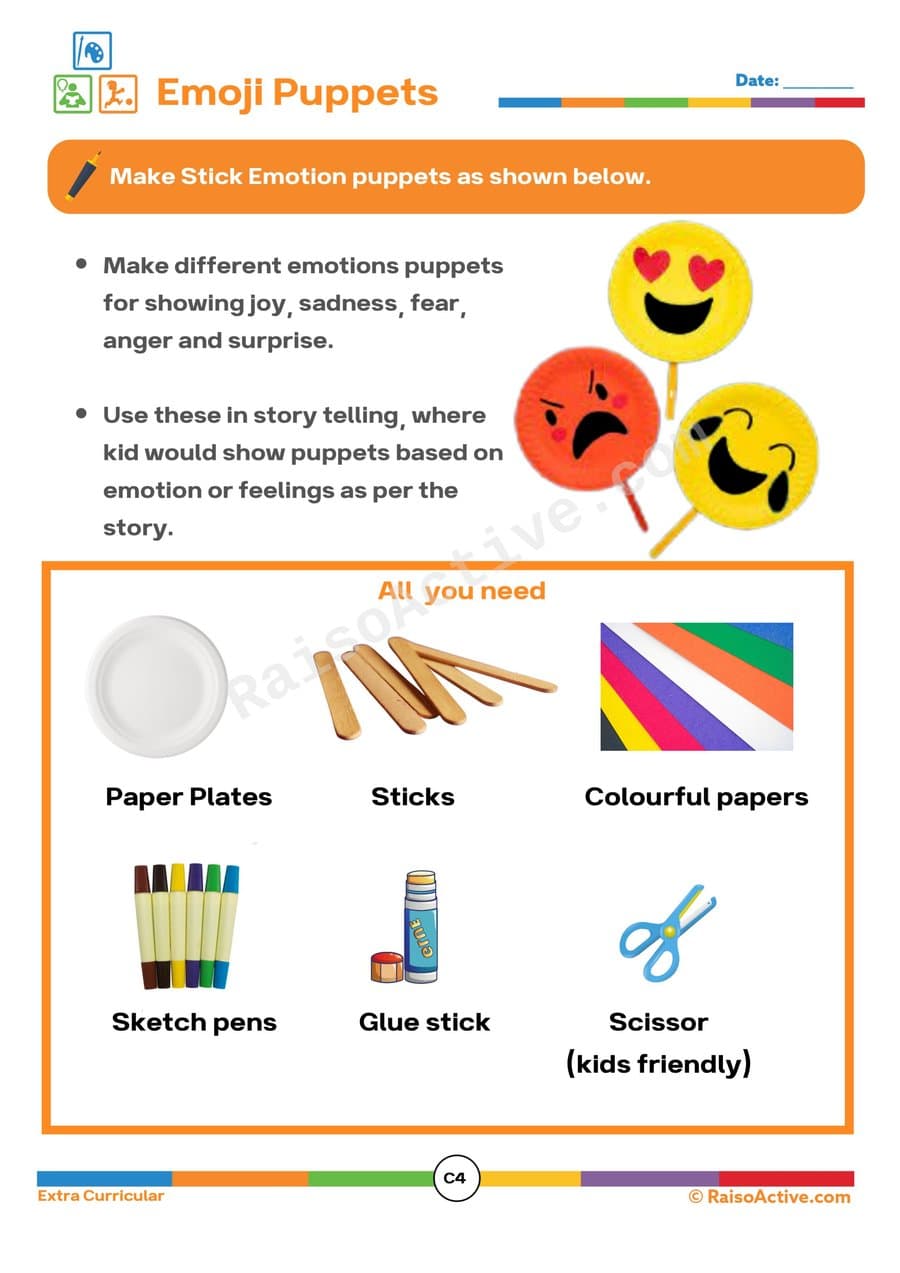
Emoji Puppets Craft Worksheet for Kids
This craft worksheet helps children ages 3-5 create emoji puppets representing different emotions, building emotional vocabulary and fine motor scissor skills at the same time as creative storytelling. Making a physical puppet for each feeling gives children a tangible way to talk about emotions that can feel abstract when discussed with words alone.
Part of the pack
Month 2: Learning & Development | Ages Up to 4Curriculum
How to use this worksheet
Follow the worksheet's steps to cut out the emoji face circles and colorful paper pieces needed for each puppet. Glue the paper features onto a paper plate to create each emoji's expression, then attach a stick to the back so it can be held up and moved like a puppet. Repeat until you have a small set of puppets showing different emotions, like happy, sad, angry, and surprised. Once finished, use the puppets to act out simple stories or express how your child is feeling that day.
Materials needed
- Paper plates
- Sticks
- Colourful papers
- Sketch pens
- Glue stick
- Scissors
Extension activities
- •Create a story using the puppets, giving each emotion character a reason for feeling that way.
- •Act out different everyday scenarios using the puppets, like losing a toy or getting a present.
- •Make more puppets with additional emotions, like nervous, proud, or bored.
- •Use the puppets during a calm-down routine, letting your child pick the puppet that matches how they feel.
Tips for parents and teachers
Encourage children to explore different emotions and use the puppets to express themselves, especially on days when talking about feelings directly feels harder for them. Help them with the craft as needed, since gluing small paper pieces accurately takes more precision than young hands may have yet. Guide them in creating stories that give each emotion a believable cause, which builds emotional understanding alongside imaginative play.

Written by
Hemsweta Jain · Teacher Cheena
MBA and Early Childhood Educator, teaching since 2014 · Founder of RaisoActive, Mumbai
Every RaisoActive worksheet is designed and checked by the founder before publishing.
Published · Last reviewed
Related worksheets
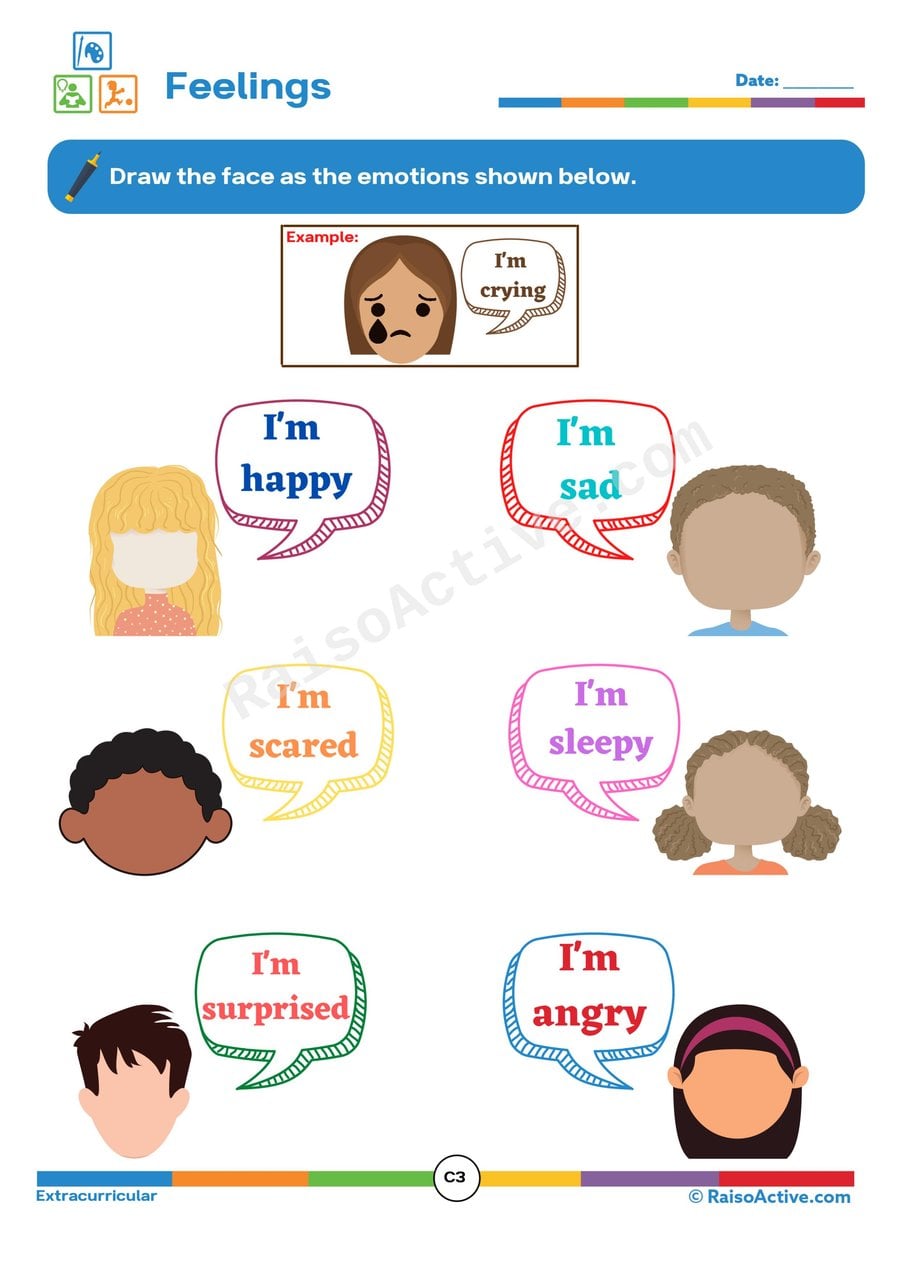
Feelings Worksheet: Draw the Faces!
This worksheet builds emotional literacy by having children draw a face expressing a specific feeling named in a word bubble, such as happy, sad, angry, or surprised. For three- to five-year-olds, practicing how to represent an emotion visually helps them build the vocabulary and self-awareness needed to name and talk about their own feelings, a key early social-emotional skill.

Emotions Worksheet: Match the Emoji to the Feeling!
This worksheet helps children ages 3-5 identify and understand different emotions by comparing a child's facial expression in a picture to a set of emoji faces and choosing the one that matches. Learning to read facial cues and name feelings is a foundational social-emotional skill that helps children both recognize their own emotions and empathize with others.

Emotions Worksheet: Count, Color, and Identify Feelings!
Identifying emotions from facial expressions and then counting and coloring them builds emotional literacy, the ability to name feelings like happy, sad, or surprised, alongside basic counting practice, giving children a vocabulary for something they experience daily but may not yet know how to describe. For ages three to five, naming emotions explicitly is an important early step in self-regulation and empathy.
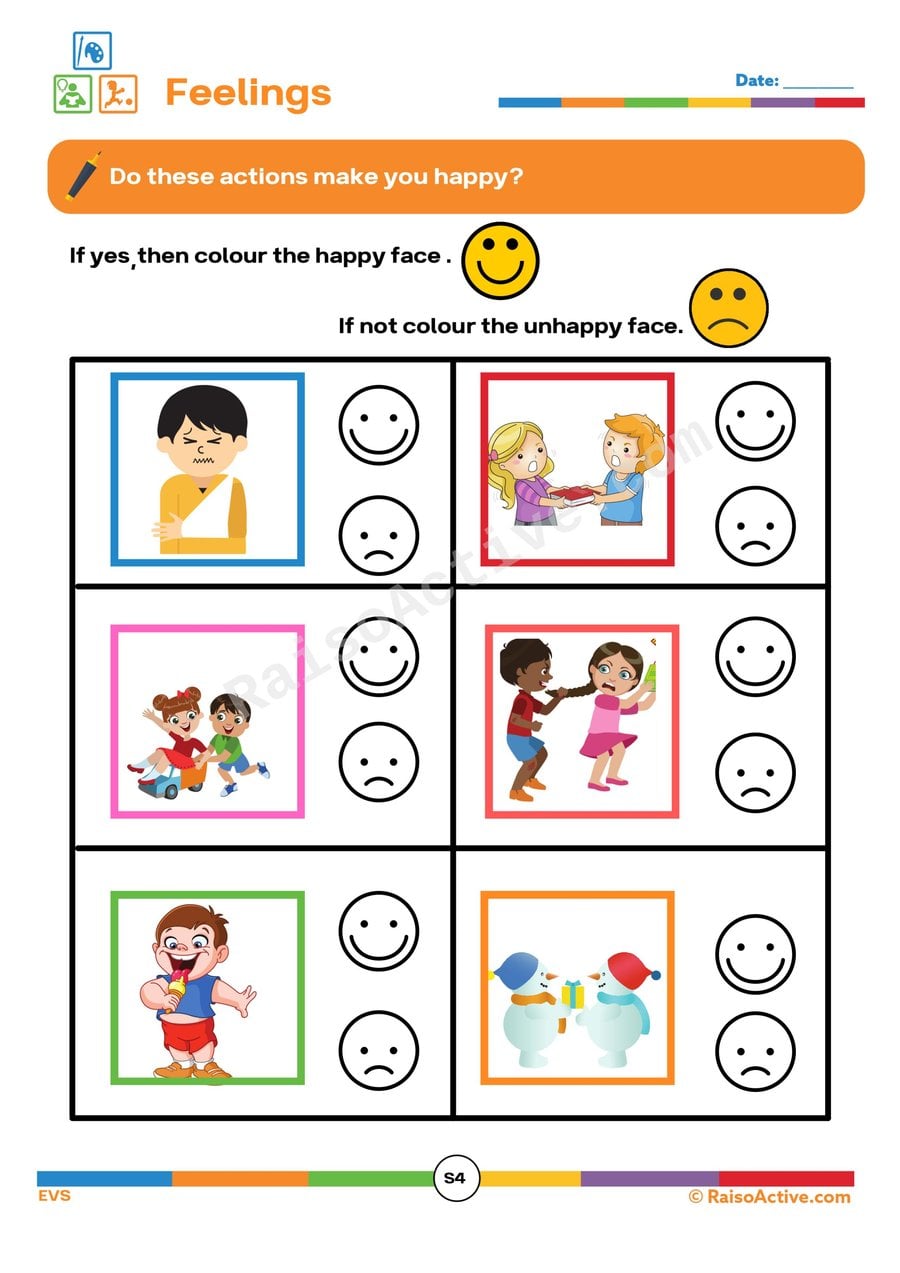
Feelings Worksheet: Happy or Sad?
Looking closely at faces and deciding whether they show happy or sad builds emotional literacy, the ability to read facial cues and put a name to a feeling, in children ages 3-5. This is an early and important social-emotional milestone, since recognizing emotions in others is a first step toward empathy and toward naming their own feelings instead of just acting them out.

Trace the Numbers 1-9 Worksheet for Preschoolers
Tracing the numerals 1 through 9 gives children ages 3-5 repeated, guided practice with the specific pencil strokes each number requires, building the fine motor control and muscle memory needed for independent number writing. Because tracing follows a fixed, correct path, it also reinforces accurate numeral recognition, helping children tell visually similar digits apart.
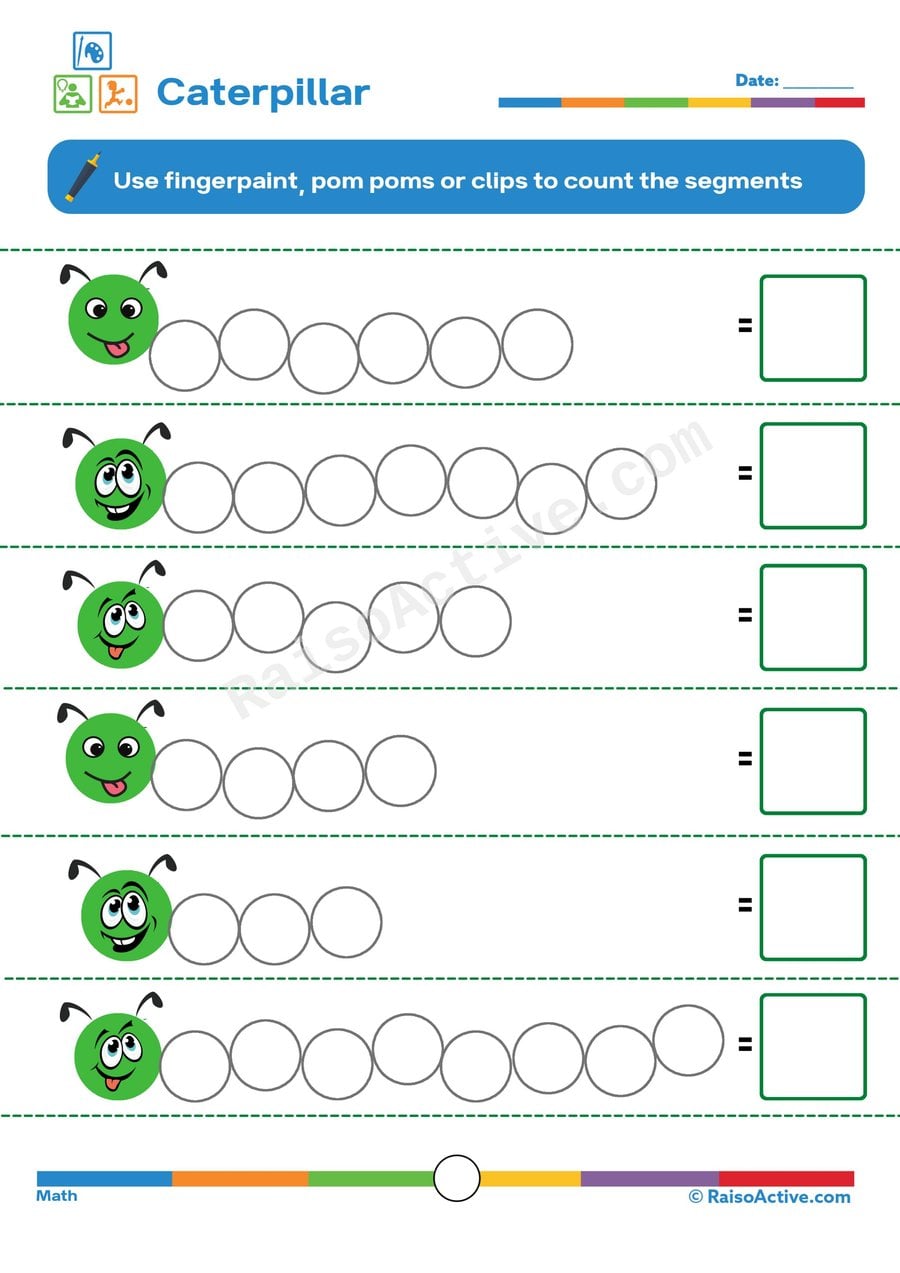
Caterpillar Counting Worksheet for Preschoolers
Counting the segments of each caterpillar teaches children ages 3-5 one-to-one correspondence — touching or marking each segment exactly once while saying a number — which is the core skill underlying accurate counting. Writing the final total in a box also connects the physical act of counting to its written numeral, reinforcing early number-writing practice.
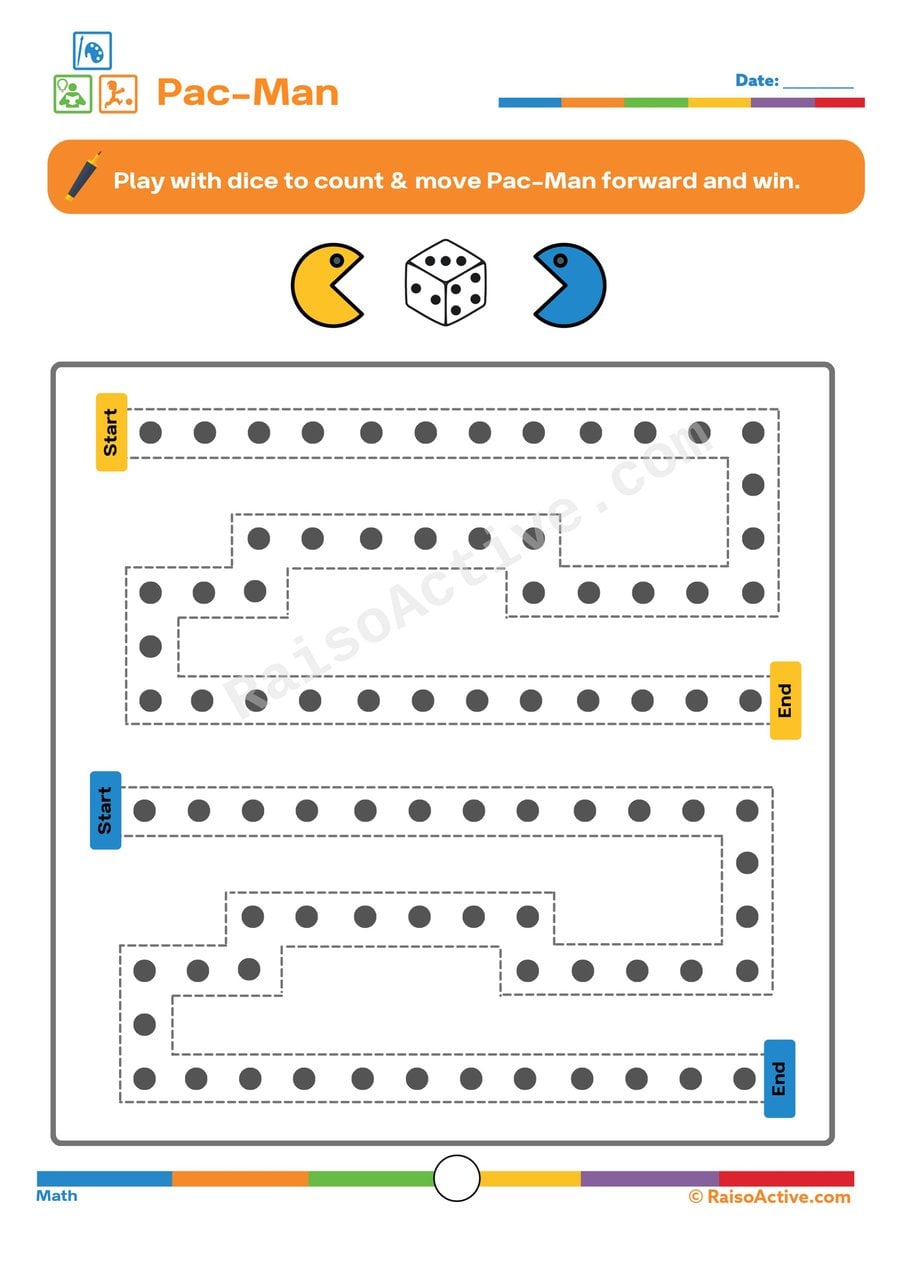
Pac-Man Maze Worksheet: Count and Move!
This dice-counting maze gives children ages 3-5 repeated practice matching a rolled number to the correct number of moves, reinforcing accurate counting under a bit of playful pressure. Tracking Pac-Man's current position after each roll also builds short-term spatial memory, since children must remember where they left off before moving again.

Stick Man Emotions Worksheet: Happy, Sad, Angry, and Surprised!
Children ages 4-6 practice reading facial expressions on this worksheet, matching stick-figure faces to their correct emotion labels by noticing details like mouth shape and eyebrow position. This strengthens emotional literacy — the ability to name and recognize feelings in others — which supports empathy and smoother social interactions as children move into more group play and classroom settings.
Guides for this topic
Addressing Mental Health with Young Children: A Compassionate Guide for Families
Learn how to support your young child's mental health with compassionate strategies. Recognise signs, build emotional resilience, and know when to seek professional help.
Social-Emotional Learning Activities for Preschoolers: Nurturing Hearts and Minds
Discover practical social-emotional learning activities for preschoolers. Build emotional intelligence, empathy, and cooperation skills with fun, age-appropriate SEL activities.
Celebrating Diversity: How to Incorporate Cultural Awareness in Learning Activities for Young Children
Practical cultural awareness activities for young children aged 2-8. Explore Indian festivals, world cultures, food, music, and crafts to teach diversity and inclusion.
Reviews
Every worksheet for ages 3–5, no watermark
Members download the full library of 1,000+ worksheets and every activity pack without watermarks or daily limits. One year costs ₹1,000 in India or $20 elsewhere.
See membership plansOr download any worksheet free with a watermark (5 a day).