
Emotions Worksheet: Count, Color, and Identify Feelings!
Identifying emotions from facial expressions and then counting and coloring them builds emotional literacy, the ability to name feelings like happy, sad, or surprised, alongside basic counting practice, giving children a vocabulary for something they experience daily but may not yet know how to describe. For ages three to five, naming emotions explicitly is an important early step in self-regulation and empathy.
Curriculum
How to use this worksheet
Look at each face on the page together and talk about what emotion it shows, asking your child how they can tell (a big smile for happy, tears for sad). Have your child count how many faces show each specific emotion, keeping a running tally as they go. Once counted, have them write the total number for each emotion in the box provided and color the faces using whatever colors they choose. Finish by asking your child to make that same face themselves and describe a time they felt that way.
Materials needed
- Pencil
- Crayons
Extension activities
- •Discuss different situations that might cause each of the emotions shown on the page.
- •Act out the different emotions together, taking turns guessing which feeling is being shown.
- •Create your own emotion faces on a blank sheet of paper, drawing new expressions.
- •Read a story together and pause to ask how a character might be feeling at different points.
Tips for parents and teachers
Encourage your child to talk about their own feelings as you go through the page, since naming emotions in the abstract is a great bridge to naming and managing their own emotions in real moments. Use this worksheet as a starting point for a broader conversation about emotional literacy, rather than treating it purely as a counting exercise.

Written by
Hemsweta Jain · Teacher Cheena
MBA and Early Childhood Educator, teaching since 2014 · Founder of RaisoActive, Mumbai
Every RaisoActive worksheet is designed and checked by the founder before publishing.
Published · Last reviewed
Related worksheets
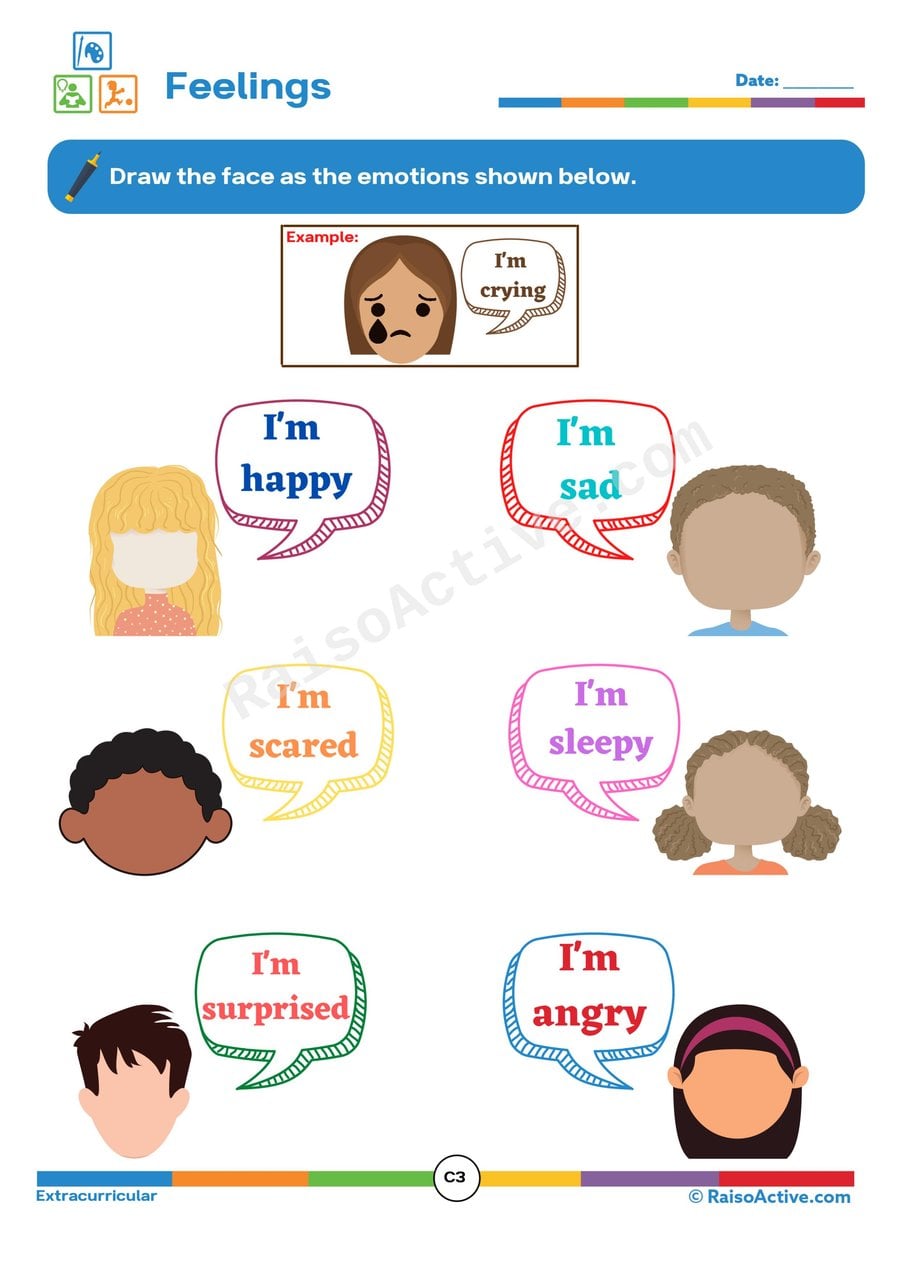
Feelings Worksheet: Draw the Faces!
This worksheet builds emotional literacy by having children draw a face expressing a specific feeling named in a word bubble, such as happy, sad, angry, or surprised. For three- to five-year-olds, practicing how to represent an emotion visually helps them build the vocabulary and self-awareness needed to name and talk about their own feelings, a key early social-emotional skill.
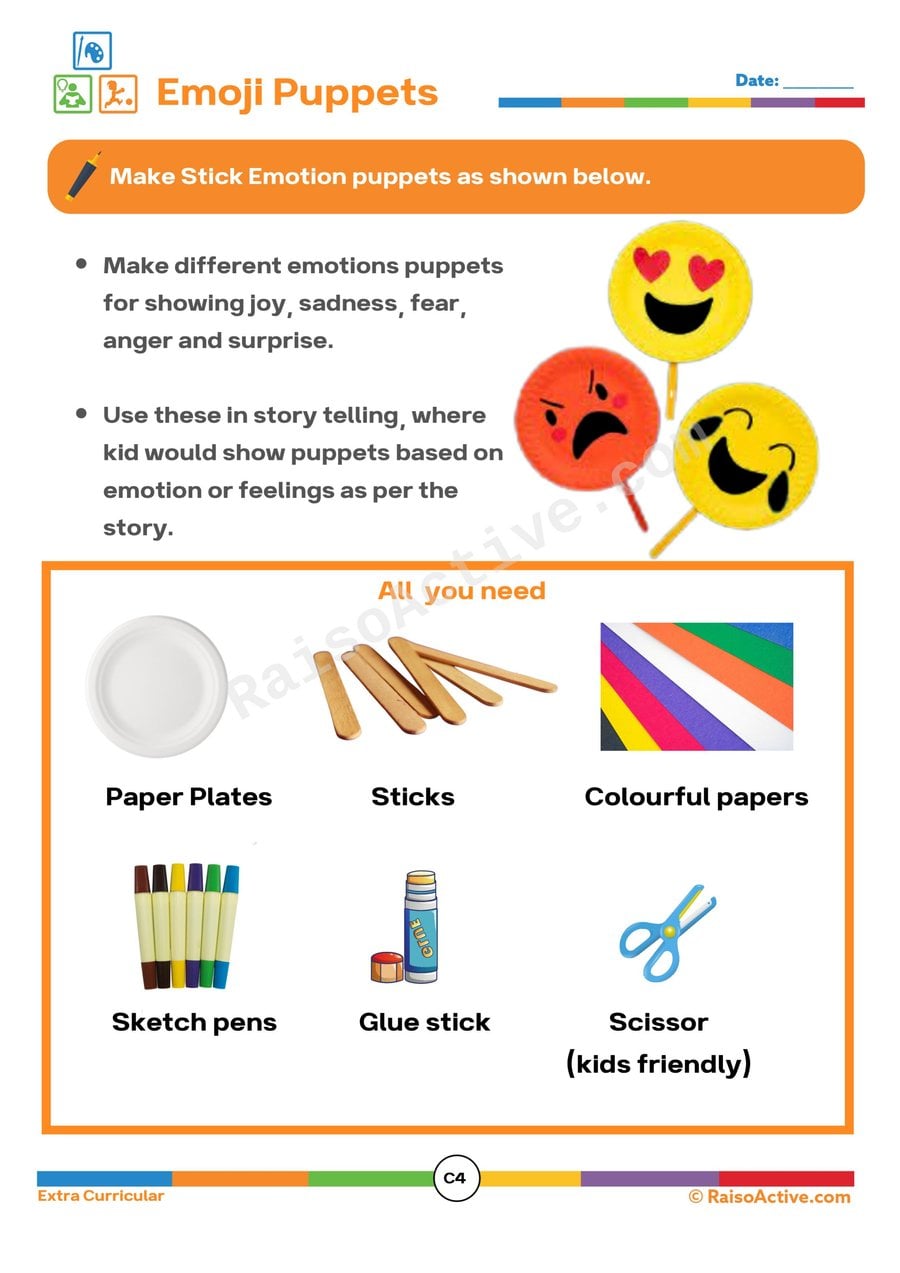
Emoji Puppets Craft Worksheet for Kids
This craft worksheet helps children ages 3-5 create emoji puppets representing different emotions, building emotional vocabulary and fine motor scissor skills at the same time as creative storytelling. Making a physical puppet for each feeling gives children a tangible way to talk about emotions that can feel abstract when discussed with words alone.

Emotions Worksheet: Match the Emoji to the Feeling!
This worksheet helps children ages 3-5 identify and understand different emotions by comparing a child's facial expression in a picture to a set of emoji faces and choosing the one that matches. Learning to read facial cues and name feelings is a foundational social-emotional skill that helps children both recognize their own emotions and empathize with others.
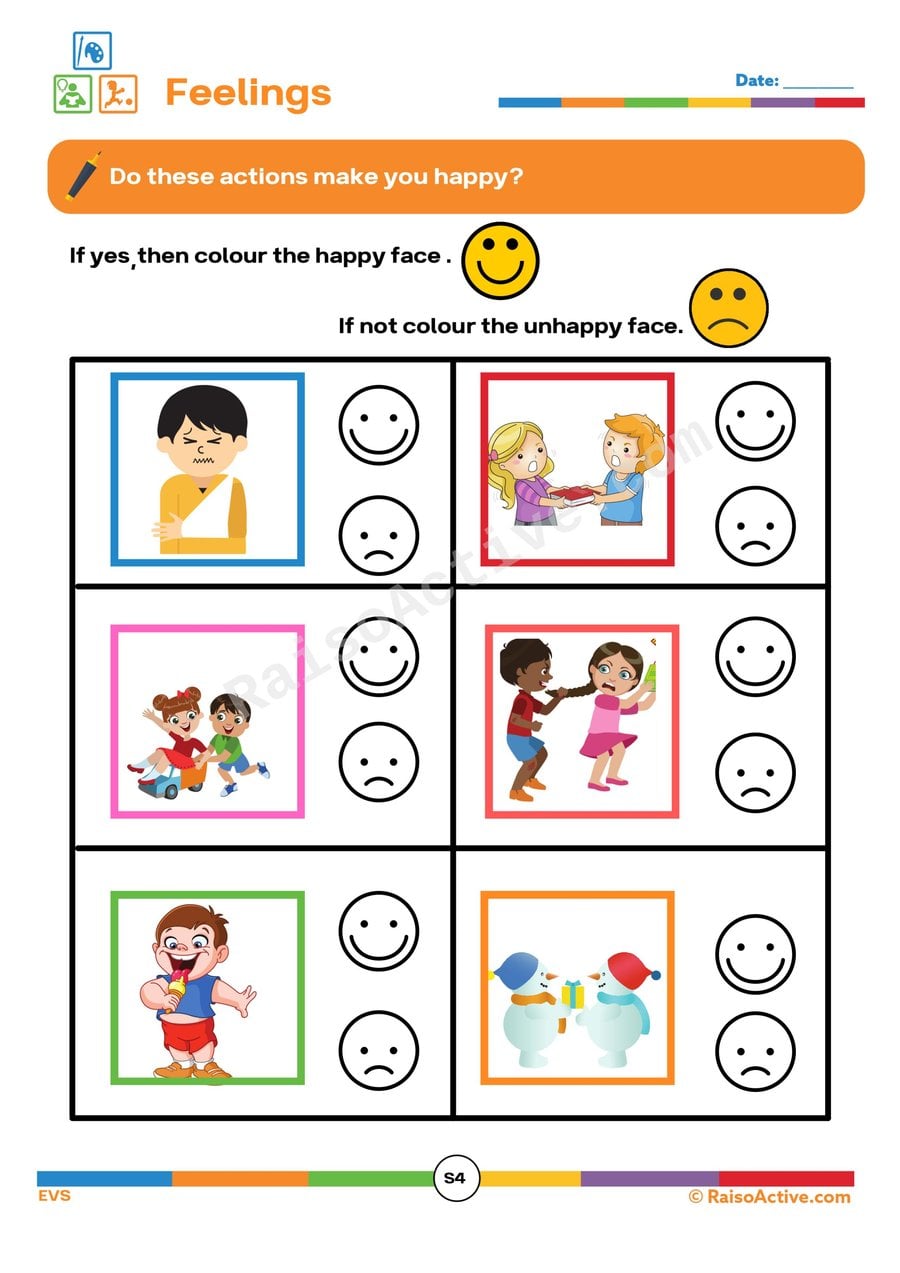
Feelings Worksheet: Happy or Sad?
Looking closely at faces and deciding whether they show happy or sad builds emotional literacy, the ability to read facial cues and put a name to a feeling, in children ages 3-5. This is an early and important social-emotional milestone, since recognizing emotions in others is a first step toward empathy and toward naming their own feelings instead of just acting them out.
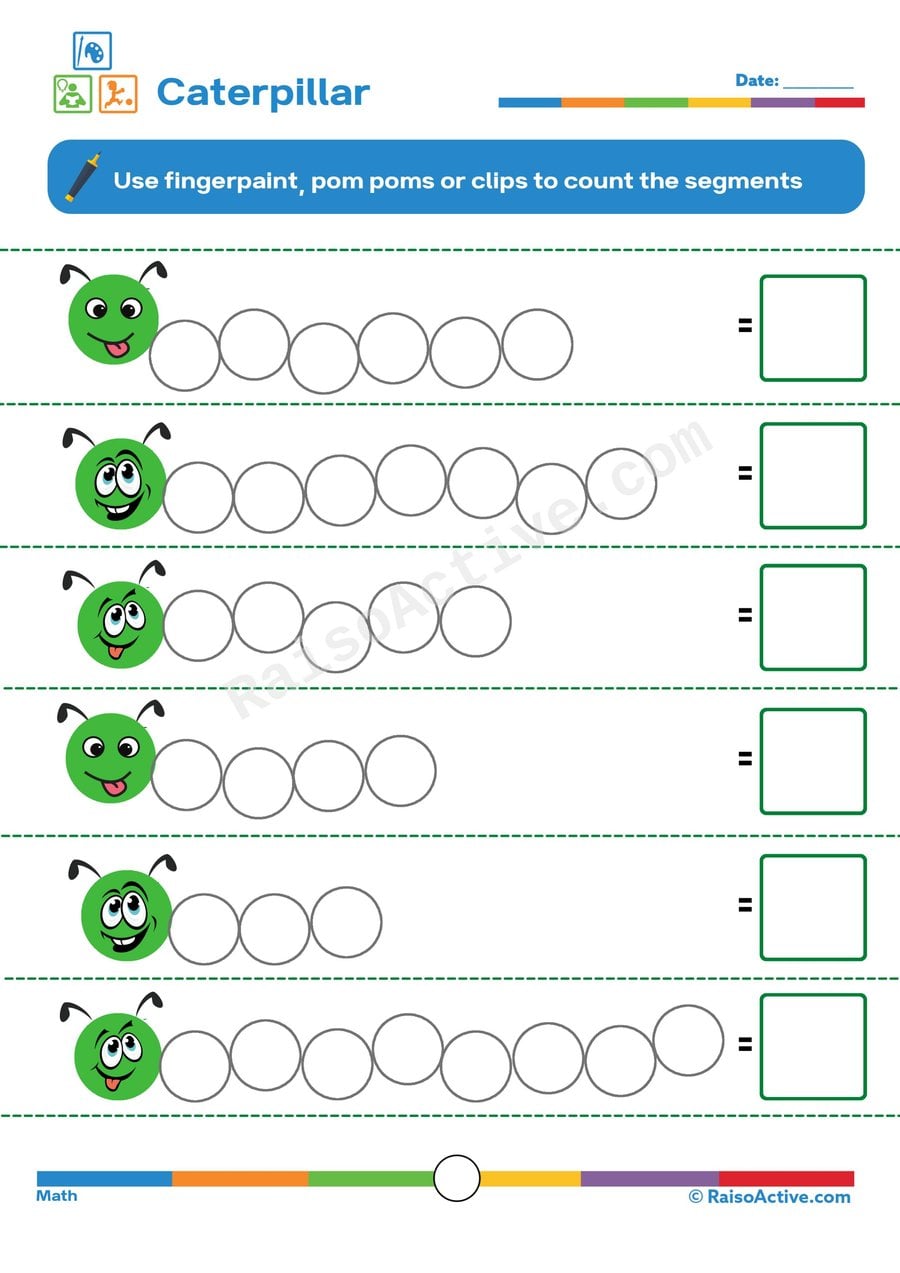
Caterpillar Counting Worksheet for Preschoolers
Counting the segments of each caterpillar teaches children ages 3-5 one-to-one correspondence — touching or marking each segment exactly once while saying a number — which is the core skill underlying accurate counting. Writing the final total in a box also connects the physical act of counting to its written numeral, reinforcing early number-writing practice.
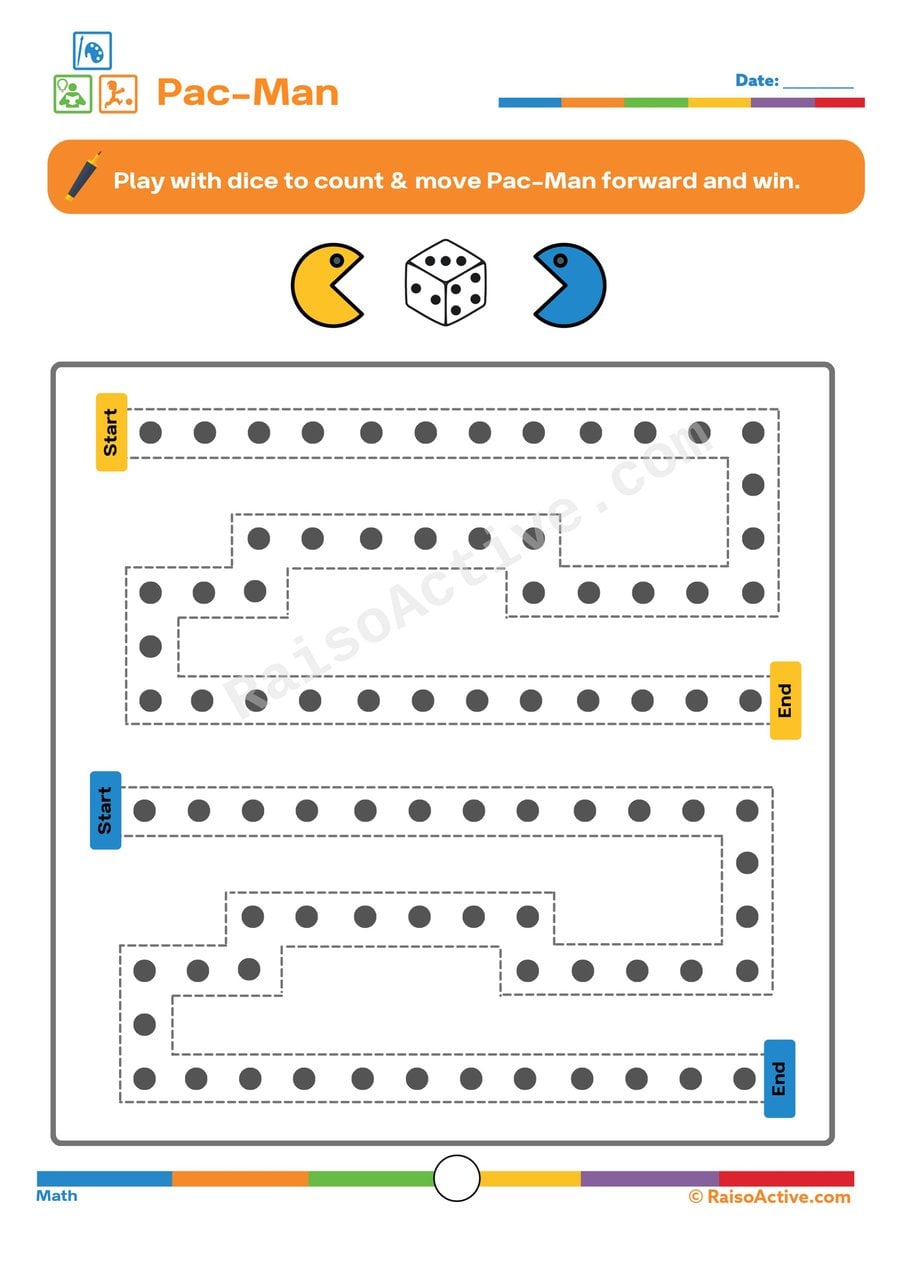
Pac-Man Maze Worksheet: Count and Move!
This dice-counting maze gives children ages 3-5 repeated practice matching a rolled number to the correct number of moves, reinforcing accurate counting under a bit of playful pressure. Tracking Pac-Man's current position after each roll also builds short-term spatial memory, since children must remember where they left off before moving again.

Stick Man Emotions Worksheet: Happy, Sad, Angry, and Surprised!
Children ages 4-6 practice reading facial expressions on this worksheet, matching stick-figure faces to their correct emotion labels by noticing details like mouth shape and eyebrow position. This strengthens emotional literacy — the ability to name and recognize feelings in others — which supports empathy and smoother social interactions as children move into more group play and classroom settings.
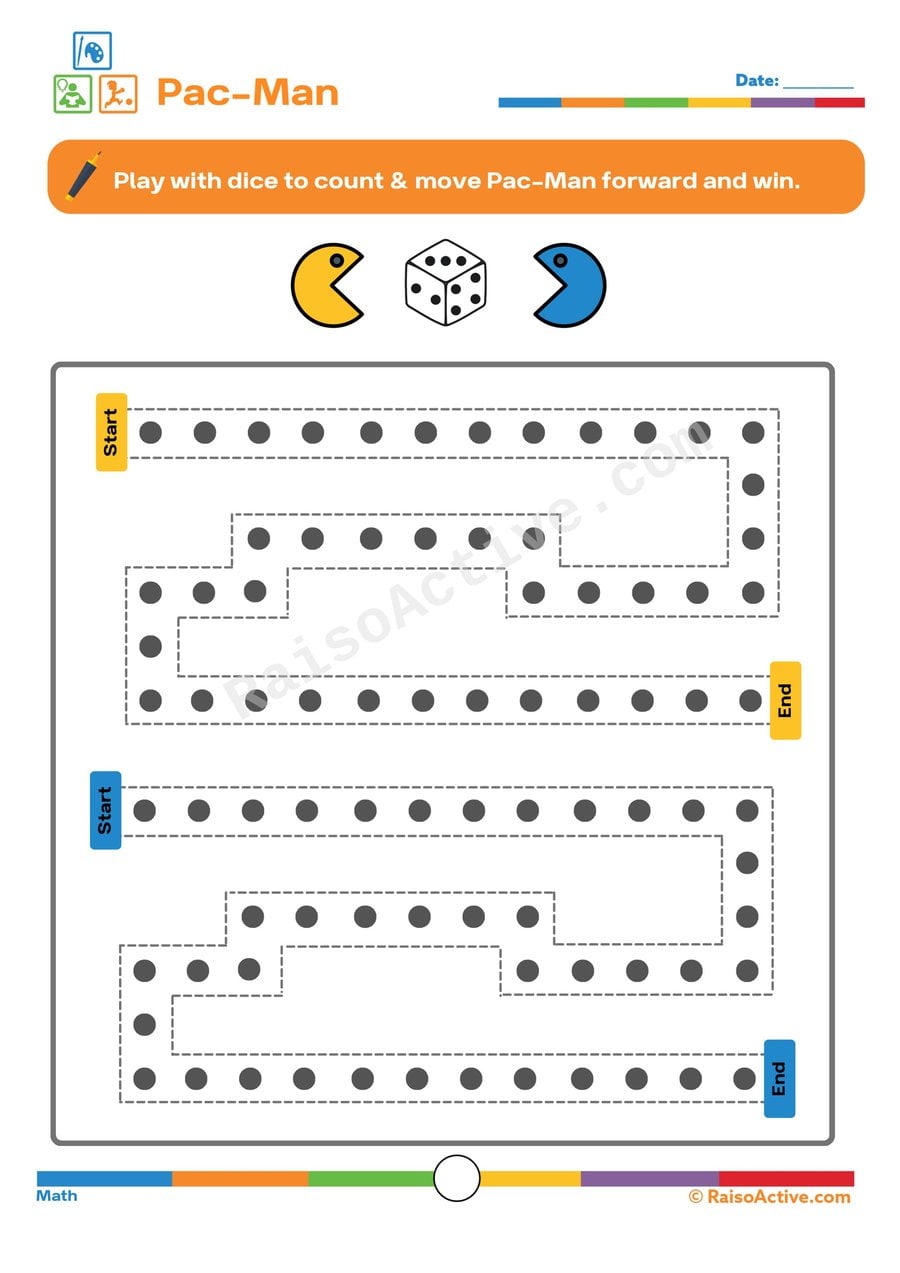
Pac-Man Maze Worksheet: Count and Move!
This dice-driven maze combines counting practice with path-following for children ages 3-5, since they must accurately count dots on a die before moving Pac-Man the matching number of spaces forward. Deciding how far to move and staying on the correct path also builds early strategic thinking, as children track their current position within the maze after each turn.
Guides for this topic
Number Formation Rhymes 0–9 and How to Fix Reversals
Original number formation rhymes for 0–9, the correct stroke order for each digit, why 3, 5 and 7 get reversed most often, and multisensory fixes that work.
Best Worksheets for 3-Year-Olds: What Works and What to Avoid
What works on worksheets for 3-year-olds: short sessions, crayons, tracing lines, matching, cutting, a free weekly plan, and signs one is too advanced.
Fostering Creativity in Structured Learning: The Perfect Balance for Young Minds
Learn how to blend creativity with structured learning for children ages 1-8. Practical strategies, activities, and printable worksheets for parents and teachers.
Reviews
Every worksheet for ages 3–5, no watermark
Members download the full library of 1,000+ worksheets and every activity pack without watermarks or daily limits. One year costs ₹1,000 in India or $20 elsewhere.
See membership plansOr download any worksheet free with a watermark (5 a day).