Shape Coloring Worksheet: Before the Shape!
This worksheet combines shape recognition with sequencing by asking children to identify which shape comes before a given shape in a row, requiring them to understand order as well as shape names. For ages three to five, thinking about what comes 'before' something visually is a gentle introduction to ordinal reasoning that will later apply to numbers and letters as well as shapes.
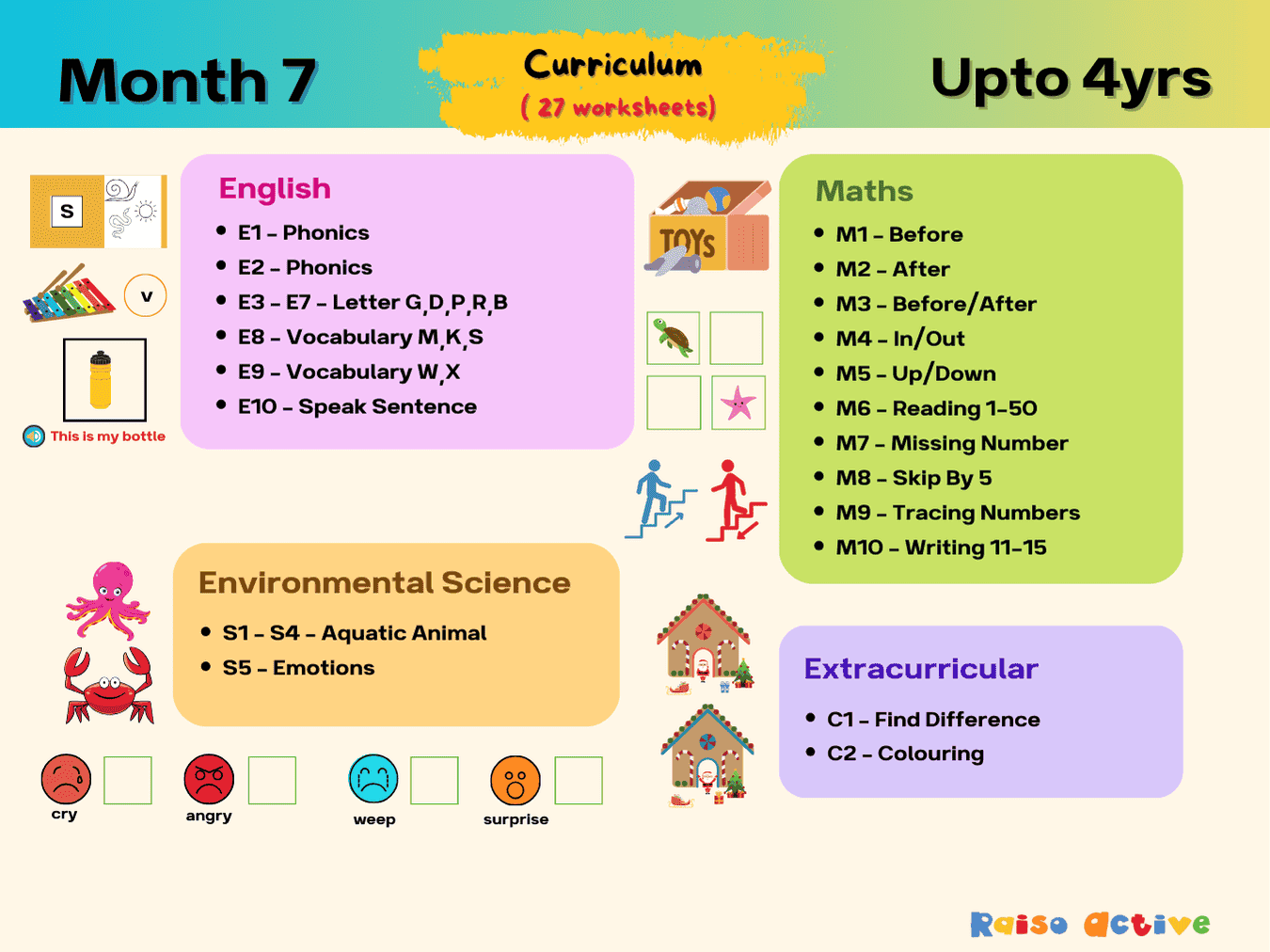
Part of the pack
Month 7: Comprehensive preschool learning | Ages Up to 4
This is page 14 of the pack. Ages 2-4 · PreschoolAges 2-4 · NurseryAges 2-4

Made for your child
A whole activity pack made with their name
60 pages to spot, build, trace and write their own name, plus pages about their favourites, feelings and family. See a free preview with their name.
Make an All About Me packFree preview · free for members
Or start free: a name tracing sheet with their nameCurriculum
- 2D Shapes > Shapes & Sorting
How to use this worksheet
Look at the row of shapes together and name each one out loud, circle, square, triangle, and so on. Point to the given shape in each row and ask your child to find the shape that comes immediately before it in the sequence. Have them color that shape using a crayon of their choice, then repeat this identify-and-color process for the remaining rows on the page. Review the finished page together, asking your child to name the shape they colored and explain why it comes before the given one.
Materials needed
- Pencil
- Crayons or colored pencils
Extension activities
- 1Have your child draw a row of shapes themselves and color the one that comes before a shape you point to.
- 2Create a matching game using shape flashcards, laying them in a line and asking 'which one is before the triangle?'
- 3Go on a shape hunt around the house, arranging found objects in a row and identifying which is before or after another.
- 4Build a shape sequence out of blocks and ask your child to remove the one that came 'before' a chosen block.

Written by
Hemsweta Jain · Teacher Cheena
MBA and Early Childhood Educator, teaching since 2014 · Founder of RaisoActive, Mumbai
Every RaisoActive worksheet is designed and checked by the founder before publishing.
Published · Last reviewed
More from Month 7: Comprehensive preschool learning | Ages Up to 4
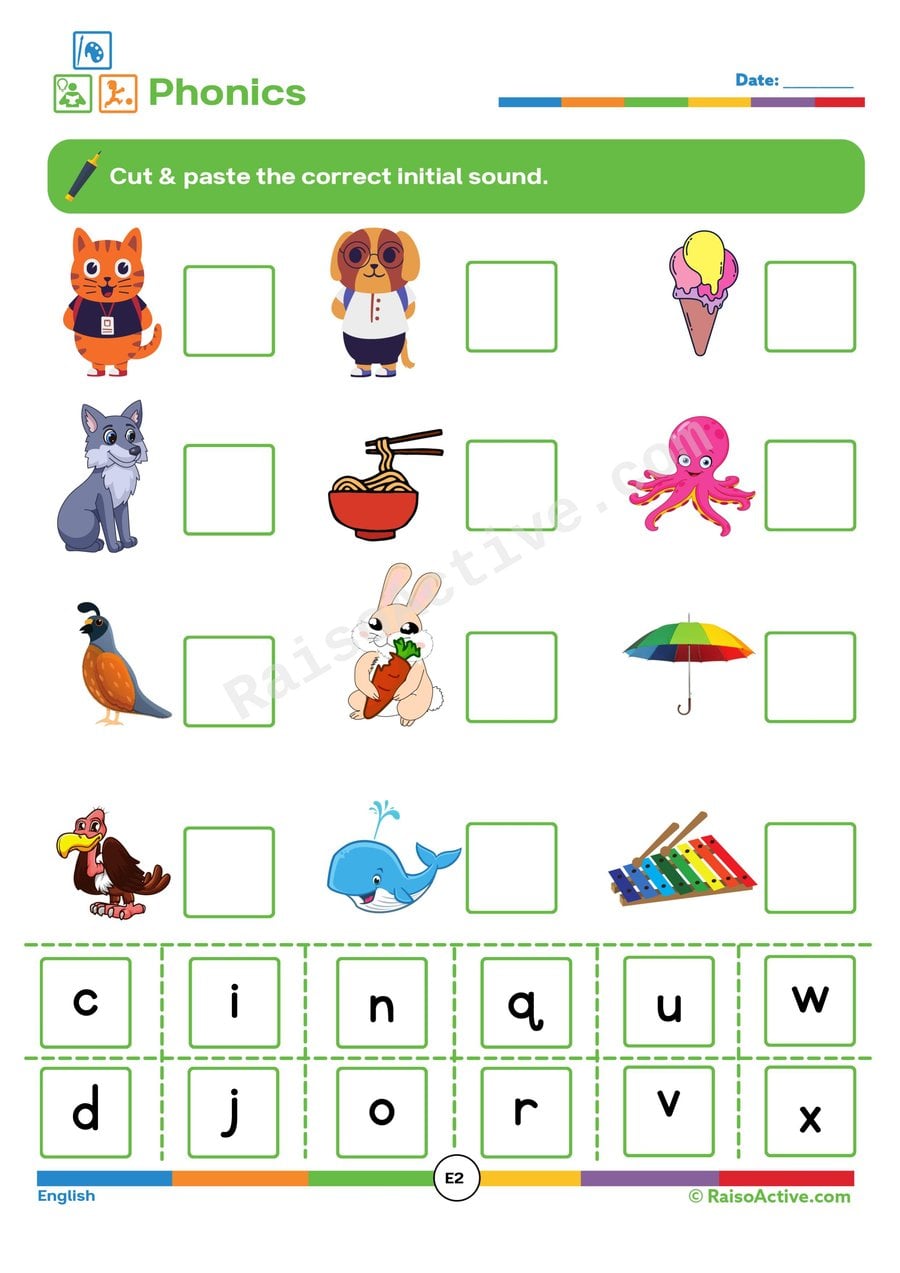
Initial Sound Match: Cut and Paste Worksheet
Ages 4-5 · Pre-KAges 4-5 · ReceptionAges 4-5 · LKGAges 4-5
Children ages 4-5 develop phonemic awareness by identifying the beginning sound of each pictured object and matching it to the correct letter, a critical pre-reading skill for connecting sounds to symbols. This cut-and-paste format adds fine motor practice with scissors and glue alongside the phonics work. Recognizing initial sounds is one of the strongest early predictors of later reading success.

Before and After: Sequencing Worksheet for Early Learners
Ages 3-5 · Preschool–Pre-KAges 3-5 · Nursery–ReceptionAges 3-5 · Nursery–LKGAges 3-5
Sequencing 'before' and 'after' events trains children to think about time and cause-and-effect in order, a reasoning skill that underlies reading comprehension, like following a story's plot, and everyday routines alike. This cut-and-paste format adds a physical, hands-on layer, requiring children to manipulate and place pictures correctly rather than just pointing, which reinforces the sequencing concept through action.

Tracing Numbers 13-16 Worksheet for Preschoolers
Ages 3-5 · Preschool–Pre-KAges 3-5 · Nursery–ReceptionAges 3-5 · Nursery–LKGAges 3-5
Tracing the numbers 13 through 16 gives children practice with the trickier teen-number range, where number names and digit order don't always match intuitively, fourteen starts with the digit that comes second, for example, making handwriting practice here also a subtle exercise in number sense. For ages three to five, saying each number aloud while tracing helps cement both its written form and its place in the counting sequence.

Underwater Adventure: Color the Aquatic Animals Worksheet
Ages 3-5 · Preschool–Pre-KAges 3-5 · Nursery–ReceptionAges 3-5 · Nursery–LKGAges 3-5
Coloring a scene full of aquatic animals gives children a low-pressure way to practice fine motor control and color choice while also building familiarity with ocean creature vocabulary as they look at and name each animal before coloring it. For ages three to five, an open coloring page like this also supports creativity, since there's no single 'correct' color for a fantasy-bright fish or coral.

Cut and Paste Initial Sounds Worksheet for Preschoolers
Ages 4-5 · Pre-KAges 4-5 · ReceptionAges 4-5 · LKGAges 4-5
This worksheet asks children to identify the very first sound of a picture's name and then physically select and paste the matching letter, combining phoneme isolation with a hands-on confirmation step that a simple matching line doesn't provide. For ages four to five, the cutting and choosing process slows the task down just enough to make sure the sound-letter connection is deliberate rather than a quick guess.
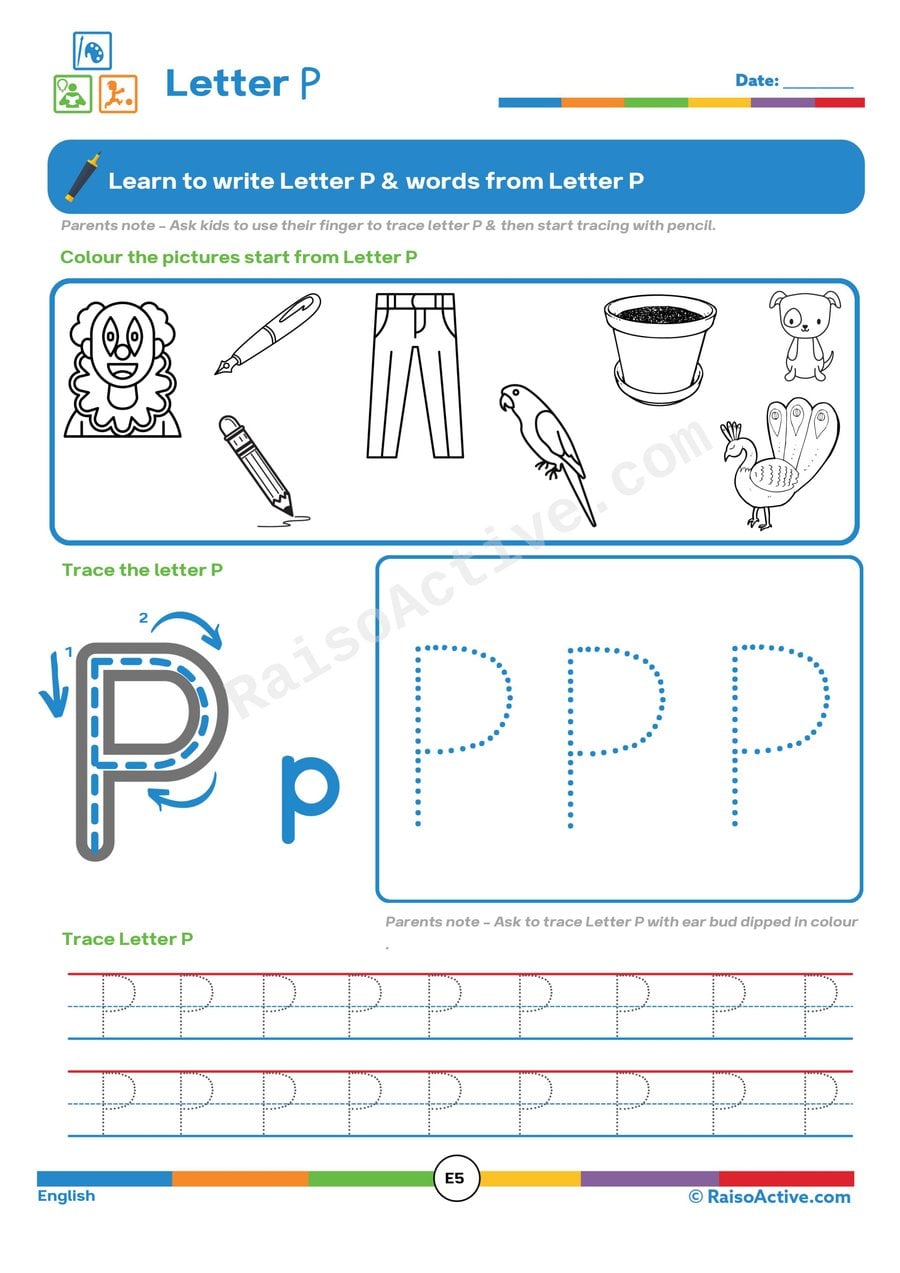
Letter P Tracing Worksheet for Preschoolers
Ages 3-5 · Preschool–Pre-KAges 3-5 · Nursery–ReceptionAges 3-5 · Nursery–LKGAges 3-5
Preschoolers ages 3-5 build the pencil control and muscle memory needed for handwriting by tracing both the uppercase and lowercase letter P along guided dotted lines. Repeated tracing strengthens the fine motor pathways used in future writing while also reinforcing left-to-right, top-to-bottom stroke direction. Naming pictures that start with P connects the letter shape to its sound, laying groundwork for phonics.
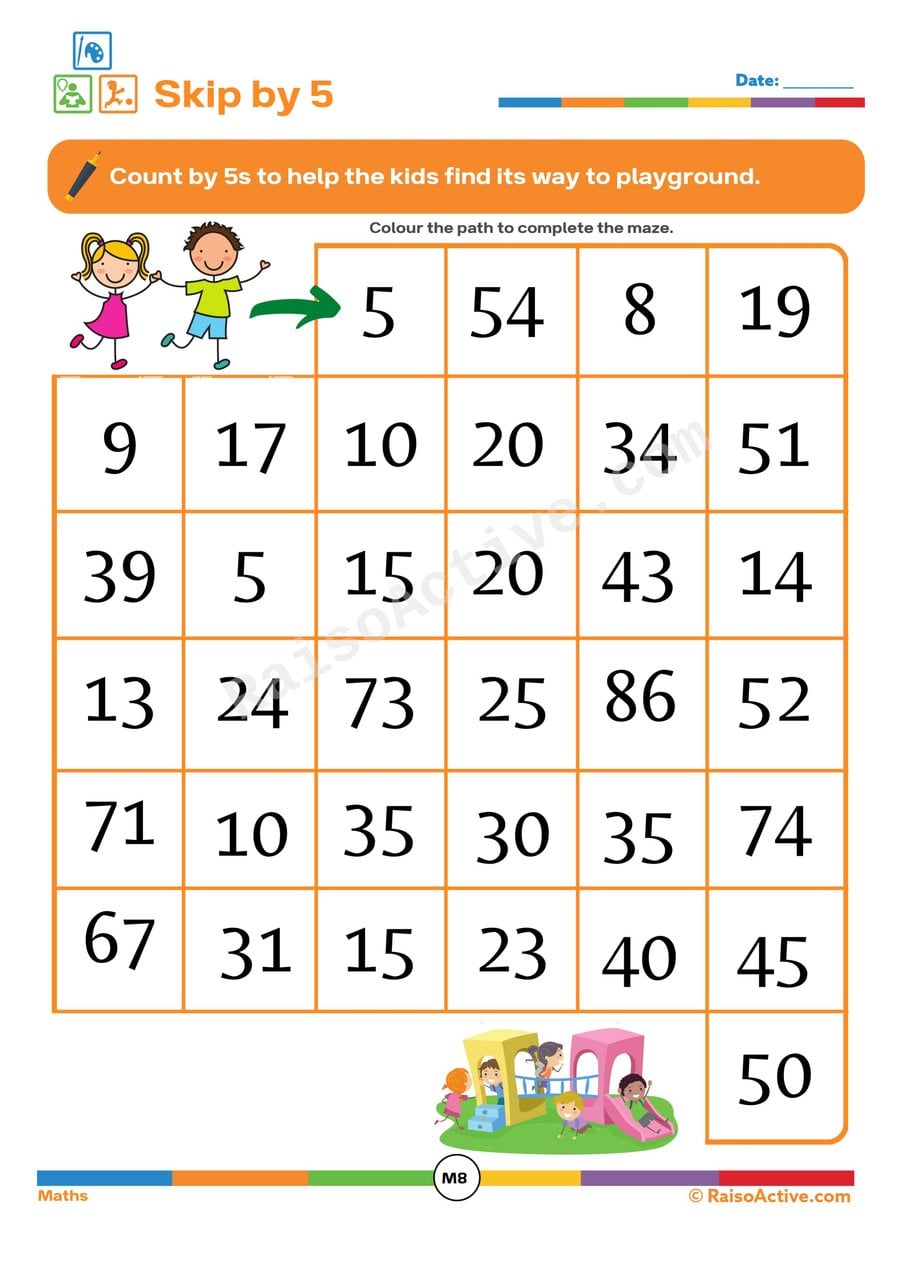
Skip Counting by 5: Maze Worksheet for Kids
Ages 4-6 · Pre-K–KindergartenAges 4-6 · Reception–Year 1Ages 4-6 · LKG–UKGAges 4-6
Skip counting by fives is a stepping stone toward multiplication and telling time on a clock face, and this maze format turns that abstract number pattern into a concrete navigation task. Ages four to six benefit from the built-in feedback a maze provides: choosing the wrong number sends the path to a dead end, so children learn to self-correct their counting in real time.

Writing Numbers 11-16 Worksheet: Trace, Write & Count!
Ages 4-6 · Pre-K–KindergartenAges 4-6 · Reception–Year 1Ages 4-6 · LKG–UKGAges 4-6
This worksheet moves children ages 4-6 beyond single-digit numbers, giving them structured practice tracing, writing, and counting the numbers 11 through 16. Working with two-digit numbers for the first time helps children understand place value informally, seeing that these numbers are built from a 'ten' plus more. The paired counting section connects each written number to a matching quantity of objects, reinforcing number meaning rather than just symbol recognition.
Related worksheets
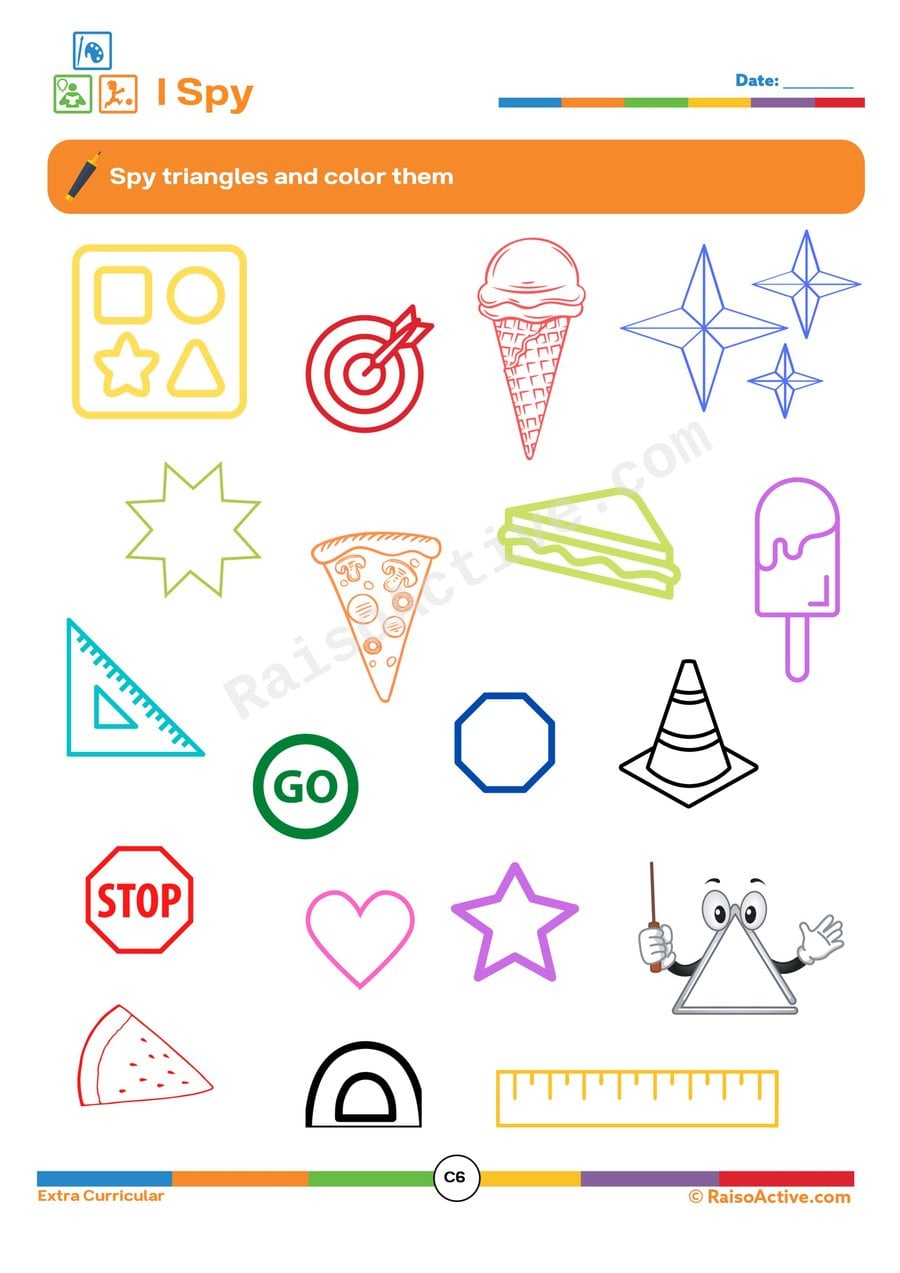
I Spy Triangles Worksheet: Find and Color!
Ages 3-5 · Preschool–Pre-KAges 3-5 · Nursery–ReceptionAges 3-5 · Nursery–LKGAges 3-5
This 'I Spy' style worksheet trains children ages 3-5 to visually pick out triangles hidden within a busier picture, building the visual discrimination skill of recognizing a specific shape by its defining feature — three straight sides and three corners — even when it's surrounded by other shapes or details. This kind of active shape-hunting goes beyond simple shape naming to real visual search practice.
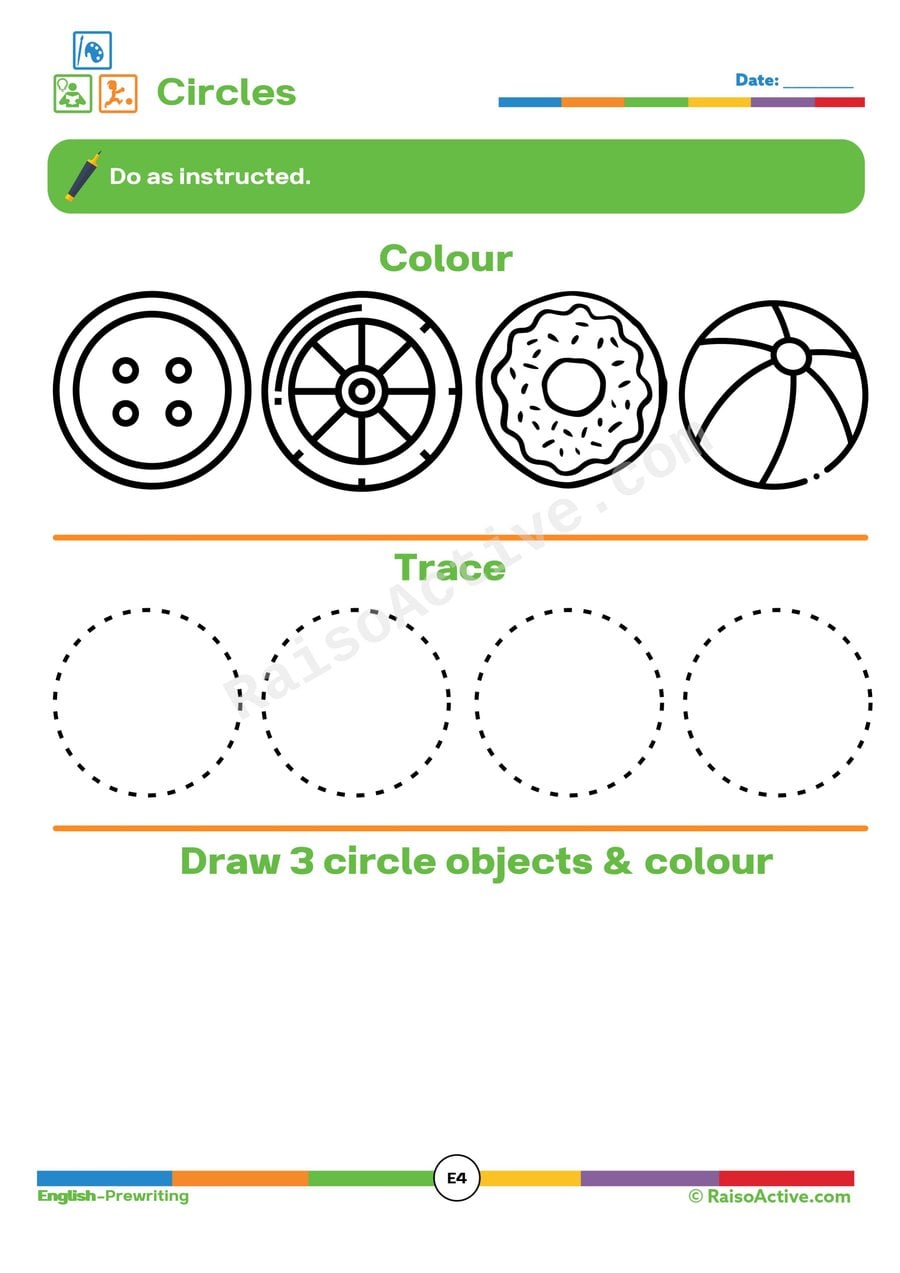
Circle Shapes Worksheet: Trace, Color, and Draw!
Ages 3-5 · Preschool–Pre-KAges 3-5 · Nursery–ReceptionAges 3-5 · Nursery–LKGAges 3-5
This worksheet builds shape recognition and drawing skills as children ages 3-5 trace dotted circles, color pictures of circular objects, and then draw three circle-shaped objects entirely on their own. Moving from tracing to independent drawing tracks a real developmental progression — first following a guide, then applying the shape from memory — which builds true shape mastery rather than just copying.
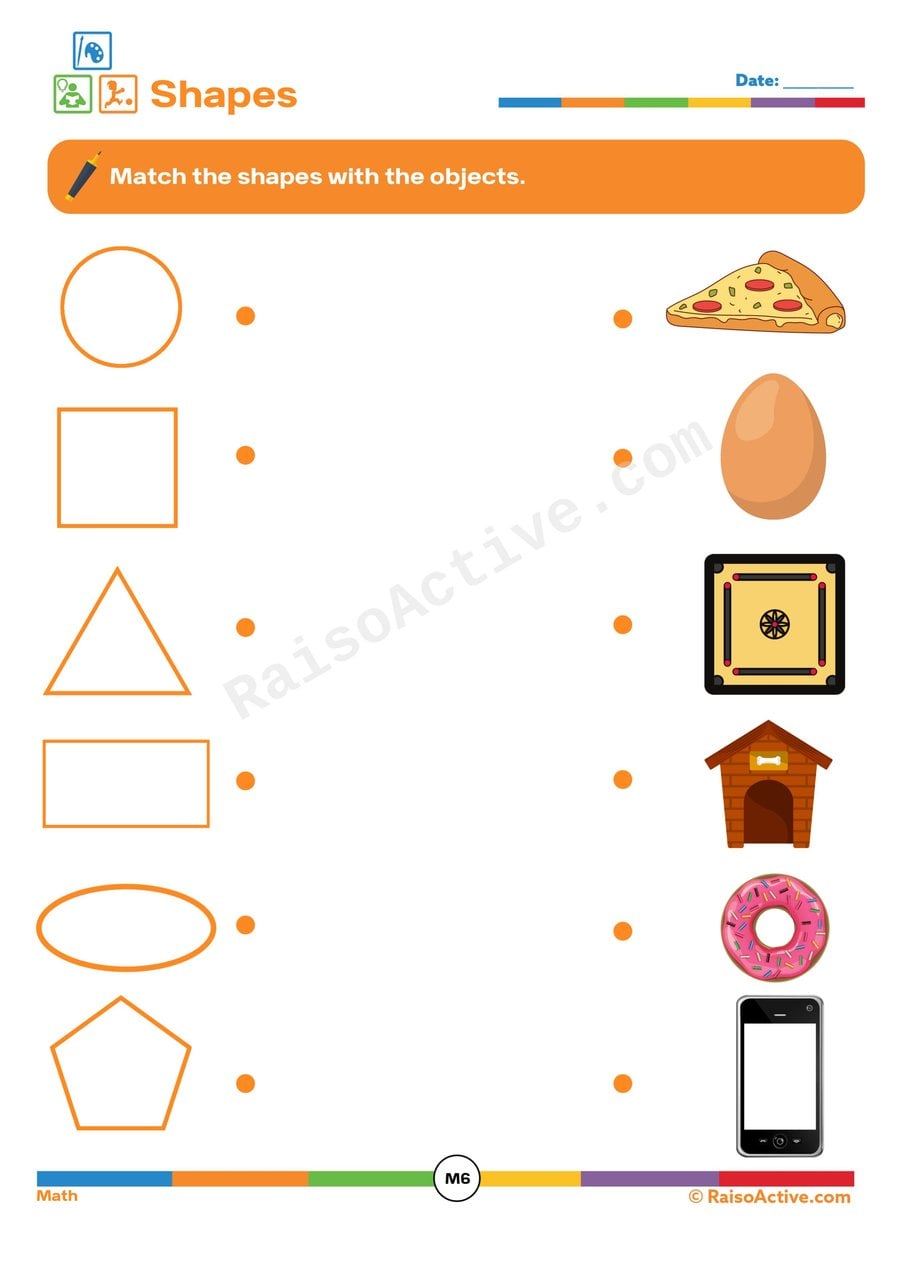
Shape Matching Worksheet for Preschoolers
Ages 3-5 · Preschool–Pre-KAges 3-5 · Nursery–ReceptionAges 3-5 · Nursery–LKGAges 3-5
This worksheet strengthens shape recognition for children ages 3-5 by asking them to connect abstract shape outlines to the real-world objects that share that same shape. Recognizing that a shape like a circle or rectangle can apply to very different objects, such as a clock and a door, helps children generalize shape concepts beyond a single example. Drawing the connecting line between matched pairs also reinforces visual tracking and pencil control.

Shape Counting Fun: Trace, Color, and Count the Shapes!
Ages 3-5 · Preschool–Pre-KAges 3-5 · Nursery–ReceptionAges 3-5 · Nursery–LKGAges 3-5
Tracing a dotted boat outline builds pencil control in children ages 3-5, while coloring the completed picture adds a creative, low-pressure finishing step. Counting the different shapes that make up the boat afterward connects shape recognition to number writing, since children must identify each shape type, tally how many appear, and record that total in a box. Combining tracing, coloring, and counting into one worksheet gives a well-rounded mix of fine motor and early math practice in a single sitting.

Shape Sorting Fun: Cut and Glue Worksheet for Preschoolers
Ages 3-5 · Preschool–Pre-KAges 3-5 · Nursery–ReceptionAges 3-5 · Nursery–LKGAges 3-5
Sorting cut-out shapes into matching rows builds shape recognition for children ages 3-5, requiring them to visually compare each piece's sides and corners before placing it correctly. This early geometry practice, paired with the fine motor demands of cutting and gluing, strengthens both cognitive classification skills and hand control at the same time.

Shape Robot Cut and Paste Worksheet for Preschoolers
Ages 3-5 · Preschool–Pre-KAges 3-5 · Nursery–ReceptionAges 3-5 · Nursery–LKGAges 3-5
Cutting out shapes and gluing them into place to build a robot reinforces shape recognition alongside fine motor and spatial-assembly skills for children ages 3-5, since each piece must be matched by both its form and its position.
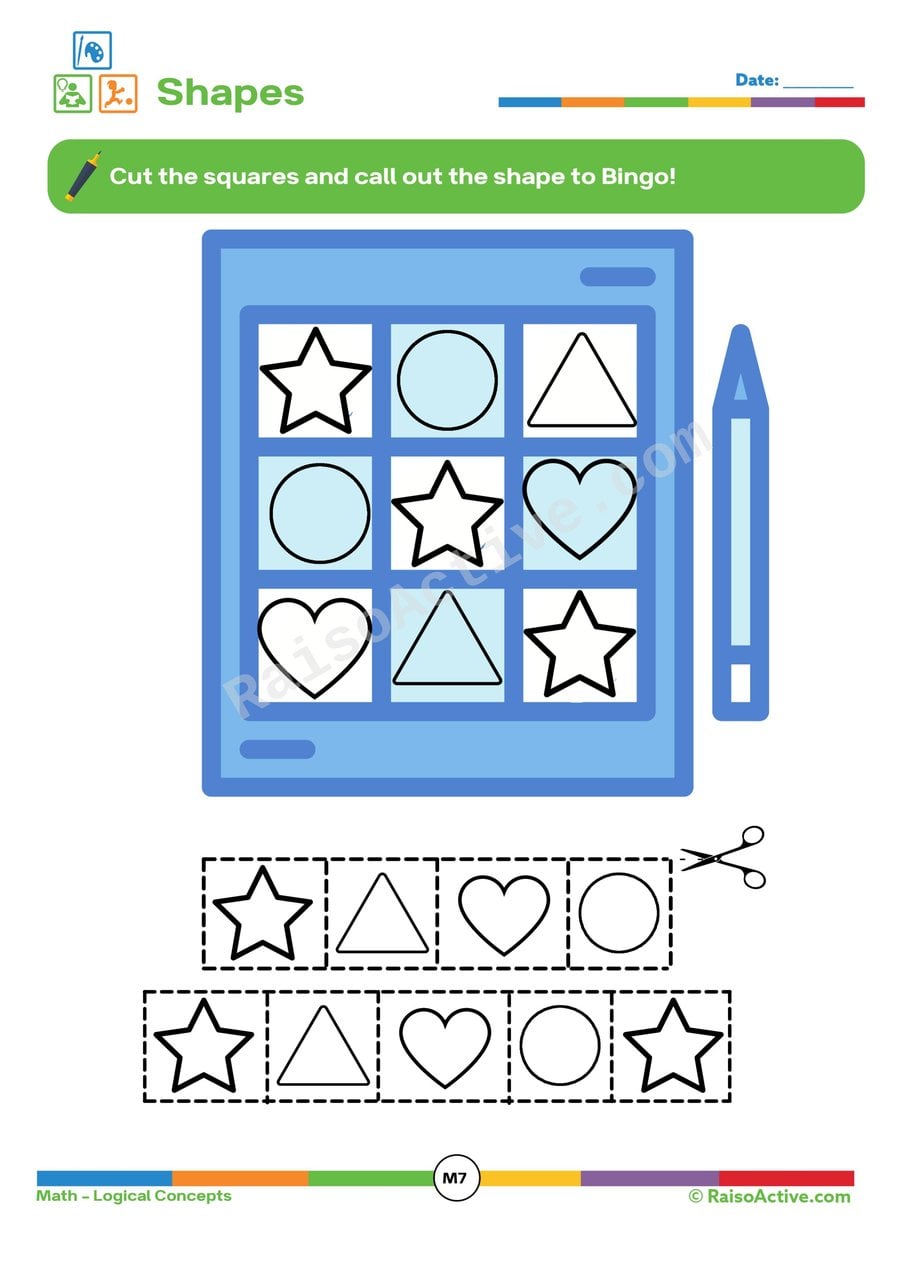
Shape Bingo Worksheet: Cut and Identify Shapes!
Ages 3-5 · Preschool–Pre-KAges 3-5 · Nursery–ReceptionAges 3-5 · Nursery–LKGAges 3-5
This worksheet turns shape recognition into a bingo-style game for children ages 3-5, asking them to cut out shapes and match them to identical shapes on a bingo board. The bingo format adds a playful, goal-oriented structure to shape practice, motivating children to scan carefully for stars, circles, triangles, and hearts. Calling out each shape name as it's matched also builds verbal shape vocabulary alongside visual recognition.
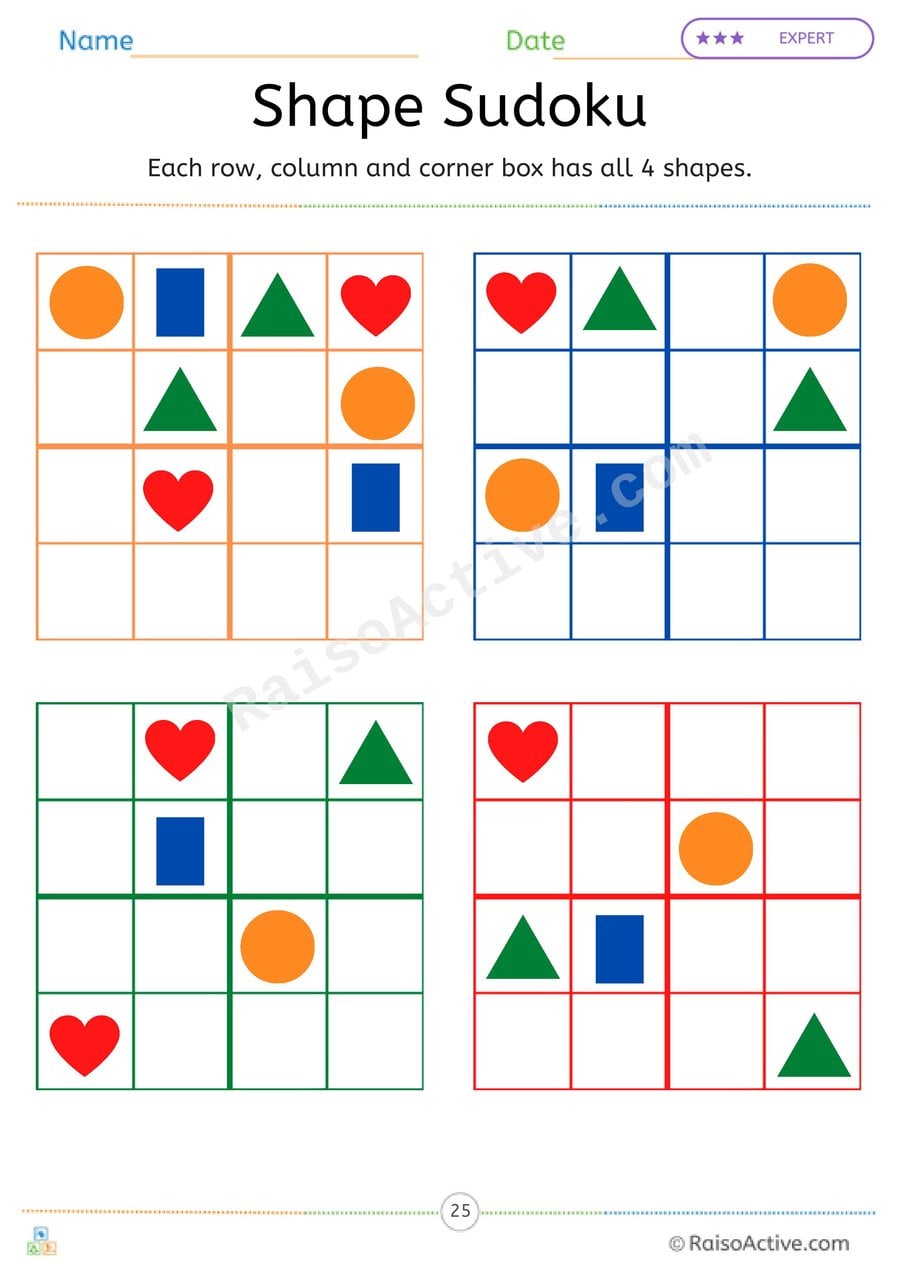
Shape Sudoku for Kids: 4x4 Shape Puzzles
Ages 4-7 · Pre-K–Grade 1Ages 4-7 · Reception–Year 2Ages 4-7 · LKG–Class 1Ages 4-7
This worksheet helps children develop logical reasoning skills by completing shape-based Sudoku puzzles.
Guides for this topic

Best Worksheets for 3-Year-Olds: What Works and What to Avoid
What works on worksheets for 3-year-olds: short sessions, crayons, tracing lines, matching, cutting, a free weekly plan, and signs one is too advanced.
Fostering Creativity in Structured Learning: The Perfect Balance for Young Minds
Learn how to blend creativity with structured learning for children ages 1-8. Practical strategies, activities, and printable worksheets for parents and teachers.

Coding Activities for Preschoolers: Building Tomorrow's Thinkers Today
Discover 15+ unplugged and screen-based coding activities for preschoolers that build sequencing, logic, and problem-solving skills through play. NEP 2020 aligned.
Reviews
Every worksheet for ages 3–5, no watermark
Members download the full library of 1,000+ worksheets and every activity pack without watermarks or daily limits. One year costs ₹999 in India or $20 elsewhere.
See membership plansOr download any worksheet free with a watermark (5 a day).