Shape Bingo Worksheet: Cut and Identify Shapes!
This worksheet turns shape recognition into a bingo-style game for children ages 3-5, asking them to cut out shapes and match them to identical shapes on a bingo board. The bingo format adds a playful, goal-oriented structure to shape practice, motivating children to scan carefully for stars, circles, triangles, and hearts. Calling out each shape name as it's matched also builds verbal shape vocabulary alongside visual recognition.
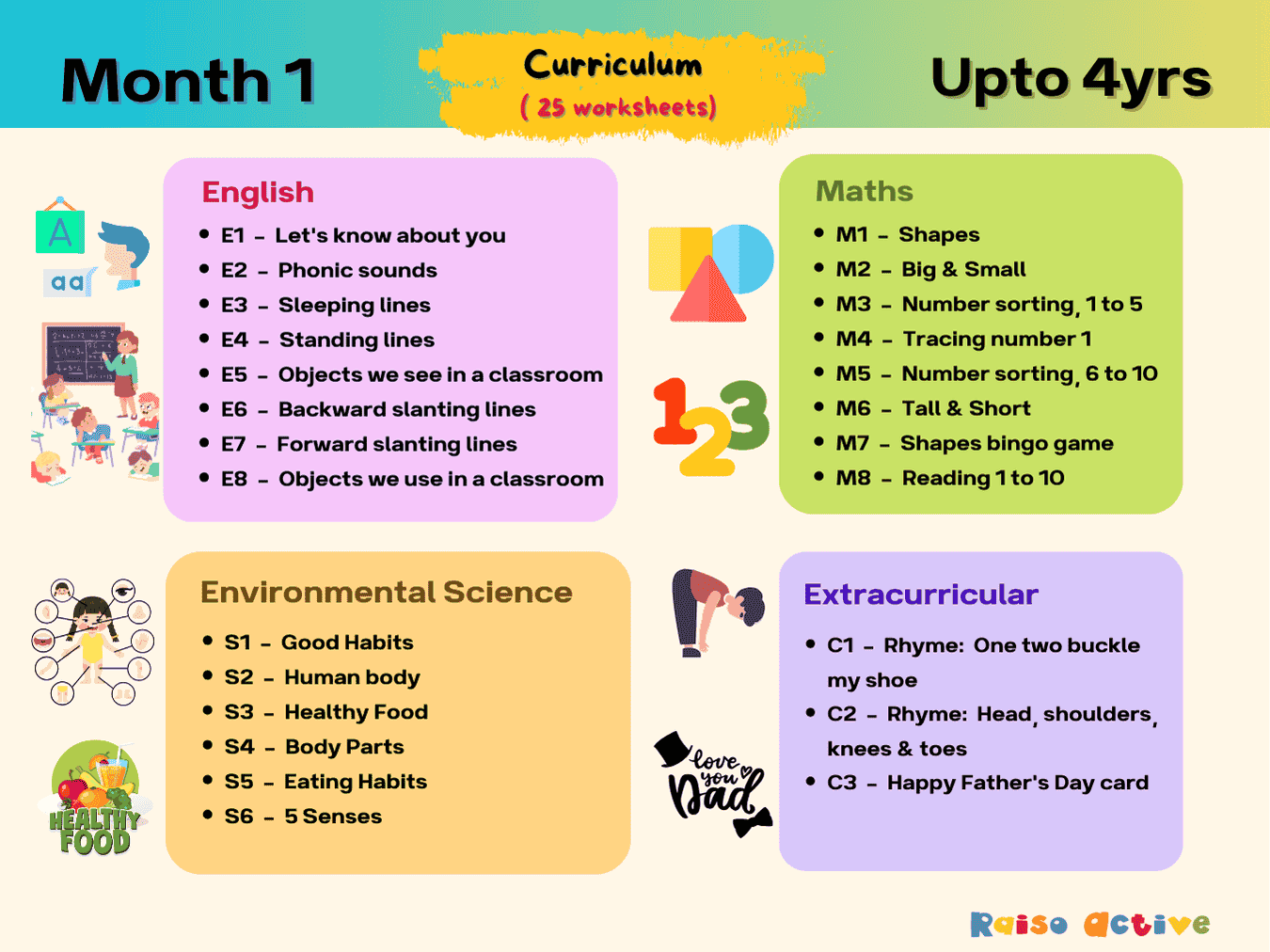
Part of the pack
Month 1: Learning & Development | Ages Up to 4
This is page 18 of the pack. Ages 3-4 · PreschoolAges 3-4 · NurseryAges 3-4
Curriculum
- 2D Shapes > Shapes & Sorting
How to use this worksheet
Look at the bingo board together and name each shape printed on it before cutting begins. Have your child cut out the individual shapes from the bottom of the page using child-safe scissors. For each cut-out shape, ask your child to find its match on the bingo board, call out the shape's name aloud, and place or glue it on top of the matching square. Continue until every square on the bingo board has been matched and called out.
Materials needed
- Scissors
- Glue
- Pencil
Extension activities
- 1Find objects around the house that match the shapes.
- 2Draw your own shapes and have a friend identify them.
- 3Play a shape matching game with flashcards.
- 4Make a second bingo board and play a real two-player shape bingo game with a caller.
- 5Time how quickly your child can match all the shapes, then try to beat their own record.

Written by
Hemsweta Jain · Teacher Cheena
MBA and Early Childhood Educator, teaching since 2014 · Founder of RaisoActive, Mumbai
Every RaisoActive worksheet is designed and checked by the founder before publishing.
Published · Last reviewed
More from Month 1: Learning & Development | Ages Up to 4

Big and Small Objects: Coloring Worksheet for Preschoolers
Ages 3-5 · Preschool–Pre-KAges 3-5 · Nursery–ReceptionAges 3-5 · Nursery–LKGAges 3-5
This coloring worksheet helps children ages 3-5 practice comparative size reasoning by identifying and coloring the larger object within each paired set of pictures. Making a size judgment before coloring means the coloring itself becomes a way to record and confirm the child's reasoning, rather than being purely decorative. Repeated practice comparing 'big' and 'small' objects supports later measurement and comparison skills in early math.

Slanting Line Tracing Worksheet: Help the Balls Roll Down!
Ages 3-5 · Preschool–Pre-KAges 3-5 · Nursery–ReceptionAges 3-5 · Nursery–LKGAges 3-5
Tracing diagonal lines that guide a ball down a slide teaches children ages 3-5 a prewriting stroke that's more challenging than straight horizontal or vertical lines, since slanted strokes require angling the wrist and controlling direction at the same time. This kind of diagonal line practice directly prepares the hand for letters like A, K, and X, which all rely on slanted strokes. The playful slide-and-ball theme gives an otherwise repetitive motor exercise a sense of motion and purpose.

Let's Talk About Me! Fun Conversation Worksheet for Kids
Ages 3-5 · Preschool–Pre-KAges 3-5 · Nursery–ReceptionAges 3-5 · Nursery–LKGAges 3-5
This worksheet gives children ages 3-5 a structured way to practice self-expression, prompting them to fill in blanks, draw, and color as they answer simple personal questions like their favorite color or food. Talking about themselves in a guided format builds both vocabulary and the confidence to share personal information out loud, a skill that supports classroom participation and social conversation. Combining writing, drawing, and coloring in one activity also keeps the session engaging across several different response styles.

Human Body Parts Cut and Paste Worksheet for Kids
Ages 3-5 · Preschool–Pre-KAges 3-5 · Nursery–ReceptionAges 3-5 · Nursery–LKGAges 3-5
This cut-and-paste activity teaches children ages 3-5 to identify and correctly place major body parts — like the head, arms, legs, and torso — onto a body outline, reinforcing body awareness alongside cutting and gluing fine motor skills. Understanding where each part belongs on the body supports early self-awareness and vocabulary that children use constantly, from getting dressed to describing how they feel. Physically assembling the body from separate pieces also helps children see how individual parts combine into a whole, functioning figure.

Connect the Dots: Hidden Shape Worksheet for Kids
Ages 3-5 · Preschool–Pre-KAges 3-5 · Nursery–ReceptionAges 3-5 · Nursery–LKGAges 3-5
Children ages 3-5 practice counting in sequence and fine motor line control as they connect numbered dots in order to reveal a hidden shape, combining numeracy with hand-eye coordination in one satisfying activity. The surprise of a shape emerging only once every dot is connected correctly also motivates children to stay careful and accurate rather than rushing through the numbers.

Fine Motor Skills Activities for Kids: Parent's Guide
Ages 3-5 · Preschool–Pre-KAges 3-5 · Nursery–ReceptionAges 3-5 · Nursery–LKGAges 3-5
This guide gives parents and teachers of children ages 3-5 a set of hands-on activities — using grains, flowers, textured cloth, and salt or sugar — that build the small hand muscles and finger control needed for holding a pencil correctly and writing later on. Working with varied, everyday materials rather than a single worksheet page exposes children to different grips, pressures, and textures, which develops fine motor strength more broadly than pencil-and-paper practice alone.
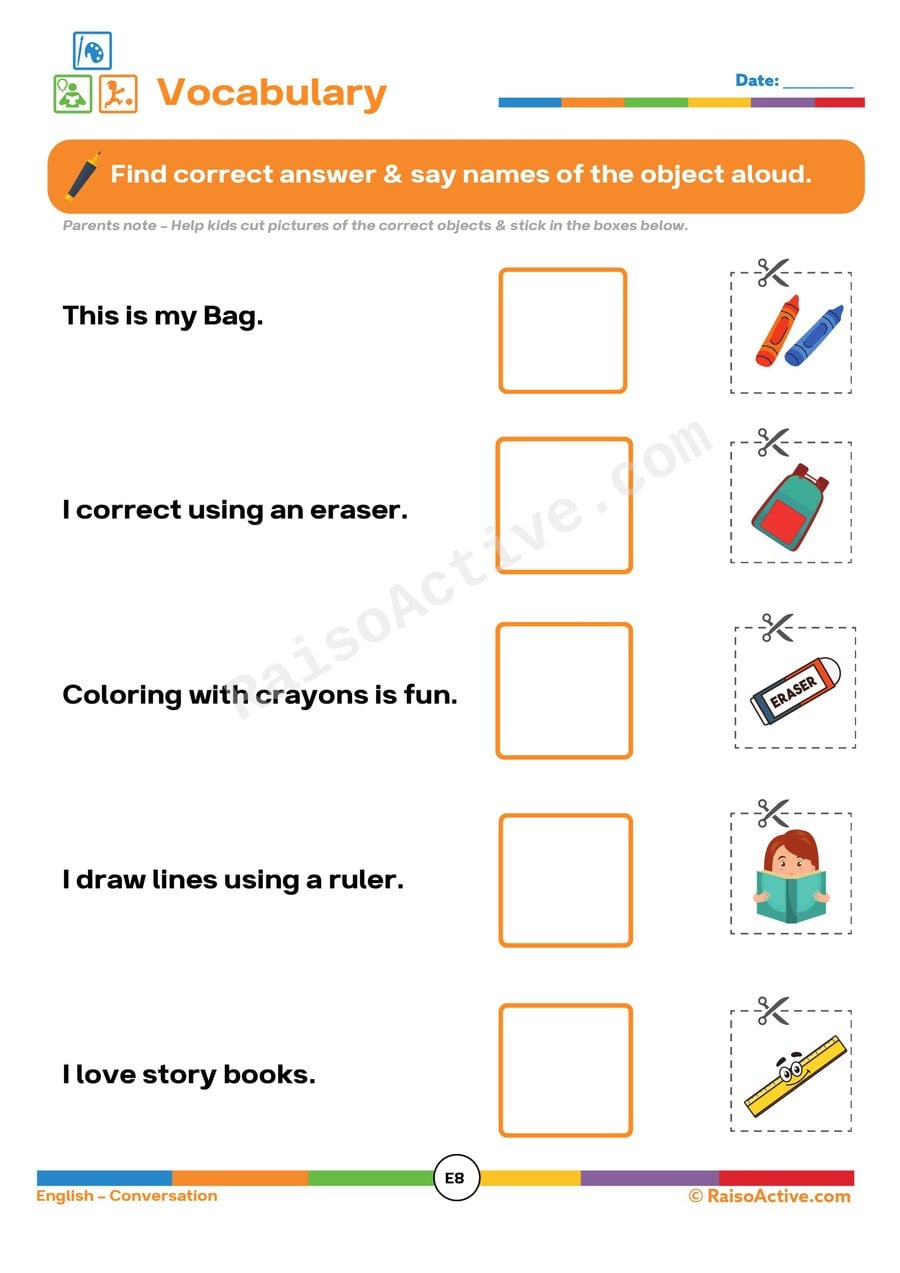
Vocabulary Fun: Match the Pictures! (Ages 3-5)
Ages 3-5 · Preschool–Pre-KAges 3-5 · Nursery–ReceptionAges 3-5 · Nursery–LKGAges 3-5
Cutting out pictures and matching them to sentences builds early reading comprehension in children ages 3-5, since they must listen to or read a sentence and connect its meaning to the correct image rather than just recognizing an isolated word. This combination of cutting, listening, and matching strengthens vocabulary retention because the word is reinforced through multiple senses at once: hearing it, seeing it in print, and seeing its picture. Pasting the correct picture into place also adds fine motor practice to the vocabulary lesson.

Phonic Sounds Worksheet: Circle the Picture That Starts with the Alphabet Sound!
Ages 4-5 · Pre-KAges 4-5 · ReceptionAges 4-5 · LKGAges 4-5
This worksheet reinforces beginning-sound recognition for children ages 4-5 by presenting a letter at the start of each row and asking them to find the one picture among several that begins with that same sound. Because each row contains multiple pictures, children must test several beginning sounds against the target letter before settling on the correct one, which builds more precise listening skills than simpler one-picture matching tasks. This process also strengthens the letter-sound mapping that underlies early decoding.
Related worksheets
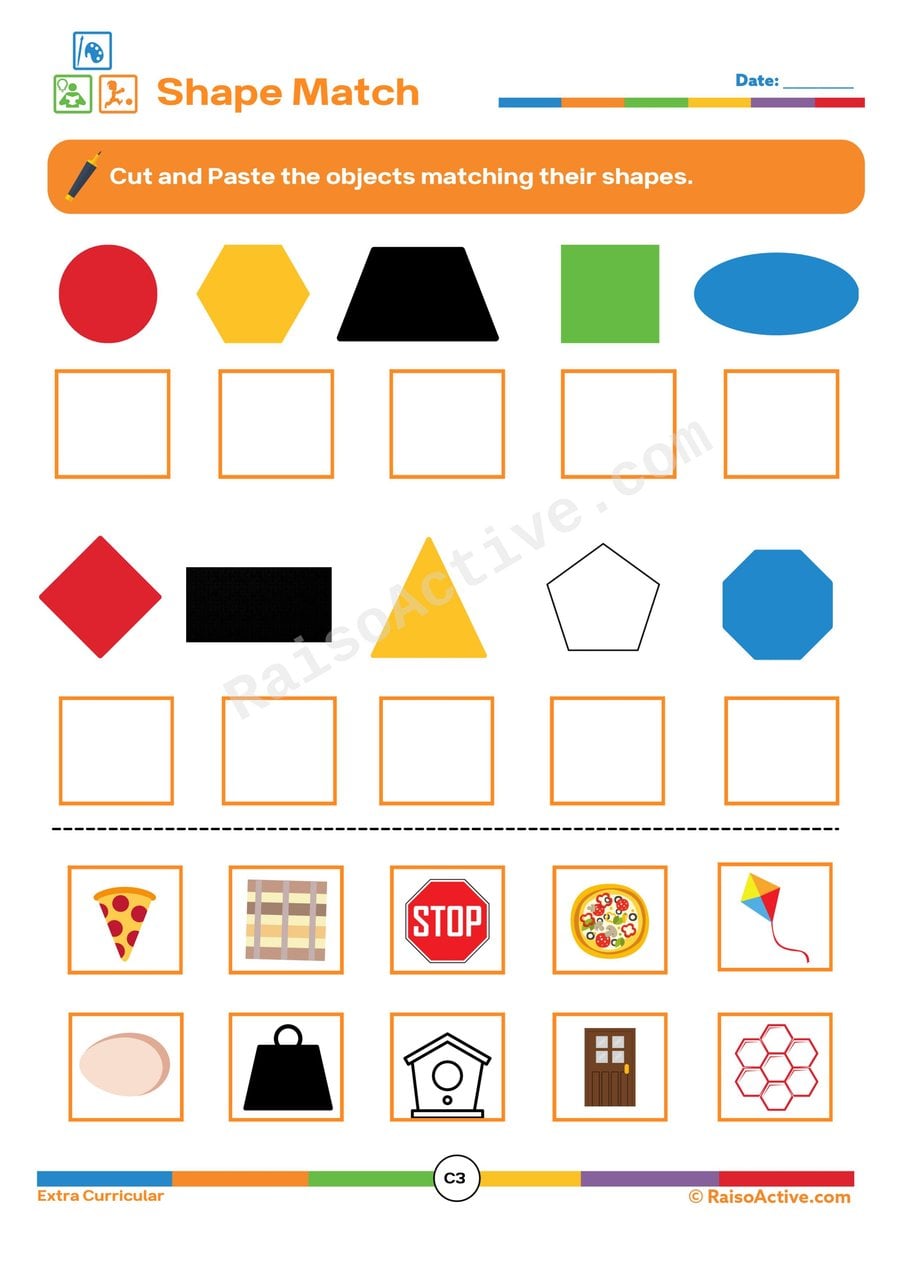
Shape Match Worksheet: Cut and Paste Shapes!
Ages 3-5 · Preschool–Pre-KAges 3-5 · Nursery–ReceptionAges 3-5 · Nursery–LKGAges 3-5
Children ages 3-5 practice shape recognition and visual discrimination as they cut out everyday objects and match each one to the 2D shape it most closely resembles, reinforcing that shapes exist all around them, not just on a worksheet page. This kind of real-world shape matching builds a stronger foundation than memorizing shape names in isolation.
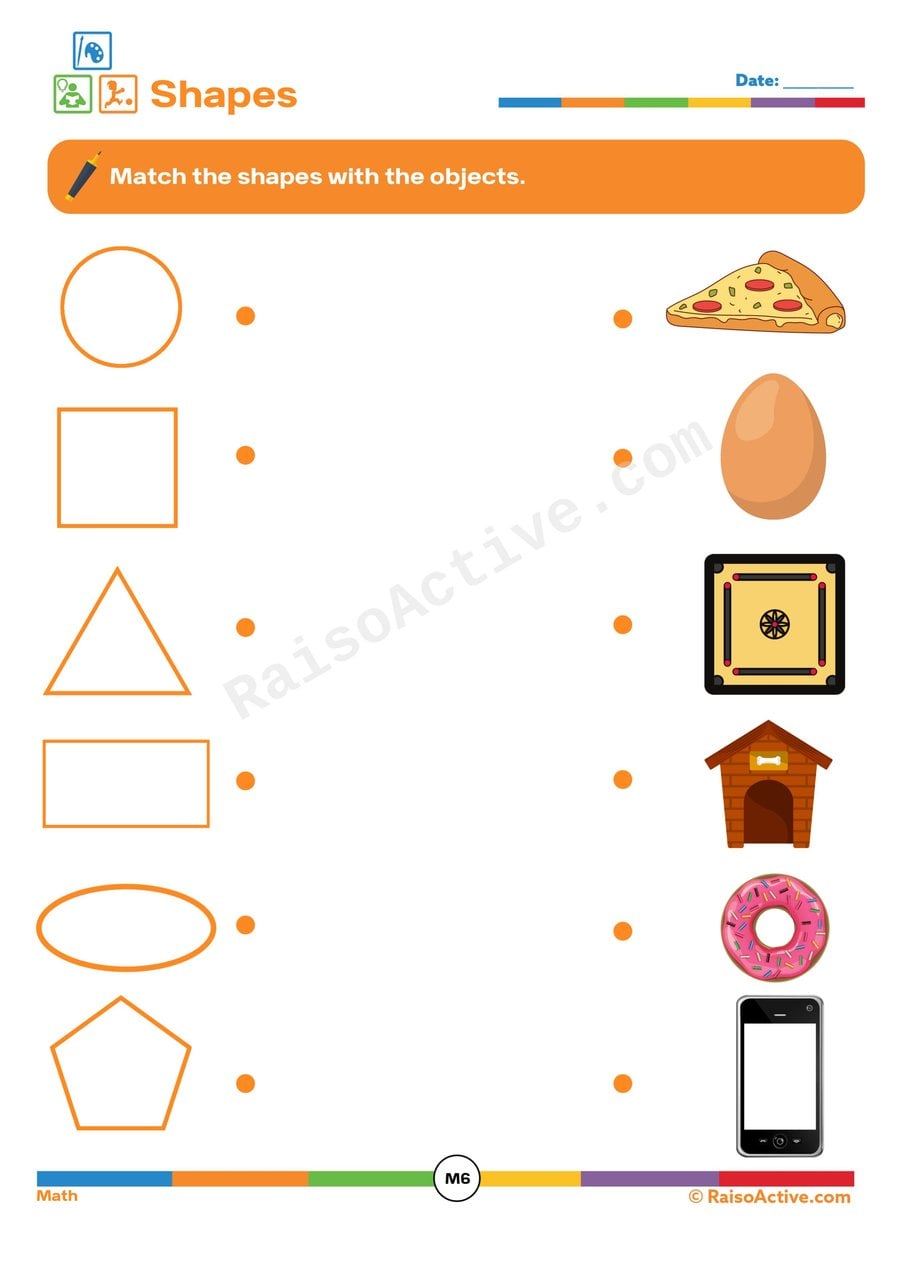
Shape Matching Worksheet for Preschoolers
Ages 3-5 · Preschool–Pre-KAges 3-5 · Nursery–ReceptionAges 3-5 · Nursery–LKGAges 3-5
This worksheet strengthens shape recognition for children ages 3-5 by asking them to connect abstract shape outlines to the real-world objects that share that same shape. Recognizing that a shape like a circle or rectangle can apply to very different objects, such as a clock and a door, helps children generalize shape concepts beyond a single example. Drawing the connecting line between matched pairs also reinforces visual tracking and pencil control.
Shape Counting Fun: Count and Color the Shapes!
Ages 3-5 · Preschool–Pre-KAges 3-5 · Nursery–ReceptionAges 3-5 · Nursery–LKGAges 3-5
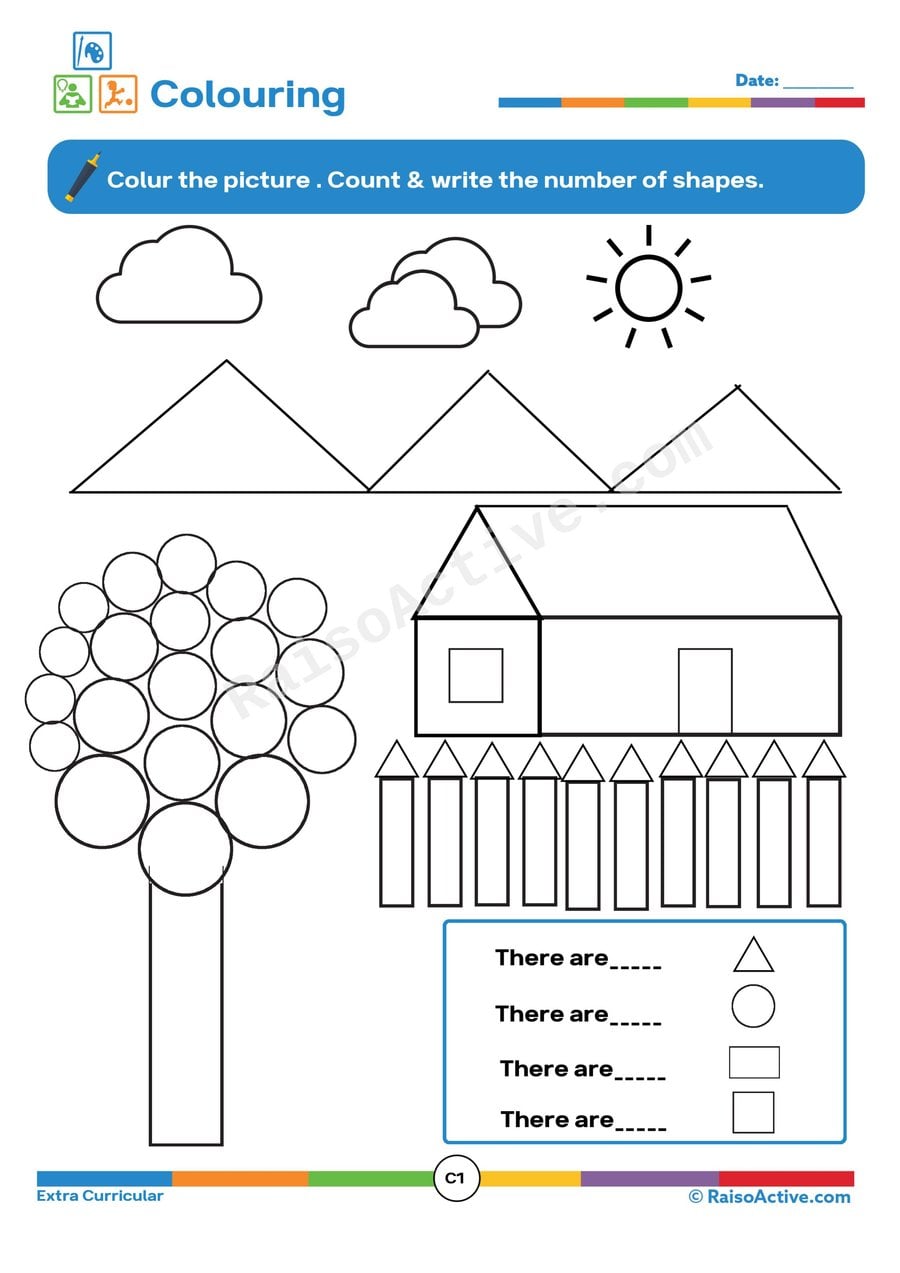
Preschoolers ages 3-5 combine shape recognition with counting practice by identifying different shapes within a larger picture, coloring them, and then counting how many of each shape appear. This dual task strengthens both geometry vocabulary and one-to-one correspondence as children tally shape totals. Coloring the picture first also builds sustained fine motor control before the counting portion begins.
Shape Coloring Worksheet: Before the Shape!
Ages 3-5 · Preschool–Pre-KAges 3-5 · Nursery–ReceptionAges 3-5 · Nursery–LKGAges 3-5
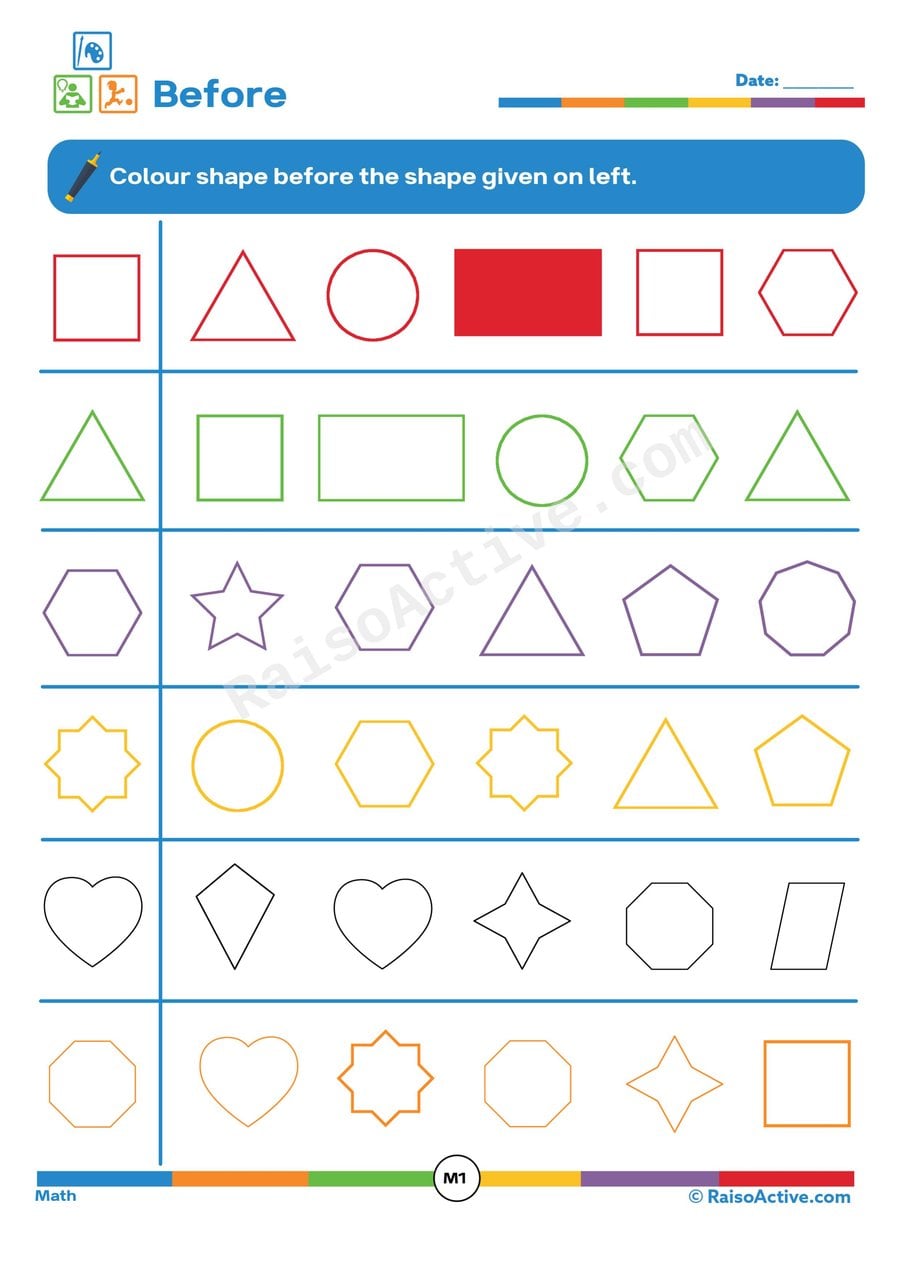
This worksheet combines shape recognition with sequencing by asking children to identify which shape comes before a given shape in a row, requiring them to understand order as well as shape names. For ages three to five, thinking about what comes 'before' something visually is a gentle introduction to ordinal reasoning that will later apply to numbers and letters as well as shapes.

Rocket Shapes Cut and Glue Worksheet for Preschoolers
Ages 3-5 · Preschool–Pre-KAges 3-5 · Nursery–ReceptionAges 3-5 · Nursery–LKGAges 3-5
Cutting out triangles, circles, and rectangles and gluing them into place to build a rocket teaches children ages 3-5 to recognize basic 2D shapes and understand how they combine to form a larger, recognizable object. This activity strengthens scissor control along straight and curved edges while also introducing early engineering thinking, since children must consider how each shape's position contributes to the finished rocket's structure. Framing shape practice as a space-themed craft project keeps a repetitive geometry lesson feeling exciting and imaginative.

Shape Dog Craft: Cut and Assemble a Fun Shapes Worksheet!
Ages 3-5 · Preschool–Pre-KAges 3-5 · Nursery–ReceptionAges 3-5 · Nursery–LKGAges 3-5
This worksheet helps children ages 3-5 recognize and assemble basic shapes, like circles, triangles, and squares, into a recognizable dog, reinforcing shape recognition while also building the fine motor precision needed to cut and place pieces accurately. Following a visual example to combine multiple shapes into one picture also strengthens early spatial reasoning.

Color the Shapes! A Fun Coloring Worksheet for Kids
Ages 3-5 · Preschool–Pre-KAges 3-5 · Nursery–ReceptionAges 3-5 · Nursery–LKGAges 3-5
This worksheet strengthens children ages 3-5 in both shape recognition and color matching by having them reproduce a colored key onto a black-and-white picture made of shapes. Matching a printed example rather than choosing colors freely also builds a new skill: following a visual reference precisely, which is different from — and complements — open-ended coloring.
Shape Sorting Worksheet: Cut and Paste Fun!
Ages 3-5 · Preschool–Pre-KAges 3-5 · Nursery–ReceptionAges 3-5 · Nursery–LKGAges 3-5
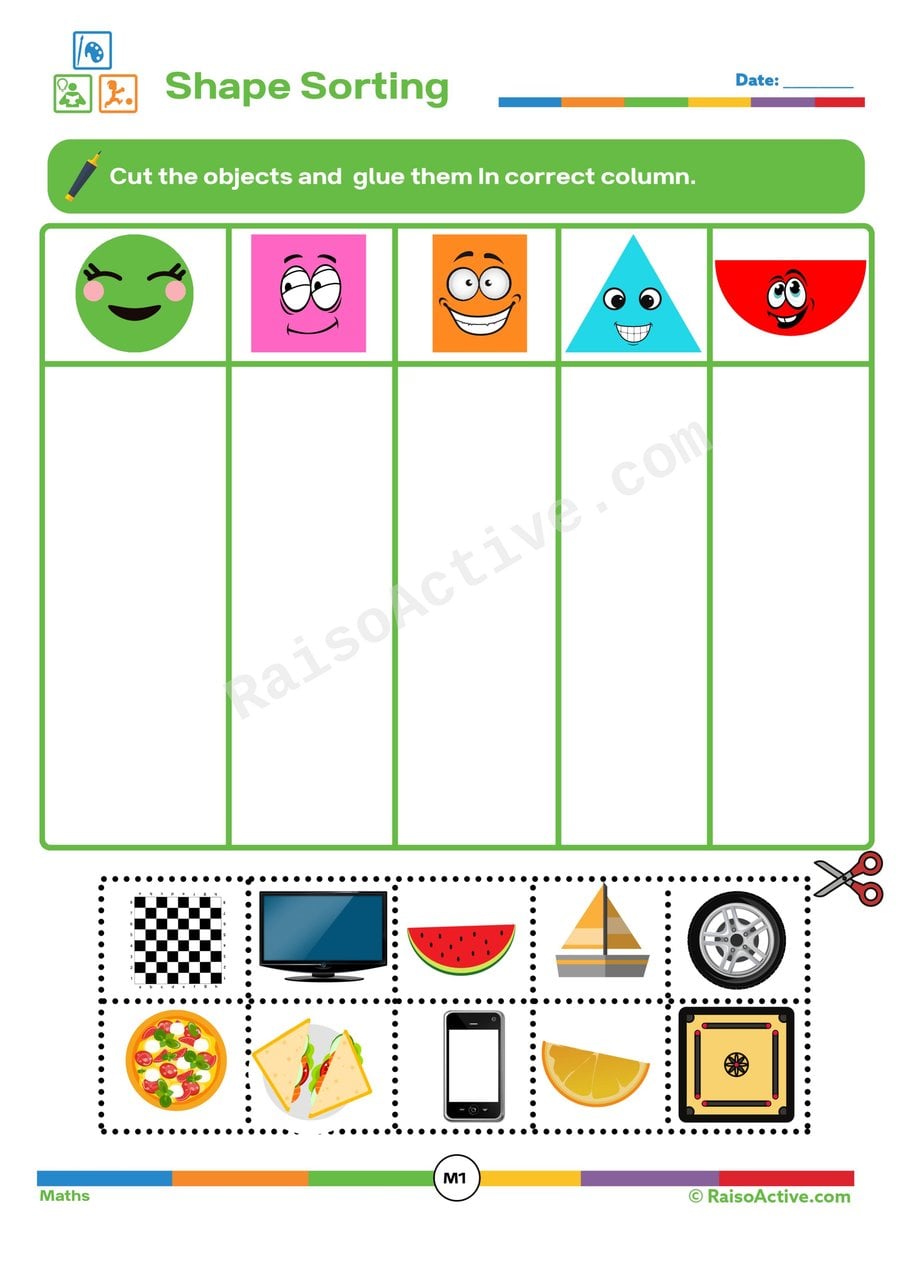
This cut-and-paste activity asks 3-5 year olds to do more than just name a shape — they have to look at a jumble of circles, squares, and triangles, decide which column each one belongs to, and physically place it there. That sorting step is what builds real shape classification, not just shape labeling, since your child must compare each new piece against the ones already in the column. Cutting the shapes out along their curves and corners is also genuine scissor practice, since curved cuts (circles) are notably harder for small hands than straight ones (triangles, squares).
Guides for this topic

Discovering Wonder: Nature-Based Learning Activities That Captivate Young Children
Explore nature-based learning activities for children ages 2–7 — leaf rubbings, bug hunts, nature journals, and seasonal Indian outdoor ideas that spark wonder.

Christmas and Winter Activities That Combine Fun and Learning: Creating Magical Educational Experiences
Discover Christmas and winter activities that combine festive fun with real learning. Crafts, counting, literacy, and printable worksheets for ages 2 to 8 — perfect for home and school.
Age-Appropriate Halloween Learning Activities: Balancing Spooks and Skills for Young Learners
Discover fun, age-appropriate Halloween learning activities for young children. Spooky crafts, counting games, literacy ideas, and printable worksheets for ages 2 to 8.
Reviews
Every worksheet for ages 3–5, no watermark
Members download the full library of 1,000+ worksheets and every activity pack without watermarks or daily limits. One year costs ₹999 in India or $20 elsewhere.
See membership plansOr download any worksheet free with a watermark (5 a day).