Vocabulary Fun: Match the Pictures! (Ages 3-5)
Cutting out pictures and matching them to sentences builds early reading comprehension in children ages 3-5, since they must listen to or read a sentence and connect its meaning to the correct image rather than just recognizing an isolated word. This combination of cutting, listening, and matching strengthens vocabulary retention because the word is reinforced through multiple senses at once: hearing it, seeing it in print, and seeing its picture. Pasting the correct picture into place also adds fine motor practice to the vocabulary lesson.
Part of the pack
Month 1: Learning & Development | Ages Up to 4
This is page 11 of the pack. Ages 3-4 · PreschoolAges 3-4 · NurseryAges 3-4
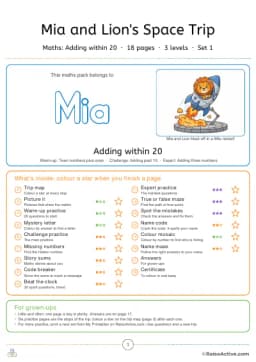
Made for your child
Counting to 10, made for your child
A maths pack with your child's name in it: pictures that explain, practice at three levels, puzzles and story sums about them. Print a new set whenever they finish.
Make a maths packFree preview · free for members
Curriculum
- Vocabulary > Vocabulary Building
How to use this worksheet
Have your child cut out the pictures on the right side of the page along the dotted lines, keeping them within easy reach. Read the first sentence aloud slowly, emphasizing the key vocabulary word, and ask your child which picture they think matches it. Once they choose the correct picture, have them paste it into the box next to that sentence. Continue through each sentence the same way, encouraging your child to reread or listen again to any sentence they're unsure about.
Materials needed
- Scissors
- Glue
- Crayons
Extension activities
- 1Use each vocabulary word from the worksheet in a brand-new sentence your child makes up themselves.
- 2Draw an additional picture for a new sentence you create together.
- 3Play a guessing game where you describe one of the pictures without naming it and your child guesses the word.
- 4Sort the cut-out pictures into categories, like animals, food, or toys.
- 5Create flashcards from the vocabulary words for a quick matching review later in the week.

Written by
Hemsweta Jain · Teacher Cheena
MBA and Early Childhood Educator, teaching since 2014 · Founder of RaisoActive, Mumbai
Every RaisoActive worksheet is designed and checked by the founder before publishing.
Published · Last reviewed
More from Month 1: Learning & Development | Ages Up to 4

Fine Motor Skills Activities for Kids: Parent's Guide
Ages 3-5 · Preschool–Pre-KAges 3-5 · Nursery–ReceptionAges 3-5 · Nursery–LKGAges 3-5
This guide gives parents and teachers of children ages 3-5 a set of hands-on activities — using grains, flowers, textured cloth, and salt or sugar — that build the small hand muscles and finger control needed for holding a pencil correctly and writing later on. Working with varied, everyday materials rather than a single worksheet page exposes children to different grips, pressures, and textures, which develops fine motor strength more broadly than pencil-and-paper practice alone.

Slanting Line Tracing Worksheet: Help the Balls Roll Down!
Ages 3-5 · Preschool–Pre-KAges 3-5 · Nursery–ReceptionAges 3-5 · Nursery–LKGAges 3-5
Tracing diagonal lines that guide a ball down a slide teaches children ages 3-5 a prewriting stroke that's more challenging than straight horizontal or vertical lines, since slanted strokes require angling the wrist and controlling direction at the same time. This kind of diagonal line practice directly prepares the hand for letters like A, K, and X, which all rely on slanted strokes. The playful slide-and-ball theme gives an otherwise repetitive motor exercise a sense of motion and purpose.
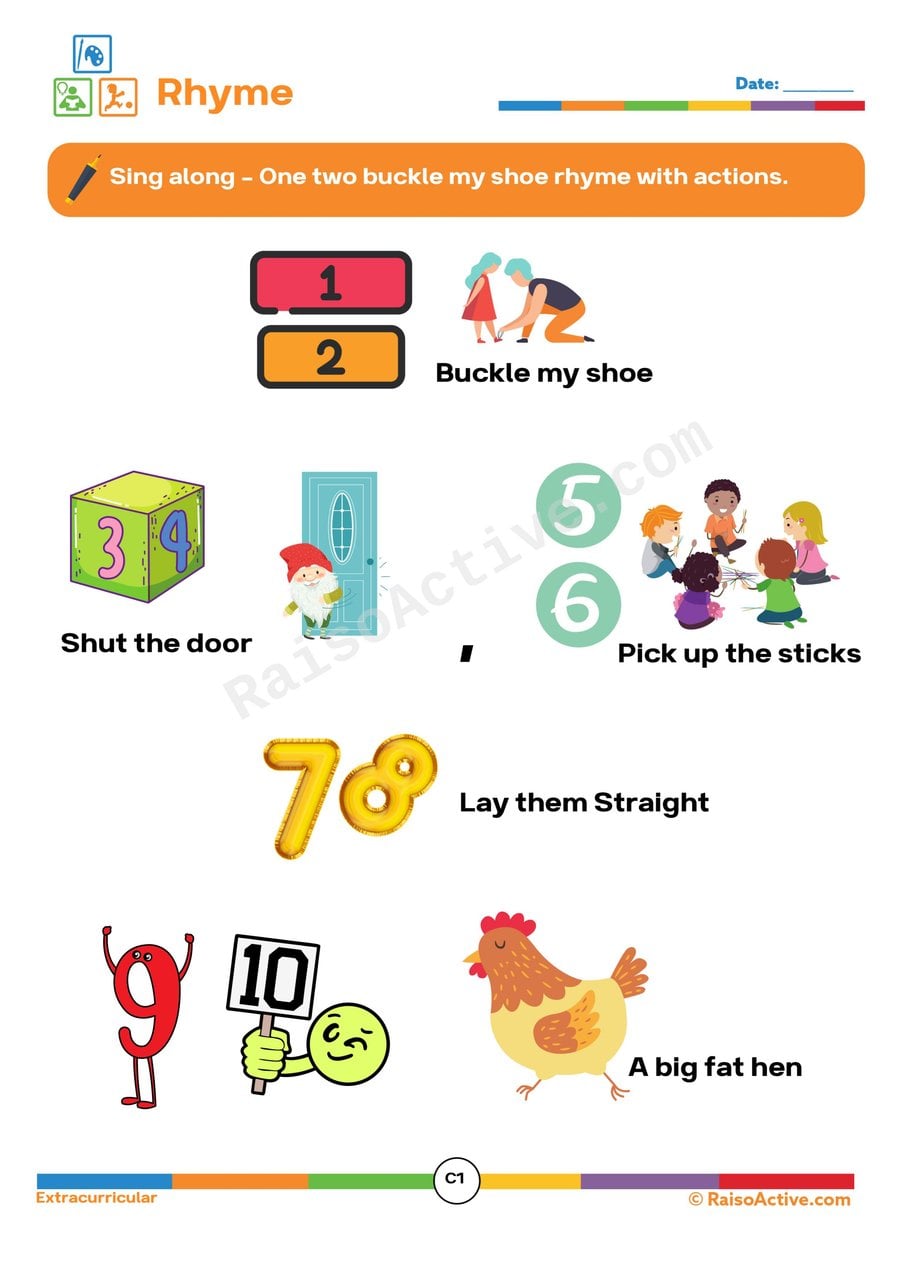
Rhyme Time! Sing Along and Learn Numbers 1-10
Ages 3-5 · Preschool–Pre-KAges 3-5 · Nursery–ReceptionAges 3-5 · Nursery–LKGAges 3-5
This activity worksheet helps children ages 3-5 build number recognition for 1 through 10 through the natural memory support of rhyme and repetition, pairing each number with a rhyming action to act out. Rhymes and songs are proven to help young children retain sequences, including number order, more easily than flat repetition alone. Acting out each rhyme's action also links movement to the number word, reinforcing learning through more than one sense.
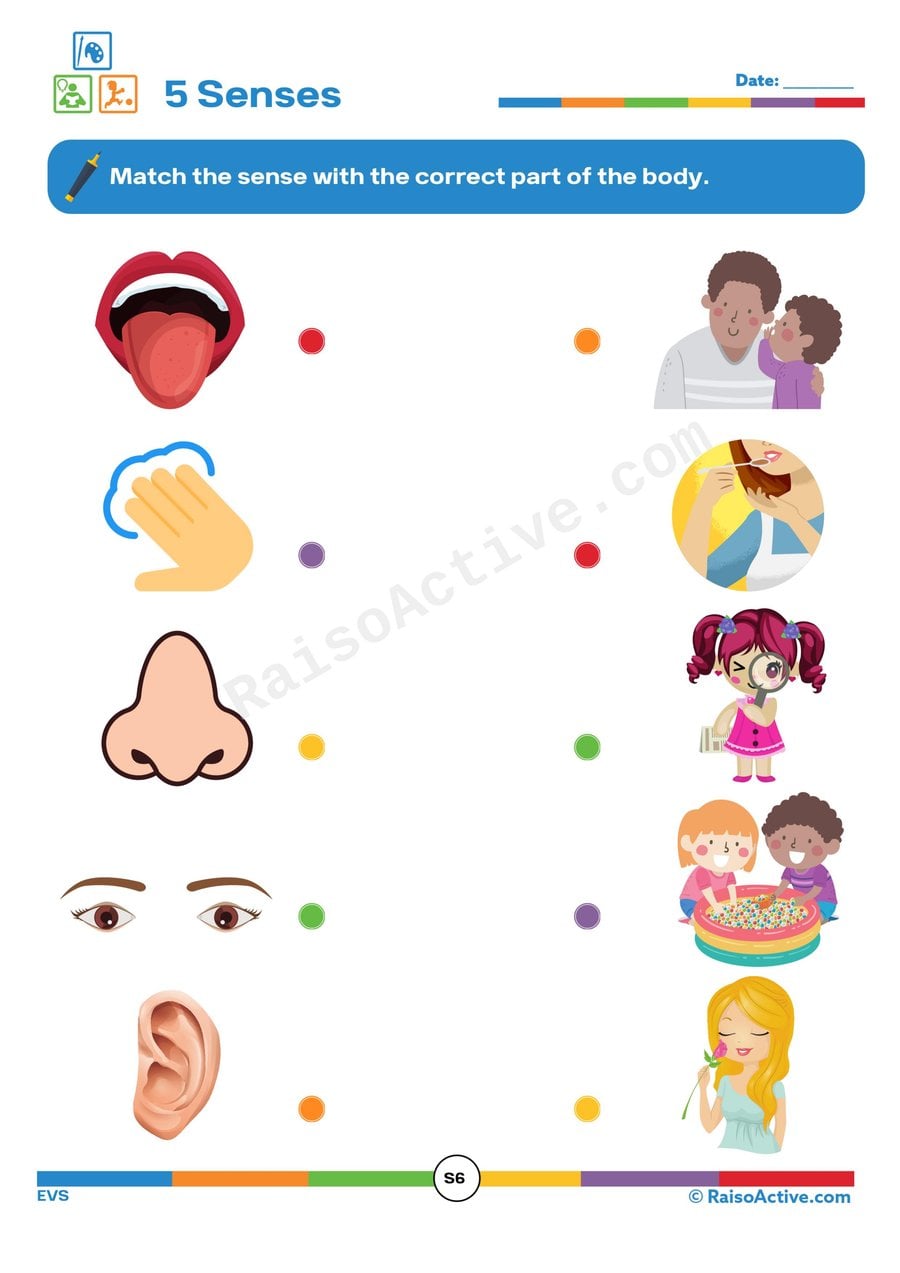
5 Senses Matching Worksheet for Preschoolers
Ages 3-5 · Preschool–Pre-KAges 3-5 · Nursery–ReceptionAges 3-5 · Nursery–LKGAges 3-5
This worksheet introduces children ages 3-5 to the five senses — sight, hearing, smell, taste, and touch — by asking them to match each sense to the body part responsible for it. Understanding that specific body parts are linked to specific senses is an early science concept that builds body awareness and observational vocabulary. Drawing the connecting line for each match also reinforces visual tracking and pencil control.
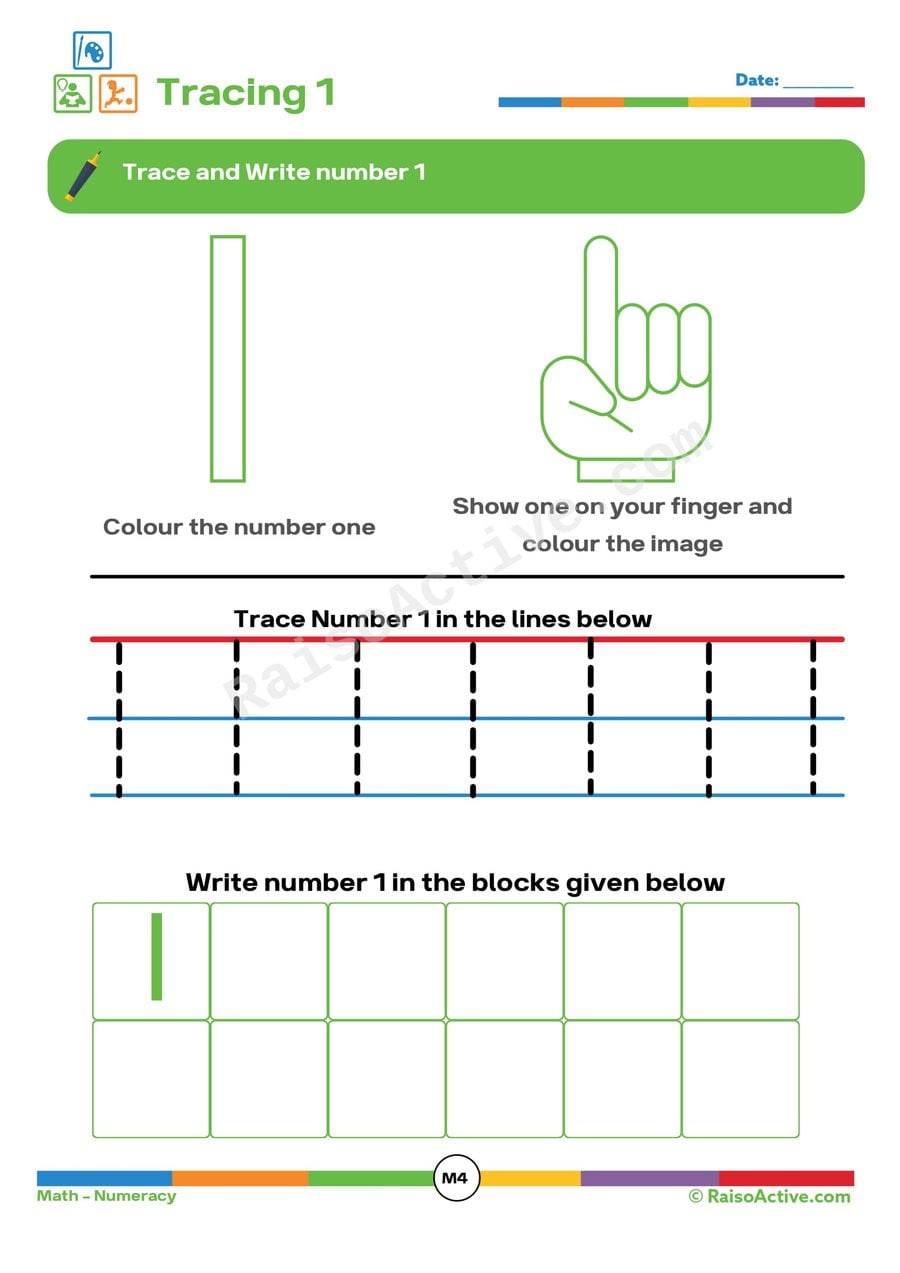
Tracing Number 1 Worksheet for Preschoolers
Ages 3-5 · Preschool–Pre-KAges 3-5 · Nursery–ReceptionAges 3-5 · Nursery–LKGAges 3-5
This tracing worksheet gives children ages 3-5 focused, repetitive practice forming the number 1 through tracing dotted lines, independent writing in provided boxes, and coloring an accompanying image, building the pencil control that precedes confident number writing. Because number 1 is typically the very first numeral children learn to write, getting the stroke direction and starting point correct here sets a strong foundation for writing higher numbers later. Repetition across multiple boxes on the page also builds the muscle memory needed for consistent, automatic number formation.

Head, Shoulders, Knees & Toes Rhyme Worksheet for Preschoolers
Ages 3-5 · Preschool–Pre-KAges 3-5 · Nursery–ReceptionAges 3-5 · Nursery–LKGAges 3-5
This rhyme-based worksheet has children ages 3-5 sing along to 'Head, Shoulders, Knees and Toes' while pointing to and naming each body part, combining music, movement, and vocabulary building in one activity. Rhythmic repetition is one of the most effective ways young children memorize new vocabulary, and pairing each word with a physical touch reinforces the connection between the spoken word and the actual body part. This kind of full-body engagement also supports gross motor coordination alongside language learning.

Tall and Short Worksheet: Comparing Sizes for Preschoolers
Ages 3-5 · Preschool–Pre-KAges 3-5 · Nursery–ReceptionAges 3-5 · Nursery–LKGAges 3-5
Comparing objects and circling the tallest and shortest one in each row teaches children ages 3-5 comparative size vocabulary, an early math skill that goes beyond simply describing single objects as big or small. This worksheet requires children to look across an entire row and rank items relative to one another, which builds visual comparison skills that later support measurement concepts like longer, shorter, and equal. Using varied pictures for each comparison also keeps children engaged while practicing the same underlying skill repeatedly.

Classroom Vocabulary Worksheet for Kids: Circle and Name!
Ages 3-5 · Preschool–Pre-KAges 3-5 · Nursery–ReceptionAges 3-5 · Nursery–LKGAges 3-5
Circling pictures of common classroom objects and saying their names aloud builds vocabulary and oral language skills in children ages 3-5, helping them connect familiar school items, like a desk, book, or crayon, to their spoken names. This kind of naming practice supports school readiness, since recognizing and labeling classroom objects helps children feel more comfortable and confident in a school environment. Speaking each word aloud, rather than just circling silently, also reinforces pronunciation and word retrieval.
Related worksheets
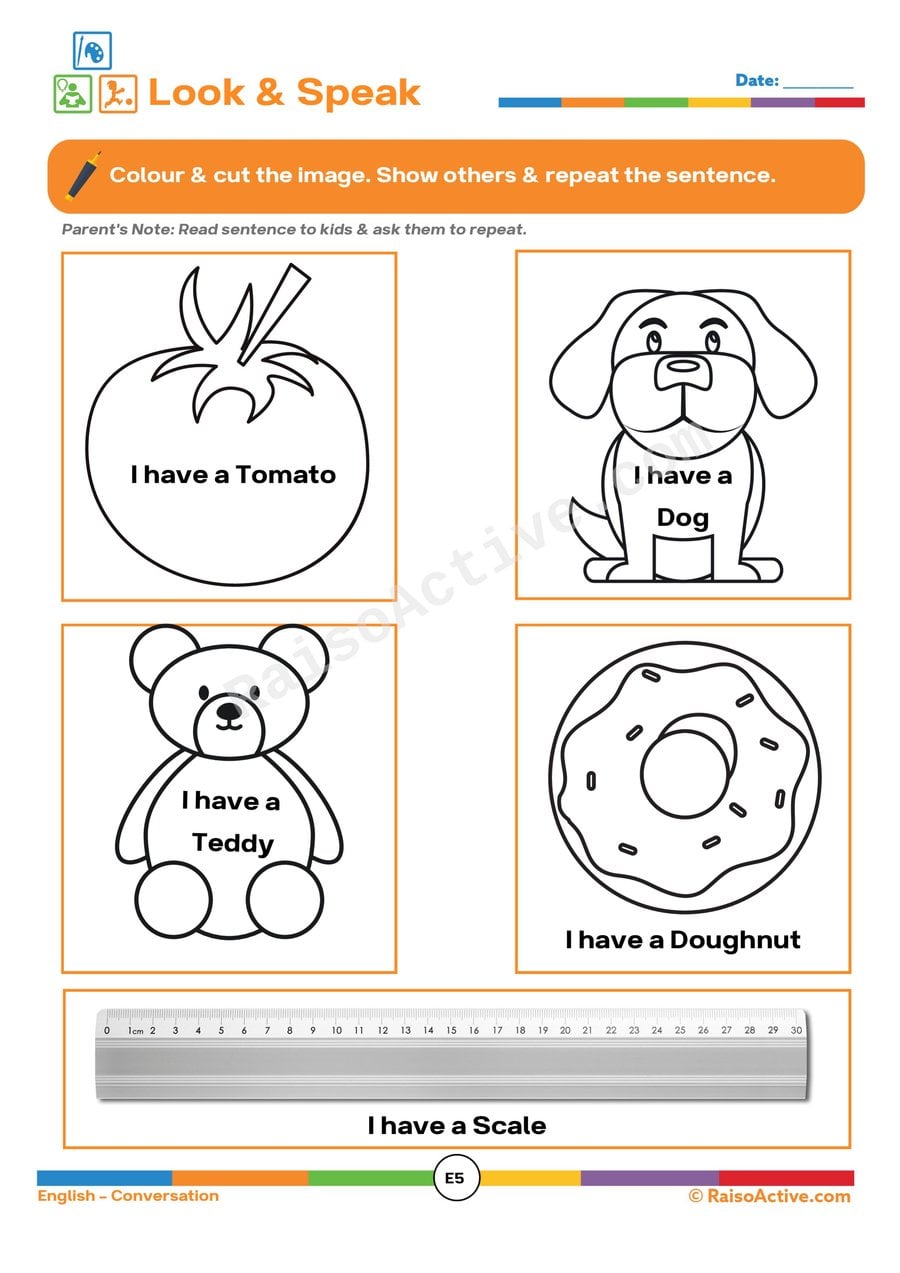
Look & Speak: Color and Repeat the Words Worksheet
Ages 3-5 · Preschool–Pre-KAges 3-5 · Nursery–ReceptionAges 3-5 · Nursery–LKGAges 3-5
This worksheet builds early vocabulary and oral language skills by having children color familiar images and then read and repeat a simple sentence describing each one aloud. For ages 3-5, the combination of coloring, reading, and speaking reinforces new words through multiple senses, helping vocabulary stick more effectively than reading alone.

Cut and Paste Vocabulary Worksheet: Matching Words to Pictures
Ages 3-5 · Preschool–Pre-KAges 3-5 · Nursery–ReceptionAges 3-5 · Nursery–LKGAges 3-5
Matching printed words to their pictures asks emerging readers to connect an abstract string of letters with a real object, an essential step on the path from picture recognition to true word reading. The cutting and pasting adds a tactile, deliberate pace to the matching process, giving children extra time to look closely at each word before committing to an answer.

Fun Letter I & H Vocabulary Game Worksheet for Preschoolers
Ages 3-5 · Preschool–Pre-KAges 3-5 · Nursery–ReceptionAges 3-5 · Nursery–LKGAges 3-5
This board-game-style worksheet helps children ages 3-5 build vocabulary around the letters I and H by rolling a die, moving along a path, and generating additional words that share the same beginning sound as the picture they land on. Thinking of extra words on the spot pushes children beyond simple recognition into active word recall, a more advanced phonics skill.
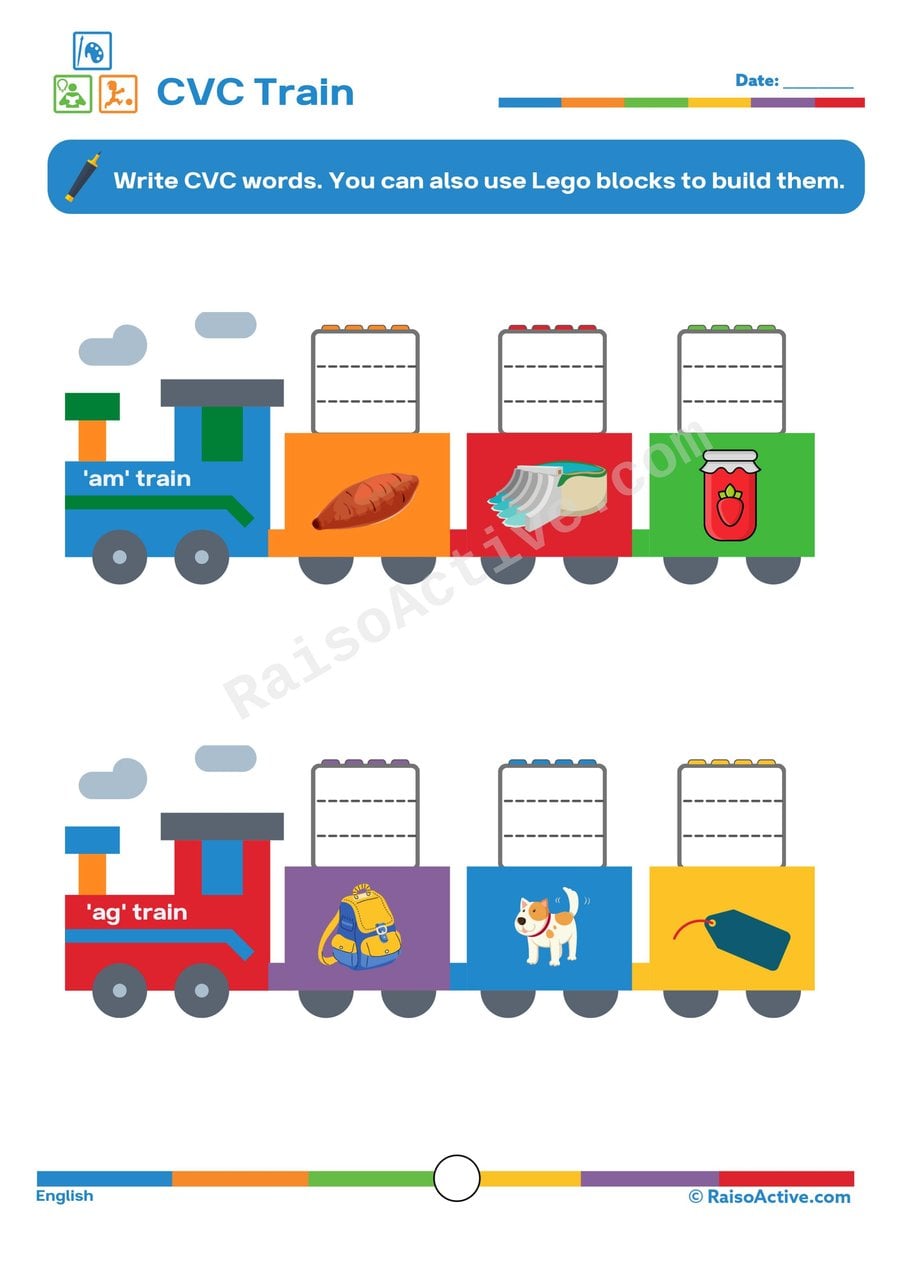
CVC Train Worksheet: Write CVC Words!
Ages 4-6 · Pre-K–KindergartenAges 4-6 · Reception–Year 1Ages 4-6 · LKG–UKGAges 4-6
Writing consonant-vowel-consonant words like 'cat,' 'sun,' or 'pig' under matching pictures gives children ages 4-6 direct practice with letter-sound blending, a core phonics skill that underpins independent reading. Because each train car pairs a picture clue with a blank space, children also practice translating a spoken word they can sound out into its correctly spelled written form.
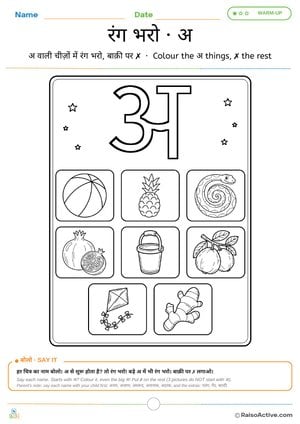
Colour the अ Things: Hindi Letter अ Colouring Page | रंग भरो · अ
Ages 3-7 · Preschool–Grade 1Ages 3-7 · Nursery–Year 2Ages 3-7 · Nursery–Class 1Ages 3-7
Children listen for the first sound of each picture name and decide whether it starts with अ. They colour the अ pictures, cross out the others and colour the big letter.

Navratri Picture Cards: Cut-Out Memory Match Game
Ages 4-6 · Pre-K–KindergartenAges 4-6 · Reception–Year 1Ages 4-6 · LKG–UKGAges 4-6
Children learn six Navratri words, match each picture to its word and clue, and practise memory and cutting skills.
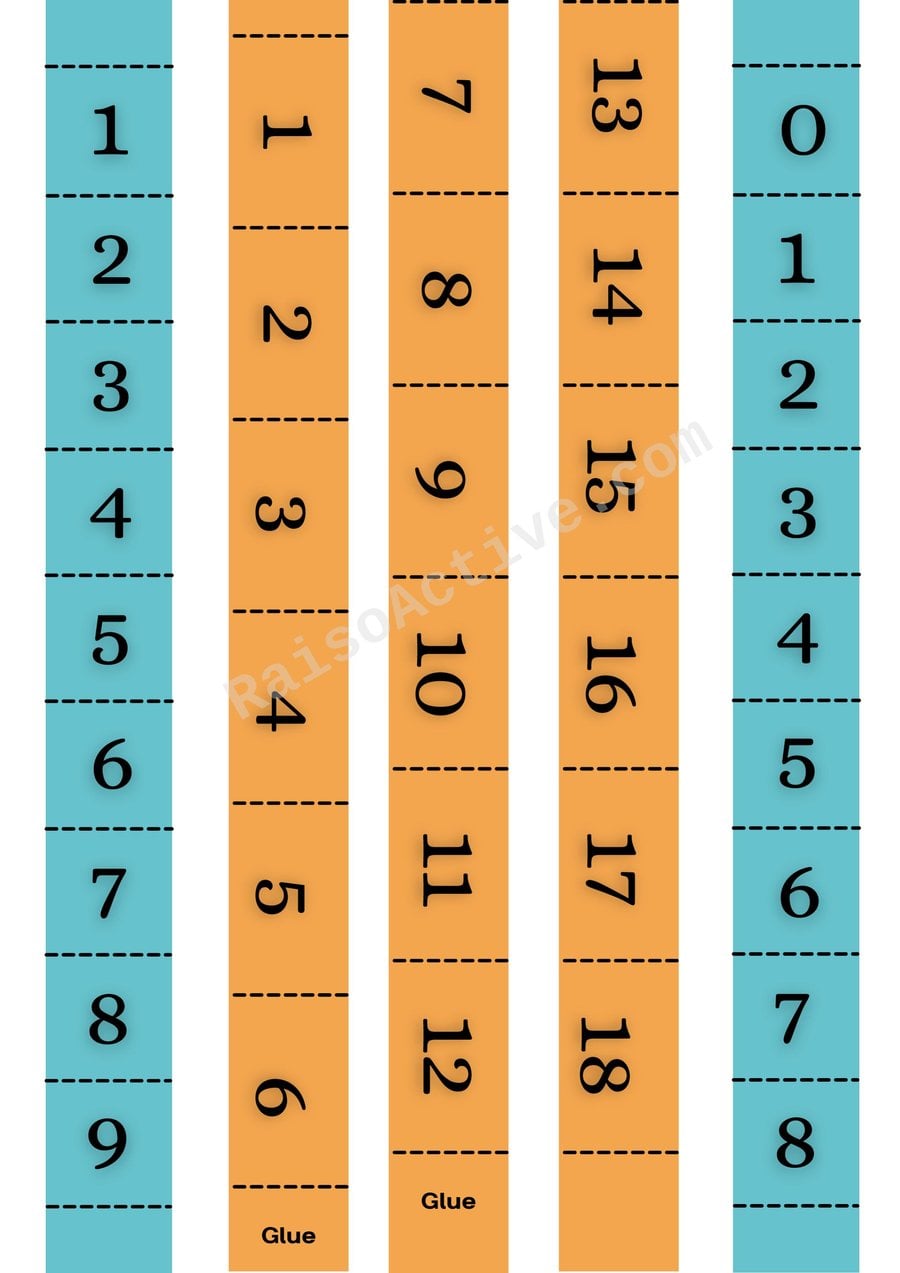
Number Matching Worksheet: 0-18
Ages 3-5 · Preschool–Pre-KAges 3-5 · Nursery–ReceptionAges 3-5 · Nursery–LKGAges 3-5
This activity strengthens numeral recognition for children ages 3-5 by having them find and pair matching numbers from 0 to 18 printed on separate strips. Because the numbers are scattered rather than in order, children must recognize each digit shape on its own rather than relying on counting sequence, which builds true number recognition instead of rote list-reciting.

Clothing Pattern Matching Worksheet for Preschoolers
Ages 3-5 · Preschool–Pre-KAges 3-5 · Nursery–ReceptionAges 3-5 · Nursery–LKGAges 3-5
By comparing clothing items and connecting each one to its pattern match, children ages 3-5 build visual discrimination skills, learning to notice fine differences in stripes, dots, or repeated shapes. This close-looking practice supports the same attention-to-detail children will later need to tell similar-looking letters and numbers apart.
Guides for this topic

Sight Words by Age: The First 50 Words and How to Teach Them Without Flashcard Fatigue
Which sight words to teach first and why, the heart-word method, a read-trace-write-find routine, games, and a by-age table of typical sight-word progress.
How to Teach CVC Blending: A Step-by-Step Method That Works in Two Weeks
A step-by-step method for teaching CVC blending, covering continuous sounds, word families, common errors, and a 14-day plan that most children finish reading CVC words.

Best Worksheets for 3-Year-Olds: What Works and What to Avoid
What works on worksheets for 3-year-olds: short sessions, crayons, tracing lines, matching, cutting, a free weekly plan, and signs one is too advanced.
Reviews
Every worksheet for ages 3–5, no watermark
Members download the full library of 1,000+ worksheets and every activity pack without watermarks or daily limits. One year costs ₹999 in India or $20 elsewhere.
See membership plansOr download any worksheet free with a watermark (5 a day).