Head, Shoulders, Knees & Toes Rhyme Worksheet for Preschoolers
This rhyme-based worksheet has children ages 3-5 sing along to 'Head, Shoulders, Knees and Toes' while pointing to and naming each body part, combining music, movement, and vocabulary building in one activity. Rhythmic repetition is one of the most effective ways young children memorize new vocabulary, and pairing each word with a physical touch reinforces the connection between the spoken word and the actual body part. This kind of full-body engagement also supports gross motor coordination alongside language learning.
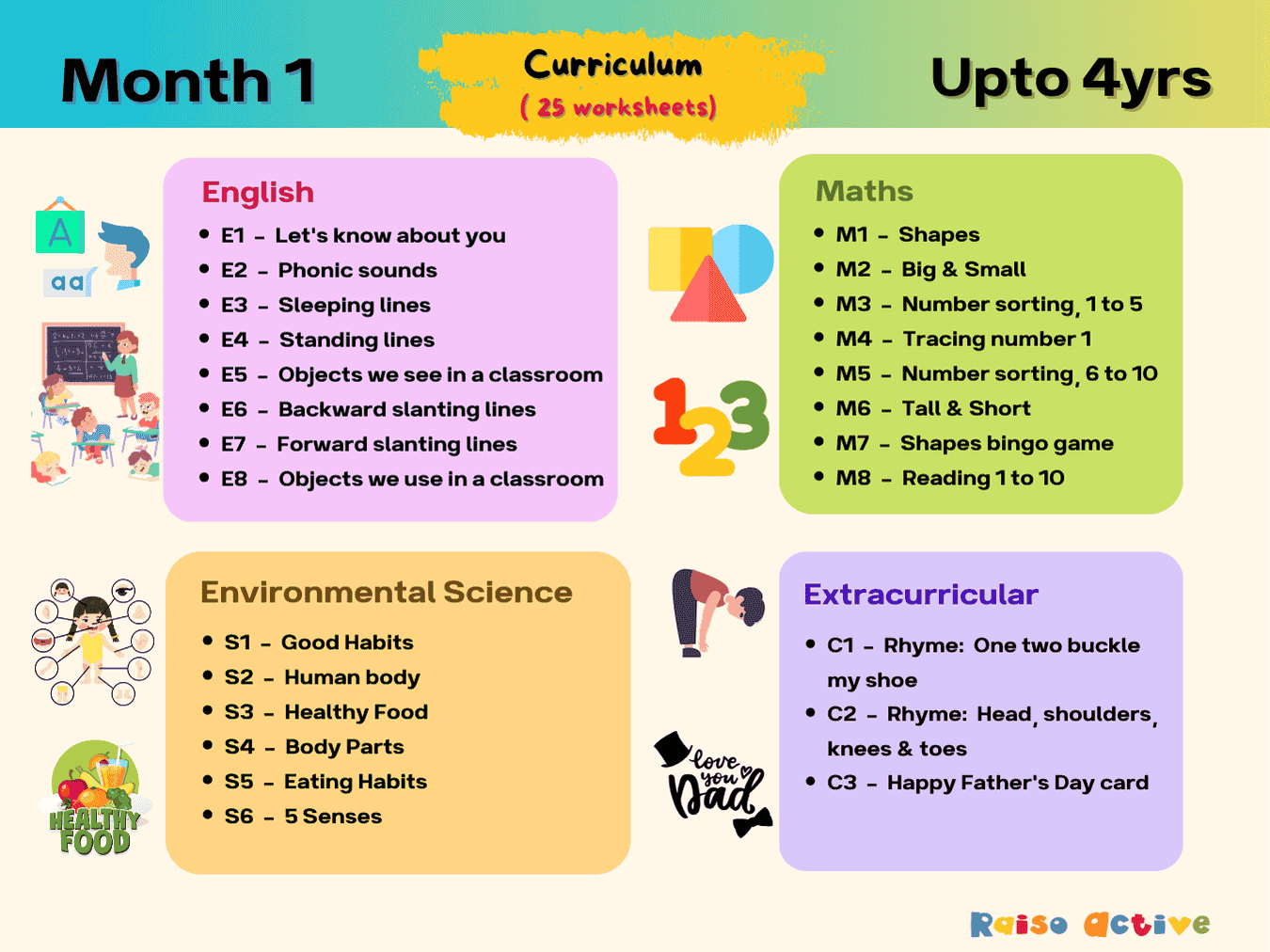
Part of the pack
Month 1: Learning & Development | Ages Up to 4
This is page 27 of the pack. Ages 3-4 · PreschoolAges 3-4 · NurseryAges 3-4
Curriculum
- Phonological Awareness > Rhymes & Songs
How to use this worksheet
Sing the rhyme together slowly at first, pointing to your own head, shoulders, knees, and toes as each word is sung. Encourage your child to follow along, touching their own body parts in time with the song. Once they're comfortable, speed up the song gradually, turning it into a fun coordination challenge. After singing, use the worksheet's pictures or writing space to reinforce the body part names in a quieter, seated activity.
Materials needed
- Pencil
- Crayons
Extension activities
- 1Act out the rhyme with big exaggerated actions, adding new verses with other body parts like elbows or ears.
- 2Draw a picture of yourself and label the body parts mentioned in the rhyme.
- 3Play a slowed-down version of 'Simon Says' using only the body parts from the song.
- 4Make up a new verse to the rhyme using body parts not included in the original song.
- 5Have a family sing-along, taking turns leading the actions.

Written by
Hemsweta Jain · Teacher Cheena
MBA and Early Childhood Educator, teaching since 2014 · Founder of RaisoActive, Mumbai
Every RaisoActive worksheet is designed and checked by the founder before publishing.
Published · Last reviewed
More from Month 1: Learning & Development | Ages Up to 4
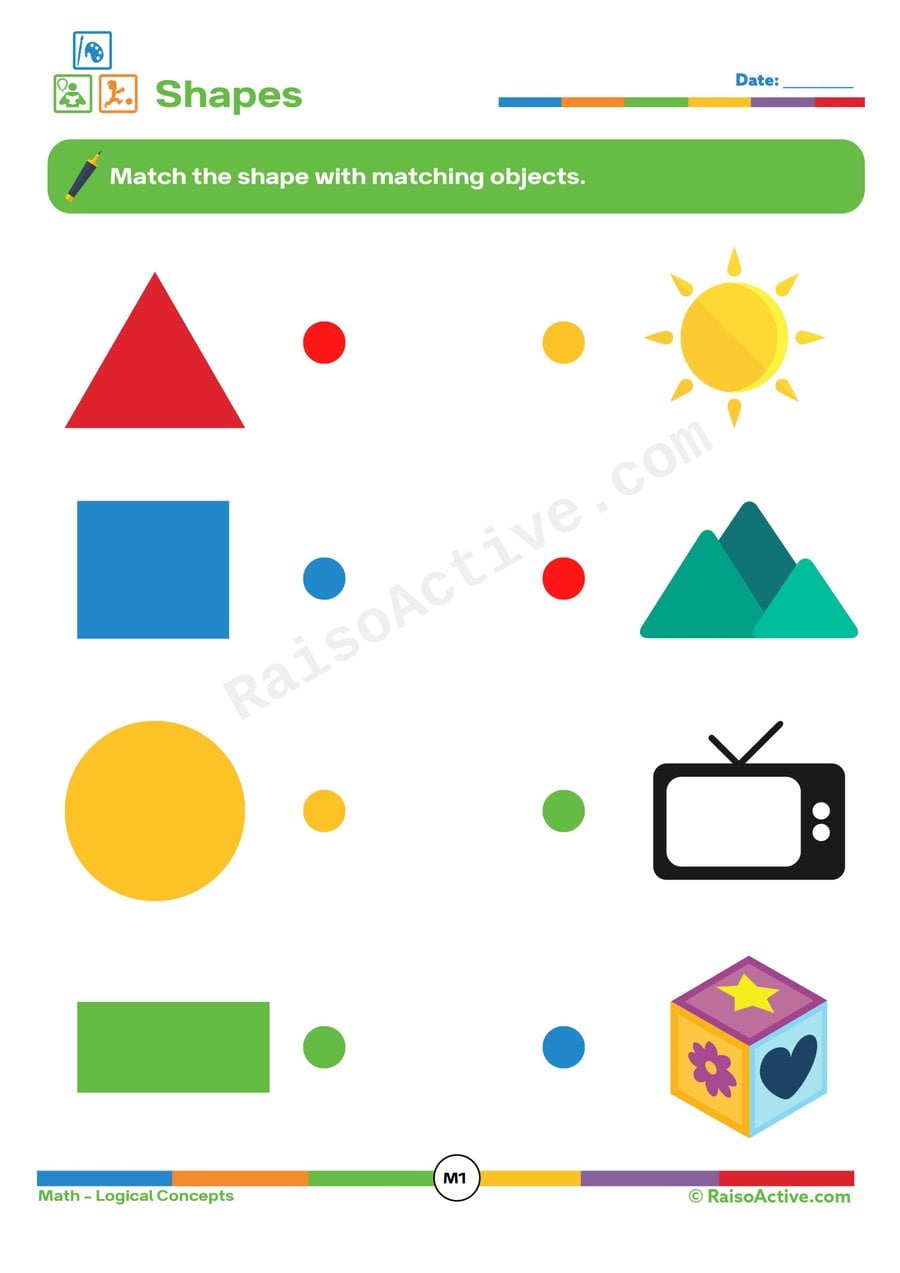
Shape Matching Worksheet for Preschoolers
Ages 3-5 · Preschool–Pre-KAges 3-5 · Nursery–ReceptionAges 3-5 · Nursery–LKGAges 3-5
This worksheet helps children ages 3-5 practice recognizing basic geometric shapes by connecting each shape outline to the everyday object it resembles. Pairing an abstract shape with a concrete object supports the transition from recognizing shapes in isolation to spotting them out in the real world. Drawing a connecting line between the matched pairs also builds hand-eye coordination and pencil control.
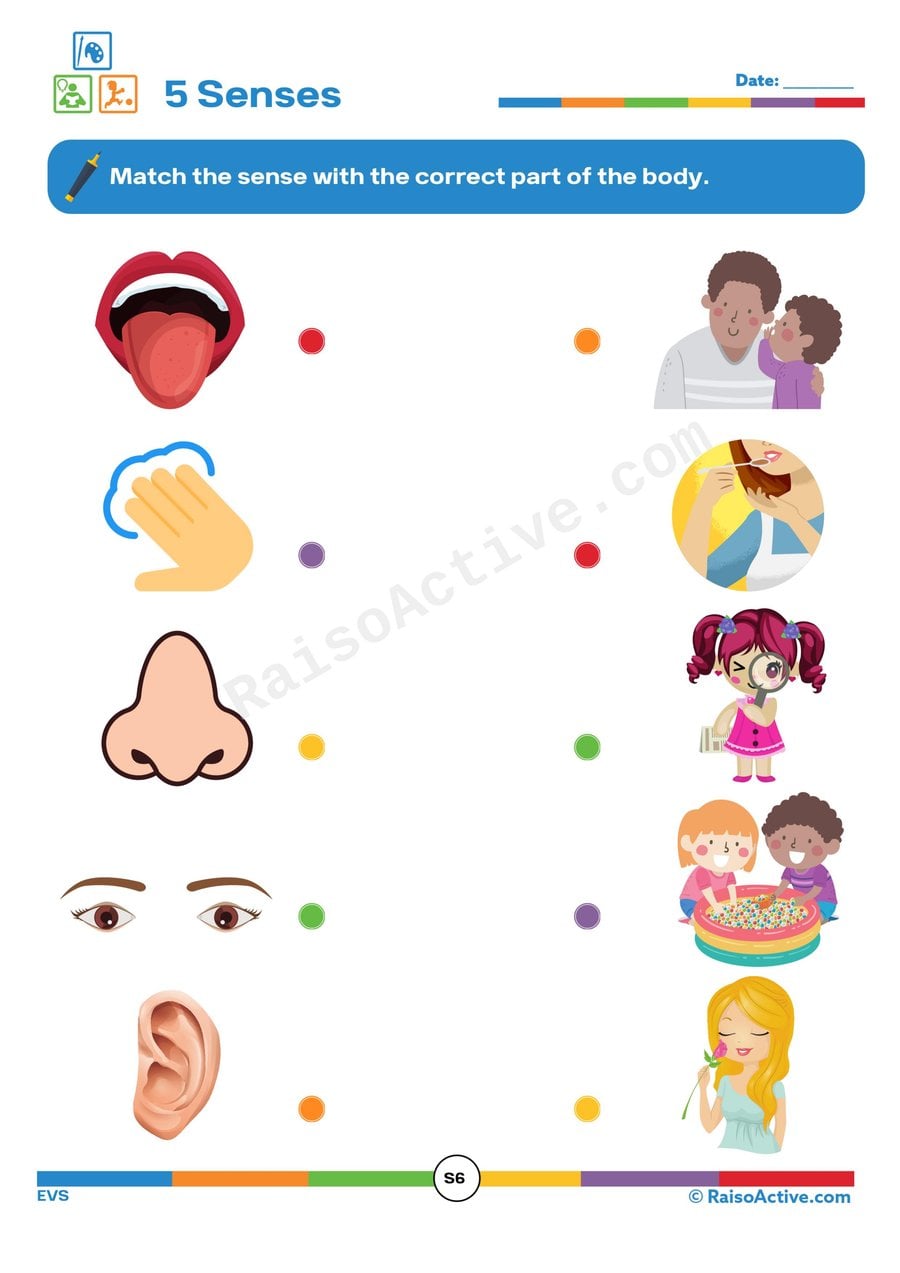
5 Senses Matching Worksheet for Preschoolers
Ages 3-5 · Preschool–Pre-KAges 3-5 · Nursery–ReceptionAges 3-5 · Nursery–LKGAges 3-5
This worksheet introduces children ages 3-5 to the five senses — sight, hearing, smell, taste, and touch — by asking them to match each sense to the body part responsible for it. Understanding that specific body parts are linked to specific senses is an early science concept that builds body awareness and observational vocabulary. Drawing the connecting line for each match also reinforces visual tracking and pencil control.

Father's Day Coloring Card: A Fun Coloring Worksheet for Kids!
Ages 3-5 · Preschool–Pre-KAges 3-5 · Nursery–ReceptionAges 3-5 · Nursery–LKGAges 3-5
Coloring Father's Day themed images and folding the page into a card gives children ages 3-5 practice with crayon control and color choice, while the act of creating a gift adds a meaningful, purposeful goal to the fine motor task. Because the final product becomes something to give to a special person, this worksheet also introduces early ideas about celebration and appreciation. Folding the paper into a card shape adds a simple spatial task on top of the coloring itself.

Big and Small Objects: Coloring Worksheet for Preschoolers
Ages 3-5 · Preschool–Pre-KAges 3-5 · Nursery–ReceptionAges 3-5 · Nursery–LKGAges 3-5
This coloring worksheet helps children ages 3-5 practice comparative size reasoning by identifying and coloring the larger object within each paired set of pictures. Making a size judgment before coloring means the coloring itself becomes a way to record and confirm the child's reasoning, rather than being purely decorative. Repeated practice comparing 'big' and 'small' objects supports later measurement and comparison skills in early math.
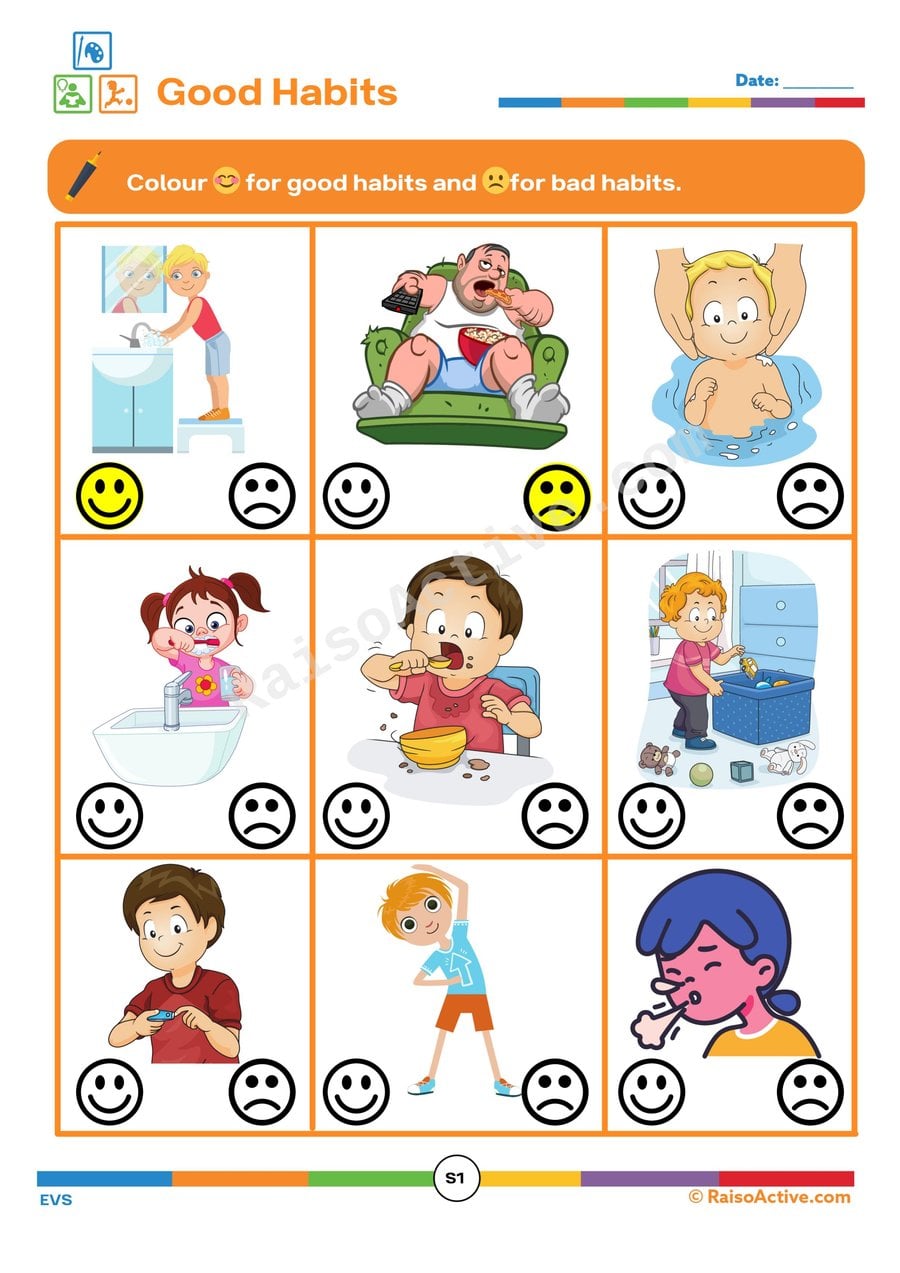
Good Habits Coloring Worksheet for Kids
Ages 3-5 · Preschool–Pre-KAges 3-5 · Nursery–ReceptionAges 3-5 · Nursery–LKGAges 3-5
This coloring activity helps children ages 3-5 practice moral and social reasoning by identifying whether a pictured behavior is a good habit or a bad one, then coloring a smiley face or a sad face to match their judgment. Making this good-or-bad decision for each picture requires children to connect an action to its likely consequence, an early form of the cause-and-effect thinking used in social-emotional learning. The simple color-coded response format also makes the activity accessible even to children who aren't yet writing independently.

Slanting Line Tracing Worksheet: Help the Balls Roll Down!
Ages 3-5 · Preschool–Pre-KAges 3-5 · Nursery–ReceptionAges 3-5 · Nursery–LKGAges 3-5
Tracing diagonal lines that guide a ball down a slide teaches children ages 3-5 a prewriting stroke that's more challenging than straight horizontal or vertical lines, since slanted strokes require angling the wrist and controlling direction at the same time. This kind of diagonal line practice directly prepares the hand for letters like A, K, and X, which all rely on slanted strokes. The playful slide-and-ball theme gives an otherwise repetitive motor exercise a sense of motion and purpose.

Connect the Dots: Hidden Shape Worksheet for Kids
Ages 3-5 · Preschool–Pre-KAges 3-5 · Nursery–ReceptionAges 3-5 · Nursery–LKGAges 3-5
Children ages 3-5 practice counting in sequence and fine motor line control as they connect numbered dots in order to reveal a hidden shape, combining numeracy with hand-eye coordination in one satisfying activity. The surprise of a shape emerging only once every dot is connected correctly also motivates children to stay careful and accurate rather than rushing through the numbers.
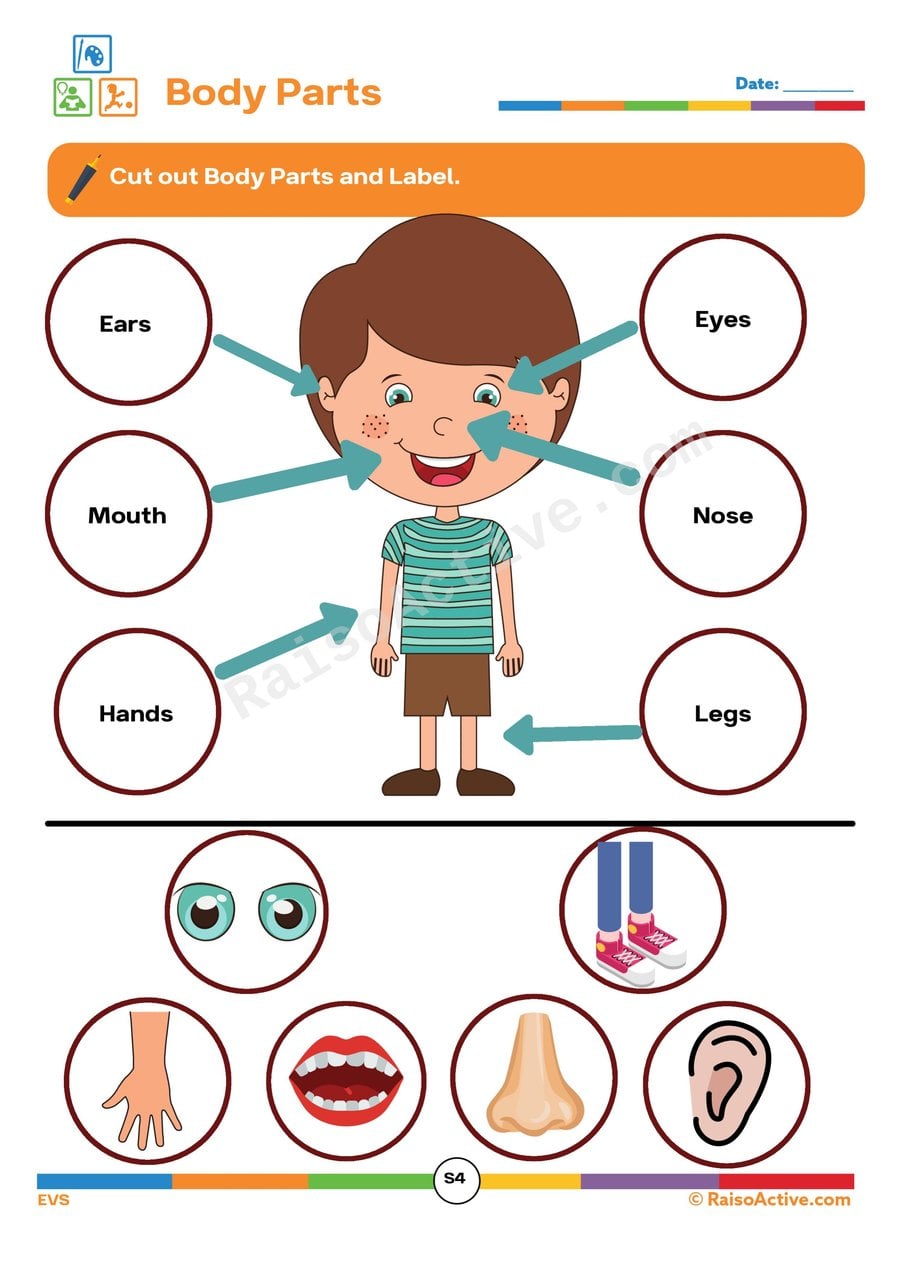
Body Parts Worksheet: Cut and Label!
Ages 3-5 · Preschool–Pre-KAges 3-5 · Nursery–ReceptionAges 3-5 · Nursery–LKGAges 3-5
Cutting out labeled body part images and gluing them onto a figure teaches children ages 3-5 the names and locations of body parts like arms, legs, and ears, connecting spoken vocabulary to a visual, physical location on the body. The cutting and pasting process also strengthens fine motor control, giving this worksheet a combined literacy and hand-strength benefit. Because the body is something children can also touch and point to on themselves, this activity bridges paper-based learning with real, physical self-awareness.
Related worksheets

Fun Activities for Kids: DIY Clock, No-Fire Cooking, and More!
Ages 3-5 · Preschool–Pre-KAges 3-5 · Nursery–ReceptionAges 3-5 · Nursery–LKGAges 3-5
This multi-activity guide gives children ages 3-5 hands-on practice with several different skills in one sitting — building a DIY paper clock to learn about time, assembling a simple no-fire recipe to build sequencing and following-directions skills, and exploring color mixing with tissue paper. Rotating through several short, varied activities keeps engagement high for young children whose attention spans are still developing. Each activity also builds language skills as children describe what they are doing.
Hindi Letter ओ (o) Song and Action Worksheet | अक्षर ओ गीत और क्रिया
Ages 3-7 · Preschool–Grade 1Ages 3-7 · Nursery–Year 2Ages 3-7 · Nursery–Class 1Ages 3-7
Children meet the Hindi vowel ओ (o) through a four-line song, a body action and picture words such as ओखली, ओस, ओला, ओढ़नी and ओजस. Hearing, saying and moving together helps the sound stick before any writing begins.
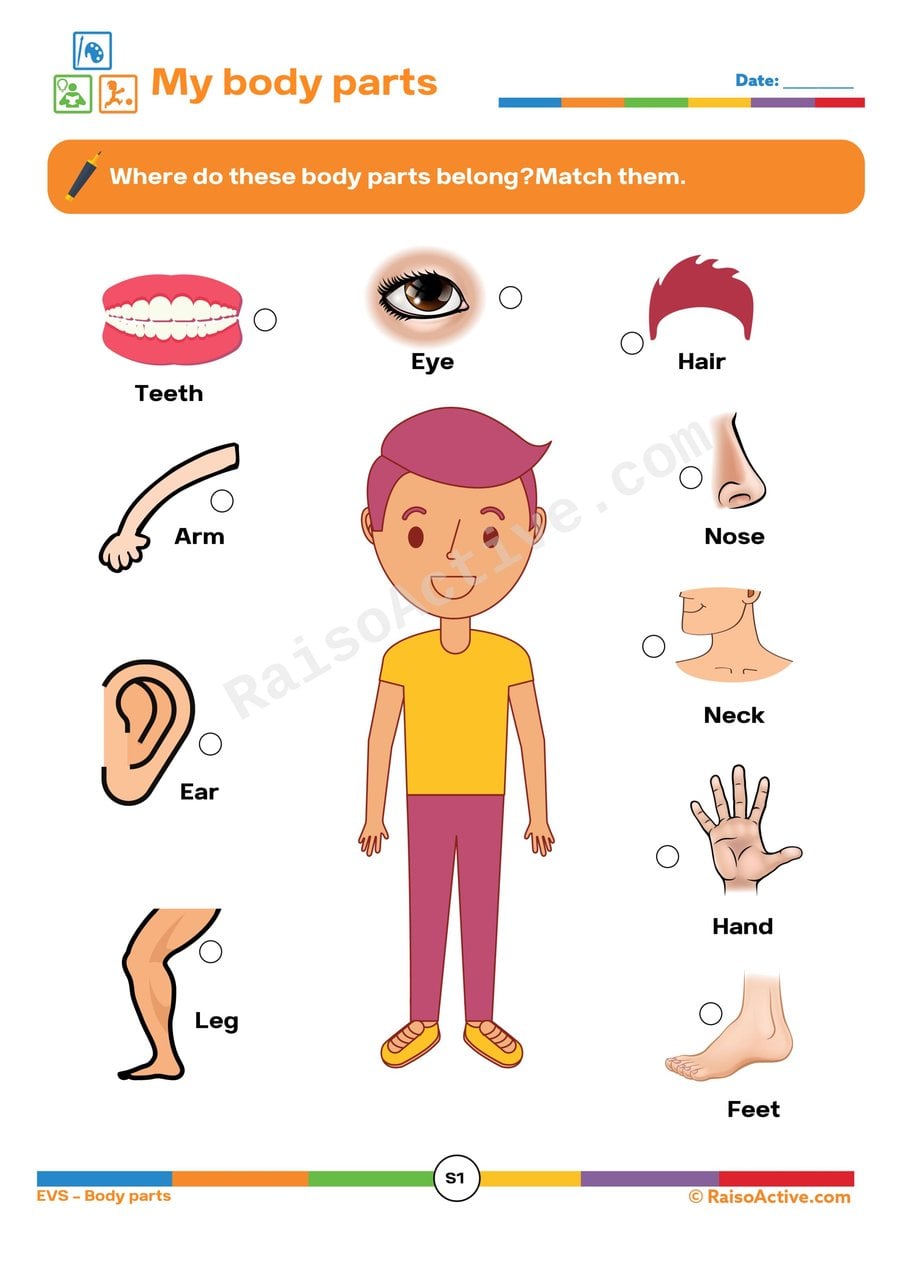
Match the Body Parts! A Fun Worksheet for Kids
Ages 3-5 · Preschool–Pre-KAges 3-5 · Nursery–ReceptionAges 3-5 · Nursery–LKGAges 3-5
Drawing lines from body part pictures to their correct location on a human figure helps children ages 3-5 build vocabulary for parts of the body, like arms, legs, and ears, while practicing visual-spatial matching between a small picture and its larger corresponding location. This worksheet strengthens the link between a spoken body part name and its physical location, a skill children also use constantly in daily routines like getting dressed or washing up. Matching pictures to a full-body diagram, rather than just naming parts in isolation, builds a more complete mental map of the body.
Hindi Letter इ (i) Song, Action and Say It | अक्षर इ
Ages 3-7 · Preschool–Grade 1Ages 3-7 · Nursery–Year 2Ages 3-7 · Nursery–Class 1Ages 3-7
Children hear and say the short vowel इ, learn a short rhyme with an action, and say the names of the picture words इमली (tamarind), इल्ली (caterpillar), इंजन (engine), इडली (idli), इंद्रधनुष (rainbow) to practise hearing इ at the start.
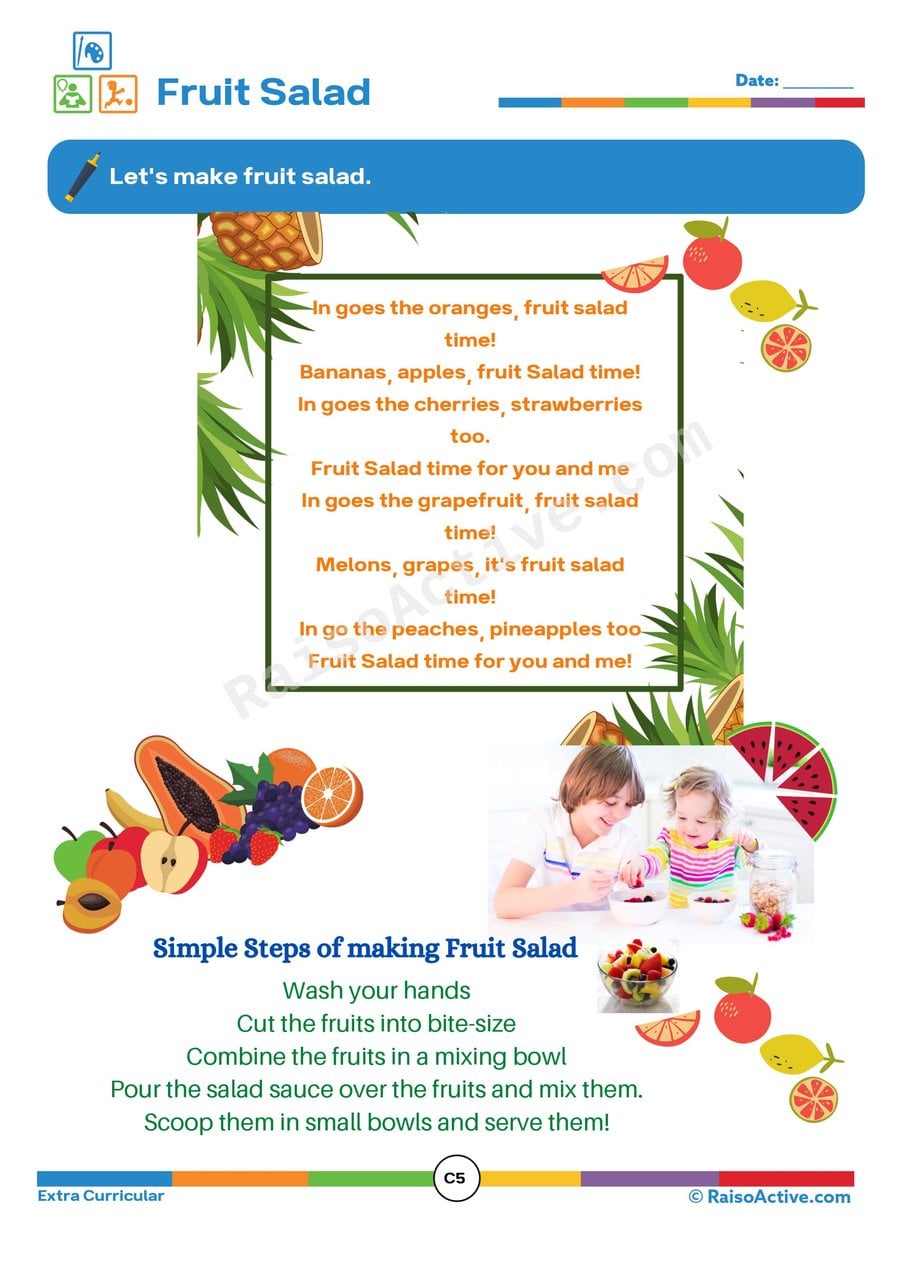
Fruit Salad Fun: A Recipe Worksheet for Kids
Ages 3-5 · Preschool–Pre-KAges 3-5 · Nursery–ReceptionAges 3-5 · Nursery–LKGAges 3-5
This worksheet uses a simple fruit salad recipe to teach children ages 3-5 how to follow a sequence of steps in order, a skill that underlies both reading comprehension and later procedural thinking in math and science. It also introduces healthy eating concepts as children name and draw the fruits that go into their salad.
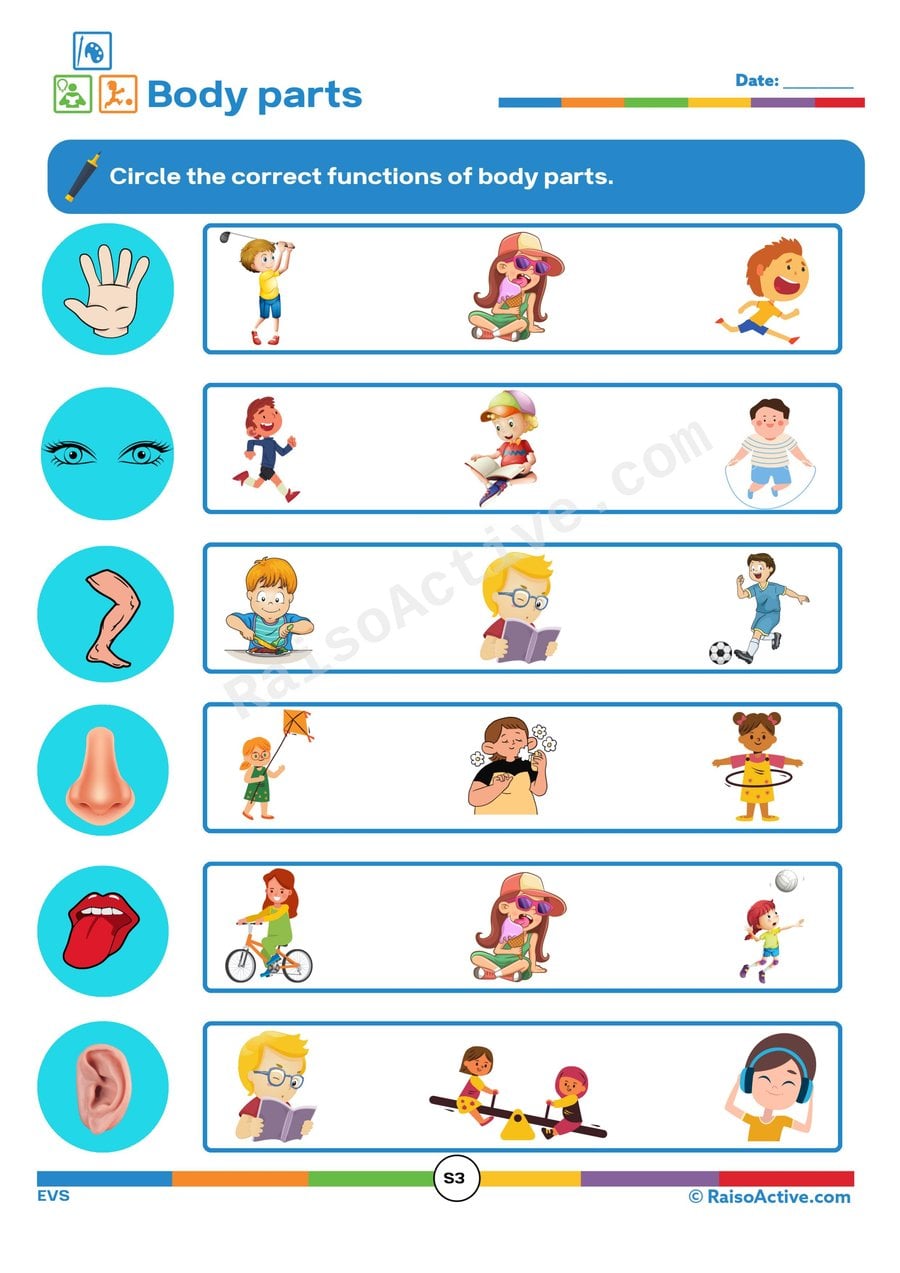
Body Parts Functions Worksheet for Kids
Ages 3-5 · Preschool–Pre-KAges 3-5 · Nursery–ReceptionAges 3-5 · Nursery–LKGAges 3-5
Children ages 3-5 practice connecting specific body parts to their real-world function, like eyes for seeing or ears for hearing, by circling the picture that shows what each body part is used for. This reinforces body awareness and vocabulary while building the reasoning skill of linking a body part to its purpose.

3D Shapes Worksheet: Explore and Learn with Playdough!
Ages 4-6 · Pre-K–KindergartenAges 4-6 · Reception–Year 1Ages 4-6 · LKG–UKGAges 4-6
This worksheet teaches children ages 4-6 the basic components of 3D shapes — vertices, edges, and faces — by having them count each feature on shapes like cubes and cones, then build matching shapes out of playdough. Physically constructing a shape and counting its parts by hand builds a far deeper understanding of geometry than looking at flat pictures alone, since children can touch and rotate what they've made.

Soap & Pepper Science Experiment Worksheet for Preschoolers
Ages 3-5 · Preschool–Pre-KAges 3-5 · Nursery–ReceptionAges 3-5 · Nursery–LKGAges 3-5
This simple experiment introduces children ages 3-5 to the basic science of surface tension and how soap breaks it, using pepper flakes sprinkled on water as a visual demonstration. Watching the pepper scatter away the instant soap touches the water gives children a concrete, memorable example of cause and effect, an early building block for scientific thinking.
Guides for this topic

Age-Appropriate Problem-Solving Activities: Building Critical Thinkers from the Ground Up
Discover fun, age-appropriate problem-solving activities for children ages 1-8. Build critical thinking, logic, and reasoning skills through play-based learning.

Fostering Creativity in Structured Learning: The Perfect Balance for Young Minds
Learn how to blend creativity with structured learning for children ages 1-8. Practical strategies, activities, and printable worksheets for parents and teachers.
Critical Thinking Activities That Actually Work for Young Children: Building Tomorrow's Thinkers Today
Discover proven critical thinking activities for young children. Age-wise logic games, questioning techniques, and hands-on ideas to build thinking skills at home.
Reviews
Every worksheet for ages 3–5, no watermark
Members download the full library of 1,000+ worksheets and every activity pack without watermarks or daily limits. One year costs ₹999 in India or $20 elsewhere.
See membership plansOr download any worksheet free with a watermark (5 a day).