5 Senses Matching Worksheet for Preschoolers
This worksheet introduces children ages 3-5 to the five senses — sight, hearing, smell, taste, and touch — by asking them to match each sense to the body part responsible for it. Understanding that specific body parts are linked to specific senses is an early science concept that builds body awareness and observational vocabulary. Drawing the connecting line for each match also reinforces visual tracking and pencil control.
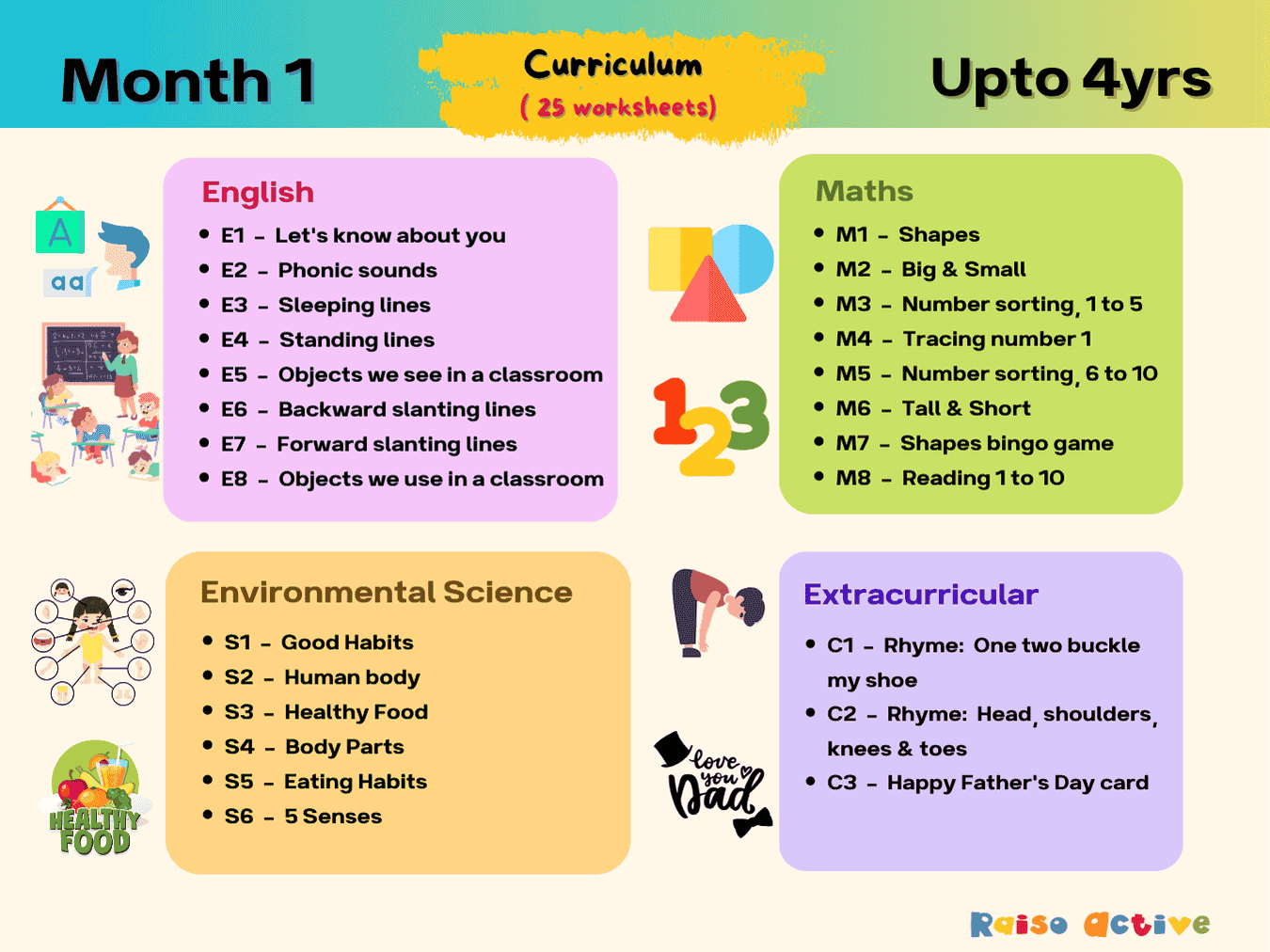
Part of the pack
Month 1: Learning & Development | Ages Up to 4
This is page 25 of the pack. Ages 3-4 · PreschoolAges 3-4 · NurseryAges 3-4
Made for your child
Counting to 10, made for your child
A maths pack with your child's name in it: pictures that explain, practice at three levels, puzzles and story sums about them. Print a new set whenever they finish.
Make a maths packFree preview · free for members
Curriculum
- My Body > Five Senses
How to use this worksheet
Talk through the five senses together first, asking your child to name a body part they think is used for each one. Look at the sense words or pictures on one side of the page and the body part pictures on the other side. Have your child draw a line connecting each sense to its matching body part, like eyes to sight or ears to hearing. Once all five are matched, review the page together and ask your child to demonstrate each sense, like closing their eyes to show sight is 'off.'
Materials needed
- Pencil
- Crayons
Extension activities
- 1Discuss what each sense does.
- 2Go on a scavenger hunt to find things you can see, hear, smell, taste, and touch.
- 3Draw pictures of things that relate to each sense.
- 4Set up a simple blindfolded taste or touch test with safe household items.
- 5Make a five senses collage, cutting out one picture representing each sense from a magazine.

Written by
Hemsweta Jain · Teacher Cheena
MBA and Early Childhood Educator, teaching since 2014 · Founder of RaisoActive, Mumbai
Every RaisoActive worksheet is designed and checked by the founder before publishing.
Published · Last reviewed
More from Month 1: Learning & Development | Ages Up to 4
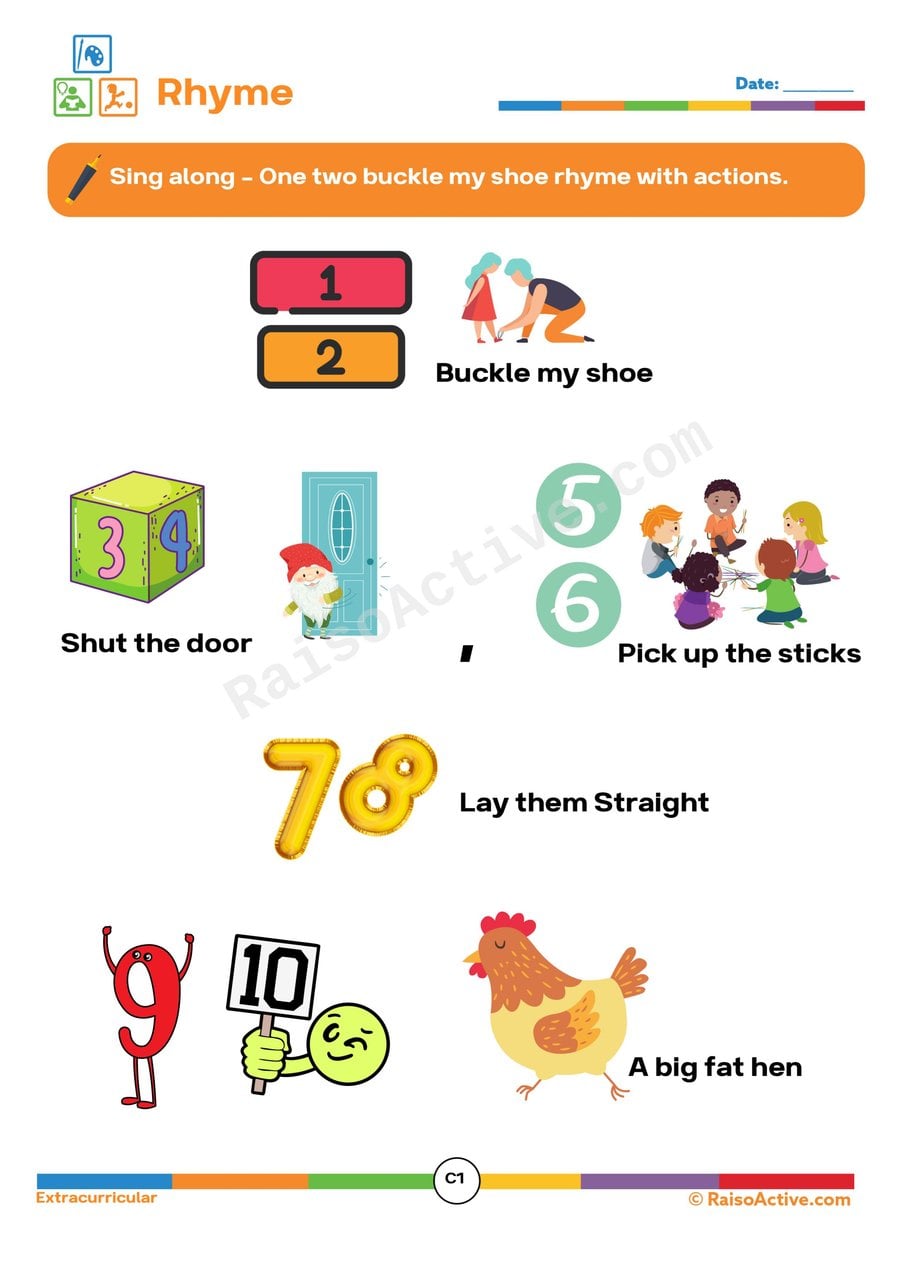
Rhyme Time! Sing Along and Learn Numbers 1-10
Ages 3-5 · Preschool–Pre-KAges 3-5 · Nursery–ReceptionAges 3-5 · Nursery–LKGAges 3-5
This activity worksheet helps children ages 3-5 build number recognition for 1 through 10 through the natural memory support of rhyme and repetition, pairing each number with a rhyming action to act out. Rhymes and songs are proven to help young children retain sequences, including number order, more easily than flat repetition alone. Acting out each rhyme's action also links movement to the number word, reinforcing learning through more than one sense.

Let's Talk About Me! Fun Conversation Worksheet for Kids
Ages 3-5 · Preschool–Pre-KAges 3-5 · Nursery–ReceptionAges 3-5 · Nursery–LKGAges 3-5
This worksheet gives children ages 3-5 a structured way to practice self-expression, prompting them to fill in blanks, draw, and color as they answer simple personal questions like their favorite color or food. Talking about themselves in a guided format builds both vocabulary and the confidence to share personal information out loud, a skill that supports classroom participation and social conversation. Combining writing, drawing, and coloring in one activity also keeps the session engaging across several different response styles.

Father's Day Coloring Card: A Fun Coloring Worksheet for Kids!
Ages 3-5 · Preschool–Pre-KAges 3-5 · Nursery–ReceptionAges 3-5 · Nursery–LKGAges 3-5
Coloring Father's Day themed images and folding the page into a card gives children ages 3-5 practice with crayon control and color choice, while the act of creating a gift adds a meaningful, purposeful goal to the fine motor task. Because the final product becomes something to give to a special person, this worksheet also introduces early ideas about celebration and appreciation. Folding the paper into a card shape adds a simple spatial task on top of the coloring itself.

Slanting Lines Worksheet: Trace the Rain and Help the Flowers Bloom!
Ages 3-5 · Preschool–Pre-KAges 3-5 · Nursery–ReceptionAges 3-5 · Nursery–LKGAges 3-5
This worksheet gives children ages 3-5 focused practice tracing slanting lines, a pre-writing stroke that appears in letters like A, K, N, and X and in numbers like 4 and 7. Practicing diagonal strokes is typically harder than horizontal or vertical lines because it requires more precise wrist and finger control, making this a valuable stepping stone before formal letter writing begins. The rain-to-flowers storyline gives the repetitive tracing practice a clear, motivating purpose.
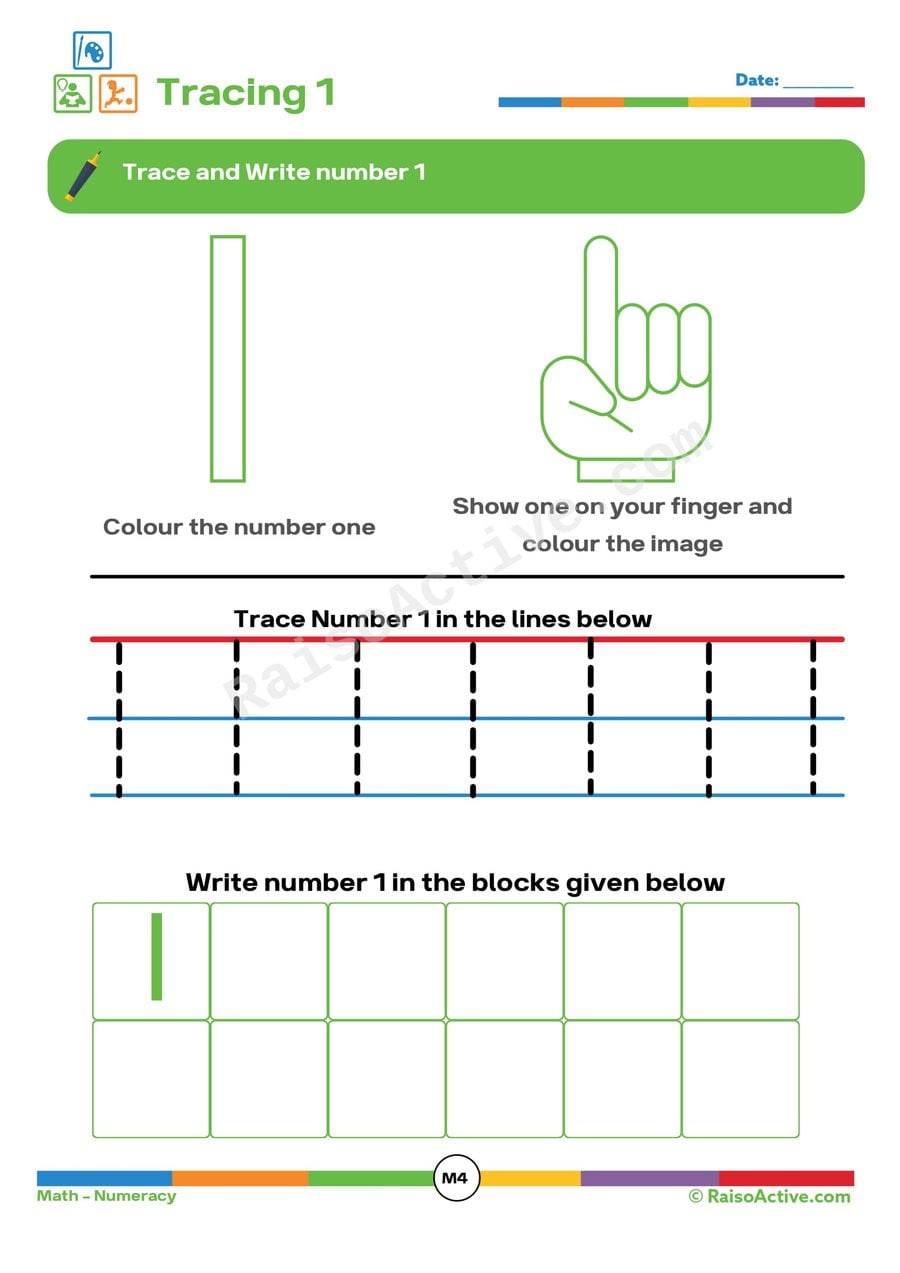
Tracing Number 1 Worksheet for Preschoolers
Ages 3-5 · Preschool–Pre-KAges 3-5 · Nursery–ReceptionAges 3-5 · Nursery–LKGAges 3-5
This tracing worksheet gives children ages 3-5 focused, repetitive practice forming the number 1 through tracing dotted lines, independent writing in provided boxes, and coloring an accompanying image, building the pencil control that precedes confident number writing. Because number 1 is typically the very first numeral children learn to write, getting the stroke direction and starting point correct here sets a strong foundation for writing higher numbers later. Repetition across multiple boxes on the page also builds the muscle memory needed for consistent, automatic number formation.

Sleeping Line Worksheet: Help the Cars Drive Straight!
Ages 3-5 · Preschool–Pre-KAges 3-5 · Nursery–ReceptionAges 3-5 · Nursery–LKGAges 3-5
This worksheet helps children ages 3-5 develop pencil control and hand steadiness by tracing horizontal, 'sleeping' lines that guide toy cars straight along a road. Practicing horizontal line tracing is one of the essential prewriting strokes, since many letters and numbers rely on the same steady, left-to-right hand motion this worksheet trains.

Head, Shoulders, Knees & Toes Rhyme Worksheet for Preschoolers
Ages 3-5 · Preschool–Pre-KAges 3-5 · Nursery–ReceptionAges 3-5 · Nursery–LKGAges 3-5
This rhyme-based worksheet has children ages 3-5 sing along to 'Head, Shoulders, Knees and Toes' while pointing to and naming each body part, combining music, movement, and vocabulary building in one activity. Rhythmic repetition is one of the most effective ways young children memorize new vocabulary, and pairing each word with a physical touch reinforces the connection between the spoken word and the actual body part. This kind of full-body engagement also supports gross motor coordination alongside language learning.
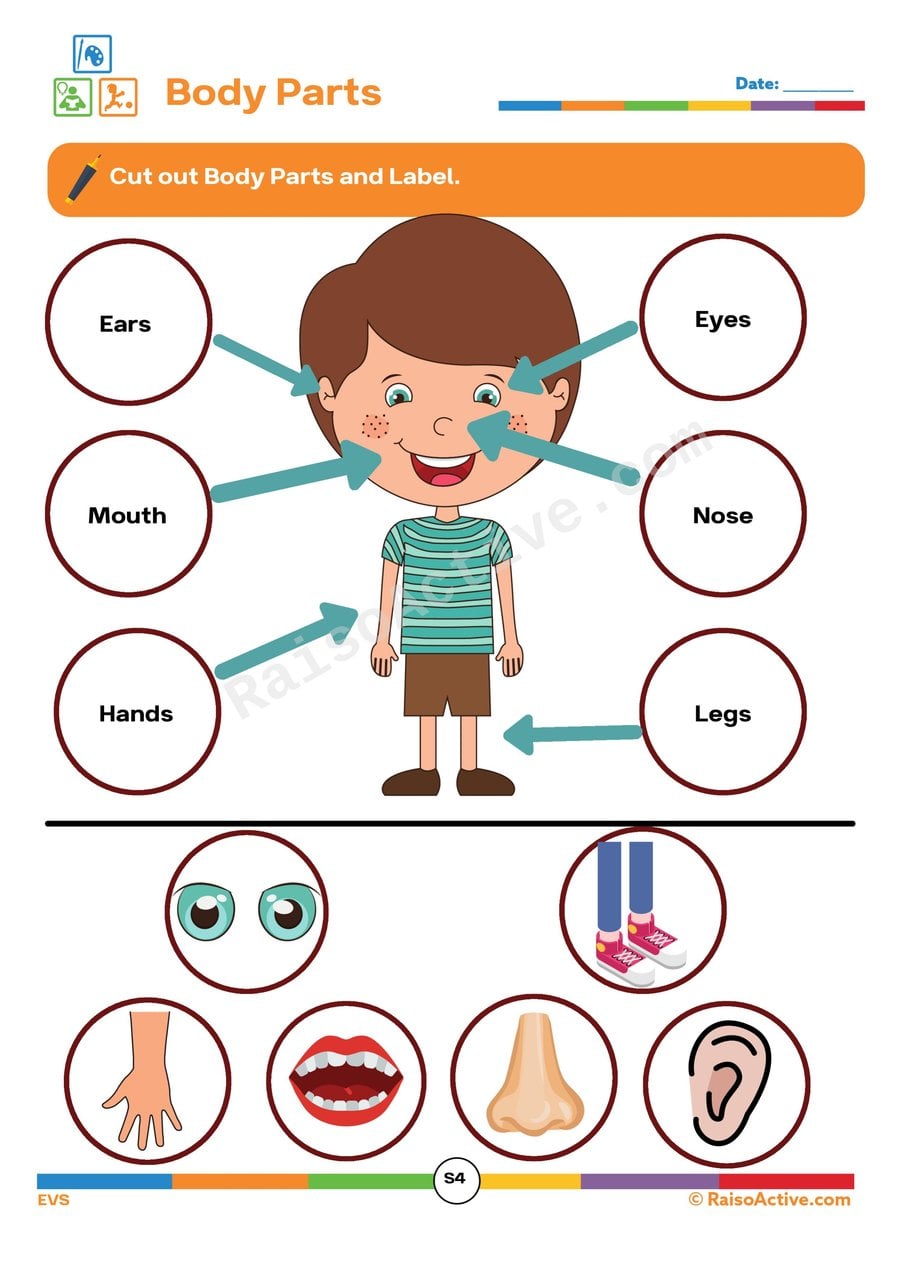
Body Parts Worksheet: Cut and Label!
Ages 3-5 · Preschool–Pre-KAges 3-5 · Nursery–ReceptionAges 3-5 · Nursery–LKGAges 3-5
Cutting out labeled body part images and gluing them onto a figure teaches children ages 3-5 the names and locations of body parts like arms, legs, and ears, connecting spoken vocabulary to a visual, physical location on the body. The cutting and pasting process also strengthens fine motor control, giving this worksheet a combined literacy and hand-strength benefit. Because the body is something children can also touch and point to on themselves, this activity bridges paper-based learning with real, physical self-awareness.
Related worksheets
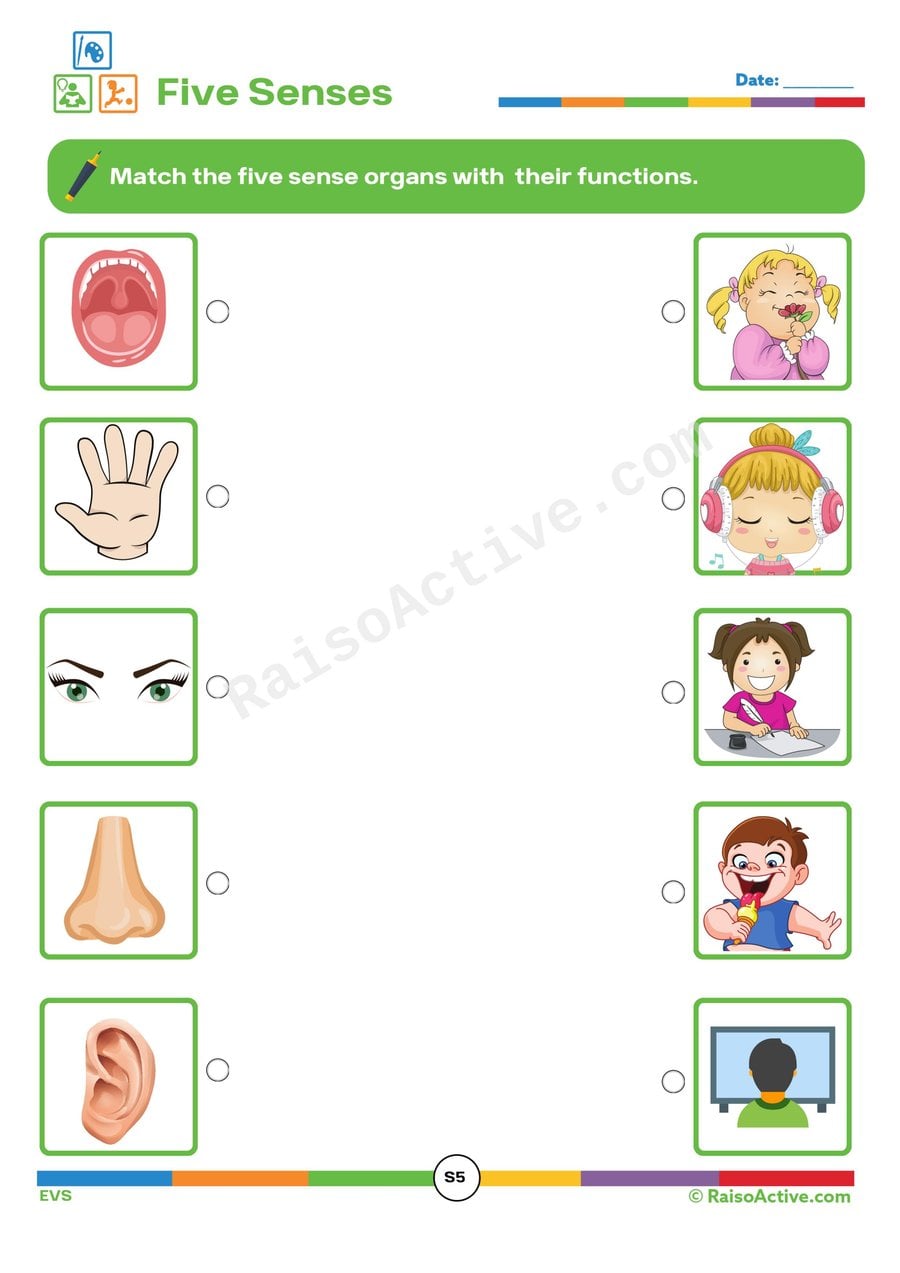
Five Senses Matching Worksheet for Preschoolers
Ages 3-5 · Preschool–Pre-KAges 3-5 · Nursery–ReceptionAges 3-5 · Nursery–LKGAges 3-5
Matching each sense organ, eyes, nose, ears, hands, mouth, to its correct function teaches children the basic science of how their bodies gather information about the world, an early concept in human biology. For ages three to five, connecting a body part to a specific job, eyes for seeing, nose for smelling, also builds descriptive vocabulary they can use to talk about their everyday experiences.

Soap & Pepper Science Experiment Worksheet for Preschoolers
Ages 3-5 · Preschool–Pre-KAges 3-5 · Nursery–ReceptionAges 3-5 · Nursery–LKGAges 3-5
This simple experiment introduces children ages 3-5 to the basic science of surface tension and how soap breaks it, using pepper flakes sprinkled on water as a visual demonstration. Watching the pepper scatter away the instant soap touches the water gives children a concrete, memorable example of cause and effect, an early building block for scientific thinking.

Soap & Pepper Science Experiment Worksheet for Preschoolers
Ages 3-5 · Preschool–Pre-KAges 3-5 · Nursery–ReceptionAges 3-5 · Nursery–LKGAges 3-5
This hands-on demonstration shows children ages 3-5 how soap disrupts water's surface tension, using floating pepper as a simple, visible indicator of the change. Because the reaction happens instantly and dramatically, it gives young children a strong, memorable first experience with predicting an outcome and then observing whether their prediction was right.

Plant Parts Worksheet: Identify and Label the Parts of a Plant!
Ages 4-6 · Pre-K–KindergartenAges 4-6 · Reception–Year 1Ages 4-6 · LKG–UKGAges 4-6
This worksheet teaches children ages 4-6 to identify and independently label the flower, stem, leaf, and roots of a plant, moving a step beyond simple matching toward recalling vocabulary from memory. Optionally adding pulses or grains to the diagram introduces a tactile, sensory layer that helps reinforce which part is which through touch as well as sight.
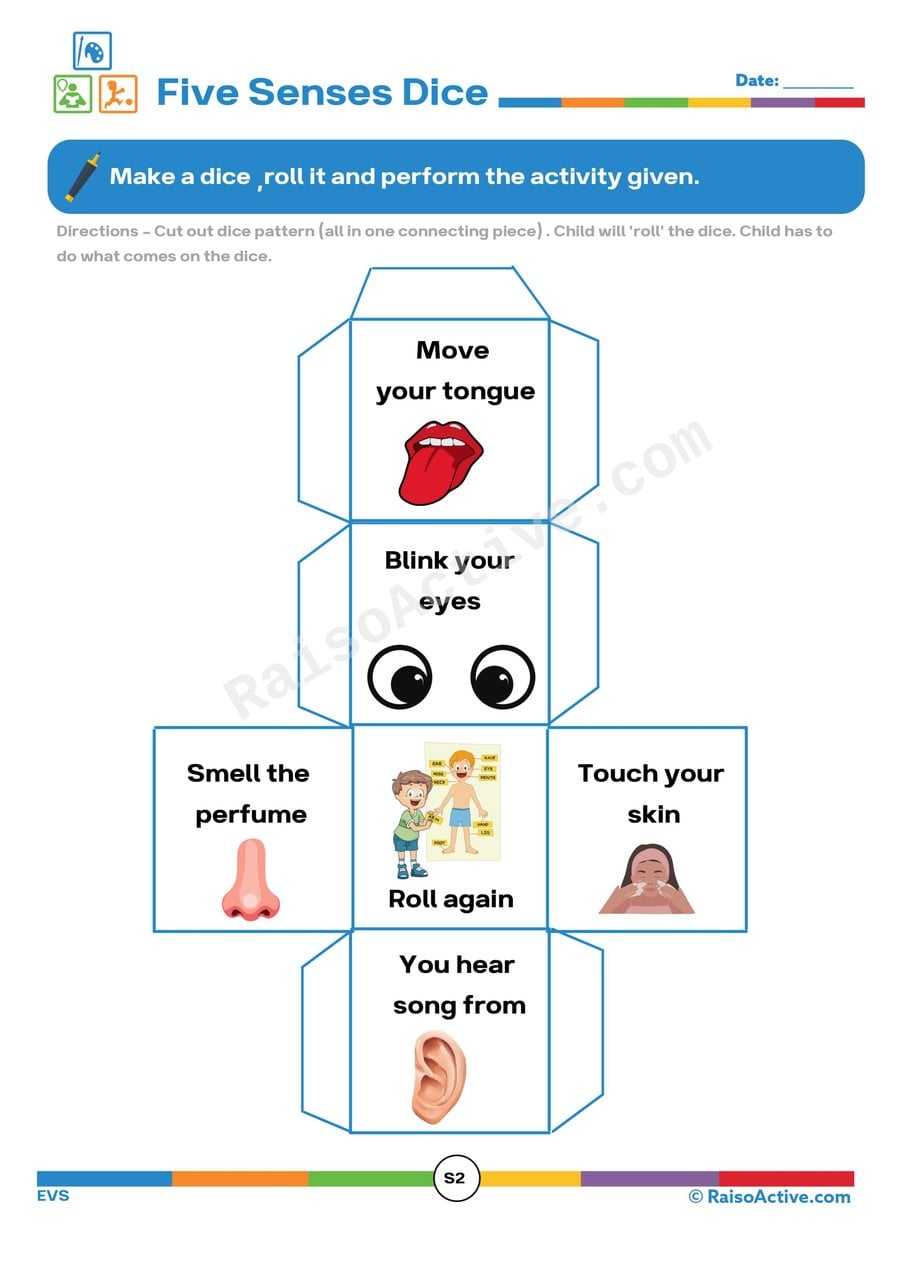
Five Senses Dice Activity: Roll and Explore!
Ages 3-5 · Preschool–Pre-KAges 3-5 · Nursery–ReceptionAges 3-5 · Nursery–LKGAges 3-5
Rolling a homemade dice to trigger sensory activities teaches children ages 3-5 to identify and use each of the five senses — sight, hearing, touch, taste, and smell — through direct hands-on exploration rather than only reading or discussing them. Building and assembling the dice itself also adds a light fine motor and spatial task before the sensory learning even begins.

Taste Bud Sorting Worksheet: Identify and Sort Foods by Taste!
Ages 4-6 · Pre-K–KindergartenAges 4-6 · Reception–Year 1Ages 4-6 · LKG–UKGAges 4-6
This worksheet introduces children ages 4-6 to four basic taste categories — salty, sour, bitter, and sweet — by having them sort pictured foods into the correct group. Beyond taste vocabulary, sorting foods by an invisible property like flavor (rather than an obvious one like color or shape) pushes children to draw on memory and prior experience, building more advanced classification skills.

Balloon Pattern Matching Worksheet for Preschoolers
Ages 3-5 · Preschool–Pre-KAges 3-5 · Nursery–ReceptionAges 3-5 · Nursery–LKGAges 3-5
This worksheet strengthens pattern recognition in children ages 3-5 by having them study a repeating sequence of colored balloons and locate the matching arrangement elsewhere on the page. Recognizing and reproducing a pattern is an early pre-algebra skill, laying groundwork for later number patterns and logical sequencing.

Christmas Shadow Match Worksheet for Preschoolers
Ages 3-5 · Preschool–Pre-KAges 3-5 · Nursery–ReceptionAges 3-5 · Nursery–LKGAges 3-5
Matching each Christmas object to its correct black silhouette trains children ages 3-5 in visual discrimination — noticing outline, proportion, and shape rather than color or detail. This kind of shadow-matching also builds the same shape-analysis skills children later use for letter recognition, since it requires holding one image in mind while comparing it against several similar-looking options.
Guides for this topic

Best Worksheets for 3-Year-Olds: What Works and What to Avoid
What works on worksheets for 3-year-olds: short sessions, crayons, tracing lines, matching, cutting, a free weekly plan, and signs one is too advanced.

Age-Appropriate Problem-Solving Activities: Building Critical Thinkers from the Ground Up
Discover fun, age-appropriate problem-solving activities for children ages 1-8. Build critical thinking, logic, and reasoning skills through play-based learning.
Critical Thinking Activities That Actually Work for Young Children: Building Tomorrow's Thinkers Today
Discover proven critical thinking activities for young children. Age-wise logic games, questioning techniques, and hands-on ideas to build thinking skills at home.
Reviews
Every worksheet for ages 3–5, no watermark
Members download the full library of 1,000+ worksheets and every activity pack without watermarks or daily limits. One year costs ₹999 in India or $20 elsewhere.
See membership plansOr download any worksheet free with a watermark (5 a day).