Sight Words by Age: The First 50 Words and How to Teach Them Without Flashcard Fatigue
Author
RaisoActive - Kids Activities and Fun Learning
Published
Reading Time
4 min read
- The first sight words to teach are short, high-frequency words that phonics rules do not fully explain — the, said, was, of — because knowing them by sight frees attention for sounding out everything else
- The heart word method marks only the "tricky part" of a word for memorization, so a child sounds out the rest normally instead of memorizing the whole word as a shape
- A short read-trace-write-find routine builds recognition faster and with less resistance than repeated flashcard drilling
- The same 50 words are called "sight words" in the US and India, "tricky words" or "common exception words" in the UK — the teaching approach is the same
- A child who forgets a learned word almost always needs more varied practice, not more repetition of the same flashcard
Which Words Come First, and Why
The first sight words to teach are the short, extremely common words that phonics rules do not fully explain — words like "the," "said," "was," and "of" — because a child who recognizes these instantly has far more attention left over for sounding out the CVC words around them. These words are taught by sight precisely because sounding them out letter by letter would be slow, and in several cases would not even produce the right pronunciation.
The vocabulary for this list differs by country even though the words themselves overlap heavily. US classrooms usually refer to the Dolch or Fry sight word lists; UK classrooms call the same category "tricky words" in the early years and "common exception words" from Year 1 onward; Indian schools, including LKG and UKG classrooms, most often simply say "sight words," borrowing the US term directly. Whatever the label, the first 50 or so words cover the same short, high-frequency vocabulary that shows up on nearly every page a beginning reader meets.
Hemsweta Jain (Teacher Cheena), RaisoActive's founder and an early-childhood educator since 2014, teaches the first 50 sight words in small batches of five, always mixed with review of the previous batch, rather than introducing them all at once — a pace that keeps sight word practice manageable instead of overwhelming.
The Heart Word Method
Most sight words are not entirely irregular — usually only one part resists normal sound-out rules, while the rest of the word behaves exactly as phonics would predict. The heart word method asks a child to sound out the regular part of the word normally and only memorize the small "tricky" part, often by drawing a small heart over the letters that have to be learned "by heart" rather than sounded out.
Take the word "said": the ending "d" is entirely regular, and even the "s" is a normal sound — only the middle "ai," which does not make its usual long-a sound, needs to be memorized. Drawing a heart over just those two letters, rather than treating the whole word as one unfamiliar shape to memorize, cuts the memory load dramatically and reinforces the phonics skills a child is already building elsewhere, instead of working against them.
Read, Trace, Write, Find: A Routine That Sticks
Step 1: Read
Show the word, read it aloud together, and mark the heart part if one applies. Say the word in a full sentence so it is anchored to meaning, not just sound.
Step 2: Trace
Trace the word with a finger, then a pencil, saying each letter name aloud while tracing. This links the visual shape, the letter names, and the motion of writing it.
Step 3: Write
Cover the model and have your child write the word from memory. Compare it to the original, and if the heart part is wrong, go back to tracing before writing again.
Step 4: Find
Go looking for the word — in a book, on a cereal box, on a sign during a walk. Finding the word in a genuinely new place is the step most flashcard routines skip, and it is what proves the word is truly known rather than just recited.
Games That Build Recognition Without Flashcard Fatigue
Repeated flashcard drilling works for a while and then stops working, usually right around the point where a child starts to dread it. Games that ask a child to find, match, or race for a word tend to hold interest far longer, because the word recognition becomes a means to a game goal instead of the entire point of the activity.
- Word hunt: hide word cards around a room and have your child collect only the ones they can read correctly, reading each aloud before it counts
- Sight word bingo: call out words for your child to find and cover on a bingo card built from their current word list
- Swat the word: lay out several word cards and call one out for your child to swat or point to as fast as possible, building automatic recognition under mild time pressure
- Memory match: pair identical word cards face down and flip two at a time, reading each one aloud before deciding if they match
- Sentence building: give a small pile of known sight words plus a few picture cards, and let your child arrange them into the silliest sentence they can make
words make up the core Dolch sight word list, one of the two most widely used US high-frequency word lists — Fry's list is the other — and the first 50 or so of either list cover the vast majority of words a beginning reader meets on the page
Source: Dolch Word List
- +Age 3–4 · Nursery · Preschool
- +Age 4–5 · LKG · Reception · Pre-K
- +Age 5–6 · UKG · Year 1 · Kindergarten
- +Age 6–7 · Class 1 · Year 2 · 1st Grade
- +Age 7–8 · Class 2 · Year 3 · 2nd Grade
- -Recognizes their own name and a few very familiar words; not yet reading connected text
- -Begins recognizing 5–10 of the first sight words alongside early letter-sound work
- -Typically learns 25–50 of the first sight words, reading them inside simple decodable sentences
- -Recognizes most of the first 100 high-frequency words and reads short sentences fluently
- -Sight-word instruction shifts toward spelling patterns as word recognition becomes automatic
- Check whether the word is being taught in isolation only — a word practiced solely on a flashcard, never inside a sentence, is far easier to forget than one met repeatedly in context
- Go back to the heart word method for that specific word rather than repeating the whole-word flashcard again — isolating the truly tricky part reduces what has to be remembered
- Mix in one or two review words from two weeks ago every session — a word forgotten once usually needs spaced review, not one more repetition on the same day
- Watch for visually similar words being confused with each other (was/saw, of/for) and practice the pair side by side rather than separately
- If a word is consistently forgotten after several weeks of varied practice, it is reasonable to set it aside and return to it in a month — some words simply need more reading mileage before they stick
Automatic recognition of around 50 words is the real milestone — not how many flashcards a child can get through in one sitting.
A child who reads "the" instantly inside a sentence has reached the goal of sight word instruction; a child who can recite the same word correctly only when it is shown alone on a flashcard has not, even if the flashcard session looked successful. Read-trace-write-find, games, and genuine reading practice all build the first kind of recognition; flashcard drilling alone often only builds the second.
Sight word questions parents ask
What are the first sight words to teach?
What's the difference between sight words and tricky words?
How many sight words should a kindergartner or UKG student know?
My child memorizes flashcards but can't read the word in a book. Why?
What do I do if my child forgets a sight word after learning it?
Fifty Words, Not a Race
The first 50 sight words are a small, finite list, and almost every child gets there — some by the end of kindergarten, others partway through Year 1 or a UKG classroom. What separates a child who reads these words comfortably from one who still stumbles over them is usually not talent but the kind of practice: read, trace, write, find, and repeat, rather than flashcards alone.
Free worksheets for this topic
Browse all worksheets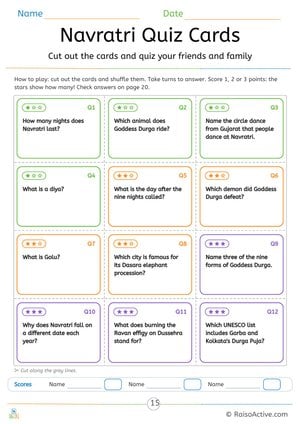
Navratri Quiz Cards: 12 Cut-Out Festival Questions
Ages 7-11 · Grade 2–Grade 3Ages 7-11 · Year 3–Year 4Ages 7-11 · Class 2–Class 3Ages 7-11
Children recall facts about Navratri, Durga, Golu, Dussehra and the UNESCO heritage list, from one-star questions to three-star questions that need explaining.
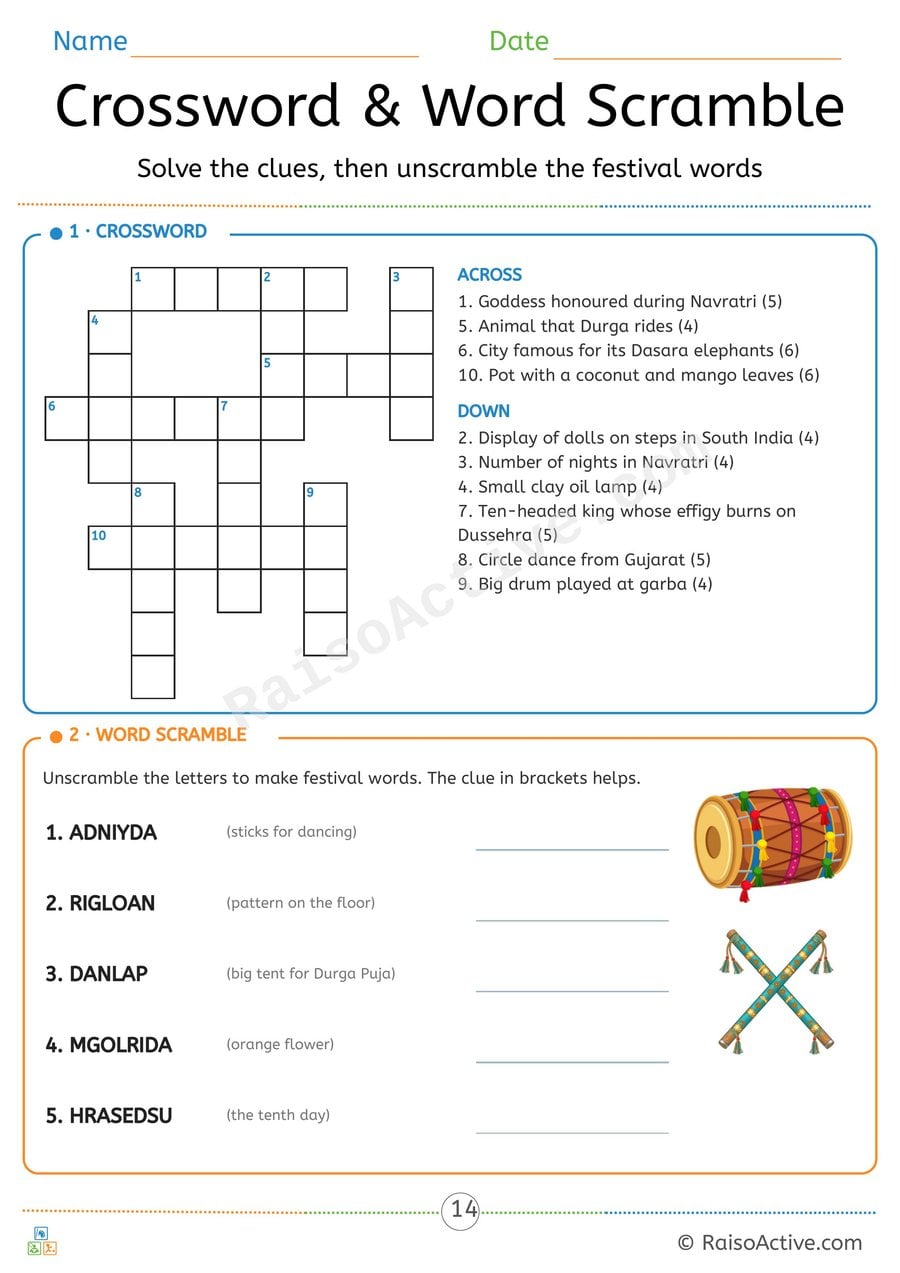
Navratri Crossword and Word Scramble
Ages 7-11 · Grade 2–Grade 3Ages 7-11 · Year 3–Year 4Ages 7-11 · Class 2–Class 3Ages 7-11
Children solve 10 crossword clues about the goddess, the lion, Mysuru, the kalash, Golu, diyas, Ravan, garba and the dhol, and unscramble five festival words with a clue for each.
Navratri Word Search and Secret Code Puzzle
Ages 7-11 · Grade 2–Grade 3Ages 7-11 · Year 3–Year 4Ages 7-11 · Class 2–Class 3Ages 7-11
Children find 12 festival words that run across, down and diagonally, and use an A = 1 to Z = 26 key to decode a message about the festival. Then they write their own name in code.
The Nine Nights: Durga and Mahishasura Reading Comprehension
Ages 7-11 · Grade 2–Grade 3Ages 7-11 · Year 3–Year 4Ages 7-11 · Class 2–Class 3Ages 7-11
Children read a retelling of the legend of Durga and Mahishasura, find facts in the text, answer inference questions about why things happened, and write their own opinion about staying calm and doing the right thing.

Written by
Hemsweta Jain · Teacher Cheena
MBA and Early Childhood Educator, teaching since 2014 · Founder of RaisoActive, Mumbai
Published · Last reviewed
Related Resources
Printable Resources(10)
View all

Summer Activity Pack: Math, Literacy, Puzzles & More for Preschool & Kindergarten
Ages 3-7 · Preschool–Grade 1Ages 3-7 · Nursery–Year 2Ages 3-7 · Nursery–Class 1Ages 3-7 · 26 pages
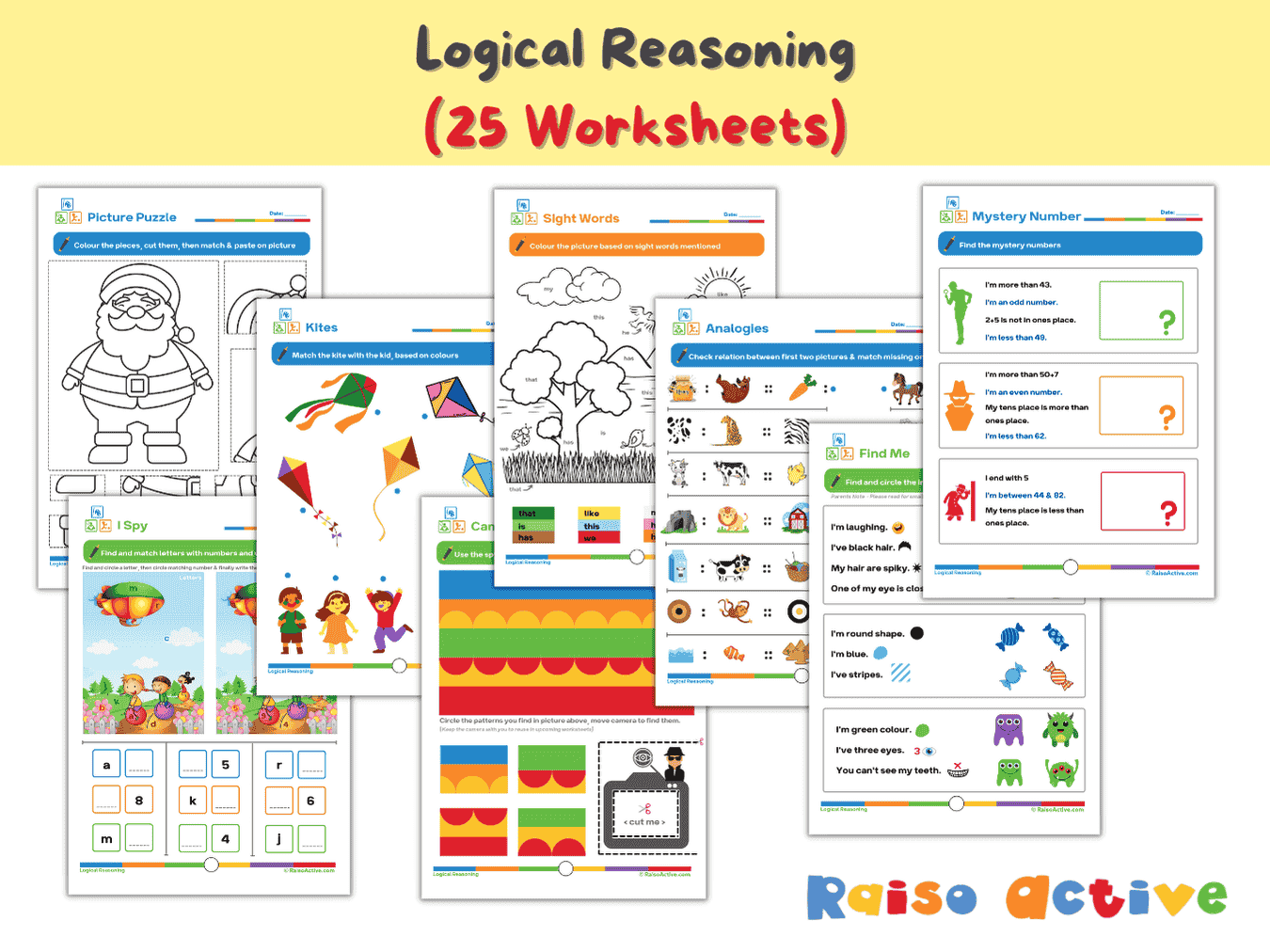

Logical Reasoning Activity Book for Preschool & Kindergarten | Patterns, Puzzles & Analogies
Ages 4-7 · Pre-K–Grade 1Ages 4-7 · Reception–Year 2Ages 4-7 · LKG–Class 1Ages 4-7 · 26 pages
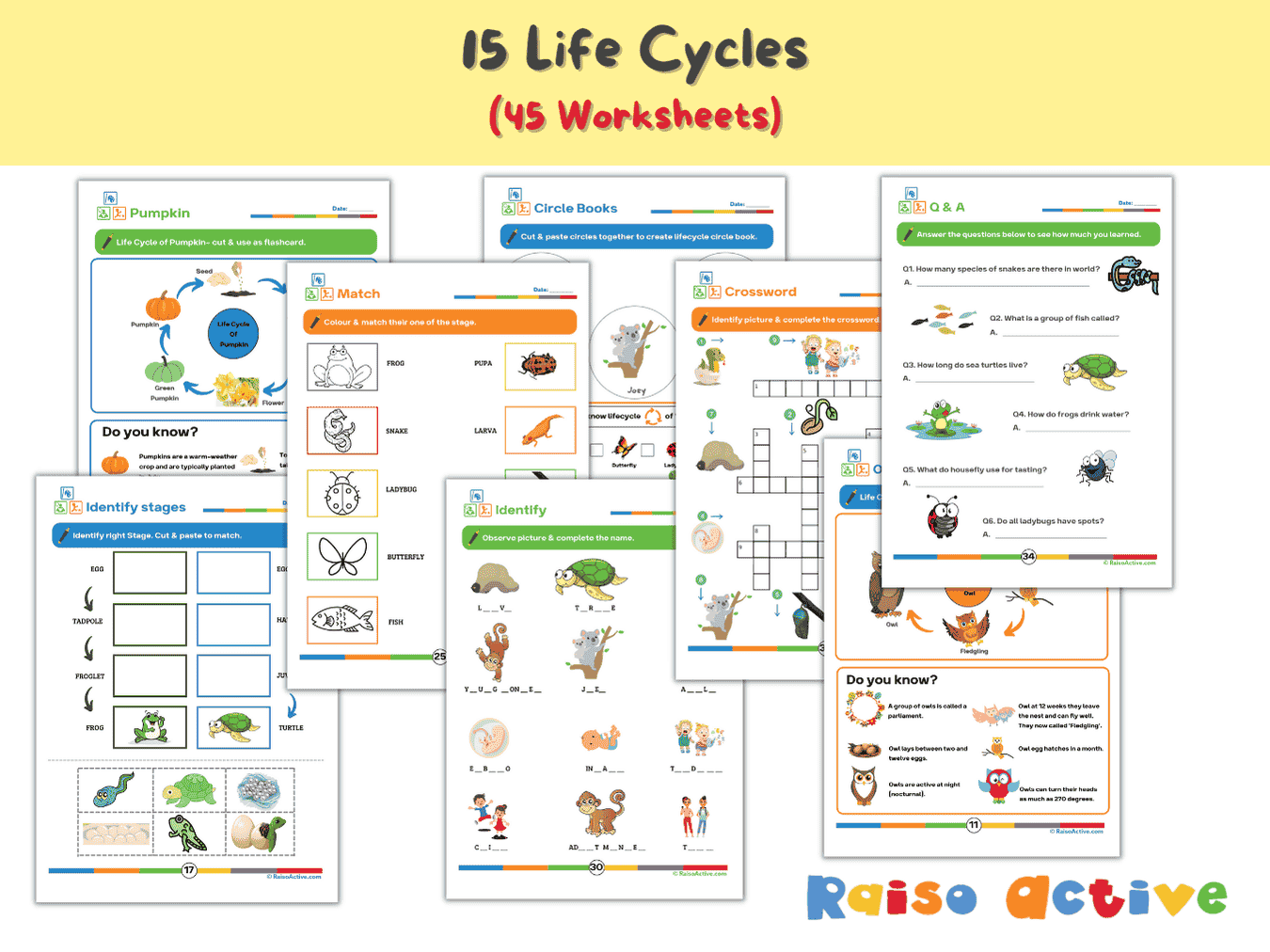

Lifecycles Activity Book & Flashcards for Preschool & Early Elementary
Ages 3-8 · Preschool–Grade 2Ages 3-8 · Nursery–Year 3Ages 3-8 · Nursery–Class 2Ages 3-8 · 46 pages
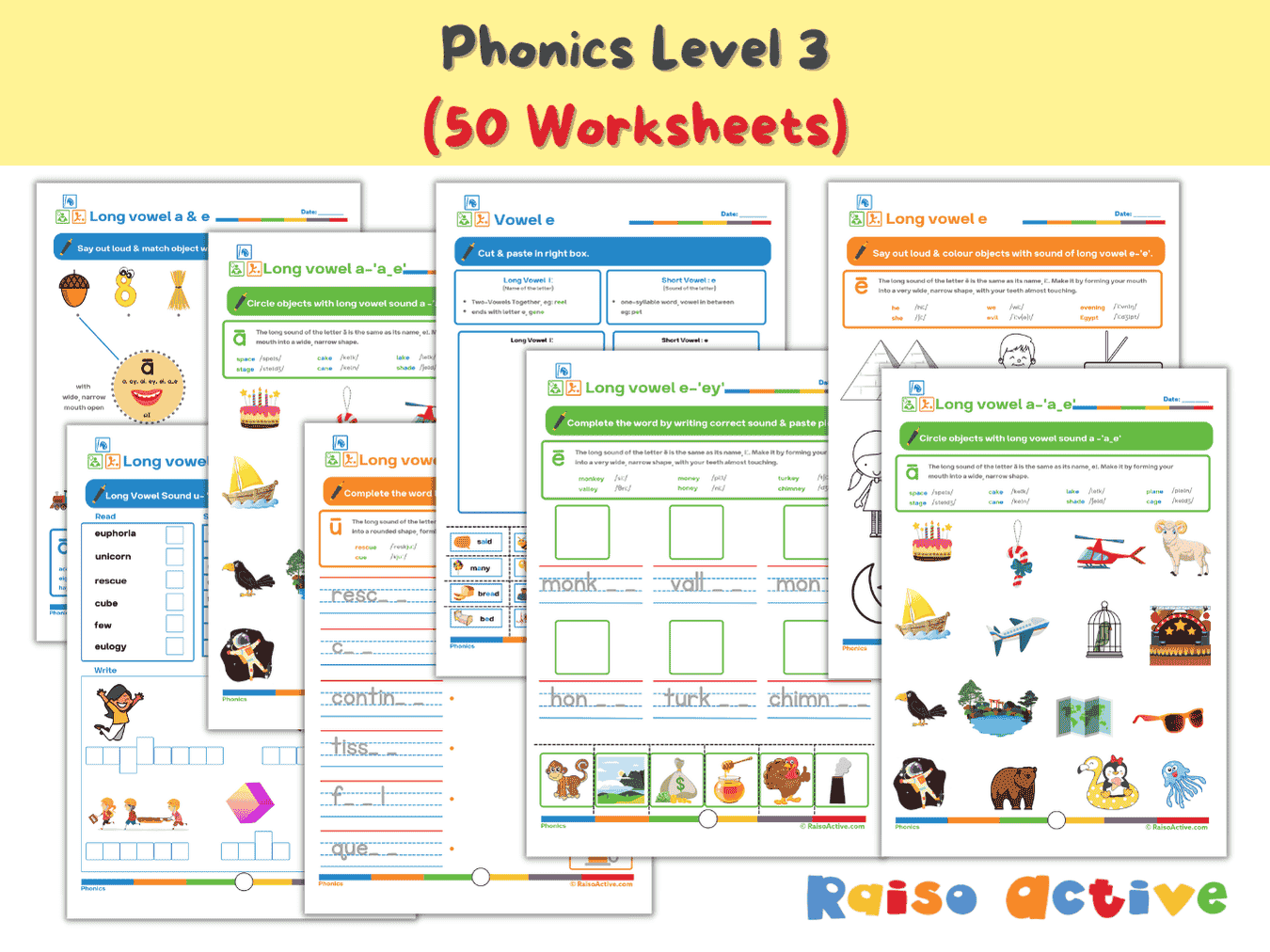

Phonics Level 3 Long Vowels Activity Book for Kindergarten & 1st Grade
Ages 5-7 · Kindergarten–Grade 1Ages 5-7 · Year 1–Year 2Ages 5-7 · UKG–Class 1Ages 5-7 · 51 pages
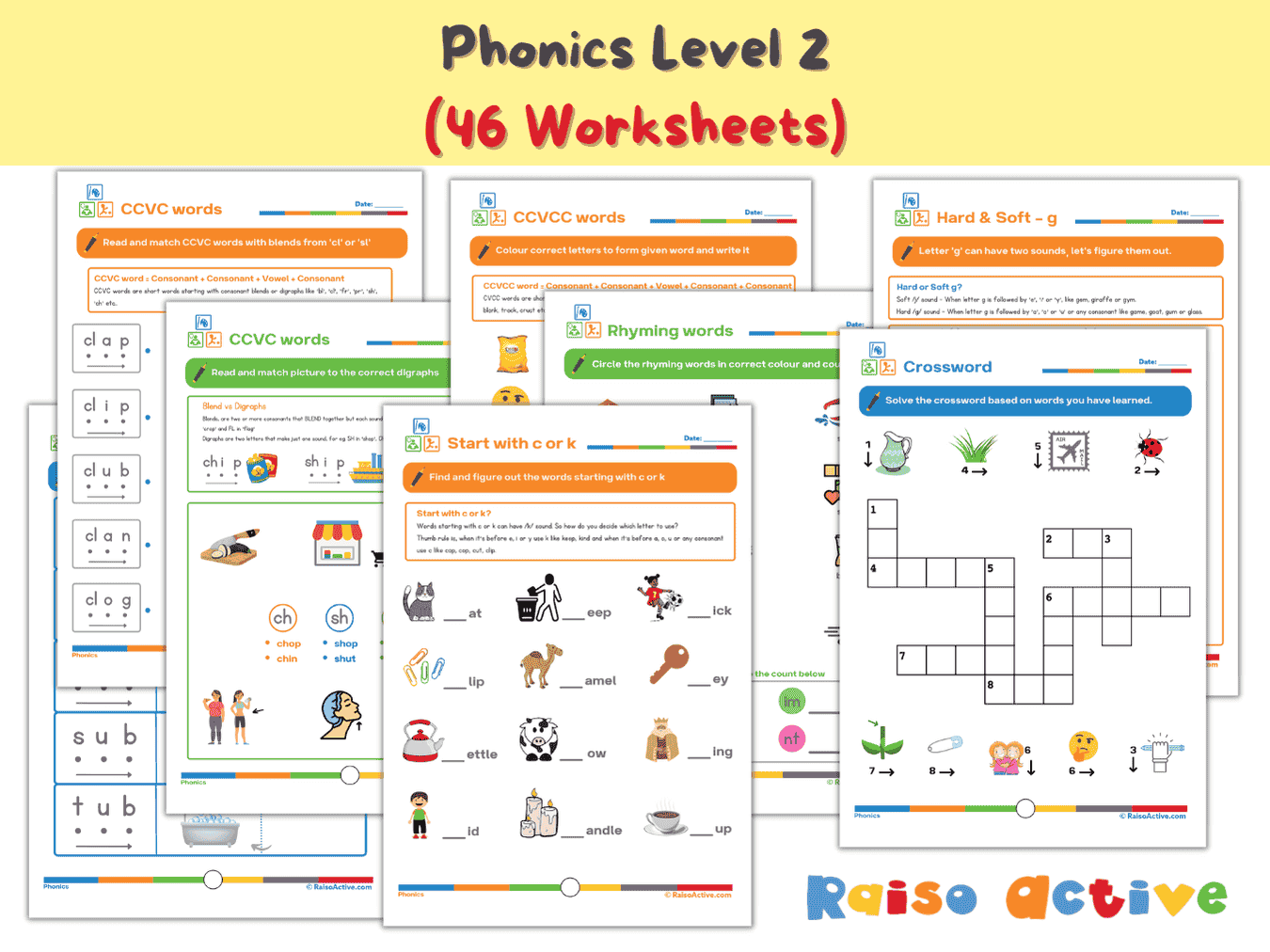
Phonics Level 2 Worksheets: CVC, CCVC, CVCC Word Families & Blends for Early Readers (Ages 4-7)
Ages 4-7 · Pre-K–Grade 1Ages 4-7 · Reception–Year 2Ages 4-7 · LKG–Class 1Ages 4-7 · 47 pages
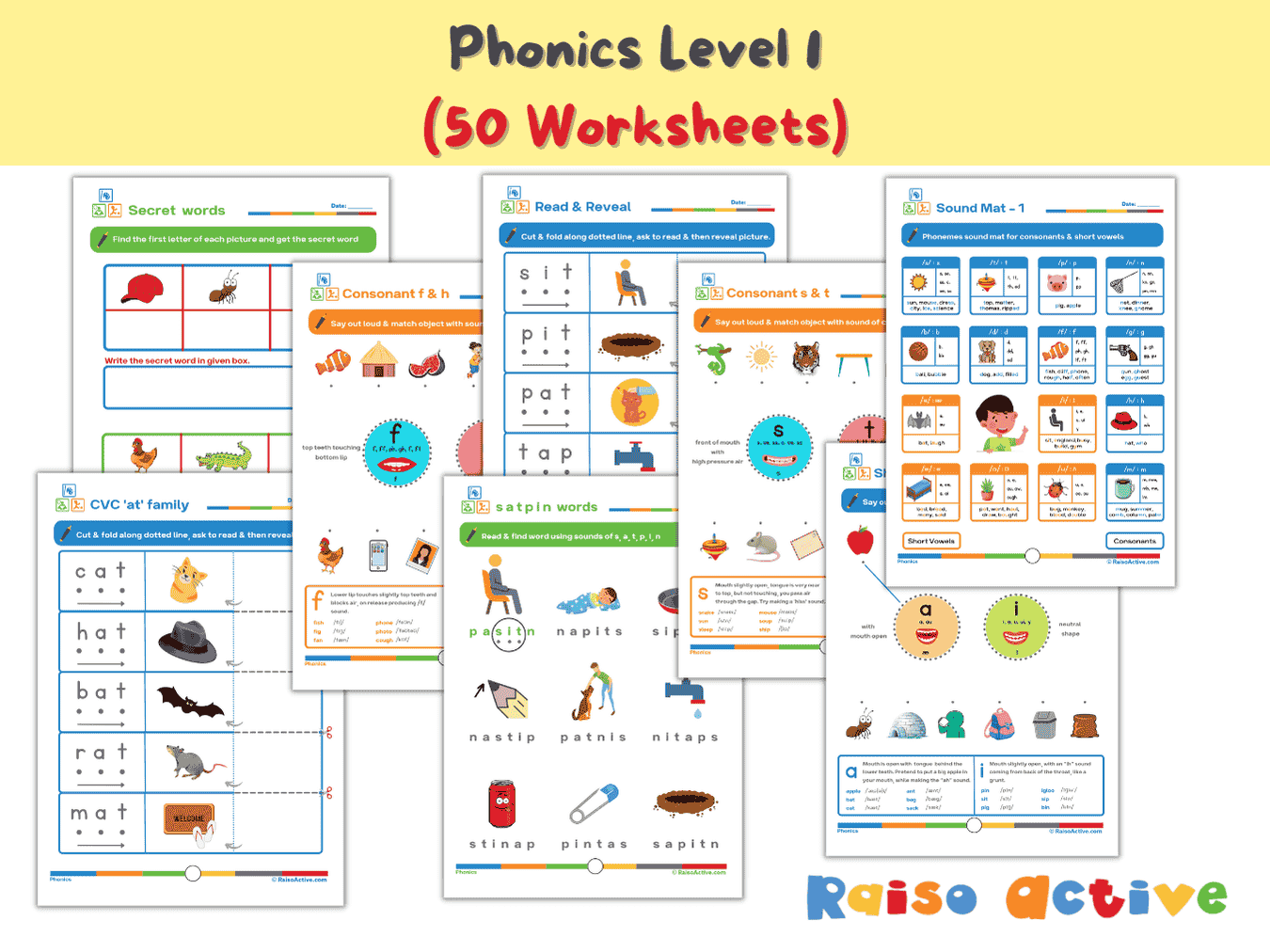
Phonics Level 1 Activity Book: Letter Sounds, Blending & CVC Words for Preschool & Kindergarten
Ages 3-6 · Preschool–KindergartenAges 3-6 · Nursery–Year 1Ages 3-6 · Nursery–UKGAges 3-6 · 60 pages
Festivals & Cultural Diversity Activity Book for Kids (Ages 4-8)
Ages 4-8 · Pre-K–Grade 2Ages 4-8 · Reception–Year 3Ages 4-8 · LKG–Class 2Ages 4-8 · 30 pages
Flags of the World Activity Book & Flashcards for Kids (Ages 5-9)
Ages 5-8 · Kindergarten–Grade 2Ages 5-8 · Year 1–Year 3Ages 5-8 · UKG–Class 2Ages 5-8 · 23 pages
Halloween & Fall Activity Book: Math, Literacy & Cognitive Skills for Ages 4-8
Ages 4-8 · Pre-K–Grade 2Ages 4-8 · Reception–Year 3Ages 4-8 · LKG–Class 2Ages 4-8 · 23 pages
India Activity Book for Kids: Explore Geography, Culture & Symbols (Ages 5-8)
Ages 5-8 · Kindergarten–Grade 2Ages 5-8 · Year 1–Year 3Ages 5-8 · UKG–Class 2Ages 5-8 · 8 pages