Shape Sudoku: Complete the Puzzles!
This shape-based Sudoku worksheet challenges children ages 4-6 to apply logical reasoning as they fill in missing shapes so that each row, column, and smaller grid section contains every shape exactly once. Unlike simple shape naming, Sudoku requires children to track multiple constraints at the same time and use process of elimination, an early and valuable introduction to structured logical thinking. Successfully completing even a simplified shape Sudoku builds real confidence in tackling multi-step problems methodically.
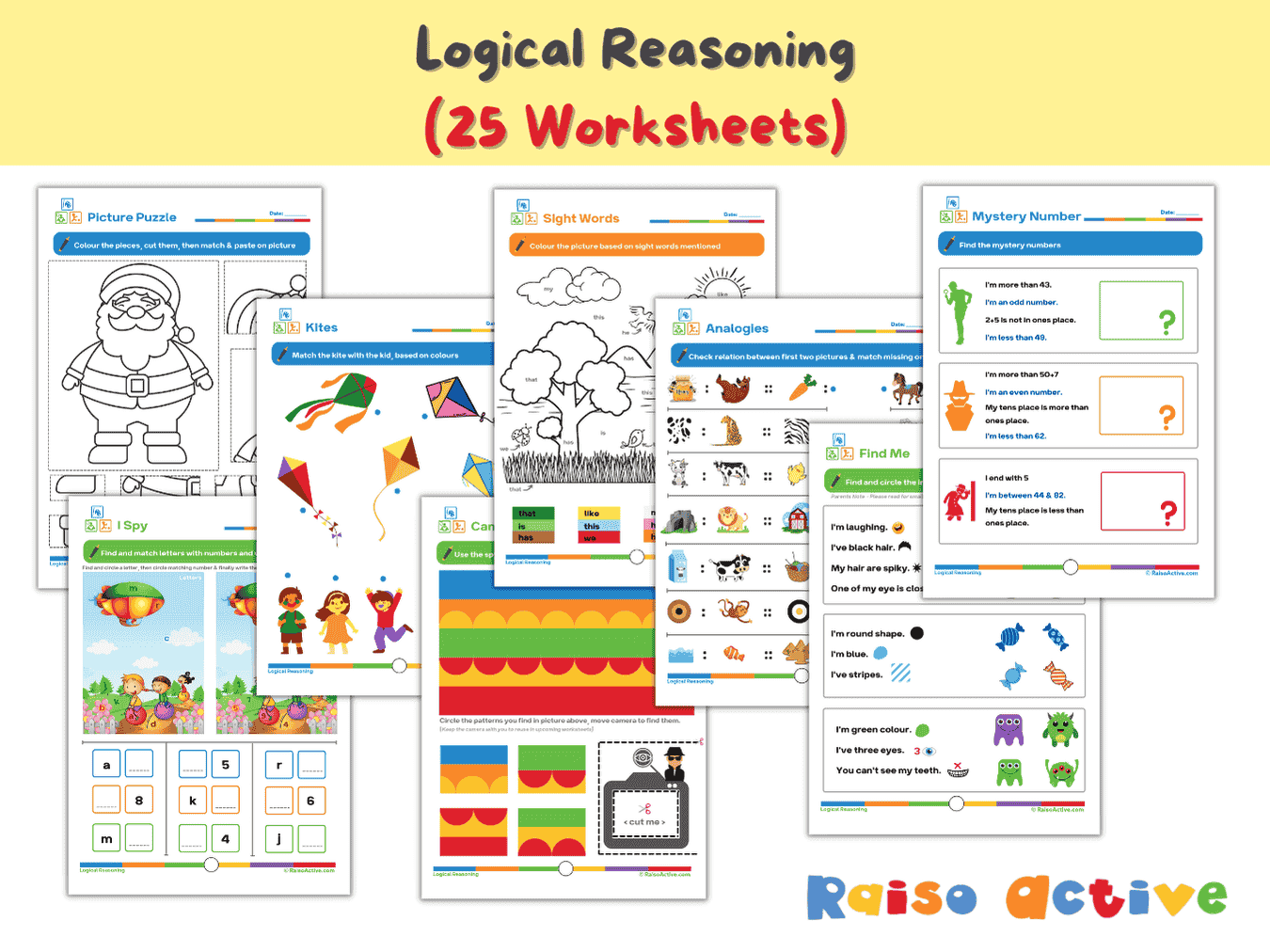
Part of the pack
Logical Reasoning Activity Book for Preschool & Kindergarten | Patterns, Puzzles & Analogies
This is page 25 of the pack. Ages 4-7 · Pre-K–Grade 1Ages 4-7 · Reception–Year 2Ages 4-7 · LKG–Class 1Ages 4-7
Curriculum
- Cognitive - Problem Solving > Sudoku Puzzles
How to use this worksheet
Look at the grid together and identify the shapes already filled in for each row, column, and smaller square. Ask your child which shape is missing from an empty box by checking which shapes are already used in that row, column, and section. Have them draw or write the missing shape in that box. Continue working through the puzzle box by box, checking as you go that no shape repeats in any row, column, or section.
Materials needed
- Pencil
- Eraser
Extension activities
- 1Create your own simple shape Sudoku puzzle using just two or three shapes.
- 2Use different colors for each shape type to make the pattern rules easier to see.
- 3Play with physical shape tiles, arranging them by trial and error on a drawn grid.
- 4Time how long it takes to solve a puzzle and try to improve with practice.
- 5Explain the 'no repeats in a row or column' rule to a sibling or friend as a teaching exercise.

Written by
Hemsweta Jain · Teacher Cheena
MBA and Early Childhood Educator, teaching since 2014 · Founder of RaisoActive, Mumbai
Every RaisoActive worksheet is designed and checked by the founder before publishing.
Published · Last reviewed
More from Logical Reasoning Activity Book for Preschool & Kindergarten | Patterns, Puzzles & Analogies
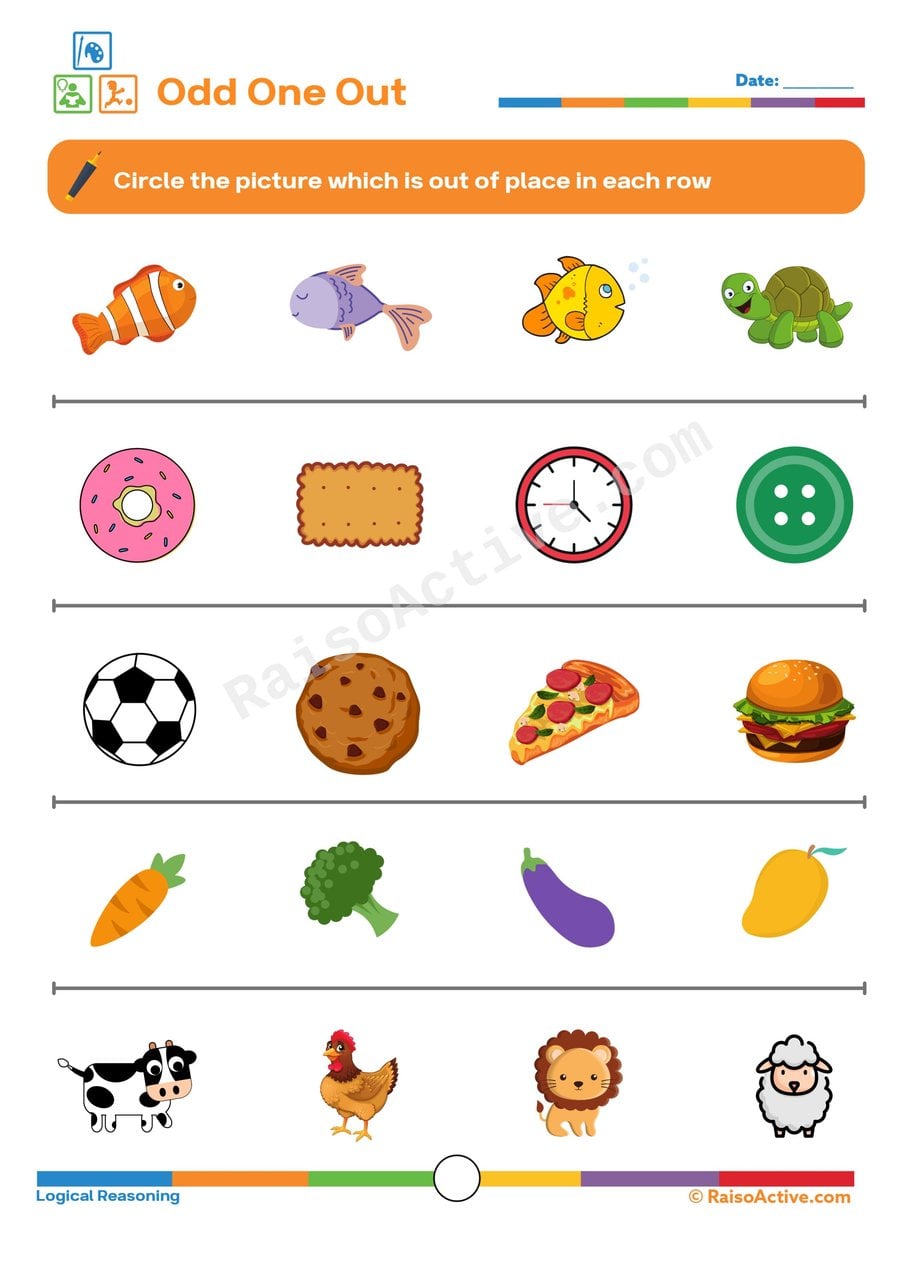
Odd One Out Worksheet: Spot the Differences!
Ages 4-6 · Pre-K–KindergartenAges 4-6 · Reception–Year 1Ages 4-6 · LKG–UKGAges 4-6
Identifying which picture in a row is different from the others builds visual discrimination and logical reasoning in children ages 4-6, requiring them to compare multiple objects at once and notice a distinguishing feature rather than just spotting an obvious mismatch. This skill directly supports later academic tasks like sorting, categorizing, and comparing, since children must articulate what makes an item different, not just recognize that it is. Explaining their reasoning out loud after choosing also builds early verbal reasoning and communication skills.
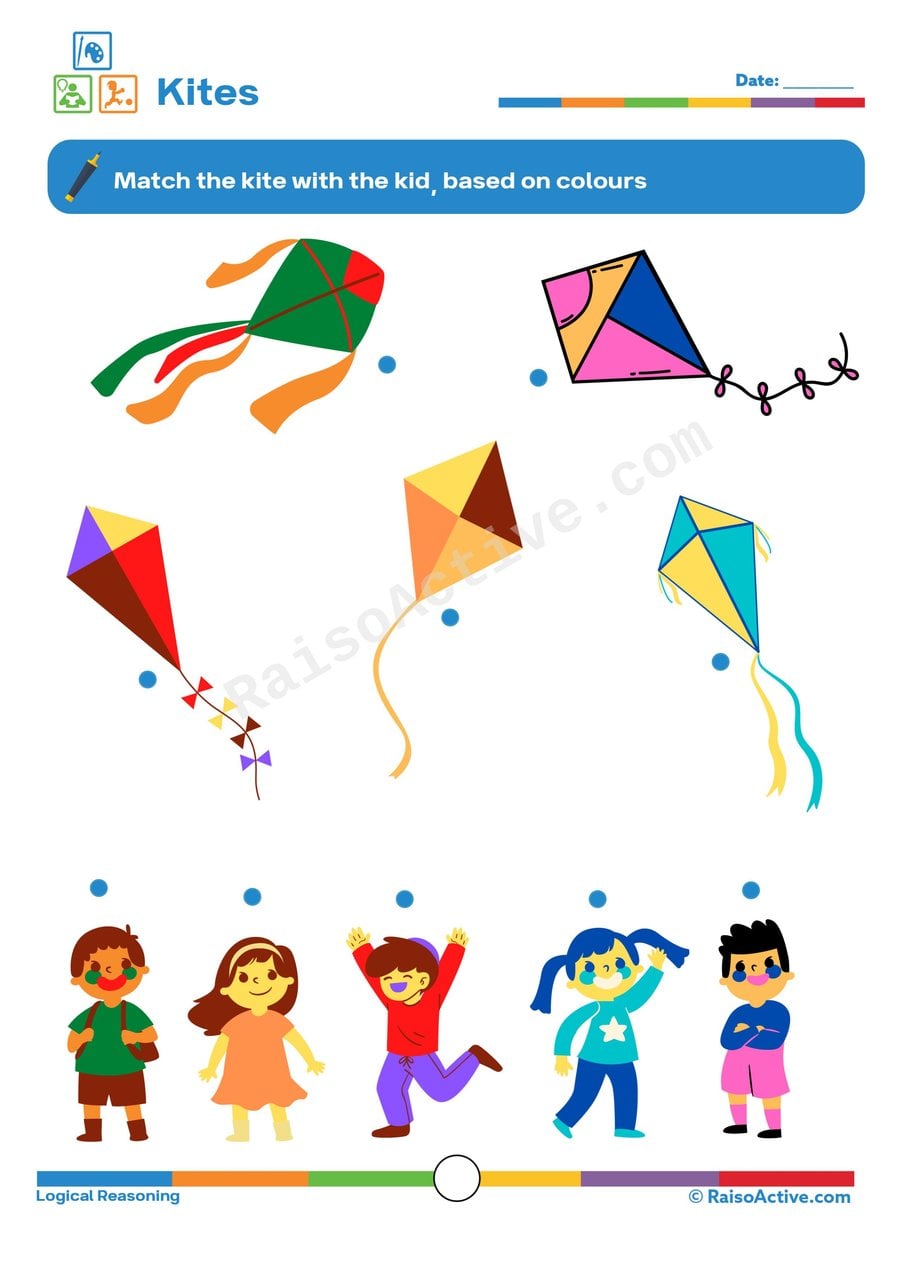
Kite Color Matching Worksheet for Preschoolers
Ages 3-5 · Preschool–Pre-KAges 3-5 · Nursery–ReceptionAges 3-5 · Nursery–LKGAges 3-5
This color-matching worksheet asks children ages 3-5 to connect each kite to the child flying a matching-colored kite, reinforcing color recognition and visual discrimination as they scan multiple color options across the page. Because children must compare several colors at once rather than matching a single pair, the task demands more sustained visual attention than a simple two-item match. Practicing color vocabulary in a playful, seasonal context also keeps repetition from feeling like rote drilling.

Color by Number Snowman Worksheet for Preschoolers
Ages 3-5 · Preschool–Pre-KAges 3-5 · Nursery–ReceptionAges 3-5 · Nursery–LKGAges 3-5
This color-by-number worksheet helps children ages 3-5 practice number recognition and color matching simultaneously, using a snowman picture divided into numbered sections. Reading a number key and applying it consistently across an entire picture builds sustained attention and careful visual tracking, since a single mistake can be spotted easily against the intended design. This combination of numeracy and following directions makes color-by-number activities a favorite bridge between math and art.

Find the Matching Image: A Fun Logical Reasoning Worksheet for Kids
Ages 3-5 · Preschool–Pre-KAges 3-5 · Nursery–ReceptionAges 3-5 · Nursery–LKGAges 3-5
Reading or listening to a short description and circling the image that matches it teaches children ages 3-5 to translate spoken or written language into a mental picture, then compare that picture against several visual options. This kind of description-to-image matching builds listening comprehension and logical reasoning, since children must hold multiple details in mind, like color, size, or action, before deciding which image fits all of them. It's a step up from simple visual matching because it requires connecting language to an image rather than comparing two pictures directly.

Camera Spy: Find the Patterns Worksheet for Preschoolers
Ages 3-5 · Preschool–Pre-KAges 3-5 · Nursery–ReceptionAges 3-5 · Nursery–LKGAges 3-5
This 'camera spy' activity gives children ages 3-5 practice identifying repeating visual patterns within a busy scene, using a cut-out paper camera as a fun framing tool to focus their attention on one section at a time. Framing pattern-spotting as detective work keeps young children motivated through a task that otherwise requires sustained visual scanning. This early pattern recognition in a complex scene is more demanding than spotting patterns in a simple row, since children must first locate the pattern before they can identify it.
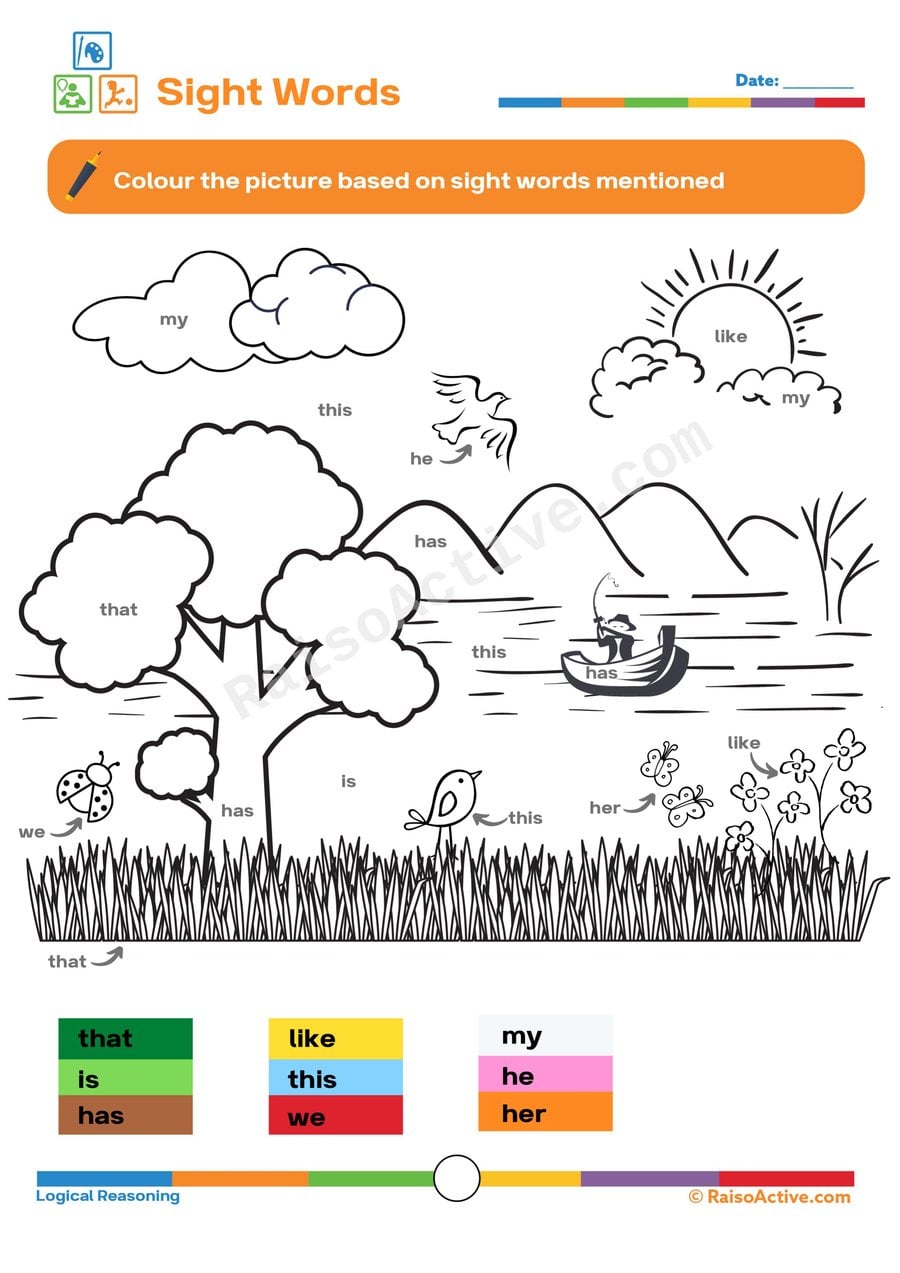
Sight Word Coloring Worksheet for Preschoolers
Ages 3-5 · Preschool–Pre-KAges 3-5 · Nursery–ReceptionAges 3-5 · Nursery–LKGAges 3-5
This worksheet helps children ages 3-5 build sight-word recognition by having them read common high-frequency words and use a color key to decide how to color the corresponding pictures. Connecting a printed word to a coloring decision requires children to actually read and recall the word's meaning, rather than just copying or tracing it, which is a genuine step toward independent reading. The coloring format also keeps the repeated word-reading practice feeling like an art activity rather than a drill.

Pizza Pattern Matching Worksheet for Preschoolers
Ages 3-5 · Preschool–Pre-KAges 3-5 · Nursery–ReceptionAges 3-5 · Nursery–LKGAges 3-5
This worksheet uses a pizza-slice theme to build visual discrimination and pattern-completion skills in children ages 3-5, asking them to match a missing pizza slice to the whole pizza it belongs to. Matching a piece to its correct whole requires children to compare small visual details, like topping arrangement or slice shape, which sharpens attention to detail beyond simple color or shape matching. The food theme adds a fun, relatable context that keeps young children engaged with the visual comparison task.

Spot the Differences! Fun Coloring Worksheet for Kids
Ages 3-5 · Preschool–Pre-KAges 3-5 · Nursery–ReceptionAges 3-5 · Nursery–LKGAges 3-5
This spot-the-difference worksheet challenges children ages 3-5 to compare two nearly identical pictures and circle every visual difference they find, sharpening close observation and attention to detail. Coloring both images first, using slightly different choices between the two, adds an extra layer of visual comparison since children must notice both original design differences and any coloring variation. This kind of side-by-side visual analysis is a foundational skill for later proofreading and detail-oriented tasks.
Related worksheets
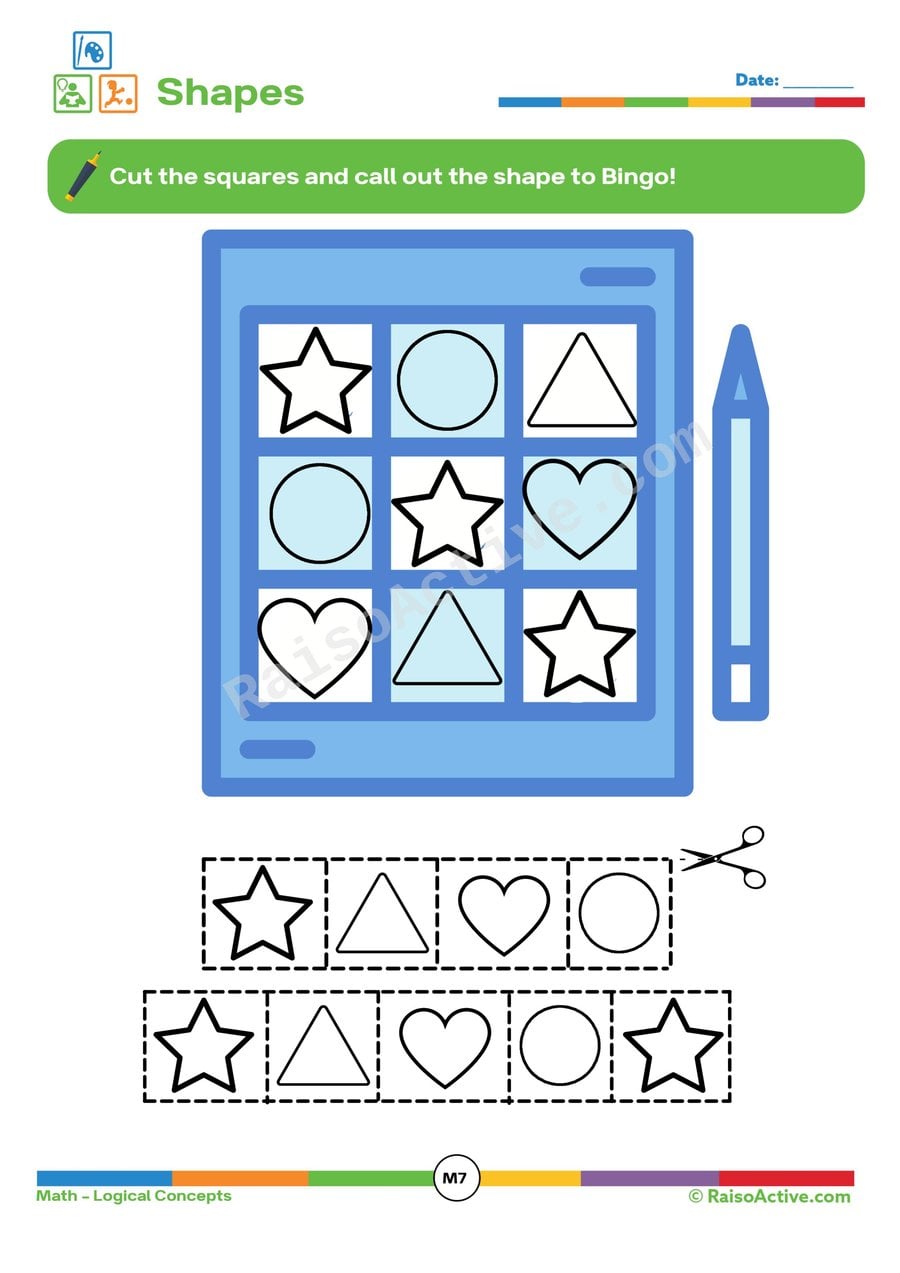
Shape Bingo Worksheet: Cut and Identify Shapes!
Ages 3-5 · Preschool–Pre-KAges 3-5 · Nursery–ReceptionAges 3-5 · Nursery–LKGAges 3-5
This worksheet turns shape recognition into a bingo-style game for children ages 3-5, asking them to cut out shapes and match them to identical shapes on a bingo board. The bingo format adds a playful, goal-oriented structure to shape practice, motivating children to scan carefully for stars, circles, triangles, and hearts. Calling out each shape name as it's matched also builds verbal shape vocabulary alongside visual recognition.
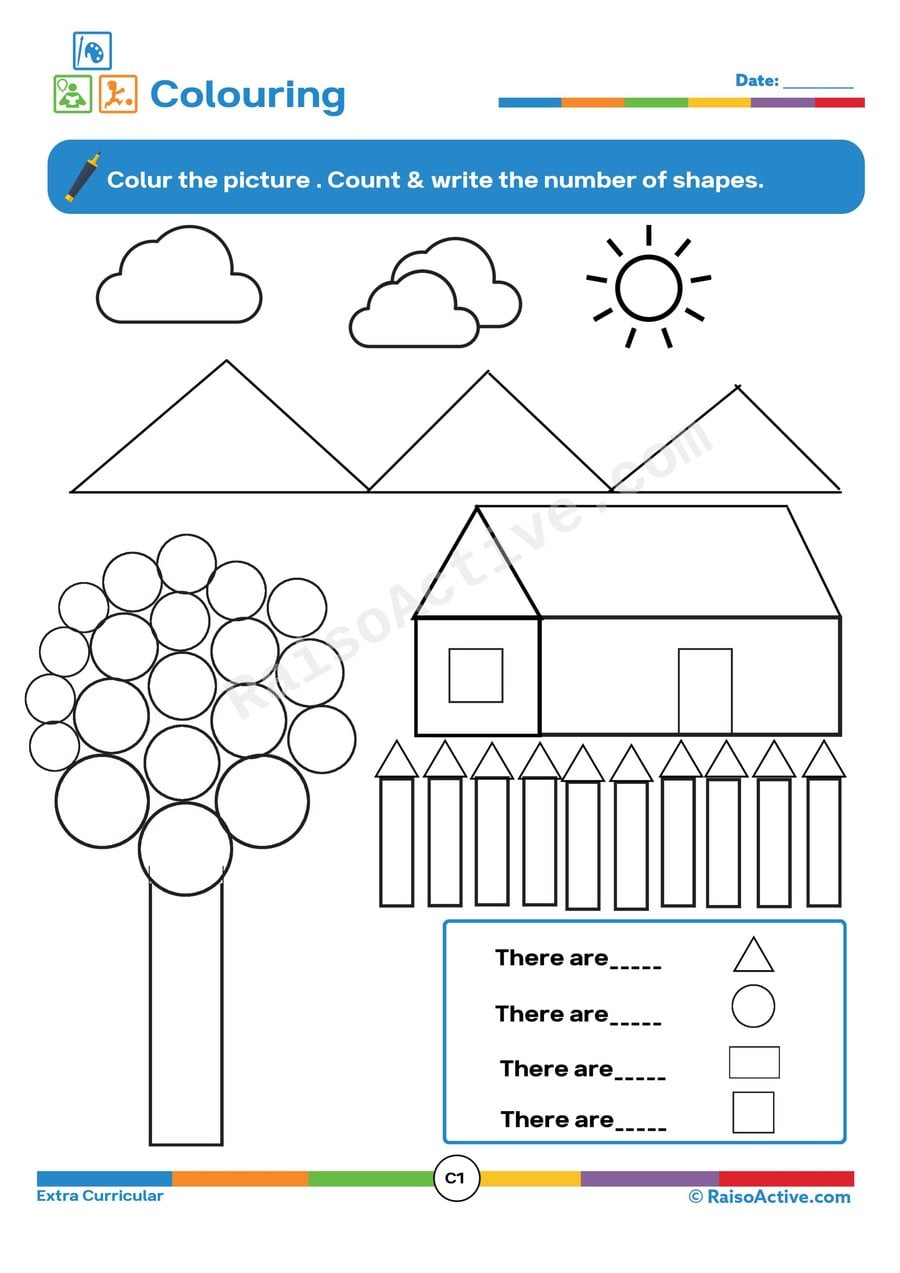
Shape Counting Fun: Count and Color the Shapes!
Ages 3-5 · Preschool–Pre-KAges 3-5 · Nursery–ReceptionAges 3-5 · Nursery–LKGAges 3-5
Preschoolers ages 3-5 combine shape recognition with counting practice by identifying different shapes within a larger picture, coloring them, and then counting how many of each shape appear. This dual task strengthens both geometry vocabulary and one-to-one correspondence as children tally shape totals. Coloring the picture first also builds sustained fine motor control before the counting portion begins.

Shape Sorting Fun: Cut and Paste Worksheet for Preschoolers
Ages 3-5 · Preschool–Pre-KAges 3-5 · Nursery–ReceptionAges 3-5 · Nursery–LKGAges 3-5
This cut-and-paste worksheet helps children ages 3-5 practice visually matching real-world objects to their underlying geometric shape, specifically distinguishing circles from ovals. Learning to see the circle or oval 'hiding' inside everyday objects, like a clock or an egg, builds the shape-recognition foundation that supports later geometry and spatial reasoning. Cutting and gluing each piece also strengthens fine motor precision.

Shape Robot Cut and Paste Worksheet for Preschoolers
Ages 3-5 · Preschool–Pre-KAges 3-5 · Nursery–ReceptionAges 3-5 · Nursery–LKGAges 3-5
Cutting out shapes and gluing them into place to build a robot reinforces shape recognition alongside fine motor and spatial-assembly skills for children ages 3-5, since each piece must be matched by both its form and its position.
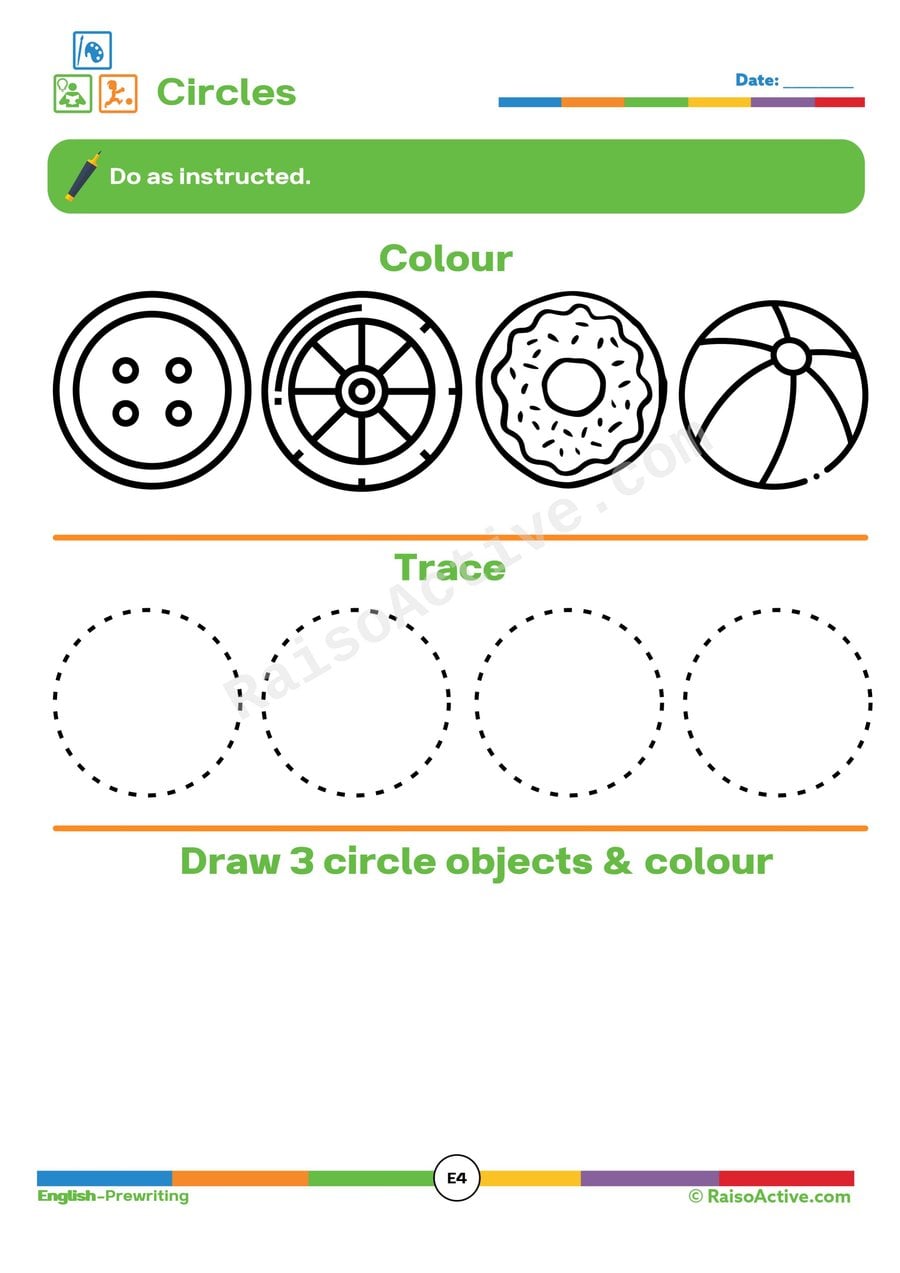
Circle Shapes Worksheet: Trace, Color, and Draw!
Ages 3-5 · Preschool–Pre-KAges 3-5 · Nursery–ReceptionAges 3-5 · Nursery–LKGAges 3-5
This worksheet builds shape recognition and drawing skills as children ages 3-5 trace dotted circles, color pictures of circular objects, and then draw three circle-shaped objects entirely on their own. Moving from tracing to independent drawing tracks a real developmental progression — first following a guide, then applying the shape from memory — which builds true shape mastery rather than just copying.
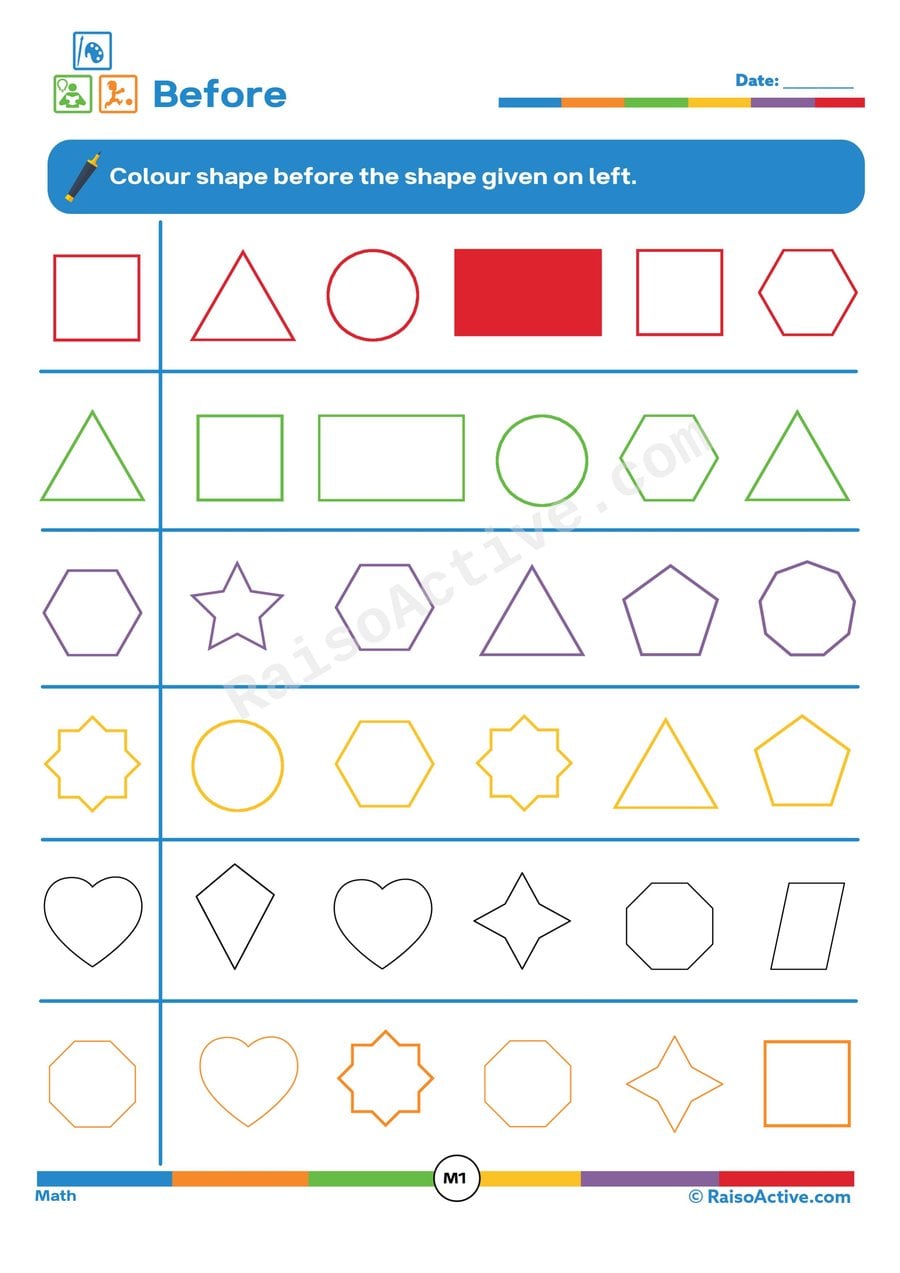
Shape Coloring Worksheet: Before the Shape!
Ages 3-5 · Preschool–Pre-KAges 3-5 · Nursery–ReceptionAges 3-5 · Nursery–LKGAges 3-5
This worksheet combines shape recognition with sequencing by asking children to identify which shape comes before a given shape in a row, requiring them to understand order as well as shape names. For ages three to five, thinking about what comes 'before' something visually is a gentle introduction to ordinal reasoning that will later apply to numbers and letters as well as shapes.
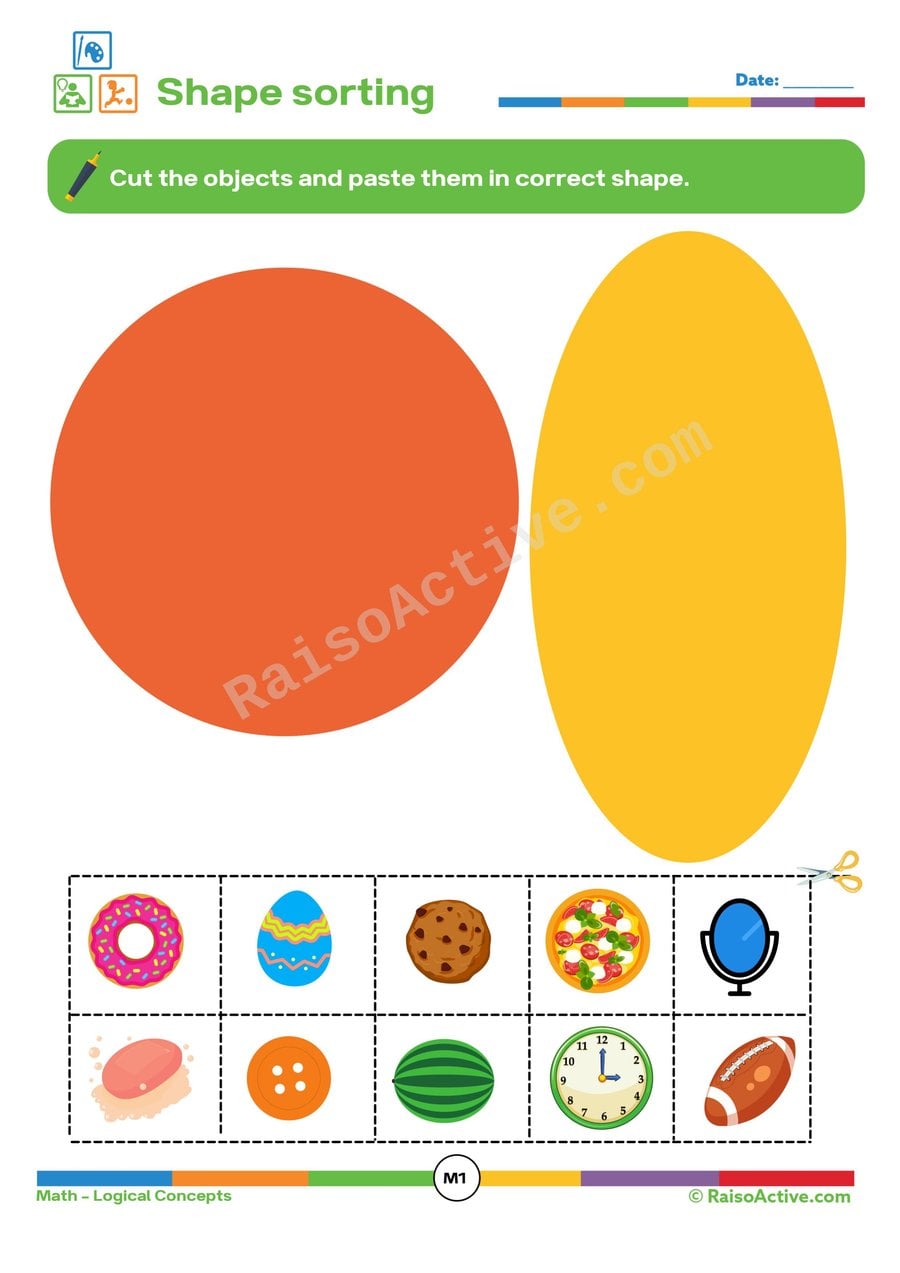
Shape Sorting Worksheet: Cut and Paste Fun!
Ages 3-5 · Preschool–Pre-KAges 3-5 · Nursery–ReceptionAges 3-5 · Nursery–LKGAges 3-5
Sorting everyday objects — a plate, an egg, a clock — into 'circle' or 'oval' bins asks a 3-5 year old to look past what an object is and notice its geometric shape instead, an early step toward abstract categorization. Cutting along the outline of each picture and gluing it into the right column also builds the scissor control and hand-eye coordination that later supports handwriting.

Roll and Cover Shapes Worksheet for Preschoolers
Ages 3-5 · Preschool–Pre-KAges 3-5 · Nursery–ReceptionAges 3-5 · Nursery–LKGAges 3-5
This dice game helps children ages 3-5 practice shape recognition under a bit of playful chance, since they must roll a die, interpret which shape it points to, and then find and cover the matching shape on the worksheet. Reacting to a randomly rolled shape rather than working through a fixed sequence keeps children actively scanning the whole page, which builds visual search skills alongside basic geometry recognition.
Guides for this topic

Age-Appropriate Problem-Solving Activities: Building Critical Thinkers from the Ground Up
Discover fun, age-appropriate problem-solving activities for children ages 1-8. Build critical thinking, logic, and reasoning skills through play-based learning.

Fostering Creativity in Structured Learning: The Perfect Balance for Young Minds
Learn how to blend creativity with structured learning for children ages 1-8. Practical strategies, activities, and printable worksheets for parents and teachers.
Critical Thinking Activities That Actually Work for Young Children: Building Tomorrow's Thinkers Today
Discover proven critical thinking activities for young children. Age-wise logic games, questioning techniques, and hands-on ideas to build thinking skills at home.
Reviews
Every worksheet for ages 4–6, no watermark
Members download the full library of 1,000+ worksheets and every activity pack without watermarks or daily limits. One year costs ₹999 in India or $20 elsewhere.
See membership plansOr download any worksheet free with a watermark (5 a day).