Initial Sound Match: Cut and Paste Worksheet
Children ages 4-5 develop phonemic awareness by identifying the beginning sound of each pictured object and matching it to the correct letter, a critical pre-reading skill for connecting sounds to symbols. This cut-and-paste format adds fine motor practice with scissors and glue alongside the phonics work. Recognizing initial sounds is one of the strongest early predictors of later reading success.
Part of the pack
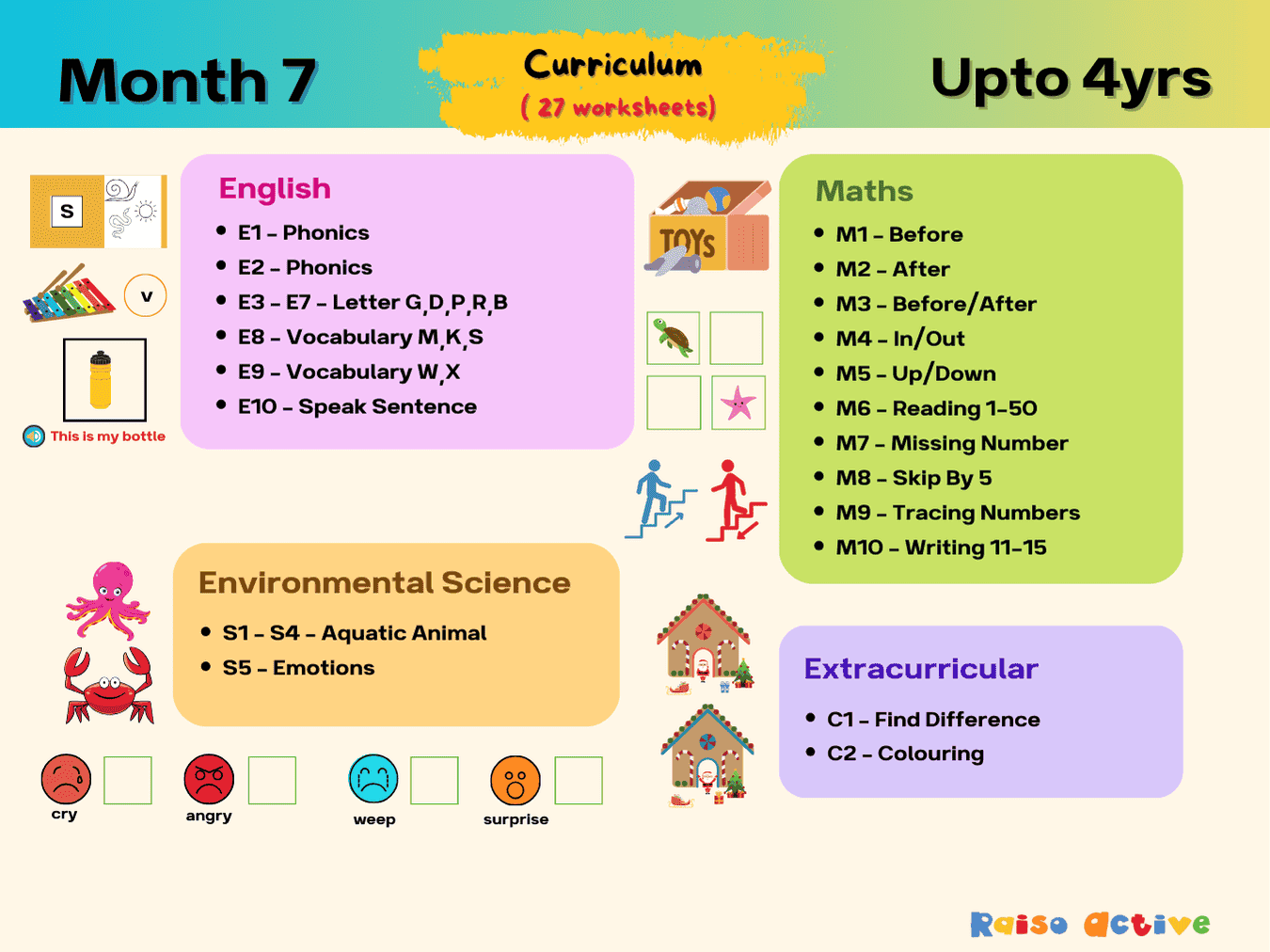
Month 7: Comprehensive preschool learning | Ages Up to 4
This is page 5 of the pack. Ages 2-4 · PreschoolAges 2-4 · NurseryAges 2-4
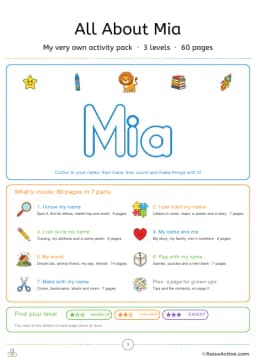
Made for your child
A whole activity pack made with their name
60 pages to spot, build, trace and write their own name, plus pages about their favourites, feelings and family. See a free preview with their name.
Make an All About Me packFree preview · free for members
Or start free: a name tracing sheet with their nameCurriculum
- Phonics - Letter Sounds > Beginning Sounds
How to use this worksheet
Look at the first picture together and say its name slowly, emphasizing the very first sound your child hears. Ask them to find the matching letter among the cut-out pieces at the bottom of the page, saying the letter sound aloud before cutting it free. Have them glue the correct letter into the box beside the picture it matches, then repeat the process for each remaining picture. Once finished, go back and say each picture-letter pair together to double-check the matches.
Materials needed
- Scissors
- Glue
- Pencil
Extension activities
- 1Play an 'I spy' game where your child names objects around the room that start with a chosen sound.
- 2Sort a small pile of toys into groups based on their beginning sound.
- 3Have your child draw a new picture for a letter that wasn't on the worksheet and say its beginning sound.
- 4Make letter sound flashcards and quiz each other on which sound goes with which letter.
- 5Read a short picture book and pause to ask what sound the first word on each page starts with.

Written by
Hemsweta Jain · Teacher Cheena
MBA and Early Childhood Educator, teaching since 2014 · Founder of RaisoActive, Mumbai
Every RaisoActive worksheet is designed and checked by the founder before publishing.
Published · Last reviewed
More from Month 7: Comprehensive preschool learning | Ages Up to 4

Match the Parts of a Crab Worksheet for Preschoolers
Ages 3-5 · Preschool–Pre-KAges 3-5 · Nursery–ReceptionAges 3-5 · Nursery–LKGAges 3-5
Learning to label the parts of a crab, claws, shell, legs, eyes, introduces preschoolers to basic animal anatomy vocabulary and the idea that living things are made of distinct, named parts, an early step toward more formal science observation later on. Matching labels to a diagram also strengthens visual scanning, since children must locate the correct part on the picture before connecting it to its name.
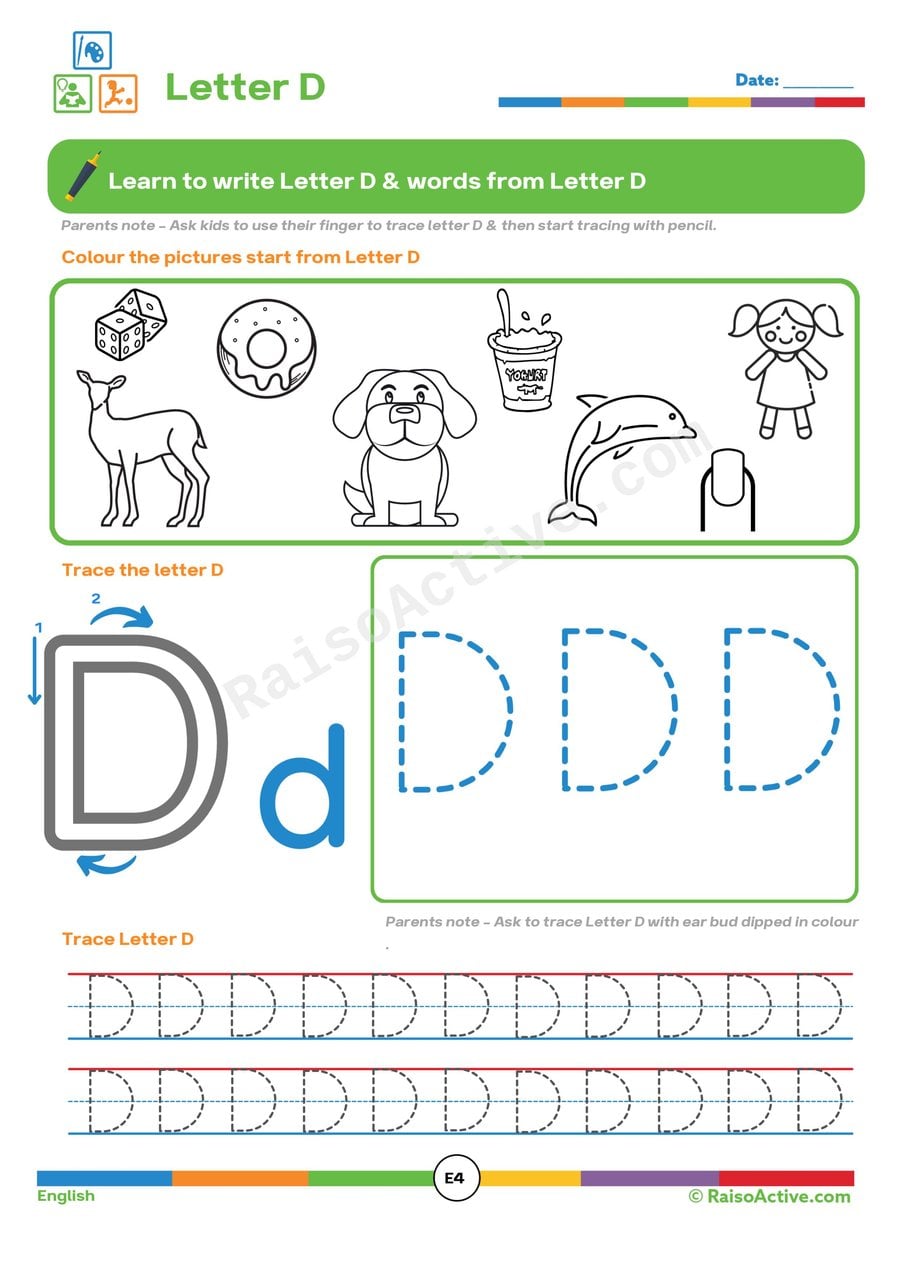
Letter D Tracing Worksheet: Learn to Write & Color!
Ages 3-5 · Preschool–Pre-KAges 3-5 · Nursery–ReceptionAges 3-5 · Nursery–LKGAges 3-5
Tracing both uppercase and lowercase D repeatedly builds the fine motor muscle memory needed for correct letter formation, while the accompanying picture coloring reinforces the 'D' sound by asking children to identify objects that start with it. For ages three to five, combining tracing with picture-based sound practice teaches the letter as both a shape and a sound at the same time, rather than as an isolated symbol.

Color the Animals! M, K, S Beginning Sounds Worksheet for Preschool
Ages 3-5 · Preschool–Pre-KAges 3-5 · Nursery–ReceptionAges 3-5 · Nursery–LKGAges 3-5
By coloring circles according to a color key tied to the beginning sound of each animal's name, this worksheet trains children to isolate the very first sound in a word, a skill called phoneme isolation that is one of the strongest early predictors of reading success. Working with the letters M, K, and S specifically gives practice distinguishing sounds that can be tricky to tell apart when spoken quickly.

Missing Number Puzzle: Cut and Paste to Reveal the Hidden Picture!
Ages 4-6 · Pre-K–KindergartenAges 4-6 · Reception–Year 1Ages 4-6 · LKG–UKGAges 4-6
Children ages 4-6 practice number recognition and sequencing by identifying which numbers are missing from a grid and placing the correct cut-out pieces to reveal a hidden picture underneath. The reveal element adds motivation and delayed gratification, encouraging children to complete every number rather than rushing through a few. This activity also builds scissor precision and spatial planning as pieces must fit exact spots.

Letter G Tracing Worksheet: Learn to Write and Color!
Ages 3-5 · Preschool–Pre-KAges 3-5 · Nursery–ReceptionAges 3-5 · Nursery–LKGAges 3-5
Preschoolers ages 3-5 build handwriting readiness by tracing both the uppercase and lowercase letter G along dotted guide lines, developing the fine motor control and pencil grip needed for future writing. The distinct curved shape of the letter G, especially its small hook, offers valuable practice with controlled curved strokes. Coloring pictures that start with G connects the letter's shape to its beginning sound, reinforcing early phonics.

Cut and Paste Initial Sounds Worksheet for Preschoolers
Ages 4-5 · Pre-KAges 4-5 · ReceptionAges 4-5 · LKGAges 4-5
This worksheet asks children to identify the very first sound of a picture's name and then physically select and paste the matching letter, combining phoneme isolation with a hands-on confirmation step that a simple matching line doesn't provide. For ages four to five, the cutting and choosing process slows the task down just enough to make sure the sound-letter connection is deliberate rather than a quick guess.

Tracing Numbers 13-16 Worksheet for Preschoolers
Ages 3-5 · Preschool–Pre-KAges 3-5 · Nursery–ReceptionAges 3-5 · Nursery–LKGAges 3-5
Tracing the numbers 13 through 16 gives children practice with the trickier teen-number range, where number names and digit order don't always match intuitively, fourteen starts with the digit that comes second, for example, making handwriting practice here also a subtle exercise in number sense. For ages three to five, saying each number aloud while tracing helps cement both its written form and its place in the counting sequence.

Up and Down Worksheet: Counting and Writing Practice for Preschoolers
Ages 3-5 · Preschool–Pre-KAges 3-5 · Nursery–ReceptionAges 3-5 · Nursery–LKGAges 3-5
Children ages 3-5 combine spatial reasoning with counting practice by counting steps or elements going up and down, then writing the totals. Understanding 'up' and 'down' as directional concepts supports later skills like reading graphs, climbing stairs safely, and following spatial instructions. Writing the counted numbers afterward reinforces number formation alongside the counting itself.
Related worksheets

First Letter Fun: Identify and Write! Vocabulary Worksheet
Ages 3-5 · Preschool–Pre-KAges 3-5 · Nursery–ReceptionAges 3-5 · Nursery–LKGAges 3-5
Naming a pictured object aloud and writing just its first letter asks children ages 3-5 to isolate the very beginning sound of a word and translate that sound into a written symbol, a core early phonics skill that predicts reading readiness. Unlike simple letter tracing, this worksheet requires children to generate the correct letter from memory based on sound alone, which is a meaningfully harder and more independent task. Practicing this across several different pictures builds both vocabulary and the sound-to-letter link needed for early spelling.

Letter Recognition Worksheet: Fill in the Beginning Letter!
Ages 3-5 · Preschool–Pre-KAges 3-5 · Nursery–ReceptionAges 3-5 · Nursery–LKGAges 3-5
This worksheet gives children ages 3-5 practice identifying the beginning sound of pictured words, writing the missing letter to complete each one, and then specifically finding words that start with the letter 'W'. Focusing on one target letter in the second half of the worksheet adds a layer of selective attention, asking children to recognize a specific letter among several options rather than just filling in blanks.
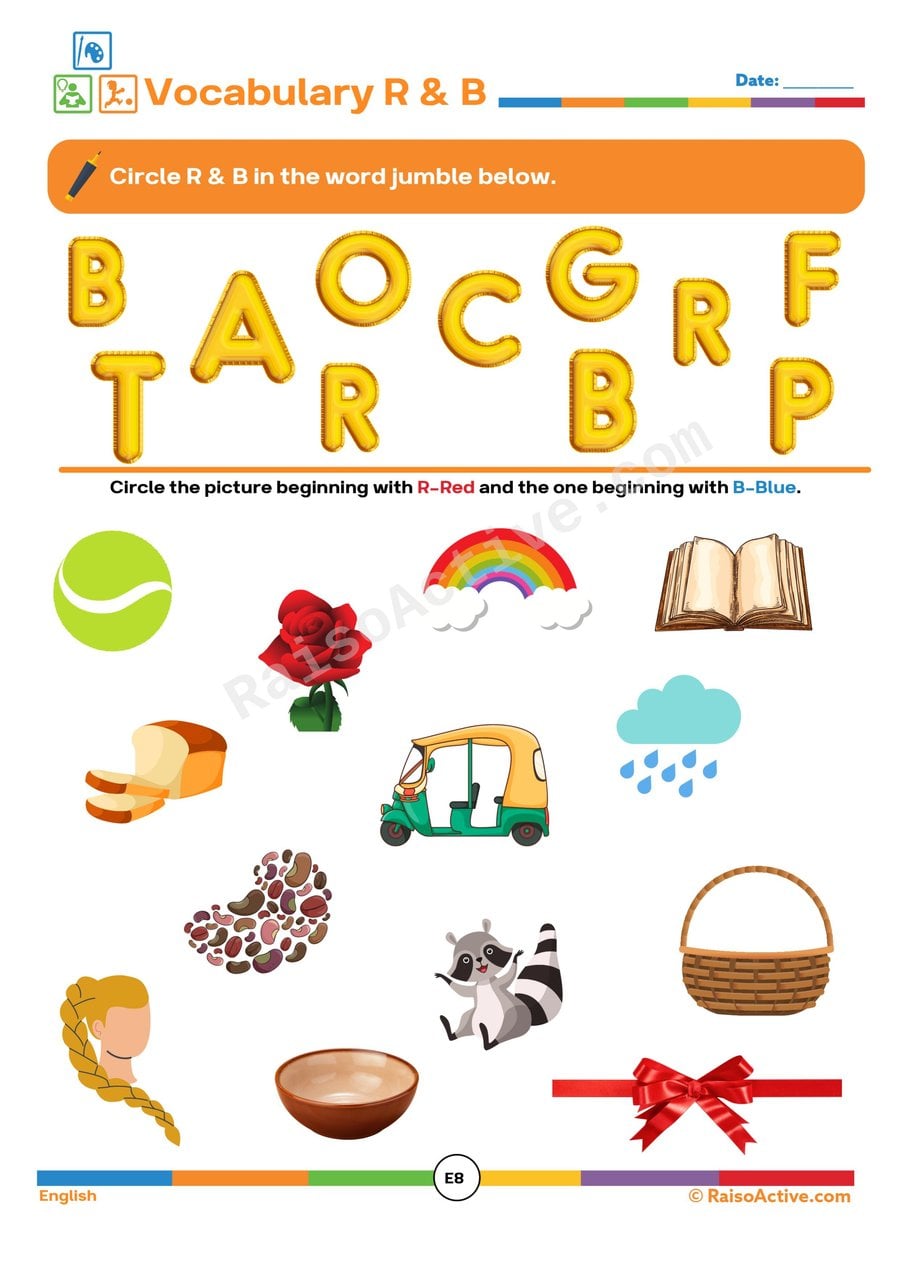
R & B Word Jumble Worksheet for Preschoolers
Ages 4-5 · Pre-KAges 4-5 · ReceptionAges 4-5 · LKGAges 4-5
Circling the letters R and B within a jumbled group of letters sharpens visual discrimination for children ages 4-5, training their eyes to spot a specific letter shape among similar-looking distractions. Pairing this with picture identification for words that start with R and B reinforces beginning-sound recognition, connecting the visual letter search to actual spoken sounds.

Alphabet Adventures: Circle the Objects! A Fun Letter Recognition Worksheet
Ages 3-5 · Preschool–Pre-KAges 3-5 · Nursery–ReceptionAges 3-5 · Nursery–LKGAges 3-5
This worksheet builds letter-sound correspondence by having children scan a group of pictures and circle only the ones that start with a specific letter. For three- to five-year-olds, this kind of visual search-and-sort task strengthens both phonics recognition and sustained visual attention, since children have to check each picture against the target sound rather than just glancing at the page.

Alphabet Adventures: Write the First Letter - Small Alphabet Worksheet
Ages 4-6 · Pre-K–KindergartenAges 4-6 · Reception–Year 1Ages 4-6 · LKG–UKGAges 4-6
This worksheet strengthens phonemic awareness by asking children ages 4-6 to isolate the very first sound in a spoken word and match it to its lowercase letter - a skill that sits at the heart of early decoding and spelling. Because it uses small (lowercase) letters specifically, it also reinforces letter-case recognition, since children encounter lowercase print far more often than capitals once they begin reading books.

Cut and Paste the First Letter: Fun Phonics Worksheet for Preschoolers
Ages 4-5 · Pre-KAges 4-5 · ReceptionAges 4-5 · LKGAges 4-5
Children ages 4-5 practice identifying the beginning sound of a word and matching it to the correct letter, a core early phonics skill, while also building fine motor control through cutting and pasting. Connecting a picture's name to its first letter sound is one of the clearest building blocks toward independent reading.

First Letter Fun: Identify and Write! Vocabulary Worksheet
Ages 3-5 · Preschool–Pre-KAges 3-5 · Nursery–ReceptionAges 3-5 · Nursery–LKGAges 3-5
Naming everyday objects and writing their opening letter builds vocabulary alongside phonics for 3-5 year olds — each picture requires your child to first recall or recognize the object's name, then isolate just its first sound, and finally translate that sound into a written symbol. This vocabulary-first framing makes the worksheet especially useful for children who are still building the words for common objects, not just the letters that start them.

Phonics Fun: Circle the Beginning Sound Worksheet for Preschoolers
Ages 4-5 · Pre-KAges 4-5 · ReceptionAges 4-5 · LKGAges 4-5
This worksheet builds phonemic awareness by asking children to listen for a picture's beginning sound and circle the letter that matches it, a core early-reading skill that connects spoken sounds to written letters. For ages 4-5, this kind of sound-to-letter matching is one of the clearest predictors of later reading success, since it requires isolating individual sounds within a spoken word.
Guides for this topic

How to Teach CVC Blending: A Step-by-Step Method That Works in Two Weeks
A step-by-step method for teaching CVC blending, covering continuous sounds, word families, common errors, and a 14-day plan that most children finish reading CVC words.
Phase 2 Phonics at Home: Sound Order, Blending Games, Worksheets
Phase 2 phonics at home: the five sound sets in order, oral blending, tricky words, a two-week routine, common mistakes, and free worksheets.

Reception Year Explained: EYFS Learning and How to Help at Home
A teacher's plain-English guide to the Reception Year: the seven areas of learning, Early Learning Goals, Phase 2/3 phonics, the RBA and home routines.
Reviews
Every worksheet for ages 4–5, no watermark
Members download the full library of 1,000+ worksheets and every activity pack without watermarks or daily limits. One year costs ₹999 in India or $20 elsewhere.
See membership plansOr download any worksheet free with a watermark (5 a day).