Polite Words Worksheet: Matching and Application
Matching pictures and scenarios to the right polite word teaches children ages 3-5 when and why to use phrases like please, thank you, sorry, and excuse me, building the pragmatic language skills needed for real social interactions. This kind of practice helps young children connect a word not just to its meaning but to the specific situation that calls for it.
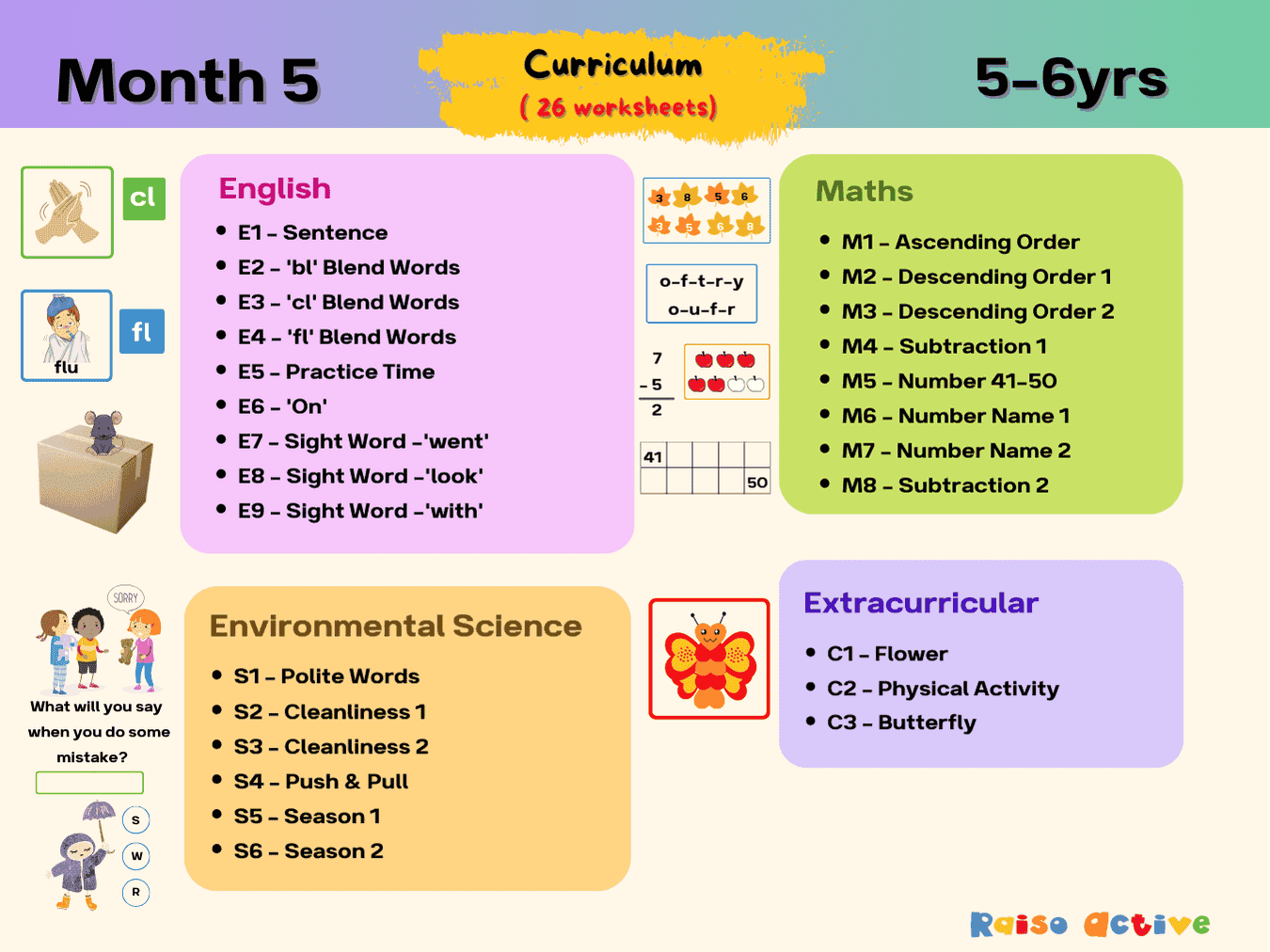
Part of the pack
Month 5: Play-based English Math Science | Ages 5-6
This is page 21 of the pack. Ages 5-6 · KindergartenAges 5-6 · Year 1Ages 5-6 · UKGAges 5-6
Made for your child
Counting to 10, made for your child
A maths pack with your child's name in it: pictures that explain, practice at three levels, puzzles and story sums about them. Print a new set whenever they finish.
Make a maths packFree preview · free for members
Curriculum
- SEL - Social Awareness > Social Skills
How to use this worksheet
Look at each picture together and talk about what is happening in the scene. Read the question or sentence aloud, then have your child find the matching polite word in the word box. Ask them to write the chosen word in the blank space, and encourage them to say the word aloud as they write it.
Materials needed
- Pencil
- Eraser
Extension activities
- 1Role-play everyday scenarios, like asking for a snack or bumping into someone, and practice the right polite word for each.
- 2Create a poster together listing each polite word with a simple picture showing when to use it.
- 3Read a picture book about manners and pause to ask which polite word a character should use.
- 4Set up a pretend shop where your child practices saying please and thank you while 'buying' items.
- 5Keep a 'kindness jar' and add a token each time your child uses a polite word during the day.

Written by
Hemsweta Jain · Teacher Cheena
MBA and Early Childhood Educator, teaching since 2014 · Founder of RaisoActive, Mumbai
Every RaisoActive worksheet is designed and checked by the founder before publishing.
Published · Last reviewed
Related worksheets
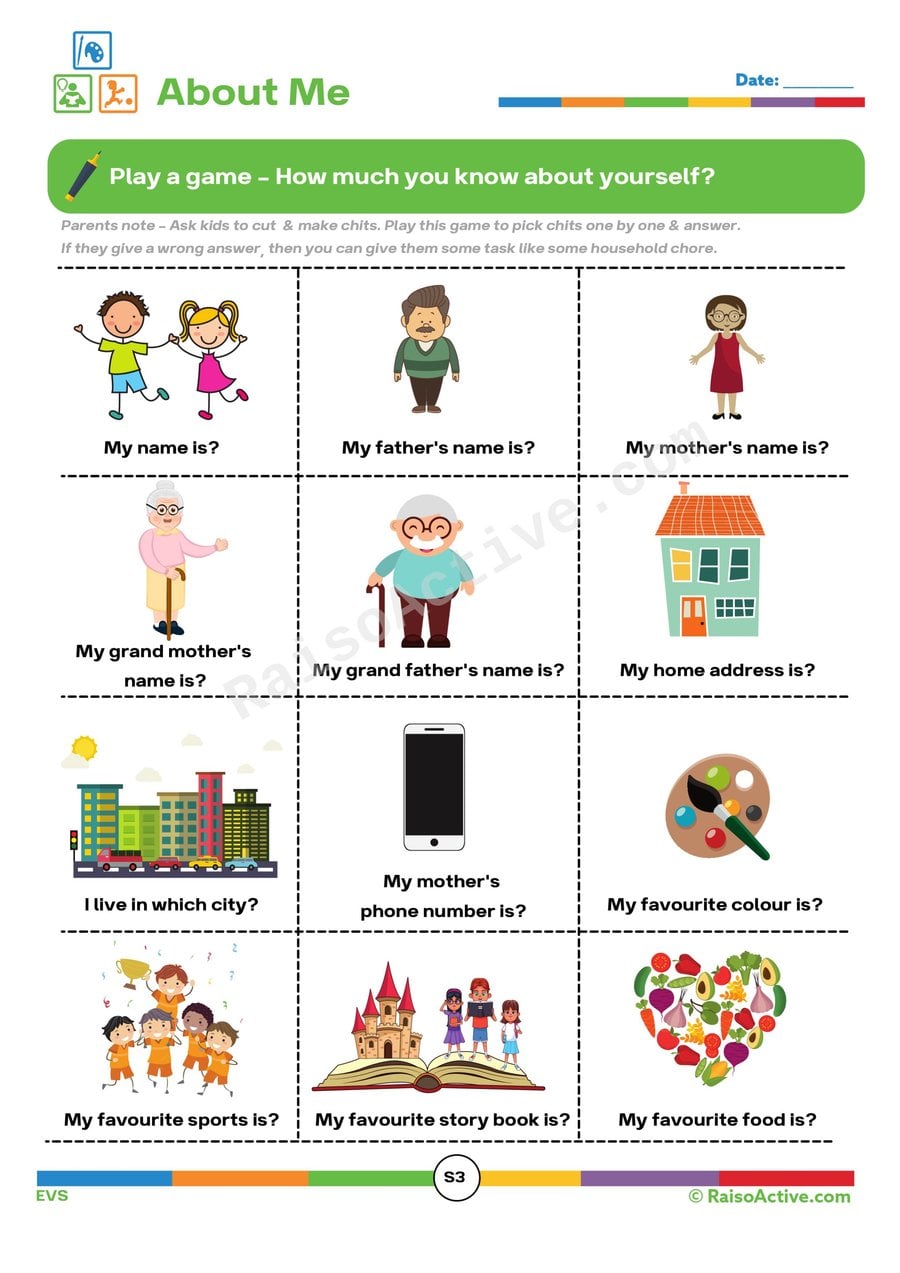
About Me Worksheet: Learn About Yourself!
Ages 3-5 · Preschool–Pre-KAges 3-5 · Nursery–ReceptionAges 3-5 · Nursery–LKGAges 3-5
This 'About Me' worksheet helps children ages 3-5 build self-awareness and early identity vocabulary by prompting them to describe their name, family, favorites, and feelings. Putting personal facts into words or pictures strengthens expressive language and gives children practice sharing information about themselves in a structured way. It's also a gentle first step into autobiographical writing, well before children can spell full sentences.
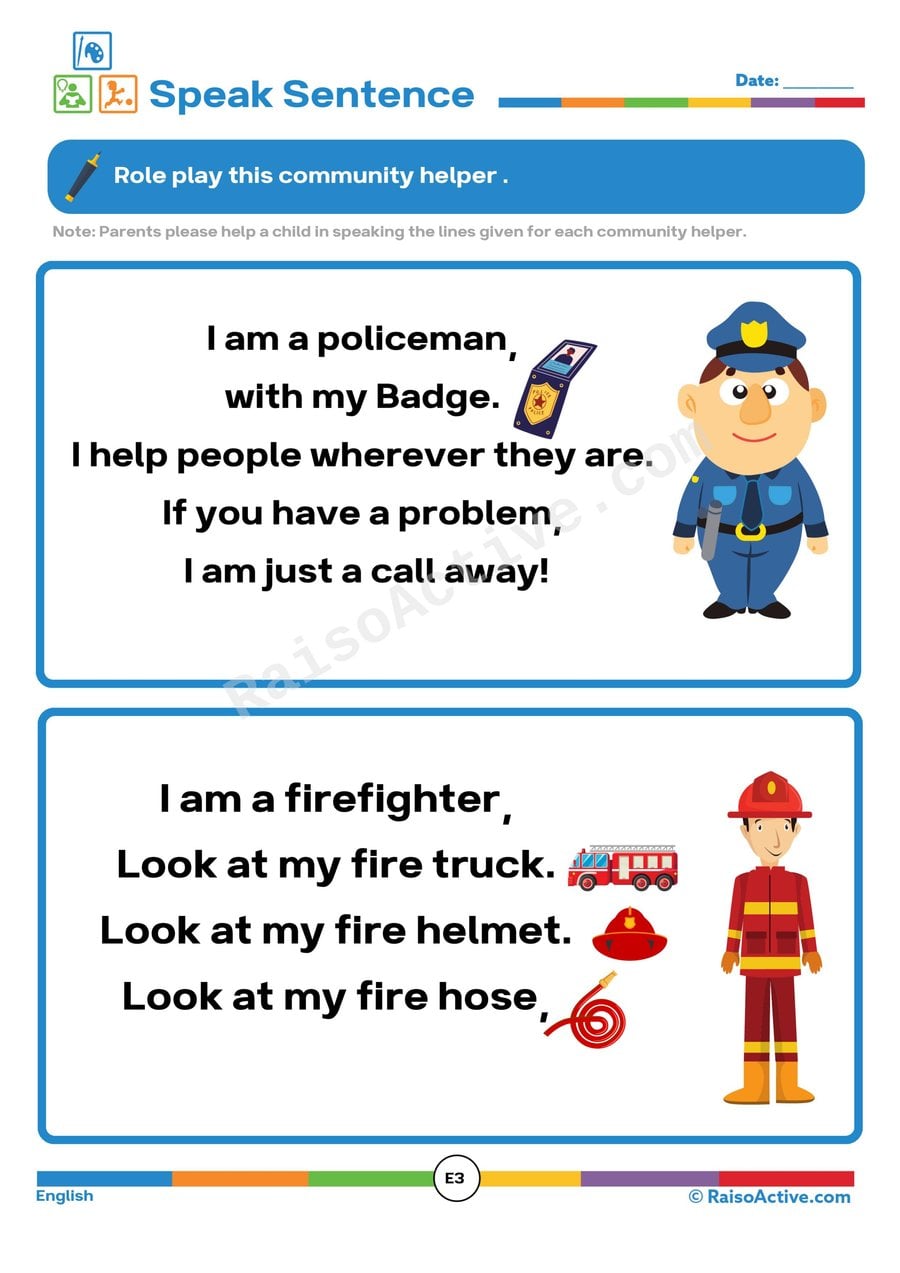
Community Helpers Role Play Worksheet for Kids
Ages 3-5 · Preschool–Pre-KAges 3-5 · Nursery–ReceptionAges 3-5 · Nursery–LKGAges 3-5
This worksheet helps children ages 3-5 learn about community helpers while practicing spoken sentence structure through guided role play. Reading a short scripted sentence aloud and then acting out the role of that helper builds oral language and expressive confidence alongside social studies knowledge, giving children a chance to practice full sentences in a low-pressure, playful context.

Golden Words Worksheet: Practice Using 'Excuse Me', 'Please', 'Thank You', and 'Sorry'
Ages 3-5 · Preschool–Pre-KAges 3-5 · Nursery–ReceptionAges 3-5 · Nursery–LKGAges 3-5
This worksheet teaches children ages 3-5 when and how to use four essential polite phrases — 'Excuse Me,' 'Please,' 'Thank You,' and 'Sorry' — by choosing the correct one to complete everyday social scenarios. Learning to match the right polite phrase to the right situation, rather than just memorizing the words, builds real social communication skills that children use constantly in daily interactions.

May I? Permission and Future Possibilities Worksheet
Ages 3-5 · Preschool–Pre-KAges 3-5 · Nursery–ReceptionAges 3-5 · Nursery–LKGAges 3-5
This worksheet helps children ages 3-5 practice using the polite phrase 'May I' to ask for permission and to talk about things they might do in the future, building both grammar skills and an important social convention for respectful communication. Learning to phrase a request politely is a social-emotional skill that supports smoother interactions with teachers, family, and peers well beyond this single worksheet.

Use Please: A Fun Worksheet to Practice Polite Language!
Ages 3-5 · Preschool–Pre-KAges 3-5 · Nursery–ReceptionAges 3-5 · Nursery–LKGAges 3-5
This worksheet teaches children the specific social skill of using the word 'please' when making requests, connecting polite language to real, relatable everyday scenarios shown in pictures. For ages 3-5, learning concrete phrases for politeness supports both social-emotional development and early reading, since children practice recognizing and repeating a functional sight word in context.

Good Habits Worksheet for Kids: Identifying Good and Bad Behaviors
Ages 3-5 · Preschool–Pre-KAges 3-5 · Nursery–ReceptionAges 3-5 · Nursery–LKGAges 3-5
This worksheet asks children ages 3-5 to evaluate everyday scenarios and judge whether they show a good habit or a bad one, which builds early moral reasoning and social awareness alongside color recognition. Coloring the thumbs-up icons green and thumbs-down icons red also reinforces the ability to follow a two-step instruction and connect a symbol to a category.
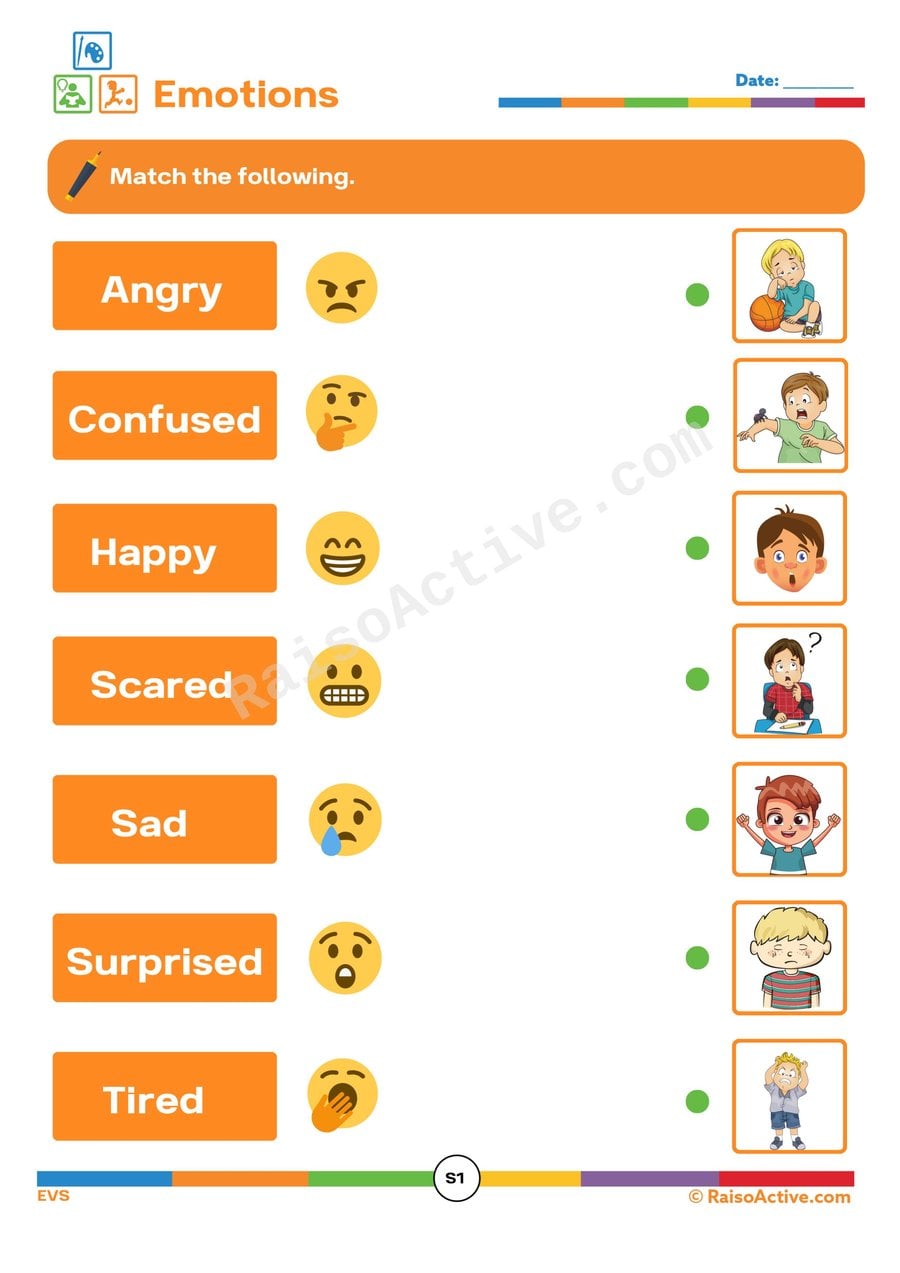
Emotions Matching Worksheet for Preschoolers
Ages 3-5 · Preschool–Pre-KAges 3-5 · Nursery–ReceptionAges 3-5 · Nursery–LKGAges 3-5
Recognizing and naming emotions is a foundational social-emotional skill for children ages 3-5, helping them build the vocabulary needed to express their own feelings and understand the feelings of others. This worksheet asks children to match emotion words to corresponding facial expressions, strengthening their ability to read facial cues — a skill that supports empathy and smoother social interactions. Building this kind of emotional vocabulary early also gives children better tools for self-regulation, since naming a feeling is often the first step toward managing it.
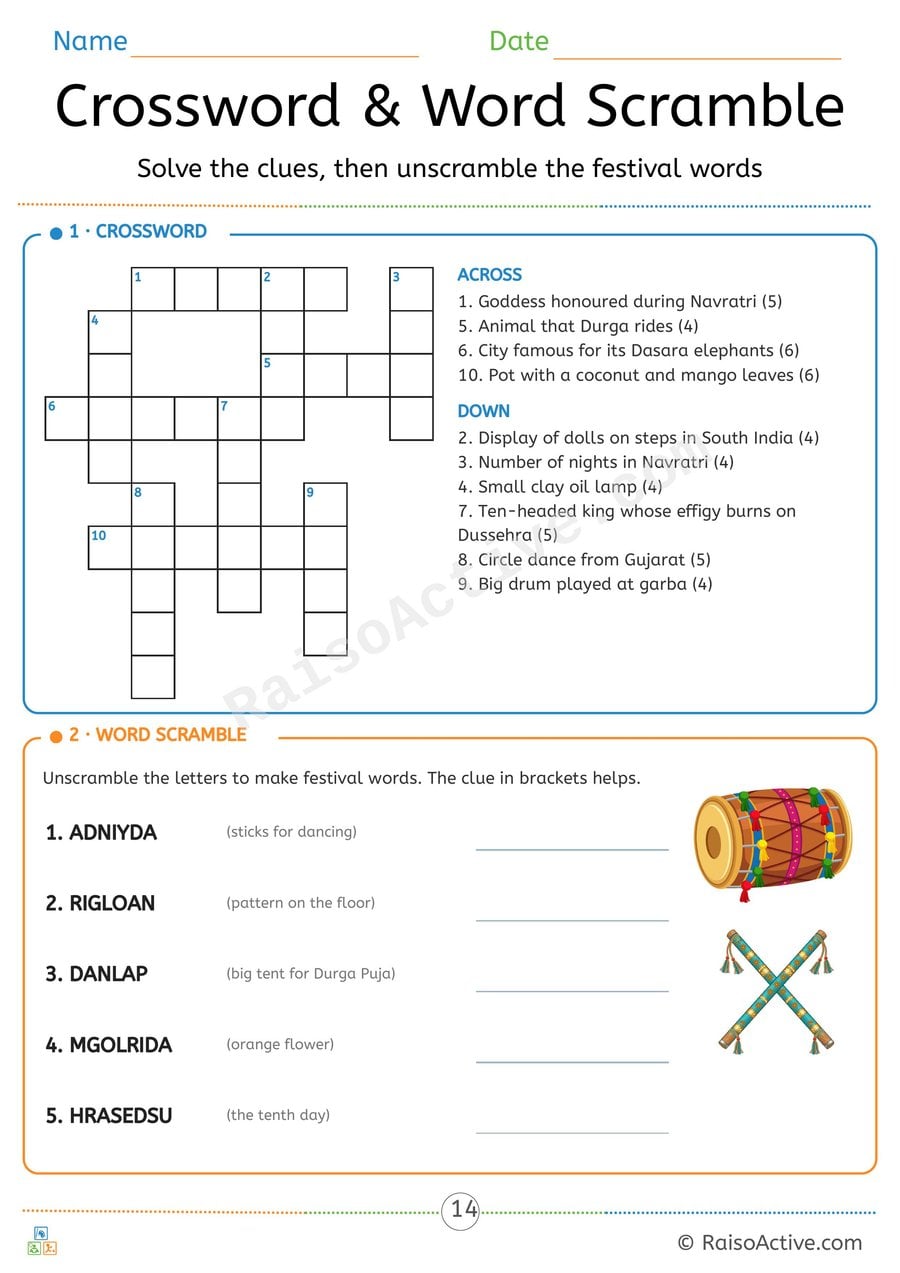
Navratri Crossword and Word Scramble
Ages 7-11 · Grade 2–Grade 3Ages 7-11 · Year 3–Year 4Ages 7-11 · Class 2–Class 3Ages 7-11
Children solve 10 crossword clues about the goddess, the lion, Mysuru, the kalash, Golu, diyas, Ravan, garba and the dhol, and unscramble five festival words with a clue for each.
Guides for this topic

Sight Words by Age: The First 50 Words and How to Teach Them Without Flashcard Fatigue
Which sight words to teach first and why, the heart-word method, a read-trace-write-find routine, games, and a by-age table of typical sight-word progress.
How to Teach CVC Blending: A Step-by-Step Method That Works in Two Weeks
A step-by-step method for teaching CVC blending, covering continuous sounds, word families, common errors, and a 14-day plan that most children finish reading CVC words.

Best Worksheets for 3-Year-Olds: What Works and What to Avoid
What works on worksheets for 3-year-olds: short sessions, crayons, tracing lines, matching, cutting, a free weekly plan, and signs one is too advanced.
Reviews
Every worksheet for ages 3–5, no watermark
Members download the full library of 1,000+ worksheets and every activity pack without watermarks or daily limits. One year costs ₹999 in India or $20 elsewhere.
See membership plansOr download any worksheet free with a watermark (5 a day).