Golden Words Worksheet: Practice Using 'Excuse Me', 'Please', 'Thank You', and 'Sorry'
This worksheet teaches children ages 3-5 when and how to use four essential polite phrases — 'Excuse Me,' 'Please,' 'Thank You,' and 'Sorry' — by choosing the correct one to complete everyday social scenarios. Learning to match the right polite phrase to the right situation, rather than just memorizing the words, builds real social communication skills that children use constantly in daily interactions.
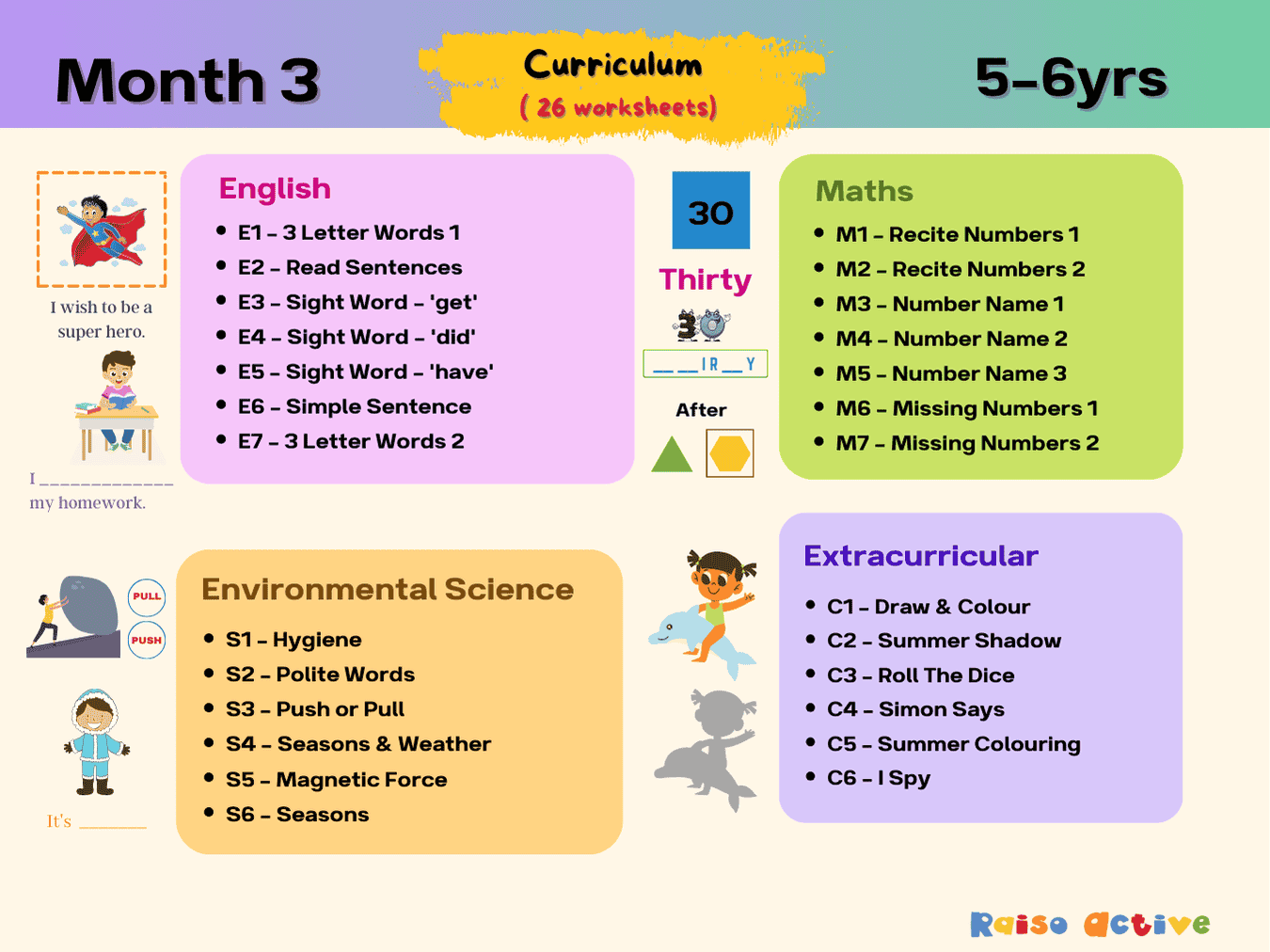
Part of the pack
Month 3: Learning & Development | Ages 5-6
This is page 19 of the pack. Ages 5-6 · KindergartenAges 5-6 · Year 1Ages 5-6 · UKGAges 5-6
Made for your child
A whole activity pack made with their name
60 pages to spot, build, trace and write their own name, plus pages about their favourites, feelings and family. See a free preview with their name.
Make an All About Me packFree preview · free for members
Or start free: a name tracing sheet with their nameCurriculum
- SEL - Social Awareness > Social Skills
How to use this worksheet
Read the first sentence or scenario aloud together, describing what's happening in the situation. Ask your child which of the four golden words fits best, and why. Have them write or choose the correct polite word to fill in the blank. Continue through each scenario on the page, talking through the reasoning behind each choice as you go.
Materials needed
- Pencil
- Eraser
Extension activities
- 1Role-play different scenarios where these phrases are used, like bumping into someone or wanting a toy from someone else.
- 2Create a poster with the four golden words and their meanings to hang somewhere visible at home.
- 3Write a short story together where a character uses all four golden words at different points.
- 4Practice a 'polite phrase of the day' challenge, using one target phrase as often as naturally possible.
- 5Read a book about manners together and spot any golden words the characters use.

Written by
Hemsweta Jain · Teacher Cheena
MBA and Early Childhood Educator, teaching since 2014 · Founder of RaisoActive, Mumbai
Every RaisoActive worksheet is designed and checked by the founder before publishing.
Published · Last reviewed
More from Month 3: Learning & Development | Ages 5-6
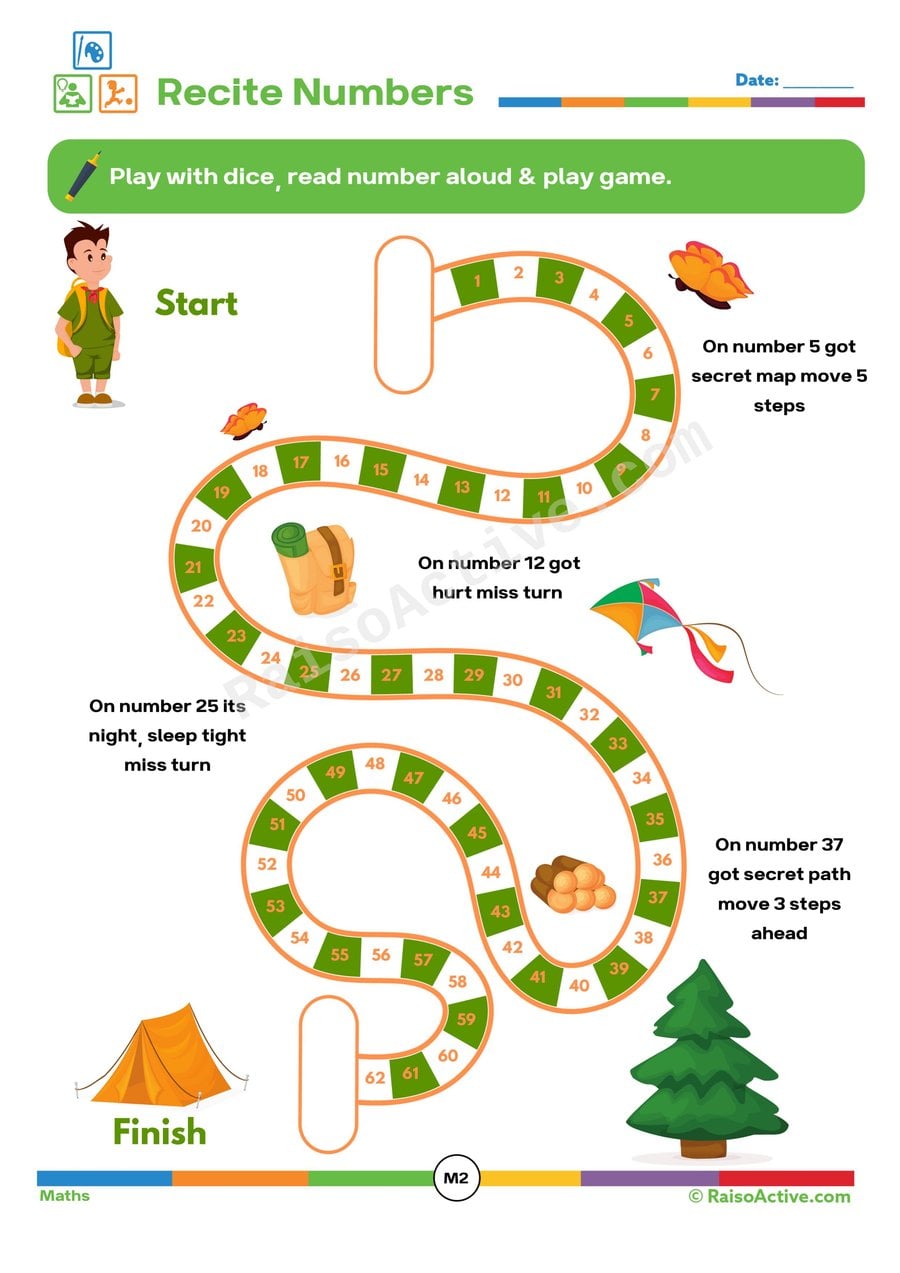
Recite Numbers Game Worksheet for Kids
Ages 4-6 · Pre-K–KindergartenAges 4-6 · Reception–Year 1Ages 4-6 · LKG–UKGAges 4-6
This game-based worksheet helps children ages 4-6 practice number recognition and following multi-step directions as they roll a die, move along a numbered path, and read each number aloud when they land on it. Turning number practice into a game increases motivation and repetition, both of which are key to building automatic number recognition.
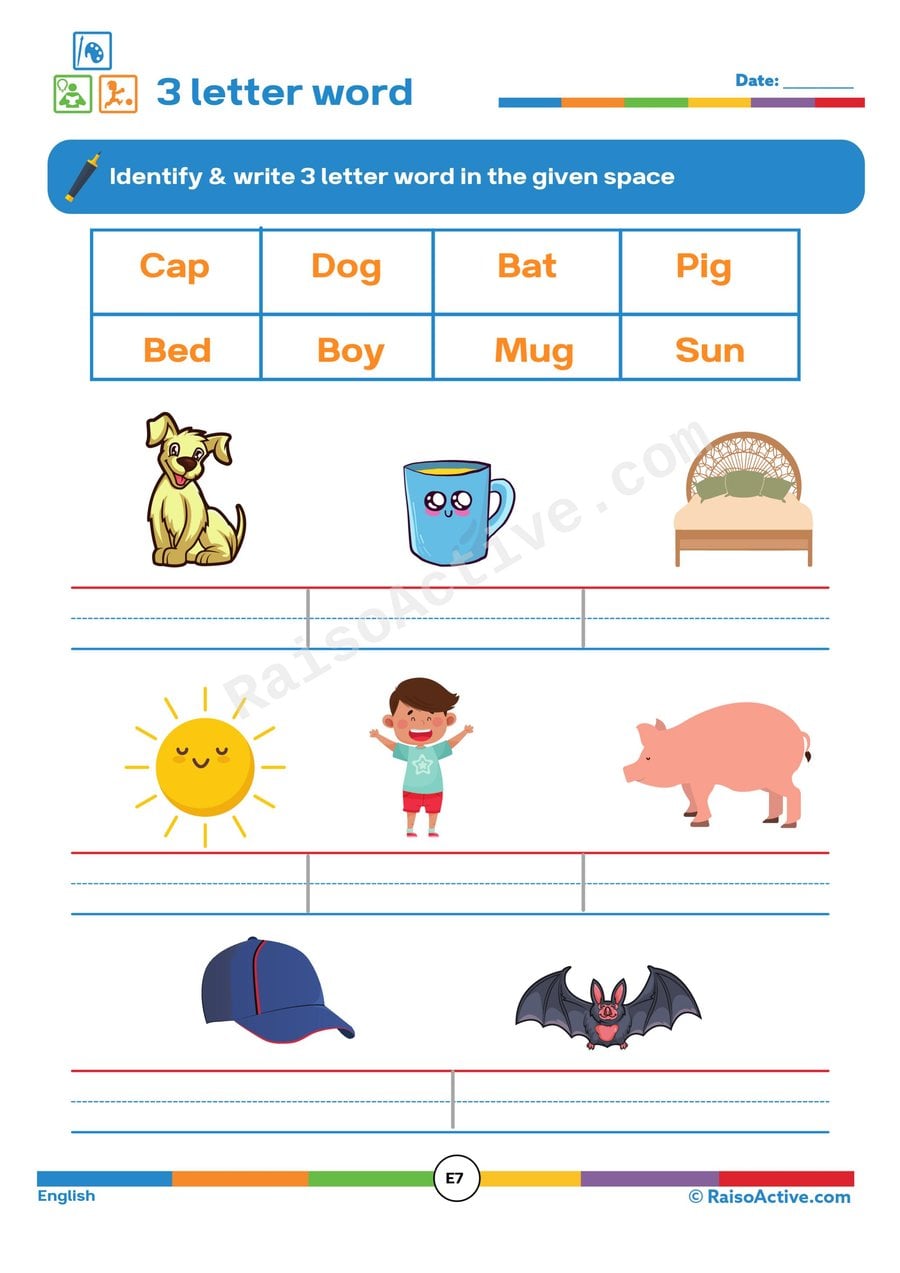
3-Letter Word Fun: Identify and Write! (Worksheet)
Ages 3-5 · Preschool–Pre-KAges 3-5 · Nursery–ReceptionAges 3-5 · Nursery–LKGAges 3-5
This worksheet strengthens CVC (consonant-vowel-consonant) word recognition by having children match a picture to its correct 3-letter word and then write that word themselves. For three- to five-year-olds, writing out a decoded word — not just reading it — cements the connection between letter sounds and spelling, an important step toward independent writing.

Sight Word 'Did' Worksheet: Read, Trace, and Complete Sentences!
Ages 3-5 · Preschool–Pre-KAges 3-5 · Nursery–ReceptionAges 3-5 · Nursery–LKGAges 3-5
This worksheet strengthens sight-word recognition for children ages 3-5 through repeated exposure to the word 'did' — tracing it, writing it, completing sentences with it, and spelling it by cutting and pasting letters. Because 'did' is a past-tense helper word that doesn't sound out easily, this kind of varied repetition is exactly what builds the instant recognition needed for reading fluency.

Magnetic Force Worksheet: Test Objects with a Magnet!
Ages 4-6 · Pre-K–KindergartenAges 4-6 · Reception–Year 1Ages 4-6 · LKG–UKGAges 4-6
This hands-on science worksheet has children ages 4-6 test a range of everyday objects with a real magnet and record whether each one is magnetic or non-magnetic, building early scientific method skills like predicting, testing, and recording results. Discovering firsthand that magnetism depends on material (metal versus wood or plastic, for instance) rather than size or color is a genuine, memorable science concept at this age.
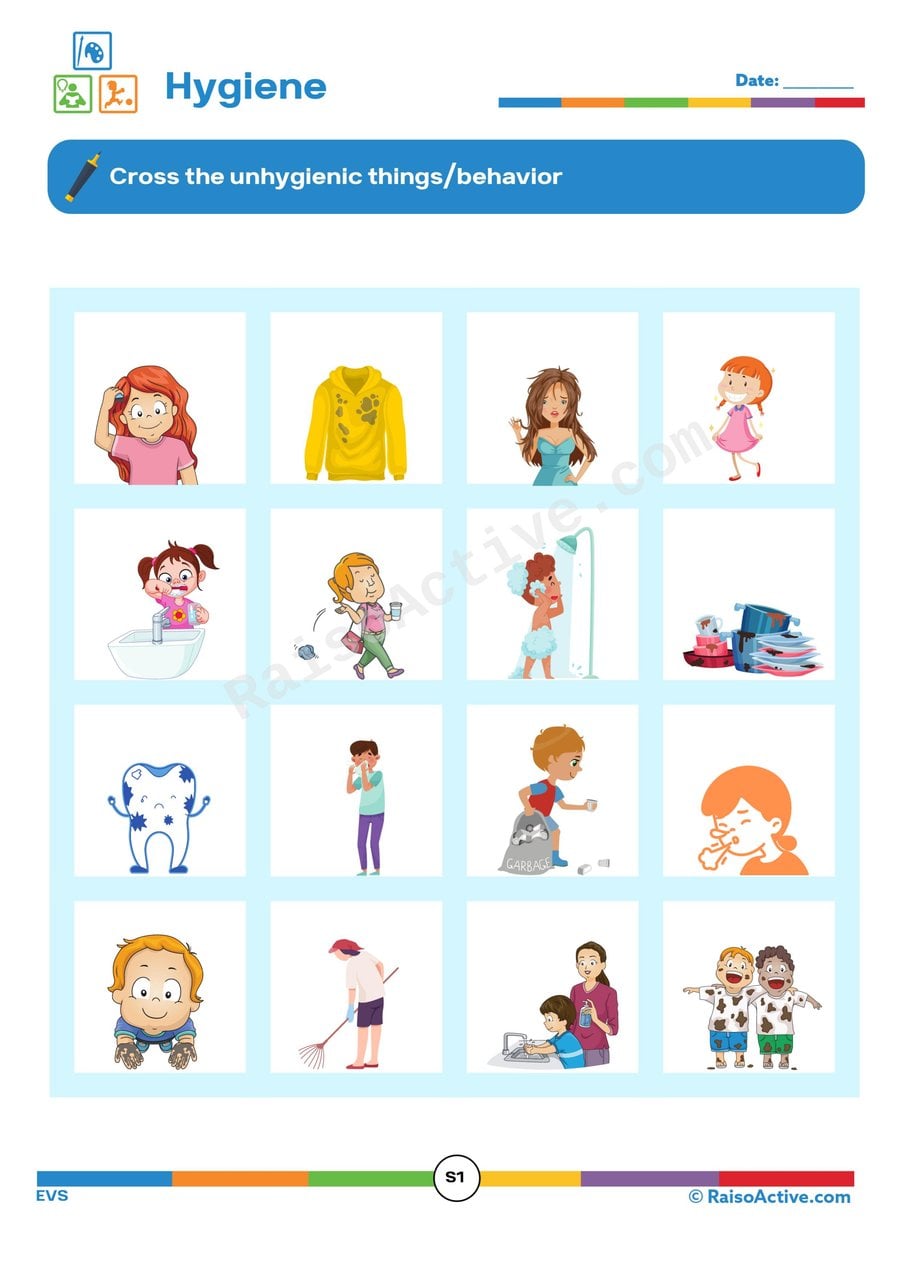
Hygiene Worksheet: Identify Unhygienic Behaviors
Ages 3-5 · Preschool–Pre-KAges 3-5 · Nursery–ReceptionAges 3-5 · Nursery–LKGAges 3-5
This worksheet asks children ages 3-5 to look at pictures of everyday scenes and cross out the behaviors that are unhygienic, building their ability to recognize the difference between healthy and unhealthy habits in a visual, concrete way. Identifying what's wrong in a picture, rather than just being told a rule, encourages children to reason about hygiene rather than simply memorize it.

Parent's Guide: Fun Activities for Reading, Forces, and Movement!
Ages 3-5 · Preschool–Pre-KAges 3-5 · Nursery–ReceptionAges 3-5 · Nursery–LKGAges 3-5
This multi-part guide walks parents and children ages 3-5 through several linked activities in one sitting — practicing 3-letter words, arranging simple sentences, discussing cleanliness habits, and exploring forces and movement with magnets — giving a broad snapshot of early literacy and science skills in a single session. Covering reading and science side by side in one guide shows how everyday routines can double as learning moments.

Seasons and Weather Worksheet: Fill in the Blanks!
Ages 3-5 · Preschool–Pre-KAges 3-5 · Nursery–ReceptionAges 3-5 · Nursery–LKGAges 3-5
This worksheet builds early science vocabulary by asking children to fill in blanks connecting each of the four seasons to its typical weather, such as snow in winter or sunshine in summer. For three- to five-year-olds, tying weather words to the season they experience it in helps organize their everyday observations of the world into a simple, memorable framework.

Sight Word 'Get' Worksheet: Trace, Color, and Practice!
Ages 3-5 · Preschool–Pre-KAges 3-5 · Nursery–ReceptionAges 3-5 · Nursery–LKGAges 3-5
This multi-step worksheet builds deep familiarity with the sight word 'get' for children ages 3-5 through six different formats — tracing, coloring, sentence completion, circling, writing, and cut-and-paste spelling — giving far more repetition than a single tracing task would. High-frequency sight words like 'get' don't sound out easily, so this kind of repeated exposure across formats is exactly how early readers learn to recognize them instantly.
Related worksheets
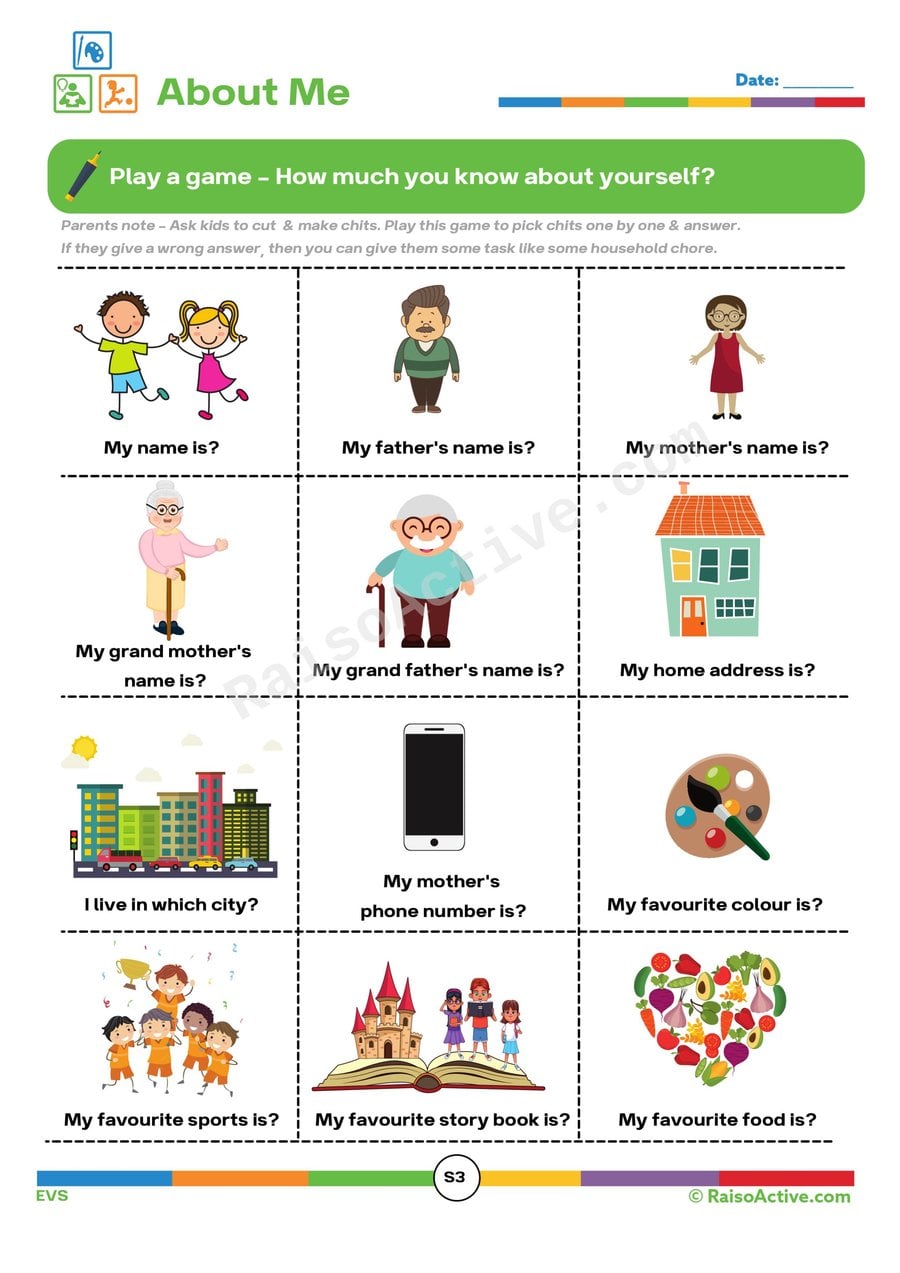
About Me Worksheet: Learn About Yourself!
Ages 3-5 · Preschool–Pre-KAges 3-5 · Nursery–ReceptionAges 3-5 · Nursery–LKGAges 3-5
This 'About Me' worksheet helps children ages 3-5 build self-awareness and early identity vocabulary by prompting them to describe their name, family, favorites, and feelings. Putting personal facts into words or pictures strengthens expressive language and gives children practice sharing information about themselves in a structured way. It's also a gentle first step into autobiographical writing, well before children can spell full sentences.

May I? Permission and Future Possibilities Worksheet
Ages 3-5 · Preschool–Pre-KAges 3-5 · Nursery–ReceptionAges 3-5 · Nursery–LKGAges 3-5
This worksheet helps children ages 3-5 practice using the polite phrase 'May I' to ask for permission and to talk about things they might do in the future, building both grammar skills and an important social convention for respectful communication. Learning to phrase a request politely is a social-emotional skill that supports smoother interactions with teachers, family, and peers well beyond this single worksheet.

Use Please: A Fun Worksheet to Practice Polite Language!
Ages 3-5 · Preschool–Pre-KAges 3-5 · Nursery–ReceptionAges 3-5 · Nursery–LKGAges 3-5
This worksheet teaches children the specific social skill of using the word 'please' when making requests, connecting polite language to real, relatable everyday scenarios shown in pictures. For ages 3-5, learning concrete phrases for politeness supports both social-emotional development and early reading, since children practice recognizing and repeating a functional sight word in context.
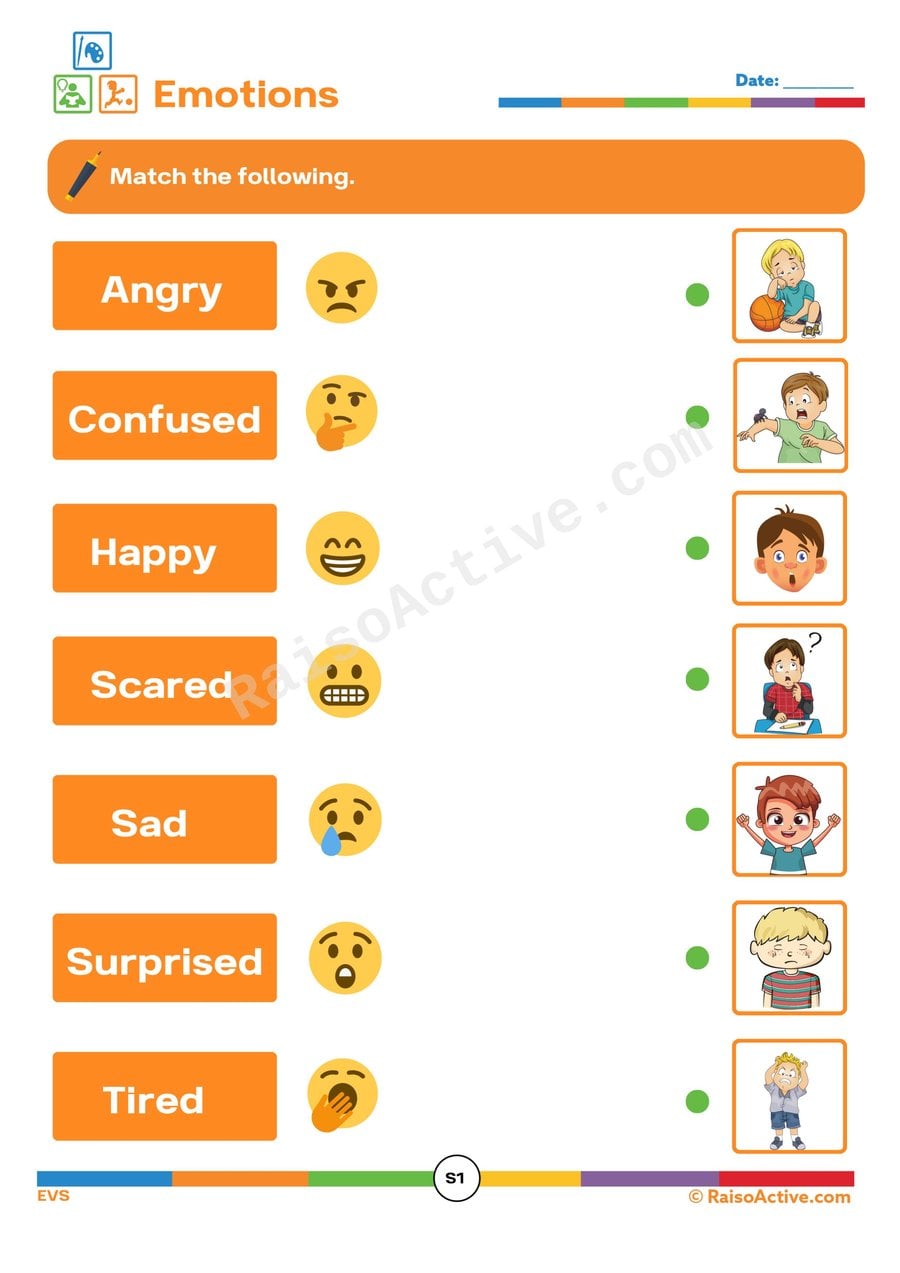
Emotions Matching Worksheet for Preschoolers
Ages 3-5 · Preschool–Pre-KAges 3-5 · Nursery–ReceptionAges 3-5 · Nursery–LKGAges 3-5
Recognizing and naming emotions is a foundational social-emotional skill for children ages 3-5, helping them build the vocabulary needed to express their own feelings and understand the feelings of others. This worksheet asks children to match emotion words to corresponding facial expressions, strengthening their ability to read facial cues — a skill that supports empathy and smoother social interactions. Building this kind of emotional vocabulary early also gives children better tools for self-regulation, since naming a feeling is often the first step toward managing it.

Good Habits Worksheet for Kids: Identifying Good and Bad Behaviors
Ages 3-5 · Preschool–Pre-KAges 3-5 · Nursery–ReceptionAges 3-5 · Nursery–LKGAges 3-5
This worksheet asks children ages 3-5 to evaluate everyday scenarios and judge whether they show a good habit or a bad one, which builds early moral reasoning and social awareness alongside color recognition. Coloring the thumbs-up icons green and thumbs-down icons red also reinforces the ability to follow a two-step instruction and connect a symbol to a category.
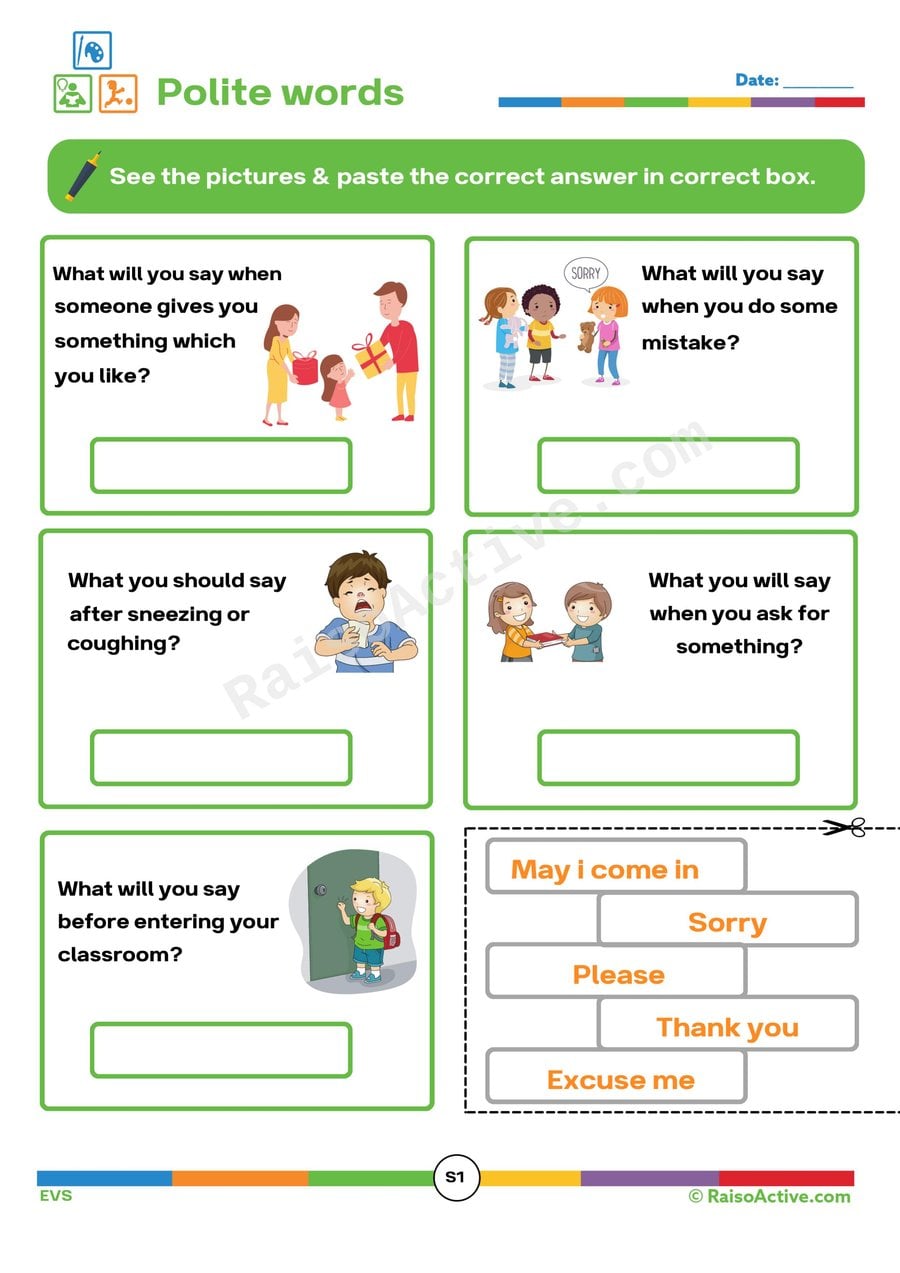
Polite Words Worksheet: Matching and Application
Ages 3-5 · Preschool–Pre-KAges 3-5 · Nursery–ReceptionAges 3-5 · Nursery–LKGAges 3-5
Matching pictures and scenarios to the right polite word teaches children ages 3-5 when and why to use phrases like please, thank you, sorry, and excuse me, building the pragmatic language skills needed for real social interactions. This kind of practice helps young children connect a word not just to its meaning but to the specific situation that calls for it.
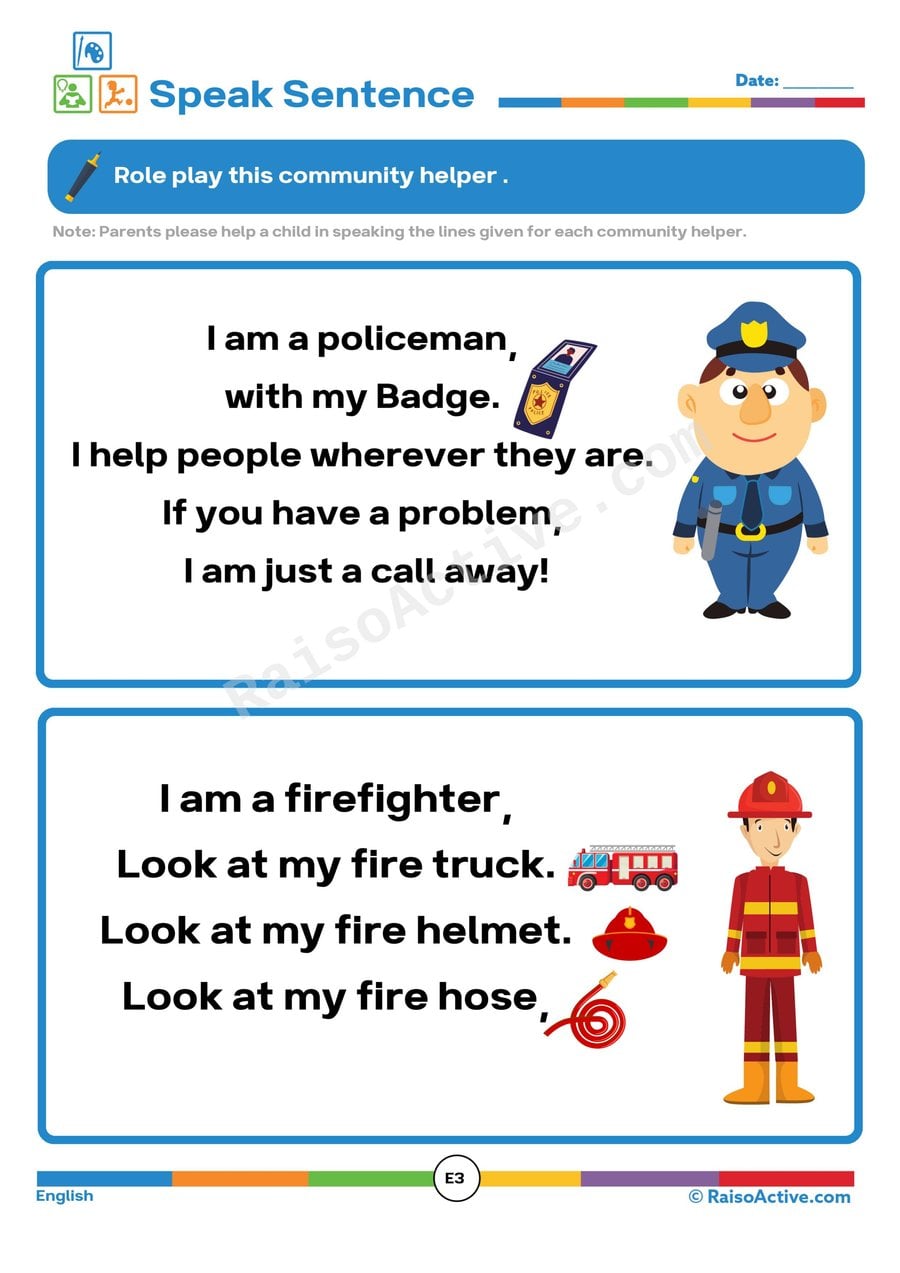
Community Helpers Role Play Worksheet for Kids
Ages 3-5 · Preschool–Pre-KAges 3-5 · Nursery–ReceptionAges 3-5 · Nursery–LKGAges 3-5
This worksheet helps children ages 3-5 learn about community helpers while practicing spoken sentence structure through guided role play. Reading a short scripted sentence aloud and then acting out the role of that helper builds oral language and expressive confidence alongside social studies knowledge, giving children a chance to practice full sentences in a low-pressure, playful context.
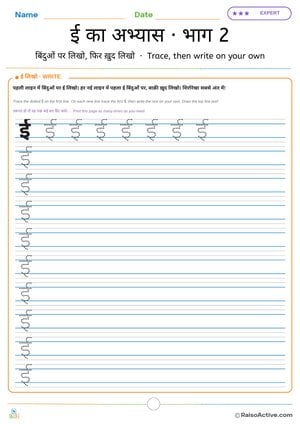
Hindi Letter ई Practice Part 2: Trace and Write on Your Own | ई का अभ्यास · भाग 2
Ages 3-7 · Preschool–Grade 1Ages 3-7 · Nursery–Year 2Ages 3-7 · Nursery–Class 1Ages 3-7
Children build writing fluency by tracing the dotted line ई on the first line and then writing the letter on their own, line after line, as the dotted help fades. The headline (शिरोरेखा) is drawn last, as in Hindi handwriting.
Guides for this topic

Documenting Learning Without Drowning in Data: A Practical Guide for Parents and Teachers
Learn practical ways to document your child's learning without overwhelm. Simple portfolios, observation tips, and printable trackers for ages 1-8.
Preparing Your Child for a Rapidly Changing World: Essential Skills for Future Success
Discover the essential 21st century skills your child needs for future success. Practical tips on creativity, critical thinking, digital literacy & emotional intelligence for ages 1-8.
Social-Emotional Learning Activities for Preschoolers: Nurturing Hearts and Minds
Discover practical social-emotional learning activities for preschoolers. Build emotional intelligence, empathy, and cooperation skills with fun, age-appropriate SEL activities.
Reviews
Every worksheet for ages 3–5, no watermark
Members download the full library of 1,000+ worksheets and every activity pack without watermarks or daily limits. One year costs ₹999 in India or $20 elsewhere.
See membership plansOr download any worksheet free with a watermark (5 a day).