Seasons Coloring Worksheet for Kids: Summer, Rainy, and Winter Fun!
This worksheet teaches 3-5 year olds to associate specific objects and weather patterns with the season they belong to — sunglasses and ice cream for summer, umbrellas for the rainy season, sweaters for winter — using a color-coding system to reinforce the sorting. Learning to categorize by season is an early science and observation skill, since it requires your child to notice recurring patterns in weather, clothing, and activities across the year.
Part of the pack
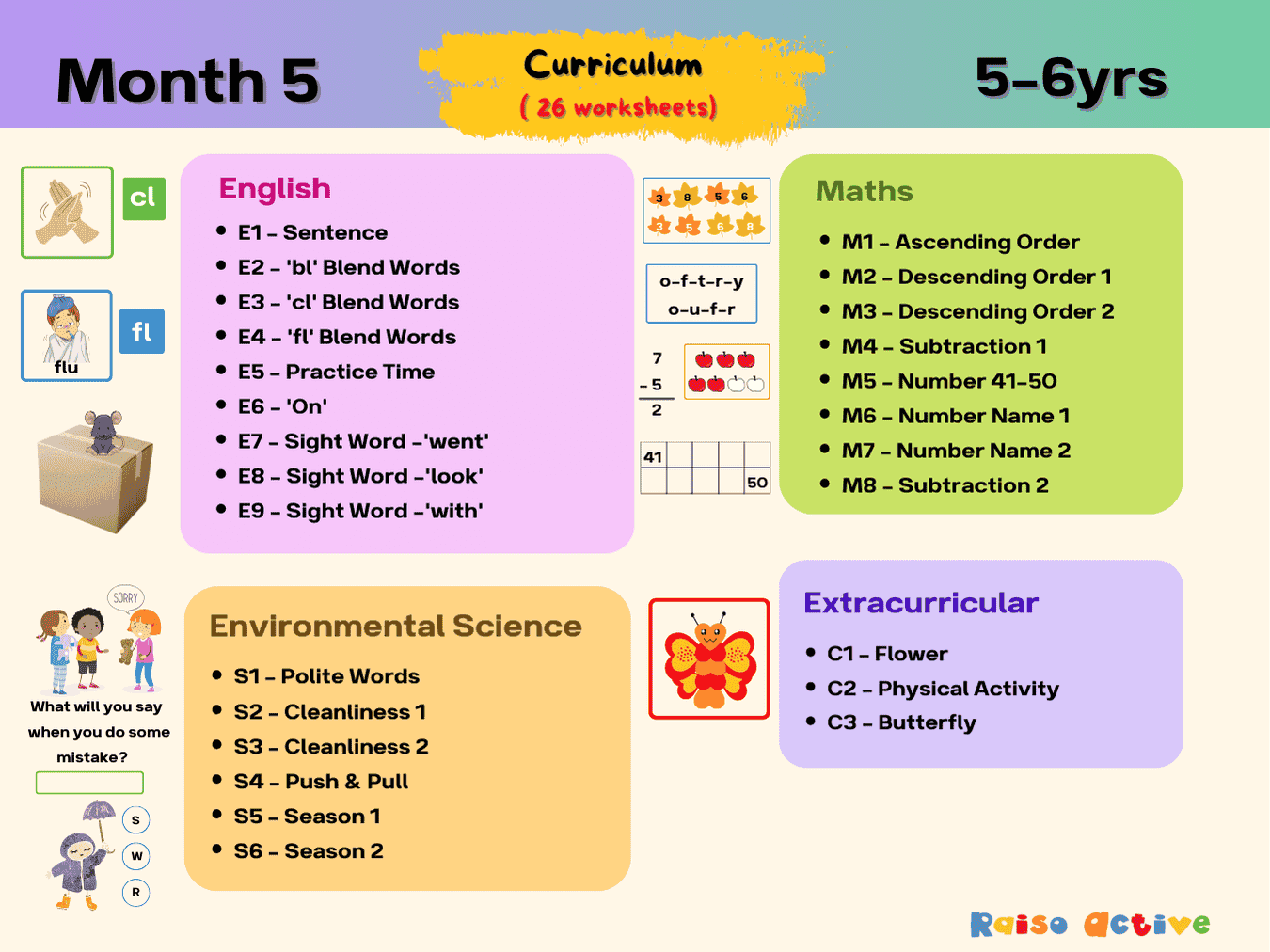
Month 5: Play-based English Math Science | Ages 5-6
This is page 26 of the pack. Ages 5-6 · KindergartenAges 5-6 · Year 1Ages 5-6 · UKGAges 5-6
Made for your child
A whole activity pack made with their name
60 pages to spot, build, trace and write their own name, plus pages about their favourites, feelings and family. See a free preview with their name.
Make an All About Me packFree preview · free for members
Or start free: a name tracing sheet with their nameCurriculum
- Earth & Environment > Seasons & Weather
How to use this worksheet
Read the color-coding instructions together — yellow for summer, green for rainy, blue for winter. Look at each object on the page and ask your child which season it belongs to before coloring. Have them color each object using the season's assigned color, checking together that the choice makes sense. Once finished, review the page and ask your child to name which objects go with which season and why.
Materials needed
- Pencils
- Crayons
- Coloring Pencils
Extension activities
- 1Have your child draw a picture of their favorite season and the activities they enjoy doing during it.
- 2Talk about the clothing and weather typically associated with each season where you live.
- 3Make a simple seasons scrapbook, adding a new page each time the weather changes.
- 4Go outside briefly and observe the current weather, discussing which season it matches.
- 5Sort a pile of clothing items at home into which season each one is best worn in.

Written by
Hemsweta Jain · Teacher Cheena
MBA and Early Childhood Educator, teaching since 2014 · Founder of RaisoActive, Mumbai
Every RaisoActive worksheet is designed and checked by the founder before publishing.
Published · Last reviewed
More from Month 5: Play-based English Math Science | Ages 5-6

Sentence Building Worksheet: Write Sentences with Given Words!
Ages 4-6 · Pre-K–KindergartenAges 4-6 · Reception–Year 1Ages 4-6 · LKG–UKGAges 4-6
Using given words to build a complete sentence teaches children ages 4-6 how word order creates meaning, an essential step toward reading fluency and independent writing. Practicing this skill also reinforces sentence mechanics like starting with a capital letter and ending with a period, which many children this age are just beginning to apply consistently.
Cl Blend Words Worksheet: Read and Circle!
Ages 4-6 · Pre-K–KindergartenAges 4-6 · Reception–Year 1Ages 4-6 · LKG–UKGAges 4-6
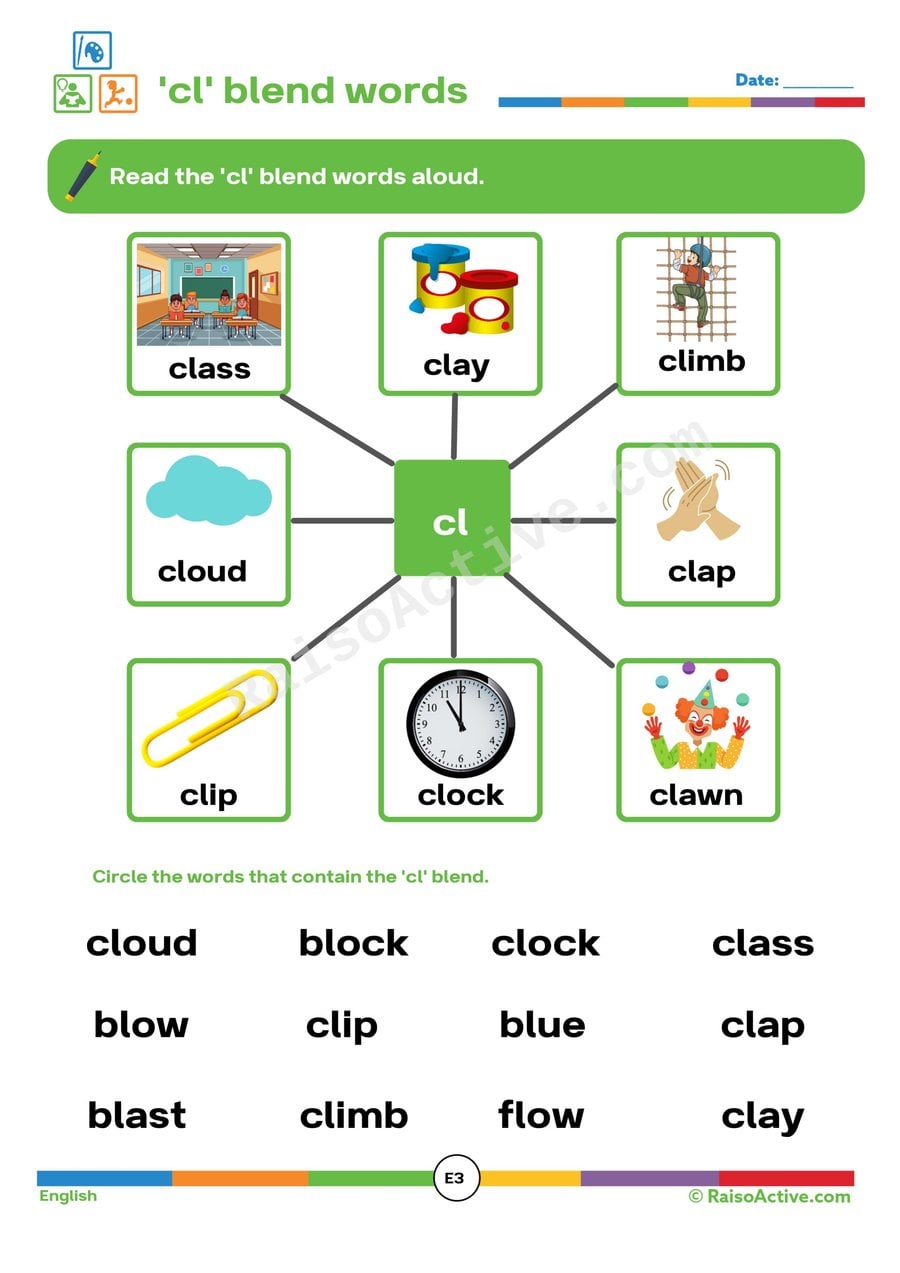
Reading and circling words that begin with the 'cl' consonant blend helps children ages 4-6 hear that two consonants pressed together, like c and l, still combine into a single connected sound at the start of a word. This is a step up from single-letter phonics, requiring children to blend two consonant sounds smoothly rather than sounding them out separately. Recognizing blends like 'cl' in words such as 'clap' or 'cloud' builds the decoding fluency needed to read longer, less predictable words with confidence.

Colorful Butterfly Cut and Paste Worksheet for Preschoolers
Ages 3-5 · Preschool–Pre-KAges 3-5 · Nursery–ReceptionAges 3-5 · Nursery–LKGAges 3-5
Cutting out heart shapes and arranging them into a butterfly gives children ages 3-5 focused practice with scissor control and precise gluing, since the final picture only comes together correctly if each heart is placed in the right spot. Following a visual example to build a specific, recognizable shape also strengthens spatial reasoning, requiring children to compare their work to a model rather than assembling pieces at random. This kind of guided craft bridges basic coloring and more advanced, independent art projects.

Flower Craft: Make 5 Flowers with Pencil Shavings!
Ages 3-5 · Preschool–Pre-KAges 3-5 · Nursery–ReceptionAges 3-5 · Nursery–LKGAges 3-5
This craft activity has 3-5 year olds use actual pencil shavings — an unusual, tactile material — to build five flower shapes, following a multi-step visual example rather than a simple one-step instruction. That combination of following a sequence and precisely placing small, delicate shavings builds fine motor control and pincer grip in a way that's noticeably different from crayons or scissors, plus it introduces the idea of turning a leftover material into art.
Push and Pull Worksheet for Preschoolers
Ages 3-5 · Preschool–Pre-KAges 3-5 · Nursery–ReceptionAges 3-5 · Nursery–LKGAges 3-5
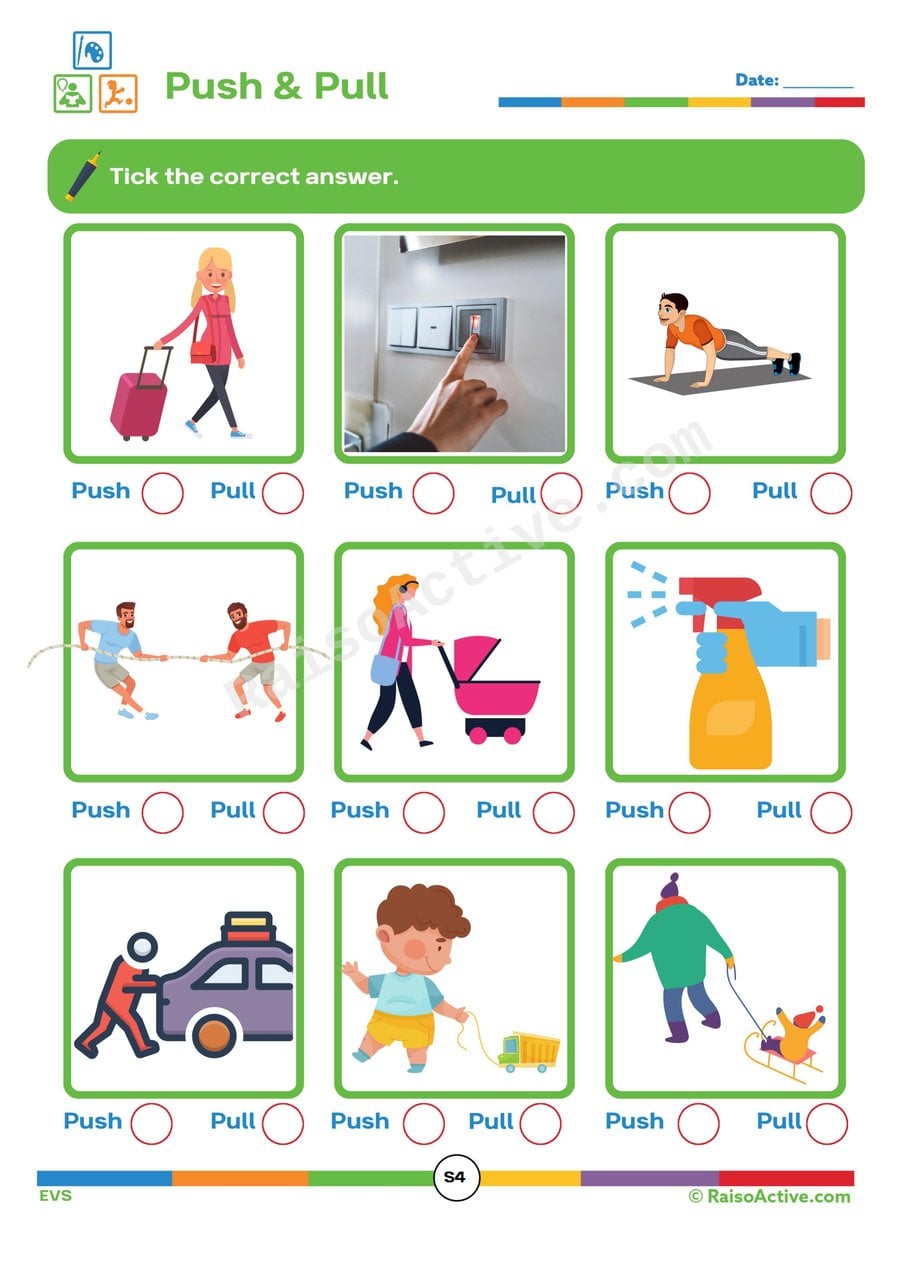
Deciding whether each pictured action is a push or a pull introduces children ages 3-5 to an early physics concept: that forces move objects toward or away from us. Sorting actions this way builds observational skills and gives children the vocabulary to describe motion they see every day.
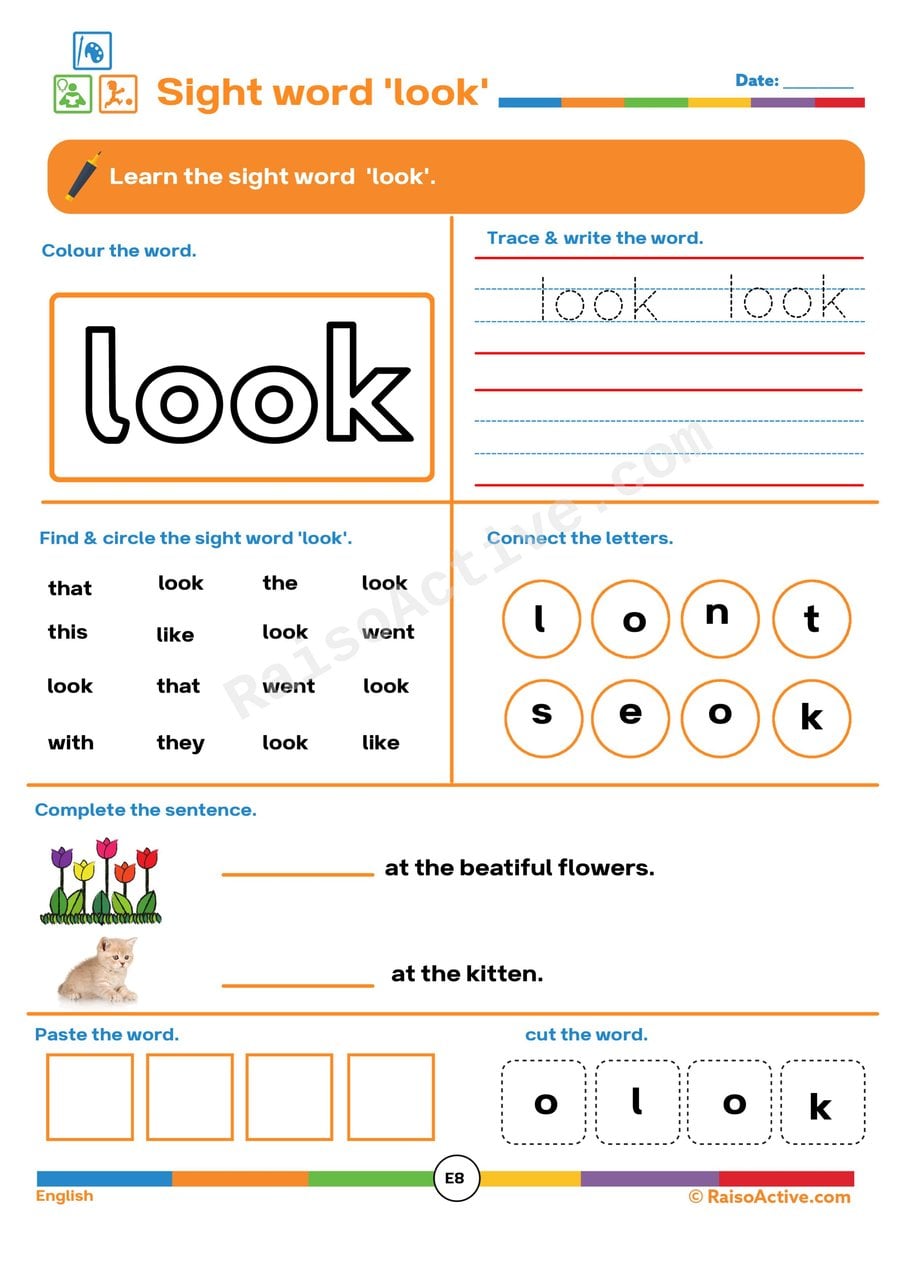
Look! Sight Word 'Look' Worksheet for Preschoolers
Ages 3-5 · Preschool–Pre-KAges 3-5 · Nursery–ReceptionAges 3-5 · Nursery–LKGAges 3-5
This worksheet builds automatic recognition of the sight word 'look' through six different activities — coloring, tracing, finding it in a list, spelling it by connecting letters, completing a sentence, and pasting it — which matters because sight words like 'look' don't sound out easily and have to be memorized by sight through repeated, varied exposure. Hitting the same word from six angles in one sitting is exactly the kind of repetition that turns a word from something your child sounds out slowly into one they recognize instantly.
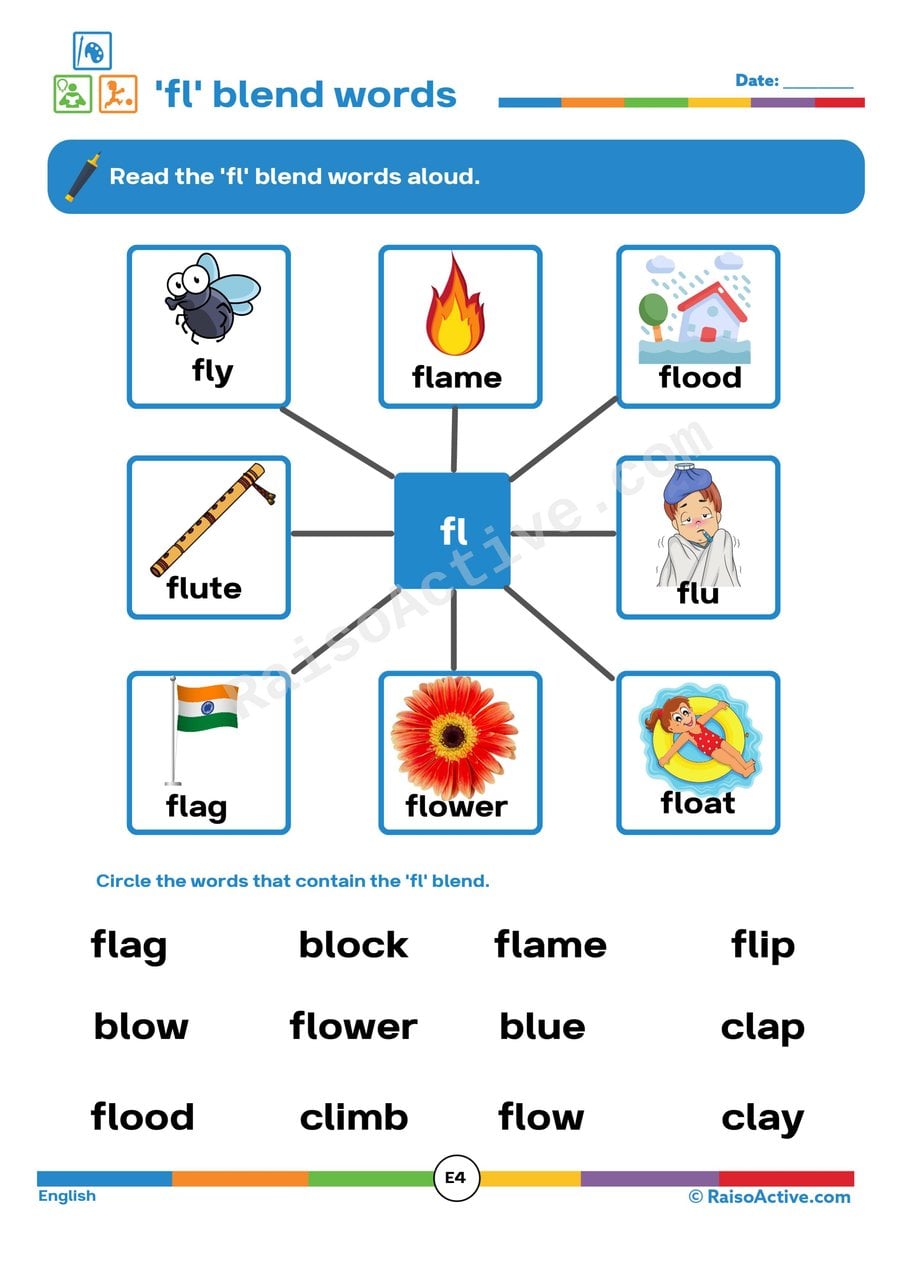
FL Blend Words Worksheet: Read, Circle, and Learn!
Ages 4-6 · Pre-K–KindergartenAges 4-6 · Reception–Year 1Ages 4-6 · LKG–UKGAges 4-6
Reading and circling words that begin with the 'fl' consonant blend teaches children ages 4-6 that two consonants together, like f and l, can combine into one smooth sound at the start of a word, a more advanced phonics concept than single-letter sounds. This kind of targeted blend practice builds the specific decoding skill needed to read common early words like 'flag,' 'fly,' and 'flower' without stumbling. Strengthening blend recognition now supports much smoother, more confident reading as vocabulary grows in later grades.

Number Names Worksheet: Writing and Matching Numbers 41-50
Ages 4-6 · Pre-K–KindergartenAges 4-6 · Reception–Year 1Ages 4-6 · LKG–UKGAges 4-6
Writing number names like 'forty-one' through 'fifty' next to their numerals helps children ages 4-6 connect the spoken word for a two-digit number to both its written word form and its digit form, deepening overall number sense in this specific range. This worksheet also revisits missing-number sequencing and color-coded boxes, reinforcing the same number range through several different, related tasks rather than one repetitive drill. Building fluency with number names in the 40s prepares children to confidently read numbers they encounter in daily life, from clocks to price tags.
Related worksheets

Rainy Season Coloring Worksheet for Preschoolers
Ages 3-5 · Preschool–Pre-KAges 3-5 · Nursery–ReceptionAges 3-5 · Nursery–LKGAges 3-5
This worksheet helps children ages 3-5 identify and learn about objects and scenes associated with the rainy season, like umbrellas, puddles, and raincoats, while practicing coloring skills that build hand control. Connecting a familiar season to specific vocabulary words gives children concrete language for describing the weather they experience.
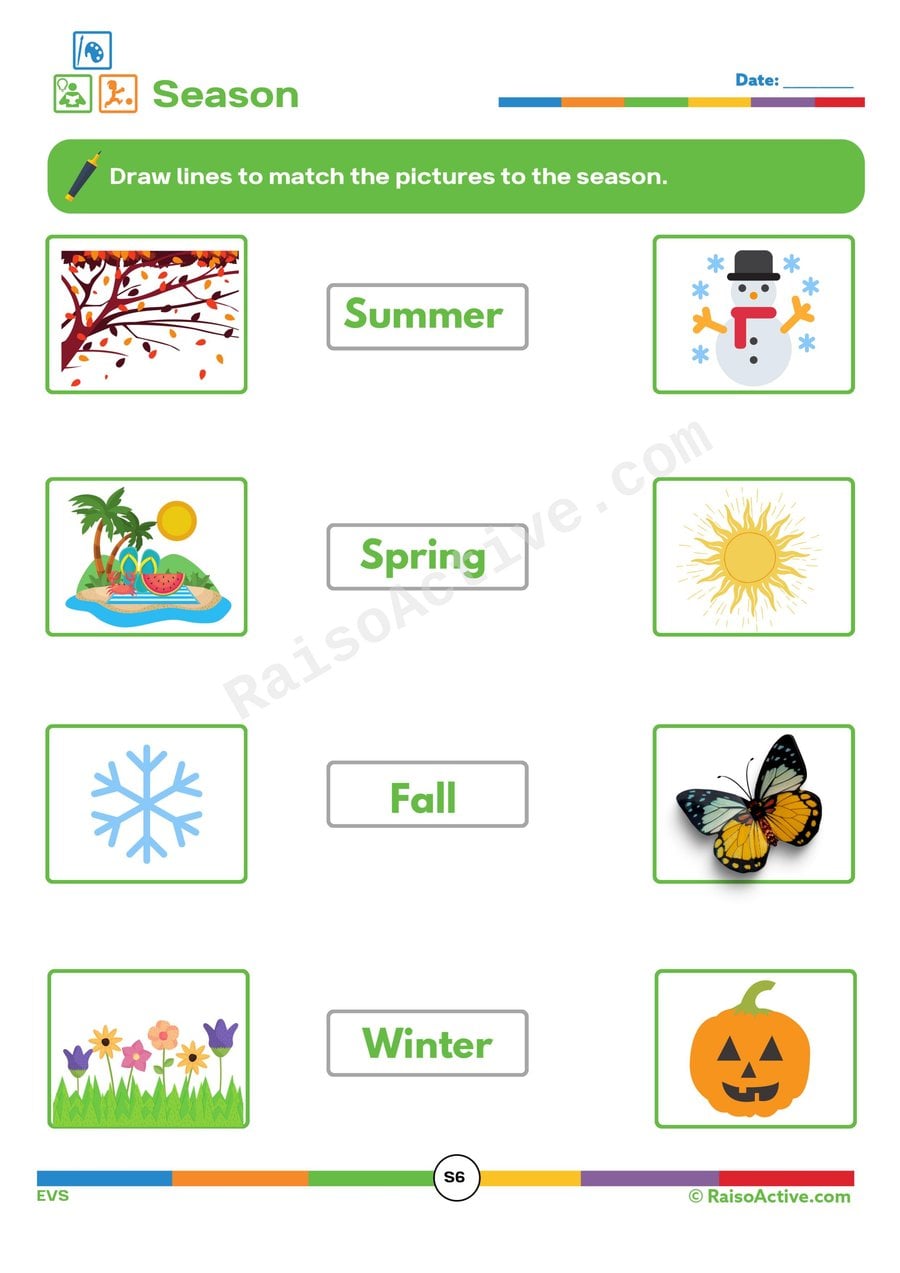
Seasons Matching Worksheet for Preschoolers
Ages 3-5 · Preschool–Pre-KAges 3-5 · Nursery–ReceptionAges 3-5 · Nursery–LKGAges 3-5
This worksheet helps children ages 3-5 learn to recognize the four seasons — summer, fall, winter, and spring — and match seasonal pictures, like snow or falling leaves, to the correct season name. Understanding that weather and nature change in a predictable yearly cycle is an early science concept that also connects naturally to a child's own experience of holidays and clothing changes throughout the year.

Summer Coloring Fun: Color the Summer-Related Objects!
Ages 3-5 · Preschool–Pre-KAges 3-5 · Nursery–ReceptionAges 3-5 · Nursery–LKGAges 3-5
This worksheet builds vocabulary and category recognition for children ages 3-5 as they color a collection of objects associated with summer, like sunglasses, ice cream, or a beach ball, reinforcing that certain items belong together under a seasonal theme. Coloring within outlined shapes also continues to build the fine motor control and hand strength children need for future writing.
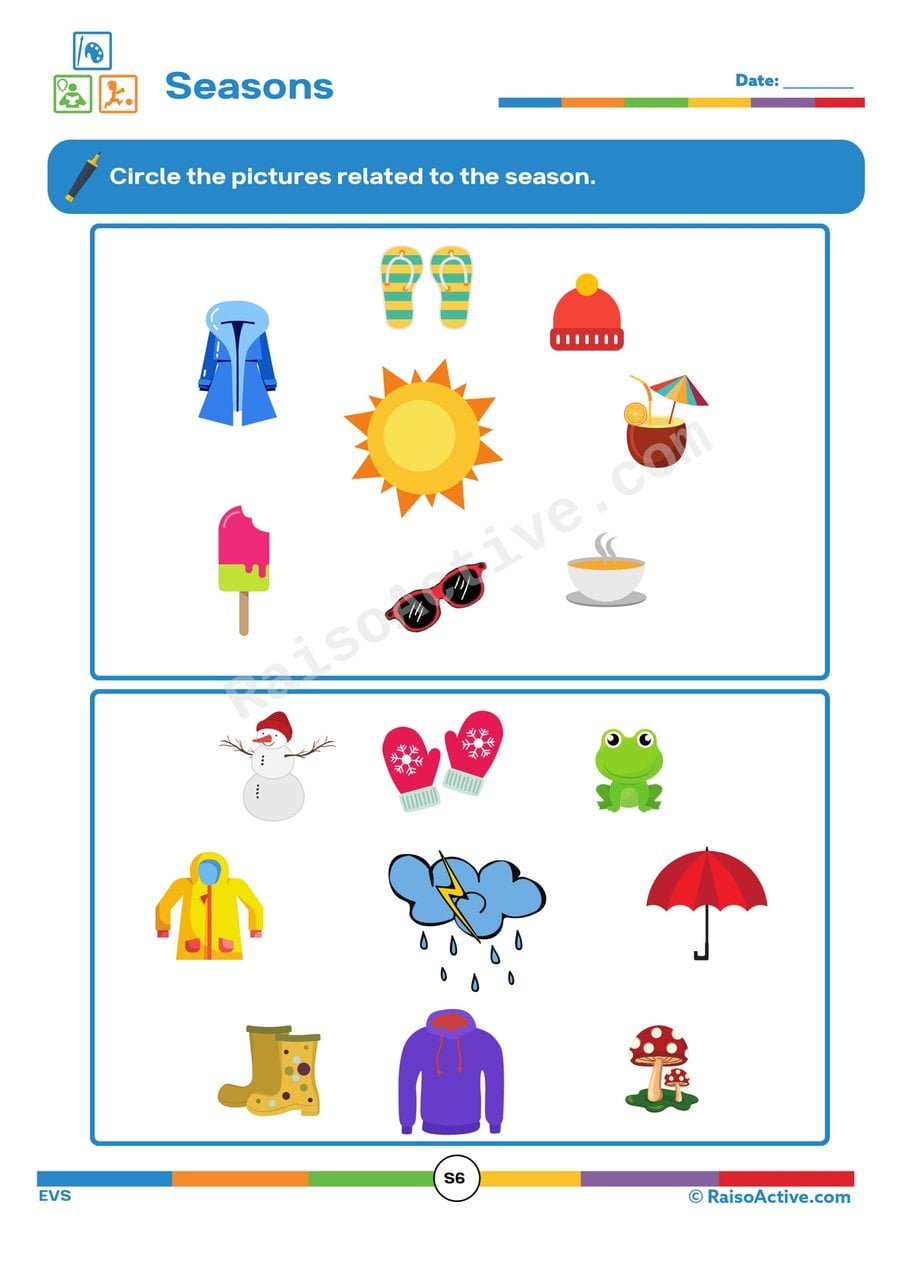
Seasons Worksheet: Circle the Pictures!
Ages 3-5 · Preschool–Pre-KAges 3-5 · Nursery–ReceptionAges 3-5 · Nursery–LKGAges 3-5
This worksheet builds seasonal awareness by having children look at a set of pictures and circle only the ones that belong to a specific season, such as snowflakes for winter or sandals for summer. For three- to five-year-olds, sorting familiar objects and clothing by season strengthens categorization skills and connects abstract calendar concepts to things they see and wear every day.

Seasons Cut and Paste Worksheet for Preschoolers
Ages 3-5 · Preschool–Pre-KAges 3-5 · Nursery–ReceptionAges 3-5 · Nursery–LKGAges 3-5
Children ages 3-5 build early science vocabulary and classification skills as they identify the four seasons and match seasonal pictures — like snowflakes, flowers, or sunhats — to the correct season circle. Understanding that weather and clothing change in predictable patterns throughout the year is a foundational science concept that also supports calendar and time awareness.
Seasons Matching Worksheet for Preschoolers
Ages 3-5 · Preschool–Pre-KAges 3-5 · Nursery–ReceptionAges 3-5 · Nursery–LKGAges 3-5
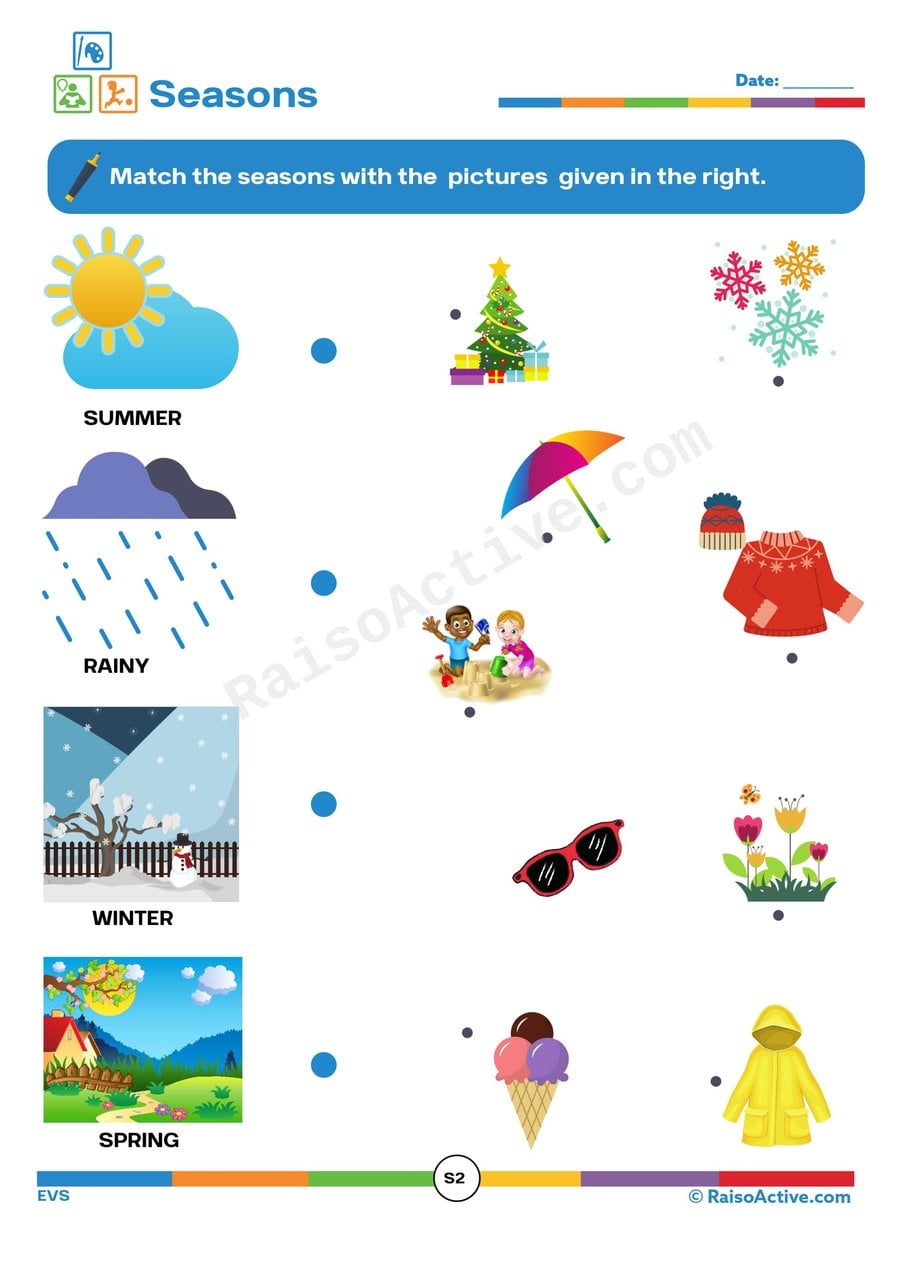
This matching worksheet helps children ages 3-5 connect the names of the four seasons — summer, rainy, winter, spring — to their corresponding visual scenes, reinforcing both seasonal vocabulary and the observational skills needed to identify a season from its weather and imagery. Because seasons cycle throughout the year, understanding them early gives children a framework for talking about time, weather, and change that they'll keep building on in future grades. Drawing a connecting line between the word and image also strengthens the link between written vocabulary and visual meaning.

Summer Shadow Match Worksheet for Preschoolers
Ages 3-5 · Preschool–Pre-KAges 3-5 · Nursery–ReceptionAges 3-5 · Nursery–LKGAges 3-5
This worksheet sharpens visual discrimination for children ages 3-5 as they match summer activity pictures — like swimming or eating ice cream — to their correct black silhouette shadow. Training the eye to recognize a shape by its outline alone, without color or detail, is a subtle but important pre-reading skill related to letter and word recognition.
Seasons Matching Worksheet for Preschoolers
Ages 3-5 · Preschool–Pre-KAges 3-5 · Nursery–ReceptionAges 3-5 · Nursery–LKGAges 3-5
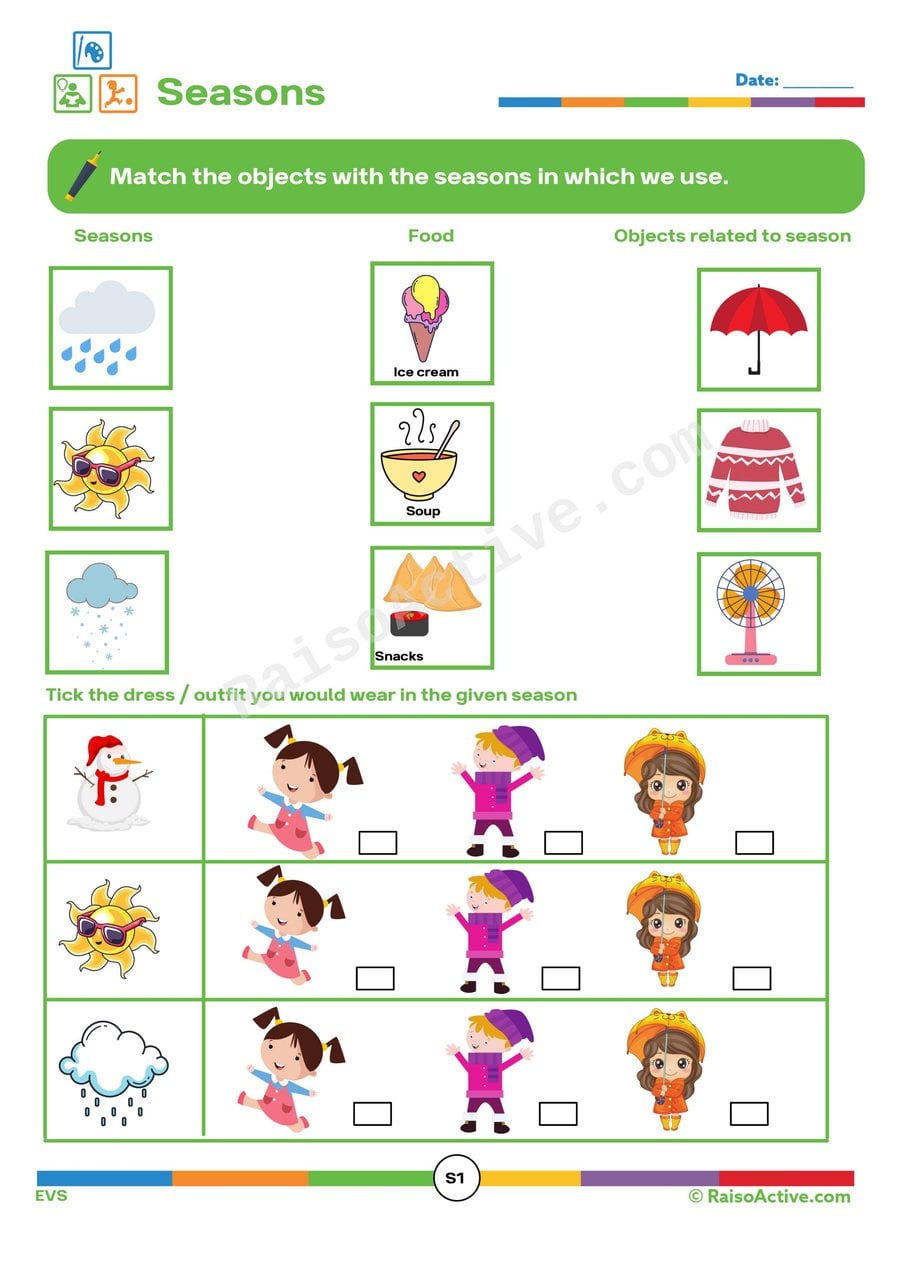
Understanding that different seasons bring different weather, clothing, and activities is an early science and life-skills concept for children ages 3-5, and this worksheet builds that understanding by having them match objects to the correct season and consider what they'd wear in each. Making these connections requires observation and categorization skills, since a child has to recall or reason through why a snowman belongs with winter or shorts belong with summer rather than simply memorizing a fixed answer. This kind of seasonal reasoning also lays groundwork for later science topics like weather patterns and the calendar year.
Guides for this topic

Best Worksheets for 3-Year-Olds: What Works and What to Avoid
What works on worksheets for 3-year-olds: short sessions, crayons, tracing lines, matching, cutting, a free weekly plan, and signs one is too advanced.
Fostering Creativity in Structured Learning: The Perfect Balance for Young Minds
Learn how to blend creativity with structured learning for children ages 1-8. Practical strategies, activities, and printable worksheets for parents and teachers.

Discovering Wonder: Nature-Based Learning Activities That Captivate Young Children
Explore nature-based learning activities for children ages 2–7 — leaf rubbings, bug hunts, nature journals, and seasonal Indian outdoor ideas that spark wonder.
Reviews
Every worksheet for ages 3–5, no watermark
Members download the full library of 1,000+ worksheets and every activity pack without watermarks or daily limits. One year costs ₹999 in India or $20 elsewhere.
See membership plansOr download any worksheet free with a watermark (5 a day).