Seasons Matching Worksheet for Preschoolers
Understanding that different seasons bring different weather, clothing, and activities is an early science and life-skills concept for children ages 3-5, and this worksheet builds that understanding by having them match objects to the correct season and consider what they'd wear in each. Making these connections requires observation and categorization skills, since a child has to recall or reason through why a snowman belongs with winter or shorts belong with summer rather than simply memorizing a fixed answer. This kind of seasonal reasoning also lays groundwork for later science topics like weather patterns and the calendar year.

Part of the pack
Month 9: Holistic Preschool Play Learning | Ages Up to 4
This is page 23 of the pack. Ages 3-4 · PreschoolAges 3-4 · NurseryAges 3-4

Made for your child
Counting to 10, made for your child
A maths pack with your child's name in it: pictures that explain, practice at three levels, puzzles and story sums about them. Print a new set whenever they finish.
Make a maths packFree preview · free for members
Curriculum
- Earth & Environment > Seasons & Weather
How to use this worksheet
Talk through each season shown on the page together, discussing what the weather is typically like and what activities happen during that time of year. Have your child match each object picture to the season it belongs with, drawing a line or placing it in the correct group. Move to the clothing section, where they'll look at different outfits and tick the one they'd wear during the given season. Discuss their reasoning together after each choice to reinforce the connection between season and appropriate clothing.
Materials needed
- Pencil
- Crayons
Extension activities
- 1Draw a picture of your child's favorite season, including the weather and an activity they enjoy doing then.
- 2Talk together about what you like to do during each season of the year.
- 3Look outside and discuss what season it currently is and what clues tell you that.
- 4Sort real clothing items from your child's closet by which season they'd typically be worn in.
- 5Read a picture book about the seasons and pause to connect it back to the worksheet's matches.

Written by
Hemsweta Jain · Teacher Cheena
MBA and Early Childhood Educator, teaching since 2014 · Founder of RaisoActive, Mumbai
Every RaisoActive worksheet is designed and checked by the founder before publishing.
Published · Last reviewed
More from Month 9: Holistic Preschool Play Learning | Ages Up to 4
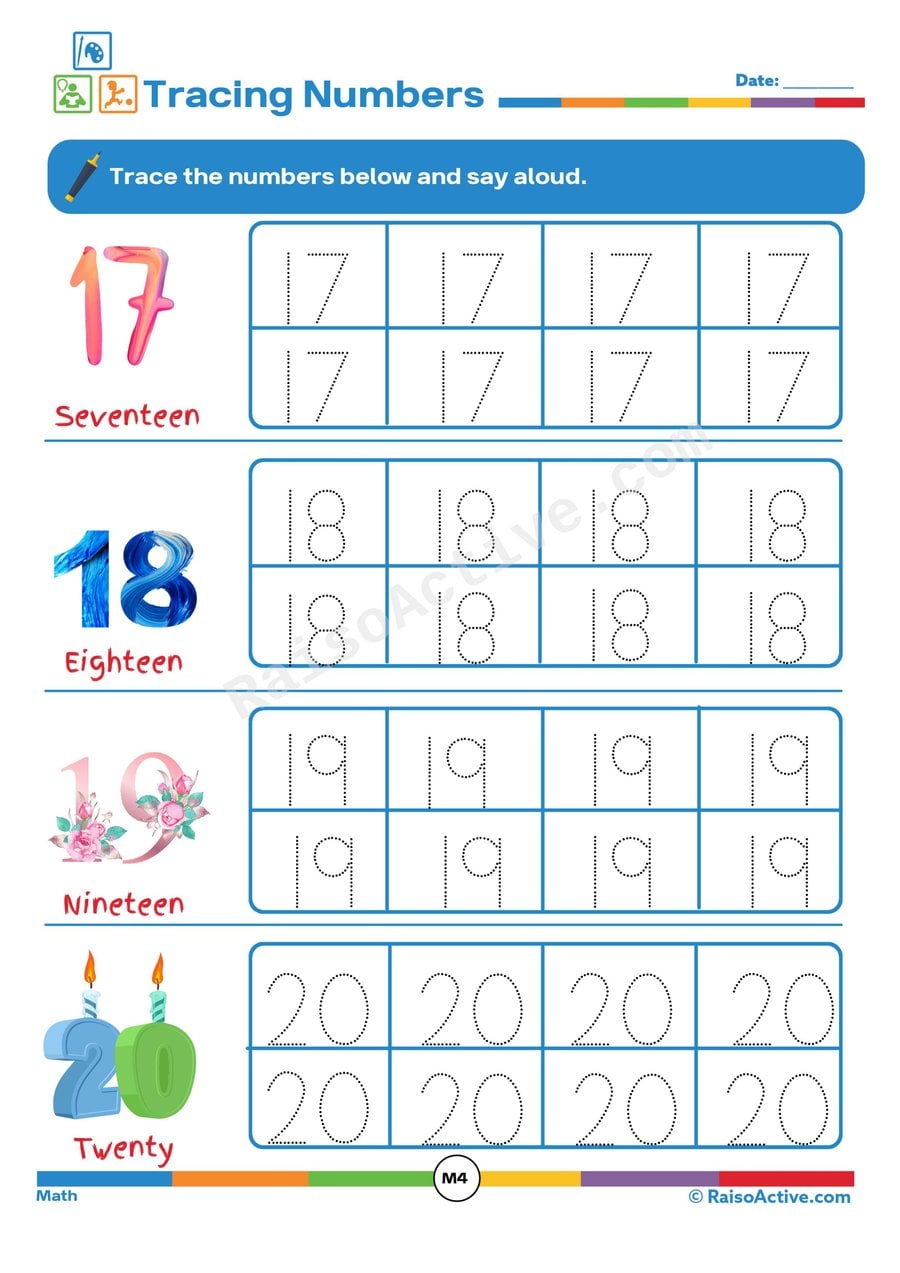
Trace and Learn Numbers 17-20 Worksheet
Ages 4-6 · Pre-K–KindergartenAges 4-6 · Reception–Year 1Ages 4-6 · LKG–UKGAges 4-6
This tracing worksheet helps children ages 4-6 build number-writing fluency and number-name recognition for 17 through 20, a range that's often trickier than smaller numbers because it involves two-digit sequencing and less familiar number words like 'seventeen' and 'nineteen'. Tracing the dotted numerals builds the fine motor control and muscle memory needed for independent number writing, while saying each number aloud reinforces the link between the written numeral and its spoken name. This range also sets up the transition into the twenties and beyond.

Parent's Guide: Sentence Framing and Early Literacy Activities
Ages 3-5 · Preschool–Pre-KAges 3-5 · Nursery–ReceptionAges 3-5 · Nursery–LKGAges 3-5
This parent's guide equips families of children ages 3-5 with a toolkit of hands-on activities — sentence framing, letter games, number and money recognition, and before/after sequencing with blocks — that build early literacy and numeracy together rather than in isolation. Framing simple sentences specifically helps children move from single words to connected speech, a critical bridge toward writing their own sentences later.
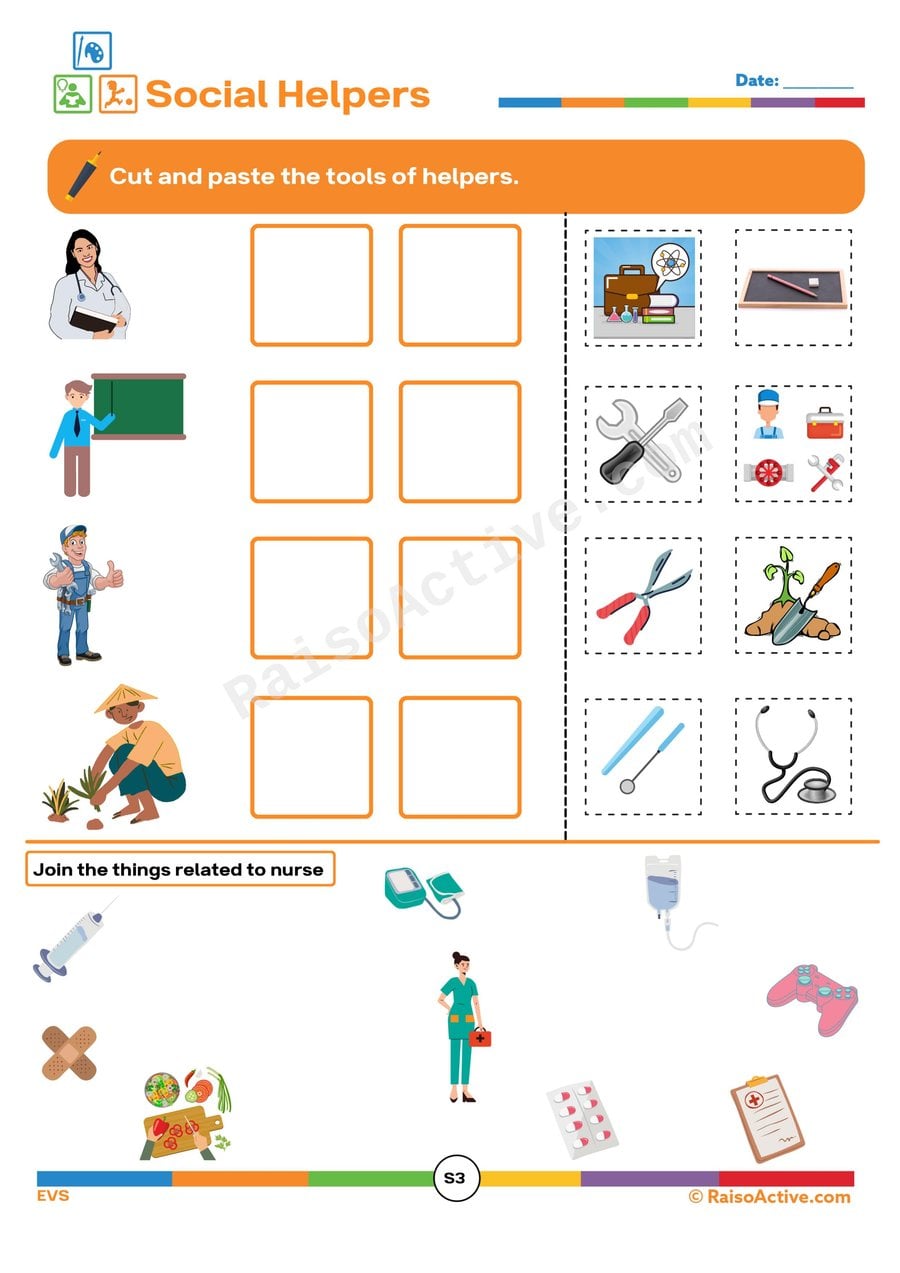
Social Helpers Tools Worksheet for Kids
Ages 3-5 · Preschool–Pre-KAges 3-5 · Nursery–ReceptionAges 3-5 · Nursery–LKGAges 3-5
This worksheet teaches children ages 3-5 to connect community helpers with the tools and equipment they use in their jobs, building early social studies knowledge alongside visual matching skills. Recognizing that a stethoscope belongs to a doctor or a hose belongs to a firefighter helps children understand how tools relate to specific roles and responsibilities in their community. The cut-and-paste and joining activities also reinforce fine motor control and visual discrimination as children sort similar-looking small pictures.

Earlier and Later: Flower Bloom Sequencing Worksheet for Preschoolers
Ages 3-5 · Preschool–Pre-KAges 3-5 · Nursery–ReceptionAges 3-5 · Nursery–LKGAges 3-5
Sequencing events in order is an early scientific and narrative reasoning skill, and this worksheet uses the life cycle of a flower to give children ages 3-5 concrete practice with the concepts of 'earlier' and 'later.' By matching earlier-stage images to their later-stage counterparts, children start to understand cause and change over time, a concept that underlies both storytelling and basic science observation. Drawing the next stage of the flower's bloom afterward adds a predictive element, asking children to apply the pattern they've just observed.

Before and After Numbers Worksheet for Preschoolers
Ages 4-5 · Pre-KAges 4-5 · ReceptionAges 4-5 · LKGAges 4-5
This worksheet builds number-sequencing skills for children ages 4-5 by asking them to identify which number comes immediately before and after a given number, along with counting and matching exercises. Understanding 'before' and 'after' requires children to hold a mental number line in their head and reason about relative position, a more abstract skill than simple counting or number recognition. This kind of sequencing practice is foundational for later addition and subtraction, where children need to move fluently forward and backward through numbers.

Match the Letters: Fun Vocabulary Worksheet for Preschoolers!
Ages 3-5 · Preschool–Pre-KAges 3-5 · Nursery–ReceptionAges 3-5 · Nursery–LKGAges 3-5
This worksheet helps children ages 3-5 connect familiar vocabulary pictures to their correct starting letters, reinforcing both letter recognition and the idea that written letters represent spoken sounds. Building vocabulary alongside letter knowledge gives children two ways into literacy at once — through meaning and through print — which supports children with different learning strengths.
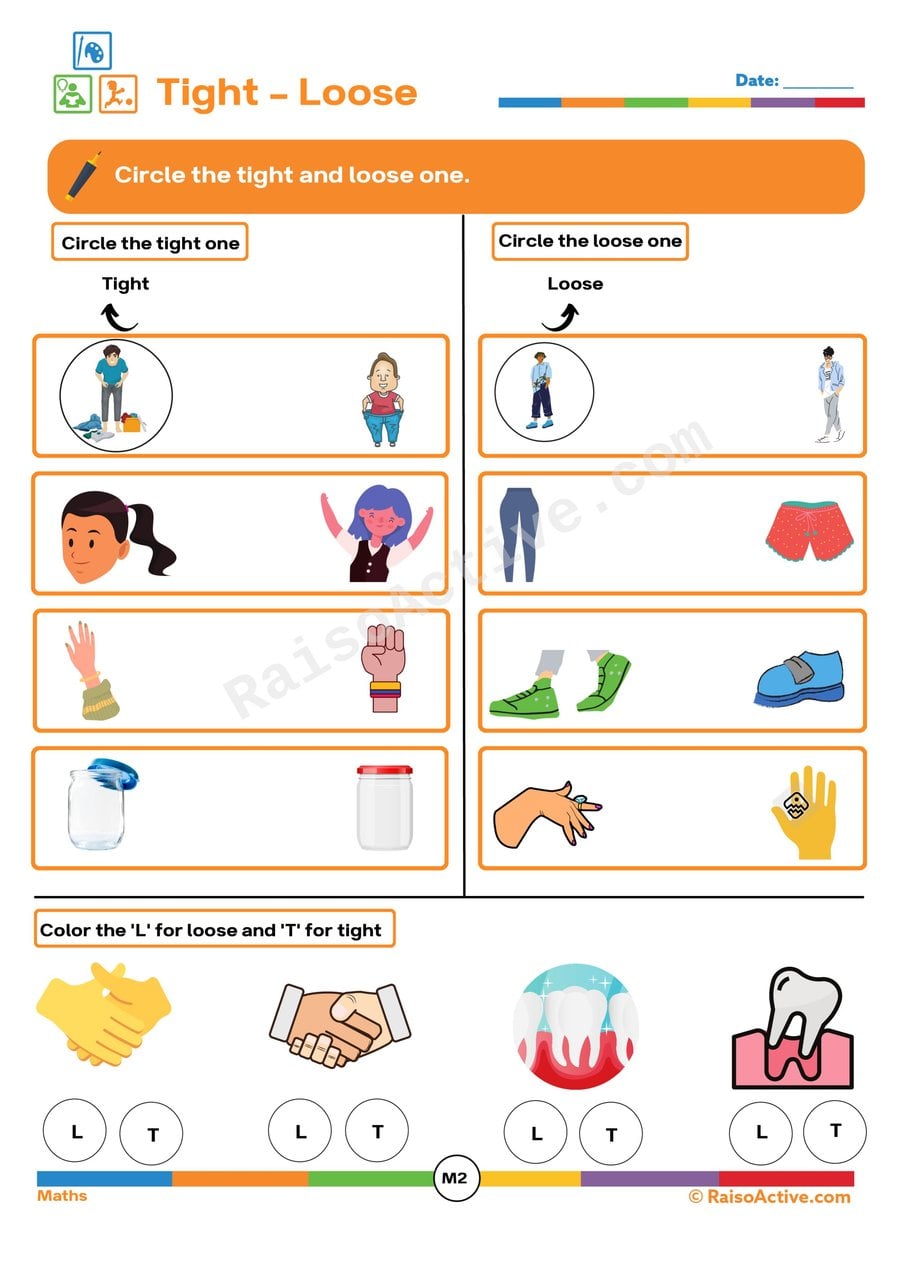
Tight and Loose Worksheet: Circle and Color!
Ages 3-5 · Preschool–Pre-KAges 3-5 · Nursery–ReceptionAges 3-5 · Nursery–LKGAges 3-5
Understanding opposite pairs like 'tight' and 'loose' helps children ages 3-5 build descriptive vocabulary and comparative thinking, skills that support both language development and early reasoning about physical properties. This worksheet asks children to look closely at pictured items — like shoelaces, screws, or clothing — and judge which state each one is in, which sharpens observation skills alongside vocabulary. Learning opposites like this also lays groundwork for later concepts such as measurement and comparison in math.
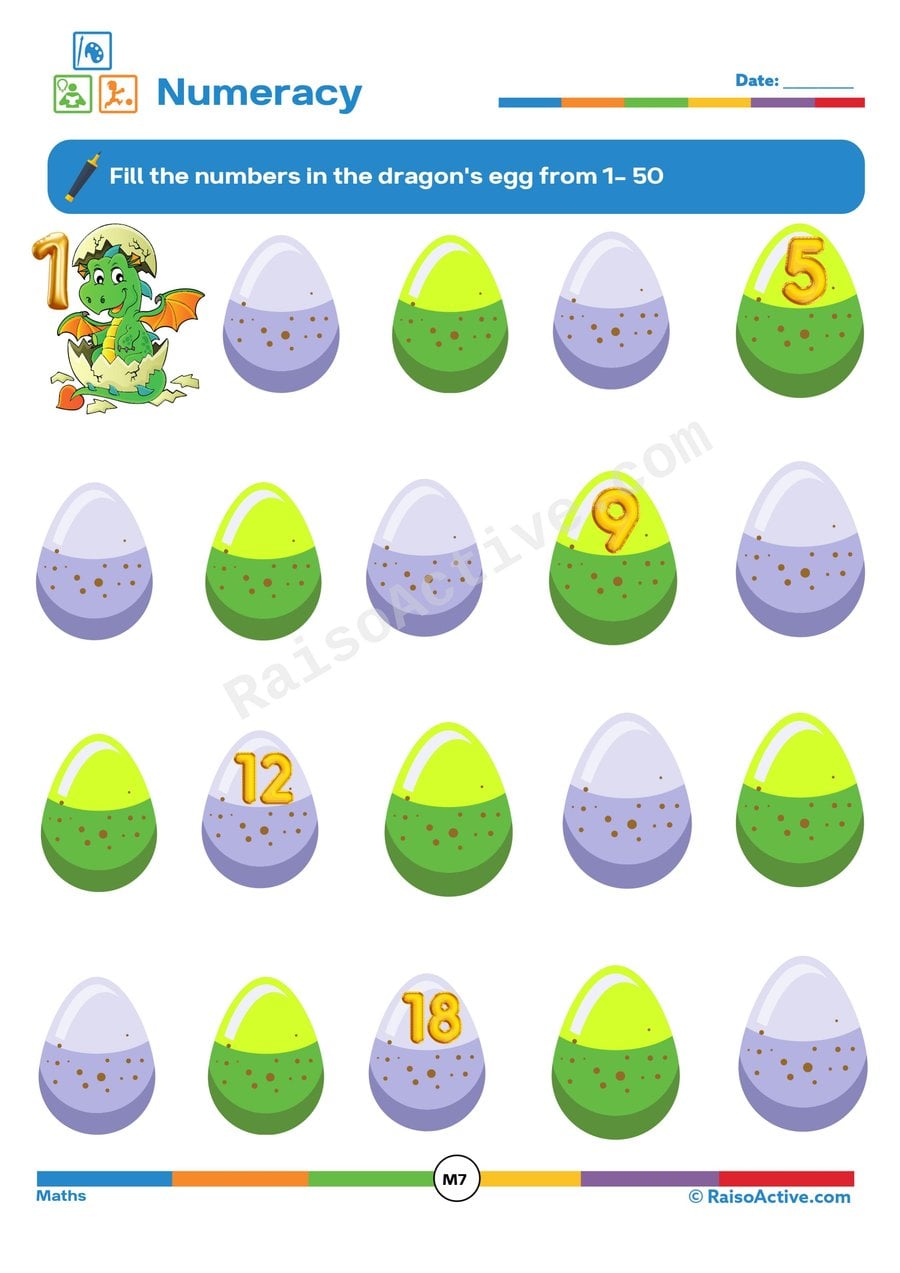
Dragon Egg Numbers: Counting to 50 Worksheet
Ages 4-6 · Pre-K–KindergartenAges 4-6 · Reception–Year 1Ages 4-6 · LKG–UKGAges 4-6
Filling in the missing numbers across a run of dragon eggs stretches a 4-6 year old's counting range well past the more common 1-20 practice, into territory where number patterns — like how every decade starts a new '_1, _2, _3' pattern — start to become visible. It's a strong bridge activity between rote counting and genuinely understanding how the number system is built.
Related worksheets
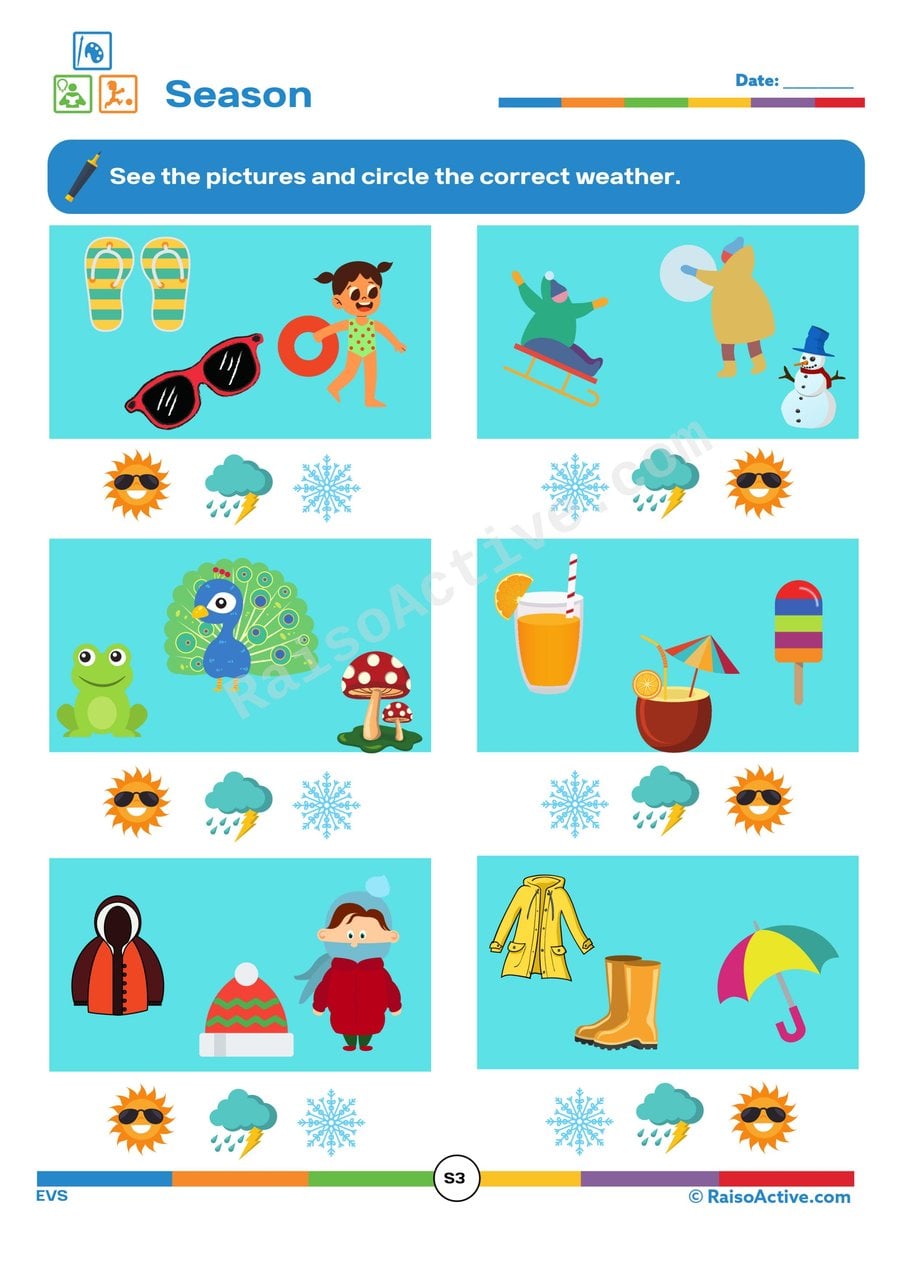
Seasons Worksheet: Circle the Correct Weather!
Ages 3-5 · Preschool–Pre-KAges 3-5 · Nursery–ReceptionAges 3-5 · Nursery–LKGAges 3-5
This worksheet asks children ages 3-5 to look at a seasonal scene and circle the weather that correctly matches it, building an early understanding of how seasons connect to specific weather patterns like snow, rain, or sunshine. Making this connection between a season and its typical weather is an early science concept that also supports vocabulary growth around weather and clothing.

Seasons Worksheet: Identify and Color the Correct Season!
Ages 3-5 · Preschool–Pre-KAges 3-5 · Nursery–ReceptionAges 3-5 · Nursery–LKGAges 3-5
Identifying which season a picture represents and coloring the matching letter code builds children's ages 3-5 awareness of how weather, clothing, and activities change throughout the year, an early and very relatable science concept. This worksheet asks children to actively classify each picture rather than passively look at seasonal images, sharpening their observational and reasoning skills. Understanding seasons also gives children a framework for talking about holidays, weather, and the passage of time in daily conversation.
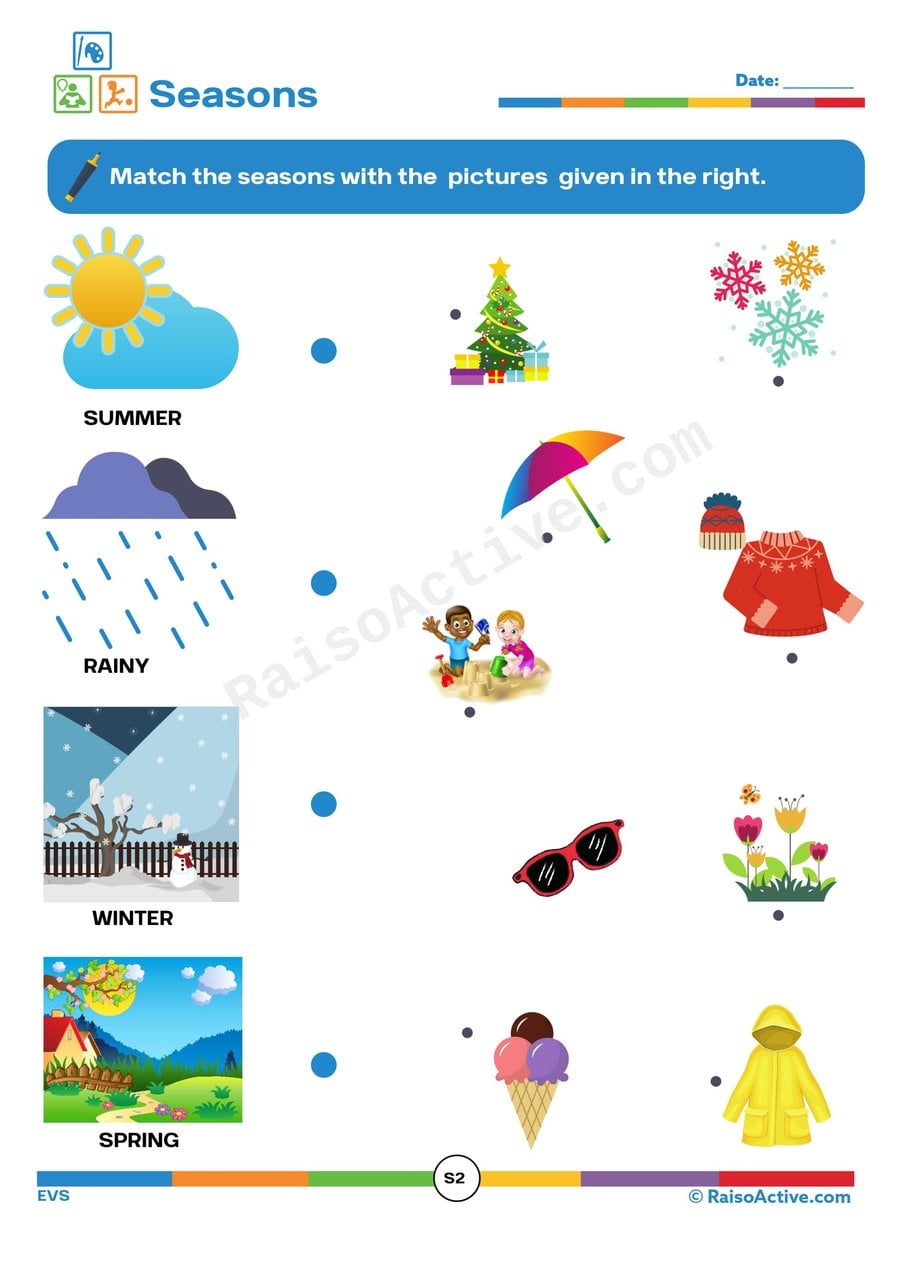
Seasons Matching Worksheet for Preschoolers
Ages 3-5 · Preschool–Pre-KAges 3-5 · Nursery–ReceptionAges 3-5 · Nursery–LKGAges 3-5
This matching worksheet helps children ages 3-5 connect the names of the four seasons — summer, rainy, winter, spring — to their corresponding visual scenes, reinforcing both seasonal vocabulary and the observational skills needed to identify a season from its weather and imagery. Because seasons cycle throughout the year, understanding them early gives children a framework for talking about time, weather, and change that they'll keep building on in future grades. Drawing a connecting line between the word and image also strengthens the link between written vocabulary and visual meaning.

Seasons Coloring Worksheet for Kids: Summer, Rainy, and Winter Fun!
Ages 3-5 · Preschool–Pre-KAges 3-5 · Nursery–ReceptionAges 3-5 · Nursery–LKGAges 3-5
This worksheet teaches 3-5 year olds to associate specific objects and weather patterns with the season they belong to — sunglasses and ice cream for summer, umbrellas for the rainy season, sweaters for winter — using a color-coding system to reinforce the sorting. Learning to categorize by season is an early science and observation skill, since it requires your child to notice recurring patterns in weather, clothing, and activities across the year.

Rainy Season Coloring Worksheet for Preschoolers
Ages 3-5 · Preschool–Pre-KAges 3-5 · Nursery–ReceptionAges 3-5 · Nursery–LKGAges 3-5
This worksheet helps children ages 3-5 identify and learn about objects and scenes associated with the rainy season, like umbrellas, puddles, and raincoats, while practicing coloring skills that build hand control. Connecting a familiar season to specific vocabulary words gives children concrete language for describing the weather they experience.

Summer Shadow Match Worksheet for Preschoolers
Ages 3-5 · Preschool–Pre-KAges 3-5 · Nursery–ReceptionAges 3-5 · Nursery–LKGAges 3-5
This worksheet sharpens visual discrimination for children ages 3-5 as they match summer activity pictures — like swimming or eating ice cream — to their correct black silhouette shadow. Training the eye to recognize a shape by its outline alone, without color or detail, is a subtle but important pre-reading skill related to letter and word recognition.
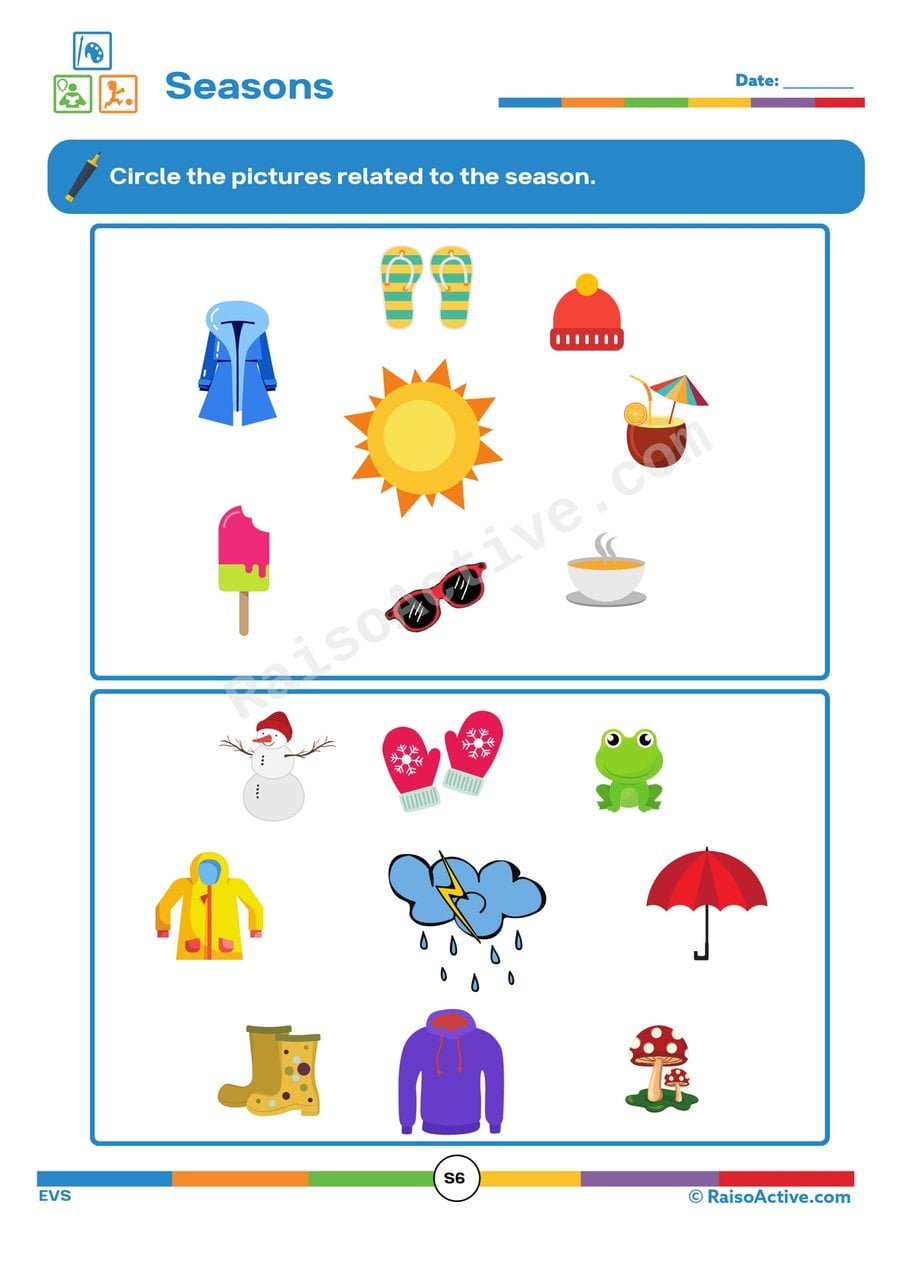
Seasons Worksheet: Circle the Pictures!
Ages 3-5 · Preschool–Pre-KAges 3-5 · Nursery–ReceptionAges 3-5 · Nursery–LKGAges 3-5
This worksheet builds seasonal awareness by having children look at a set of pictures and circle only the ones that belong to a specific season, such as snowflakes for winter or sandals for summer. For three- to five-year-olds, sorting familiar objects and clothing by season strengthens categorization skills and connects abstract calendar concepts to things they see and wear every day.
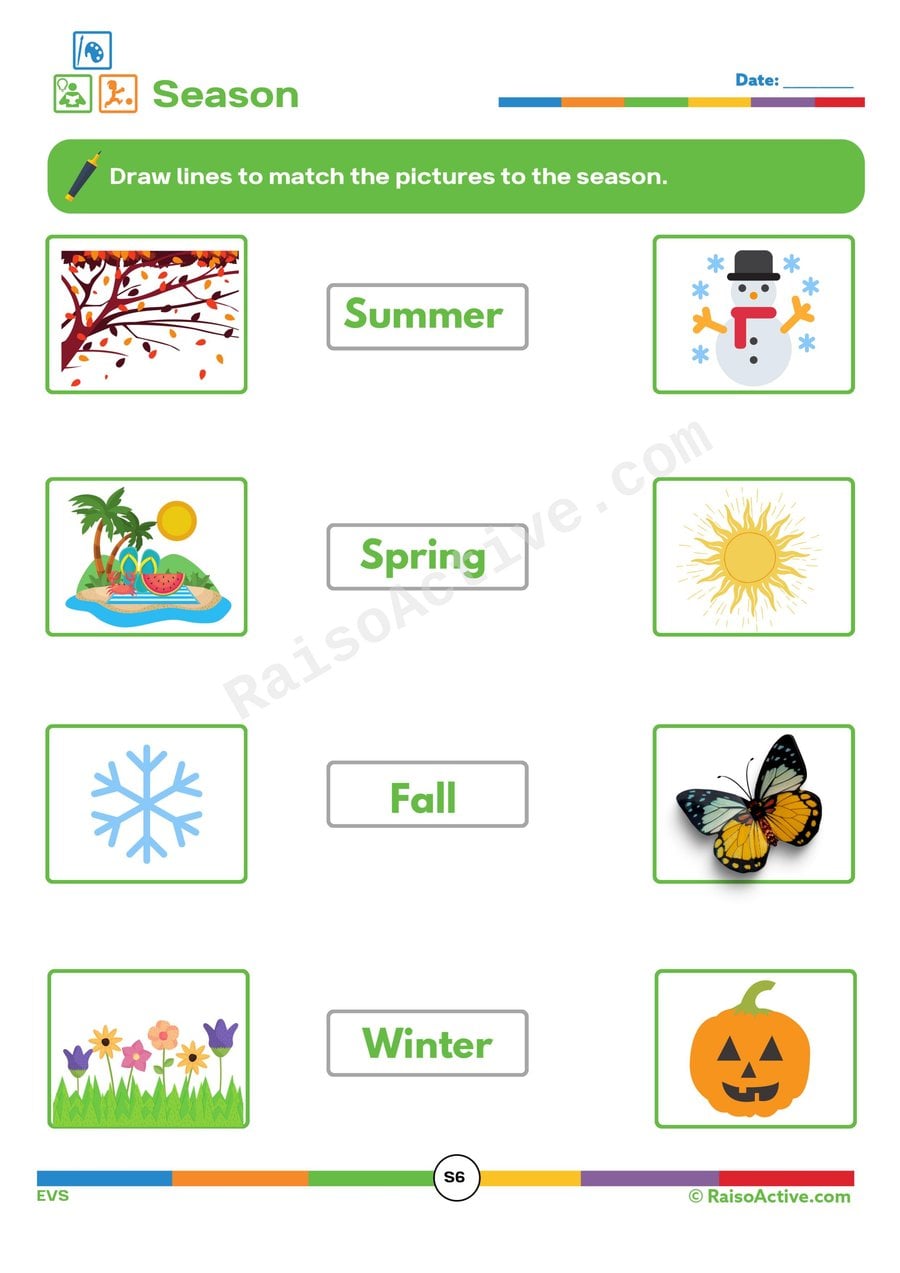
Seasons Matching Worksheet for Preschoolers
Ages 3-5 · Preschool–Pre-KAges 3-5 · Nursery–ReceptionAges 3-5 · Nursery–LKGAges 3-5
This worksheet helps children ages 3-5 learn to recognize the four seasons — summer, fall, winter, and spring — and match seasonal pictures, like snow or falling leaves, to the correct season name. Understanding that weather and nature change in a predictable yearly cycle is an early science concept that also connects naturally to a child's own experience of holidays and clothing changes throughout the year.
Guides for this topic

Best Worksheets for 3-Year-Olds: What Works and What to Avoid
What works on worksheets for 3-year-olds: short sessions, crayons, tracing lines, matching, cutting, a free weekly plan, and signs one is too advanced.

Age-Appropriate Problem-Solving Activities: Building Critical Thinkers from the Ground Up
Discover fun, age-appropriate problem-solving activities for children ages 1-8. Build critical thinking, logic, and reasoning skills through play-based learning.
Critical Thinking Activities That Actually Work for Young Children: Building Tomorrow's Thinkers Today
Discover proven critical thinking activities for young children. Age-wise logic games, questioning techniques, and hands-on ideas to build thinking skills at home.
Reviews
Every worksheet for ages 3–5, no watermark
Members download the full library of 1,000+ worksheets and every activity pack without watermarks or daily limits. One year costs ₹999 in India or $20 elsewhere.
See membership plansOr download any worksheet free with a watermark (5 a day).