Cl Blend Words Worksheet: Read and Circle!
Reading and circling words that begin with the 'cl' consonant blend helps children ages 4-6 hear that two consonants pressed together, like c and l, still combine into a single connected sound at the start of a word. This is a step up from single-letter phonics, requiring children to blend two consonant sounds smoothly rather than sounding them out separately. Recognizing blends like 'cl' in words such as 'clap' or 'cloud' builds the decoding fluency needed to read longer, less predictable words with confidence.
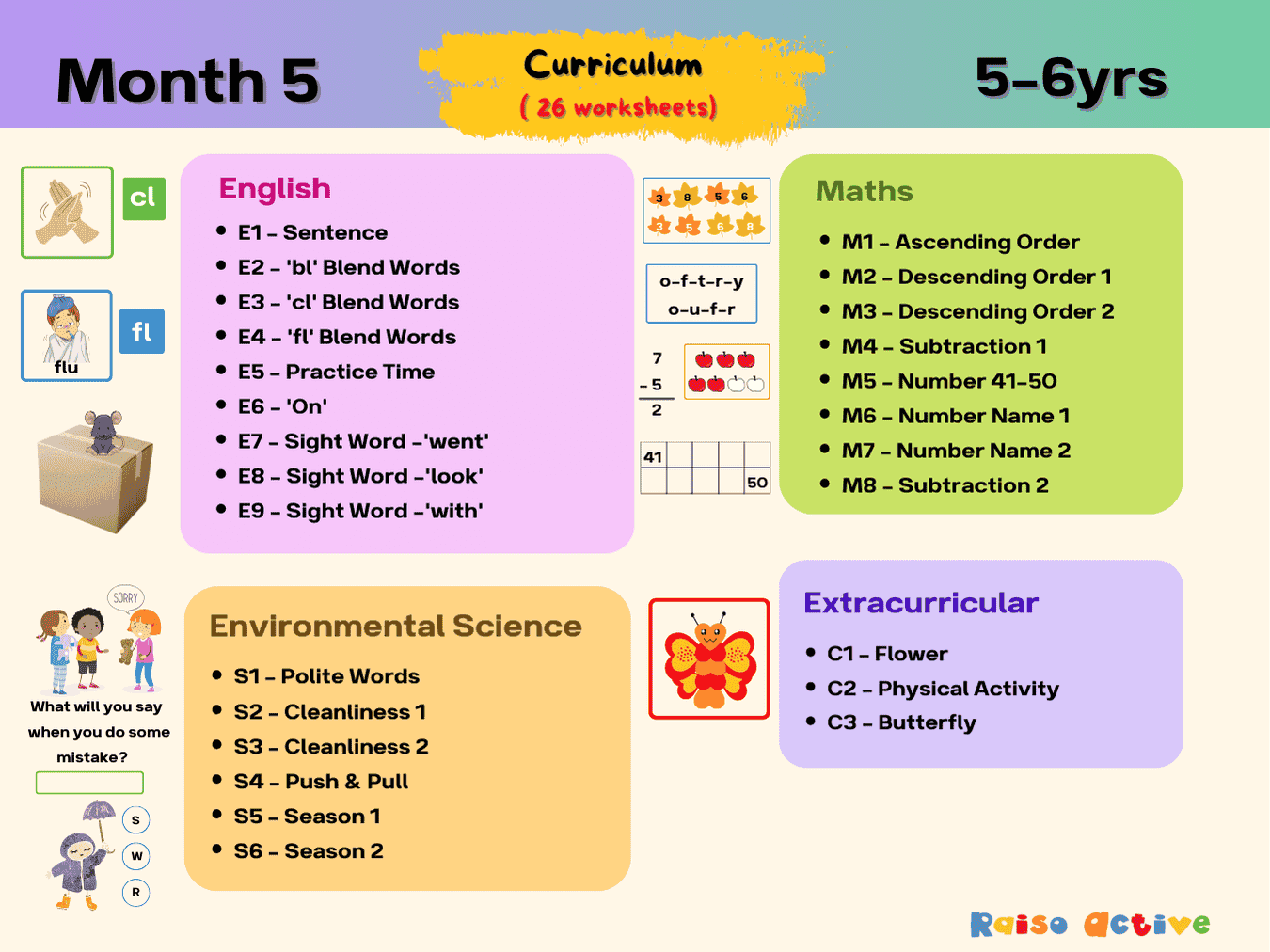
Part of the pack
Month 5: Play-based English Math Science | Ages 5-6
This is page 6 of the pack. Ages 5-6 · KindergartenAges 5-6 · Year 1Ages 5-6 · UKGAges 5-6
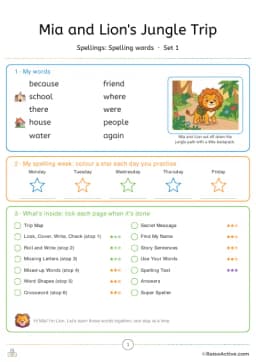
Made for your child
Spelling practice, made for your child
Their own spelling words turned into a pack: trace or look-cover-write-check, roll and write, a secret picture code, a word search, a crossword and a test, with their name in it.
Make a spelling packFree preview · free for members
Or start free: a word search with sight wordsCurriculum
- Phonics - Blends > Consonant Blends
How to use this worksheet
Read each word on the page aloud together first, exaggerating the 'cl' sound at the start so your child hears both letters blending into one sound. Have your child point to and read each word themselves, sounding it out slowly if needed. Ask them to circle only the words that begin with the 'cl' blend, leaving the other words unmarked. Once finished, go back through the circled words together, having your child say each one aloud one more time.
Materials needed
- Pencil
- Crayons
Extension activities
- 1Have the child write the 'cl' words they found on a separate sheet of paper.
- 2Draw pictures to match each 'cl' word, like a cloud, a clock, or a clown.
- 3Brainstorm a longer list of 'cl' words together, such as 'clean,' 'climb,' or 'clip.'
- 4Clap your hands together while saying 'cl' words aloud to physically connect the sound to the word 'clap.'
- 5Sort a mixed pile of word or picture cards into 'cl' words and non-'cl' words.

Written by
Hemsweta Jain · Teacher Cheena
MBA and Early Childhood Educator, teaching since 2014 · Founder of RaisoActive, Mumbai
Every RaisoActive worksheet is designed and checked by the founder before publishing.
Published · Last reviewed
More from Month 5: Play-based English Math Science | Ages 5-6
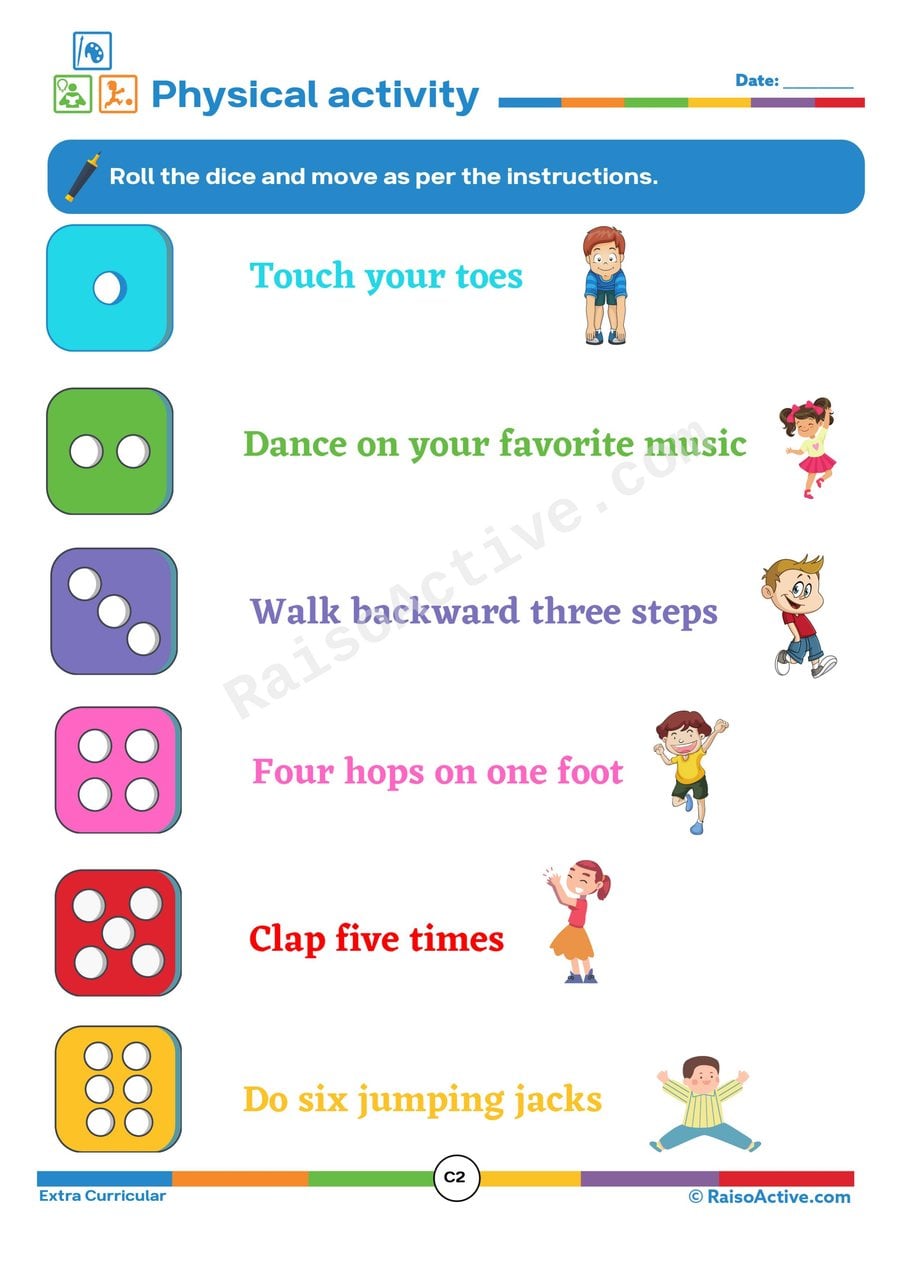
Physical Activity Dice Game Worksheet for Kids
Ages 3-5 · Preschool–Pre-KAges 3-5 · Nursery–ReceptionAges 3-5 · Nursery–LKGAges 3-5
Rolling a die and performing the matching action builds gross motor skills and number recognition together for children ages 3-5, since they must first read the number rolled before they can act on it. Following the sequence of steps also strengthens listening comprehension and the ability to carry out multi-step instructions.
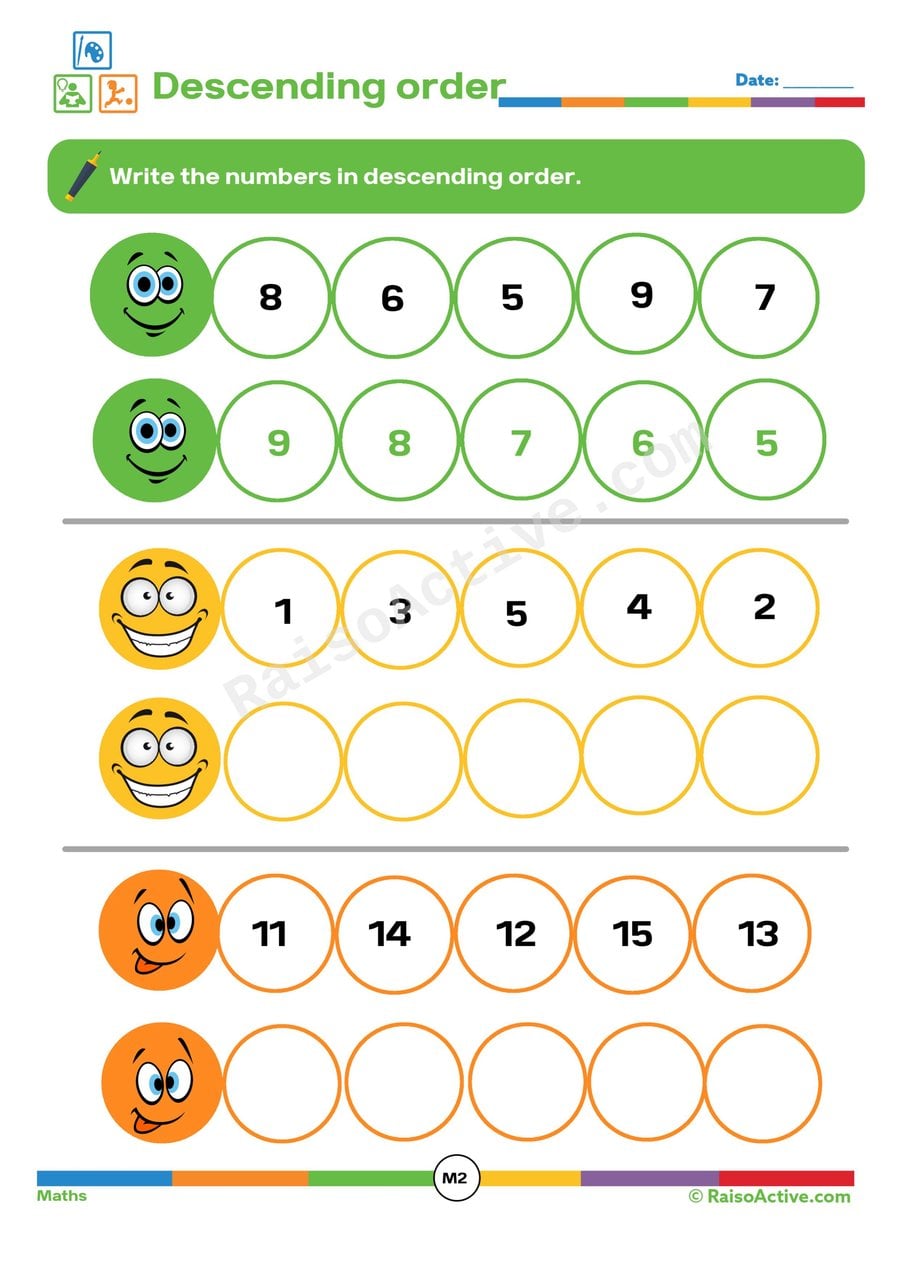
Descending Order Worksheet: Numbers 5-15
Ages 4-5 · Pre-KAges 4-5 · ReceptionAges 4-5 · LKGAges 4-5
Writing numbers in descending order asks 4-5 year olds to hold a full sequence in mind and reverse it — a genuinely different mental task from the more familiar ascending count, since children have to think about 'what comes before' rather than 'what comes after.' Practicing this with numbers 5 through 15 also reinforces number formation and one-to-one number-word correspondence, since each digit has to be written accurately as your child works backward.
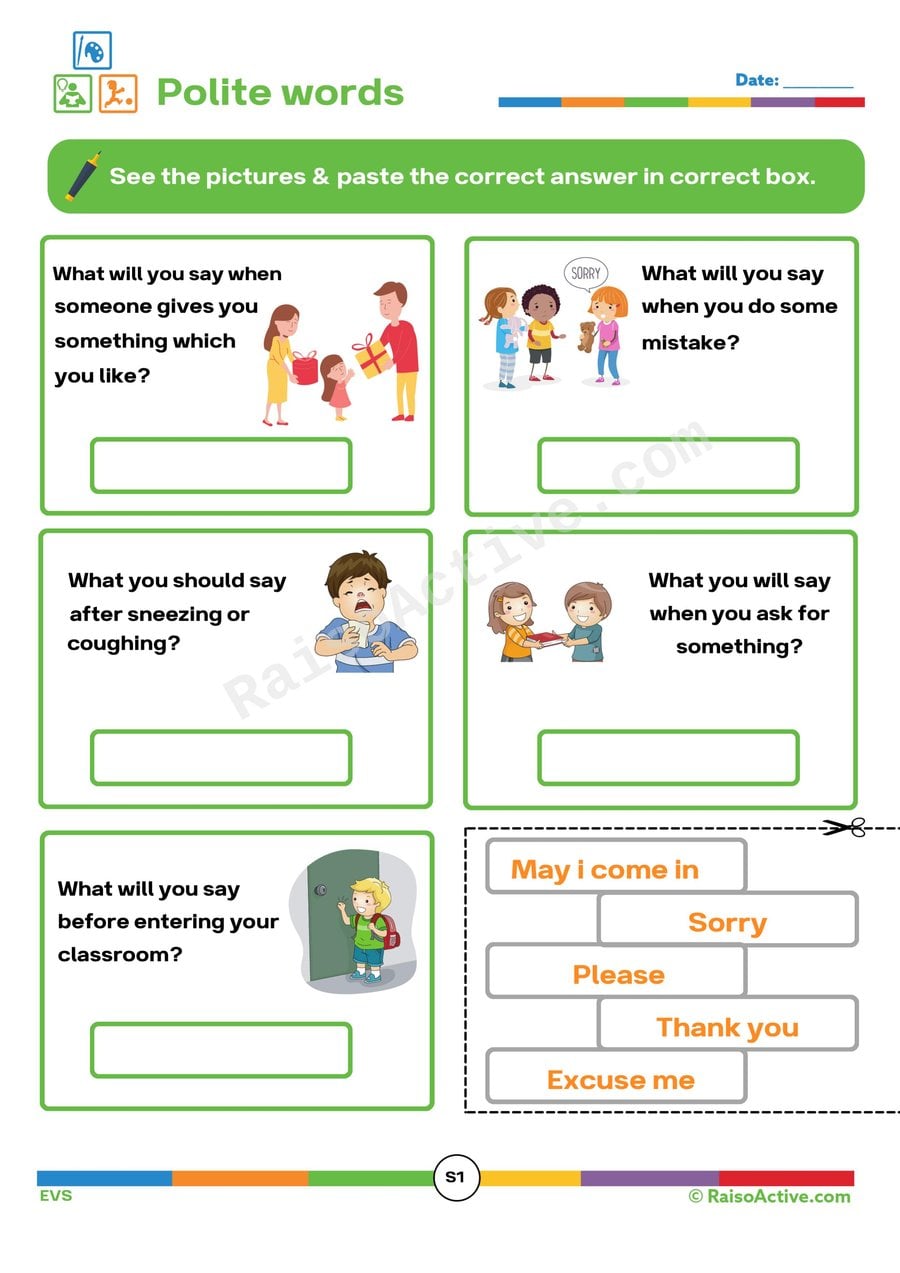
Polite Words Worksheet: Matching and Application
Ages 3-5 · Preschool–Pre-KAges 3-5 · Nursery–ReceptionAges 3-5 · Nursery–LKGAges 3-5
Matching pictures and scenarios to the right polite word teaches children ages 3-5 when and why to use phrases like please, thank you, sorry, and excuse me, building the pragmatic language skills needed for real social interactions. This kind of practice helps young children connect a word not just to its meaning but to the specific situation that calls for it.

Descending Order Snail Puzzle Worksheet for Preschoolers
Ages 3-5 · Preschool–Pre-KAges 3-5 · Nursery–ReceptionAges 3-5 · Nursery–LKGAges 3-5
Arranging cut-out puzzle pieces from the highest number down to the lowest asks children ages 3-5 to apply number order in the reverse direction from typical ascending counting, a genuinely different and more challenging skill than counting up. This descending-order practice deepens overall number sense, since children must compare values rather than just recite a memorized forward sequence. The reveal of a hidden picture once the pieces are correctly ordered adds a rewarding, motivating payoff to an otherwise abstract number task.
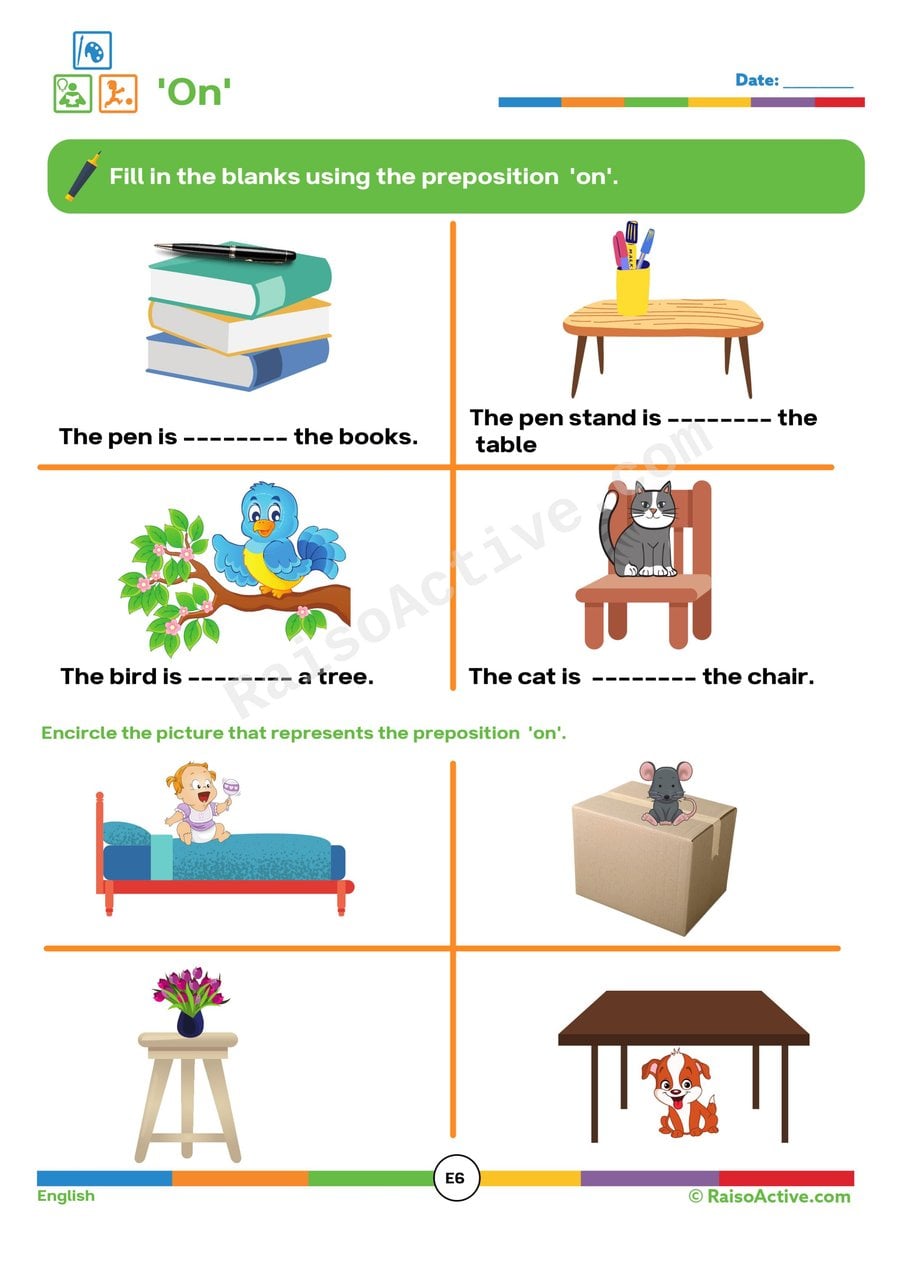
Preposition Fun: 'On' Worksheet for Early Learners
Ages 3-5 · Preschool–Pre-KAges 3-5 · Nursery–ReceptionAges 3-5 · Nursery–LKGAges 3-5
Practicing the preposition 'on' teaches children ages 3-5 how a small function word can precisely describe where one object sits in relation to another, an early and important step in building more complex, descriptive sentences. Filling in the blank with 'on' repeatedly across different sentences helps the word become automatic rather than something they have to think hard about each time. Circling the picture that correctly shows something 'on' another object also checks that your child truly understands the spatial meaning, not just the spelling of the word.

Seasons Worksheet: Identify and Color the Correct Season!
Ages 3-5 · Preschool–Pre-KAges 3-5 · Nursery–ReceptionAges 3-5 · Nursery–LKGAges 3-5
Identifying which season a picture represents and coloring the matching letter code builds children's ages 3-5 awareness of how weather, clothing, and activities change throughout the year, an early and very relatable science concept. This worksheet asks children to actively classify each picture rather than passively look at seasonal images, sharpening their observational and reasoning skills. Understanding seasons also gives children a framework for talking about holidays, weather, and the passage of time in daily conversation.

Parent's Guide: Fun Activities for Blend Words, Addition, and More!
Ages 3-5 · Preschool–Pre-KAges 3-5 · Nursery–ReceptionAges 3-5 · Nursery–LKGAges 3-5
This parent's guide brings together several early-learning skill areas — blend words, addition and subtraction, plant parts, and landforms — into one set of hands-on activities designed for children ages 3-5, giving families a ready toolkit for reinforcing what's covered across the individual worksheets. Rather than another printable page, it offers concrete ways to extend learning through sensory play, flashcards, and conversation, which suits how young children absorb new concepts most naturally. Having a single reference guide also helps parents connect several worksheet topics into one cohesive home-learning routine.

Flower Craft: Make 5 Flowers with Pencil Shavings!
Ages 3-5 · Preschool–Pre-KAges 3-5 · Nursery–ReceptionAges 3-5 · Nursery–LKGAges 3-5
This craft activity has 3-5 year olds use actual pencil shavings — an unusual, tactile material — to build five flower shapes, following a multi-step visual example rather than a simple one-step instruction. That combination of following a sequence and precisely placing small, delicate shavings builds fine motor control and pincer grip in a way that's noticeably different from crayons or scissors, plus it introduces the idea of turning a leftover material into art.
Related worksheets
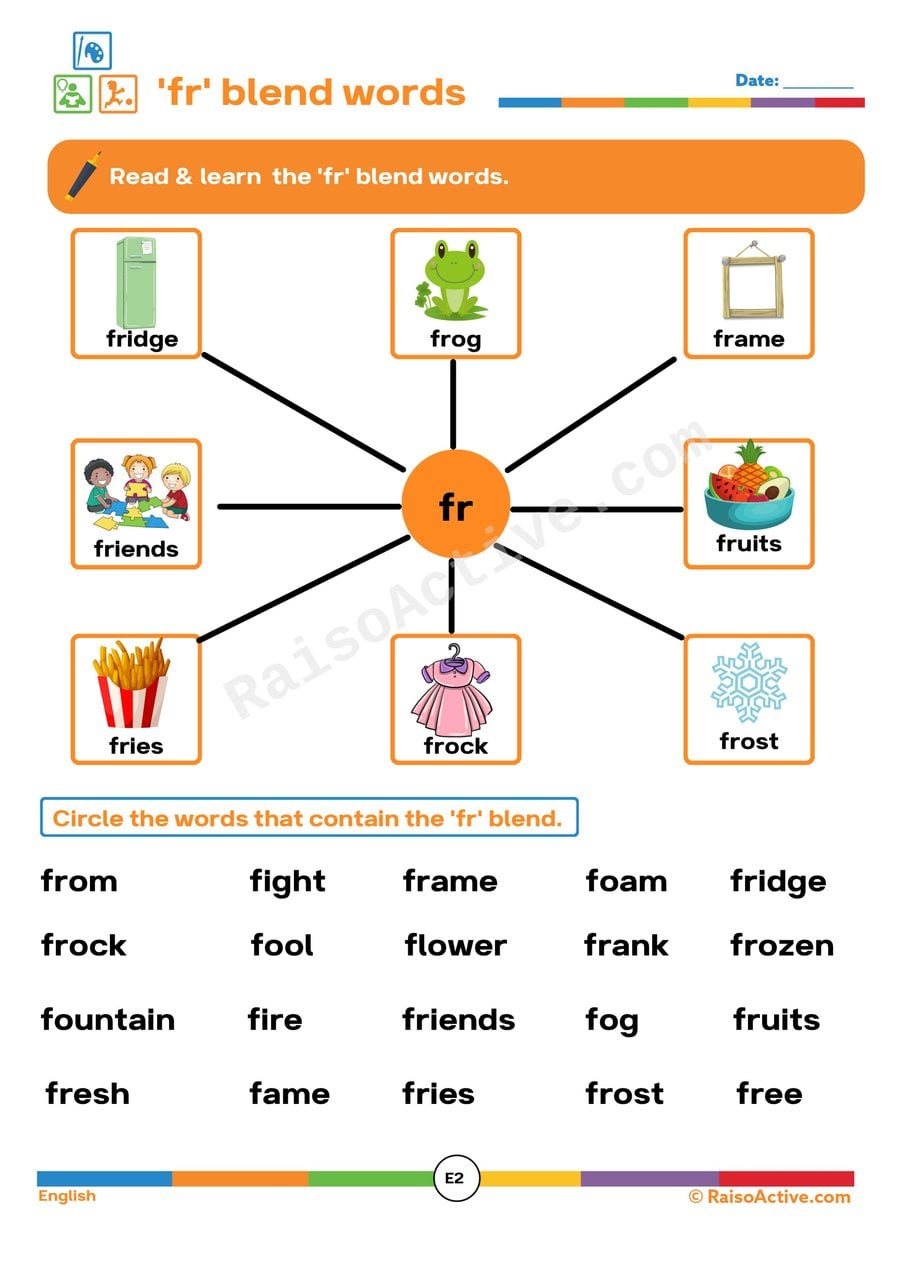
FR Blend Words Worksheet: Circle the Words!
Ages 4-6 · Pre-K–KindergartenAges 4-6 · Reception–Year 1Ages 4-6 · LKG–UKGAges 4-6
Children ages 4-6 practice recognizing the 'fr' consonant blend at the start of words, like 'frog' and 'friend', which requires blending two distinct sounds smoothly together rather than reading them as separate letters. Circling the correct words trains visual scanning alongside auditory sound recognition, both essential for fluent early reading. This kind of blend practice moves children beyond single-letter phonics into more complex word decoding.
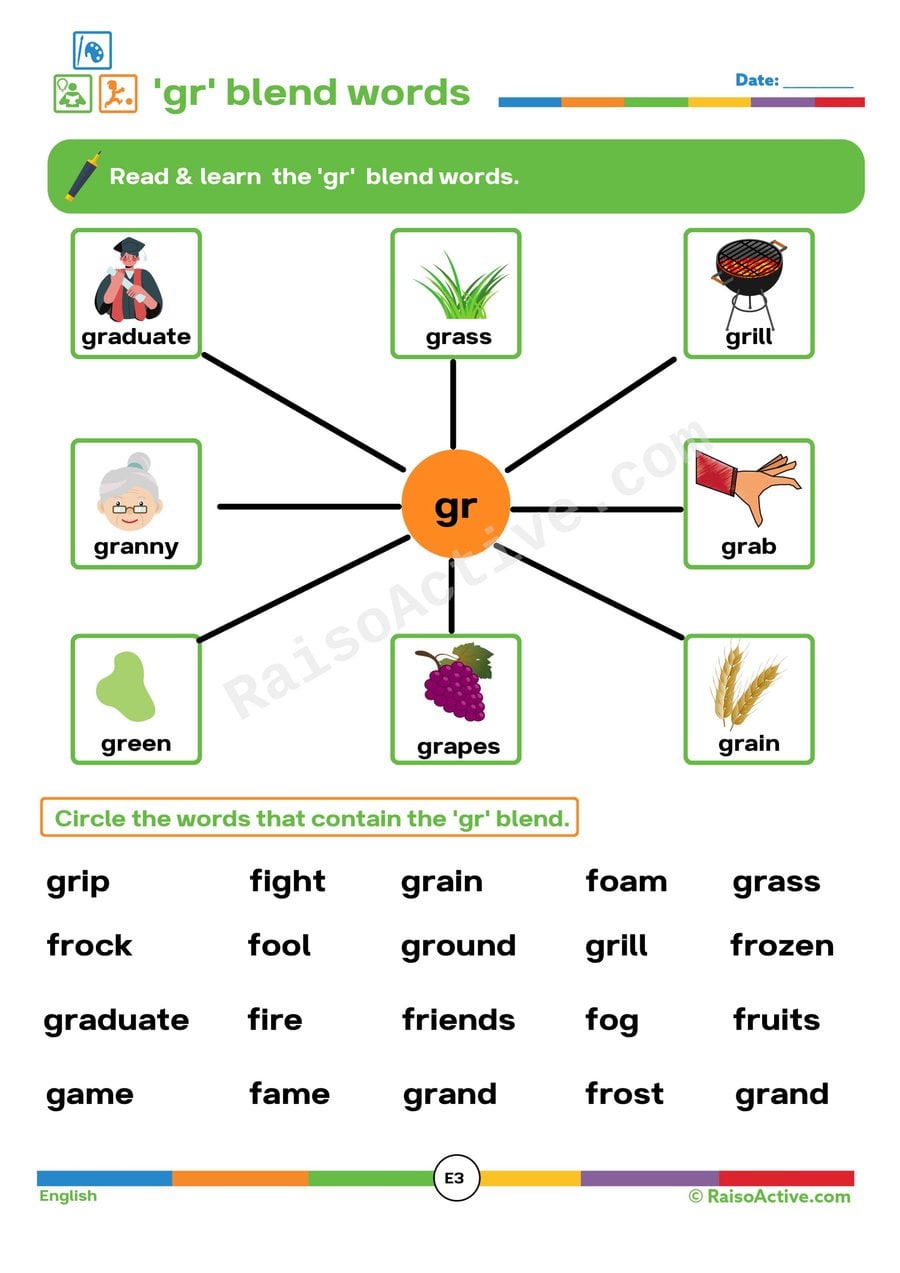
Gr Blend Words Worksheet: Circle the 'gr' Words!
Ages 4-6 · Pre-K–KindergartenAges 4-6 · Reception–Year 1Ages 4-6 · LKG–UKGAges 4-6
Learning to recognize the 'gr' consonant blend, as in 'grass,' 'green,' or 'grape,' trains children's ears to hear two consonant sounds pressed together at the start of a word, a more advanced phonics skill than single-letter sounds. For ages four to six, mastering common blends like 'gr' significantly expands the number of words they can decode independently when reading.

Circle the 'pr' Blend Words Worksheet for Preschoolers
Ages 4-5 · Pre-KAges 4-5 · ReceptionAges 4-5 · LKGAges 4-5
Children ages 4-5 practice recognizing the 'pr' consonant blend at the beginning of words, like 'prize' and 'print', which requires blending two distinct sounds together fluently. Circling only the correct 'pr' words trains both auditory sound recognition and careful visual scanning of printed text. This kind of blend practice moves early readers beyond single-letter phonics into decoding more complex word beginnings.

Weather Worksheet: Circle the Correct Weather Word!
Ages 3-5 · Preschool–Pre-KAges 3-5 · Nursery–ReceptionAges 3-5 · Nursery–LKGAges 3-5
This worksheet strengthens children's early reading skills by having them match weather pictures — like sun, rain, or wind — to the correct written word, building sight recognition of common weather vocabulary for ages 3-5. Circling the matching word rather than just naming the picture aloud pushes children to connect spoken language with printed text, an essential pre-reading skill. Because weather words appear frequently in books and daily conversation, this practice has immediate real-world payoff.

Animal Action Cards: Fun Movement Worksheet for Kids!
Ages 3-5 · Preschool–Pre-KAges 3-5 · Nursery–ReceptionAges 3-5 · Nursery–LKGAges 3-5
These animal action cards get children ages 3-5 moving as they follow simple instructions, like hopping like a rabbit or slithering like a snake, combining gross motor development with listening and instruction-following skills. Because each card requires reading or recalling a specific action tied to a specific animal, children also reinforce animal vocabulary and movement-based descriptive language. Turning learning into physical movement is especially valuable for this age group, whose attention and retention often improve dramatically when a body movement is involved.
Month 1: Learning & Development | Ages 6-7 - Page 4
Ages 6-7 · Grade 1Ages 6-7 · Year 2Ages 6-7 · Class 1Ages 6-7
This overview page maps out everything covered in Month 1 of the ages 6-7 learning program, giving both children and parents a clear picture of what skills, from reading comprehension to number work to critical thinking, will be practiced across the month. Previewing a table of contents like this helps children ages 6-7 build early organizational awareness, understanding that learning happens in a structured sequence rather than as one-off, disconnected activities. Knowing what's coming also builds anticipation and motivation heading into each week's worksheets.

Weather Words Worksheet for Preschoolers: Match & Learn!
Ages 3-5 · Preschool–Pre-KAges 3-5 · Nursery–ReceptionAges 3-5 · Nursery–LKGAges 3-5
This worksheet helps children ages 3-5 build weather-related vocabulary by matching pictures like clouds, rain, or sunshine to their correct written words. Weather is something children experience daily, so connecting familiar sights to new vocabulary words gives this matching task an unusually strong real-world anchor that helps the words stick.

Classroom Vocabulary Worksheet for Kids: Circle and Name!
Ages 3-5 · Preschool–Pre-KAges 3-5 · Nursery–ReceptionAges 3-5 · Nursery–LKGAges 3-5
Circling pictures of common classroom objects and saying their names aloud builds vocabulary and oral language skills in children ages 3-5, helping them connect familiar school items, like a desk, book, or crayon, to their spoken names. This kind of naming practice supports school readiness, since recognizing and labeling classroom objects helps children feel more comfortable and confident in a school environment. Speaking each word aloud, rather than just circling silently, also reinforces pronunciation and word retrieval.
Guides for this topic

How to Teach CVC Blending: A Step-by-Step Method That Works in Two Weeks
A step-by-step method for teaching CVC blending, covering continuous sounds, word families, common errors, and a 14-day plan that most children finish reading CVC words.
Phase 2 Phonics at Home: Sound Order, Blending Games, Worksheets
Phase 2 phonics at home: the five sound sets in order, oral blending, tricky words, a two-week routine, common mistakes, and free worksheets.

Reception Year Explained: EYFS Learning and How to Help at Home
A teacher's plain-English guide to the Reception Year: the seven areas of learning, Early Learning Goals, Phase 2/3 phonics, the RBA and home routines.
Reviews
Every worksheet for ages 4–6, no watermark
Members download the full library of 1,000+ worksheets and every activity pack without watermarks or daily limits. One year costs ₹999 in India or $20 elsewhere.
See membership plansOr download any worksheet free with a watermark (5 a day).