Descending Order Snail Puzzle Worksheet for Preschoolers
Arranging cut-out puzzle pieces from the highest number down to the lowest asks children ages 3-5 to apply number order in the reverse direction from typical ascending counting, a genuinely different and more challenging skill than counting up. This descending-order practice deepens overall number sense, since children must compare values rather than just recite a memorized forward sequence. The reveal of a hidden picture once the pieces are correctly ordered adds a rewarding, motivating payoff to an otherwise abstract number task.
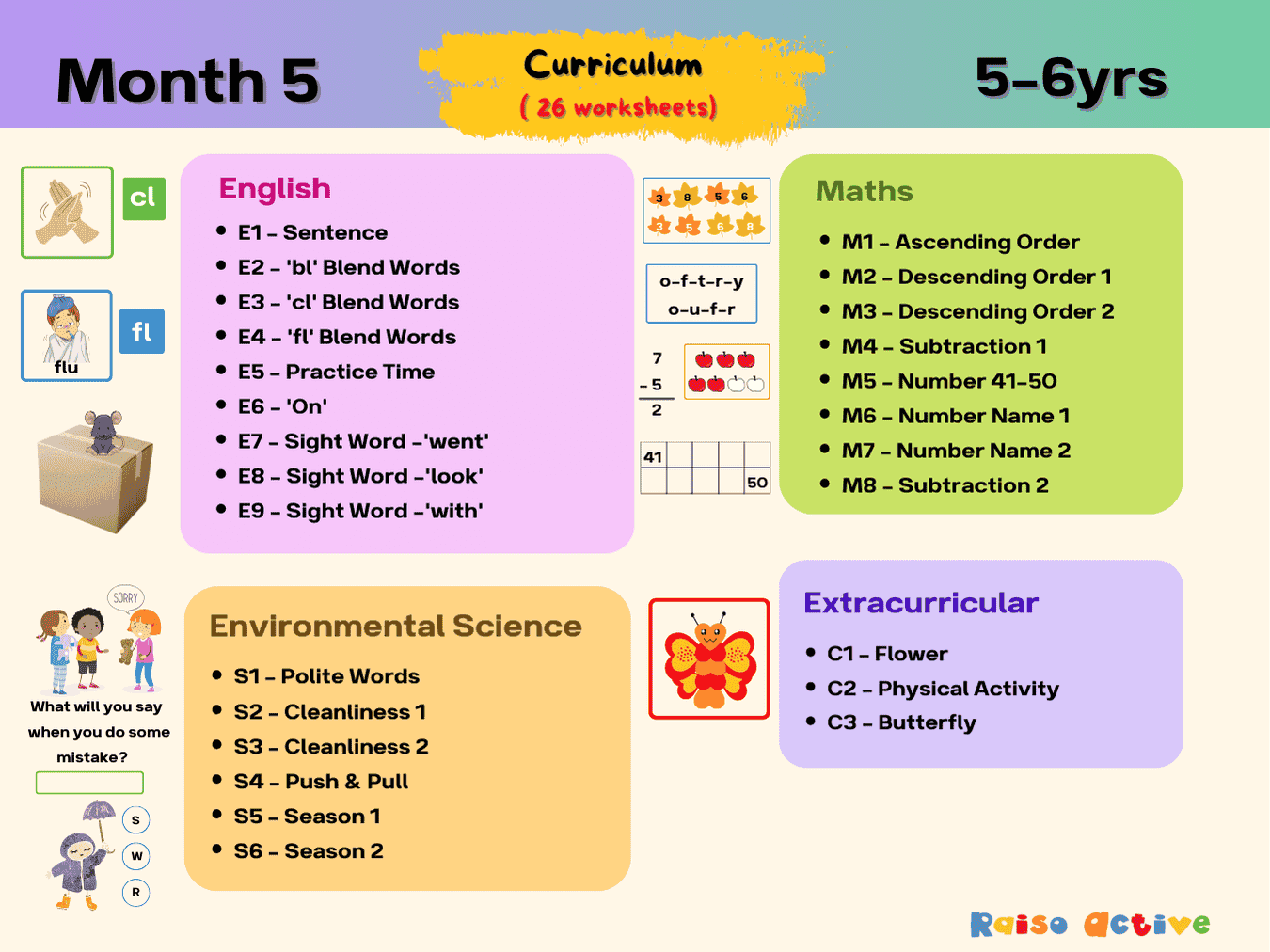
Part of the pack
Month 5: Play-based English Math Science | Ages 5-6
This is page 15 of the pack. Ages 5-6 · KindergartenAges 5-6 · Year 1Ages 5-6 · UKGAges 5-6

Made for your child
Counting to 10, made for your child
A maths pack with your child's name in it: pictures that explain, practice at three levels, puzzles and story sums about them. Print a new set whenever they finish.
Make a maths packFree preview · free for members
Curriculum
- Number Sense > Number Sequencing
How to use this worksheet
Have your child cut out each numbered puzzle piece along the dotted lines, keeping them all together so none get lost. Ask them to find the piece with the highest number first and place it down, then search for the next-lower number to place beside it. Continue this process, always looking for the next smaller number, until all pieces are arranged in a complete descending line. Once the picture is fully revealed, glue or tape the pieces into place in their correct order.
Materials needed
- Scissors
- Glue or Tape
Extension activities
- 1Count backward together from ten to one, then from twenty to one once your child is comfortable.
- 2Create your own descending-order puzzle using numbered index cards for your child to arrange.
- 3Practice descending order with real objects, like lining up different-sized toy cars from biggest to smallest number label.
- 4Play a countdown game, like counting down from five before a fun activity begins.
- 5Use a number line and ask your child to point to numbers in descending order as you call them out.

Written by
Hemsweta Jain · Teacher Cheena
MBA and Early Childhood Educator, teaching since 2014 · Founder of RaisoActive, Mumbai
Every RaisoActive worksheet is designed and checked by the founder before publishing.
Published · Last reviewed
More from Month 5: Play-based English Math Science | Ages 5-6

Number Names Worksheet: Writing and Matching Numbers 41-50
Ages 4-6 · Pre-K–KindergartenAges 4-6 · Reception–Year 1Ages 4-6 · LKG–UKGAges 4-6
Writing number names like 'forty-one' through 'fifty' next to their numerals helps children ages 4-6 connect the spoken word for a two-digit number to both its written word form and its digit form, deepening overall number sense in this specific range. This worksheet also revisits missing-number sequencing and color-coded boxes, reinforcing the same number range through several different, related tasks rather than one repetitive drill. Building fluency with number names in the 40s prepares children to confidently read numbers they encounter in daily life, from clocks to price tags.
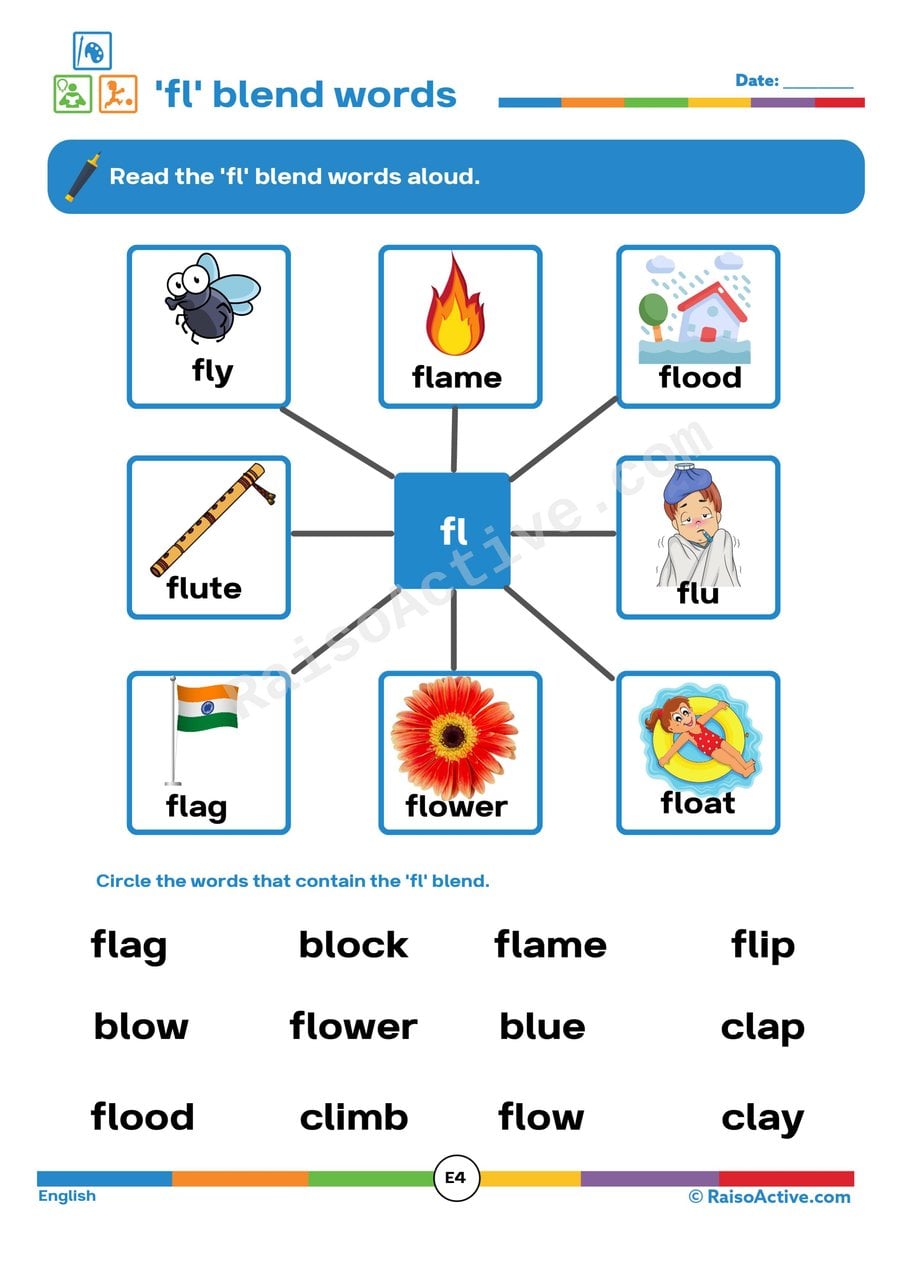
FL Blend Words Worksheet: Read, Circle, and Learn!
Ages 4-6 · Pre-K–KindergartenAges 4-6 · Reception–Year 1Ages 4-6 · LKG–UKGAges 4-6
Reading and circling words that begin with the 'fl' consonant blend teaches children ages 4-6 that two consonants together, like f and l, can combine into one smooth sound at the start of a word, a more advanced phonics concept than single-letter sounds. This kind of targeted blend practice builds the specific decoding skill needed to read common early words like 'flag,' 'fly,' and 'flower' without stumbling. Strengthening blend recognition now supports much smoother, more confident reading as vocabulary grows in later grades.
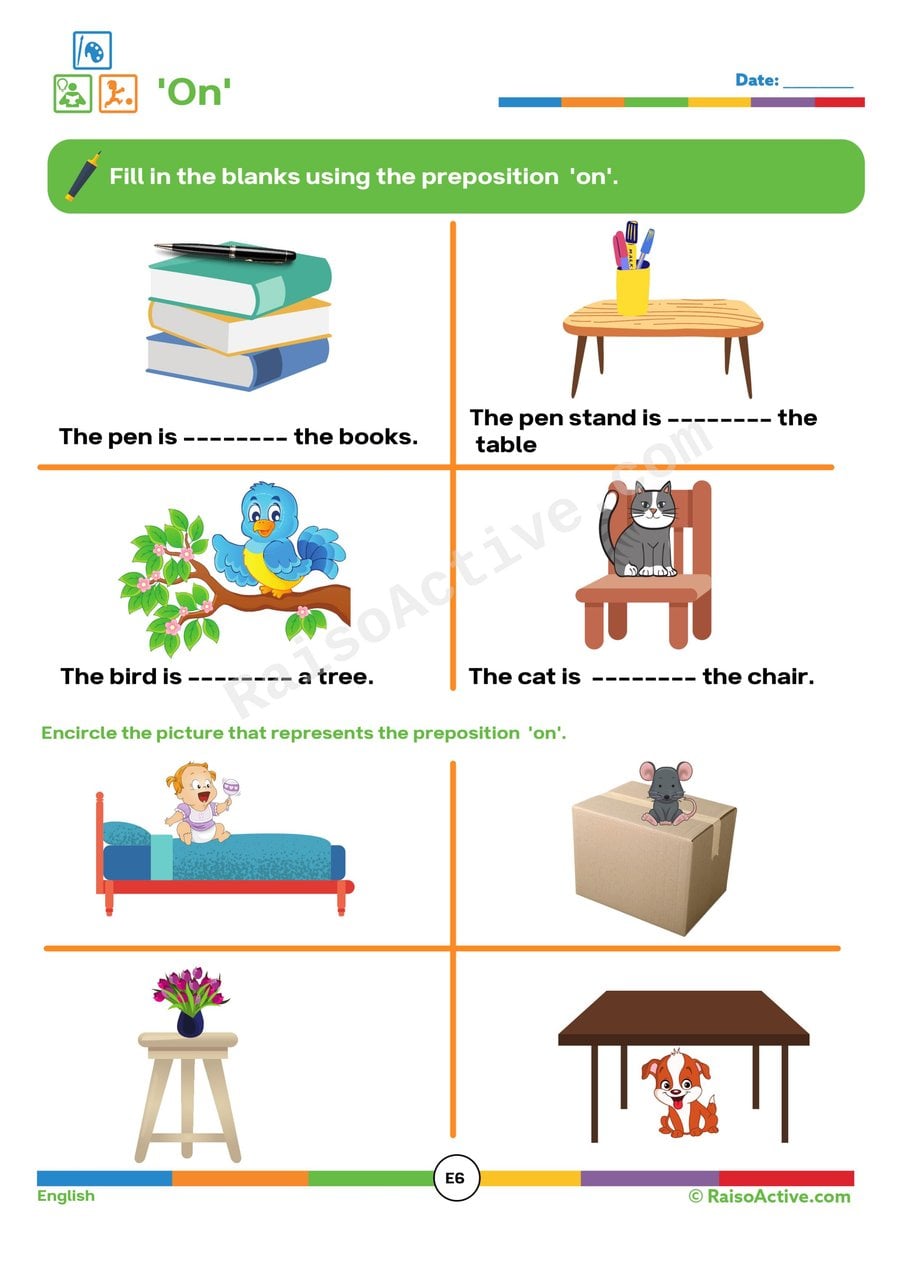
Preposition Fun: 'On' Worksheet for Early Learners
Ages 3-5 · Preschool–Pre-KAges 3-5 · Nursery–ReceptionAges 3-5 · Nursery–LKGAges 3-5
Practicing the preposition 'on' teaches children ages 3-5 how a small function word can precisely describe where one object sits in relation to another, an early and important step in building more complex, descriptive sentences. Filling in the blank with 'on' repeatedly across different sentences helps the word become automatic rather than something they have to think hard about each time. Circling the picture that correctly shows something 'on' another object also checks that your child truly understands the spatial meaning, not just the spelling of the word.

Number Path: Help the Boy Reach His House! (Numbers 41-50)
Ages 4-6 · Pre-K–KindergartenAges 4-6 · Reception–Year 1Ages 4-6 · LKG–UKGAges 4-6
This maze worksheet takes 4-6 year olds into two-digit number territory, asking them to recognize and sequence numbers 41 through 50 in order to trace a path — a step up in difficulty from single-digit counting since two-digit numbers are easy to reverse or confuse (41 versus 14). Tracing the connecting line also keeps pencil control and hand-eye coordination in play alongside the number work, and the payoff of guiding the boy home gives the counting task a clear, motivating goal.
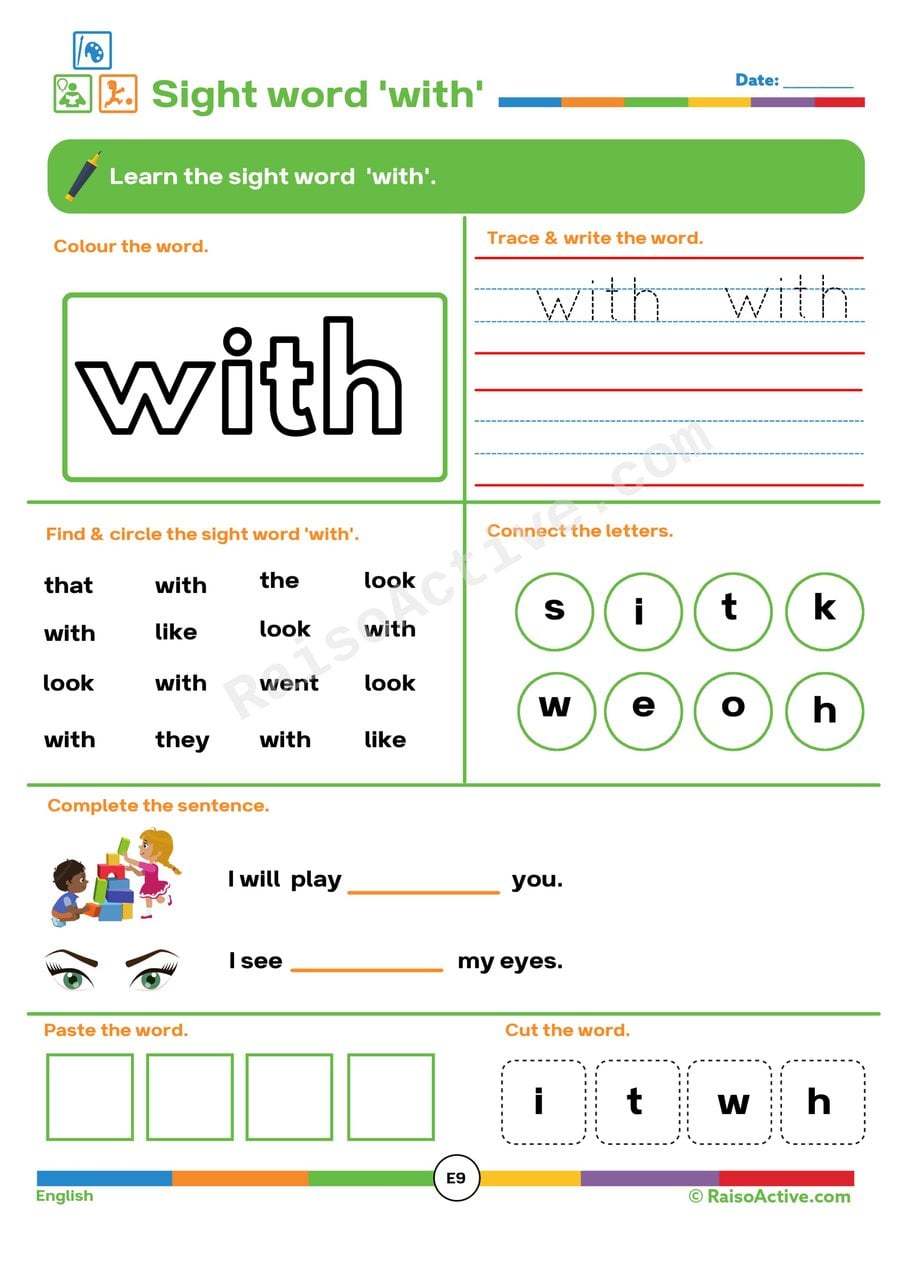
Sight Word 'With' Worksheet: Trace, Write, and Find!
Ages 4-5 · Pre-KAges 4-5 · ReceptionAges 4-5 · LKGAges 4-5
This worksheet gives 4-5 year olds repeated, varied practice with the sight word 'with' — coloring it, tracing and writing it, finding it in a list, completing a sentence, and cutting and pasting it — because sight words like 'with' don't follow simple sound-out rules and need to be recognized instantly by sight rather than decoded each time. That instant recognition is what lets a young reader move smoothly through a sentence instead of stumbling on common connector words.
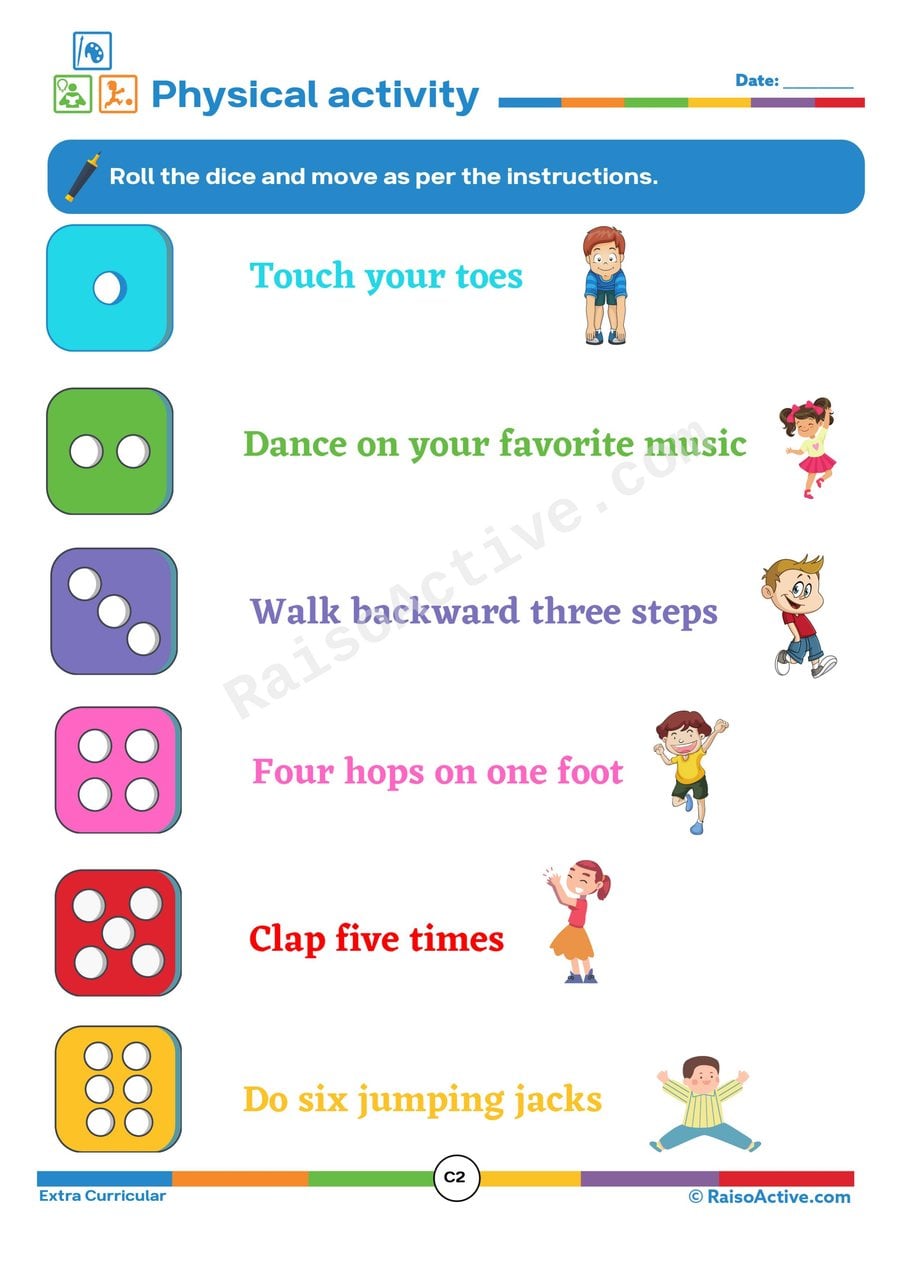
Physical Activity Dice Game Worksheet for Kids
Ages 3-5 · Preschool–Pre-KAges 3-5 · Nursery–ReceptionAges 3-5 · Nursery–LKGAges 3-5
Rolling a die and performing the matching action builds gross motor skills and number recognition together for children ages 3-5, since they must first read the number rolled before they can act on it. Following the sequence of steps also strengthens listening comprehension and the ability to carry out multi-step instructions.

Subtraction Worksheet: Count and Subtract with Fun Objects!
Ages 4-6 · Pre-K–KindergartenAges 4-6 · Reception–Year 1Ages 4-6 · LKG–UKGAges 4-6
This worksheet grounds subtraction in something 4-6 year olds can actually see and count — a group of objects being taken away — rather than starting with abstract numerals and symbols. Because your child has to count the starting group, physically account for the number being subtracted, and then count what's left, this builds real number sense about what subtraction means, not just a memorized fact.
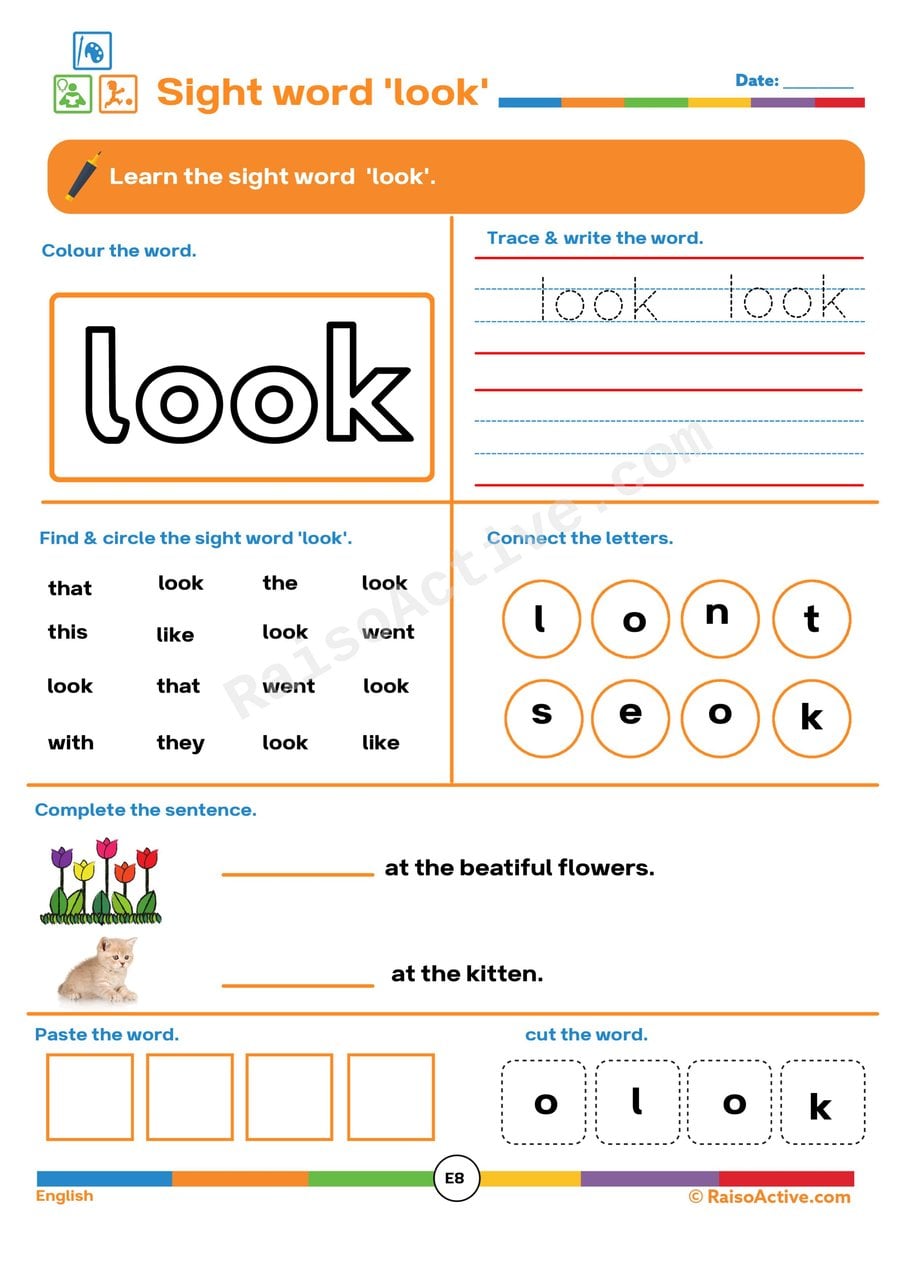
Look! Sight Word 'Look' Worksheet for Preschoolers
Ages 3-5 · Preschool–Pre-KAges 3-5 · Nursery–ReceptionAges 3-5 · Nursery–LKGAges 3-5
This worksheet builds automatic recognition of the sight word 'look' through six different activities — coloring, tracing, finding it in a list, spelling it by connecting letters, completing a sentence, and pasting it — which matters because sight words like 'look' don't sound out easily and have to be memorized by sight through repeated, varied exposure. Hitting the same word from six angles in one sitting is exactly the kind of repetition that turns a word from something your child sounds out slowly into one they recognize instantly.
Related worksheets
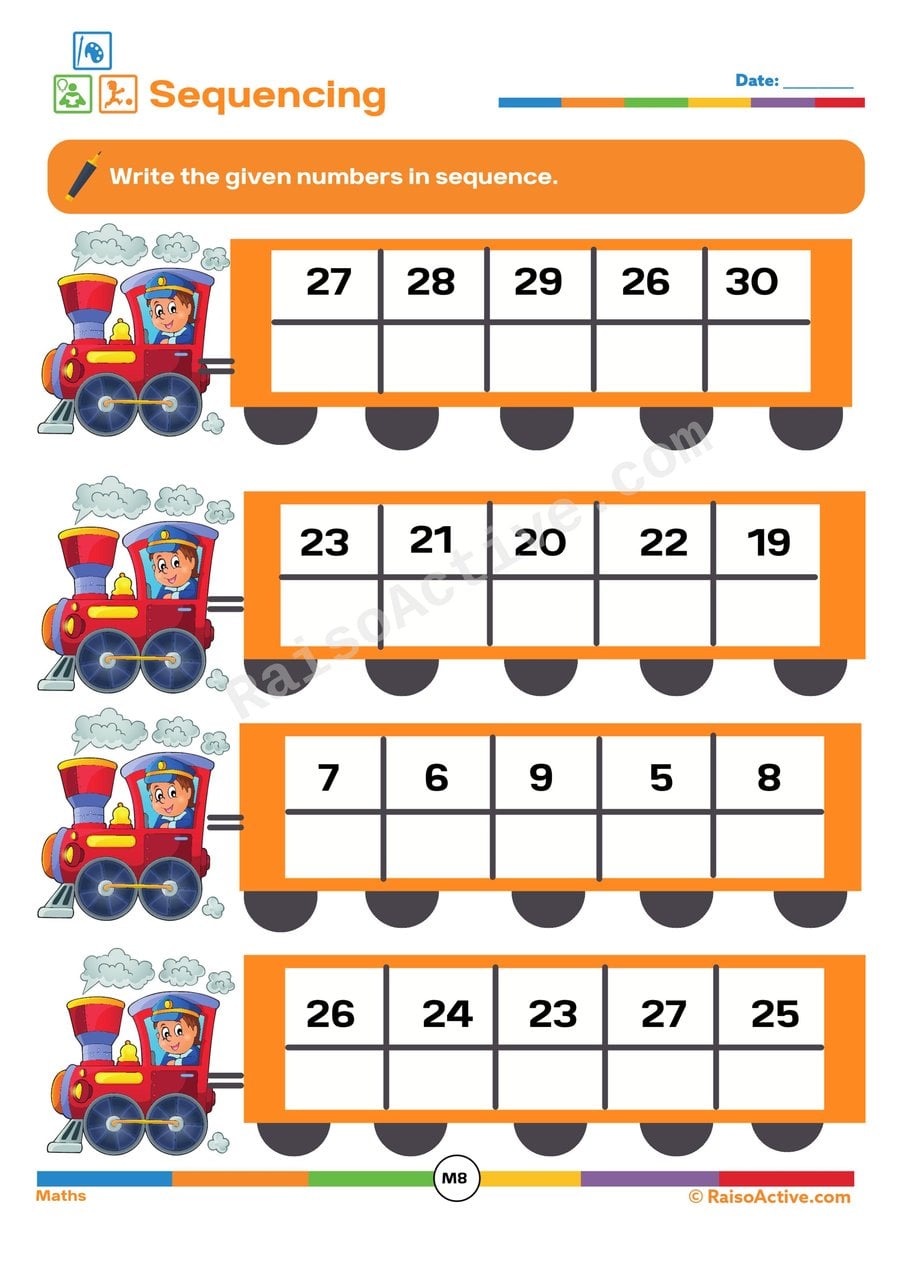
Number Sequencing Train Worksheet for Kids
Ages 4-6 · Pre-K–KindergartenAges 4-6 · Reception–Year 1Ages 4-6 · LKG–UKGAges 4-6
This train-themed sequencing worksheet challenges children ages 4-6 to fill in missing numbers scattered throughout a sequence, requiring them to recognize number order well enough to identify a gap anywhere in the run rather than only counting forward from the start. This deeper sequencing skill supports later math concepts like skip counting, addition, and number lines. Writing the missing numbers by hand, rather than just saying them aloud, also reinforces number formation alongside number order.

Recite Numbers Worksheet: Connect the Dots and Practice Number Sequencing!
Ages 3-5 · Preschool–Pre-KAges 3-5 · Nursery–ReceptionAges 3-5 · Nursery–LKGAges 3-5
Children ages 3-5 practice number sequencing and recitation as they connect numbered dots in order to reveal a hidden picture, reinforcing both number recognition and the ability to count forward smoothly without skipping. Saying each number aloud while connecting it also builds the verbal counting fluency children need before they can count objects accurately.

Sequencing Numbers Train Worksheet for Preschoolers
Ages 4-5 · Pre-KAges 4-5 · ReceptionAges 4-5 · LKGAges 4-5
This train-themed worksheet asks children ages 4-5 to fill in missing numbers within a given sequence, which builds a much deeper number sense than simply counting from one — they must recognize what number comes before or after a given value anywhere in the run. Practicing sequencing this way strengthens working memory and prepares children for later mental math skills like skip counting and addition. The train-car format also keeps the abstract task of ordering numbers visually organized and engaging.
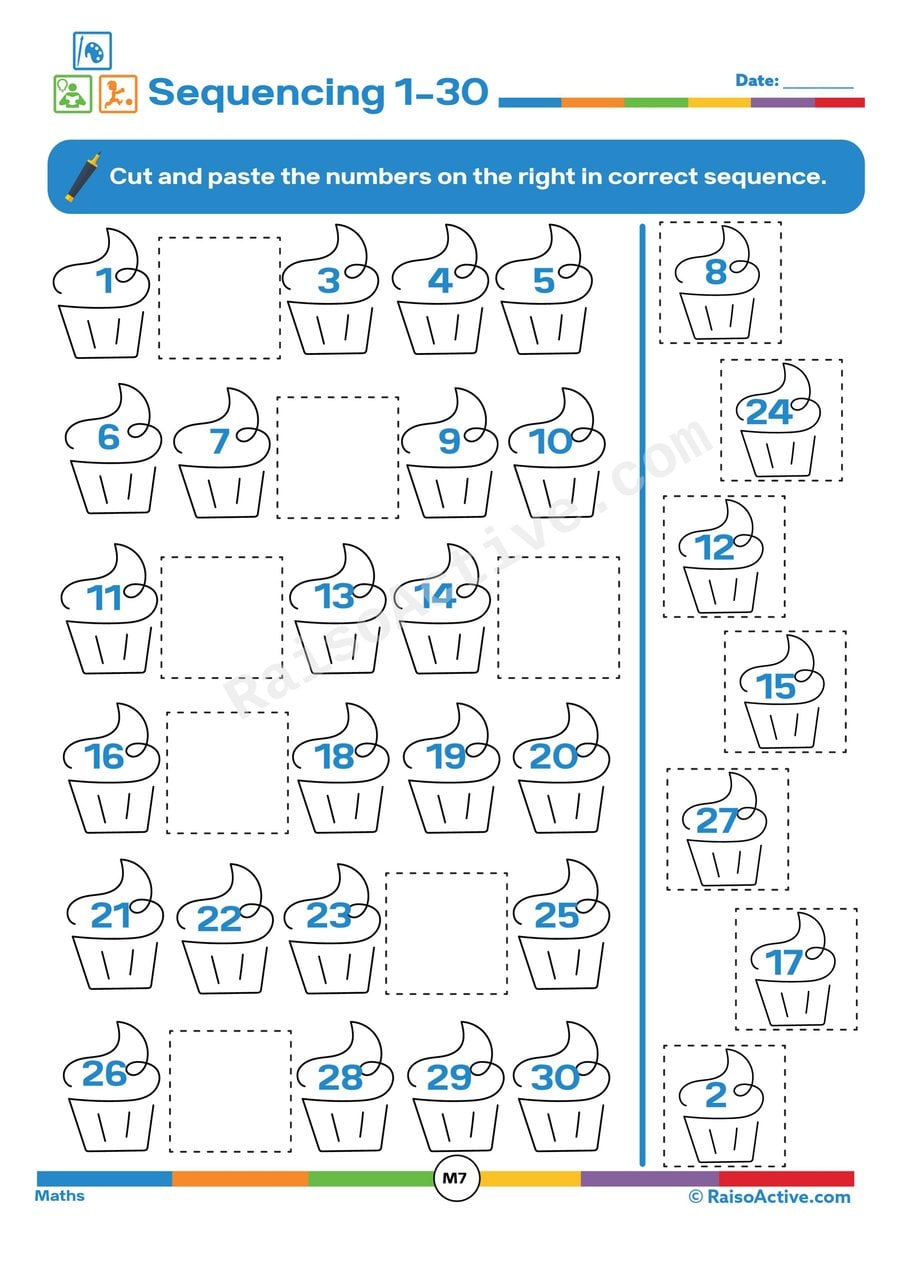
Cupcake Number Sequencing Worksheet 1-30
Ages 4-6 · Pre-K–KindergartenAges 4-6 · Reception–Year 1Ages 4-6 · LKG–UKGAges 4-6
Children ages 4-6 practice number sequencing from 1 to 30 by cutting out numeral pieces and pasting them onto cupcakes in ascending order, reinforcing both number recognition and the logic of 'what comes next' in the counting sequence. This bridges the gap between counting by rote and truly understanding number order, an essential step before children can skip-count or do simple addition.
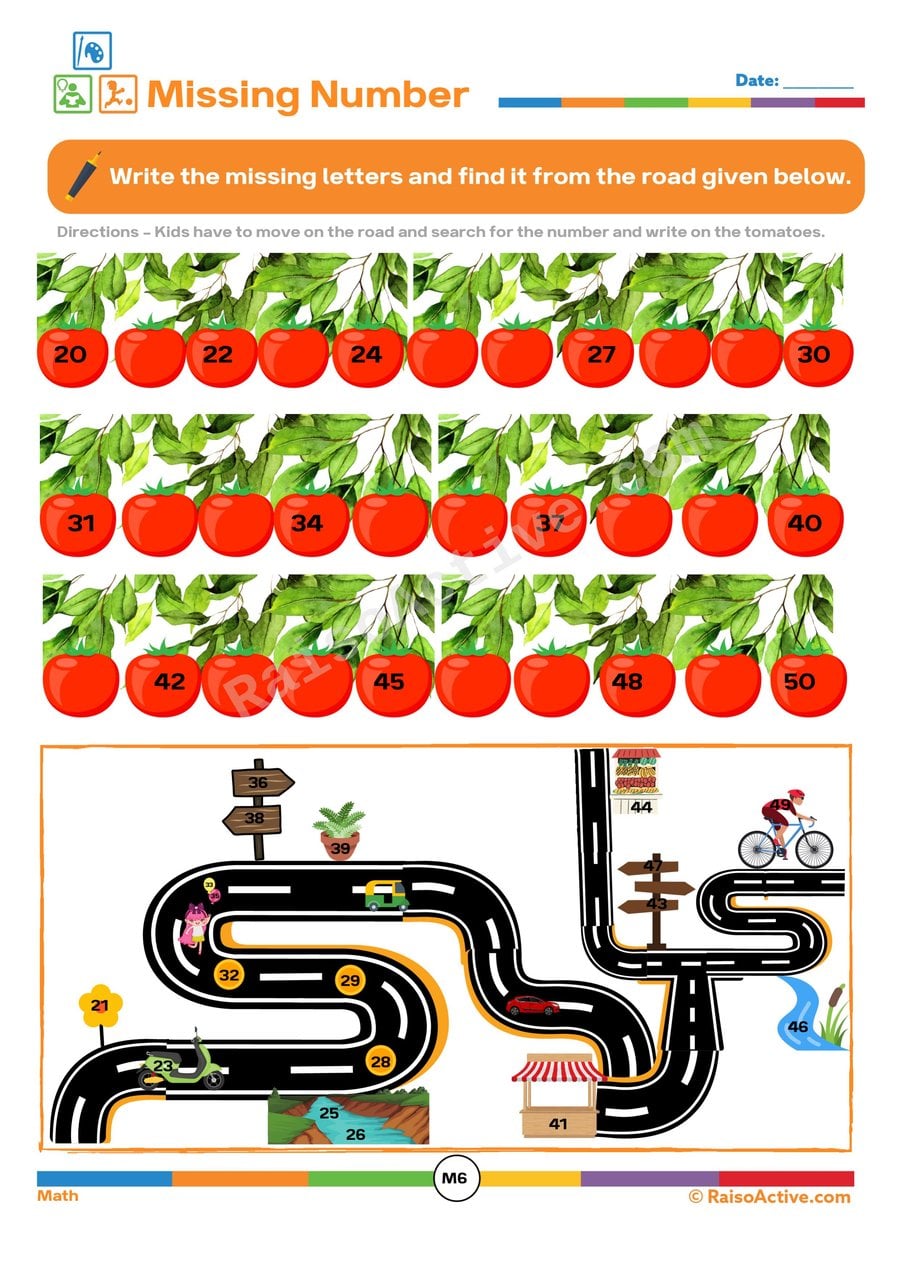
Missing Number Road Trip Worksheet for Kids
Ages 4-6 · Pre-K–KindergartenAges 4-6 · Reception–Year 1Ages 4-6 · LKG–UKGAges 4-6
Children ages 4-6 practice number sequencing by identifying which numbers are missing from a road of tomatoes, a skill that requires understanding what comes before and after a given number in counting order. This strengthens number recognition and prepares children to count confidently without needing to start from one every time.
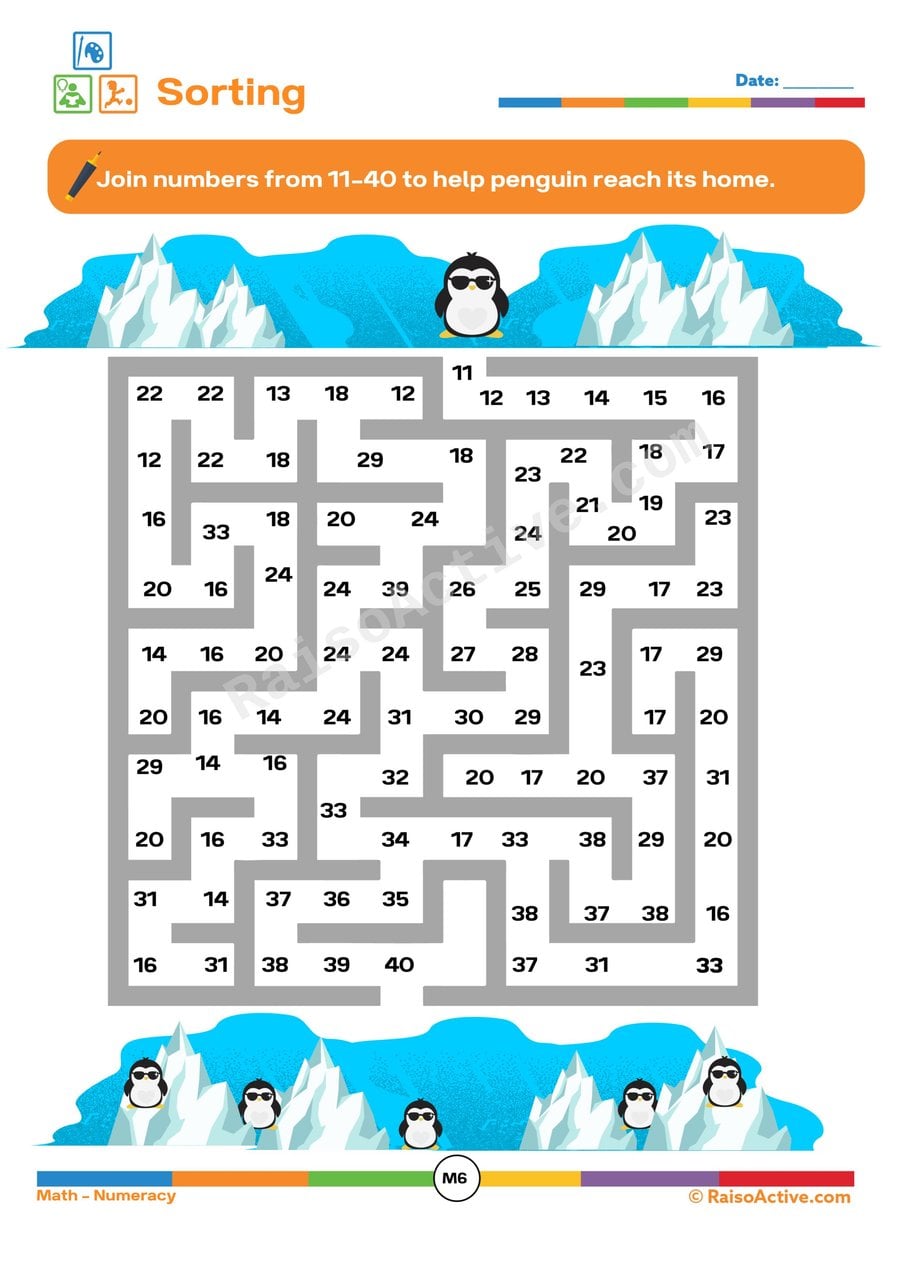
Penguin's Path: A Fun Sorting Worksheet for Kids!
Ages 4-6 · Pre-K–KindergartenAges 4-6 · Reception–Year 1Ages 4-6 · LKG–UKGAges 4-6
This maze worksheet has 4-6 year olds trace a path through numbers 11 to 40, building both number sequencing across a wider range and the fine motor control needed to draw a connected line dot to dot. Because the range spans several decades, your child gets real practice with the trickiest part of early counting — the transitions between decades (19 to 20, 29 to 30) — while the penguin's journey gives the task a clear, motivating goal.

Number Sequencing Worksheet: Practice Counting and Ordering Numbers!
Ages 4-5 · Pre-KAges 4-5 · ReceptionAges 4-5 · LKGAges 4-5
This worksheet gives children ages 4-5 focused practice writing numerals in order by filling in the missing numbers within several different counting sequences. Unlike simple counting aloud, writing each numeral by hand forces children to connect the spoken number word to its correct written symbol, reinforcing both number recognition and early handwriting control.

Before and After Numbers Worksheet for Preschoolers
Ages 4-5 · Pre-KAges 4-5 · ReceptionAges 4-5 · LKGAges 4-5
This worksheet builds number sequencing skills in children ages 4-5 by asking them to figure out which number comes immediately before and immediately after a given number. Understanding a number's position relative to its neighbors is an essential precursor to skip counting, addition, and subtraction, since it trains children to think of numbers as an ordered line rather than isolated symbols.
Guides for this topic

Number Formation Rhymes 0–9 and How to Fix Reversals
Original number formation rhymes for 0–9, the correct stroke order for each digit, why 3, 5 and 7 get reversed most often, and multisensory fixes that work.

Christmas and Winter Activities That Combine Fun and Learning: Creating Magical Educational Experiences
Discover Christmas and winter activities that combine festive fun with real learning. Crafts, counting, literacy, and printable worksheets for ages 2 to 8 — perfect for home and school.
Age-Appropriate Halloween Learning Activities: Balancing Spooks and Skills for Young Learners
Discover fun, age-appropriate Halloween learning activities for young children. Spooky crafts, counting games, literacy ideas, and printable worksheets for ages 2 to 8.
Reviews
Every worksheet for ages 3–5, no watermark
Members download the full library of 1,000+ worksheets and every activity pack without watermarks or daily limits. One year costs ₹999 in India or $20 elsewhere.
See membership plansOr download any worksheet free with a watermark (5 a day).