Gr Blend Words Worksheet: Circle the 'gr' Words!
Learning to recognize the 'gr' consonant blend, as in 'grass,' 'green,' or 'grape,' trains children's ears to hear two consonant sounds pressed together at the start of a word, a more advanced phonics skill than single-letter sounds. For ages four to six, mastering common blends like 'gr' significantly expands the number of words they can decode independently when reading.
Part of the pack
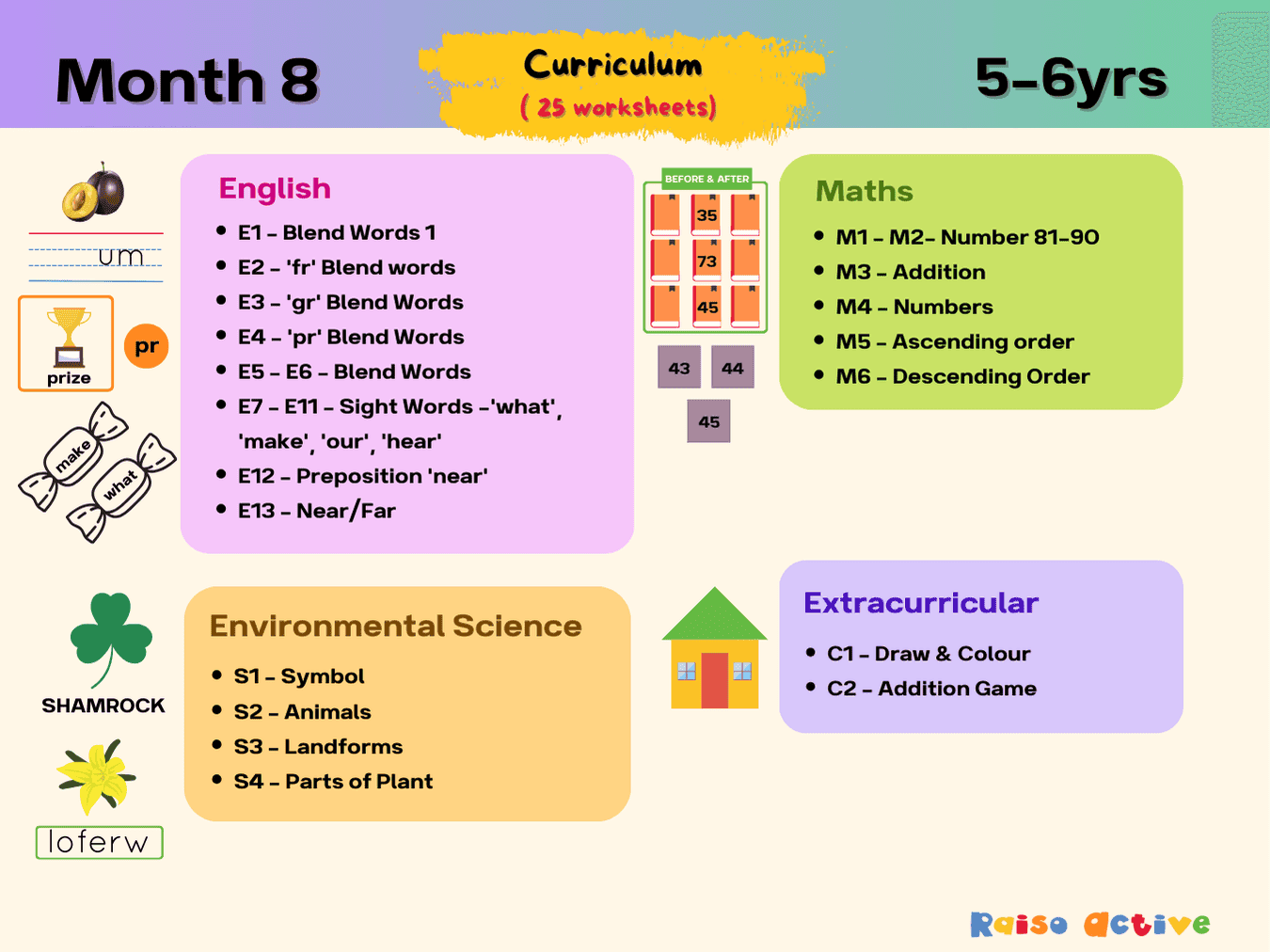
Month 8: Literacy, Math, Science Foundations | Ages 5-6
This is page 6 of the pack. Ages 5-6 · KindergartenAges 5-6 · Year 1Ages 5-6 · UKGAges 5-6
Made for your child
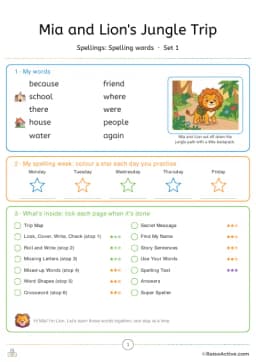
Spelling practice, made for your child
Their own spelling words turned into a pack: trace or look-cover-write-check, roll and write, a secret picture code, a word search, a crossword and a test, with their name in it.
Make a spelling packFree preview · free for members
Or start free: a word search with sight wordsCurriculum
- Phonics - Blends > Consonant Blends
How to use this worksheet
Read through the full list of words on the page together first, sounding out each one slowly so your child hears the 'guh-ruh' blend at the start. Have your child read each word again on their own, and circle every word that begins with the 'gr' blend. Go back through their circled answers together, double-checking that no non-'gr' words were accidentally included. Finish by having your child say all the circled words aloud one more time in a row.
Materials needed
- Pencil
- Crayons
Extension activities
- 1Have your child write the circled 'gr' words on a separate sheet of paper for extra handwriting practice.
- 2Draw a picture to match each 'gr' word they found, like a bunch of grapes or a green lawn.
- 3Go on a 'gr' word hunt around the house or yard, looking for anything whose name starts with that blend.
- 4Play a quick rhyming game using 'gr' words, like 'grow' and 'slow.'

Written by
Hemsweta Jain · Teacher Cheena
MBA and Early Childhood Educator, teaching since 2014 · Founder of RaisoActive, Mumbai
Every RaisoActive worksheet is designed and checked by the founder before publishing.
Published · Last reviewed
More from Month 8: Literacy, Math, Science Foundations | Ages 5-6
Near and Far Worksheet for Preschoolers
Ages 3-5 · Preschool–Pre-KAges 3-5 · Nursery–ReceptionAges 3-5 · Nursery–LKGAges 3-5
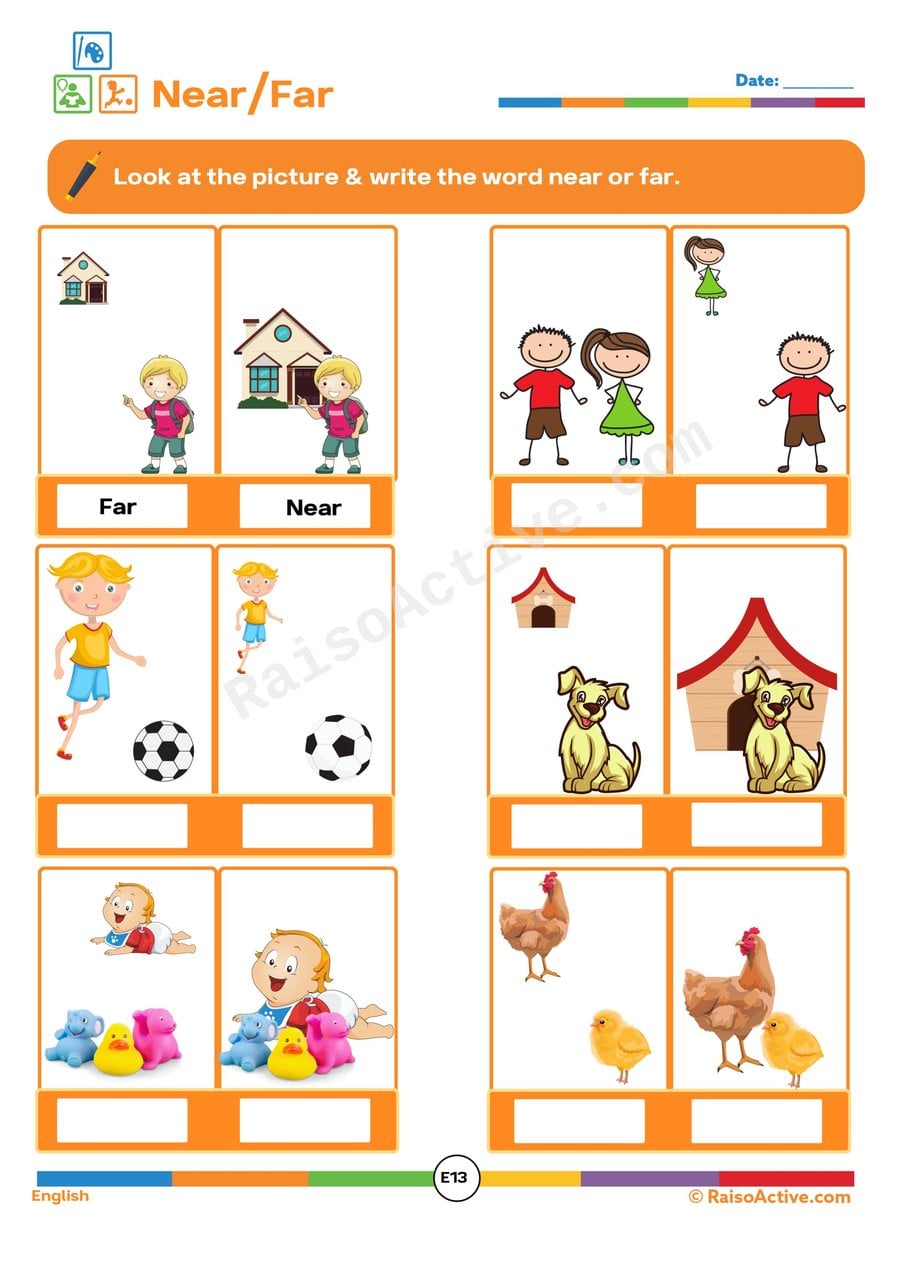
Understanding 'near' and 'far' introduces children ages 3-5 to relative distance, a spatial concept that supports later skills like reading maps, estimating measurement, and following directional instructions. This worksheet asks children to look at pictures and judge whether an object or person is positioned close by or at a distance, sharpening visual observation alongside vocabulary development. Because near and far are relative terms rather than fixed categories, this practice also introduces the idea that some concepts depend on comparison rather than having one single correct answer.

Match the Countries with Their Symbols Worksheet
Ages 4-6 · Pre-K–KindergartenAges 4-6 · Reception–Year 1Ages 4-6 · LKG–UKGAges 4-6
Children ages 4-6 build early social studies awareness by matching country flags to their well-known national symbols, connecting visual recognition with basic geography and cultural knowledge. This kind of matching exercise strengthens careful observation, since children must compare colors, shapes, and details across both the flag and the symbol image. It also plants the seed for understanding that different countries have distinct identities and traditions.
Parts of a Plant Worksheet: Unscramble and Match!
Ages 4-6 · Pre-K–KindergartenAges 4-6 · Reception–Year 1Ages 4-6 · LKG–UKGAges 4-6
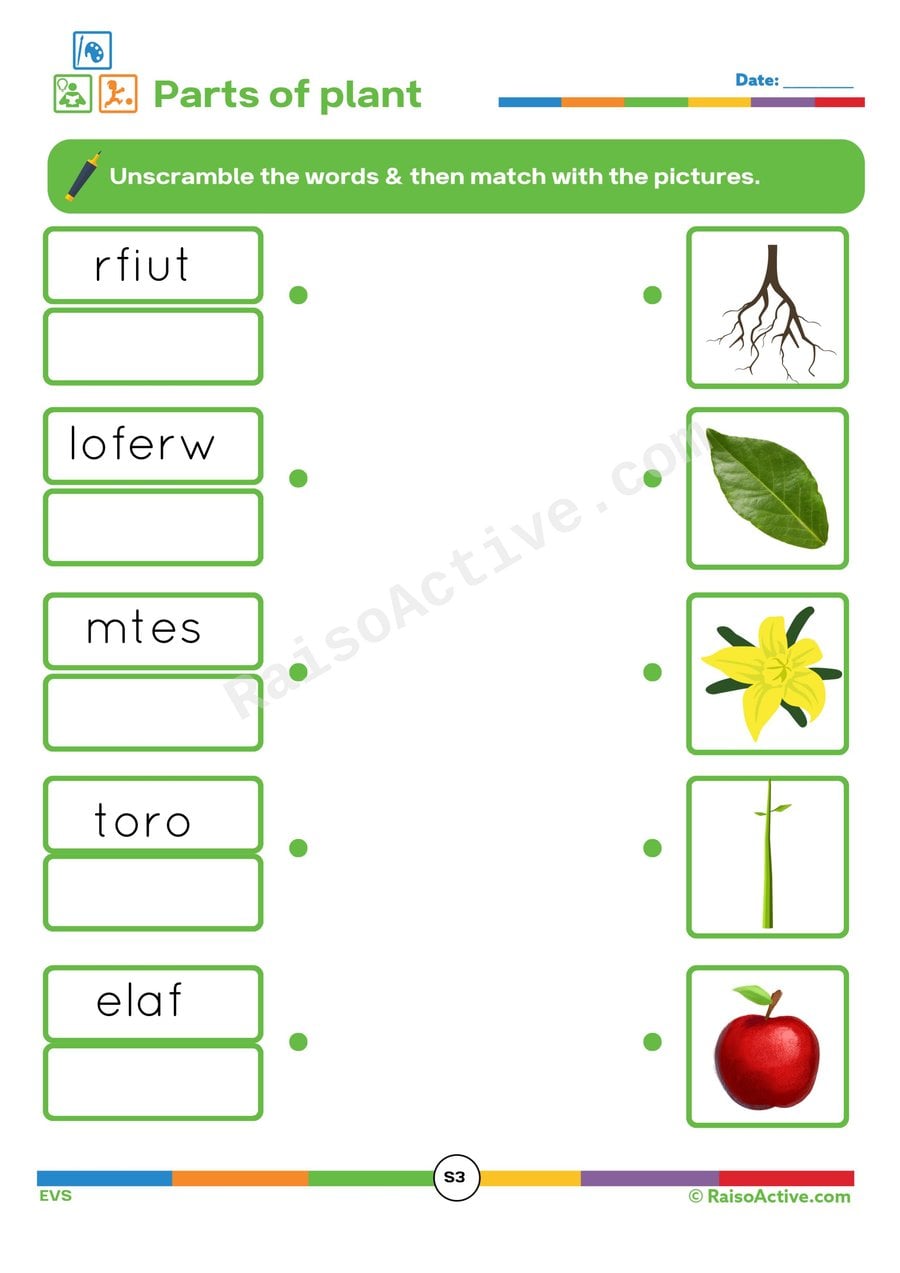
Children ages 4-6 learn the names of plant parts — like roots, stem, leaves, and flower — by unscrambling jumbled letters to spell each word and then matching it to the correct picture. Unscrambling requires recognizing familiar letter patterns and sounding out possibilities, a strong spelling and phonics challenge. Matching the unscrambled word to its picture reinforces plant science vocabulary in a hands-on, puzzle-like way.

Before, After, and Between Numbers Worksheet for Preschoolers
Ages 4-6 · Pre-K–KindergartenAges 4-6 · Reception–Year 1Ages 4-6 · LKG–UKGAges 4-6
This number sequencing worksheet gives children ages 4-6 practice identifying what comes before, after, and between given numbers, a skill that builds the flexible mental number line children need before tackling formal addition and subtraction. Unlike a matching or counting task, this version asks children to write in the missing numbers directly, which requires stronger independent recall of number order rather than recognition from a set of choices. Practicing all three directions — before, after, and between — on one page also reinforces that number sequences can be approached from multiple angles, not just forward counting.
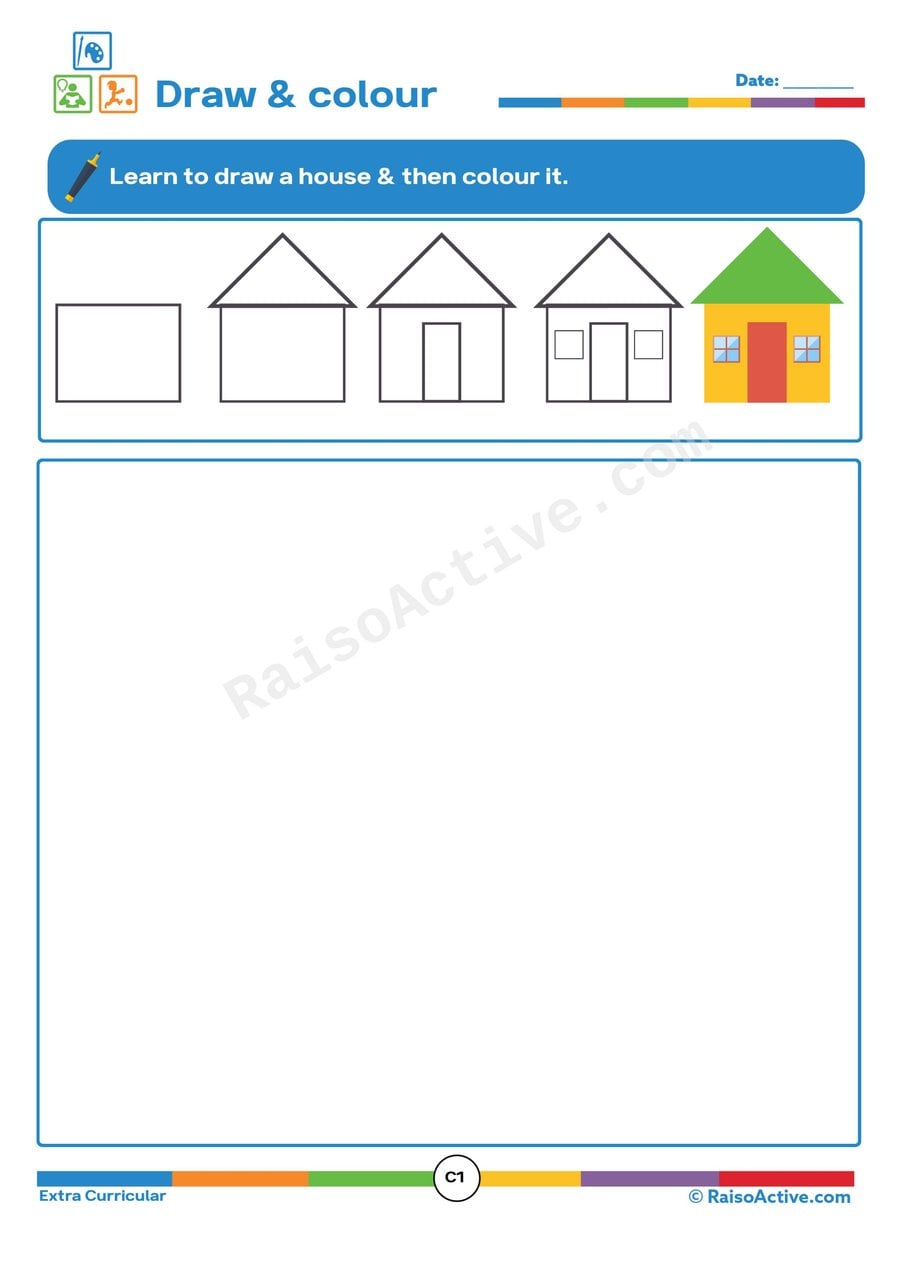
Draw and Color a House: A Fun Worksheet for Kids!
Ages 3-5 · Preschool–Pre-KAges 3-5 · Nursery–ReceptionAges 3-5 · Nursery–LKGAges 3-5
Children ages 3-5 build drawing confidence and step-by-step visual planning by following simple guided steps to construct a house shape, then adding color to complete the picture. Learning to build a picture from basic shapes, like a square, triangle, and rectangle, introduces early geometry concepts through creative expression. Coloring the finished house afterward continues strengthening fine motor control and thoughtful color choice.

Learn to Read: Sight Word 'Hear' Worksheet for Preschoolers
Ages 3-5 · Preschool–Pre-KAges 3-5 · Nursery–ReceptionAges 3-5 · Nursery–LKGAges 3-5
'Hear' is a sight word children ages 3-5 encounter often in early books, and its spelling doesn't clearly match its sound, so children need repeated exposure to recognize it instantly rather than sound it out each time. This worksheet reinforces the word through five different activities — coloring, searching, tracing, sentence completion, and cut-and-paste spelling — which research on early literacy shows builds much stronger retention than repeating a single format. Because 'hear' is often confused with the similar-sounding word 'here,' practicing it in full sentences also helps children start to notice the meaning difference between the two.

Wild or Domestic? Animal Sorting Worksheet for Kids
Ages 3-5 · Preschool–Pre-KAges 3-5 · Nursery–ReceptionAges 3-5 · Nursery–LKGAges 3-5
Preschoolers ages 3-5 practice classifying animals into wild and domestic categories, an early science skill that builds understanding of how living things relate to their environment and to humans. Cutting, sorting, and labeling each animal with 'W' or 'D' reinforces the vocabulary of the two categories while strengthening fine motor skills through scissor and glue work. This classification task is a foundational step toward broader scientific thinking about categories and groups.
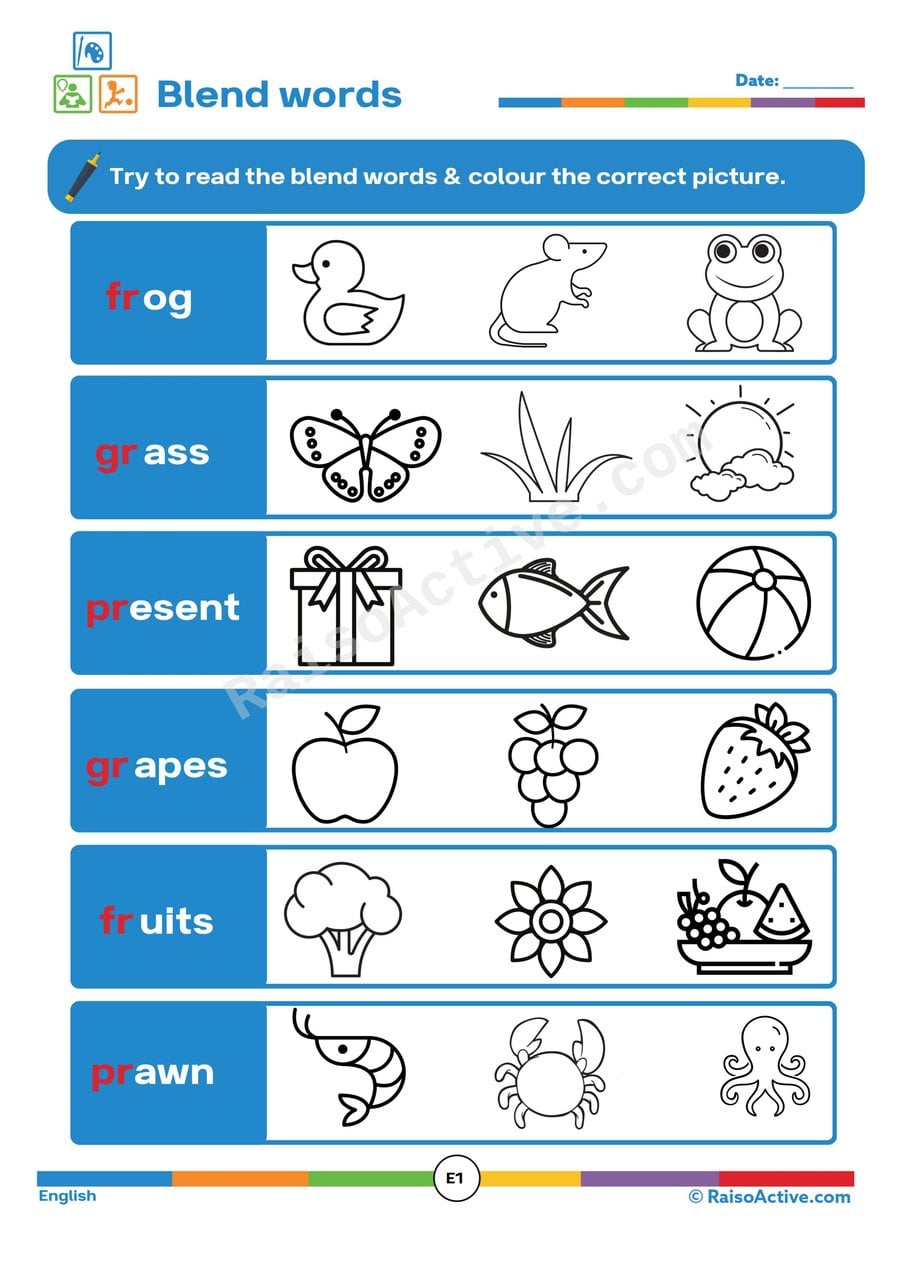
Blend Words Coloring Worksheet for Preschoolers
Ages 4-6 · Pre-K–KindergartenAges 4-6 · Reception–Year 1Ages 4-6 · LKG–UKGAges 4-6
Consonant blends, like 'bl,' 'st,' or 'fr,' require children ages 4-6 to read two consonant sounds together without a vowel between them, which is genuinely more demanding than single-consonant CVC words and represents an important next step in phonics progression. This worksheet asks children to read a blend word and then color the picture that matches it, giving an immediate visual check on whether they decoded the blend correctly. Because coloring is the reward for accurate reading, the activity keeps repeated blend practice feeling engaging rather than repetitive.
Related worksheets
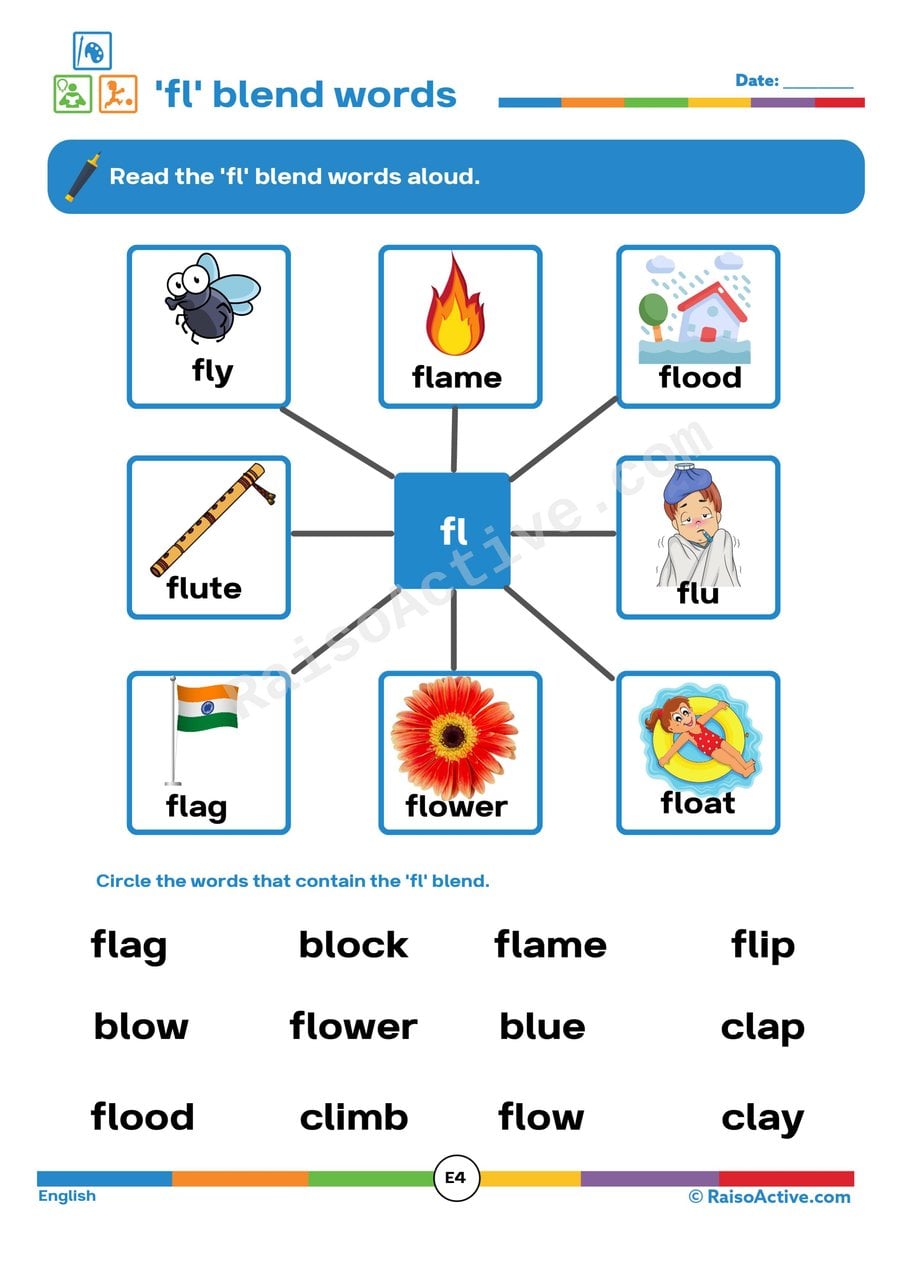
FL Blend Words Worksheet: Read, Circle, and Learn!
Ages 4-6 · Pre-K–KindergartenAges 4-6 · Reception–Year 1Ages 4-6 · LKG–UKGAges 4-6
Reading and circling words that begin with the 'fl' consonant blend teaches children ages 4-6 that two consonants together, like f and l, can combine into one smooth sound at the start of a word, a more advanced phonics concept than single-letter sounds. This kind of targeted blend practice builds the specific decoding skill needed to read common early words like 'flag,' 'fly,' and 'flower' without stumbling. Strengthening blend recognition now supports much smoother, more confident reading as vocabulary grows in later grades.
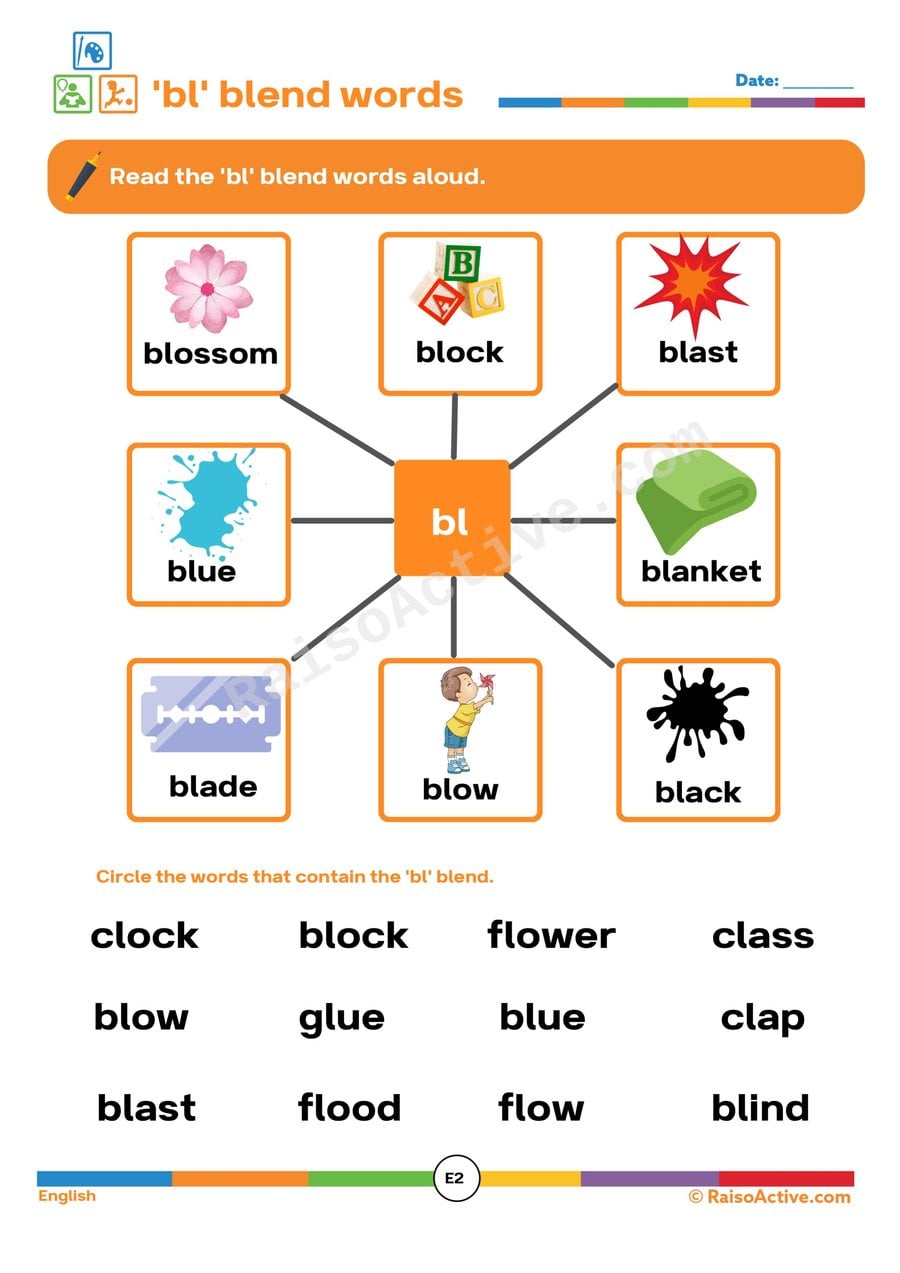
'bl' Blend Words Worksheet: Read, Circle, and Learn!
Ages 4-6 · Pre-K–KindergartenAges 4-6 · Reception–Year 1Ages 4-6 · LKG–UKGAges 4-6
Consonant blends like 'bl' require a child to smoothly join two sounds together (b + l) rather than saying them as separate beats, which is a distinct and harder phonics skill than single-letter sounds. This worksheet gives 4-6 year olds repeated practice reading words that start with 'bl' — like black, blue, or block — and then applying that recognition by circling the matching words, reinforcing the blend both by ear and by sight.
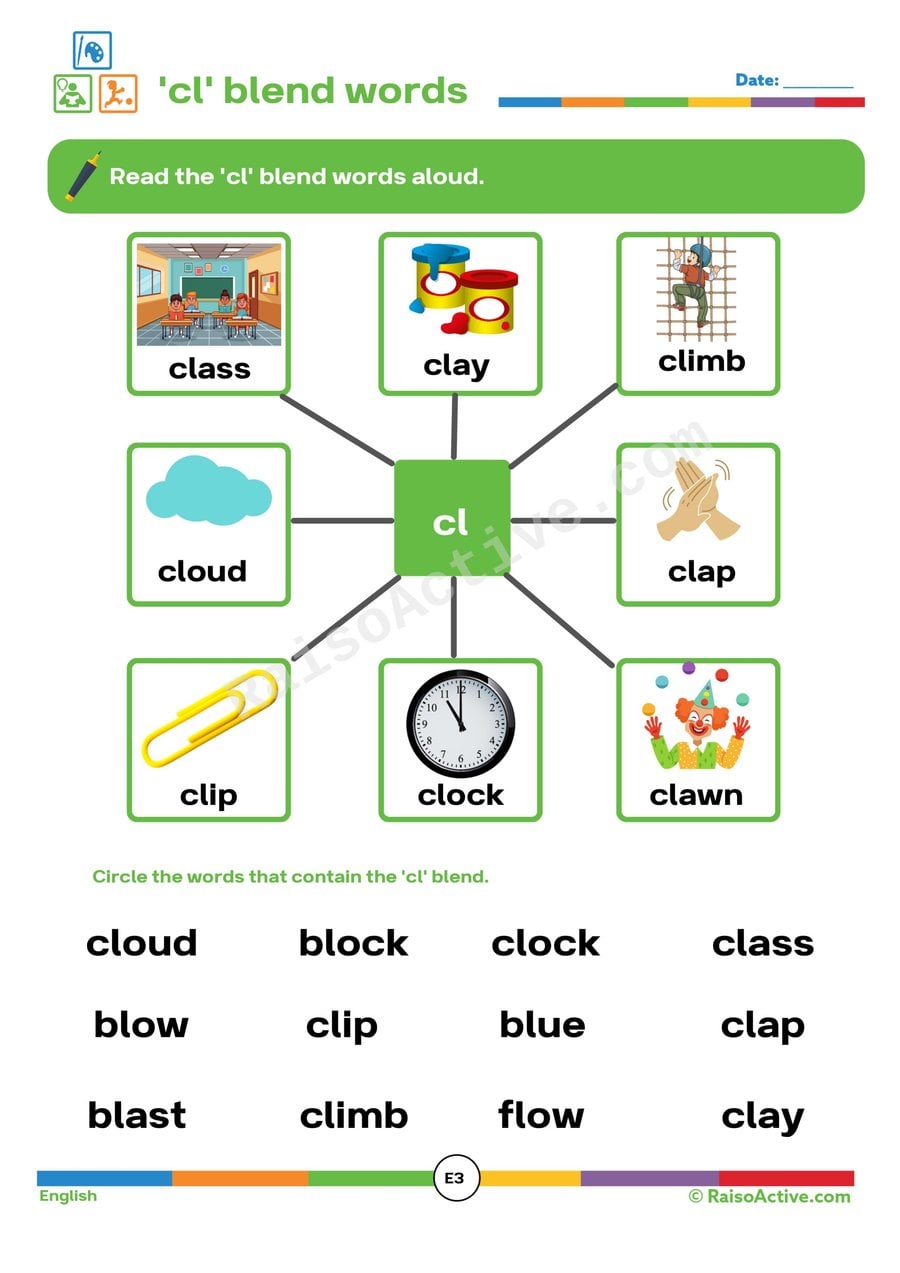
Cl Blend Words Worksheet: Read and Circle!
Ages 4-6 · Pre-K–KindergartenAges 4-6 · Reception–Year 1Ages 4-6 · LKG–UKGAges 4-6
Reading and circling words that begin with the 'cl' consonant blend helps children ages 4-6 hear that two consonants pressed together, like c and l, still combine into a single connected sound at the start of a word. This is a step up from single-letter phonics, requiring children to blend two consonant sounds smoothly rather than sounding them out separately. Recognizing blends like 'cl' in words such as 'clap' or 'cloud' builds the decoding fluency needed to read longer, less predictable words with confidence.

Circle the Correct Blend Worksheet for Preschoolers
Ages 3-5 · Preschool–Pre-KAges 3-5 · Nursery–ReceptionAges 3-5 · Nursery–LKGAges 3-5
This worksheet trains 3-5 year olds to discriminate between two similar-sounding consonant blends by listening to a picture's name and deciding which of two printed blends matches its beginning sound — a genuinely tricky listening task since blends like 'bl' and 'br' or 'cl' and 'cr' sound close together. Getting this right requires careful auditory attention rather than guessing, making it a solid stepping stone toward full blend-word reading.
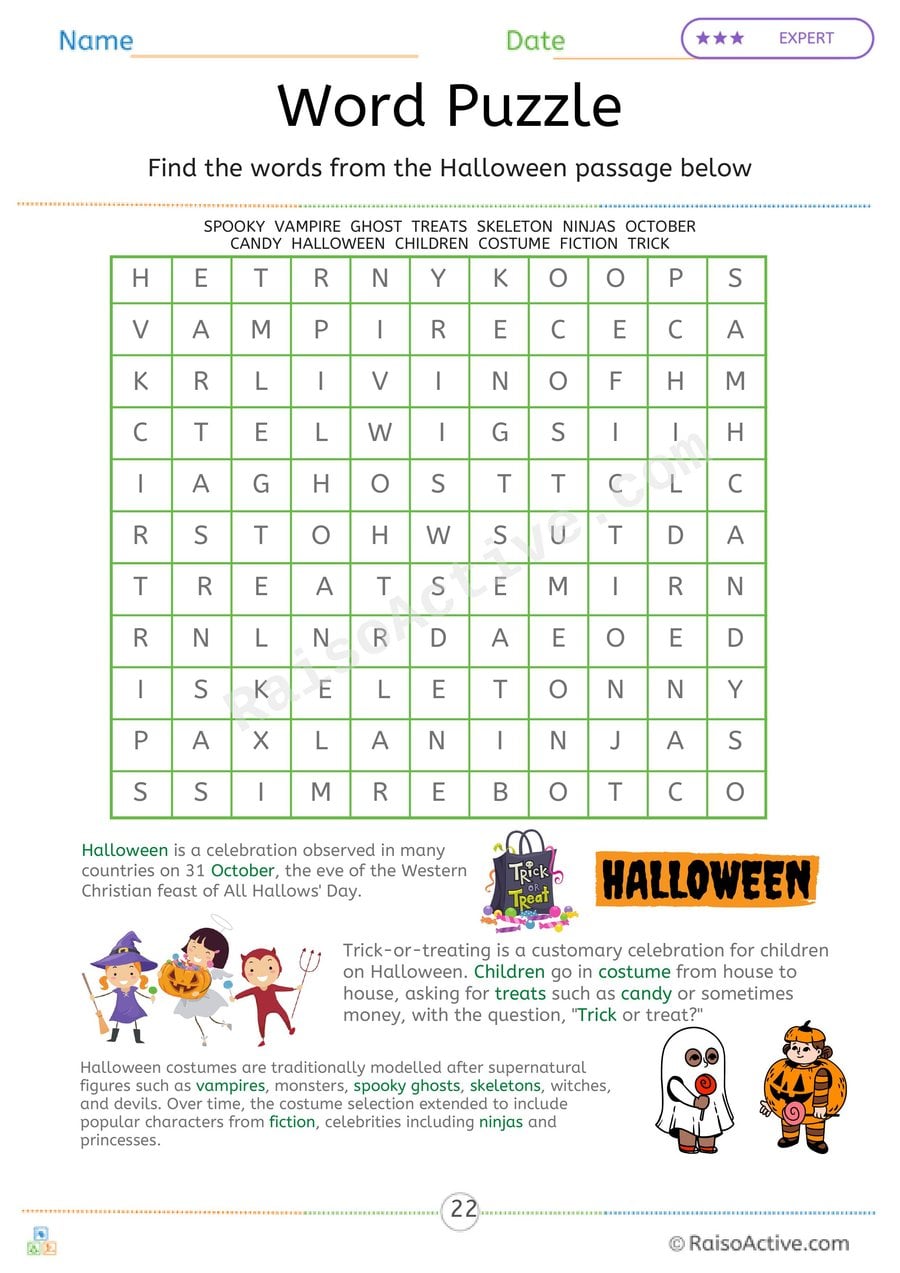
Halloween Word Search Worksheet for Kids
Ages 4-6 · Pre-K–KindergartenAges 4-6 · Reception–Year 1Ages 4-6 · LKG–UKGAges 4-6
This Halloween word search has children ages 4-6 scan a grid of letters to locate seasonal vocabulary words, building visual tracking skills and reinforcing the spelling of words like 'pumpkin,' 'ghost,' or 'witch' that they can recognize from the picture-based worksheets in this set. Searching systematically through rows and columns also strengthens the left-to-right, top-to-bottom scanning pattern used in reading.
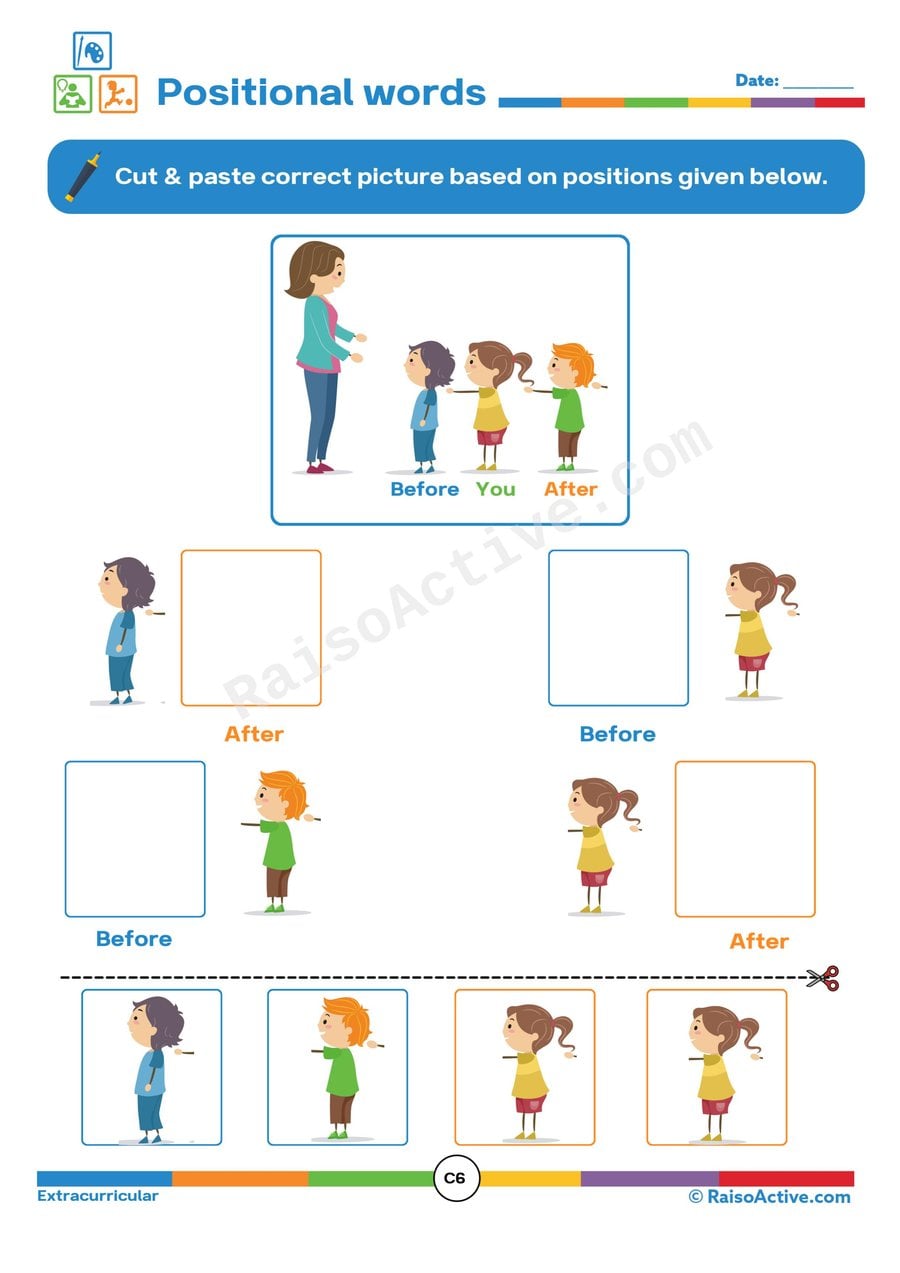
Positional Words Worksheet: Before, You, and After!
Ages 3-5 · Preschool–Pre-KAges 3-5 · Nursery–ReceptionAges 3-5 · Nursery–LKGAges 3-5
This cut-and-paste worksheet teaches children ages 3-5 to apply the positional words 'before' and 'after' to a sequence of objects or people, connecting an abstract language concept to a visual, hands-on task. Understanding order words like these is an important building block for later skills such as retelling stories in sequence and understanding time concepts like yesterday and tomorrow. Choosing and placing the correct picture also reinforces careful listening and following two-step directions.
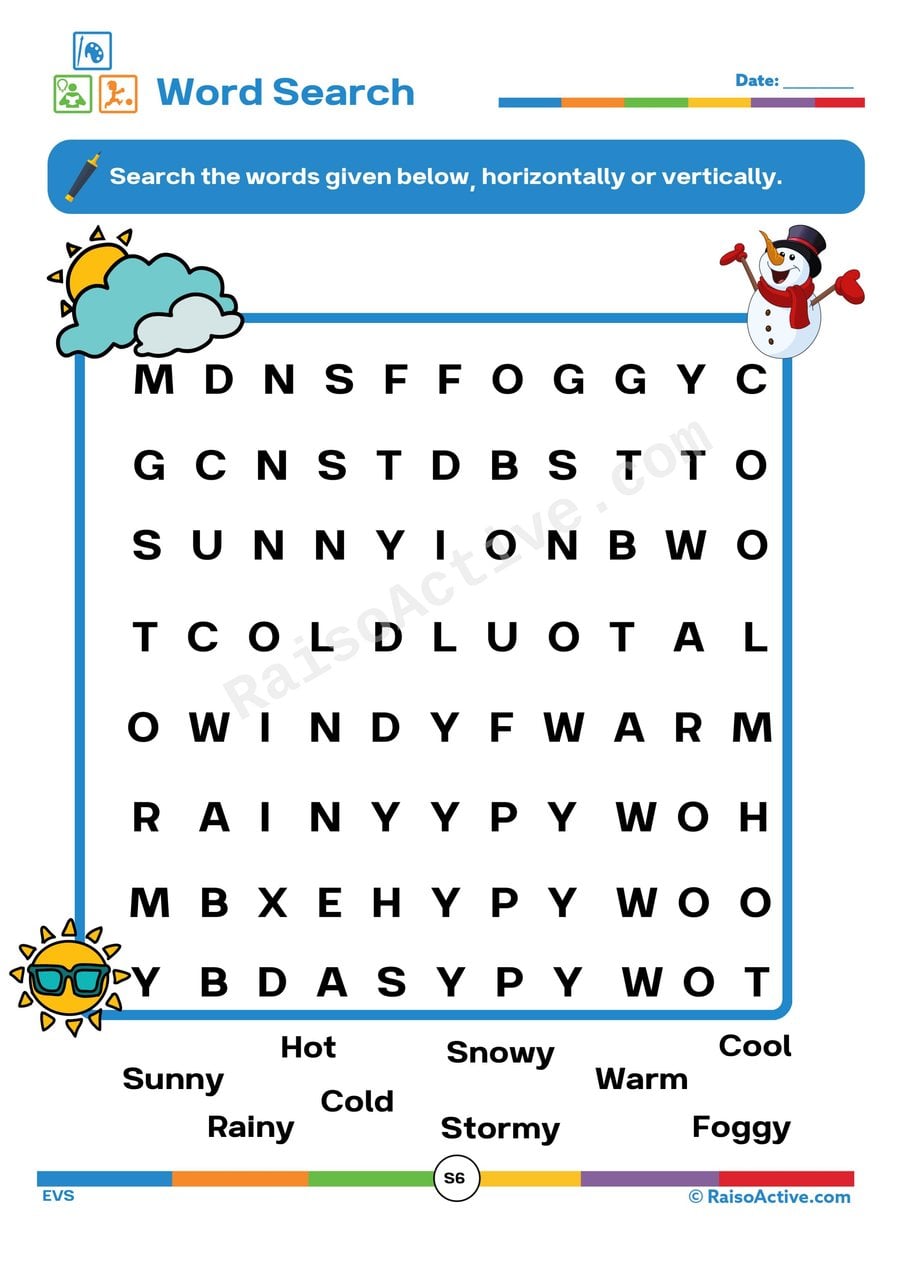
Weather Word Search Worksheet for Kids
Ages 4-6 · Pre-K–KindergartenAges 4-6 · Reception–Year 1Ages 4-6 · LKG–UKGAges 4-6
This word search strengthens children's visual scanning and spelling recognition for ages 4-6 by having them locate weather-related vocabulary — like rain, wind, or cloud — hidden horizontally and vertically within a letter grid. Searching for words in more than one direction adds an extra layer of challenge beyond a simple left-to-right search, training children's eyes to scan more flexibly across a grid. Pairing this puzzle-solving with familiar weather vocabulary also reinforces words children already use to describe daily conditions.
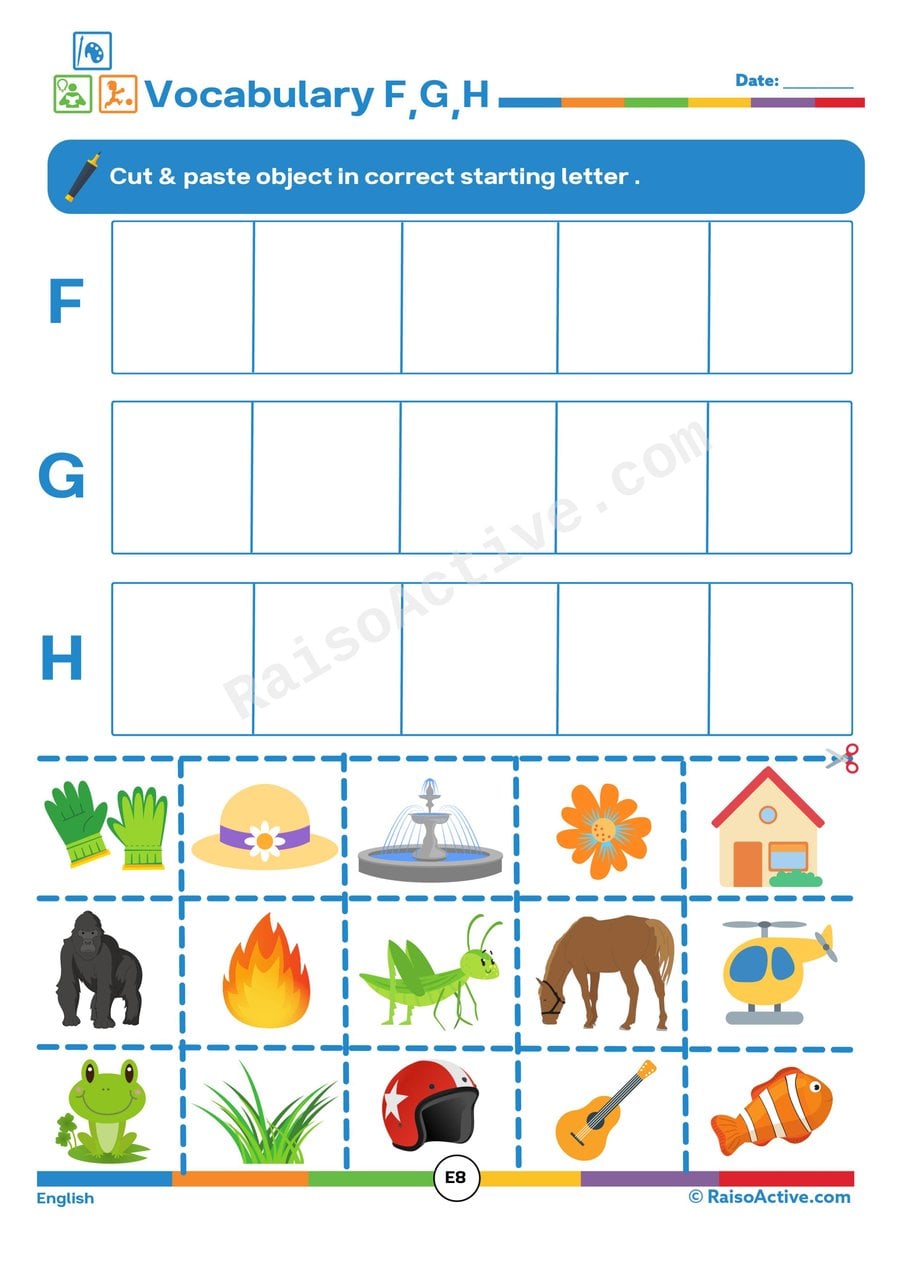
F, G, H Letter Sounds Cut and Paste Worksheet
Ages 4-5 · Pre-KAges 4-5 · ReceptionAges 4-5 · LKGAges 4-5
This worksheet builds phonemic awareness in children ages 4-5 by asking them to isolate the beginning sound of each picture and sort it under the correct letter — F, G, or H. Sorting across three letters at once, rather than just one, requires children to hold multiple sound-letter associations in mind and choose between them, which is a step up in difficulty from single-letter worksheets. This kind of comparative sound-sorting strengthens the phonics foundation needed for early reading.
Guides for this topic

How to Teach CVC Blending: A Step-by-Step Method That Works in Two Weeks
A step-by-step method for teaching CVC blending, covering continuous sounds, word families, common errors, and a 14-day plan that most children finish reading CVC words.
Phase 2 Phonics at Home: Sound Order, Blending Games, Worksheets
Phase 2 phonics at home: the five sound sets in order, oral blending, tricky words, a two-week routine, common mistakes, and free worksheets.

Reception Year Explained: EYFS Learning and How to Help at Home
A teacher's plain-English guide to the Reception Year: the seven areas of learning, Early Learning Goals, Phase 2/3 phonics, the RBA and home routines.
Reviews
Every worksheet for ages 4–6, no watermark
Members download the full library of 1,000+ worksheets and every activity pack without watermarks or daily limits. One year costs ₹999 in India or $20 elsewhere.
See membership plansOr download any worksheet free with a watermark (5 a day).