Circle the 'pr' Blend Words Worksheet for Preschoolers
Children ages 4-5 practice recognizing the 'pr' consonant blend at the beginning of words, like 'prize' and 'print', which requires blending two distinct sounds together fluently. Circling only the correct 'pr' words trains both auditory sound recognition and careful visual scanning of printed text. This kind of blend practice moves early readers beyond single-letter phonics into decoding more complex word beginnings.
Part of the pack
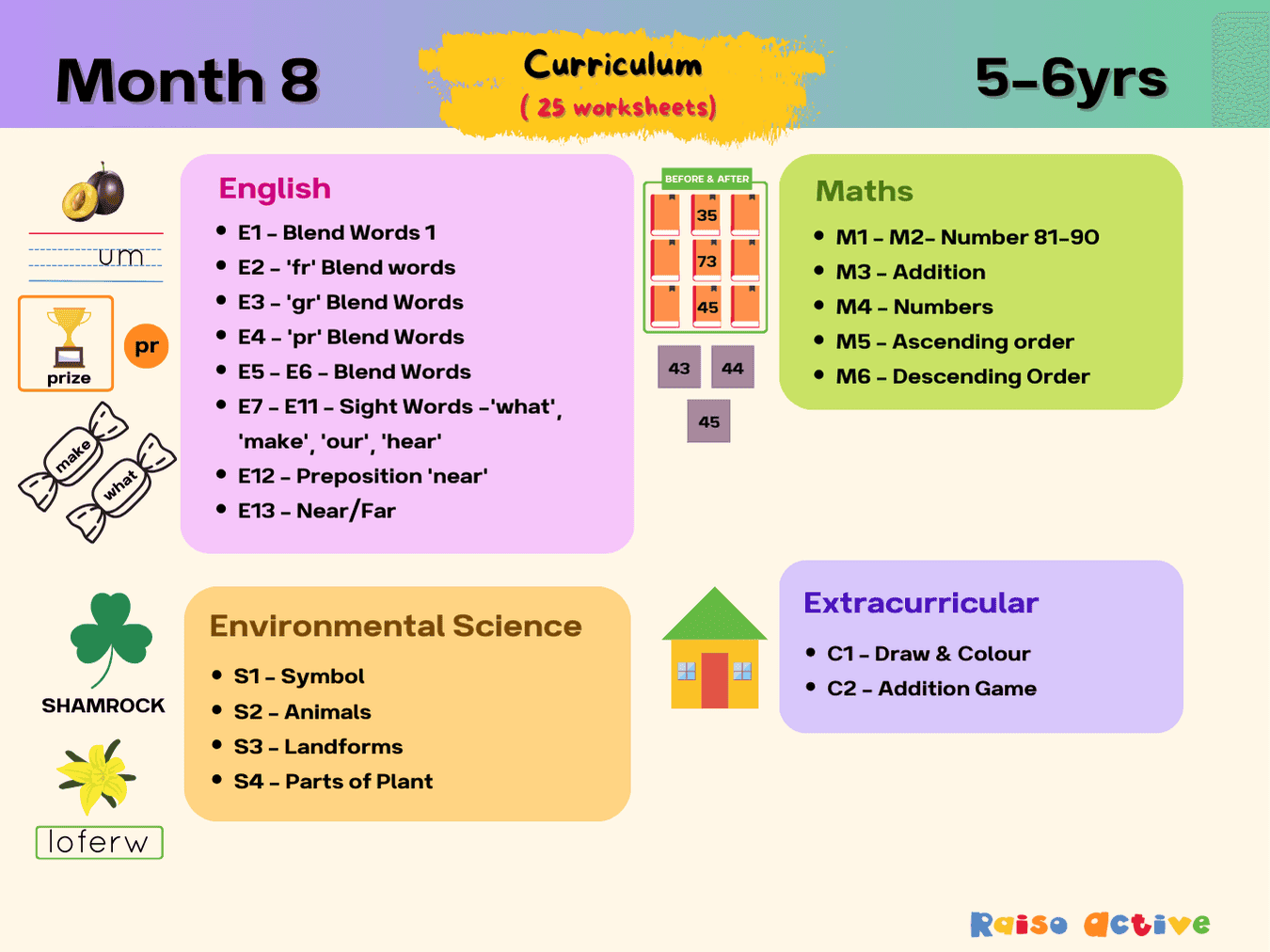
Month 8: Literacy, Math, Science Foundations | Ages 5-6
This is page 7 of the pack. Ages 5-6 · KindergartenAges 5-6 · Year 1Ages 5-6 · UKGAges 5-6
Made for your child
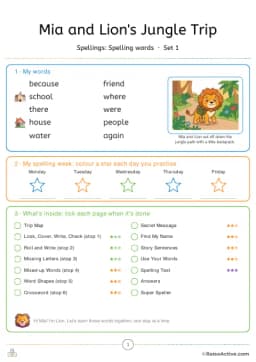
Spelling practice, made for your child
Their own spelling words turned into a pack: trace or look-cover-write-check, roll and write, a secret picture code, a word search, a crossword and a test, with their name in it.
Make a spelling packFree preview · free for members
Or start free: a word search with sight wordsCurriculum
- Phonics - Blends > Consonant Blends
How to use this worksheet
Read through the word list together first, having your child listen closely for the blended 'pr' sound at the start of each word. Ask them to say each word slowly, stretching the 'p' and 'r' sounds together, before deciding whether it belongs to the 'pr' family. Have them circle every word that starts with the 'pr' blend, skipping over any words that begin differently. Once finished, reread all the circled 'pr' words together as a final check.
Materials needed
- Pencil
- Crayons
Extension activities
- 1Write the circled 'pr' words on a separate sheet for extra handwriting practice.
- 2Draw a picture for a 'pr' word found on the worksheet, like a prize or a pretzel.
- 3Play an 'I spy' game listening for 'pr' blend words during the day, like 'pretty' or 'proud'.
- 4Make a short rhyme using two of the 'pr' words from the worksheet.
- 5Read a short story together and pause to point out any 'pr' blend words that appear.

Written by
Hemsweta Jain · Teacher Cheena
MBA and Early Childhood Educator, teaching since 2014 · Founder of RaisoActive, Mumbai
Every RaisoActive worksheet is designed and checked by the founder before publishing.
Published · Last reviewed
More from Month 8: Literacy, Math, Science Foundations | Ages 5-6
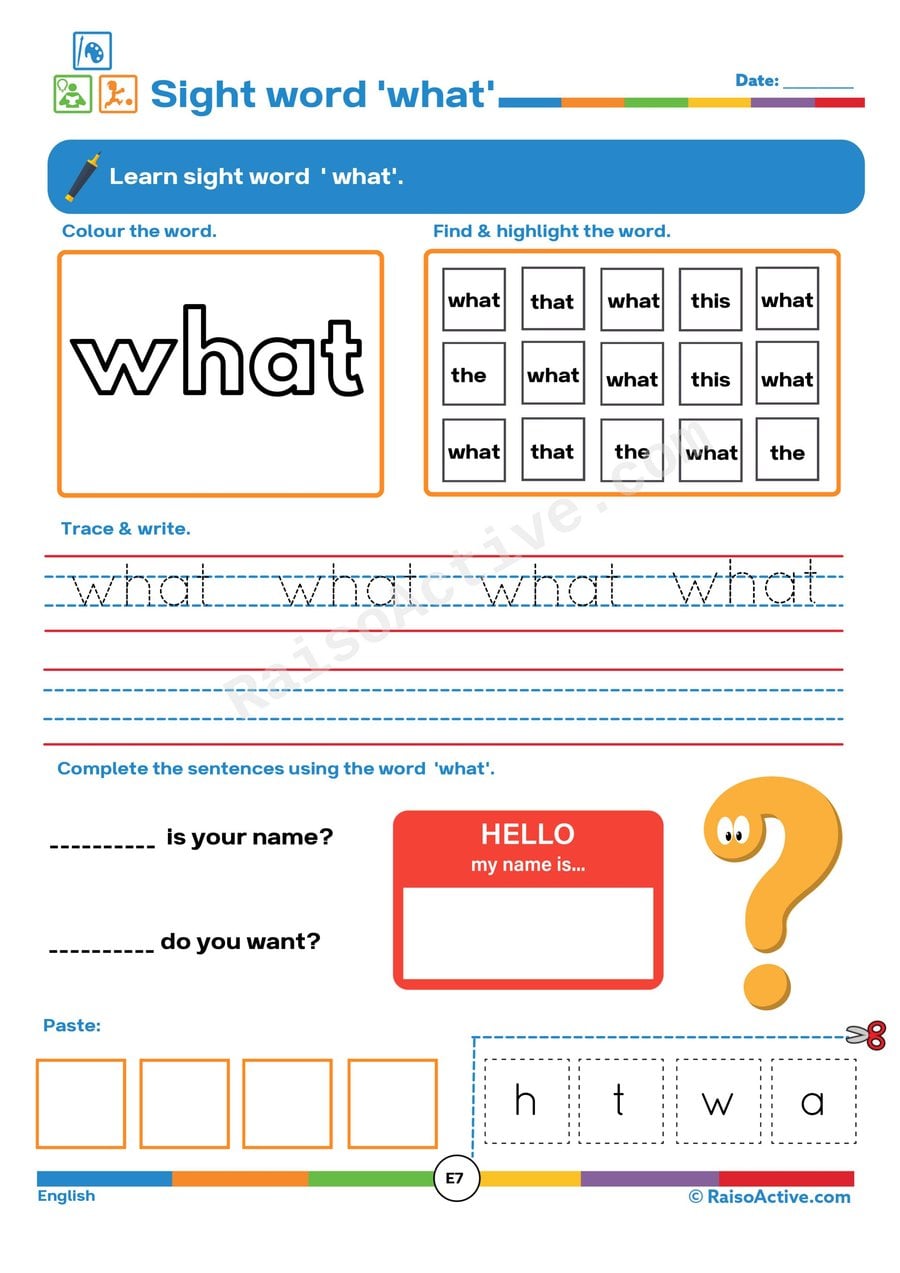
Sight Word 'What' Worksheet: Learn, Trace, and Find!
Ages 4-5 · Pre-KAges 4-5 · ReceptionAges 4-5 · LKGAges 4-5
The word 'what' is a common question word that children ages 4-5 encounter constantly in both spoken conversation and early reading, making it an important addition to their sight word vocabulary. This worksheet builds recognition through several formats — coloring, tracing, word searching, sentence completion, and cut-and-paste spelling — giving the word repeated, varied exposure in a single sitting. Because 'what' is a question word, practicing it in sentences also gives children an early sense of how question structures differ from statement structures.
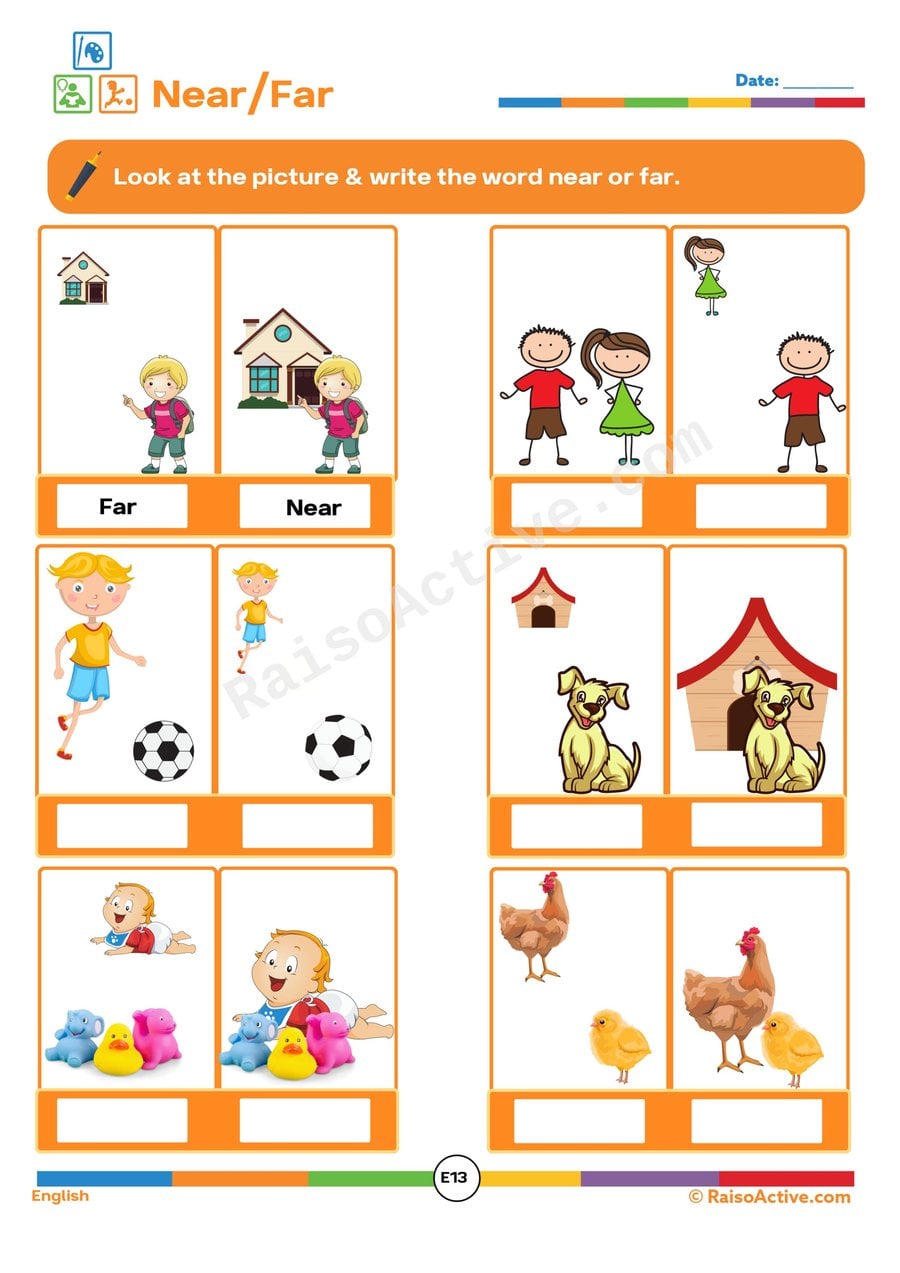
Near and Far Worksheet for Preschoolers
Ages 3-5 · Preschool–Pre-KAges 3-5 · Nursery–ReceptionAges 3-5 · Nursery–LKGAges 3-5
Understanding 'near' and 'far' introduces children ages 3-5 to relative distance, a spatial concept that supports later skills like reading maps, estimating measurement, and following directional instructions. This worksheet asks children to look at pictures and judge whether an object or person is positioned close by or at a distance, sharpening visual observation alongside vocabulary development. Because near and far are relative terms rather than fixed categories, this practice also introduces the idea that some concepts depend on comparison rather than having one single correct answer.
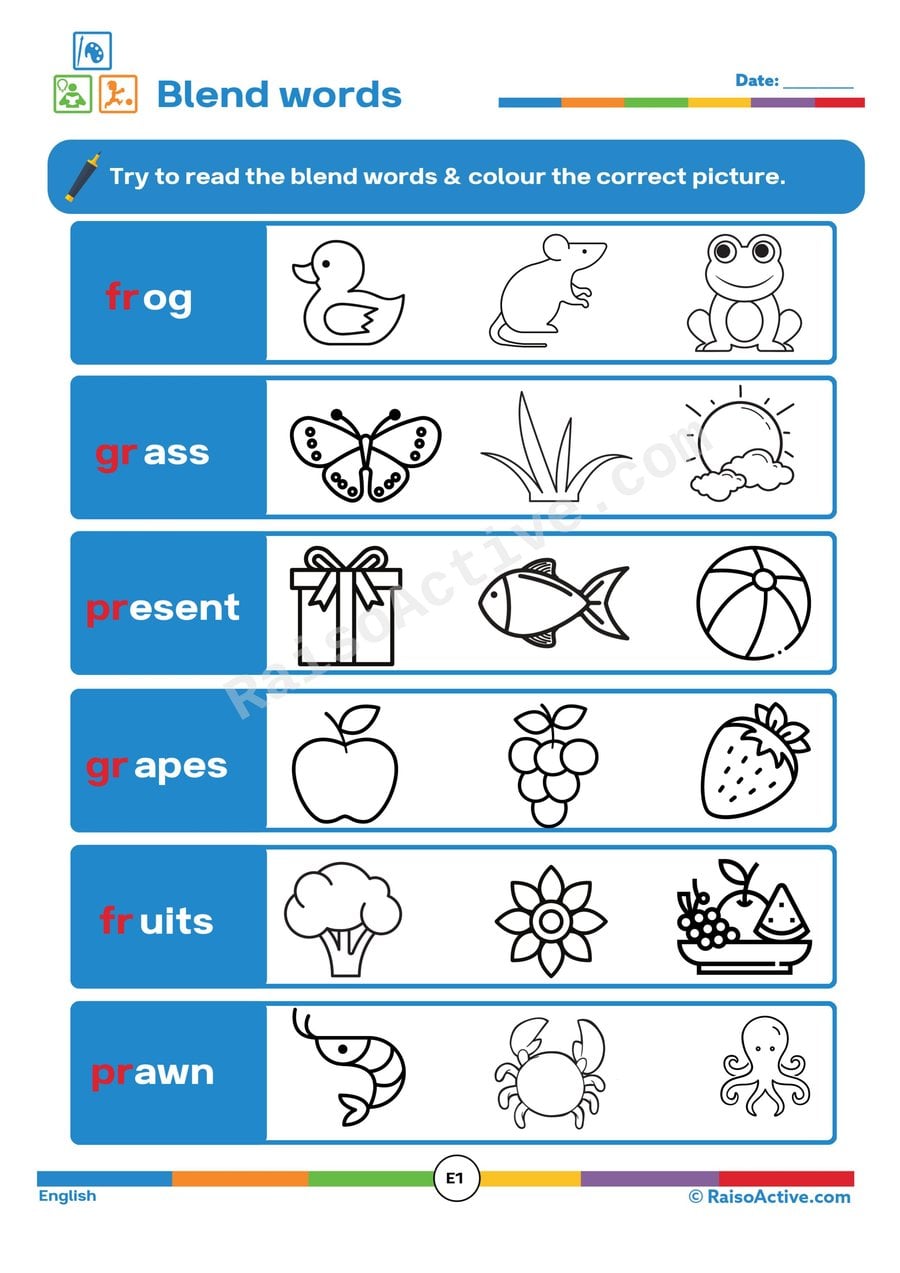
Blend Words Coloring Worksheet for Preschoolers
Ages 4-6 · Pre-K–KindergartenAges 4-6 · Reception–Year 1Ages 4-6 · LKG–UKGAges 4-6
Consonant blends, like 'bl,' 'st,' or 'fr,' require children ages 4-6 to read two consonant sounds together without a vowel between them, which is genuinely more demanding than single-consonant CVC words and represents an important next step in phonics progression. This worksheet asks children to read a blend word and then color the picture that matches it, giving an immediate visual check on whether they decoded the blend correctly. Because coloring is the reward for accurate reading, the activity keeps repeated blend practice feeling engaging rather than repetitive.

Match the Countries with Their Symbols Worksheet
Ages 4-6 · Pre-K–KindergartenAges 4-6 · Reception–Year 1Ages 4-6 · LKG–UKGAges 4-6
Children ages 4-6 build early social studies awareness by matching country flags to their well-known national symbols, connecting visual recognition with basic geography and cultural knowledge. This kind of matching exercise strengthens careful observation, since children must compare colors, shapes, and details across both the flag and the symbol image. It also plants the seed for understanding that different countries have distinct identities and traditions.
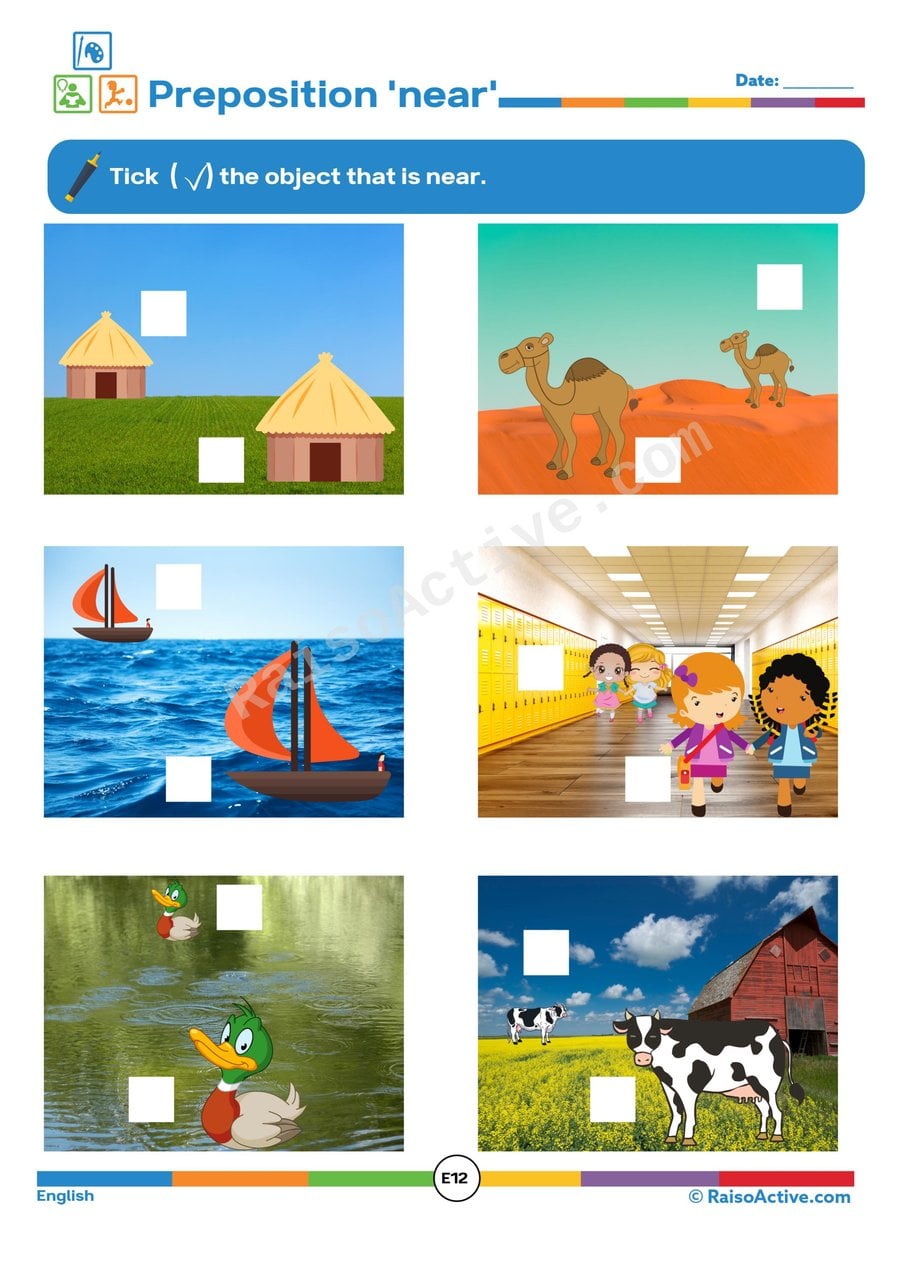
Near or Far? Preposition Worksheet for Kids
Ages 3-5 · Preschool–Pre-KAges 3-5 · Nursery–ReceptionAges 3-5 · Nursery–LKGAges 3-5
Preschoolers ages 3-5 build early spatial vocabulary by identifying which pictured object is positioned 'near' another, a comparative concept that requires judging relative distance between two things. Understanding 'near' versus 'far' lays groundwork for later spatial reasoning skills, like following directions and reading simple maps. Ticking the correct object also sharpens visual comparison and careful observation.
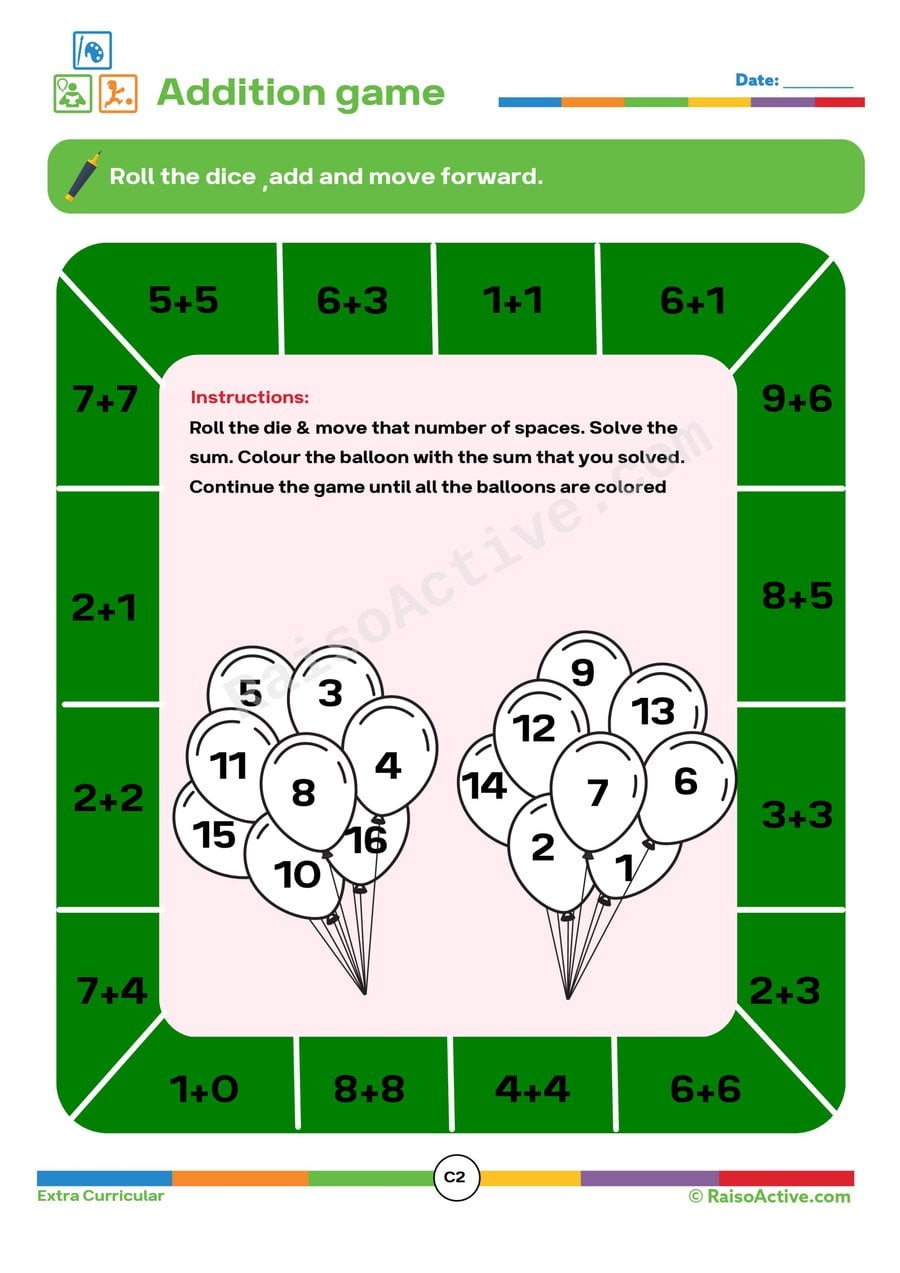
Addition Game: Roll, Add, and Color the Balloons!
Ages 4-6 · Pre-K–KindergartenAges 4-6 · Reception–Year 1Ages 4-6 · LKG–UKGAges 4-6
Turning addition practice into a dice game gives children ages 4-6 a built-in reason to solve repeated equations without it feeling like a repetitive drill, since each roll introduces a small element of chance and excitement. Solving the addition problem in each space and then coloring the matching balloon connects abstract number work to a satisfying visual result, reinforcing that math has a concrete, visible payoff. Playing a game format like this also builds early skills in following multi-step game rules, which supports both math confidence and general executive function.
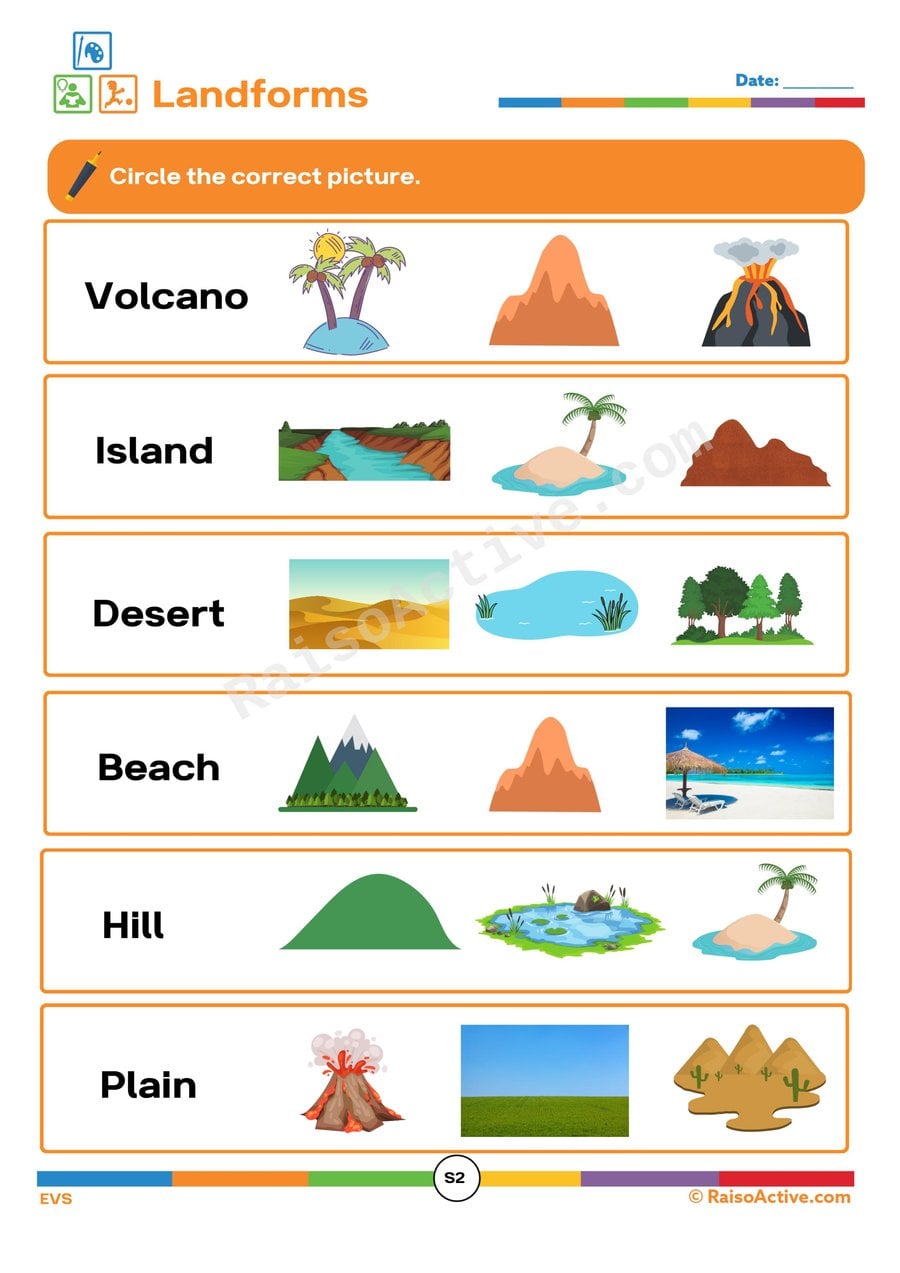
Landforms Worksheet: Circle the Correct Picture!
Ages 4-6 · Pre-K–KindergartenAges 4-6 · Reception–Year 1Ages 4-6 · LKG–UKGAges 4-6
This worksheet introduces children ages 4-6 to basic landform vocabulary — words like mountain, valley, island, or river — by asking them to read or hear a landform's name and circle the picture that matches it. Connecting a geography term to its correct visual representation builds early science and social studies vocabulary well before children can read complex nonfiction text on their own. This kind of word-to-picture matching also reinforces observational skills, since children must notice the distinguishing visual features that make one landform different from another.
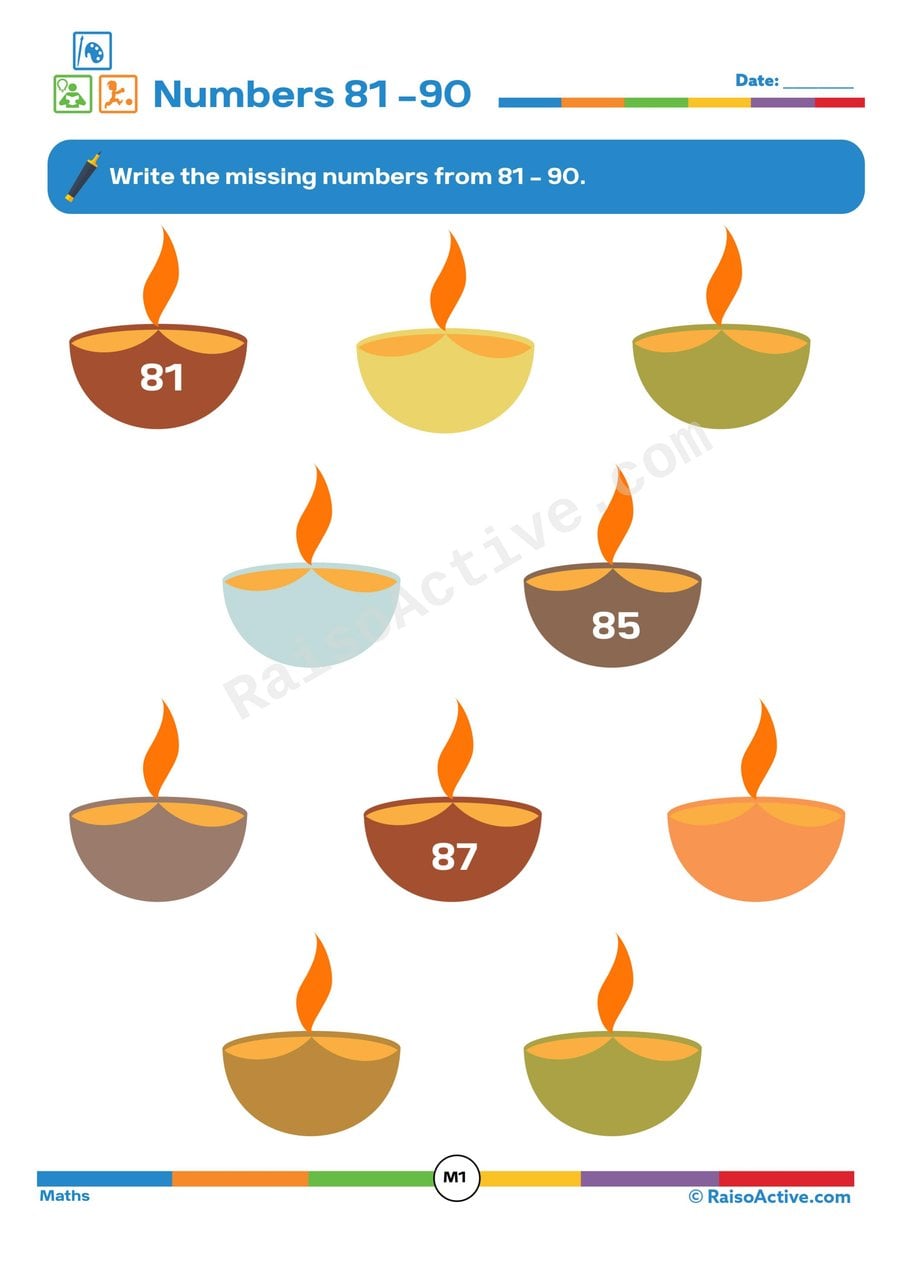
Missing Numbers: Diwali Diyas Worksheet for Kids
Ages 4-6 · Pre-K–KindergartenAges 4-6 · Reception–Year 1Ages 4-6 · LKG–UKGAges 4-6
Children ages 4-6 practice number sequencing within the 81 to 90 range by identifying and writing missing numbers on a set of Diwali-themed diyas. Working with numbers in the 80s pushes children beyond the more familiar 1-20 range, reinforcing that the same counting pattern continues predictably into higher numbers. This festive theme also connects math practice to a meaningful cultural celebration, making the abstract number work feel relevant.
Related worksheets
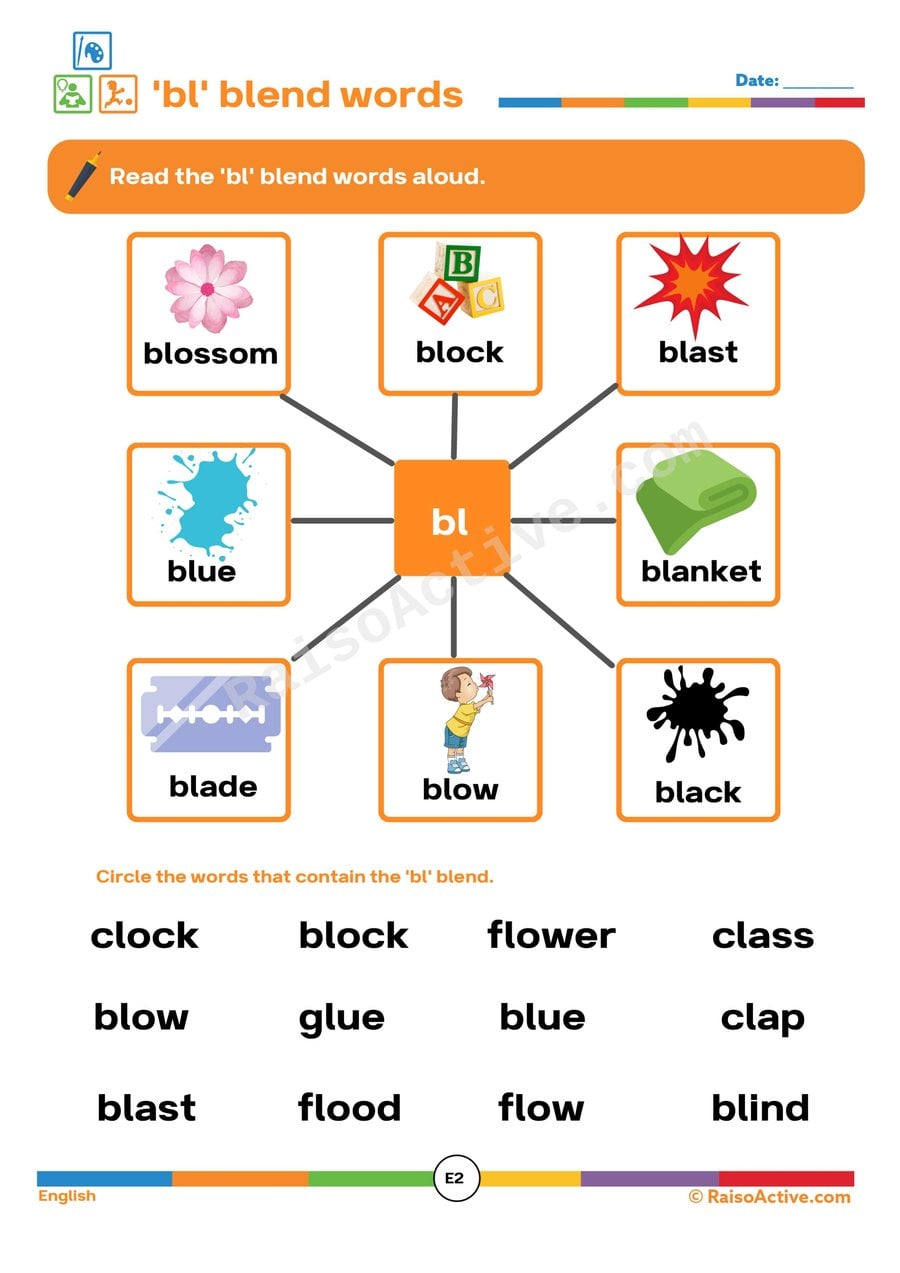
'bl' Blend Words Worksheet: Read, Circle, and Learn!
Ages 4-6 · Pre-K–KindergartenAges 4-6 · Reception–Year 1Ages 4-6 · LKG–UKGAges 4-6
Consonant blends like 'bl' require a child to smoothly join two sounds together (b + l) rather than saying them as separate beats, which is a distinct and harder phonics skill than single-letter sounds. This worksheet gives 4-6 year olds repeated practice reading words that start with 'bl' — like black, blue, or block — and then applying that recognition by circling the matching words, reinforcing the blend both by ear and by sight.

Circle the Correct Blend Worksheet for Preschoolers
Ages 3-5 · Preschool–Pre-KAges 3-5 · Nursery–ReceptionAges 3-5 · Nursery–LKGAges 3-5
This worksheet trains 3-5 year olds to discriminate between two similar-sounding consonant blends by listening to a picture's name and deciding which of two printed blends matches its beginning sound — a genuinely tricky listening task since blends like 'bl' and 'br' or 'cl' and 'cr' sound close together. Getting this right requires careful auditory attention rather than guessing, making it a solid stepping stone toward full blend-word reading.
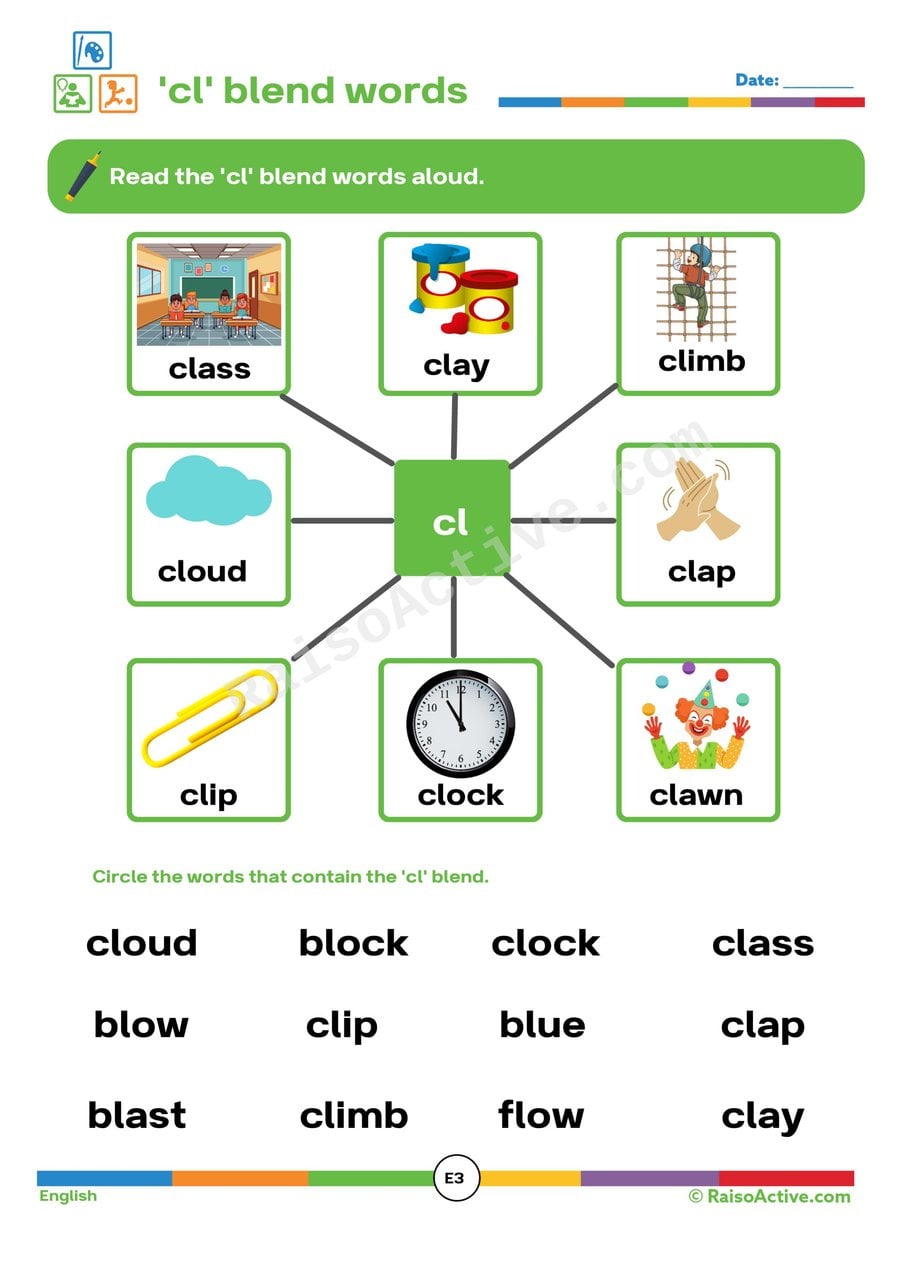
Cl Blend Words Worksheet: Read and Circle!
Ages 4-6 · Pre-K–KindergartenAges 4-6 · Reception–Year 1Ages 4-6 · LKG–UKGAges 4-6
Reading and circling words that begin with the 'cl' consonant blend helps children ages 4-6 hear that two consonants pressed together, like c and l, still combine into a single connected sound at the start of a word. This is a step up from single-letter phonics, requiring children to blend two consonant sounds smoothly rather than sounding them out separately. Recognizing blends like 'cl' in words such as 'clap' or 'cloud' builds the decoding fluency needed to read longer, less predictable words with confidence.
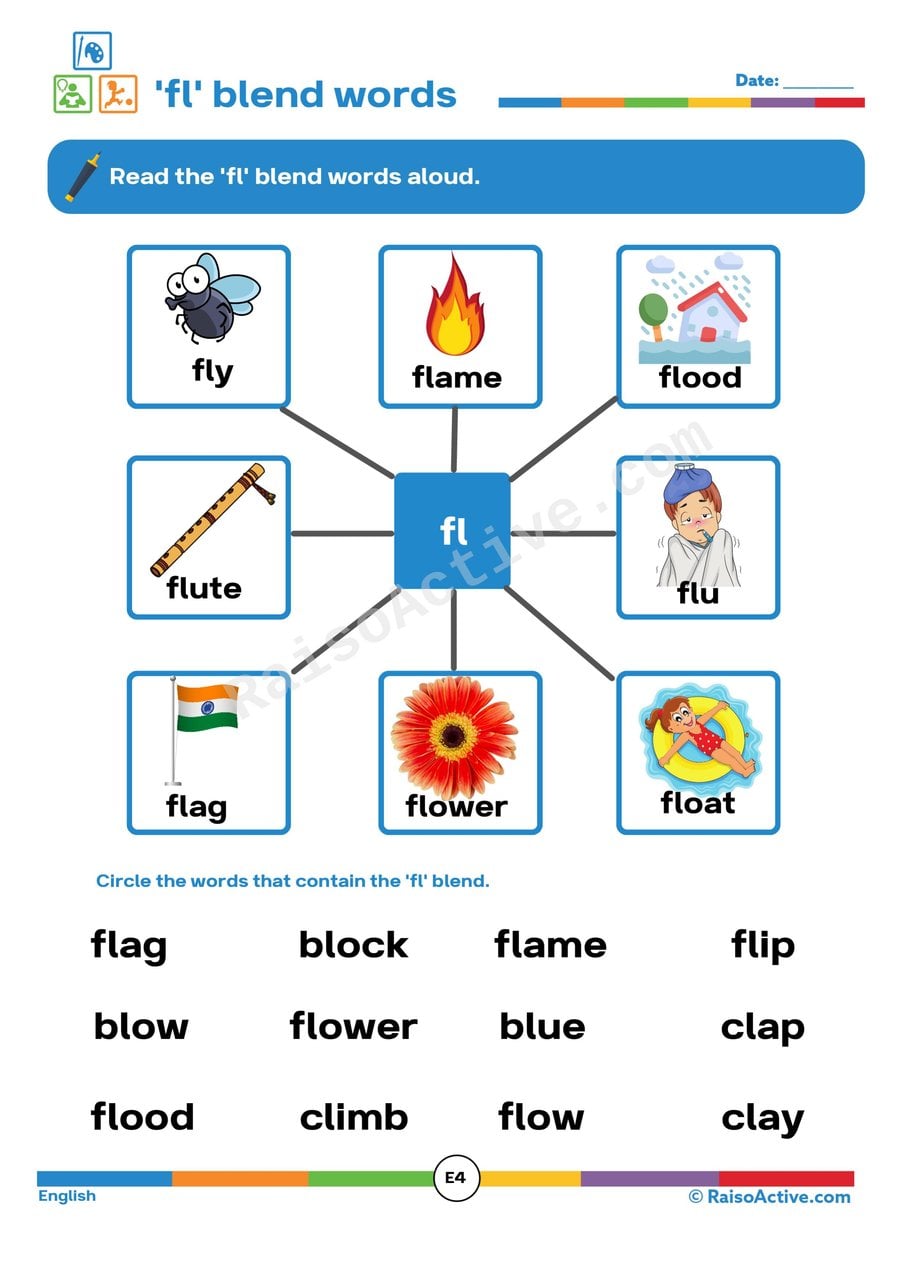
FL Blend Words Worksheet: Read, Circle, and Learn!
Ages 4-6 · Pre-K–KindergartenAges 4-6 · Reception–Year 1Ages 4-6 · LKG–UKGAges 4-6
Reading and circling words that begin with the 'fl' consonant blend teaches children ages 4-6 that two consonants together, like f and l, can combine into one smooth sound at the start of a word, a more advanced phonics concept than single-letter sounds. This kind of targeted blend practice builds the specific decoding skill needed to read common early words like 'flag,' 'fly,' and 'flower' without stumbling. Strengthening blend recognition now supports much smoother, more confident reading as vocabulary grows in later grades.

Letter Sounds Worksheet: Color the Letter That Begins the Word!
Ages 4-5 · Pre-KAges 4-5 · ReceptionAges 4-5 · LKGAges 4-5
This worksheet strengthens phonemic awareness in children ages 4-5 by asking them to isolate the very first sound of a picture's name and match it to its printed letter. Identifying beginning sounds is one of the strongest early predictors of reading success, since it teaches children that spoken words are made of individual sounds that map onto letters. The coloring component adds a motivating, low-pressure way to record each answer.

Keeping Our Environment Clean Worksheet for Kids
Ages 3-5 · Preschool–Pre-KAges 3-5 · Nursery–ReceptionAges 3-5 · Nursery–LKGAges 3-5
This worksheet builds early environmental awareness in children ages 3-5 by having them evaluate pictured actions — like throwing litter in a bin versus littering on the ground — and mark each one as good or bad for the environment. Making this judgment call requires children to connect a specific action to a broader consequence, an early form of cause-and-effect reasoning applied to environmental responsibility. Introducing this concept young helps normalize caring for shared spaces as a natural part of daily behavior rather than an abstract adult concern.

The Three Little Pigs Storytelling Worksheet for Preschoolers
Ages 3-5 · Preschool–Pre-KAges 3-5 · Nursery–ReceptionAges 3-5 · Nursery–LKGAges 3-5
This storytelling worksheet helps children ages 3-5 practice narrative sequencing and oral language skills by retelling the classic tale of the Three Little Pigs in their own words, using picture prompts as a guide. Putting a familiar story into their own sentences builds comprehension and expressive vocabulary far more actively than just listening to the story read aloud. The cut-and-paste sequencing option adds a second layer of practice with story order.

Near or Far Worksheet: Following Instructions for Preschoolers
Ages 3-5 · Preschool–Pre-KAges 3-5 · Nursery–ReceptionAges 3-5 · Nursery–LKGAges 3-5
Reading an instruction and circling the object that is either near or far teaches children ages 3-5 relative distance vocabulary, helping them understand that 'near' and 'far' describe a relationship between two things rather than a fixed property of a single object. Following a written or spoken instruction to complete each picture also builds listening comprehension and the ability to carry out a one-step direction independently. This combination of spatial concept and instruction-following prepares children for the kind of directions they'll regularly encounter in a classroom setting.
Guides for this topic

How to Teach CVC Blending: A Step-by-Step Method That Works in Two Weeks
A step-by-step method for teaching CVC blending, covering continuous sounds, word families, common errors, and a 14-day plan that most children finish reading CVC words.
Phase 2 Phonics at Home: Sound Order, Blending Games, Worksheets
Phase 2 phonics at home: the five sound sets in order, oral blending, tricky words, a two-week routine, common mistakes, and free worksheets.

Reception Year Explained: EYFS Learning and How to Help at Home
A teacher's plain-English guide to the Reception Year: the seven areas of learning, Early Learning Goals, Phase 2/3 phonics, the RBA and home routines.
Reviews
Every worksheet for ages 4–5, no watermark
Members download the full library of 1,000+ worksheets and every activity pack without watermarks or daily limits. One year costs ₹999 in India or $20 elsewhere.
See membership plansOr download any worksheet free with a watermark (5 a day).