Free printable worksheets · United States
Preschool Number Tracing Worksheets (Ages 3–4)
Preschool number tracing worksheets are practice sheets for children aged 3–4 in Preschool in the US. Number tracing is following the dotted outline of a printed numeral with a pencil, practicing the correct stroke direction and shape for each digit. The sheets on this page cover numeral formation 0–9, correct stroke direction for each digit, number-to-quantity matching and consistent numeral size and spacing.
Preschool builds readiness rather than academics: pre-writing strokes, uppercase letter recognition, counting objects to ten, naming shapes and colors, and cutting along a line, all introduced through short table activities inside a mostly play-based day. Grip is still forming, so most activities favor a thick crayon over a standard pencil. Number tracing at three stays within the numerals one to five, each shown large with a thick dotted path and a single starting dot. A worksheet should pair every traced numeral with that many pictures, so the child says the count out loud while tracing the matching digit. Reaching all five digits by the end of the year is a reasonable goal; six through ten and any expectation of writing a numeral without a model are still ahead.
762+ worksheets · free PDF download · print on A4 or Letter
Preschool Number Tracing Worksheets to print
Browse all worksheets for ages 3–4
Gg Letter Tracing and Recognition Worksheet for Preschoolers
This worksheet helps children ages 3-5 practice writing both uppercase and lowercase Gg while training them to recognize the letter in different fonts and contexts, an important skill since printed letters don't always look identical to handwritten ones. Identifying pictures that start with Gg also builds phonemic awareness, linking the letter's shape to its 'guh' sound.

Learn the Sight Word 'Has' - Fun Tracing and Matching Worksheet!
'Has' is a high-frequency verb that children ages 3-5 encounter constantly in early sentences describing possession, like 'the dog has a bone,' making it an important addition to their sight word vocabulary. This worksheet builds recognition of the word through coloring, tracing, word searching, and sentence completion, giving repeated exposure across formats that reinforces memory more effectively than a single repetition. Practicing 'has' inside complete sentences also helps children understand its grammatical role, connecting a subject to something it possesses.
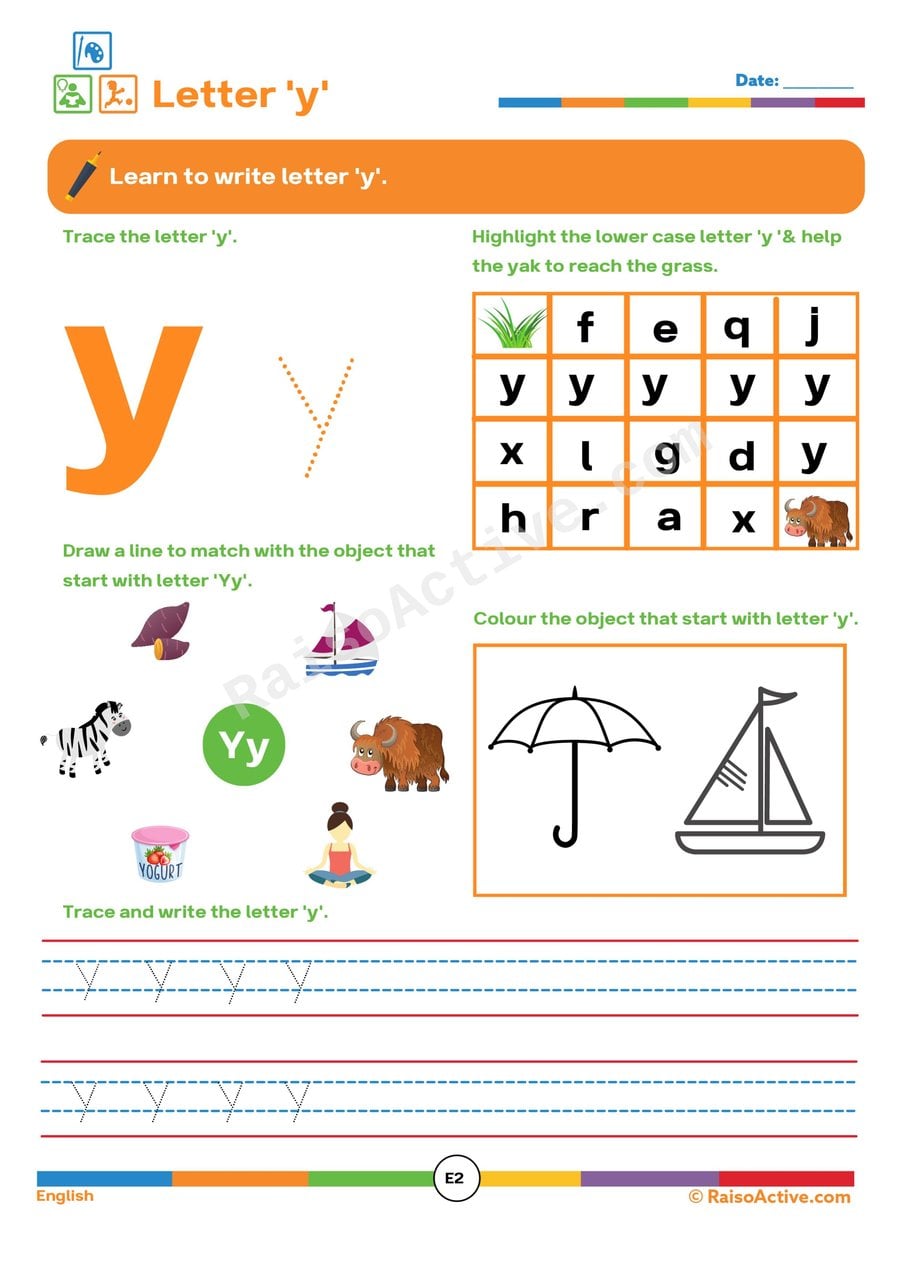
Letter 'y' Worksheet: Trace, Match, and Color!
This letter 'y' worksheet gives children ages 3-5 focused handwriting practice on a letter with a distinctive descending tail, which requires different pencil control than letters that stay above the baseline. Matching and coloring pictures that start with 'y' also builds beginning-sound awareness, linking the letter's shape to its sound through repeated, varied practice.

Letter Y Tracing and Recognition Worksheet for Preschoolers
This worksheet builds recognition and formation of the letter Y through guided tracing practice and by identifying pictures of words that start with Y, like 'yarn' or 'yo-yo.' For three- to five-year-olds, tracing first with a finger and then with a pencil builds the motor memory needed before a child can form the letter confidently on their own.
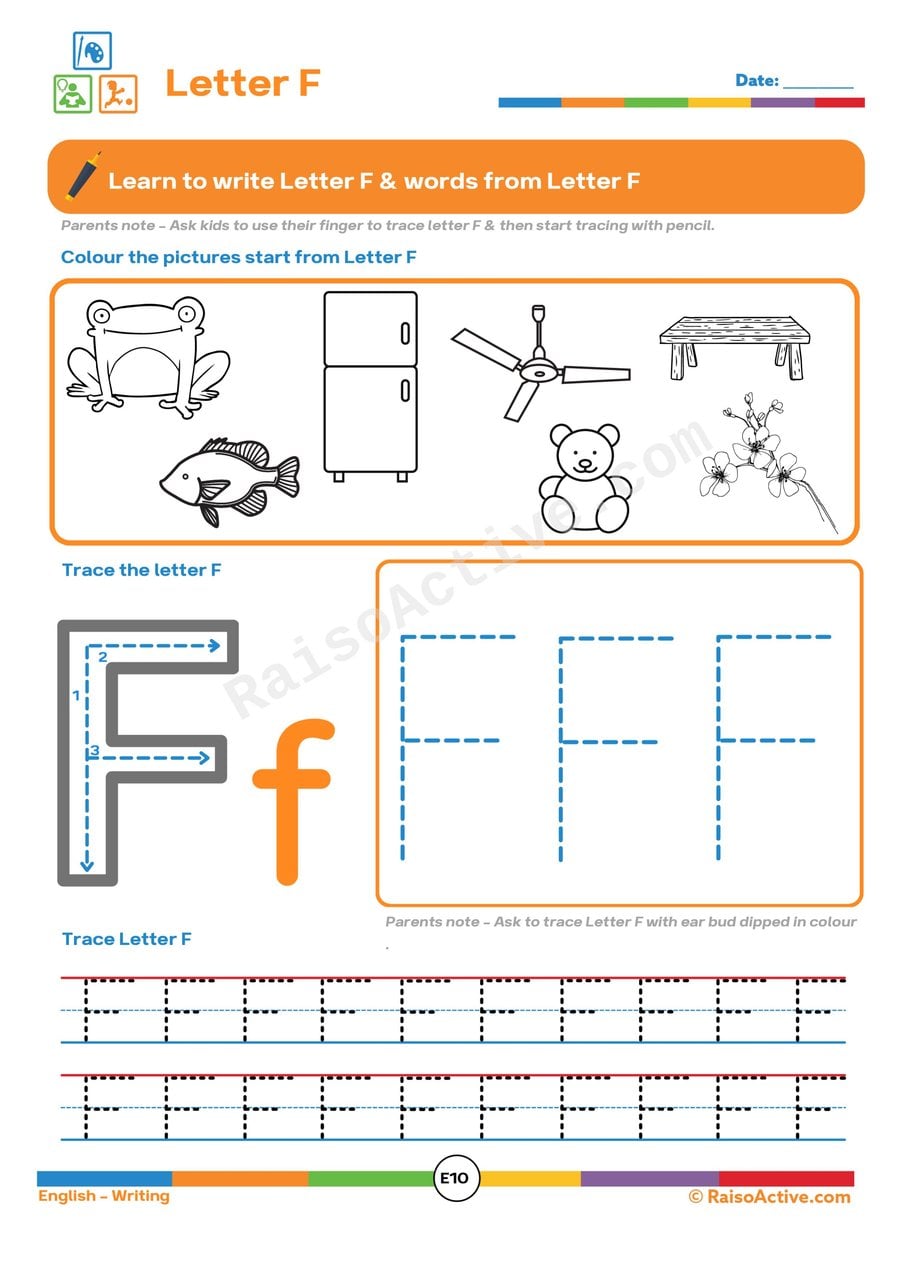
Letter F Worksheet: Trace, Color, and Learn!
This worksheet builds children's ability to reproduce capital F — a vertical line with two horizontal branches — through repeated tracing, while the matching coloring activity trains them to connect the letter shape to its beginning sound in real words. For 3-5 year olds, this dual practice of motor formation plus sound recognition is exactly the combination that prepares a child to write and read independently.

Sight Word Fun: 'Yes' Word Activities Worksheet for Preschoolers
Practicing the sight word 'yes' through tracing, writing, circling, and underlining gives children ages 3-5 several different ways to encounter the same high-frequency word, which builds the instant word recognition that supports early reading fluency. Repetition across different formats, rather than just one activity, helps the word move from a puzzle to be solved into a word recognized on sight.
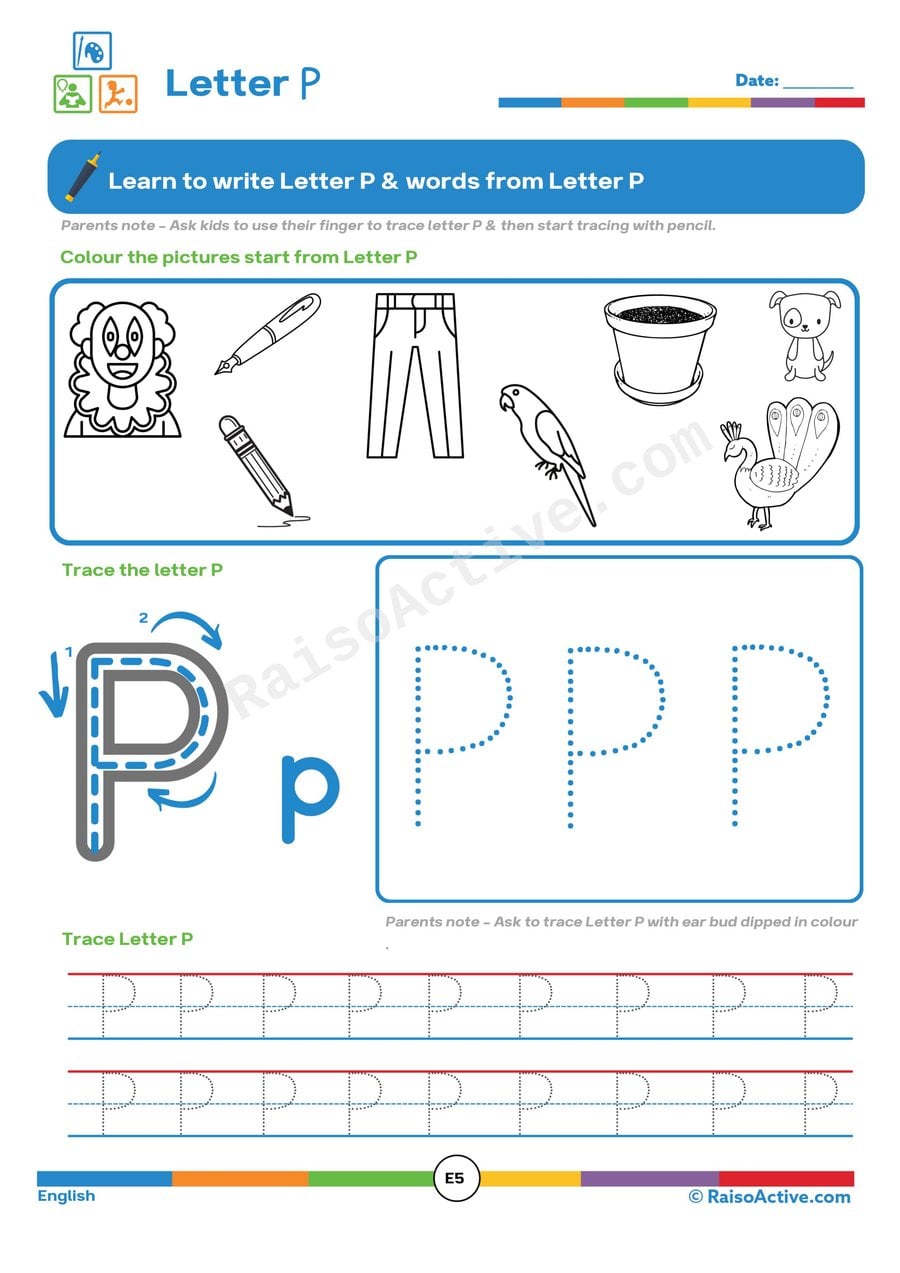
Letter P Tracing Worksheet for Preschoolers
Preschoolers ages 3-5 build the pencil control and muscle memory needed for handwriting by tracing both the uppercase and lowercase letter P along guided dotted lines. Repeated tracing strengthens the fine motor pathways used in future writing while also reinforcing left-to-right, top-to-bottom stroke direction. Naming pictures that start with P connects the letter shape to its sound, laying groundwork for phonics.

Secret Words Worksheet: Find the First Letter! (Ages 3-5)
This Secret Words worksheet gives children ages 3-5 another round of practice isolating beginning sounds and matching them to letters, a skill that needs many repetitions across different word sets before it becomes reliable. Spelling out a hidden word letter by letter also introduces the earliest form of encoding — turning sounds into written symbols — which is the flip side of the decoding skills used in reading. The reveal-at-the-end structure keeps the repetitive listening practice feeling like a game rather than a worksheet.

Letter K Tracing Worksheet: Learn to Write the Letter K!
This tracing worksheet helps children ages 3-5 practice the angled strokes of the letter K, which are more challenging than curved letters because they require precise diagonal lines meeting at a point. Repeated tracing builds the pencil control and hand strength needed for confident handwriting later on. Coloring K-word pictures reinforces the connection between the letter's shape and its beginning sound.

Letter P Tracing and Coloring Worksheet for Preschoolers
This worksheet builds the fine motor control needed to form the letter P while connecting it to its sound through pictures of objects that start with P, like a pig or a pumpkin. For three- to five-year-olds, repeated tracing combined with sound practice builds the muscle memory and letter-sound association that both come together in early reading and writing.

Learn the Letter 'V': Tracing, Matching, and Coloring Worksheet
Tracing, matching, and coloring the letter 'V' gives children ages 3-5 focused repetition on a letter formed entirely from two diagonal strokes, a different motor pattern than the curves and verticals used in many other letters. Matching pictures like a violin or a van to the letter builds the sound-symbol connection for the /v/ sound, which can be tricky to distinguish from /f/ or /b/ for young learners. Highlighting the lowercase 'v' within a letter grid to help a character find an object adds a game-like search element that keeps attention on the task.

I Spy Summer Fun Worksheet: Counting and Identifying Objects!
This 'I Spy Summer Fun' worksheet helps young learners (ages 3-5) master one-to-one correspondence, a crucial foundational math skill, by counting specific summer-themed objects within a busy scene. Children will practice associating a number name with each item they touch or point to, building early number sense and visual discrimination. This activity strengthens their ability to accurately count quantities up to 20, preparing them for more complex mathematical concepts.

C or K? Beginning Sounds Worksheet for Preschoolers
This worksheet teaches children ages 3-5 an important early spelling rule: the /k/ sound at the beginning of a word can be spelled with either 'c' or 'k', and knowing which to use is one of the first spelling patterns young readers encounter. Children practice listening for the /k/ sound in each picture's name and then applying the rule to choose the correct letter. This bridges phonics awareness into functional spelling, since children are producing print, not just recognizing sounds.

Letter T Tracing and Coloring Worksheet for Preschoolers
This worksheet helps children ages 3-5 build the fine motor control and directional awareness needed to form the letter T correctly, tracing both its uppercase and lowercase forms along guided dotted lines. Repeated tracing builds the muscle memory in small hand muscles that eventually allows children to write letters independently without a guide. Coloring pictures that begin with T and hunting for the letter in a grid also reinforce letter-sound and letter-shape recognition side by side.

Trace the Number 3 and Color the Balls! - Number Tracing Worksheet
This worksheet has children ages 3-5 trace the number 3, a shape built from two connected curves, which is more complex than the numbers 1 and 2 and continues building fine motor precision. Coloring exactly three balls after tracing reinforces one-to-one correspondence and the specific quantity the numeral 3 represents. Practicing curved numerals like 3 also prepares children for other rounded numbers they'll encounter soon, such as 8.

Trace and Write the Letter X Worksheet for Preschoolers
This worksheet has children ages 3-5 trace the uppercase letter X, practicing two diagonal lines that cross in the middle, a stroke pattern that requires more precise pencil control than straight or curved letters alone. Because relatively few common words start with X, this page also introduces the idea that a letter's position within a word, not just the beginning, matters for reading, since children may know X best from words like 'box' or 'fox.' Mastering this crossing stroke also supports other skills like drawing intersecting lines in later math and geometry work.

Tracing and Counting Worksheet: Learning the Number 3!
This worksheet helps children ages 3-5 learn to recognize, trace, and write the number 3 using its correct stroke pattern, while a hands-and-ducks counting activity reinforces that the numeral 3 represents exactly three objects. Combining tracing with counting connects the written symbol to its real quantity, which is central to early number sense.
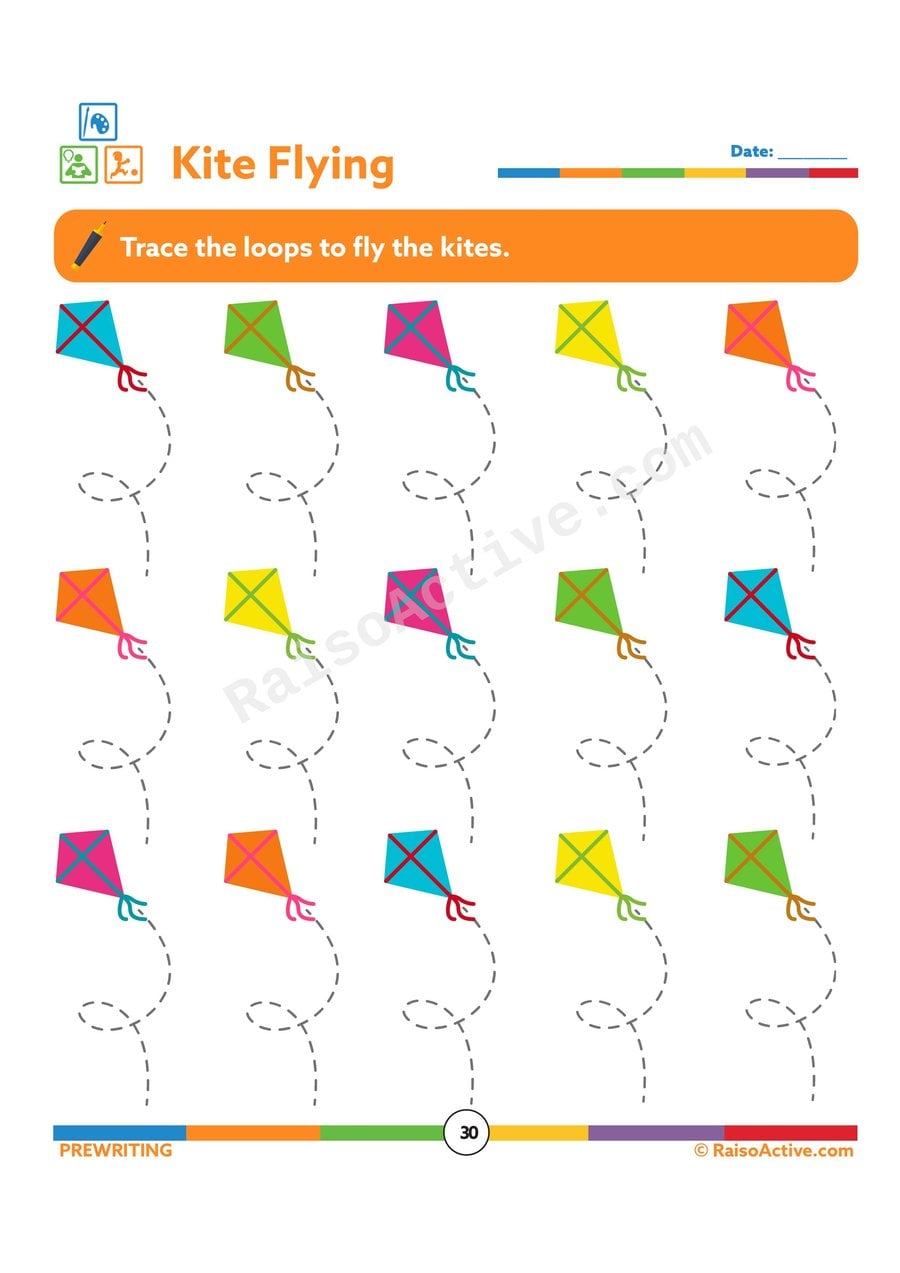
Kite Flying Tracing Worksheet for Preschoolers
Tracing a kite's string line gives children ages 3-5 practice with a long, often gently curving or diagonal stroke, while the theme introduces simple vocabulary about wind and flying. Because a kite string is usually drawn as one long, continuous line rather than a short repeated shape, this worksheet builds a child's ability to sustain a single controlled pencil motion over a longer distance.

In Family Words Worksheet: Read, Trace, and Identify the Pictures!
Reading, tracing, and matching words from the 'in' family — like pin, fin, and win — helps children ages 3-5 notice that changing just the first letter of a word while keeping the same ending creates a whole new word, a key phonics insight called word family recognition. Tracing each word alongside reading it builds handwriting muscle memory at the same time as reading fluency. Circling the picture that matches each traced word also checks true comprehension, not just the ability to sound out letters.

Learn the Letter 'L': Tracing, Matching, and Coloring Worksheet for Preschoolers
This worksheet builds letter 'L' recognition through tracing, matching, a themed maze that highlights the letter while guiding a lion to its meat, and coloring — a four-part structure that keeps 3-5 year olds engaged across several formats while reinforcing the same letter each time. The maze section in particular adds a playful goal to what would otherwise be repetitive letter-spotting, motivating your child to scan carefully for every 'L' along the path.

Trace and Write the Letter P Worksheet for Preschoolers
Tracing the uppercase letter P introduces children ages 3-5 to a two-part stroke, a straight vertical line followed by a curved loop at the top, which builds on the straight-line control they've likely practiced with letters like T and the curved control practiced with letters like C. This combination stroke is good preparation for other letters that mix lines and curves, such as R and B. The worksheet also reinforces the /p/ sound in words like 'pig,' 'pencil,' and 'popcorn.'

Sight Word 'This' Worksheet: Trace, Write, and Identify!
This worksheet helps children ages 3-5 learn to recognize, write, and use the sight word 'this' in sentences, building automatic recognition of a word that appears constantly in early reading but doesn't sound out easily. Cutting and pasting letters to spell the word adds a hands-on layer that reinforces letter order alongside whole-word recognition.

Butterfly Cutting Practice Worksheet for Preschoolers
This cutting-practice worksheet gives children ages 3-5 dedicated repetition in guiding scissors along a straight or gently curved dotted line, a core pre-writing and self-help skill that strengthens hand strength and bilateral coordination. Framing the goal as 'reaching the butterflies' gives children a visual reward for careful, controlled cutting rather than treating scissor practice as an isolated drill. Building this scissor control early supports later success with more complex cut-and-paste crafts.

Number 5 Tracing Worksheet for Preschoolers: Trace, Count, and Color!
This worksheet has children ages 3-5 trace the number 5, a shape combining a straight line, a curve, and a short horizontal stroke, one of the more complex early numerals to form correctly. Counting and coloring exactly five apples reinforces the specific quantity the numeral 5 represents while also introducing the idea of counting a full hand's worth of objects, since five matches the fingers on one hand. This worksheet's trace-count-trace structure also builds the habit of returning to check work after a counting task.
What Preschool number tracing worksheets cover
Number tracing at three stays within the numerals one to five, each shown large with a thick dotted path and a single starting dot. A worksheet should pair every traced numeral with that many pictures, so the child says the count out loud while tracing the matching digit. Reaching all five digits by the end of the year is a reasonable goal; six through ten and any expectation of writing a numeral without a model are still ahead.
- Trace numerals one to five along a thick dotted path
- Count the pictures beside a numeral while tracing it
- Say the numeral's name aloud with each traced stroke
- Match a traced numeral to a group of that many dots
How to use these worksheets at home or in class
Five minutes is a solid session for a three-year-old, ten minutes the practical ceiling. Offer a thick crayon or a short fat pencil, sit beside your child, and treat the sheet as one activity among blocks, stories and outdoor play rather than as schoolwork.
Start with the sheet that matches what your child can already do, then move one step up. Keep finished sheets in a folder: Preschool teachers often ask for evidence of practice, and children like seeing their own progress.
Is your child ready for Preschool number tracing work?
A child ready for these activities holds a crayon and makes deliberate marks, sits at a table briefly, follows a single spoken instruction, and shows some interest in the letters of their own name or the numbers they hear counted aloud.
Frequently asked questions
Should a three-year-old trace numbers before or after counting practice?
After, and alongside rather than instead of it. A child who can count five objects reliably gets far more out of tracing the numeral 5, because the digit is standing for something already understood. Tracing numerals before counting is secure tends to produce a shape copied without meaning. Keep counting games running daily and add numeral tracing for whichever number the child can already count to with confidence.
What should a Preschool child be able to do in number tracing?
Number tracing at three stays within the numerals one to five, each shown large with a thick dotted path and a single starting dot. A worksheet should pair every traced numeral with that many pictures, so the child says the count out loud while tracing the matching digit. Reaching all five digits by the end of the year is a reasonable goal; six through ten and any expectation of writing a numeral without a model are still ahead. A child ready for these activities holds a crayon and makes deliberate marks, sits at a table briefly, follows a single spoken instruction, and shows some interest in the letters of their own name or the numbers they hear counted aloud.
Do these worksheets follow the Preschool curriculum?
The sheets cover numeral formation 0–9, correct stroke direction for each digit, number-to-quantity matching and consistent numeral size and spacing, which sit inside the Head Start Early Learning Outcomes Framework (ELOF) outcomes for Preschool. Nursery (UK), Nursery (India) use the same skills at this age, so the sheets also fit families following those programmes.
Are these Preschool number tracing worksheets free?
Yes. Each worksheet downloads free as a watermarked PDF once you create an account, with a limit of five a day. An annual membership ($20) removes the watermark and the limit for the whole library of over 1,000 worksheets and every printable pack.

Written by
Hemsweta Jain · Teacher Cheena
MBA and Early Childhood Educator, teaching since 2014 · Founder of RaisoActive, Mumbai
Written and reviewed by Hemsweta Jain (Teacher Cheena), who designs every RaisoActive worksheet.
Last reviewed
Printable packs for ages 3–4
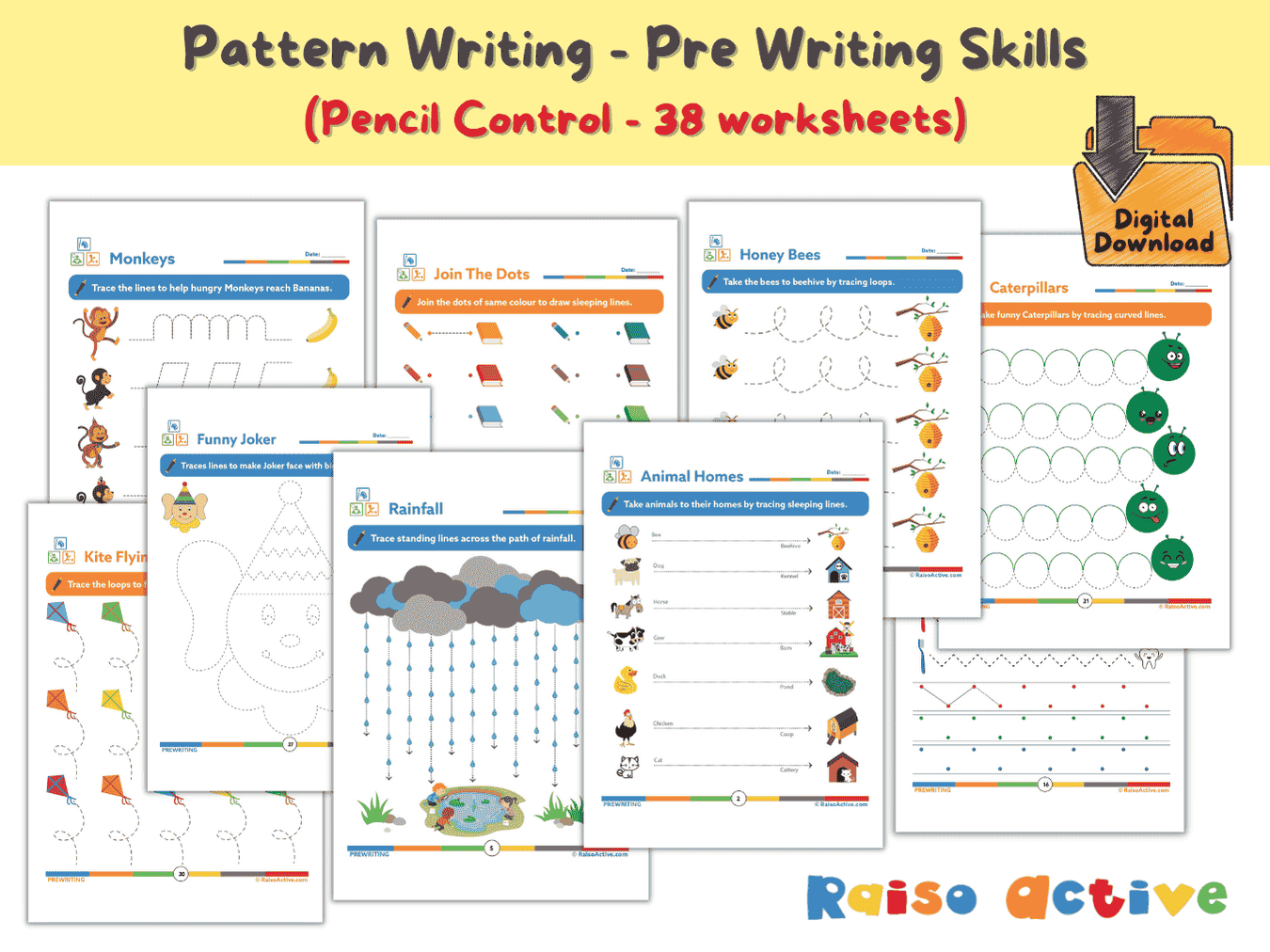
Pattern Writing Pre-writing Skills Activity Book for 3-4 Year Olds
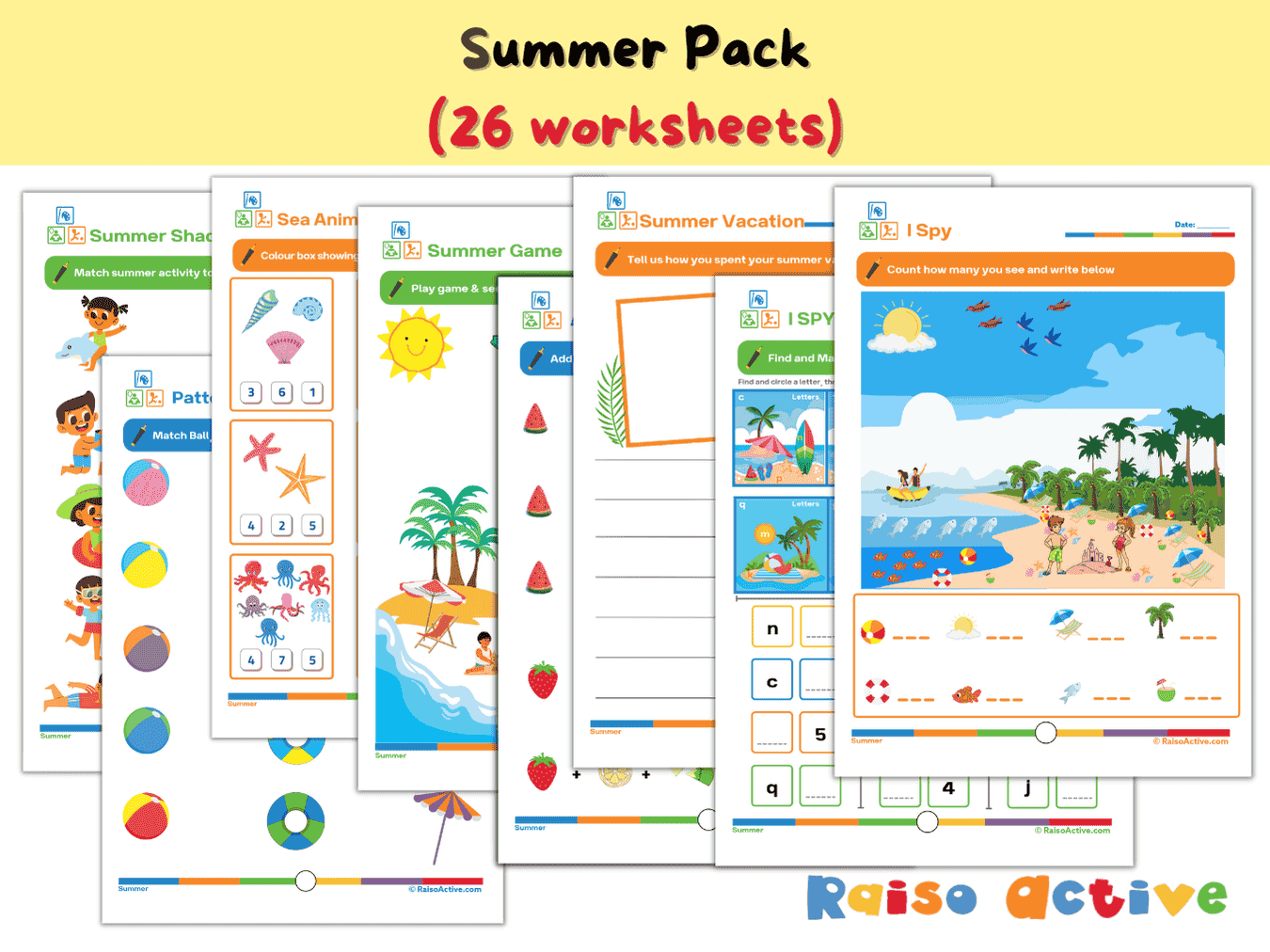
Summer Activity Pack: Math, Literacy, Puzzles & More for Preschool & Kindergarten
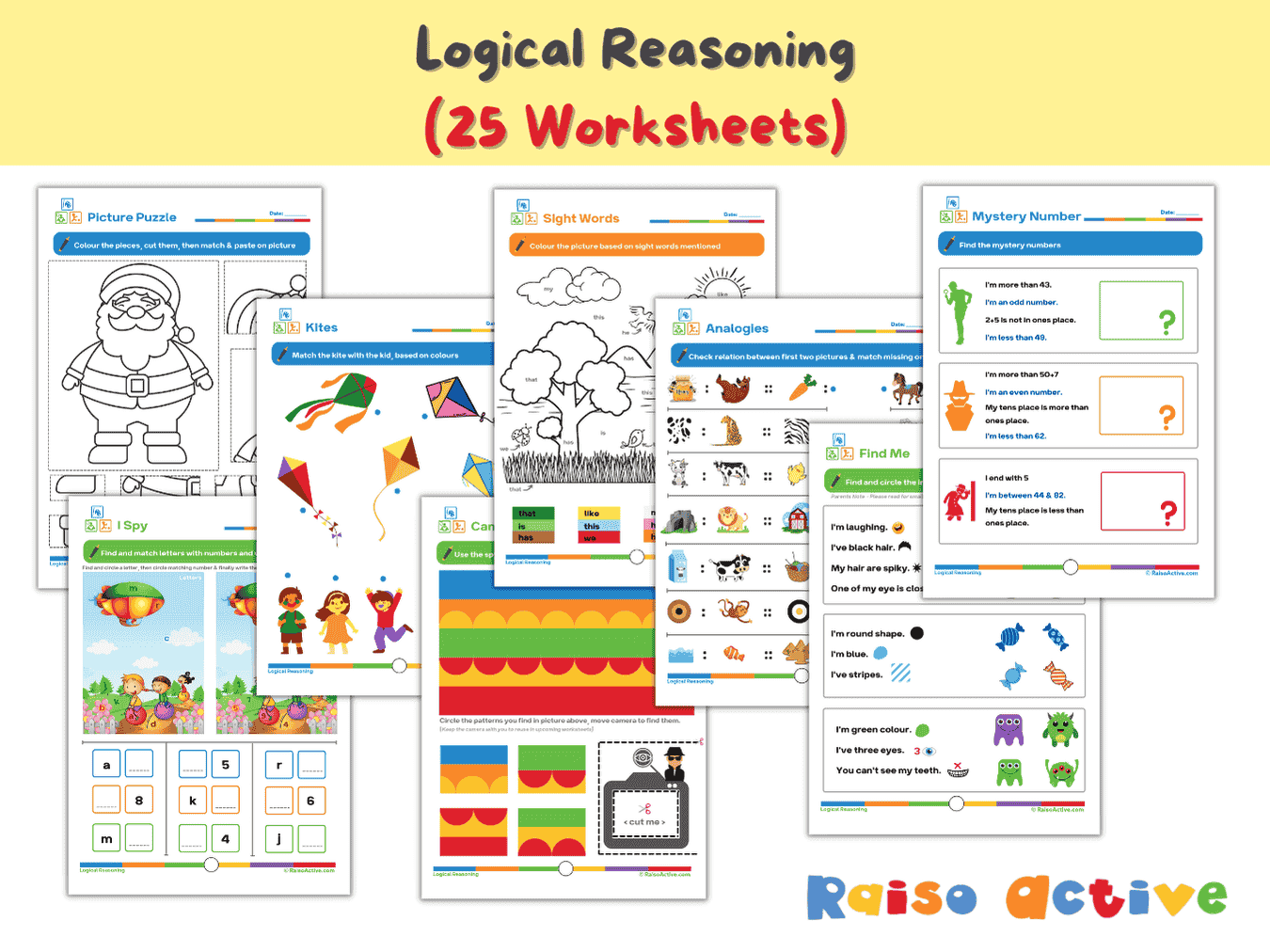
Logical Reasoning Activity Book for Preschool & Kindergarten | Patterns, Puzzles & Analogies
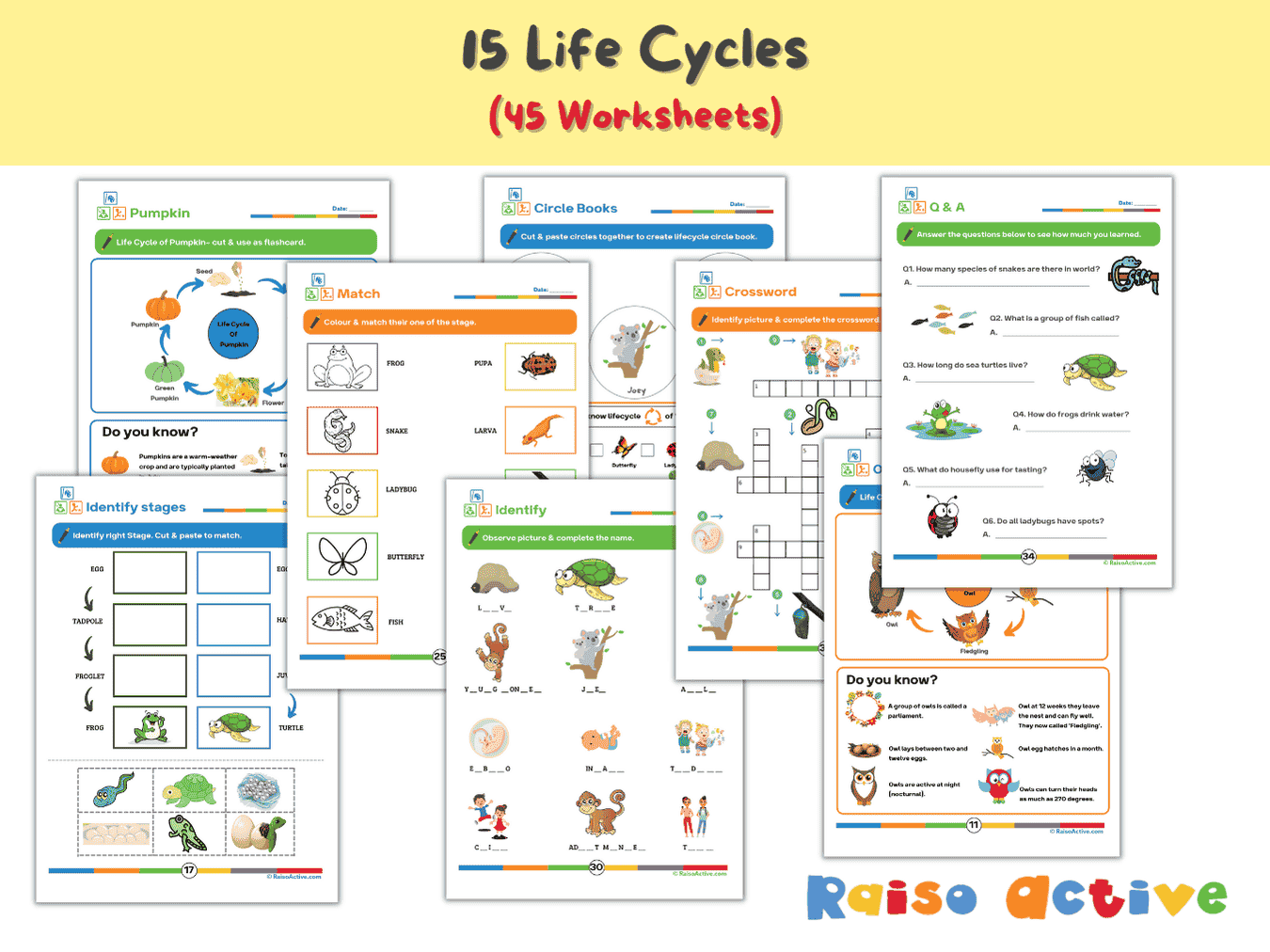
Lifecycles Activity Book & Flashcards for Preschool & Early Elementary
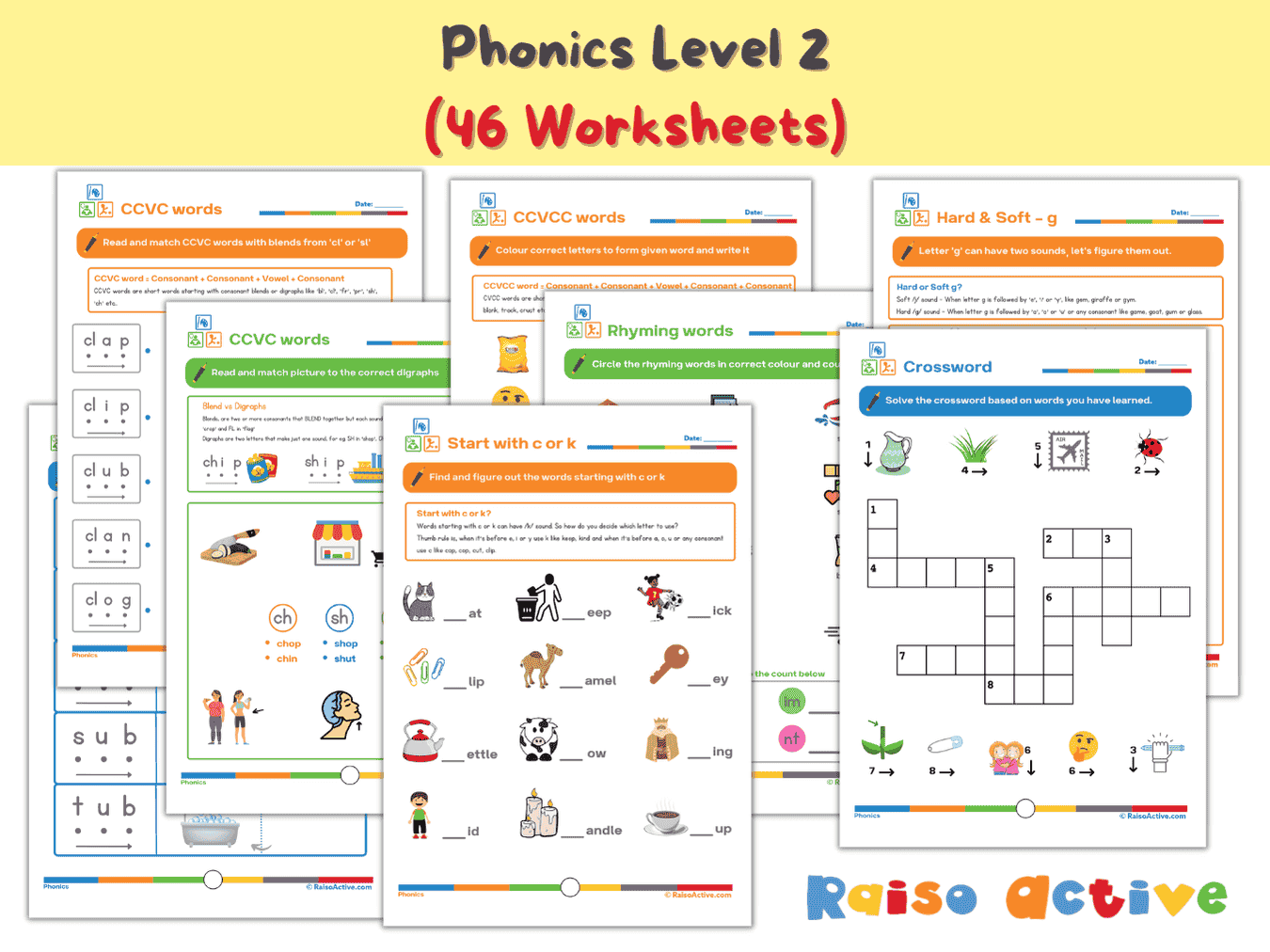
Phonics Level 2 Worksheets: CVC, CCVC, CVCC Word Families & Blends for Early Readers (Ages 4-7)
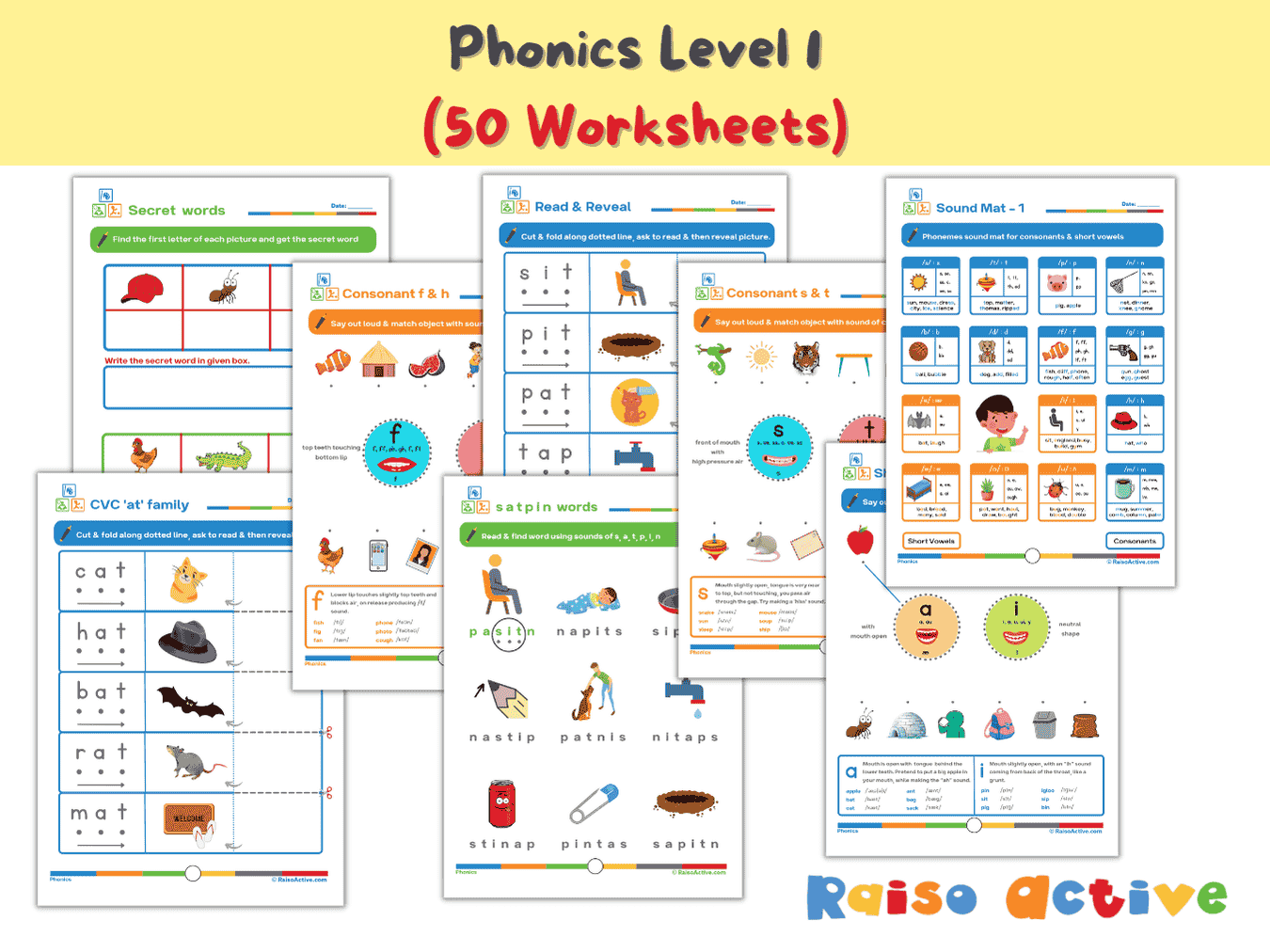
Phonics Level 1 Activity Book: Letter Sounds, Blending & CVC Words for Preschool & Kindergarten
Guides for parents and teachers
See all guides →Number Formation Rhymes 0–9 and How to Fix Reversals
Original number formation rhymes for 0–9, the correct stroke order for each digit, why 3, 5 and 7 get reversed most often, and multisensory fixes that work.
What's the Best Alternative to ABCmouse? A Complete Parent's Guide to Free and Affordable Educational Apps
ABCmouse runs ~Rs 4,000-5,000/year with US spellings and curriculum. Compare free & affordable Indian-friendly apps like Khan Academy Kids and DIKSHA.
Is My Child Ready for Kindergarten? Essential Skills and Honest Assessment
Wondering if your child is ready for Class 1 or kindergarten? Learn the 5 domains of school readiness, what Indian schools look for, and how to support your child at home.
Complete Guide to Jack Hartmann Worksheets: Enhancing Educational Videos with Hands-On Learning
Discover how to pair Jack Hartmann YouTube videos with printable worksheets for deeper learning. Counting, alphabet, sight words activities for preschool to Grade 1.
My Child Can Count But Can't Write Numbers — Is This Normal? A Parent's Complete Guide
Yes, it's developmentally normal - counting and writing use different skills. See why the gap happens and simple activities (no worksheets) to bridge it.
What's the Best Way to Teach Number Formation to Young Children? A Complete Guide
Discover the best methods to teach digit formation (0-9) to young children — stroke sequences, verbal cues, multi-sensory techniques, and fixing common reversals.
Canonical: https://raisoactive.com/worksheets/preschool-number-tracing