
I Spy Summer Fun Worksheet: Counting and Identifying Objects!
This 'I Spy Summer Fun' worksheet helps young learners (ages 3-5) master one-to-one correspondence, a crucial foundational math skill, by counting specific summer-themed objects within a busy scene. Children will practice associating a number name with each item they touch or point to, building early number sense and visual discrimination. This activity strengthens their ability to accurately count quantities up to 20, preparing them for more complex mathematical concepts.
Curriculum
How to use this worksheet
Begin by inviting your child to explore the vibrant summer scene on the worksheet, identifying familiar objects like ice creams, suns, and beach balls. Next, pick one specific object type, for example, 'Let's find all the ice creams!' Guide your child to point to each ice cream one at a time while counting aloud. Once they've counted all instances of that object, help them locate the corresponding box next to the object's picture and write the total number. Repeat this process for each unique summer item until all objects have been counted and recorded.
Materials needed
- Pencil
- Crayons
Extension activities
- •Go on a 'Summer Scavenger Hunt' around your home or garden, finding and counting real objects that remind you of summer (e.g., 'Find 3 yellow flowers,' 'Count how many sunglasses we have').
- •Create a 'Summer Fun' drawing together. After drawing various summer items, count each type of object you've included in your picture.
- •Use summer-themed snacks like fruit slices or berries. Have your child count out specific numbers of each snack before eating them.
- •Play a verbal 'I Spy' game, describing objects in the worksheet or around you using their attributes, encouraging observation and vocabulary related to summer.
- •Sort summer clothing or toys (e.g., sorting by color, type of clothing, or size) and count how many items are in each pile.
Tips for parents and teachers
As your child counts, gently remind them to touch or point to each object once to reinforce one-to-one correspondence, especially if you notice them rote counting or skipping items. If writing numbers is challenging, you can write the number lightly for them to trace or have them dictate the number to you. Engage in conversation by asking questions like, 'Which summer item did we find the most of?' or 'How many more beach balls did we find than suns?' to extend their early math thinking.

Written by
Hemsweta Jain · Teacher Cheena
MBA and Early Childhood Educator, teaching since 2014 · Founder of RaisoActive, Mumbai
Every RaisoActive worksheet is designed and checked by the founder before publishing.
Published · Last reviewed
Related worksheets

Trace the Numbers 1-9 Worksheet for Preschoolers
Tracing the numerals 1 through 9 gives children ages 3-5 repeated, guided practice with the specific pencil strokes each number requires, building the fine motor control and muscle memory needed for independent number writing. Because tracing follows a fixed, correct path, it also reinforces accurate numeral recognition, helping children tell visually similar digits apart.
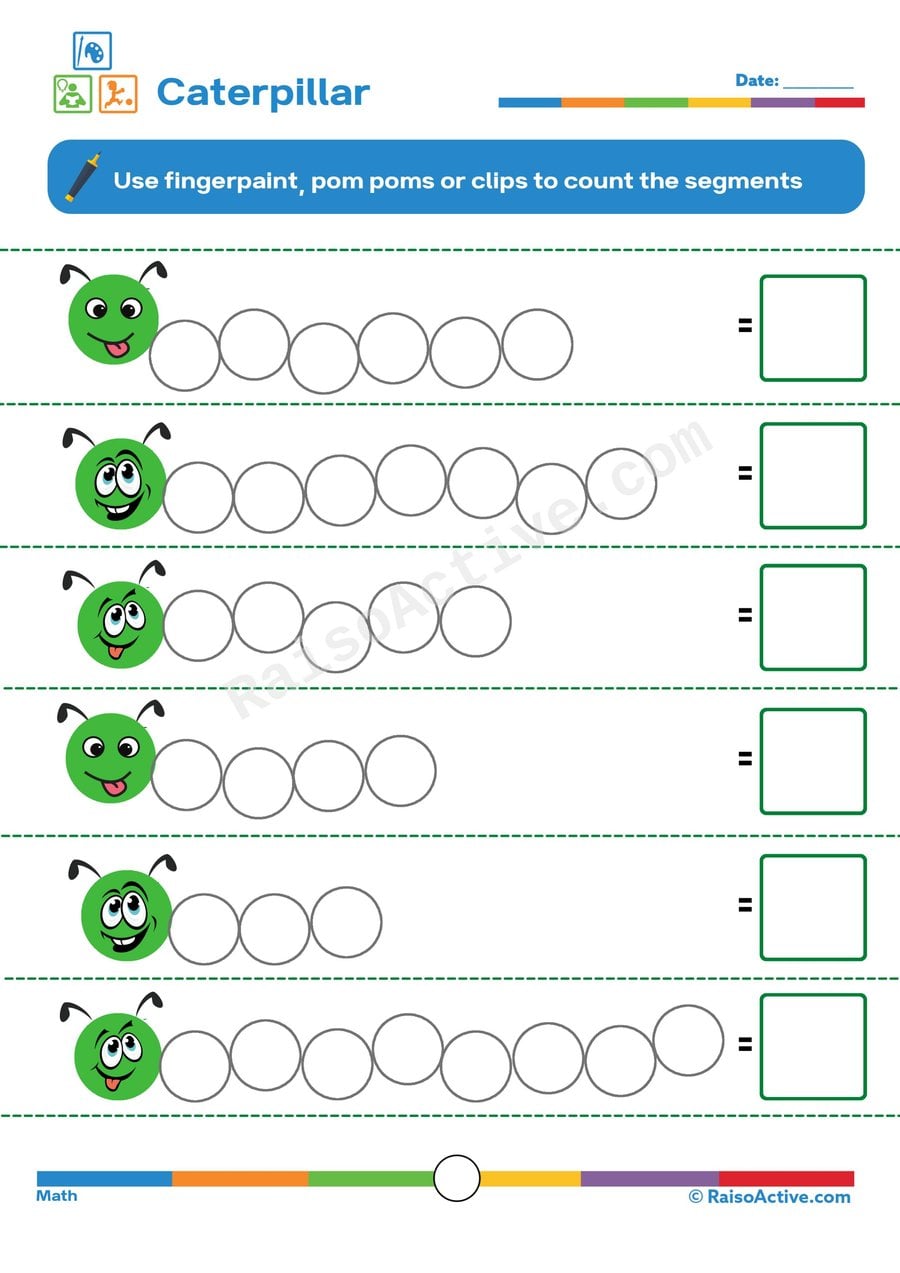
Caterpillar Counting Worksheet for Preschoolers
Counting the segments of each caterpillar teaches children ages 3-5 one-to-one correspondence — touching or marking each segment exactly once while saying a number — which is the core skill underlying accurate counting. Writing the final total in a box also connects the physical act of counting to its written numeral, reinforcing early number-writing practice.
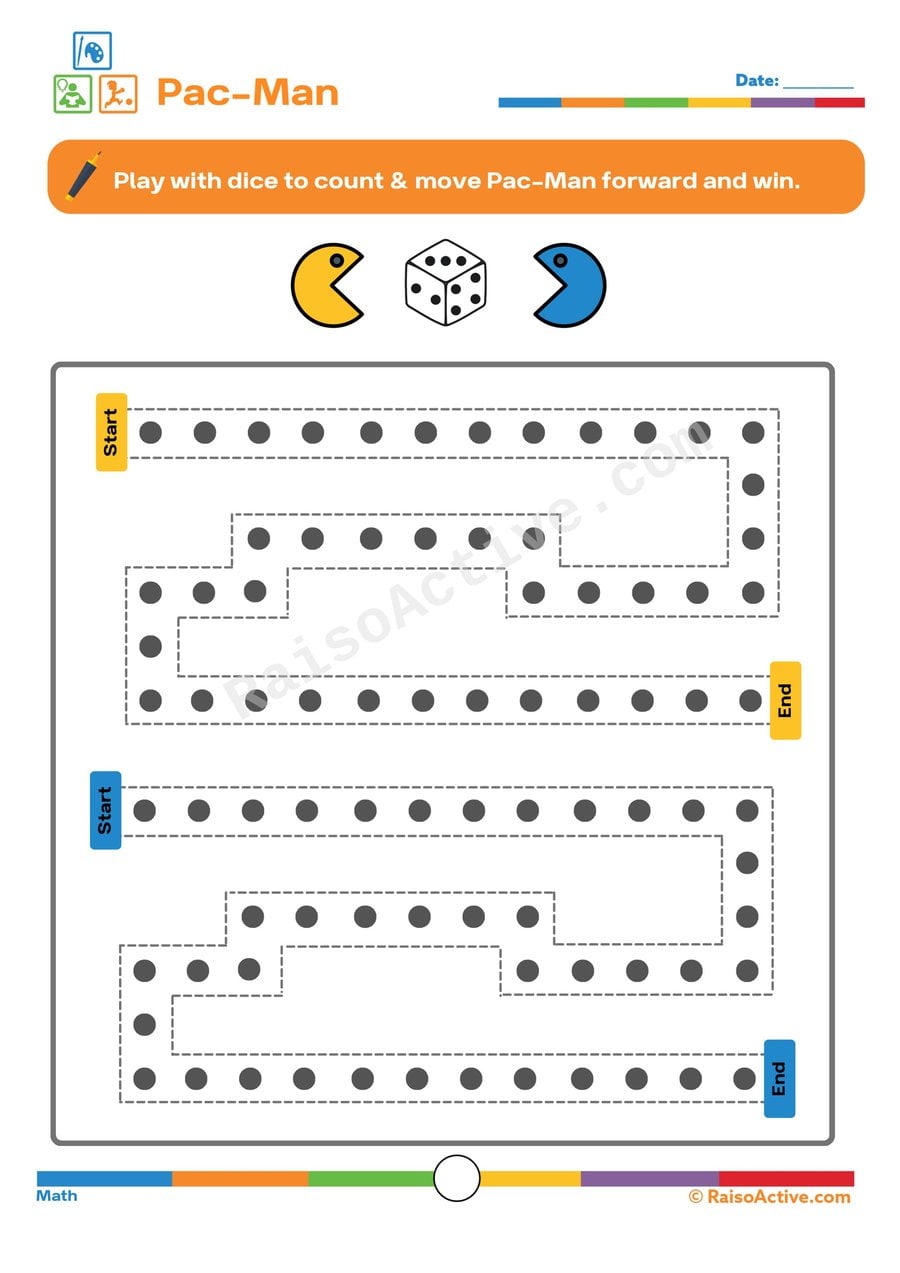
Pac-Man Maze Worksheet: Count and Move!
This dice-driven maze combines counting practice with path-following for children ages 3-5, since they must accurately count dots on a die before moving Pac-Man the matching number of spaces forward. Deciding how far to move and staying on the correct path also builds early strategic thinking, as children track their current position within the maze after each turn.
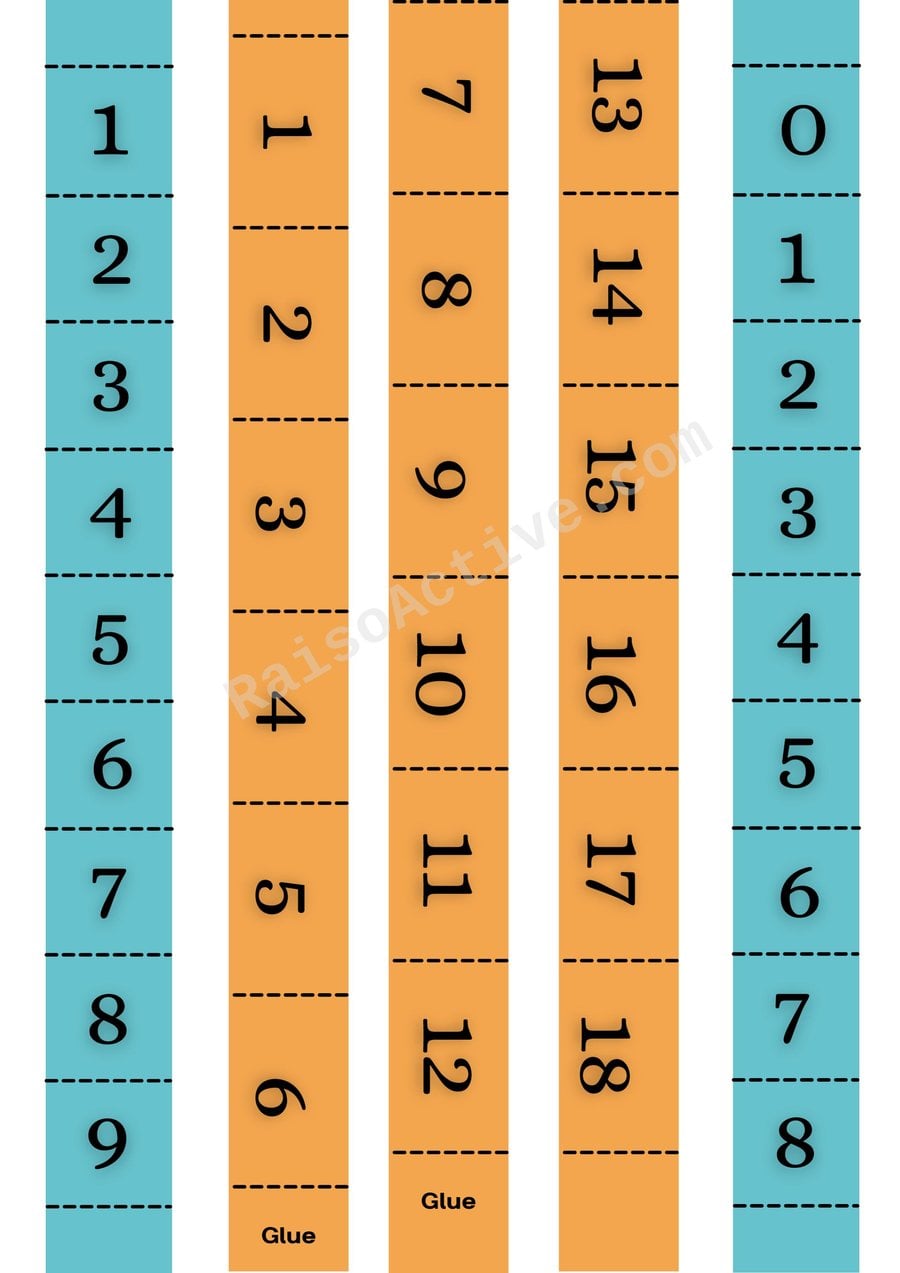
Number Matching Worksheet: 0-18
This activity strengthens numeral recognition for children ages 3-5 by having them find and pair matching numbers from 0 to 18 printed on separate strips. Because the numbers are scattered rather than in order, children must recognize each digit shape on its own rather than relying on counting sequence, which builds true number recognition instead of rote list-reciting.

Sheep's Barnyard Adventure: A Fun Counting and Movement Worksheet
This board-game-style worksheet helps children ages 4-6 practice counting and number recognition by rolling a die and moving a sheep piece along a numbered path, following simple instructions at each stop. Turning counting practice into a game with chance and movement keeps children engaged far longer than a static worksheet, while still reinforcing accurate counting and number sequence recognition along the path.
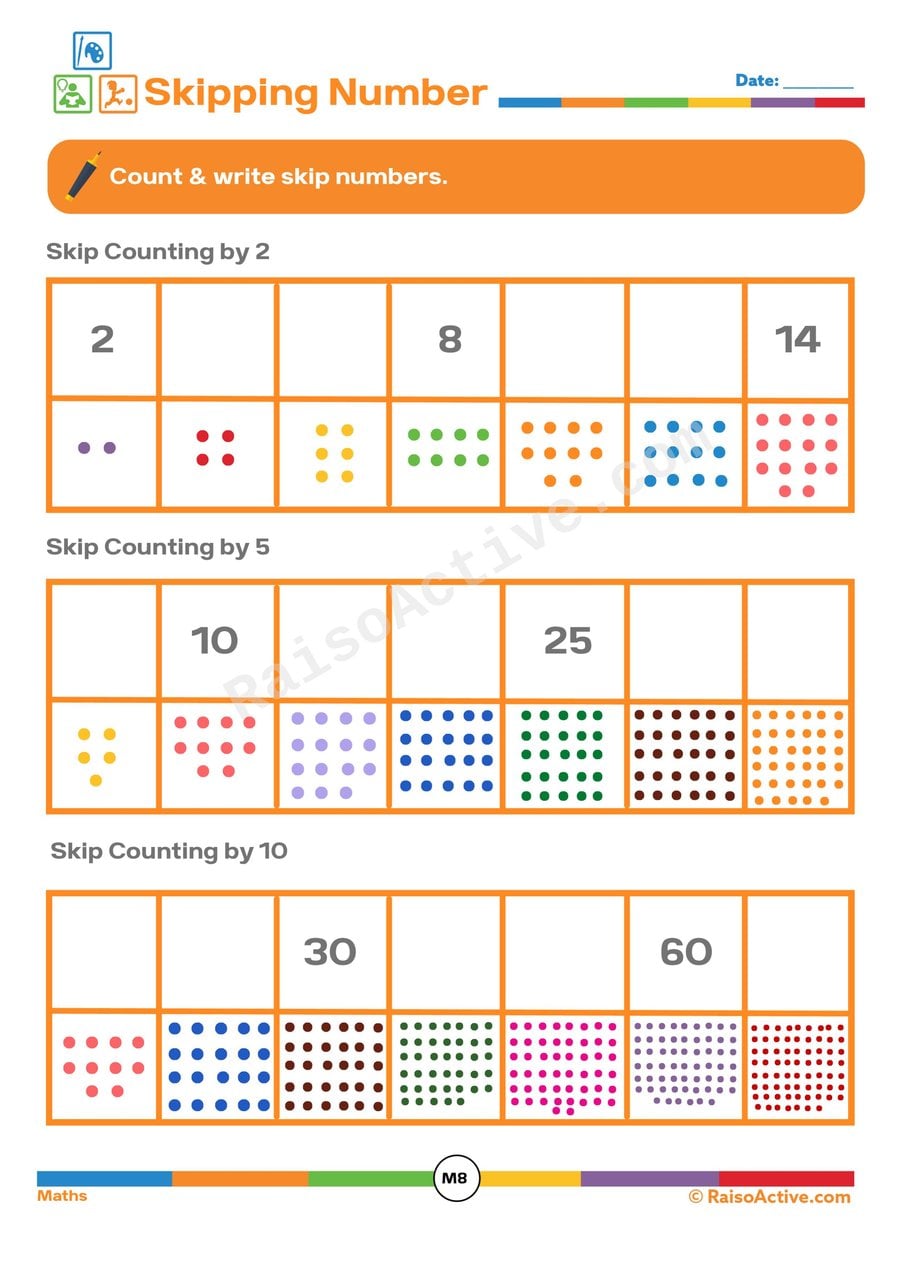
Skip Counting Adventure: Counting by 2, 5, and 10!
Children ages 4-6 practice skip counting by 2s, 5s, and 10s, recognizing the repeating number patterns that let them count large groups faster than counting one by one. Skip counting is an early stepping stone toward multiplication and a genuinely useful shortcut children can apply well beyond this worksheet.

Help Dad Reach Home! Missing Number Maze Worksheet
Filling in missing numbers along a maze path combines number sequencing from 1-20 with the planning skills needed to trace a route from start to finish, giving children ages 4-6 practice in both counting recall and spatial navigation.

Clothing Pattern Match Worksheet for Preschoolers
This worksheet has children ages 3-5 study repeating patterns on clothing items — stripes, polka dots, or checks — and match each item to its identical twin, building visual discrimination and early pattern-sequencing skills. Distinguishing between similar-looking patterns also sharpens attention to detail, a skill that later supports letter and word recognition.
Guides for this topic
Number Formation Rhymes 0–9 and How to Fix Reversals
Original number formation rhymes for 0–9, the correct stroke order for each digit, why 3, 5 and 7 get reversed most often, and multisensory fixes that work.
Discovering Wonder: Nature-Based Learning Activities That Captivate Young Children
Explore nature-based learning activities for children ages 2–7 — leaf rubbings, bug hunts, nature journals, and seasonal Indian outdoor ideas that spark wonder.
Spring and Summer Learning Activities: Harnessing Nature's Classroom for Year-Round Growth
Discover heat-safe outdoor activities, monsoon science experiments, and summer holiday learning plans for young children in India. Prevent summer slide with fun ideas for ages 1-8.
Reviews
Every worksheet for ages 3–5, no watermark
Members download the full library of 1,000+ worksheets and every activity pack without watermarks or daily limits. One year costs ₹1,000 in India or $20 elsewhere.
See membership plansOr download any worksheet free with a watermark (5 a day).