Trace the Numbers 1-9 Worksheet for Preschoolers
Tracing the numerals 1 through 9 gives children ages 3-5 repeated, guided practice with the specific pencil strokes each number requires, building the fine motor control and muscle memory needed for independent number writing. Because tracing follows a fixed, correct path, it also reinforces accurate numeral recognition, helping children tell visually similar digits apart.
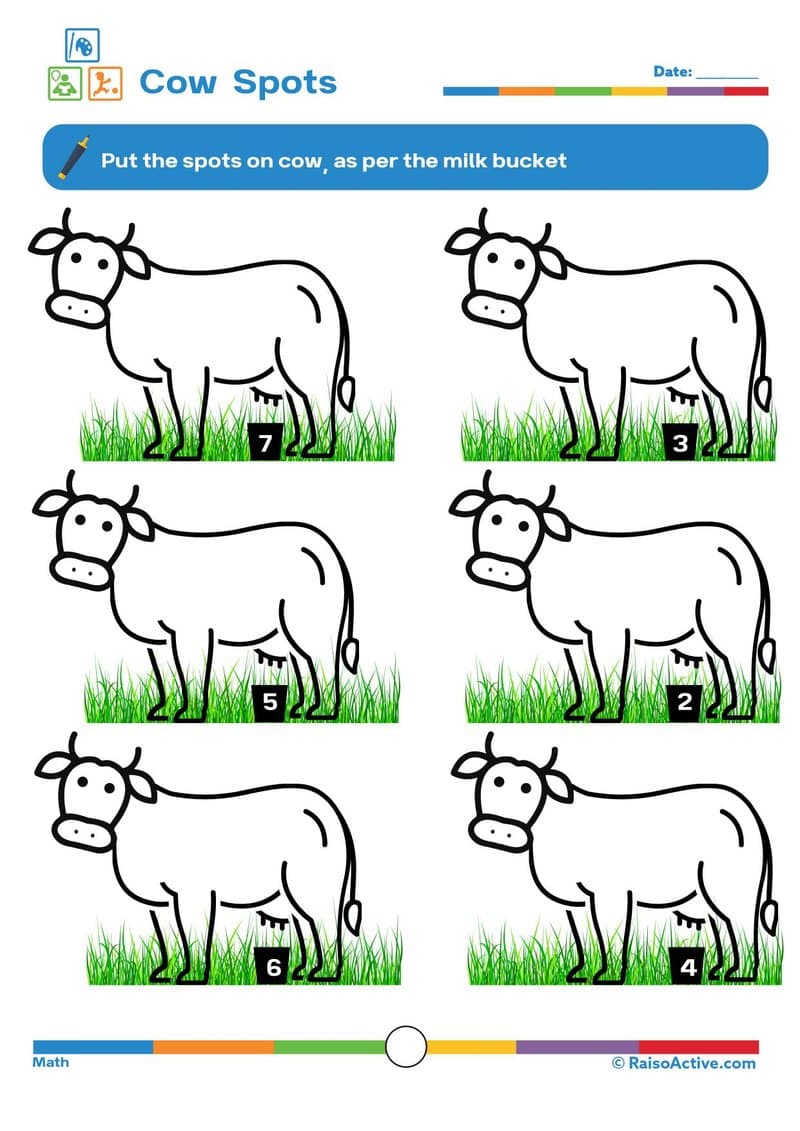
Part of the pack
Early Learning Activity Book: Math, Science, Literacy & Cognitive Skills for Preschoolers (Ages 3-6)
This is page 15 of the pack. Ages 3-6 · Preschool–KindergartenAges 3-6 · Nursery–Year 1Ages 3-6 · Nursery–UKGAges 3-6
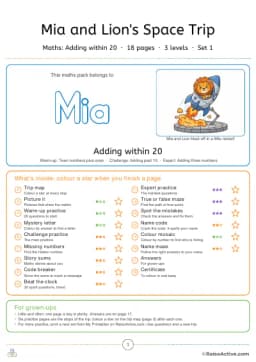
Made for your child
Counting to 10, made for your child
A maths pack with your child's name in it: pictures that explain, practice at three levels, puzzles and story sums about them. Print a new set whenever they finish.
Make a maths packFree preview · free for members
Curriculum
- Number Sense > Counting 1-20
How to use this worksheet
Starting with the number 1, have your child trace over the dotted or outlined numeral using a pencil, crayon, or marker, following the printed stroke direction. Move through each number in order up to 9, encouraging your child to say the number name aloud as they trace it. For extra sensory practice, let them trace a large version of each number in finger paint or a thin layer of playdough rolled into a rope. Once all numbers are traced, review the full sequence together by pointing to and reading each one aloud.
Materials needed
- Pencil
- Crayons
- Markers
- Finger paint or Playdough (optional)
Extension activities
- 1Count out that many small objects, like buttons or blocks, next to each traced number to link the symbol to its quantity.
- 2Trace numbers a second time on a separate blank sheet without the dotted guide, comparing the two attempts.
- 3Use finger paint or a tray of sand to trace each number with a fingertip for a different sensory experience.
- 4Play a quick game holding up fingers to match a number your child just traced.

Written by
Hemsweta Jain · Teacher Cheena
MBA and Early Childhood Educator, teaching since 2014 · Founder of RaisoActive, Mumbai
Every RaisoActive worksheet is designed and checked by the founder before publishing.
Published · Last reviewed
More from Early Learning Activity Book: Math, Science, Literacy & Cognitive Skills for Preschoolers (Ages 3-6)
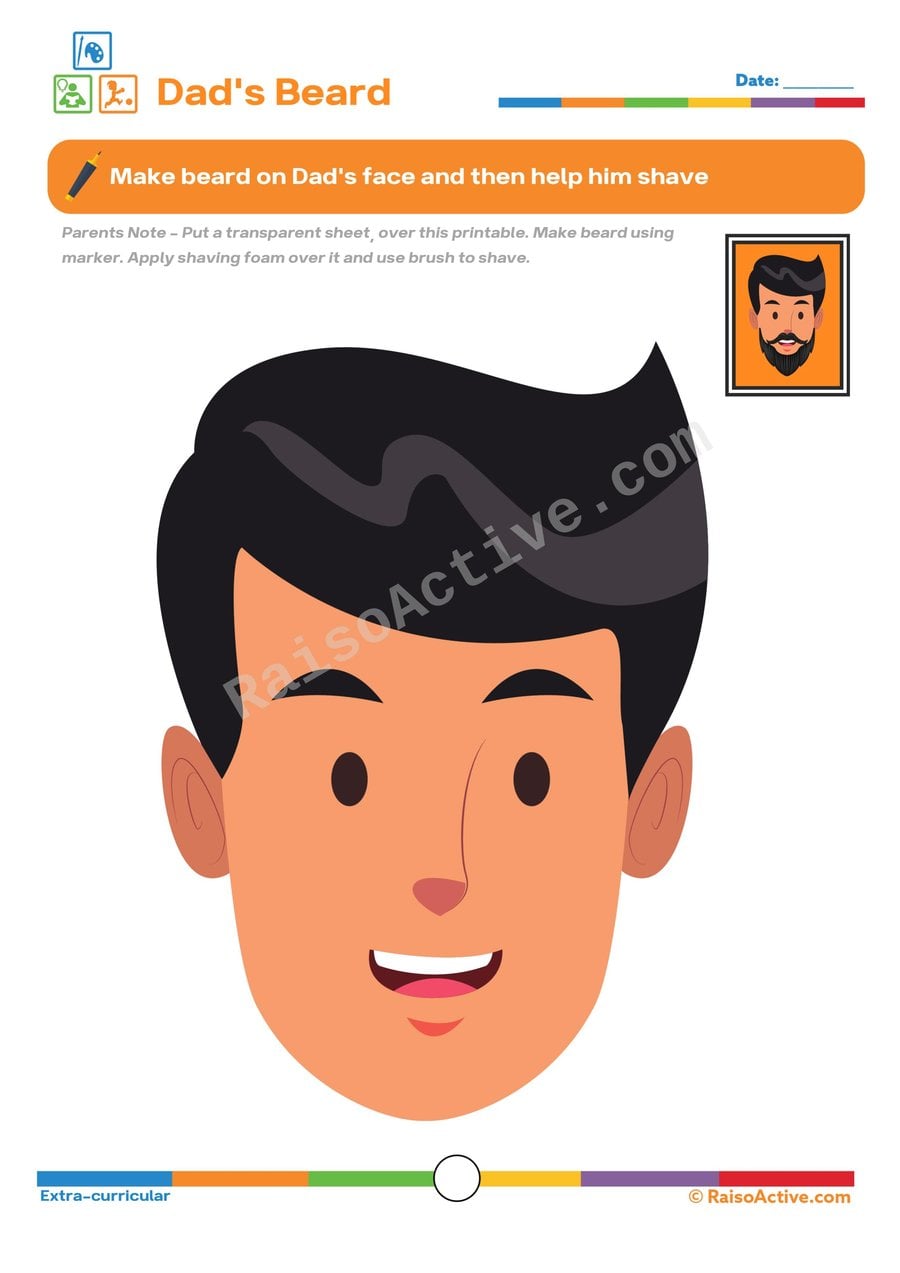
Dad's Beard: A Fun Shaving Activity for Kids!
Ages 3-5 · Preschool–Pre-KAges 3-5 · Nursery–ReceptionAges 3-5 · Nursery–LKGAges 3-5
This playful pretend-shaving activity builds fine motor control and bilateral coordination in children ages 3-5, as they draw a beard with a marker and then 'shave' it away using foam and a brush in careful, controlled strokes. It also introduces a simple science idea — that shaving foam can be applied and removed in layers — while giving children a hands-on, sensory way to imitate an everyday grown-up routine.

Taste Bud Sorting Worksheet: Identify and Sort Foods by Taste!
Ages 4-6 · Pre-K–KindergartenAges 4-6 · Reception–Year 1Ages 4-6 · LKG–UKGAges 4-6
This worksheet introduces children ages 4-6 to four basic taste categories — salty, sour, bitter, and sweet — by having them sort pictured foods into the correct group. Beyond taste vocabulary, sorting foods by an invisible property like flavor (rather than an obvious one like color or shape) pushes children to draw on memory and prior experience, building more advanced classification skills.
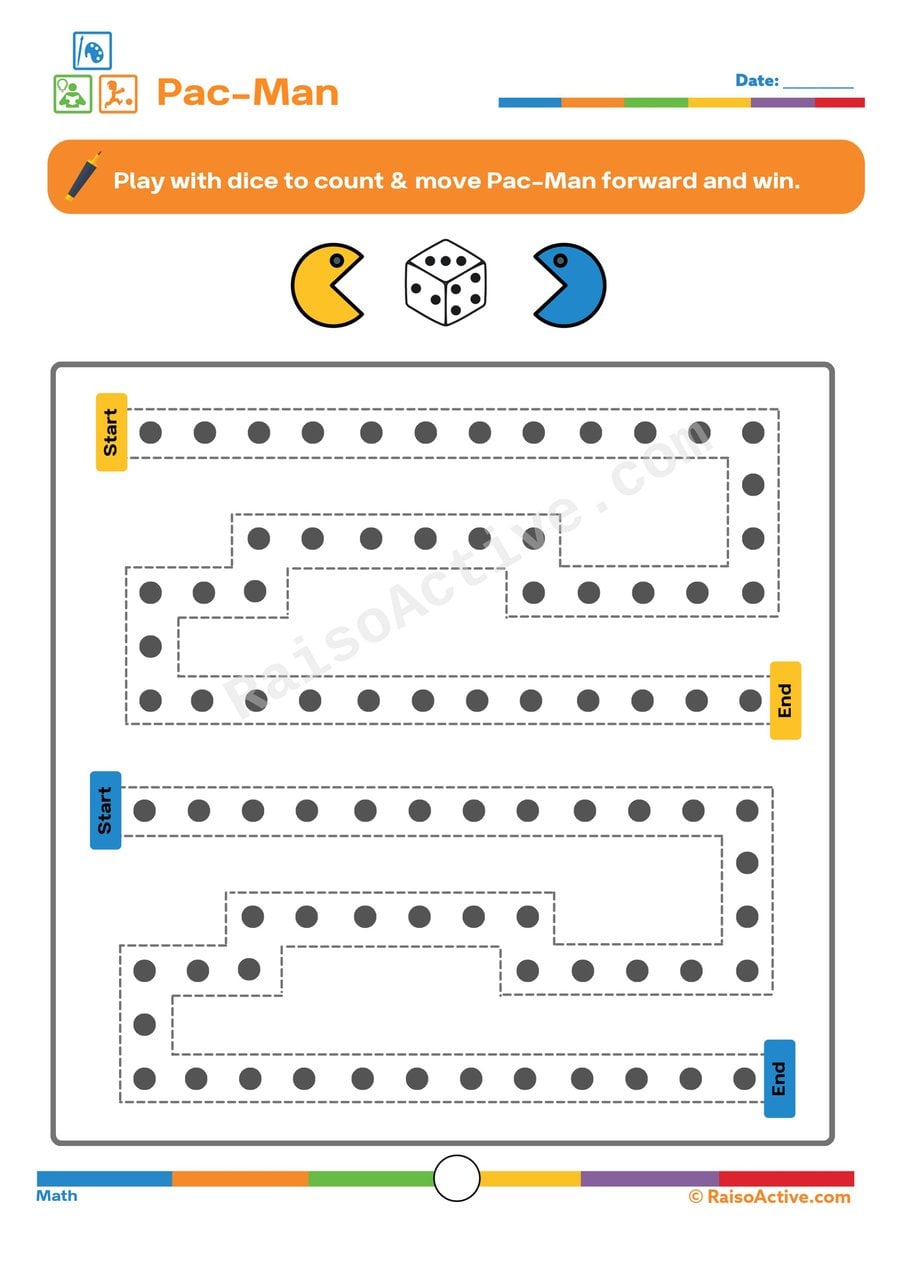
Pac-Man Maze Worksheet: Count and Move!
Ages 3-5 · Preschool–Pre-KAges 3-5 · Nursery–ReceptionAges 3-5 · Nursery–LKGAges 3-5
This dice-counting maze gives children ages 3-5 repeated practice matching a rolled number to the correct number of moves, reinforcing accurate counting under a bit of playful pressure. Tracking Pac-Man's current position after each roll also builds short-term spatial memory, since children must remember where they left off before moving again.

Lock and Key Matching Worksheet for Preschoolers
Ages 3-5 · Preschool–Pre-KAges 3-5 · Nursery–ReceptionAges 3-5 · Nursery–LKGAges 3-5
Matching each key to the lock sharing the same letter helps children ages 3-5 practice letter recognition in a playful, puzzle-like context rather than rote drilling. Because each key must be checked against several similar-looking locks before finding the right match, this worksheet also builds visual scanning and careful comparison skills that support problem-solving.

Clothing Pattern Match Worksheet for Preschoolers
Ages 3-5 · Preschool–Pre-KAges 3-5 · Nursery–ReceptionAges 3-5 · Nursery–LKGAges 3-5
This worksheet has children ages 3-5 study repeating patterns on clothing items — stripes, polka dots, or checks — and match each item to its identical twin, building visual discrimination and early pattern-sequencing skills. Distinguishing between similar-looking patterns also sharpens attention to detail, a skill that later supports letter and word recognition.

Soap & Pepper Science Experiment Worksheet for Preschoolers
Ages 3-5 · Preschool–Pre-KAges 3-5 · Nursery–ReceptionAges 3-5 · Nursery–LKGAges 3-5
This simple experiment introduces children ages 3-5 to the basic science of surface tension and how soap breaks it, using pepper flakes sprinkled on water as a visual demonstration. Watching the pepper scatter away the instant soap touches the water gives children a concrete, memorable example of cause and effect, an early building block for scientific thinking.

Stick Man Emotions Worksheet: Happy, Sad, Angry, and Surprised!
Ages 4-6 · Pre-K–KindergartenAges 4-6 · Reception–Year 1Ages 4-6 · LKG–UKGAges 4-6
Children ages 4-6 practice reading facial expressions on this worksheet, matching stick-figure faces to their correct emotion labels by noticing details like mouth shape and eyebrow position. This strengthens emotional literacy — the ability to name and recognize feelings in others — which supports empathy and smoother social interactions as children move into more group play and classroom settings.

Elephant Shapes: Fun Sorting Worksheet for Preschoolers!
Ages 3-5 · Preschool–Pre-KAges 3-5 · Nursery–ReceptionAges 3-5 · Nursery–LKGAges 3-5
This playful sorting worksheet has children ages 3-5 use an elephant's 'trunk' (their own hand reaching through a cut circle) to pick and sort shapes, building both shape recognition and simple classification skills. Physically selecting and grouping shapes by type, rather than just naming them on sight, helps solidify the concept that shapes can share a category even when their size or color differs.
Related worksheets
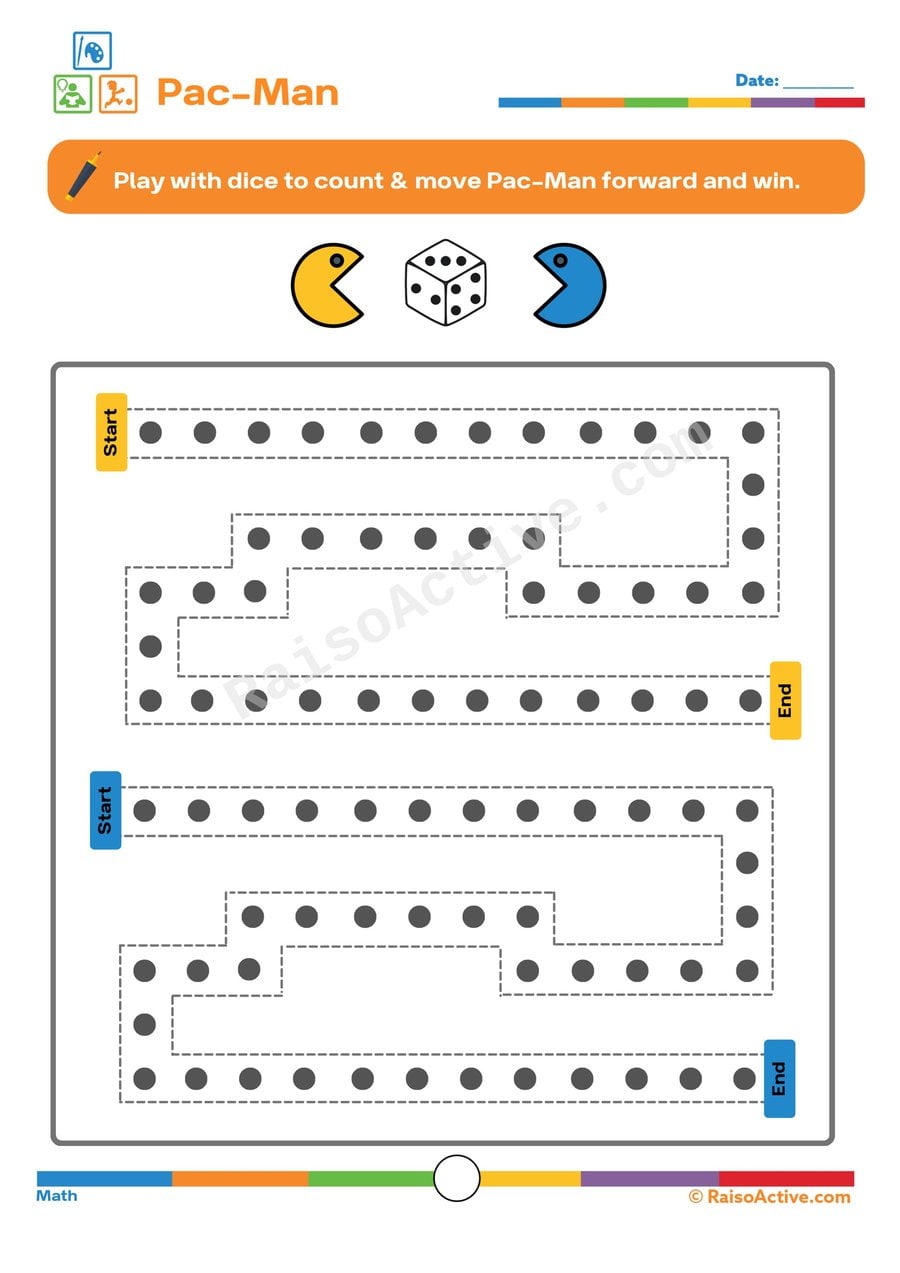
Pac-Man Maze Worksheet: Count and Move!
Ages 3-5 · Preschool–Pre-KAges 3-5 · Nursery–ReceptionAges 3-5 · Nursery–LKGAges 3-5
This dice-driven maze combines counting practice with path-following for children ages 3-5, since they must accurately count dots on a die before moving Pac-Man the matching number of spaces forward. Deciding how far to move and staying on the correct path also builds early strategic thinking, as children track their current position within the maze after each turn.
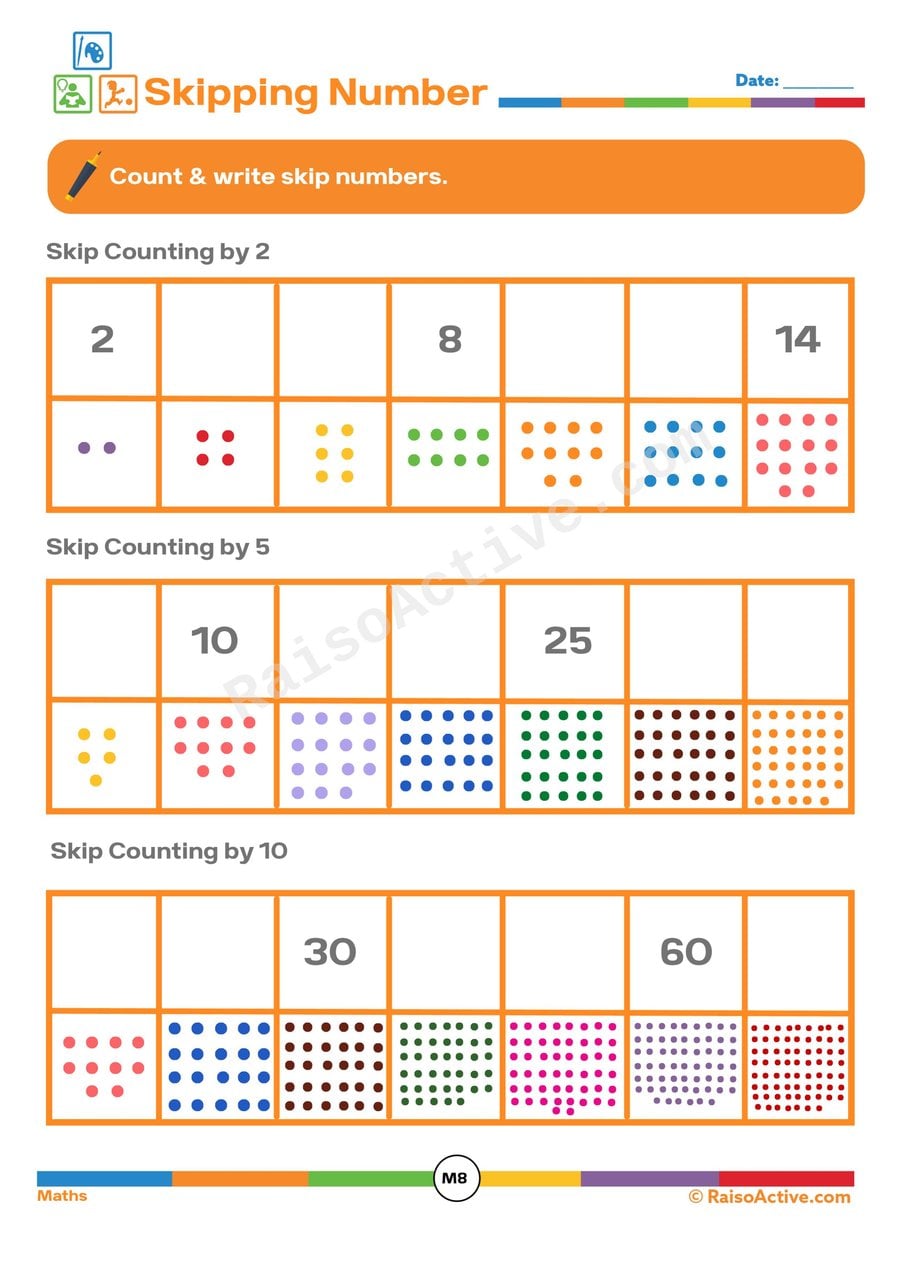
Skip Counting Adventure: Counting by 2, 5, and 10!
Ages 4-6 · Pre-K–KindergartenAges 4-6 · Reception–Year 1Ages 4-6 · LKG–UKGAges 4-6
Children ages 4-6 practice skip counting by 2s, 5s, and 10s, recognizing the repeating number patterns that let them count large groups faster than counting one by one. Skip counting is an early stepping stone toward multiplication and a genuinely useful shortcut children can apply well beyond this worksheet.

Summer Counting Worksheet: Count and Color Summer Objects!
Ages 3-5 · Preschool–Pre-KAges 3-5 · Nursery–ReceptionAges 3-5 · Nursery–LKGAges 3-5
This summer-themed counting page has children ages 3-5 count groups of sun, beach, and vacation-related objects and write the matching numeral in a box, directly practicing one-to-one correspondence, the skill of counting each item exactly once. Because the objects are grouped by theme rather than lined up in neat rows, children also practice visually organizing a scattered set before counting it, a slightly harder skill than counting objects in a straight line. Writing the total afterward connects the physical act of counting to the abstract symbol that represents it.

I Spy Summer Fun Worksheet: Counting and Identifying Objects!
Ages 3-5 · Preschool–Pre-KAges 3-5 · Nursery–ReceptionAges 3-5 · Nursery–LKGAges 3-5
This 'I Spy Summer Fun' worksheet helps young learners (ages 3-5) master one-to-one correspondence, a crucial foundational math skill, by counting specific summer-themed objects within a busy scene. Children will practice associating a number name with each item they touch or point to, building early number sense and visual discrimination. This activity strengthens their ability to accurately count quantities up to 20, preparing them for more complex mathematical concepts.

Help Dad Reach Home! Missing Number Maze Worksheet
Ages 4-6 · Pre-K–KindergartenAges 4-6 · Reception–Year 1Ages 4-6 · LKG–UKGAges 4-6
Filling in missing numbers along a maze path combines number sequencing from 1-20 with the planning skills needed to trace a route from start to finish, giving children ages 4-6 practice in both counting recall and spatial navigation.
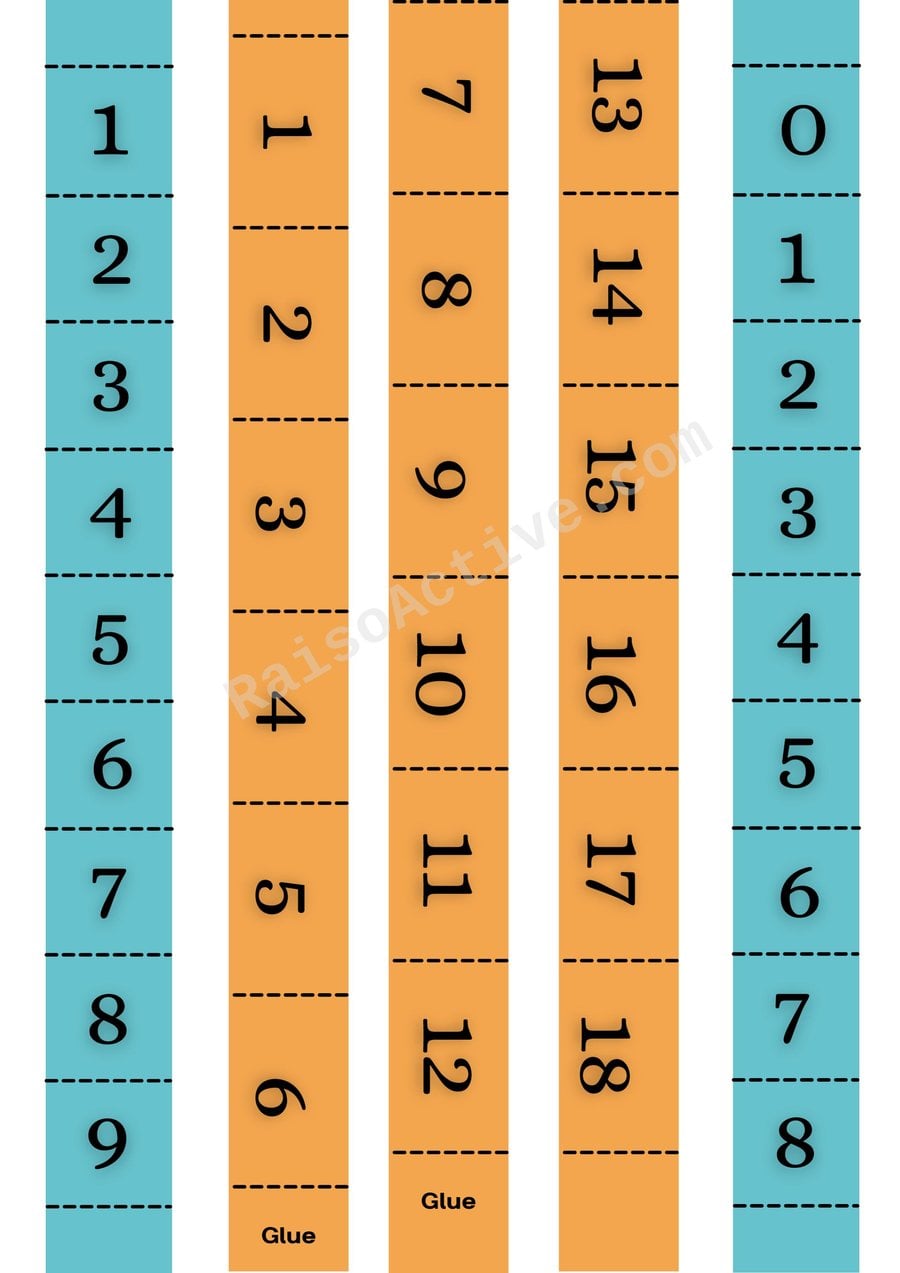
Number Matching Worksheet: 0-18
Ages 3-5 · Preschool–Pre-KAges 3-5 · Nursery–ReceptionAges 3-5 · Nursery–LKGAges 3-5
This activity strengthens numeral recognition for children ages 3-5 by having them find and pair matching numbers from 0 to 18 printed on separate strips. Because the numbers are scattered rather than in order, children must recognize each digit shape on its own rather than relying on counting sequence, which builds true number recognition instead of rote list-reciting.

Summer Counting Worksheet: Count and Color Summer Objects!
Ages 3-5 · Preschool–Pre-KAges 3-5 · Nursery–ReceptionAges 3-5 · Nursery–LKGAges 3-5
This worksheet has children ages 3-5 count summer objects arranged in separate boxes and write the matching number below each group, giving repeated practice at connecting a counted quantity to its written numeral across several small sets. Working through multiple separate boxes, rather than one long row, keeps each counting task short and manageable while still building the stamina to repeat the process several times in a row. This structure also helps children generalize the skill of counting and labeling rather than memorizing a single group's answer.

Count the Sea Animals! A Fun Counting Worksheet for Kids
Ages 3-5 · Preschool–Pre-KAges 3-5 · Nursery–ReceptionAges 3-5 · Nursery–LKGAges 3-5
This worksheet has children ages 3-5 count different sea animals grouped in boxes and then identify the matching numeral for each group, strengthening one-to-one correspondence alongside early ocean and marine-life vocabulary. Because each box features a different sea creature, such as fish, crabs, or starfish, children also practice sorting attention between groups rather than counting one long continuous row. This variety keeps the counting task from becoming rote repetition.
Guides for this topic

Number Formation Rhymes 0–9 and How to Fix Reversals
Original number formation rhymes for 0–9, the correct stroke order for each digit, why 3, 5 and 7 get reversed most often, and multisensory fixes that work.

Documenting Learning Without Drowning in Data: A Practical Guide for Parents and Teachers
Learn practical ways to document your child's learning without overwhelm. Simple portfolios, observation tips, and printable trackers for ages 1-8.

How to Help Your Child with Letter Reversals: A Complete Guide for Parents and Teachers
Letter reversals are normal until age 7-8. Learn the best multisensory strategies, anchor letter tricks, and activities to help children write b, d, p, and q correctly.
Reviews
Every worksheet for ages 3–5, no watermark
Members download the full library of 1,000+ worksheets and every activity pack without watermarks or daily limits. One year costs ₹999 in India or $20 elsewhere.
See membership plansOr download any worksheet free with a watermark (5 a day).