Free printable worksheets · United States
Kindergarten Number Tracing Worksheets (Ages 5–6)
Kindergarten number tracing worksheets are practice sheets for children aged 5–6 in Kindergarten in the US. Number tracing is following the dotted outline of a printed numeral with a pencil, practicing the correct stroke direction and shape for each digit. The sheets on this page cover numeral formation 0–9, correct stroke direction for each digit, number-to-quantity matching and consistent numeral size and spacing.
Kindergarten is the year formal reading instruction begins under Common Core: a child is expected to know a sound for every consonant and the short vowels, decode simple three-letter words, write a basic sentence, count to 100 by ones and tens, and add and subtract within 10. Five-year-olds trace numerals up to twenty, including the trickier teen numbers where a one and a digit sit side by side, and two-digit spacing becomes part of the task. Worksheets should trace each number beside a matching quantity, such as a ten-frame or a row of dots, and finish with a numeral copied from a model rather than traced. By the end of the year, writing numerals to ten from memory should be steady.
767+ worksheets · free PDF download · print on A4 or Letter
Kindergarten Number Tracing Worksheets to print
Browse all worksheets for ages 5–6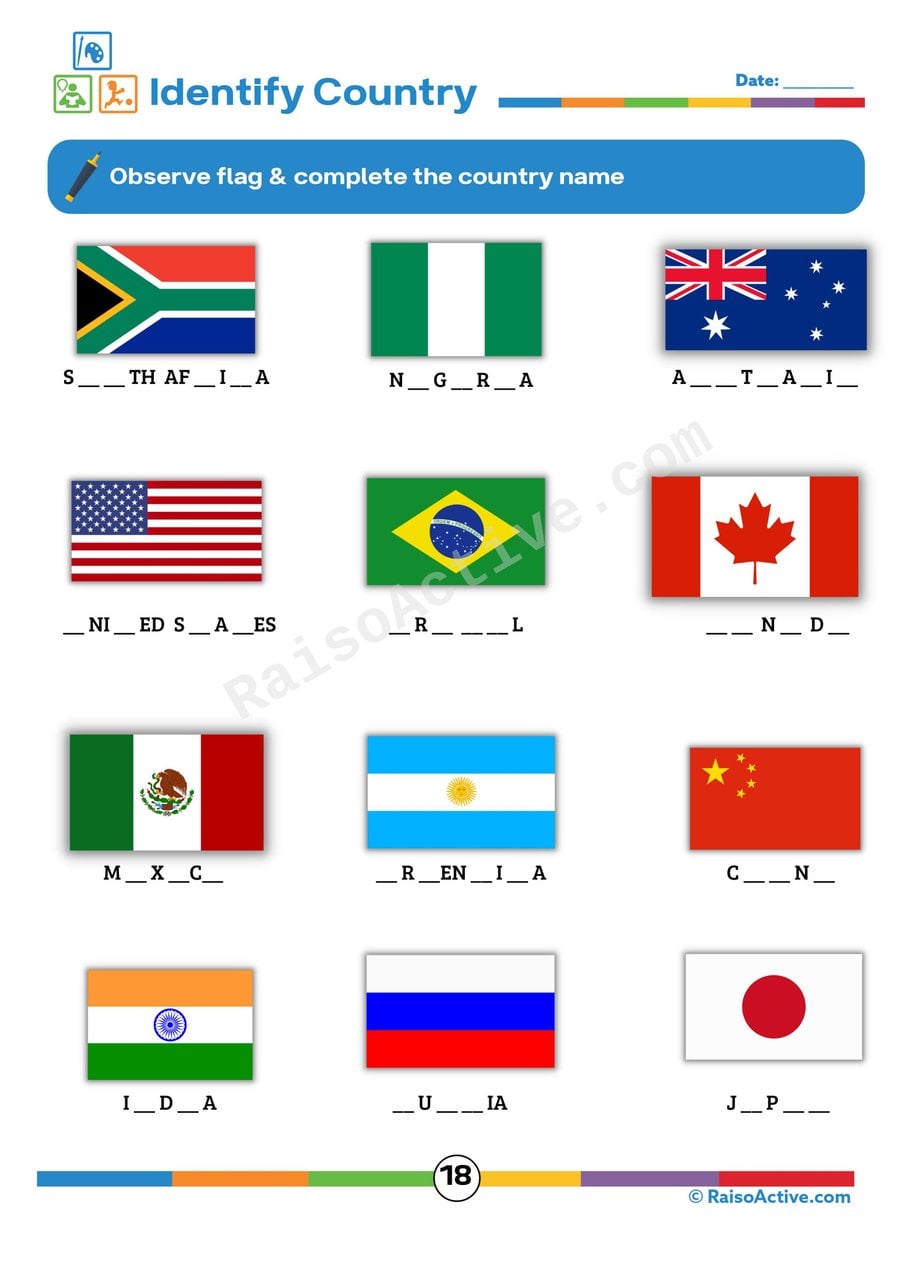
Identify the Country: Flag Matching Worksheet
Filling in the missing letters of each country's name while studying its flag gives children ages 4-7 practice with letter-sound correspondence and spelling patterns, since they must sound out the word and recall which letters are already provided as clues. It also builds early geography knowledge, helping children connect a visual symbol (the flag) to a country's name for the first time. This dual practice of decoding and world knowledge lays groundwork for both literacy and social studies skills.

Sun Safety Worksheet for Kids: Learn About Staying Safe in the Sun!
This worksheet has children ages 4-7 answer questions about sun safety, such as why sunscreen and hats matter, building early health literacy alongside writing practice as they put their understanding into their own words. Because the questions ask children to reason about why certain sun-safety habits matter rather than just label a picture, this worksheet develops early explanatory thinking, a step up from simple factual recall. Practicing writing full answers, even short ones, also builds sentence-forming skills appropriate for this age range.
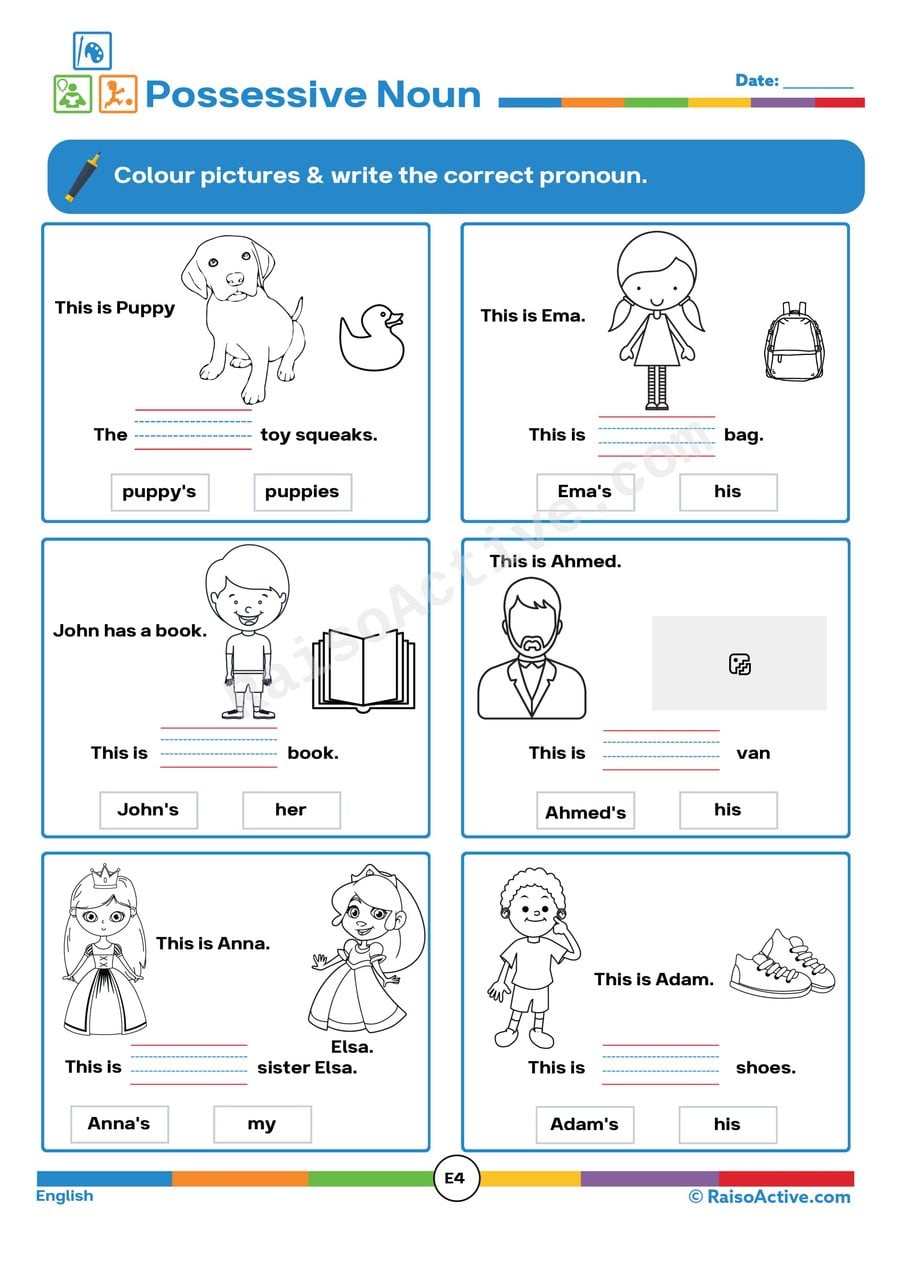
Possessive Nouns Worksheet: Color and Write!
Children ages 4-6 practice forming possessive nouns, learning to add an apostrophe and 's' to show that something belongs to someone, like 'the dog's bone.' This is a specific grammar rule that children will use constantly once they start writing about ownership in their own sentences.

Present Tense Worksheet: Fill in the Blanks and Identify Sentences!
This worksheet gives children ages 4-6 focused practice with present tense verbs, both producing them correctly in fill-in-the-blank sentences and recognizing them when identifying whether a given sentence is written in the present tense. Distinguishing tense is an important grammar milestone that helps children communicate clearly about what is happening right now versus what already happened, a distinction they're actively sorting out in their own speech at this age.

Conjunctions Worksheet: Expanding Sentences (Ages 4-6)
This worksheet moves beyond simple conjunction identification to active sentence expansion, asking children to use conjunctions like 'but,' 'when,' 'until,' 'because,' and 'if' to add new information and build longer, more sophisticated sentences. For ages 4-6, this kind of guided sentence-combining is a key step toward more complex, connected storytelling in both spoken and written language.

G and J Sound Worksheet: Find and Figure Out the /j/ Sound!
This worksheet tackles a genuinely tricky phonics rule for children ages 4-6: that both the letters 'g' and 'j' can make the same /j/ sound, depending on the word, as in 'giraffe' and 'jump.' Learning to fill in the correct letter based on context and word-specific spelling (rather than a fixed rule) builds early spelling flexibility and prepares children for the reality that English spelling often requires memorization alongside phonics logic. This kind of targeted practice on a specific, commonly confused sound-letter relationship fills an important gap that general phonics worksheets tend to skip.

CCVCC Word Worksheet: Color and Write!
This worksheet challenges children ages 4-6 to identify and write CCVCC words — words with a consonant blend at both the beginning and the end, like 'stomp' or 'crisp' — by coloring the correct letters and writing the complete word. As one of the more complex CVC-family word patterns, CCVCC words require children to blend and hold onto sounds at both ends of the word, a genuine stretch beyond basic three- and four-letter words.

Spooky Vocabulary Worksheet: Fill in the Missing Letters!
This worksheet has children ages 4-6 look at a Halloween picture and fill in the missing letters of its matching word, building phonics skills and reinforcing correct spelling patterns for seasonal vocabulary. Because only some letters are missing rather than the whole word, children practice using partial information and sound-based reasoning to complete each word correctly.

Number Names Worksheet: Addition Practice for Kids
This worksheet combines addition practice with number-word writing for children ages 4-6, asking them to solve simple addition problems and then spell out the answer using its written name rather than a numeral. Requiring the answer in word form pushes children beyond calculation into applying number vocabulary correctly, reinforcing that 'seven' and '7' represent the same value. This dual task builds both math fluency and early spelling skills together.
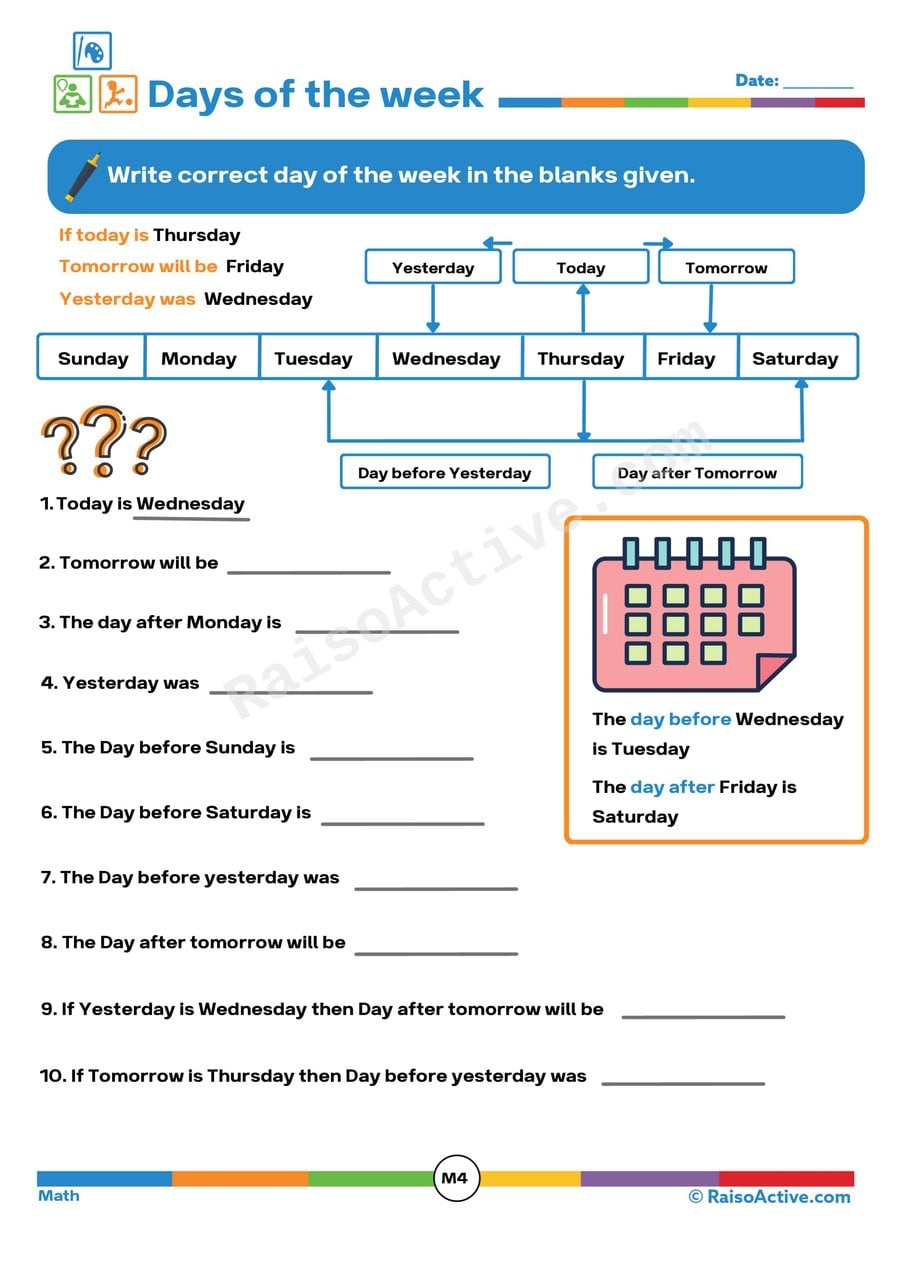
Days of the Week Worksheet: Learn the Days!
Learning the days of the week in order gives children a framework for understanding time, routines, and scheduling that they'll use for the rest of their lives, from knowing when school happens to planning a weekend. For ages four to six, practicing the correct sequence, Monday through Sunday, also builds the same kind of ordered-list memory skill used for the alphabet and counting.
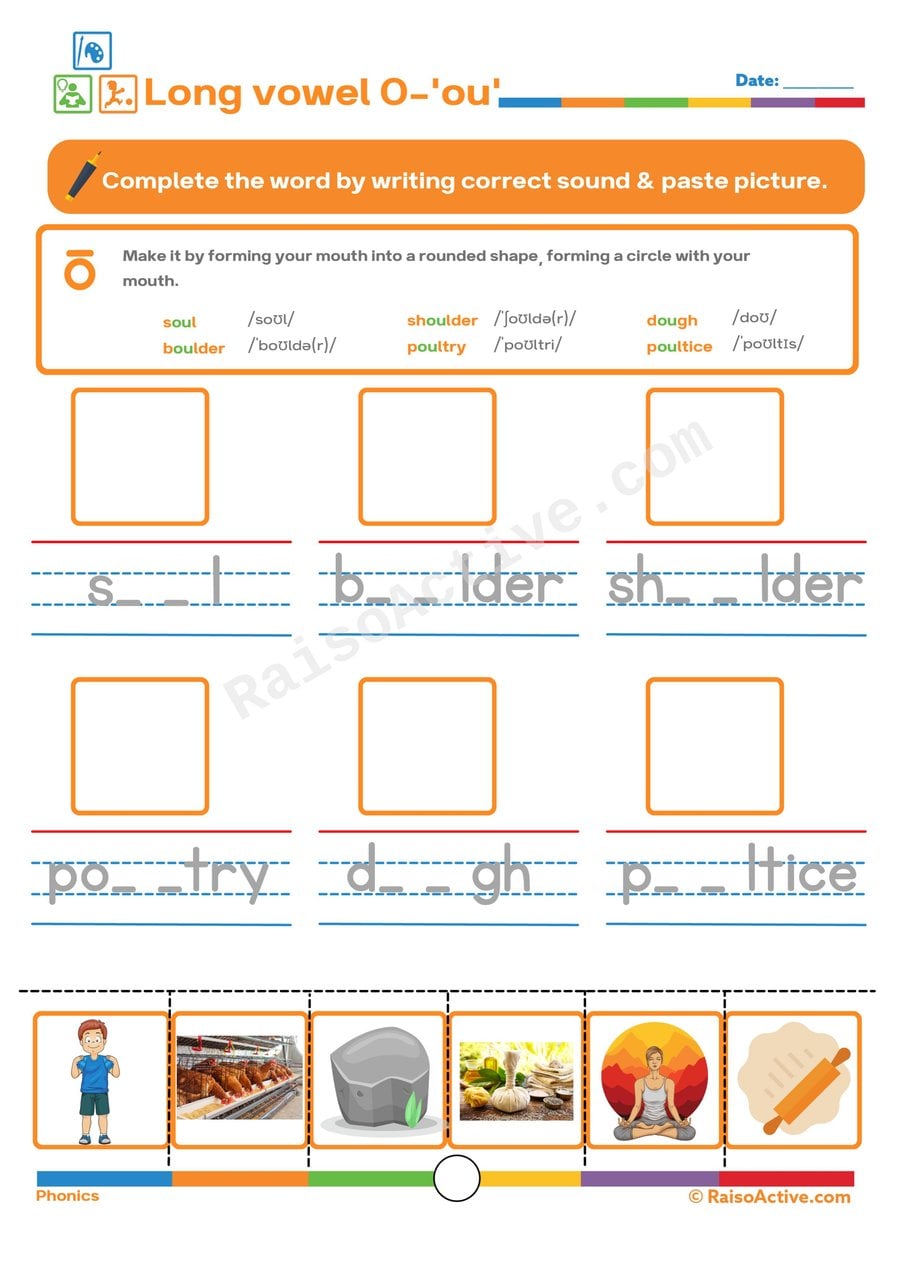
Long Vowel O-'ou' Worksheet: Complete the Words!
This worksheet introduces children ages 4-6 to the 'ou' spelling pattern for the long 'o' sound, as found in words like 'soul' or 'shoulder,' by having them fill in missing letters to complete words and then match each finished word to its picture. Because 'ou' is a less common and less intuitive spelling for the long 'o' sound, this practice builds the flexible spelling awareness needed to recognize the same sound written in unfamiliar ways.

Long Vowel 'e-ea' Worksheet: Circle and Write the Words!
This worksheet has children ages 4-6 identify pictures whose names contain the long 'e' sound spelled with either 'e' or the two-letter combination 'ea,' building awareness that the same sound can be spelled in more than one way. Circling the correct pictures practices auditory discrimination, while writing the matching words afterward adds spelling practice tied directly to a sound children have just identified by ear. Understanding that sounds can have multiple spellings is an important and often tricky milestone in early phonics.

Comma Practice Worksheet for Kids: Separating Items in a List!
Children ages 4-6 learn exactly where commas belong when writing a list of three or more items in a sentence, a specific punctuation rule that makes their early writing readable to others. Practicing this now, before they start composing longer sentences independently, builds a habit that carries straight into school writing tasks.
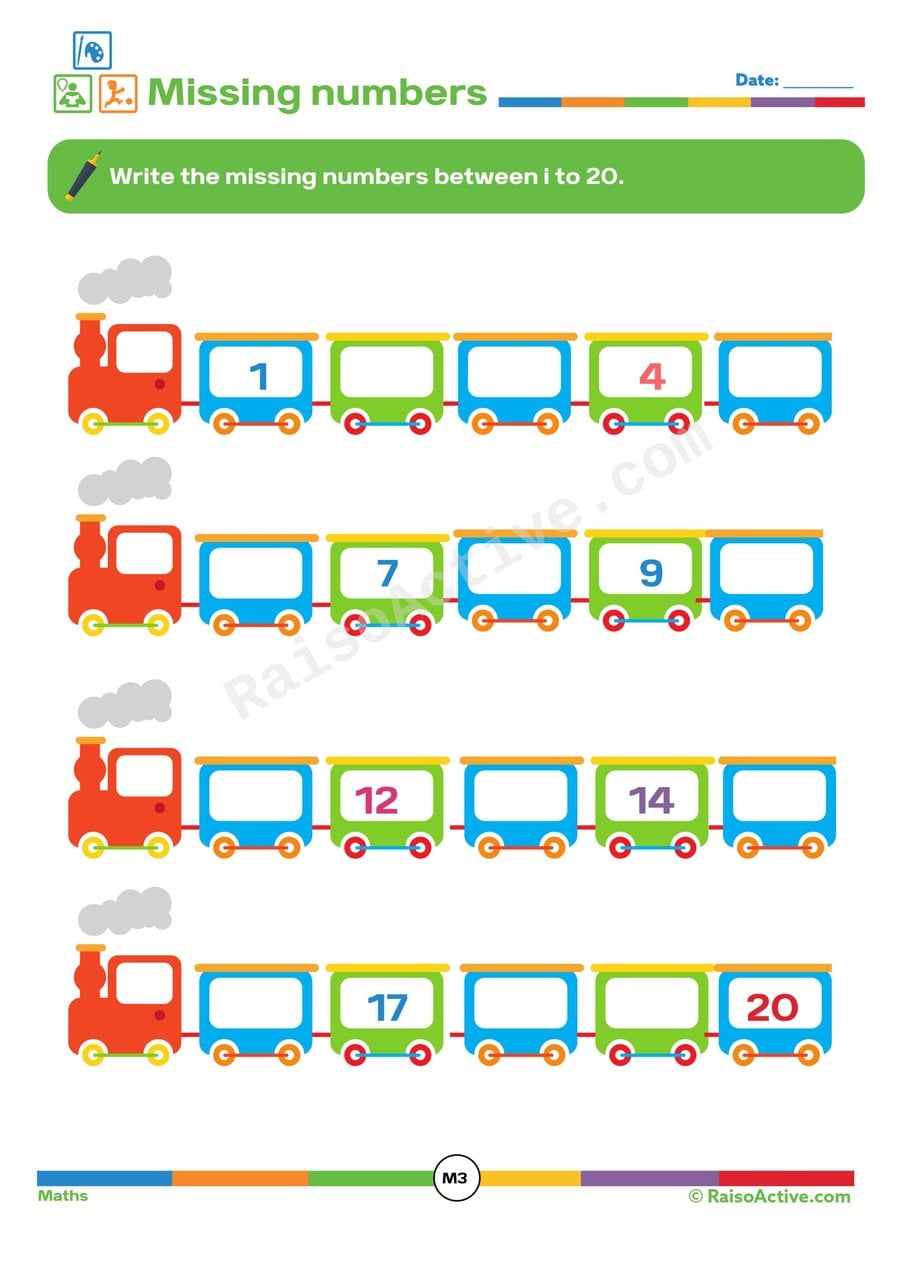
Missing Numbers Train Worksheet: Numbers 1-20
This worksheet helps children ages 4-6 practice number recognition and sequencing by filling in missing numbers on a train of cars that counts from 1 to 20, reinforcing that numbers follow a fixed, predictable order. Working with a range this large also builds the stamina and sustained counting skill needed before children move on to skip-counting and simple addition.

Beehive Number Fun: Missing Numbers 0-30 Worksheet
Filling in missing numbers along a beehive path gives 4-6 year olds practice with the full 0-30 number sequence, a meaningful stretch beyond the more common 1-10 or 1-20 ranges seen in earlier counting worksheets. Because the missing numbers are scattered rather than all at the end, your child has to actually understand what number comes next at multiple points in the sequence, rather than simply continuing a count from a known starting point.
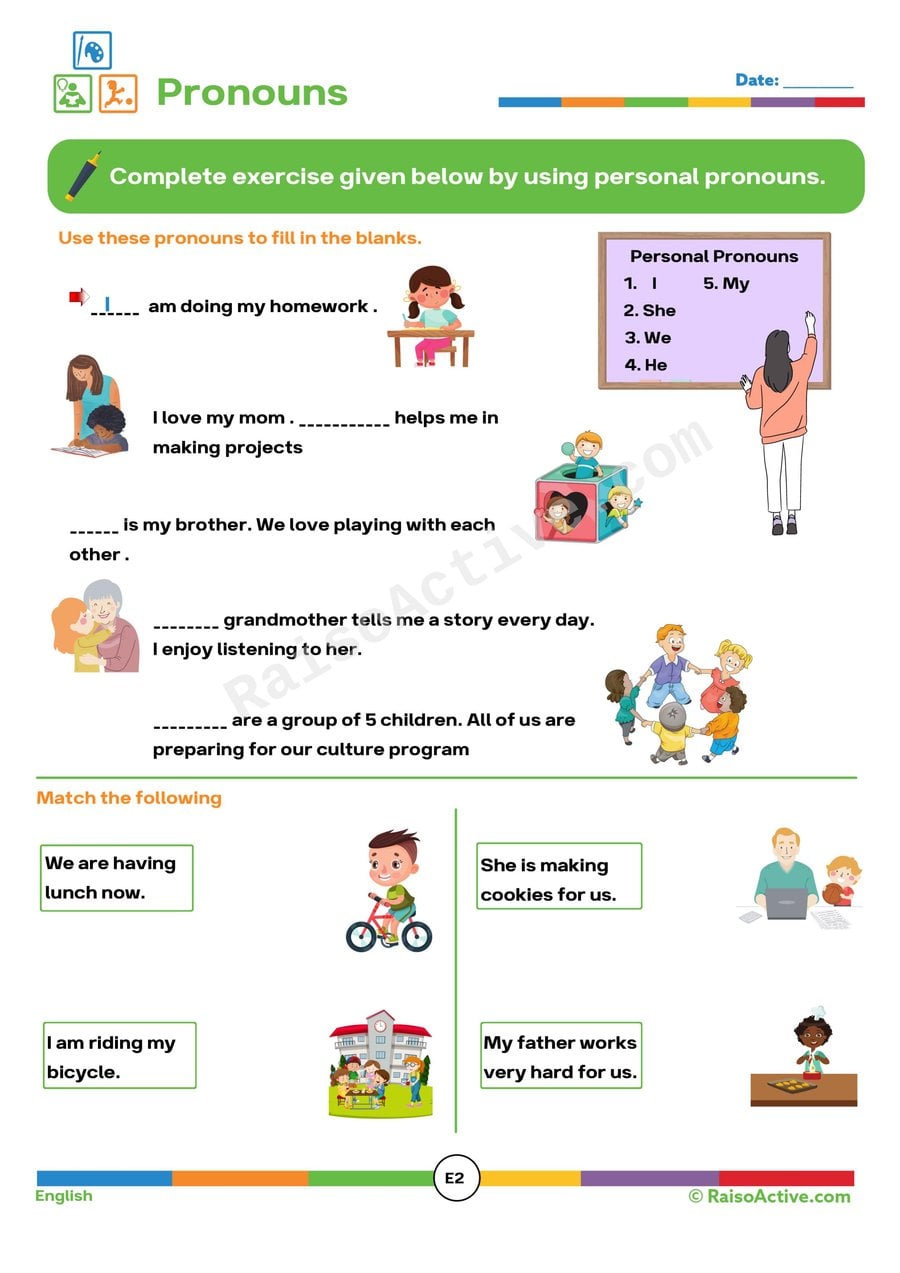
Pronouns Practice Worksheet for Preschoolers
Children ages 4-6 practice using personal pronouns like 'I', 'she', 'we', 'he', and 'my' correctly within simple sentences, an early grammar skill that helps their speech and writing sound clear and natural. Matching completed sentences to images afterward reinforces comprehension, ensuring children understand the meaning behind the pronoun they chose rather than guessing. This combination of fill-in-the-blank and picture matching builds both grammar accuracy and reading comprehension together.

Before and After Numbers Worksheet for Preschoolers
This number sequencing worksheet asks children ages 4-6 to identify the numbers that come immediately before and after a given number, strengthening their mental number line and reinforcing the concept that numbers exist in a fixed, ordered sequence. This before-and-after reasoning is more demanding than simple counting because it requires children to move both forward and backward from a starting point. Building this flexible number sense supports later addition and subtraction, which both rely on moving confidently along a mental number line.

Proper Noun Worksheet for Kids: Fill-in-the-Blanks and Identify!
This worksheet teaches children to tell the difference between a common noun and a proper noun, the specific, capitalized name of a particular person, place, or thing, which is foundational for both grammar and correct capitalization in their own writing. Ages four to six are at the right stage to start noticing that names like 'London' or 'Sara' get capital letters while general words like 'city' or 'girl' do not.

Conjunctions Worksheet: Practice with 'and', 'but', 'so', and 'yet'
This worksheet introduces four common coordinating conjunctions, teaching children to notice how 'and,' 'but,' 'so,' and 'yet' each connect ideas differently, whether adding information, showing contrast, or indicating a result. For ages 4-6, this is an early step toward writing compound sentences and understanding that word choice changes the meaning and flow of a sentence.

Sight Words Worksheet: Practice with 'is', 'we', and 'my'
This worksheet challenges children ages 4-6 to choose the correct sight word from a small word bank — 'is,' 'we,' or 'my' — to complete a sentence, rather than simply tracing or copying a single word. Selecting the right word based on sentence meaning requires a deeper level of reading comprehension than earlier single-word practice, since children must understand what each sentence is saying before choosing correctly. Writing the chosen word from memory also builds spelling recall for these common words.
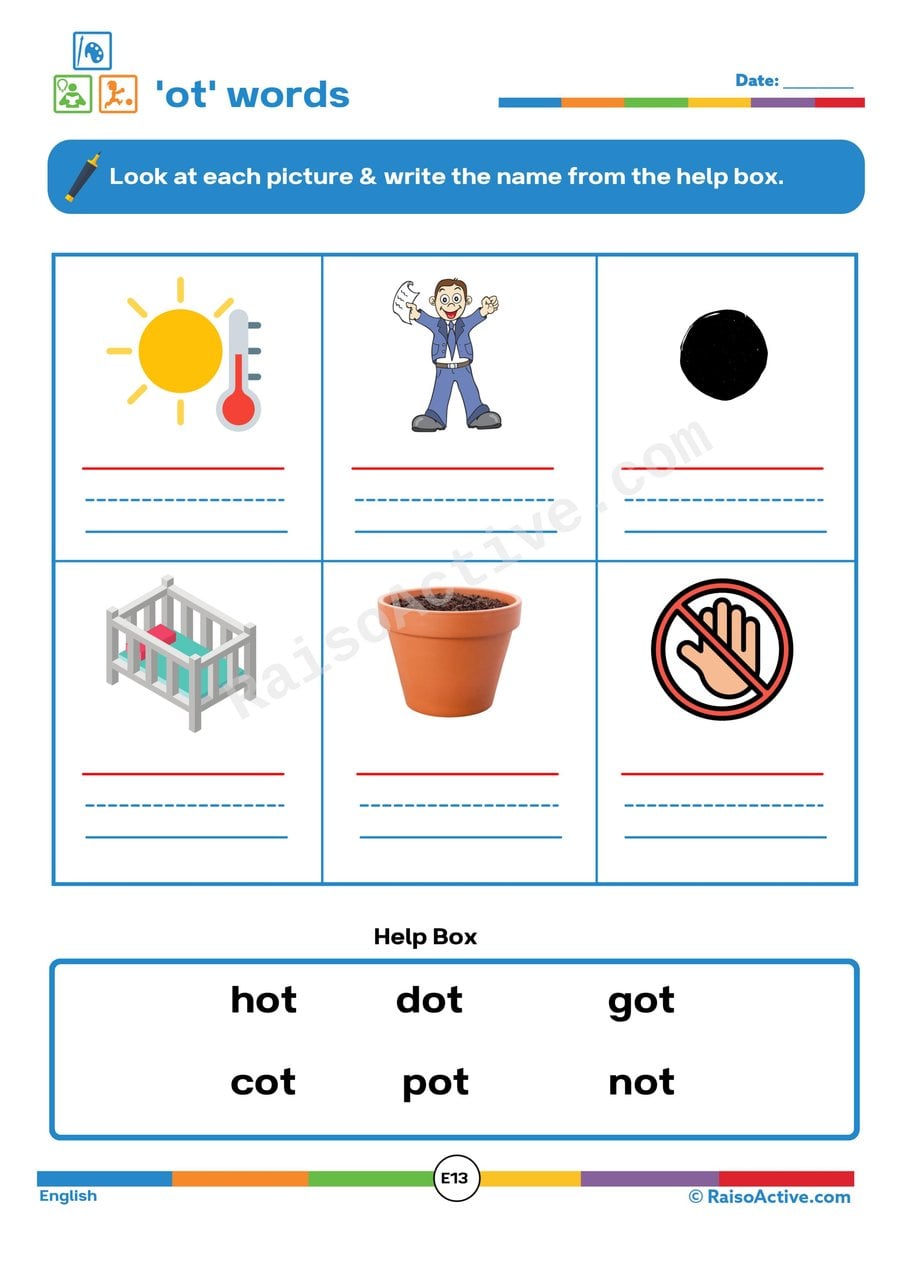
Ot Word Fun: 'ot' Word Worksheet for Early Readers
Children ages 4-6 build phonics fluency by reading and writing CVC words in the 'ot' family, like 'pot', 'dot', and 'hot'. Recognizing this consistent letter pattern teaches early readers that groups of letters make predictable sounds, a key strategy for decoding unfamiliar words independently. Writing the words afterward reinforces the sound-to-letter connection needed for spelling.

Punctuation Adventure: End Punctuation Worksheet for Kids
Children ages 5-7 practice choosing between periods, question marks, and exclamation points based on the meaning and tone of a sentence, a skill that connects punctuation directly to how a sentence should sound when read aloud. This builds the foundation for expressive, correctly punctuated writing later in school.

Alphabet U-Z Worksheet: Find the Letter and Count!
This worksheet extends alphabet mastery to the less-practiced letters U through Z for children ages 4-6, combining beginning-sound identification with a counting task for each object pictured. Because letters at the end of the alphabet appear less often in early reading material, dedicated practice here helps round out full alphabet fluency, while the counting component keeps numeracy skills active alongside literacy.
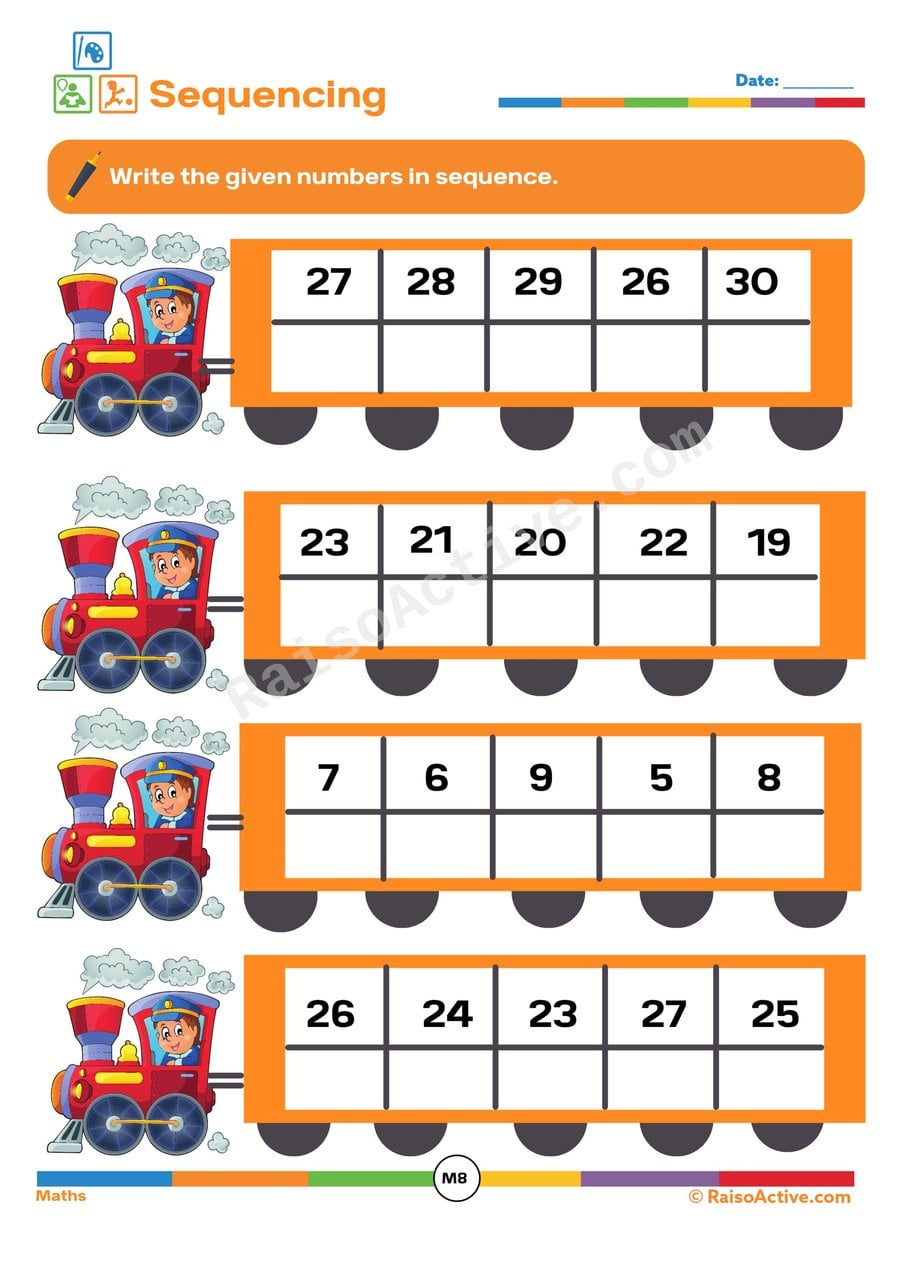
Number Sequencing Train Worksheet for Kids
This train-themed sequencing worksheet challenges children ages 4-6 to fill in missing numbers scattered throughout a sequence, requiring them to recognize number order well enough to identify a gap anywhere in the run rather than only counting forward from the start. This deeper sequencing skill supports later math concepts like skip counting, addition, and number lines. Writing the missing numbers by hand, rather than just saying them aloud, also reinforces number formation alongside number order.
What Kindergarten number tracing worksheets cover
Five-year-olds trace numerals up to twenty, including the trickier teen numbers where a one and a digit sit side by side, and two-digit spacing becomes part of the task. Worksheets should trace each number beside a matching quantity, such as a ten-frame or a row of dots, and finish with a numeral copied from a model rather than traced. By the end of the year, writing numerals to ten from memory should be steady.
- Trace teen numerals with the one and the digit close together
- Trace numerals eleven to twenty beside a matching ten-frame
- Copy a numeral beside its model with no dots
- Write numerals zero to ten from memory without a model
How to use these worksheets at home or in class
One phonics sheet and one math sheet most days, about fifteen minutes altogether, matches the pace many kindergarten classrooms set. Read any word list or passage aloud together first, then let your child attempt it independently before checking the answers.
Start with the sheet that matches what your child can already do, then move one step up. Keep finished sheets in a folder: Kindergarten teachers often ask for evidence of practice, and children like seeing their own progress.
Is your child ready for Kindergarten number tracing work?
A child entering kindergarten typically writes their first name, recognizes most letters, counts a small group of objects accurately, knows basic shapes and colors, and follows a two-step spoken direction without needing it repeated.
Frequently asked questions
Why does my five-year-old write teen numbers in the wrong order, like 13 as 31?
Because the spoken word "thirteen" does not obviously say "one, then three" the way "twenty-three" does, so the ear does not help the hand here. Tracing sheets that show the numeral built left to right, one then three, with the strokes numbered, work better than sheets that only ask for a copy. Practicing the teen numbers as a small separate group, alongside a hundred chart the child can see and point to, usually clears this up within a few weeks.
What should a Kindergarten child be able to do in number tracing?
Five-year-olds trace numerals up to twenty, including the trickier teen numbers where a one and a digit sit side by side, and two-digit spacing becomes part of the task. Worksheets should trace each number beside a matching quantity, such as a ten-frame or a row of dots, and finish with a numeral copied from a model rather than traced. By the end of the year, writing numerals to ten from memory should be steady. A child entering kindergarten typically writes their first name, recognizes most letters, counts a small group of objects accurately, knows basic shapes and colors, and follows a two-step spoken direction without needing it repeated.
Do these worksheets follow the Kindergarten curriculum?
The sheets cover numeral formation 0–9, correct stroke direction for each digit, number-to-quantity matching and consistent numeral size and spacing, which sit inside the Common Core Kindergarten (RF.K, K.CC, K.OA, K.G) outcomes for Kindergarten. Reception / Year 1 (UK), UKG / Senior KG (India) use the same skills at this age, so the sheets also fit families following those programmes.
Are these Kindergarten number tracing worksheets free?
Yes. Each worksheet downloads free as a watermarked PDF once you create an account, with a limit of five a day. An annual membership ($20) removes the watermark and the limit for the whole library of over 1,000 worksheets and every printable pack.

Written by
Hemsweta Jain · Teacher Cheena
MBA and Early Childhood Educator, teaching since 2014 · Founder of RaisoActive, Mumbai
Written and reviewed by Hemsweta Jain (Teacher Cheena), who designs every RaisoActive worksheet.
Last reviewed
Printable packs for ages 5–6
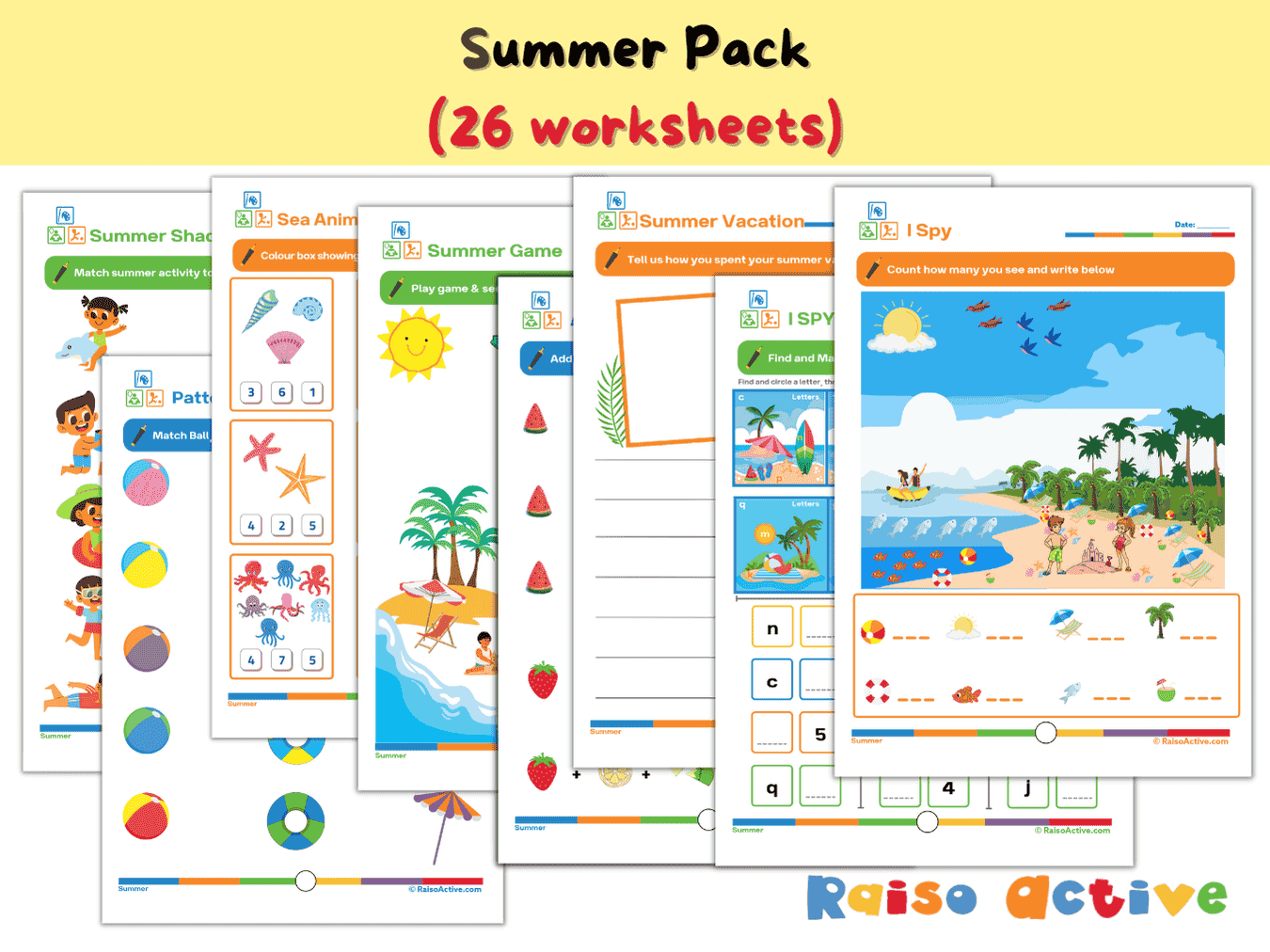
Summer Activity Pack: Math, Literacy, Puzzles & More for Preschool & Kindergarten
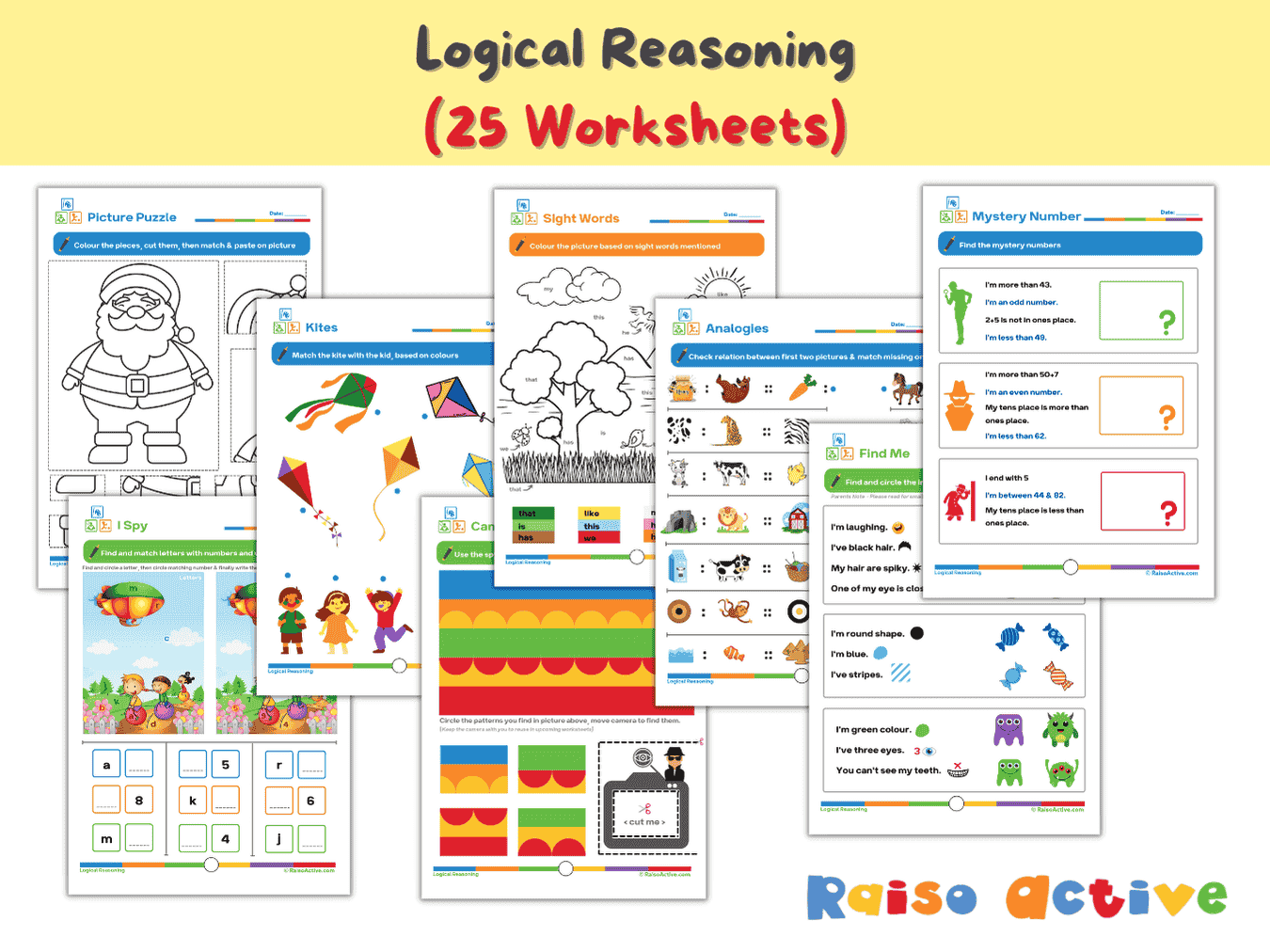
Logical Reasoning Activity Book for Preschool & Kindergarten | Patterns, Puzzles & Analogies
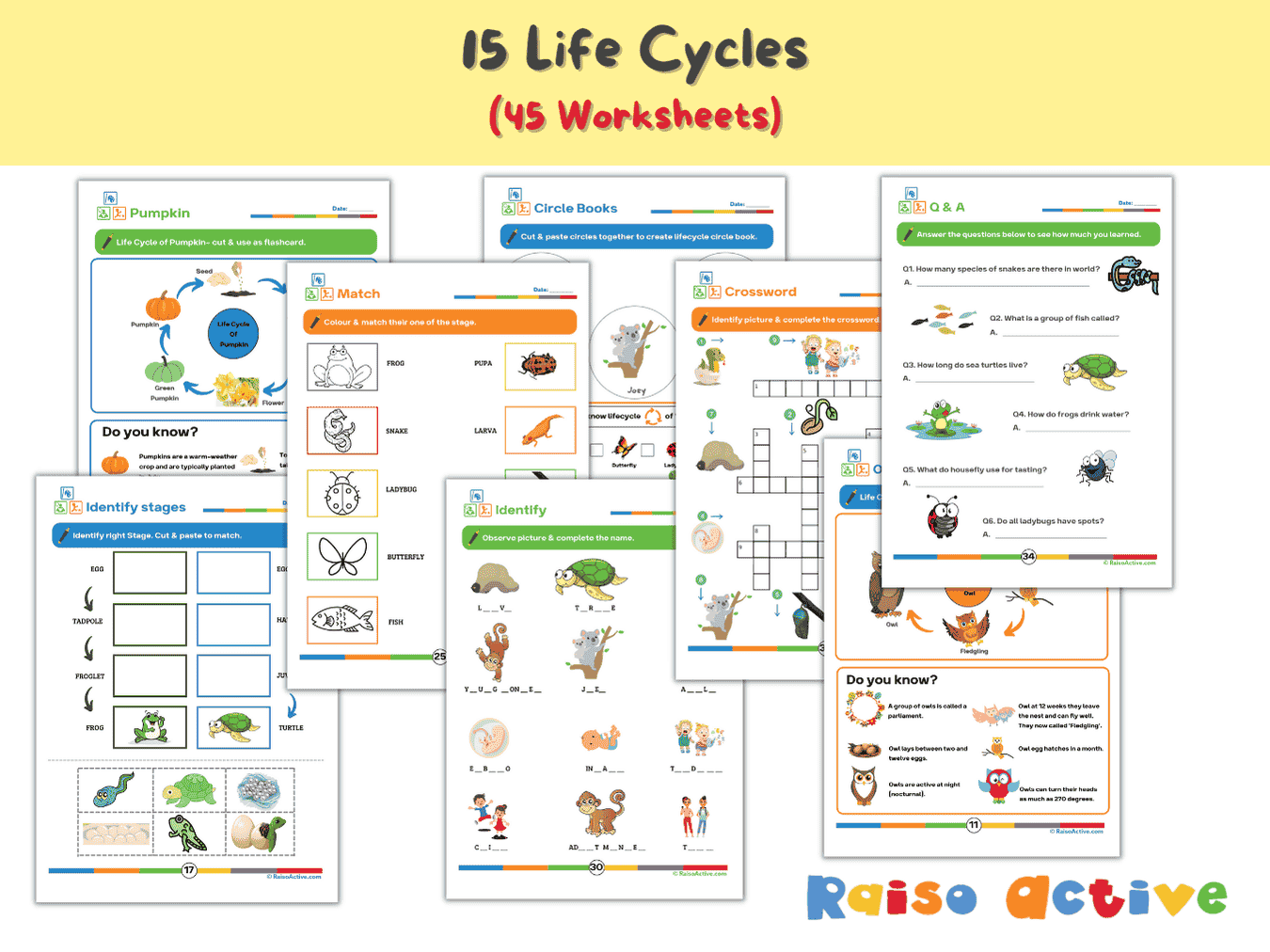
Lifecycles Activity Book & Flashcards for Preschool & Early Elementary
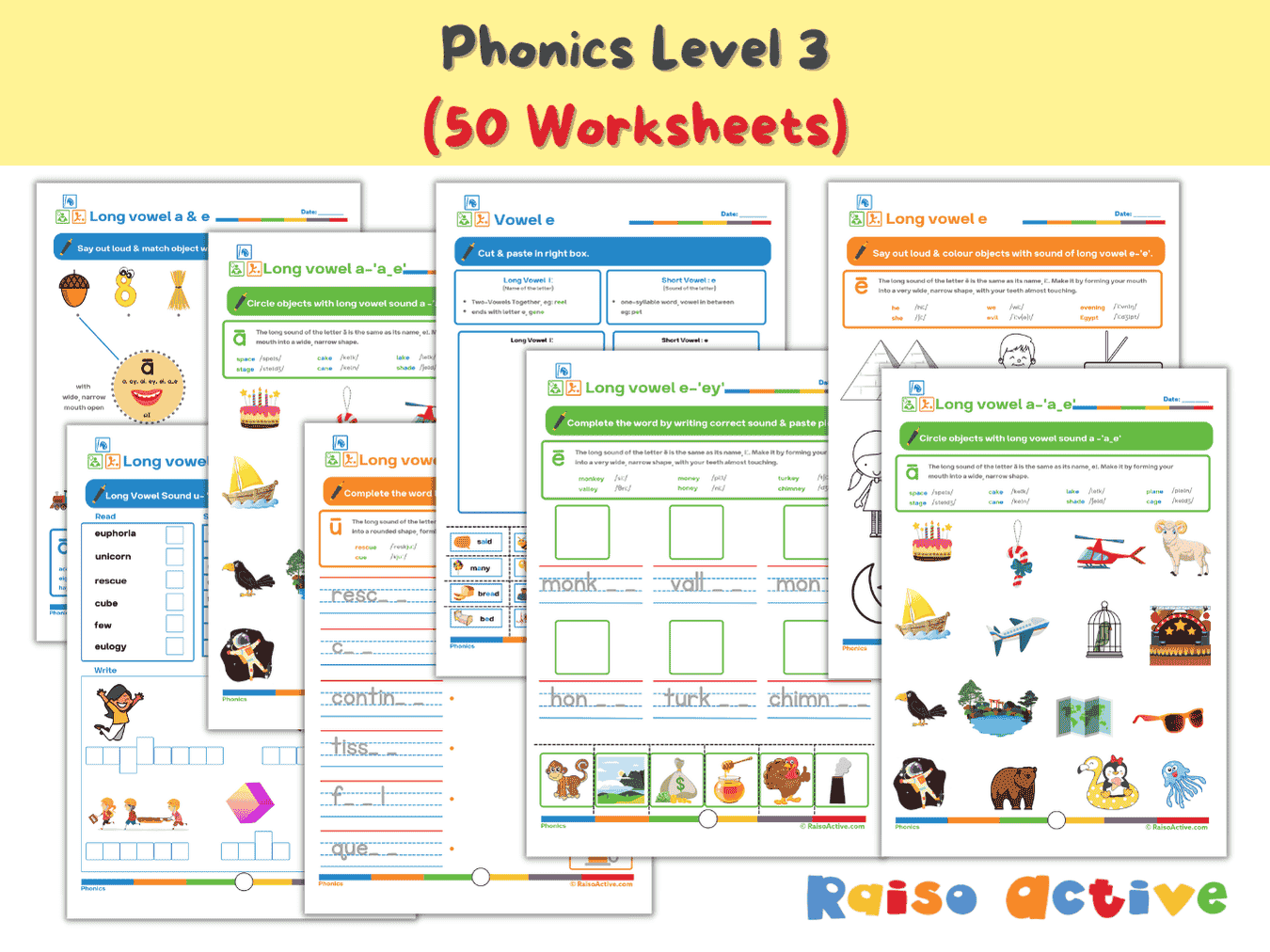
Phonics Level 3 Long Vowels Activity Book for Kindergarten & 1st Grade
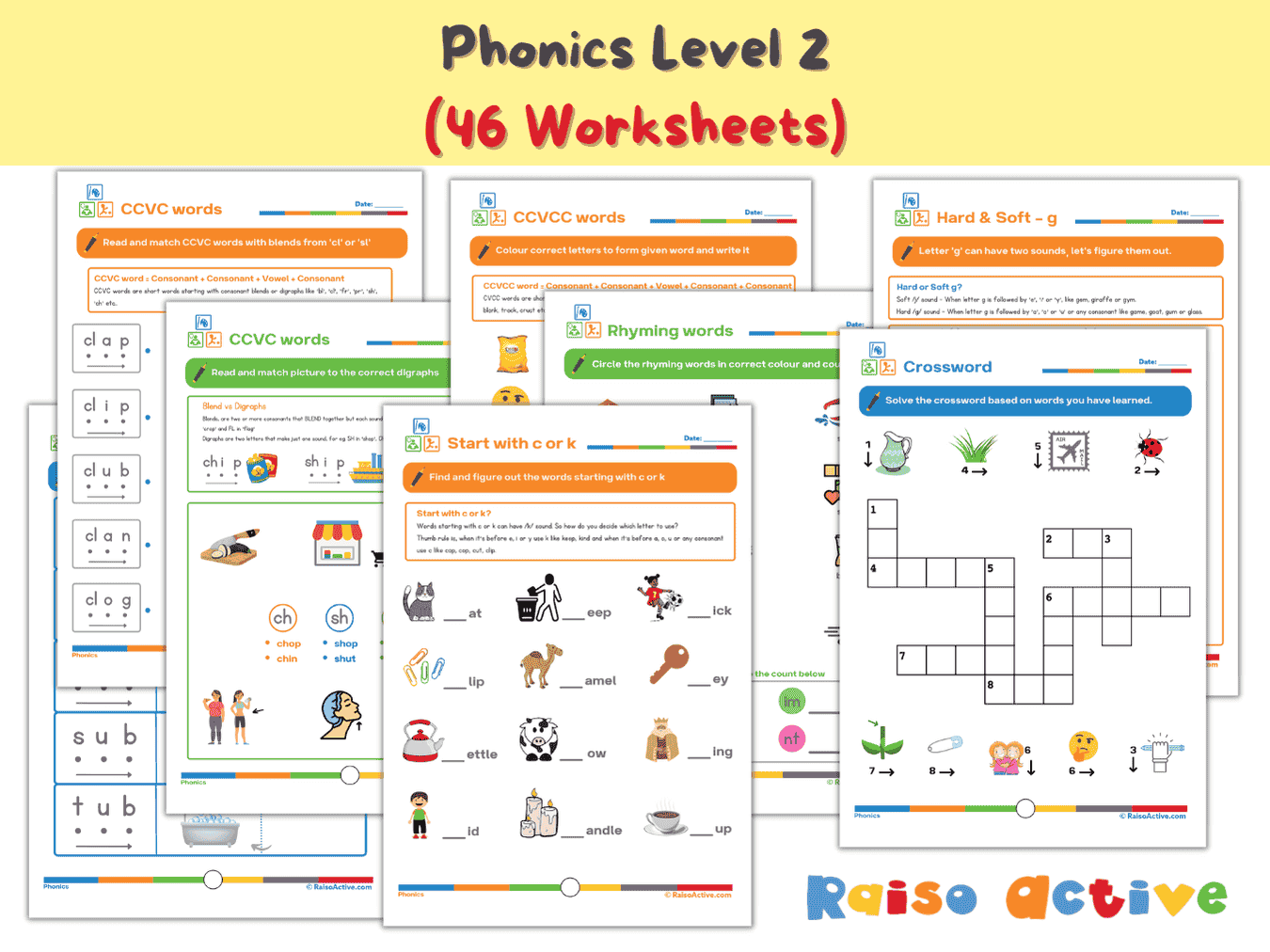
Phonics Level 2 Worksheets: CVC, CCVC, CVCC Word Families & Blends for Early Readers (Ages 4-7)
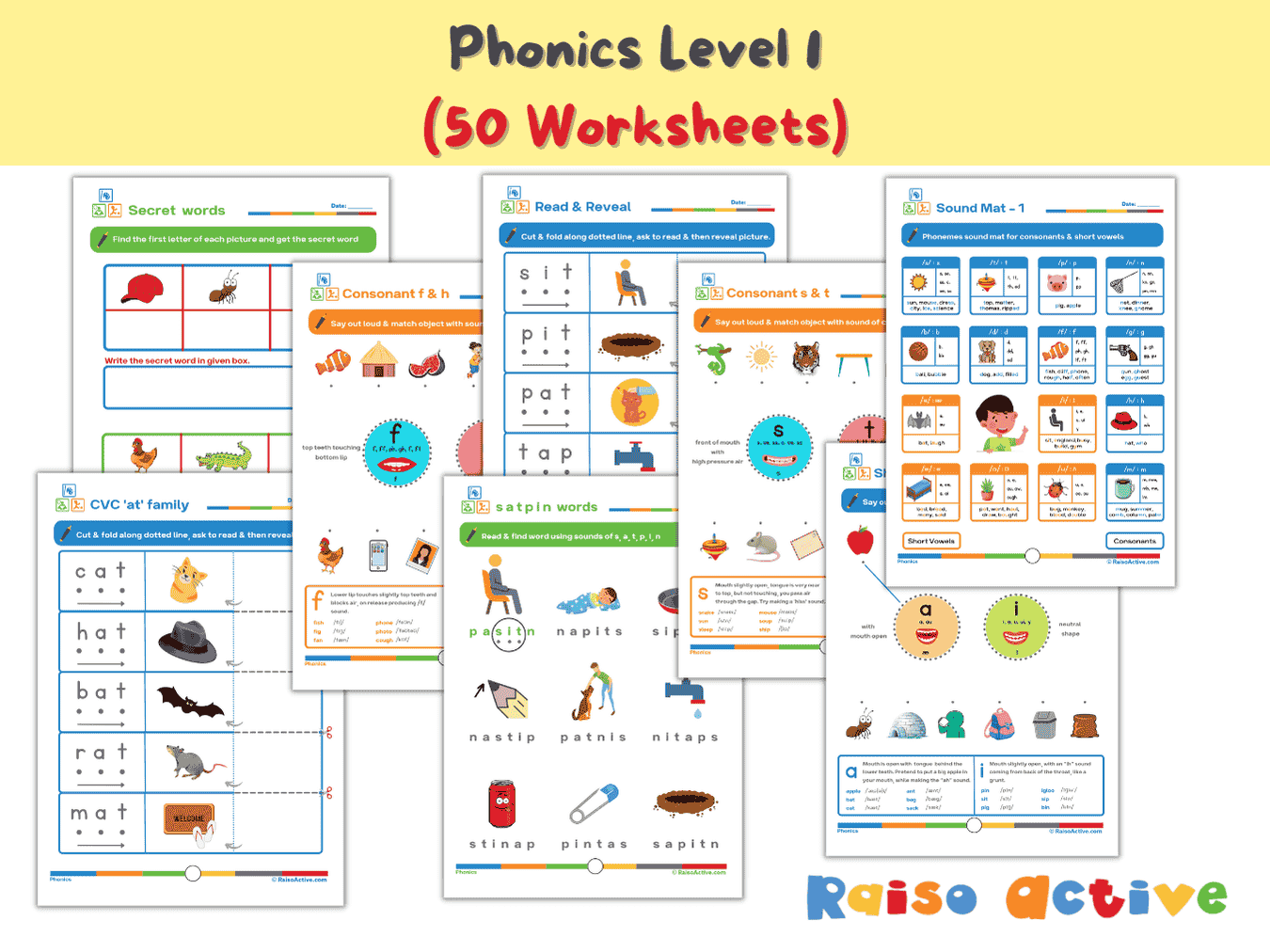
Phonics Level 1 Activity Book: Letter Sounds, Blending & CVC Words for Preschool & Kindergarten
Guides for parents and teachers
See all guides →Number Formation Rhymes 0–9 and How to Fix Reversals
Original number formation rhymes for 0–9, the correct stroke order for each digit, why 3, 5 and 7 get reversed most often, and multisensory fixes that work.
What's the Best Alternative to ABCmouse? A Complete Parent's Guide to Free and Affordable Educational Apps
ABCmouse runs ~Rs 4,000-5,000/year with US spellings and curriculum. Compare free & affordable Indian-friendly apps like Khan Academy Kids and DIKSHA.
Is My Child Ready for Kindergarten? Essential Skills and Honest Assessment
Wondering if your child is ready for Class 1 or kindergarten? Learn the 5 domains of school readiness, what Indian schools look for, and how to support your child at home.
Complete Guide to Jack Hartmann Worksheets: Enhancing Educational Videos with Hands-On Learning
Discover how to pair Jack Hartmann YouTube videos with printable worksheets for deeper learning. Counting, alphabet, sight words activities for preschool to Grade 1.
My Child Can Count But Can't Write Numbers — Is This Normal? A Parent's Complete Guide
Yes, it's developmentally normal - counting and writing use different skills. See why the gap happens and simple activities (no worksheets) to bridge it.
What's the Best Way to Teach Number Formation to Young Children? A Complete Guide
Discover the best methods to teach digit formation (0-9) to young children — stroke sequences, verbal cues, multi-sensory techniques, and fixing common reversals.
Canonical: https://raisoactive.com/worksheets/kindergarten-number-tracing