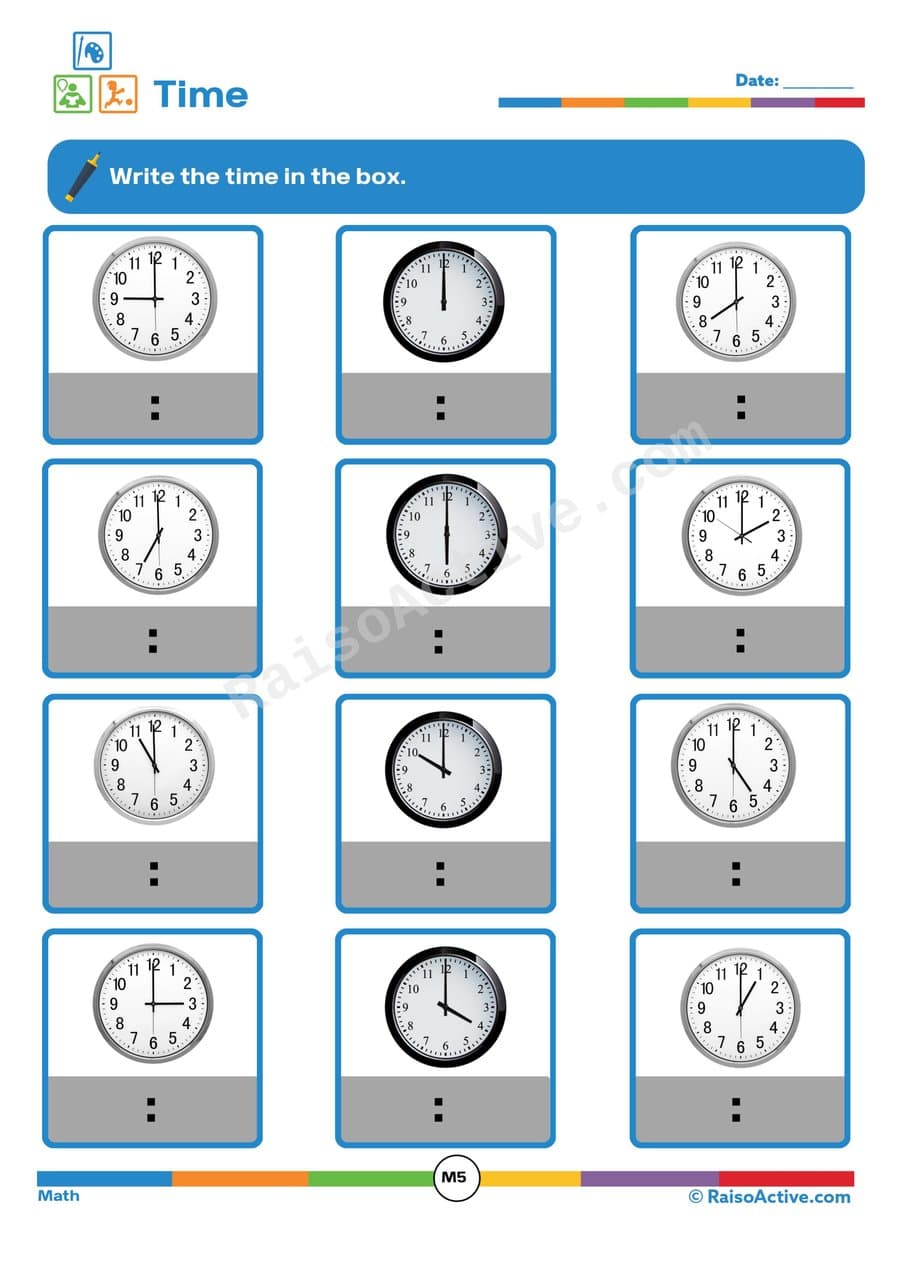
Time Telling Worksheet for Kids: Write the Time!
Reading the position of the hour and minute hands on an analog clock and writing the matching digital time teaches children ages 4-6 an important real-world math skill that connects visual, spatial reasoning with numeral writing. Because analog clocks require understanding both where the short hour hand and long minute hand point, this worksheet builds a more advanced skill than simple number recognition, introducing the idea that two hands work together to tell one time. Regular practice with clock reading also supports growing independence, as children begin to understand daily routines in terms of actual clock times.
Part of the pack
Month 10: Learning & Development | Ages 5-6Curriculum
How to use this worksheet
Look at the first clock together and identify the short hour hand first, asking your child what number it's pointing closest to. Then find the long minute hand and talk about what its position means, especially if the worksheet focuses on times on the hour or half hour. Help your child write the time in the box below the clock using the correct digital format, like 3:00 or 3:30. Move through each clock on the page the same way, checking together that the written time matches what the clock hands show.
Materials needed
- Pencil
Extension activities
- •Use a real analog clock or a paper plate clock to practice setting the hands to different times.
- •Check the actual time on a clock or watch throughout the day and write it down together.
- •Create a daily schedule together, matching activities like breakfast or bedtime to specific clock times.
- •Play a guessing game where you say a time and your child sets a toy clock's hands to match.
- •Practice telling time to the quarter hour once the hour and half hour are comfortable.
Tips for parents and teachers
Telling time is a genuinely difficult concept for this age group, so expect this to take repeated practice over weeks rather than mastery in one sitting. If your child mixes up the hour and minute hands, use a real clock and physically point to each hand while naming its job. Connecting clock times to familiar daily events, like 'we eat lunch at twelve,' makes the abstract numbers feel meaningful and easier to remember.

Written by
Hemsweta Jain · Teacher Cheena
MBA and Early Childhood Educator, teaching since 2014 · Founder of RaisoActive, Mumbai
Every RaisoActive worksheet is designed and checked by the founder before publishing.
Published · Last reviewed
Related worksheets

Clothing Pattern Match Worksheet for Preschoolers
This worksheet has children ages 3-5 study repeating patterns on clothing items — stripes, polka dots, or checks — and match each item to its identical twin, building visual discrimination and early pattern-sequencing skills. Distinguishing between similar-looking patterns also sharpens attention to detail, a skill that later supports letter and word recognition.

Trace the Numbers 1-9 Worksheet for Preschoolers
Tracing the numerals 1 through 9 gives children ages 3-5 repeated, guided practice with the specific pencil strokes each number requires, building the fine motor control and muscle memory needed for independent number writing. Because tracing follows a fixed, correct path, it also reinforces accurate numeral recognition, helping children tell visually similar digits apart.
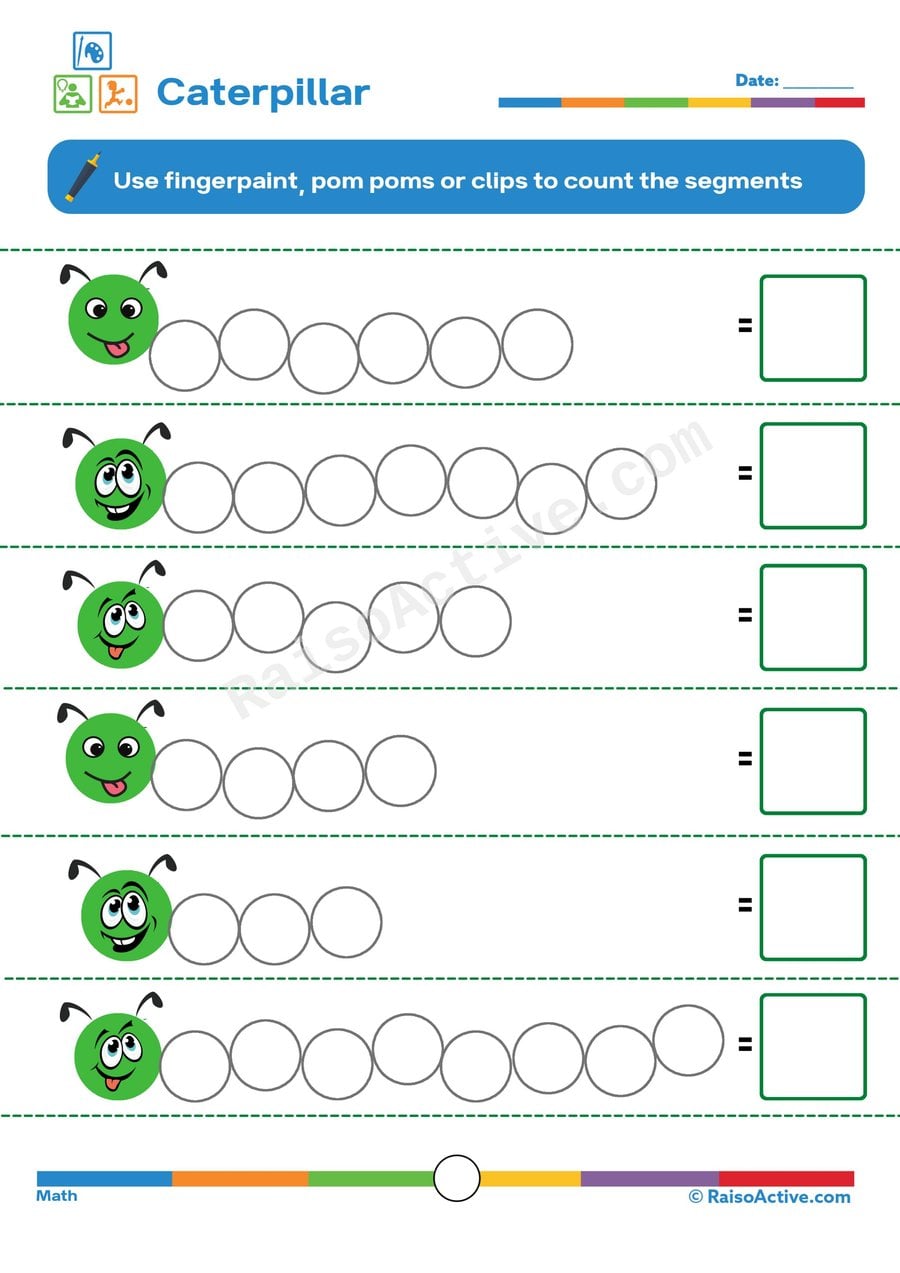
Caterpillar Counting Worksheet for Preschoolers
Counting the segments of each caterpillar teaches children ages 3-5 one-to-one correspondence — touching or marking each segment exactly once while saying a number — which is the core skill underlying accurate counting. Writing the final total in a box also connects the physical act of counting to its written numeral, reinforcing early number-writing practice.

Elephant Shapes: Fun Sorting Worksheet for Preschoolers!
This playful sorting worksheet has children ages 3-5 use an elephant's 'trunk' (their own hand reaching through a cut circle) to pick and sort shapes, building both shape recognition and simple classification skills. Physically selecting and grouping shapes by type, rather than just naming them on sight, helps solidify the concept that shapes can share a category even when their size or color differs.
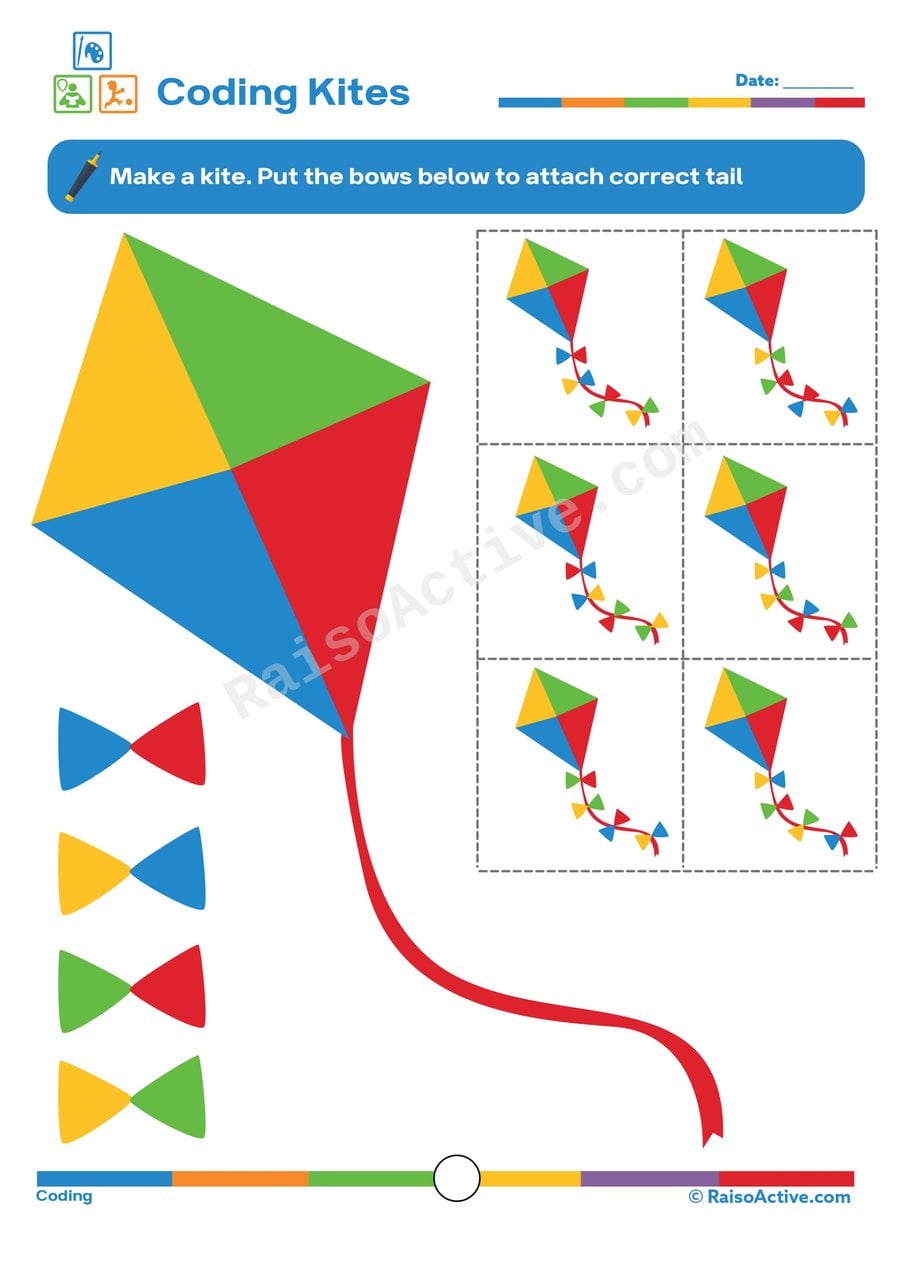
Coding Kites Worksheet: Match the Bows!
This activity sharpens visual observation in children ages 3-5 as they compare color sequences on each kite to a set of loose bows and find the exact match. Careful, systematic comparison — checking each color in order rather than glancing quickly — builds an attention-to-detail habit that transfers directly to early reading and number work.
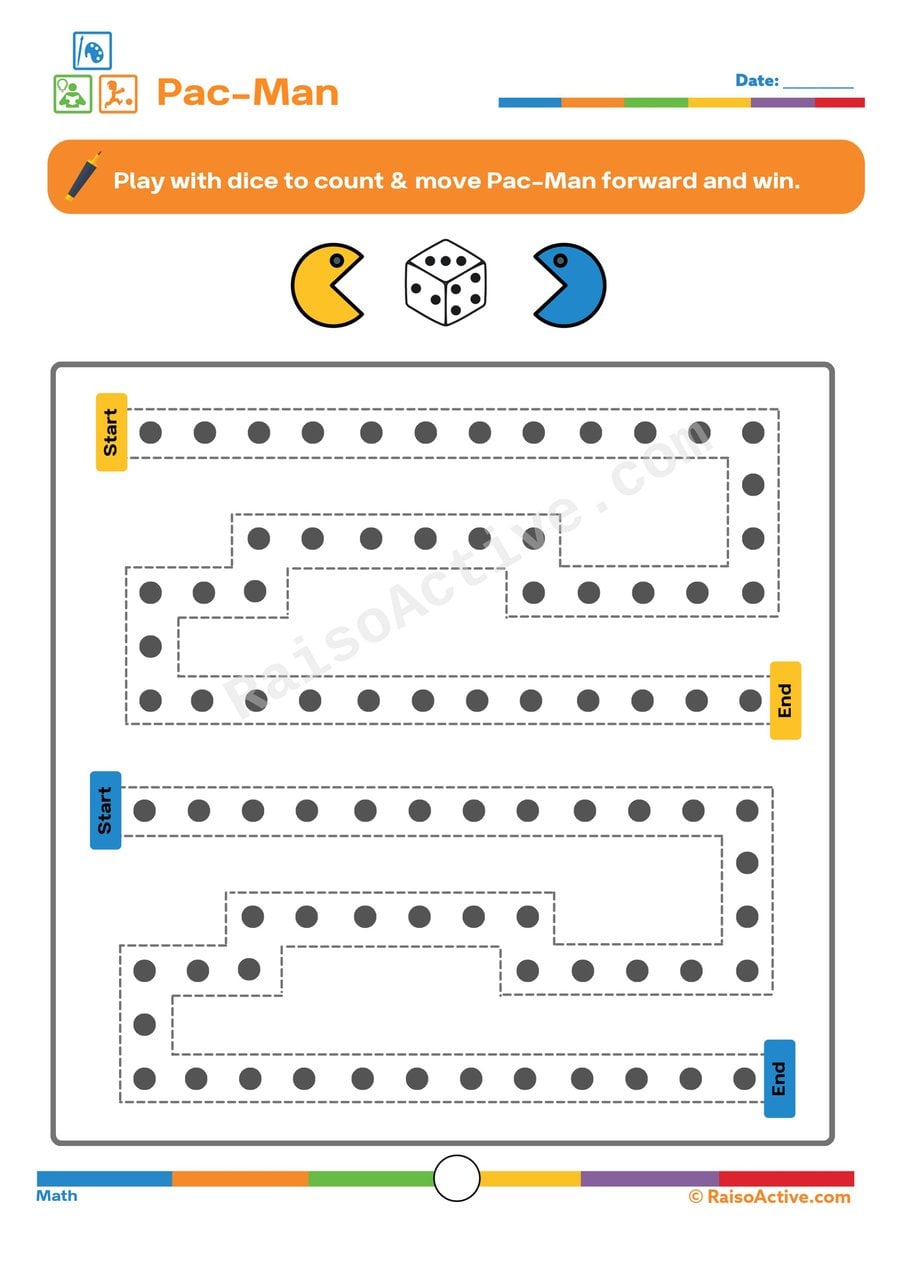
Pac-Man Maze Worksheet: Count and Move!
This dice-counting maze gives children ages 3-5 repeated practice matching a rolled number to the correct number of moves, reinforcing accurate counting under a bit of playful pressure. Tracking Pac-Man's current position after each roll also builds short-term spatial memory, since children must remember where they left off before moving again.
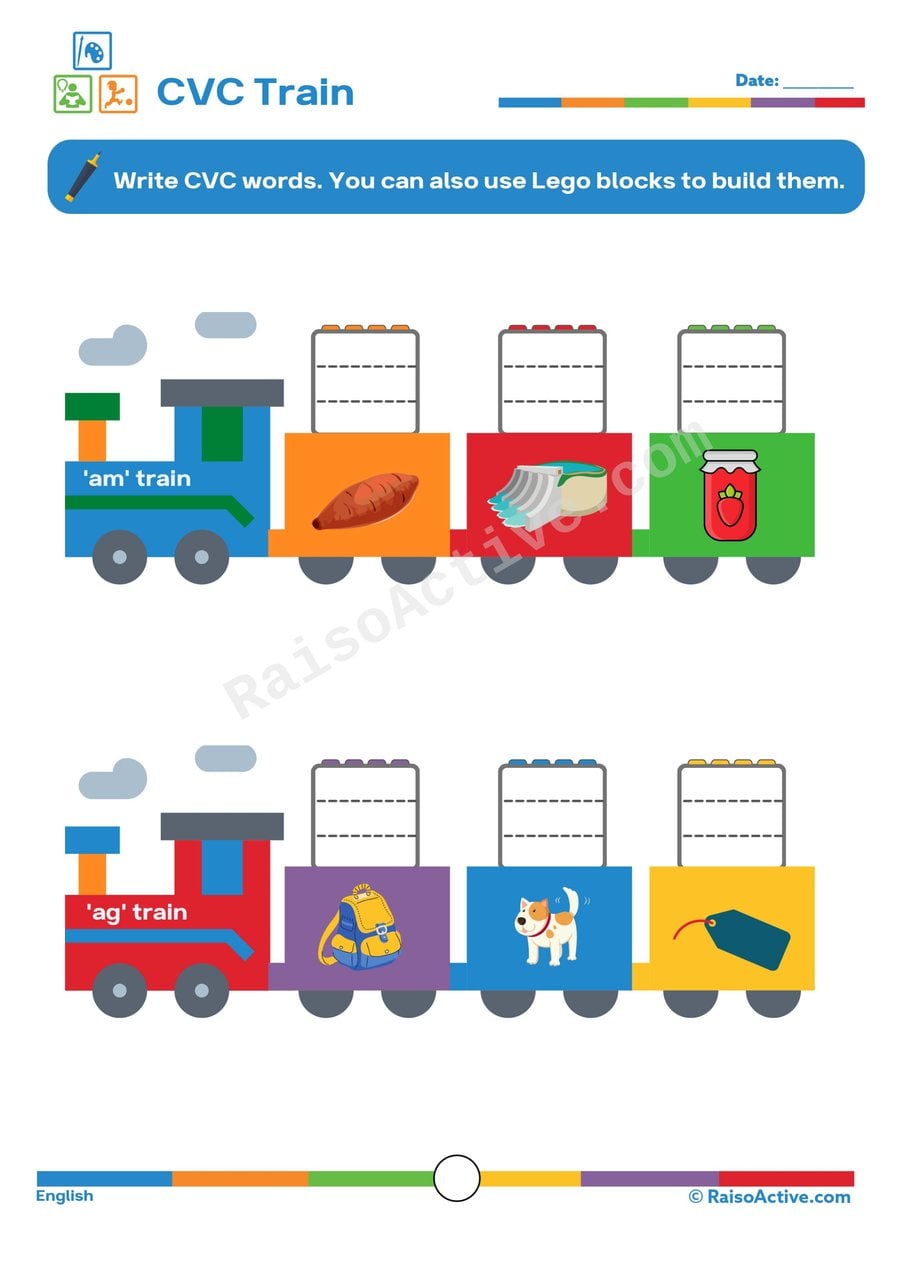
CVC Train Worksheet: Write and Build CVC Words!
This worksheet gives children ages 4-6 focused practice blending letter sounds into consonant-vowel-consonant words, using train-car pictures as clues for words like 'dog,' 'hen,' or 'cup.' Because children both write the word and can optionally build it with Lego blocks, this worksheet reinforces the same phonics skill through two different physical actions — handwriting and hands-on construction — which helps the spelling patterns stick.

Lock and Key Matching Worksheet for Preschoolers
Matching each key to the lock sharing the same letter helps children ages 3-5 practice letter recognition in a playful, puzzle-like context rather than rote drilling. Because each key must be checked against several similar-looking locks before finding the right match, this worksheet also builds visual scanning and careful comparison skills that support problem-solving.
Guides for this topic
Number Formation Rhymes 0–9 and How to Fix Reversals
Original number formation rhymes for 0–9, the correct stroke order for each digit, why 3, 5 and 7 get reversed most often, and multisensory fixes that work.
Documenting Learning Without Drowning in Data: A Practical Guide for Parents and Teachers
Learn practical ways to document your child's learning without overwhelm. Simple portfolios, observation tips, and printable trackers for ages 1-8.
Age-Appropriate Problem-Solving Activities: Building Critical Thinkers from the Ground Up
Discover fun, age-appropriate problem-solving activities for children ages 1-8. Build critical thinking, logic, and reasoning skills through play-based learning.
Reviews
Every worksheet for ages 4–6, no watermark
Members download the full library of 1,000+ worksheets and every activity pack without watermarks or daily limits. One year costs ₹1,000 in India or $20 elsewhere.
See membership plansOr download any worksheet free with a watermark (5 a day).