Zoo Adventure: Reading Comprehension Worksheet for Preschoolers
Reading a short passage about a zoo and then answering multiple-choice questions builds early reading comprehension in children ages 4-5, teaching them to hold information in mind after reading rather than just decoding words on a page. Choosing answers from provided options also introduces test-taking skills like eliminating wrong choices and rereading for clarification, both useful habits for later school assessments. Zoo animals as the subject matter keep the reading engaging enough to sustain focus through the full passage and question set.
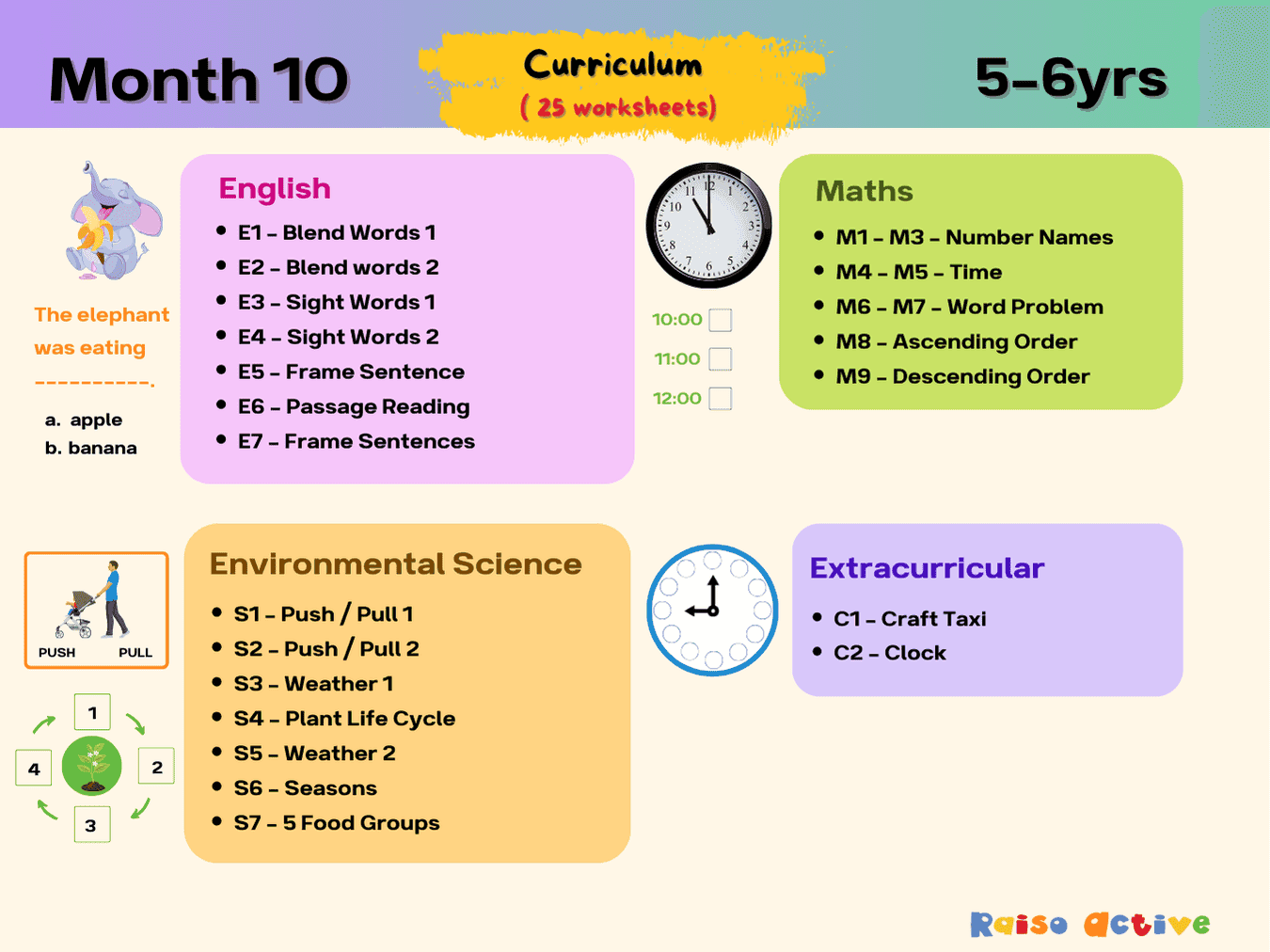
Part of the pack
Month 10: Learning & Development | Ages 5-6
This is page 9 of the pack. Ages 5-6 · KindergartenAges 5-6 · Year 1Ages 5-6 · UKGAges 5-6
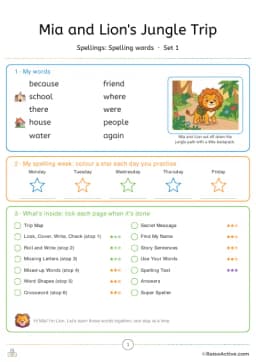
Made for your child
Spelling practice, made for your child
Their own spelling words turned into a pack: trace or look-cover-write-check, roll and write, a secret picture code, a word search, a crossword and a test, with their name in it.
Make a spelling packFree preview · free for members
Or start free: a word search with sight wordsCurriculum
- Reading Comprehension - Literature > Reading Comprehension
How to use this worksheet
Read the zoo passage aloud together first, pointing to each word as you go so your child can follow along and connect spoken and written words. Ask your child to retell what happened in the story in their own words before looking at the questions, to check their general understanding. Read the first question and its answer options aloud, and have your child circle the answer they believe is correct, referring back to the passage if they're unsure. Continue through each question the same way, rereading relevant parts of the passage together whenever your child needs a hint.
Materials needed
- Pencil
Extension activities
- 1Visit a zoo, real or virtual, and compare what you see to the animals described in the passage.
- 2Retell the story from the passage using stuffed animals or toy figures to act it out.
- 3Draw a picture of your favorite scene or animal from the zoo story.
- 4Make up a new short story about a different zoo animal and ask your child comprehension questions about it.
- 5Practice pointing to and reading individual words from the passage in a random order to build sight-word recognition.

Written by
Hemsweta Jain · Teacher Cheena
MBA and Early Childhood Educator, teaching since 2014 · Founder of RaisoActive, Mumbai
Every RaisoActive worksheet is designed and checked by the founder before publishing.
Published · Last reviewed
More from Month 10: Learning & Development | Ages 5-6

Weather Worksheet: Circle the Correct Weather Word!
Ages 3-5 · Preschool–Pre-KAges 3-5 · Nursery–ReceptionAges 3-5 · Nursery–LKGAges 3-5
This worksheet strengthens children's early reading skills by having them match weather pictures — like sun, rain, or wind — to the correct written word, building sight recognition of common weather vocabulary for ages 3-5. Circling the matching word rather than just naming the picture aloud pushes children to connect spoken language with printed text, an essential pre-reading skill. Because weather words appear frequently in books and daily conversation, this practice has immediate real-world payoff.

Number Names Matching Worksheet for Preschoolers
Ages 3-5 · Preschool–Pre-KAges 3-5 · Nursery–ReceptionAges 3-5 · Nursery–LKGAges 3-5
Matching numerals to their written number-word form, like connecting '5' to the word 'five,' teaches children ages 3-5 that numbers can be represented two different ways: as a symbol and as a spelled-out word. Searching for the correct number name within a word search grid also builds visual scanning and early sight-word recognition, since number words like 'one' or 'seven' don't always follow predictable spelling patterns. This dual practice strengthens both numeracy and literacy at the same time.

Ascending Order Cut and Paste Worksheet for Preschoolers
Ages 4-6 · Pre-K–KindergartenAges 4-6 · Reception–Year 1Ages 4-6 · LKG–UKGAges 4-6
This worksheet teaches children ages 4-6 to arrange numbered animal pictures from smallest to largest, reinforcing the concept of ascending order as a foundational number-sequencing skill. Physically cutting and repositioning each numbered piece, rather than simply writing numbers in order, makes the abstract idea of 'smallest to largest' into something children can manipulate and see. This hands-on approach also builds patience and careful visual comparison.

Sight Word Coloring Worksheet: Make, For, Here, Our, From, and What!
Ages 3-5 · Preschool–Pre-KAges 3-5 · Nursery–ReceptionAges 3-5 · Nursery–LKGAges 3-5
This worksheet helps children ages 3-5 build automatic recognition of six common sight words — make, for, here, our, from, and what — words that show up constantly in early reading but don't always follow predictable phonics rules. Finding and coloring matching words hidden within pencil shapes trains visual discrimination between similar-looking short words, a skill that directly supports reading fluency.

Frame a Sentence Worksheet: Building Sentences with Cows!
Ages 4-6 · Pre-K–KindergartenAges 4-6 · Reception–Year 1Ages 4-6 · LKG–UKGAges 4-6
Arranging a set of given words into a complete, correctly ordered sentence teaches children ages 4-6 basic sentence structure, helping them understand that word order changes meaning and that sentences follow predictable patterns like subject before action. Remembering to start with a capital letter and end with a period also reinforces early writing conventions alongside the sentence-building itself. This combination of grammar and mechanics gives children practice with the full process of forming a proper written sentence, not just choosing words.
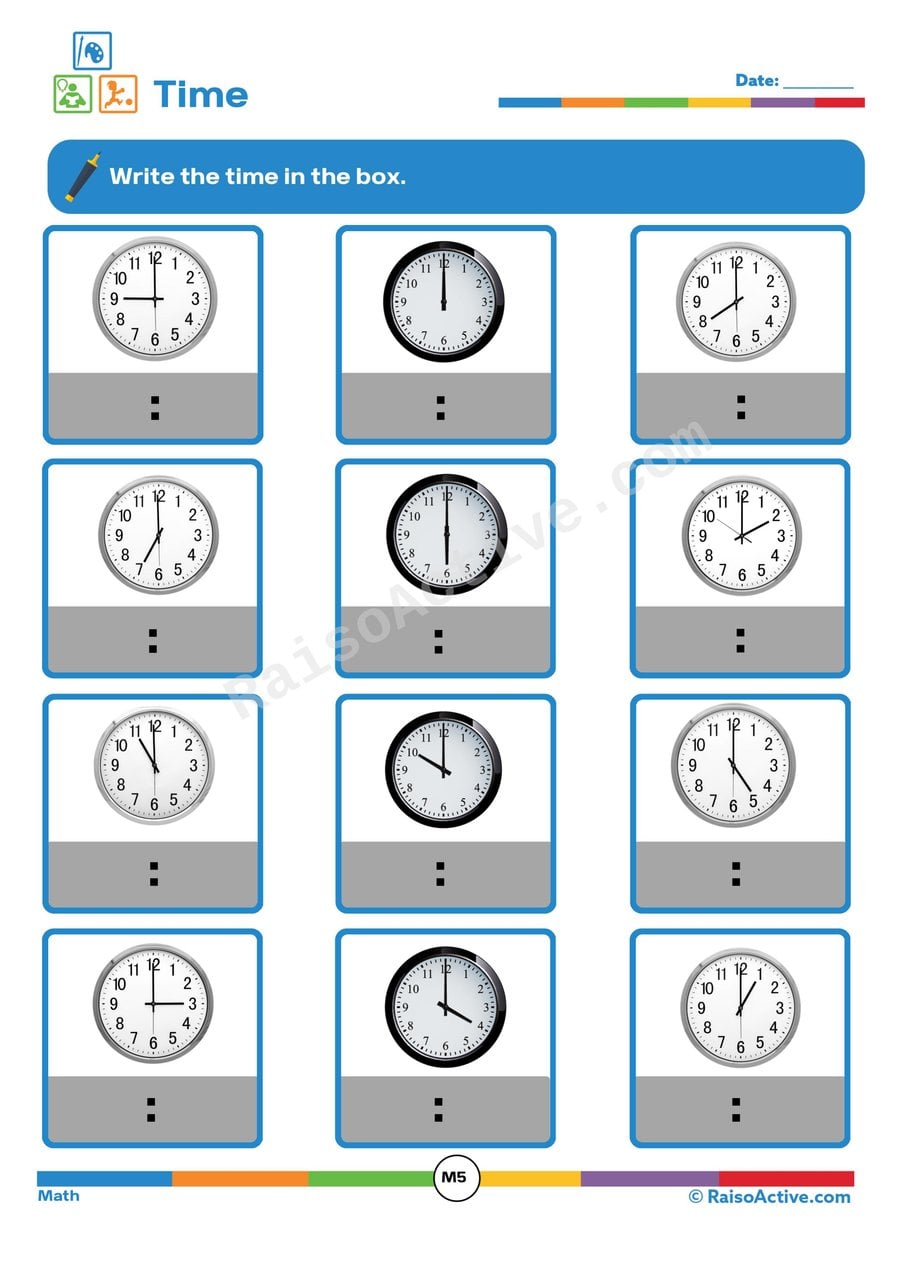
Time Telling Worksheet for Kids: Write the Time!
Ages 4-6 · Pre-K–KindergartenAges 4-6 · Reception–Year 1Ages 4-6 · LKG–UKGAges 4-6
Reading the position of the hour and minute hands on an analog clock and writing the matching digital time teaches children ages 4-6 an important real-world math skill that connects visual, spatial reasoning with numeral writing. Because analog clocks require understanding both where the short hour hand and long minute hand point, this worksheet builds a more advanced skill than simple number recognition, introducing the idea that two hands work together to tell one time. Regular practice with clock reading also supports growing independence, as children begin to understand daily routines in terms of actual clock times.

Plant Life Cycle Worksheet: Cut and Paste the Stages!
Ages 4-6 · Pre-K–KindergartenAges 4-6 · Reception–Year 1Ages 4-6 · LKG–UKGAges 4-6
Children ages 4-6 learn the sequential stages of a plant's life cycle — from seed to sprout to full-grown flower — by cutting out and correctly ordering picture cards. Understanding that living things grow through a fixed, predictable sequence is an early science concept that also reinforces sequencing and ordering skills useful well beyond biology.

Sentence Building Fun: Using Words to Create Sentences Worksheet
Ages 4-6 · Pre-K–KindergartenAges 4-6 · Reception–Year 1Ages 4-6 · LKG–UKGAges 4-6
This worksheet helps children ages 4-6 practice constructing complete, grammatically sound sentences by using a set of provided words alongside a picture prompt. Building sentences from a word bank forces children to think about word order and sentence structure directly, rather than just filling in a single blank, which is a meaningful step up in independent writing skill.
Related worksheets

Reading Comprehension Worksheet: Max and Tuffy's Adventures!
Ages 4-6 · Pre-K–KindergartenAges 4-6 · Reception–Year 1Ages 4-6 · LKG–UKGAges 4-6
Reading the short story about Max and Tuffy and answering questions afterward helps children ages 4-6 practice true reading comprehension, recalling specific details like who did what and where, rather than just decoding words on the page. Writing out their answers also builds the connection between understanding a story and expressing that understanding in writing.

My Pet Dog Reading Comprehension Worksheet for Preschoolers
Ages 3-5 · Preschool–Pre-KAges 3-5 · Nursery–ReceptionAges 3-5 · Nursery–LKGAges 3-5
This worksheet builds early reading comprehension for children ages 3-5 by having them read or listen to a short passage about a pet dog and then answer simple questions about what they understood. Moving beyond decoding individual words, this task requires children to hold information from the text in mind and use it to answer questions, an essential skill for comprehension that develops alongside basic reading fluency.

Apple Picking Fun: A Reading Comprehension Worksheet for Kids
Ages 4-6 · Pre-K–KindergartenAges 4-6 · Reception–Year 1Ages 4-6 · LKG–UKGAges 4-6
This worksheet builds early reading comprehension skills in children ages 4-6 by having them read a short story about apple picking and then answer simple questions that check their understanding of what happened. Answering questions after reading, rather than just decoding words, pushes children to hold the story's meaning in mind and recall specific details, a critical skill for all future reading. Coloring an apple afterward gives a relaxing, creative close to the comprehension task.
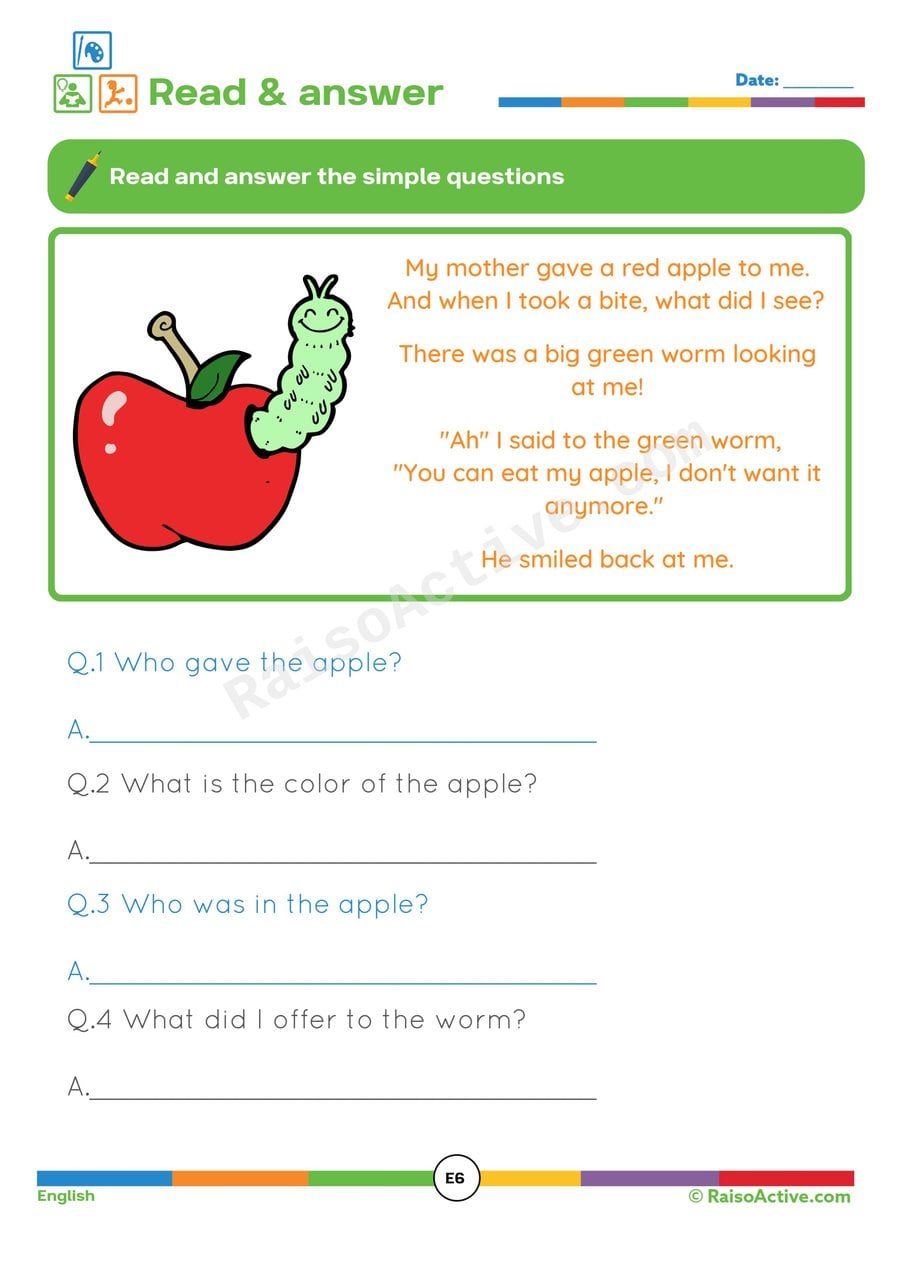
Read and Answer: The Red Apple Worksheet
Ages 3-5 · Preschool–Pre-KAges 3-5 · Nursery–ReceptionAges 3-5 · Nursery–LKGAges 3-5
Reading the short Red Apple story and answering questions afterward helps children ages 3-5 practice basic reading comprehension, recalling simple details from a story and expressing their understanding in writing. This early comprehension practice builds the habit of checking back with a text to support an answer, a skill that grows more important throughout school.

Farm Animals Reading Comprehension Worksheet for Preschoolers
Ages 3-5 · Preschool–Pre-KAges 3-5 · Nursery–ReceptionAges 3-5 · Nursery–LKGAges 3-5
Reading a short passage about farm animals and answering questions about it builds early reading comprehension for children ages 3-5, teaching them to recall specific details from a text rather than just recognizing individual words.

Roll a Story Worksheet: Create Fun Stories with Dice!
Ages 4-7 · Pre-K–Grade 1Ages 4-7 · Reception–Year 2Ages 4-7 · LKG–Class 1Ages 4-7
This dice-based storytelling worksheet helps children ages 4-7 practice narrative construction by rolling dice to randomly select a character, setting, and prop, then weaving those elements into an original story. Because the combination is different every time, children must think flexibly and creatively rather than relying on a memorized story, which builds oral language, sequencing, and imaginative reasoning skills that underpin later creative writing.
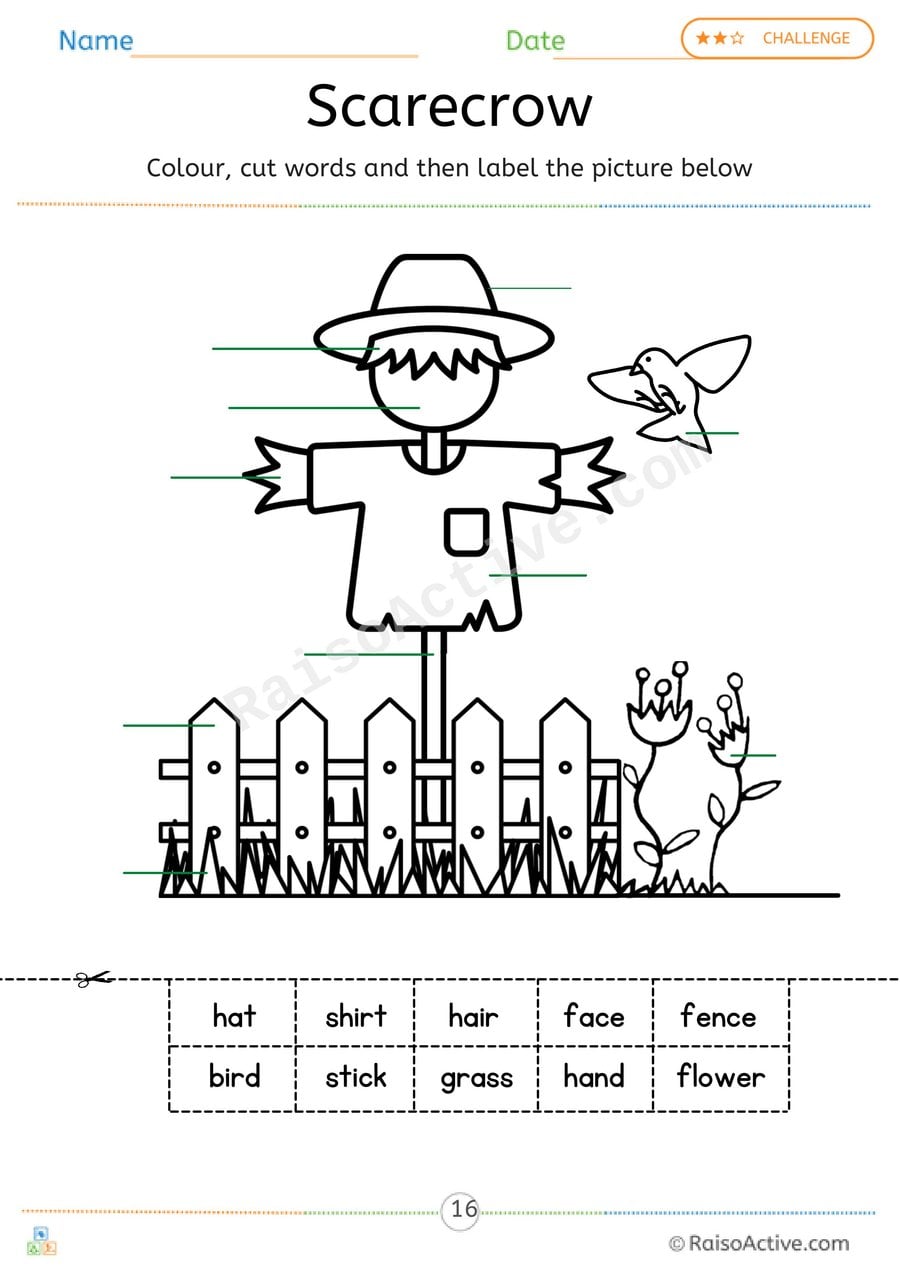
Scarecrow Labeling Worksheet for Preschoolers
Ages 3-5 · Preschool–Pre-KAges 3-5 · Nursery–ReceptionAges 3-5 · Nursery–LKGAges 3-5
This worksheet has children ages 3-5 color a scarecrow, then cut out word labels for its parts, hat, straw, shirt, gloves, and glue each label onto the correct spot, connecting written words directly to the objects they name. Tracing the labels afterward adds letter-formation practice on top of the vocabulary-building label matching.

What is Navratri? Nine Nights Worksheet for Kids
Ages 4-6 · Pre-K–KindergartenAges 4-6 · Reception–Year 1Ages 4-6 · LKG–UKGAges 4-6
Children learn that Navratri means "nine nights", that families pray to Maa Durga, light diyas, dance and share sweets, and that Dussehra comes on the tenth day. They name six things seen at the festival: diya, dandiya, dhol, marigold, kalash and rangoli.
Guides for this topic

Sight Words by Age: The First 50 Words and How to Teach Them Without Flashcard Fatigue
Which sight words to teach first and why, the heart-word method, a read-trace-write-find routine, games, and a by-age table of typical sight-word progress.
How to Teach CVC Blending: A Step-by-Step Method That Works in Two Weeks
A step-by-step method for teaching CVC blending, covering continuous sounds, word families, common errors, and a 14-day plan that most children finish reading CVC words.

Documenting Learning Without Drowning in Data: A Practical Guide for Parents and Teachers
Learn practical ways to document your child's learning without overwhelm. Simple portfolios, observation tips, and printable trackers for ages 1-8.
Reviews
Every worksheet for ages 4–5, no watermark
Members download the full library of 1,000+ worksheets and every activity pack without watermarks or daily limits. One year costs ₹999 in India or $20 elsewhere.
See membership plansOr download any worksheet free with a watermark (5 a day).