Free printable worksheets · United States
Pre-K Number Tracing Worksheets (Ages 4–5)
Pre-K number tracing worksheets are practice sheets for children aged 4–5 in Pre-Kindergarten in the US. Number tracing is following the dotted outline of a printed numeral with a pencil, practicing the correct stroke direction and shape for each digit. The sheets on this page cover numeral formation 0–9, correct stroke direction for each digit, number-to-quantity matching and consistent numeral size and spacing.
Pre-K is the bridge to kindergarten, so activities target the entry skills teachers consistently ask for: writing a first name, naming most uppercase and some lowercase letters, knowing a few letter sounds, counting to twenty, and managing scissors and a pencil comfortably. At four to five, number tracing covers one through ten, with each numeral shown with a starting dot and an arrow for its strokes, since digits like 2, 3 and 5 are easy to start from the wrong end. A worksheet should mix traced numerals with a count-and-write task, where the child counts a group of objects and then traces the matching digit. Writing a numeral from memory, with no model at all, is still uneven at this age.
766+ worksheets · free PDF download · print on A4 or Letter
Pre-K Number Tracing Worksheets to print
Browse all worksheets for ages 4–5
Middle Sound Worksheet: Circle and Write the Missing Letter!
Identifying the middle sound in a word is generally the hardest phonemic awareness skill for children ages 4-5, harder than beginning or ending sounds, since the middle sound is surrounded on both sides and easy to lose track of while segmenting. This worksheet builds that specific skill by having children circle the letter that makes the middle sound in given words, then apply the same skill to complete new words based on pictures. Because middle sounds in CVC words are almost always the vowel, this worksheet also doubles as valuable short vowel discrimination practice.

Learn the Sight Word 'the' - Fun Worksheet for Early Readers!
'The' is one of the most frequently occurring words in the English language, and because it doesn't follow regular phonics rules, children ages 4-5 need to learn it by sight rather than by sounding it out. This worksheet builds that instant recognition through several different modes — coloring, tracing, searching, and using it in a sentence — which research on early literacy shows helps sight words stick more firmly than a single repetition. Mastering 'the' specifically gives children a huge boost in reading fluency, since it appears in nearly every simple sentence they'll encounter.

Just Right! Sight Word 'Just' Worksheet for Preschoolers
The word 'just' shows up frequently in everyday speech and early reading material, and this worksheet gives children ages 4-5 a full, multi-step encounter with it — coloring, searching, tracing, and using it inside complete sentences. Building sight word recognition through several different activities rather than one repeated drill helps the word transfer from short-term memory into automatic recall. Completing sentences using 'just' also gives children early practice applying a memorized word correctly in a meaningful context, not just recognizing it in isolation.

These or Those Worksheet: Identifying Plural Nouns
Children ages 4-5 build on singular demonstrative pronouns by learning 'these' and 'those,' the plural forms used to describe groups of objects that are near or far. Understanding this distinction strengthens both grammar and the ability to judge distance and quantity together in a single sentence.
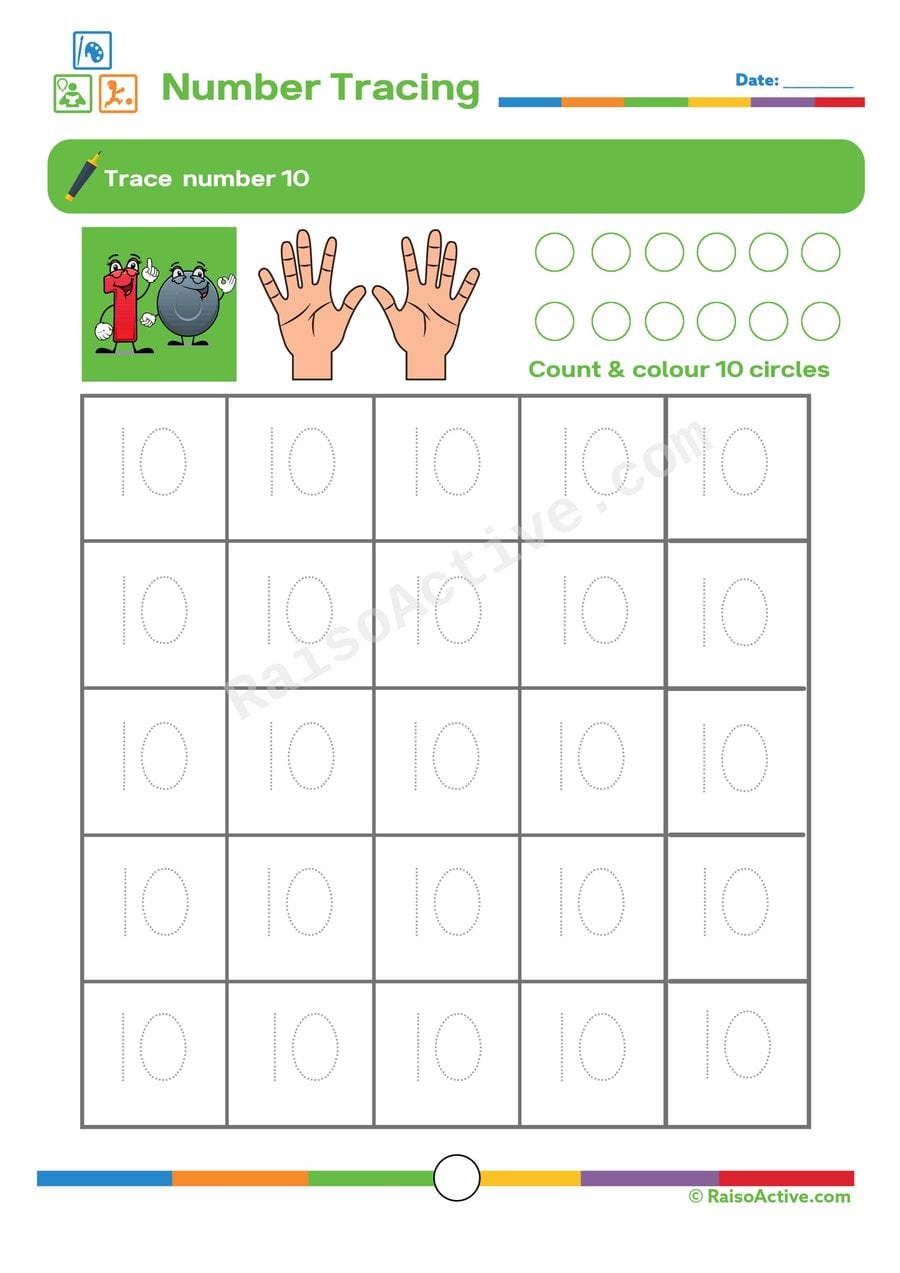
Trace and Count to 10! Number Tracing Worksheet
This worksheet has children ages 4-5 trace the number 10, their first two-digit number in a structured sequence, and then count and color a full set of ten circles, reinforcing that 10 represents a complete group of two fives or one full set of fingers on both hands. Practicing 10 also marks an important transition point, since children who can confidently count, write, and represent 10 are ready to begin extending their counting into the teens. This combination of tracing and counting to a meaningful benchmark number builds solid number sense.

Learn the Sight Word 'Are' Worksheet for Preschoolers
Children ages 4-5 build instant recognition of the high-frequency sight word 'are', a word that doesn't sound out phonetically and must be memorized by sight to support reading fluency. This multi-step worksheet reinforces the word through five different modes — coloring, searching a grid, tracing, writing, and a watercolor technique — giving repeated exposure that strengthens memory. Practicing 'are' in context through fill-in-the-blank sentences also helps children see how the word functions within real sentences.
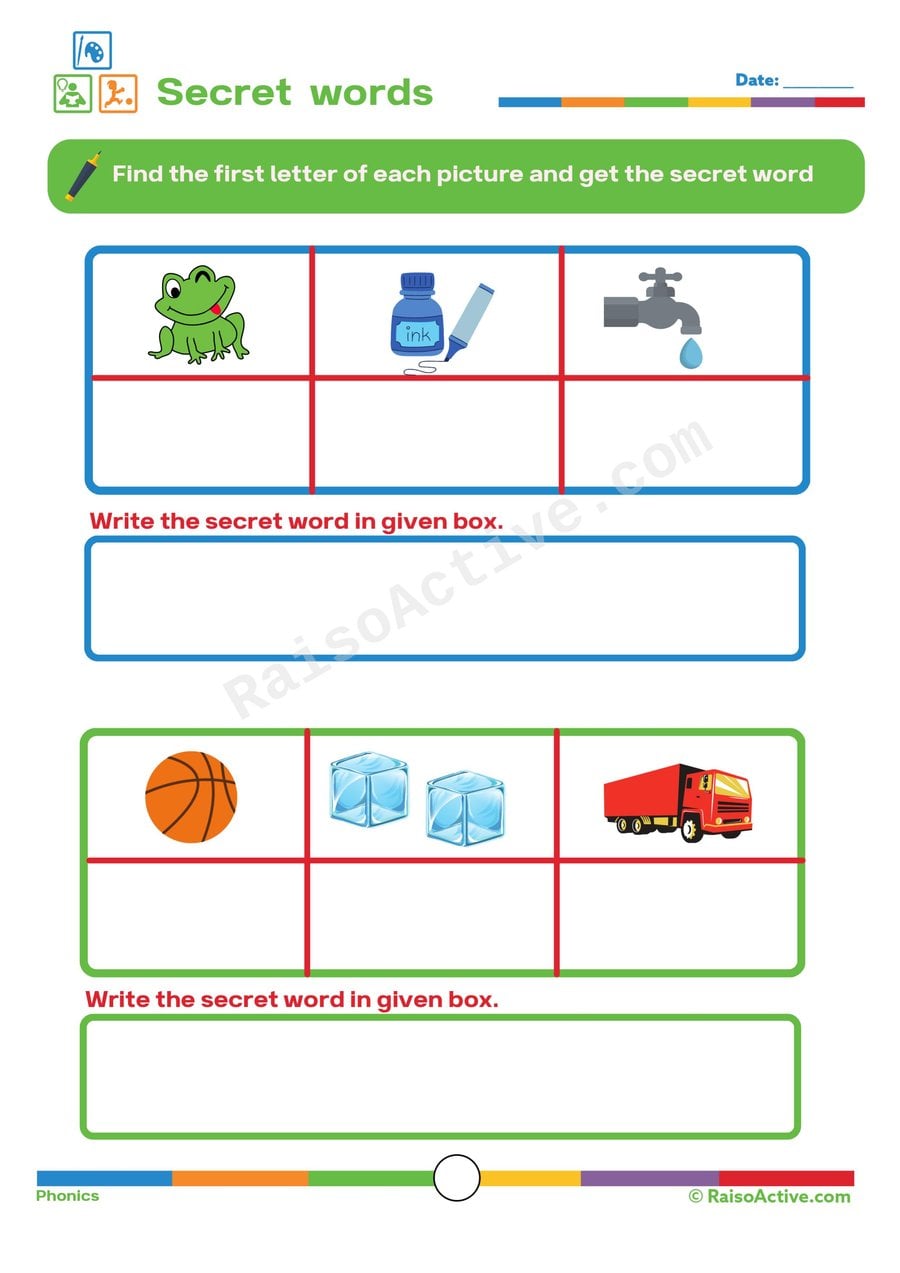
Secret Words Worksheet: Beginning Sounds Fun!
This version of the Secret Words activity challenges children ages 4-5 to identify the beginning sound of each picture and use that letter to help spell out a hidden word, reinforcing both phonemic awareness and early spelling skills. Because the task requires holding several letters in sequence before the full word appears, it also gently builds working memory alongside sound-symbol knowledge. This combination of skills is exactly what children need before they can spell simple words independently.
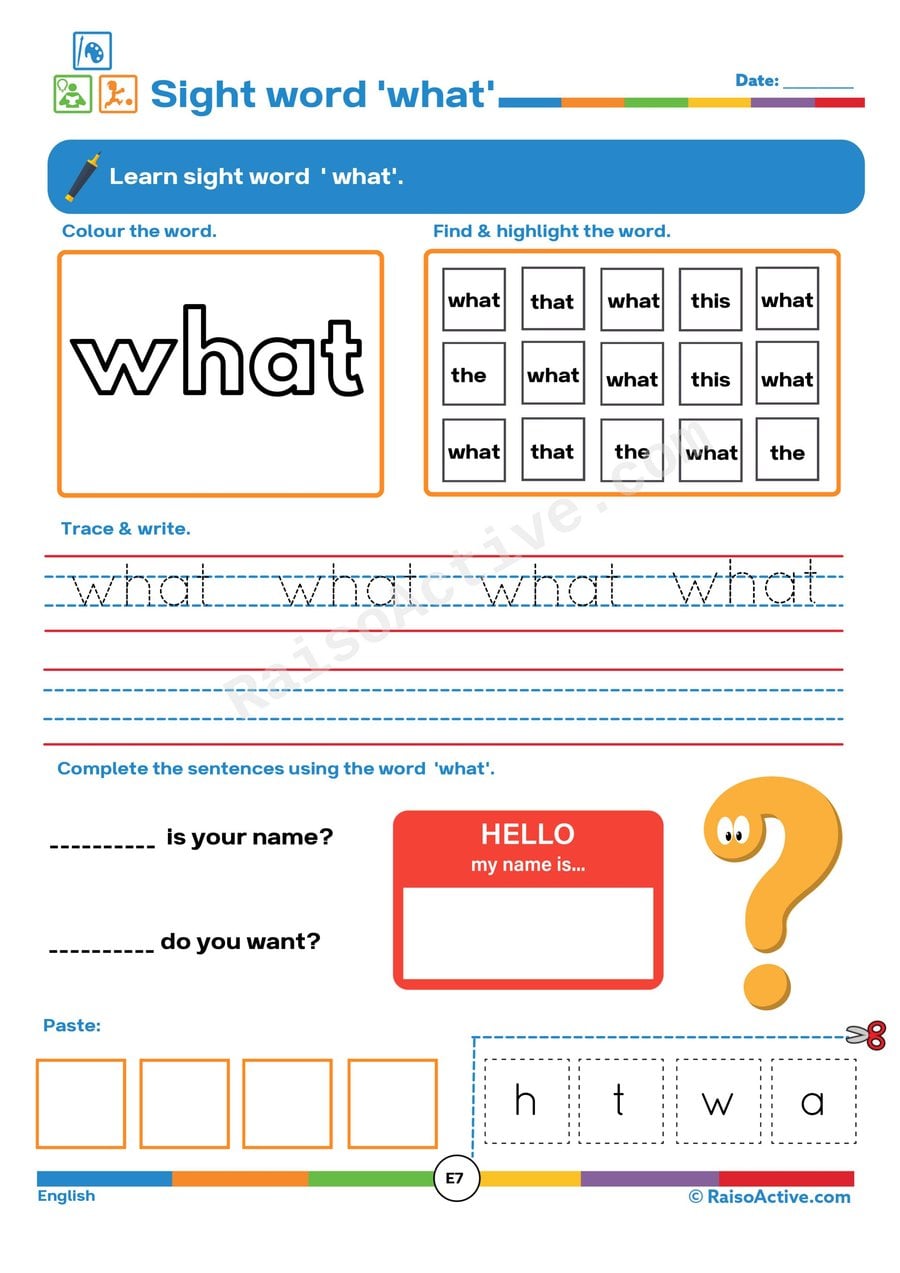
Sight Word 'What' Worksheet: Learn, Trace, and Find!
The word 'what' is a common question word that children ages 4-5 encounter constantly in both spoken conversation and early reading, making it an important addition to their sight word vocabulary. This worksheet builds recognition through several formats — coloring, tracing, word searching, sentence completion, and cut-and-paste spelling — giving the word repeated, varied exposure in a single sitting. Because 'what' is a question word, practicing it in sentences also gives children an early sense of how question structures differ from statement structures.
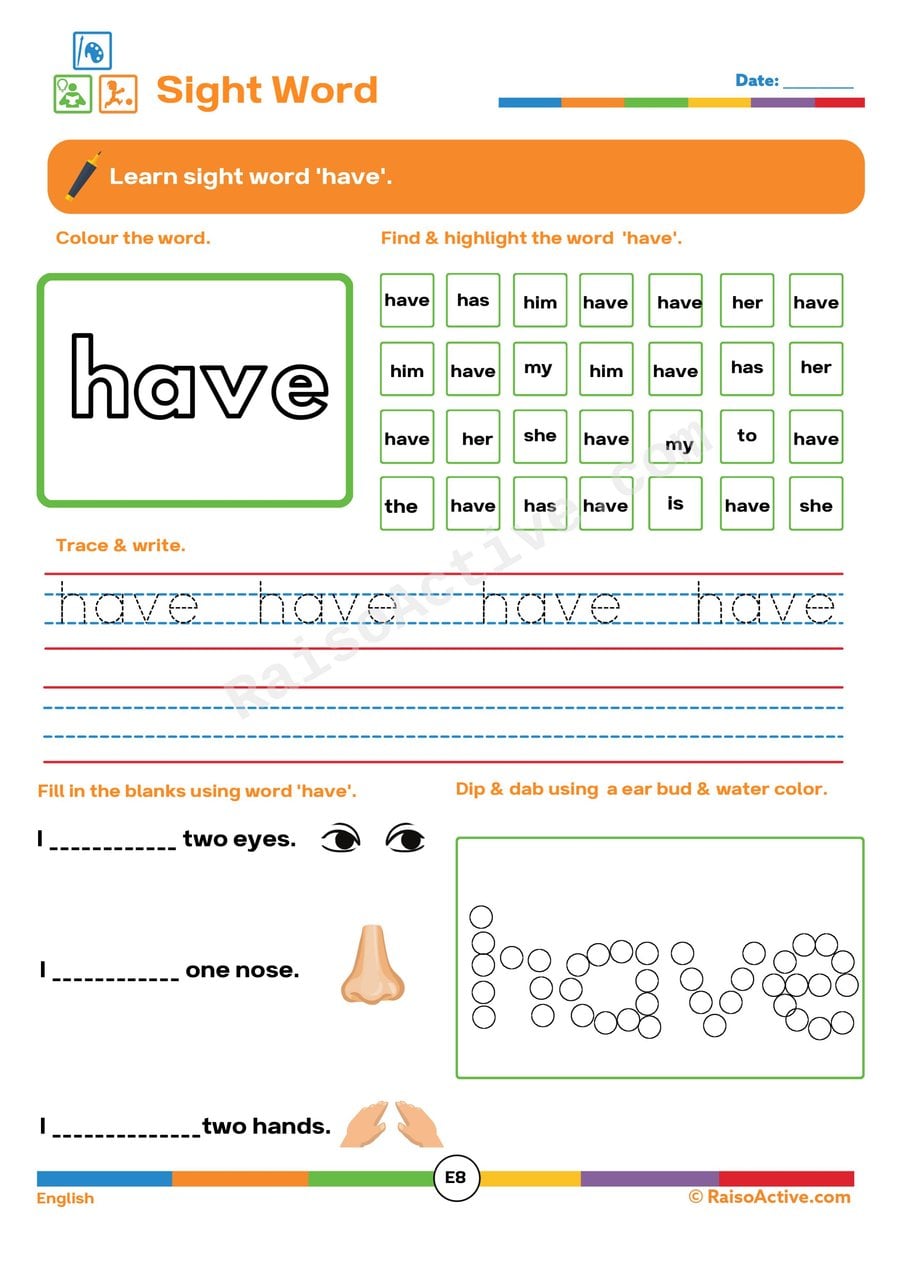
Sight Word 'Have' Worksheet for Early Readers
Children ages 4-5 build automatic recognition of the sight word 'have', a word that must be memorized rather than sounded out phonetically. Coloring, searching, tracing, and writing the word across several exercises gives the repeated exposure needed for a word to become instantly recognizable while reading. Completing fill-in-the-blank sentences also shows children how 'have' functions naturally within everyday spoken and written language.
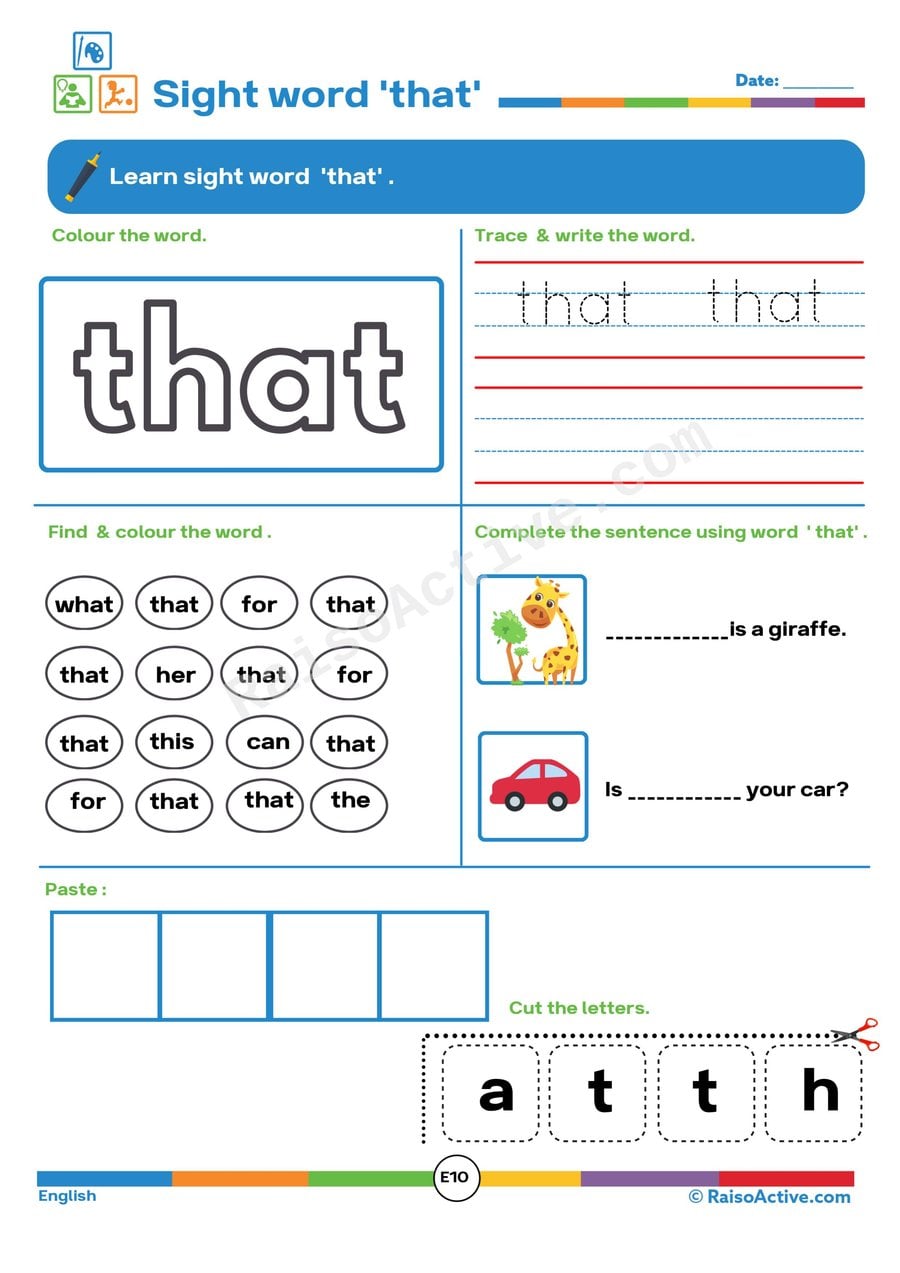
Sight Word 'That' Worksheet: Trace, Find, and Write!
As one of the most frequently used words in early reading texts, 'that' needs to be recognized instantly rather than sounded out letter by letter, and this worksheet gives children ages 4-5 several different ways to practice that recognition. Combining tracing, visual searching, sentence completion, and cutting letters to spell the word reinforces the same target through multiple senses and formats, which strengthens memory retention for tricky sight words.

Trace and Write Numbers: Sixteen to Twenty Worksheet
This worksheet helps children ages 4-5 practice tracing and writing the number words from sixteen to twenty, completing the teen and early twenty number-word range that builds toward full number fluency to 20. Repeated tracing of these longer words also continues to build the handwriting stamina needed for more complex writing tasks ahead.

Trace and Count the Number 16 Worksheet for Preschoolers
This worksheet has children ages 4-5 trace the two-digit number 16 and then count and color a full set of sixteen squares, continuing to build counting stamina in the teens range that many children find more challenging than counting to 10. Because 16 combines a 1 and a 6, tracing it reinforces the same two-digit writing pattern practiced with numbers like 11 through 15, helping children generalize the pattern rather than treating each teen number as entirely new. Counting squares instead of round objects also quietly introduces basic shape vocabulary.
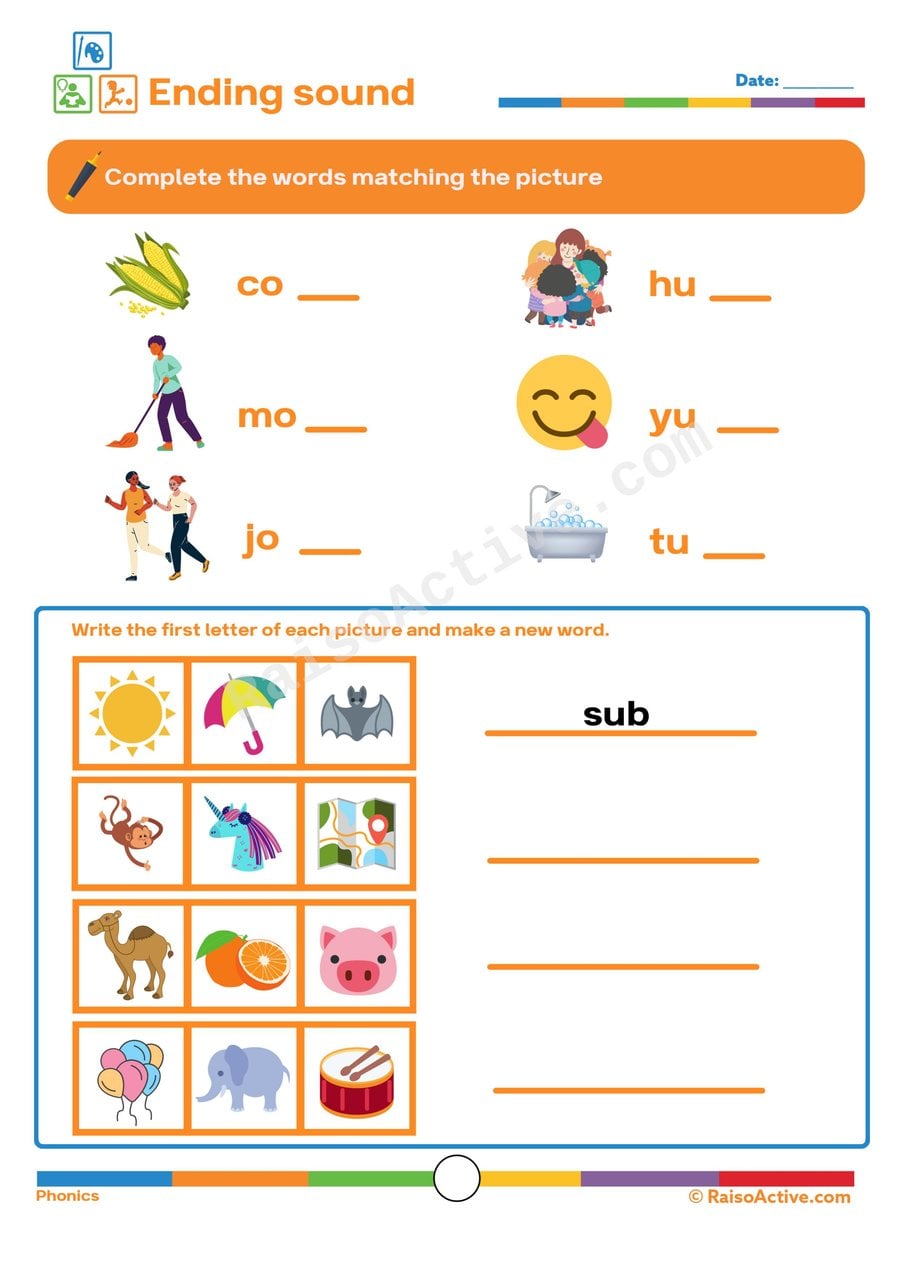
Ending Sound Worksheet: Complete the Words!
This worksheet builds on ending sound practice for children ages 4-5 by having them complete words based on pictures and then use the very first letter of each picture to build an entirely new word, adding a layer of creative word-building on top of straightforward phonics practice. Completing words by ending sound requires the same phonemic segmentation skill as beginning sound work, just applied to the trickier final position in a word. The second half of the worksheet, where beginning letters are strung together to form a new word, adds a satisfying puzzle element that rewards careful, accurate sounding-out in the first section.
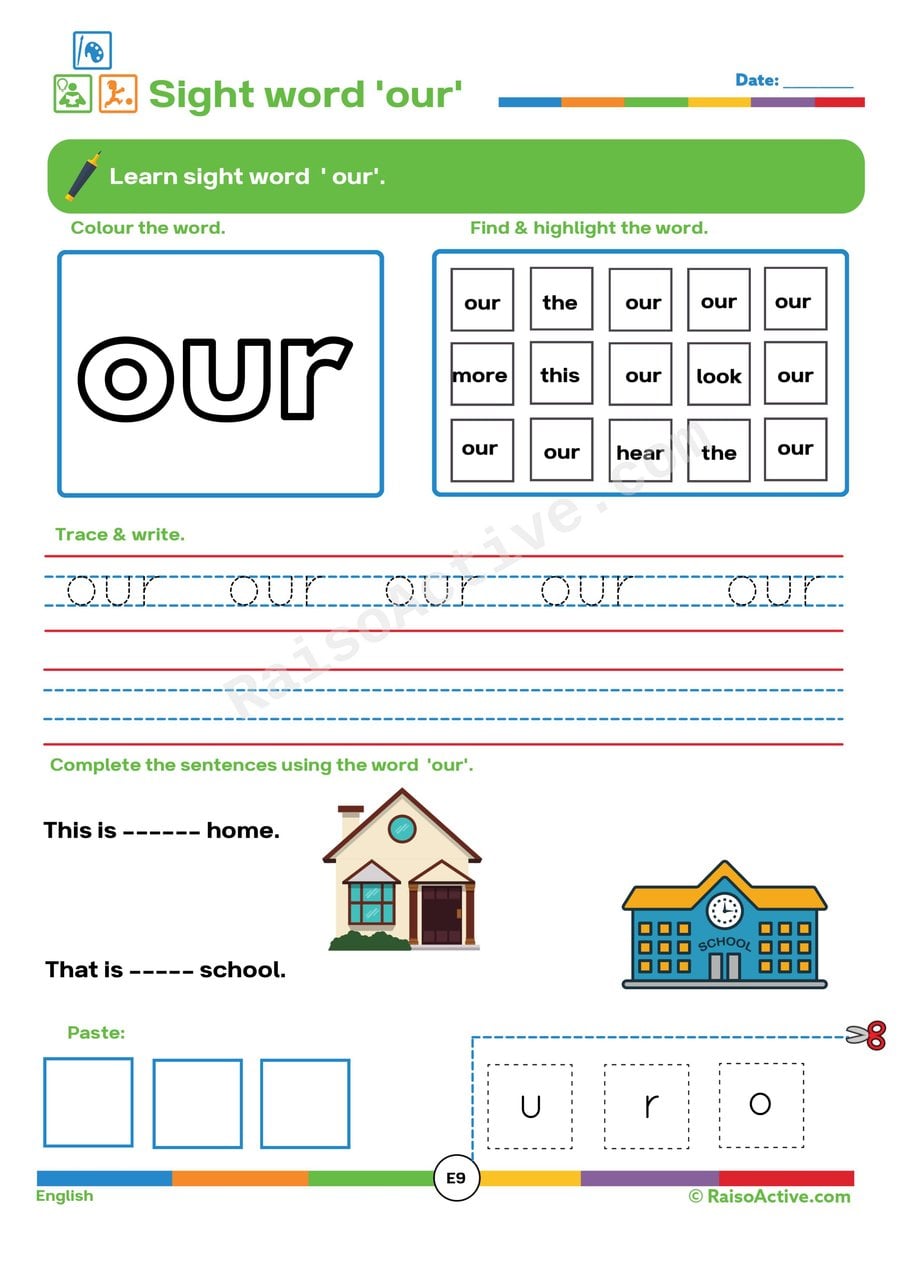
Our Sight Word Fun: Trace, Find, and Paste!
The possessive word 'our' appears often in classroom and family language, and this worksheet gives children ages 4-5 focused, multi-format practice recognizing it — tracing, word searching, sentence completion, and a cut-and-paste spelling activity. Repeated exposure across these different formats is what moves a word from effortful sounding-out into instant sight recognition, which is essential since 'our' doesn't follow predictable phonics rules cleanly. Practicing the word inside full sentences also reinforces its meaning as a word that shows shared ownership, a slightly abstract grammar concept for this age.

Summer Words ABC Order Worksheet for Preschoolers
This worksheet has children ages 4-5 practice putting summer-themed words in alphabetical order, a key pre-reading skill that requires comparing the first letters of multiple words and understanding that the alphabet has a fixed sequence. Because children must hold several words in mind and decide their relative order rather than just recognizing a single letter, this task builds early sequencing and comparison skills alongside letter knowledge. Writing the words out afterward also reinforces spelling and handwriting practice.
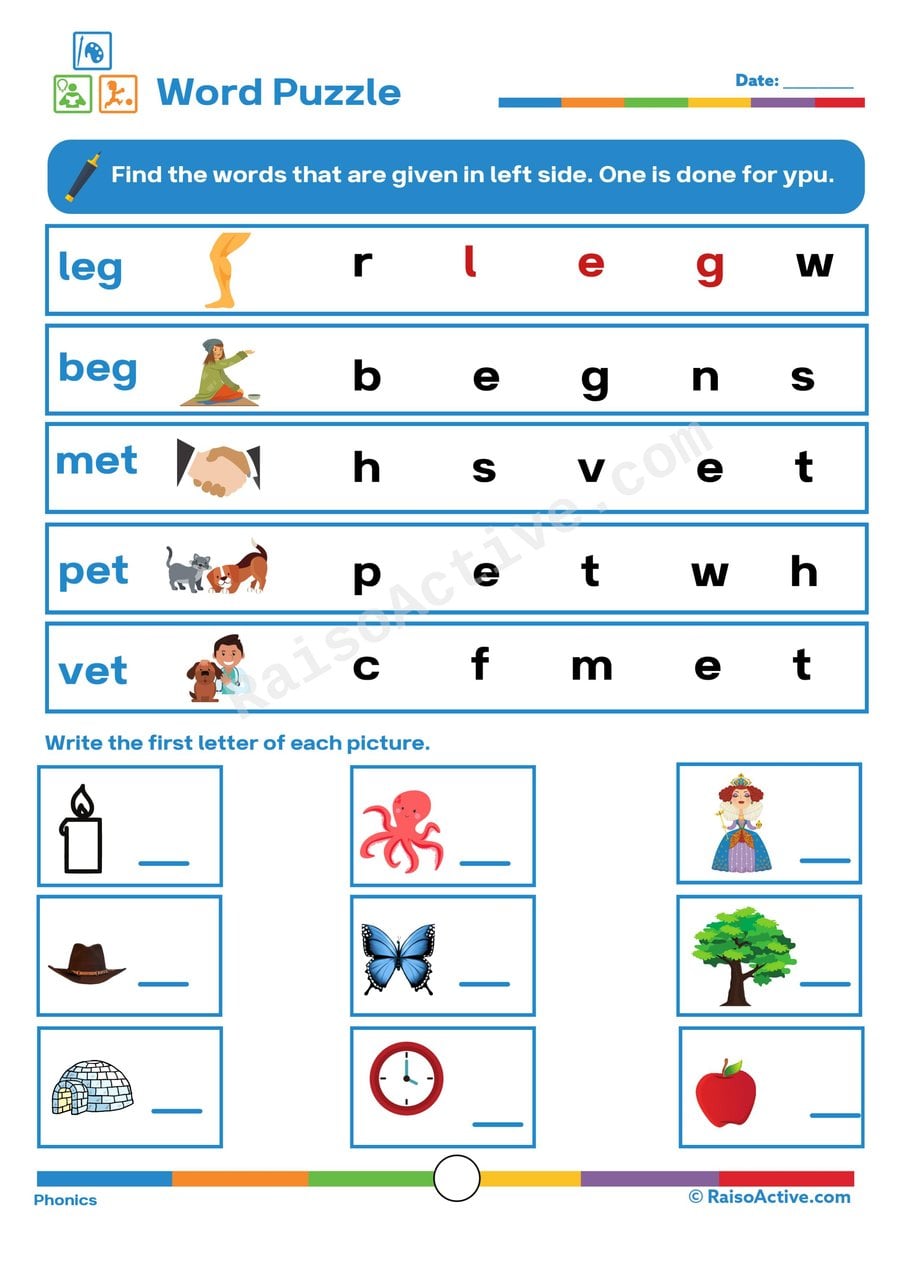
Word Puzzle Fun: Find and Write the First Letter!
This worksheet asks children ages 4-5 to locate hidden words in a picture puzzle and then identify and write the first letter of each corresponding picture, combining visual search skills with beginning-sound phonics. Searching a puzzle for target words builds visual scanning and attention, a skill that supports reading fluency later on, while writing the beginning letter reinforces the sound-to-symbol connection central to early spelling. Doing both together keeps young learners engaged while practicing two skills at once.
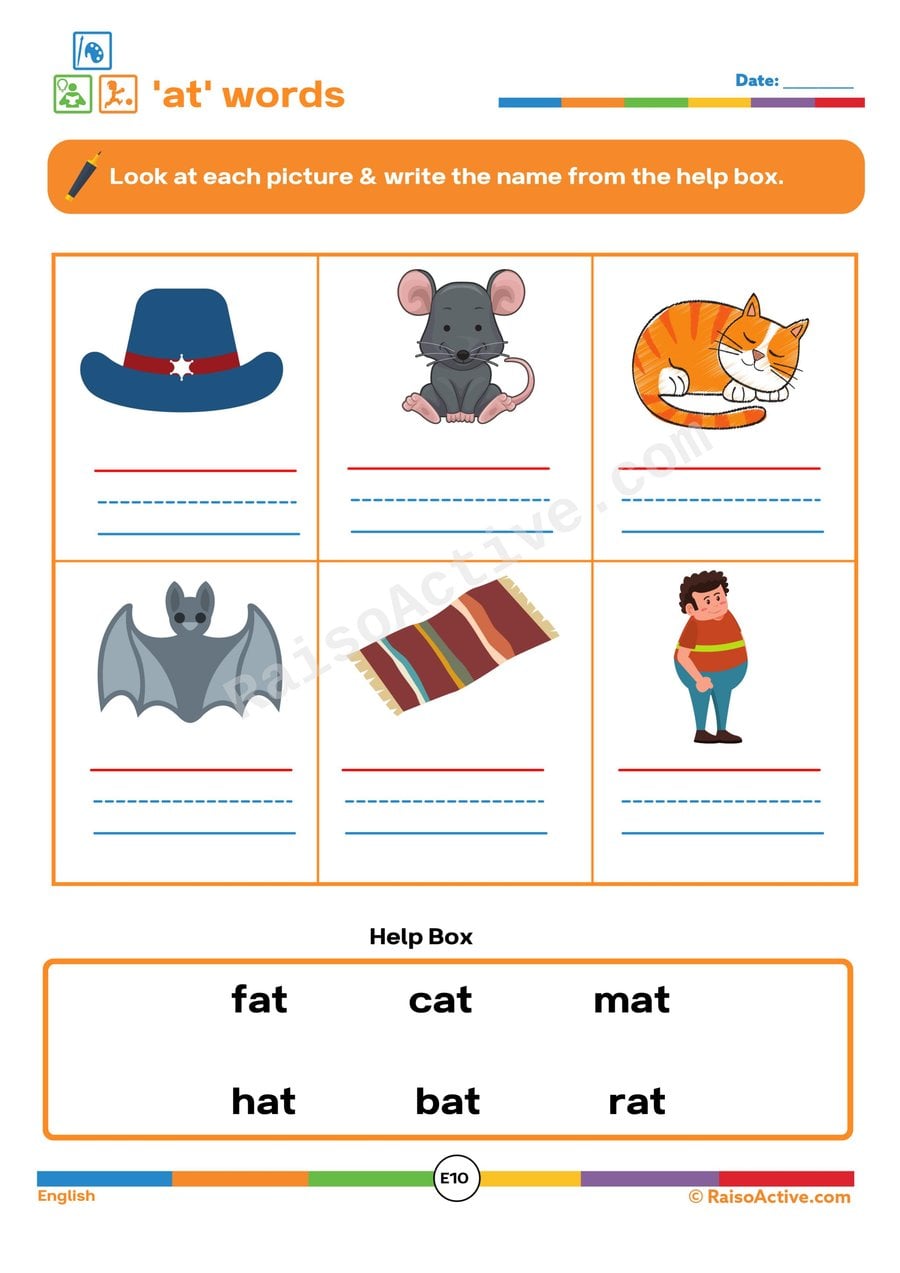
Fun 'at' Word Worksheet for Preschoolers
The 'at' word family (cat, hat, bat) is often one of the very first CVC patterns children ages 4-5 encounter, and this worksheet asks them to go a step further than simple reading by identifying and writing the correct word to match each picture themselves. Choosing the right word from a word bank and writing it out, rather than just reading a word that's already printed, requires children to actively recall spelling rather than passively recognize it. This active recall step is an important bridge between reading CVC words and eventually spelling them independently from memory.

Trace and Write Simple Sentences Worksheet for Preschoolers
Tracing and then writing simple sentences independently helps children ages 4-5 move beyond single-word and letter practice into connected writing, learning that words are separated by spaces and sentences follow a left-to-right flow. This step is an important bridge between early handwriting skills and functional written communication.
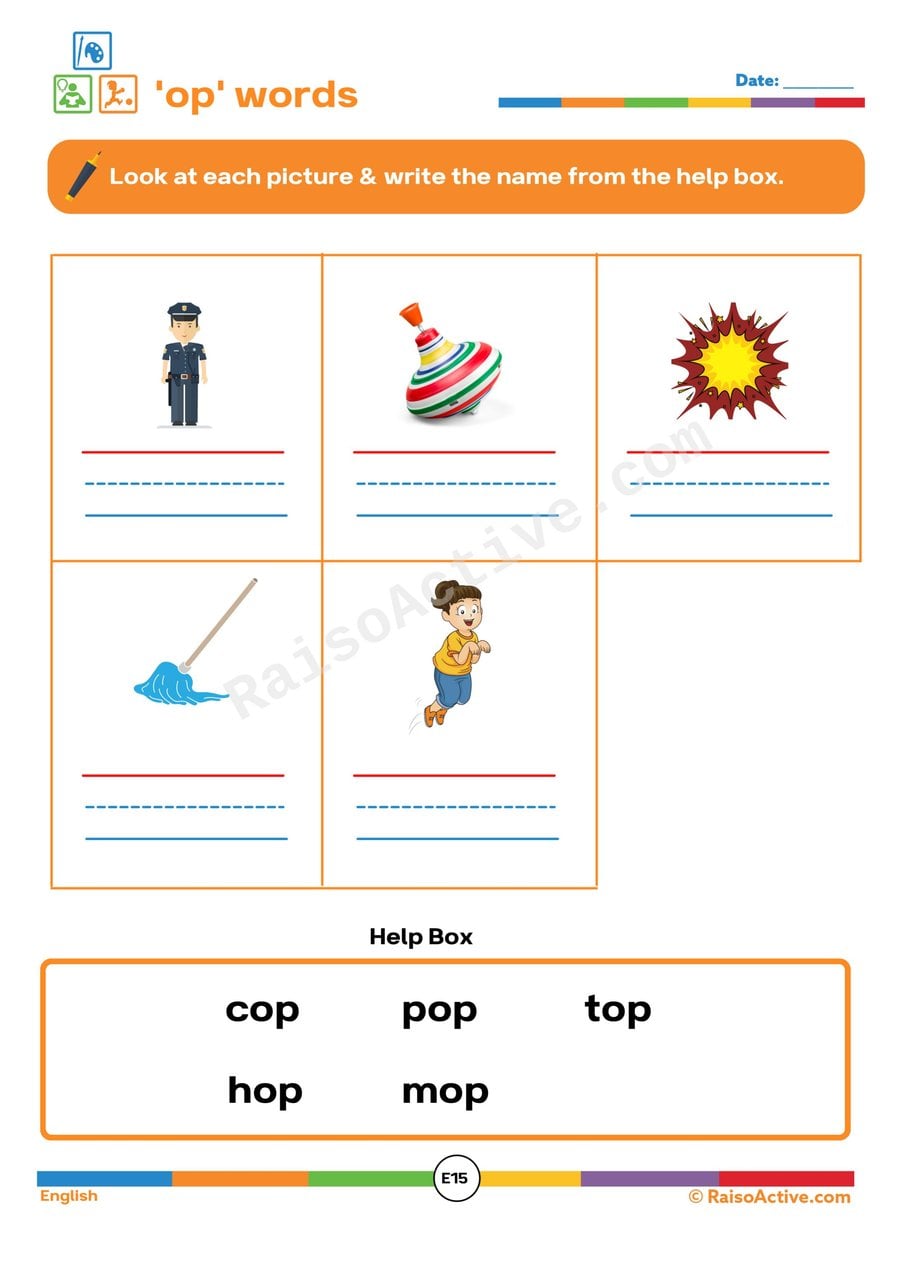
Op Word Worksheet: Read and Write 'op' Words!
This worksheet gives children ages 4-5 focused practice reading and writing CVC words in the 'op' family, like 'top', 'hop', and 'mop'. Recognizing the consistent '-op' ending across multiple words builds the pattern-recognition skill that lets early readers decode unfamiliar words more quickly. Writing each word after finding it in the help box also reinforces correct spelling and letter formation.

Letter N Tracing Worksheet: Practice Uppercase and Lowercase!
N is built from two vertical lines connected by a diagonal stroke between them, a genuinely different pattern from letters like M that have four strokes, so tracing it at ages 4-5 sharpens a child's ability to notice and reproduce a specific number and order of strokes. This precision matters increasingly at this slightly older end of the preschool range, where handwriting expectations start to rise.

Sequencing Numbers Train Worksheet for Preschoolers
Writing numbers 0-20 into a sequence of train cars pushes children ages 4-5 to internalize the full early counting range in fixed order, not just recite it aloud, which is a meaningfully different and more durable skill. Filling in the numbers by hand also builds numeral formation alongside sequencing, so children practice both remembering what comes next and writing it correctly. The train-car visual keeps a fairly long numeric range broken into manageable, engaging chunks rather than one intimidating list.
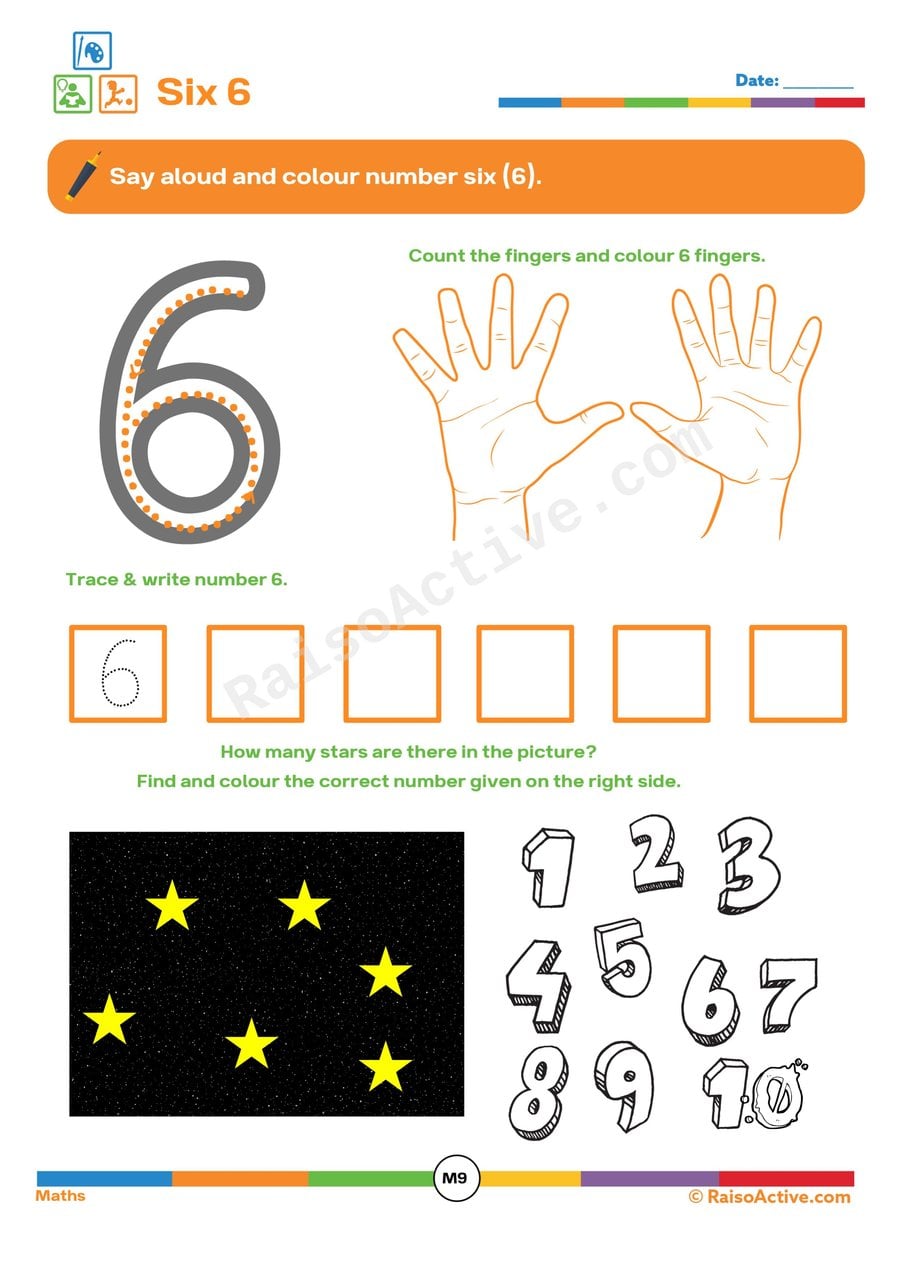
Number Six (6) Worksheet: Trace, Write, and Count!
Children ages 4-5 practice tracing and independently writing the number six while reinforcing the quantity it represents by counting a group of stars. Moving from guided tracing to independent writing, then to counting practice, builds both the motor skill and the number sense needed for early math confidence.
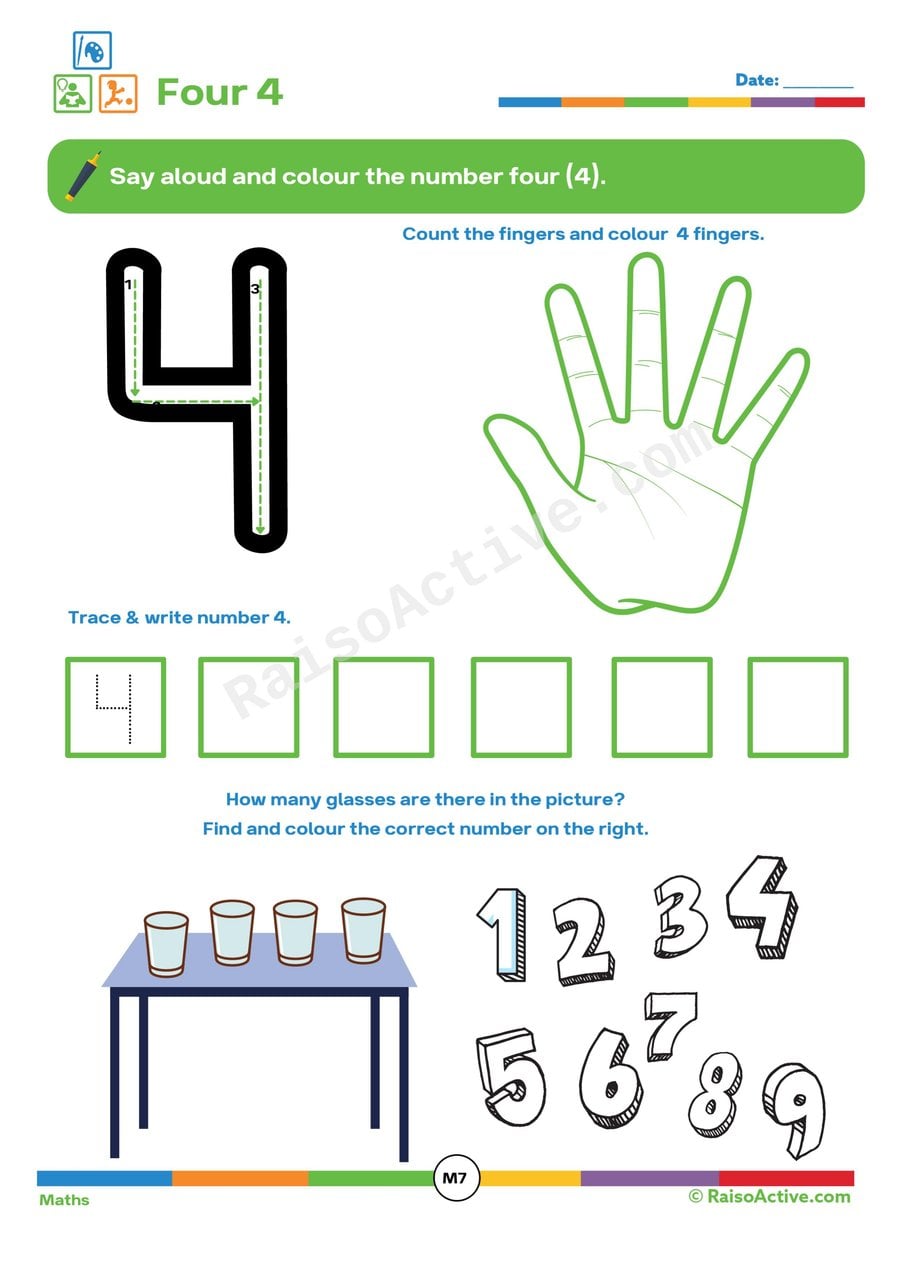
Number Four Worksheet: Trace, Count, and Color!
This worksheet helps children build the pencil control to write the number 4 correctly while linking that written numeral to the quantity it represents through counting fingers and objects on the page. For four- and five-year-olds, combining tracing with hands-on counting — like counting fingers on a hand or glasses in a row — reinforces that the number 4 always represents the same fixed amount, no matter what's being counted.

Ending Sound Worksheet: Identify and Write the Final Sounds!
Ages 4-5 are learning to pull apart the sounds inside a word, and this worksheet zeroes in on the trickiest part: the final sound. Hearing and writing ending sounds is a phonemic awareness skill that comes after beginning sounds developmentally, since children have to hold the whole word in memory and isolate the very last phoneme. This directly prepares them for spelling, where the ending sound is often the piece kids drop or guess at.
What Pre-K number tracing worksheets cover
At four to five, number tracing covers one through ten, with each numeral shown with a starting dot and an arrow for its strokes, since digits like 2, 3 and 5 are easy to start from the wrong end. A worksheet should mix traced numerals with a count-and-write task, where the child counts a group of objects and then traces the matching digit. Writing a numeral from memory, with no model at all, is still uneven at this age.
- Trace numerals one to ten with a marked starting dot
- Count a group of objects, then trace the matching numeral
- Follow the arrow so curved numerals like 2 and 3 start right
- Trace ten numerals in a row without losing the sequence
How to use these worksheets at home or in class
Ten minutes a day, starting with name tracing before moving to letters or numbers, builds the steady habit this stage rewards. Say a letter's sound alongside its name while tracing, and count out loud while touching each object in turn.
Start with the sheet that matches what your child can already do, then move one step up. Keep finished sheets in a folder: Pre-K teachers often ask for evidence of practice, and children like seeing their own progress.
Is your child ready for Pre-K number tracing work?
Before this stage a child should trace basic shapes and lines, recognize a few letters from their own name, count a small set of objects by pointing to each one, and sustain a simple table task for several minutes.
Frequently asked questions
My four-year-old writes 3 backward. Does tracing fix that?
It helps if the tracing sheet marks the starting point and direction, because a backward 3 is usually a wrong starting point rather than a lack of practice. Have the child begin every 3 at the top, curve out and back to the middle, then out and back again, saying "out, in, out, in" while tracing. Reversals are common up to six or seven and are not a sign of a wider problem on their own.
What should a Pre-K child be able to do in number tracing?
At four to five, number tracing covers one through ten, with each numeral shown with a starting dot and an arrow for its strokes, since digits like 2, 3 and 5 are easy to start from the wrong end. A worksheet should mix traced numerals with a count-and-write task, where the child counts a group of objects and then traces the matching digit. Writing a numeral from memory, with no model at all, is still uneven at this age. Before this stage a child should trace basic shapes and lines, recognize a few letters from their own name, count a small set of objects by pointing to each one, and sustain a simple table task for several minutes.
Do these worksheets follow the Pre-K curriculum?
The sheets cover numeral formation 0–9, correct stroke direction for each digit, number-to-quantity matching and consistent numeral size and spacing, which sit inside the State pre-K early learning standards; Head Start ELOF outcomes for Pre-K. Reception (UK), LKG / Junior KG (India) use the same skills at this age, so the sheets also fit families following those programmes.
Are these Pre-K number tracing worksheets free?
Yes. Each worksheet downloads free as a watermarked PDF once you create an account, with a limit of five a day. An annual membership ($20) removes the watermark and the limit for the whole library of over 1,000 worksheets and every printable pack.

Written by
Hemsweta Jain · Teacher Cheena
MBA and Early Childhood Educator, teaching since 2014 · Founder of RaisoActive, Mumbai
Written and reviewed by Hemsweta Jain (Teacher Cheena), who designs every RaisoActive worksheet.
Last reviewed
Printable packs for ages 4–5
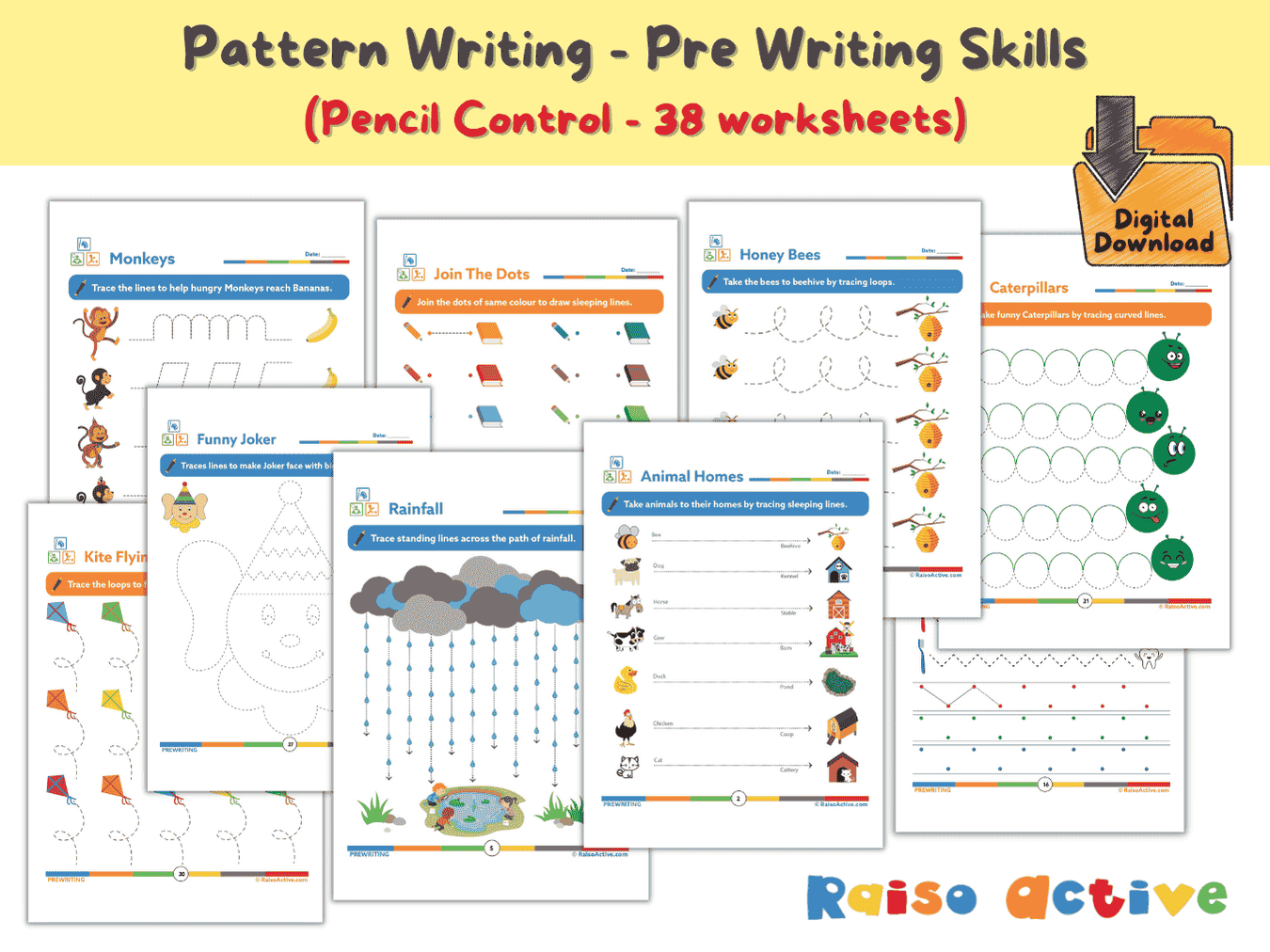
Pattern Writing Pre-writing Skills Activity Book for 3-4 Year Olds
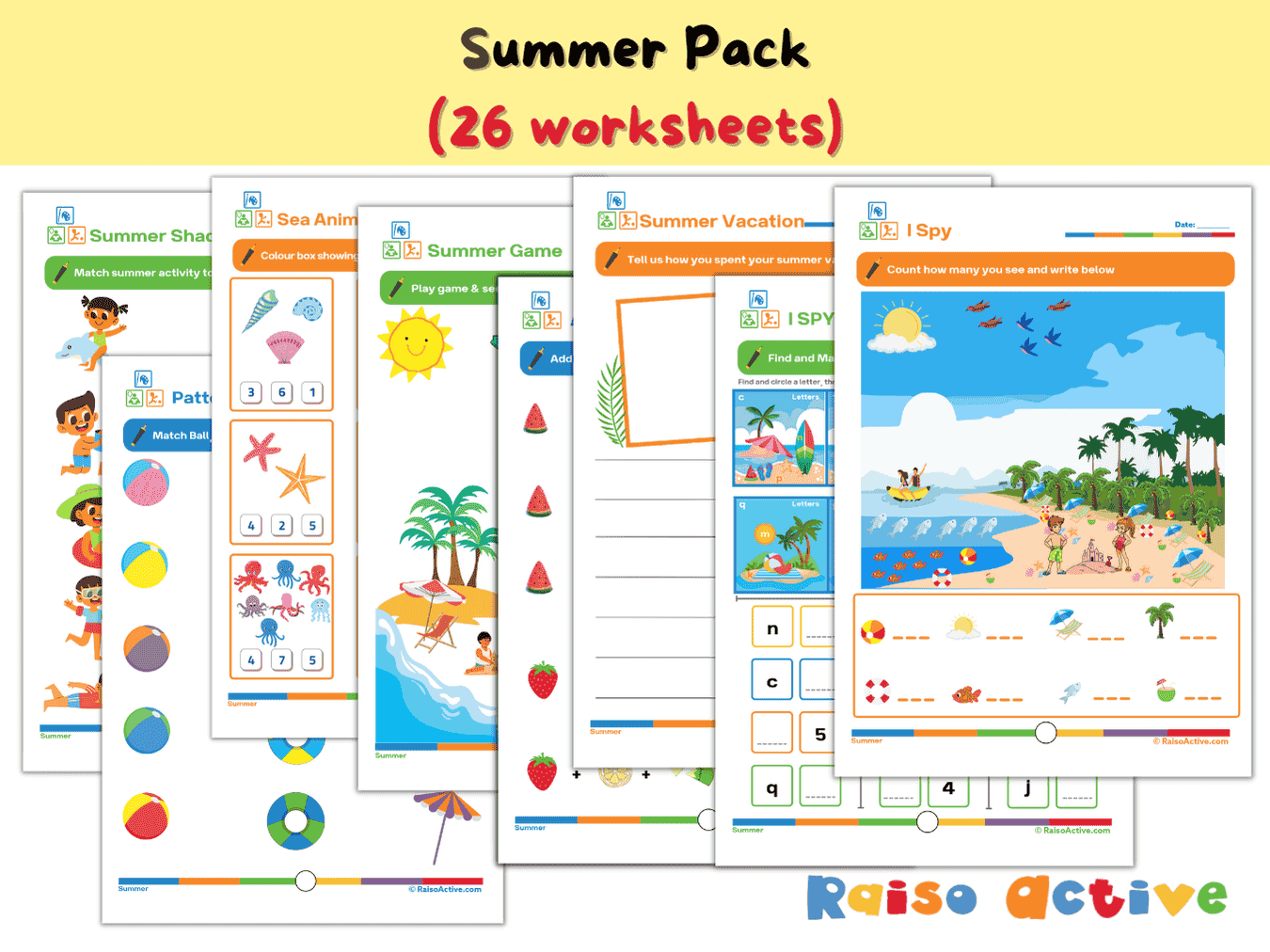
Summer Activity Pack: Math, Literacy, Puzzles & More for Preschool & Kindergarten
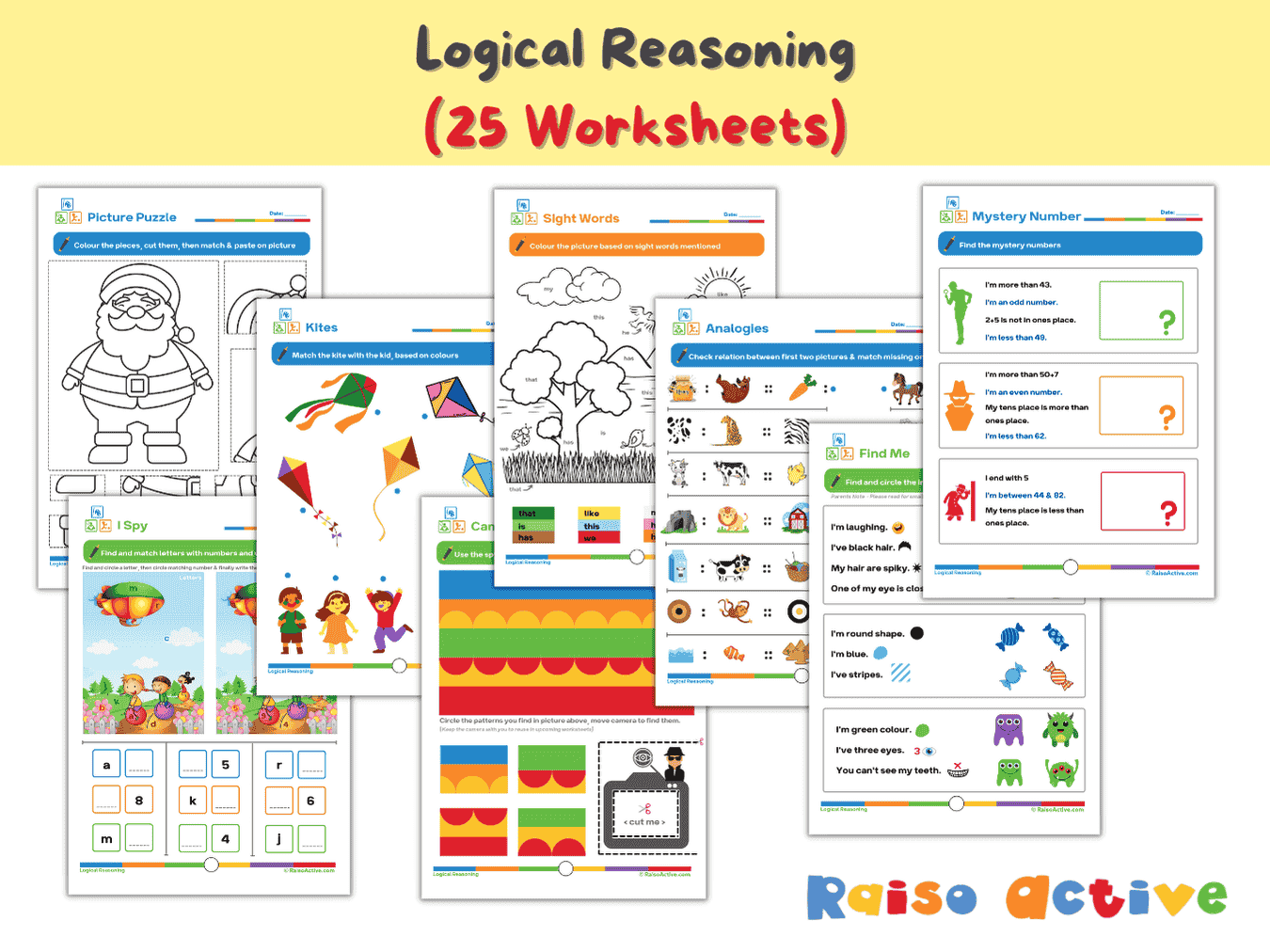
Logical Reasoning Activity Book for Preschool & Kindergarten | Patterns, Puzzles & Analogies
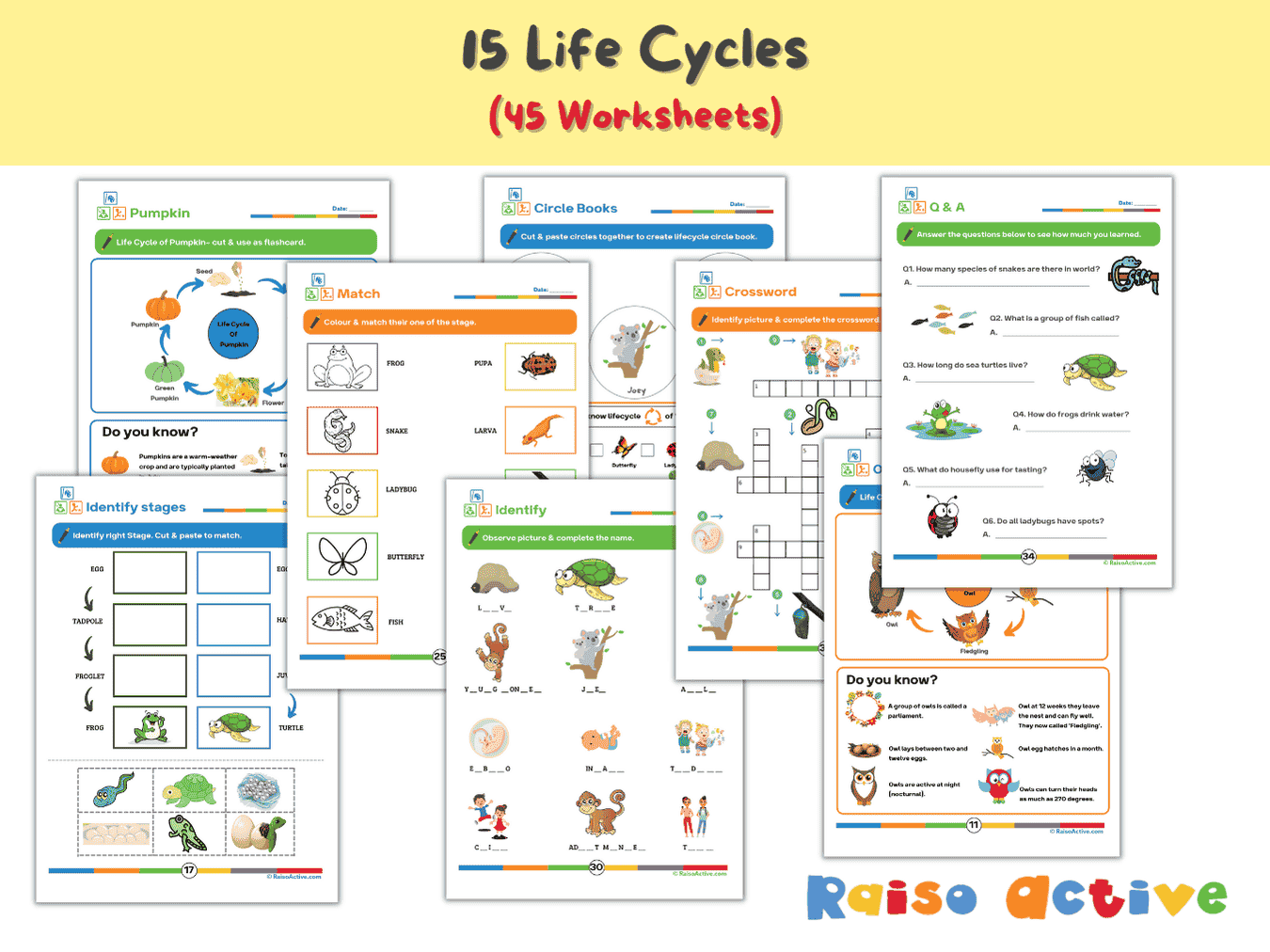
Lifecycles Activity Book & Flashcards for Preschool & Early Elementary
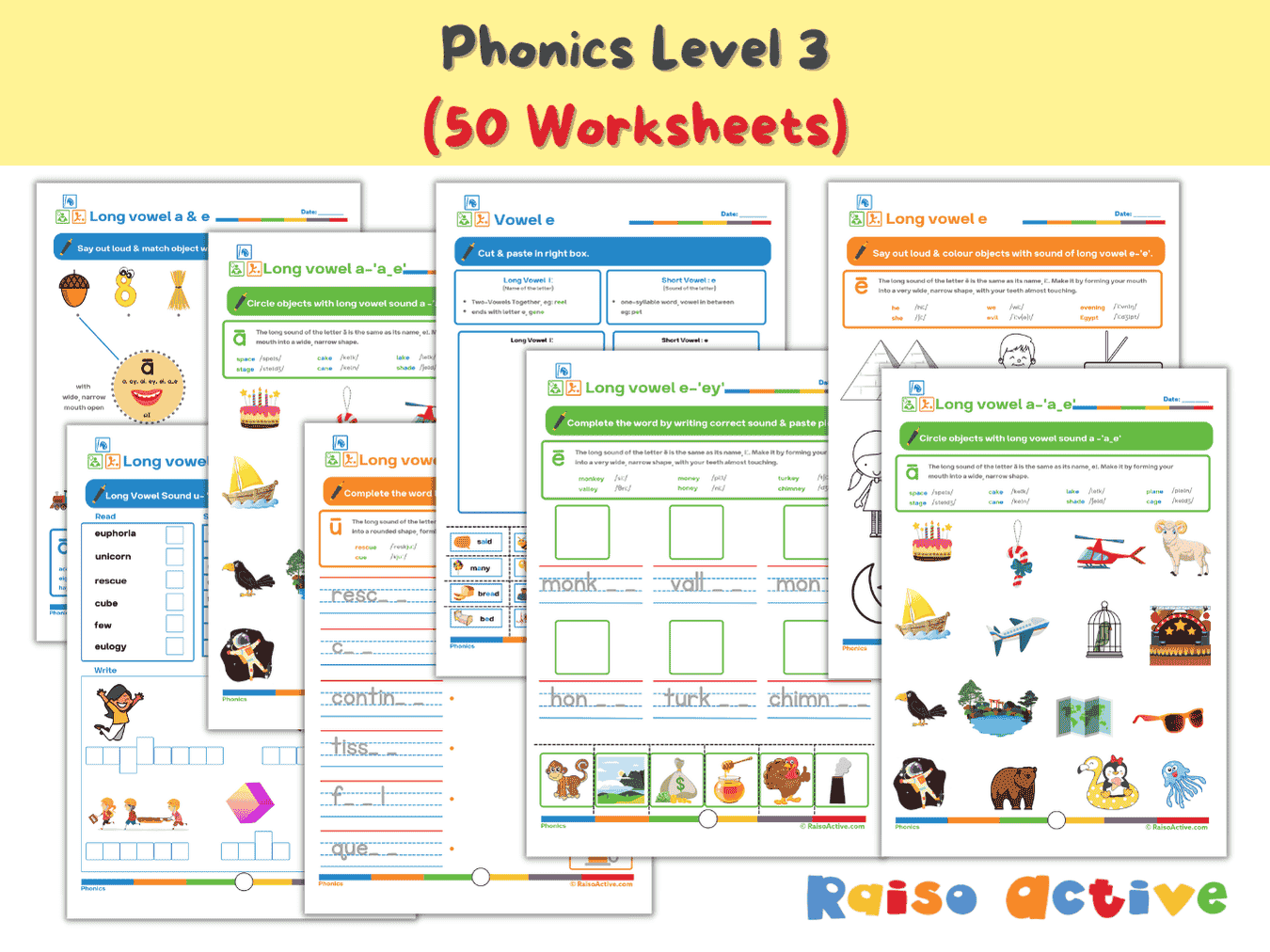
Phonics Level 3 Long Vowels Activity Book for Kindergarten & 1st Grade
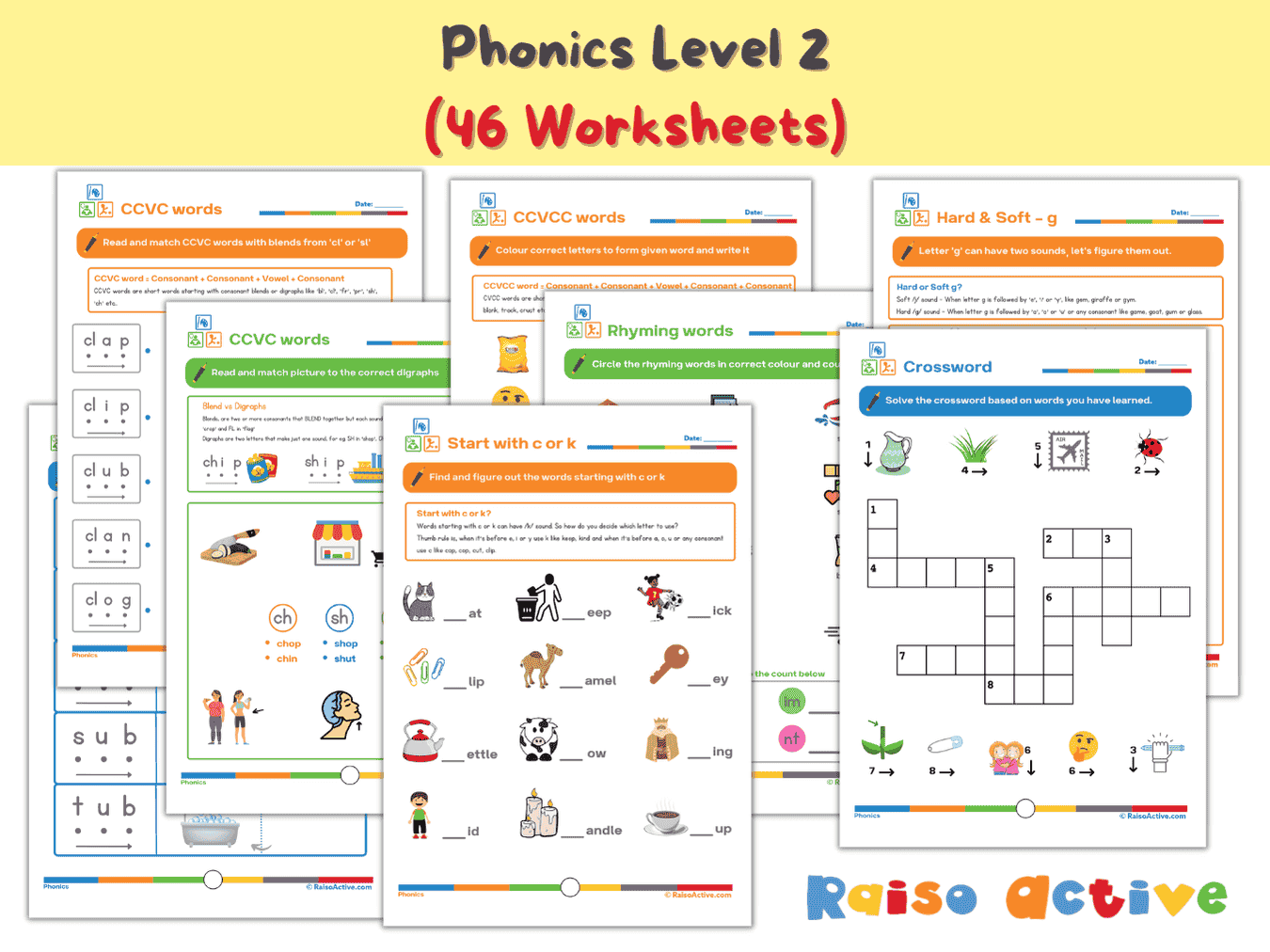
Phonics Level 2 Worksheets: CVC, CCVC, CVCC Word Families & Blends for Early Readers (Ages 4-7)
Guides for parents and teachers
See all guides →Number Formation Rhymes 0–9 and How to Fix Reversals
Original number formation rhymes for 0–9, the correct stroke order for each digit, why 3, 5 and 7 get reversed most often, and multisensory fixes that work.
What's the Best Alternative to ABCmouse? A Complete Parent's Guide to Free and Affordable Educational Apps
ABCmouse runs ~Rs 4,000-5,000/year with US spellings and curriculum. Compare free & affordable Indian-friendly apps like Khan Academy Kids and DIKSHA.
Is My Child Ready for Kindergarten? Essential Skills and Honest Assessment
Wondering if your child is ready for Class 1 or kindergarten? Learn the 5 domains of school readiness, what Indian schools look for, and how to support your child at home.
Complete Guide to Jack Hartmann Worksheets: Enhancing Educational Videos with Hands-On Learning
Discover how to pair Jack Hartmann YouTube videos with printable worksheets for deeper learning. Counting, alphabet, sight words activities for preschool to Grade 1.
My Child Can Count But Can't Write Numbers — Is This Normal? A Parent's Complete Guide
Yes, it's developmentally normal - counting and writing use different skills. See why the gap happens and simple activities (no worksheets) to bridge it.
What's the Best Way to Teach Number Formation to Young Children? A Complete Guide
Discover the best methods to teach digit formation (0-9) to young children — stroke sequences, verbal cues, multi-sensory techniques, and fixing common reversals.
Canonical: https://raisoactive.com/worksheets/pre-k-number-tracing