Writing Number 6 Worksheet: Trace, Color, and Count!
This worksheet builds number 6 recognition for 4-5 year olds through tracing, coloring, and counting practice, connecting the written numeral to an actual quantity of objects your child counts aloud. Bringing formation, counting, and independent writing together in one page reinforces that '6' isn't just a shape to copy but represents a specific, countable amount, which is the real foundation of number sense.
Part of the pack
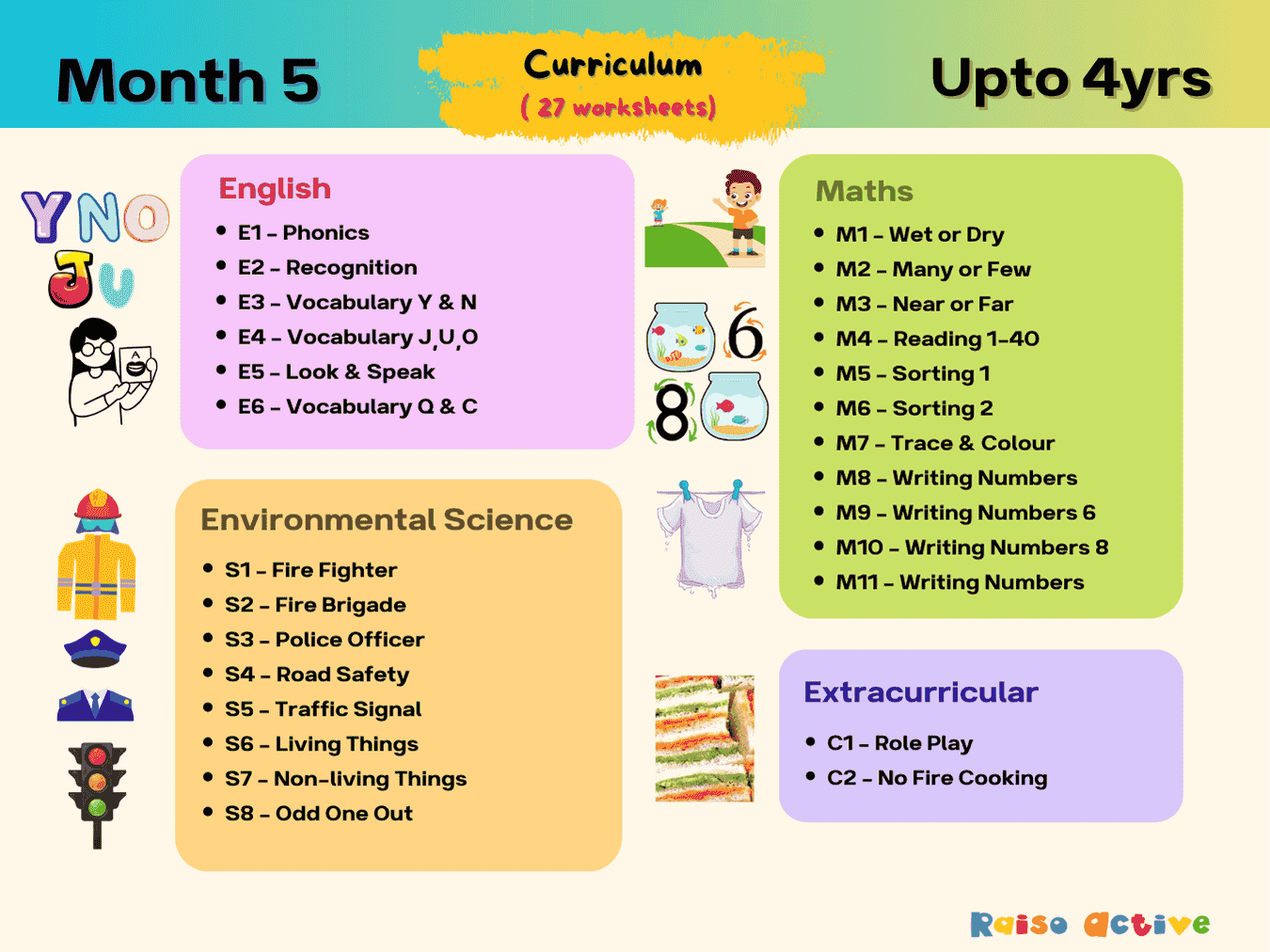
Month 5: Preschool Subjects and Play | Ages Up to 4
This is page 18 of the pack. Ages 2-4 · PreschoolAges 2-4 · NurseryAges 2-4
Made for your child
Counting to 10, made for your child
A maths pack with your child's name in it: pictures that explain, practice at three levels, puzzles and story sums about them. Print a new set whenever they finish.
Make a maths packFree preview · free for members
Curriculum
- Number Recognition > Number Writing
How to use this worksheet
Have your child trace over the number 6 first, saying 'six' aloud each time they trace it. Let them color the number 6 using their favorite color. Have them count the group of objects on the page out loud, touching each one, and confirm the count matches six. Finish by having your child practice writing the number 6 independently, without tracing over dotted lines.
Materials needed
- Pencil
- Crayons
Extension activities
- 1Have your child draw six of their favorite things, like six stars or six flowers.
- 2Go on a hunt around the house or classroom to find the number 6 somewhere — a clock, a door, a book page.
- 3Build a tower using exactly six blocks and count them together as you stack.
- 4Play a quick game clapping six times and counting each clap out loud.
- 5Practice writing the number 6 in a sensory tray of sand or rice.

Written by
Hemsweta Jain · Teacher Cheena
MBA and Early Childhood Educator, teaching since 2014 · Founder of RaisoActive, Mumbai
Every RaisoActive worksheet is designed and checked by the founder before publishing.
Published · Last reviewed
More from Month 5: Preschool Subjects and Play | Ages Up to 4

Q and C Vocabulary Worksheet: Circle and Square the Pictures!
Ages 3-5 · Preschool–Pre-KAges 3-5 · Nursery–ReceptionAges 3-5 · Nursery–LKGAges 3-5
Distinguishing between the letters Q and C by sight and sound is a genuine phonics challenge for children ages 3-5, since both letters can look and even sound similar in casual speech. This worksheet asks children to apply a different marking — a circle for Q, a square for C — for each letter's pictures, which forces active decision-making rather than passive letter recognition. Strengthening this kind of visual and auditory discrimination helps prevent letter mix-ups that commonly appear in early reading and writing.
Traffic Signal Fun: Color and Match the Meanings!
Ages 3-5 · Preschool–Pre-KAges 3-5 · Nursery–ReceptionAges 3-5 · Nursery–LKGAges 3-5
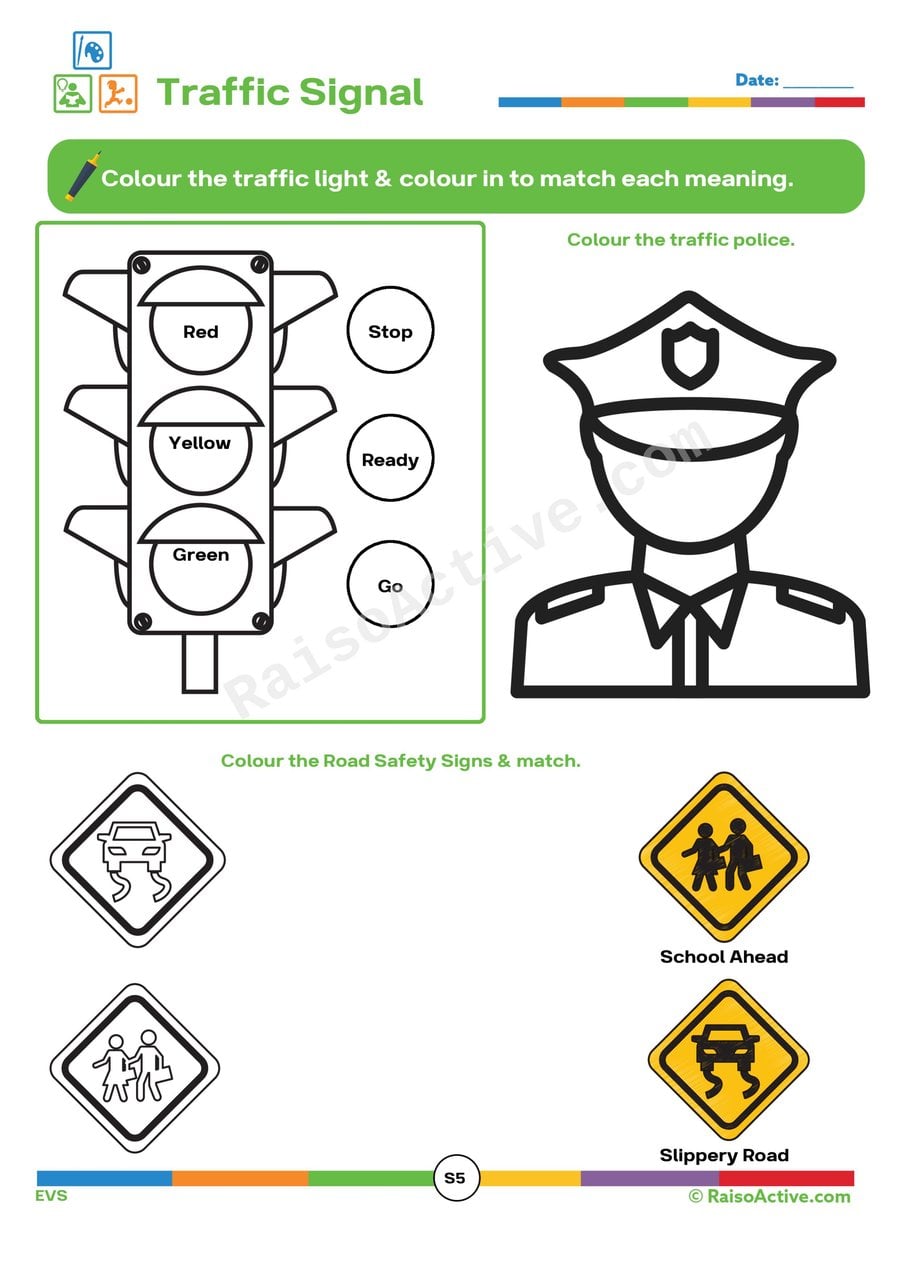
Coloring traffic lights and matching words to their meanings teaches children ages 3-5 that colors carry specific, important messages in the real world, an early and practical form of symbol recognition and road safety awareness. Matching written words to the correct traffic light or road sign also reinforces early reading skills by connecting simple vocabulary to something visually familiar from everyday outings. Understanding what red, yellow, and green mean at a traffic light gives children knowledge they can apply immediately as pedestrians and future road users.

Firefighter Fun: Circle the Equipment & Maze Worksheet
Ages 3-5 · Preschool–Pre-KAges 3-5 · Nursery–ReceptionAges 3-5 · Nursery–LKGAges 3-5
Circling firefighter equipment builds vocabulary and visual discrimination for children ages 3-5, since they must identify which pictured items — a hose, helmet, or ladder — actually belong to a firefighter's tools versus unrelated objects. Guiding the fire truck through a maze to reach the station afterward adds a hands-on problem-solving and fine motor challenge, requiring children to plan and trace a path with a pencil. Combining a community-helper theme with a maze keeps the page varied while introducing real vocabulary about an occupation many young children find exciting.

Animal Homes: Cut and Paste Sorting Worksheet for Preschoolers
Ages 3-5 · Preschool–Pre-KAges 3-5 · Nursery–ReceptionAges 3-5 · Nursery–LKGAges 3-5
Matching each animal to its home using numbered cut-and-paste pieces gives children ages 3-5 practice with number-based sorting while also building early knowledge of animal habitats, like a bird's nest or a bee's hive. Using numbers as the matching key, rather than just visual similarity, adds a layer of number recognition and one-to-one matching to the classification task. Understanding that different animals live in different kinds of homes is an early building block of basic life science and habitat concepts.

Phonics Fun: Identify and Match Letters Worksheet
Ages 4-5 · Pre-KAges 4-5 · ReceptionAges 4-5 · LKGAges 4-5
Matching a picture to the letter that starts its name requires children ages 4-5 to isolate the very first sound in a spoken word, a phonics skill called initial sound identification that directly predicts later reading success. This worksheet turns that listening skill into a visual matching task, asking children to connect what they hear to a printed letter rather than just naming pictures aloud. Building this sound-to-letter link is one of the clearest early indicators that a child is ready to start sounding out simple words.
Trace and Write Numbers 0-5 Worksheet
Ages 3-5 · Preschool–Pre-KAges 3-5 · Nursery–ReceptionAges 3-5 · Nursery–LKGAges 3-5
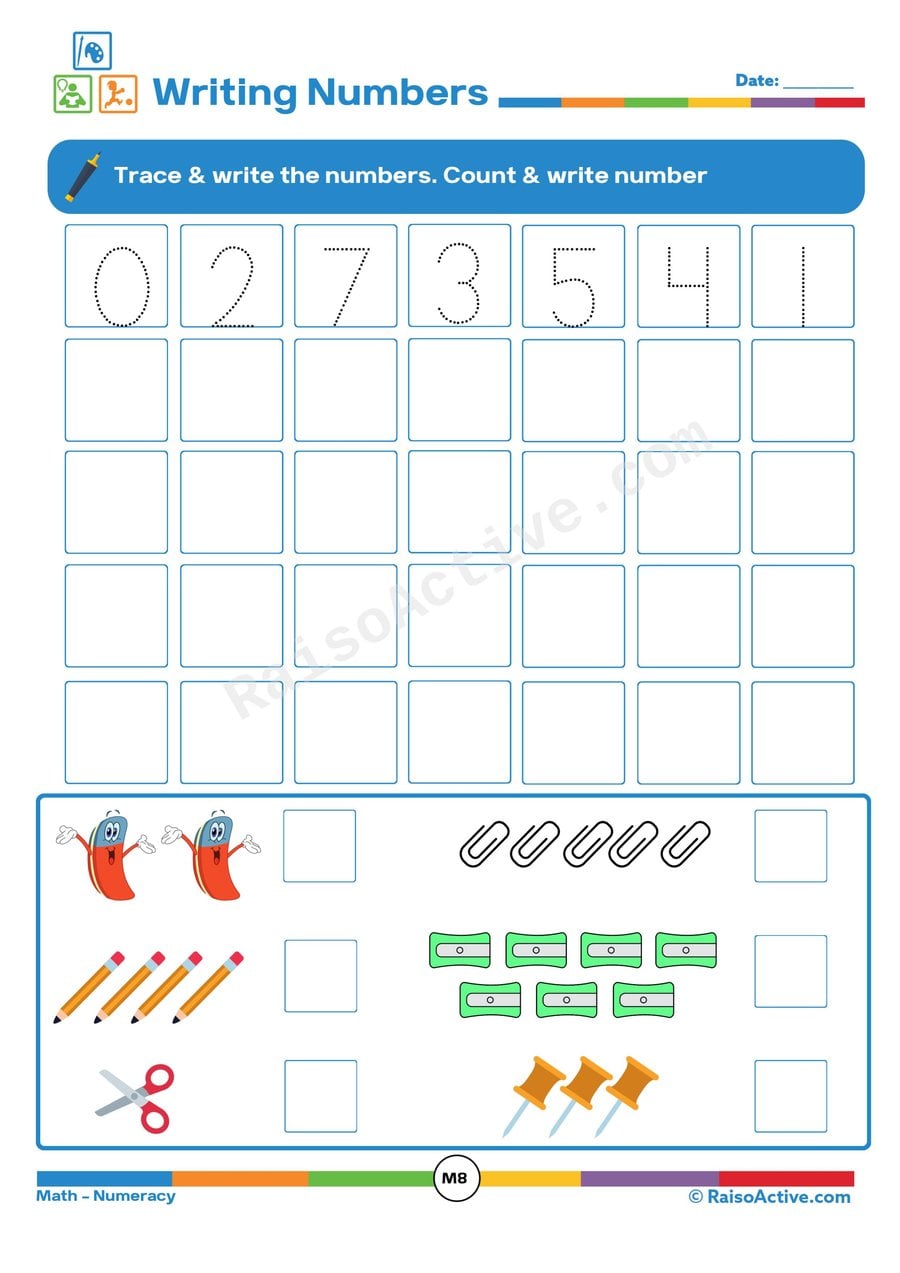
Tracing and writing the numbers 0 through 5 builds the specific hand strokes needed to form each numeral correctly, a skill that develops separately from simply being able to count or recognize numbers by sight for children ages 3-5. Following the tracing with a counting-and-writing section, where children count objects and record the total themselves, connects the motor skill of writing numbers directly to their meaning as quantities. Practicing this small, foundational range first builds the confidence needed before tackling larger numbers later.

Living Things Worksheet: Identifying Living and Non-Living Things
Ages 4-6 · Pre-K–KindergartenAges 4-6 · Reception–Year 1Ages 4-6 · LKG–UKGAges 4-6
This worksheet asks 4-6 year olds to sort images into living and non-living categories and then separately identify what living things actually need to survive — air, water, food, and space to grow — which moves beyond simple classification into understanding the defining characteristics of life. That two-part structure (sort, then reason about needs) makes this a solid introduction to basic biology concepts that children will build on in later science classes.
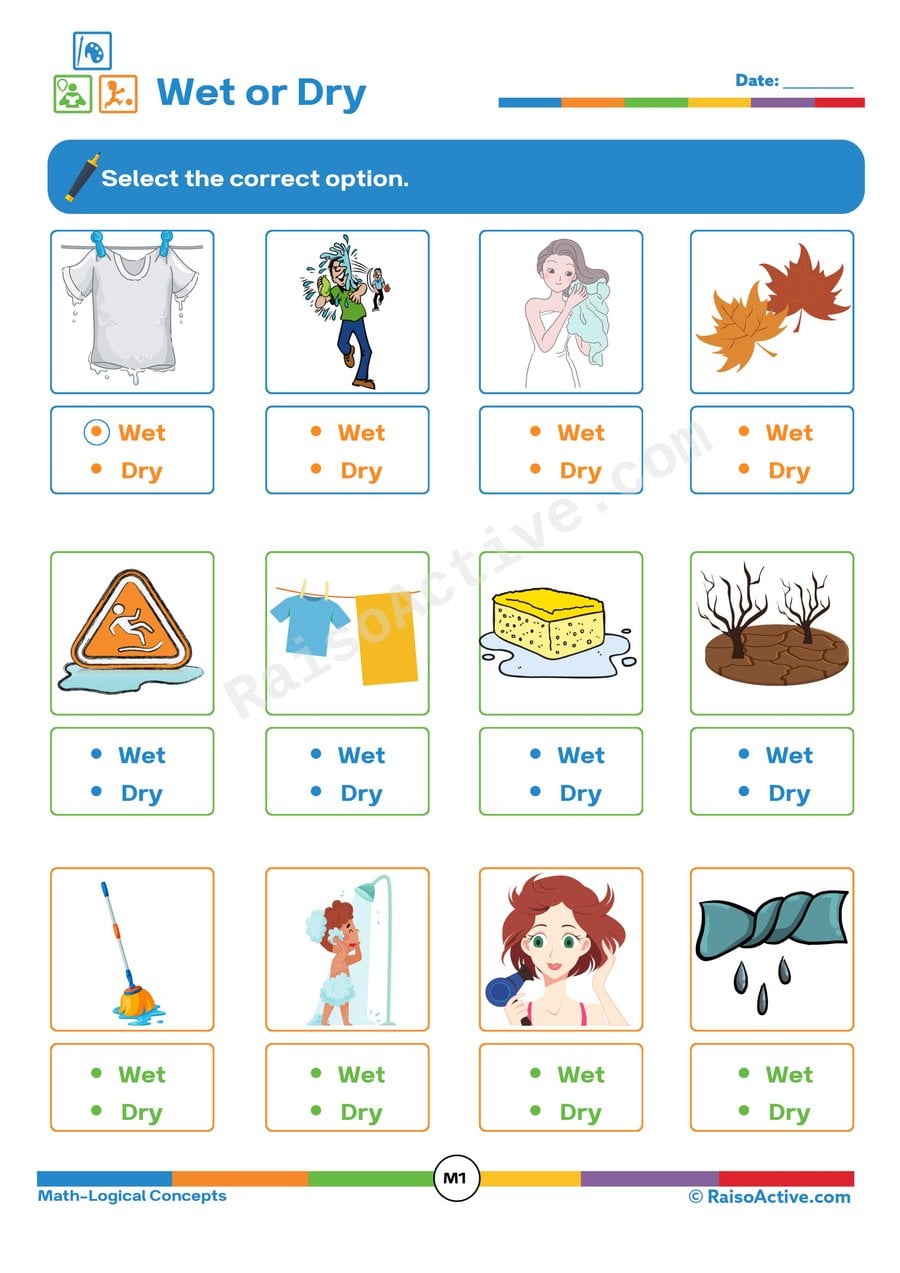
Wet or Dry Sorting Worksheet for Preschoolers
Ages 3-5 · Preschool–Pre-KAges 3-5 · Nursery–ReceptionAges 3-5 · Nursery–LKGAges 3-5
Sorting objects into 'wet' or 'dry' asks preschoolers to reach past the object's identity and notice a physical property instead — a step up from simply naming pictures. This is early scientific classification: your child has to observe a visual clue (a dripping umbrella, a puddle, a dry leaf) and reason about a quality that isn't always obvious from shape or color alone. Because some objects are genuinely tricky (a sponge can be either), the worksheet also opens the door to your child explaining their reasoning, which strengthens vocabulary around cause and state.
Related worksheets

Number Writing Worksheet: Trace, Write, Count, and Paste Numbers!
Ages 3-5 · Preschool–Pre-KAges 3-5 · Nursery–ReceptionAges 3-5 · Nursery–LKGAges 3-5
This multi-step worksheet strengthens number formation, counting, and one-to-one correspondence all in one activity, as children ages 3-5 trace and write numerals, then count a group of objects and paste the matching quantity in a box. Combining writing with hands-on counting and cutting helps children connect the written symbol to the actual amount it represents, a key milestone in early numeracy.

Writing Numbers 11-16 Worksheet: Trace, Write & Count!
Ages 4-6 · Pre-K–KindergartenAges 4-6 · Reception–Year 1Ages 4-6 · LKG–UKGAges 4-6
This worksheet moves children ages 4-6 beyond single-digit numbers, giving them structured practice tracing, writing, and counting the numbers 11 through 16. Working with two-digit numbers for the first time helps children understand place value informally, seeing that these numbers are built from a 'ten' plus more. The paired counting section connects each written number to a matching quantity of objects, reinforcing number meaning rather than just symbol recognition.
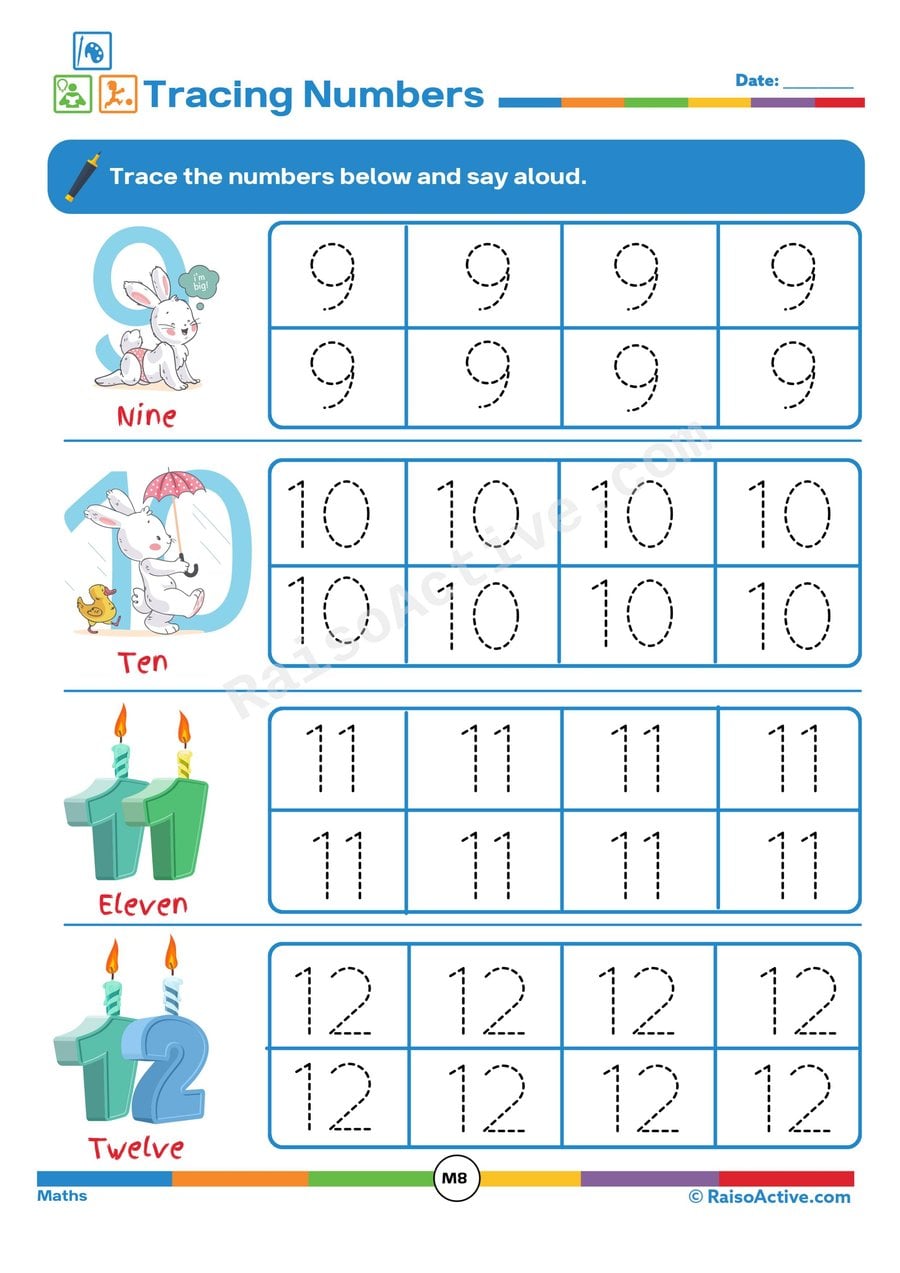
Trace the Numbers: Practice Writing Numbers 9-12!
Ages 3-5 · Preschool–Pre-KAges 3-5 · Nursery–ReceptionAges 3-5 · Nursery–LKGAges 3-5
Tracing numerals 9 through 12 strengthens the small hand muscles and pencil control preschoolers need for later handwriting, while repeated exposure to each numeral's shape builds the visual memory that underlies number recognition. Ages 3-5 are also learning that a written numeral represents a specific quantity, so pairing the traced digit with its name reinforces early number sense alongside the motor skill.
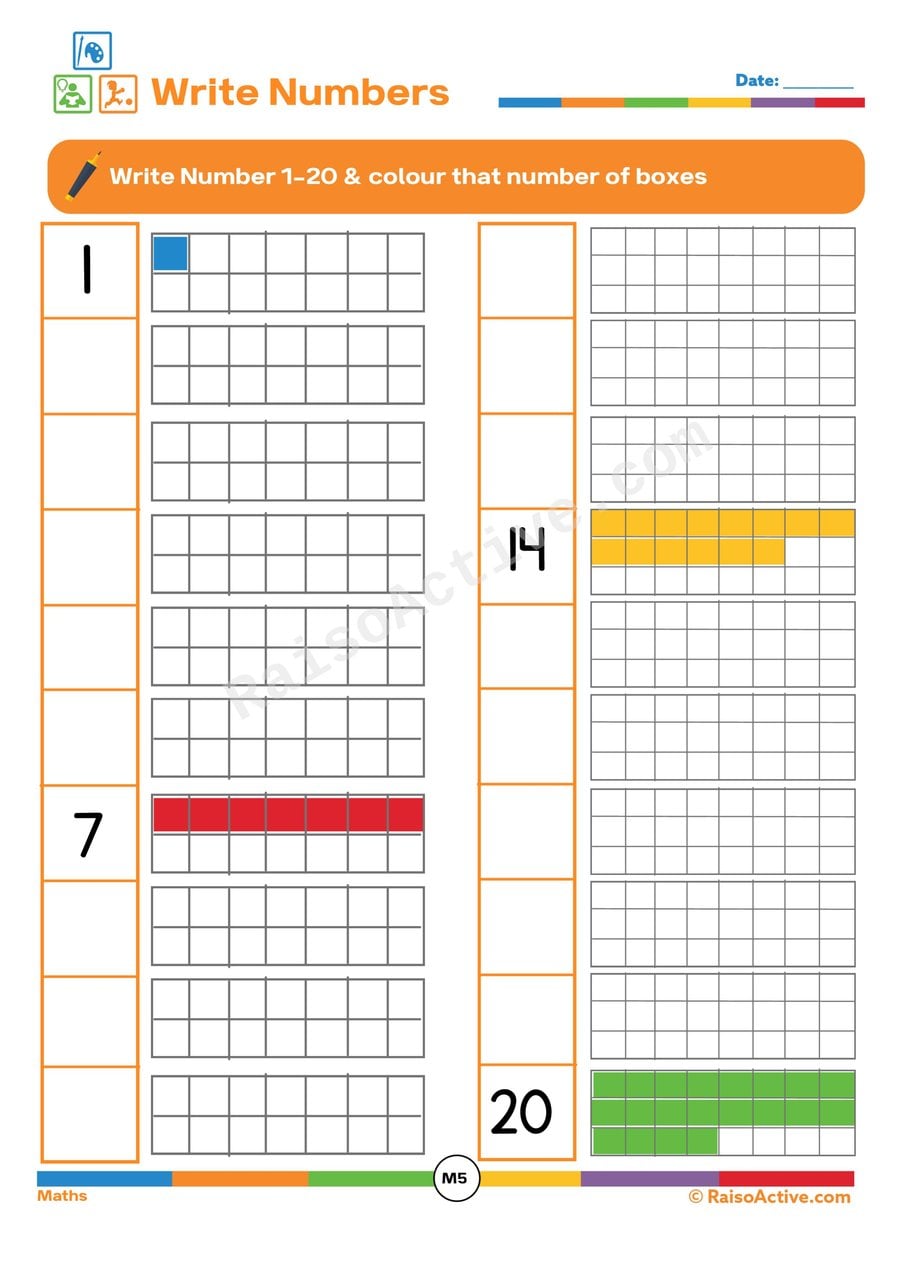
Write and Color Numbers 1-20 Worksheet
Ages 4-6 · Pre-K–KindergartenAges 4-6 · Reception–Year 1Ages 4-6 · LKG–UKGAges 4-6
Children ages 4-6 practice writing numbers from 1 to 20 in sequence while reinforcing quantity recognition by coloring the matching number of boxes for each number, connecting the written numeral to the amount it represents. Extending number writing practice up through 20 supports children moving beyond single digits into the teens and twenties, a range many children find confusing.

Number Writing Worksheet 0-10: Trace, Count, and Write!
Ages 4-5 · Pre-KAges 4-5 · ReceptionAges 4-5 · LKGAges 4-5
This worksheet combines three numeracy skills in one sitting: recognizing printed numerals 0 through 10, forming them correctly through tracing, and matching a quantity of objects to its written number. For 4-5 year-olds, connecting the abstract symbol '7' to seven actual objects is the key leap between rote counting and true number sense.

Trace and Write the Number 0 Worksheet for Preschoolers
Ages 3-5 · Preschool–Pre-KAges 3-5 · Nursery–ReceptionAges 3-5 · Nursery–LKGAges 3-5
This worksheet gives children ages 3-5 focused practice forming the number 0, building the fine motor control and pencil grip needed for handwriting while reinforcing that 0 represents 'none' or an empty group. Tracing the curved stroke repeatedly also helps children internalize the shape through muscle memory, which supports faster, more confident number writing later.

Spring Table Color by Number Worksheet for Preschoolers
Ages 3-5 · Preschool–Pre-KAges 3-5 · Nursery–ReceptionAges 3-5 · Nursery–LKGAges 3-5
This color-by-number worksheet has children ages 3-5 practice matching numerals to a specific color key and then applying that color accurately across a picture, reinforcing both number recognition and one-to-one correspondence between a symbol and an action. Rolling a dice to determine which color to use next also adds an element of chance that keeps the repetitive coloring task engaging.
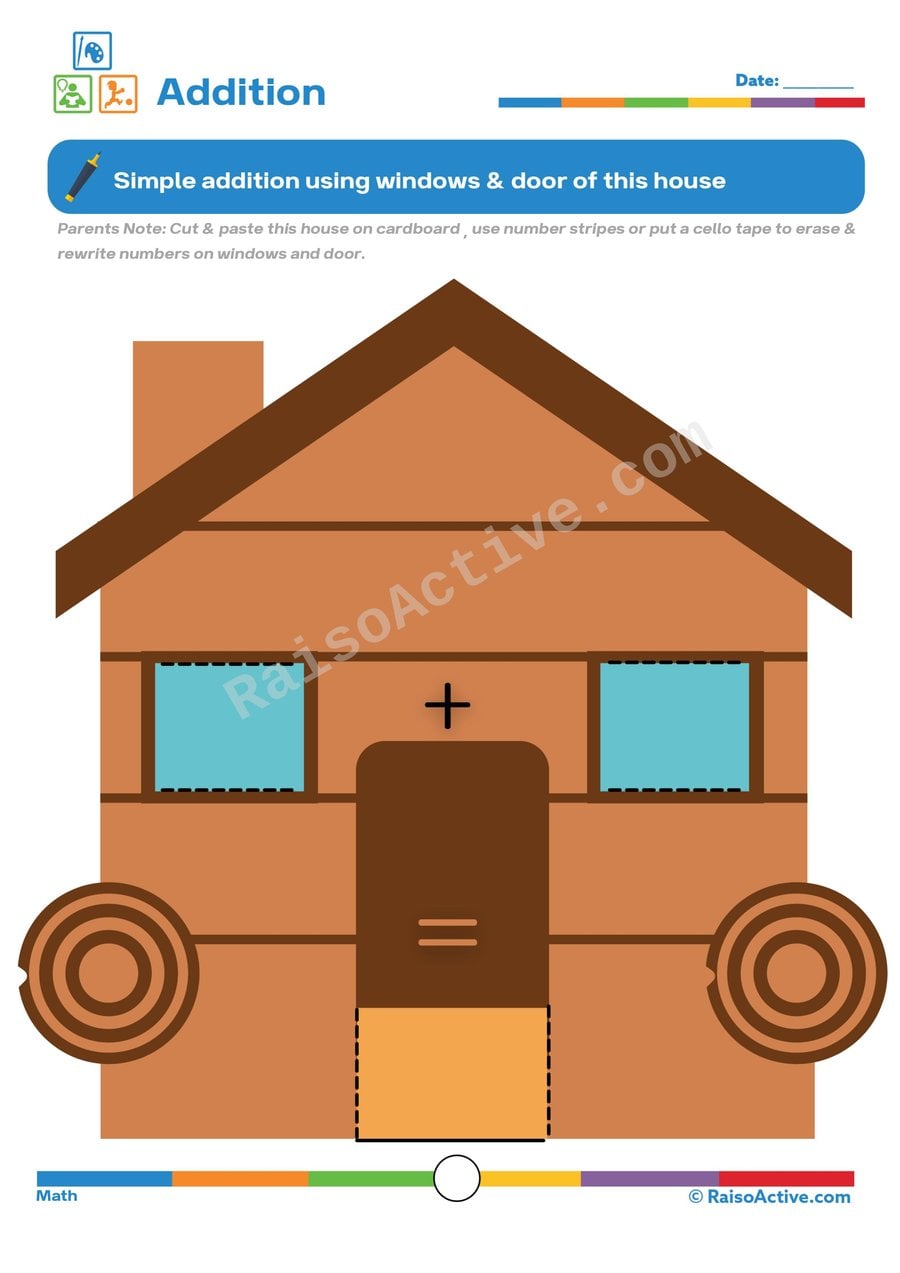
Addition House Worksheet for Preschoolers
Ages 4-5 · Pre-KAges 4-5 · ReceptionAges 4-5 · LKGAges 4-5
This hands-on craft turns simple addition into a reusable game, as children ages 4-5 build a paper house with numbered windows and a door that can be changed with tape or number stripes. Physically swapping numbers to create new addition problems (like 2 windows + 1 door) helps children grasp that addition means combining separate groups into one total, rather than just memorizing facts.
Guides for this topic

Number Formation Rhymes 0–9 and How to Fix Reversals
Original number formation rhymes for 0–9, the correct stroke order for each digit, why 3, 5 and 7 get reversed most often, and multisensory fixes that work.

Best Worksheets for 3-Year-Olds: What Works and What to Avoid
What works on worksheets for 3-year-olds: short sessions, crayons, tracing lines, matching, cutting, a free weekly plan, and signs one is too advanced.
Fostering Creativity in Structured Learning: The Perfect Balance for Young Minds
Learn how to blend creativity with structured learning for children ages 1-8. Practical strategies, activities, and printable worksheets for parents and teachers.
Reviews
Every worksheet for ages 4–5, no watermark
Members download the full library of 1,000+ worksheets and every activity pack without watermarks or daily limits. One year costs ₹999 in India or $20 elsewhere.
See membership plansOr download any worksheet free with a watermark (5 a day).