Trace and Count: Number 18 Worksheet for Preschoolers
This worksheet has children ages 4-5 trace the number 18 and then count and color a full set of eighteen hearts, continuing to build stamina for counting well into the teens range. Because eighteen is close to twenty, successfully counting this many objects without losing track shows real progress in sustained attention and one-to-one correspondence. Using hearts instead of a more neutral shape also adds a small, engaging visual theme to an otherwise repetitive counting task.
Part of the pack
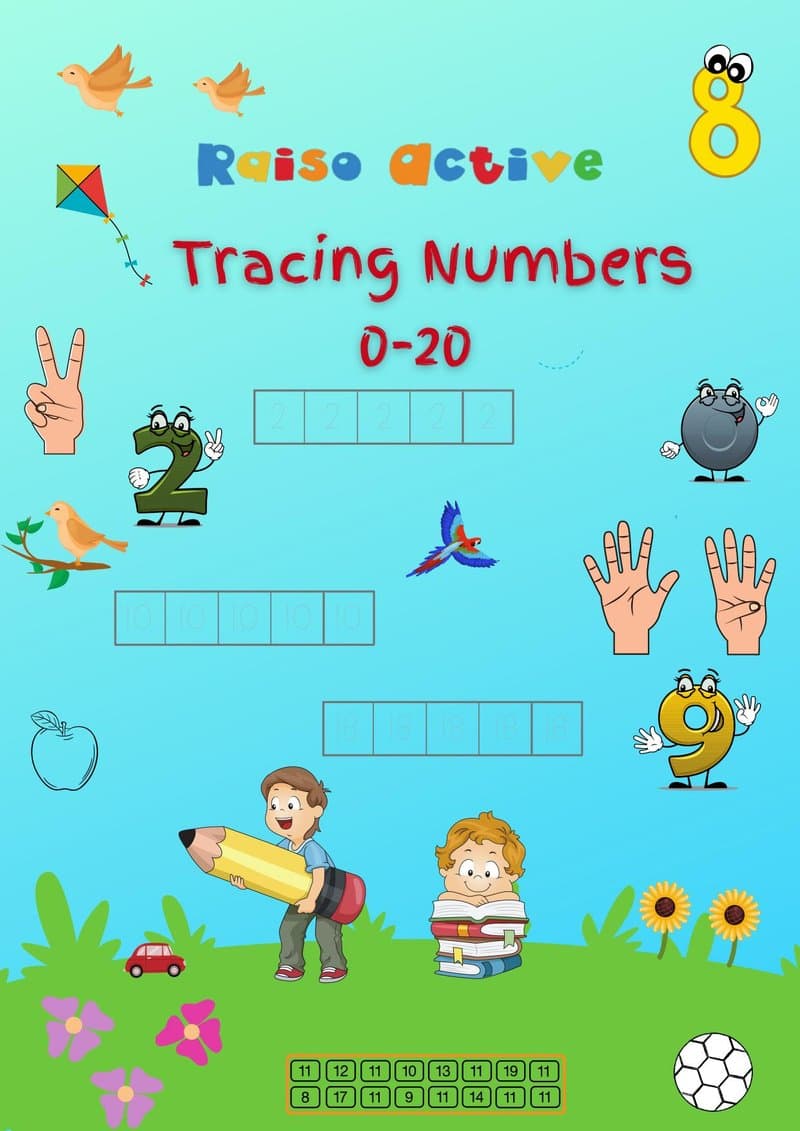
Number Tracing & Counting Activity Book 0-20 for Preschool & Kindergarten
This is page 20 of the pack. Ages 3-6 · Preschool–KindergartenAges 3-6 · Nursery–Year 1Ages 3-6 · Nursery–UKGAges 3-6

Made for your child
Counting to 10, made for your child
A maths pack with your child's name in it: pictures that explain, practice at three levels, puzzles and story sums about them. Print a new set whenever they finish.
Make a maths packFree preview · free for members
Curriculum
- Number Recognition > Number Writing
How to use this worksheet
Have your child trace the number 18 in the boxes, noticing the 1 and 8 written together. Then count the row of hearts together out loud, touching each one as you count all the way to eighteen. Have your child color all eighteen hearts with a crayon, recounting at the end to make sure the total matches eighteen.
Materials needed
- Pencil
- Crayons
Extension activities
- 1Have your child find 18 small objects around the house and count them out loud together.
- 2Ask the child to draw 18 of their favorite things on a blank piece of paper.
- 3Cut out 18 small paper hearts together and arrange them into a pattern or shape.
- 4Practice counting out loud from 10 to 20 to build fluency with this higher range of numbers.

Written by
Hemsweta Jain · Teacher Cheena
MBA and Early Childhood Educator, teaching since 2014 · Founder of RaisoActive, Mumbai
Every RaisoActive worksheet is designed and checked by the founder before publishing.
Published · Last reviewed
More from Number Tracing & Counting Activity Book 0-20 for Preschool & Kindergarten

Number Tracing Worksheet 1-20: Practice Writing Numbers!
Ages 3-5 · Preschool–Pre-KAges 3-5 · Nursery–ReceptionAges 3-5 · Nursery–LKGAges 3-5
This worksheet gives children ages 3-5 a second full pass at tracing every number from 1 to 20, repeating the entire sequence to build the muscle memory that comes only from writing each numeral more than once. Revisiting the complete range reinforces both the shape of each number and their order in the counting sequence, helping children internalize the pattern rather than relying on the worksheet as a one-time reference. This repetition matters especially for the trickier two-digit numbers in the teens, which often need more practice than single digits.
Trace and Count to 10! Number Tracing Worksheet
Ages 4-5 · Pre-KAges 4-5 · ReceptionAges 4-5 · LKGAges 4-5
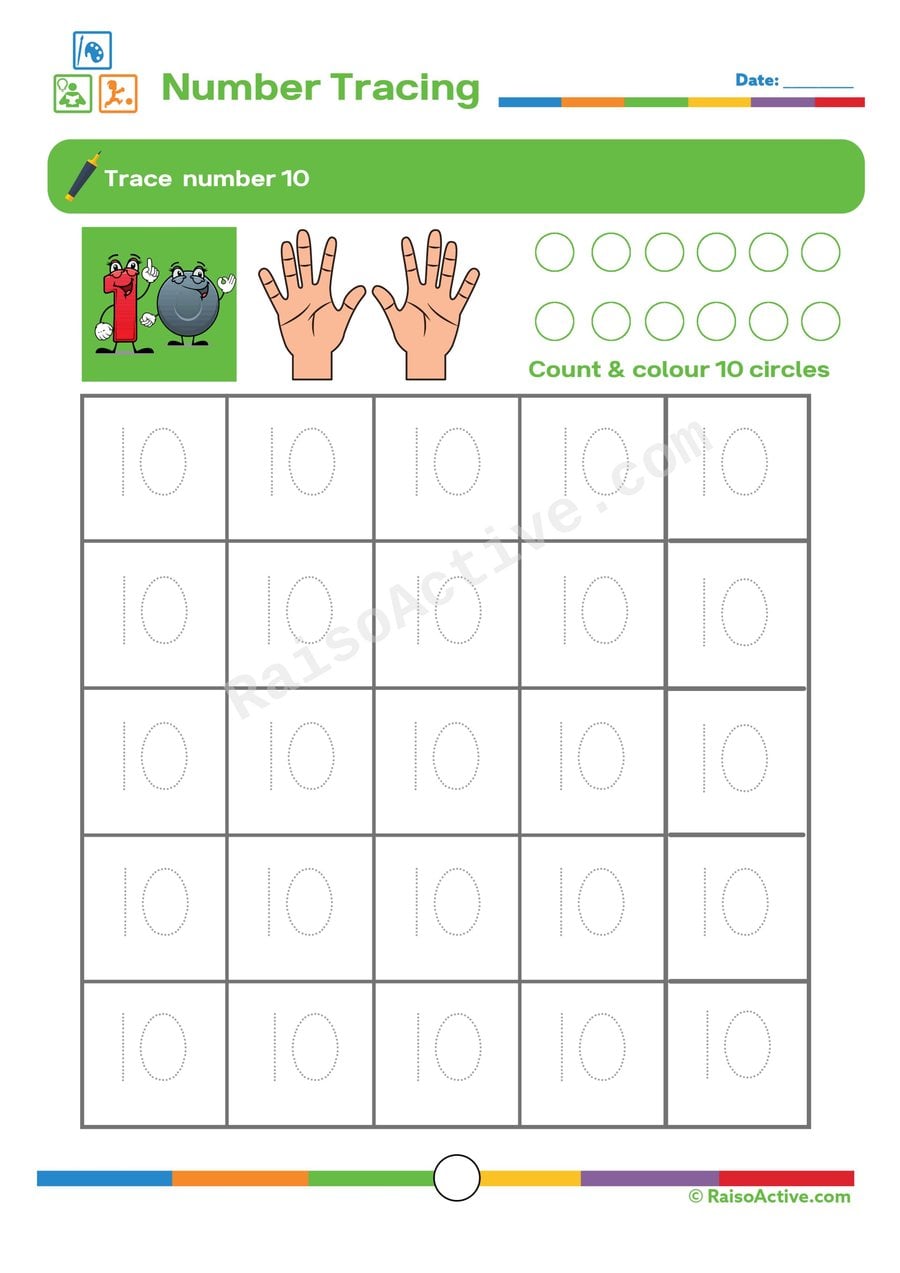
This worksheet has children ages 4-5 trace the number 10, their first two-digit number in a structured sequence, and then count and color a full set of ten circles, reinforcing that 10 represents a complete group of two fives or one full set of fingers on both hands. Practicing 10 also marks an important transition point, since children who can confidently count, write, and represent 10 are ready to begin extending their counting into the teens. This combination of tracing and counting to a meaningful benchmark number builds solid number sense.

Trace and Count: Number 6 Worksheet for Preschoolers
Ages 3-5 · Preschool–Pre-KAges 3-5 · Nursery–ReceptionAges 3-5 · Nursery–LKGAges 3-5
This worksheet has children ages 3-5 trace the number 6, a shape built from a curved line ending in a small loop, and then count and circle exactly six cars from a larger group. Because the group likely contains more than six cars, children must count carefully and stop at the right quantity, building the more precise counting skill of selecting a specific amount rather than counting everything in sight. The curved, looping shape of 6 also previews the stroke pattern used in numbers like 8 and 9.

Number Tracing Worksheet: Trace and Find the Number 11!
Ages 3-5 · Preschool–Pre-KAges 3-5 · Nursery–ReceptionAges 3-5 · Nursery–LKGAges 3-5
This worksheet introduces children ages 3-5 to their first two-digit number, helping them understand that 11 is written with two number 1s placed side by side rather than as a brand-new symbol. Tracing 11 builds the pencil control needed to write two digits neatly in a row, while the search-and-find grid strengthens visual scanning skills as children pick 11 out from a field of similar-looking numbers. This combination supports both number recognition and the beginning of place-value thinking.

Number Tracing Worksheet: Trace and Count the Number 20!
Ages 4-5 · Pre-KAges 4-5 · ReceptionAges 4-5 · LKGAges 4-5
This worksheet has children ages 4-5 trace the number 20, a milestone number that marks the top of the common preschool counting range, and then count and color a full set of twenty pentagons. Reaching and confidently counting to 20 shows that a child has built solid one-to-one correspondence across an extended set, a skill they'll rely on heavily once they begin adding and subtracting in early math. Counting pentagons instead of simpler shapes also gives a light introduction to five-sided shapes.

Trace and Count the Number 17 Worksheet for Preschoolers
Ages 3-5 · Preschool–Pre-KAges 3-5 · Nursery–ReceptionAges 3-5 · Nursery–LKGAges 3-5
This worksheet challenges children ages 3-5 to trace the two-digit number 17 and then count out a matching set of seventeen rectangles, linking the written numeral to an actual quantity they can see and touch. Counting all the way to 17 pushes children past the more familiar 1-10 range and builds stamina for extended counting sequences. It also reinforces one-to-one correspondence, the skill of matching each number word to exactly one object as they count.

Trace the Number 3 and Color the Balls! - Number Tracing Worksheet
Ages 3-5 · Preschool–Pre-KAges 3-5 · Nursery–ReceptionAges 3-5 · Nursery–LKGAges 3-5
This worksheet has children ages 3-5 trace the number 3, a shape built from two connected curves, which is more complex than the numbers 1 and 2 and continues building fine motor precision. Coloring exactly three balls after tracing reinforces one-to-one correspondence and the specific quantity the numeral 3 represents. Practicing curved numerals like 3 also prepares children for other rounded numbers they'll encounter soon, such as 8.
Practice Grid Worksheet for Early Learners
Ages 3-5 · Preschool–Pre-KAges 3-5 · Nursery–ReceptionAges 3-5 · Nursery–LKGAges 3-5
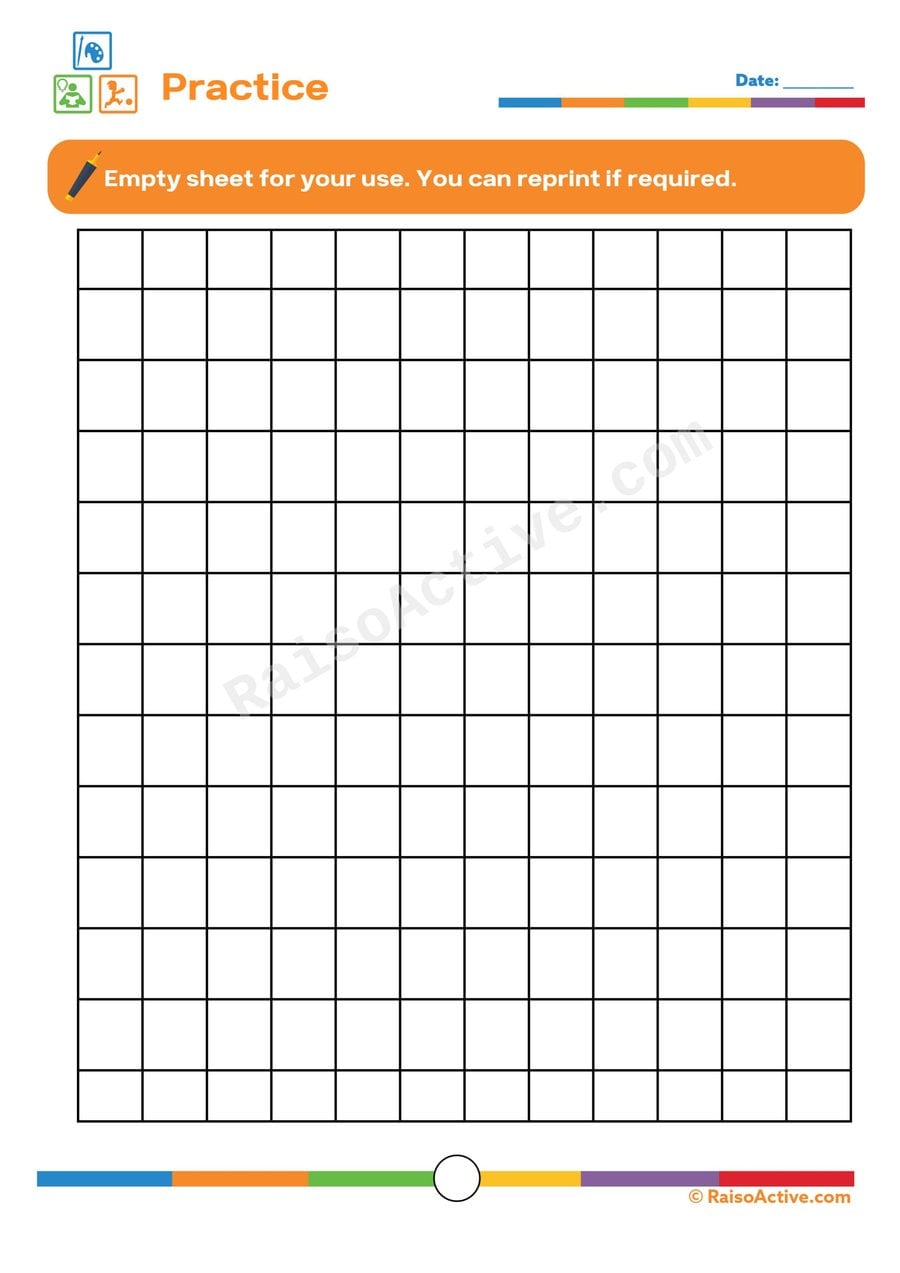
This blank practice grid gives children ages 3-5 an open space to build the pencil control that underlies all future handwriting, without the pressure of forming a specific letter or number correctly. Drawing lines, shapes, and marks within the boundaries of each grid square strengthens the small hand muscles and hand-eye coordination needed before children are ready for structured letter formation. Because the grid has no single correct answer, it also gives adults a low-stakes way to see how a child currently controls a pencil.
Related worksheets
Spooky Math Worksheet: Halloween Counting Fun!
Ages 4-5 · Pre-KAges 4-5 · ReceptionAges 4-5 · LKGAges 4-5
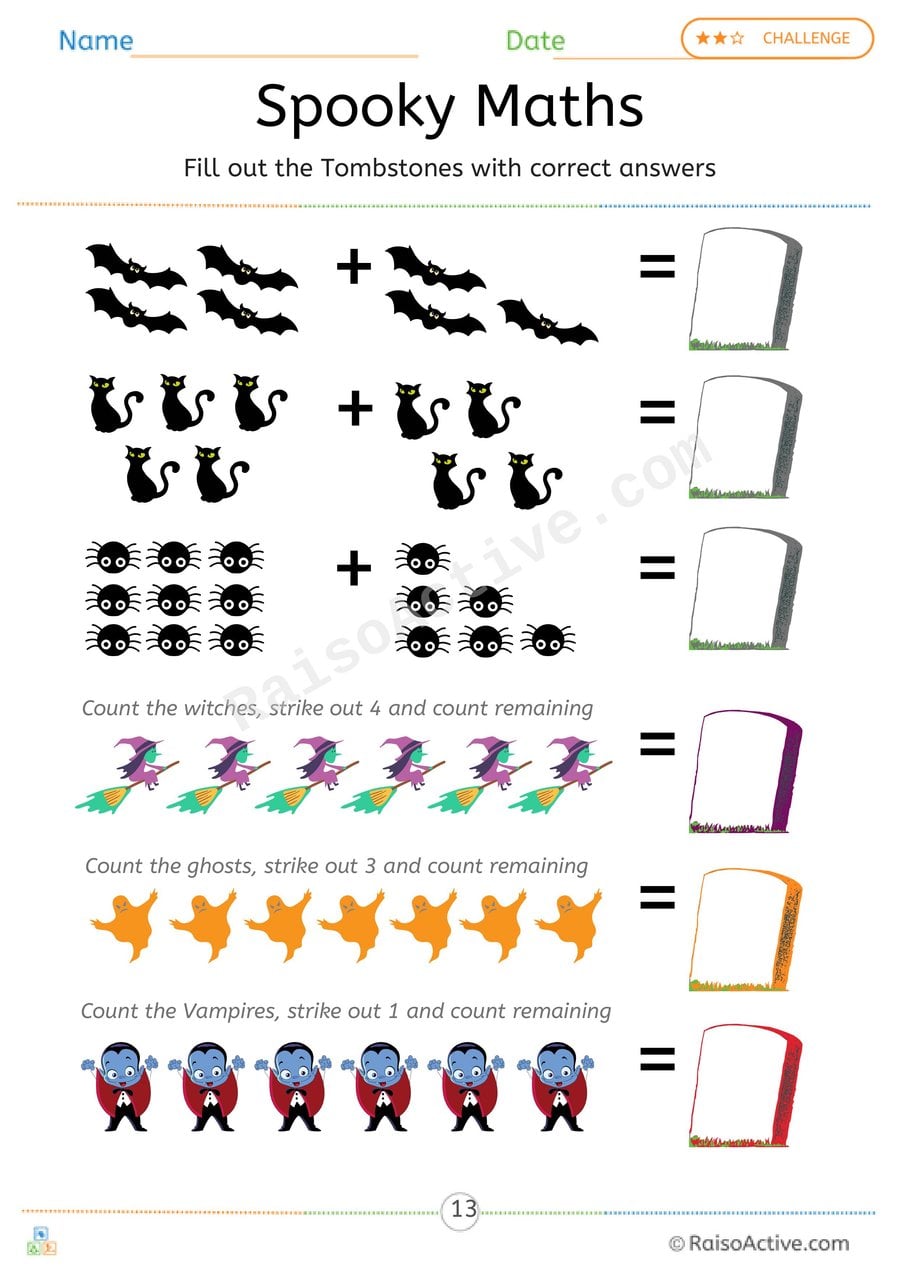
This Halloween math worksheet has children ages 4-5 count grouped pictures and then solve simple addition and subtraction problems, moving from concrete counting toward the more abstract skill of combining or taking away quantities. Writing each answer inside a tombstone shape keeps the seasonal theme playful while practicing genuine early arithmetic.

Modak and Mouse Counting Worksheet for Ganesh Chaturthi
Ages 4-8 · Pre-K–Grade 2Ages 4-8 · Reception–Year 3Ages 4-8 · LKG–Class 2Ages 4-8
Children count the modaks in each row and match every mouse to the row with the same number, practising counting to 7 and one-to-one matching.

Letter H Worksheet: Trace, Write, and Color the Letter H!
Ages 3-5 · Preschool–Pre-KAges 3-5 · Nursery–ReceptionAges 3-5 · Nursery–LKGAges 3-5
This worksheet gives children ages 3-5 layered practice with the letter H, moving from finger tracing to pencil tracing and finally to identifying and coloring pictures that begin with the H sound. Starting with a finger trace before picking up a pencil is a gentle way to build the motor pattern for a letter's shape without the added challenge of pencil control, making this a good scaffolded approach for less confident writers. Circling H pictures afterward reinforces the connection between the letter's shape and its beginning sound.
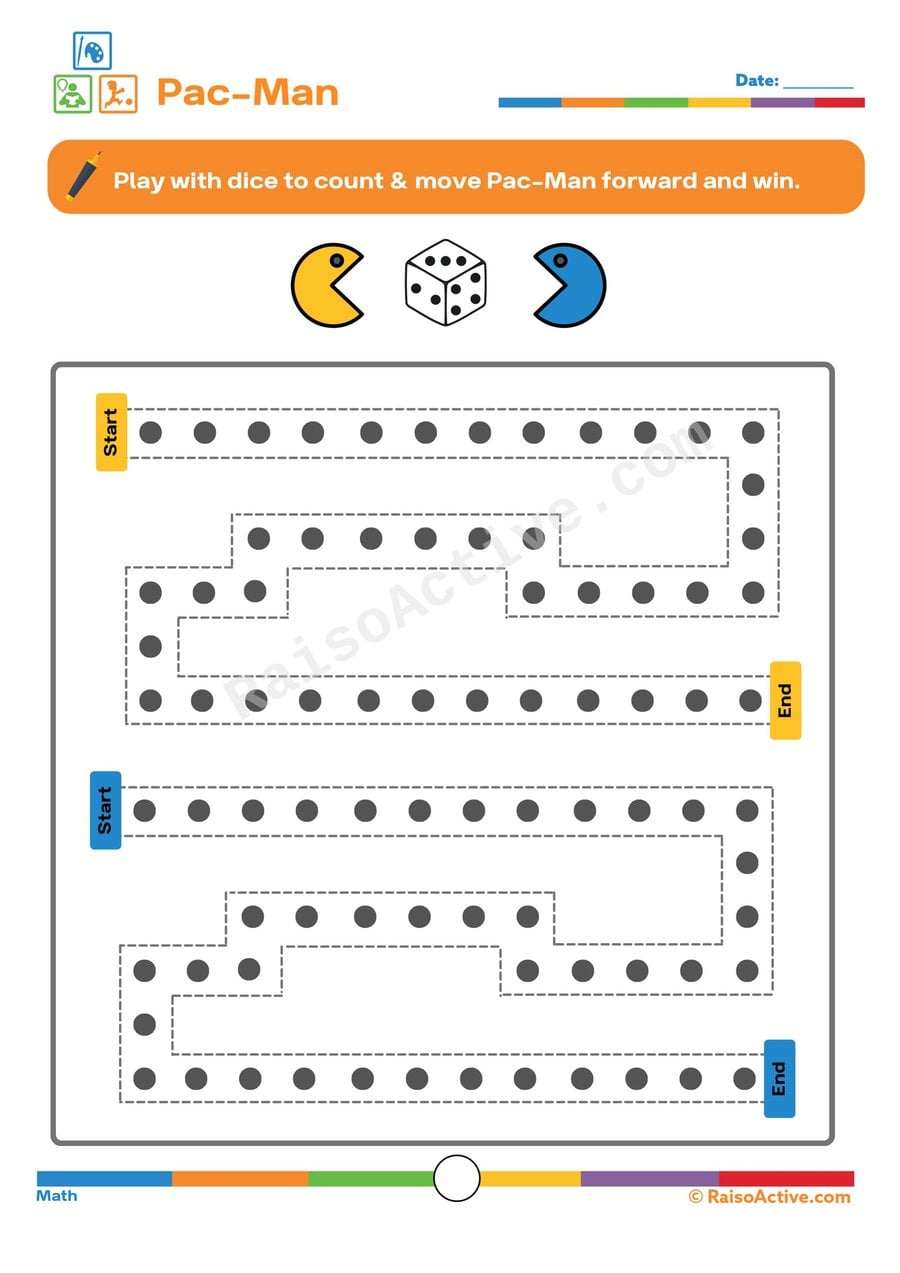
Pac-Man Maze Worksheet: Count and Move!
Ages 3-5 · Preschool–Pre-KAges 3-5 · Nursery–ReceptionAges 3-5 · Nursery–LKGAges 3-5
This dice-driven maze combines counting practice with path-following for children ages 3-5, since they must accurately count dots on a die before moving Pac-Man the matching number of spaces forward. Deciding how far to move and staying on the correct path also builds early strategic thinking, as children track their current position within the maze after each turn.

Spider Web Connect-the-Dots Worksheet for Preschoolers
Ages 3-5 · Preschool–Pre-KAges 3-5 · Nursery–ReceptionAges 3-5 · Nursery–LKGAges 3-5
This connect-the-dots worksheet has children ages 3-5 count in sequence from one number to the next while drawing curved lines, building both number-order recognition and the pencil control needed for pre-writing curves and loops. Revealing a spider web at the end gives the counting practice a satisfying, visual payoff that keeps young children motivated through the whole sequence.

Mystery Number Riddles Worksheet: Use the Clues
Ages 4-7 · Pre-K–Grade 1Ages 4-7 · Reception–Year 2Ages 4-7 · LKG–Class 1Ages 4-7
This worksheet helps children practice number recognition, following instructions, and applying logic to solve number puzzles.

Golu Doll Fun: Navratri Golu Counting and Sharing Worksheet
Ages 4-6 · Pre-K–KindergartenAges 4-6 · Reception–Year 1Ages 4-6 · LKG–UKGAges 4-6
Children learn that a golu is a display of dolls on steps set up for Navratri. They count the dolls on each step and find the total, then share cups of sundal among friends and count what is left over.
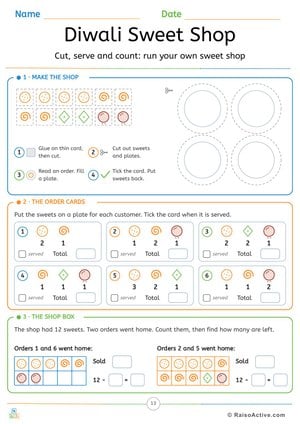
Diwali Sweet Shop Game: Cut, Serve and Count Orders
Ages 4-6 · Pre-K–KindergartenAges 4-6 · Reception–Year 1Ages 4-6 · LKG–UKGAges 4-6
Children cut out sweets and plates, then read six order cards and serve each customer the right number of sweets. They write the total, tick each served order and work out how many are left in the shop box.
Guides for this topic

Number Formation Rhymes 0–9 and How to Fix Reversals
Original number formation rhymes for 0–9, the correct stroke order for each digit, why 3, 5 and 7 get reversed most often, and multisensory fixes that work.

Christmas and Winter Activities That Combine Fun and Learning: Creating Magical Educational Experiences
Discover Christmas and winter activities that combine festive fun with real learning. Crafts, counting, literacy, and printable worksheets for ages 2 to 8 — perfect for home and school.
Age-Appropriate Halloween Learning Activities: Balancing Spooks and Skills for Young Learners
Discover fun, age-appropriate Halloween learning activities for young children. Spooky crafts, counting games, literacy ideas, and printable worksheets for ages 2 to 8.
Reviews
Every worksheet for ages 4–5, no watermark
Members download the full library of 1,000+ worksheets and every activity pack without watermarks or daily limits. One year costs ₹999 in India or $20 elsewhere.
See membership plansOr download any worksheet free with a watermark (5 a day).