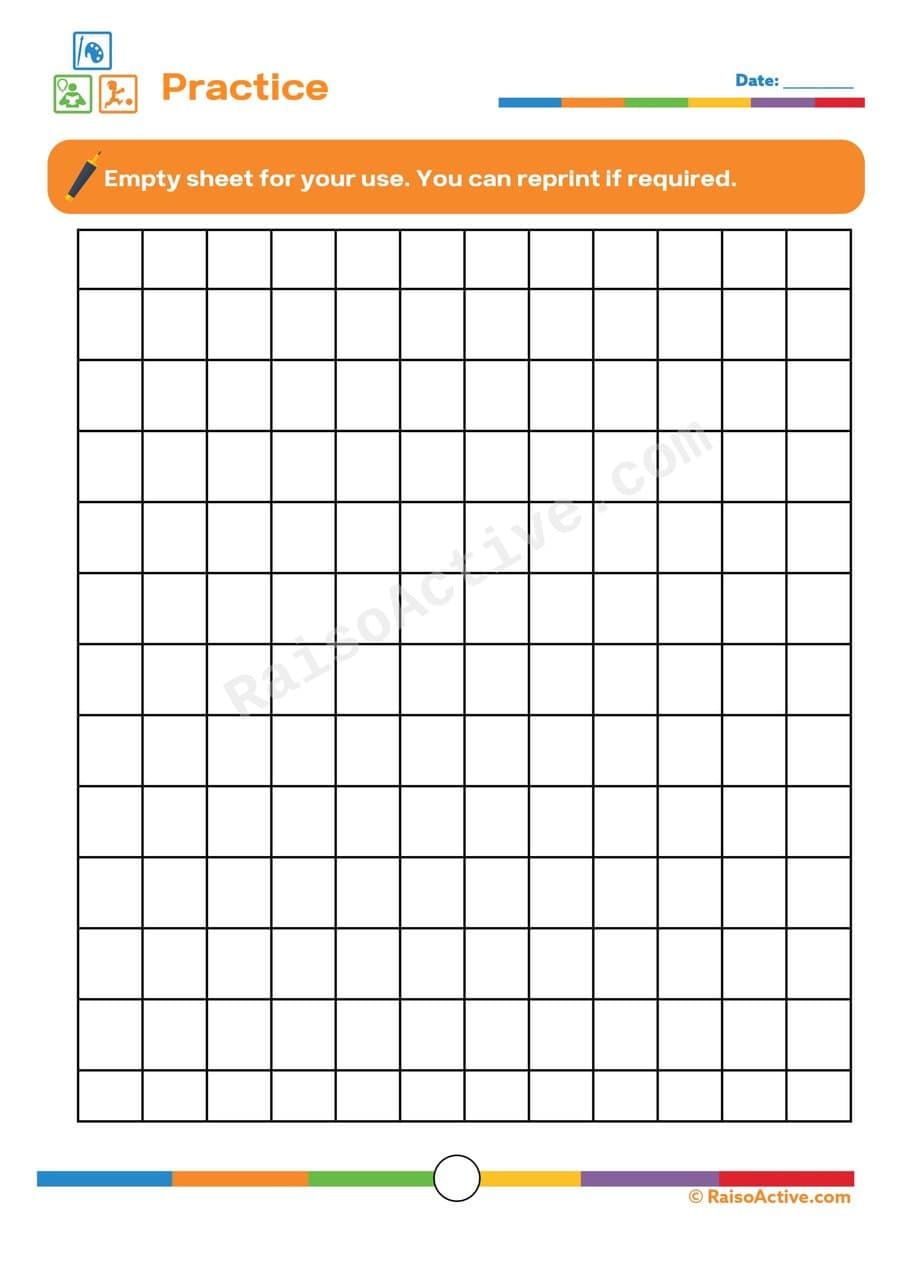
Practice Grid Worksheet for Early Learners
This blank practice grid gives children ages 3-5 an open space to build the pencil control that underlies all future handwriting, without the pressure of forming a specific letter or number correctly. Drawing lines, shapes, and marks within the boundaries of each grid square strengthens the small hand muscles and hand-eye coordination needed before children are ready for structured letter formation. Because the grid has no single correct answer, it also gives adults a low-stakes way to see how a child currently controls a pencil.
Curriculum
How to use this worksheet
Hand your child a pencil or crayon and let them fill in the grid squares however they like at first, whether that's scribbles, straight lines, or simple shapes, so you can see their natural pencil grip and control. Once they're comfortable, suggest a specific task, such as drawing a straight line across each square or a circle inside each one, and demonstrate the first square yourself. Work through a row or two together, then let your child continue independently, checking in periodically to offer encouragement or a gentle correction to their grip.
Materials needed
- Pencil
- Crayons
Extension activities
- •Use the grid to practice drawing straight lines, then curved lines, then zigzags, one shape per square.
- •Write a letter your child is currently learning in one square and have them copy it in the next square.
- •Turn the grid into a simple maze by drawing a path through connected squares for your child to trace.
- •Use different colored crayons for each row to keep the repetitive practice visually engaging.
Tips for parents and teachers
Watch how your child holds the pencil during this activity, since a blank grid is a good moment to notice and gently correct an awkward grip before it becomes a habit. If your child fills squares messily or goes outside the lines, that's typical at this age and improves with repeated practice rather than correction in the moment. Keep sessions short, just a few minutes, since sustained fine motor control is still developing.

Written by
Hemsweta Jain · Teacher Cheena
MBA and Early Childhood Educator, teaching since 2014 · Founder of RaisoActive, Mumbai
Every RaisoActive worksheet is designed and checked by the founder before publishing.
Published · Last reviewed
Related worksheets
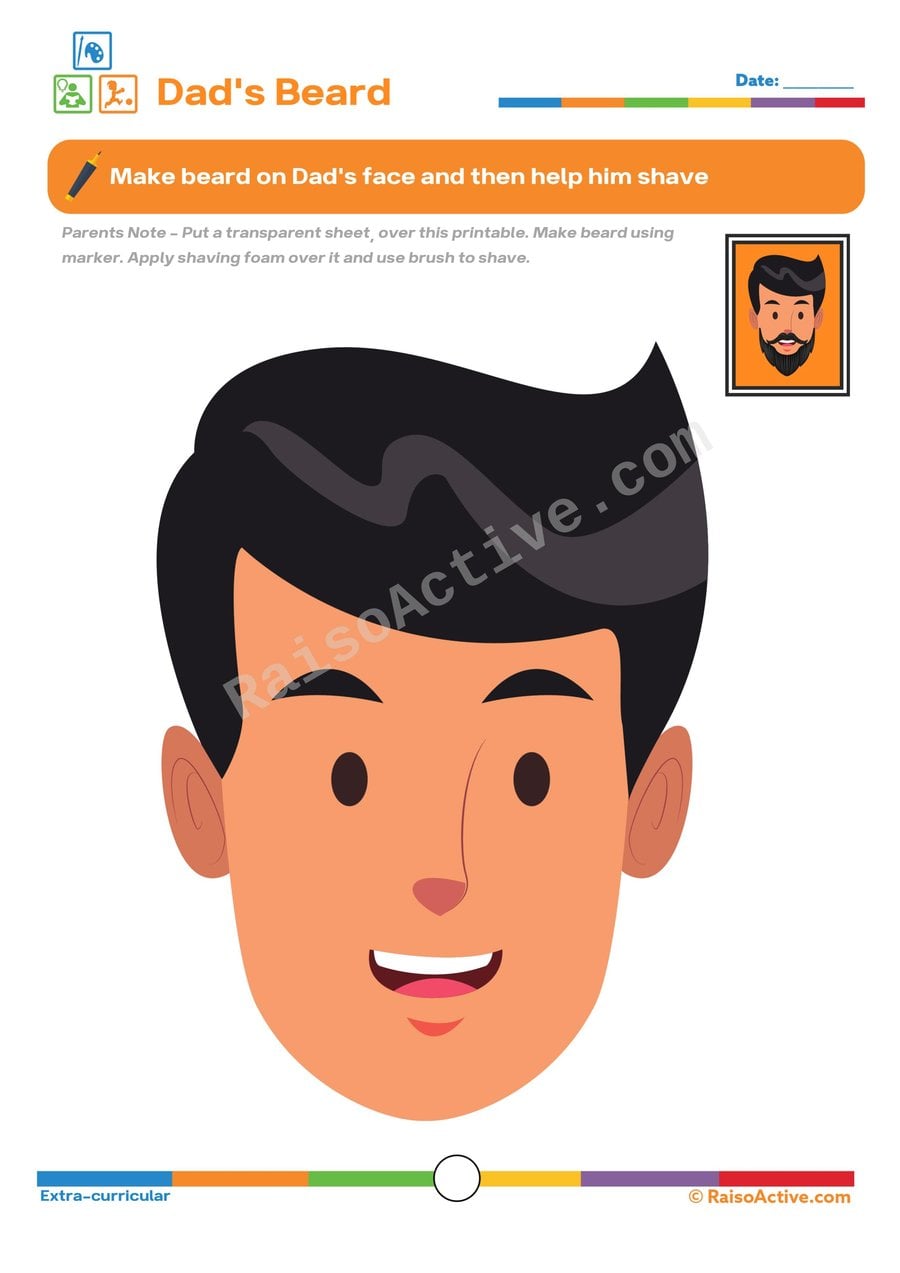
Dad's Beard: A Fun Shaving Activity for Kids!
This sensory pretend-shaving activity builds fine motor precision and hand control in children ages 3-5, as they draw a beard with a marker and then carefully brush away shaving foam in controlled strokes. Beyond motor skills, it gives children a playful, low-stakes way to imitate a grown-up grooming routine they've likely observed at home.
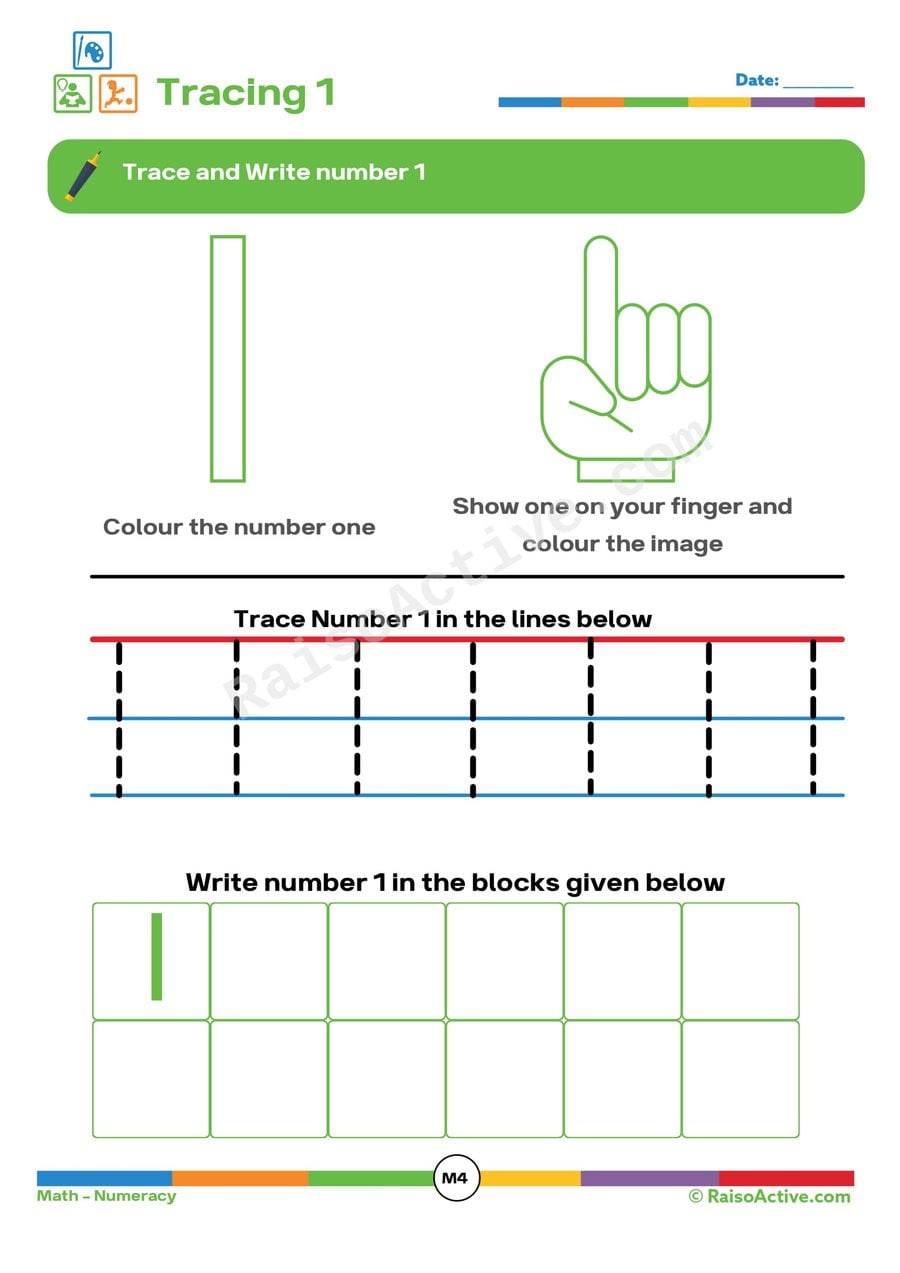
Tracing Number 1 Worksheet for Preschoolers
This tracing worksheet gives children ages 3-5 focused, repetitive practice forming the number 1 through tracing dotted lines, independent writing in provided boxes, and coloring an accompanying image, building the pencil control that precedes confident number writing. Because number 1 is typically the very first numeral children learn to write, getting the stroke direction and starting point correct here sets a strong foundation for writing higher numbers later. Repetition across multiple boxes on the page also builds the muscle memory needed for consistent, automatic number formation.

Fine Motor Skills Activities for Kids: Parent's Guide
This guide gives parents and teachers of children ages 3-5 a set of hands-on activities — using grains, flowers, textured cloth, and salt or sugar — that build the small hand muscles and finger control needed for holding a pencil correctly and writing later on. Working with varied, everyday materials rather than a single worksheet page exposes children to different grips, pressures, and textures, which develops fine motor strength more broadly than pencil-and-paper practice alone.

Rocket Shapes Cut and Glue Worksheet for Preschoolers
Cutting out triangles, circles, and rectangles and gluing them into place to build a rocket teaches children ages 3-5 to recognize basic 2D shapes and understand how they combine to form a larger, recognizable object. This activity strengthens scissor control along straight and curved edges while also introducing early engineering thinking, since children must consider how each shape's position contributes to the finished rocket's structure. Framing shape practice as a space-themed craft project keeps a repetitive geometry lesson feeling exciting and imaginative.
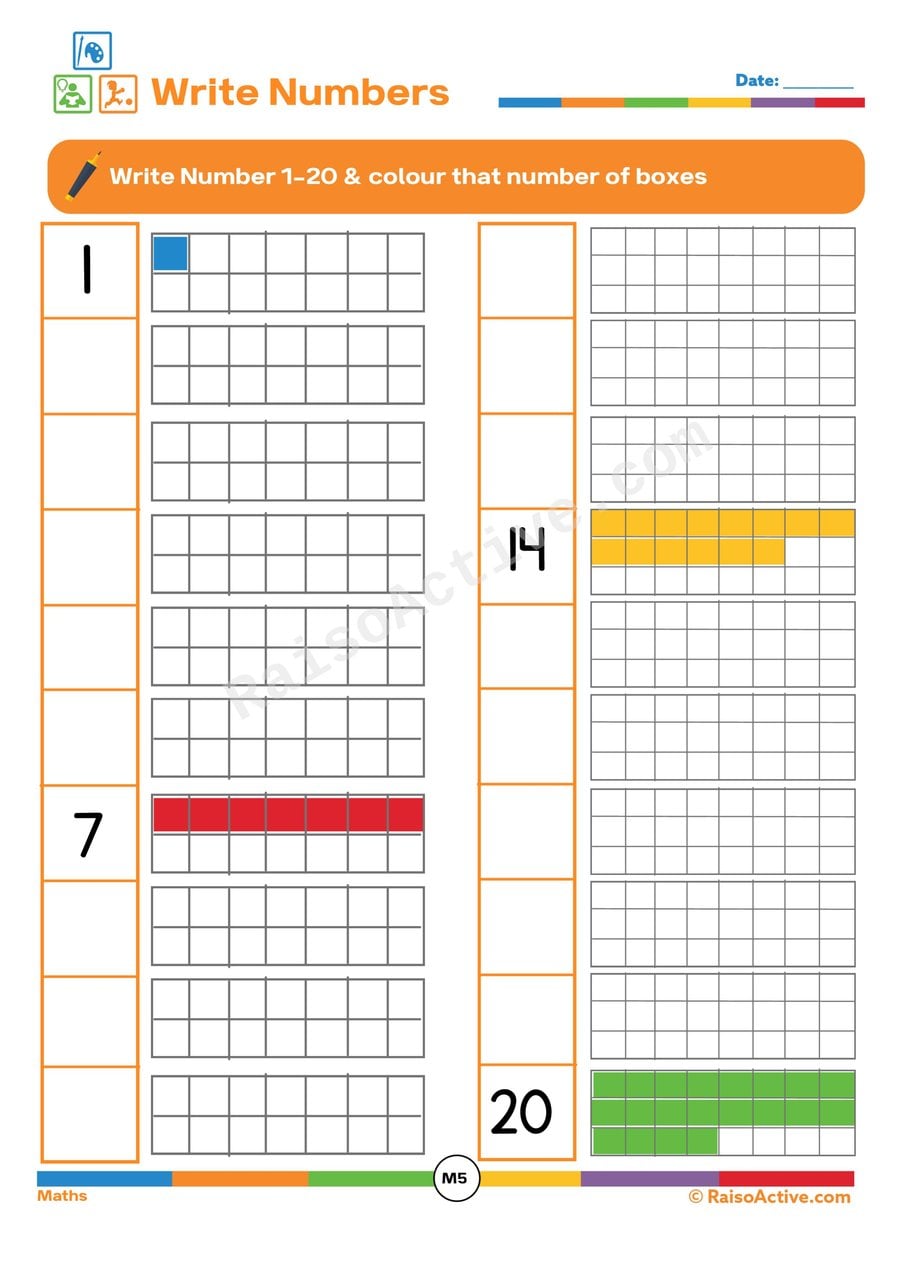
Write and Color Numbers 1-20 Worksheet
Children ages 4-6 practice writing numbers from 1 to 20 in sequence while reinforcing quantity recognition by coloring the matching number of boxes for each number, connecting the written numeral to the amount it represents. Extending number writing practice up through 20 supports children moving beyond single digits into the teens and twenties, a range many children find confusing.

Spin Drum Craft: Fun Following Instructions Worksheet for Kids
This craft worksheet helps children ages 3-5 build fine motor skills and the ability to follow multi-step instructions as they construct their own working spin drum from cardboard, string, and beads. Because each step depends on the one before it — cutting, assembling, attaching the string and beads — this project strengthens sequencing and sustained attention in a way that a single-step activity cannot.
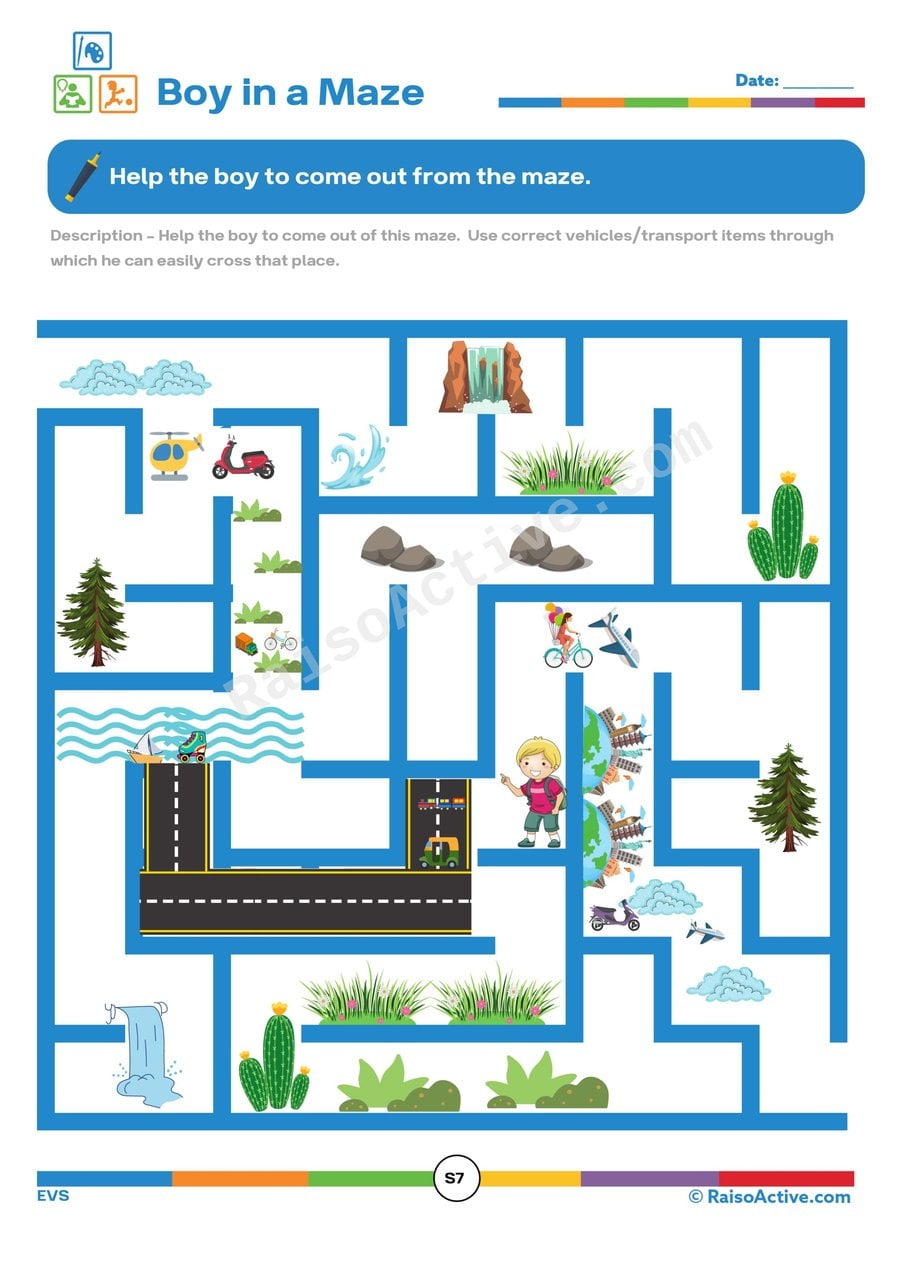
Help the Boy Escape the Maze Worksheet
This maze worksheet builds visual tracking, planning, and fine motor control as children ages 3-5 trace a path for a boy to escape, using different vehicles to get past obstacles along the way. Scanning ahead to choose a workable route before committing to a path develops early problem-solving and forward-planning skills, while the pencil control needed to stay within the maze lines strengthens hand strength for later handwriting.
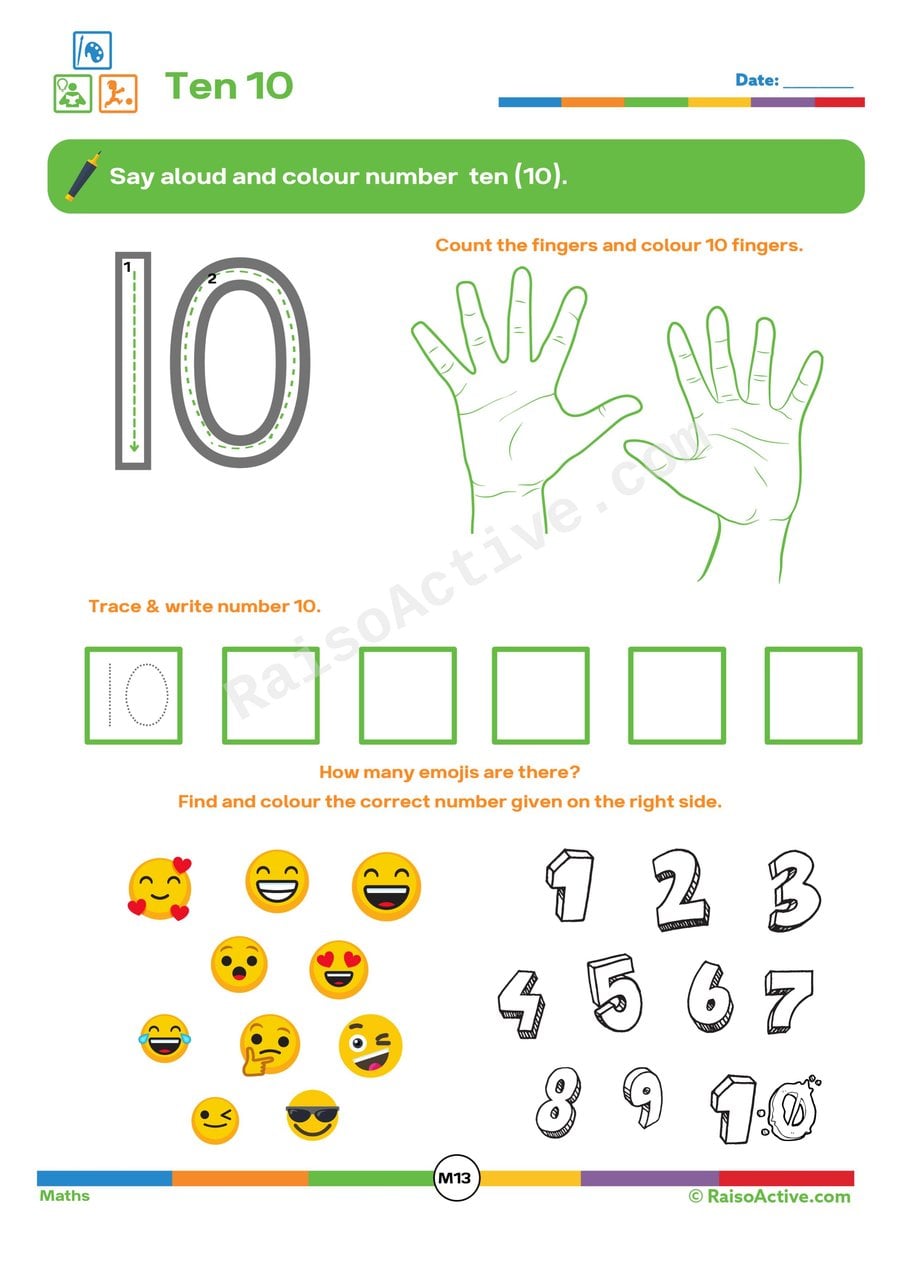
Number 10 Worksheet: Trace, Count, and Color!
Children ages 3-5 practice tracing and writing the two-digit number 10 while reinforcing counting to ten through a hands-based counting activity and a number-recognition search task. This worksheet layers several skills — tracing, counting, and visual recognition — to give children multiple ways to practice the same number.
Guides for this topic
Number Formation Rhymes 0–9 and How to Fix Reversals
Original number formation rhymes for 0–9, the correct stroke order for each digit, why 3, 5 and 7 get reversed most often, and multisensory fixes that work.
Pre-Writing Strokes in Order: From Standing Lines to Loops (With Printable Patterns)
The developmental order of pre-writing strokes, from vertical lines to loops, and why practicing them in sequence makes letter formation much easier to learn.
Kindergarten Readiness Checklist: 25 Skills to Practice Before the First Day
A kindergarten readiness checklist of 25 literacy, math, motor, self-regulation and self-help skills, with an 8-week summer plan and notes on when not to worry.
Reviews
Every worksheet for ages 3–5, no watermark
Members download the full library of 1,000+ worksheets and every activity pack without watermarks or daily limits. One year costs ₹1,000 in India or $20 elsewhere.
See membership plansOr download any worksheet free with a watermark (5 a day).