
Counting Fun: Number Names Worksheet for Preschoolers!
This number-names worksheet pushes children from simply counting objects to connecting a quantity with its written word, a step that bridges early numeracy with beginning literacy. Ages four and five are ready to start recognizing that 'three' is both a group of three dots and a specific string of letters, which strengthens both number sense and sight-word recognition.
Part of the pack
Month 8: English, Math, Science Foundations | Ages 4-5Curriculum
How to use this worksheet
Have your child count the objects in the first row out loud, touching each one as they count to build one-to-one correspondence. Once they reach the total, help them find or sound out the matching number word and write it in the space provided, saying each letter as they form it. Repeat this count-then-write process for every row on the page, checking that the written word matches the quantity they counted before moving on. If a word is tricky to spell, let them trace over a lightly written model first.
Materials needed
- Pencil
- Eraser
Extension activities
- •Write number words on index cards and match them to piles of buttons or coins around the house.
- •Play a number-word scavenger hunt: hide word cards for one through five and have your child find the matching quantity of toys for each.
- •Make a number-word book where your child draws the matching quantity of objects next to each written word.
- •Sing a counting song together and pause to write the number word for whichever number the song lands on.
Tips for parents and teachers
Notice whether your child can count accurately but stumbles at spelling, or the reverse — both are normal at this stage and point to different next steps. If writing the word is frustrating, let them trace a faint outline before attempting it freehand. Celebrate correct counting as much as correct spelling, since the counting is the harder cognitive skill.

Written by
Hemsweta Jain · Teacher Cheena
MBA and Early Childhood Educator, teaching since 2014 · Founder of RaisoActive, Mumbai
Every RaisoActive worksheet is designed and checked by the founder before publishing.
Published · Last reviewed
Related worksheets

Spider Count Worksheet: Finger Painting Fun for Halloween!
Dabbing fingertips or Q-tips in paint to create the exact number of spiders shown on each web gives children ages 3-5 hands-on practice with one-to-one counting while also strengthening the small hand muscles needed for pencil control later on. Because each web has a target number, children must count as they paint rather than just decorating freely, which reinforces number recognition in a playful, low-pressure way. The messy, sensory nature of finger painting also supports focus and engagement at an age when seated paper-and-pencil tasks can be hard to sustain.

Superhero Grouping in Tens: A Fun Counting Worksheet for Preschoolers!
Using a superhero theme, this worksheet helps children ages 4-5 practice counting objects accurately and matching a counted group to its written number, an early step toward understanding place value through grouping in tens. Circling objects according to a given number afterward reinforces the connection between a numeral and the actual quantity it represents, rather than just reciting numbers in order.

Count and Match: Number Names Worksheet for Preschoolers
This worksheet helps children ages 3-5 connect a counted group of objects to its written number name, reinforcing that a quantity, a numeral, and a number word all represent the same idea. Counting a group and then finding its matching name — rather than just its matching numeral — adds an extra layer of number literacy, since your child must recognize or read the word form as well as understand the quantity.
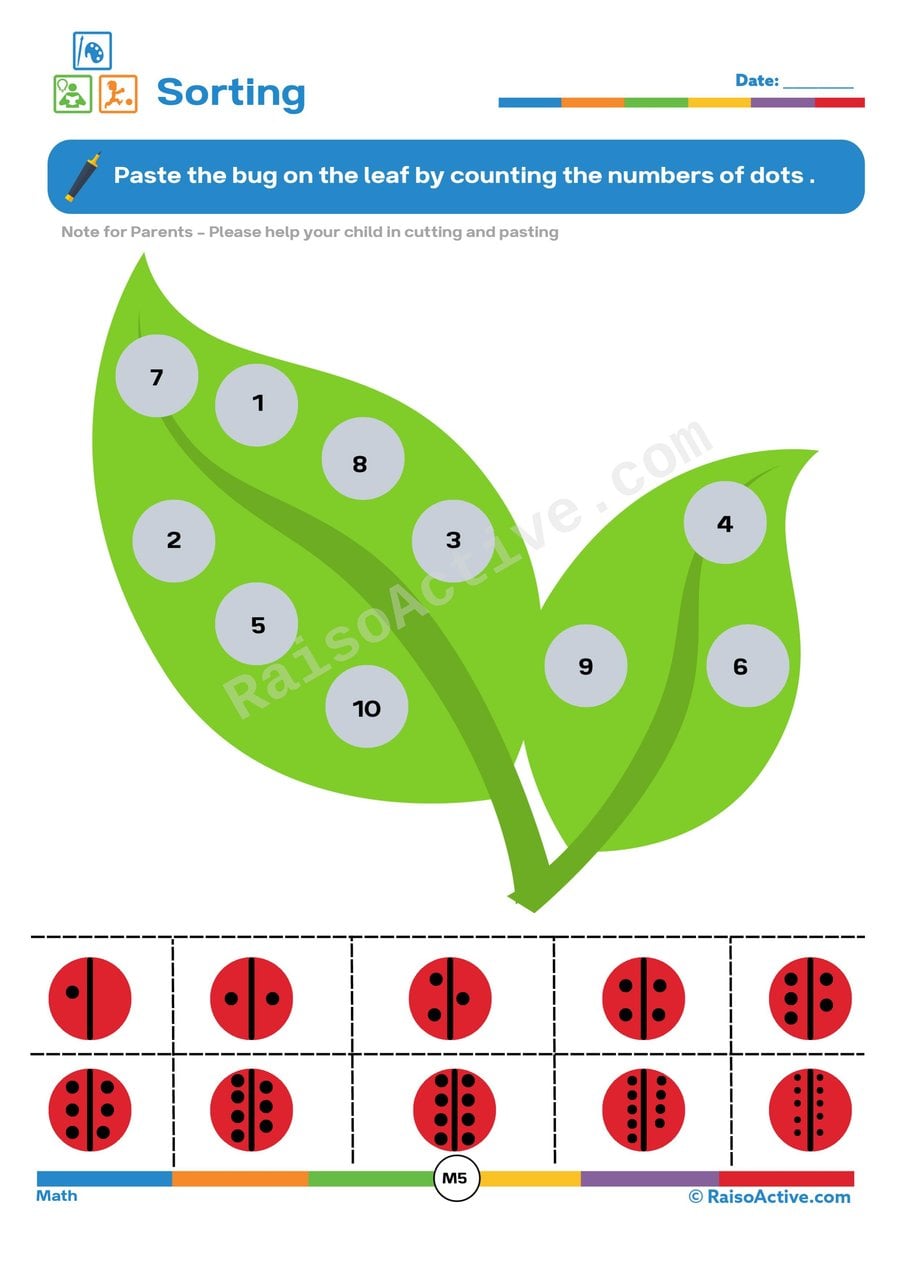
Ladybug Dot Counting Worksheet for Preschoolers
Children ages 3-5 practice one-to-one correspondence by counting the dots on each ladybug and matching that total to the correct numbered leaf, a core early numeracy skill that connects a printed number to an actual quantity. The cutting and pasting also strengthens fine motor control needed for later writing tasks.

Counting Fun: Circle the Correct Number Worksheet
This worksheet builds one-to-one correspondence in children ages 4-5 as they count a group of objects and then match that count to the correct written numeral among several choices. Choosing from multiple numeral options, rather than just writing a number, also sharpens numeral recognition since similar-looking numbers can be easy to confuse.

Duckling Number Fun: Coloring Numbers 0-20 Worksheet
This worksheet helps children ages 4-6 practice recognizing numerals from 0 to 20 in sequence as they color a path of boxes to help a duck reach its ducklings, turning number recognition into a purposeful, story-driven task. Coloring the boxes in strict numerical order also reinforces the idea that numbers build one after another, supporting later skip-counting and number-line skills.
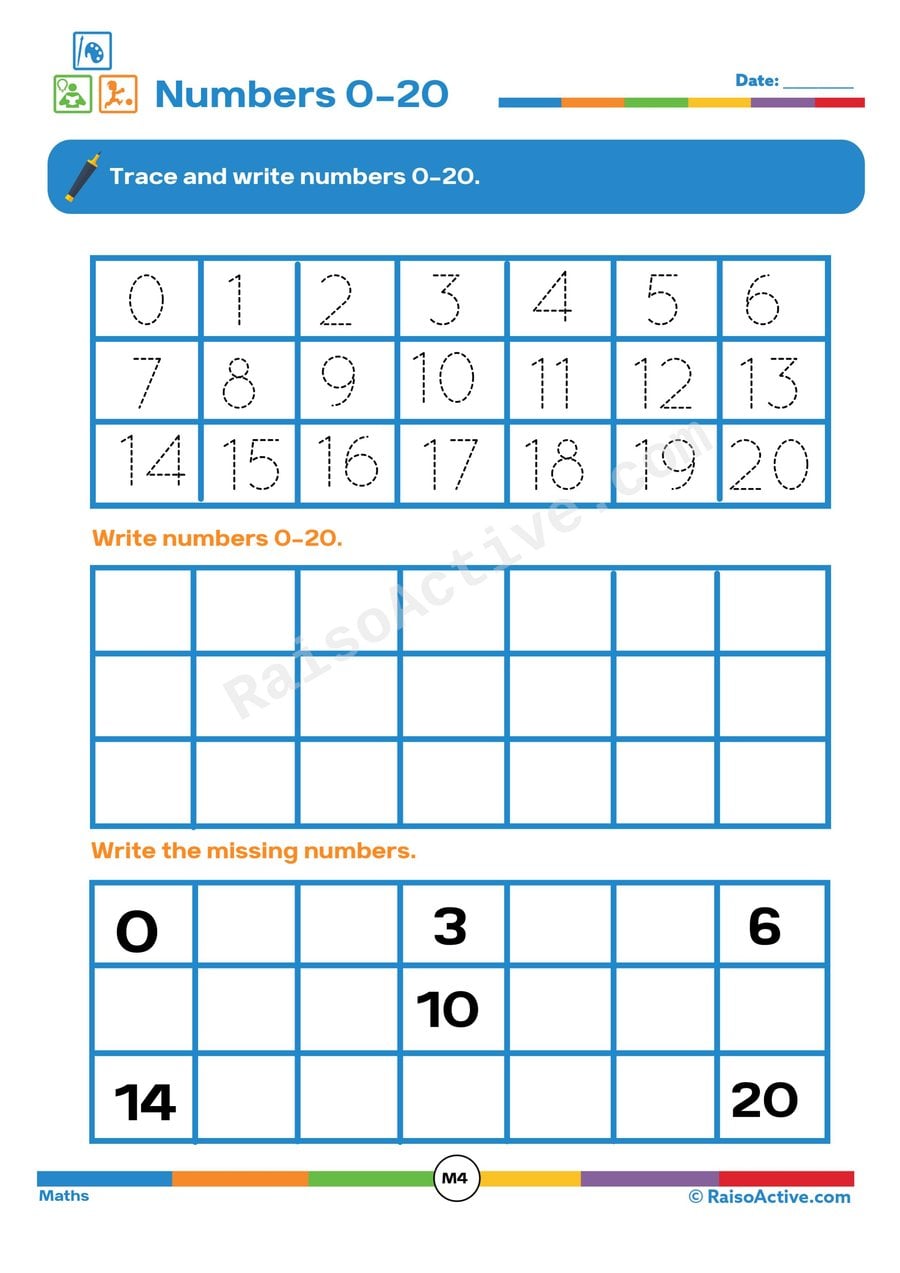
Trace and Write Numbers 0-20 Worksheet
This worksheet extends number formation practice across the full range from 0 to 20, giving children repeated tracing and writing practice on both single-digit and two-digit numerals. For four- to six-year-olds, moving past 10 into the teens and twenties is an important milestone, since it introduces the idea that numbers can be built from combinations of digits rather than each needing its own unique symbol.
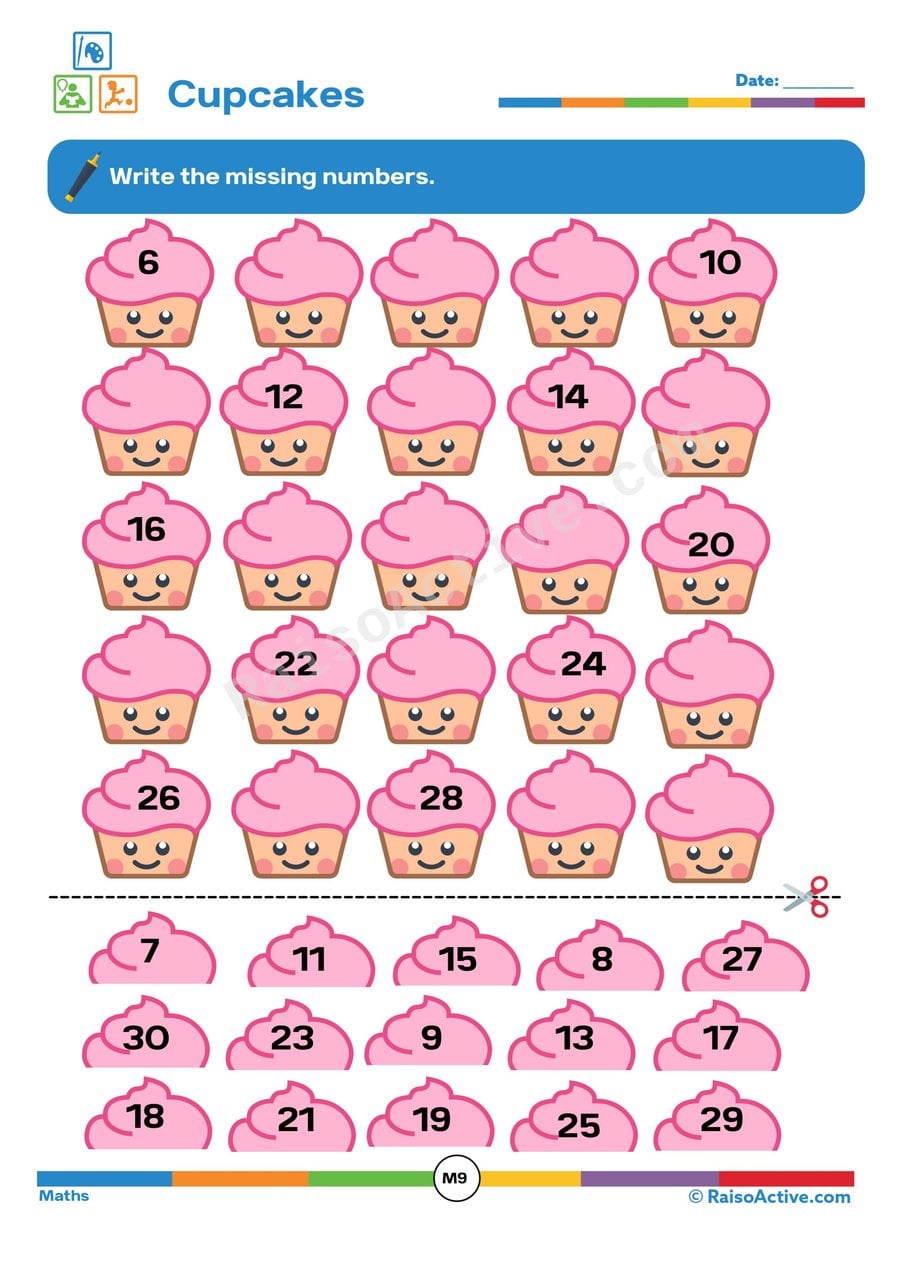
Cupcake Counting Worksheet: Missing Numbers!
This worksheet strengthens number sequencing for children ages 4-6 as they study a row of numbered cupcakes and figure out which numbers are missing from the sequence, then write them in. Identifying a gap in a number sequence requires understanding the pattern of counting well enough to predict what's missing, a step beyond simply counting forward.
Guides for this topic
Number Formation Rhymes 0–9 and How to Fix Reversals
Original number formation rhymes for 0–9, the correct stroke order for each digit, why 3, 5 and 7 get reversed most often, and multisensory fixes that work.
Documenting Learning Without Drowning in Data: A Practical Guide for Parents and Teachers
Learn practical ways to document your child's learning without overwhelm. Simple portfolios, observation tips, and printable trackers for ages 1-8.
How to Help Your Child with Letter Reversals: A Complete Guide for Parents and Teachers
Letter reversals are normal until age 7-8. Learn the best multisensory strategies, anchor letter tricks, and activities to help children write b, d, p, and q correctly.
Reviews
Every worksheet for ages 4–5, no watermark
Members download the full library of 1,000+ worksheets and every activity pack without watermarks or daily limits. One year costs ₹1,000 in India or $20 elsewhere.
See membership plansOr download any worksheet free with a watermark (5 a day).