Count the Owls and Chicks! A Fun Counting Worksheet for Preschoolers
Counting groups of owls and chicks and circling the matching number builds one-to-one correspondence for children ages 3-5, the core skill of touching or pointing to each item exactly once while counting. Working with two different characters in the same activity also teaches children to reset their count for each new group rather than carrying a total over, an easy mistake at this age. This repeated counting-and-matching format across the page builds both accuracy and counting stamina.
Part of the pack
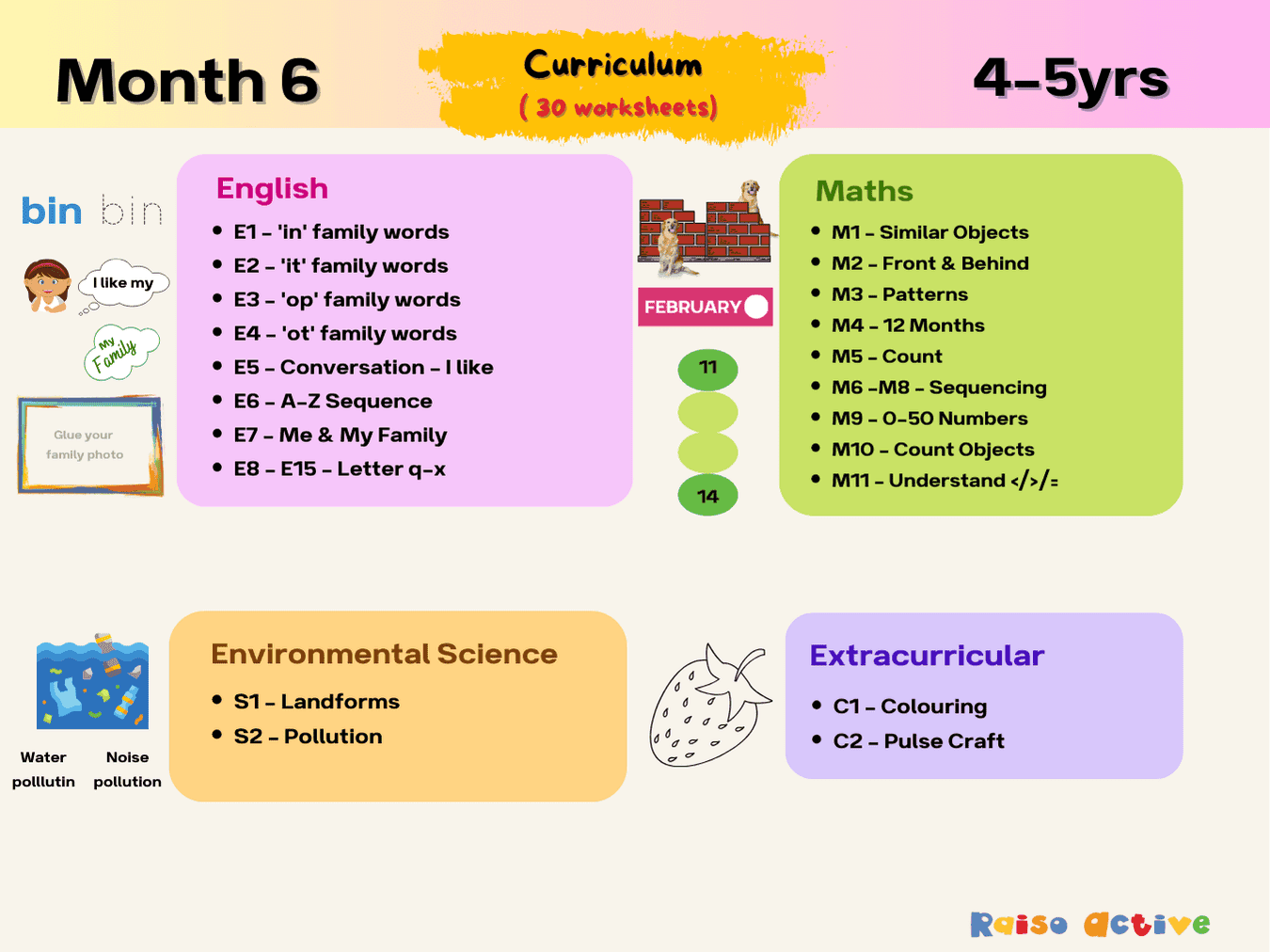
Month 6: Preschool multi-subject foundational skills | Ages 4-5
This is page 23 of the pack. Ages 4-5 · Pre-KAges 4-5 · ReceptionAges 4-5 · LKGAges 4-5

Made for your child
Counting to 10, made for your child
A maths pack with your child's name in it: pictures that explain, practice at three levels, puzzles and story sums about them. Print a new set whenever they finish.
Make a maths packFree preview · free for members
Curriculum
- Number Sense > Counting 1-20
How to use this worksheet
Point to the first group of owls and have your child count them one at a time, touching each owl as they say its number. Once they reach the final owl, ask them to find that number among the choices below and circle it. Move to the group of chicks nearby and repeat the same counting and circling process, reminding your child to start counting fresh rather than continuing from the owls. Work through the rest of the page the same way, checking each answer together before moving on.
Materials needed
- Pencil
- Crayons
Extension activities
- 1Draw your own small groups of animals or shapes and have your child count and write the totals.
- 2Use small toys or blocks to build groups of different sizes and practice counting each one aloud.
- 3Play a simple counting game, like counting claps or hops, and writing down the total afterward.
- 4Practice writing the numbers your child counted on a separate sheet of paper for extra number-writing practice.
- 5Look at a picture book with groups of animals or objects and count them together on each page.

Written by
Hemsweta Jain · Teacher Cheena
MBA and Early Childhood Educator, teaching since 2014 · Founder of RaisoActive, Mumbai
Every RaisoActive worksheet is designed and checked by the founder before publishing.
Published · Last reviewed
More from Month 6: Preschool multi-subject foundational skills | Ages 4-5
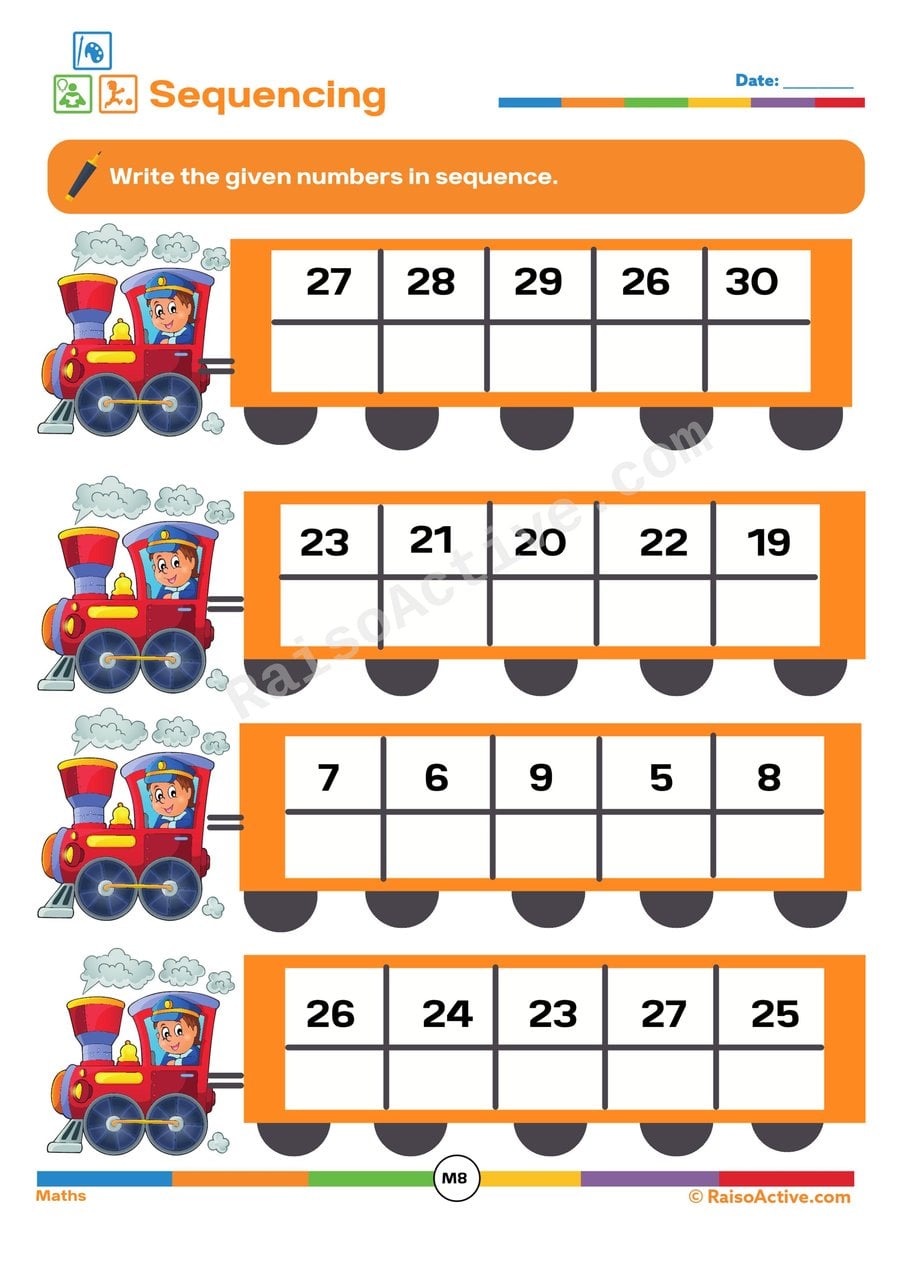
Number Sequencing Train Worksheet for Kids
Ages 4-6 · Pre-K–KindergartenAges 4-6 · Reception–Year 1Ages 4-6 · LKG–UKGAges 4-6
This train-themed sequencing worksheet challenges children ages 4-6 to fill in missing numbers scattered throughout a sequence, requiring them to recognize number order well enough to identify a gap anywhere in the run rather than only counting forward from the start. This deeper sequencing skill supports later math concepts like skip counting, addition, and number lines. Writing the missing numbers by hand, rather than just saying them aloud, also reinforces number formation alongside number order.
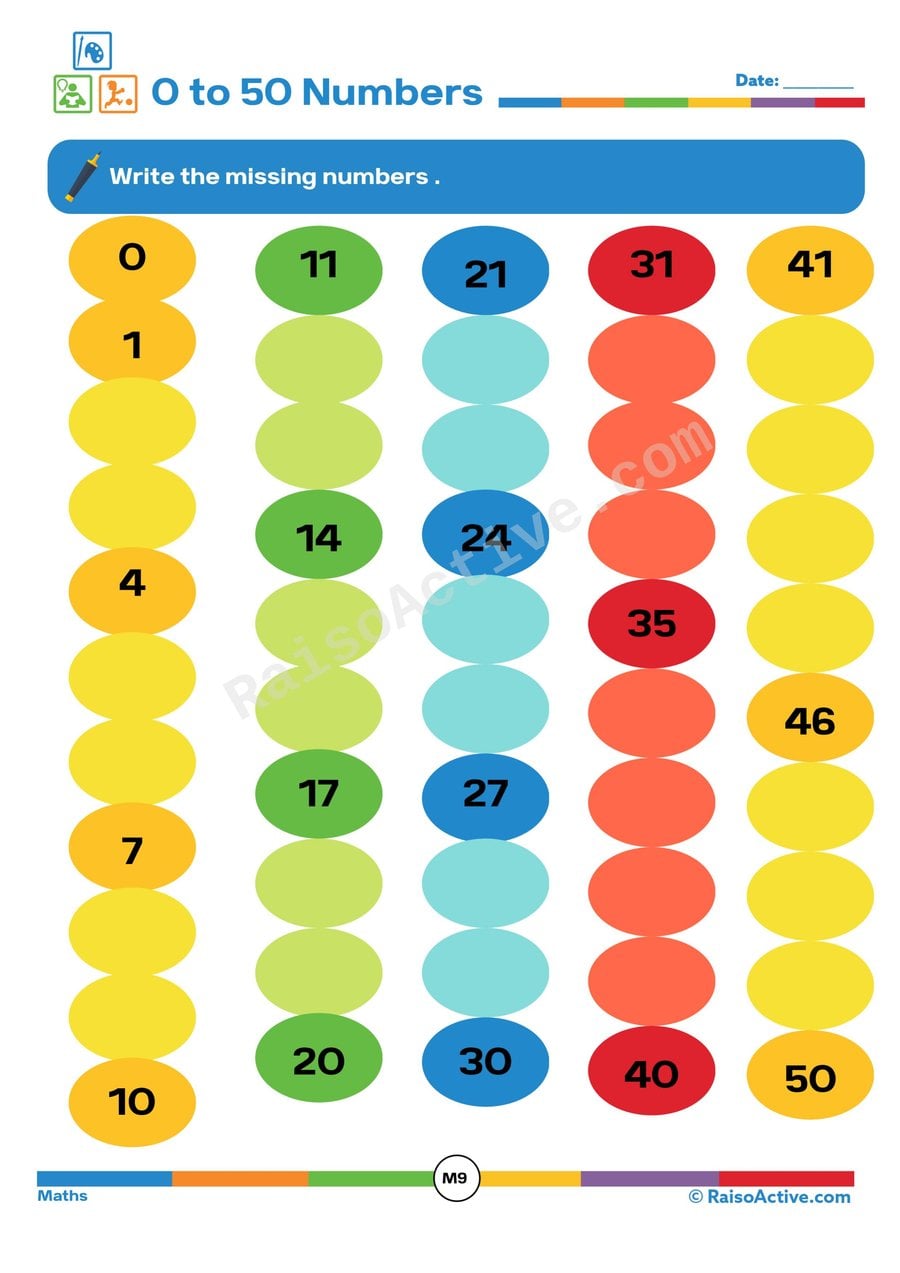
Missing Numbers Worksheet: 0 to 50
Ages 4-5 · Pre-KAges 4-5 · ReceptionAges 4-5 · LKGAges 4-5
Filling in missing numbers across the 0-50 range asks children ages 4-5 to hold a much longer counting sequence in mind than typical 1-20 worksheets, strengthening both number recognition and the pattern sense needed to predict what comes next at any point in the range. This kind of extended practice also introduces children to the way numbers group into decades, like the 20s or 30s, which becomes important for later place-value understanding. Successfully completing a long sequence like this builds real counting stamina and confidence.

Fun 'op' Word Family Worksheet: Trace, Read, and Identify!
Ages 3-5 · Preschool–Pre-KAges 3-5 · Nursery–ReceptionAges 3-5 · Nursery–LKGAges 3-5
This worksheet builds phonics fluency by focusing on the 'op' word family, mop, cop, pop, top, and hop, helping children recognize that changing just the first letter of a word creates a whole new word with a shared ending sound. For ages 3-5, word family practice is one of the most effective early reading strategies, since it teaches children to decode groups of similar words rather than sounding out each one from scratch.

Learn the Letter 'x' Worksheet: Tracing, Matching, and Coloring Fun!
Ages 4-5 · Pre-KAges 4-5 · ReceptionAges 4-5 · LKGAges 4-5
This worksheet builds recognition of the less common letter x through tracing both uppercase and lowercase forms, then reinforces that recognition through matching pictures and highlighting the letter within a grid. For ages 4-5, letter x is genuinely rare at the start of everyday words, so this worksheet leans on strong examples like 'x-ray' to build familiarity despite limited real-world exposure.

Learn the Letter 'V': Tracing, Matching, and Coloring Worksheet
Ages 3-5 · Preschool–Pre-KAges 3-5 · Nursery–ReceptionAges 3-5 · Nursery–LKGAges 3-5
Tracing, matching, and coloring the letter 'V' gives children ages 3-5 focused repetition on a letter formed entirely from two diagonal strokes, a different motor pattern than the curves and verticals used in many other letters. Matching pictures like a violin or a van to the letter builds the sound-symbol connection for the /v/ sound, which can be tricky to distinguish from /f/ or /b/ for young learners. Highlighting the lowercase 'v' within a letter grid to help a character find an object adds a game-like search element that keeps attention on the task.

What Do You Like? Conversation Worksheet for Kids
Ages 3-5 · Preschool–Pre-KAges 3-5 · Nursery–ReceptionAges 3-5 · Nursery–LKGAges 3-5
Ages 3-5 are learning to move from single words to full thoughts, and this 'What Do You Like?' worksheet gives them structured practice putting a preference into words. Looking at a picture prompt and answering 'I like...' builds expressive vocabulary and the confidence to speak up in a group, both key pre-literacy and social-emotional milestones at this age. It also introduces the back-and-forth rhythm of real conversation rather than just naming objects.
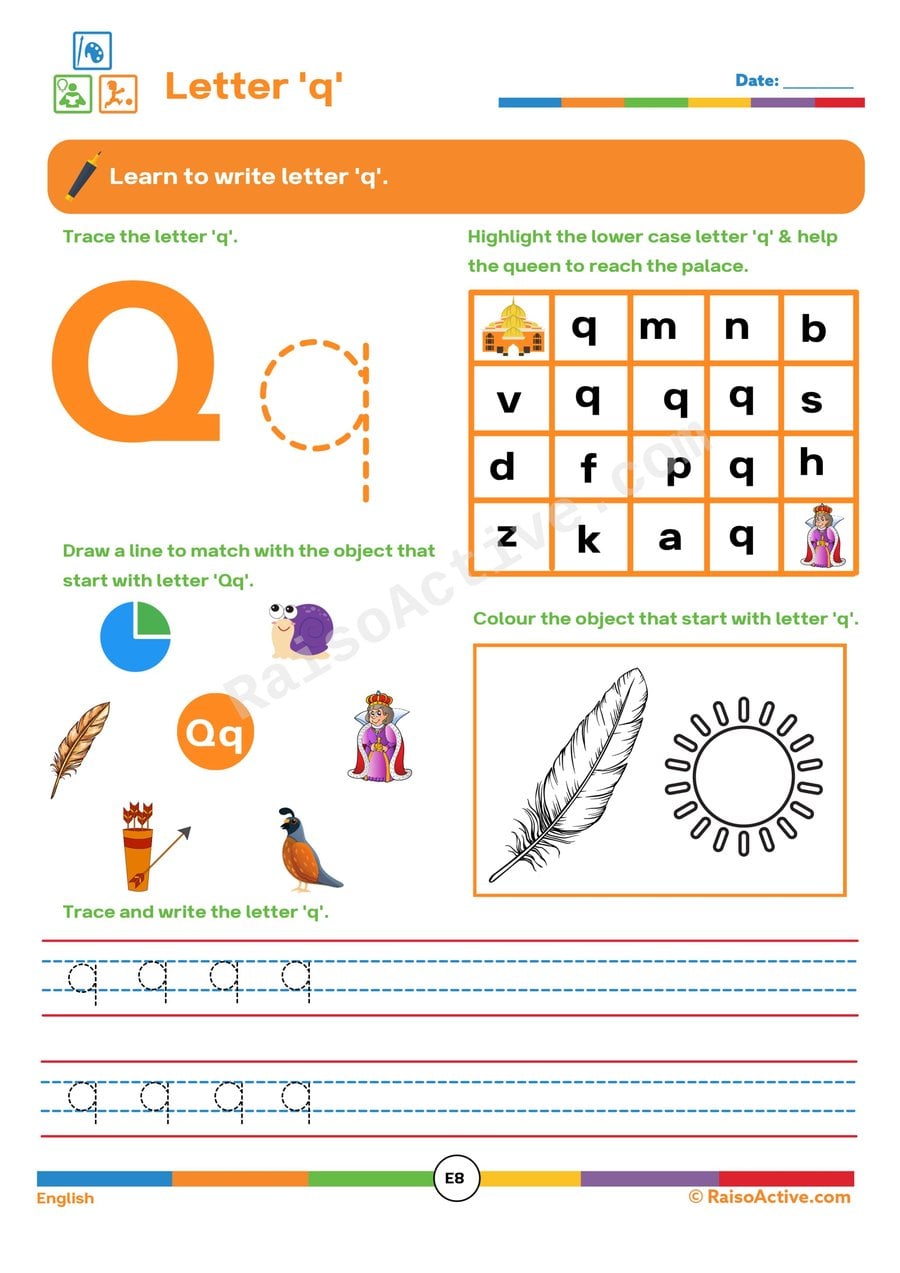
Letter 'q' Worksheet: Trace, Match, and Color!
Ages 3-5 · Preschool–Pre-KAges 3-5 · Nursery–ReceptionAges 3-5 · Nursery–LKGAges 3-5
This worksheet builds letter recognition for 'q' in both its uppercase and lowercase forms for children ages 3-5, a letter that's often trickier than most since it almost always pairs with 'u' and rarely appears alone in early vocabulary. Tracing the letter strengthens the fine motor control for its distinctive tail stroke, while matching and highlighting activities reinforce visual recognition across a busy grid. Helping the queen reach the palace through a simple letter-hunt maze adds a playful, motivating goal to an otherwise repetitive tracing task.

Pollution Awareness Worksheet for Kids: Circle the Correct Answer!
Ages 4-6 · Pre-K–KindergartenAges 4-6 · Reception–Year 1Ages 4-6 · LKG–UKGAges 4-6
This worksheet introduces children ages 4-6 to the idea that pollution comes in different forms — air, water, and land — and asks them to connect each type to a picture, building early environmental science vocabulary alongside visual reasoning. Sorting items into recycling categories afterward extends the lesson from simply naming a problem to practicing a real-world solution, which helps young children start to see themselves as capable of taking action. This blend of identification and hands-on sorting suits a preschooler's concrete way of understanding abstract ideas like 'the environment.'
Related worksheets

Big and Small Fish Counting Worksheet for Preschoolers
Ages 3-5 · Preschool–Pre-KAges 3-5 · Nursery–ReceptionAges 3-5 · Nursery–LKGAges 3-5
This worksheet helps children aged 3-5 develop crucial early numeracy by practicing one-to-one correspondence as they count specific groups of fish. Children will also strengthen their observation skills by distinguishing between 'big' and 'small' fish, a foundational step in understanding comparative sizes and classification. This combination builds both number sense and pre-mathematical reasoning.
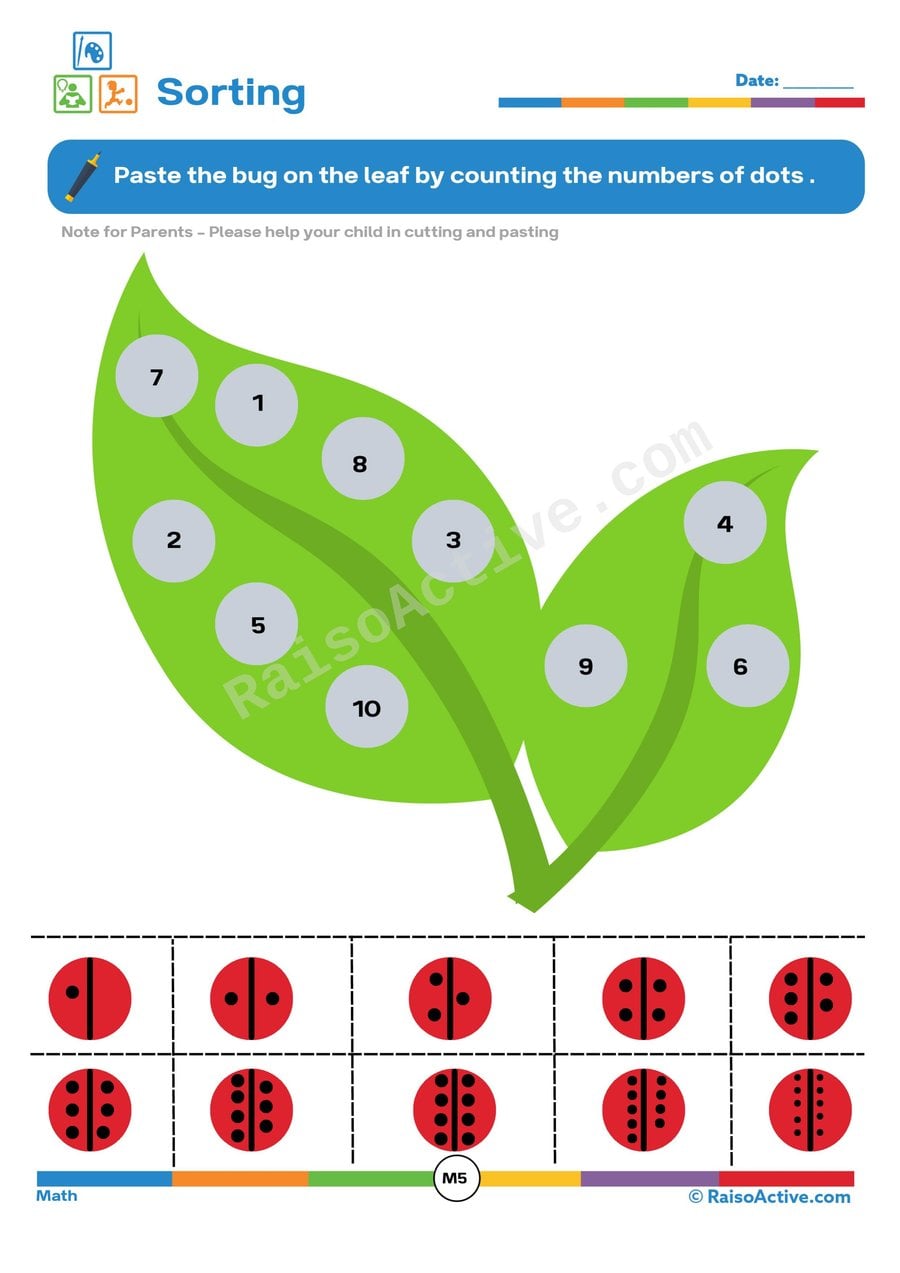
Ladybug Dot Counting Worksheet for Preschoolers
Ages 3-5 · Preschool–Pre-KAges 3-5 · Nursery–ReceptionAges 3-5 · Nursery–LKGAges 3-5
Children ages 3-5 practice one-to-one correspondence by counting the dots on each ladybug and matching that total to the correct numbered leaf, a core early numeracy skill that connects a printed number to an actual quantity. The cutting and pasting also strengthens fine motor control needed for later writing tasks.

Counting Fun: Circle the Correct Number Worksheet
Ages 4-5 · Pre-KAges 4-5 · ReceptionAges 4-5 · LKGAges 4-5
This worksheet builds one-to-one correspondence in children ages 4-5 as they count a group of objects and then match that count to the correct written numeral among several choices. Choosing from multiple numeral options, rather than just writing a number, also sharpens numeral recognition since similar-looking numbers can be easy to confuse.
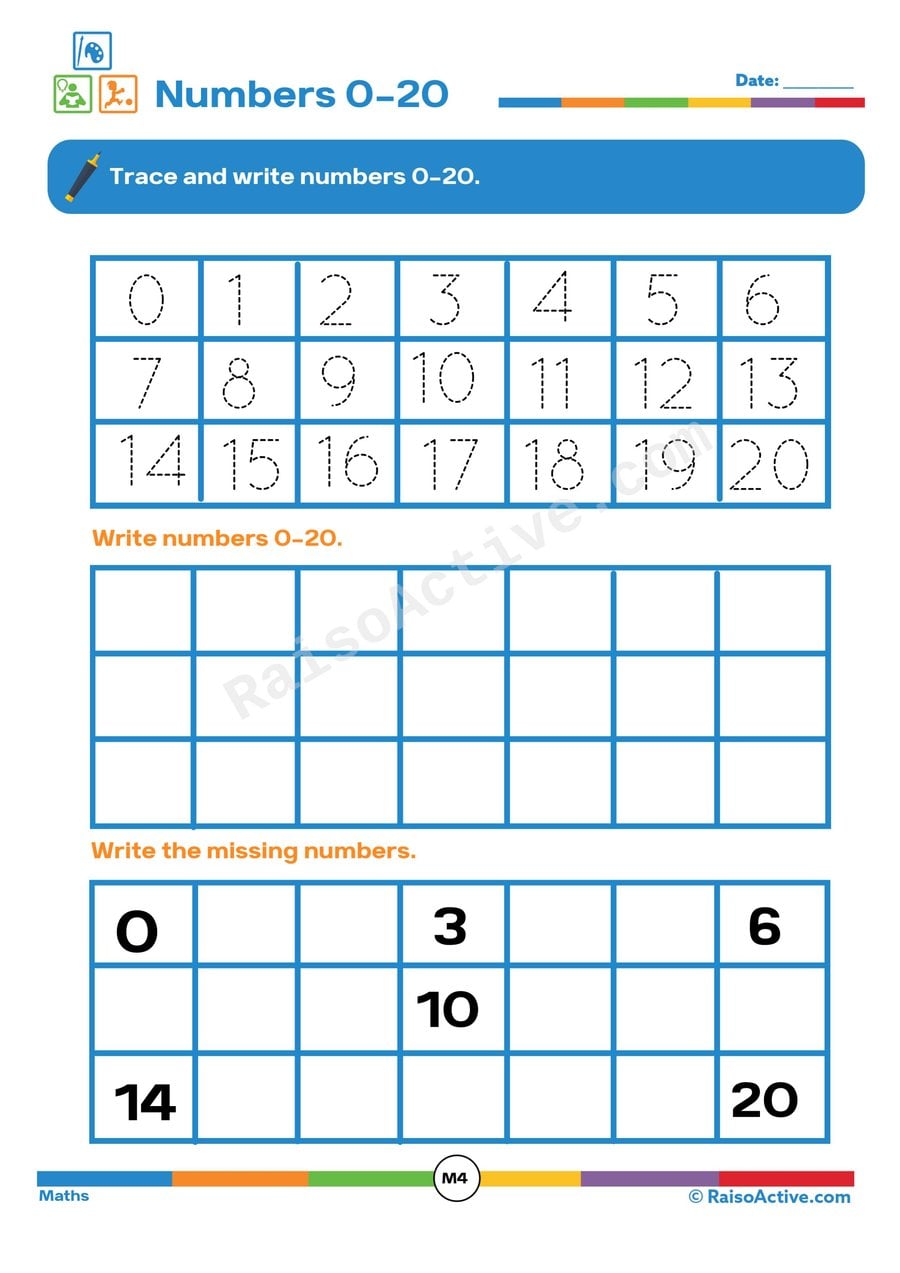
Trace and Write Numbers 0-20 Worksheet
Ages 4-6 · Pre-K–KindergartenAges 4-6 · Reception–Year 1Ages 4-6 · LKG–UKGAges 4-6
This worksheet extends number formation practice across the full range from 0 to 20, giving children repeated tracing and writing practice on both single-digit and two-digit numerals. For four- to six-year-olds, moving past 10 into the teens and twenties is an important milestone, since it introduces the idea that numbers can be built from combinations of digits rather than each needing its own unique symbol.
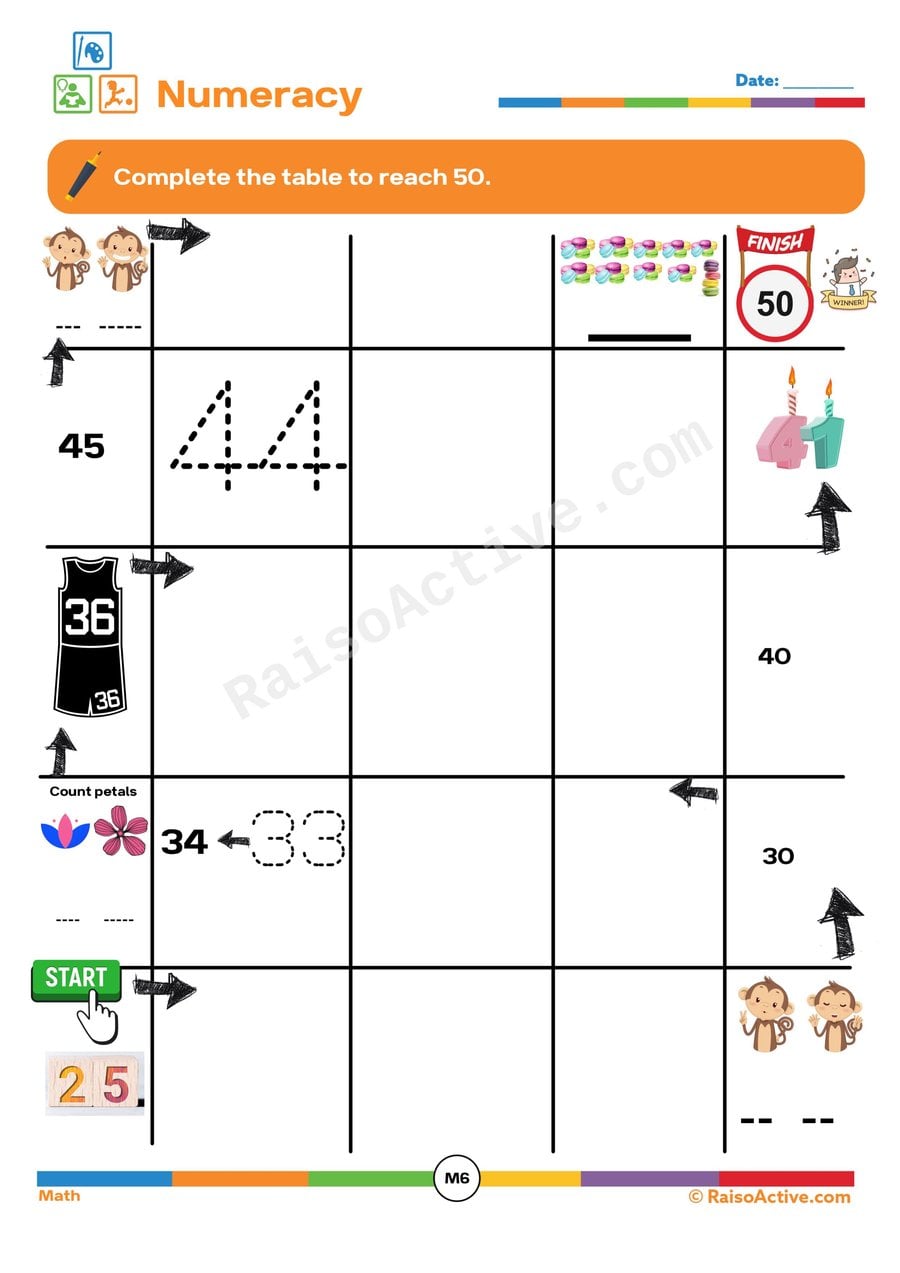
Reach 50! A Fun Numeracy Worksheet for Kids
Ages 4-5 · Pre-KAges 4-5 · ReceptionAges 4-5 · LKGAges 4-5
Filling in a number sequence toward a target like 50 gives children ages 4-5 practice with number order and pattern continuation over a longer stretch than they might attempt in casual counting, building stamina alongside numeracy. Starting partway through the sequence, at 25, also asks children to pick up counting from a non-zero starting point, which is a slightly more advanced skill than counting from one every time. Successfully completing the full path to 50 gives children a strong, visible sense of accomplishment tied to a meaningful numerical milestone.
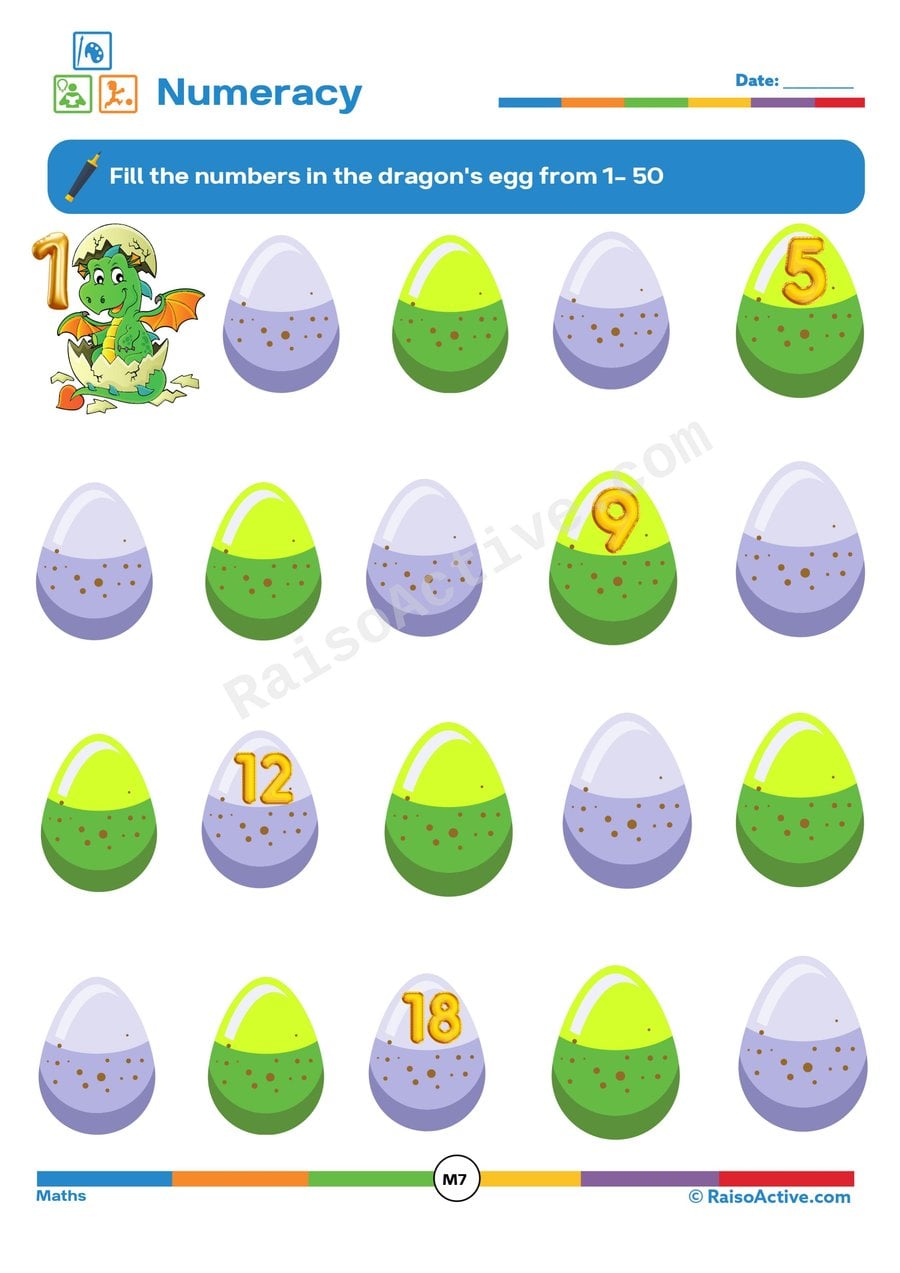
Dragon Egg Numbers: Counting to 50 Worksheet
Ages 4-6 · Pre-K–KindergartenAges 4-6 · Reception–Year 1Ages 4-6 · LKG–UKGAges 4-6
Filling in the missing numbers across a run of dragon eggs stretches a 4-6 year old's counting range well past the more common 1-20 practice, into territory where number patterns — like how every decade starts a new '_1, _2, _3' pattern — start to become visible. It's a strong bridge activity between rote counting and genuinely understanding how the number system is built.

Count the Sweet Treats! A Fun Counting Worksheet for Preschoolers
Ages 3-5 · Preschool–Pre-KAges 3-5 · Nursery–ReceptionAges 3-5 · Nursery–LKGAges 3-5
Preschoolers ages 3-5 practice one-to-one correspondence by counting groups of sweet treats, like cupcakes or candies, and writing the total number for each group. Counting appealing, familiar objects like treats keeps motivation high while reinforcing the core skill of matching each counted item to exactly one number word. Writing the resulting number afterward connects the counting process to number symbol recognition.

Spider Count Worksheet: Finger Painting Fun for Halloween!
Ages 3-5 · Preschool–Pre-KAges 3-5 · Nursery–ReceptionAges 3-5 · Nursery–LKGAges 3-5
Dabbing fingertips or Q-tips in paint to create the exact number of spiders shown on each web gives children ages 3-5 hands-on practice with one-to-one counting while also strengthening the small hand muscles needed for pencil control later on. Because each web has a target number, children must count as they paint rather than just decorating freely, which reinforces number recognition in a playful, low-pressure way. The messy, sensory nature of finger painting also supports focus and engagement at an age when seated paper-and-pencil tasks can be hard to sustain.
Guides for this topic

Number Formation Rhymes 0–9 and How to Fix Reversals
Original number formation rhymes for 0–9, the correct stroke order for each digit, why 3, 5 and 7 get reversed most often, and multisensory fixes that work.

Coding Activities for Preschoolers: Building Tomorrow's Thinkers Today
Discover 15+ unplugged and screen-based coding activities for preschoolers that build sequencing, logic, and problem-solving skills through play. NEP 2020 aligned.

Christmas and Winter Activities That Combine Fun and Learning: Creating Magical Educational Experiences
Discover Christmas and winter activities that combine festive fun with real learning. Crafts, counting, literacy, and printable worksheets for ages 2 to 8 — perfect for home and school.
Reviews
Every worksheet for ages 3–5, no watermark
Members download the full library of 1,000+ worksheets and every activity pack without watermarks or daily limits. One year costs ₹999 in India or $20 elsewhere.
See membership plansOr download any worksheet free with a watermark (5 a day).