Trace and Write Numbers 0-20 Worksheet
This worksheet extends number formation practice across the full range from 0 to 20, giving children repeated tracing and writing practice on both single-digit and two-digit numerals. For four- to six-year-olds, moving past 10 into the teens and twenties is an important milestone, since it introduces the idea that numbers can be built from combinations of digits rather than each needing its own unique symbol.
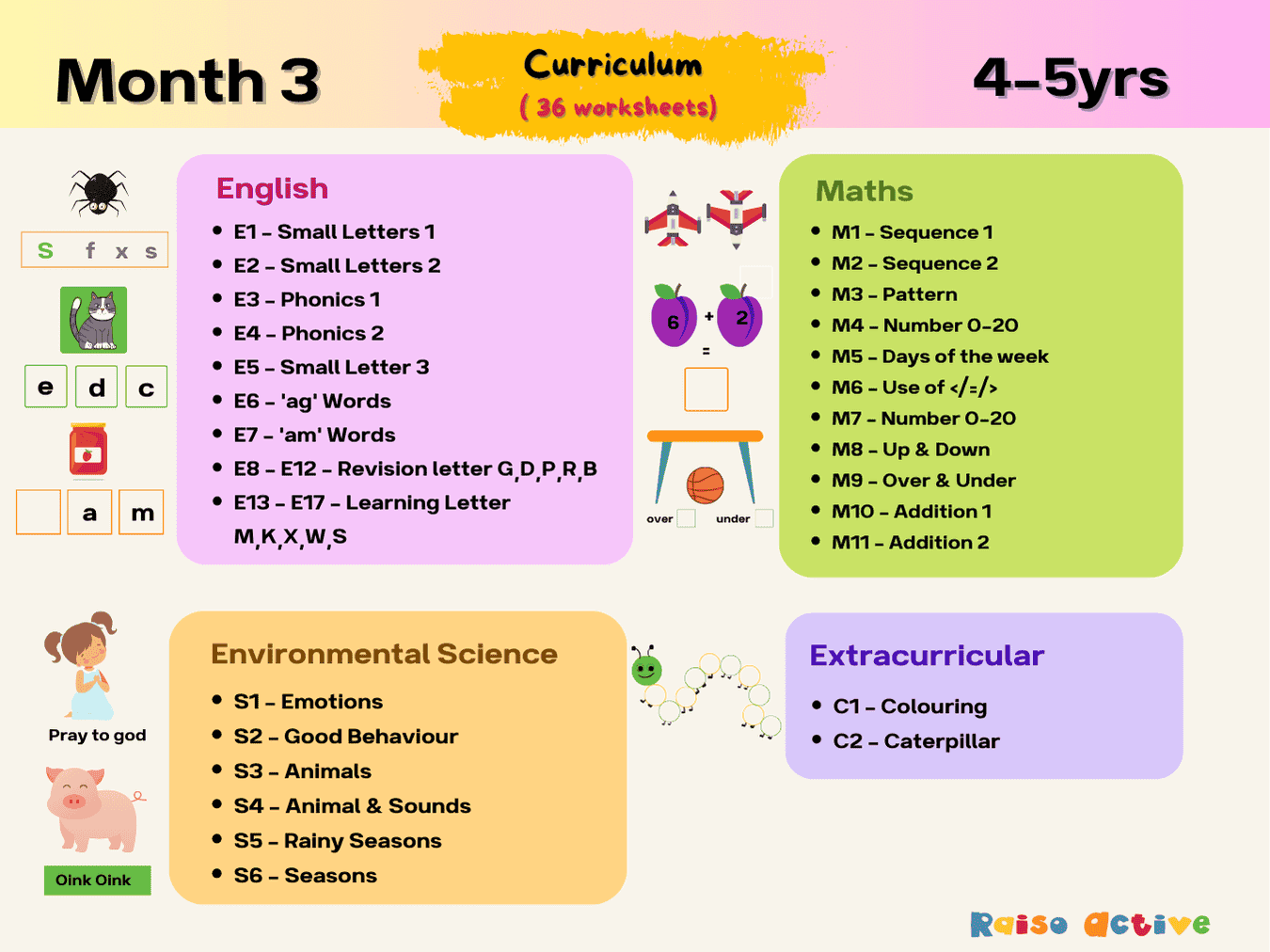
Part of the pack
Month 3: Learning & Development | Ages 4-5
This is page 24 of the pack. Ages 4-5 · Pre-KAges 4-5 · ReceptionAges 4-5 · LKGAges 4-5
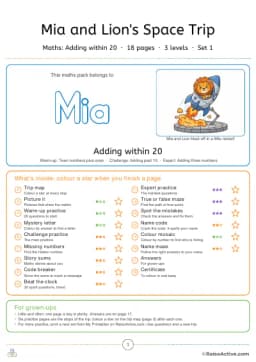
Made for your child
Counting to 10, made for your child
A maths pack with your child's name in it: pictures that explain, practice at three levels, puzzles and story sums about them. Print a new set whenever they finish.
Make a maths packFree preview · free for members
Curriculum
- Number Sense > Counting 1-20
How to use this worksheet
Start with the top section, having your child trace each number from 0 to 20 in order along the dotted lines, saying the number aloud as they trace it. Move to the next section and have them write each number independently in the boxes provided, checking their formation against the traced examples above. Finish with the last section, where they fill in numbers missing from a sequence, using the earlier practice as a reference if needed.
Materials needed
- Pencil
- Eraser
Extension activities
- 1Count objects around the house up to 20, like books on a shelf or toy cars in a bin.
- 2Use number flashcards for 0 through 20 to practice quick recognition.
- 3Create a number line from 0 to 20 taped along a hallway and have your child walk it while counting.
- 4Play a number order game, laying out cards and asking your child to put them in sequence.
- 5Practice writing just the 'teen' numbers (13-19) separately, since these often confuse young writers.

Written by
Hemsweta Jain · Teacher Cheena
MBA and Early Childhood Educator, teaching since 2014 · Founder of RaisoActive, Mumbai
Every RaisoActive worksheet is designed and checked by the founder before publishing.
Published · Last reviewed
More from Month 3: Learning & Development | Ages 4-5

Lowercase Letter Matching Worksheet for Preschoolers
Ages 4-5 · Pre-KAges 4-5 · ReceptionAges 4-5 · LKGAges 4-5
This worksheet trains children ages 4-5 to connect an uppercase letter to its lowercase counterpart, a skill that's genuinely tricky since many lowercase letters look quite different from their capital form (like G and g, or Q and q). Matching cases correctly is essential groundwork for reading real books and sentences, which are written mostly in lowercase.

Letter S Tracing Worksheet: Learn to Write and Identify the Letter S!
Ages 3-5 · Preschool–Pre-KAges 3-5 · Nursery–ReceptionAges 3-5 · Nursery–LKGAges 3-5
This worksheet helps children ages 3-5 learn to recognize and write the letter S, both uppercase and lowercase, using its distinctive curving stroke, while also practicing identifying words that start with the letter S. Because S makes a long, continuous hissing sound that's easy to isolate, this letter is often one of the more approachable sounds for early phonics practice.

Am Words Worksheet: Read, Match, and Fill-in the Blanks!
Ages 4-5 · Pre-KAges 4-5 · ReceptionAges 4-5 · LKGAges 4-5
This worksheet builds phonics skills within the 'am' word family — words like 'ham,' 'jam,' and 'Sam' — by having children read words aloud, match them to pictures, and fill in missing letters to complete them. For four- and five-year-olds, working within a single rime family like '-am' helps children generalize a decoding pattern they can apply to many new words, rather than sounding out every word from scratch.

Small Letter Matching Worksheet: Cut and Paste Fun!
Ages 3-5 · Preschool–Pre-KAges 3-5 · Nursery–ReceptionAges 3-5 · Nursery–LKGAges 3-5
This worksheet helps children ages 3-5 recognize and match lowercase letters to their corresponding capital letters, a skill children need before they can read text that mixes both letter cases fluently. The cut-and-paste format adds fine motor practice, since children must precisely place a small paper letter next to its match.

Caterpillar Number Sequencing Worksheet for Preschoolers
Ages 3-5 · Preschool–Pre-KAges 3-5 · Nursery–ReceptionAges 3-5 · Nursery–LKGAges 3-5
This worksheet helps children ages 3-5 practice number recognition and sequencing skills by cutting out numbered circles and arranging them in the correct order to build a caterpillar's body. The hands-on cut-and-paste format adds fine motor practice to the numeracy task, since children must precisely place each circle in its correct spot.

Letter M Tracing and Coloring Worksheet for Preschoolers
Ages 3-5 · Preschool–Pre-KAges 3-5 · Nursery–ReceptionAges 3-5 · Nursery–LKGAges 3-5
This worksheet helps children ages 3-5 practice tracing the letter M's up-down-up-down strokes, identifying words that start with M, and coloring both capital and lowercase versions of the letter. Comparing the capital and lowercase forms side by side helps children notice that the same letter can look different in size while representing the same sound.

Letter X Worksheet: Trace, Write, and Color the Letter X!
Ages 3-5 · Preschool–Pre-KAges 3-5 · Nursery–ReceptionAges 3-5 · Nursery–LKGAges 3-5
This worksheet introduces the letter X, one of the trickier letters for young children since so few common words start with it, by pairing tracing practice with picture identification for words like 'x-ray' or 'xylophone.' For three- to five-year-olds, working through a less familiar letter like X builds persistence and completes their sense of mastering the full alphabet.

Animal Sounds Matching Worksheet for Preschoolers
Ages 3-5 · Preschool–Pre-KAges 3-5 · Nursery–ReceptionAges 3-5 · Nursery–LKGAges 3-5
This worksheet builds vocabulary and auditory memory by asking children to match each animal picture to the sound it makes, such as connecting a cow to 'moo' or a duck to 'quack.' For three- to five-year-olds, linking an animal's appearance to its sound strengthens both early science knowledge and the kind of associative memory that supports vocabulary growth.
Related worksheets

Counting Fun: Number Names Worksheet for Preschoolers!
Ages 4-5 · Pre-KAges 4-5 · ReceptionAges 4-5 · LKGAges 4-5
This number-names worksheet pushes children from simply counting objects to connecting a quantity with its written word, a step that bridges early numeracy with beginning literacy. Ages four and five are ready to start recognizing that 'three' is both a group of three dots and a specific string of letters, which strengthens both number sense and sight-word recognition.

Count and Match: A Fun Numeracy Worksheet for Preschoolers!
Ages 3-5 · Preschool–Pre-KAges 3-5 · Nursery–ReceptionAges 3-5 · Nursery–LKGAges 3-5
This worksheet combines two foundational counting skills for children ages 3-5: counting a group of objects and writing the total, and then matching that same quantity to an equivalent group elsewhere on the page. Writing the numeral after counting reinforces that a number symbol represents an actual quantity, not just a word to memorize. Matching equal groups afterward adds an extra layer of number sense, showing children that the same quantity can look different depending on what's being counted.

Count and Circle: Counting Objects Worksheet for Preschoolers
Ages 3-5 · Preschool–Pre-KAges 3-5 · Nursery–ReceptionAges 3-5 · Nursery–LKGAges 3-5
Counting a group of objects and then matching that quantity to its written numeral is the heart of early numeracy for ages 3-5, and this worksheet makes children complete both halves of that skill in one task rather than just counting aloud. Circling the correct number among several choices also adds a light decision-making step, requiring them to compare their counted total against multiple printed numbers. This combination of counting and number recognition is foundational for all later arithmetic.

Count the Sweet Treats! A Fun Counting Worksheet for Preschoolers
Ages 3-5 · Preschool–Pre-KAges 3-5 · Nursery–ReceptionAges 3-5 · Nursery–LKGAges 3-5
Preschoolers ages 3-5 practice one-to-one correspondence by counting groups of sweet treats, like cupcakes or candies, and writing the total number for each group. Counting appealing, familiar objects like treats keeps motivation high while reinforcing the core skill of matching each counted item to exactly one number word. Writing the resulting number afterward connects the counting process to number symbol recognition.

Count and Match: Number Names Worksheet for Preschoolers
Ages 3-5 · Preschool–Pre-KAges 3-5 · Nursery–ReceptionAges 3-5 · Nursery–LKGAges 3-5
This worksheet helps children ages 3-5 connect a counted group of objects to its written number name, reinforcing that a quantity, a numeral, and a number word all represent the same idea. Counting a group and then finding its matching name — rather than just its matching numeral — adds an extra layer of number literacy, since your child must recognize or read the word form as well as understand the quantity.
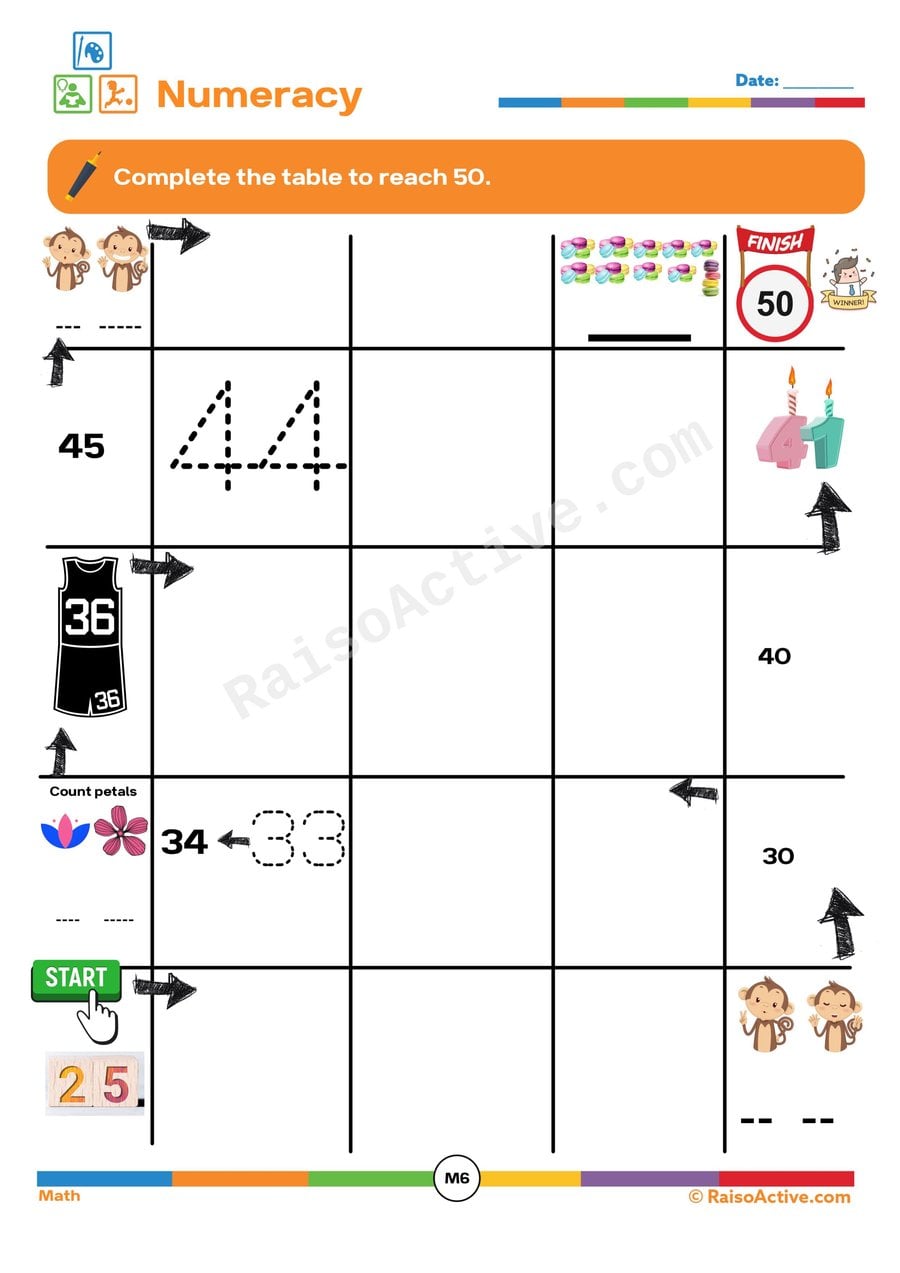
Reach 50! A Fun Numeracy Worksheet for Kids
Ages 4-5 · Pre-KAges 4-5 · ReceptionAges 4-5 · LKGAges 4-5
Filling in a number sequence toward a target like 50 gives children ages 4-5 practice with number order and pattern continuation over a longer stretch than they might attempt in casual counting, building stamina alongside numeracy. Starting partway through the sequence, at 25, also asks children to pick up counting from a non-zero starting point, which is a slightly more advanced skill than counting from one every time. Successfully completing the full path to 50 gives children a strong, visible sense of accomplishment tied to a meaningful numerical milestone.

Count the Owls and Chicks! A Fun Counting Worksheet for Preschoolers
Ages 3-5 · Preschool–Pre-KAges 3-5 · Nursery–ReceptionAges 3-5 · Nursery–LKGAges 3-5
Counting groups of owls and chicks and circling the matching number builds one-to-one correspondence for children ages 3-5, the core skill of touching or pointing to each item exactly once while counting. Working with two different characters in the same activity also teaches children to reset their count for each new group rather than carrying a total over, an easy mistake at this age. This repeated counting-and-matching format across the page builds both accuracy and counting stamina.

Caterpillar Counting Adventure: Connect the Dots Worksheet
Ages 4-6 · Pre-K–KindergartenAges 4-6 · Reception–Year 1Ages 4-6 · LKG–UKGAges 4-6
Ages 4-6 practice counting in sequence up to 50 by connecting numbered dots that form a caterpillar shape, combining number recognition with fine motor line control. Counting this high in order builds confidence with larger numbers beyond the more common 1-20 range most preschool worksheets cover. The connect-the-dots format also rewards persistence, since the picture only fully forms once every number has been found correctly.
Guides for this topic

Number Formation Rhymes 0–9 and How to Fix Reversals
Original number formation rhymes for 0–9, the correct stroke order for each digit, why 3, 5 and 7 get reversed most often, and multisensory fixes that work.

Documenting Learning Without Drowning in Data: A Practical Guide for Parents and Teachers
Learn practical ways to document your child's learning without overwhelm. Simple portfolios, observation tips, and printable trackers for ages 1-8.

How to Help Your Child with Letter Reversals: A Complete Guide for Parents and Teachers
Letter reversals are normal until age 7-8. Learn the best multisensory strategies, anchor letter tricks, and activities to help children write b, d, p, and q correctly.
Reviews
Every worksheet for ages 4–6, no watermark
Members download the full library of 1,000+ worksheets and every activity pack without watermarks or daily limits. One year costs ₹999 in India or $20 elsewhere.
See membership plansOr download any worksheet free with a watermark (5 a day).