Letter 'q' Worksheet: Trace, Match, and Color!
This worksheet builds letter recognition for 'q' in both its uppercase and lowercase forms for children ages 3-5, a letter that's often trickier than most since it almost always pairs with 'u' and rarely appears alone in early vocabulary. Tracing the letter strengthens the fine motor control for its distinctive tail stroke, while matching and highlighting activities reinforce visual recognition across a busy grid. Helping the queen reach the palace through a simple letter-hunt maze adds a playful, motivating goal to an otherwise repetitive tracing task.
Part of the pack
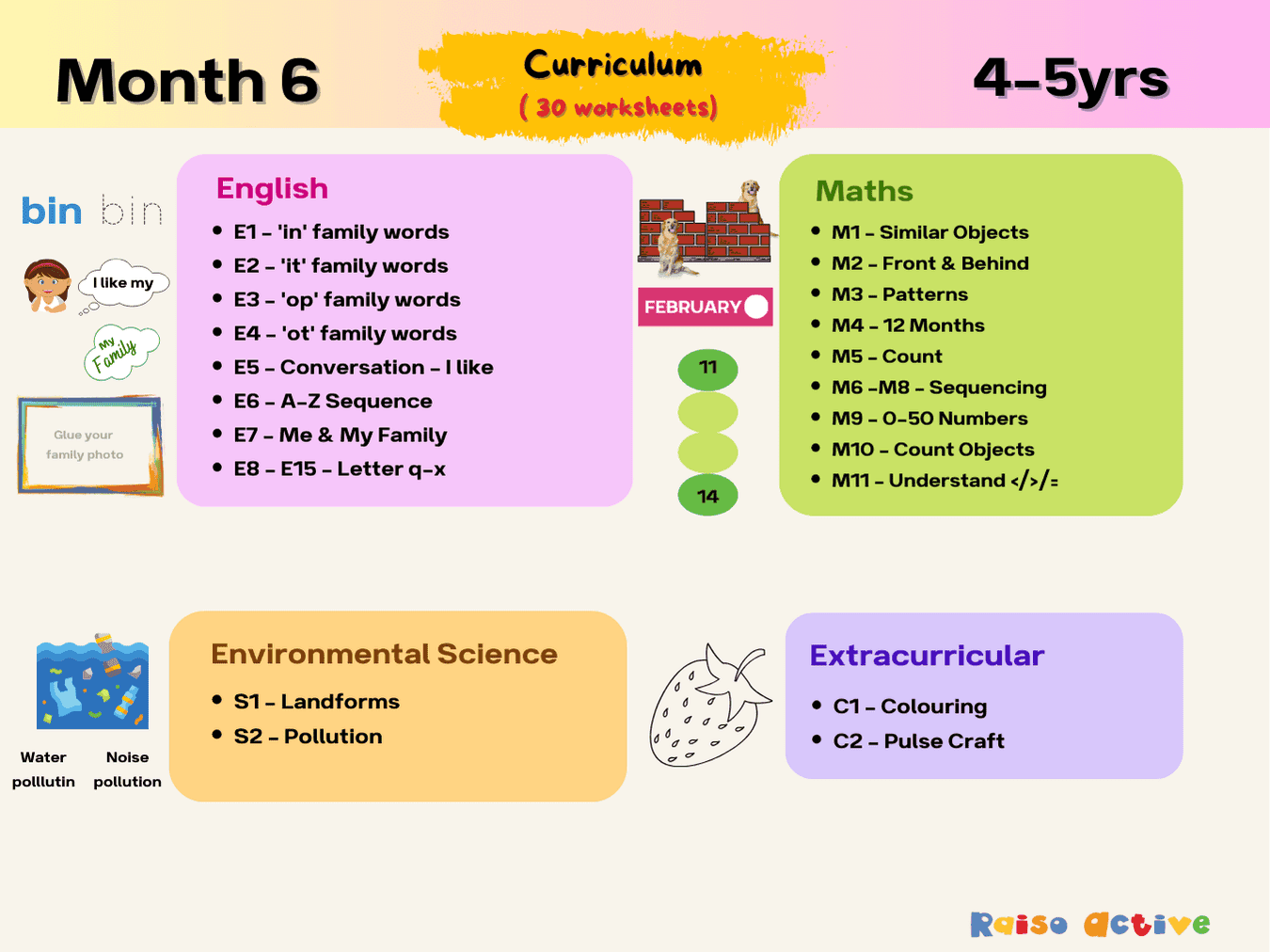
Month 6: Preschool multi-subject foundational skills | Ages 4-5
This is page 11 of the pack. Ages 4-5 · Pre-KAges 4-5 · ReceptionAges 4-5 · LKGAges 4-5
Made for your child
A whole activity pack made with their name
60 pages to spot, build, trace and write their own name, plus pages about their favourites, feelings and family. See a free preview with their name.
Make an All About Me packFree preview · free for members
Or start free: a name tracing sheet with their nameCurriculum
- Writing > Letter Tracing A-Z
How to use this worksheet
Start with tracing the uppercase and lowercase 'q,' guiding your child's pencil along the dotted lines and saying the /kw/ sound as they write. Move to the matching section, where your child draws a line connecting pictures that start with 'Qq' to the letter itself. Next, have them scan the letter grid, highlighting every 'q' they find to help the queen reach the palace. Finish by coloring the object that starts with 'q' and completing one more round of tracing and writing the letter independently.
Materials needed
- Pencil
- Crayons or colored pencils
Extension activities
- 1Search your home for objects that start with 'q,' like a quilt or a quarter, and make a short list together.
- 2Practice writing 'q' on a whiteboard or in a sand tray, saying the /kw/ sound each time.
- 3Look through books or magazines together and circle every 'q' your child can spot.
- 4Draw a simple queen or quilt picture and label it with the letter 'q.'
- 5Play a matching card game pairing uppercase Q with lowercase q.

Written by
Hemsweta Jain · Teacher Cheena
MBA and Early Childhood Educator, teaching since 2014 · Founder of RaisoActive, Mumbai
Every RaisoActive worksheet is designed and checked by the founder before publishing.
Published · Last reviewed
More from Month 6: Preschool multi-subject foundational skills | Ages 4-5

Complete the Pattern: Cut and Paste Worksheet for Preschoolers
Ages 3-5 · Preschool–Pre-KAges 3-5 · Nursery–ReceptionAges 3-5 · Nursery–LKGAges 3-5
Completing a simple visual pattern by cutting and pasting the next correct picture asks children ages 3-5 to notice a repeating rule, such as circle-square-circle-square, and predict what logically comes next — an early and important building block of mathematical and logical thinking. This skill underlies later concepts in math, coding, and even music, all of which rely on recognizing and extending sequences. The cut-and-paste format adds a fine motor and decision-making layer, since children must select the correct piece from several options rather than simply pointing to an answer.
Letter 's' Worksheet: Trace, Match, and Color!
Ages 3-5 · Preschool–Pre-KAges 3-5 · Nursery–ReceptionAges 3-5 · Nursery–LKGAges 3-5
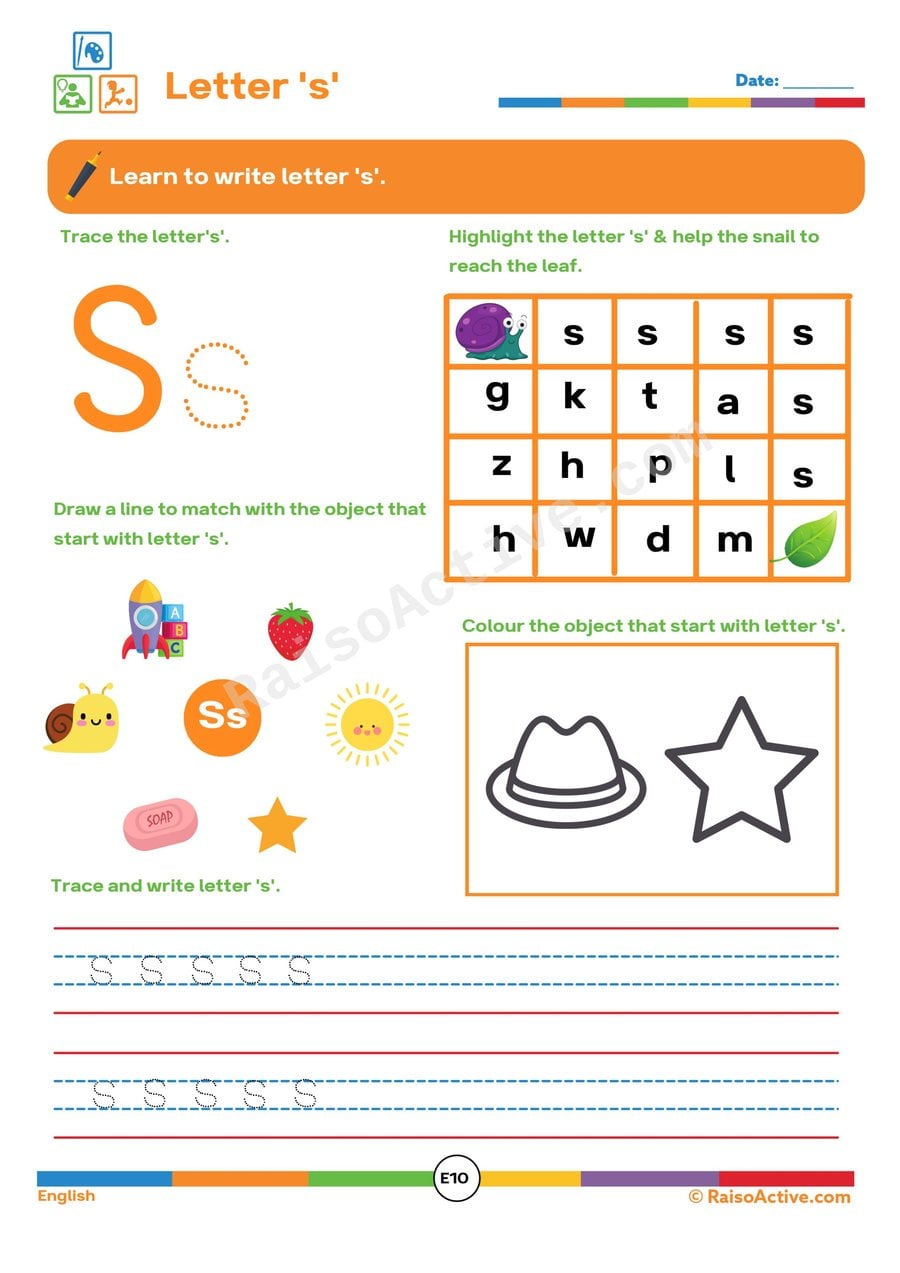
This worksheet gives children ages 3-5 focused practice forming the letter 's,' one of the trickier curved strokes for beginning writers to control with a pencil. Beyond handwriting, matching pictures to the letter and coloring only the 's' objects builds phonemic awareness by linking the letter shape to its /s/ sound at the start of words. Combining tracing, matching, and coloring in one page also keeps a young child's attention across multiple related tasks.

Coloring Fun: Decode and Color the Butterfly and Flowers!
Ages 3-5 · Preschool–Pre-KAges 3-5 · Nursery–ReceptionAges 3-5 · Nursery–LKGAges 3-5
This color-by-number worksheet builds number recognition and one-to-one correspondence as children match numbers written in each section to a color key, then color the picture accordingly. For ages 3-5, this activity blends math practice with fine motor coloring skills, requiring sustained attention to keep track of which number belongs to which color across many small sections.

Learn the Letter 'V': Tracing, Matching, and Coloring Worksheet
Ages 3-5 · Preschool–Pre-KAges 3-5 · Nursery–ReceptionAges 3-5 · Nursery–LKGAges 3-5
Tracing, matching, and coloring the letter 'V' gives children ages 3-5 focused repetition on a letter formed entirely from two diagonal strokes, a different motor pattern than the curves and verticals used in many other letters. Matching pictures like a violin or a van to the letter builds the sound-symbol connection for the /v/ sound, which can be tricky to distinguish from /f/ or /b/ for young learners. Highlighting the lowercase 'v' within a letter grid to help a character find an object adds a game-like search element that keeps attention on the task.

Front and Behind Worksheet: Identifying Positional Words
Ages 3-5 · Preschool–Pre-KAges 3-5 · Nursery–ReceptionAges 3-5 · Nursery–LKGAges 3-5
Understanding 'front' and 'behind' gives children ages 3-5 the spatial vocabulary they need to follow instructions and describe the world around them accurately, an important stepping stone toward later concepts like ordinal position and basic geometry. This worksheet asks them to apply the words to specific pictures rather than just hear them in passing, which cements the connection between the word and the physical relationship it describes. Positional language like this also supports following multi-step directions at home and in the classroom.
Letter 'U' Worksheet: Trace, Match, and Color!
Ages 3-5 · Preschool–Pre-KAges 3-5 · Nursery–ReceptionAges 3-5 · Nursery–LKGAges 3-5
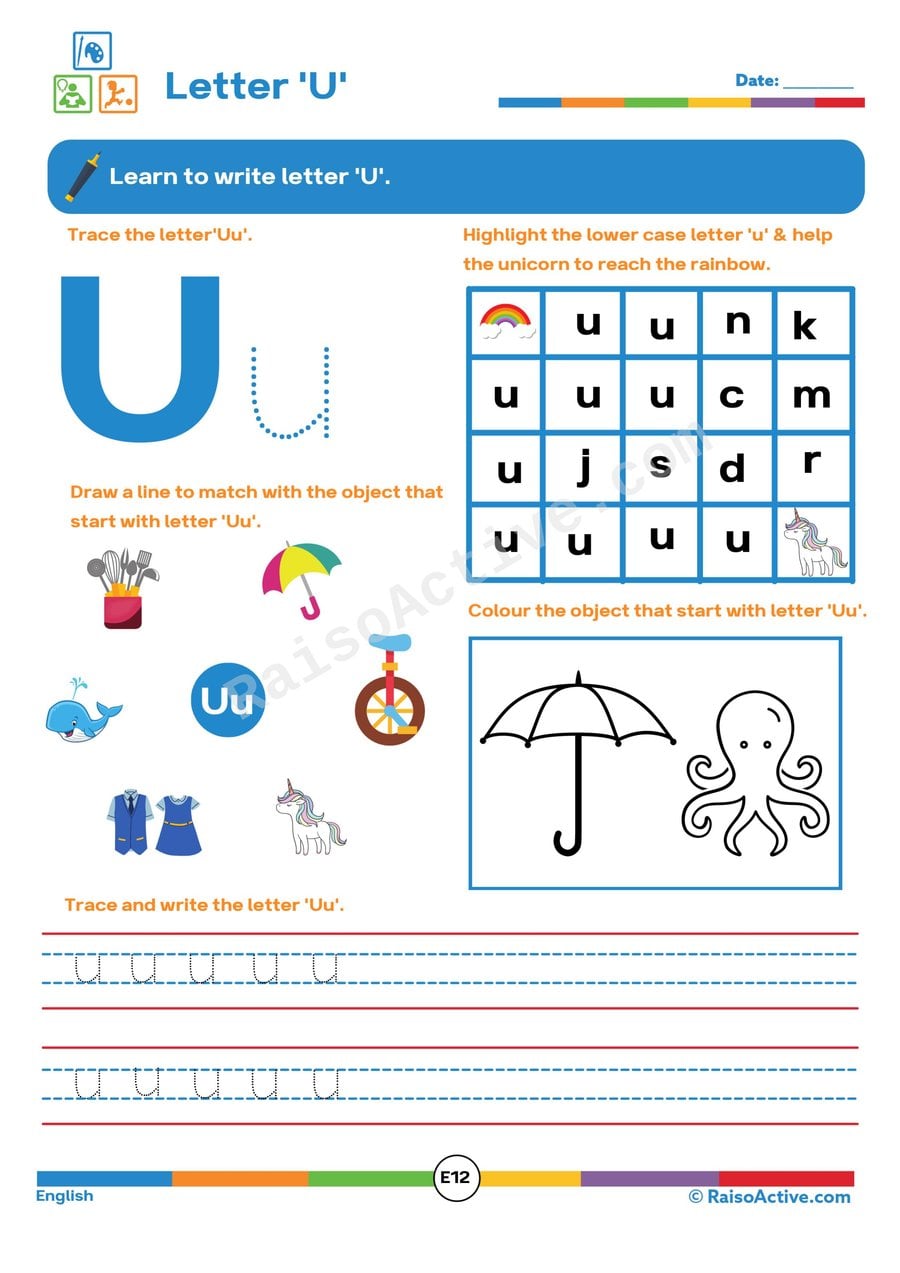
Tracing, matching, and coloring the letter 'U' gives children ages 3-5 focused repetition on a rounded letter shape while building the sound-symbol connection for its short /u/ sound, as in 'umbrella' or 'up.' Matching pictures that start with 'U' to the letter reinforces recognition beyond the written form, tying it to real, familiar objects. Combining tracing, matching, and coloring in a single page suits a preschooler's need for varied, short activities rather than one long repetitive drill.

What Do You Like? Conversation Worksheet for Kids
Ages 3-5 · Preschool–Pre-KAges 3-5 · Nursery–ReceptionAges 3-5 · Nursery–LKGAges 3-5
Ages 3-5 are learning to move from single words to full thoughts, and this 'What Do You Like?' worksheet gives them structured practice putting a preference into words. Looking at a picture prompt and answering 'I like...' builds expressive vocabulary and the confidence to speak up in a group, both key pre-literacy and social-emotional milestones at this age. It also introduces the back-and-forth rhythm of real conversation rather than just naming objects.

Pollution Awareness Worksheet for Kids: Circle the Correct Answer!
Ages 4-6 · Pre-K–KindergartenAges 4-6 · Reception–Year 1Ages 4-6 · LKG–UKGAges 4-6
This worksheet introduces children ages 4-6 to the idea that pollution comes in different forms — air, water, and land — and asks them to connect each type to a picture, building early environmental science vocabulary alongside visual reasoning. Sorting items into recycling categories afterward extends the lesson from simply naming a problem to practicing a real-world solution, which helps young children start to see themselves as capable of taking action. This blend of identification and hands-on sorting suits a preschooler's concrete way of understanding abstract ideas like 'the environment.'
Related worksheets

Letter Dd Tracing and Matching Worksheet for Preschoolers
Ages 3-5 · Preschool–Pre-KAges 3-5 · Nursery–ReceptionAges 3-5 · Nursery–LKGAges 3-5
Children ages 3-5 practice writing the letter Dd through guided tracing, then apply that recognition by finding Dd hidden in a letter grid and identifying pictures that start with the sound. Moving from writing the letter to spotting it among other letters, and then to hearing it at the start of real words, builds a well-rounded, multi-sense understanding of the letter D.

Letter E Tracing Worksheet for Preschoolers: Learn to Write!
Ages 3-5 · Preschool–Pre-KAges 3-5 · Nursery–ReceptionAges 3-5 · Nursery–LKGAges 3-5
Children ages 3-5 use this worksheet to build the specific motor pattern for capital E — three horizontal strokes branching off one vertical line — while reinforcing the /e/ sound through picture recognition. Repeated tracing in a dashed-box format also trains children to keep letters a consistent size, an important pre-writing skill before they move to unlined paper.
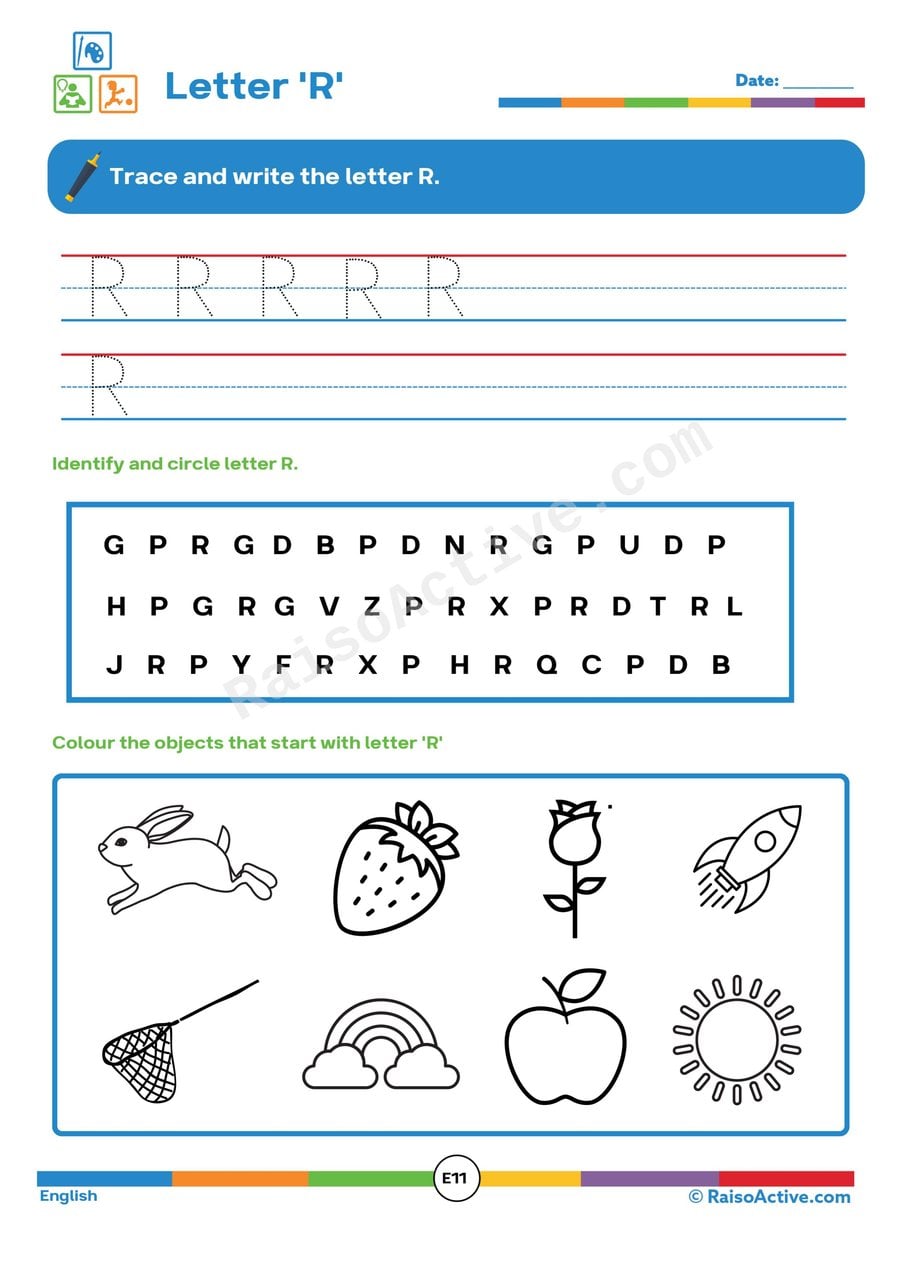
Letter R Worksheet: Trace, Identify, and Color!
Ages 4-5 · Pre-KAges 4-5 · ReceptionAges 4-5 · LKGAges 4-5
This worksheet helps children ages 4-5 practice tracing and writing the letter R, spotting it among a group of other letters, and recognizing objects that begin with the R sound. Working across three related tasks for one letter, tracing, searching, and identifying pictures, gives repeated exposure that helps the letter shape and sound become automatic.
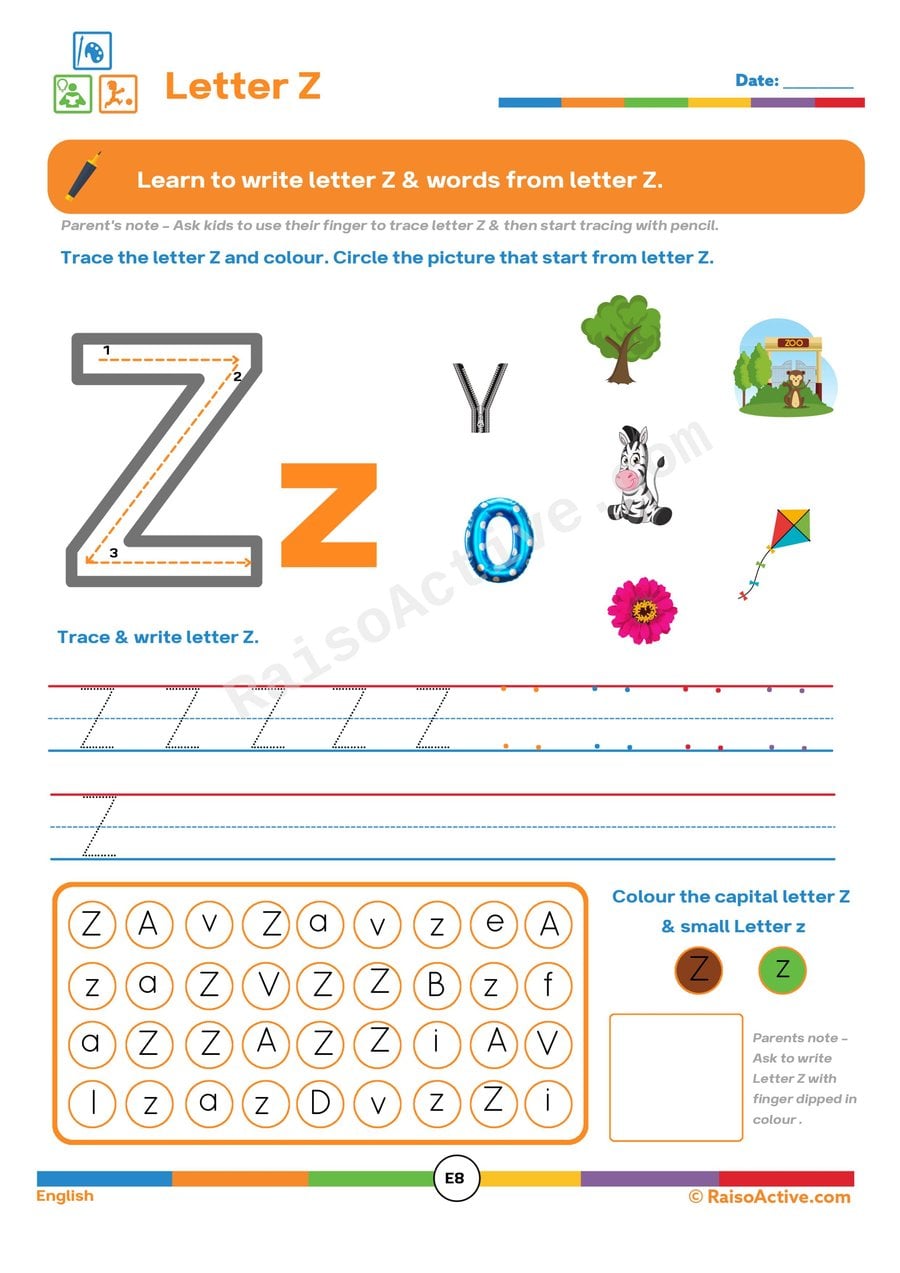
Letter Z Worksheet: Trace, Write, and Color!
Ages 3-5 · Preschool–Pre-KAges 3-5 · Nursery–ReceptionAges 3-5 · Nursery–LKGAges 3-5
This worksheet helps children ages 3-5 learn to recognize and write the letter Z, both uppercase and lowercase, completing their practice of the full alphabet with one of its most visually distinct letters. Tracing Z's sharp diagonal stroke also gives practice with a different kind of pencil movement than the curves and loops used in many other letters.

Letter V Tracing and Coloring Worksheet for Preschoolers
Ages 3-5 · Preschool–Pre-KAges 3-5 · Nursery–ReceptionAges 3-5 · Nursery–LKGAges 3-5
This worksheet builds recognition and formation of the letter V, both uppercase and lowercase, while practicing fine motor skills through tracing and coloring pictures of V words like 'van' or 'volcano.' For three- to five-year-olds, practicing both letter cases together helps children see that uppercase and lowercase V share the same basic shape, which isn't true of every letter and makes V a good confidence-builder.
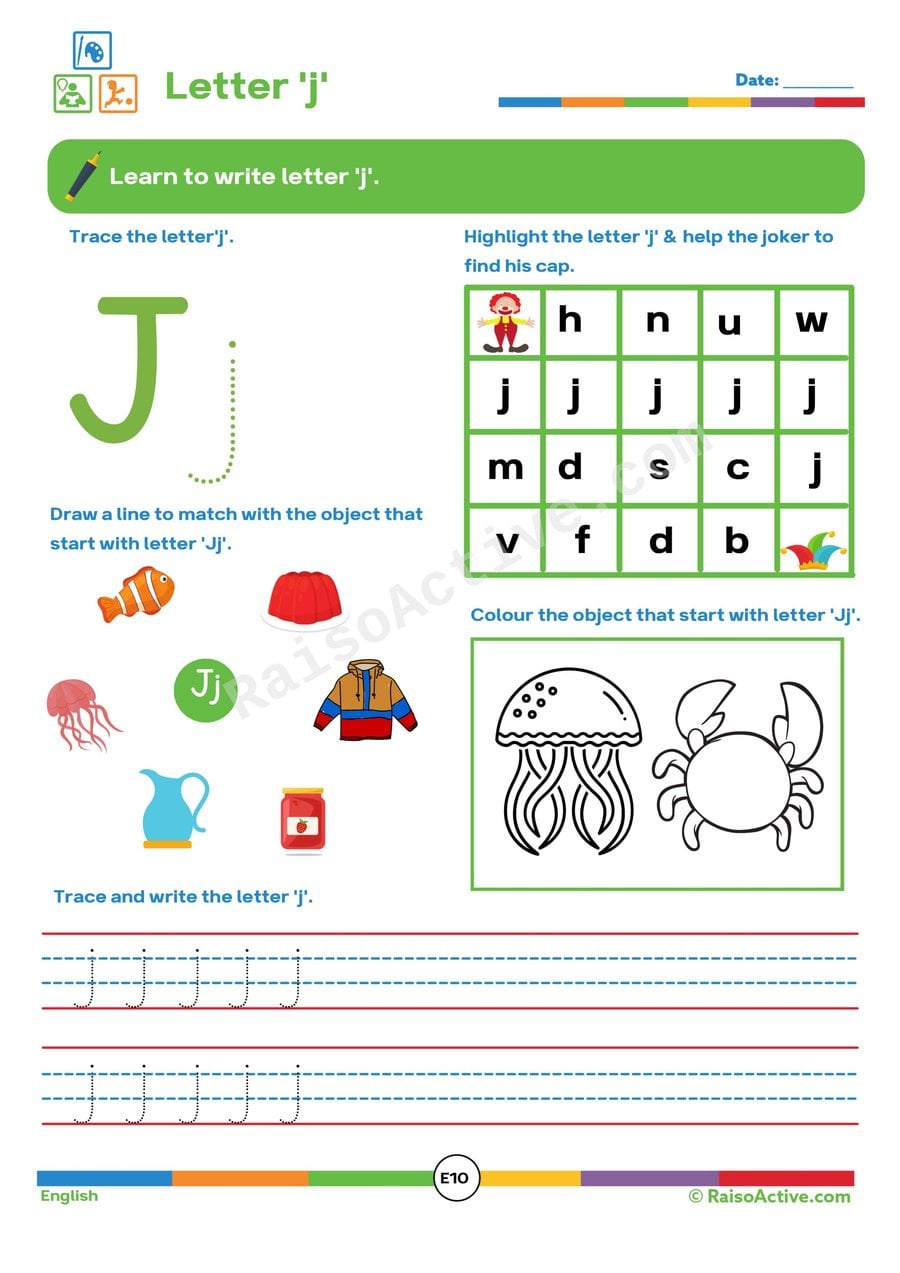
Letter 'j' Worksheet: Trace, Match, and Color!
Ages 3-5 · Preschool–Pre-KAges 3-5 · Nursery–ReceptionAges 3-5 · Nursery–LKGAges 3-5
Tracing the letter 'j' builds the fine motor control and stroke memory children ages 3-5 need for handwriting, while matching it to objects that start with the same sound connects the written letter to its spoken sound. Highlighting and coloring add extra practice recognizing the letter's shape among other letters and pictures.

Learn the Letter 'L': Tracing, Matching, and Coloring Worksheet for Preschoolers
Ages 3-5 · Preschool–Pre-KAges 3-5 · Nursery–ReceptionAges 3-5 · Nursery–LKGAges 3-5
This worksheet builds letter 'L' recognition through tracing, matching, a themed maze that highlights the letter while guiding a lion to its meat, and coloring — a four-part structure that keeps 3-5 year olds engaged across several formats while reinforcing the same letter each time. The maze section in particular adds a playful goal to what would otherwise be repetitive letter-spotting, motivating your child to scan carefully for every 'L' along the path.
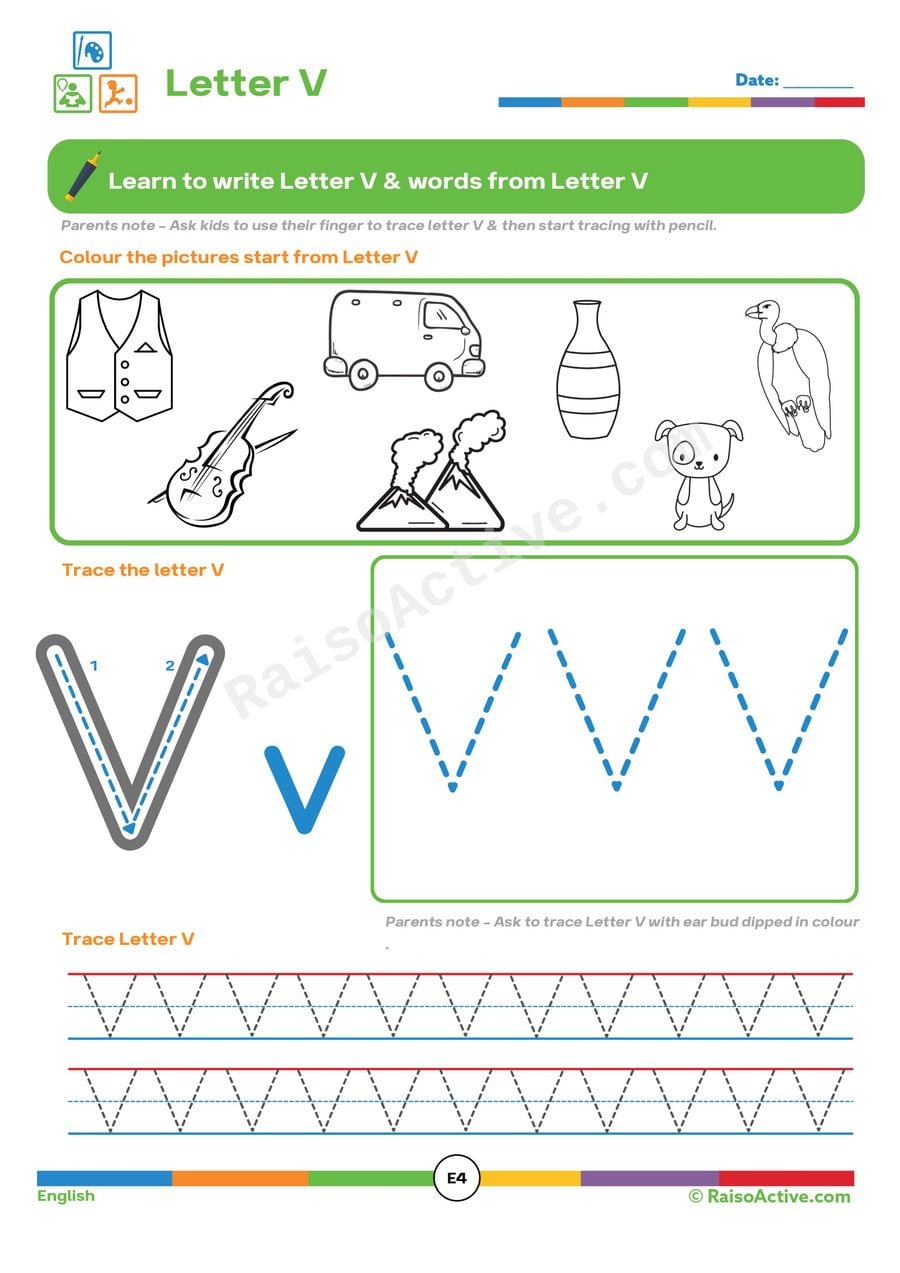
Trace the Letter V Worksheet for Preschoolers
Ages 3-5 · Preschool–Pre-KAges 3-5 · Nursery–ReceptionAges 3-5 · Nursery–LKGAges 3-5
Tracing the uppercase letter V builds the pencil control and stroke memory children ages 3-5 need for handwriting, while coloring pictures that start with V links the written letter to its spoken sound and familiar objects. Repeating the tracing after the picture activity gives extra practice forming the letter correctly.
Guides for this topic

Best Worksheets for 3-Year-Olds: What Works and What to Avoid
What works on worksheets for 3-year-olds: short sessions, crayons, tracing lines, matching, cutting, a free weekly plan, and signs one is too advanced.
Documenting Learning Without Drowning in Data: A Practical Guide for Parents and Teachers
Learn practical ways to document your child's learning without overwhelm. Simple portfolios, observation tips, and printable trackers for ages 1-8.
Fostering Creativity in Structured Learning: The Perfect Balance for Young Minds
Learn how to blend creativity with structured learning for children ages 1-8. Practical strategies, activities, and printable worksheets for parents and teachers.
Reviews
Every worksheet for ages 3–5, no watermark
Members download the full library of 1,000+ worksheets and every activity pack without watermarks or daily limits. One year costs ₹999 in India or $20 elsewhere.
See membership plansOr download any worksheet free with a watermark (5 a day).