Letter 'j' Worksheet: Trace, Match, and Color!
Tracing the letter 'j' builds the fine motor control and stroke memory children ages 3-5 need for handwriting, while matching it to objects that start with the same sound connects the written letter to its spoken sound. Highlighting and coloring add extra practice recognizing the letter's shape among other letters and pictures.
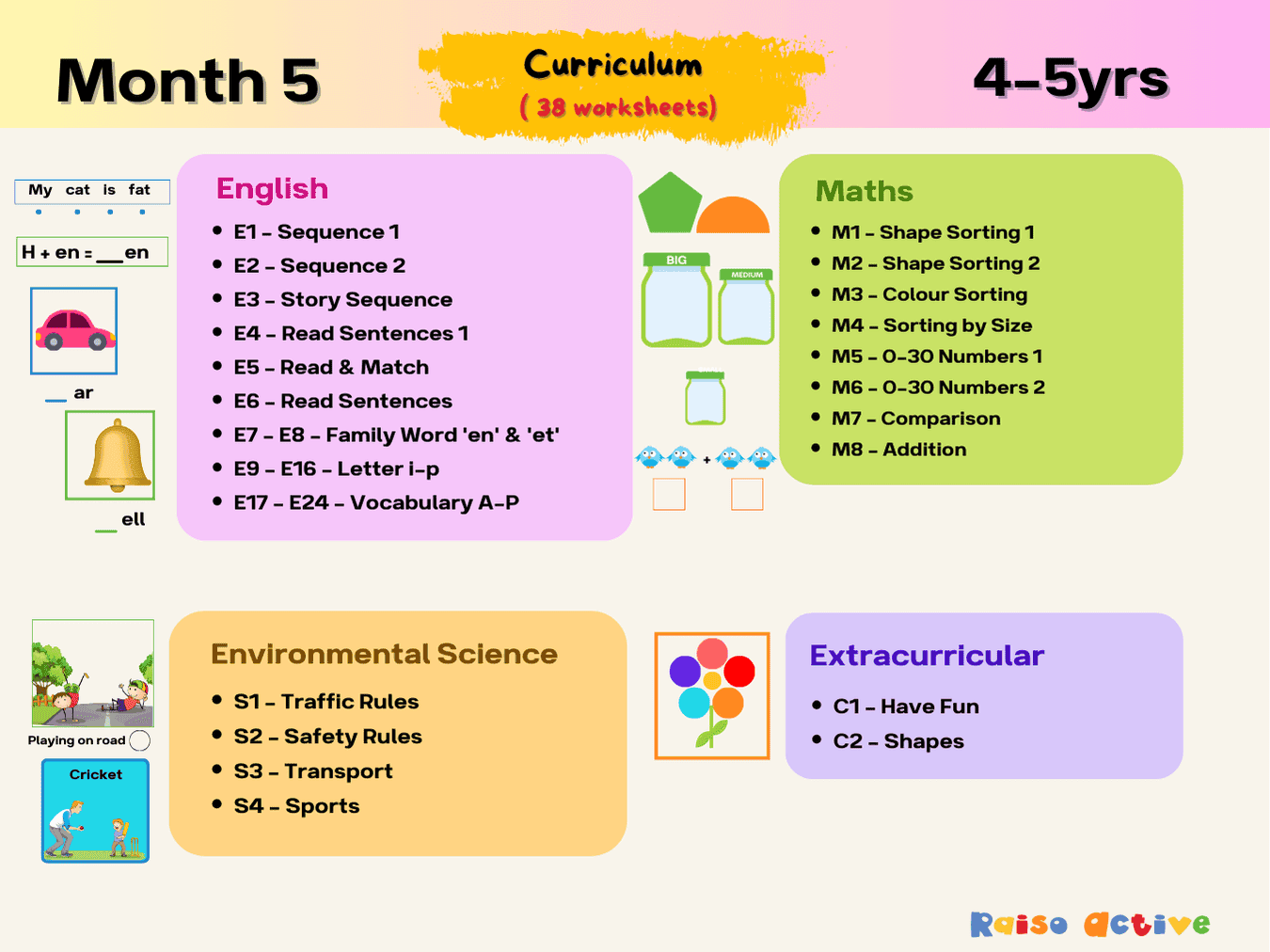
Part of the pack
Month 5: Literacy, Math, Environmental Science | Ages 4-5
This is page 13 of the pack. Ages 4-5 · Pre-KAges 4-5 · ReceptionAges 4-5 · LKGAges 4-5
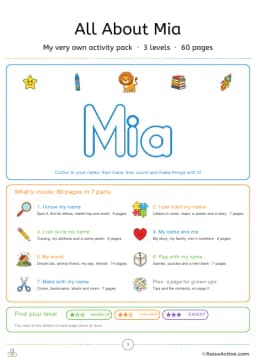
Made for your child
A whole activity pack made with their name
60 pages to spot, build, trace and write their own name, plus pages about their favourites, feelings and family. See a free preview with their name.
Make an All About Me packFree preview · free for members
Or start free: a name tracing sheet with their nameCurriculum
- Writing > Letter Tracing A-Z
How to use this worksheet
Have your child trace the letter 'j' along the dotted lines first, saying the /j/ sound as they go. Next, ask them to draw a line matching the letter 'j' to the objects on the page that start with that sound. Then have them find and highlight every 'j' hidden in the letter grid, and finish by coloring the objects that start with 'j'.
Materials needed
- Pencil
- Crayons
Extension activities
- 1Search the house together for objects that start with the letter 'j', like jam or a jacket.
- 2Practice forming the letter 'j' in a tray of sand or with rolled playdough ropes.
- 3Write the letter 'j' in bubble form and let your child decorate it.
- 4Read a short book featuring a character or object starting with 'j'.
- 5Play an 'I spy' game looking for things that start with the /j/ sound around the room.

Written by
Hemsweta Jain · Teacher Cheena
MBA and Early Childhood Educator, teaching since 2014 · Founder of RaisoActive, Mumbai
Every RaisoActive worksheet is designed and checked by the founder before publishing.
Published · Last reviewed
More from Month 5: Literacy, Math, Environmental Science | Ages 4-5

First Letter Fun: Identify and Write! Vocabulary Worksheet
Ages 3-5 · Preschool–Pre-KAges 3-5 · Nursery–ReceptionAges 3-5 · Nursery–LKGAges 3-5
Naming a pictured object aloud and writing just its first letter asks children ages 3-5 to isolate the very beginning sound of a word and translate that sound into a written symbol, a core early phonics skill that predicts reading readiness. Unlike simple letter tracing, this worksheet requires children to generate the correct letter from memory based on sound alone, which is a meaningfully harder and more independent task. Practicing this across several different pictures builds both vocabulary and the sound-to-letter link needed for early spelling.

First Letter Fun: Identify and Write the Beginning Sounds Worksheet
Ages 4-5 · Pre-KAges 4-5 · ReceptionAges 4-5 · LKGAges 4-5
Naming each pictured object and writing its first letter helps children ages 4-5 practice phonemic awareness, the skill of isolating the very first sound in a word, which is a key building block for spelling and early reading. This worksheet turns that listening skill into a writing task, reinforcing the connection between a spoken sound and its written letter.

Learn the Letter 'L': Tracing, Matching, and Coloring Worksheet for Preschoolers
Ages 3-5 · Preschool–Pre-KAges 3-5 · Nursery–ReceptionAges 3-5 · Nursery–LKGAges 3-5
This worksheet builds letter 'L' recognition through tracing, matching, a themed maze that highlights the letter while guiding a lion to its meat, and coloring — a four-part structure that keeps 3-5 year olds engaged across several formats while reinforcing the same letter each time. The maze section in particular adds a playful goal to what would otherwise be repetitive letter-spotting, motivating your child to scan carefully for every 'L' along the path.

Beehive Number Fun: Missing Numbers 0-30 Worksheet
Ages 4-6 · Pre-K–KindergartenAges 4-6 · Reception–Year 1Ages 4-6 · LKG–UKGAges 4-6
Filling in missing numbers along a beehive path gives 4-6 year olds practice with the full 0-30 number sequence, a meaningful stretch beyond the more common 1-10 or 1-20 ranges seen in earlier counting worksheets. Because the missing numbers are scattered rather than all at the end, your child has to actually understand what number comes next at multiple points in the sequence, rather than simply continuing a count from a known starting point.

Learn the Letter 'm' Worksheet: Tracing, Matching, and Coloring Fun!
Ages 3-5 · Preschool–Pre-KAges 3-5 · Nursery–ReceptionAges 3-5 · Nursery–LKGAges 3-5
This worksheet builds letter 'm' recognition through four connected tasks — tracing its shape, matching pictures that start with the Mm sound, navigating a highlight maze to help an Eskimo find an igloo, and coloring 'm' objects — which together reinforce the letter through touch, sight, and sound rather than a single repetitive drill. Multi-step worksheets like this also build a young child's ability to follow a sequence of instructions across an activity, which is its own developmental skill at ages 3-5.

Comparing Objects: A Fun Counting Worksheet for Preschoolers!
Ages 4-5 · Pre-KAges 4-5 · ReceptionAges 4-5 · LKGAges 4-5
This worksheet has 4-5 year olds count two groups of objects and then compare the totals using the greater-than, less-than, and equal-to symbols — an early but genuine step into formal math notation that goes beyond simple counting into representing a comparison symbolically. Because your child has to count accurately before comparing, this worksheet also reinforces that math symbols stand for real relationships between quantities, not arbitrary marks to memorize.

Sequence the Pictures: Ordering Activities Worksheet for Kids
Ages 3-5 · Preschool–Pre-KAges 3-5 · Nursery–ReceptionAges 3-5 · Nursery–LKGAges 3-5
This worksheet builds logical sequencing skills for 3-5 year olds by having them study a set of three pictures showing an event unfolding and decide which order makes sense — planting a seed before it grows, for example, rather than after. Writing the numbers 1, 2, and 3 under each picture forces your child to commit to a specific reasoning about cause and effect, which is a meaningfully different task than simply describing what's happening in each picture.

Transport Sorting Worksheet for Preschoolers
Ages 3-5 · Preschool–Pre-KAges 3-5 · Nursery–ReceptionAges 3-5 · Nursery–LKGAges 3-5
Sorting vehicle pictures into air, road, water, and rail categories teaches children ages 3-5 to classify modes of transportation based on where they travel, building both vocabulary and early categorization reasoning. Cutting and pasting each vehicle into its category also strengthens fine motor precision alongside the sorting task.
Related worksheets

Letter C Tracing and Coloring Worksheet for Preschoolers
Ages 3-5 · Preschool–Pre-KAges 3-5 · Nursery–ReceptionAges 3-5 · Nursery–LKGAges 3-5
This worksheet builds handwriting readiness by having children trace the letter C multiple times, while the coloring and picture-matching elements connect the letter's shape to its sound through familiar C words. For ages 3-5, repeating the same letter across tracing and picture activities on one page reinforces recognition from multiple angles in a single sitting.
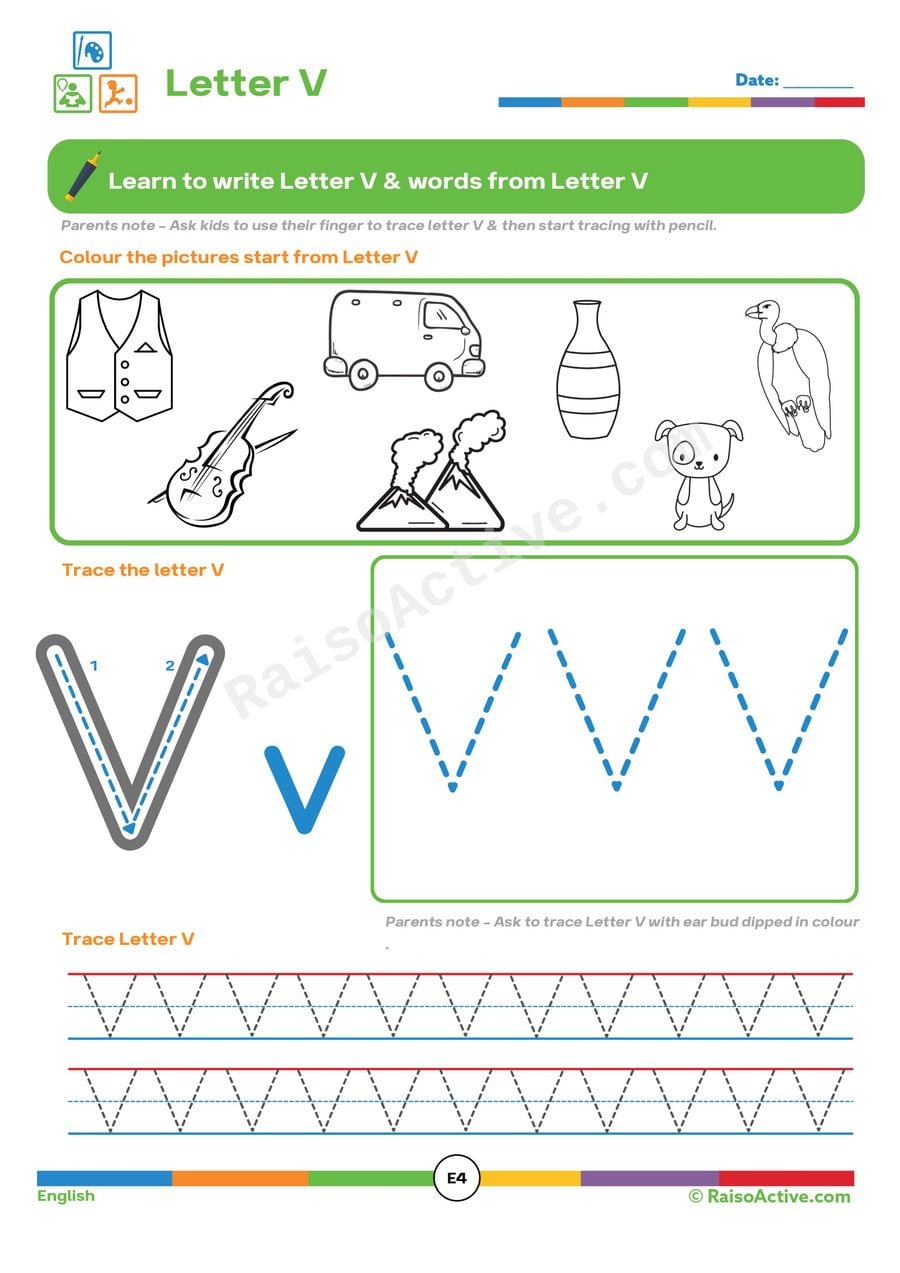
Trace the Letter V Worksheet for Preschoolers
Ages 3-5 · Preschool–Pre-KAges 3-5 · Nursery–ReceptionAges 3-5 · Nursery–LKGAges 3-5
Tracing the uppercase letter V builds the pencil control and stroke memory children ages 3-5 need for handwriting, while coloring pictures that start with V links the written letter to its spoken sound and familiar objects. Repeating the tracing after the picture activity gives extra practice forming the letter correctly.

Letter Y Tracing and Recognition Worksheet for Preschoolers
Ages 3-5 · Preschool–Pre-KAges 3-5 · Nursery–ReceptionAges 3-5 · Nursery–LKGAges 3-5
This worksheet builds recognition and formation of the letter Y through guided tracing practice and by identifying pictures of words that start with Y, like 'yarn' or 'yo-yo.' For three- to five-year-olds, tracing first with a finger and then with a pencil builds the motor memory needed before a child can form the letter confidently on their own.

Trace the Letter T Worksheet: Practice Writing & Coloring Fun!
Ages 3-5 · Preschool–Pre-KAges 3-5 · Nursery–ReceptionAges 3-5 · Nursery–LKGAges 3-5
This worksheet builds recognition and formation of the letter T through guided tracing and by identifying pictures of words that start with T, like 'tiger' or 'turtle.' For three- to five-year-olds, the letter T's simple cross-shaped stroke — one straight line down, one straight line across — makes it a good letter for practicing controlled, confident pencil strokes.

Letter V Tracing and Coloring Worksheet for Preschoolers
Ages 3-5 · Preschool–Pre-KAges 3-5 · Nursery–ReceptionAges 3-5 · Nursery–LKGAges 3-5
This worksheet builds recognition and formation of the letter V, both uppercase and lowercase, while practicing fine motor skills through tracing and coloring pictures of V words like 'van' or 'volcano.' For three- to five-year-olds, practicing both letter cases together helps children see that uppercase and lowercase V share the same basic shape, which isn't true of every letter and makes V a good confidence-builder.

Learn the Letter 'x' Worksheet: Tracing, Matching, and Coloring Fun!
Ages 4-5 · Pre-KAges 4-5 · ReceptionAges 4-5 · LKGAges 4-5
This worksheet builds recognition of the less common letter x through tracing both uppercase and lowercase forms, then reinforces that recognition through matching pictures and highlighting the letter within a grid. For ages 4-5, letter x is genuinely rare at the start of everyday words, so this worksheet leans on strong examples like 'x-ray' to build familiarity despite limited real-world exposure.
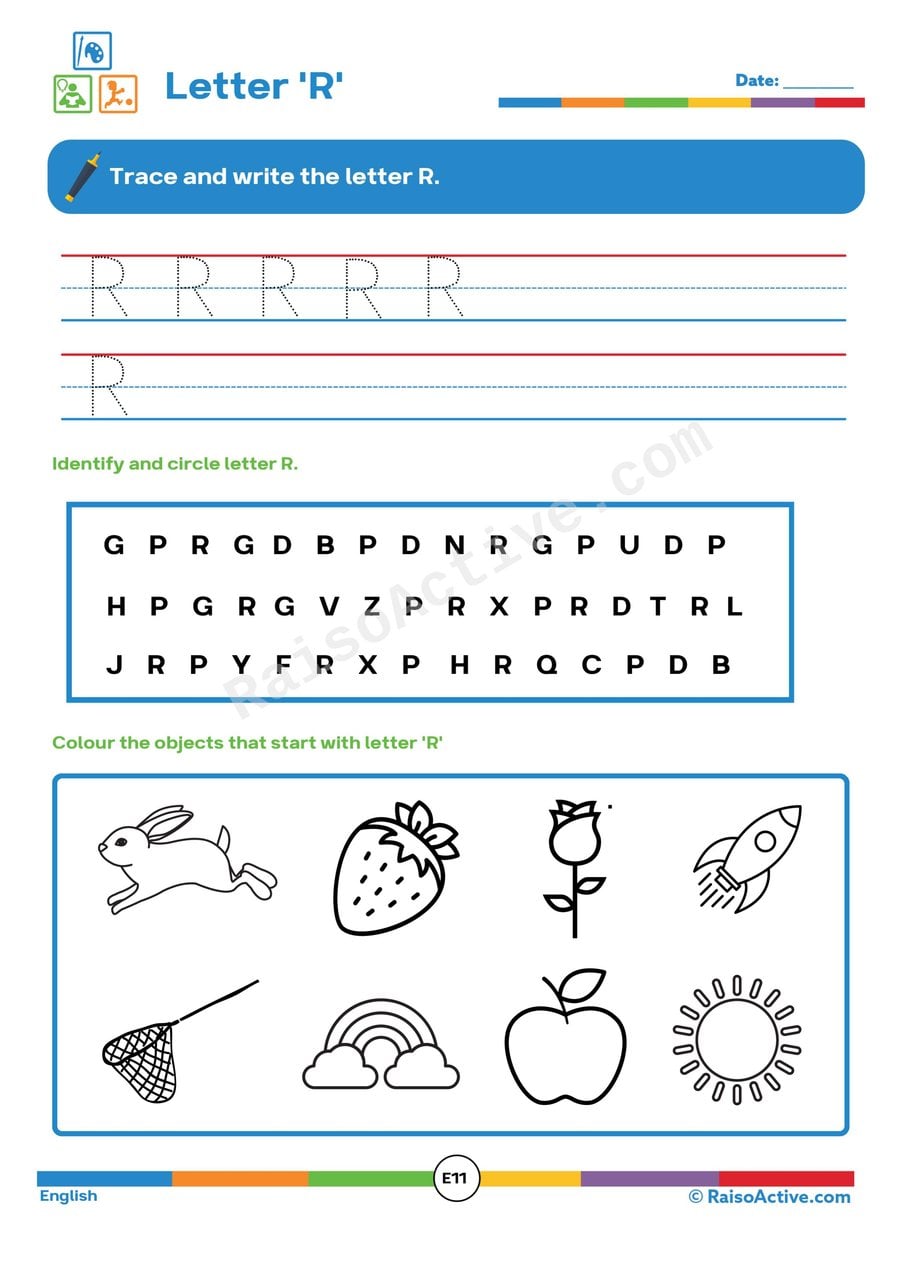
Letter R Worksheet: Trace, Identify, and Color!
Ages 4-5 · Pre-KAges 4-5 · ReceptionAges 4-5 · LKGAges 4-5
This worksheet helps children ages 4-5 practice tracing and writing the letter R, spotting it among a group of other letters, and recognizing objects that begin with the R sound. Working across three related tasks for one letter, tracing, searching, and identifying pictures, gives repeated exposure that helps the letter shape and sound become automatic.
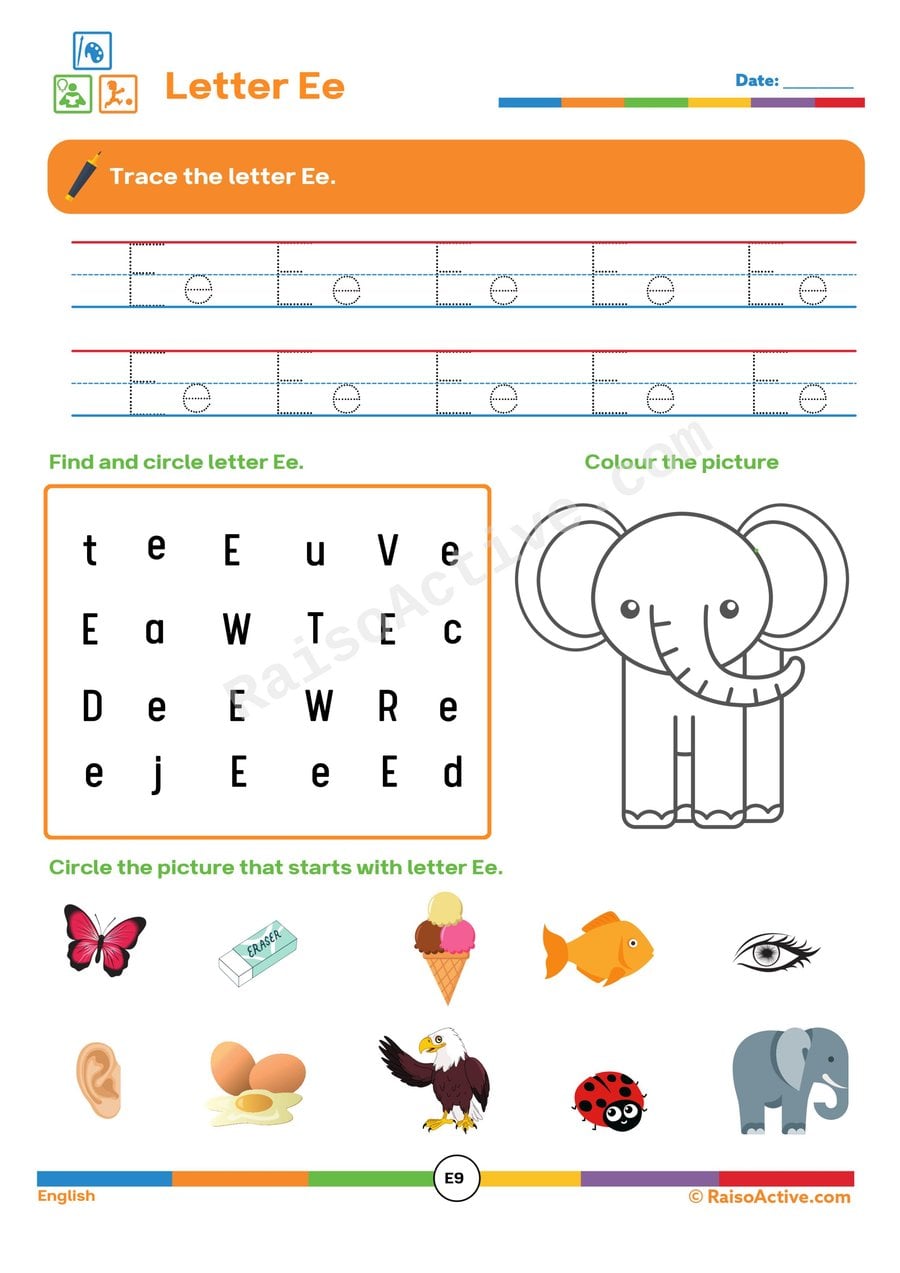
Letter Ee Worksheet: Trace, Find, and Color!
Ages 3-5 · Preschool–Pre-KAges 3-5 · Nursery–ReceptionAges 3-5 · Nursery–LKGAges 3-5
This worksheet gives children ages 3-5 layered practice with the letter Ee — tracing it, finding it inside a word search grid, and identifying an elephant along with other pictures that start with the same sound. Repeating the letter across a tracing task, a visual search, and a picture-matching task in one sitting builds stronger, faster recognition than any single activity could alone.
Guides for this topic

Best Worksheets for 3-Year-Olds: What Works and What to Avoid
What works on worksheets for 3-year-olds: short sessions, crayons, tracing lines, matching, cutting, a free weekly plan, and signs one is too advanced.
Documenting Learning Without Drowning in Data: A Practical Guide for Parents and Teachers
Learn practical ways to document your child's learning without overwhelm. Simple portfolios, observation tips, and printable trackers for ages 1-8.
Fostering Creativity in Structured Learning: The Perfect Balance for Young Minds
Learn how to blend creativity with structured learning for children ages 1-8. Practical strategies, activities, and printable worksheets for parents and teachers.
Reviews
Every worksheet for ages 3–5, no watermark
Members download the full library of 1,000+ worksheets and every activity pack without watermarks or daily limits. One year costs ₹999 in India or $20 elsewhere.
See membership plansOr download any worksheet free with a watermark (5 a day).