Free printable worksheets · United States
Preschool Alphabet Worksheets (Ages 3–4)
Preschool alphabet worksheets are practice sheets for children aged 3–4 in Preschool in the US. Alphabet worksheets build recognition of the 26 letters, their names and order, and the difference between uppercase and lowercase forms. The sheets on this page cover letter recognition A–Z, letter names versus letter sounds, sequencing letters in order and matching uppercase to lowercase.
Preschool builds readiness rather than academics: pre-writing strokes, uppercase letter recognition, counting objects to ten, naming shapes and colors, and cutting along a line, all introduced through short table activities inside a mostly play-based day. Grip is still forming, so most activities favor a thick crayon over a standard pencil. Three-year-olds build a small working set of letters, usually starting with the ones in their name and reaching eight to ten capitals by the end of the year. A worksheet should ask the child to find a named letter among two or three lookalikes, circle every instance of one letter on a busy page, and say the first few letters of the alphabet in order. Full A-to-Z sequencing, lowercase forms, and matching letters to sounds belong to the year after.
1051+ worksheets · free PDF download · print on A4 or Letter
Preschool Alphabet Worksheets to print
Browse all worksheets for ages 3–4
Clothing Pattern Match Worksheet for Preschoolers
This worksheet has children ages 3-5 study repeating patterns on clothing items — stripes, polka dots, or checks — and match each item to its identical twin, building visual discrimination and early pattern-sequencing skills. Distinguishing between similar-looking patterns also sharpens attention to detail, a skill that later supports letter and word recognition.
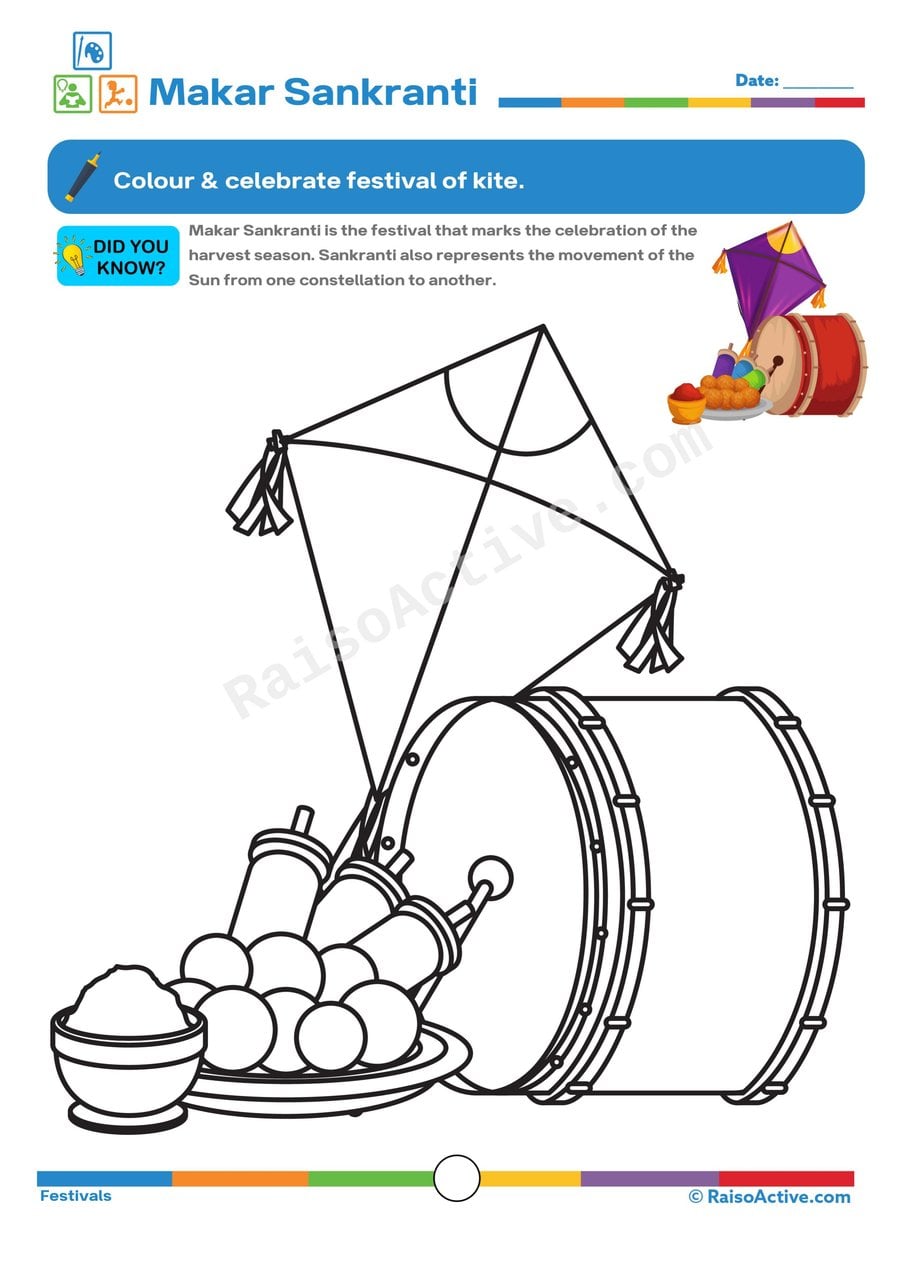
Makar Sankranti Coloring Worksheet for Kids
Coloring the kites, drums, and festive scenes on this Makar Sankranti worksheet gives children ages 3-5 practice with crayon grip and staying within outlines, while introducing them to one of India's major harvest festivals. As they color, they begin to associate specific symbols, like kites and sesame sweets, with the celebration, building early cultural awareness alongside fine motor control.

Learn the Sight Word 'Has' - Fun Tracing and Matching Worksheet!
'Has' is a high-frequency verb that children ages 3-5 encounter constantly in early sentences describing possession, like 'the dog has a bone,' making it an important addition to their sight word vocabulary. This worksheet builds recognition of the word through coloring, tracing, word searching, and sentence completion, giving repeated exposure across formats that reinforces memory more effectively than a single repetition. Practicing 'has' inside complete sentences also helps children understand its grammatical role, connecting a subject to something it possesses.

Weather Color by Number Worksheet for Preschoolers
This color-by-number activity has children ages 3-5 practice matching numerals to a color key while completing a weather-themed picture, combining number recognition with color recognition and the fine motor control needed for careful, contained coloring. Because each numbered section must be colored correctly for the picture to look right, children get immediate visual feedback on whether their number identification was accurate. The weather theme also gives a natural opportunity to talk about the picture's subject once it's revealed.

Trace and Write the Letter I Worksheet for Preschoolers
This worksheet has children ages 3-5 trace the uppercase letter I, one of the simplest letters in the alphabet consisting of a single straight vertical line, making it a good confidence-building exercise alongside more complex letters. Because I is also a complete word on its own, when written as a personal pronoun, this worksheet quietly introduces the idea that a single letter can sometimes stand alone as a word. The page reinforces the short /i/ sound in words like 'igloo' and 'insect.'
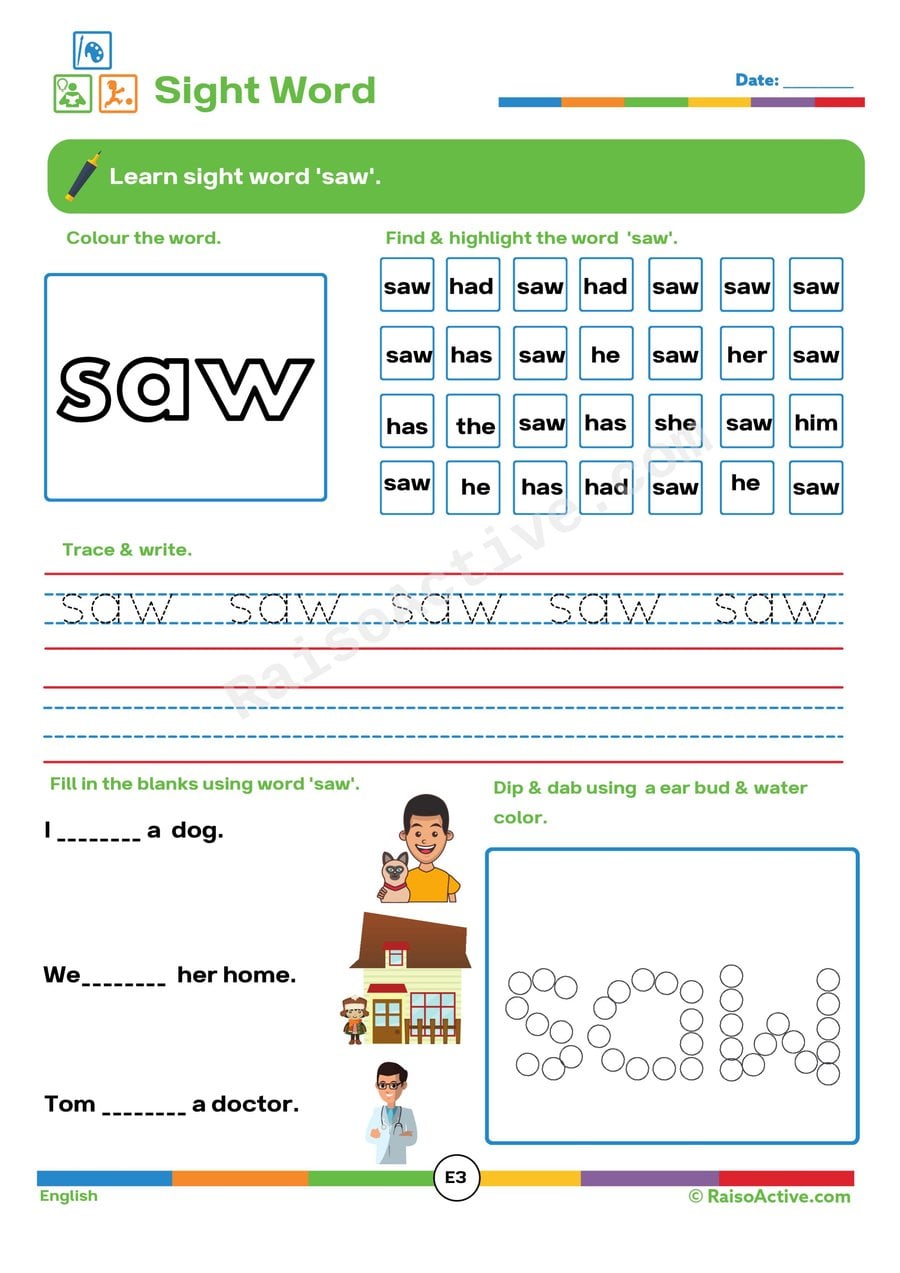
Sight Word 'Saw' Worksheet: Trace, Find, and Color!
The word 'saw' is another high-frequency sight word that doesn't follow standard phonics patterns, so children ages 3-5 need this kind of layered, multi-format practice — coloring, tracing, searching, and sentence completion — to build automatic recognition. Repeated exposure to the same word through different activities strengthens the visual memory needed for instant sight-word recall, which is essential since sight words make up a large percentage of the words in early beginner books. The variety of formats here also keeps a young child's attention across a longer practice session than a single repetitive task would.

Summer Shadow Match Worksheet for Preschoolers
This worksheet sharpens visual discrimination for children ages 3-5 as they match summer activity pictures — like swimming or eating ice cream — to their correct black silhouette shadow. Training the eye to recognize a shape by its outline alone, without color or detail, is a subtle but important pre-reading skill related to letter and word recognition.

Balloon Pattern Matching Worksheet for Preschoolers
This worksheet strengthens pattern recognition in children ages 3-5 by having them study a repeating sequence of colored balloons and locate the matching arrangement elsewhere on the page. Recognizing and reproducing a pattern is an early pre-algebra skill, laying groundwork for later number patterns and logical sequencing.
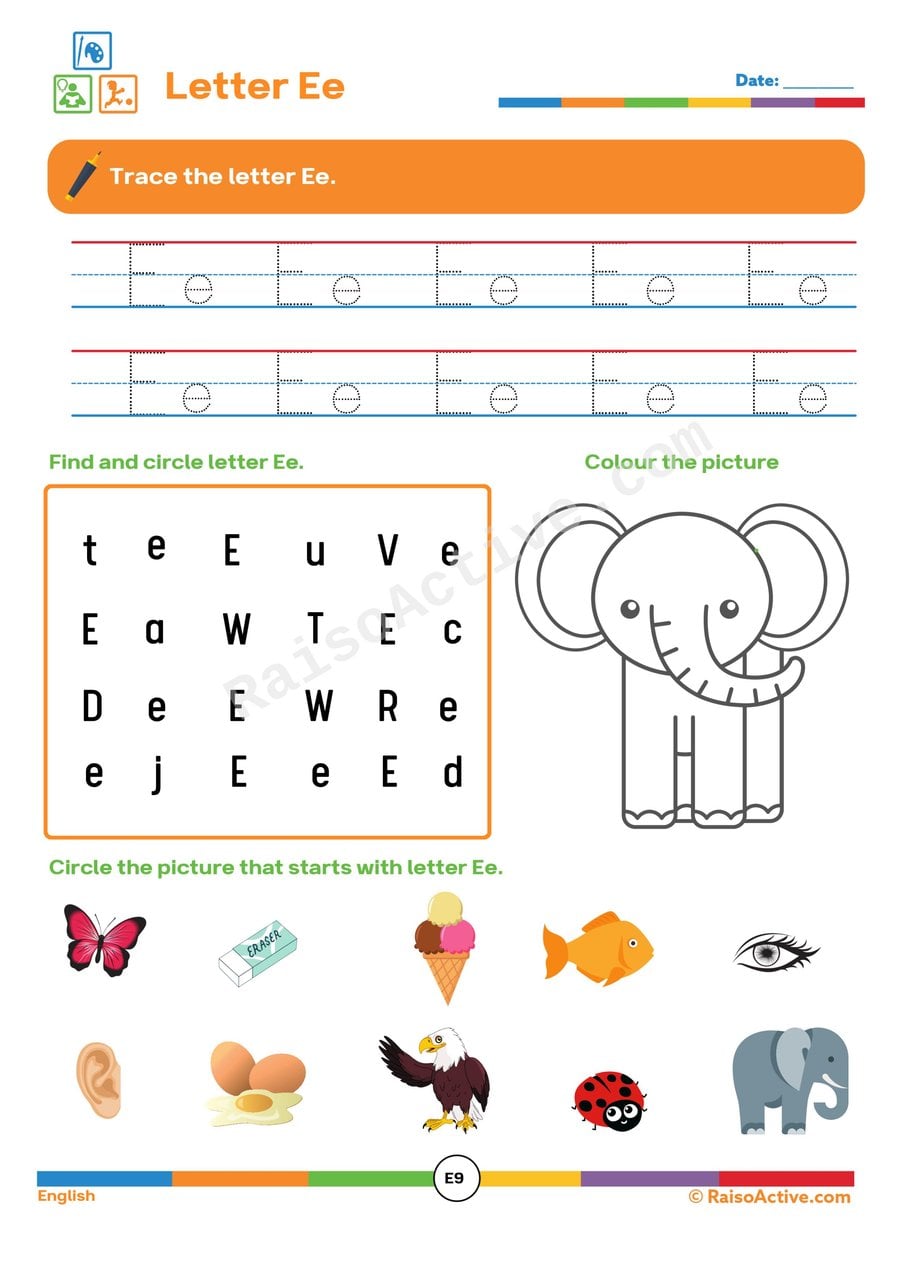
Letter Ee Worksheet: Trace, Find, and Color!
This worksheet gives children ages 3-5 layered practice with the letter Ee — tracing it, finding it inside a word search grid, and identifying an elephant along with other pictures that start with the same sound. Repeating the letter across a tracing task, a visual search, and a picture-matching task in one sitting builds stronger, faster recognition than any single activity could alone.
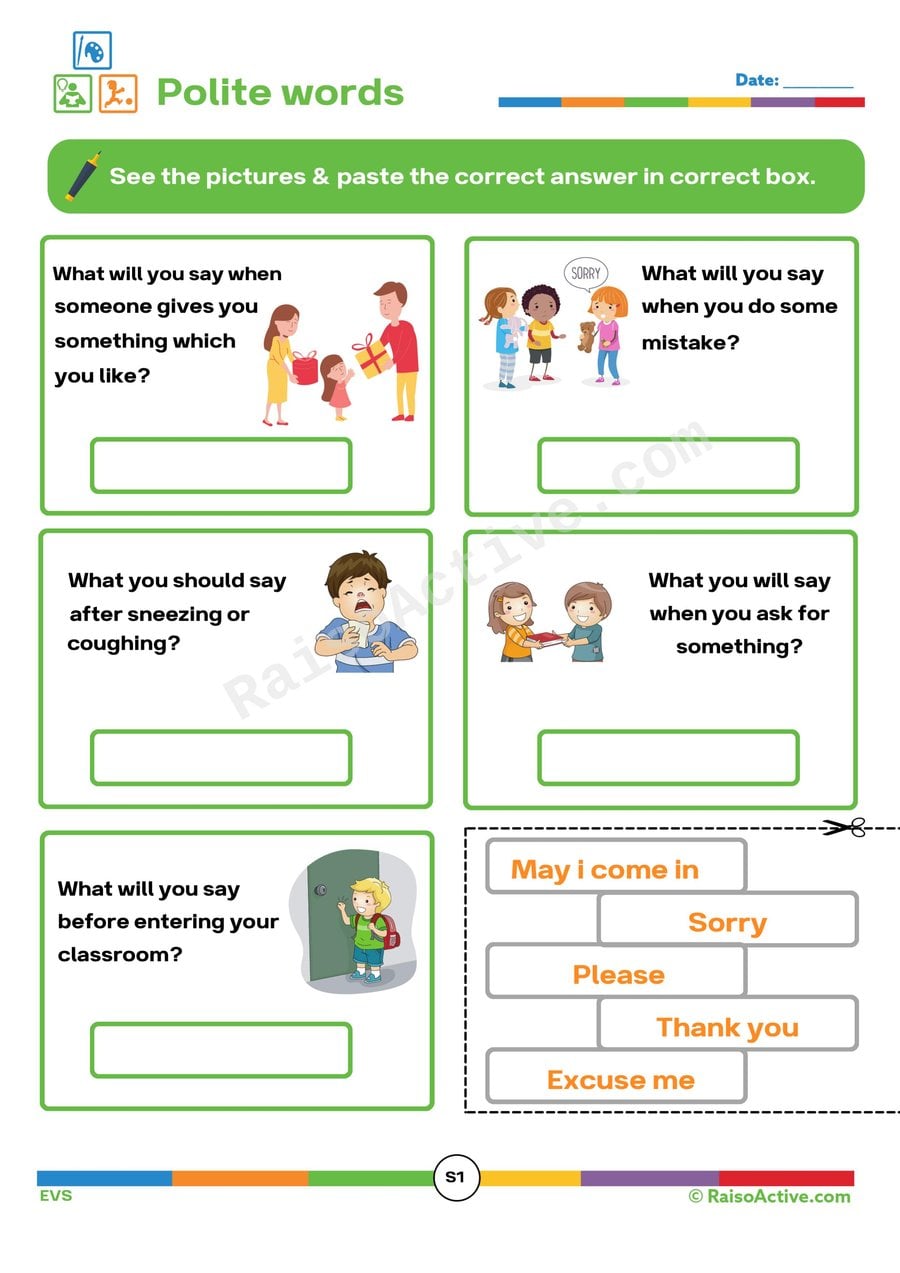
Polite Words Worksheet: Matching and Application
Matching pictures and scenarios to the right polite word teaches children ages 3-5 when and why to use phrases like please, thank you, sorry, and excuse me, building the pragmatic language skills needed for real social interactions. This kind of practice helps young children connect a word not just to its meaning but to the specific situation that calls for it.
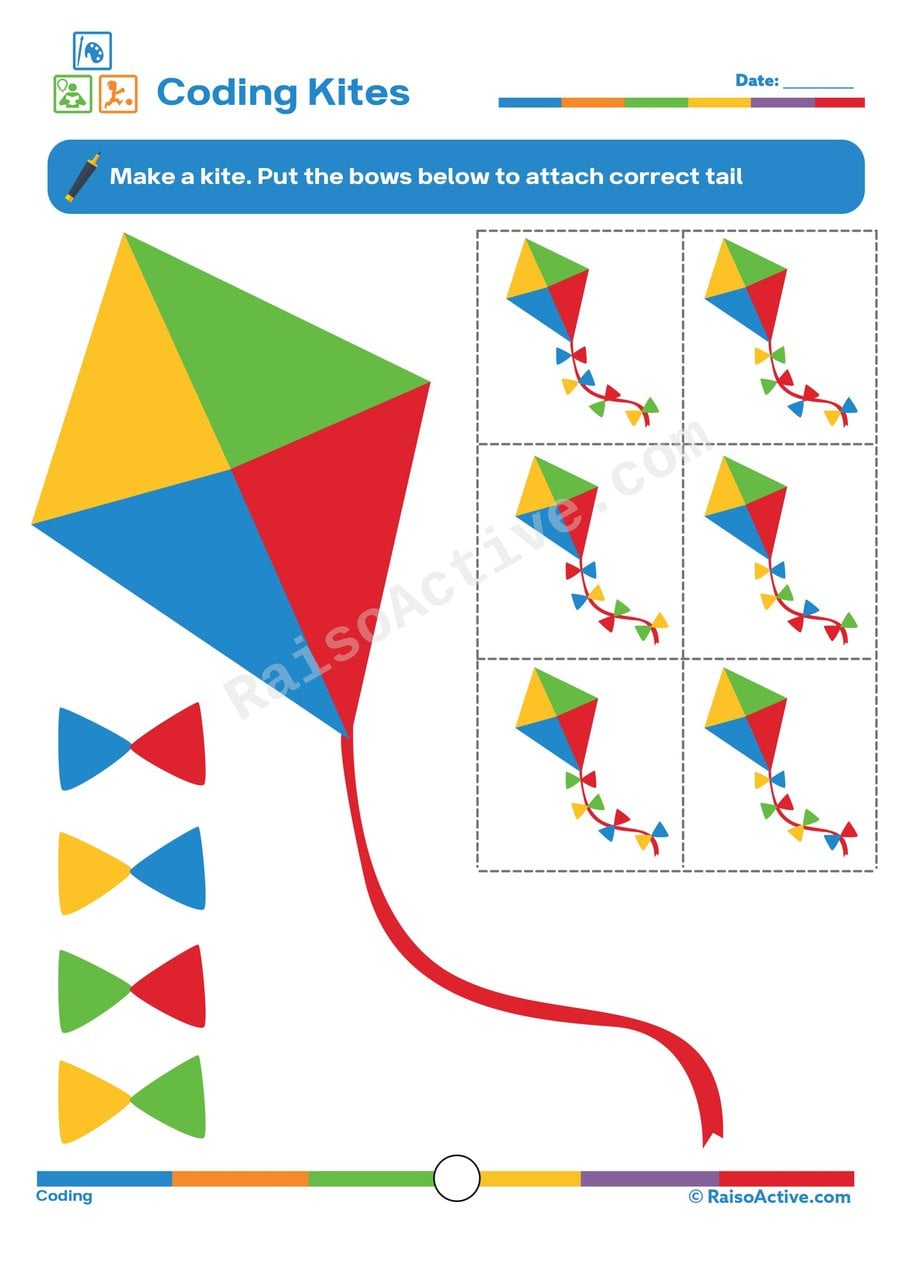
Coding Kites Worksheet: Match the Bows!
By matching each colorful bow to the kite sharing its color pattern, children ages 3-5 practice visual pattern recognition — an early form of the same logical sequencing used in beginner coding concepts. Cutting, matching, and gluing the correct bow also reinforces color-word vocabulary and precise hand-eye coordination.

Number Names Matching Worksheet for Preschoolers
This worksheet helps children ages 3-5 connect written number words — like 'three' or 'seven' — to their matching numerals, an important step beyond simple numeral recognition toward full number literacy. Drawing a line from a number name to the numeral it stands for requires children to read or recall the word and hold it in mind while scanning for its match, which builds working memory alongside early reading and number skills.

Count and Match! Number Recognition Worksheet for Preschoolers
This worksheet has preschoolers ages 3-5 practice one-to-one correspondence — touching or pointing to each object exactly once while counting — before writing the total and matching it to the correct numeral in a circle. Counting accurately requires more coordination than it looks like at this age, since children must track which objects they've already counted while saying numbers in the right order. Adding the final matching step reinforces that a written numeral represents a specific, countable quantity rather than just a symbol to memorize.
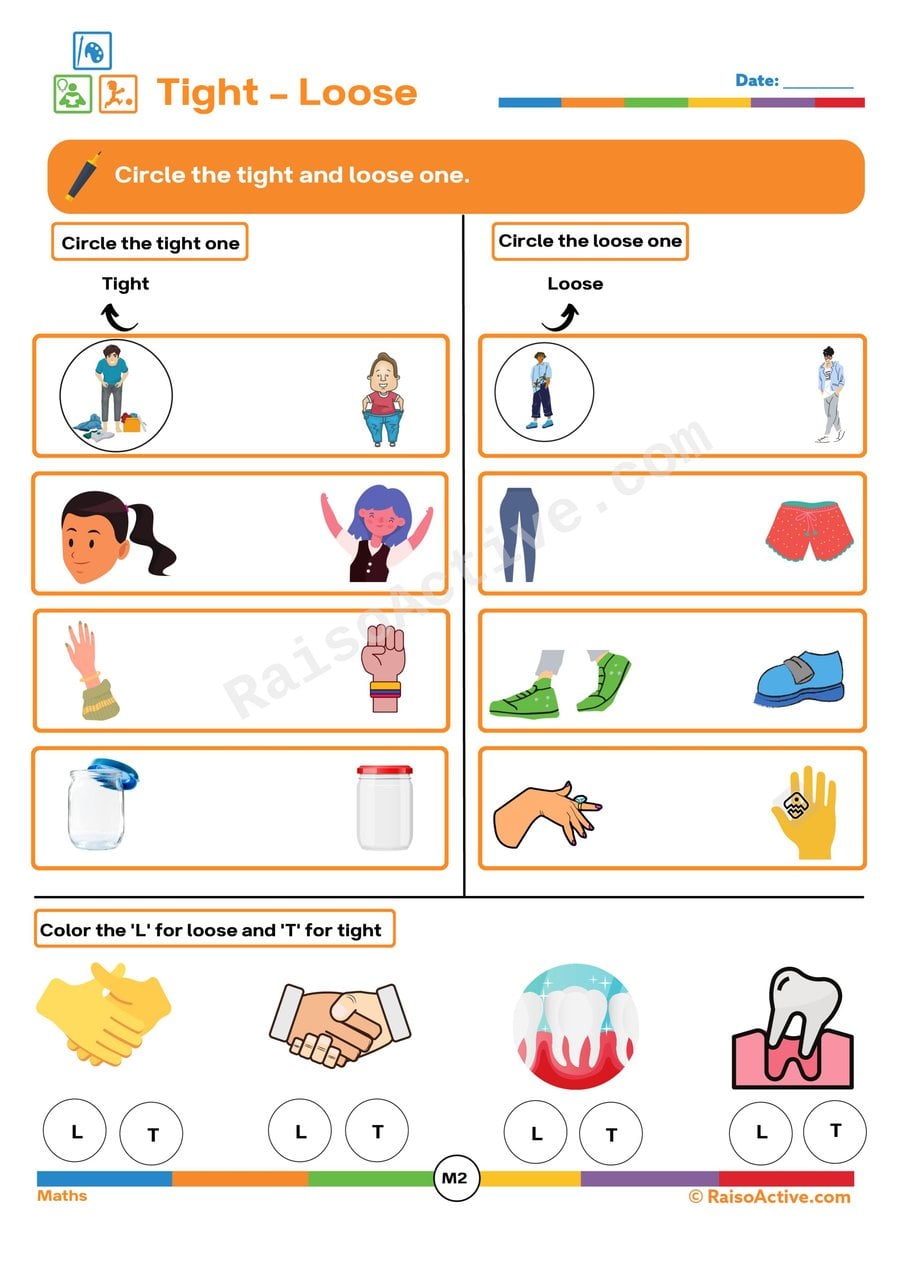
Tight and Loose Worksheet: Circle and Color!
Understanding opposite pairs like 'tight' and 'loose' helps children ages 3-5 build descriptive vocabulary and comparative thinking, skills that support both language development and early reasoning about physical properties. This worksheet asks children to look closely at pictured items — like shoelaces, screws, or clothing — and judge which state each one is in, which sharpens observation skills alongside vocabulary. Learning opposites like this also lays groundwork for later concepts such as measurement and comparison in math.

Sight Word 'Into' Worksheet: Practice Reading and Writing
Built entirely around one high-frequency word, this worksheet helps children ages 3-5 commit 'into' to memory through five different modes of practice: coloring, searching, tracing, sentence completion, and letter assembly. Repeated exposure to the same word in varied formats is exactly how young readers build automatic sight-word recognition for words too irregular to sound out easily.

Makar Sakranti Fill-in-the-Blanks Worksheet for Kids
Children ages 3-5 practice early reading comprehension and vocabulary by using a picture as a visual clue to fill in missing words about the festival of Makar Sankranti. Connecting a passage's meaning to an accompanying image helps children develop the habit of using context clues, a key strategy for later independent reading.

Number Names Matching Worksheet for Preschoolers
This worksheet helps children ages 3-5 connect written number names, like 'three' or 'seven,' to the numeral they represent, an important step beyond simply recognizing digits since it introduces reading actual number words. Decoding a color clue to figure out and write each number name first adds an extra layer of visual attention before the matching step even begins.

Draw a Penguin! Step-by-Step Drawing Worksheet for Kids
This worksheet builds drawing confidence and fine motor control by breaking down how to draw a penguin into simple, sequential steps that a young child can follow one at a time. For ages 3-5, step-by-step drawing teaches children that a complex image can be built from a series of simple shapes, an approach that transfers to drawing other subjects later on.

Tall and Short Objects Worksheet for Preschoolers
Children ages 3-5 build early measurement vocabulary by comparing pairs of objects and identifying which one is taller and which is shorter, practicing both circling and ticking as response formats. Comparing height between two objects at a time, rather than sorting a whole group, keeps the comparison task simple and direct, which is developmentally appropriate before children move on to comparing three or more items at once.
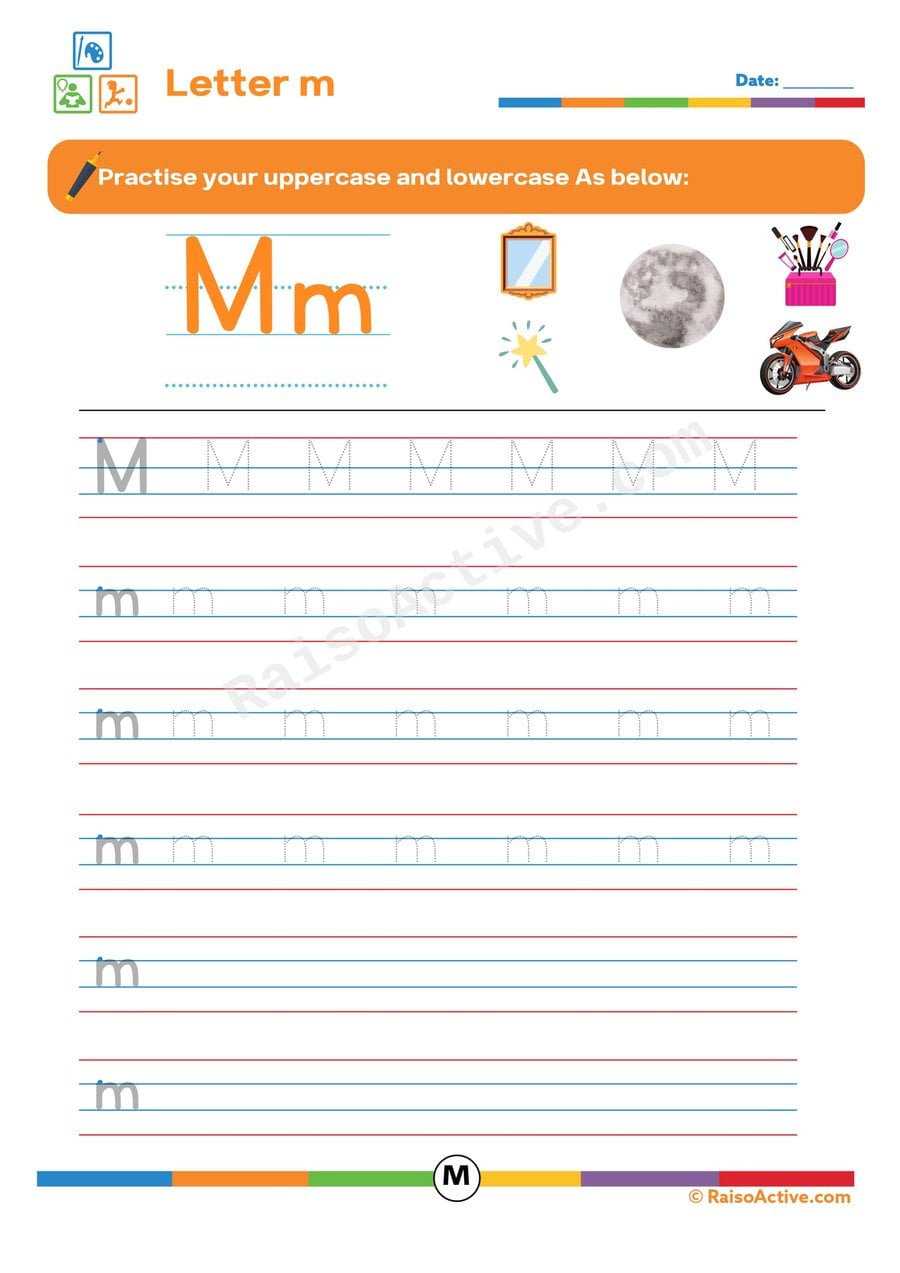
Letter M Tracing Worksheet for Preschoolers
M is built from four connected strokes — down, diagonal up, diagonal down, up — making it one of the most stroke-heavy letters in the early alphabet alongside W, and tracing it at ages 3-5 builds stamina and precision for multi-part letters. Practicing both uppercase M and lowercase m also shows children how the same basic zigzag pattern appears in different sizes.

Secret Words Worksheet: Matching Shapes and Letters!
Matching shapes to letters and then using that code to figure out a sequence of pictures teaches children ages 3-5 early symbolic reasoning, understanding that one thing, a shape, can stand in for another, a letter. This kind of code-breaking task builds logical thinking and pattern recognition beyond simple matching, since children must apply a rule consistently across multiple steps to reach a final answer. Framing the activity as uncovering a 'secret word' adds a sense of mystery and motivation that keeps children engaged through a multi-step reasoning task.

Letter W Worksheet: Tracing, Coloring, and Word Recognition!
This worksheet builds recognition and formation of the letter W through tracing, writing, and identifying words that begin with it, like 'watermelon' or 'whale.' For three- to five-year-olds, practicing a letter with a more complex zigzag shape than earlier letters like O or L also develops the finer pencil control needed for more advanced handwriting.

Letter M Tracing and Coloring Worksheet for Preschoolers
This worksheet helps children ages 3-5 practice tracing the letter M's up-down-up-down strokes, identifying words that start with M, and coloring both capital and lowercase versions of the letter. Comparing the capital and lowercase forms side by side helps children notice that the same letter can look different in size while representing the same sound.

Young and Old Animals Worksheet: Circle the Correct Ones!
Distinguishing between young and old animals introduces children ages 3-5 to basic life cycle concepts and comparative observation, asking them to notice visual cues like size and features that indicate an animal's age. This worksheet has children first sort animals by age category and then match young animals to their adult counterparts, layering categorization practice on top of matching skills. Understanding that a puppy grows into a dog or a chick grows into a hen also lays early groundwork for later science topics like animal life cycles and growth.
What Preschool alphabet worksheets cover
Three-year-olds build a small working set of letters, usually starting with the ones in their name and reaching eight to ten capitals by the end of the year. A worksheet should ask the child to find a named letter among two or three lookalikes, circle every instance of one letter on a busy page, and say the first few letters of the alphabet in order. Full A-to-Z sequencing, lowercase forms, and matching letters to sounds belong to the year after.
- Find a named capital letter among two or three choices
- Circle every instance of one letter on a busy page
- Recite the first few letters of the alphabet in order
- Name letters found in a familiar first name
How to use these worksheets at home or in class
Five minutes is a solid session for a three-year-old, ten minutes the practical ceiling. Offer a thick crayon or a short fat pencil, sit beside your child, and treat the sheet as one activity among blocks, stories and outdoor play rather than as schoolwork.
Start with the sheet that matches what your child can already do, then move one step up. Keep finished sheets in a folder: Preschool teachers often ask for evidence of practice, and children like seeing their own progress.
Is your child ready for Preschool alphabet work?
A child ready for these activities holds a crayon and makes deliberate marks, sits at a table briefly, follows a single spoken instruction, and shows some interest in the letters of their own name or the numbers they hear counted aloud.
Frequently asked questions
How many letters should a three-year-old recognize?
Eight to ten capital letters by four is a reasonable range, usually the letters in the child's name plus a few seen often elsewhere. Being able to recite the alphabet song is not the same thing as recognizing letters out of order, so check recognition by pointing to a letter on a page and asking for its name, not by listening to the song. A child who knows fewer than that is not behind; interest and repetition vary widely.
What should a Preschool child be able to do in alphabet?
Three-year-olds build a small working set of letters, usually starting with the ones in their name and reaching eight to ten capitals by the end of the year. A worksheet should ask the child to find a named letter among two or three lookalikes, circle every instance of one letter on a busy page, and say the first few letters of the alphabet in order. Full A-to-Z sequencing, lowercase forms, and matching letters to sounds belong to the year after. A child ready for these activities holds a crayon and makes deliberate marks, sits at a table briefly, follows a single spoken instruction, and shows some interest in the letters of their own name or the numbers they hear counted aloud.
Do these worksheets follow the Preschool curriculum?
The sheets cover letter recognition A–Z, letter names versus letter sounds, sequencing letters in order and matching uppercase to lowercase, which sit inside the Head Start Early Learning Outcomes Framework (ELOF) outcomes for Preschool. Nursery (UK), Nursery (India) use the same skills at this age, so the sheets also fit families following those programmes.
Are these Preschool alphabet worksheets free?
Yes. Each worksheet downloads free as a watermarked PDF once you create an account, with a limit of five a day. An annual membership ($20) removes the watermark and the limit for the whole library of over 1,000 worksheets and every printable pack.

Written by
Hemsweta Jain · Teacher Cheena
MBA and Early Childhood Educator, teaching since 2014 · Founder of RaisoActive, Mumbai
Written and reviewed by Hemsweta Jain (Teacher Cheena), who designs every RaisoActive worksheet.
Last reviewed
Printable packs for ages 3–4
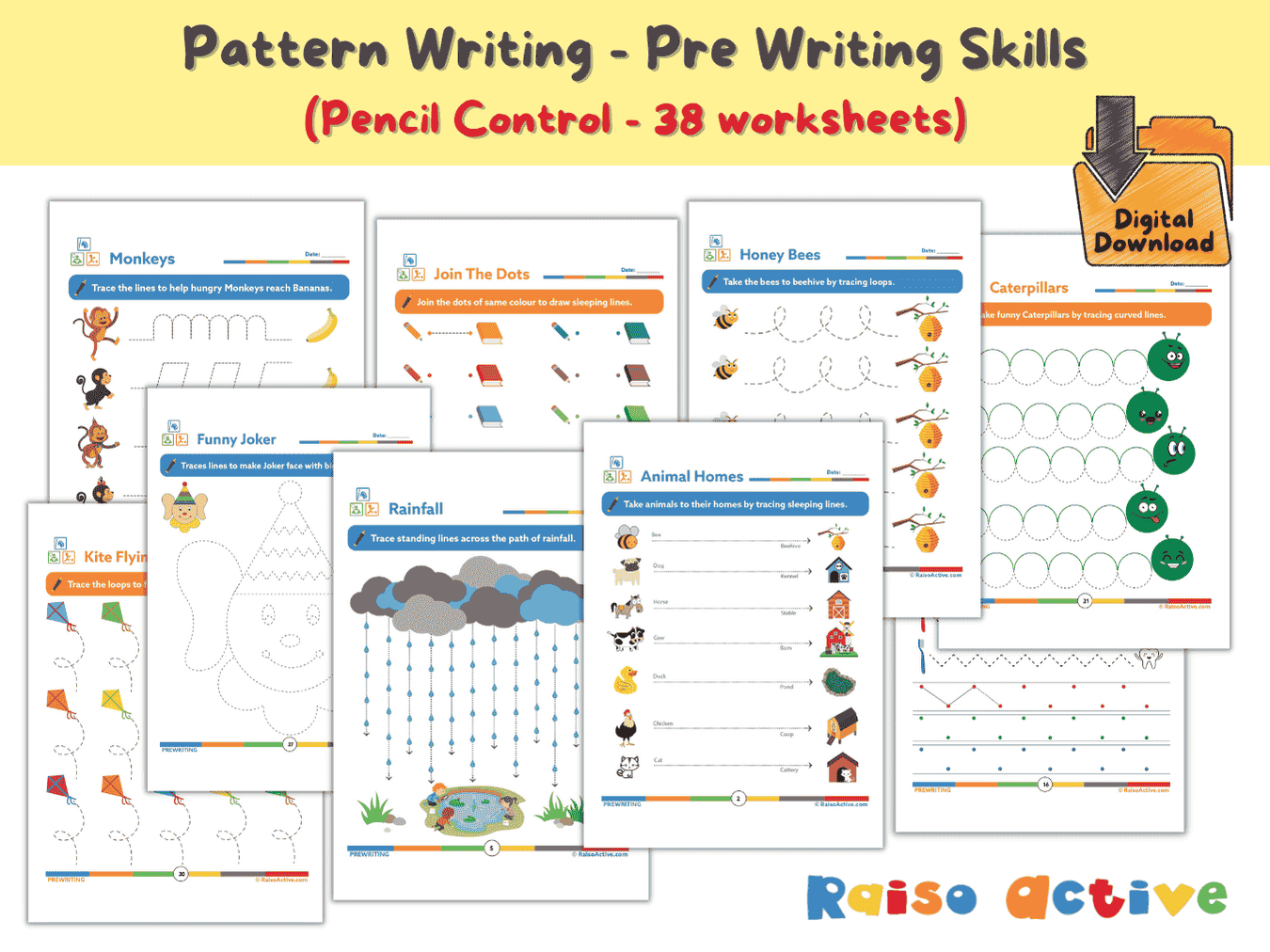
Pattern Writing Pre-writing Skills Activity Book for 3-4 Year Olds
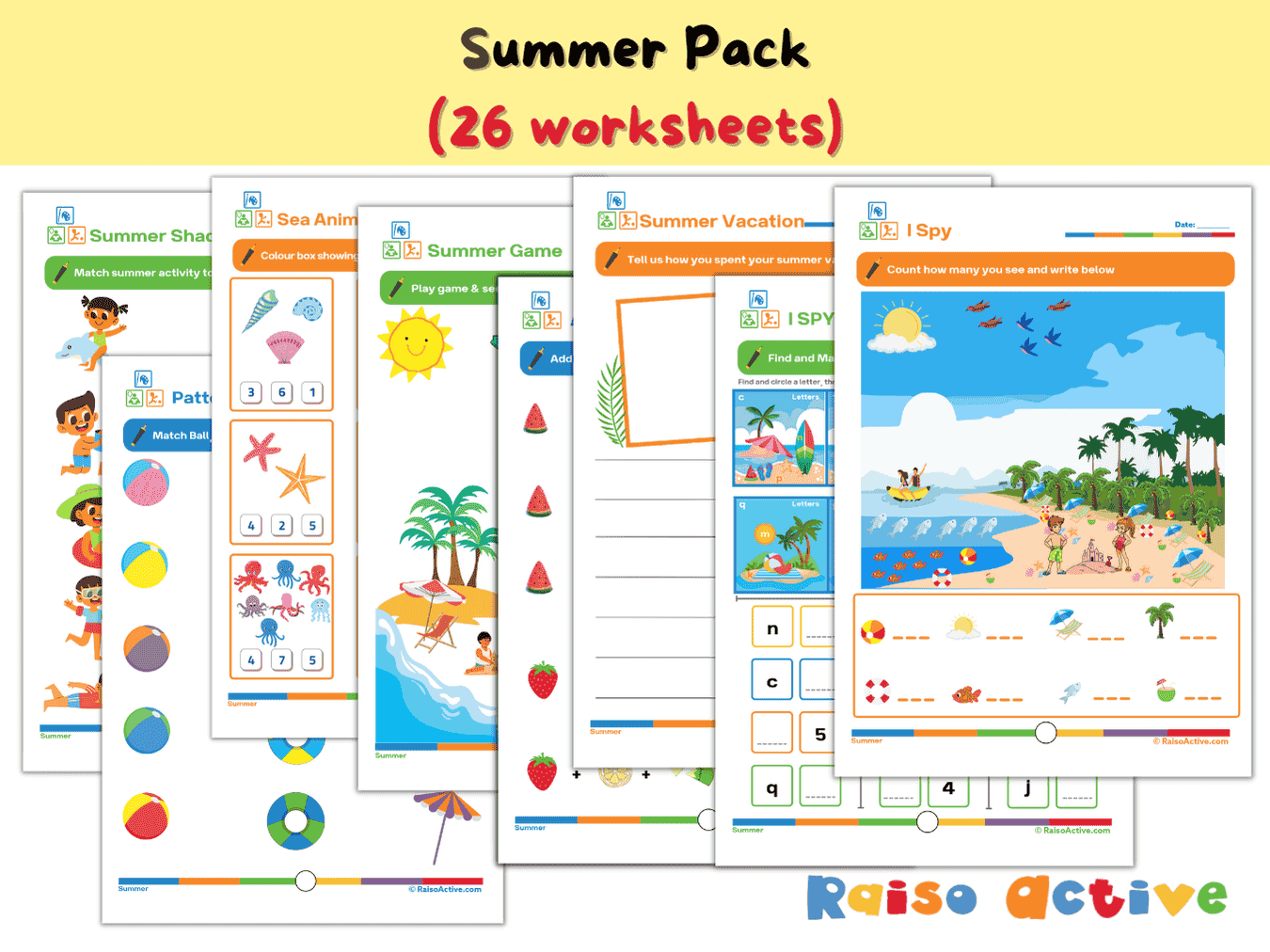
Summer Activity Pack: Math, Literacy, Puzzles & More for Preschool & Kindergarten
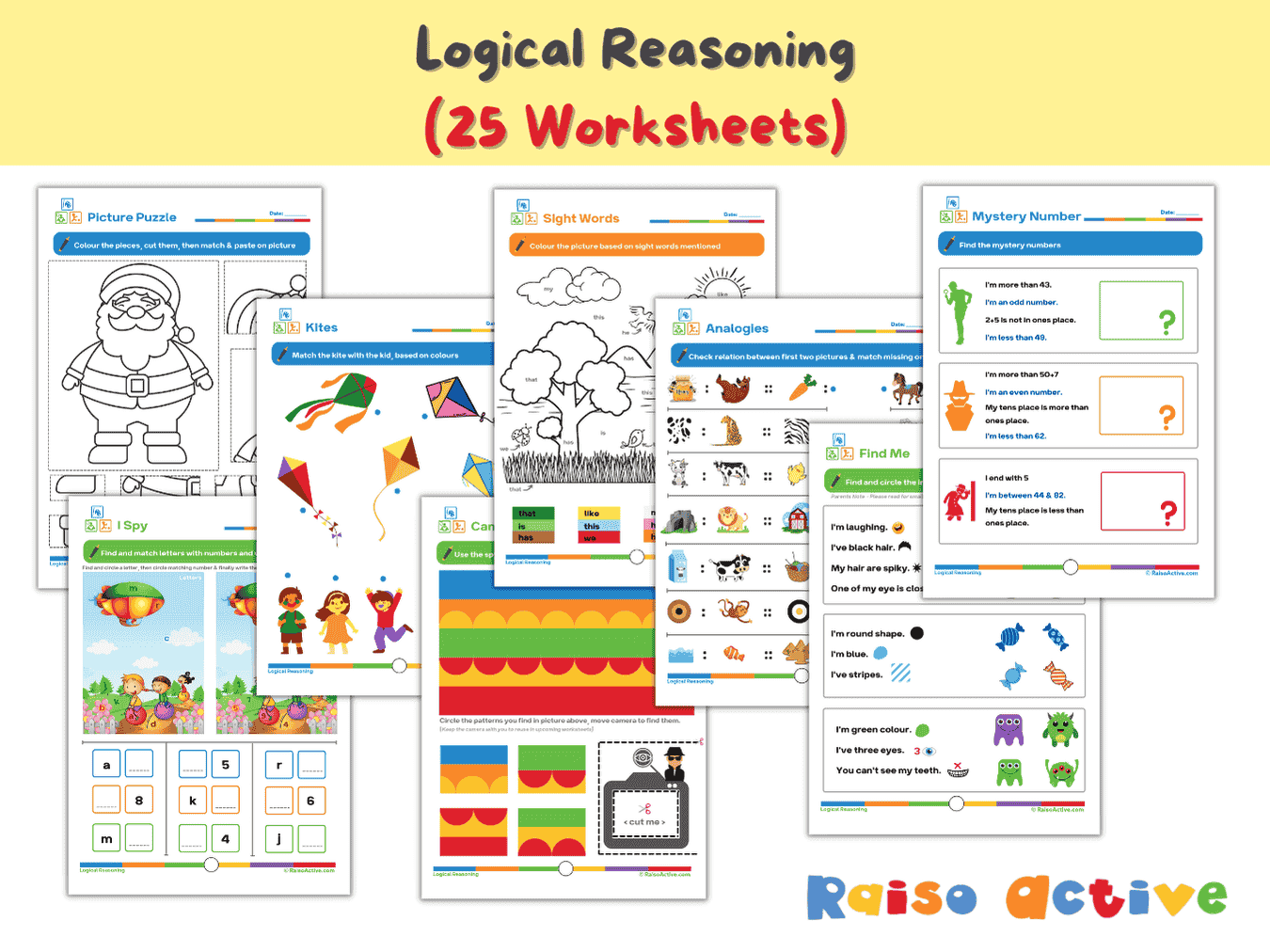
Logical Reasoning Activity Book for Preschool & Kindergarten | Patterns, Puzzles & Analogies
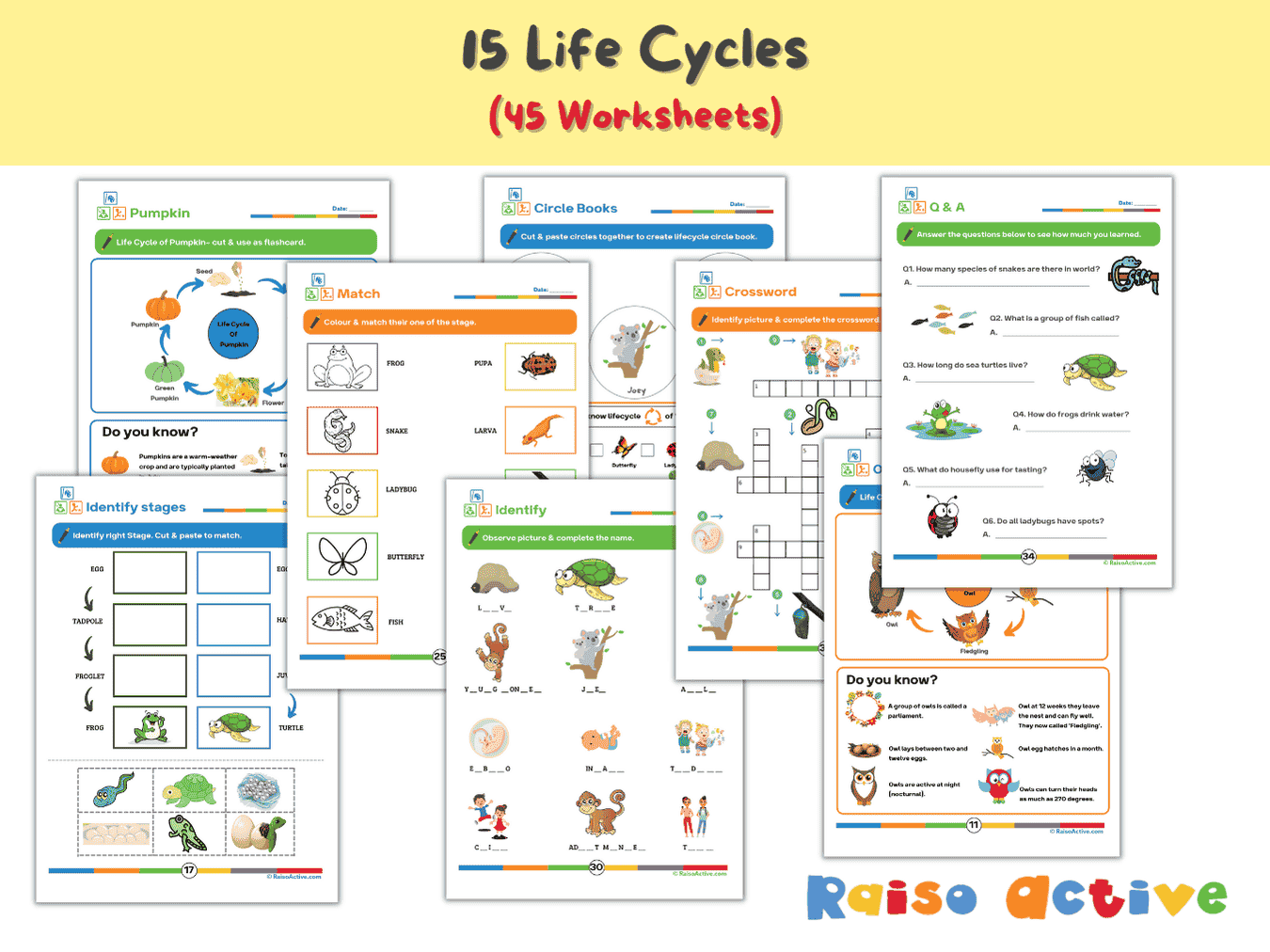
Lifecycles Activity Book & Flashcards for Preschool & Early Elementary
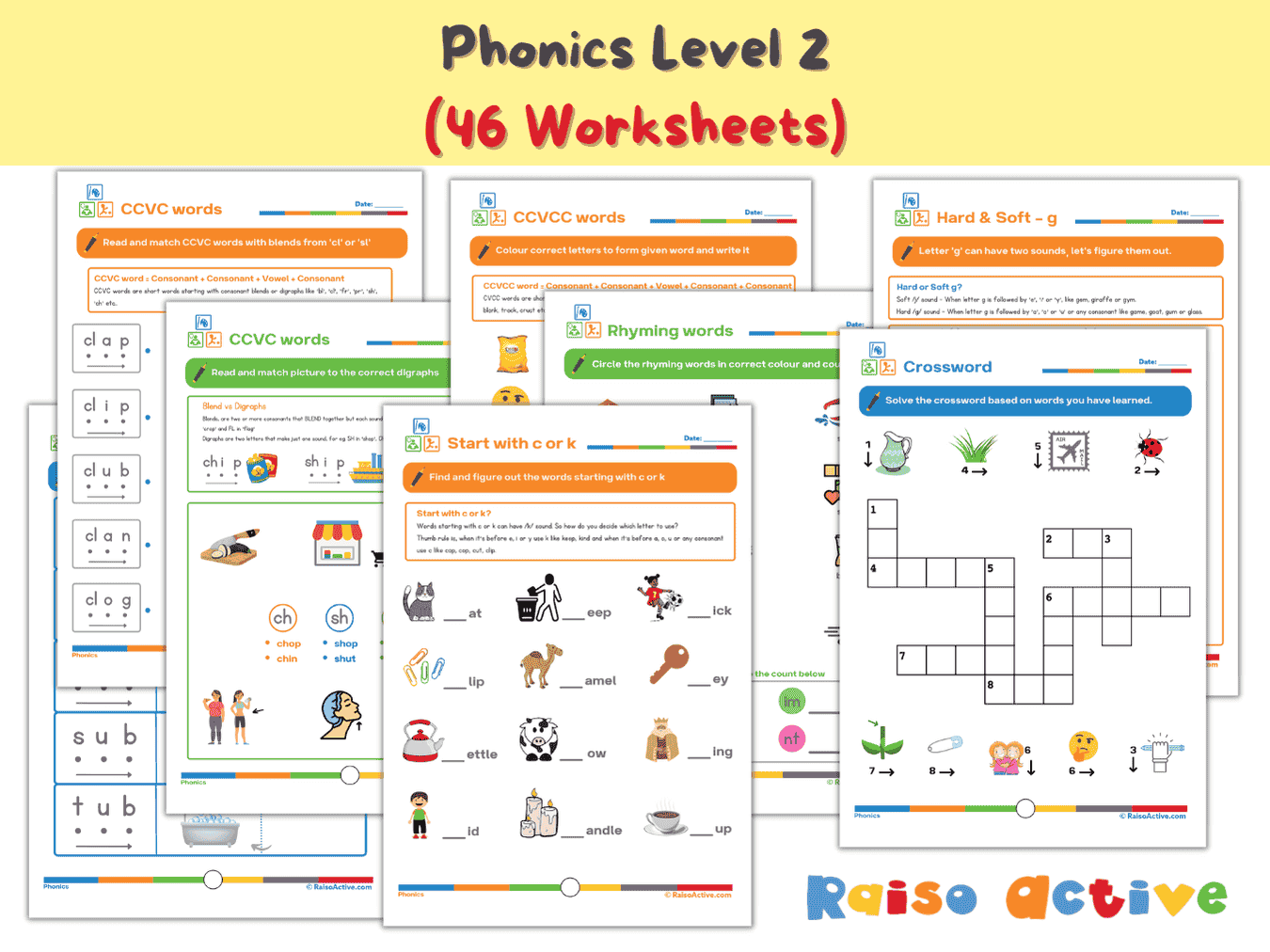
Phonics Level 2 Worksheets: CVC, CCVC, CVCC Word Families & Blends for Early Readers (Ages 4-7)
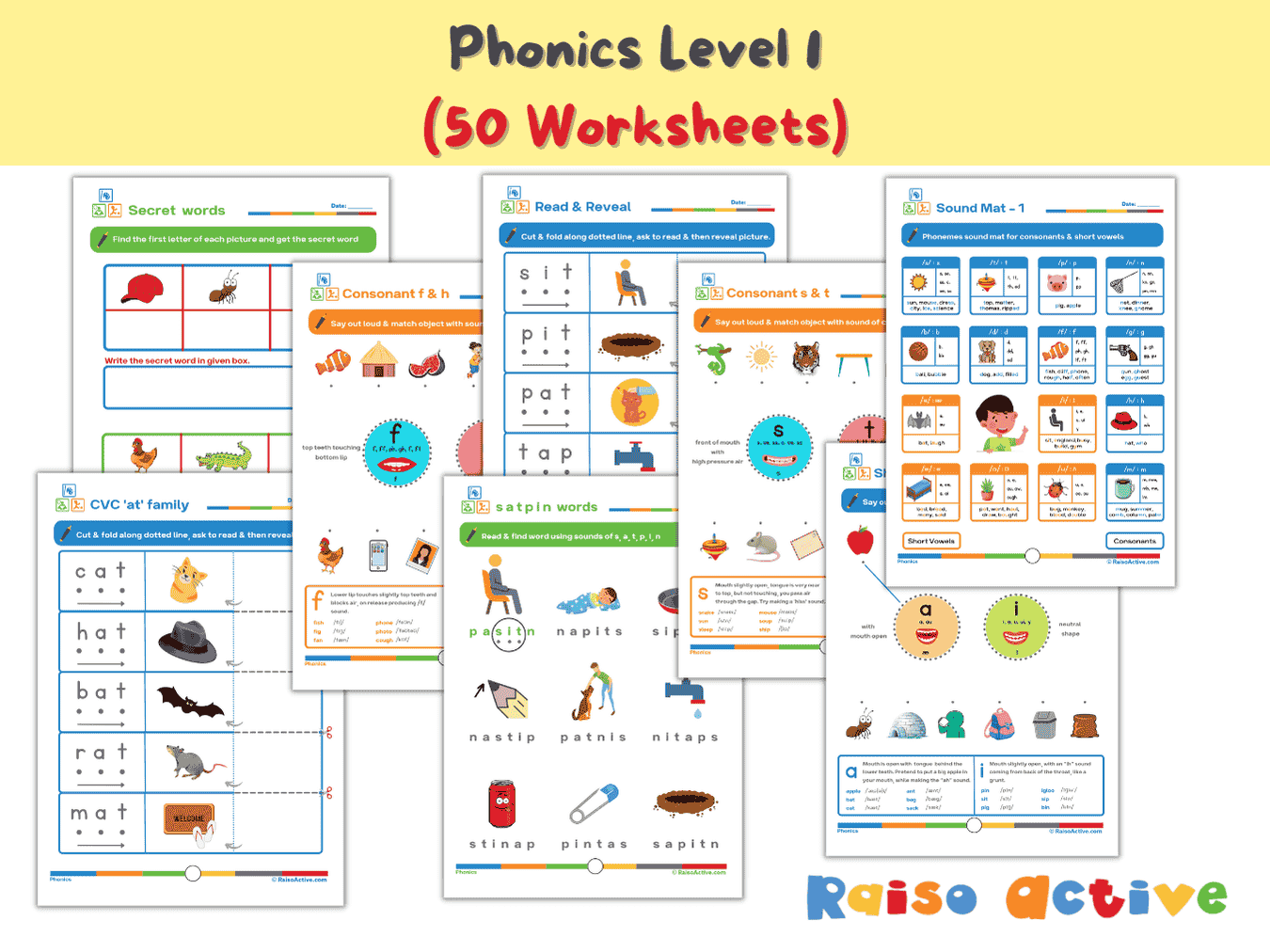
Phonics Level 1 Activity Book: Letter Sounds, Blending & CVC Words for Preschool & Kindergarten
Guides for parents and teachers
See all guides →Kindergarten Readiness Checklist: 25 Skills to Practice Before the First Day
A kindergarten readiness checklist of 25 literacy, math, motor, self-regulation and self-help skills, with an 8-week summer plan and notes on when not to worry.
Phase 2 Phonics at Home: Sound Order, Blending Games, Worksheets
Phase 2 phonics at home: the five sound sets in order, oral blending, tricky words, a two-week routine, common mistakes, and free worksheets.
Reception Year Explained: EYFS Learning and How to Help at Home
A teacher's plain-English guide to the Reception Year: the seven areas of learning, Early Learning Goals, Phase 2/3 phonics, the RBA and home routines.
What Should a 4-Year-Old Know Before LKG? A Readiness Checklist
A calm, teacher-written LKG readiness checklist for 4-year-olds: language, pattern writing, numbers to 10, self-help and social skills, plus a 6-week plan.
Bridging Two Worlds: A Complete Guide to Teaching Heritage Languages Alongside English
A practical guide to raising bilingual children who speak both their heritage language and English with confidence. Research-backed strategies, activities, and tips for Indian families.
How to Help Your Child with Letter Reversals: A Complete Guide for Parents and Teachers
Letter reversals are normal until age 7-8. Learn the best multisensory strategies, anchor letter tricks, and activities to help children write b, d, p, and q correctly.
Canonical: https://raisoactive.com/worksheets/preschool-alphabet