Free printable worksheets · United States
Preschool Tracing Worksheets
Preschool tracing worksheets are printable pencil-control practice for children aged 3 to 4. They progress from pre-writing strokes, the standing, sleeping and slanting lines, curves and zigzags that every letter is built from, to tracing shapes, then to uppercase letters and numerals 1 to 10, building the hand strength, grip and directional control needed for handwriting.
Handwriting is built from a handful of strokes, and preschool is when children learn them. Occupational therapists and early childhood teachers work from a well-established developmental order: a vertical line (standing) around age two to three, a horizontal line (sleeping) soon after, a circle at three, a cross and a diagonal line at four, a square around four to five, and a triangle last. Letters need all of them, which is why tracing an A before a child can draw a slanted line ends in frustration. Pencil grip matures over the same period, from a fist to a four-finger hold to a tripod grip at four or five, and short fat crayons help it along. The worksheets on this page follow the stroke order first, then shapes, then letters and numbers, with wide paths that narrow as control improves.
944+ worksheets · free PDF download · print on A4 or Letter
Preschool Tracing Worksheets to print
Browse all worksheets for ages 3–4
Learn to Draw: Teddy Bear Worksheet for Preschoolers
Following numbered steps to draw a teddy bear teaches children ages 3-5 that complex pictures can be broken down into simple shapes like circles, building both sequencing skills and hand-eye coordination. This step-by-step approach to drawing also builds confidence for children who feel intimidated by open-ended drawing tasks.

Letter S Tracing Worksheet: Learn to Write and Identify the Letter S!
This worksheet helps children ages 3-5 learn to recognize and write the letter S, both uppercase and lowercase, using its distinctive curving stroke, while also practicing identifying words that start with the letter S. Because S makes a long, continuous hissing sound that's easy to isolate, this letter is often one of the more approachable sounds for early phonics practice.

Number Tracing Worksheet: Trace and Find the Number 11!
This worksheet introduces children ages 3-5 to their first two-digit number, helping them understand that 11 is written with two number 1s placed side by side rather than as a brand-new symbol. Tracing 11 builds the pencil control needed to write two digits neatly in a row, while the search-and-find grid strengthens visual scanning skills as children pick 11 out from a field of similar-looking numbers. This combination supports both number recognition and the beginning of place-value thinking.

Trace and Write the Letter X Worksheet for Preschoolers
This worksheet has children ages 3-5 trace the uppercase letter X, practicing two diagonal lines that cross in the middle, a stroke pattern that requires more precise pencil control than straight or curved letters alone. Because relatively few common words start with X, this page also introduces the idea that a letter's position within a word, not just the beginning, matters for reading, since children may know X best from words like 'box' or 'fox.' Mastering this crossing stroke also supports other skills like drawing intersecting lines in later math and geometry work.

Z is for Zebra! Letter Z Tracing and Coloring Worksheet
This letter Z worksheet gives children ages 3-5 focused practice recognizing and forming both the uppercase and lowercase versions of one of the trickiest letters to write, since its diagonal strokes differ from the curves and straight lines used in most other letters. Matching and coloring objects that start with 'z' also builds beginning-sound awareness, helping the letter's shape and sound become linked in memory.

Trace and Color the Letter N Worksheet for Preschoolers
Tracing the letter 'N' repeatedly helps children ages 3-5 build the muscle memory needed for consistent, legible letter formation, since 'N' requires a specific up-down-up stroke pattern that differs from rounded letters. Coloring pictures that start with 'N' extends the practice into beginning-sound recognition, linking the letter's shape to a specific sound they can hear at the start of familiar words.

Letter K Tracing Worksheet: Practice Uppercase and Lowercase!
K combines a straight vertical line with two diagonal strokes meeting at a point partway down, making it one of the more structurally complex letters a preschooler will trace, similar in difficulty to R. Practicing both uppercase K and lowercase k at ages 3-5 builds precision in judging where diagonal lines should meet the vertical stroke, a skill that carries over to other angled letters.
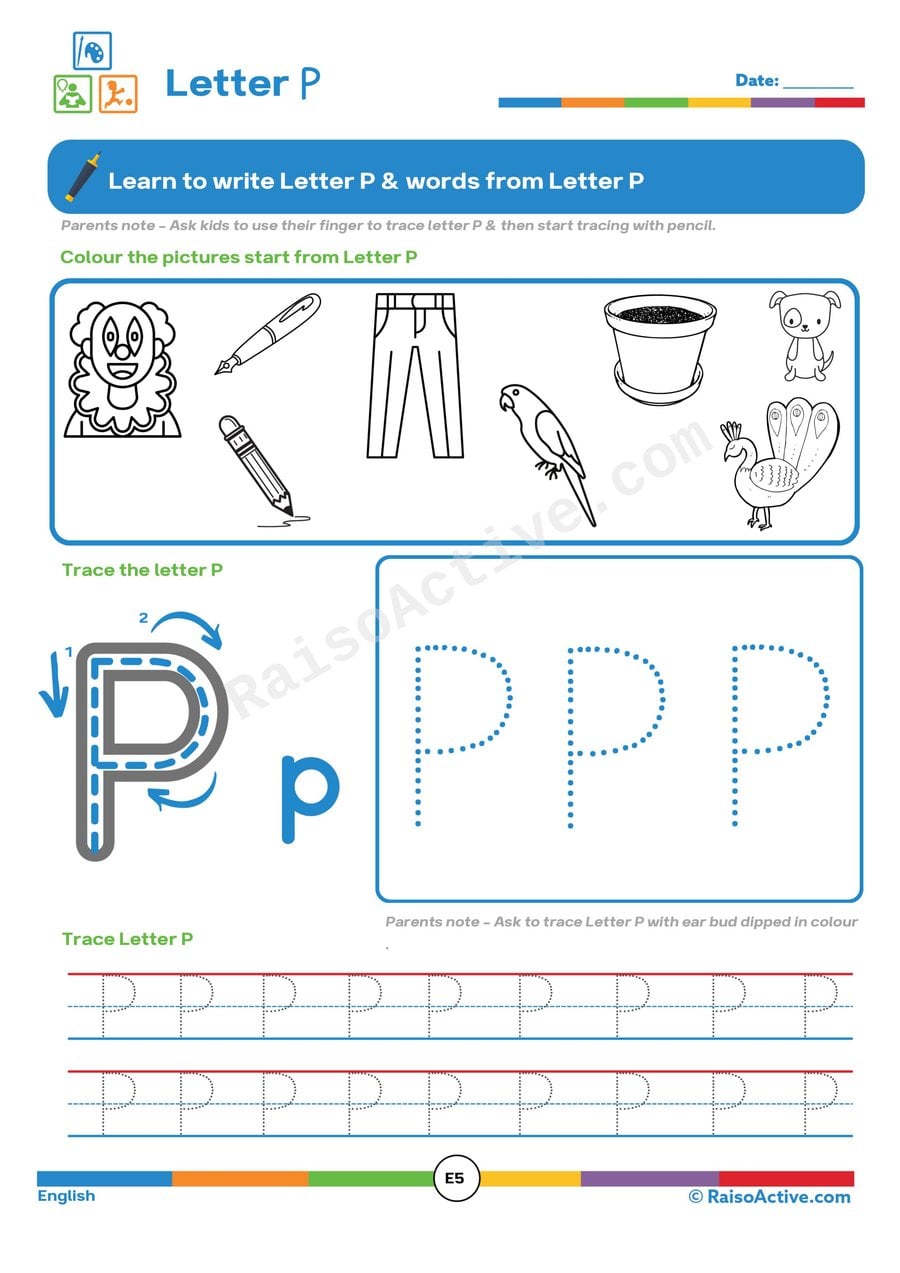
Letter P Tracing Worksheet for Preschoolers
Preschoolers ages 3-5 build the pencil control and muscle memory needed for handwriting by tracing both the uppercase and lowercase letter P along guided dotted lines. Repeated tracing strengthens the fine motor pathways used in future writing while also reinforcing left-to-right, top-to-bottom stroke direction. Naming pictures that start with P connects the letter shape to its sound, laying groundwork for phonics.

Day and Night Worksheet for Preschoolers: Observe and Learn!
Children ages 3-5 build foundational science observation skills as they compare what's visible in the sky and what activities happen during day versus night. Completing fill-in-the-blank sentences and true-or-false questions also strengthens early reading comprehension, since children must connect a picture's details to written language rather than just naming what they see.
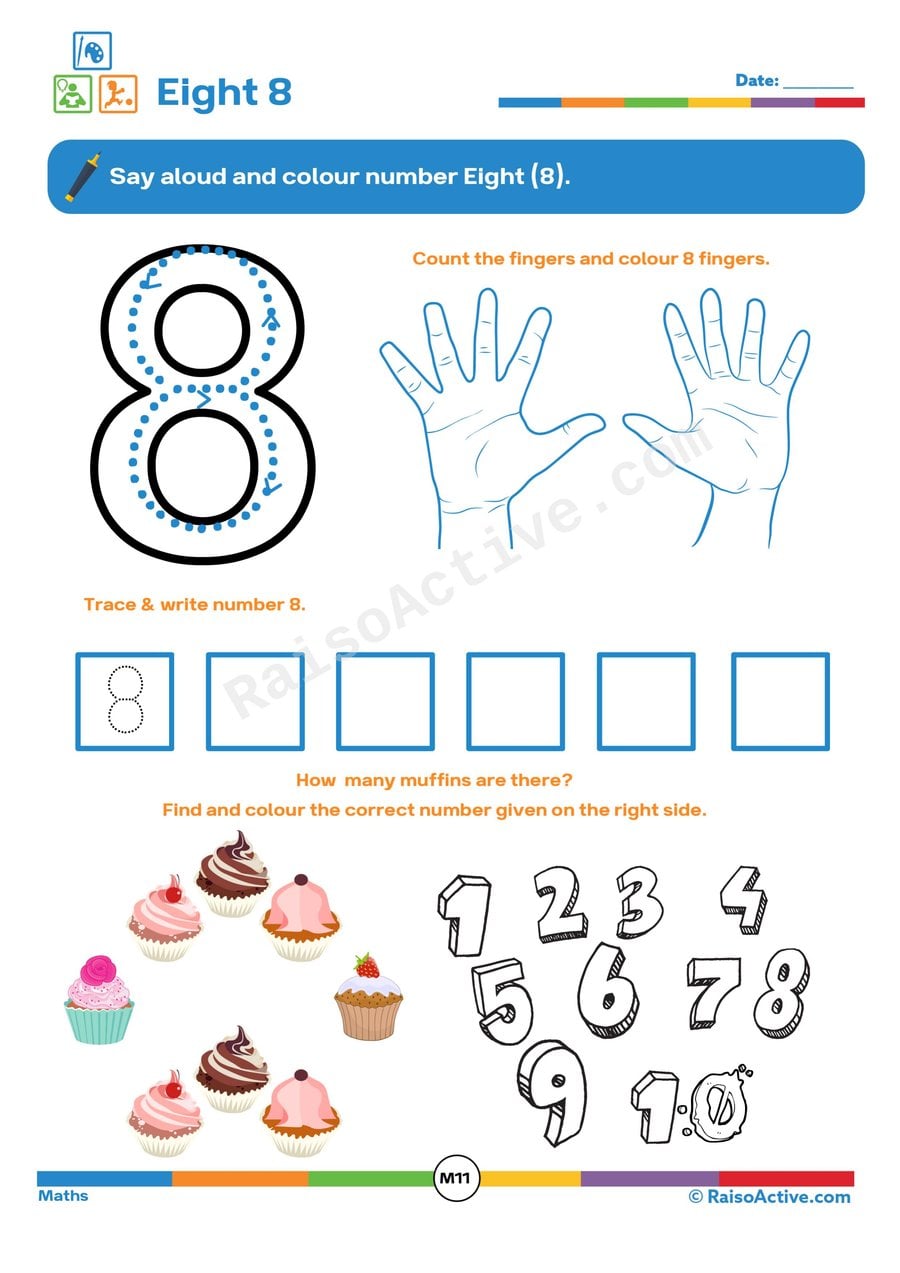
Number Eight (8) Worksheet: Trace, Count, and Color!
This worksheet helps children ages 3-5 learn to recognize, trace, and write the number 8 using its continuous curved stroke, while counting fingers and muffins reinforces one-to-one correspondence for the quantity eight. Circling the correct count among options also sharpens numeral recognition alongside handwriting practice.
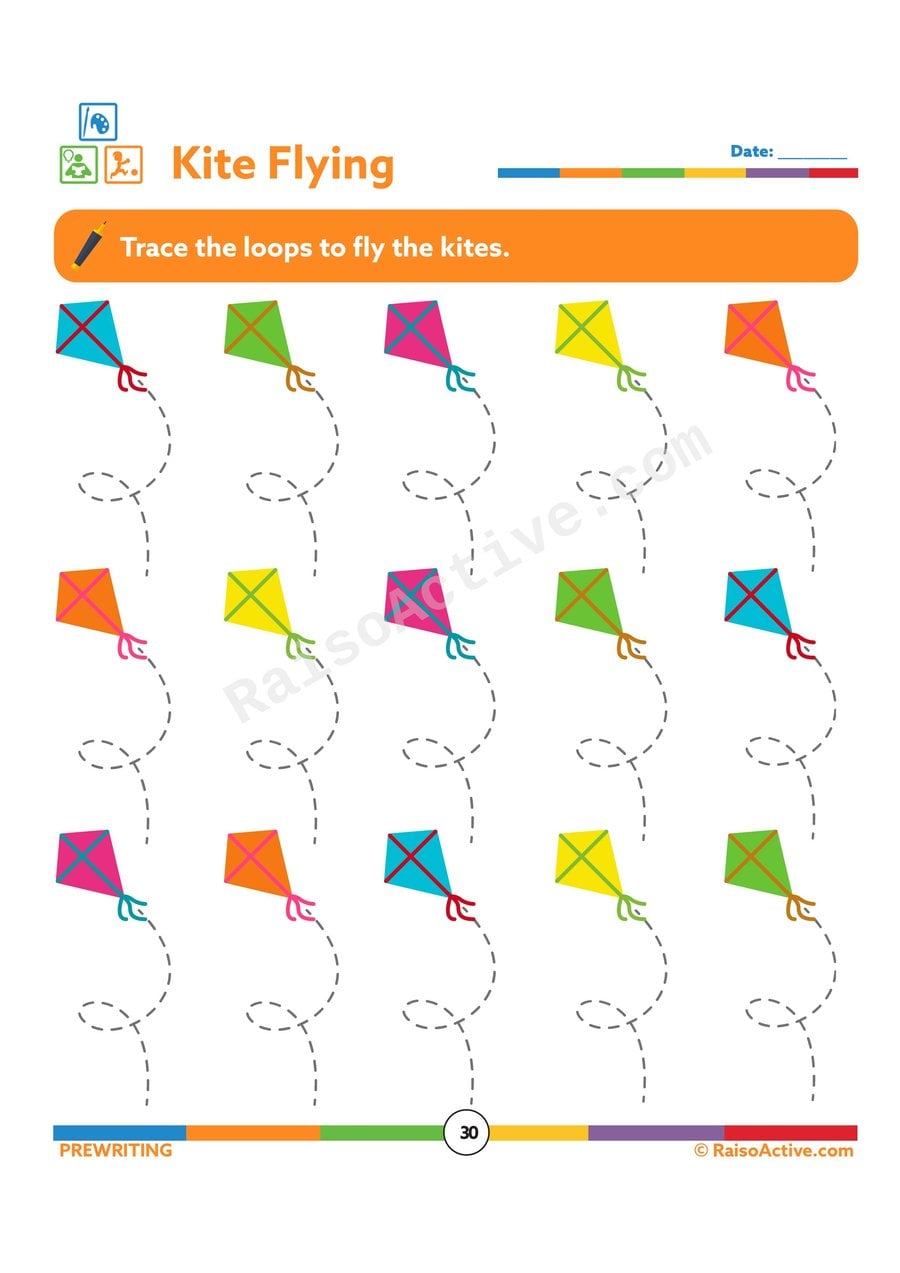
Kite Flying Tracing Worksheet for Preschoolers
Tracing a kite's string line gives children ages 3-5 practice with a long, often gently curving or diagonal stroke, while the theme introduces simple vocabulary about wind and flying. Because a kite string is usually drawn as one long, continuous line rather than a short repeated shape, this worksheet builds a child's ability to sustain a single controlled pencil motion over a longer distance.

Letter X Tracing Worksheet for Preschoolers: Learn to Write!
Children ages 3-5 practice tracing the letter X, whose crossing diagonal lines offer valuable fine motor practice distinct from the curved or straight letters more commonly traced. Since few words begin with X, this worksheet also introduces children to less common but still important vocabulary, like 'X-ray' or 'xylophone', broadening their early word bank. Repeated tracing continues building the pencil control needed for confident handwriting.

Sight Word 'Into' Worksheet: Practice Reading and Writing
Built entirely around one high-frequency word, this worksheet helps children ages 3-5 commit 'into' to memory through five different modes of practice: coloring, searching, tracing, sentence completion, and letter assembly. Repeated exposure to the same word in varied formats is exactly how young readers build automatic sight-word recognition for words too irregular to sound out easily.

Sight Word 'HE' Worksheet: Trace, Color, and Practice!
This worksheet helps children ages 3-5 learn to recognize, write, and use the sight word 'HE' in simple sentences, giving repeated exposure to a short, high-frequency word that appears in nearly every early reader book. Practicing the word across six different formats, tracing, coloring, circling, writing, filling in, and cutting and pasting, builds recognition through many different types of practice in one sitting.

Climb the Ladder: Pre-Writing Practice Worksheet for Kids
Tracing the rungs of a ladder gives children ages 3-5 focused practice with horizontal and vertical straight lines, the two most basic pencil strokes and the building blocks for letters like L, T, E, F, and H. Because a ladder has repeated, evenly spaced rungs, this worksheet also builds a sense of rhythm and spacing that carries over into writing letters at a consistent size later on.

Unscramble the Words: A Fun Phonics Worksheet for Preschoolers!
Unscrambling letters to spell a simple word asks children ages 3-5 to apply their phonics knowledge in a more active, puzzle-like way than straightforward reading, since they have to mentally test different letter orders against the sounds they know a word should contain. This worksheet uses picture support to guide the unscrambling process, then adds a second missing-letter task to reinforce the same spelling pattern one more time. Working through a scrambled word forces genuine engagement with letter order and sound sequence, rather than passive word recognition.
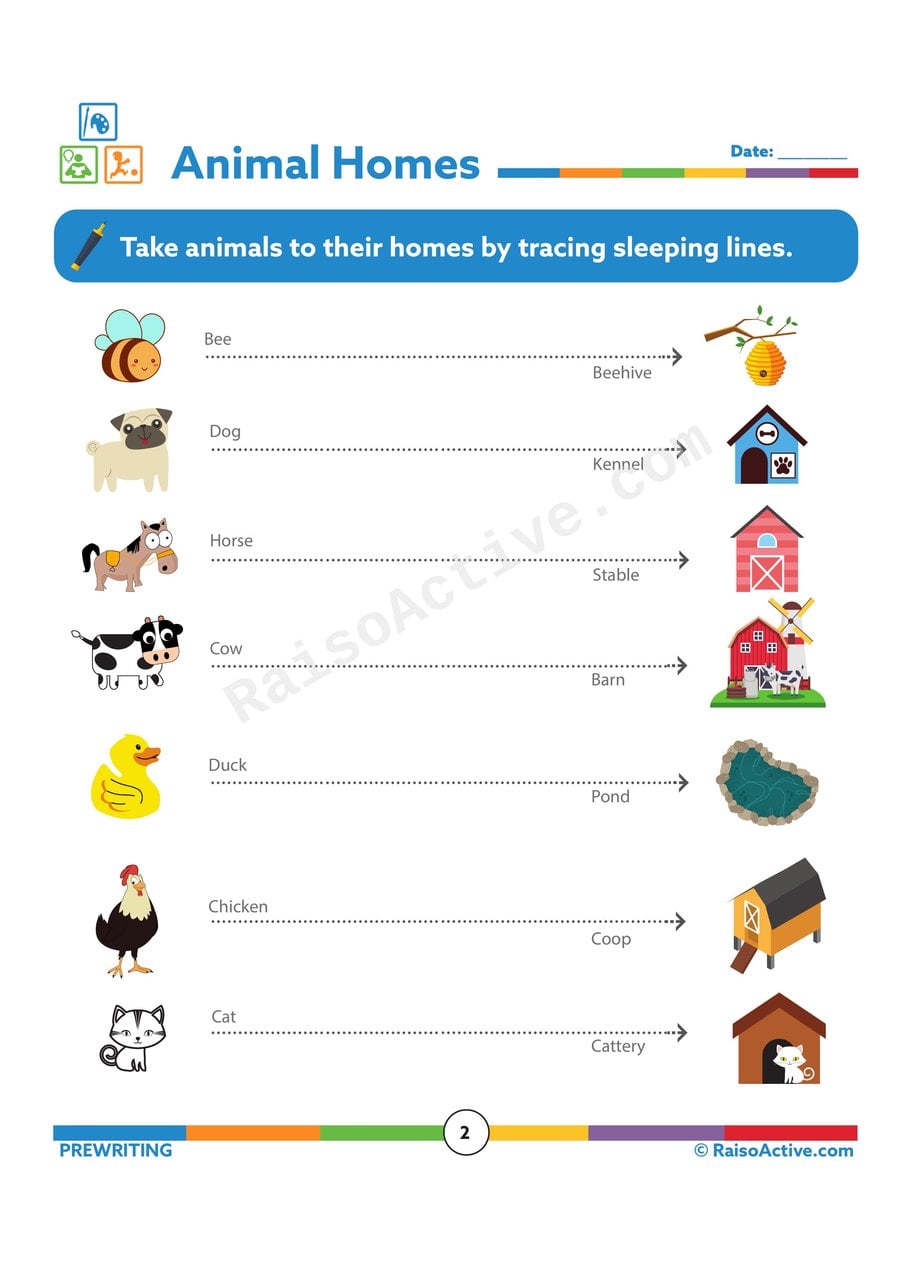
Animal Homes Tracing Worksheet for Preschoolers
Tracing a line from each animal to its home helps children ages 3-5 build pencil control while also introducing an early science concept: that different animals live in different kinds of homes, like a bird's nest or a dog's kennel. Saying the animal and its home aloud while tracing connects the physical tracing motion to new vocabulary, reinforcing both skills at once.

Letter T Tracing and Coloring Worksheet for Preschoolers
This worksheet helps children ages 3-5 build the fine motor control and directional awareness needed to form the letter T correctly, tracing both its uppercase and lowercase forms along guided dotted lines. Repeated tracing builds the muscle memory in small hand muscles that eventually allows children to write letters independently without a guide. Coloring pictures that begin with T and hunting for the letter in a grid also reinforce letter-sound and letter-shape recognition side by side.

Christmas Fill-in-the-Blanks Worksheet for Preschoolers
Filling in missing letters of Christmas words like 'S_ _W' or 'TR_ _' helps children ages 3-5 connect letter sounds to their written form, an essential early step toward independent spelling. Using the accompanying picture as a clue also teaches them to cross-check visual and phonetic information — a strategy they'll rely on throughout early reading.

Trace the Standing Lines to Reach the Ice Cream! A Pre-Writing Worksheet
This worksheet builds pencil control in children ages 3-5 by having them trace vertical, 'standing' lines connecting children to their ice cream cones, a companion skill to horizontal line tracing that together forms the basis for writing many letters and numbers. Vertical strokes require a different hand motion than horizontal ones, so practicing both directions gives children a fuller foundation for handwriting readiness.

Number Tracing Worksheet: Trace and Find Number 14!
This worksheet has children ages 3-5 trace the two-digit number 14 and then scan a grid to find and color every instance of it among other numbers, building visual discrimination alongside handwriting practice. Searching for 14 in a busy grid, rather than seeing it in isolation, helps children recognize that a number keeps its identity across different positions on a page. This kind of visual search also builds the sustained attention needed for later classroom worksheets with similar find-and-circle tasks.

Sight Word 'Went' Worksheet for Preschoolers: Tracing, Matching, and Sentence Completion
The word 'went' doesn't sound out predictably using standard phonics rules, so children ages 3-5 need to memorize it by sight as a whole word — a key early reading strategy for common, frequently used words. This worksheet reinforces that sight-word memory through several different formats — tracing, word-hunting, letter connecting, and sentence completion — giving repeated exposure without it feeling like a single repetitive drill. Mastering high-frequency words like 'went' significantly speeds up reading fluency, since these words appear constantly in early books.

Trace and Color the Number 4 Worksheet for Preschoolers
This worksheet has children ages 3-5 trace the number 4, a shape combining two straight lines and one diagonal line meeting at a specific point, one of the more angular early numerals to master. Coloring exactly four apples afterward reinforces one-to-one correspondence and the specific quantity the numeral 4 represents. Because 4 has more distinct angles than the numbers before it, this worksheet continues building the precise pencil control needed for increasingly complex numerals.
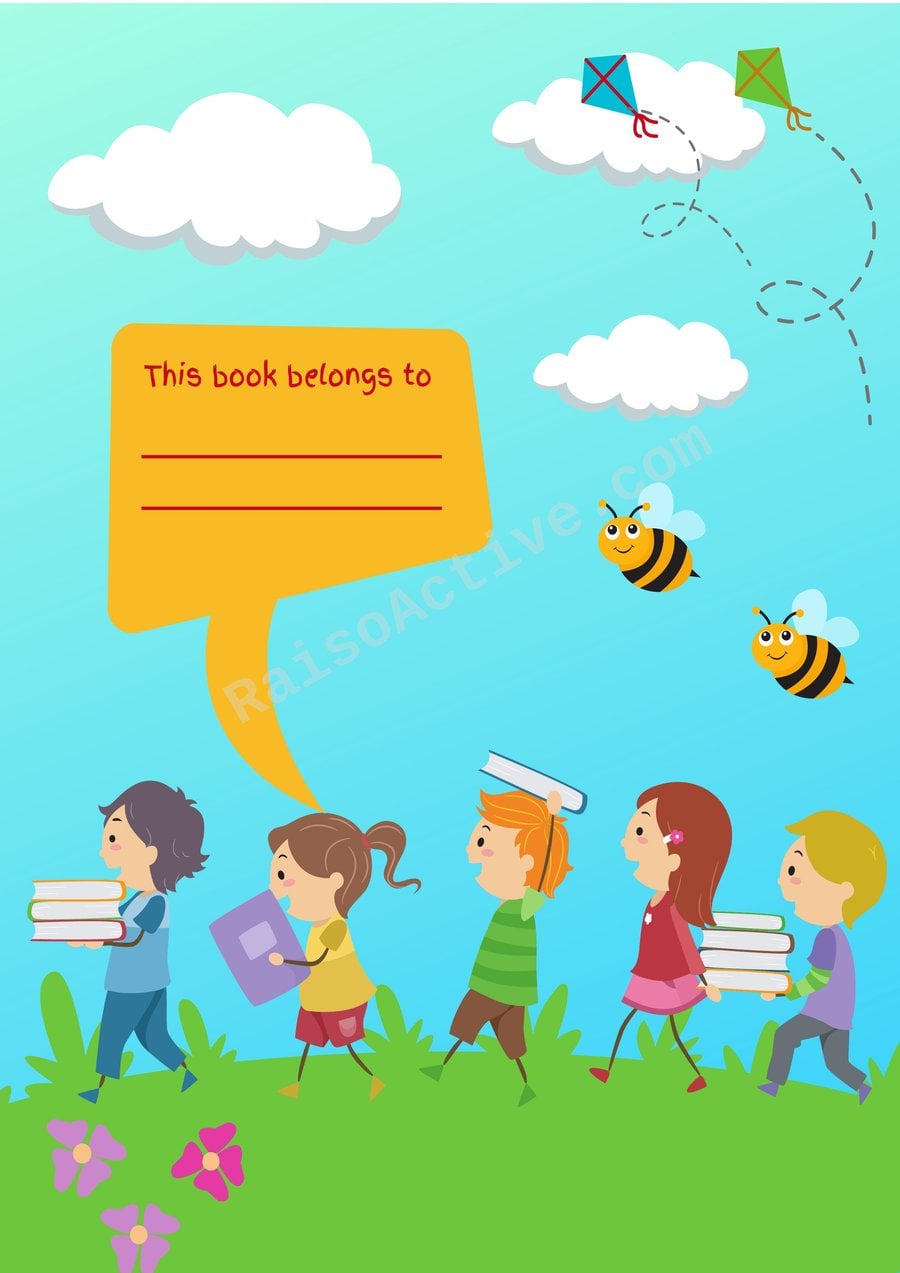
My Book: A Fun Worksheet for Early Learners
Writing their own name on the cover of something they made gives a 3-5 year old a real, motivating reason to practice name-writing — a very different feeling from tracing letters on a generic worksheet. It's often one of the first pieces of writing a child feels ownership over, which matters for building confidence around writing in general.
The pre-writing stroke sequence
Pre-writing strokes are taught in the order children can physically produce them, and each one unlocks a set of letters. Standing lines give L, T, I and the numeral 1; sleeping lines finish E, F and H; curves make C, O, S and the numerals 3, 6 and 9; slanting lines are needed for A, K, V, W, X and 7. Zigzags and waves combine them and build the rhythm needed for cursive later.
- Standing (vertical) lines, top to bottom
- Sleeping (horizontal) lines, left to right
- Circles and curves, counterclockwise from the top
- Slanting (diagonal) lines in both directions, then crosses
- Zigzags, waves and loops; then squares, triangles and other shapes
- Uppercase letters, then numerals 1–10, then lowercase letters in Pre-K
Pencil grip and hand strength
A three-year-old holding a crayon in a fist is not doing anything wrong; the grip develops as the small muscles of the hand strengthen. Playdough, tweezers, clothespins, tearing paper and threading beads build that strength faster than tracing does. Offer short, fat crayons or golf pencils, which make a fist grip awkward and nudge the fingers into a tripod hold. Correct gently and rarely; a child who is nagged about grip stops wanting to draw.
How to use tracing worksheets
Start with the widest paths and the simplest stroke, and stay there until the line is smooth and goes in the right direction. Demonstrate with your own finger first, then let your child trace with a finger, then with a crayon. Two or three lines a session is enough at three; a whole page is a Pre-K amount. Put the sheet in a plastic sleeve and use a dry-erase marker so it can be repeated. Praise the stroke, not the neatness.
Frequently asked questions
At what age should a child start tracing?
Most children are ready for simple line tracing between three and three and a half, once they can hold a crayon with purpose, draw a vertical line and a circle on their own, and sit for a few minutes. Before that, free scribbling, finger painting and playdough are the right preparation. Letter tracing comes later, usually at four, after the diagonal stroke is possible. Starting earlier does not produce better handwriting.
What should a 3-year-old be able to trace?
By around three most children can trace or copy a vertical line, a horizontal line and a circle, and by three and a half a cross. Diagonal lines, and therefore letters like A, V and X, generally come at four, and a square at four to five. Wide, straight and curved paths are the right level at three; a full alphabet tracing page is not.
What are standing, sleeping and slanting lines?
They are the child-friendly names for vertical, horizontal and diagonal strokes, widely used in preschool and early primary handwriting teaching. A standing line goes top to bottom, a sleeping line left to right, a slanting line at an angle. With curves and circles they are the four building blocks of every uppercase letter and numeral, which is why tracing programs teach them before any letters.
Should preschoolers trace uppercase or lowercase letters first?
Uppercase first. Capitals are made almost entirely of straight lines, circles and simple curves that start at the top, so they are easier to form and to tell apart. Most lowercase letters need finer control, tails below the line and more complex sequences, and are usually introduced in Pre-K and kindergarten. Common Core L.K.1a expects printing of many upper- and lowercase letters by the end of kindergarten.
Are these preschool tracing worksheets free?
Yes. Each sheet downloads free as a watermarked PDF once you have created an account, up to five a day. An annual subscription lifts the daily limit and removes the watermark across the full library of over 1,000 worksheets and the printable packs. Pages print on US Letter or A4, and laminating them allows repeated use.

Written by
Hemsweta Jain · Teacher Cheena
MBA and Early Childhood Educator, teaching since 2014 · Founder of RaisoActive, Mumbai
Written and reviewed by Hemsweta Jain (Teacher Cheena), who designs every RaisoActive worksheet.
Last reviewed
Printable packs for ages 3–4
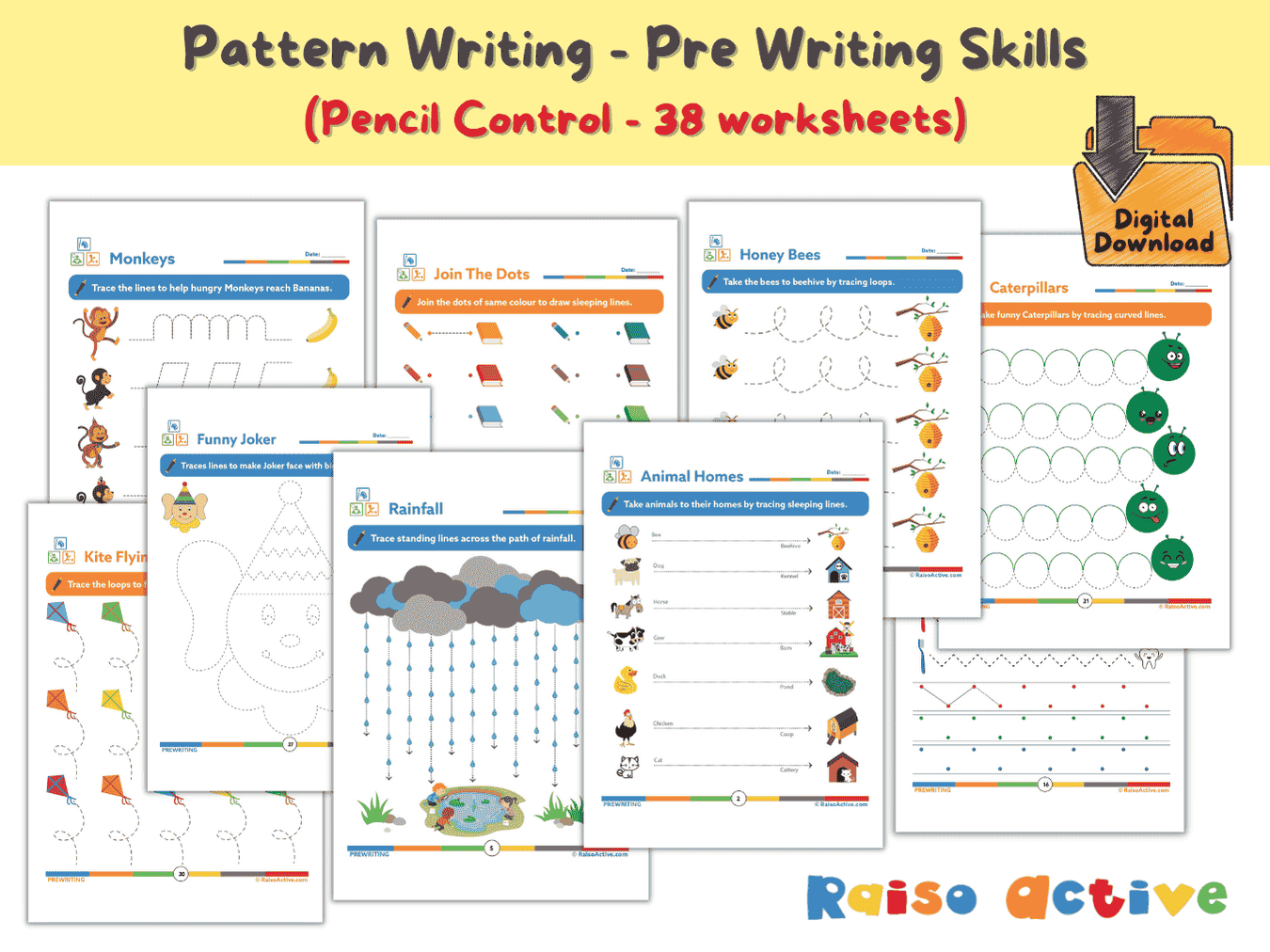
Pattern Writing Pre-writing Skills Activity Book for 3-4 Year Olds
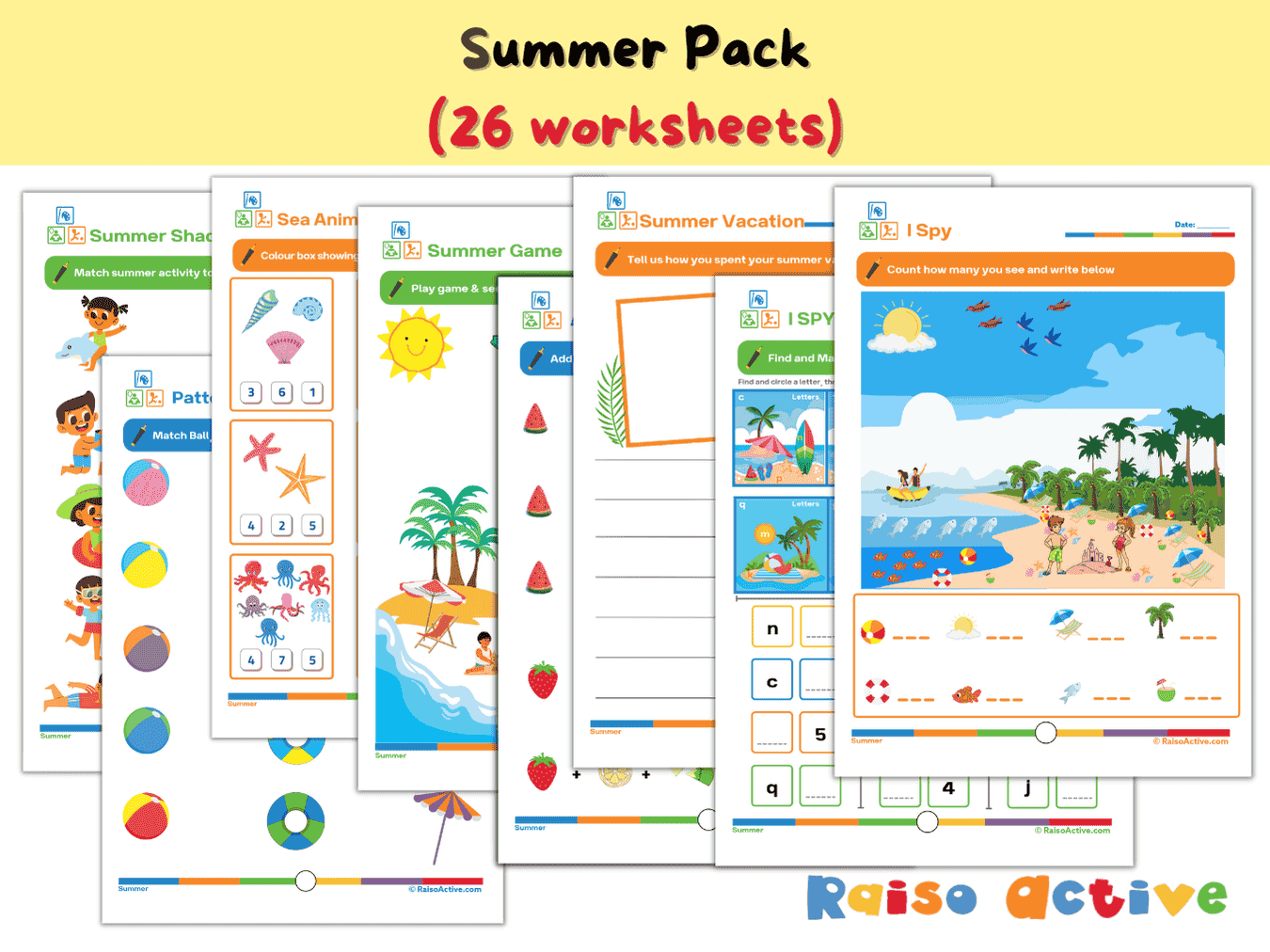
Summer Activity Pack: Math, Literacy, Puzzles & More for Preschool & Kindergarten
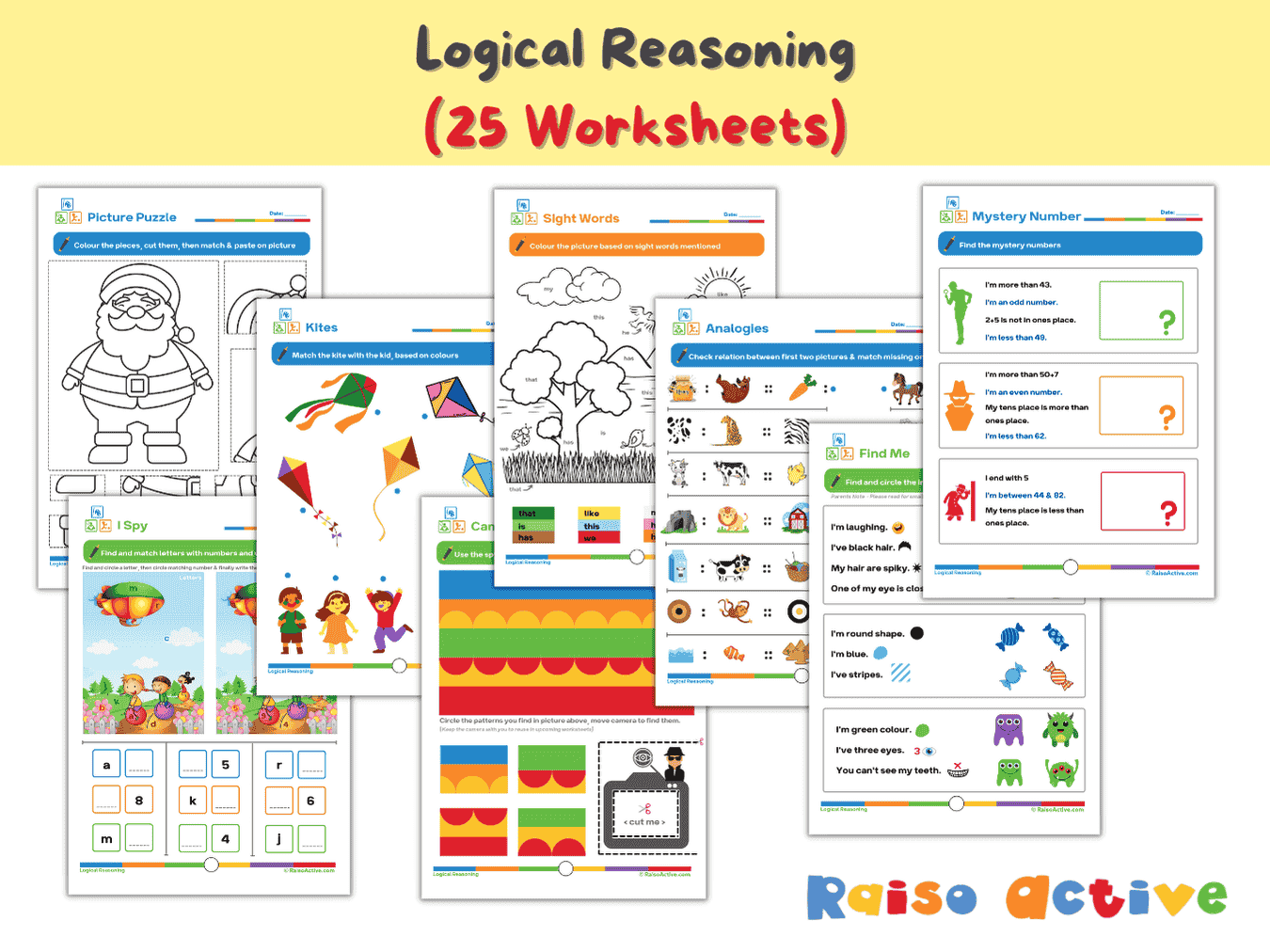
Logical Reasoning Activity Book for Preschool & Kindergarten | Patterns, Puzzles & Analogies
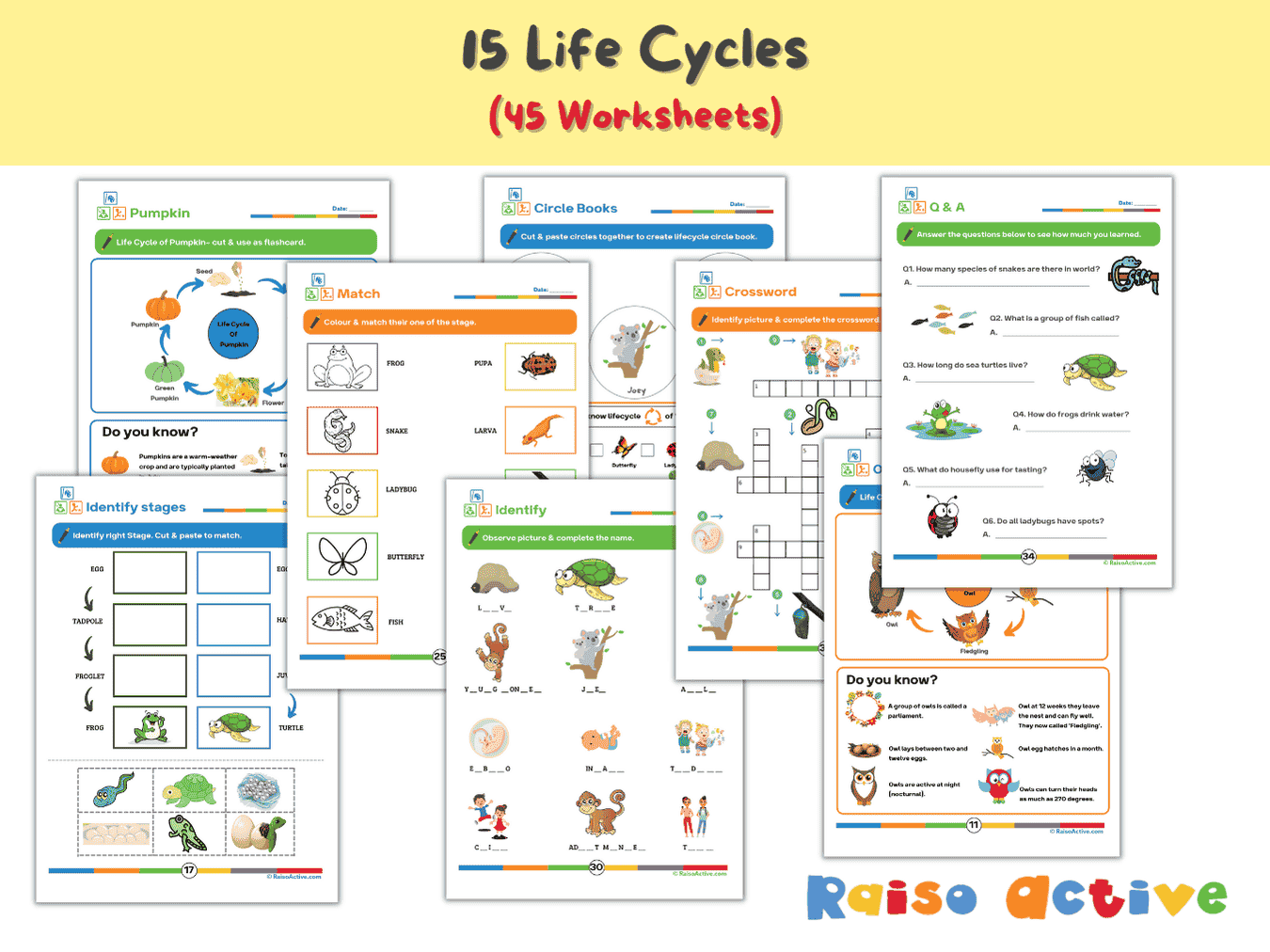
Lifecycles Activity Book & Flashcards for Preschool & Early Elementary
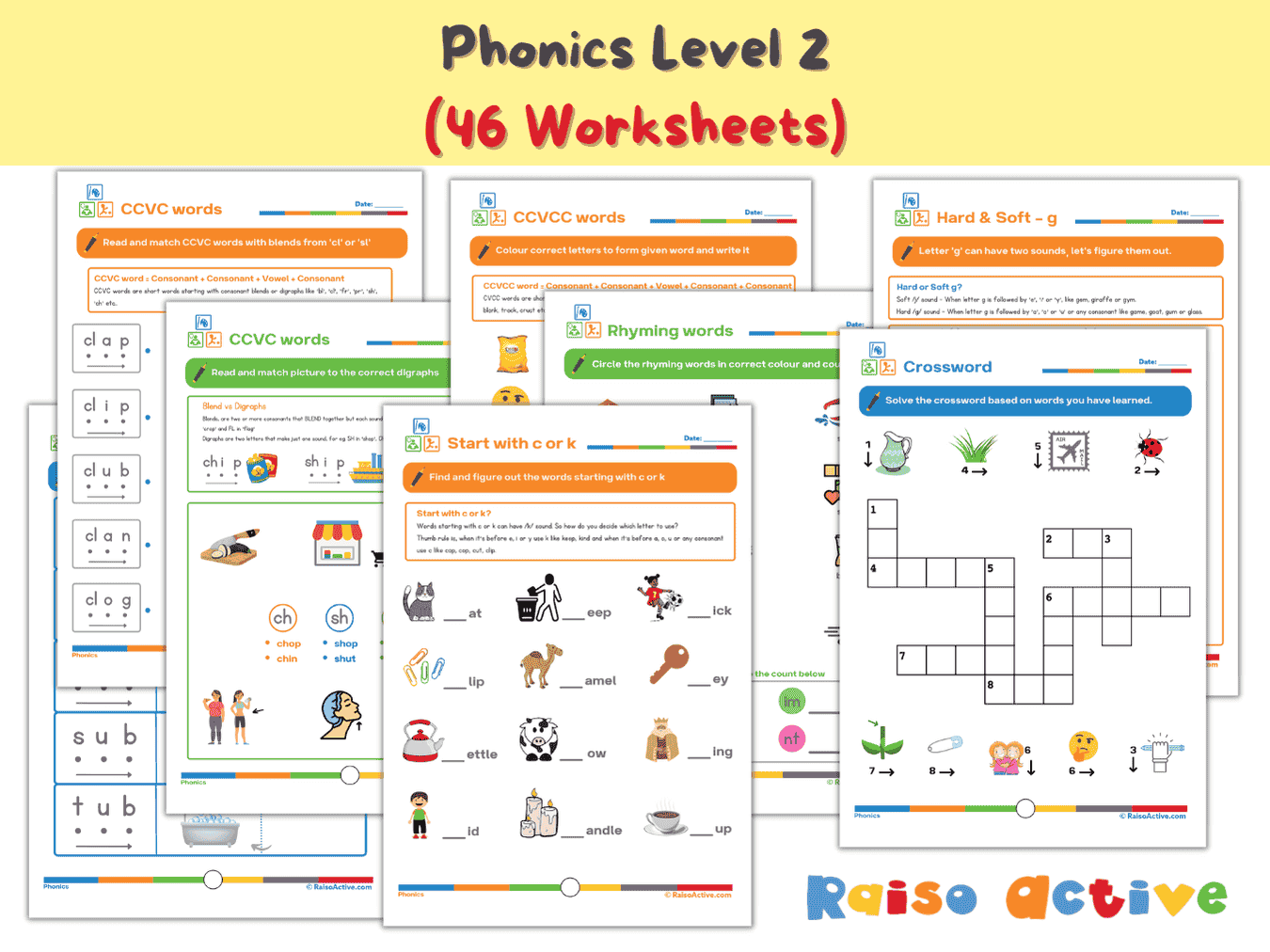
Phonics Level 2 Worksheets: CVC, CCVC, CVCC Word Families & Blends for Early Readers (Ages 4-7)
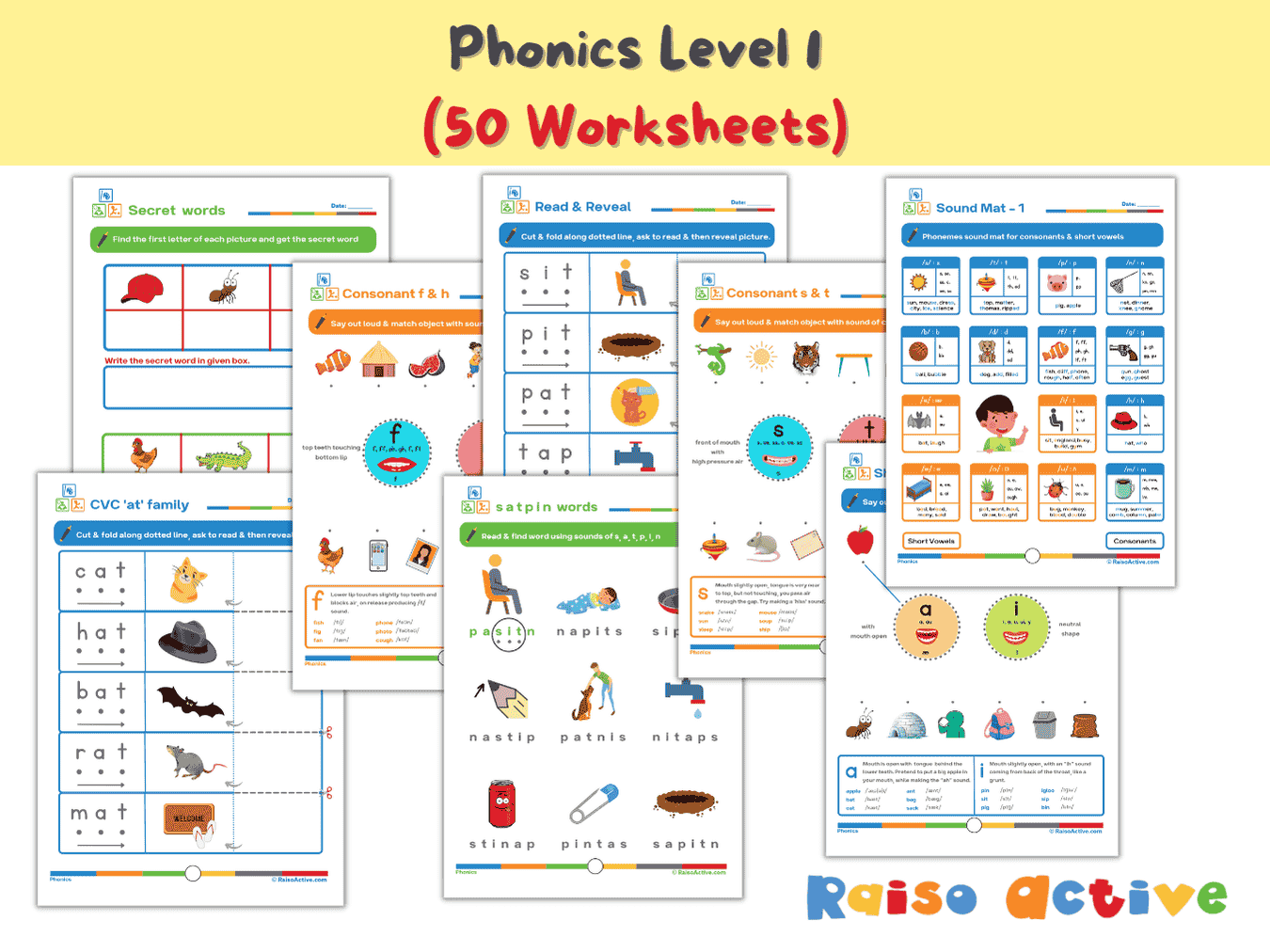
Phonics Level 1 Activity Book: Letter Sounds, Blending & CVC Words for Preschool & Kindergarten
Guides for parents and teachers
See all guides →Number Formation Rhymes 0–9 and How to Fix Reversals
Original number formation rhymes for 0–9, the correct stroke order for each digit, why 3, 5 and 7 get reversed most often, and multisensory fixes that work.
Pre-Writing Strokes in Order: From Standing Lines to Loops (With Printable Patterns)
The developmental order of pre-writing strokes, from vertical lines to loops, and why practicing them in sequence makes letter formation much easier to learn.
Kindergarten Readiness Checklist: 25 Skills to Practice Before the First Day
A kindergarten readiness checklist of 25 literacy, math, motor, self-regulation and self-help skills, with an 8-week summer plan and notes on when not to worry.
Best Worksheets for 3-Year-Olds: What Works and What to Avoid
What works on worksheets for 3-year-olds: short sessions, crayons, tracing lines, matching, cutting, a free weekly plan, and signs one is too advanced.
Reception Year Explained: EYFS Learning and How to Help at Home
A teacher's plain-English guide to the Reception Year: the seven areas of learning, Early Learning Goals, Phase 2/3 phonics, the RBA and home routines.
What Should a 4-Year-Old Know Before LKG? A Readiness Checklist
A calm, teacher-written LKG readiness checklist for 4-year-olds: language, pattern writing, numbers to 10, self-help and social skills, plus a 6-week plan.
Canonical: https://raisoactive.com/worksheets/preschool-tracing