Family Members Worksheet: Identify and Circle!
Reading a sentence describing a family member and circling the matching picture teaches children ages 3-5 to connect written description to a specific person, combining early reading comprehension with family vocabulary. This task also builds the habit of checking text carefully rather than guessing from the picture alone.
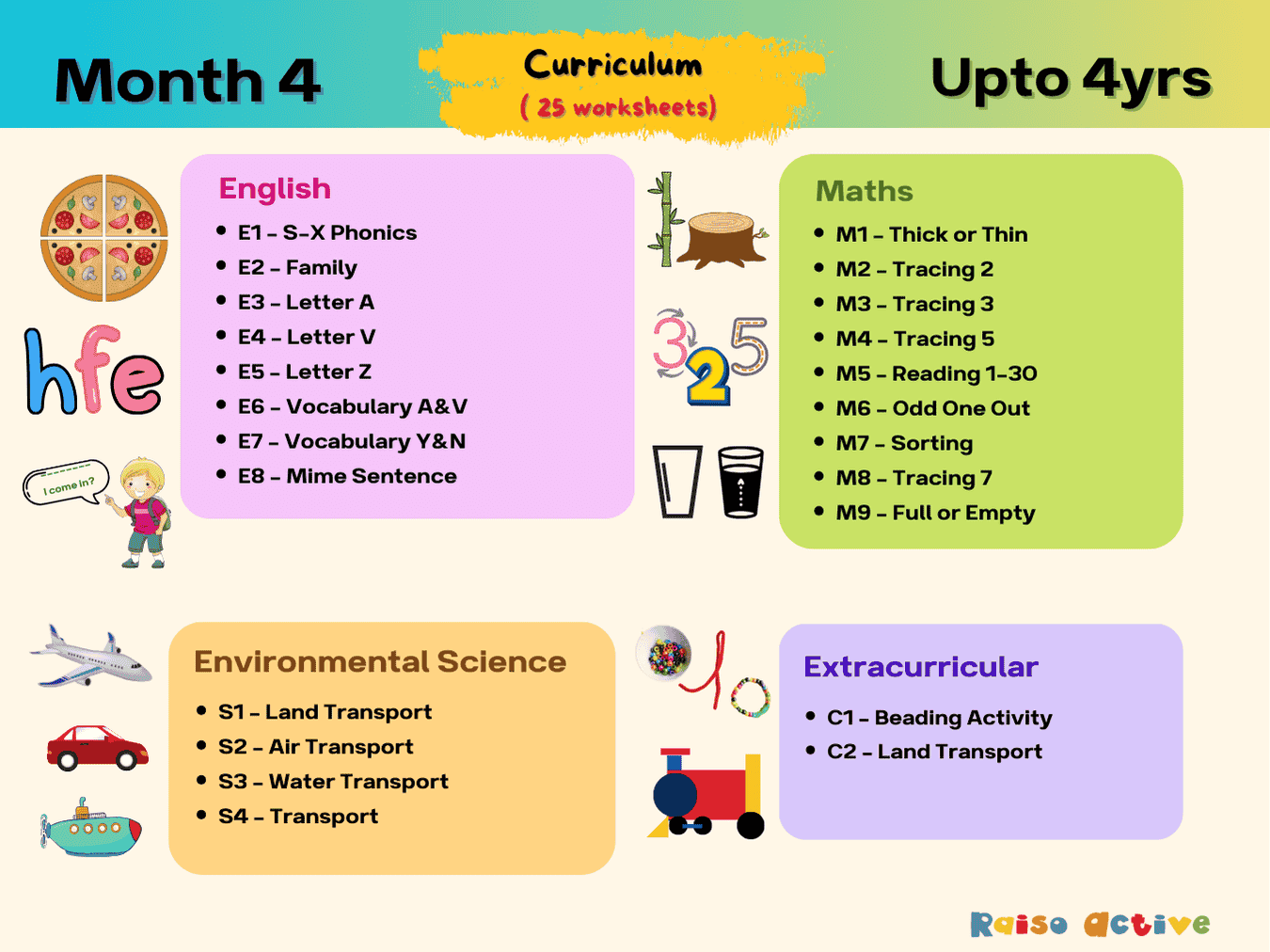
Part of the pack
Month 4: Learning & Development | Ages Up to 4
This is page 5 of the pack. Ages 2-4 · PreschoolAges 2-4 · NurseryAges 2-4
Made for your child
Counting to 10, made for your child
A maths pack with your child's name in it: pictures that explain, practice at three levels, puzzles and story sums about them. Print a new set whenever they finish.
Make a maths packFree preview · free for members
Curriculum
- My Family & Community > My Family
How to use this worksheet
Look at the pictures together and read the sentence describing one family member aloud. Ask your child to think about which picture matches the description, then have them circle the correct one. Continue through each remaining sentence and picture set the same way, encouraging them to listen carefully to each description.
Materials needed
- Pencil
- Crayons
Extension activities
- 1Draw your own family members and label each one.
- 2Build a simple family tree together using names and drawings.
- 3Play a 'who am I' guessing game, describing a family member for your child to name.
- 4Make a labeled family photo collage.
- 5Talk about the different roles each family member plays in your household.

Written by
Hemsweta Jain · Teacher Cheena
MBA and Early Childhood Educator, teaching since 2014 · Founder of RaisoActive, Mumbai
Every RaisoActive worksheet is designed and checked by the founder before publishing.
Published · Last reviewed
More from Month 4: Learning & Development | Ages Up to 4

Letter Z Tracing Worksheet for Preschoolers: Learn to Write the Letter Z!
Ages 3-5 · Preschool–Pre-KAges 3-5 · Nursery–ReceptionAges 3-5 · Nursery–LKGAges 3-5
Tracing the uppercase letter Z introduces children ages 3-5 to a distinctive zigzag stroke pattern, different from the curved or straight strokes used in most other letters, which builds versatile pencil control. Coloring pictures that start with Z afterward links this less common letter to real, memorable words like zebra or zipper.

Clean or Dirty Sorting Worksheet for Preschoolers
Ages 3-5 · Preschool–Pre-KAges 3-5 · Nursery–ReceptionAges 3-5 · Nursery–LKGAges 3-5
Sorting pictures into clean and dirty categories teaches children ages 3-5 to make observational judgments and apply reasoning about hygiene, rather than simply naming what they see. Drawing a happy or sad face for each choice also adds an element of emotional expression to what is otherwise a straightforward sorting task.

Fun Parent's Guide: Vocabulary, Phonics, and Animal Activities!
Ages 3-5 · Preschool–Pre-KAges 3-5 · Nursery–ReceptionAges 3-5 · Nursery–LKGAges 3-5
This parent's guide bundles together activities for vocabulary building, phonics practice, and animal-themed learning, giving children ages 3-5 varied exposure to language concepts like left and right, letter-object matching, and number sorting through hands-on play. Because the activities span several skill areas, the guide offers flexibility to match whatever your child is most interested in on a given day.

Domestic Animals Worksheet for Preschoolers: Circle the Animals!
Ages 3-5 · Preschool–Pre-KAges 3-5 · Nursery–ReceptionAges 3-5 · Nursery–LKGAges 3-5
Circling only the domestic animals among a mixed group teaches children ages 3-5 to apply a category rule to unfamiliar examples, an early reasoning skill that goes beyond simply naming animals they recognize. This visual discrimination task also builds vocabulary as children practice identifying each animal before deciding whether it belongs.
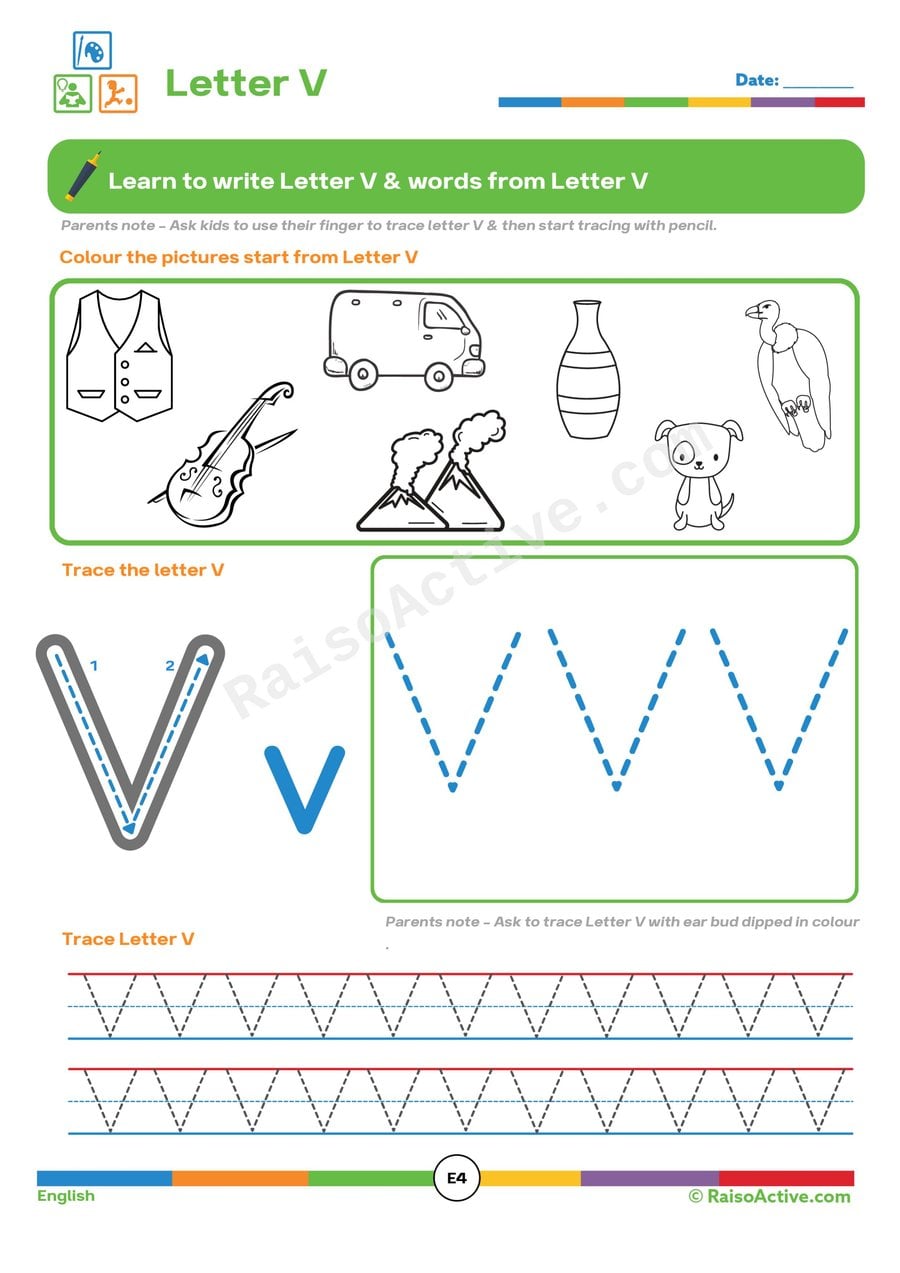
Trace the Letter V Worksheet for Preschoolers
Ages 3-5 · Preschool–Pre-KAges 3-5 · Nursery–ReceptionAges 3-5 · Nursery–LKGAges 3-5
Tracing the uppercase letter V builds the pencil control and stroke memory children ages 3-5 need for handwriting, while coloring pictures that start with V links the written letter to its spoken sound and familiar objects. Repeating the tracing after the picture activity gives extra practice forming the letter correctly.
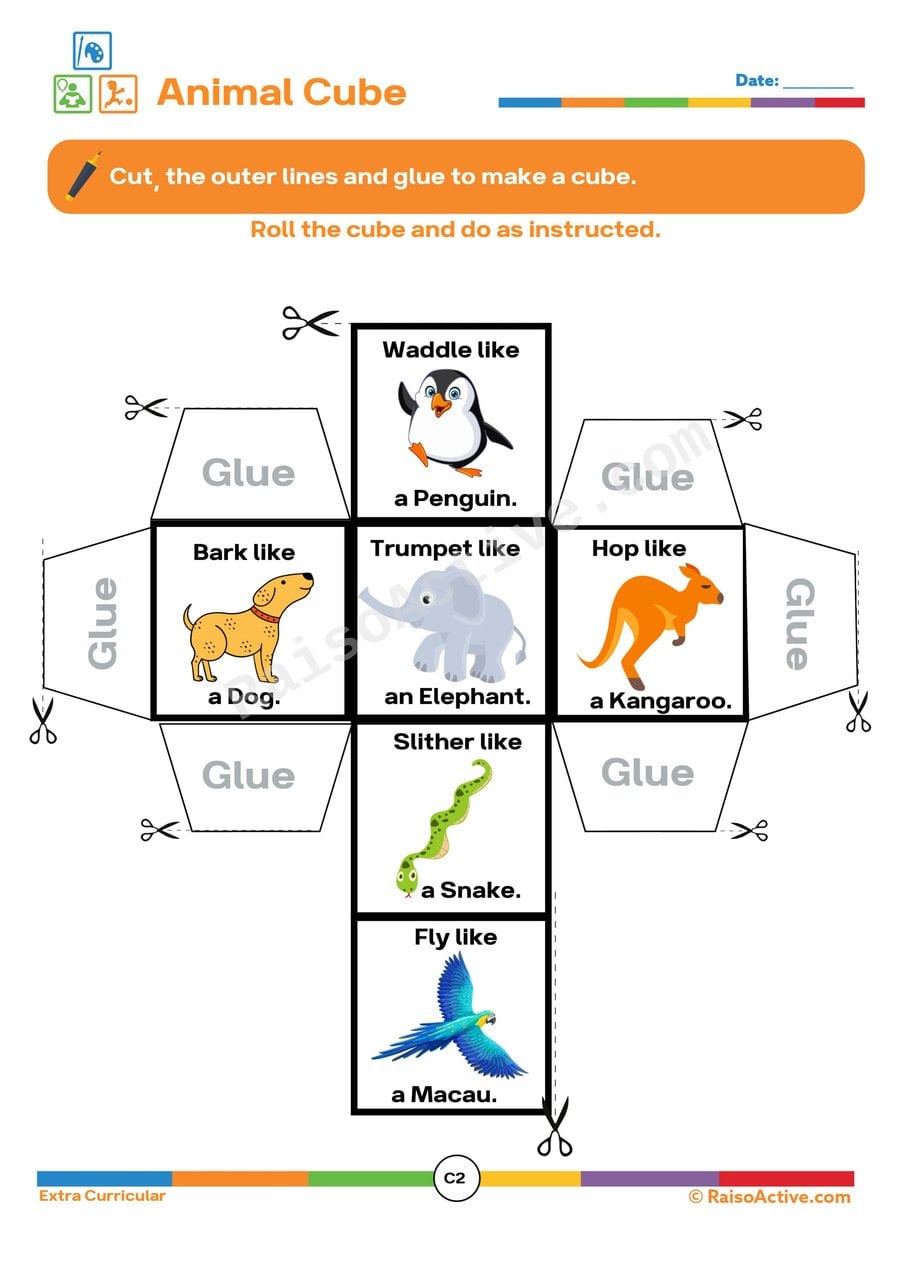
Animal Cube: Cut, Glue, and Learn!
Ages 3-5 · Preschool–Pre-KAges 3-5 · Nursery–ReceptionAges 3-5 · Nursery–LKGAges 3-5
Children ages 3-5 practice following a multi-step assembly sequence as they cut out a net, fold it, and glue the tabs to build a 3D cube featuring different animals, then use it as a game piece to review animal names and sounds. Assembling a flat shape into a 3D object also introduces early spatial reasoning about how 2D shapes fold into 3D forms.
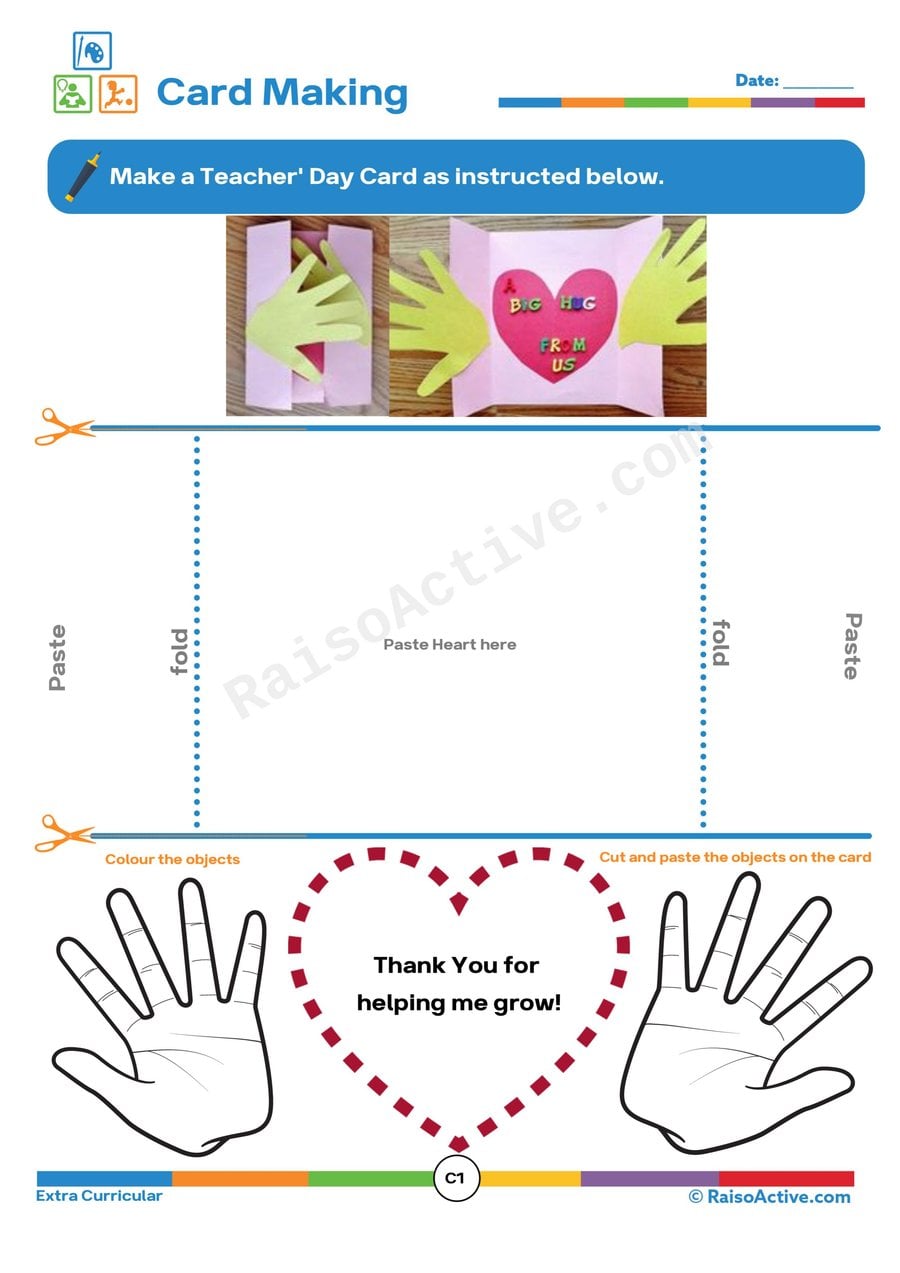
Teacher's Day Card Craft: Make a Special Card!
Ages 3-5 · Preschool–Pre-KAges 3-5 · Nursery–ReceptionAges 3-5 · Nursery–LKGAges 3-5
This craft worksheet helps children ages 3-5 follow a multi-step sequence — cutting, coloring, gluing, and folding — while creating a handmade card that expresses gratitude toward their teacher. Beyond fine motor practice, it introduces the social-emotional skill of thinking about someone else's feelings and expressing appreciation in a tangible way.

Letter A Tracing Worksheet: Learn to Write and Color!
Ages 3-5 · Preschool–Pre-KAges 3-5 · Nursery–ReceptionAges 3-5 · Nursery–LKGAges 3-5
Tracing the uppercase letter A builds the fine motor control and stroke memory children ages 3-5 need for handwriting, while coloring pictures that start with A connects the written letter to its spoken sound and familiar objects. Repeating the tracing after the picture activity provides extra reinforcement of correct letter formation.
Related worksheets
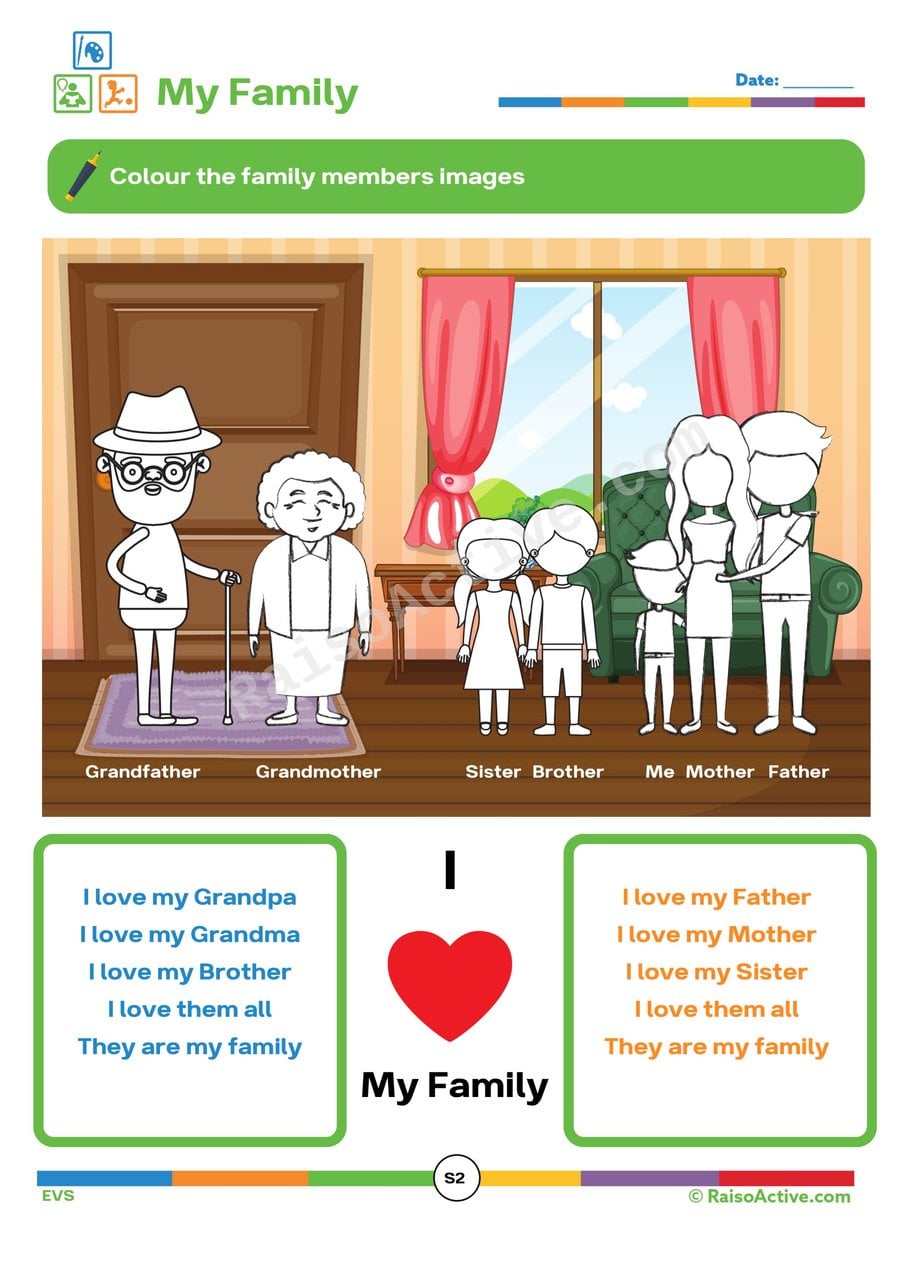
My Family Coloring Worksheet for Preschoolers
Ages 3-5 · Preschool–Pre-KAges 3-5 · Nursery–ReceptionAges 3-5 · Nursery–LKGAges 3-5
This worksheet helps children ages 3-5 practice fine motor control and color-staying-in-the-lines skills while coloring pictures of family members, giving them a personal, meaningful subject that keeps engagement high. Reading and coloring a heart after the family sentences also introduces the idea that words can express feelings, linking literacy with emotional expression.
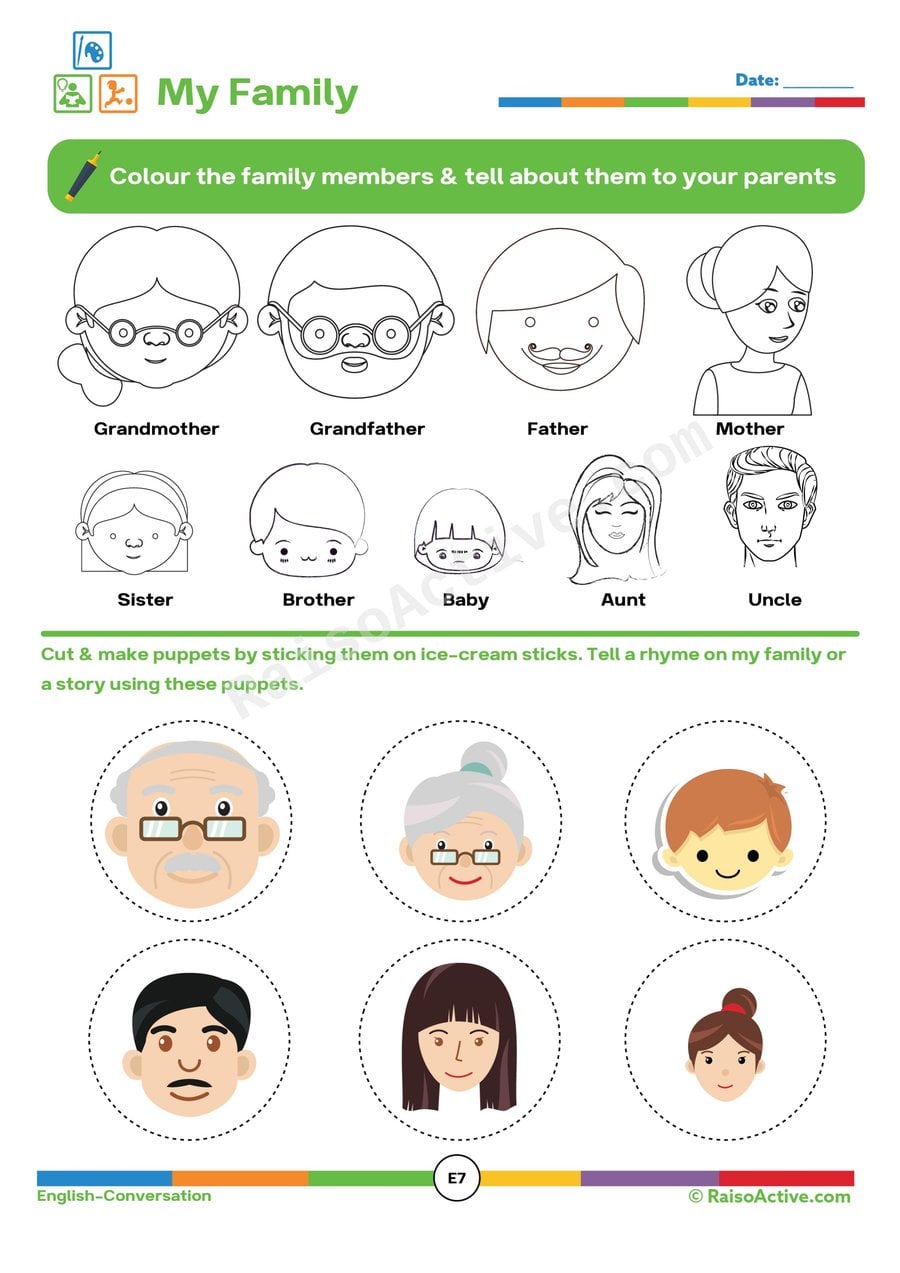
My Family: Color and Create Puppets Worksheet
Ages 3-5 · Preschool–Pre-KAges 3-5 · Nursery–ReceptionAges 3-5 · Nursery–LKGAges 3-5
This worksheet builds early social-emotional vocabulary around family roles while developing fine motor skills through coloring, cutting, and assembling finger puppets. For three- to five-year-olds, turning family members into puppets they can move and talk through gives them a hands-on way to describe relationships and practice storytelling about people who matter most to them.

My Family Tree Worksheet: Learn About Family Members!
Ages 3-5 · Preschool–Pre-KAges 3-5 · Nursery–ReceptionAges 3-5 · Nursery–LKGAges 3-5
Filling in a family tree helps children ages 3-5 practice family vocabulary, like mother, father, sibling, and grandparent, while also building an early sense of belonging and identity by seeing themselves as part of a larger family structure. Talking through each relationship as it's added also supports oral language development, since children have to describe who each person is and how that person relates to them.
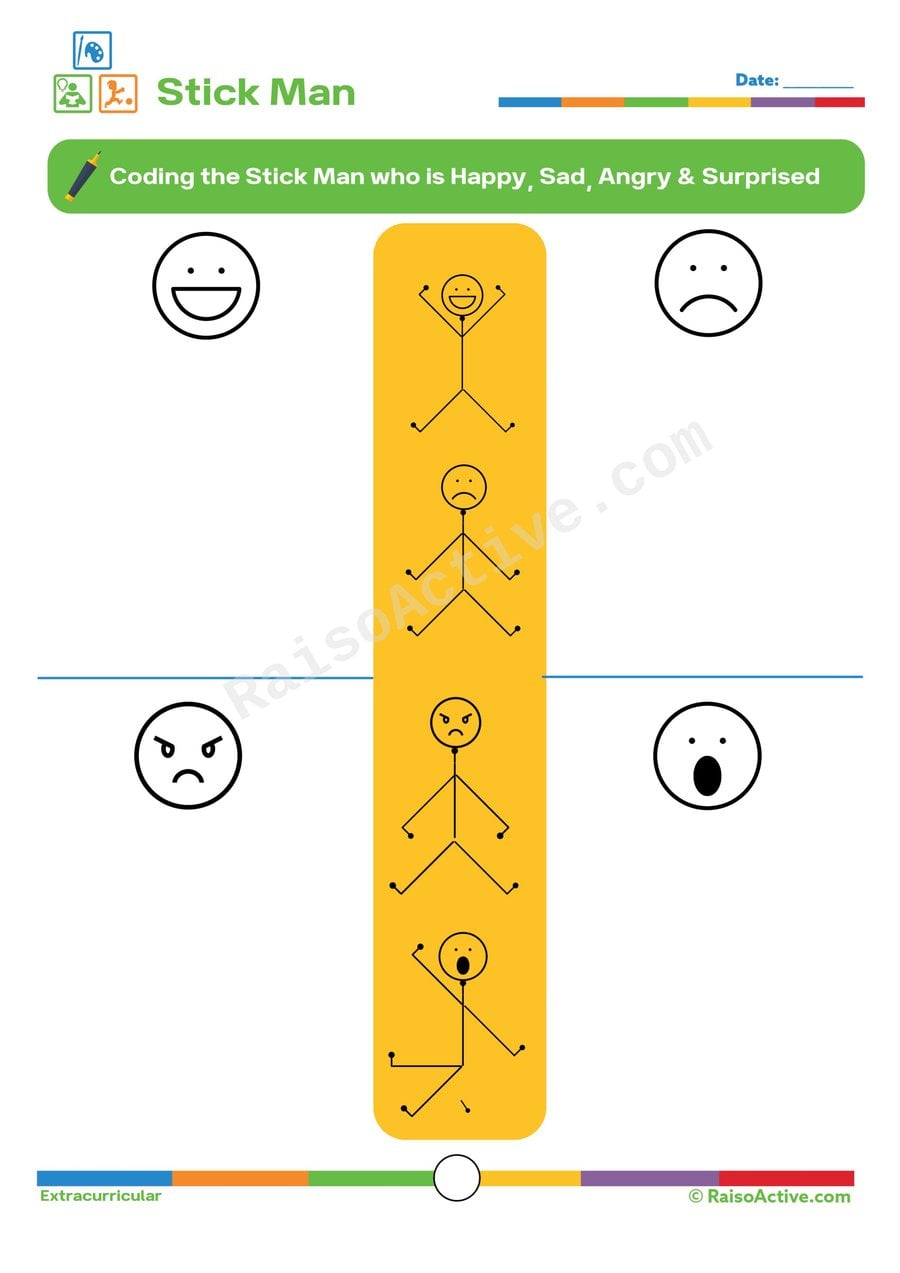
Stick Man Emotions Worksheet: Happy, Sad, Angry & Surprised!
Ages 3-5 · Preschool–Pre-KAges 3-5 · Nursery–ReceptionAges 3-5 · Nursery–LKGAges 3-5
Matching simple stick-figure faces to emotion words helps children ages 3-5 build an early emotional vocabulary, connecting facial cues like a curved mouth or raised eyebrows to specific feeling words. This kind of emotion recognition is a foundational social-emotional skill, helping children name what they and others are feeling instead of just reacting.

Easter Egg Color Match Worksheet for Preschoolers
Ages 3-5 · Preschool–Pre-KAges 3-5 · Nursery–ReceptionAges 3-5 · Nursery–LKGAges 3-5
Children ages 3-5 practice color recognition and following a visual code as they color Easter eggs to match a key provided at the top of the page. Using a color-coded key rather than free coloring adds an instruction-following element, teaching children to check a reference and apply it consistently across a whole page.

Lock and Key Matching Worksheet for Preschoolers
Ages 3-5 · Preschool–Pre-KAges 3-5 · Nursery–ReceptionAges 3-5 · Nursery–LKGAges 3-5
Matching each key to the lock sharing the same letter helps children ages 3-5 practice letter recognition in a playful, puzzle-like context rather than rote drilling. Because each key must be checked against several similar-looking locks before finding the right match, this worksheet also builds visual scanning and careful comparison skills that support problem-solving.

Match the Flags! A Fun Coloring Worksheet for Kids
Ages 3-5 · Preschool–Pre-KAges 3-5 · Nursery–ReceptionAges 3-5 · Nursery–LKGAges 3-5
This worksheet combines coloring with flag recognition, helping children ages 3-5 practice fine motor control while learning to match a colored flag to its correct blank outline. Coloring the flags first, then matching them, adds an extra layer of visual processing as children must recall the colors they just used to complete the matching step.

Festival Fun: Name the Festivals Worksheet for Kids
Ages 4-8 · Pre-K–Grade 2Ages 4-8 · Reception–Year 3Ages 4-8 · LKG–Class 2Ages 4-8
Children look at nine festival pictures and write the right name under each, from Diwali and Navratri to Lohri, Pongal and Paryushan Parv.
Guides for this topic

Best Worksheets for 3-Year-Olds: What Works and What to Avoid
What works on worksheets for 3-year-olds: short sessions, crayons, tracing lines, matching, cutting, a free weekly plan, and signs one is too advanced.
Preparing Your Child for a Rapidly Changing World: Essential Skills for Future Success
Discover the essential 21st century skills your child needs for future success. Practical tips on creativity, critical thinking, digital literacy & emotional intelligence for ages 1-8.
Social-Emotional Learning Activities for Preschoolers: Nurturing Hearts and Minds
Discover practical social-emotional learning activities for preschoolers. Build emotional intelligence, empathy, and cooperation skills with fun, age-appropriate SEL activities.
Reviews
Every worksheet for ages 3–5, no watermark
Members download the full library of 1,000+ worksheets and every activity pack without watermarks or daily limits. One year costs ₹999 in India or $20 elsewhere.
See membership plansOr download any worksheet free with a watermark (5 a day).