Letter Z Tracing Worksheet for Preschoolers: Learn to Write the Letter Z!
Tracing the uppercase letter Z introduces children ages 3-5 to a distinctive zigzag stroke pattern, different from the curved or straight strokes used in most other letters, which builds versatile pencil control. Coloring pictures that start with Z afterward links this less common letter to real, memorable words like zebra or zipper.
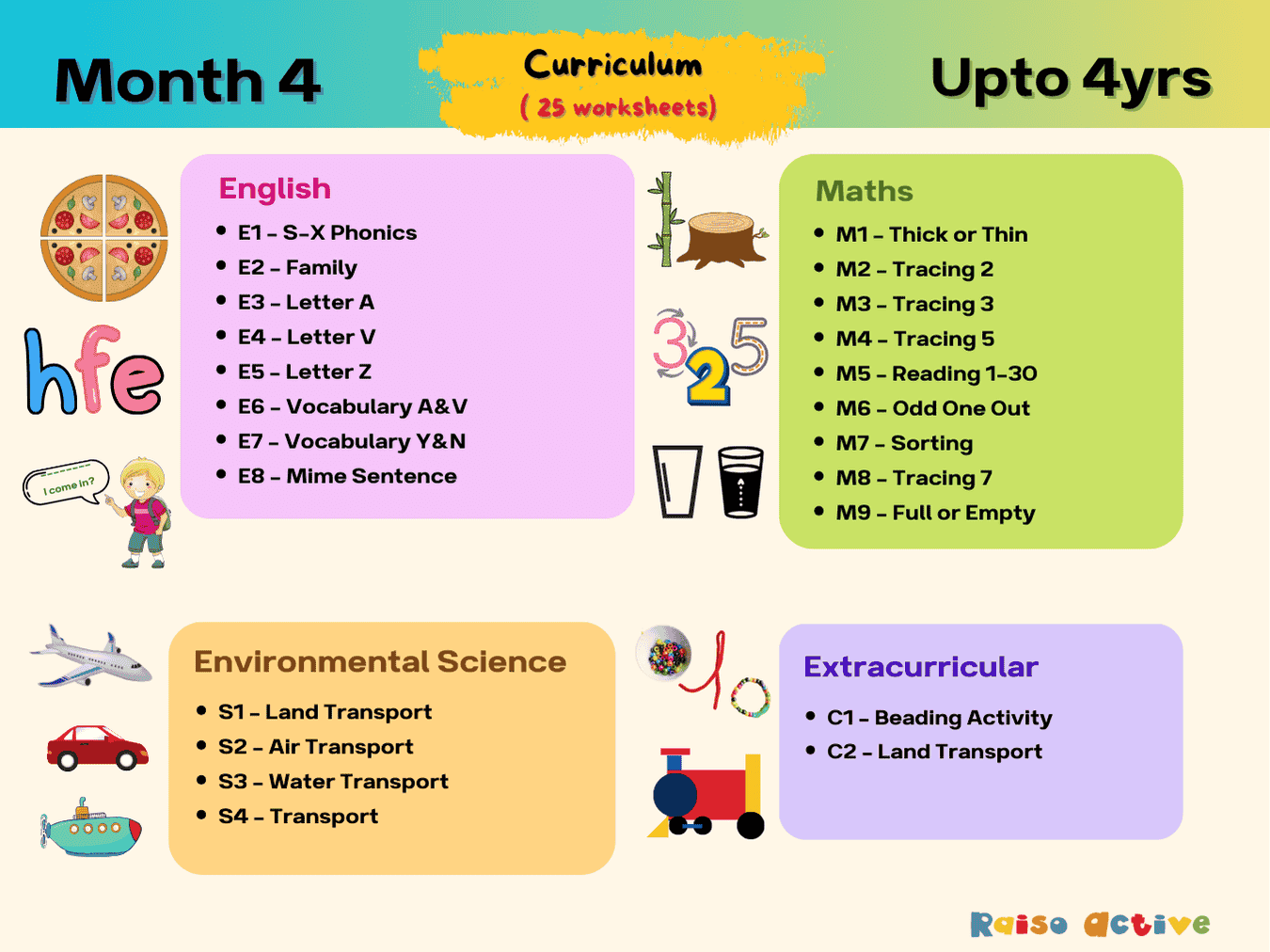
Part of the pack
Month 4: Learning & Development | Ages Up to 4
This is page 8 of the pack. Ages 2-4 · PreschoolAges 2-4 · NurseryAges 2-4

Made for your child
A whole activity pack made with their name
60 pages to spot, build, trace and write their own name, plus pages about their favourites, feelings and family. See a free preview with their name.
Make an All About Me packFree preview · free for members
Or start free: a name tracing sheet with their nameCurriculum
- Writing > Letter Tracing A-Z
How to use this worksheet
Have your child trace the letter Z along the dotted lines first, saying the /z/ sound as they go. Next, ask them to practice writing the letter Z on their own along the practice lines. Then have them color the pictures on the page that start with the letter Z, naming each object aloud as they color.
Materials needed
- Pencil
- Crayons
Extension activities
- 1Search the house for objects that start with Z, like a zipper on a jacket.
- 2Practice writing Z in a tray of sand or shaving cream for sensory reinforcement.
- 3Draw and color a zebra, talking about its stripes as you go.
- 4Practice zigzag line drawing on scrap paper before tracing the letter again.
- 5Sing the alphabet song, pausing extra long on the letter Z at the end.

Written by
Hemsweta Jain · Teacher Cheena
MBA and Early Childhood Educator, teaching since 2014 · Founder of RaisoActive, Mumbai
Every RaisoActive worksheet is designed and checked by the founder before publishing.
Published · Last reviewed
More from Month 4: Learning & Development | Ages Up to 4
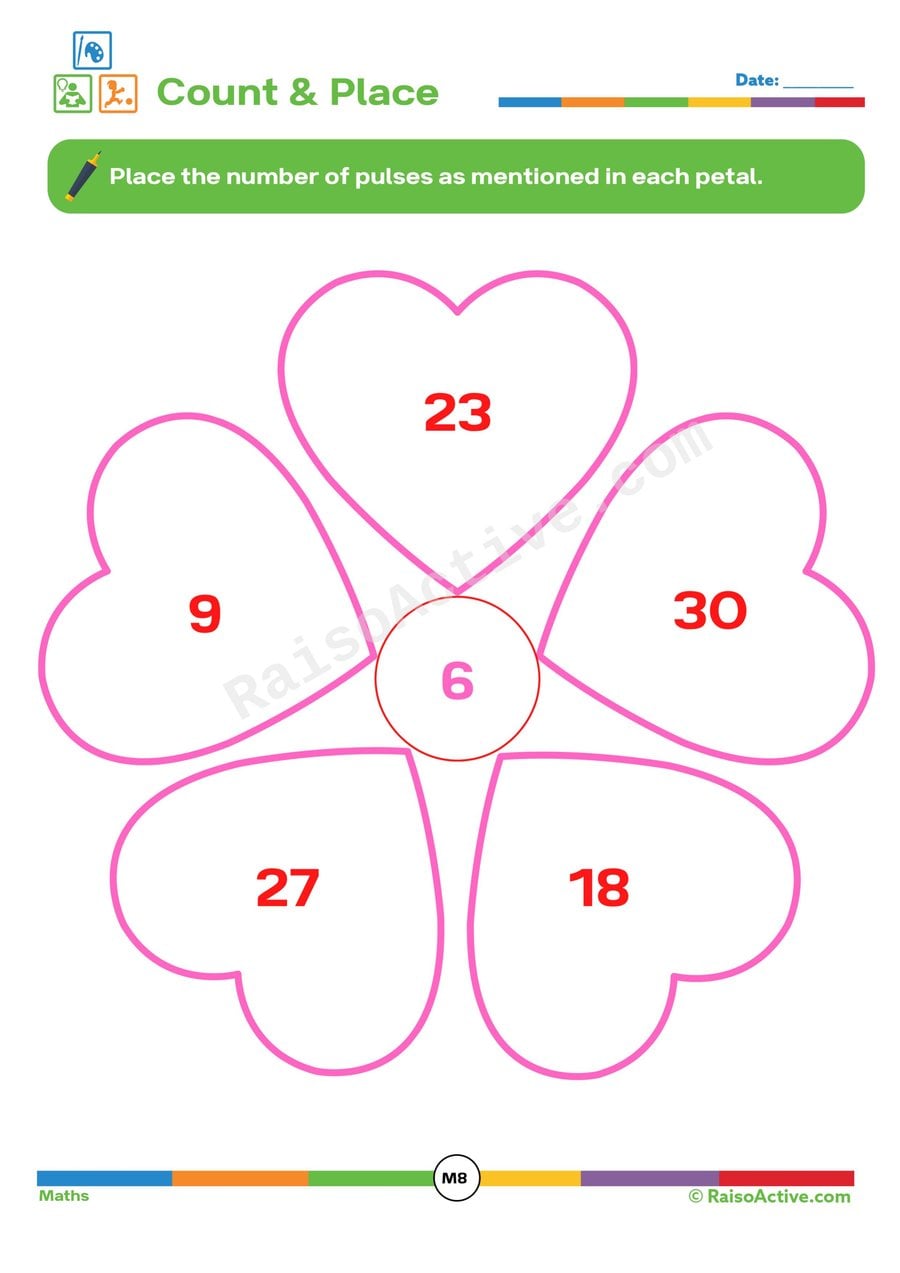
Count and Place: Heart Petals Worksheet
Ages 4-5 · Pre-KAges 4-5 · ReceptionAges 4-5 · LKGAges 4-5
Counting the marks in each heart-shaped petal and writing the matching number builds one-to-one correspondence for children ages 4-5, ensuring they touch or point to each mark exactly once as they count. This petal-by-petal counting also strengthens number formation practice as children write each total by hand.
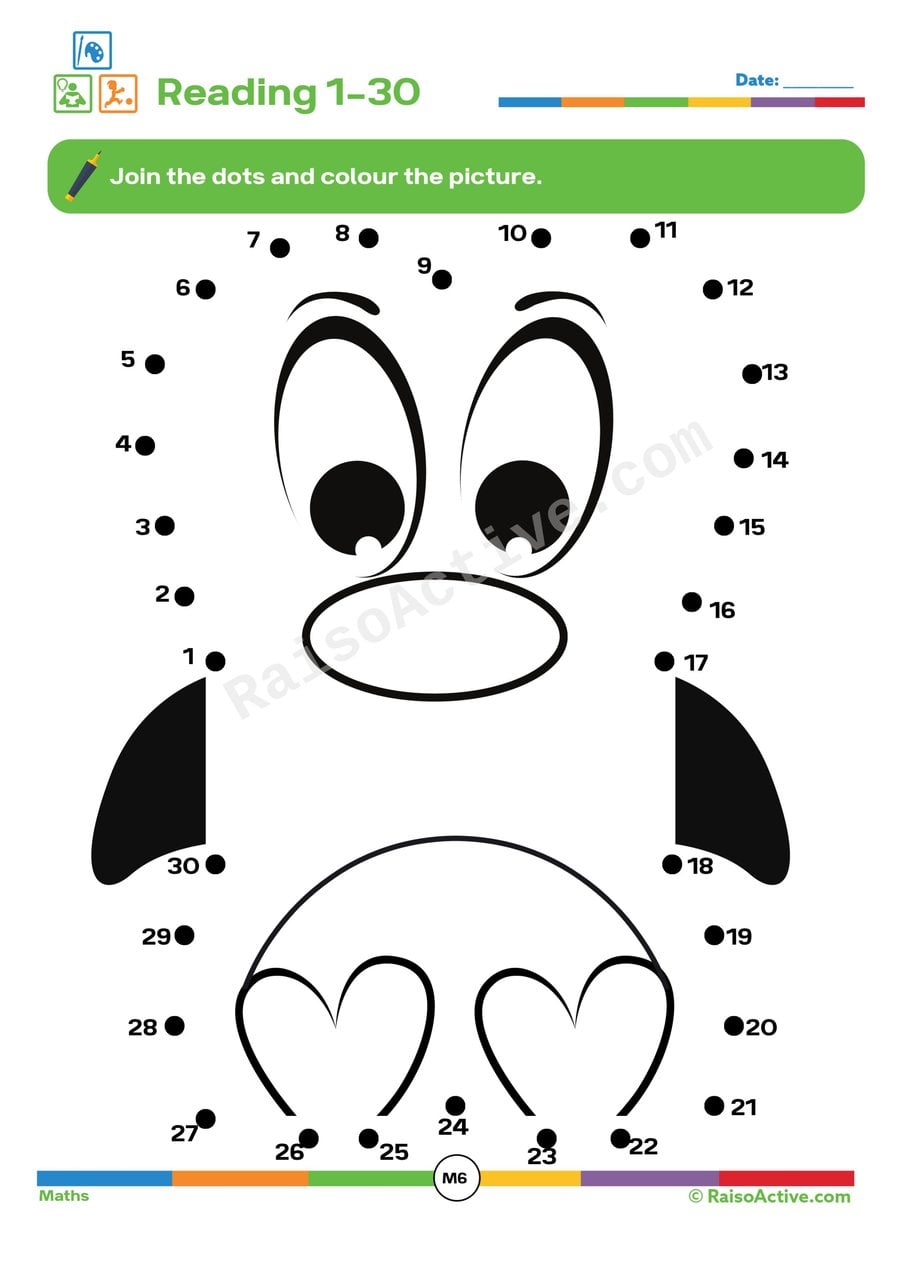
Connect the Dots Penguin Worksheet for Kids
Ages 3-5 · Preschool–Pre-KAges 3-5 · Nursery–ReceptionAges 3-5 · Nursery–LKGAges 3-5
Connecting numbered dots in order to reveal a penguin picture helps children ages 3-5 practice counting in sequence while building the fine motor control needed to draw a steady connecting line. The surprise of watching a recognizable picture emerge gives extra motivation to count carefully all the way to the end.
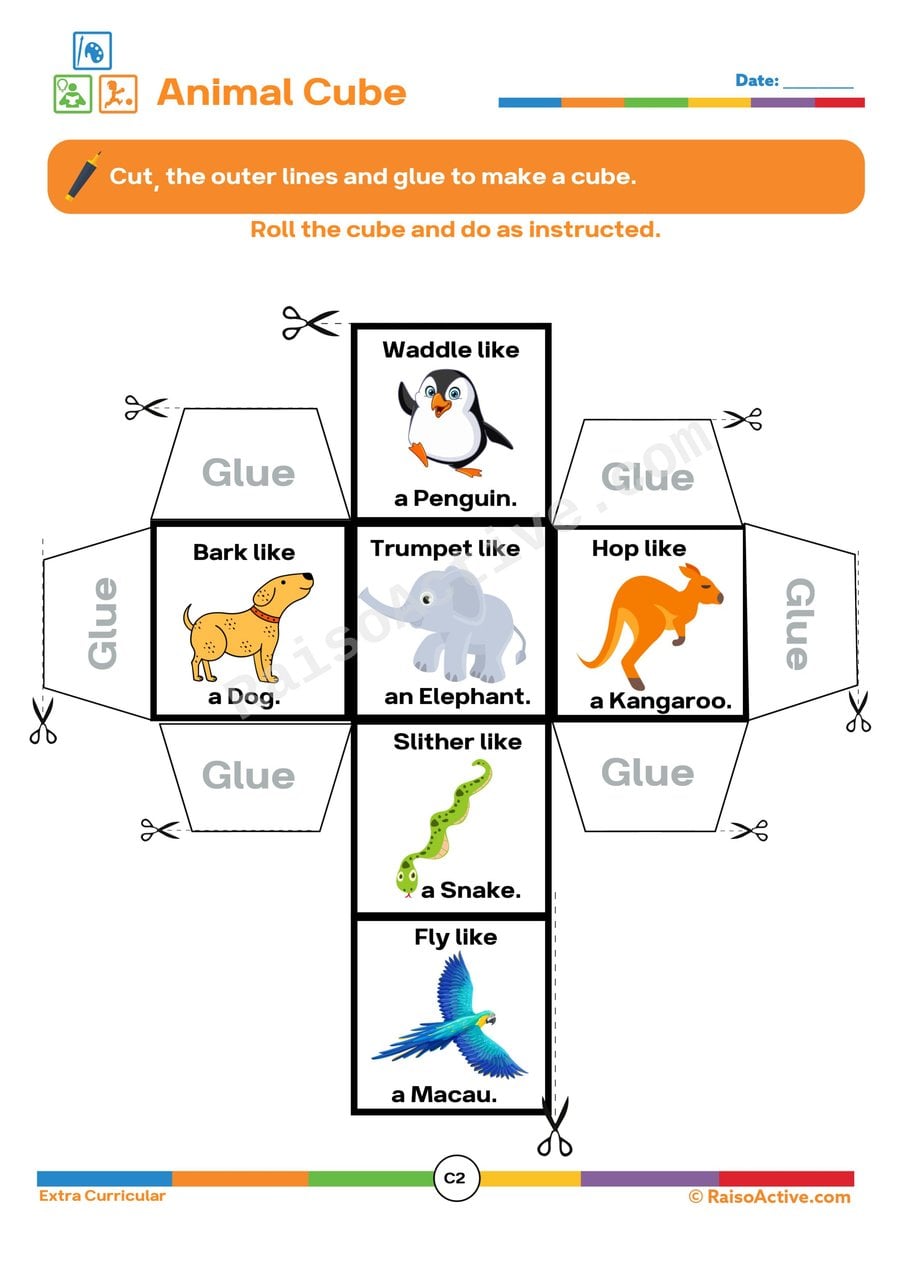
Animal Cube: Cut, Glue, and Learn!
Ages 3-5 · Preschool–Pre-KAges 3-5 · Nursery–ReceptionAges 3-5 · Nursery–LKGAges 3-5
Children ages 3-5 practice following a multi-step assembly sequence as they cut out a net, fold it, and glue the tabs to build a 3D cube featuring different animals, then use it as a game piece to review animal names and sounds. Assembling a flat shape into a 3D object also introduces early spatial reasoning about how 2D shapes fold into 3D forms.
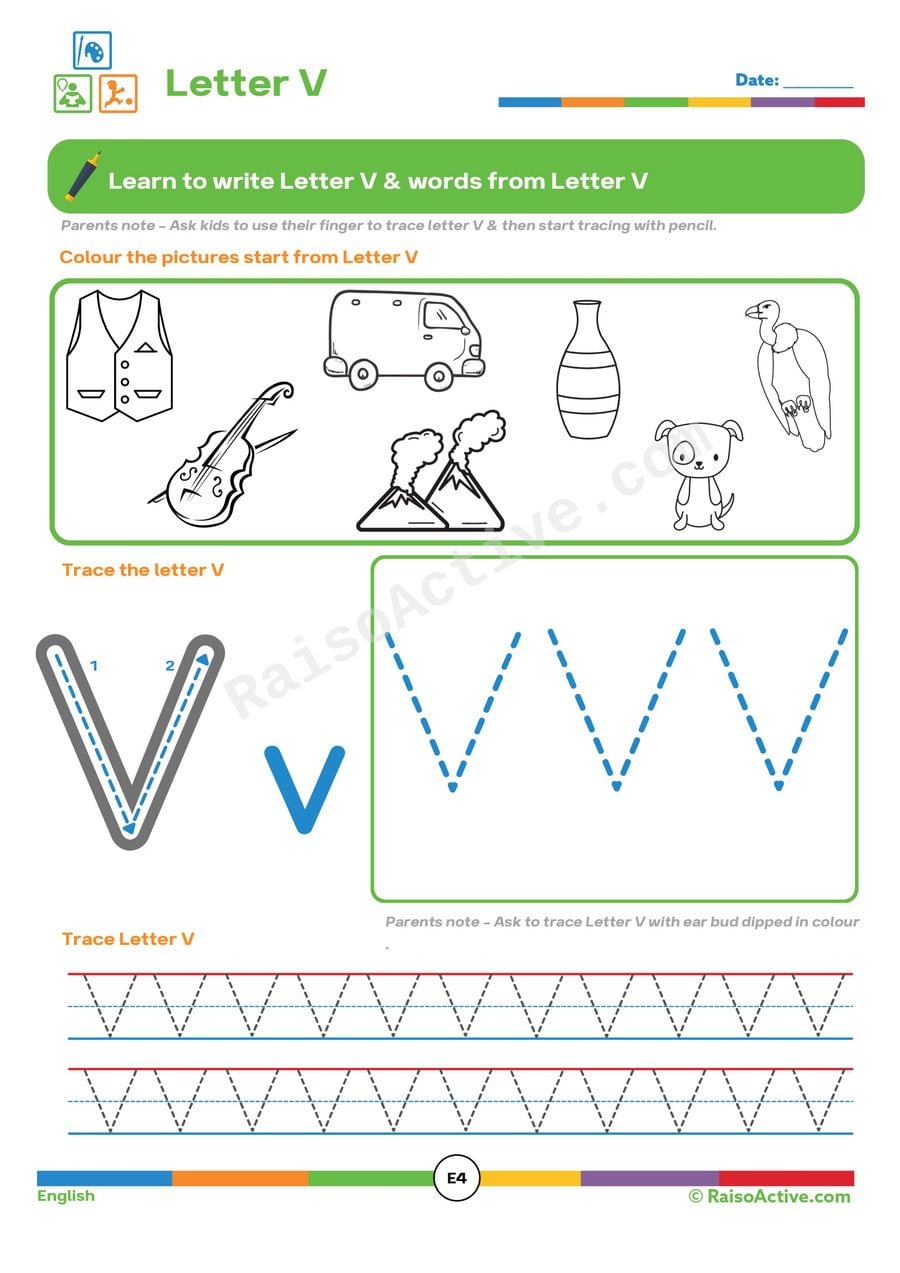
Trace the Letter V Worksheet for Preschoolers
Ages 3-5 · Preschool–Pre-KAges 3-5 · Nursery–ReceptionAges 3-5 · Nursery–LKGAges 3-5
Tracing the uppercase letter V builds the pencil control and stroke memory children ages 3-5 need for handwriting, while coloring pictures that start with V links the written letter to its spoken sound and familiar objects. Repeating the tracing after the picture activity gives extra practice forming the letter correctly.

Wild Animals Cut and Paste Worksheet for Preschoolers
Ages 3-5 · Preschool–Pre-KAges 3-5 · Nursery–ReceptionAges 3-5 · Nursery–LKGAges 3-5
Children ages 3-5 practice scissor control and glue placement while learning to identify wild animals and place them into a jungle habitat, connecting the idea that specific animals belong to specific environments. This activity builds fine motor precision — cutting along a line and centering an object with glue — while introducing early habitat vocabulary like jungle, forest floor, and trees.

Animal Homes Cut and Paste Worksheet for Preschoolers
Ages 3-5 · Preschool–Pre-KAges 3-5 · Nursery–ReceptionAges 3-5 · Nursery–LKGAges 3-5
Cutting out animal home pictures and pasting each one next to its matching animal teaches children ages 3-5 to connect an animal with where it lives, building categorization skills alongside new vocabulary like nest, den, or kennel. This hands-on matching also strengthens fine motor control through repeated cutting and pasting.
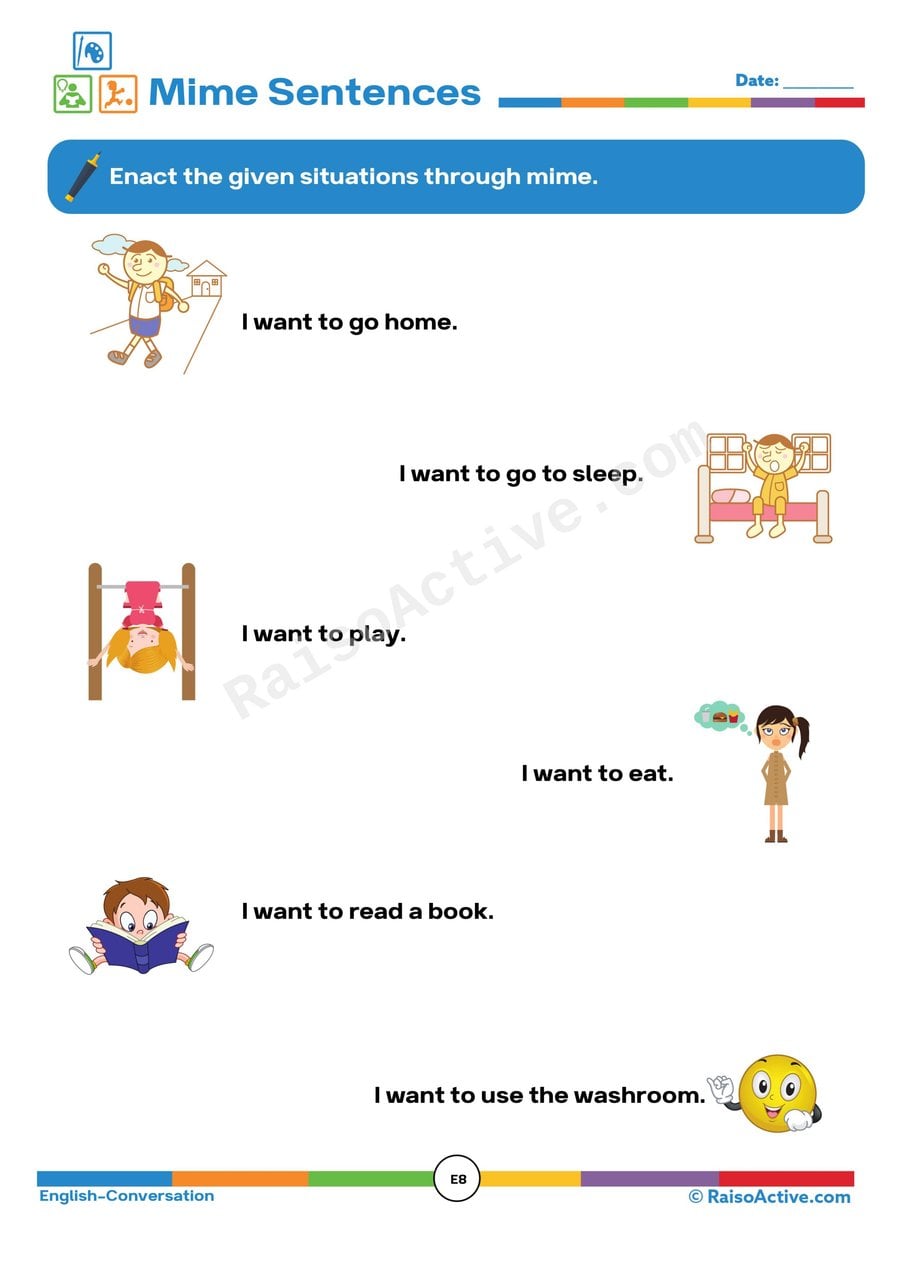
Mime Sentences Worksheet: Act Out Actions!
Ages 3-5 · Preschool–Pre-KAges 3-5 · Nursery–ReceptionAges 3-5 · Nursery–LKGAges 3-5
Reading a sentence and then acting it out through mime teaches children ages 3-5 to connect written or spoken language with physical expression, deepening comprehension of action verbs in a memorable, embodied way. This kind of kinesthetic practice also builds confidence with performance and body awareness alongside early reading skills.
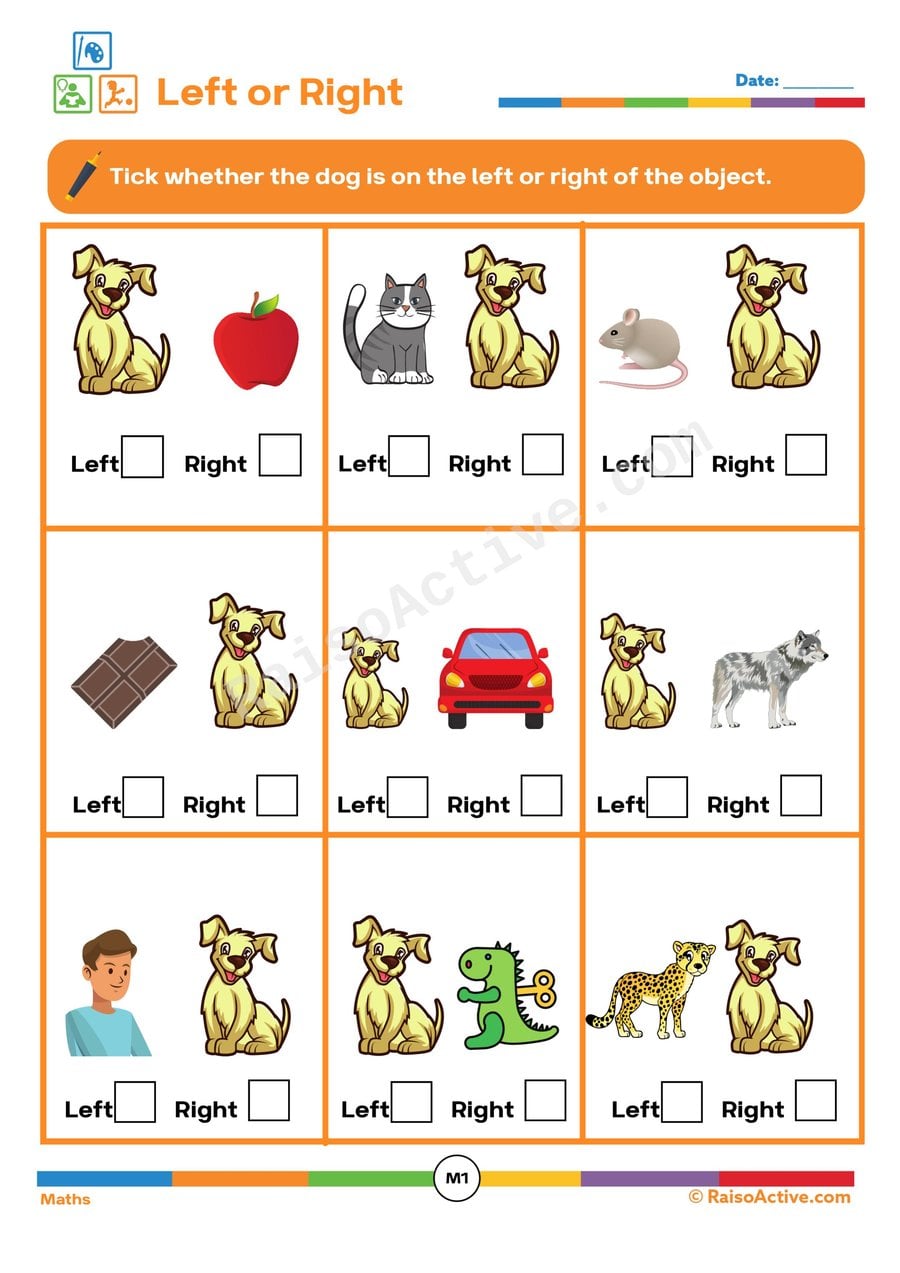
Left or Right Worksheet: Where is the Dog?
Ages 3-5 · Preschool–Pre-KAges 3-5 · Nursery–ReceptionAges 3-5 · Nursery–LKGAges 3-5
Children ages 3-5 build an early sense of directionality as they determine whether the dog sits to the left or right of another object in each picture. This 'left' and 'right' vocabulary is a foundational spatial-reasoning skill that later supports reading direction, map use, and following multi-step instructions. Naming a location relative to another object also strengthens comparative thinking.
Related worksheets
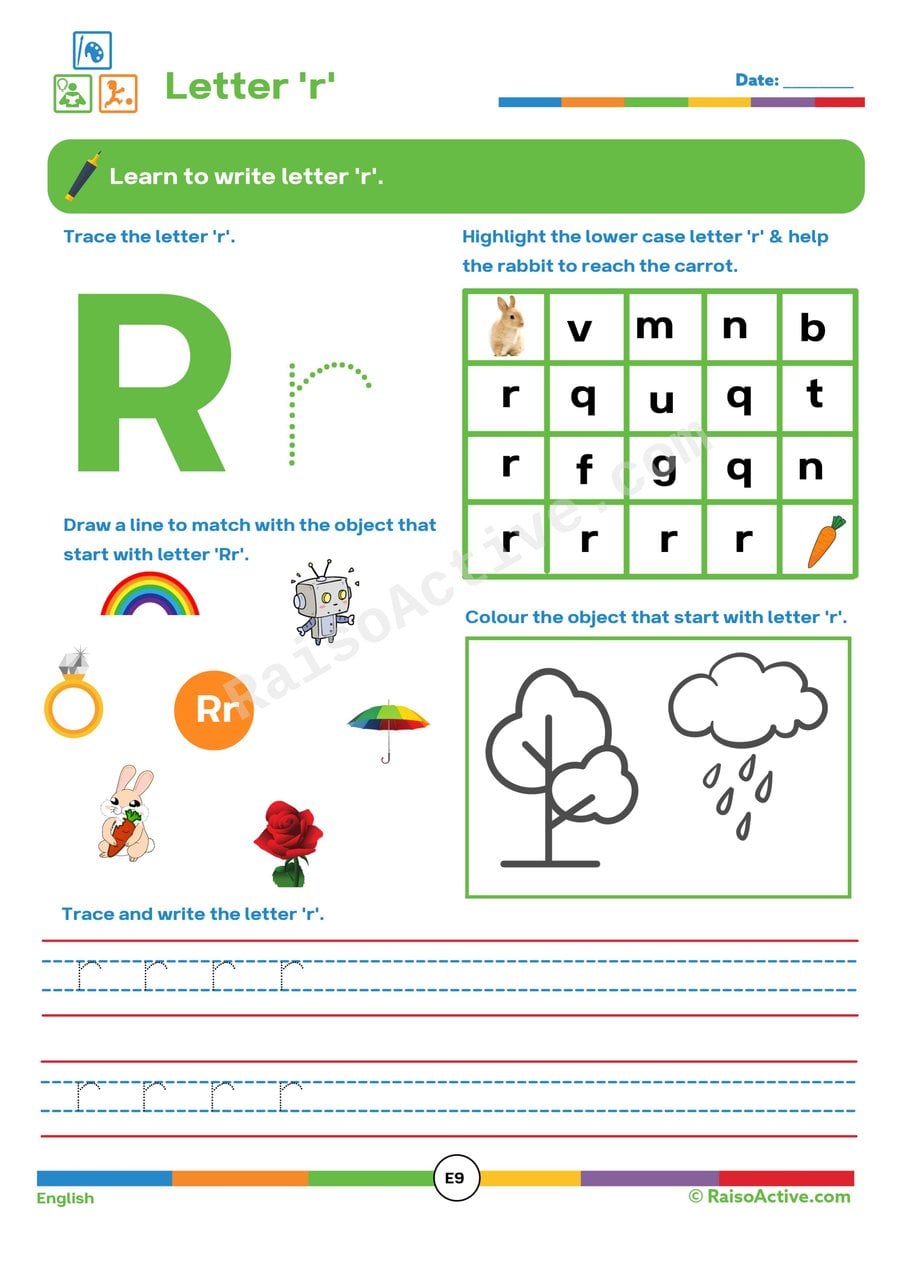
Letter 'r' Worksheet: Trace, Match, and Color!
Ages 3-5 · Preschool–Pre-KAges 3-5 · Nursery–ReceptionAges 3-5 · Nursery–LKGAges 3-5
This multi-part worksheet builds letter recognition for both uppercase and lowercase 'r' through tracing, while the matching and maze-style activities reinforce the beginning 'r' sound through picture identification. For ages 3-5, combining tracing with sound-based matching in one sitting strengthens the connection between a letter's shape and its sound from multiple angles.

Trace and Identify the Letter 'G' Worksheet for Preschoolers
Ages 4-5 · Pre-KAges 4-5 · ReceptionAges 4-5 · LKGAges 4-5
This worksheet helps children ages 4-5 build the pencil control needed to form the letter G while also practicing visual search skills as they locate every G hidden among other letters. Coloring pictures that start with G ties the abstract letter shape to concrete, familiar words, strengthening the letter-sound connection.

Letter Hh Tracing and Matching Worksheet for Preschoolers
Ages 3-5 · Preschool–Pre-KAges 3-5 · Nursery–ReceptionAges 3-5 · Nursery–LKGAges 3-5
Children ages 3-5 build letter recognition and handwriting readiness as they trace uppercase and lowercase Hh, identify the letter among different fonts, and match it to pictures of objects that start with the Hh sound. Practicing the letter across tracing, spotting, and sound-matching formats helps cement both its shape and its 'huh' sound more thoroughly than repetition of just one activity.

Learn the Letter 'V': Tracing, Matching, and Coloring Worksheet
Ages 3-5 · Preschool–Pre-KAges 3-5 · Nursery–ReceptionAges 3-5 · Nursery–LKGAges 3-5
Tracing, matching, and coloring the letter 'V' gives children ages 3-5 focused repetition on a letter formed entirely from two diagonal strokes, a different motor pattern than the curves and verticals used in many other letters. Matching pictures like a violin or a van to the letter builds the sound-symbol connection for the /v/ sound, which can be tricky to distinguish from /f/ or /b/ for young learners. Highlighting the lowercase 'v' within a letter grid to help a character find an object adds a game-like search element that keeps attention on the task.

Letter W Worksheet: Tracing, Coloring, and Word Recognition!
Ages 3-5 · Preschool–Pre-KAges 3-5 · Nursery–ReceptionAges 3-5 · Nursery–LKGAges 3-5
This worksheet builds recognition and formation of the letter W through tracing, writing, and identifying words that begin with it, like 'watermelon' or 'whale.' For three- to five-year-olds, practicing a letter with a more complex zigzag shape than earlier letters like O or L also develops the finer pencil control needed for more advanced handwriting.
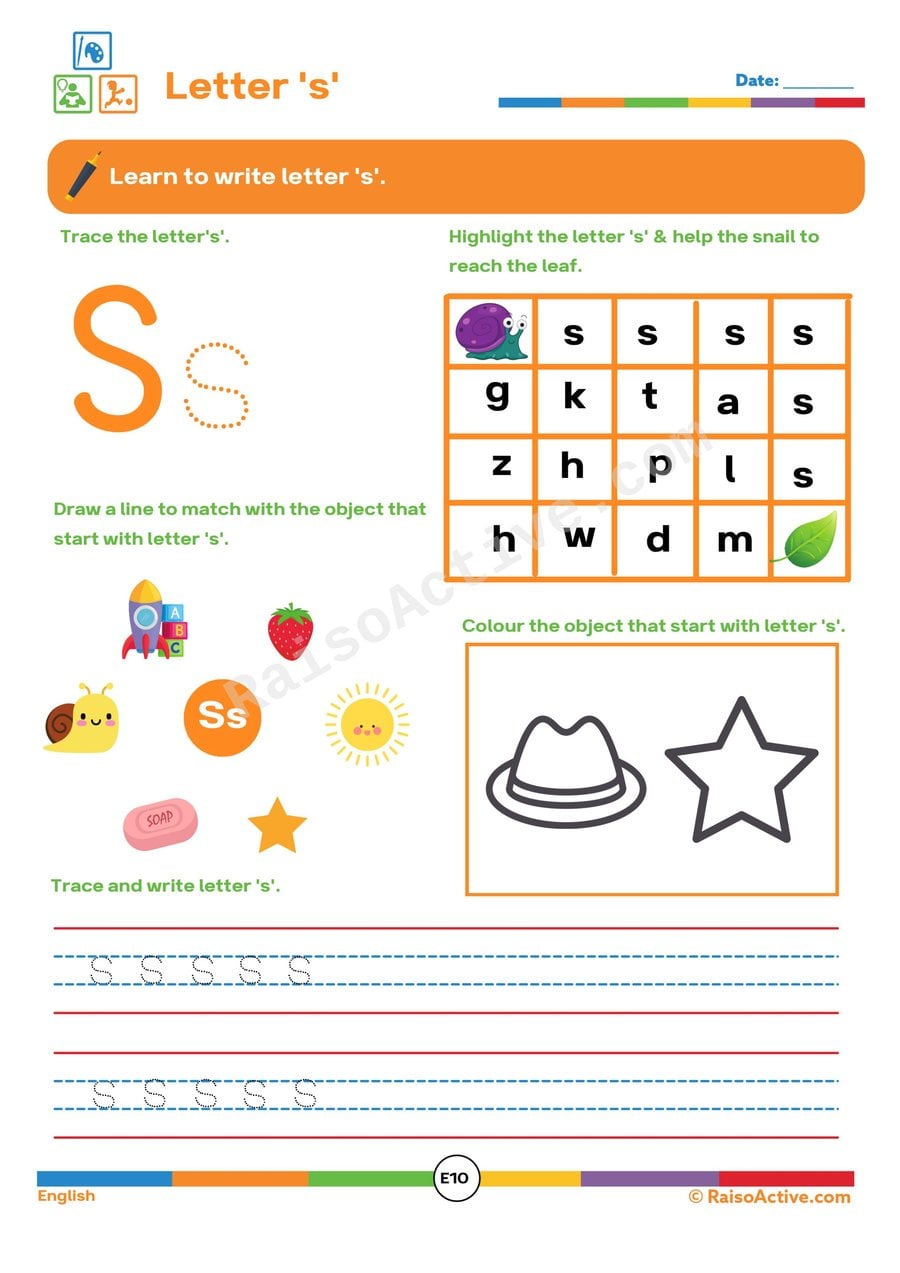
Letter 's' Worksheet: Trace, Match, and Color!
Ages 3-5 · Preschool–Pre-KAges 3-5 · Nursery–ReceptionAges 3-5 · Nursery–LKGAges 3-5
This worksheet gives children ages 3-5 focused practice forming the letter 's,' one of the trickier curved strokes for beginning writers to control with a pencil. Beyond handwriting, matching pictures to the letter and coloring only the 's' objects builds phonemic awareness by linking the letter shape to its /s/ sound at the start of words. Combining tracing, matching, and coloring in one page also keeps a young child's attention across multiple related tasks.

Letter K Tracing and Coloring Worksheet for Preschoolers
Ages 3-5 · Preschool–Pre-KAges 3-5 · Nursery–ReceptionAges 3-5 · Nursery–LKGAges 3-5
This worksheet builds recognition and formation of the letter K in both uppercase and lowercase forms through tracing, coloring, and identifying words that start with K, like 'kite' or 'kangaroo.' For three- to five-year-olds, working through both letter cases together, plus circling the letter among distractors, strengthens visual discrimination alongside handwriting practice.
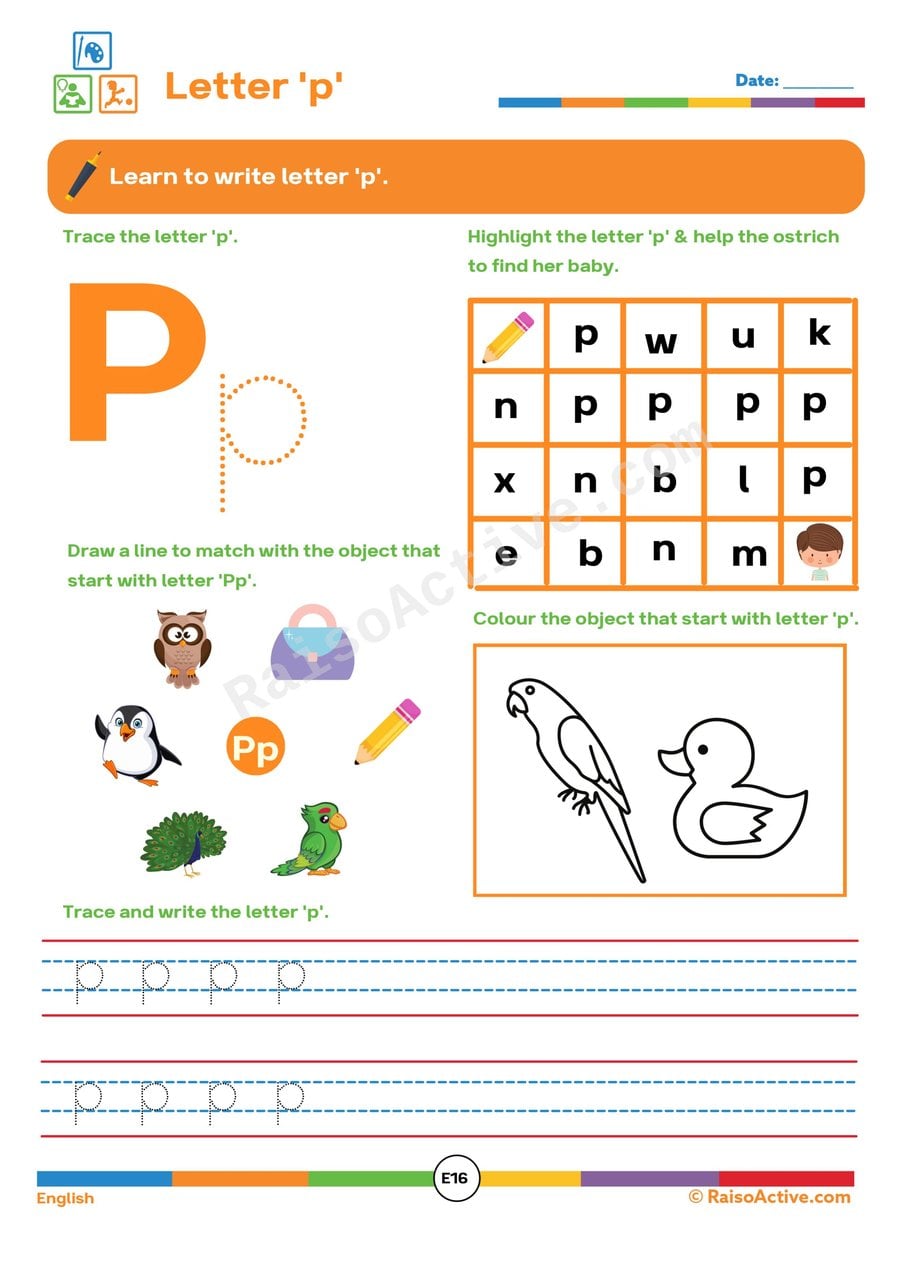
Letter 'p' Fun: Trace, Find, and Color the Letter 'p'!
Ages 3-5 · Preschool–Pre-KAges 3-5 · Nursery–ReceptionAges 3-5 · Nursery–LKGAges 3-5
Tracing both uppercase and lowercase 'p' builds handwriting muscle memory for children ages 3-5, while searching for the letter in a word search sharpens visual discrimination between similar letter shapes. Matching and coloring objects that start with 'p' rounds out the practice by linking the written letter to its spoken sound and real-world examples.
Guides for this topic

Documenting Learning Without Drowning in Data: A Practical Guide for Parents and Teachers
Learn practical ways to document your child's learning without overwhelm. Simple portfolios, observation tips, and printable trackers for ages 1-8.

How to Help Your Child with Letter Reversals: A Complete Guide for Parents and Teachers
Letter reversals are normal until age 7-8. Learn the best multisensory strategies, anchor letter tricks, and activities to help children write b, d, p, and q correctly.

Activities That Help with Pencil Grip Development: A Complete Guide for Parents and Teachers
Discover fun, research-backed activities to develop pencil grip in young children. Age-wise exercises, play ideas, and expert tips for parents and teachers.
Reviews
Every worksheet for ages 3–5, no watermark
Members download the full library of 1,000+ worksheets and every activity pack without watermarks or daily limits. One year costs ₹999 in India or $20 elsewhere.
See membership plansOr download any worksheet free with a watermark (5 a day).