Mime Sentences Worksheet: Act Out Actions!
Reading a sentence and then acting it out through mime teaches children ages 3-5 to connect written or spoken language with physical expression, deepening comprehension of action verbs in a memorable, embodied way. This kind of kinesthetic practice also builds confidence with performance and body awareness alongside early reading skills.
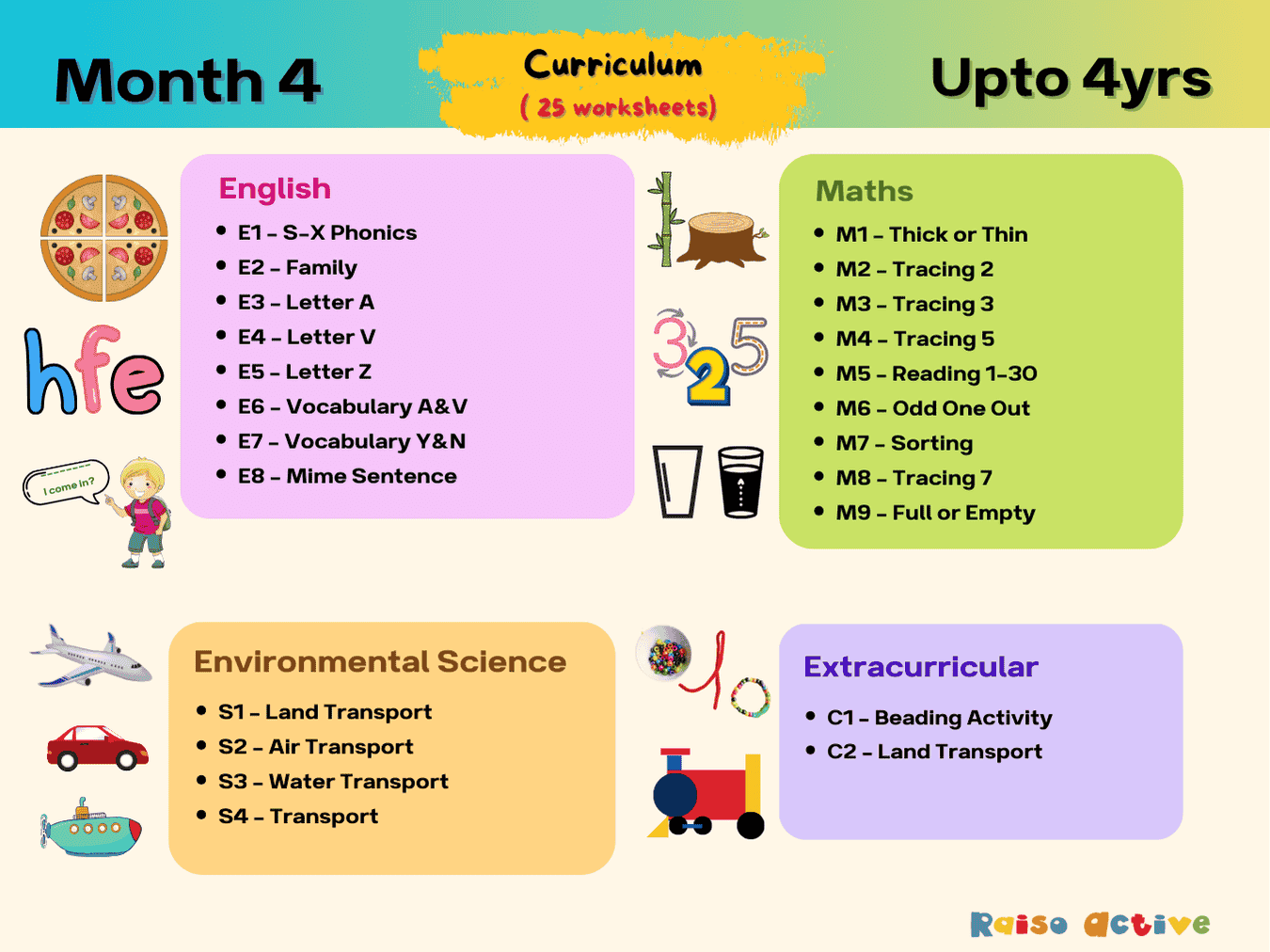
Part of the pack
Month 4: Learning & Development | Ages Up to 4
This is page 11 of the pack. Ages 2-4 · PreschoolAges 2-4 · NurseryAges 2-4
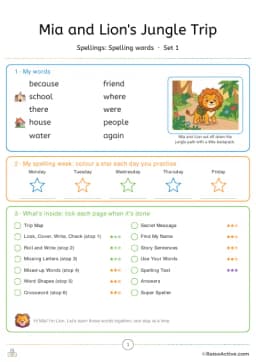
Made for your child
Spelling practice, made for your child
Their own spelling words turned into a pack: trace or look-cover-write-check, roll and write, a secret picture code, a word search, a crossword and a test, with their name in it.
Make a spelling packFree preview · free for members
Or start free: a word search with sight wordsCurriculum
- Fluency > Sentence Reading
How to use this worksheet
Read the first sentence together slowly and clearly. Ask your child to act out exactly what the sentence describes using only their body and facial expressions, without speaking any words. Once they've finished the mime, talk about whether it clearly showed the action, then move on to the next sentence the same way.
Materials needed
- Pencil
- Your body!
Extension activities
- 1Make up brand new mime sentences together to act out.
- 2Play a mime guessing game with the whole family, taking turns performing and guessing.
- 3Act out a short favorite story entirely through mime.
- 4Play charades using action words from the worksheet.
- 5Take turns being the 'director,' giving new mime instructions to perform.

Written by
Hemsweta Jain · Teacher Cheena
MBA and Early Childhood Educator, teaching since 2014 · Founder of RaisoActive, Mumbai
Every RaisoActive worksheet is designed and checked by the founder before publishing.
Published · Last reviewed
More from Month 4: Learning & Development | Ages Up to 4
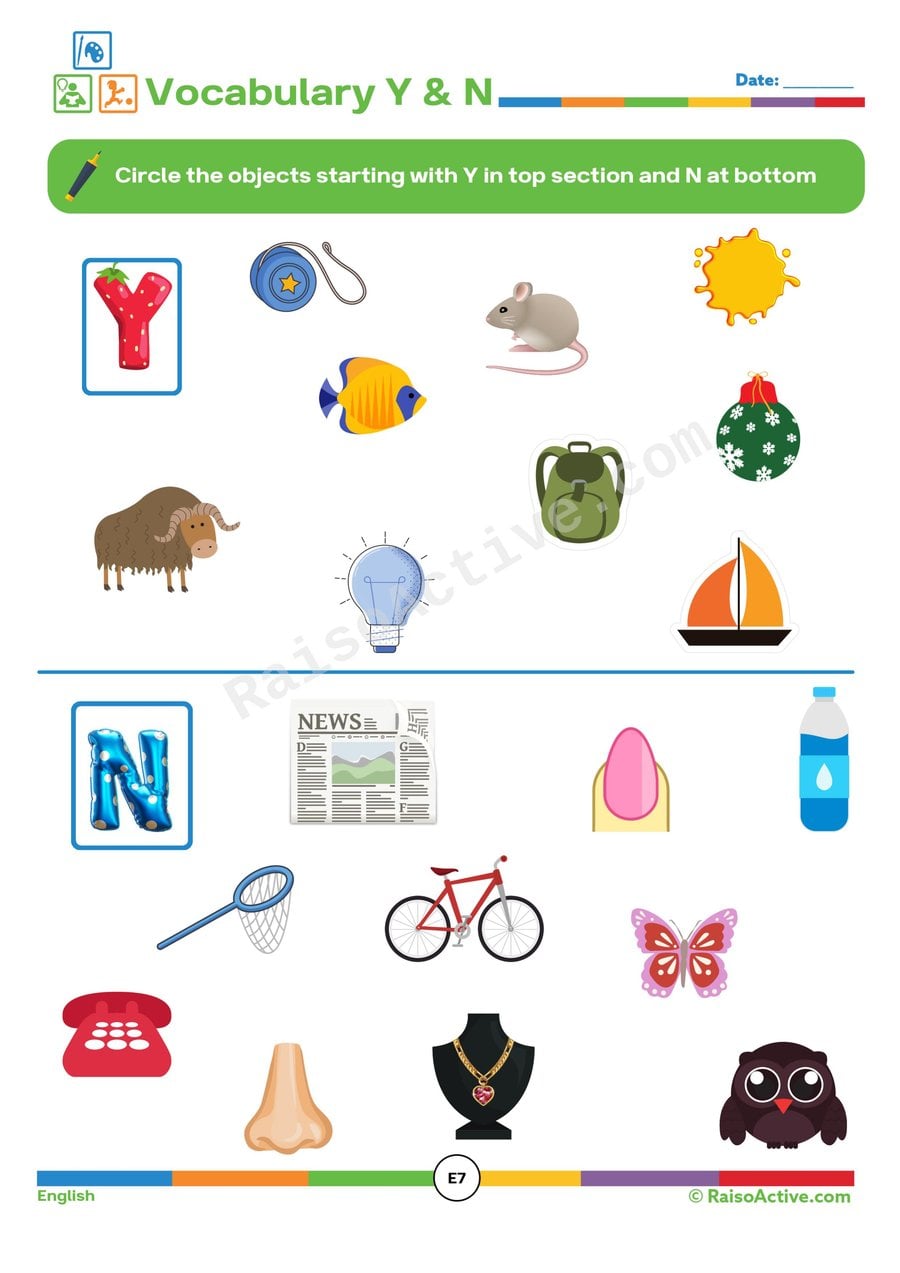
Y and N Vocabulary Worksheet: Circle the Objects!
Ages 3-5 · Preschool–Pre-KAges 3-5 · Nursery–ReceptionAges 3-5 · Nursery–LKGAges 3-5
Deciding whether a pictured object starts with Y or N helps children ages 3-5 practice initial sound discrimination between two distinct consonant sounds, building both vocabulary and listening skills. Circling in the correct top or bottom section adds a simple visual organization step that reinforces the category each object belongs to.

Letter A Tracing Worksheet: Learn to Write and Color!
Ages 3-5 · Preschool–Pre-KAges 3-5 · Nursery–ReceptionAges 3-5 · Nursery–LKGAges 3-5
Tracing the uppercase letter A builds the fine motor control and stroke memory children ages 3-5 need for handwriting, while coloring pictures that start with A connects the written letter to its spoken sound and familiar objects. Repeating the tracing after the picture activity provides extra reinforcement of correct letter formation.
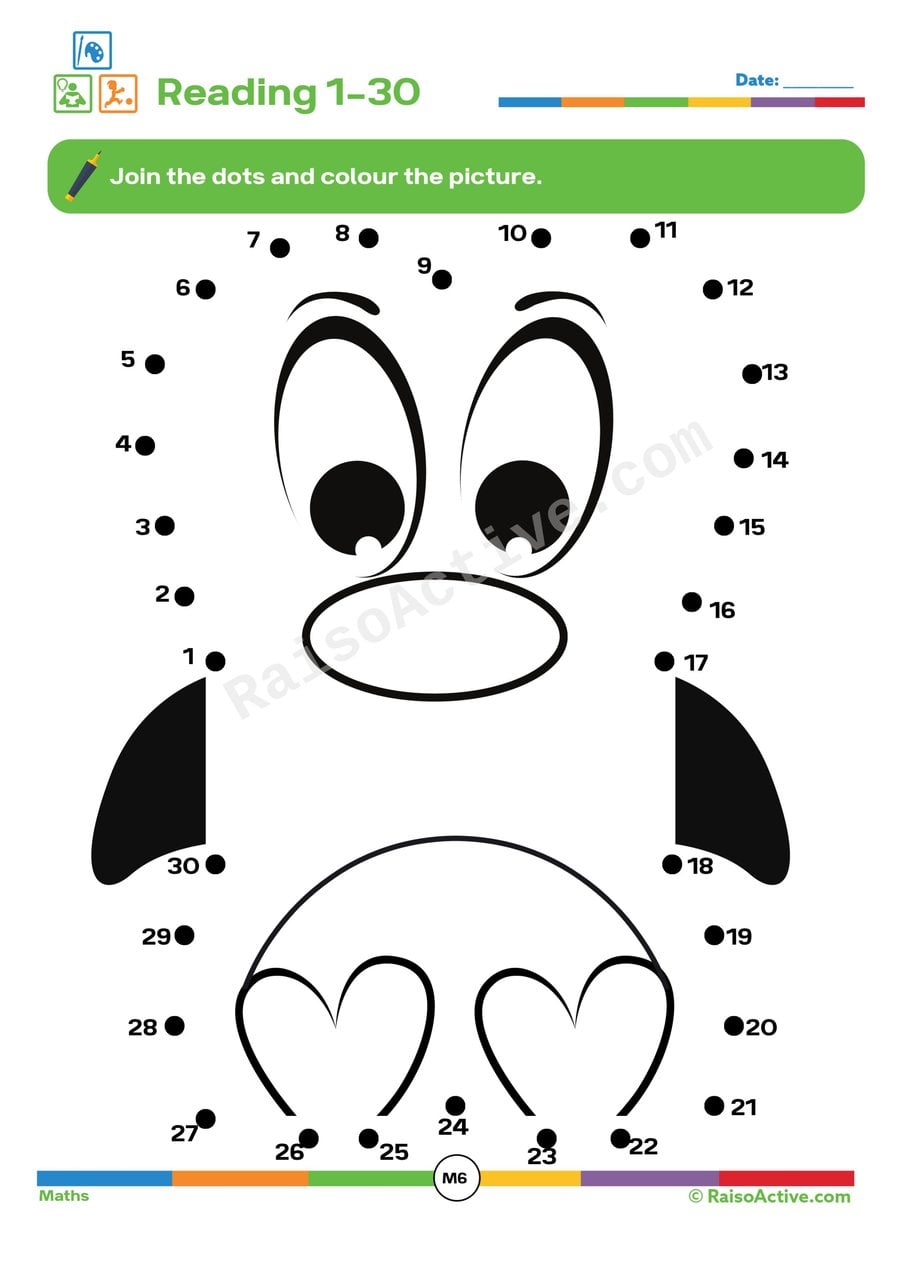
Connect the Dots Penguin Worksheet for Kids
Ages 3-5 · Preschool–Pre-KAges 3-5 · Nursery–ReceptionAges 3-5 · Nursery–LKGAges 3-5
Connecting numbered dots in order to reveal a penguin picture helps children ages 3-5 practice counting in sequence while building the fine motor control needed to draw a steady connecting line. The surprise of watching a recognizable picture emerge gives extra motivation to count carefully all the way to the end.

Farm Animal Fun: Cut and Paste Worksheet for Preschoolers
Ages 3-5 · Preschool–Pre-KAges 3-5 · Nursery–ReceptionAges 3-5 · Nursery–LKGAges 3-5
Coloring, cutting, and pasting farm animals onto a scene teaches children ages 3-5 farm animal vocabulary while giving substantial fine motor practice through careful cutting along lines. Building the completed farm scene also lets children practice spatial placement, deciding where each animal fits within the picture.
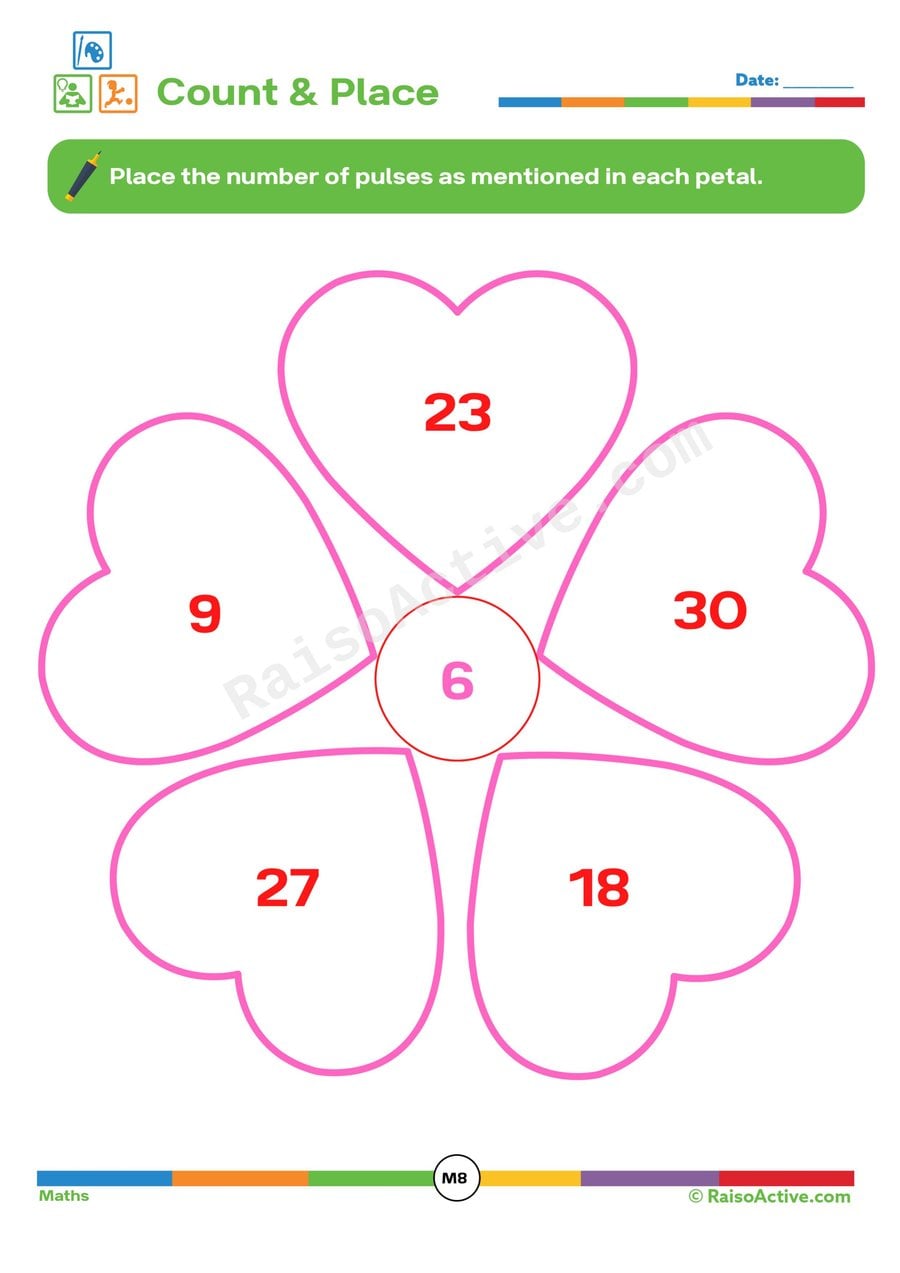
Count and Place: Heart Petals Worksheet
Ages 4-5 · Pre-KAges 4-5 · ReceptionAges 4-5 · LKGAges 4-5
Counting the marks in each heart-shaped petal and writing the matching number builds one-to-one correspondence for children ages 4-5, ensuring they touch or point to each mark exactly once as they count. This petal-by-petal counting also strengthens number formation practice as children write each total by hand.

Animal Sorting Worksheet: Wild vs. Domestic Animals
Ages 3-5 · Preschool–Pre-KAges 3-5 · Nursery–ReceptionAges 3-5 · Nursery–LKGAges 3-5
Sorting animal pictures into wild and domestic categories teaches children ages 3-5 an early form of classification, deciding where an animal belongs based on how it lives rather than its size or appearance alone. Cutting and pasting the animals also builds fine motor precision while reinforcing new animal vocabulary along the way.

Letter Z Tracing Worksheet for Preschoolers: Learn to Write the Letter Z!
Ages 3-5 · Preschool–Pre-KAges 3-5 · Nursery–ReceptionAges 3-5 · Nursery–LKGAges 3-5
Tracing the uppercase letter Z introduces children ages 3-5 to a distinctive zigzag stroke pattern, different from the curved or straight strokes used in most other letters, which builds versatile pencil control. Coloring pictures that start with Z afterward links this less common letter to real, memorable words like zebra or zipper.
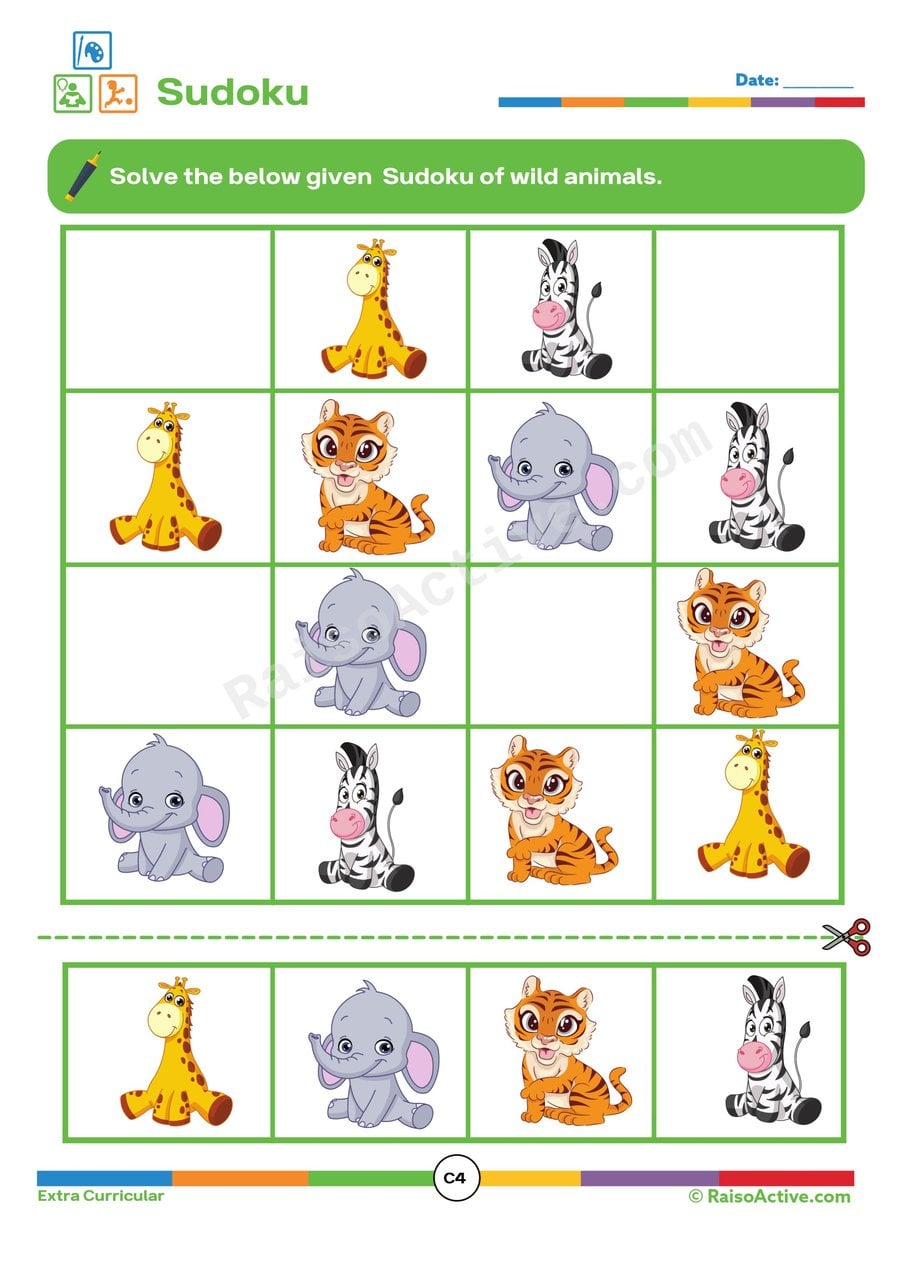
Wild Animals Sudoku Worksheet for Kids
Ages 4-6 · Pre-K–KindergartenAges 4-6 · Reception–Year 1Ages 4-6 · LKG–UKGAges 4-6
Solving a picture sudoku with wild animals introduces children ages 4-6 to early logical reasoning, since each animal can only appear once in every row, column, and small grid, requiring careful process of elimination. This puzzle format builds problem-solving stamina and visual discrimination in a format that feels like play rather than a typical worksheet.
Related worksheets

Read & Match Worksheet: Matching Sentences to Pictures
Ages 3-5 · Preschool–Pre-KAges 3-5 · Nursery–ReceptionAges 3-5 · Nursery–LKGAges 3-5
Matching a sentence to its picture through drawing a line or coloring builds reading comprehension for children ages 3-5, requiring them to process the sentence's full meaning rather than recognizing familiar words in isolation. Following this with coloring keeps the activity engaging while giving repeated visual exposure to each completed sentence-and-picture pair.

Read and Match: Sentence Matching Worksheet for Preschoolers
Ages 4-5 · Pre-KAges 4-5 · ReceptionAges 4-5 · LKGAges 4-5
Reading a simple sentence and finding its matching picture teaches children ages 4-5 to connect written words directly to meaning, an essential comprehension skill that goes beyond simply decoding individual words. The cut-and-paste format also adds fine motor practice, requiring children to select the correct image from several options and place it precisely next to its sentence.

Read and Match: Sentence Reading Worksheet for Early Learners
Ages 4-6 · Pre-K–KindergartenAges 4-6 · Reception–Year 1Ages 4-6 · LKG–UKGAges 4-6
This worksheet has 4-6 year olds read a full sentence aloud and then identify which picture actually matches its meaning by coloring the circle beside it, building reading comprehension in a format that requires understanding the whole sentence rather than picking out a single keyword. Because more than one picture on the page may share surface similarities, your child has to genuinely process what the sentence says, which is a stronger comprehension check than simple word-picture matching.

Cut and Paste Reading Worksheet: Matching Sentences with Pictures
Ages 4-5 · Pre-KAges 4-5 · ReceptionAges 4-5 · LKGAges 4-5
This worksheet gives children ages 4-5 practice reading short simple sentences and connecting the meaning of the words to a matching picture, an essential bridge between decoding words and comprehending what they say. Cutting and pasting the correct picture next to its sentence, rather than just answering verbally, requires children to hold the sentence's meaning in mind while searching for a visual match. This strengthens both reading comprehension and vocabulary at once.

I Like Sentences: Tracing and Reading Worksheet for Preschoolers
Ages 3-5 · Preschool–Pre-KAges 3-5 · Nursery–ReceptionAges 3-5 · Nursery–LKGAges 3-5
Tracing and reading simple 'I like' sentences gives children practice connecting handwriting motion with reading comprehension at the same time, since they trace the very words they're learning to recognize and say. For ages three to five, using a repeated sentence frame like 'I like ___' also builds confidence, since only the ending word changes from sentence to sentence.

Read and Paste: Matching Sentences with Pictures Worksheet
Ages 4-5 · Pre-KAges 4-5 · ReceptionAges 4-5 · LKGAges 4-5
Reading a sentence and then finding its matching picture builds comprehension for children ages 4-5, teaching them to process the full meaning of connected words rather than recognizing them in isolation. The cutting and pasting component also strengthens the fine motor precision needed to place text accurately next to its correct visual match.

Read and Match: Fun Reading Worksheet for Preschoolers
Ages 3-5 · Preschool–Pre-KAges 3-5 · Nursery–ReceptionAges 3-5 · Nursery–LKGAges 3-5
Reading a simple sentence and matching it to its corresponding picture builds early reading comprehension for children ages 3-5, teaching them that written words carry meaning that connects to real images and ideas.

Read and Match: Sentence Matching Worksheet for Preschoolers
Ages 3-5 · Preschool–Pre-KAges 3-5 · Nursery–ReceptionAges 3-5 · Nursery–LKGAges 3-5
This worksheet has 3-5 year olds read a short, simple sentence and then find and paste the one picture that actually matches its meaning — a task that requires genuine reading comprehension rather than picture-guessing, since more than one image on the page might look similar at a glance. Because the child has to hold the sentence's meaning in mind while comparing several picture options, this builds an early bridge between decoding words and understanding what they describe.
Guides for this topic

Documenting Learning Without Drowning in Data: A Practical Guide for Parents and Teachers
Learn practical ways to document your child's learning without overwhelm. Simple portfolios, observation tips, and printable trackers for ages 1-8.

Building Future Citizens: How to Teach Social Studies to Young Children Through Creative Exploration
Practical ideas to teach social studies to kids ages 2-8: community helpers, Indian states, maps, festivals, and cultural diversity through play-based learning.
Beyond Worksheets: Engaging Alternatives for Your 5-Year-Old Who Refuses Paper-and-Pencil Activities
Discover practical, research-backed alternatives when your 5-year-old refuses worksheets. Hands-on activities, sensory play, and movement-based learning that build the same skills.
Reviews
Every worksheet for ages 3–5, no watermark
Members download the full library of 1,000+ worksheets and every activity pack without watermarks or daily limits. One year costs ₹999 in India or $20 elsewhere.
See membership plansOr download any worksheet free with a watermark (5 a day).