Read & Match Worksheet: Matching Sentences to Pictures
Matching a sentence to its picture through drawing a line or coloring builds reading comprehension for children ages 3-5, requiring them to process the sentence's full meaning rather than recognizing familiar words in isolation. Following this with coloring keeps the activity engaging while giving repeated visual exposure to each completed sentence-and-picture pair.
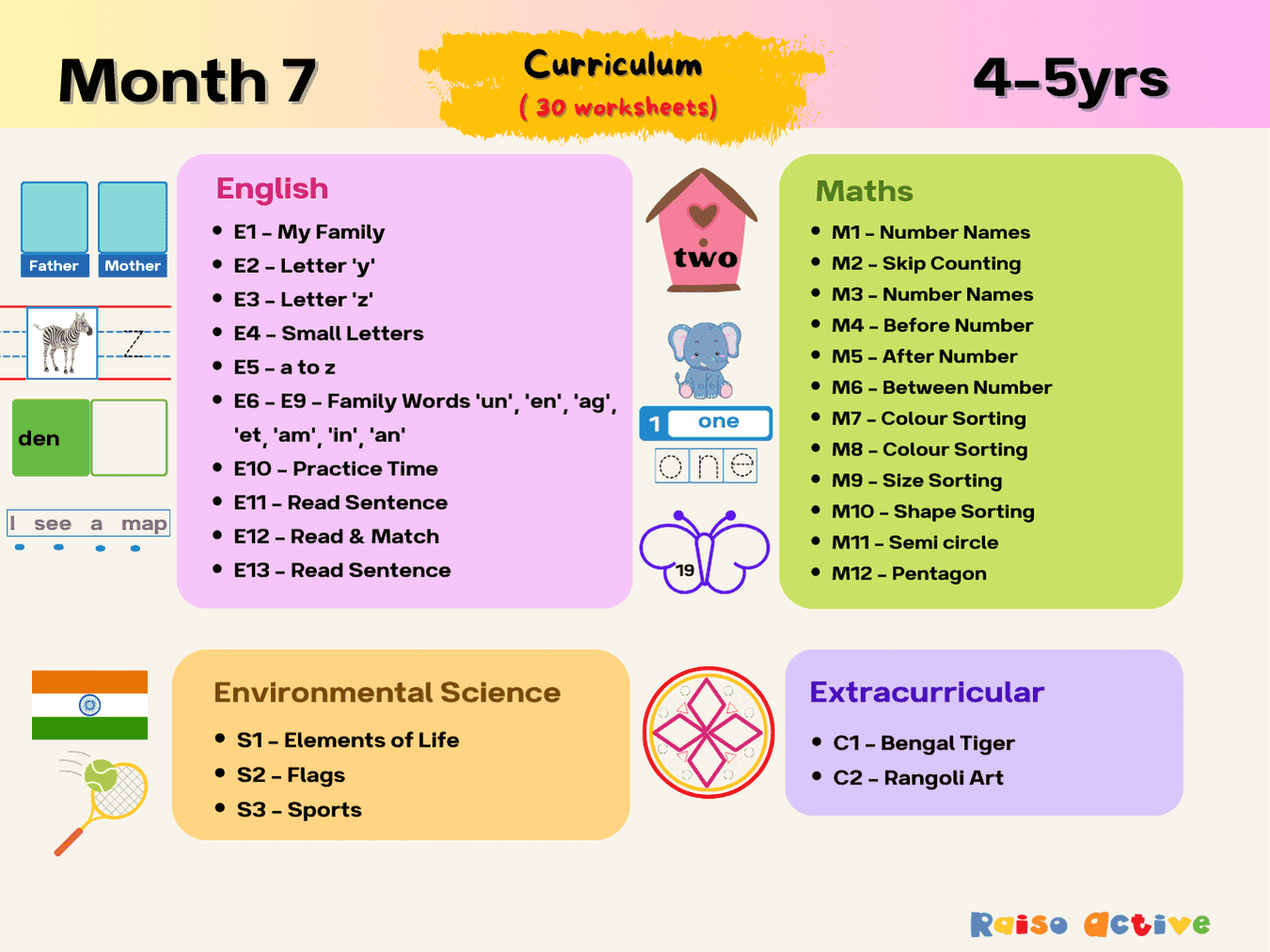
Part of the pack
Month 7: Preschool Skills Through Play | Ages 4-5
This is page 15 of the pack. Ages 4-5 · Pre-KAges 4-5 · ReceptionAges 4-5 · LKGAges 4-5

Made for your child
Counting to 10, made for your child
A maths pack with your child's name in it: pictures that explain, practice at three levels, puzzles and story sums about them. Print a new set whenever they finish.
Make a maths packFree preview · free for members
Curriculum
- Fluency > Sentence Reading
How to use this worksheet
Read the first sentence aloud together, encouraging your child to picture what it describes before looking at the images. Ask them to find the picture that matches the sentence and either draw a connecting line or color that picture to show the match. Continue this read-and-match process for each remaining sentence on the page. Once every sentence has been matched, have your child color all the pictures for extra reinforcement and enjoyment.
Materials needed
- Pencil
- Crayons
Extension activities
- 1Have your child write or dictate a brand-new sentence describing one of the pictures.
- 2Encourage your child to draw their own picture to match a sentence they especially liked.
- 3Create a matching game using flashcards with sentences and pictures from a favorite storybook.
- 4Read each finished sentence aloud together once more at another time to check for recall.
- 5Play an oral version of the activity, reading a sentence and having your child point to a matching real object nearby.

Written by
Hemsweta Jain · Teacher Cheena
MBA and Early Childhood Educator, teaching since 2014 · Founder of RaisoActive, Mumbai
Every RaisoActive worksheet is designed and checked by the founder before publishing.
Published · Last reviewed
More from Month 7: Preschool Skills Through Play | Ages 4-5

Shape Sorting Fun: Cut and Glue Worksheet for Preschoolers
Ages 3-5 · Preschool–Pre-KAges 3-5 · Nursery–ReceptionAges 3-5 · Nursery–LKGAges 3-5
Sorting cut-out shapes into matching rows builds shape recognition for children ages 3-5, requiring them to visually compare each piece's sides and corners before placing it correctly. This early geometry practice, paired with the fine motor demands of cutting and gluing, strengthens both cognitive classification skills and hand control at the same time.
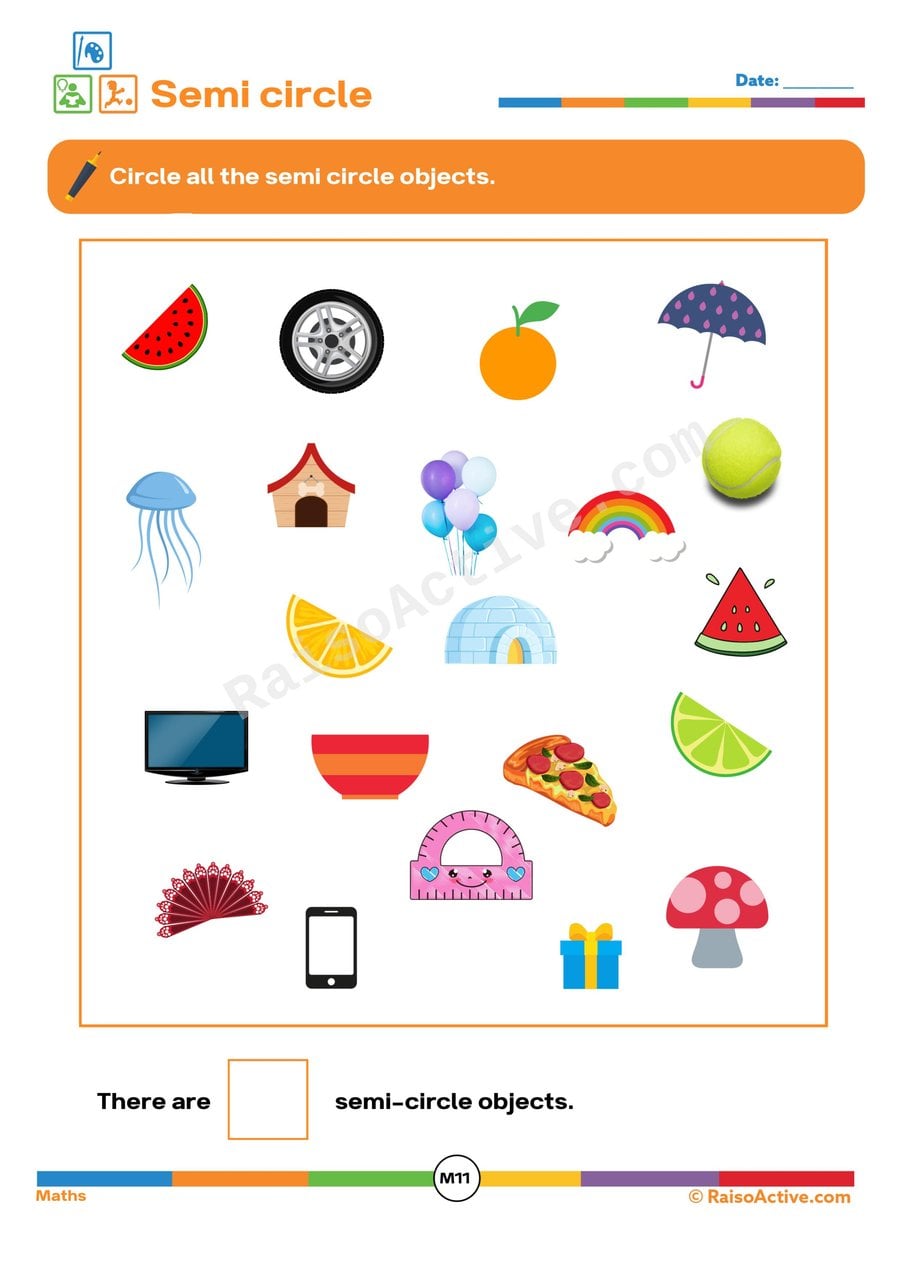
Semi-Circle Shapes Worksheet for Kids
Ages 3-5 · Preschool–Pre-KAges 3-5 · Nursery–ReceptionAges 3-5 · Nursery–LKGAges 3-5
This worksheet sharpens shape recognition by asking children to distinguish semi-circles, a curved half-shape, from other shapes and objects on the page. For ages 3-5, learning to identify a semi-circle specifically, rather than a full circle, builds the visual discrimination skills that support later geometry and letter recognition.

Before Number Worksheet: Practice Number Sequencing!
Ages 4-6 · Pre-K–KindergartenAges 4-6 · Reception–Year 1Ages 4-6 · LKG–UKGAges 4-6
Practicing 'what comes before' a given number strengthens number sequencing for children ages 4-6, requiring them to think backward through the counting sequence rather than only forward, which is how most early counting practice happens. This backward thinking builds flexibility with numbers that supports later subtraction and number-line reasoning.
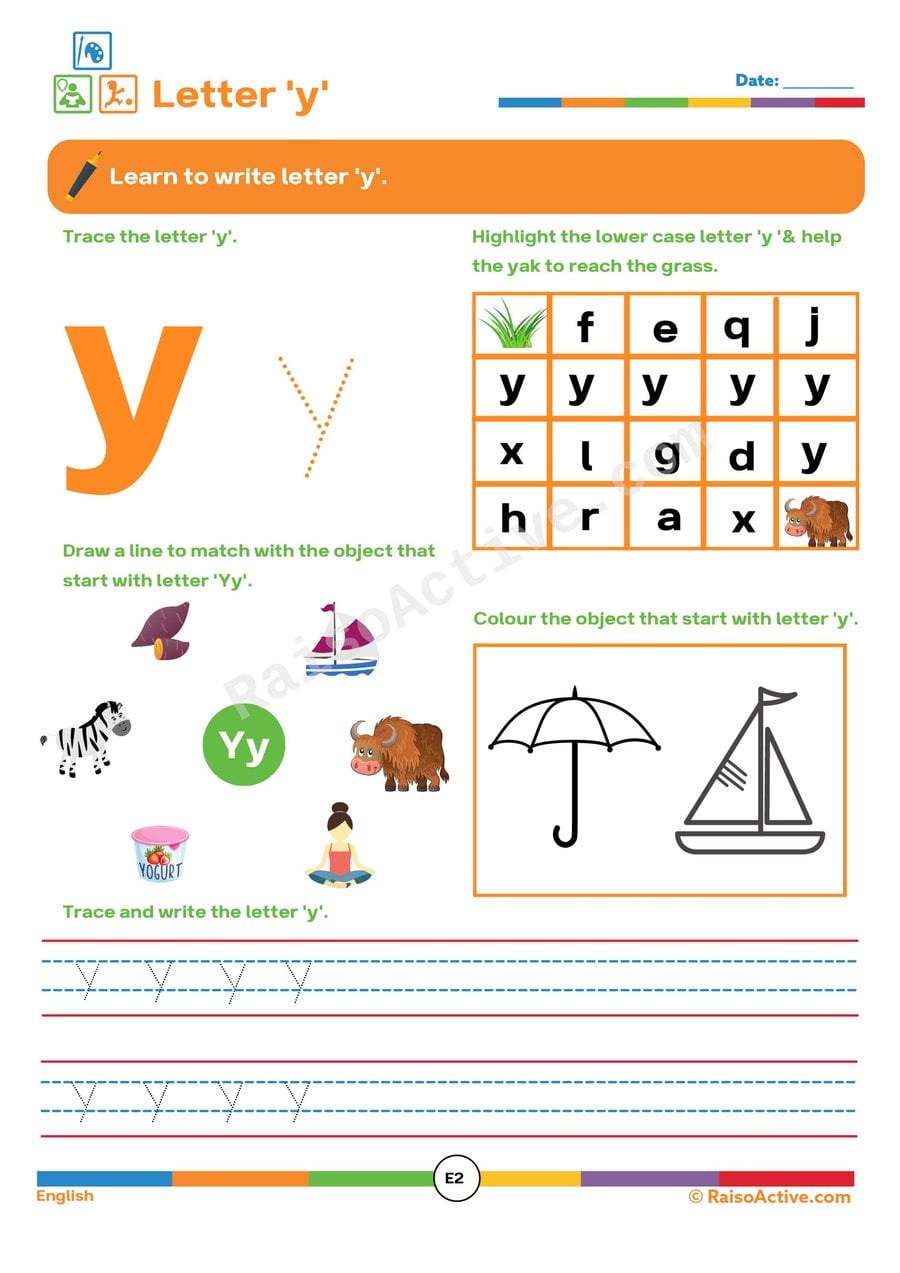
Letter 'y' Worksheet: Trace, Match, and Color!
Ages 3-5 · Preschool–Pre-KAges 3-5 · Nursery–ReceptionAges 3-5 · Nursery–LKGAges 3-5
This letter 'y' worksheet gives children ages 3-5 focused handwriting practice on a letter with a distinctive descending tail, which requires different pencil control than letters that stay above the baseline. Matching and coloring pictures that start with 'y' also builds beginning-sound awareness, linking the letter's shape to its sound through repeated, varied practice.

Read and Match: Sentence Reading Worksheet for Preschoolers
Ages 3-5 · Preschool–Pre-KAges 3-5 · Nursery–ReceptionAges 3-5 · Nursery–LKGAges 3-5
Reading a sentence aloud and then circling its matching picture strengthens reading comprehension for children ages 3-5, requiring them to hold the meaning of several words in mind at once rather than recognizing them individually. This early comprehension practice builds toward the ability to read a full passage and understand what actually happened, not just decode isolated words.
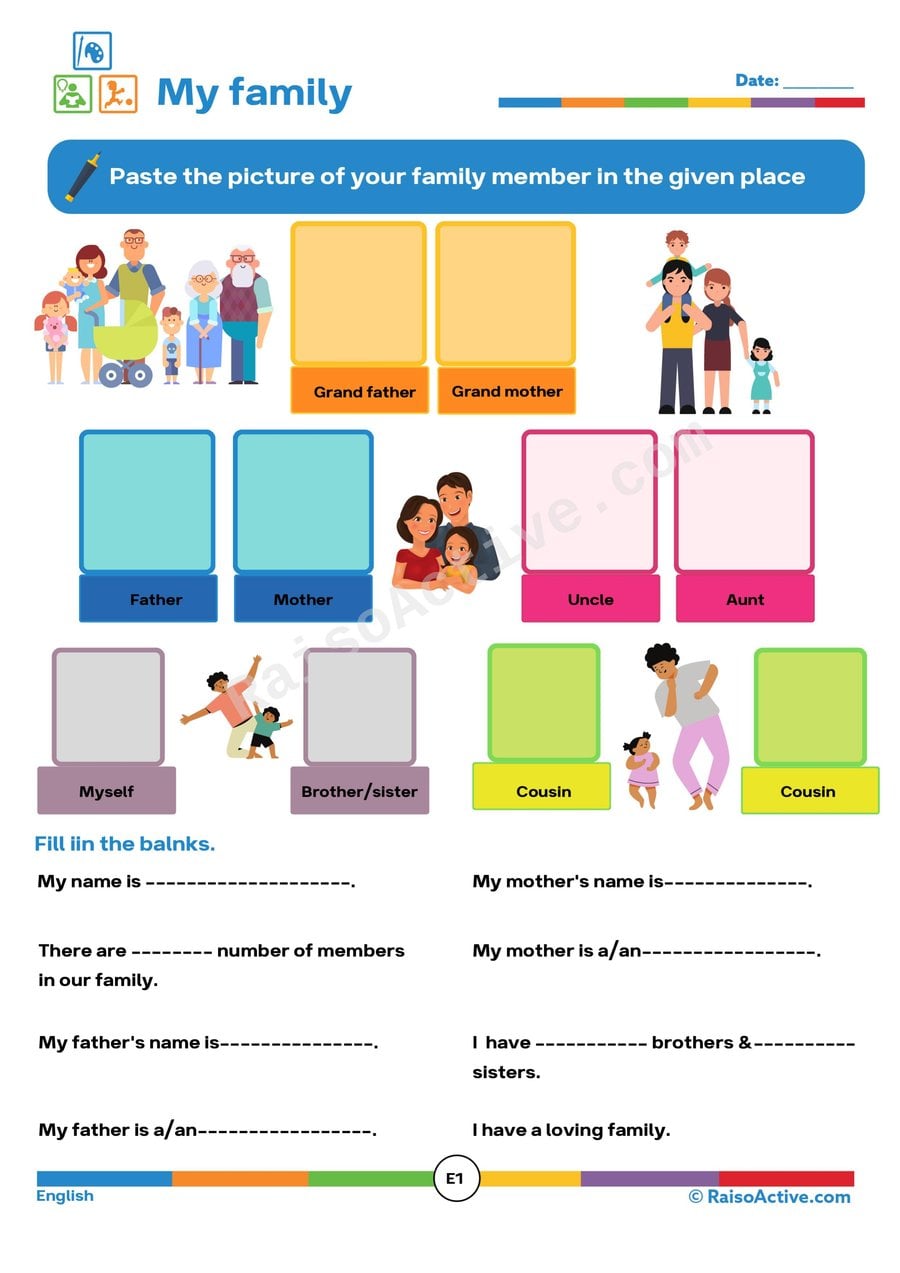
My Family Worksheet: Learn About Family Members!
Ages 3-5 · Preschool–Pre-KAges 3-5 · Nursery–ReceptionAges 3-5 · Nursery–LKGAges 3-5
Describing and pasting pictures of family members helps children practice using descriptive language about people they know well, building both vocabulary and an early sense of identity and belonging. For ages three to five, talking about family structure also introduces social-emotional vocabulary, since children learn to name relationships and describe why family matters to them.
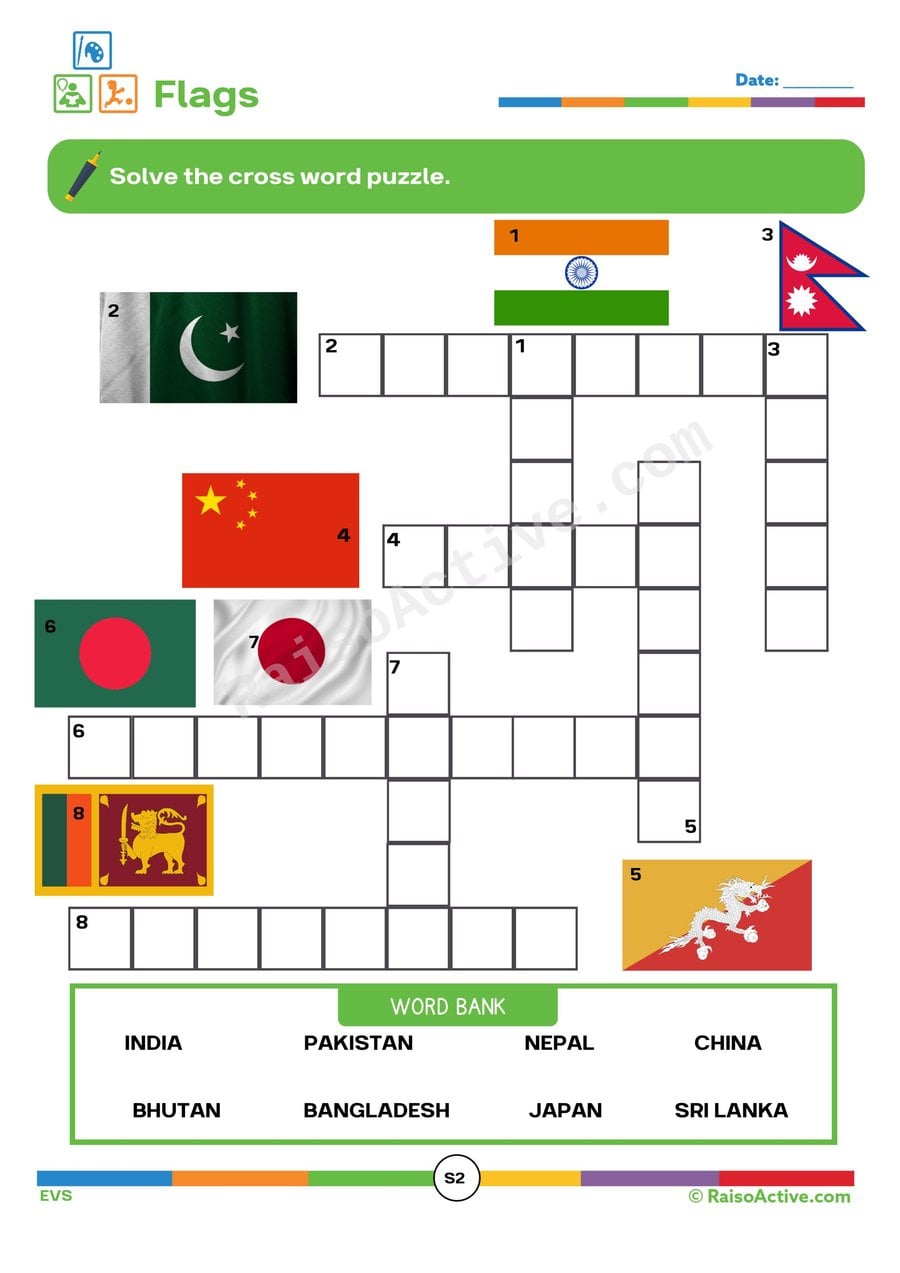
Flags Crossword Puzzle Worksheet for Kids
Ages 4-6 · Pre-K–KindergartenAges 4-6 · Reception–Year 1Ages 4-6 · LKG–UKGAges 4-6
This worksheet blends early geography knowledge with word-puzzle problem-solving, asking children to identify countries by their flags and use a word bank to complete a crossword. For ages 4-6, matching a visual flag to a written country name builds both visual discrimination and beginning spelling recognition, while the crossword format introduces a fun, structured way to practice new vocabulary.

Bengal Tiger Cut and Paste Worksheet for Preschoolers
Ages 3-5 · Preschool–Pre-KAges 3-5 · Nursery–ReceptionAges 3-5 · Nursery–LKGAges 3-5
Cutting apart and reordering picture strips to rebuild a Bengal tiger image teaches children ages 3-5 to follow multi-step directions while practicing scissor control and sequencing at the same time. Because the final picture only makes sense when the strips are arranged correctly, this activity also builds visual-spatial reasoning as children compare each piece to figure out where it belongs.
Related worksheets

Read and Circle: Matching Sentences to Pictures Worksheet
Ages 4-5 · Pre-KAges 4-5 · ReceptionAges 4-5 · LKGAges 4-5
Children ages 4-5 build reading comprehension by reading a short, simple sentence and then identifying which of several pictures actually matches its meaning, rather than just decoding words in isolation. This step — connecting written language back to a real scene — is what separates true reading comprehension from mechanical word-calling, making it an important milestone activity for early readers.

Read and Match: Sentence Matching Worksheet for Preschoolers
Ages 3-5 · Preschool–Pre-KAges 3-5 · Nursery–ReceptionAges 3-5 · Nursery–LKGAges 3-5
This worksheet has 3-5 year olds read a short, simple sentence and then find and paste the one picture that actually matches its meaning — a task that requires genuine reading comprehension rather than picture-guessing, since more than one image on the page might look similar at a glance. Because the child has to hold the sentence's meaning in mind while comparing several picture options, this builds an early bridge between decoding words and understanding what they describe.

Read and Match: Sentence Reading Worksheet for Early Learners
Ages 4-6 · Pre-K–KindergartenAges 4-6 · Reception–Year 1Ages 4-6 · LKG–UKGAges 4-6
This worksheet has 4-6 year olds read a full sentence aloud and then identify which picture actually matches its meaning by coloring the circle beside it, building reading comprehension in a format that requires understanding the whole sentence rather than picking out a single keyword. Because more than one picture on the page may share surface similarities, your child has to genuinely process what the sentence says, which is a stronger comprehension check than simple word-picture matching.

Simple Sentences: Read and Draw Worksheet for Kids
Ages 3-5 · Preschool–Pre-KAges 3-5 · Nursery–ReceptionAges 3-5 · Nursery–LKGAges 3-5
This worksheet has children ages 3-5 read a simple sentence and then draw a picture that represents its meaning, building reading comprehension by requiring them to visualize and produce what the words describe rather than just recognize them. Translating text into a drawing is a strong early check that a child truly understands what they've read, not just decoded the individual words.
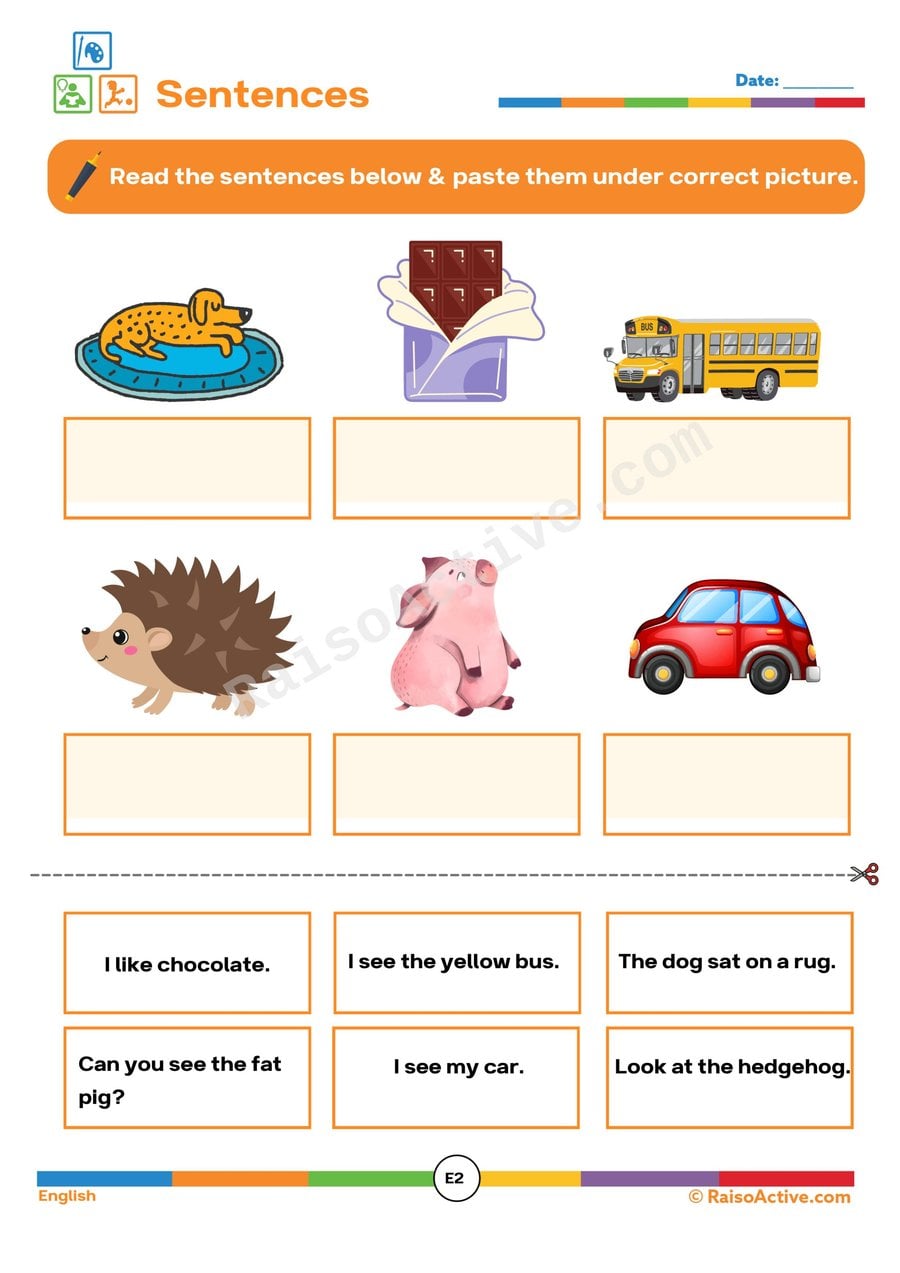
Sentence Matching Worksheet for Early Readers
Ages 4-5 · Pre-KAges 4-5 · ReceptionAges 4-5 · LKGAges 4-5
Matching a written sentence to the picture it describes asks children ages 4-5 to read for meaning rather than just decode individual words, an important step up from single-word reading toward true reading comprehension. This worksheet also builds fine motor and organizational skills through cutting and placing the sentence in the correct spot. Successfully pairing text with image confirms that a child understands what they're reading, not just that they can sound out letters.

Match the Sentence: Picture Matching Worksheet for Early Readers
Ages 4-6 · Pre-K–KindergartenAges 4-6 · Reception–Year 1Ages 4-6 · LKG–UKGAges 4-6
Reading a full sentence and connecting it to the picture it describes asks children ages 4-6 to move beyond single-word recognition into genuine sentence comprehension, checking that they understood the sentence's overall meaning rather than just decoding individual words. This worksheet builds that comprehension skill by having children read several simple sentences and match each one to the correct illustration, reinforcing that reading is about extracting meaning, not just producing sounds. Developing this kind of sentence-level comprehension early is an important bridge between phonics-based decoding and true reading fluency.

Cut and Paste Reading Worksheet: Matching Sentences with Pictures
Ages 4-5 · Pre-KAges 4-5 · ReceptionAges 4-5 · LKGAges 4-5
This worksheet gives children ages 4-5 practice reading short simple sentences and connecting the meaning of the words to a matching picture, an essential bridge between decoding words and comprehending what they say. Cutting and pasting the correct picture next to its sentence, rather than just answering verbally, requires children to hold the sentence's meaning in mind while searching for a visual match. This strengthens both reading comprehension and vocabulary at once.
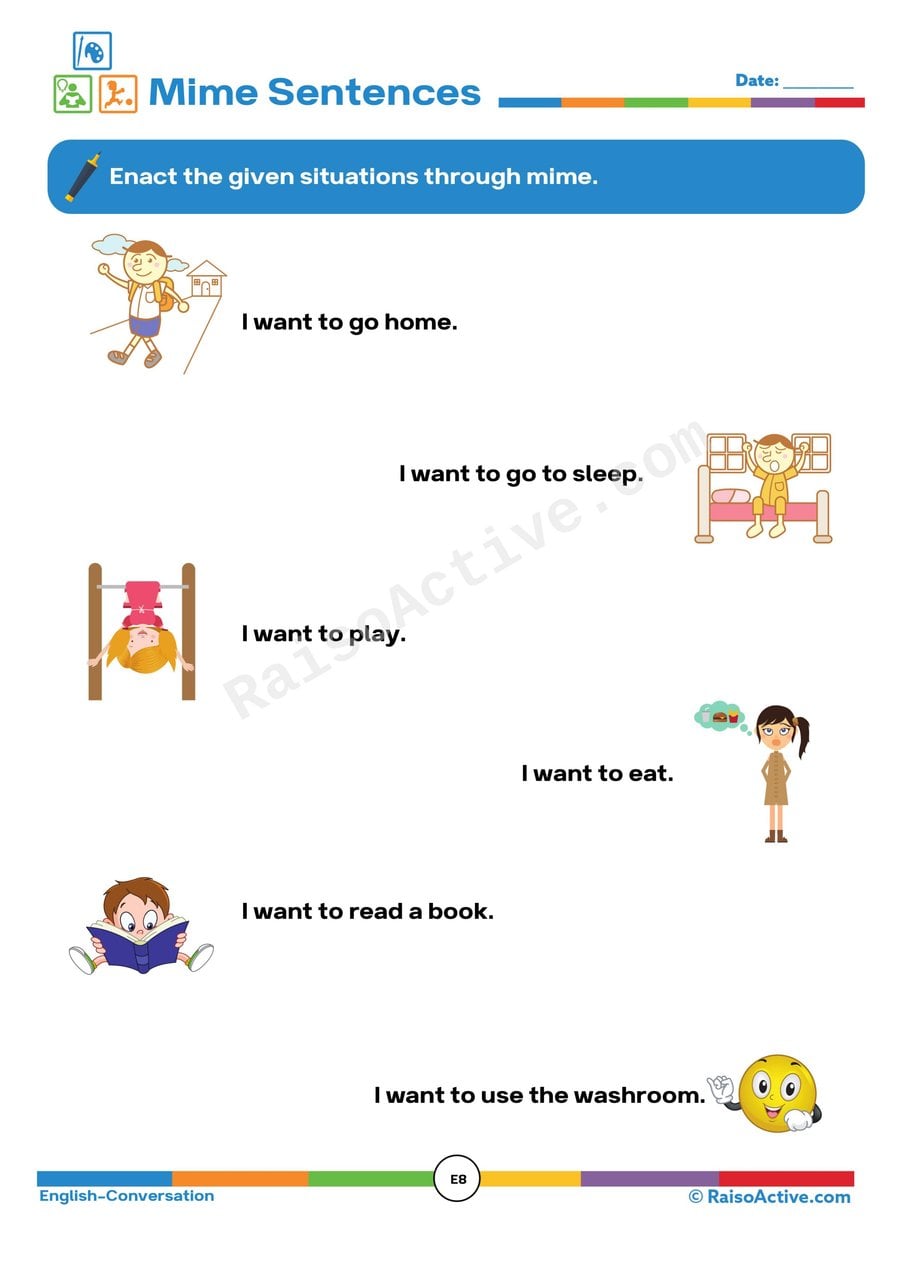
Mime Sentences Worksheet: Act Out Actions!
Ages 3-5 · Preschool–Pre-KAges 3-5 · Nursery–ReceptionAges 3-5 · Nursery–LKGAges 3-5
Reading a sentence and then acting it out through mime teaches children ages 3-5 to connect written or spoken language with physical expression, deepening comprehension of action verbs in a memorable, embodied way. This kind of kinesthetic practice also builds confidence with performance and body awareness alongside early reading skills.
Guides for this topic

Best Worksheets for 3-Year-Olds: What Works and What to Avoid
What works on worksheets for 3-year-olds: short sessions, crayons, tracing lines, matching, cutting, a free weekly plan, and signs one is too advanced.
Documenting Learning Without Drowning in Data: A Practical Guide for Parents and Teachers
Learn practical ways to document your child's learning without overwhelm. Simple portfolios, observation tips, and printable trackers for ages 1-8.

When Should My Child Learn to Read? Is Kindergarten Too Early? A Complete Guide to Reading Readiness
Discover the research-backed optimal age for reading, key readiness signs, and why pushing too early can backfire. A complete guide for parents of children aged 3-8.
Reviews
Every worksheet for ages 3–5, no watermark
Members download the full library of 1,000+ worksheets and every activity pack without watermarks or daily limits. One year costs ₹999 in India or $20 elsewhere.
See membership plansOr download any worksheet free with a watermark (5 a day).