Read and Circle: Matching Sentences to Pictures Worksheet
Children ages 4-5 build reading comprehension by reading a short, simple sentence and then identifying which of several pictures actually matches its meaning, rather than just decoding words in isolation. This step — connecting written language back to a real scene — is what separates true reading comprehension from mechanical word-calling, making it an important milestone activity for early readers.
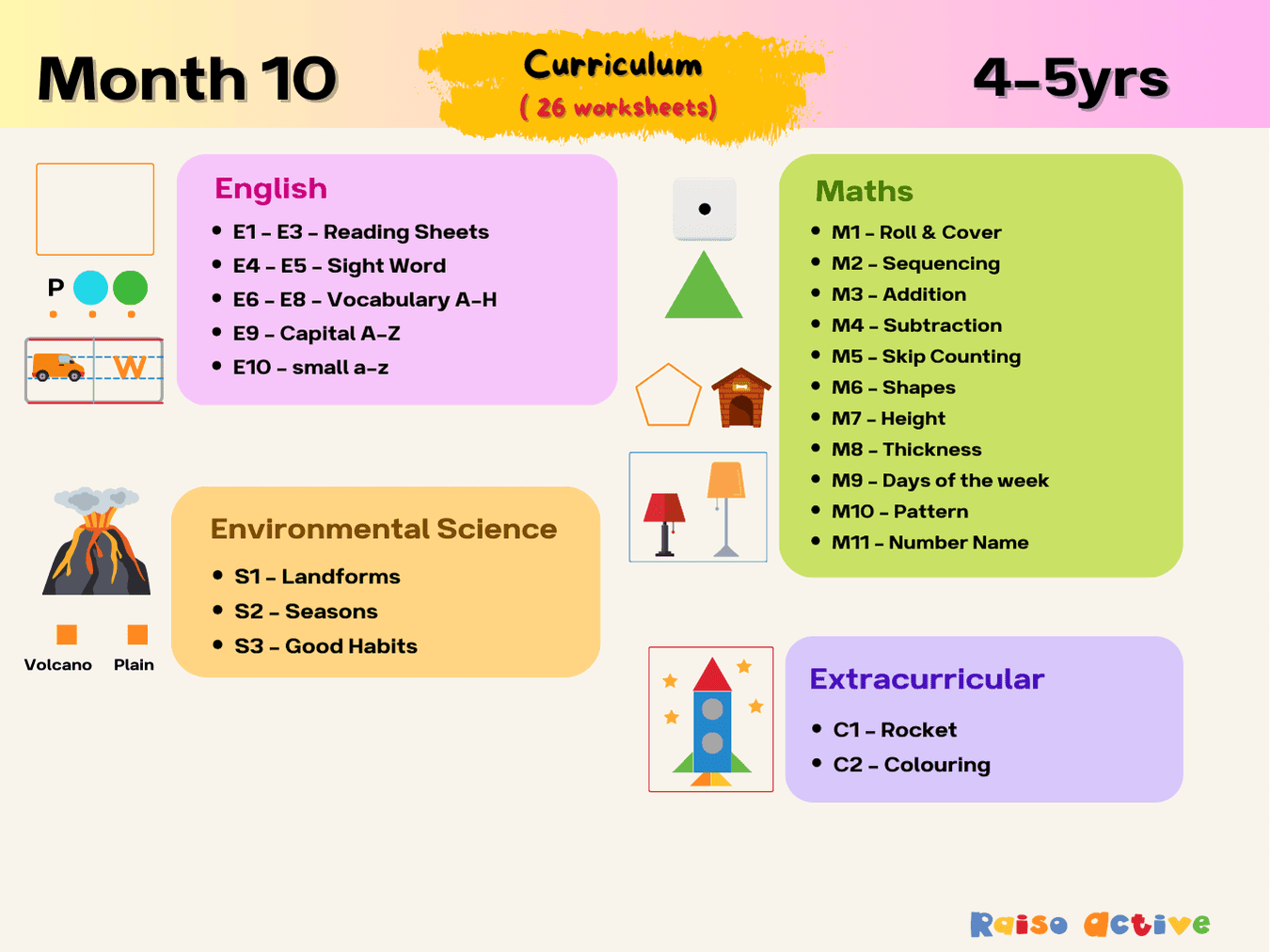
Part of the pack
Month 10: Learning & Development | Ages 4-5
This is page 5 of the pack. Ages 4-5 · Pre-KAges 4-5 · ReceptionAges 4-5 · LKGAges 4-5
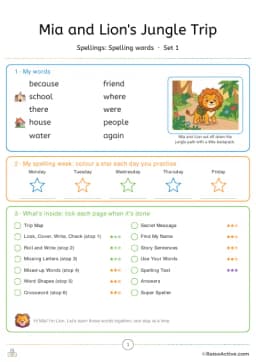
Made for your child
Spelling practice, made for your child
Their own spelling words turned into a pack: trace or look-cover-write-check, roll and write, a secret picture code, a word search, a crossword and a test, with their name in it.
Make a spelling packFree preview · free for members
Or start free: a word search with sight wordsCurriculum
- Fluency > Sentence Reading
How to use this worksheet
Read each sentence aloud together slowly, pointing to each word as you say it. Ask your child what the sentence is describing before looking at the picture choices, encouraging them to picture the scene in their mind first. Have your child circle the picture that matches the sentence, then reread the sentence once more while pointing at their chosen picture to confirm it makes sense.
Materials needed
- Pencil
- Crayons
Extension activities
- 1Have the child create their own simple sentence using words from the worksheet.
- 2Ask the child to draw a picture for one of the sentences instead of choosing from the given options.
- 3Use the sentences as a basis for a short, simple story told together out loud.
- 4Play a game where you act out a sentence's meaning and your child guesses which sentence you're showing.

Written by
Hemsweta Jain · Teacher Cheena
MBA and Early Childhood Educator, teaching since 2014 · Founder of RaisoActive, Mumbai
Every RaisoActive worksheet is designed and checked by the founder before publishing.
Published · Last reviewed
More from Month 10: Learning & Development | Ages 4-5
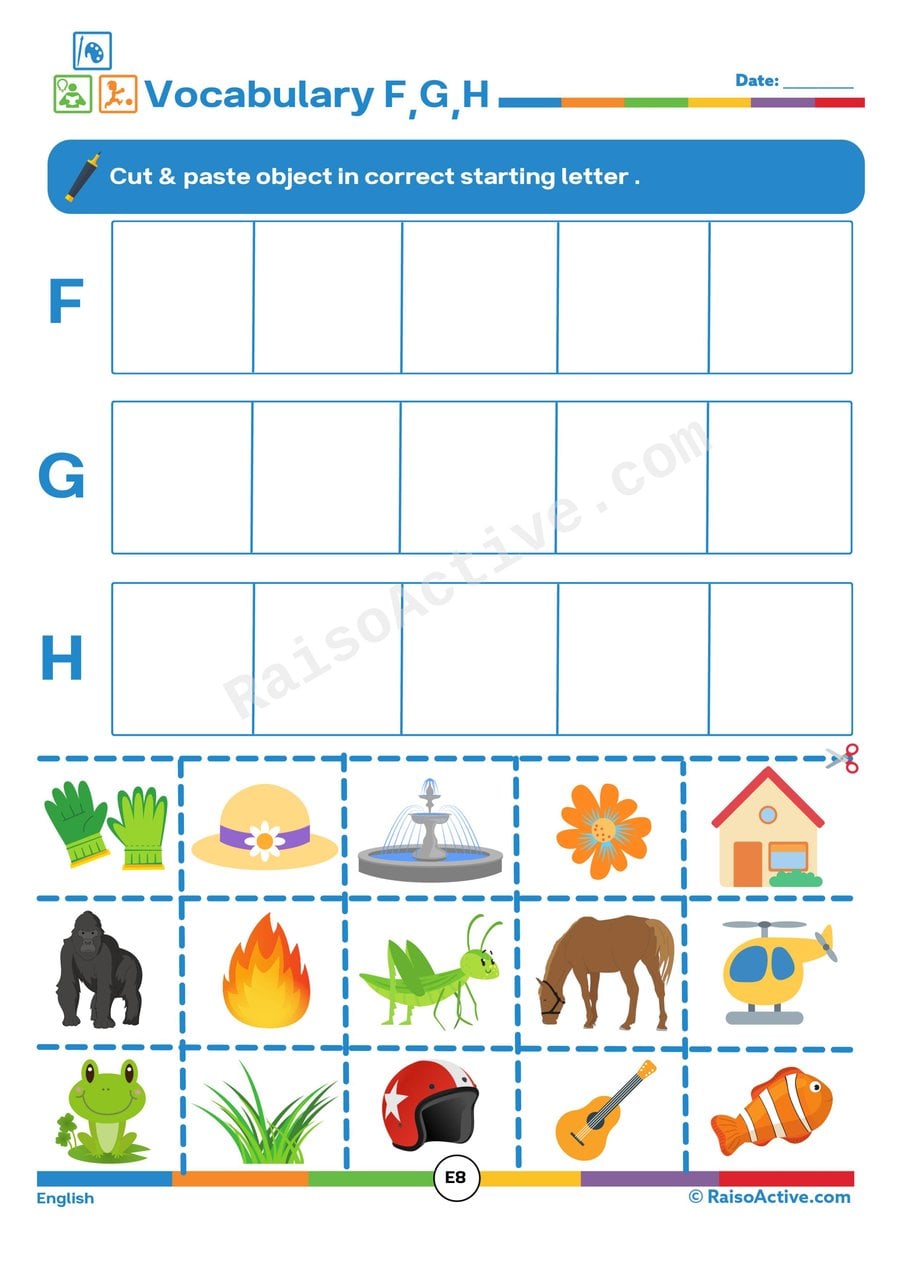
F, G, H Letter Sounds Cut and Paste Worksheet
Ages 4-5 · Pre-KAges 4-5 · ReceptionAges 4-5 · LKGAges 4-5
This worksheet builds phonemic awareness in children ages 4-5 by asking them to isolate the beginning sound of each picture and sort it under the correct letter — F, G, or H. Sorting across three letters at once, rather than just one, requires children to hold multiple sound-letter associations in mind and choose between them, which is a step up in difficulty from single-letter worksheets. This kind of comparative sound-sorting strengthens the phonics foundation needed for early reading.
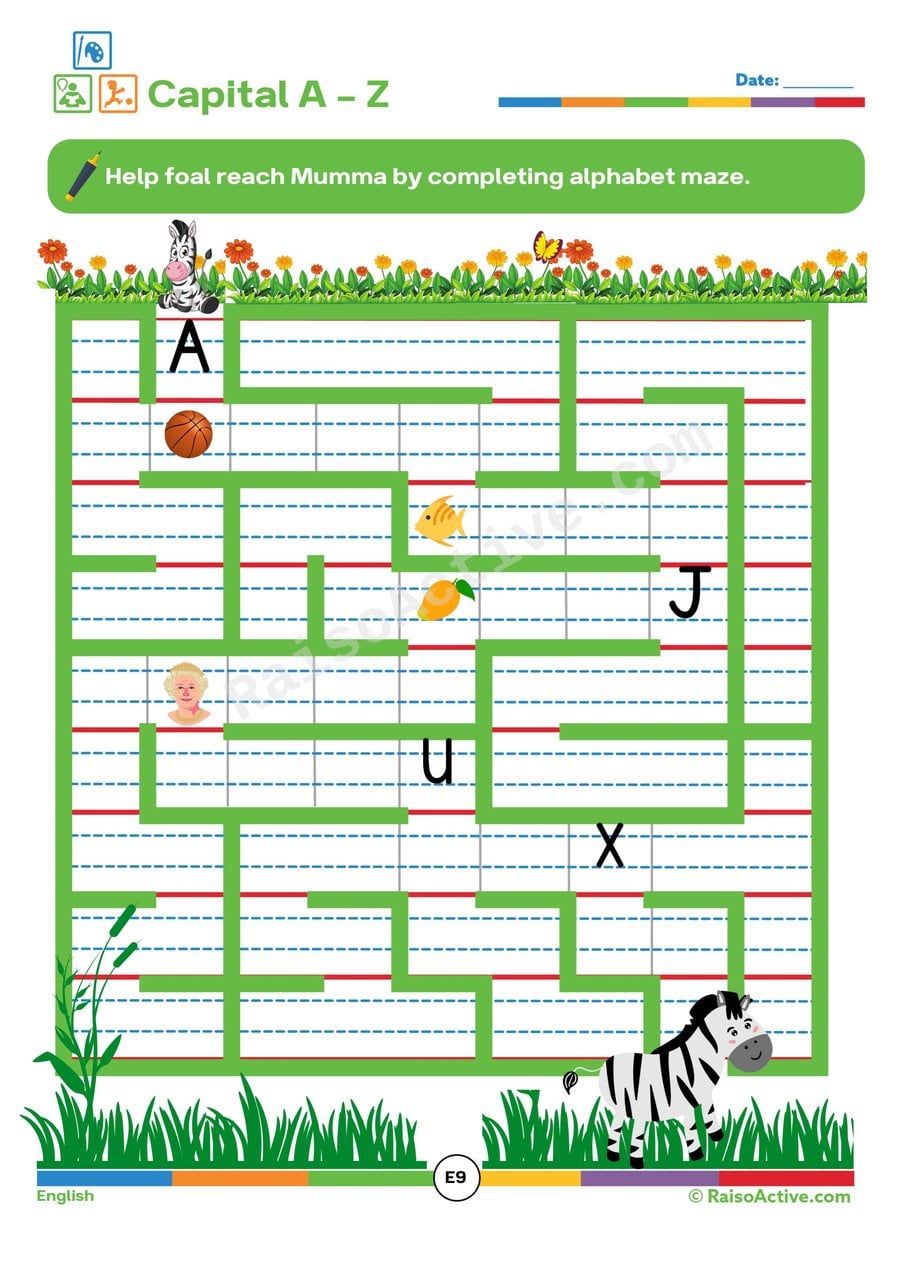
Capital Letter Maze: Help the Foal Find Mumma!
Ages 3-5 · Preschool–Pre-KAges 3-5 · Nursery–ReceptionAges 3-5 · Nursery–LKGAges 3-5
This maze worksheet combines fine motor tracing practice with capital letter recognition for children ages 3-5, as they navigate a path from letter to letter to reunite the foal with its mother. Following a maze path while simultaneously identifying letters along the way builds sustained visual attention and reinforces that letters appear in a meaningful, recognizable sequence. The storyline element also adds emotional motivation that keeps children engaged through a longer tracing task.
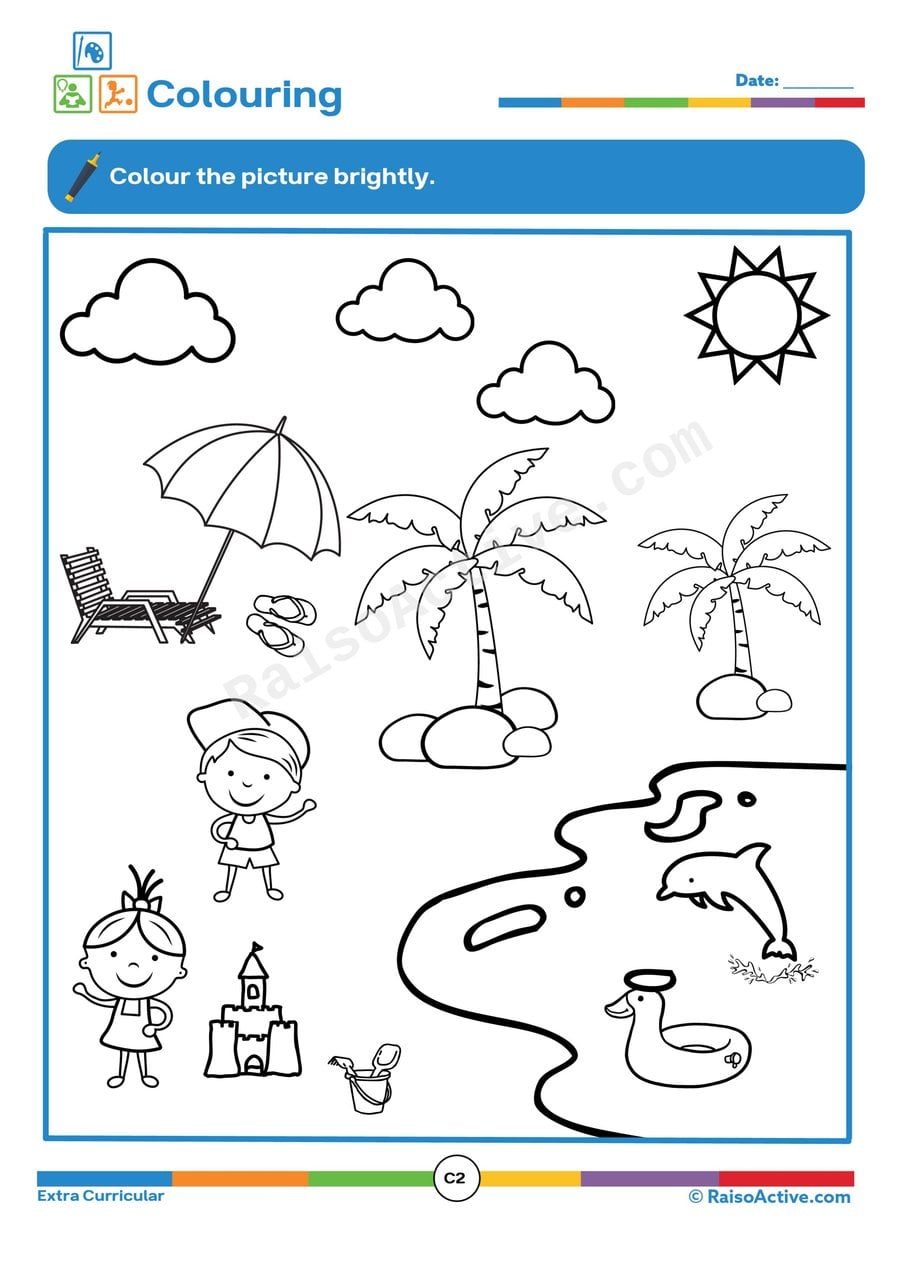
Summer Coloring Worksheet: Color the Beach Scene!
Ages 3-5 · Preschool–Pre-KAges 3-5 · Nursery–ReceptionAges 3-5 · Nursery–LKGAges 3-5
This coloring worksheet lets children ages 3-5 practice staying within lines and choosing appropriate colors while reinforcing recognition of summer-themed objects like sand, sun, and beach toys. Coloring a themed scene rather than a random picture also builds vocabulary, since children naturally name and discuss each object as they decide what color to use. This combination of fine motor practice and vocabulary reinforcement makes even a simple coloring page more purposeful than free coloring alone.
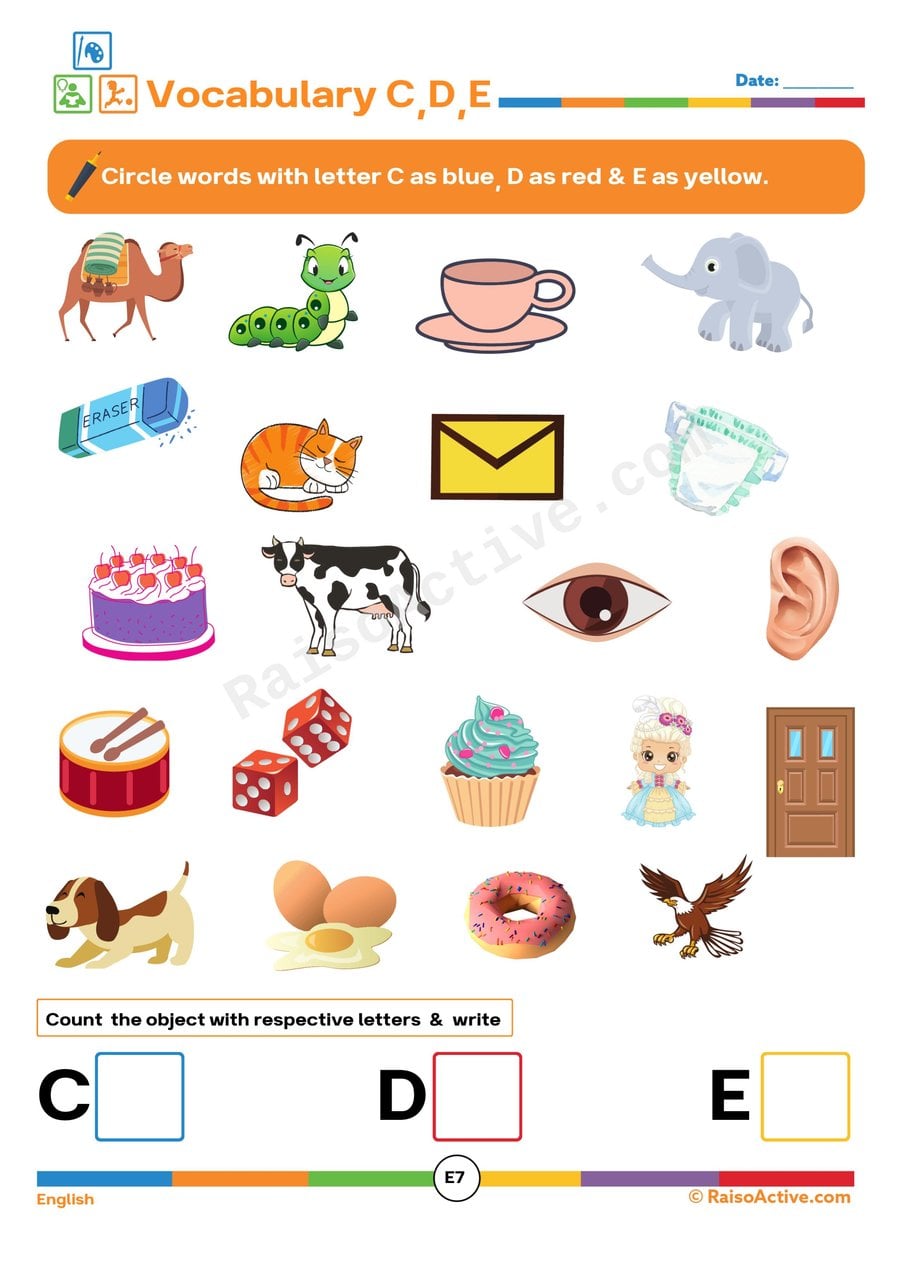
C, D, E Letter Sounds Worksheet: Circle and Count!
Ages 3-5 · Preschool–Pre-KAges 3-5 · Nursery–ReceptionAges 3-5 · Nursery–LKGAges 3-5
This activity gives children ages 3-5 focused practice recognizing the beginning sounds of the letters C, D, and E, asking them to circle matching pictures in different colors for each letter before counting the results. Combining phonics with counting means children practice two skills in one sitting: identifying initial letter sounds and recording a numeric total, both foundational for kindergarten readiness. Color-coding each letter also helps children visually organize the three sounds instead of mixing them together.

Subtraction Fun: Count and Subtract with Cute Animals!
Ages 4-6 · Pre-K–KindergartenAges 4-6 · Reception–Year 1Ages 4-6 · LKG–UKGAges 4-6
Counting a group of animal pictures and then crossing out or removing a specified number teaches children ages 4-6 the concept of subtraction as taking away from a starting quantity, which is easier to grasp visually than through numbers alone. Writing the remaining total after the take-away step reinforces that subtraction results in a smaller, specific number, connecting the physical act of removing objects to a written numeral. Using cute animal pictures as the countable objects keeps a potentially tricky math concept approachable and fun.

Skip Counting Adventure: Fill in the Blanks Worksheet for Numbers 2, 5, and 10!
Ages 4-6 · Pre-K–KindergartenAges 4-6 · Reception–Year 1Ages 4-6 · LKG–UKGAges 4-6
Filling in missing numbers in sequences that count by twos, fives, and tens teaches children ages 4-6 to recognize numerical patterns beyond counting one at a time, an important stepping stone toward multiplication later in school. Because each skip-counting sequence has a consistent gap between numbers, children must notice and apply that pattern rather than simply reciting a memorized list. This worksheet also builds flexible number sense, helping children see numbers as a system with predictable structure rather than an arbitrary list to memorize.

Small Alphabet Writing Worksheet: Before, Between, and After
Ages 3-5 · Preschool–Pre-KAges 3-5 · Nursery–ReceptionAges 3-5 · Nursery–LKGAges 3-5
Children ages 3-5 practice recalling the fixed order of the alphabet by writing the small letter that comes before, between, or after given letters, a skill that goes beyond simply reciting the alphabet song and requires genuine understanding of letter sequence. This kind of targeted recall practice helps children build the alphabet knowledge needed for using dictionaries, alphabetized lists, and smooth handwriting flow later on.

Alphabet Adventures: 'A' and 'B' Picture Sorting Worksheet
Ages 4-5 · Pre-KAges 4-5 · ReceptionAges 4-5 · LKGAges 4-5
This worksheet strengthens phonemic awareness in children ages 4-5 by having them listen for and identify pictures whose names begin with the letters 'A' or 'B,' then sort them accordingly. Focusing on just two letters at a time, rather than the whole alphabet, gives children a manageable, focused way to practice isolating beginning sounds before tackling more letters.
Related worksheets

Sentence Matching Worksheet: Read and Match the Sentences!
Ages 4-6 · Pre-K–KindergartenAges 4-6 · Reception–Year 1Ages 4-6 · LKG–UKGAges 4-6
Reading a short sentence and pasting it beneath its matching picture builds reading comprehension for children ages 4-6, requiring them to understand the full meaning of a sentence rather than recognizing isolated words. This task also reinforces fine motor precision as children position and glue a small strip of text accurately within a defined space.

Read and Match: Fun Sentences and Pictures Worksheet for Kids!
Ages 4-6 · Pre-K–KindergartenAges 4-6 · Reception–Year 1Ages 4-6 · LKG–UKGAges 4-6
Reading simple sentences and matching them to the correct picture helps children ages 4-6 practice decoding text and checking their understanding against a visual clue, an important step in building true reading comprehension rather than picture-guessing. Coloring the pictures afterward adds a rewarding finishing touch that keeps young readers engaged through the whole page.

Read and Match: Fun Reading Worksheet for Preschoolers
Ages 3-5 · Preschool–Pre-KAges 3-5 · Nursery–ReceptionAges 3-5 · Nursery–LKGAges 3-5
Reading a simple sentence and matching it to its corresponding picture builds early reading comprehension for children ages 3-5, teaching them that written words carry meaning that connects to real images and ideas.

Simple Sentences: Read and Draw Worksheet for Kids
Ages 3-5 · Preschool–Pre-KAges 3-5 · Nursery–ReceptionAges 3-5 · Nursery–LKGAges 3-5
This worksheet has children ages 3-5 read a simple sentence and then draw a picture that represents its meaning, building reading comprehension by requiring them to visualize and produce what the words describe rather than just recognize them. Translating text into a drawing is a strong early check that a child truly understands what they've read, not just decoded the individual words.

Match the Sentence: Picture Matching Worksheet for Early Readers
Ages 4-6 · Pre-K–KindergartenAges 4-6 · Reception–Year 1Ages 4-6 · LKG–UKGAges 4-6
Reading a full sentence and connecting it to the picture it describes asks children ages 4-6 to move beyond single-word recognition into genuine sentence comprehension, checking that they understood the sentence's overall meaning rather than just decoding individual words. This worksheet builds that comprehension skill by having children read several simple sentences and match each one to the correct illustration, reinforcing that reading is about extracting meaning, not just producing sounds. Developing this kind of sentence-level comprehension early is an important bridge between phonics-based decoding and true reading fluency.

Read and Match: Sentence Matching Worksheet for Preschoolers
Ages 3-5 · Preschool–Pre-KAges 3-5 · Nursery–ReceptionAges 3-5 · Nursery–LKGAges 3-5
This worksheet has 3-5 year olds read a short, simple sentence and then find and paste the one picture that actually matches its meaning — a task that requires genuine reading comprehension rather than picture-guessing, since more than one image on the page might look similar at a glance. Because the child has to hold the sentence's meaning in mind while comparing several picture options, this builds an early bridge between decoding words and understanding what they describe.

Read and Paste: Matching Sentences with Pictures Worksheet
Ages 4-5 · Pre-KAges 4-5 · ReceptionAges 4-5 · LKGAges 4-5
Reading a sentence and then finding its matching picture builds comprehension for children ages 4-5, teaching them to process the full meaning of connected words rather than recognizing them in isolation. The cutting and pasting component also strengthens the fine motor precision needed to place text accurately next to its correct visual match.
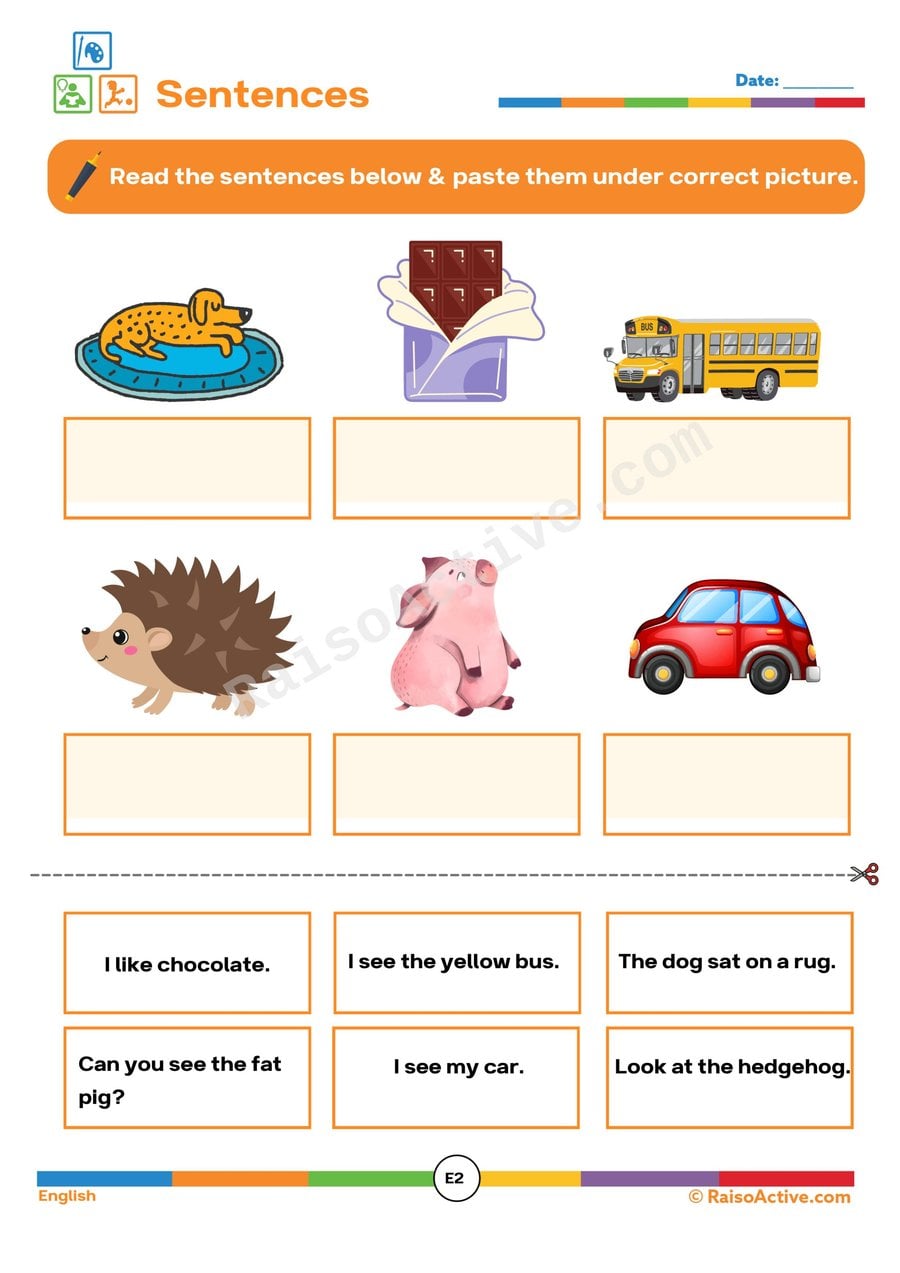
Sentence Matching Worksheet for Early Readers
Ages 4-5 · Pre-KAges 4-5 · ReceptionAges 4-5 · LKGAges 4-5
Matching a written sentence to the picture it describes asks children ages 4-5 to read for meaning rather than just decode individual words, an important step up from single-word reading toward true reading comprehension. This worksheet also builds fine motor and organizational skills through cutting and placing the sentence in the correct spot. Successfully pairing text with image confirms that a child understands what they're reading, not just that they can sound out letters.
Guides for this topic

Best Worksheets for 3-Year-Olds: What Works and What to Avoid
What works on worksheets for 3-year-olds: short sessions, crayons, tracing lines, matching, cutting, a free weekly plan, and signs one is too advanced.
Documenting Learning Without Drowning in Data: A Practical Guide for Parents and Teachers
Learn practical ways to document your child's learning without overwhelm. Simple portfolios, observation tips, and printable trackers for ages 1-8.

What's the Best Way to Teach Sight Words? A Complete Guide for Parents and Teachers
Discover the most effective methods to teach sight words to young children — flashcards, games, Dolch vs Fry lists, rainbow writing, and how to combine them with phonics.
Reviews
Every worksheet for ages 4–5, no watermark
Members download the full library of 1,000+ worksheets and every activity pack without watermarks or daily limits. One year costs ₹999 in India or $20 elsewhere.
See membership plansOr download any worksheet free with a watermark (5 a day).