
Small Alphabet Writing Worksheet: Before, Between, and After
Children ages 3-5 practice recalling the fixed order of the alphabet by writing the small letter that comes before, between, or after given letters, a skill that goes beyond simply reciting the alphabet song and requires genuine understanding of letter sequence. This kind of targeted recall practice helps children build the alphabet knowledge needed for using dictionaries, alphabetized lists, and smooth handwriting flow later on.
Part of the pack
Month 10: Learning & Development | Ages 4-5Curriculum
How to use this worksheet
Look at the images and letters provided in each section together, and have your child say the alphabet aloud from 'a' up to the given letter to figure out what comes before or after it. For 'between' items, have your child say the two given letters aloud and think about what letter falls in the middle. Have your child write the missing letter in the blank space provided, checking each answer together by reciting the short run of letters aloud afterward.
Materials needed
- Pencil
- Eraser
Extension activities
- •Have the child write the full alphabet from a to z independently on a blank sheet of paper.
- •Have the child identify the beginning and ending sounds of the objects shown in the worksheet's images.
- •Sing the alphabet song together, pausing at random points to ask what letter comes next.
- •Create simple alphabet flashcards and shuffle them to practice ordering a handful of letters correctly.
Tips for parents and teachers
Encourage the child to say the alphabet aloud while working through each problem, since reciting from the beginning is often the most reliable way for this age group to figure out a specific letter's position. If your child struggles with 'between' problems specifically, that's expected since holding two reference points in mind is harder than finding a single before or after letter. Celebrate their reasoning process, not just the final written letter, since working out sequence is the real skill here.

Written by
Hemsweta Jain · Teacher Cheena
MBA and Early Childhood Educator, teaching since 2014 · Founder of RaisoActive, Mumbai
Every RaisoActive worksheet is designed and checked by the founder before publishing.
Published · Last reviewed
Related worksheets

A-Z Letter Sequence Worksheet: Fill in the Missing Letters!
By age 4-5, children move from reciting the alphabet by rote to actually recognizing individual letters out of sequence, and this fill-in-the-blank worksheet tests that deeper knowledge by asking them to supply missing capital letters in a scrambled order. Locating where a gap belongs strengthens letter-order memory and visual letter recognition, both essential precursors to reading and independent writing. It also builds attention to detail, since children must scan neighboring letters to figure out what's missing.

Clothing Pattern Match Worksheet for Preschoolers
This worksheet has children ages 3-5 study repeating patterns on clothing items — stripes, polka dots, or checks — and match each item to its identical twin, building visual discrimination and early pattern-sequencing skills. Distinguishing between similar-looking patterns also sharpens attention to detail, a skill that later supports letter and word recognition.

Trace the Numbers 1-9 Worksheet for Preschoolers
Tracing the numerals 1 through 9 gives children ages 3-5 repeated, guided practice with the specific pencil strokes each number requires, building the fine motor control and muscle memory needed for independent number writing. Because tracing follows a fixed, correct path, it also reinforces accurate numeral recognition, helping children tell visually similar digits apart.

Elephant Shapes: Fun Sorting Worksheet for Preschoolers!
This playful sorting worksheet has children ages 3-5 use an elephant's 'trunk' (their own hand reaching through a cut circle) to pick and sort shapes, building both shape recognition and simple classification skills. Physically selecting and grouping shapes by type, rather than just naming them on sight, helps solidify the concept that shapes can share a category even when their size or color differs.
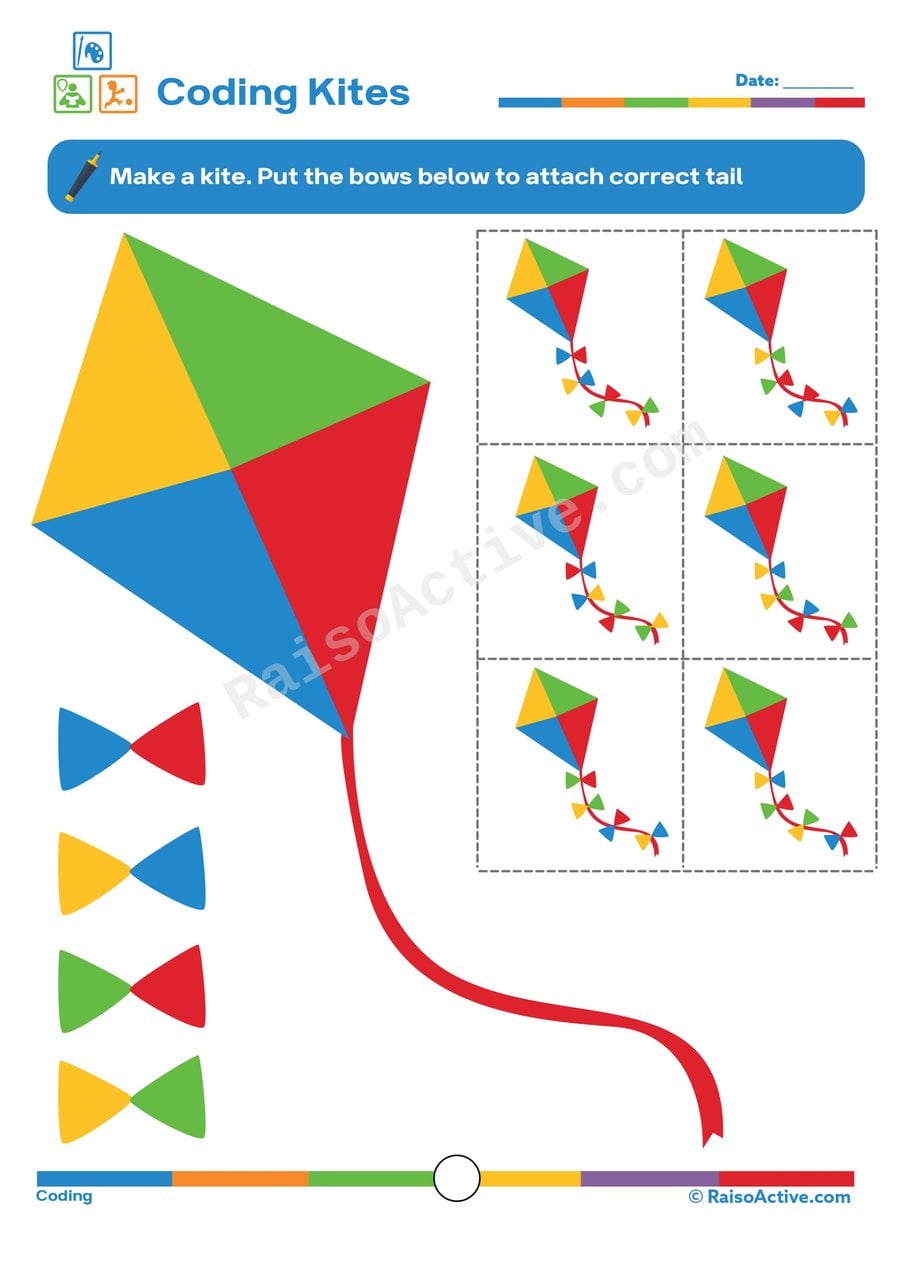
Coding Kites Worksheet: Match the Bows!
This activity sharpens visual observation in children ages 3-5 as they compare color sequences on each kite to a set of loose bows and find the exact match. Careful, systematic comparison — checking each color in order rather than glancing quickly — builds an attention-to-detail habit that transfers directly to early reading and number work.
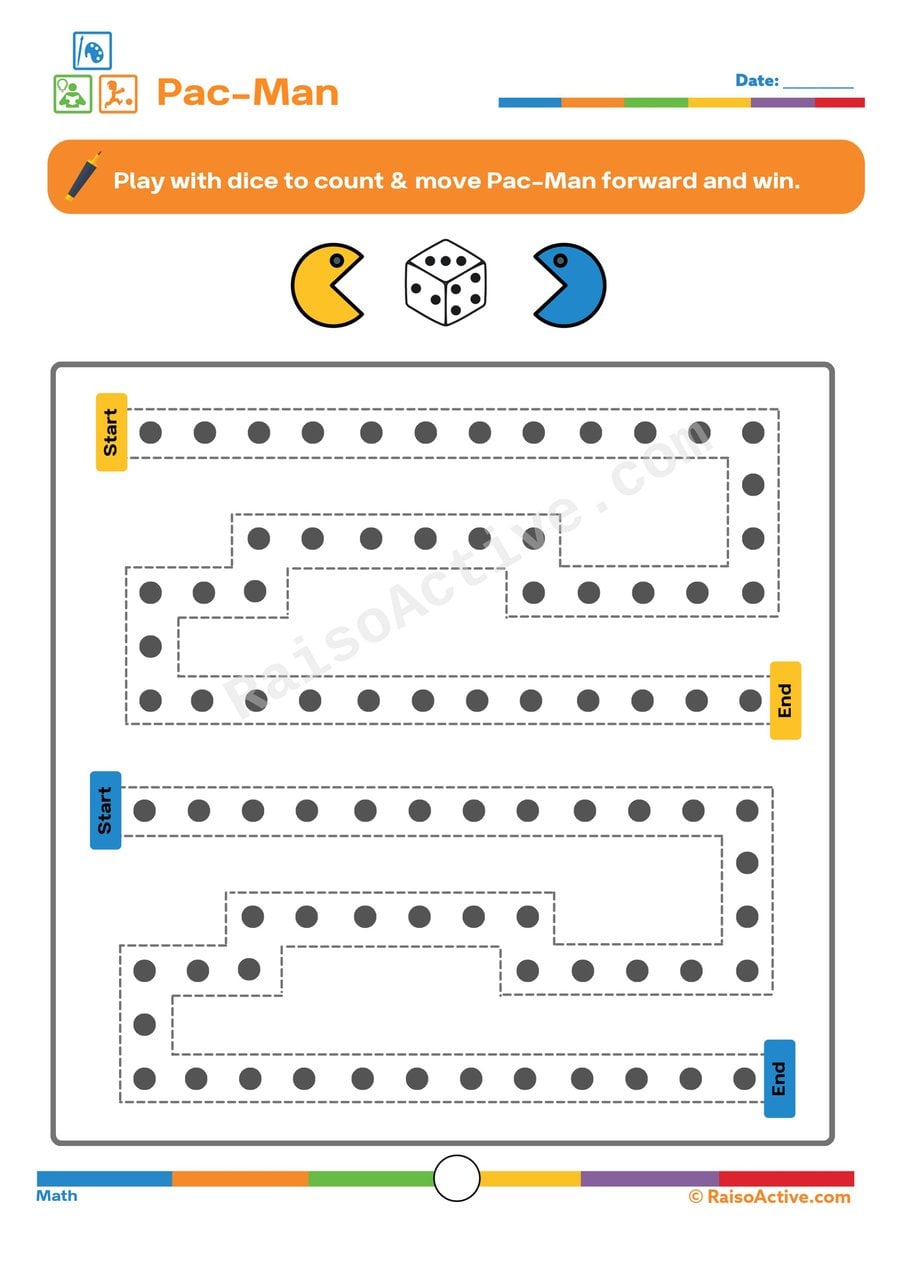
Pac-Man Maze Worksheet: Count and Move!
This dice-counting maze gives children ages 3-5 repeated practice matching a rolled number to the correct number of moves, reinforcing accurate counting under a bit of playful pressure. Tracking Pac-Man's current position after each roll also builds short-term spatial memory, since children must remember where they left off before moving again.
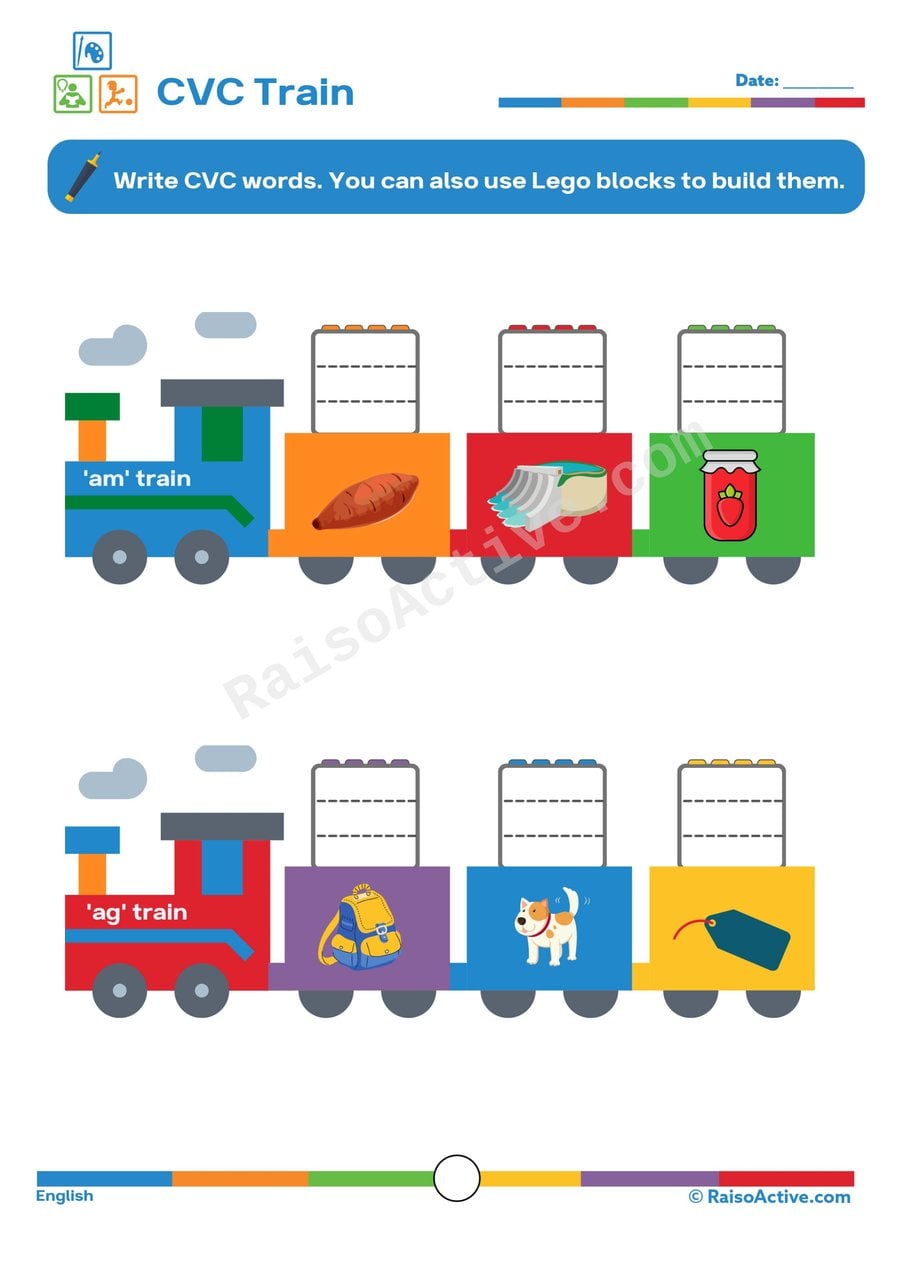
CVC Train Worksheet: Write and Build CVC Words!
This worksheet gives children ages 4-6 focused practice blending letter sounds into consonant-vowel-consonant words, using train-car pictures as clues for words like 'dog,' 'hen,' or 'cup.' Because children both write the word and can optionally build it with Lego blocks, this worksheet reinforces the same phonics skill through two different physical actions — handwriting and hands-on construction — which helps the spelling patterns stick.

Lock and Key Matching Worksheet for Preschoolers
Matching each key to the lock sharing the same letter helps children ages 3-5 practice letter recognition in a playful, puzzle-like context rather than rote drilling. Because each key must be checked against several similar-looking locks before finding the right match, this worksheet also builds visual scanning and careful comparison skills that support problem-solving.
Guides for this topic
Documenting Learning Without Drowning in Data: A Practical Guide for Parents and Teachers
Learn practical ways to document your child's learning without overwhelm. Simple portfolios, observation tips, and printable trackers for ages 1-8.
Age-Appropriate Problem-Solving Activities: Building Critical Thinkers from the Ground Up
Discover fun, age-appropriate problem-solving activities for children ages 1-8. Build critical thinking, logic, and reasoning skills through play-based learning.
Critical Thinking Activities That Actually Work for Young Children: Building Tomorrow's Thinkers Today
Discover proven critical thinking activities for young children. Age-wise logic games, questioning techniques, and hands-on ideas to build thinking skills at home.
Reviews
Every worksheet for ages 3–5, no watermark
Members download the full library of 1,000+ worksheets and every activity pack without watermarks or daily limits. One year costs ₹1,000 in India or $20 elsewhere.
See membership plansOr download any worksheet free with a watermark (5 a day).