
Tall and Short Objects Worksheet for Preschoolers
Children ages 3-5 build early measurement vocabulary by comparing pairs of objects and identifying which one is taller and which is shorter, practicing both circling and ticking as response formats. Comparing height between two objects at a time, rather than sorting a whole group, keeps the comparison task simple and direct, which is developmentally appropriate before children move on to comparing three or more items at once.
Part of the pack
Month 10: Learning & Development | Ages 4-5Curriculum
How to use this worksheet
Look at the first set of paired images together and ask your child which object is taller before they circle it. Move to the second set and reverse the instruction, having your child tick the shorter object in each pair instead. Encourage your child to point at both objects and compare them out loud — 'this one is taller, this one is shorter' — before marking their answer, checking each pair together as you go.
Materials needed
- Pencil
- Crayons
Extension activities
- •Go on a height hunt around the house, comparing the heights of different objects like lamps, plants, or furniture.
- •Draw a picture of a tall tree and a short bush and compare them side by side.
- •Stand two stuffed animals or toys next to each other and decide together which is taller.
- •Measure a few household objects with a ruler or measuring tape and compare the actual heights.
Tips for parents and teachers
Encourage your child to use descriptive words like 'taller' and 'shorter' while completing the worksheet, since using comparative language actively reinforces the concept better than just marking an answer. Discuss the differences in height between the objects and why one might be taller, connecting the abstract comparison to real reasons when possible. Switching between circling the taller object and ticking the shorter one requires your child to read the instruction carefully each time, so double-check they've noticed the switch.

Written by
Hemsweta Jain · Teacher Cheena
MBA and Early Childhood Educator, teaching since 2014 · Founder of RaisoActive, Mumbai
Every RaisoActive worksheet is designed and checked by the founder before publishing.
Published · Last reviewed
Related worksheets

Measuring Objects with Paper Clips Worksheet for Preschoolers
This worksheet introduces children ages 4-5 to non-standard measurement by having them line up paper clips end-to-end to find the length of different objects, building an early understanding that length can be measured and compared using a repeated unit. This hands-on approach lays the groundwork for using rulers and standard units later on.
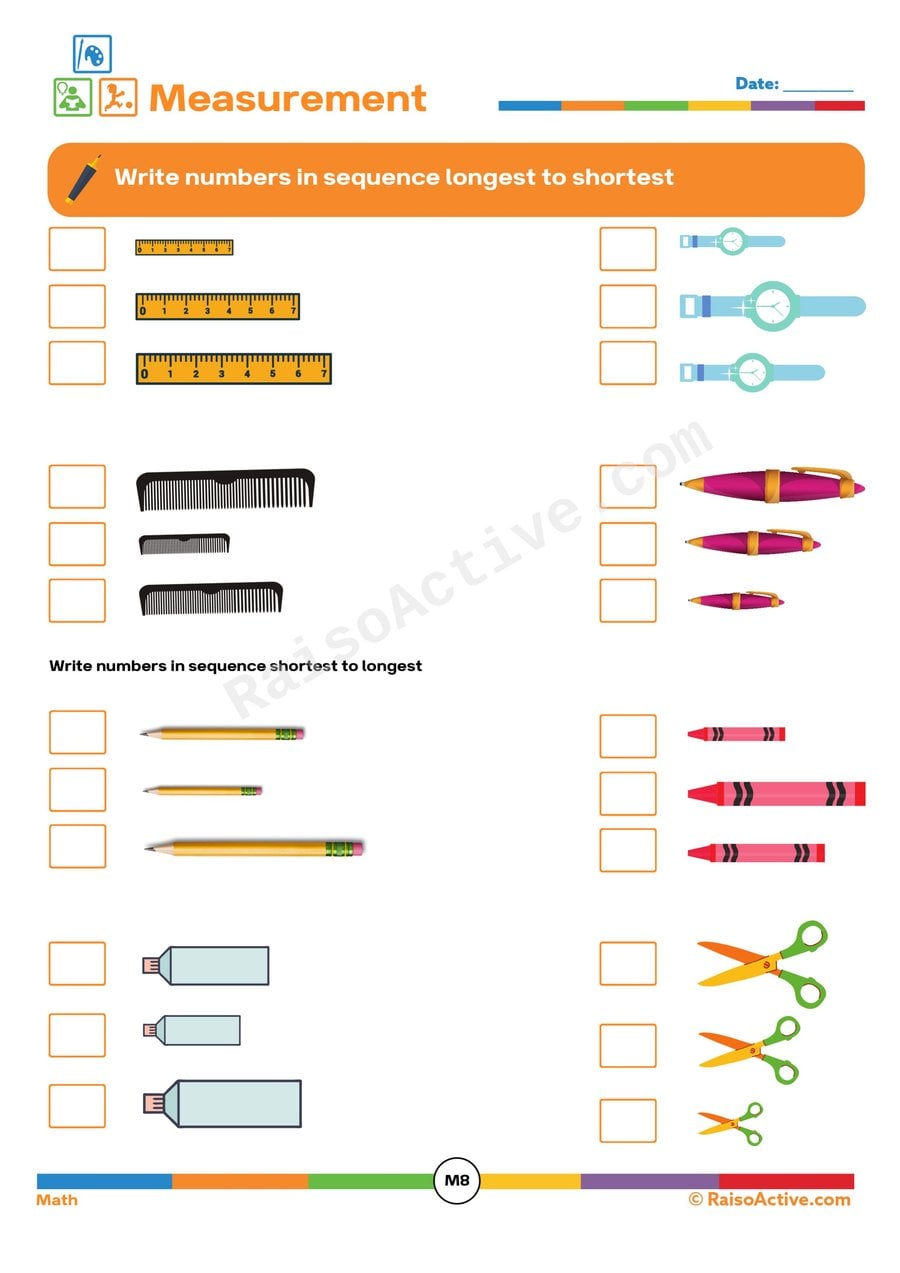
Measurement Worksheet: Longest to Shortest!
This worksheet builds comparative measurement skills by having children visually assess and rank three objects from longest to shortest and again from shortest to longest, reinforcing that length can be ordered, not just measured in isolation. For ages 4-6, this kind of ordinal comparison is an important stepping stone before children begin measuring with actual units like inches or centimeters.

Non-Standard Measurement Worksheet for Kids: Comparing Objects
This worksheet extends measurement practice using multiple non-standard units, cubes, buttons, and paper clips, so children see that the same object can be measured different ways depending on the tool used. For ages 4-6, comparing capacity by counting how many glasses fill a bottle adds an early introduction to volume alongside length, broadening their measurement vocabulary.
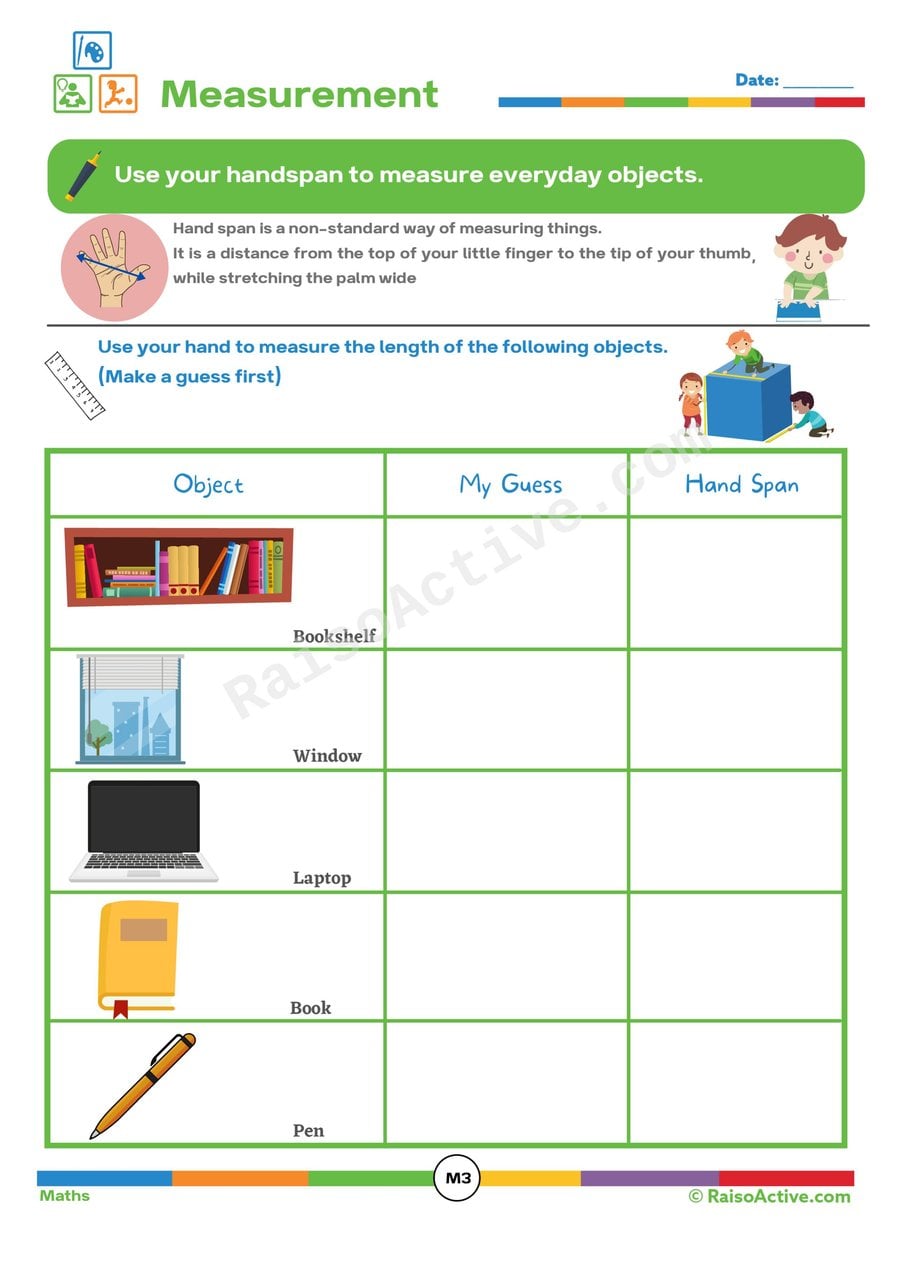
Hand Span Measurement Worksheet for Kids
This worksheet introduces measurement using a non-standard unit, a child's own hand span, teaching that length can be measured with tools other than a ruler while also building estimation skills. For ages 4-6, comparing a guess to an actual measurement helps develop number sense around length and distance in a hands-on, personally meaningful way.

Clothing Pattern Match Worksheet for Preschoolers
This worksheet has children ages 3-5 study repeating patterns on clothing items — stripes, polka dots, or checks — and match each item to its identical twin, building visual discrimination and early pattern-sequencing skills. Distinguishing between similar-looking patterns also sharpens attention to detail, a skill that later supports letter and word recognition.
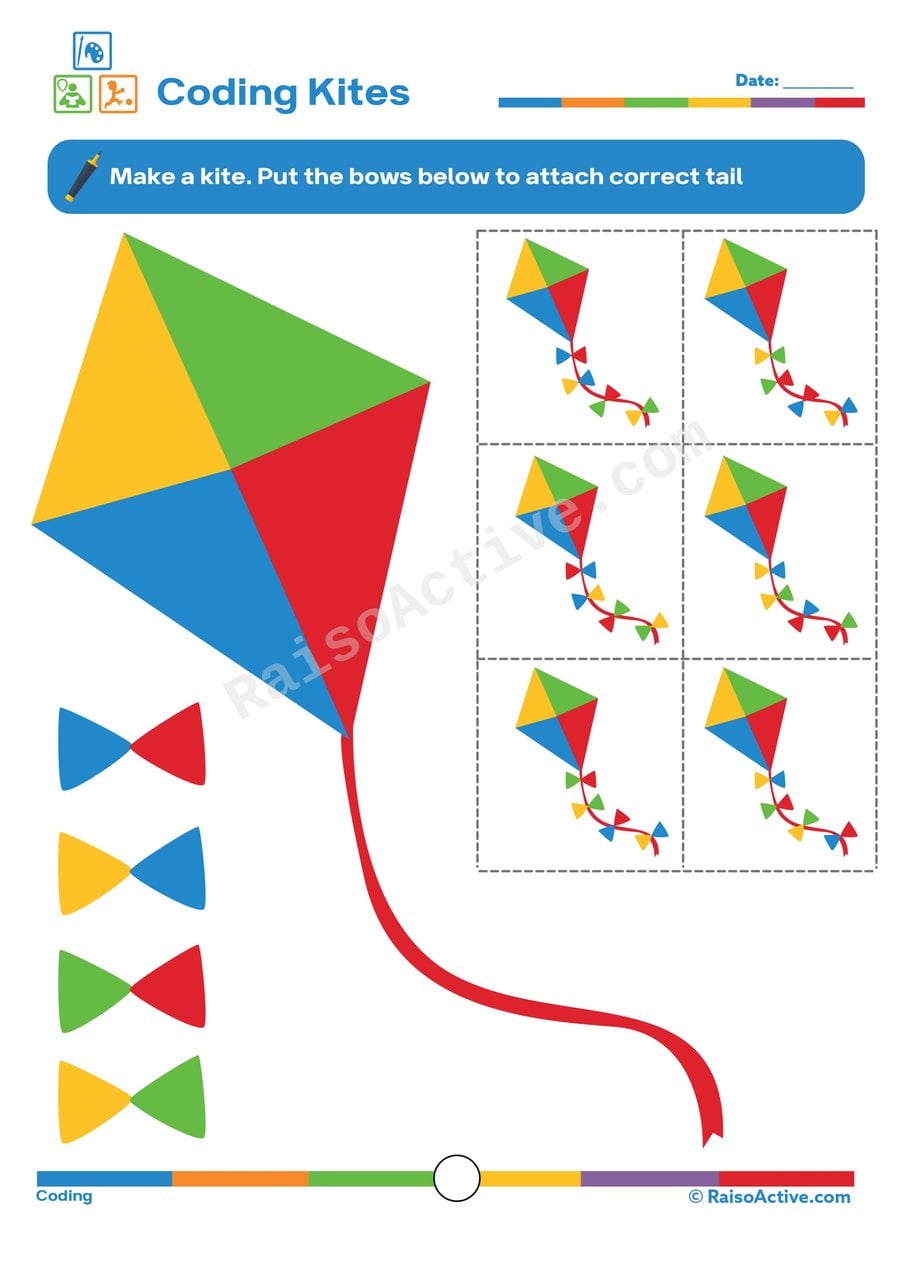
Coding Kites Worksheet: Match the Bows!
This activity sharpens visual observation in children ages 3-5 as they compare color sequences on each kite to a set of loose bows and find the exact match. Careful, systematic comparison — checking each color in order rather than glancing quickly — builds an attention-to-detail habit that transfers directly to early reading and number work.

Stick Man Emotions Worksheet: Happy, Sad, Angry, and Surprised!
Children ages 4-6 practice reading facial expressions on this worksheet, matching stick-figure faces to their correct emotion labels by noticing details like mouth shape and eyebrow position. This strengthens emotional literacy — the ability to name and recognize feelings in others — which supports empathy and smoother social interactions as children move into more group play and classroom settings.

Lock and Key Matching Worksheet for Preschoolers
Matching each key to the lock sharing the same letter helps children ages 3-5 practice letter recognition in a playful, puzzle-like context rather than rote drilling. Because each key must be checked against several similar-looking locks before finding the right match, this worksheet also builds visual scanning and careful comparison skills that support problem-solving.
Reviews
Every worksheet for ages 3–5, no watermark
Members download the full library of 1,000+ worksheets and every activity pack without watermarks or daily limits. One year costs ₹1,000 in India or $20 elsewhere.
See membership plansOr download any worksheet free with a watermark (5 a day).