Read and Paste: Matching Sentences with Pictures Worksheet
Reading a sentence and then finding its matching picture builds comprehension for children ages 4-5, teaching them to process the full meaning of connected words rather than recognizing them in isolation. The cutting and pasting component also strengthens the fine motor precision needed to place text accurately next to its correct visual match.
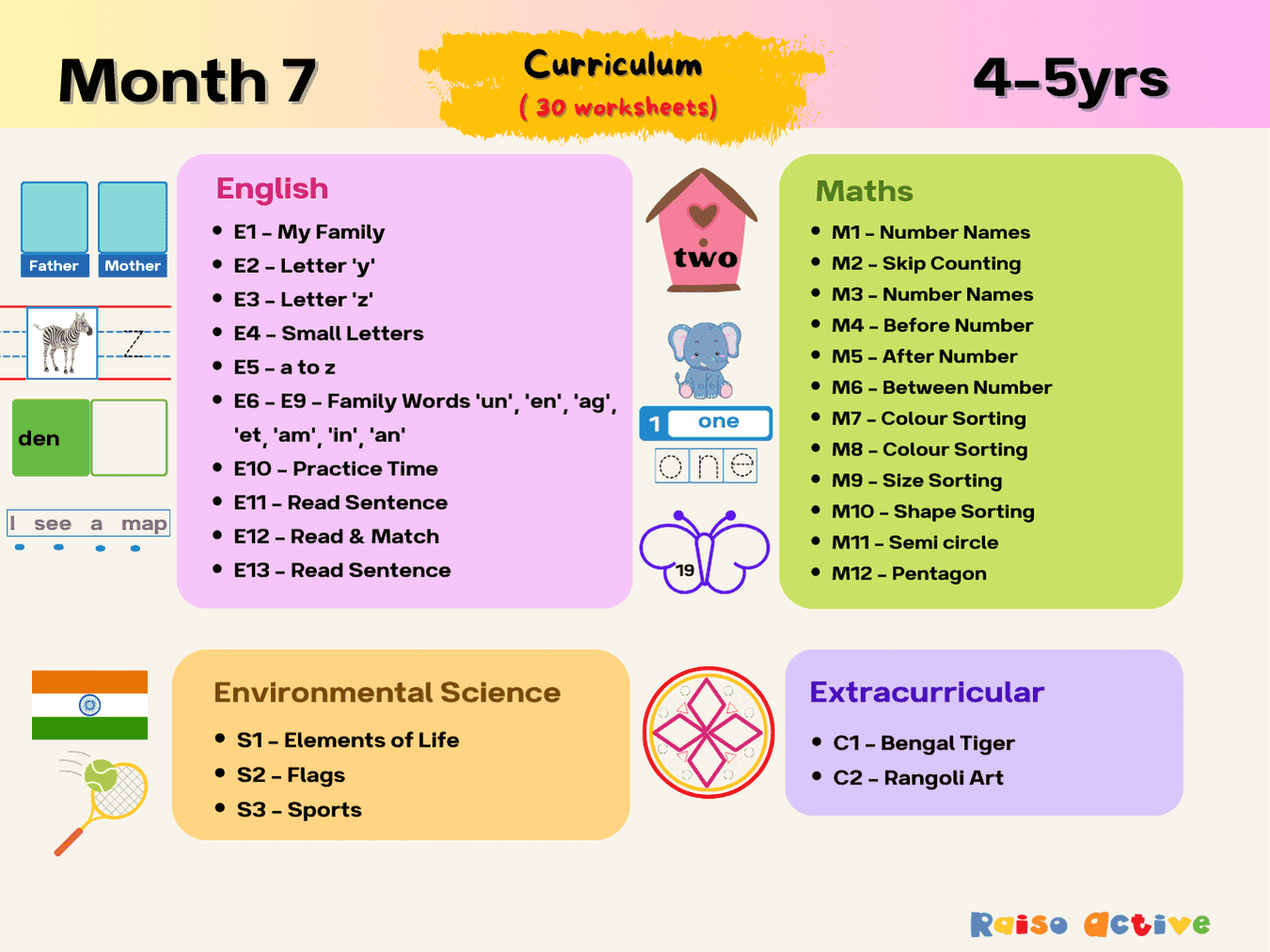
Part of the pack
Month 7: Preschool Skills Through Play | Ages 4-5
This is page 14 of the pack. Ages 4-5 · Pre-KAges 4-5 · ReceptionAges 4-5 · LKGAges 4-5
Made for your child
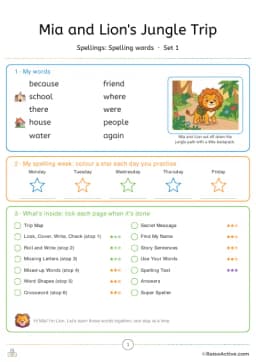
Spelling practice, made for your child
Their own spelling words turned into a pack: trace or look-cover-write-check, roll and write, a secret picture code, a word search, a crossword and a test, with their name in it.
Make a spelling packFree preview · free for members
Or start free: a word search with sight wordsCurriculum
- Fluency > Sentence Reading
How to use this worksheet
Read the first sentence aloud together and ask your child to picture what it describes in their mind before looking at the options. Have them scan the pictures at the bottom of the page to find the one that matches the sentence. Guide them to cut out that picture carefully, then glue it directly next to the matching sentence. Repeat this read-picture-cut-glue routine for each remaining sentence until the whole page is complete.
Materials needed
- Pencil
- Scissors
- Glue or Tape
Extension activities
- 1Have your child draw their own original picture to match one sentence instead of using the pre-made cut-out.
- 2Read each finished sentence-and-picture pair aloud together at bedtime for extra reading practice.
- 3Encourage your child to create a brand-new simple sentence describing something they did today.
- 4Play an oral matching game, reading a sentence aloud and having your child point to the correct object in the room.
- 5Make a small picture book at home pairing a sentence with a drawing on each page.

Written by
Hemsweta Jain · Teacher Cheena
MBA and Early Childhood Educator, teaching since 2014 · Founder of RaisoActive, Mumbai
Every RaisoActive worksheet is designed and checked by the founder before publishing.
Published · Last reviewed
More from Month 7: Preschool Skills Through Play | Ages 4-5
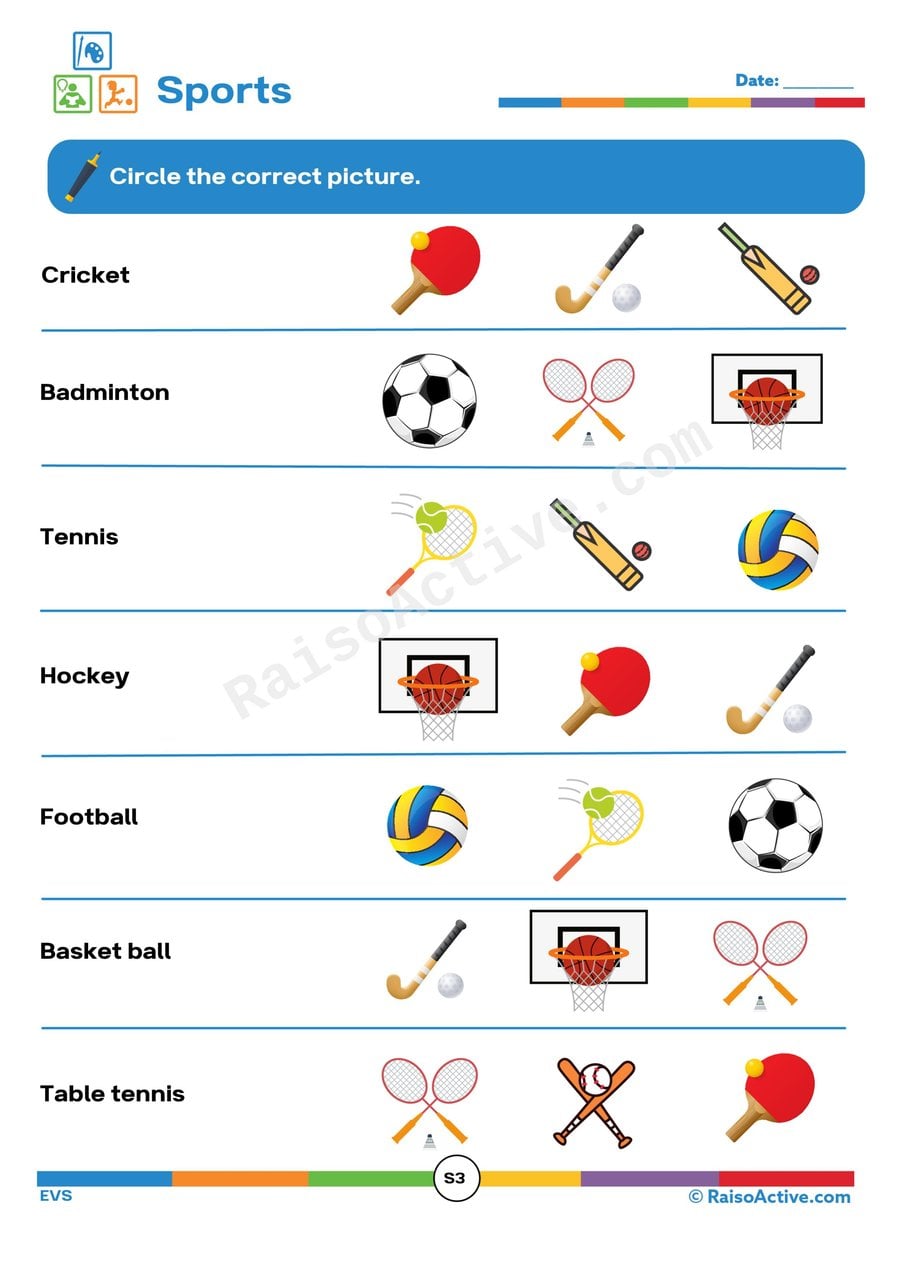
Sports Matching Worksheet for Preschoolers
Ages 3-5 · Preschool–Pre-KAges 3-5 · Nursery–ReceptionAges 3-5 · Nursery–LKGAges 3-5
Matching a sport's written name to its picture builds vocabulary and early reading recognition for children ages 3-5, connecting specific words like 'soccer' or 'swimming' to real, familiar activities. Because sports involve distinct equipment and movements, this task also sharpens visual discrimination, since children must notice small differences between similar-looking pictures to find the correct match.

Big or Small? Size Sorting Worksheet for Preschoolers
Ages 3-5 · Preschool–Pre-KAges 3-5 · Nursery–ReceptionAges 3-5 · Nursery–LKGAges 3-5
Sorting pictures into 'big' and 'small' categories teaches children ages 3-5 an early comparative concept, requiring them to judge relative size rather than an object's absolute measurement. Cutting and gluing each picture into its correct column also reinforces this classification decision physically, making an abstract comparison concrete and visible.

Read & Match Worksheet: Matching Sentences to Pictures
Ages 3-5 · Preschool–Pre-KAges 3-5 · Nursery–ReceptionAges 3-5 · Nursery–LKGAges 3-5
Matching a sentence to its picture through drawing a line or coloring builds reading comprehension for children ages 3-5, requiring them to process the sentence's full meaning rather than recognizing familiar words in isolation. Following this with coloring keeps the activity engaging while giving repeated visual exposure to each completed sentence-and-picture pair.
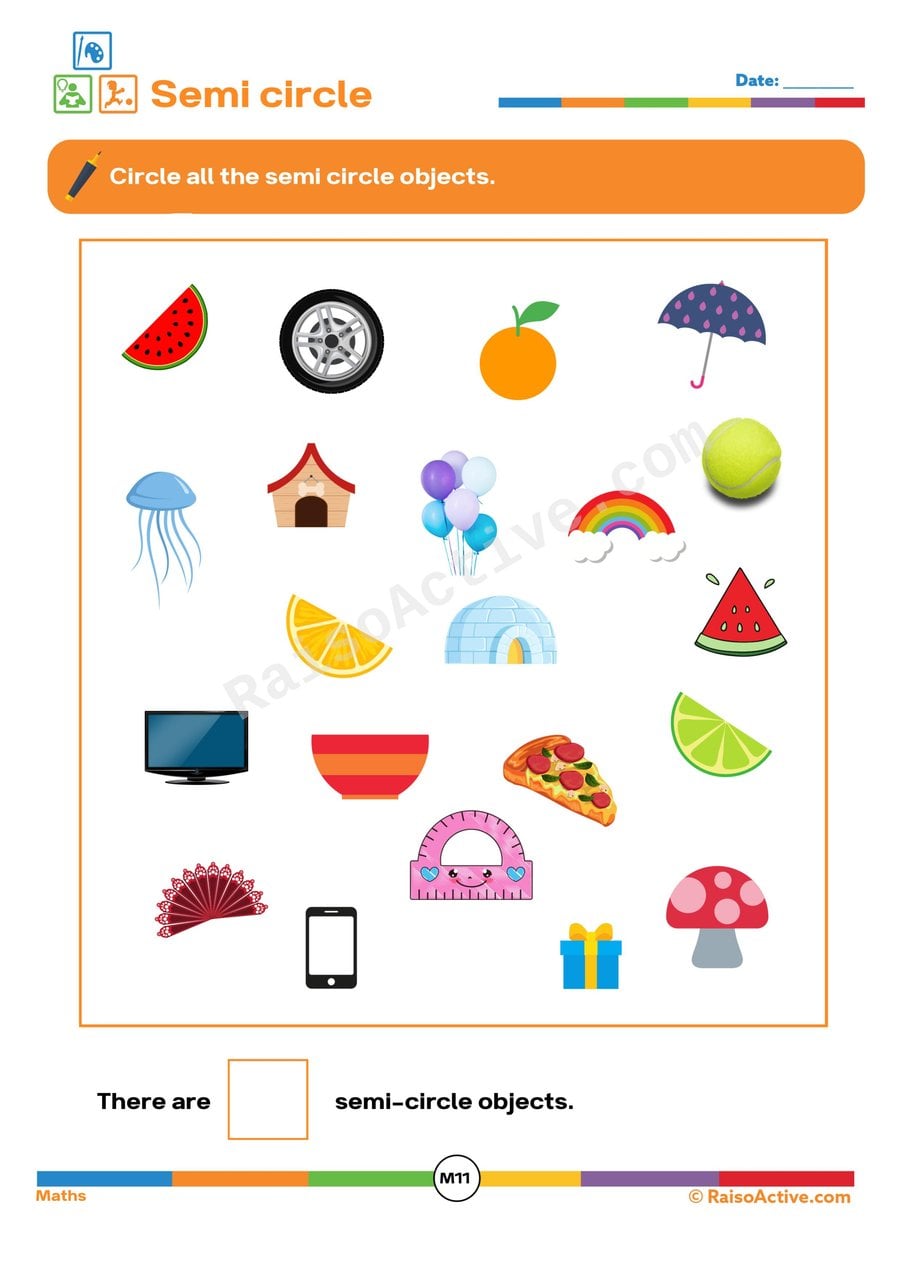
Semi-Circle Shapes Worksheet for Kids
Ages 3-5 · Preschool–Pre-KAges 3-5 · Nursery–ReceptionAges 3-5 · Nursery–LKGAges 3-5
This worksheet sharpens shape recognition by asking children to distinguish semi-circles, a curved half-shape, from other shapes and objects on the page. For ages 3-5, learning to identify a semi-circle specifically, rather than a full circle, builds the visual discrimination skills that support later geometry and letter recognition.

Elements of Life Worksheet: Identify and Encircle!
Ages 3-5 · Preschool–Pre-KAges 3-5 · Nursery–ReceptionAges 3-5 · Nursery–LKGAges 3-5
Identifying elements of life introduces children ages 3-5 to the early science concept that living things share certain needs and features, like growing, eating, or breathing, which distinguishes them from non-living objects. Encircling the correct pictures builds visual discrimination and categorization skills, requiring children to look past surface appearance and think about what makes something part of that category.

Alphabet Maze: Help the Alligator Find the Zoo! (a to z Worksheet)
Ages 3-5 · Preschool–Pre-KAges 3-5 · Nursery–ReceptionAges 3-5 · Nursery–LKGAges 3-5
Guiding a character through a maze from A to Z asks children to recall the full alphabet in order while also navigating a physical path, combining letter sequencing with the visual planning and fine motor control needed for any maze activity. For ages three to five, tracing the entire alphabet in one continuous task is a bigger sequencing challenge than shorter letter drills, building real stamina in letter-order recall.
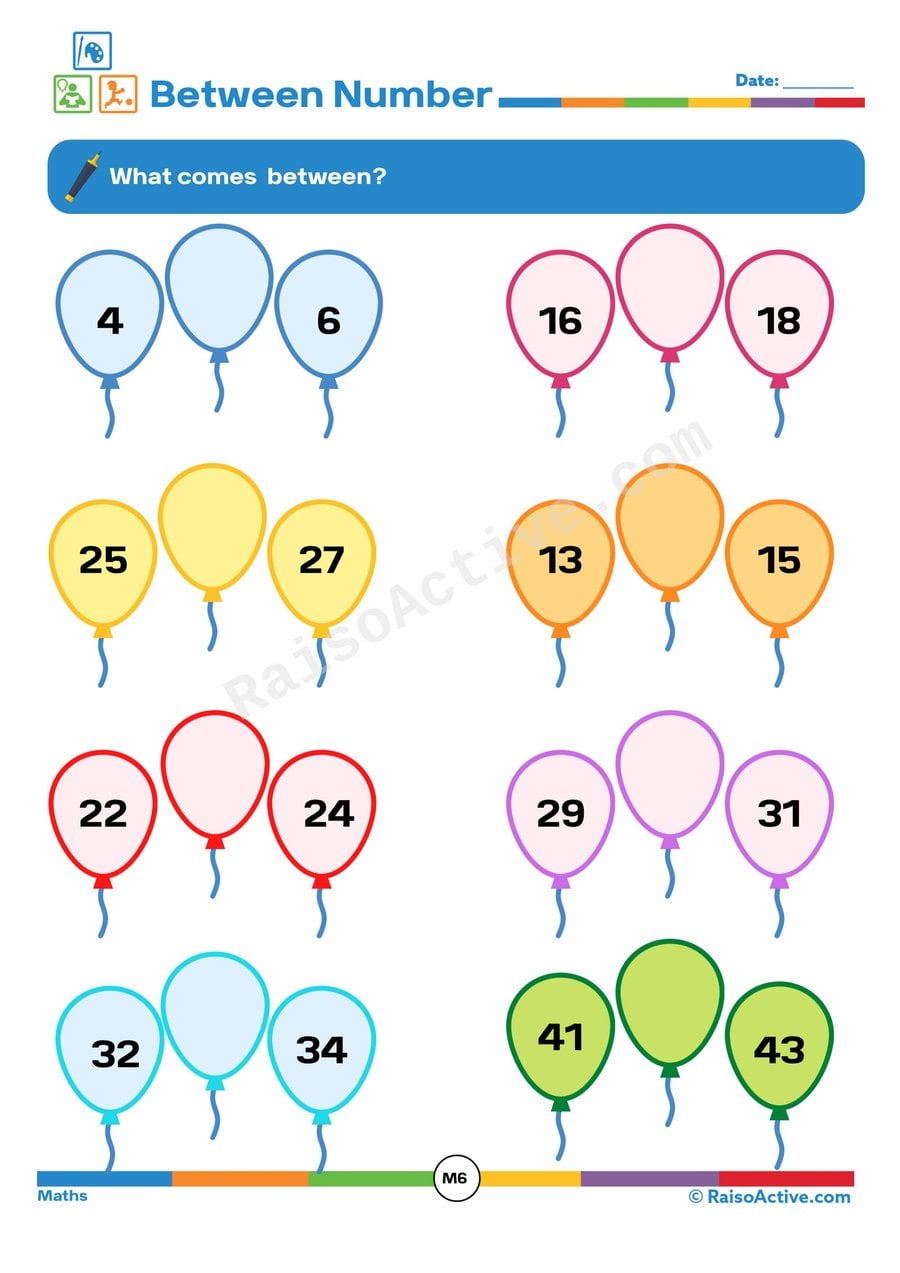
What Comes Between? Number Worksheet for Kids
Ages 4-5 · Pre-KAges 4-5 · ReceptionAges 4-5 · LKGAges 4-5
This worksheet targets a specific numeracy skill, finding the number that falls between two given numbers, which requires children to hold two values in mind and mentally place a third between them. For ages 4-5, this 'in-between' reasoning is more demanding than simply counting forward and strengthens the mental number line that underlies later subtraction and comparison skills.

Small Letters Worksheet: Practice Writing Lowercase Letters!
Ages 4-5 · Pre-KAges 4-5 · ReceptionAges 4-5 · LKGAges 4-5
Tracing and then independently writing lowercase letters helps children ages 4-5 move from guided hand motion to self-directed letter formation, a critical step toward legible, automatic handwriting. Pairing each letter with a picture also reinforces the letter-sound connection, so children are practicing both motor control and early phonics at the same time.
Related worksheets

Read and Match: Sentence Matching Worksheet for Preschoolers
Ages 3-5 · Preschool–Pre-KAges 3-5 · Nursery–ReceptionAges 3-5 · Nursery–LKGAges 3-5
This worksheet has 3-5 year olds read a short, simple sentence and then find and paste the one picture that actually matches its meaning — a task that requires genuine reading comprehension rather than picture-guessing, since more than one image on the page might look similar at a glance. Because the child has to hold the sentence's meaning in mind while comparing several picture options, this builds an early bridge between decoding words and understanding what they describe.

Match the Sentence: Picture Matching Worksheet for Early Readers
Ages 4-6 · Pre-K–KindergartenAges 4-6 · Reception–Year 1Ages 4-6 · LKG–UKGAges 4-6
Reading a full sentence and connecting it to the picture it describes asks children ages 4-6 to move beyond single-word recognition into genuine sentence comprehension, checking that they understood the sentence's overall meaning rather than just decoding individual words. This worksheet builds that comprehension skill by having children read several simple sentences and match each one to the correct illustration, reinforcing that reading is about extracting meaning, not just producing sounds. Developing this kind of sentence-level comprehension early is an important bridge between phonics-based decoding and true reading fluency.

Read and Match: Sentence Matching Worksheet for Preschoolers
Ages 4-5 · Pre-KAges 4-5 · ReceptionAges 4-5 · LKGAges 4-5
Reading a simple sentence and finding its matching picture teaches children ages 4-5 to connect written words directly to meaning, an essential comprehension skill that goes beyond simply decoding individual words. The cut-and-paste format also adds fine motor practice, requiring children to select the correct image from several options and place it precisely next to its sentence.

Reading Comprehension Worksheet: Matching Sentences to Pictures
Ages 4-6 · Pre-K–KindergartenAges 4-6 · Reception–Year 1Ages 4-6 · LKG–UKGAges 4-6
Children ages 4-6 practice reading short sentences and matching them to the picture that correctly represents their meaning, strengthening reading comprehension by requiring them to understand a sentence rather than just decode its individual words. This skill moves children from word-level reading toward true comprehension of what a sentence describes.

Sentence Matching Worksheet: Read and Match the Sentences!
Ages 4-6 · Pre-K–KindergartenAges 4-6 · Reception–Year 1Ages 4-6 · LKG–UKGAges 4-6
Reading a short sentence and pasting it beneath its matching picture builds reading comprehension for children ages 4-6, requiring them to understand the full meaning of a sentence rather than recognizing isolated words. This task also reinforces fine motor precision as children position and glue a small strip of text accurately within a defined space.
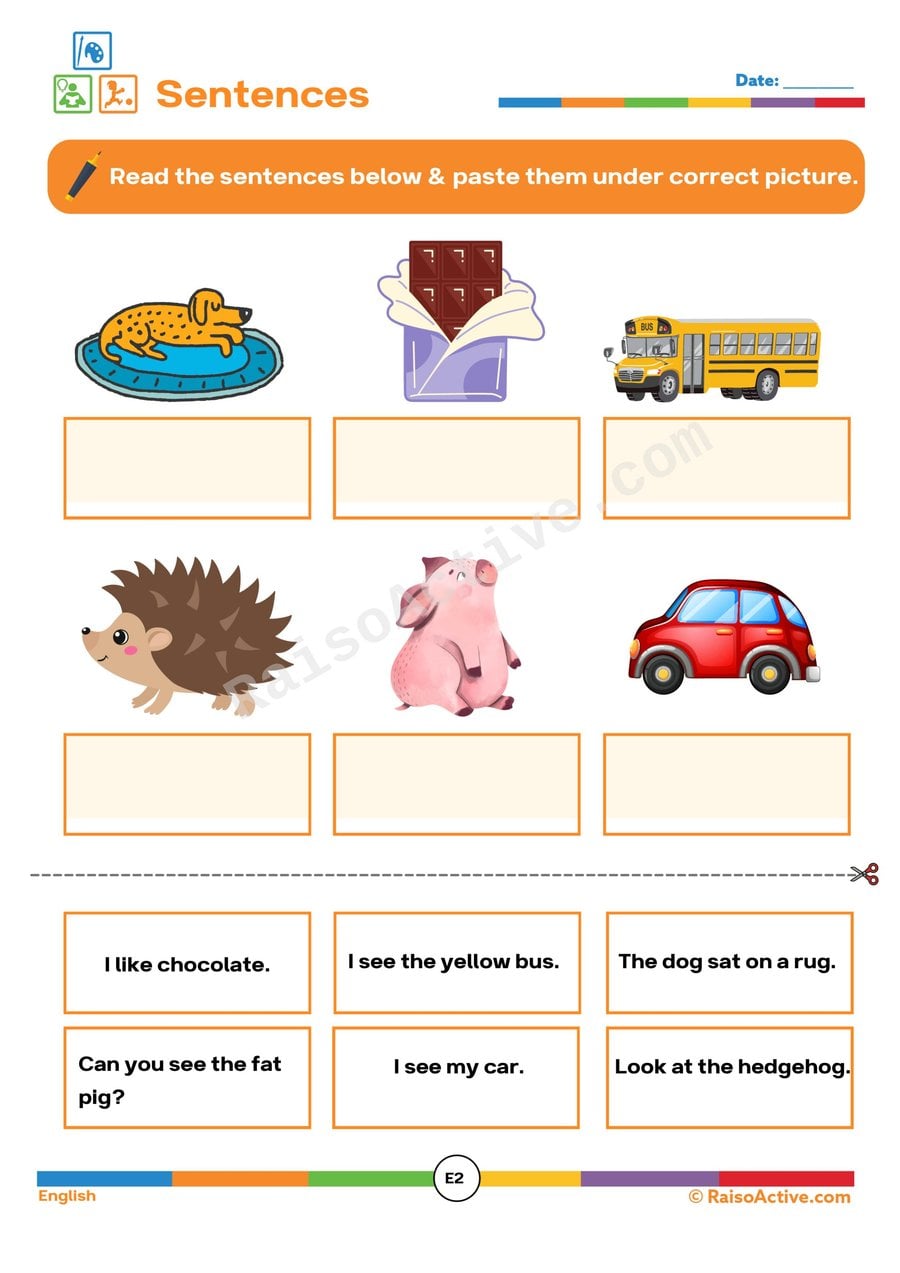
Sentence Matching Worksheet for Early Readers
Ages 4-5 · Pre-KAges 4-5 · ReceptionAges 4-5 · LKGAges 4-5
Matching a written sentence to the picture it describes asks children ages 4-5 to read for meaning rather than just decode individual words, an important step up from single-word reading toward true reading comprehension. This worksheet also builds fine motor and organizational skills through cutting and placing the sentence in the correct spot. Successfully pairing text with image confirms that a child understands what they're reading, not just that they can sound out letters.

Read and Match: Sentence Matching Worksheet for Early Readers
Ages 4-6 · Pre-K–KindergartenAges 4-6 · Reception–Year 1Ages 4-6 · LKG–UKGAges 4-6
This worksheet moves children ages 4-6 beyond single words into reading whole simple sentences and matching each one to the picture it describes. Comprehending a full sentence — not just recognizing individual words — is a genuine leap in reading skill, since it requires holding several words in mind together and connecting their combined meaning to an image.
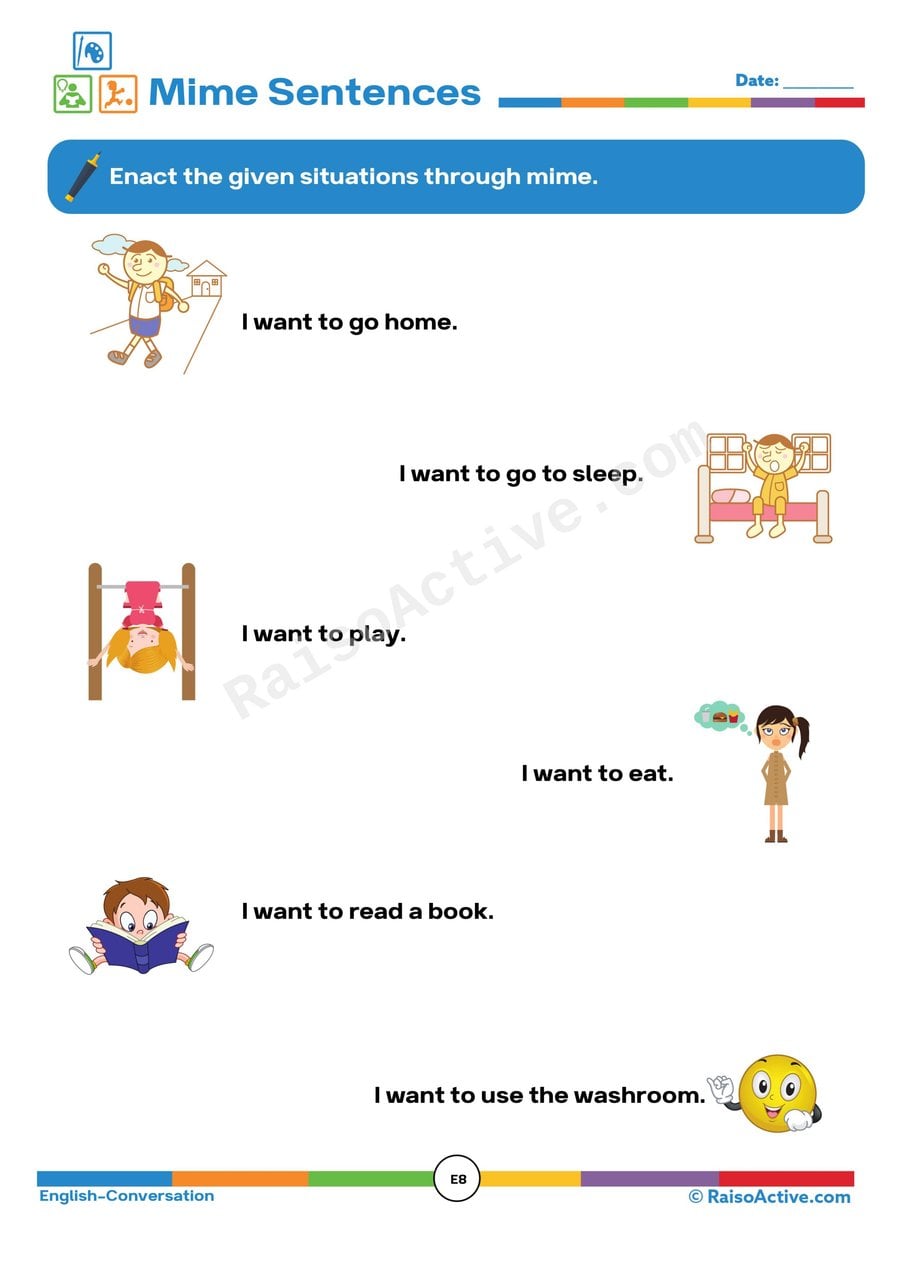
Mime Sentences Worksheet: Act Out Actions!
Ages 3-5 · Preschool–Pre-KAges 3-5 · Nursery–ReceptionAges 3-5 · Nursery–LKGAges 3-5
Reading a sentence and then acting it out through mime teaches children ages 3-5 to connect written or spoken language with physical expression, deepening comprehension of action verbs in a memorable, embodied way. This kind of kinesthetic practice also builds confidence with performance and body awareness alongside early reading skills.
Guides for this topic

Best Worksheets for 3-Year-Olds: What Works and What to Avoid
What works on worksheets for 3-year-olds: short sessions, crayons, tracing lines, matching, cutting, a free weekly plan, and signs one is too advanced.
Documenting Learning Without Drowning in Data: A Practical Guide for Parents and Teachers
Learn practical ways to document your child's learning without overwhelm. Simple portfolios, observation tips, and printable trackers for ages 1-8.
Christmas and Winter Activities That Combine Fun and Learning: Creating Magical Educational Experiences
Discover Christmas and winter activities that combine festive fun with real learning. Crafts, counting, literacy, and printable worksheets for ages 2 to 8 — perfect for home and school.
Reviews
Every worksheet for ages 4–5, no watermark
Members download the full library of 1,000+ worksheets and every activity pack without watermarks or daily limits. One year costs ₹999 in India or $20 elsewhere.
See membership plansOr download any worksheet free with a watermark (5 a day).