Sports Matching Worksheet for Preschoolers
Matching a sport's written name to its picture builds vocabulary and early reading recognition for children ages 3-5, connecting specific words like 'soccer' or 'swimming' to real, familiar activities. Because sports involve distinct equipment and movements, this task also sharpens visual discrimination, since children must notice small differences between similar-looking pictures to find the correct match.
Part of the pack
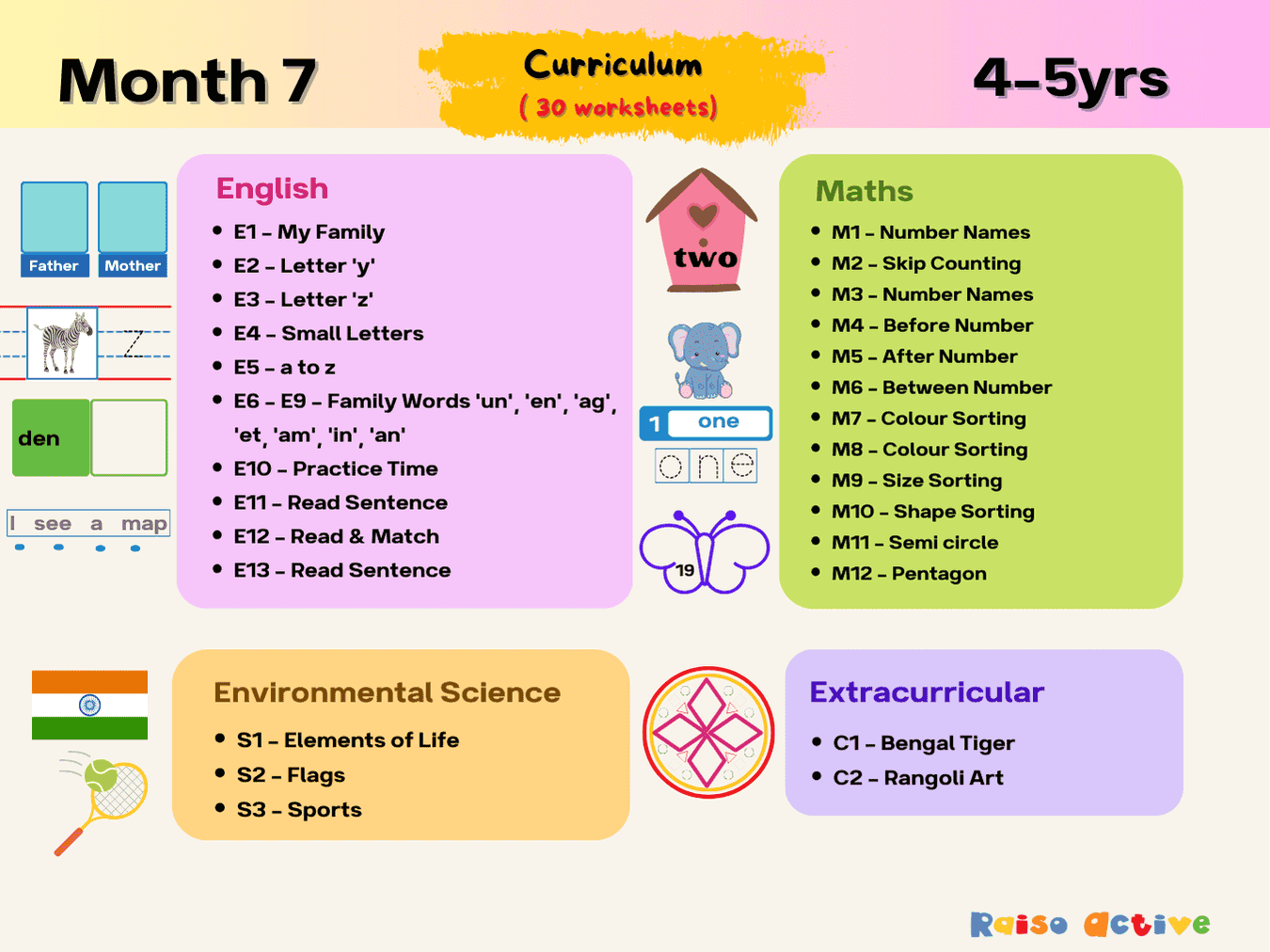
Month 7: Preschool Skills Through Play | Ages 4-5
This is page 31 of the pack. Ages 4-5 · Pre-KAges 4-5 · ReceptionAges 4-5 · LKGAges 4-5
Made for your child
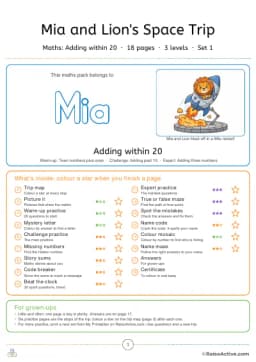
Counting to 10, made for your child
A maths pack with your child's name in it: pictures that explain, practice at three levels, puzzles and story sums about them. Print a new set whenever they finish.
Make a maths packFree preview · free for members
Curriculum
- Living Things - Animals > Animals & Habitats
How to use this worksheet
Read the name of the first sport aloud together, sounding it out if it's a longer word. Ask your child to look through the pictures and find the one that matches that specific sport. Have them circle the correct picture using a pencil or crayon. Continue this read-and-circle process for each remaining sport name, then go back through the page together, saying each sport's name aloud one more time.
Materials needed
- Pencil
- Crayons
Extension activities
- 1Talk through the basic rules or equipment needed for one or two of the sports on the worksheet.
- 2Draw a picture of your favorite sport and write or dictate its name underneath.
- 3Act out the movements of a few sports from the worksheet, like kicking, swimming, or swinging a bat.
- 4Watch a short clip or attend a local game of one featured sport and point out what you learned from the worksheet.
- 5Play a quick guessing game where you describe a sport's movements and your child names it.

Written by
Hemsweta Jain · Teacher Cheena
MBA and Early Childhood Educator, teaching since 2014 · Founder of RaisoActive, Mumbai
Every RaisoActive worksheet is designed and checked by the founder before publishing.
Published · Last reviewed
More from Month 7: Preschool Skills Through Play | Ages 4-5
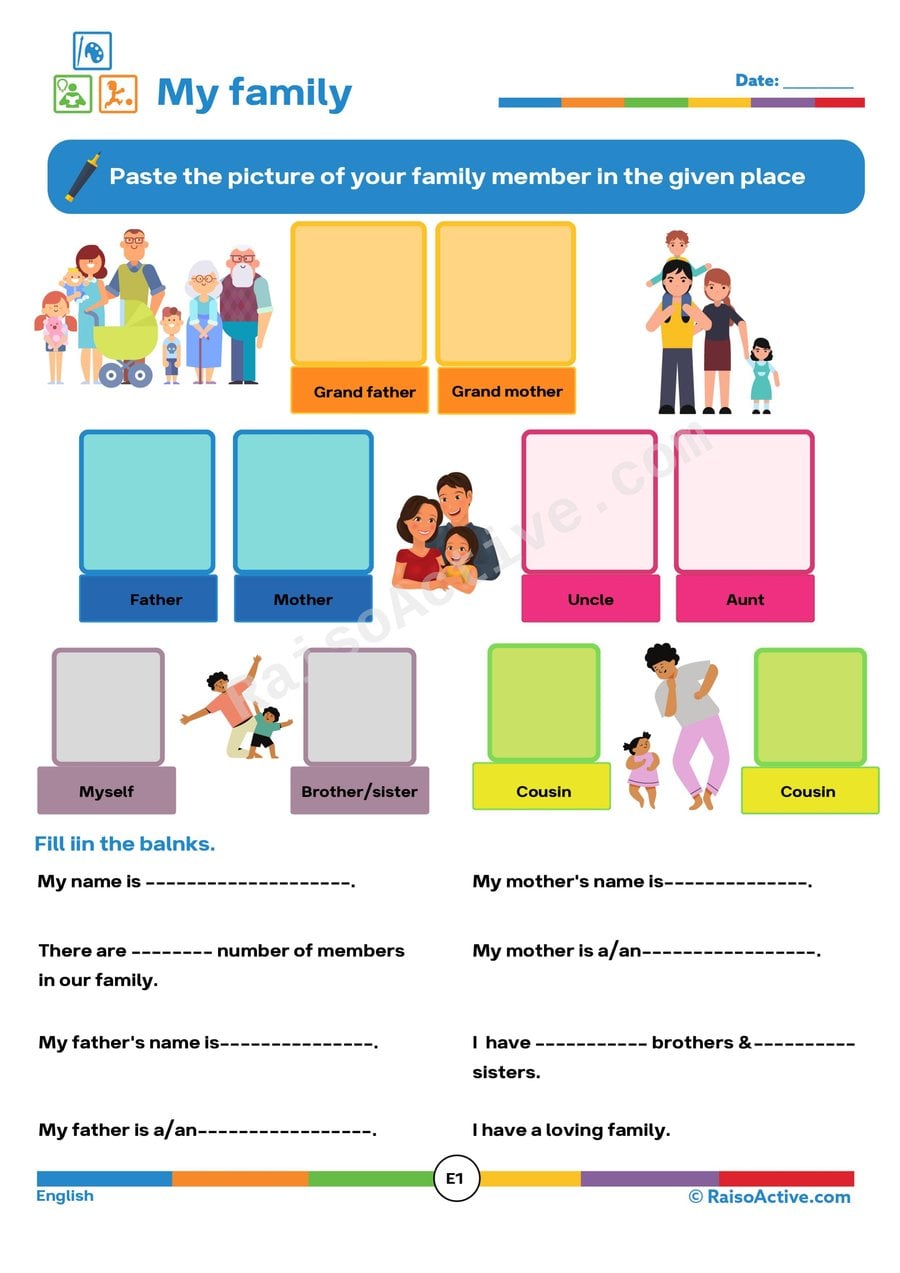
My Family Worksheet: Learn About Family Members!
Ages 3-5 · Preschool–Pre-KAges 3-5 · Nursery–ReceptionAges 3-5 · Nursery–LKGAges 3-5
Describing and pasting pictures of family members helps children practice using descriptive language about people they know well, building both vocabulary and an early sense of identity and belonging. For ages three to five, talking about family structure also introduces social-emotional vocabulary, since children learn to name relationships and describe why family matters to them.

Family Words Cut and Paste Worksheet for Early Readers
Ages 4-6 · Pre-K–KindergartenAges 4-6 · Reception–Year 1Ages 4-6 · LKG–UKGAges 4-6
Reading a simple CVC word and matching it to its picture teaches children ages 4-6 to blend individual sounds into a whole word and then connect that word to its meaning, a core decoding skill for early readers. Because CVC words follow a consistent consonant-vowel-consonant pattern, practicing them builds a reliable phonics foundation that transfers to reading many other simple words.
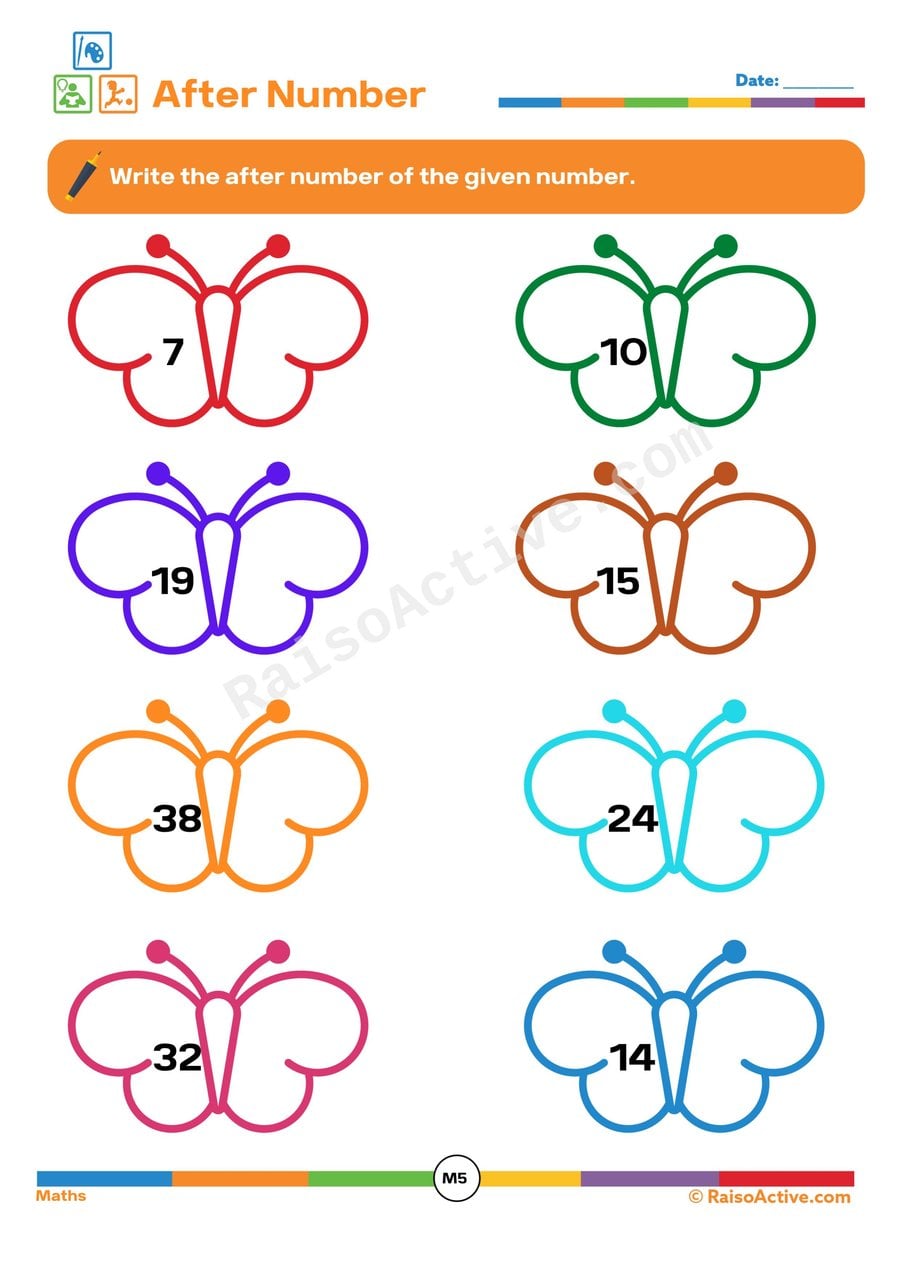
After Number Worksheet: Butterfly Fun!
Ages 4-6 · Pre-K–KindergartenAges 4-6 · Reception–Year 1Ages 4-6 · LKG–UKGAges 4-6
This worksheet targets a specific early-numeracy milestone: understanding that every number has a number that comes immediately after it in sequence. For ages 4-6, practicing 'what comes next' strengthens the mental number line children rely on for later addition, since knowing that 7 comes after 6 is the foundation of counting on.

Color Sorting Fun: Cut and Paste Worksheet for Preschoolers
Ages 3-5 · Preschool–Pre-KAges 3-5 · Nursery–ReceptionAges 3-5 · Nursery–LKGAges 3-5
Sorting cut-out objects by color teaches children ages 3-5 to classify items based on a single shared visual attribute, an early categorization skill that lays groundwork for more advanced sorting and grouping tasks in math and science. The cutting and gluing also reinforces color recognition through repeated, hands-on decision-making rather than passive naming.
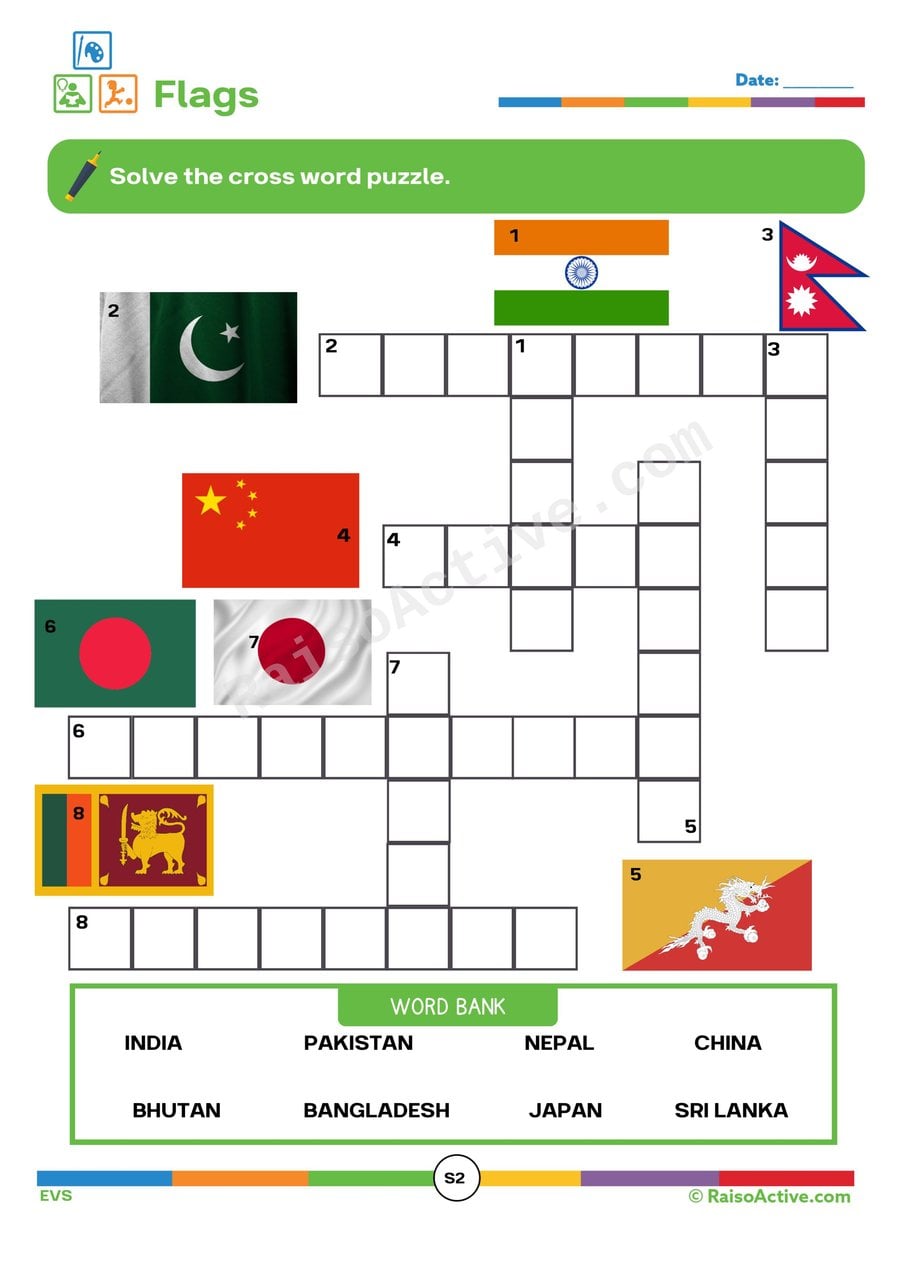
Flags Crossword Puzzle Worksheet for Kids
Ages 4-6 · Pre-K–KindergartenAges 4-6 · Reception–Year 1Ages 4-6 · LKG–UKGAges 4-6
This worksheet blends early geography knowledge with word-puzzle problem-solving, asking children to identify countries by their flags and use a word bank to complete a crossword. For ages 4-6, matching a visual flag to a written country name builds both visual discrimination and beginning spelling recognition, while the crossword format introduces a fun, structured way to practice new vocabulary.

Rhyming Words Matching Worksheet for Preschoolers
Ages 3-5 · Preschool–Pre-KAges 3-5 · Nursery–ReceptionAges 3-5 · Nursery–LKGAges 3-5
Spotting rhyming word pairs trains children ages 3-5 to tune into the sounds inside words rather than their spelling or meaning, an auditory skill called phonological awareness that strongly predicts later reading success. Coloring matching rhymes the same color turns an abstract listening task into a visual, hands-on one that keeps young children engaged while they practice.

Pentagon Fun: Shape Recognition and Craft Activity Worksheet
Ages 3-5 · Preschool–Pre-KAges 3-5 · Nursery–ReceptionAges 3-5 · Nursery–LKGAges 3-5
This worksheet combines shape recognition with a hands-on craft, having children build a pentagon out of popsicle sticks and then find and glue pentagon-shaped pictures onto an outline. For ages 3-5, physically constructing a five-sided shape makes an otherwise abstract geometric concept concrete, while the cut-and-paste portion reinforces shape recognition through visual matching.

Color Sorting Fun: Cut and Paste Worksheet for Preschoolers
Ages 3-5 · Preschool–Pre-KAges 3-5 · Nursery–ReceptionAges 3-5 · Nursery–LKGAges 3-5
This cut-and-paste activity builds color recognition alongside fine motor control, as children use scissors to cut out pictures and glue them into matching color categories. For ages 3-5, sorting by a single attribute like color is an early classification skill that lays the groundwork for later math concepts like grouping and comparing.
Related worksheets

Sports Match-Up Worksheet for Kids: Match the Sports to Their Equipment!
Ages 4-6 · Pre-K–KindergartenAges 4-6 · Reception–Year 1Ages 4-6 · LKG–UKGAges 4-6
Matching sports to their equipment teaches children ages 4-6 to connect an activity with the tools used to play it, building categorization skills alongside sports vocabulary. This kind of real-world matching helps children make sense of things they may see on television, at the park, or during physical education class.
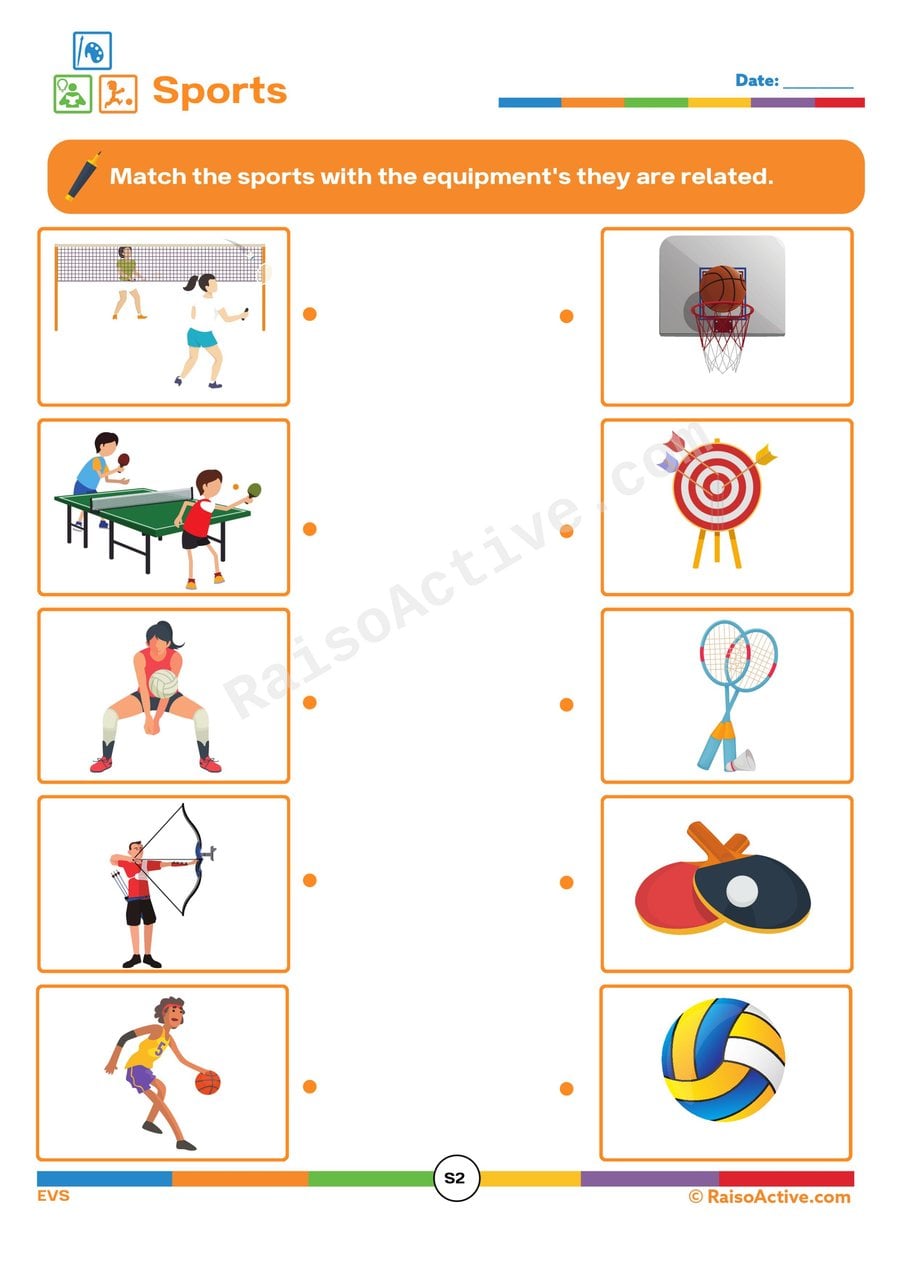
Sports Equipment Match: A Fun Worksheet for Kids!
Ages 3-5 · Preschool–Pre-KAges 3-5 · Nursery–ReceptionAges 3-5 · Nursery–LKGAges 3-5
Matching a sport to its equipment, a bat to baseball or a racket to tennis, asks children to build a mental association between an activity and the tools it requires, strengthening categorization skills and real-world vocabulary. For ages three to five, this kind of practical pairing also supports gross motor development indirectly, since naming and recognizing sports equipment often leads to more engaged physical play.
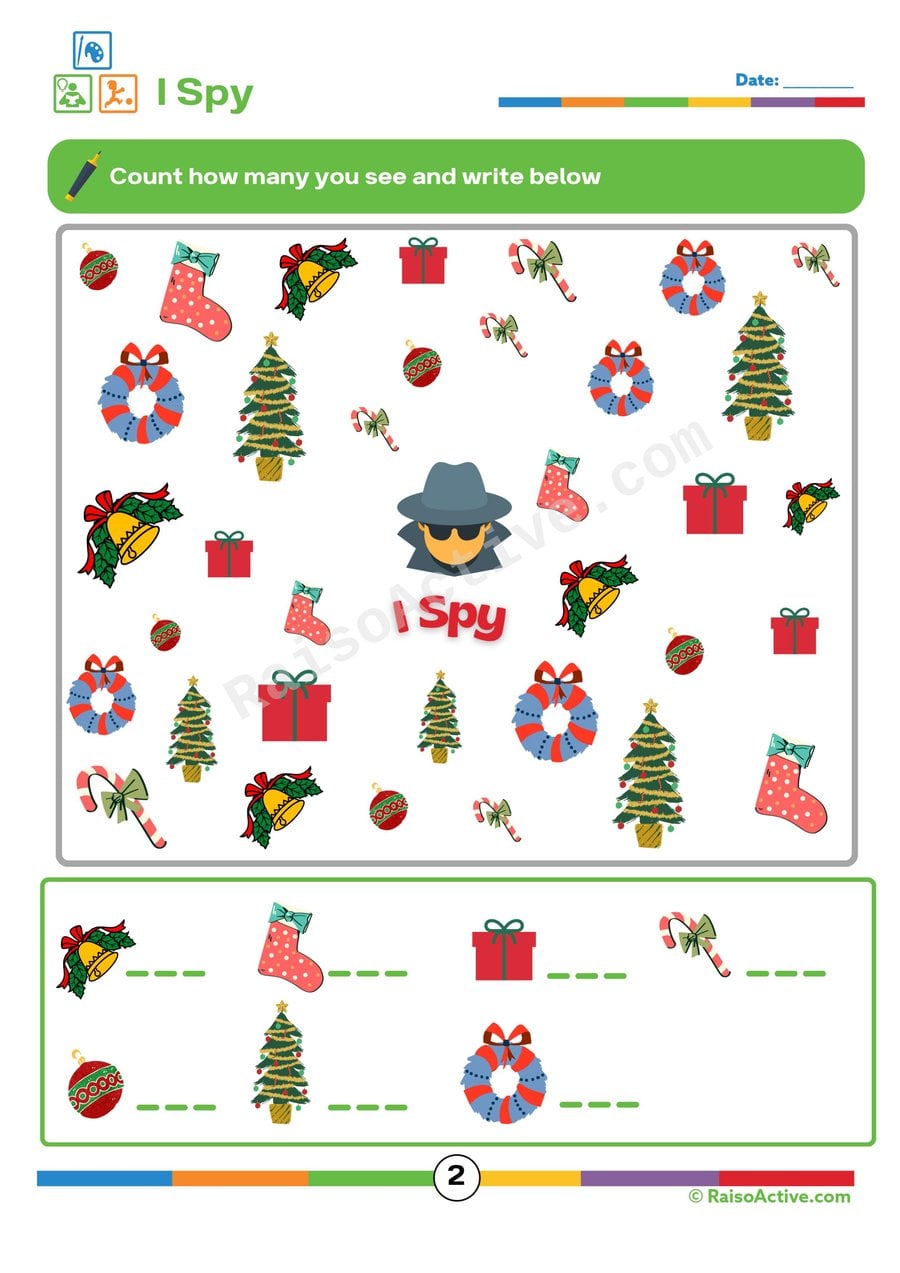
I Spy Christmas Worksheet: Count and Write!
Ages 3-5 · Preschool–Pre-KAges 3-5 · Nursery–ReceptionAges 3-5 · Nursery–LKGAges 3-5
This worksheet strengthens counting accuracy and number writing in children ages 3-5 as they search a busy Christmas scene for specific items and record how many they find. The 'I Spy' search format adds a visual scanning challenge on top of basic counting, since children must first locate every instance of an item scattered across the picture before counting it.
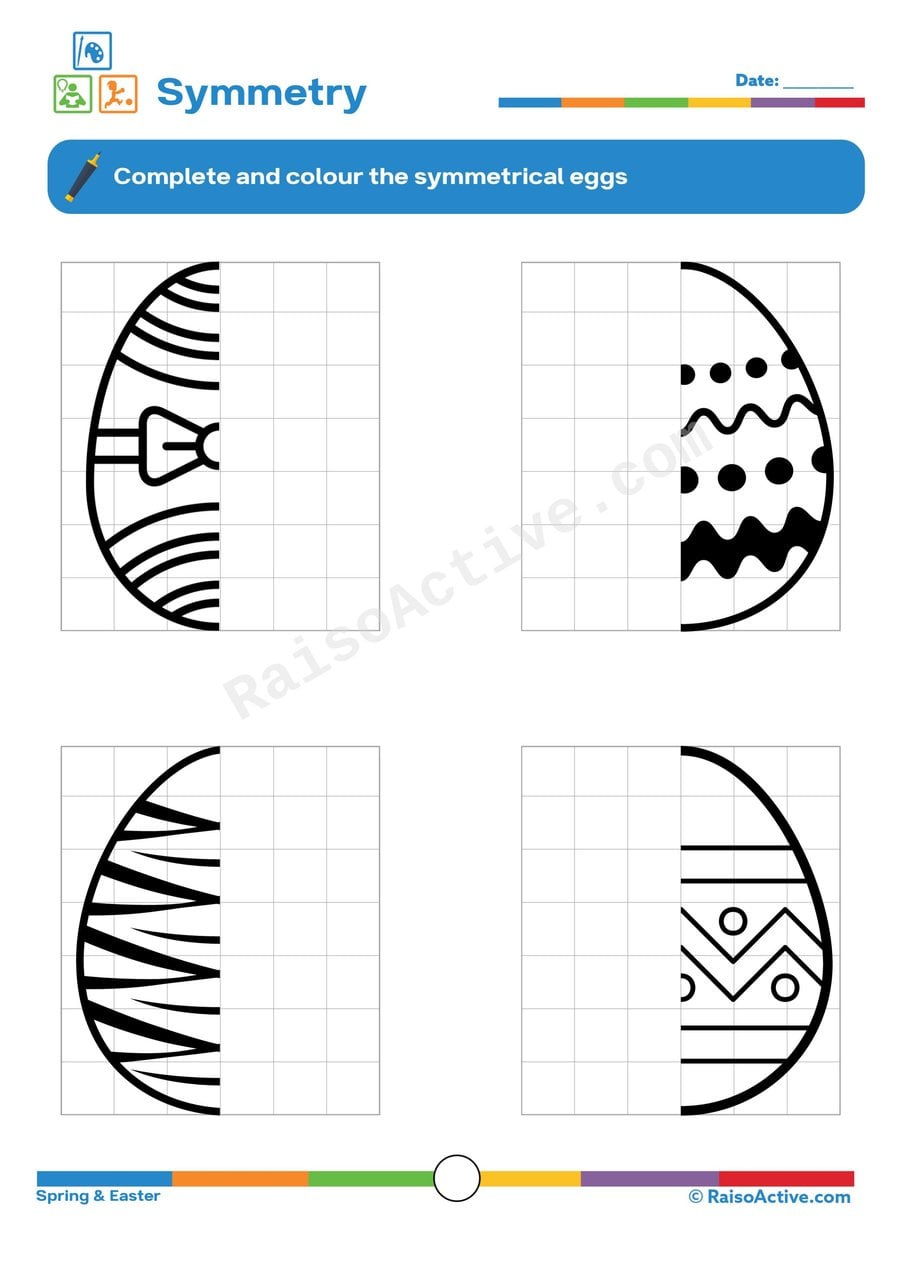
Symmetry Eggs Worksheet for Preschoolers
Ages 4-6 · Pre-K–KindergartenAges 4-6 · Reception–Year 1Ages 4-6 · LKG–UKGAges 4-6
This worksheet introduces children ages 4-6 to the concept of symmetry by having them complete the missing mirrored half of an egg design. Drawing a matching reflection requires children to closely observe shape, size, and placement on one side and reproduce it accurately on the other — an early geometry skill that also sharpens visual attention to detail.

Symmetry Worksheet for Kids: Mirror Halves and Shadow Match
Ages 4-7 · Pre-K–Grade 1Ages 4-7 · Reception–Year 2Ages 4-7 · LKG–Class 1Ages 4-7
Children complete the other half of a butterfly and a house on a dot grid so both sides match like a mirror, then draw lines to match eight pictures to their shadows. This builds spatial reasoning and visual discrimination.

States of Matter Worksheet: Exploring Solids, Liquids, and Gases!
Ages 4-6 · Pre-K–KindergartenAges 4-6 · Reception–Year 1Ages 4-6 · LKG–UKGAges 4-6
This worksheet introduces children ages 4-6 to the three states of matter — solid, liquid, and gas — by having them examine images and sort each one into its correct category. Learning to classify familiar objects (like ice, water, and steam) by their physical state builds early scientific reasoning, since children must look past an object's identity and focus on its underlying properties.
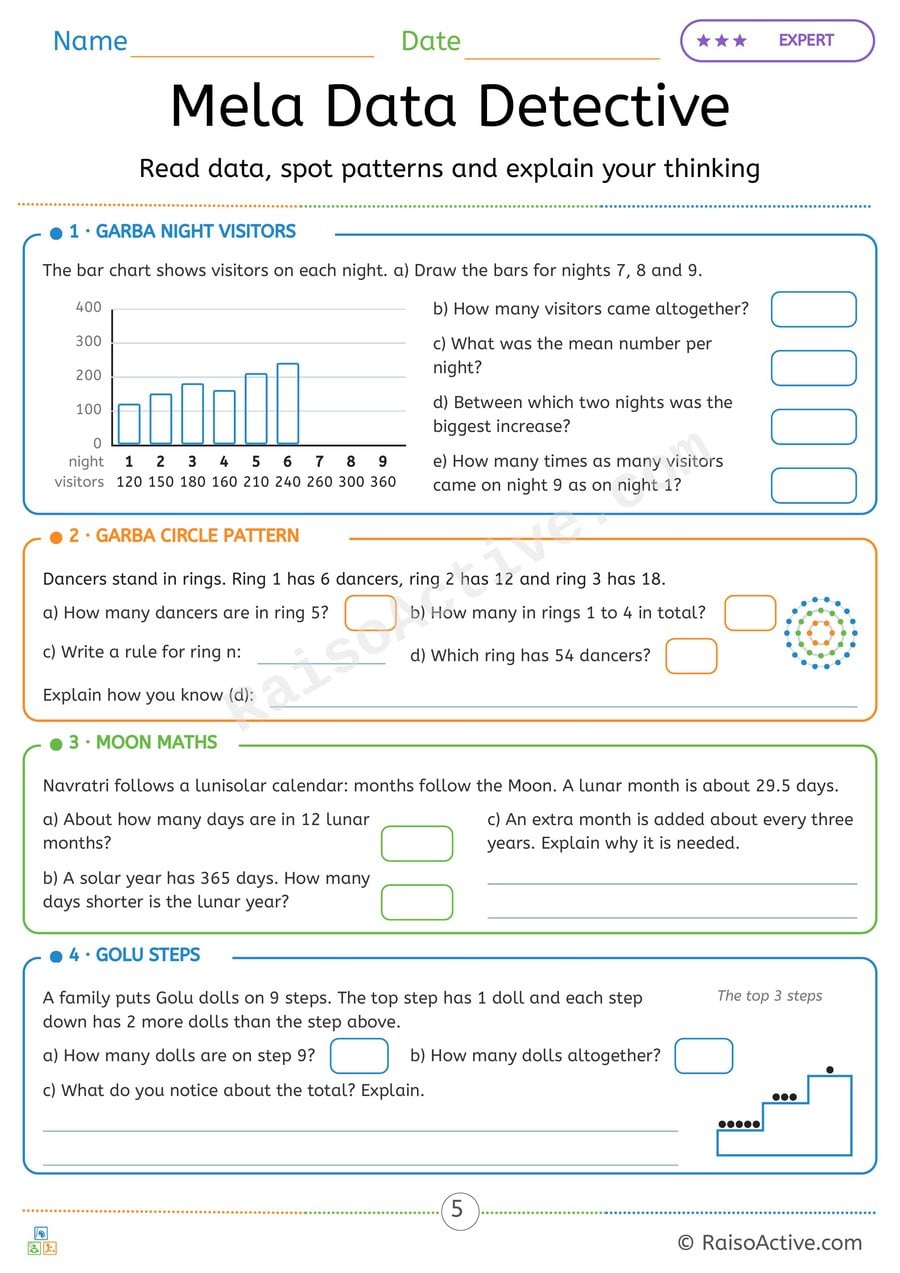
Mela Data Detective: Navratri Bar Chart, Patterns and Moon Maths
Ages 7-11 · Grade 2–Grade 3Ages 7-11 · Year 3–Year 4Ages 7-11 · Class 2–Class 3Ages 7-11
Children complete a bar chart of nine nights of visitors, find the total, the mean and the biggest increase, find and explain the rule for a growing pattern of dancers, compare a lunar year with a solar year, and add the dolls on nine Golu steps to discover a square number.

Harvests & New Years: One Harvest, Many Names Across India
Ages 4-8 · Pre-K–Grade 2Ages 4-8 · Reception–Year 3Ages 4-8 · LKG–Class 2Ages 4-8
Children learn that the same winter harvest is celebrated with different names across India, and that many states have their own New Year festival.
Guides for this topic

Best Worksheets for 3-Year-Olds: What Works and What to Avoid
What works on worksheets for 3-year-olds: short sessions, crayons, tracing lines, matching, cutting, a free weekly plan, and signs one is too advanced.

Age-Appropriate Problem-Solving Activities: Building Critical Thinkers from the Ground Up
Discover fun, age-appropriate problem-solving activities for children ages 1-8. Build critical thinking, logic, and reasoning skills through play-based learning.
Critical Thinking Activities That Actually Work for Young Children: Building Tomorrow's Thinkers Today
Discover proven critical thinking activities for young children. Age-wise logic games, questioning techniques, and hands-on ideas to build thinking skills at home.
Reviews
Every worksheet for ages 3–5, no watermark
Members download the full library of 1,000+ worksheets and every activity pack without watermarks or daily limits. One year costs ₹999 in India or $20 elsewhere.
See membership plansOr download any worksheet free with a watermark (5 a day).