
Alphabet Maze: Help the Alligator Find the Zoo! (a to z Worksheet)
Guiding a character through a maze from A to Z asks children to recall the full alphabet in order while also navigating a physical path, combining letter sequencing with the visual planning and fine motor control needed for any maze activity. For ages three to five, tracing the entire alphabet in one continuous task is a bigger sequencing challenge than shorter letter drills, building real stamina in letter-order recall.
Part of the pack
Month 7: Preschool Skills Through Play | Ages 4-5Curriculum
How to use this worksheet
Point out the alligator at the letter 'a' and the zoo at the end of the maze as the starting and ending points. Have your child trace the path with their finger first, saying each letter aloud in order as they move from one to the next. Once they've found the full route, hand them a pencil or crayon to trace the path for real, staying on the correct sequence of letters the whole way through. When they reach the zoo, have them recite the alphabet one more time from memory to reinforce the sequence they just traced.
Materials needed
- Pencil
- Crayons
Extension activities
- •Have your child write the alphabet on a separate sheet of paper from memory.
- •Ask your child to name an object that starts with each letter as they move through the alphabet.
- •Create a similar maze using only part of the alphabet, or with numbers instead of letters.
- •Sing the alphabet song together while pointing to a printed alphabet chart.
Tips for parents and teachers
Encourage the child to say the letters aloud as they trace the path, since reciting the alphabet while tracing reinforces the sequence far better than silent tracing alone. If they get stuck at a particular letter, provide gentle guidance without giving away the answer outright, letting them work through the recall themselves.

Written by
Hemsweta Jain · Teacher Cheena
MBA and Early Childhood Educator, teaching since 2014 · Founder of RaisoActive, Mumbai
Every RaisoActive worksheet is designed and checked by the founder before publishing.
Published · Last reviewed
Related worksheets

Trace the Numbers 1-9 Worksheet for Preschoolers
Tracing the numerals 1 through 9 gives children ages 3-5 repeated, guided practice with the specific pencil strokes each number requires, building the fine motor control and muscle memory needed for independent number writing. Because tracing follows a fixed, correct path, it also reinforces accurate numeral recognition, helping children tell visually similar digits apart.
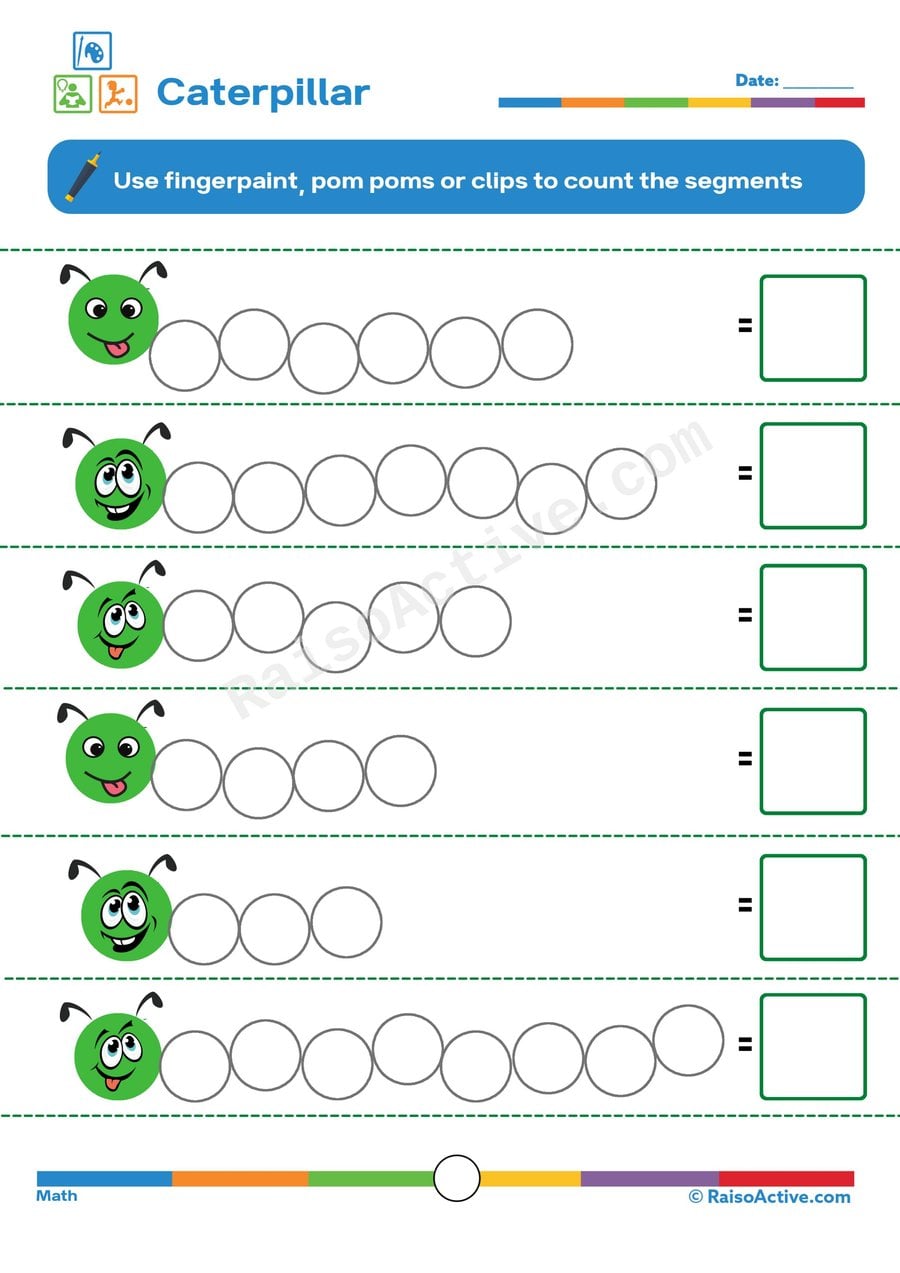
Caterpillar Counting Worksheet for Preschoolers
Counting the segments of each caterpillar teaches children ages 3-5 one-to-one correspondence — touching or marking each segment exactly once while saying a number — which is the core skill underlying accurate counting. Writing the final total in a box also connects the physical act of counting to its written numeral, reinforcing early number-writing practice.
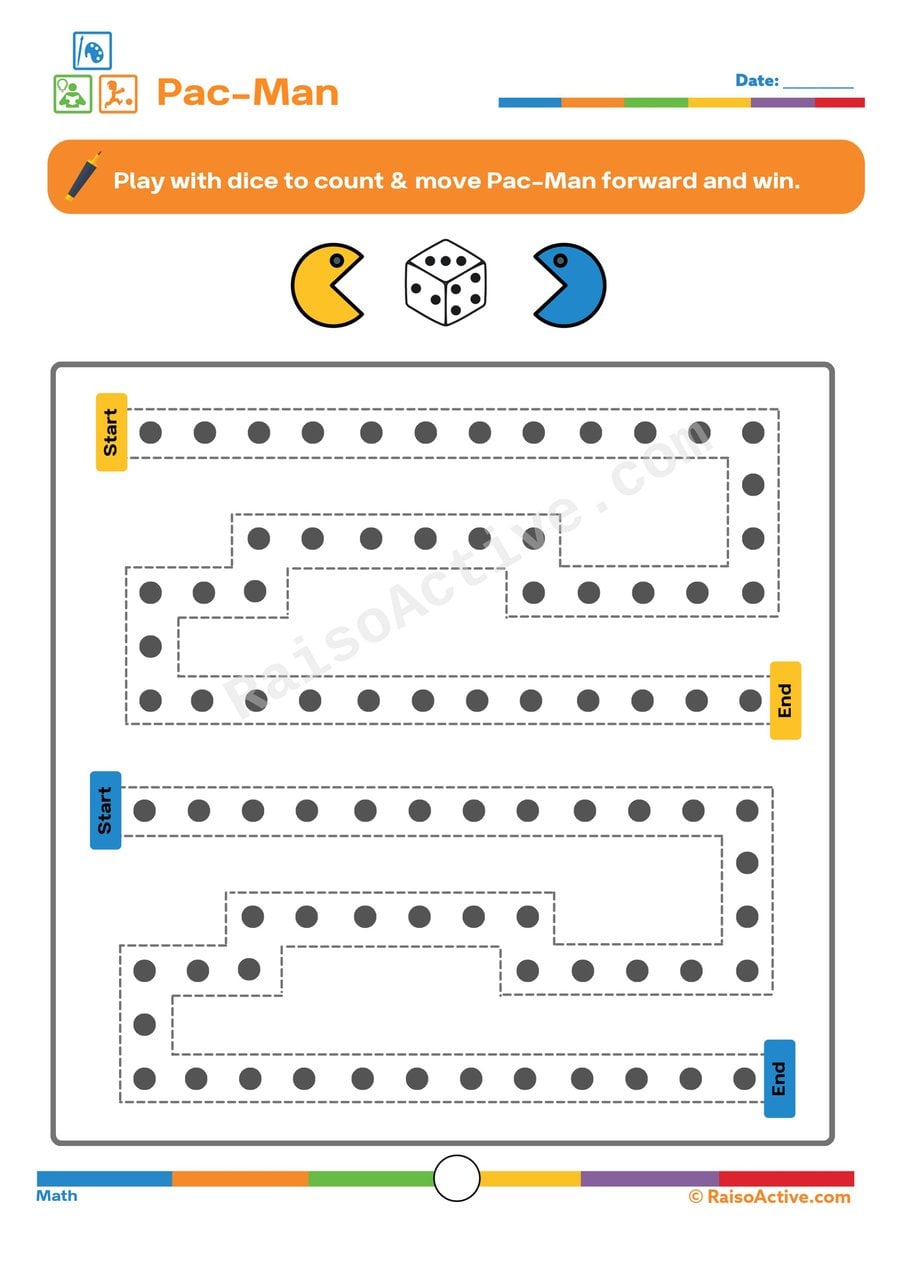
Pac-Man Maze Worksheet: Count and Move!
This dice-counting maze gives children ages 3-5 repeated practice matching a rolled number to the correct number of moves, reinforcing accurate counting under a bit of playful pressure. Tracking Pac-Man's current position after each roll also builds short-term spatial memory, since children must remember where they left off before moving again.

Stick Man Emotions Worksheet: Happy, Sad, Angry, and Surprised!
Children ages 4-6 practice reading facial expressions on this worksheet, matching stick-figure faces to their correct emotion labels by noticing details like mouth shape and eyebrow position. This strengthens emotional literacy — the ability to name and recognize feelings in others — which supports empathy and smoother social interactions as children move into more group play and classroom settings.
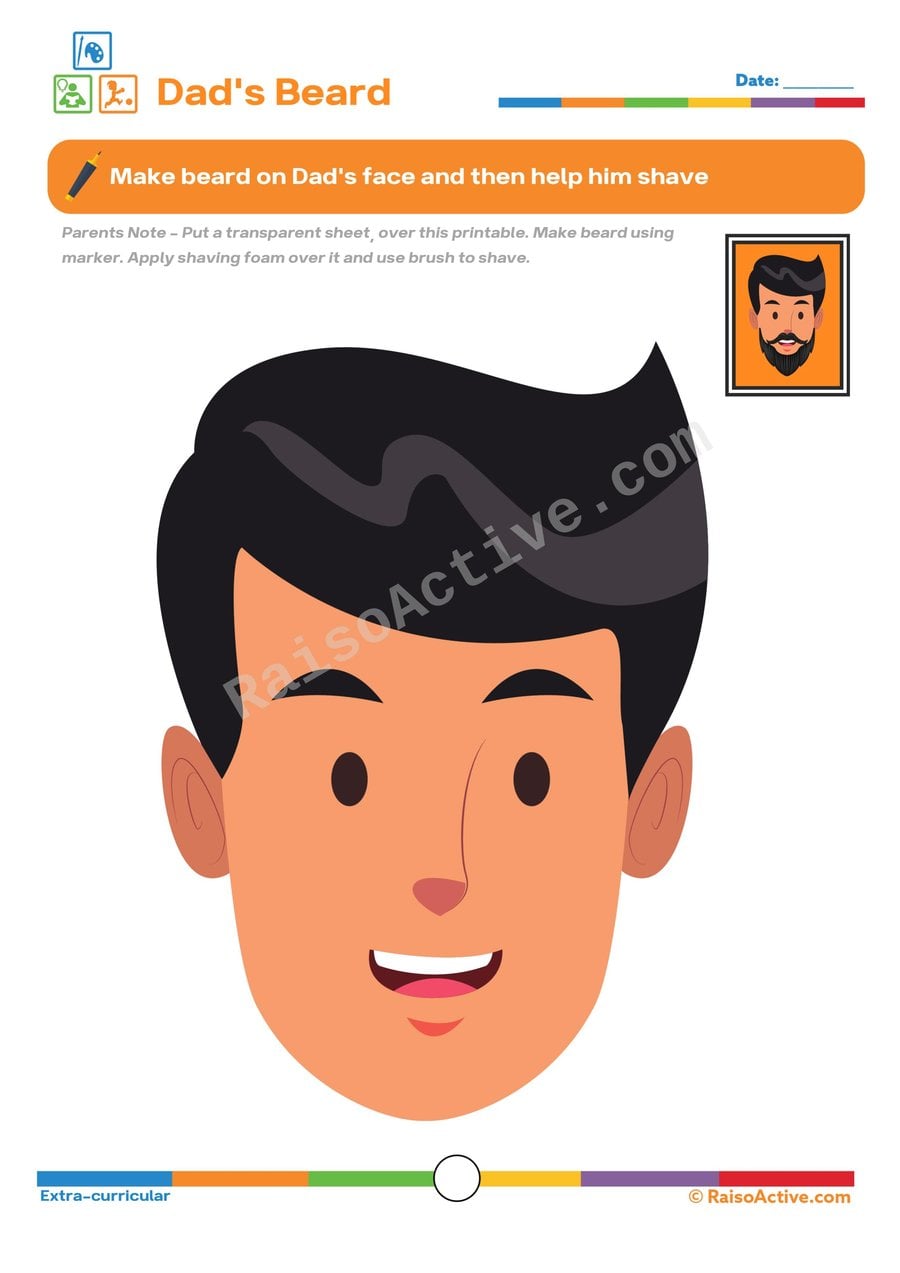
Dad's Beard: A Fun Shaving Activity for Kids!
This playful pretend-shaving activity builds fine motor control and bilateral coordination in children ages 3-5, as they draw a beard with a marker and then 'shave' it away using foam and a brush in careful, controlled strokes. It also introduces a simple science idea — that shaving foam can be applied and removed in layers — while giving children a hands-on, sensory way to imitate an everyday grown-up routine.
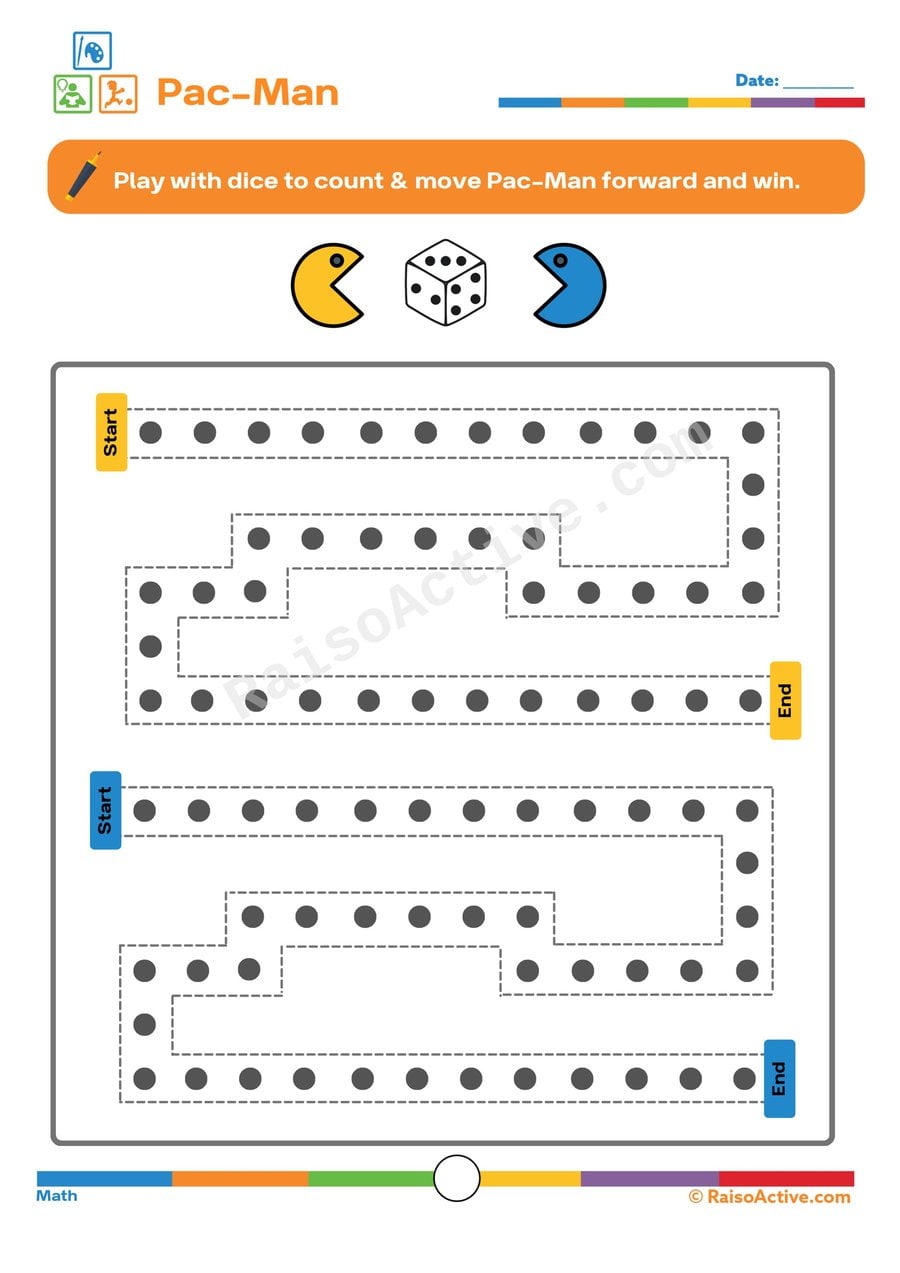
Pac-Man Maze Worksheet: Count and Move!
This dice-driven maze combines counting practice with path-following for children ages 3-5, since they must accurately count dots on a die before moving Pac-Man the matching number of spaces forward. Deciding how far to move and staying on the correct path also builds early strategic thinking, as children track their current position within the maze after each turn.

Learn India's National Symbols: A Dot-to-Dot Worksheet
Connecting numbered dots to reveal each national symbol builds fine motor control and number-sequence recognition in children ages 3-5, since they must find and connect dots in the correct numerical order to form a recognizable picture. As each symbol emerges from the dots, children also gain early familiarity with important national imagery and its name.

Christmas Cut and Paste Worksheet for Preschoolers
Cutting out a moon, snowman, gifts, and trees and arranging them inside a circle builds scissor precision and compositional thinking in children ages 3-5. Because there's no single 'correct' layout, children also practice early creative decision-making — choosing where each element belongs within a bordered space, which supports spatial awareness.
Guides for this topic
Kindergarten Readiness Checklist: 25 Skills to Practice Before the First Day
A kindergarten readiness checklist of 25 literacy, math, motor, self-regulation and self-help skills, with an 8-week summer plan and notes on when not to worry.
Phase 2 Phonics at Home: Sound Order, Blending Games, Worksheets
Phase 2 phonics at home: the five sound sets in order, oral blending, tricky words, a two-week routine, common mistakes, and free worksheets.
Reception Year Explained: EYFS Learning and How to Help at Home
A teacher's plain-English guide to the Reception Year: the seven areas of learning, Early Learning Goals, Phase 2/3 phonics, the RBA and home routines.
Reviews
Every worksheet for ages 3–5, no watermark
Members download the full library of 1,000+ worksheets and every activity pack without watermarks or daily limits. One year costs ₹1,000 in India or $20 elsewhere.
See membership plansOr download any worksheet free with a watermark (5 a day).