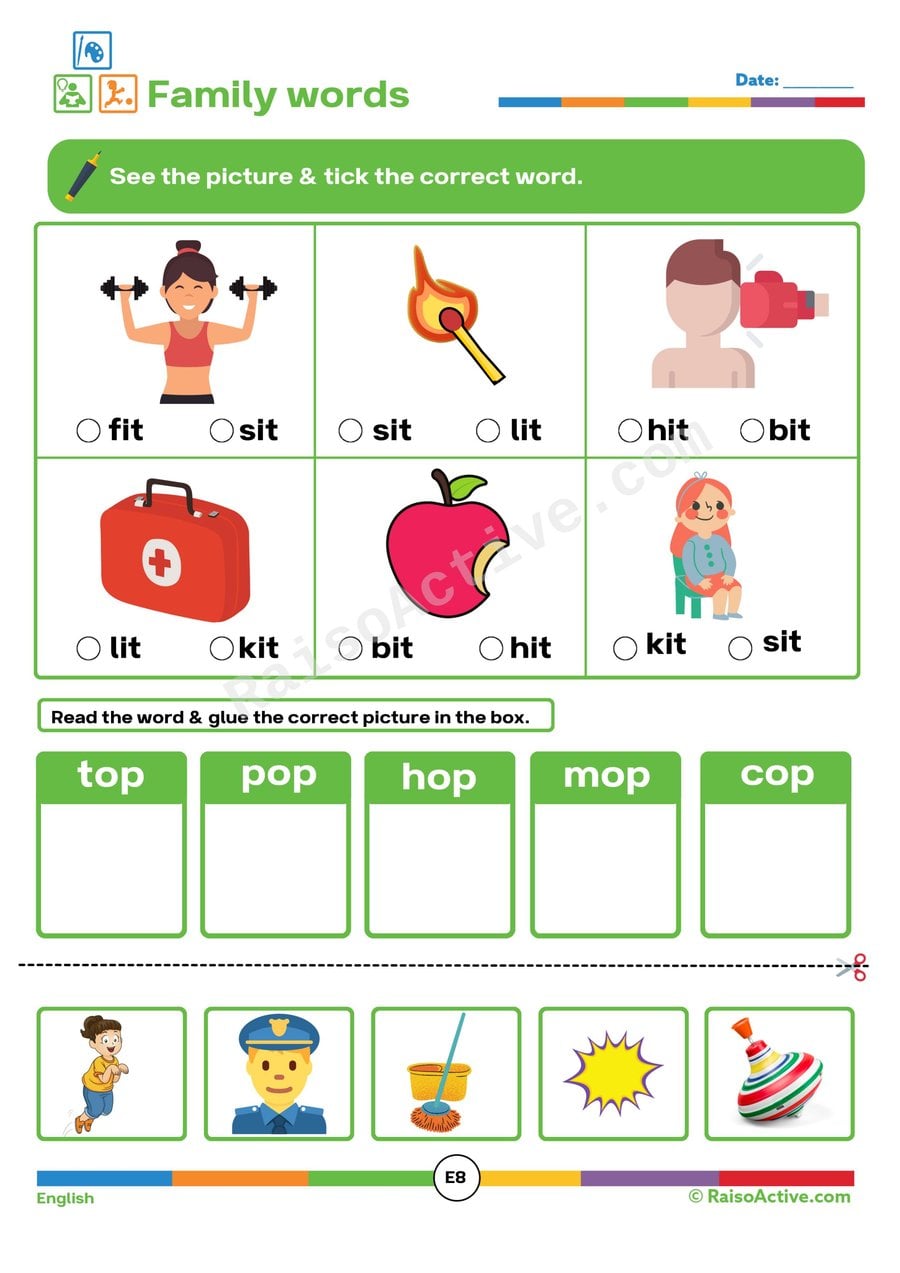
Family Words Cut and Paste Worksheet for Early Readers
Reading a word family term and then finding its matching picture teaches children ages 4-6 to connect print directly to meaning, an essential bridge between decoding and comprehension. The cutting and gluing component also strengthens fine motor precision, requiring children to align a small picture accurately next to its corresponding word.
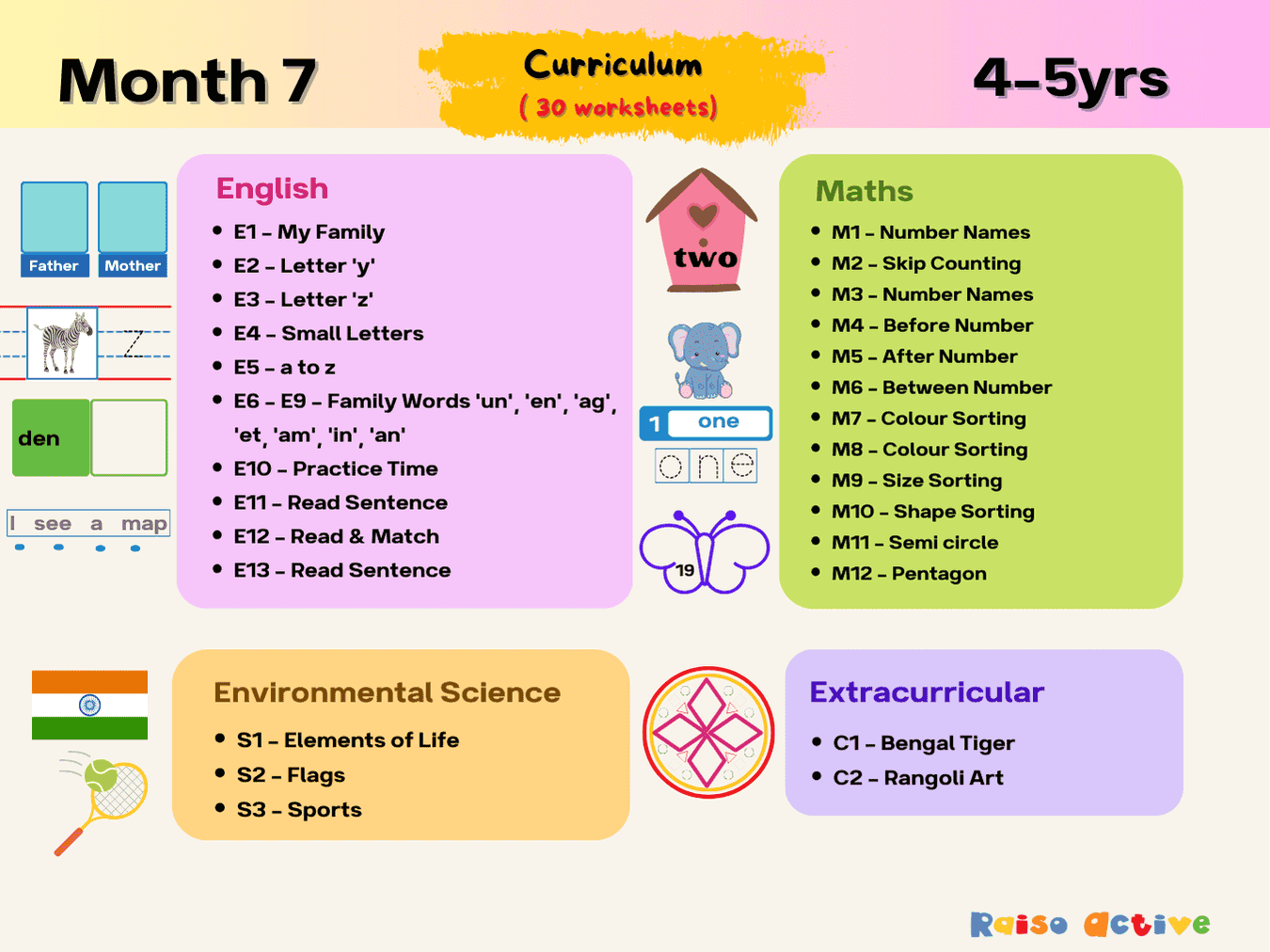
Part of the pack
Month 7: Preschool Skills Through Play | Ages 4-5
This is page 10 of the pack. Ages 4-5 · Pre-KAges 4-5 · ReceptionAges 4-5 · LKGAges 4-5
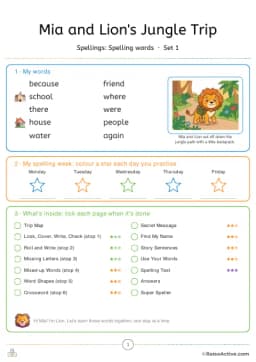
Made for your child
Spelling practice, made for your child
Their own spelling words turned into a pack: trace or look-cover-write-check, roll and write, a secret picture code, a word search, a crossword and a test, with their name in it.
Make a spelling packFree preview · free for members
Or start free: a word search with sight wordsCurriculum
- Phonics - CVC Words > CVC Short U Families
How to use this worksheet
Read the first word on the page slowly together, sounding out each letter and blending them into the full word. Have your child look at the picture cut-outs at the bottom and find the one that matches what the word means. Guide them to cut that picture out carefully along its edges. Have them glue the picture into the box beside the matching word, then repeat this read-find-cut-glue sequence for each remaining word on the page.
Materials needed
- Pencil
- Scissors
- Glue
Extension activities
- 1Have your child write one of the word family words in a full sentence with your help.
- 2Ask your child to draw their own simple picture for one of the words instead of using the pre-made cut-out.
- 3Create a matching memory game using index cards with the words on one set and pictures on another.
- 4Read a short, simple book that features several words from the same word family and point them out.
- 5Practice spelling the words aloud, letter by letter, without looking at the page.

Written by
Hemsweta Jain · Teacher Cheena
MBA and Early Childhood Educator, teaching since 2014 · Founder of RaisoActive, Mumbai
Every RaisoActive worksheet is designed and checked by the founder before publishing.
Published · Last reviewed
More from Month 7: Preschool Skills Through Play | Ages 4-5

Read & Match Worksheet: Matching Sentences to Pictures
Ages 3-5 · Preschool–Pre-KAges 3-5 · Nursery–ReceptionAges 3-5 · Nursery–LKGAges 3-5
Matching a sentence to its picture through drawing a line or coloring builds reading comprehension for children ages 3-5, requiring them to process the sentence's full meaning rather than recognizing familiar words in isolation. Following this with coloring keeps the activity engaging while giving repeated visual exposure to each completed sentence-and-picture pair.
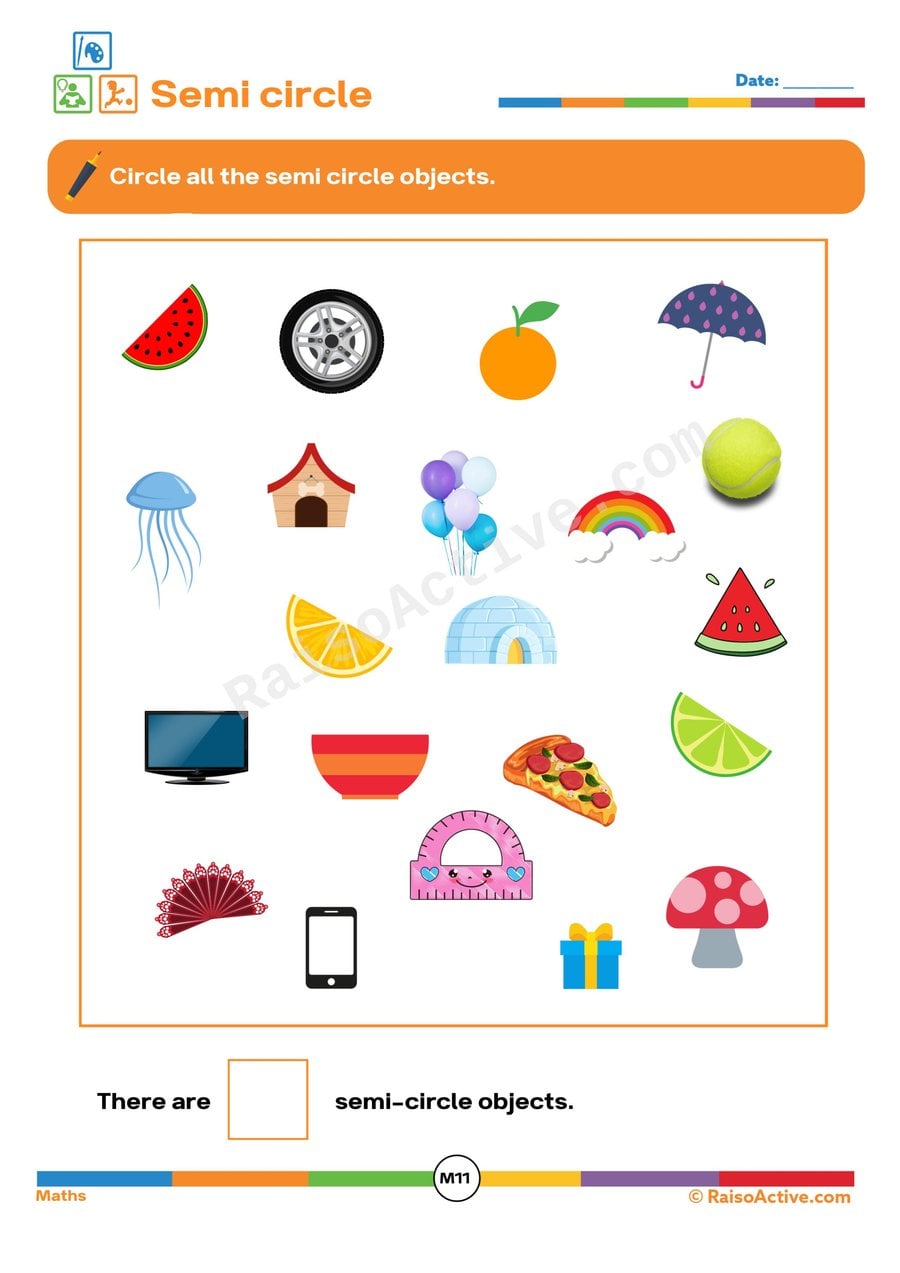
Semi-Circle Shapes Worksheet for Kids
Ages 3-5 · Preschool–Pre-KAges 3-5 · Nursery–ReceptionAges 3-5 · Nursery–LKGAges 3-5
This worksheet sharpens shape recognition by asking children to distinguish semi-circles, a curved half-shape, from other shapes and objects on the page. For ages 3-5, learning to identify a semi-circle specifically, rather than a full circle, builds the visual discrimination skills that support later geometry and letter recognition.

Color Sorting Fun: Cut and Paste Worksheet for Preschoolers
Ages 3-5 · Preschool–Pre-KAges 3-5 · Nursery–ReceptionAges 3-5 · Nursery–LKGAges 3-5
This cut-and-paste activity builds color recognition alongside fine motor control, as children use scissors to cut out pictures and glue them into matching color categories. For ages 3-5, sorting by a single attribute like color is an early classification skill that lays the groundwork for later math concepts like grouping and comparing.

Z is for Zebra! Letter Z Tracing and Coloring Worksheet
Ages 3-5 · Preschool–Pre-KAges 3-5 · Nursery–ReceptionAges 3-5 · Nursery–LKGAges 3-5
This letter Z worksheet gives children ages 3-5 focused practice recognizing and forming both the uppercase and lowercase versions of one of the trickiest letters to write, since its diagonal strokes differ from the curves and straight lines used in most other letters. Matching and coloring objects that start with 'z' also builds beginning-sound awareness, helping the letter's shape and sound become linked in memory.
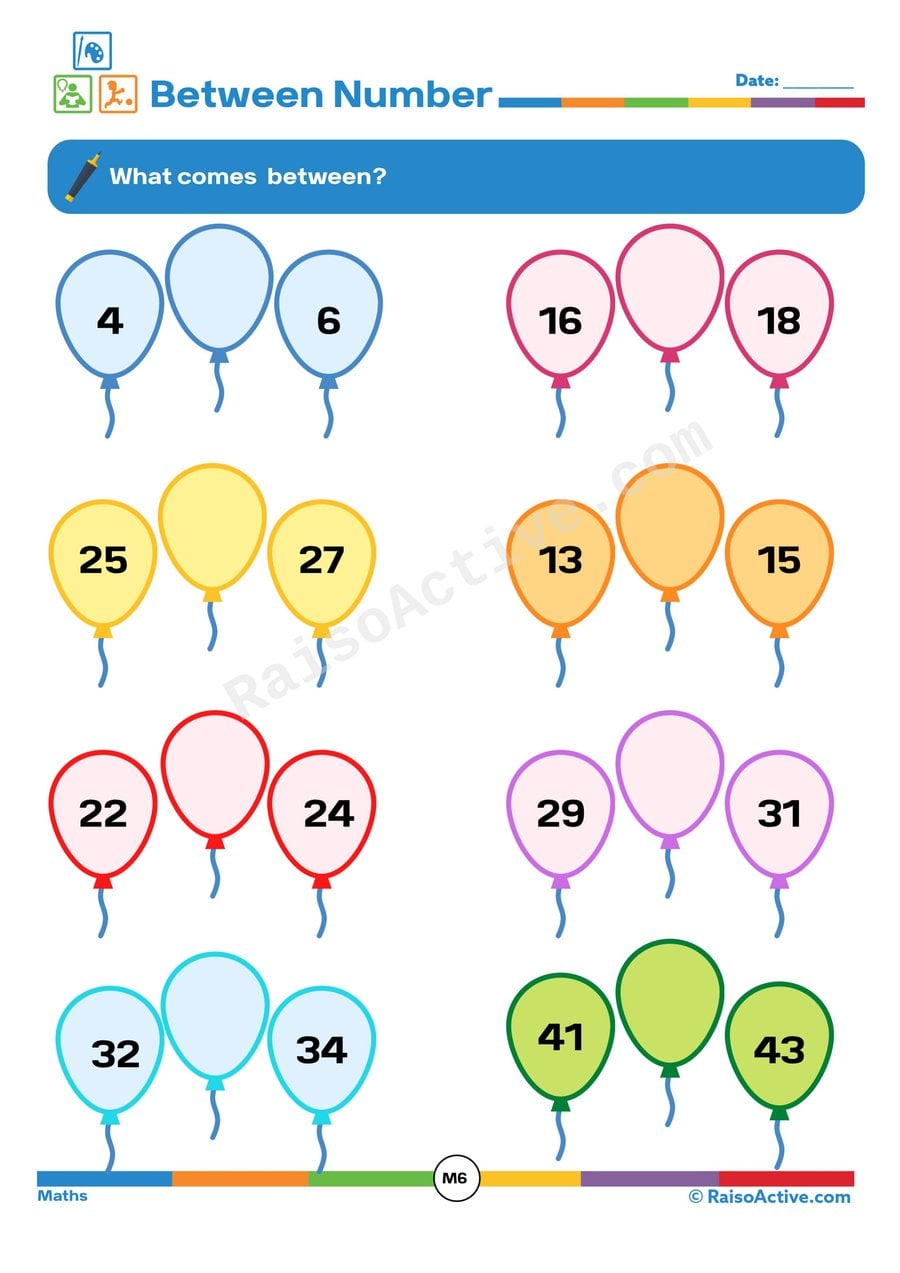
What Comes Between? Number Worksheet for Kids
Ages 4-5 · Pre-KAges 4-5 · ReceptionAges 4-5 · LKGAges 4-5
This worksheet targets a specific numeracy skill, finding the number that falls between two given numbers, which requires children to hold two values in mind and mentally place a third between them. For ages 4-5, this 'in-between' reasoning is more demanding than simply counting forward and strengthens the mental number line that underlies later subtraction and comparison skills.

Alphabet Maze: Help the Alligator Find the Zoo! (a to z Worksheet)
Ages 3-5 · Preschool–Pre-KAges 3-5 · Nursery–ReceptionAges 3-5 · Nursery–LKGAges 3-5
Guiding a character through a maze from A to Z asks children to recall the full alphabet in order while also navigating a physical path, combining letter sequencing with the visual planning and fine motor control needed for any maze activity. For ages three to five, tracing the entire alphabet in one continuous task is a bigger sequencing challenge than shorter letter drills, building real stamina in letter-order recall.
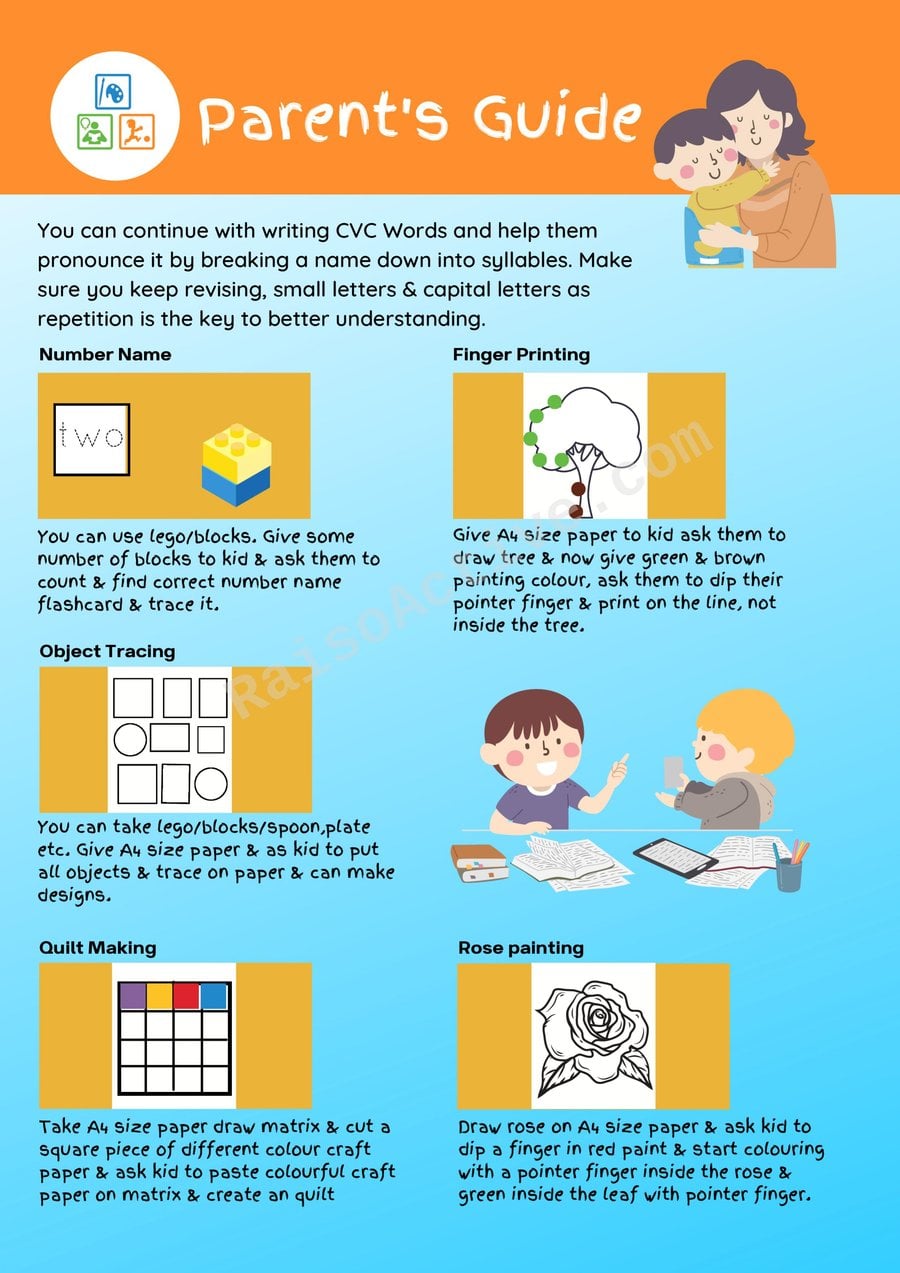
Parent's Guide: Fun Activities for Early Learners
Ages 3-5 · Preschool–Pre-KAges 3-5 · Nursery–ReceptionAges 3-5 · Nursery–LKGAges 3-5
This parent's guide bundles several distinct early-learning activities — number recognition, finger painting, object tracing, simple quilt making, and rose painting — giving children ages 3-5 a varied menu of fine motor, creative, and cognitive practice in one place. Rotating through different activity types like this keeps engagement high while touching multiple developmental areas across a single session or week.
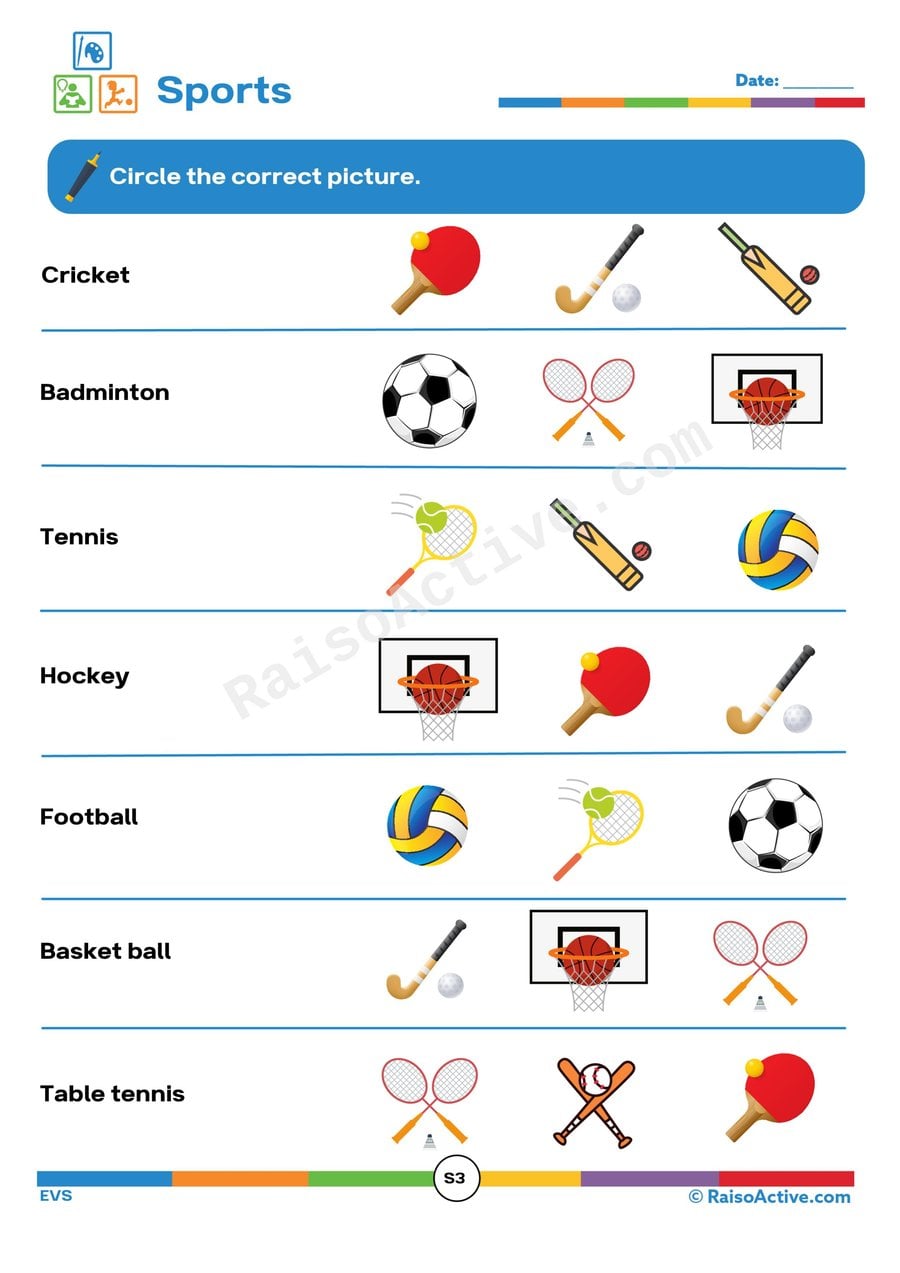
Sports Matching Worksheet for Preschoolers
Ages 3-5 · Preschool–Pre-KAges 3-5 · Nursery–ReceptionAges 3-5 · Nursery–LKGAges 3-5
Matching a sport's written name to its picture builds vocabulary and early reading recognition for children ages 3-5, connecting specific words like 'soccer' or 'swimming' to real, familiar activities. Because sports involve distinct equipment and movements, this task also sharpens visual discrimination, since children must notice small differences between similar-looking pictures to find the correct match.
Related worksheets
Family Words Worksheet: See, Tick, and Glue!
Ages 3-5 · Preschool–Pre-KAges 3-5 · Nursery–ReceptionAges 3-5 · Nursery–LKGAges 3-5
Children ages 3-5 practice recognizing family-member words and connecting them to pictures through a tick-and-glue format that combines quick visual checking with a hands-on cutting task. Doing the same type of match twice in different formats — once by ticking, once by pasting — gives extra repetition of the same small set of words, which is exactly what builds recognition at this age.

Family Words Worksheet: Matching and Picture Association
Ages 4-5 · Pre-KAges 4-5 · ReceptionAges 4-5 · LKGAges 4-5
Children ages 4-5 build vocabulary and reading recognition around family-member words — like mom, dad, sister, or brother — by first identifying the correct word for a picture, then matching printed words to pictures through cutting and pasting. Because family vocabulary is deeply familiar and emotionally meaningful, it's an especially effective category for anchoring new sight words in a child's memory.

Family Words Worksheet: Picture Matching and Word Recognition
Ages 4-6 · Pre-K–KindergartenAges 4-6 · Reception–Year 1Ages 4-6 · LKG–UKGAges 4-6
This worksheet gives children ages 4-6 another round of practice recognizing family-member vocabulary words, reinforcing the connection between a printed word and the picture it names through both a tick-the-answer step and a cut-and-paste matching step. Repeating this pairing across two different formats on one page helps move these words from recognition with support toward more independent reading.

Family Words Worksheet: Picture Matching and Word Recognition
Ages 4-6 · Pre-K–KindergartenAges 4-6 · Reception–Year 1Ages 4-6 · LKG–UKGAges 4-6
Children ages 4-6 practice recognizing and reading words from the 'family' word group, like 'candle' becoming 'candle-family' patterns or similar word-family endings, by matching written words to their corresponding pictures. Word family practice builds phonics pattern recognition, helping children read new words faster by spotting familiar chunks within them.
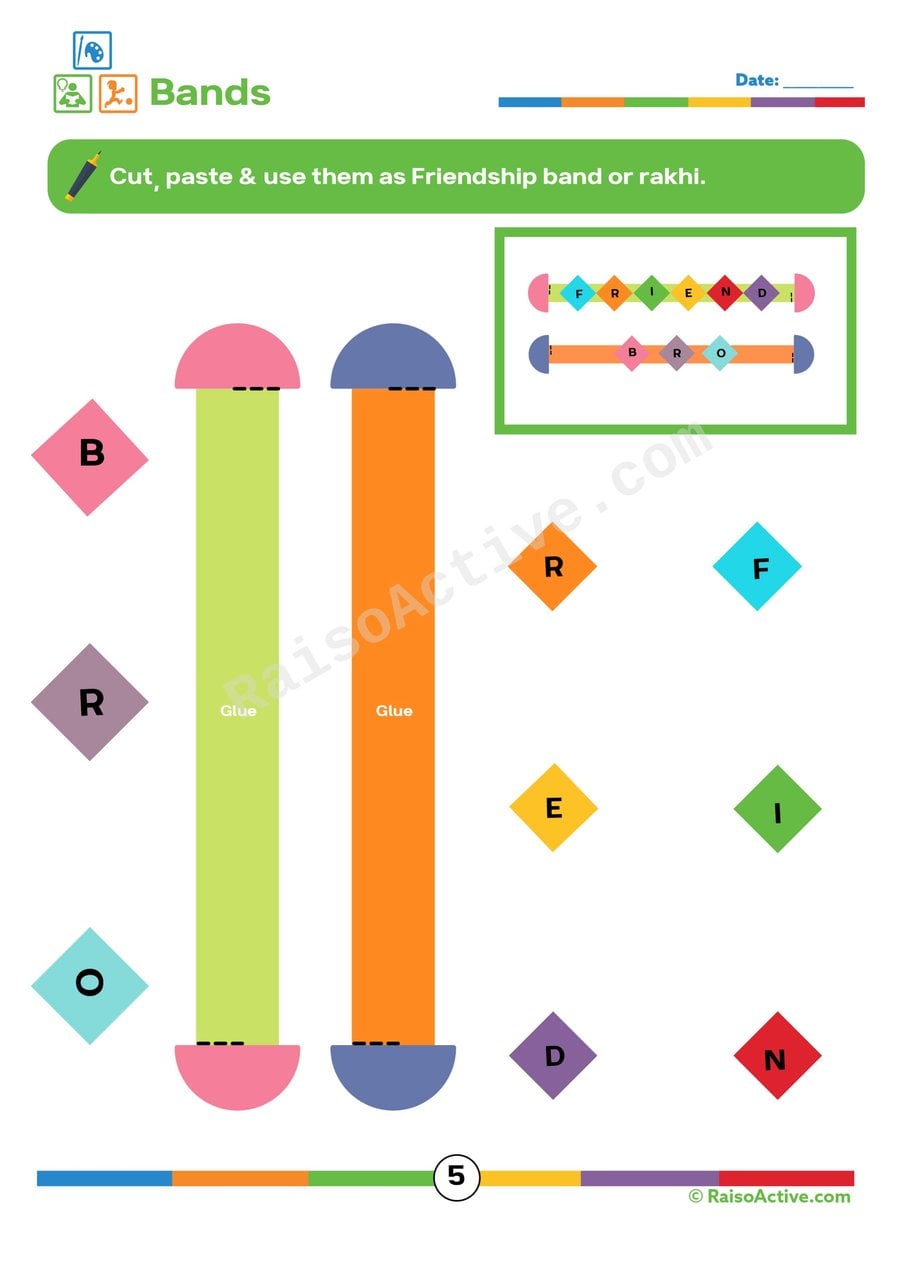
Friendship Band Craft Worksheet for Kids
Ages 3-5 · Preschool–Pre-KAges 3-5 · Nursery–ReceptionAges 3-5 · Nursery–LKGAges 3-5
This worksheet builds fine motor precision as children ages 3-5 cut out individual shapes and glue them onto a paper strip in a sequence of their choosing, creating a personalized friendship band or rakhi. Deciding where each shape goes along the strip also introduces early spatial planning and pattern-making, since children must space the shapes evenly to fill the band.

Identify Flags Worksheet: Cut and Paste Matching Activity
Ages 4-6 · Pre-K–KindergartenAges 4-6 · Reception–Year 1Ages 4-6 · LKG–UKGAges 4-6
Children ages 4-6 practice identifying country flags and matching them to their correct names, continuing to build geography vocabulary and visual discrimination through this repeated worksheet format. Working through several similar flag-matching worksheets over time helps children build a broader mental library of recognizable flags rather than memorizing just one set.
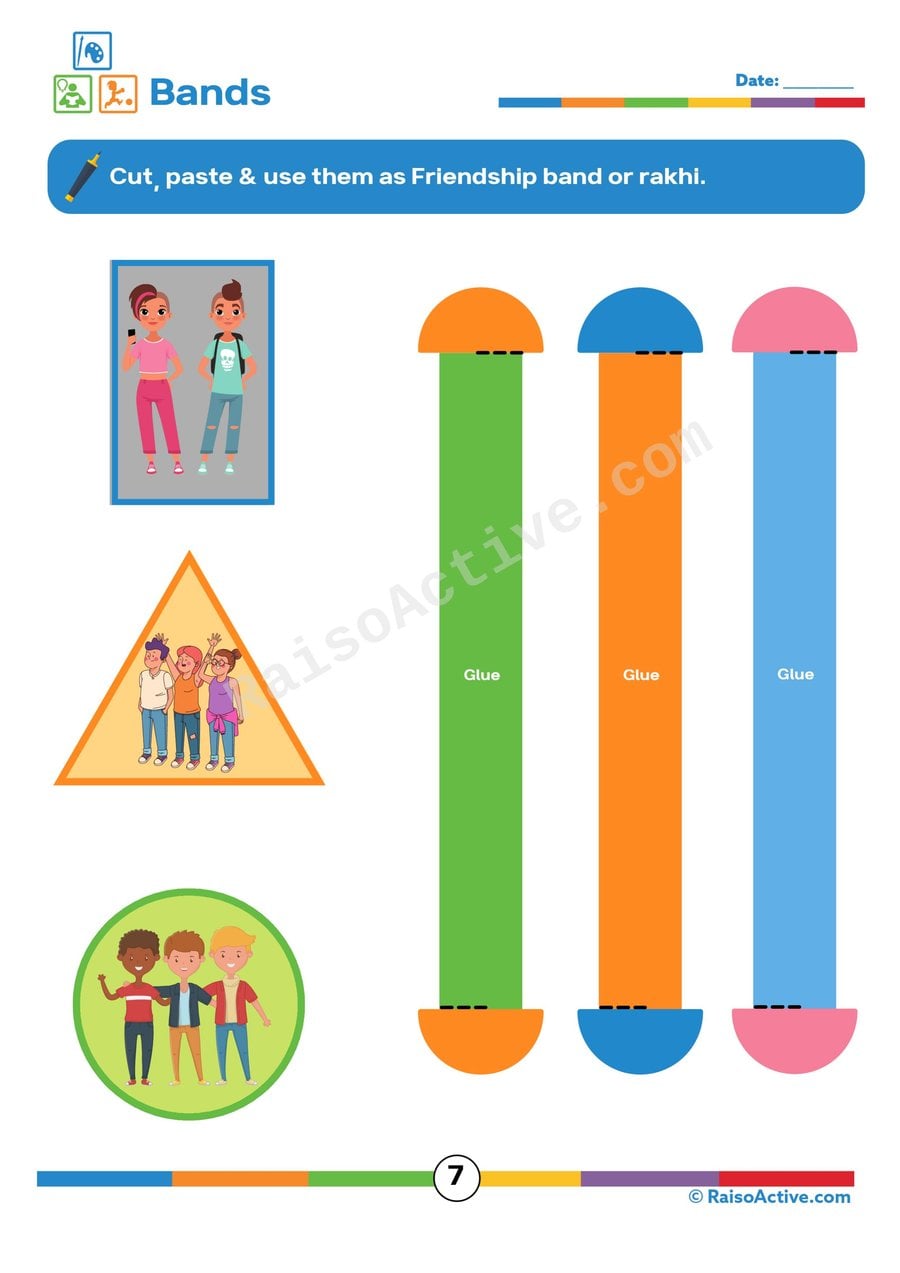
Friendship Band Craft Worksheet for Kids
Ages 3-5 · Preschool–Pre-KAges 3-5 · Nursery–ReceptionAges 3-5 · Nursery–LKGAges 3-5
Children ages 3-5 continue building scissor and gluing precision through this friendship band or rakhi craft, practicing the multi-step process of cutting a shape, forming a loop, and decorating the finished piece. Completing each construction step in the correct order reinforces sequencing skills alongside fine motor development.
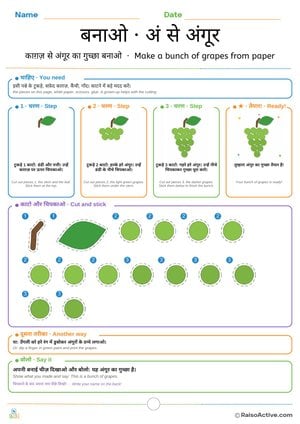
Make a Bunch of Paper Grapes: Hindi Letter अं (am) Cut and Stick Craft | बनाओ · अं से अंगूर
Ages 4-7 · Pre-K–Grade 1Ages 4-7 · Reception–Year 2Ages 4-7 · LKG–Class 1Ages 4-7
Children cut out the numbered pieces and stick them in order to make a bunch of grapes from light and dark green circles, then show it and say a full sentence about it. It links the letter अं with a real picture word, अंगूर, and practises scissor control and following steps.
Guides for this topic

How to Teach CVC Blending: A Step-by-Step Method That Works in Two Weeks
A step-by-step method for teaching CVC blending, covering continuous sounds, word families, common errors, and a 14-day plan that most children finish reading CVC words.
Phase 2 Phonics at Home: Sound Order, Blending Games, Worksheets
Phase 2 phonics at home: the five sound sets in order, oral blending, tricky words, a two-week routine, common mistakes, and free worksheets.

Reception Year Explained: EYFS Learning and How to Help at Home
A teacher's plain-English guide to the Reception Year: the seven areas of learning, Early Learning Goals, Phase 2/3 phonics, the RBA and home routines.
Reviews
Every worksheet for ages 4–6, no watermark
Members download the full library of 1,000+ worksheets and every activity pack without watermarks or daily limits. One year costs ₹999 in India or $20 elsewhere.
See membership plansOr download any worksheet free with a watermark (5 a day).