Family Words Worksheet: Picture Matching and Word Recognition
This worksheet gives children ages 4-6 another round of practice recognizing family-member vocabulary words, reinforcing the connection between a printed word and the picture it names through both a tick-the-answer step and a cut-and-paste matching step. Repeating this pairing across two different formats on one page helps move these words from recognition with support toward more independent reading.
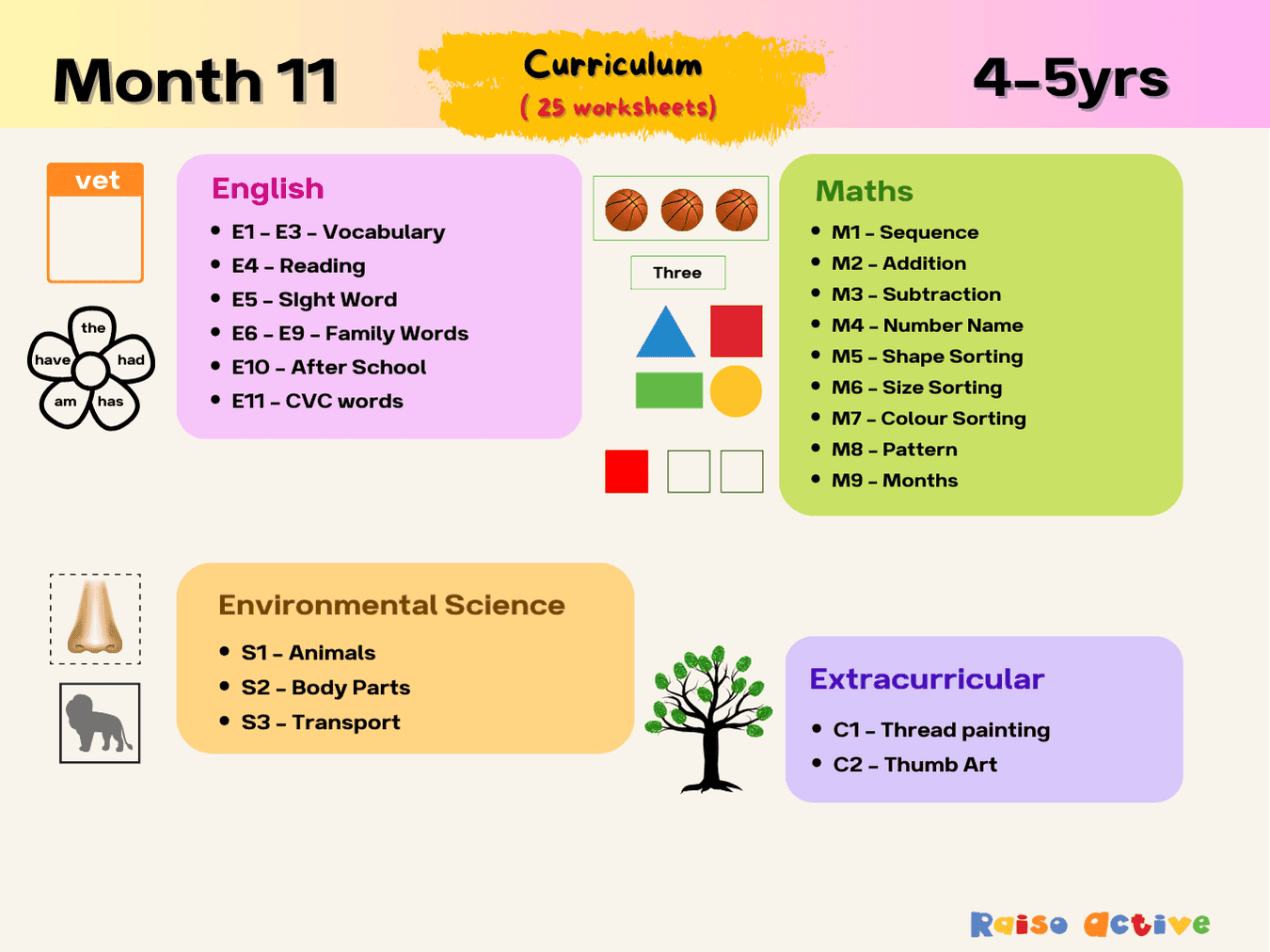
Part of the pack
Month 11: Learning & Development | Ages 4-5
This is page 10 of the pack. Ages 4-5 · Pre-KAges 4-5 · ReceptionAges 4-5 · LKGAges 4-5

Made for your child
Numbers to 20, made for your child
A maths pack with your child's name in it: pictures that explain, practice at three levels, puzzles and story sums about them. Print a new set whenever they finish.
Make a maths packFree preview · free for members
Curriculum
- Phonics - CVC Words > CVC Short E Families
How to use this worksheet
Look at each picture together and read the available word choices aloud, having your child tick the one that correctly names the family member shown. Then move to the cutting section — read each printed word in the boxes together, have your child cut out the matching small picture, and glue it next to the correct word. Encourage your child to check their own work by pointing to the picture and saying the word aloud after each match.
Materials needed
- Pencil
- Scissors
- Glue or Tape
Extension activities
- 1Have your child write one of the family words independently on a separate sheet of paper.
- 2Encourage your child to find other words that rhyme with one of the family words, like 'mom' and 'pom.'
- 3Make a set of family word cards and practice reading them in a quick daily routine.
- 4Ask your child to use each family word in a simple spoken sentence about their own family.

Written by
Hemsweta Jain · Teacher Cheena
MBA and Early Childhood Educator, teaching since 2014 · Founder of RaisoActive, Mumbai
Every RaisoActive worksheet is designed and checked by the founder before publishing.
Published · Last reviewed
More from Month 11: Learning & Development | Ages 4-5

Match the Letter: N, O, P Worksheet for Preschoolers
Ages 3-5 · Preschool–Pre-KAges 3-5 · Nursery–ReceptionAges 3-5 · Nursery–LKGAges 3-5
Drawing a line from an uppercase letter to a picture that starts with the same sound reinforces letter-sound correspondence for children ages 3-5, connecting the shape of N, O, and P to their spoken sounds.

Zen the Hen CVC Word Worksheet for Early Readers
Ages 3-5 · Preschool–Pre-KAges 3-5 · Nursery–ReceptionAges 3-5 · Nursery–LKGAges 3-5
This worksheet uses a short story about 'Zen the Hen' to give children ages 3-5 practice reading and completing CVC (consonant-vowel-consonant) words, one of the earliest and most important word patterns in learning to read. Filling in missing CVC words within a story context, rather than in isolation, helps children see how decoding skills apply to real reading, building both phonics and comprehension together.
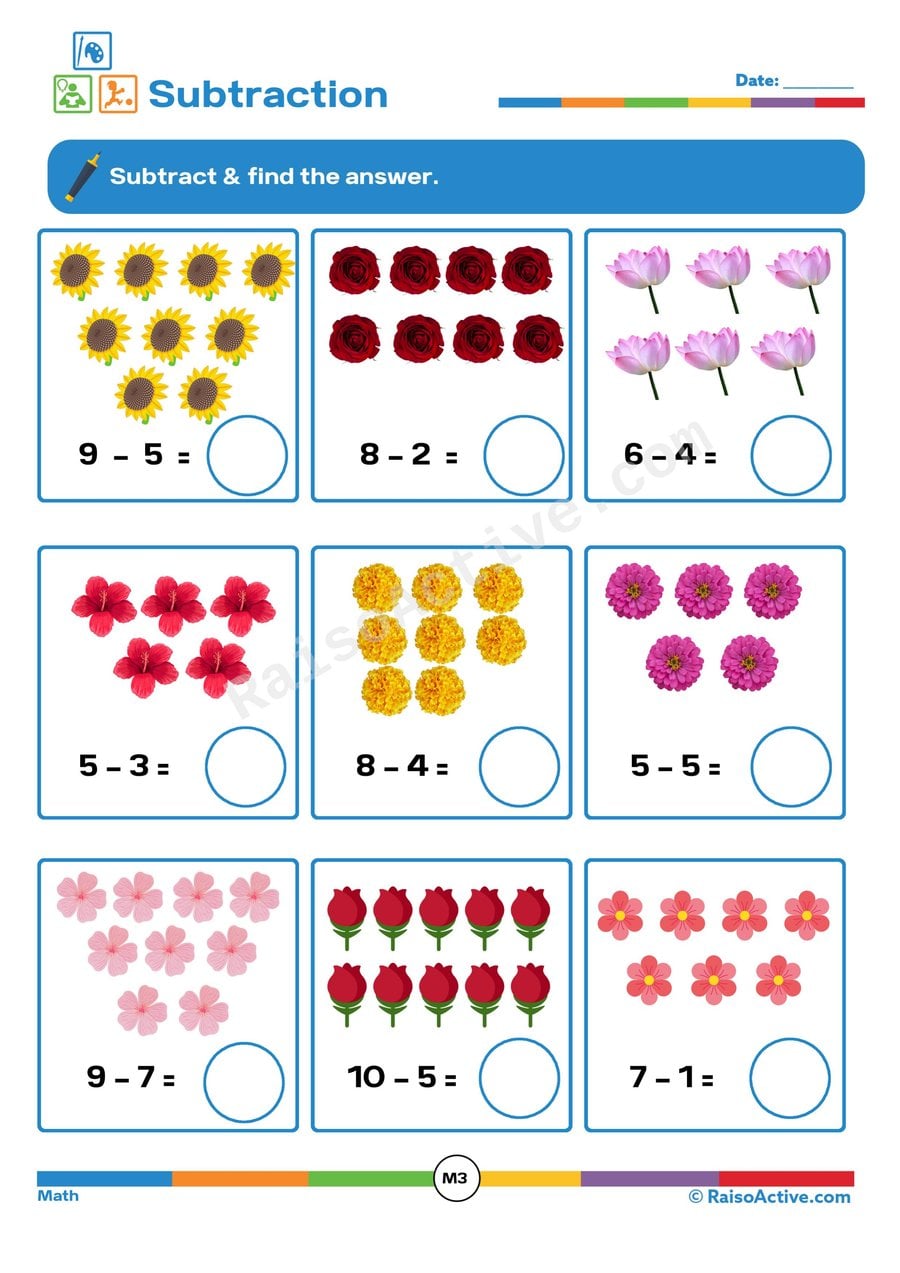
Flower Power Subtraction Worksheet for Kids
Ages 4-6 · Pre-K–KindergartenAges 4-6 · Reception–Year 1Ages 4-6 · LKG–UKGAges 4-6
This worksheet gives children ages 4-6 hands-on subtraction practice using a flower-themed counting context, asking them to count pictured objects, subtract a given amount, and write the difference in a circle. The visual, countable format helps make subtraction concrete rather than abstract, reinforcing that 'taking away' reduces a group's total in a way children can see and verify by recounting.
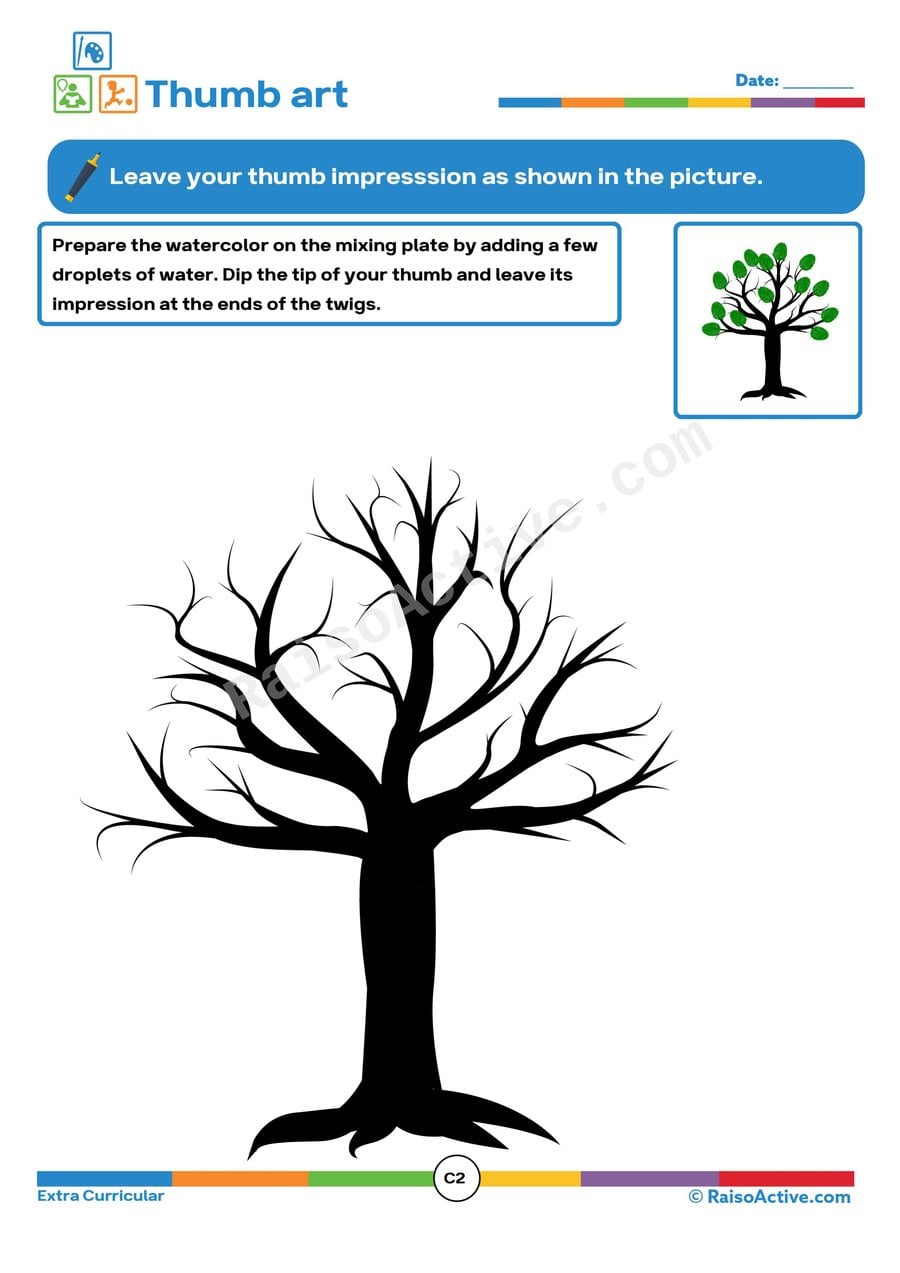
Thumb Art Tree Worksheet for Preschoolers
Ages 3-5 · Preschool–Pre-KAges 3-5 · Nursery–ReceptionAges 3-5 · Nursery–LKGAges 3-5
This thumbprint craft helps children ages 3-5 develop fine motor control and hand strength as they press their thumb repeatedly onto paper to create the leaves of a tree, a controlled, repetitive motion that's different from typical crayon coloring. It also introduces early art concepts like composition and texture, since the finished tree's fullness depends on how many thumbprints your child adds and where they place them.

Sight Word Coloring Fun: 'am', 'has', 'had', and 'have' Worksheet
Ages 3-5 · Preschool–Pre-KAges 3-5 · Nursery–ReceptionAges 3-5 · Nursery–LKGAges 3-5
This worksheet helps children ages 3-5 build automatic recognition of four common sight words — am, has, had, and have — words that appear so frequently in early reading that sounding them out every time would slow a beginning reader down. Coloring by a color key also reinforces visual discrimination, since children must distinguish between similar-looking short words rather than relying on pictures.

Months of the Year Cut and Paste Worksheet for Kids
Ages 3-5 · Preschool–Pre-KAges 3-5 · Nursery–ReceptionAges 3-5 · Nursery–LKGAges 3-5
Cutting out the months of the year and gluing them in the correct order builds sequencing skills and calendar vocabulary for children ages 3-5, an early step toward understanding how time is organized across a year.

Read and Match: Fun Reading Worksheet for Preschoolers
Ages 3-5 · Preschool–Pre-KAges 3-5 · Nursery–ReceptionAges 3-5 · Nursery–LKGAges 3-5
Reading a simple sentence and matching it to its corresponding picture builds early reading comprehension for children ages 3-5, teaching them that written words carry meaning that connects to real images and ideas.

Transportation Fun: Identify Land, Water, and Air Vehicles!
Ages 3-5 · Preschool–Pre-KAges 3-5 · Nursery–ReceptionAges 3-5 · Nursery–LKGAges 3-5
This worksheet helps children ages 3-5 classify different vehicles by where they travel — land, water, or air — building early categorization skills alongside transportation vocabulary. Writing the correct letter (L, W, or A) for each picture requires children to think about a vehicle's purpose and environment, not just recognize what it is, adding a layer of reasoning beyond simple naming.
Related worksheets
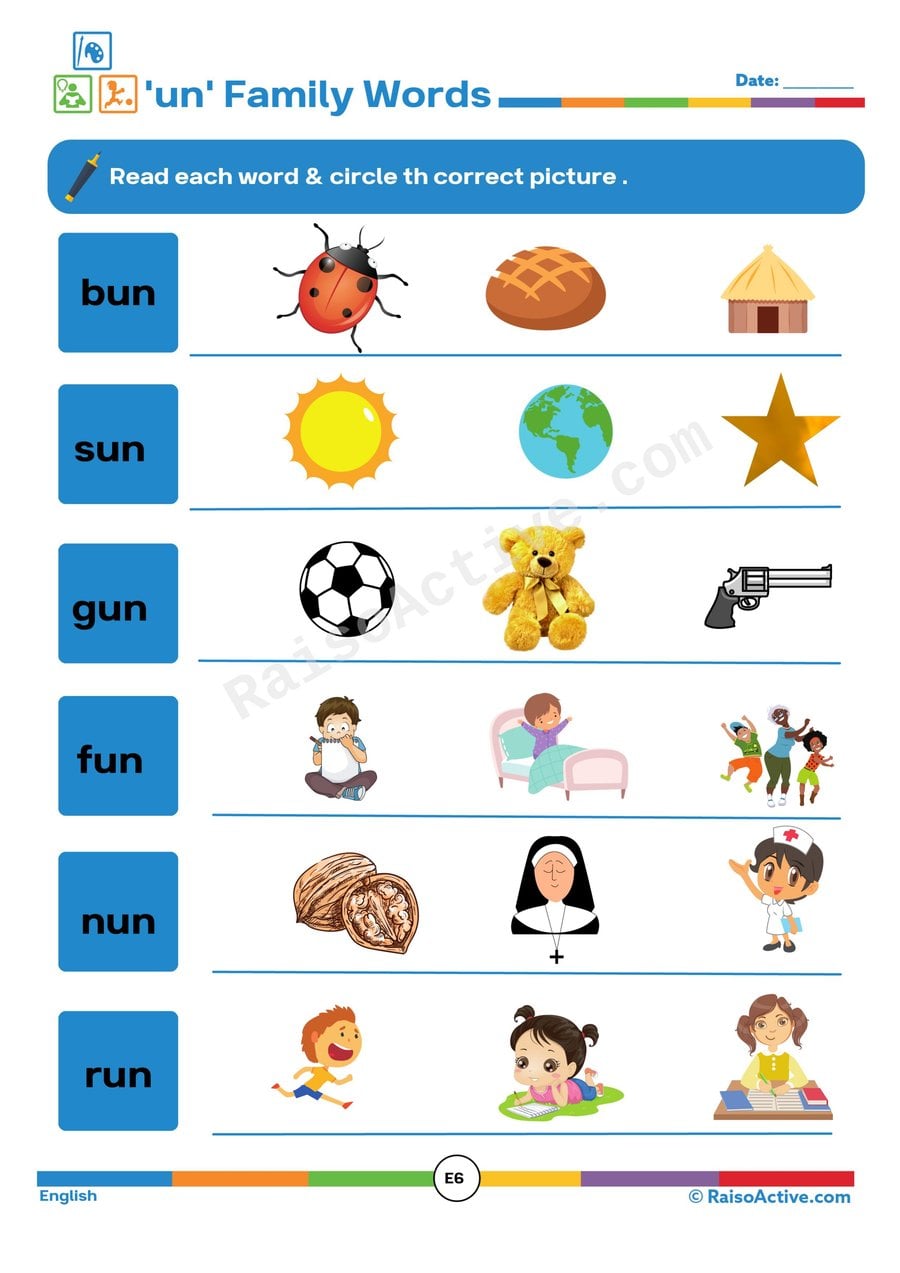
Fun 'un' Family Words Worksheet for Kids
Ages 4-6 · Pre-K–KindergartenAges 4-6 · Reception–Year 1Ages 4-6 · LKG–UKGAges 4-6
Reading and matching words from the 'un' family, like fun, run, and sun, teaches children ages 4-6 to recognize a shared spelling pattern and use it to decode new words more quickly. Because this word family relies on consistent rhyming sounds, practicing it strengthens the connection between letter patterns and pronunciation that underlies early reading fluency.

Family Words Cut and Paste Worksheet for Preschoolers
Ages 4-6 · Pre-K–KindergartenAges 4-6 · Reception–Year 1Ages 4-6 · LKG–UKGAges 4-6
This worksheet gives children ages 4-6 repeated practice connecting a written word to its meaning through picture matching, reinforcing that letters combine to represent real, recognizable things. Cutting and gluing the pictures also builds the fine motor control and spatial planning needed to place a small object precisely within a defined space.

Family Words Cut and Paste Worksheet for Early Readers
Ages 4-6 · Pre-K–KindergartenAges 4-6 · Reception–Year 1Ages 4-6 · LKG–UKGAges 4-6
Reading a simple CVC word and matching it to its picture teaches children ages 4-6 to blend individual sounds into a whole word and then connect that word to its meaning, a core decoding skill for early readers. Because CVC words follow a consistent consonant-vowel-consonant pattern, practicing them builds a reliable phonics foundation that transfers to reading many other simple words.

Family Words Cut and Paste Worksheet for Early Readers
Ages 4-6 · Pre-K–KindergartenAges 4-6 · Reception–Year 1Ages 4-6 · LKG–UKGAges 4-6
Reading a word family term and then finding its matching picture teaches children ages 4-6 to connect print directly to meaning, an essential bridge between decoding and comprehension. The cutting and gluing component also strengthens fine motor precision, requiring children to align a small picture accurately next to its corresponding word.

I Spy Letters and Numbers Worksheet: Find, Match, and Write!
Ages 4-5 · Pre-KAges 4-5 · ReceptionAges 4-5 · LKGAges 4-5
This worksheet blends letter and number recognition for children ages 4-5, asking them to spot a hidden letter within a picture, find its matching number, and then write both symbols down, combining visual search with early literacy and numeracy in a single activity. Working with letters and numbers side by side reinforces that both are symbols that carry specific meaning and can be found, matched, and recorded.
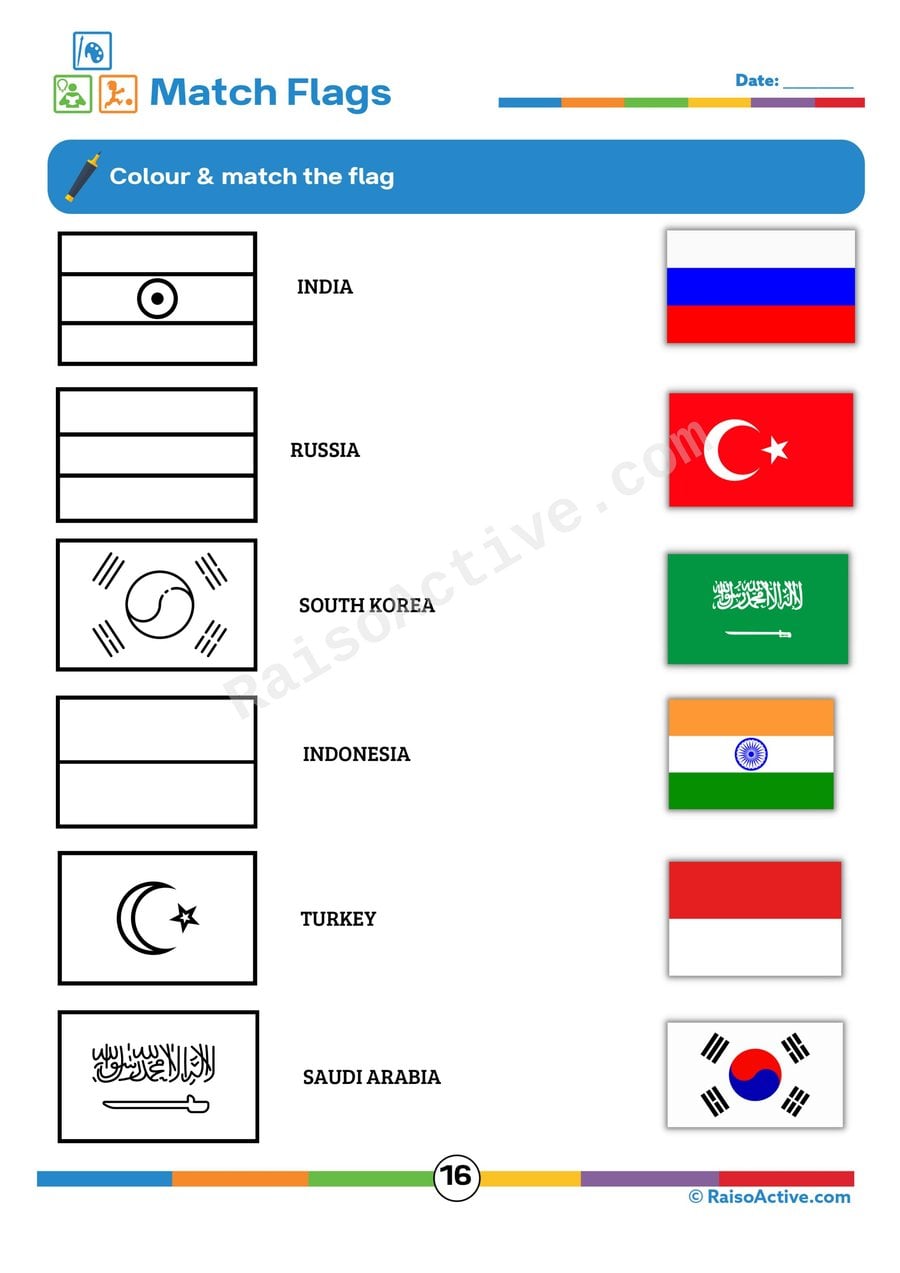
Match the Flags Worksheet for Kids
Ages 4-6 · Pre-K–KindergartenAges 4-6 · Reception–Year 1Ages 4-6 · LKG–UKGAges 4-6
Children ages 4-6 build flag recognition by matching a set of country flags to their correct names, continuing to strengthen geography vocabulary and visual discrimination through this final flag-focused worksheet. Working with flags is an especially effective way to build visual memory in young children, since each one is a distinct, colorful pattern they can learn to recognize quickly.

Navratri Picture Cards: Cut-Out Memory Match Game
Ages 4-6 · Pre-K–KindergartenAges 4-6 · Reception–Year 1Ages 4-6 · LKG–UKGAges 4-6
Children learn six Navratri words, match each picture to its word and clue, and practise memory and cutting skills.
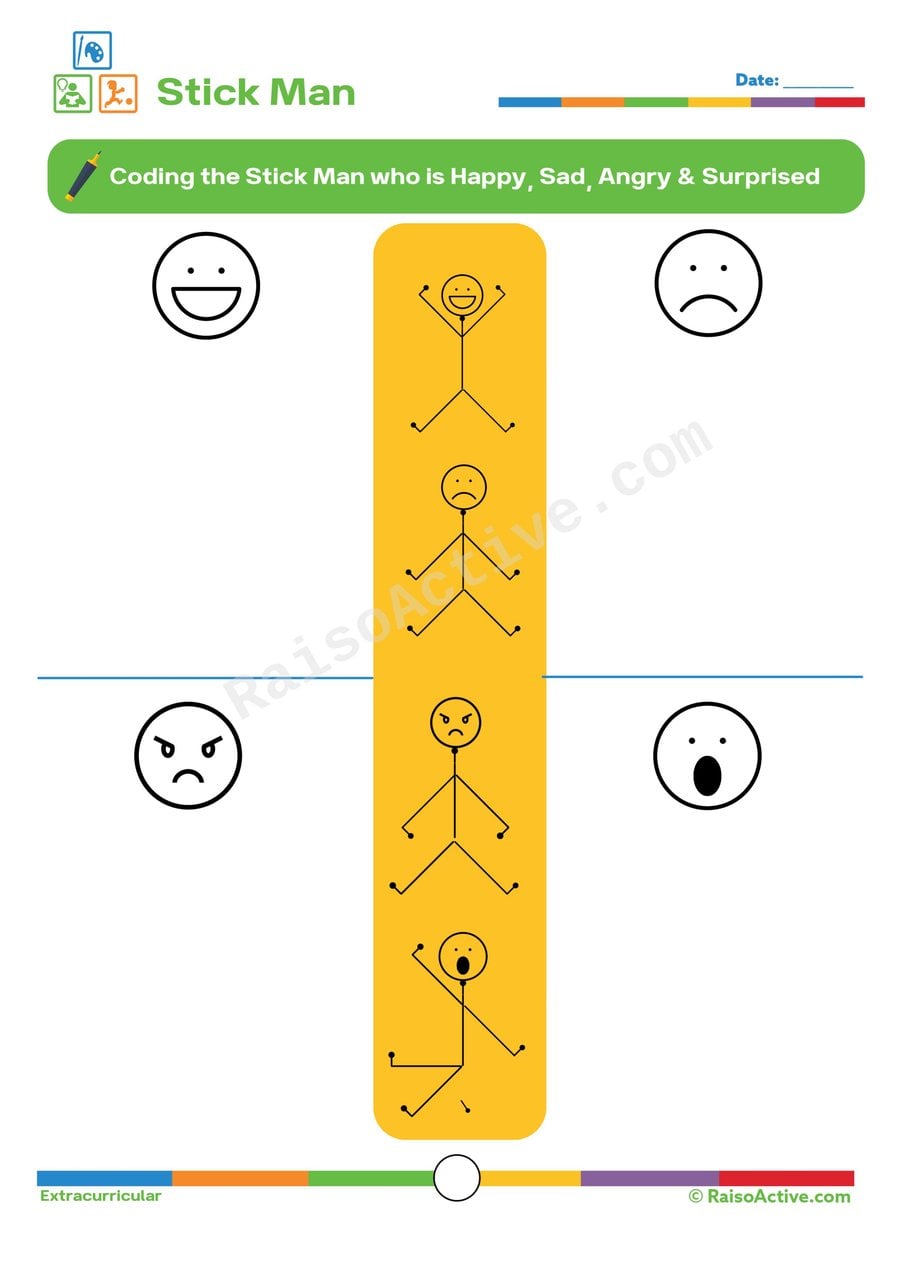
Stick Man Emotions Worksheet: Happy, Sad, Angry & Surprised!
Ages 3-5 · Preschool–Pre-KAges 3-5 · Nursery–ReceptionAges 3-5 · Nursery–LKGAges 3-5
Matching simple stick-figure faces to emotion words helps children ages 3-5 build an early emotional vocabulary, connecting facial cues like a curved mouth or raised eyebrows to specific feeling words. This kind of emotion recognition is a foundational social-emotional skill, helping children name what they and others are feeling instead of just reacting.
Guides for this topic

How to Teach CVC Blending: A Step-by-Step Method That Works in Two Weeks
A step-by-step method for teaching CVC blending, covering continuous sounds, word families, common errors, and a 14-day plan that most children finish reading CVC words.

Best Worksheets for 3-Year-Olds: What Works and What to Avoid
What works on worksheets for 3-year-olds: short sessions, crayons, tracing lines, matching, cutting, a free weekly plan, and signs one is too advanced.
Phase 2 Phonics at Home: Sound Order, Blending Games, Worksheets
Phase 2 phonics at home: the five sound sets in order, oral blending, tricky words, a two-week routine, common mistakes, and free worksheets.
Reviews
Every worksheet for ages 4–6, no watermark
Members download the full library of 1,000+ worksheets and every activity pack without watermarks or daily limits. One year costs ₹999 in India or $20 elsewhere.
See membership plansOr download any worksheet free with a watermark (5 a day).