Fun 'un' Family Words Worksheet for Kids
Reading and matching words from the 'un' family, like fun, run, and sun, teaches children ages 4-6 to recognize a shared spelling pattern and use it to decode new words more quickly. Because this word family relies on consistent rhyming sounds, practicing it strengthens the connection between letter patterns and pronunciation that underlies early reading fluency.
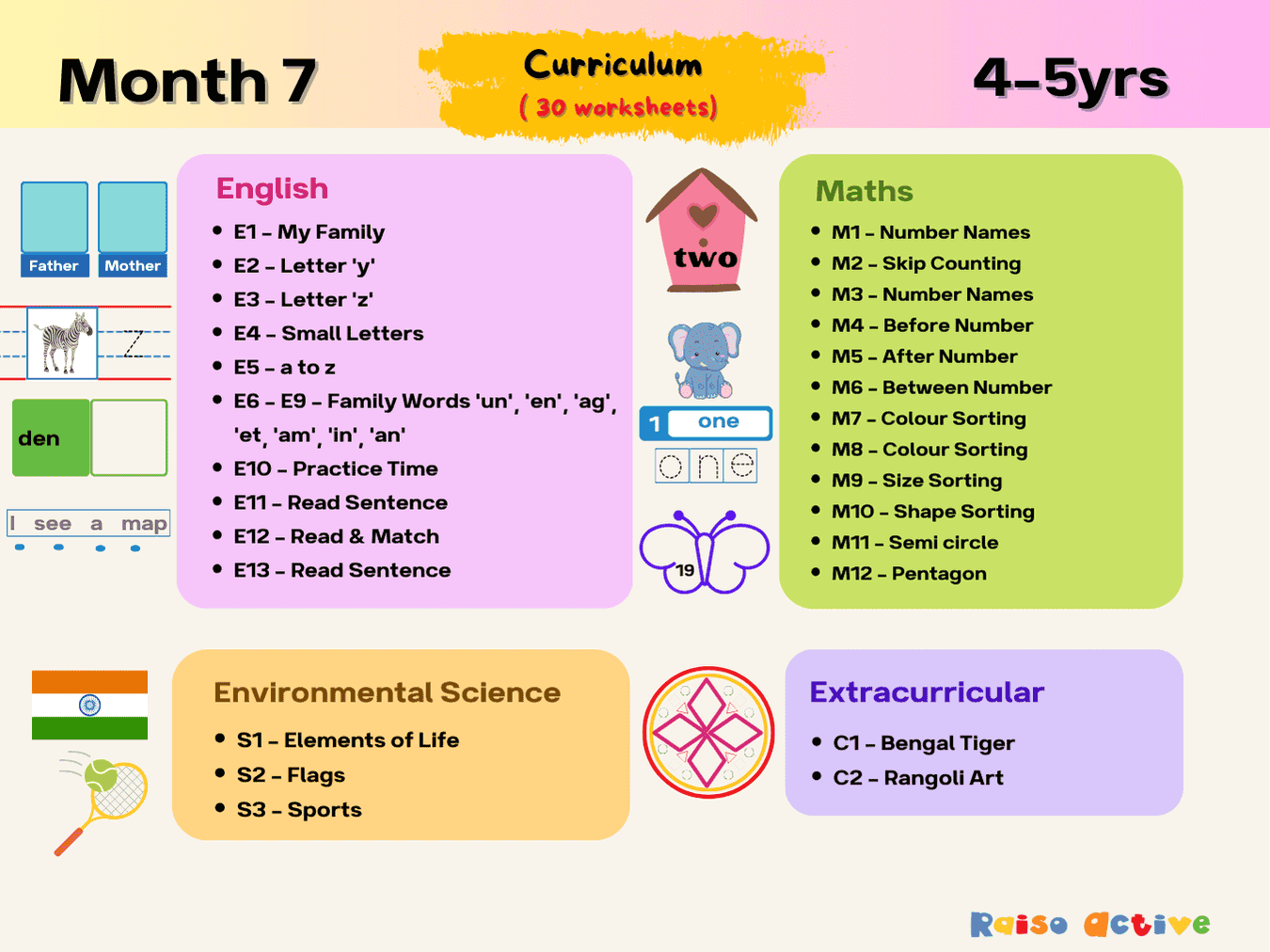
Part of the pack
Month 7: Preschool Skills Through Play | Ages 4-5
This is page 9 of the pack. Ages 4-5 · Pre-KAges 4-5 · ReceptionAges 4-5 · LKGAges 4-5
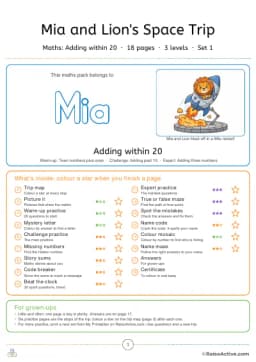
Made for your child
Numbers to 20, made for your child
A maths pack with your child's name in it: pictures that explain, practice at three levels, puzzles and story sums about them. Print a new set whenever they finish.
Make a maths packFree preview · free for members
Curriculum
- Phonics - CVC Words > CVC Short U Families
How to use this worksheet
Read the first 'un' family word aloud together, stretching out the sounds so your child hears how it's built. Have them look at the picture choices and decide which one matches the word's meaning. Guide them to circle the correct matching picture, then move on to the next word and repeat the process. Once every word has been matched, go back through the page and read all the 'un' words together as a final rhyming check.
Materials needed
- Pencil
- Crayons
Extension activities
- 1Write each 'un' word on a separate card and have your child copy it onto a sheet of paper from memory.
- 2Make up a silly sentence together using two or three of the 'un' words from the worksheet.
- 3Brainstorm additional words that rhyme with 'un,' like bun or gun, and add them to a growing list.
- 4Play a rhyming clap game where you say an 'un' word and your child claps only if a second word rhymes with it.
- 5Draw a simple comic strip using one of the 'un' words as its title, like a picture story about having 'fun.'

Written by
Hemsweta Jain · Teacher Cheena
MBA and Early Childhood Educator, teaching since 2014 · Founder of RaisoActive, Mumbai
Every RaisoActive worksheet is designed and checked by the founder before publishing.
Published · Last reviewed
More from Month 7: Preschool Skills Through Play | Ages 4-5
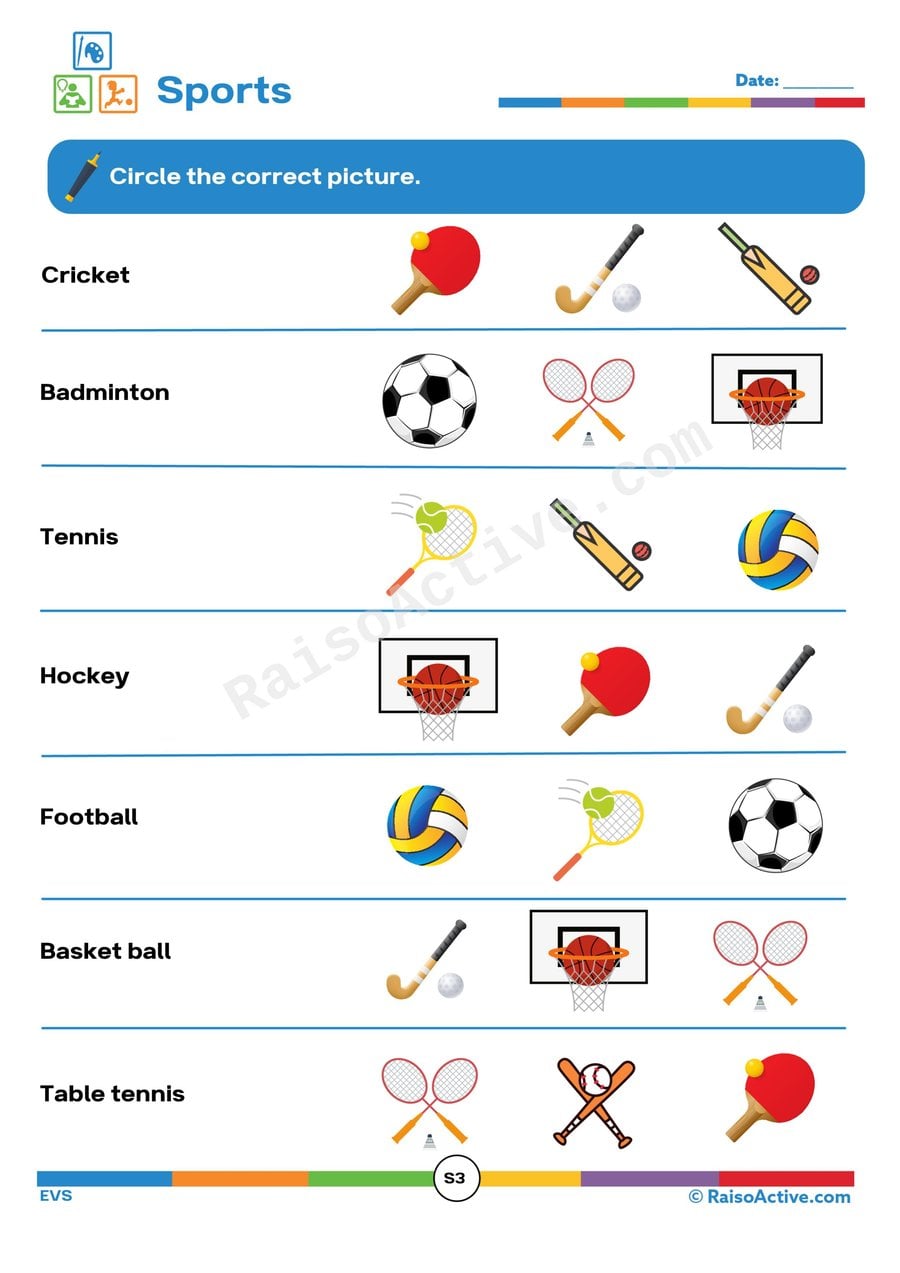
Sports Matching Worksheet for Preschoolers
Ages 3-5 · Preschool–Pre-KAges 3-5 · Nursery–ReceptionAges 3-5 · Nursery–LKGAges 3-5
Matching a sport's written name to its picture builds vocabulary and early reading recognition for children ages 3-5, connecting specific words like 'soccer' or 'swimming' to real, familiar activities. Because sports involve distinct equipment and movements, this task also sharpens visual discrimination, since children must notice small differences between similar-looking pictures to find the correct match.

Read & Match Worksheet: Matching Sentences to Pictures
Ages 3-5 · Preschool–Pre-KAges 3-5 · Nursery–ReceptionAges 3-5 · Nursery–LKGAges 3-5
Matching a sentence to its picture through drawing a line or coloring builds reading comprehension for children ages 3-5, requiring them to process the sentence's full meaning rather than recognizing familiar words in isolation. Following this with coloring keeps the activity engaging while giving repeated visual exposure to each completed sentence-and-picture pair.
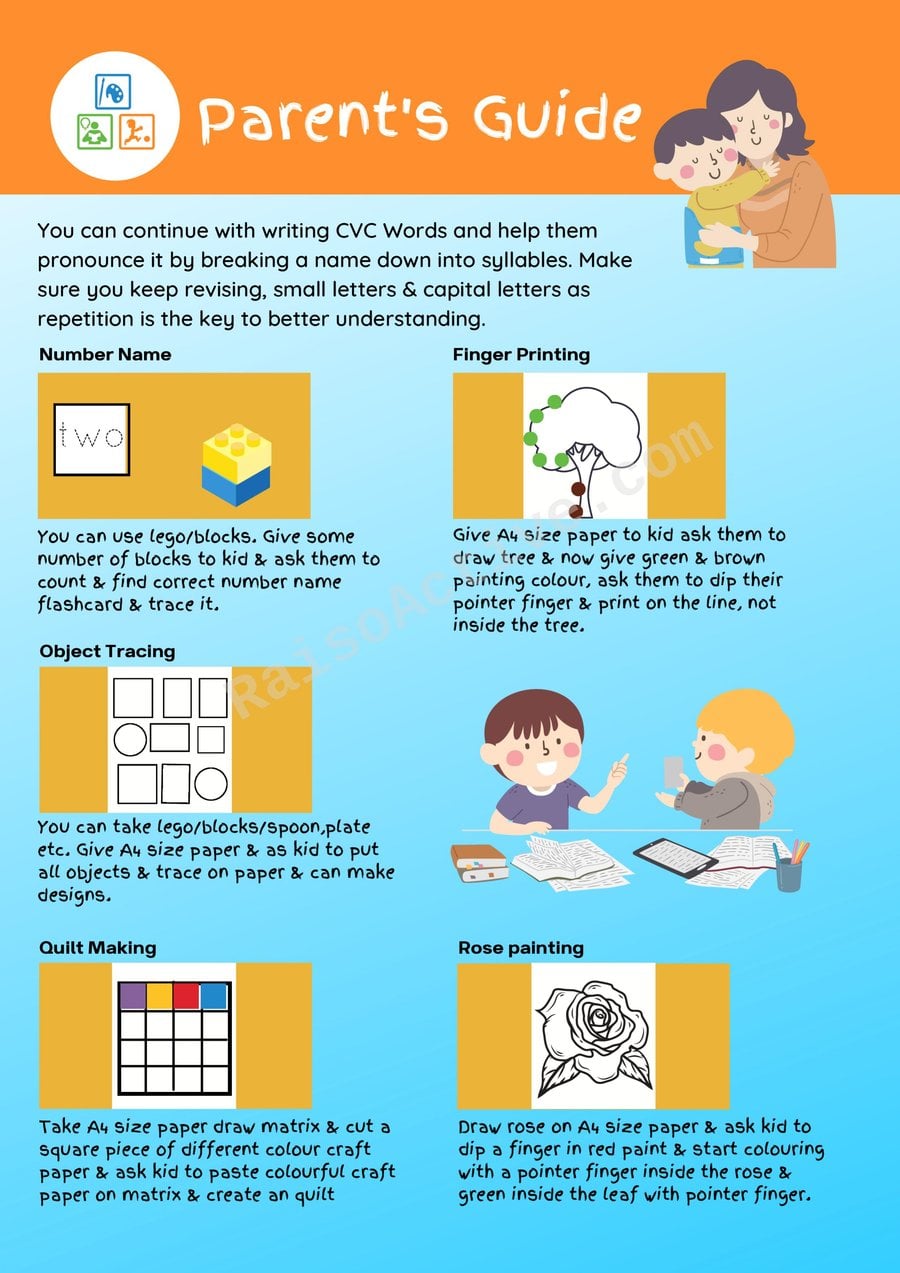
Parent's Guide: Fun Activities for Early Learners
Ages 3-5 · Preschool–Pre-KAges 3-5 · Nursery–ReceptionAges 3-5 · Nursery–LKGAges 3-5
This parent's guide bundles several distinct early-learning activities — number recognition, finger painting, object tracing, simple quilt making, and rose painting — giving children ages 3-5 a varied menu of fine motor, creative, and cognitive practice in one place. Rotating through different activity types like this keeps engagement high while touching multiple developmental areas across a single session or week.

Family Words Cut and Paste Worksheet for Preschoolers
Ages 4-6 · Pre-K–KindergartenAges 4-6 · Reception–Year 1Ages 4-6 · LKG–UKGAges 4-6
This worksheet gives children ages 4-6 repeated practice connecting a written word to its meaning through picture matching, reinforcing that letters combine to represent real, recognizable things. Cutting and gluing the pictures also builds the fine motor control and spatial planning needed to place a small object precisely within a defined space.

Read and Paste: Matching Sentences with Pictures Worksheet
Ages 4-5 · Pre-KAges 4-5 · ReceptionAges 4-5 · LKGAges 4-5
Reading a sentence and then finding its matching picture builds comprehension for children ages 4-5, teaching them to process the full meaning of connected words rather than recognizing them in isolation. The cutting and pasting component also strengthens the fine motor precision needed to place text accurately next to its correct visual match.

Z is for Zebra! Letter Z Tracing and Coloring Worksheet
Ages 3-5 · Preschool–Pre-KAges 3-5 · Nursery–ReceptionAges 3-5 · Nursery–LKGAges 3-5
This letter Z worksheet gives children ages 3-5 focused practice recognizing and forming both the uppercase and lowercase versions of one of the trickiest letters to write, since its diagonal strokes differ from the curves and straight lines used in most other letters. Matching and coloring objects that start with 'z' also builds beginning-sound awareness, helping the letter's shape and sound become linked in memory.

Pentagon Fun: Shape Recognition and Craft Activity Worksheet
Ages 3-5 · Preschool–Pre-KAges 3-5 · Nursery–ReceptionAges 3-5 · Nursery–LKGAges 3-5
This worksheet combines shape recognition with a hands-on craft, having children build a pentagon out of popsicle sticks and then find and glue pentagon-shaped pictures onto an outline. For ages 3-5, physically constructing a five-sided shape makes an otherwise abstract geometric concept concrete, while the cut-and-paste portion reinforces shape recognition through visual matching.

Family Words Cut and Paste Worksheet for Early Readers
Ages 4-6 · Pre-K–KindergartenAges 4-6 · Reception–Year 1Ages 4-6 · LKG–UKGAges 4-6
Reading a word family term and then finding its matching picture teaches children ages 4-6 to connect print directly to meaning, an essential bridge between decoding and comprehension. The cutting and gluing component also strengthens fine motor precision, requiring children to align a small picture accurately next to its corresponding word.
Related worksheets

Family Words Worksheet: Picture Matching and Word Recognition
Ages 4-6 · Pre-K–KindergartenAges 4-6 · Reception–Year 1Ages 4-6 · LKG–UKGAges 4-6
This worksheet gives children ages 4-6 another round of practice recognizing family-member vocabulary words, reinforcing the connection between a printed word and the picture it names through both a tick-the-answer step and a cut-and-paste matching step. Repeating this pairing across two different formats on one page helps move these words from recognition with support toward more independent reading.
Family Words Worksheet: See, Tick, and Glue!
Ages 3-5 · Preschool–Pre-KAges 3-5 · Nursery–ReceptionAges 3-5 · Nursery–LKGAges 3-5
Children ages 3-5 practice recognizing family-member words and connecting them to pictures through a tick-and-glue format that combines quick visual checking with a hands-on cutting task. Doing the same type of match twice in different formats — once by ticking, once by pasting — gives extra repetition of the same small set of words, which is exactly what builds recognition at this age.

Family Words Worksheet: Matching and Picture Association
Ages 4-5 · Pre-KAges 4-5 · ReceptionAges 4-5 · LKGAges 4-5
Children ages 4-5 build vocabulary and reading recognition around family-member words — like mom, dad, sister, or brother — by first identifying the correct word for a picture, then matching printed words to pictures through cutting and pasting. Because family vocabulary is deeply familiar and emotionally meaningful, it's an especially effective category for anchoring new sight words in a child's memory.

Family Words Worksheet: Picture Matching and Word Recognition
Ages 4-6 · Pre-K–KindergartenAges 4-6 · Reception–Year 1Ages 4-6 · LKG–UKGAges 4-6
Children ages 4-6 practice recognizing and reading words from the 'family' word group, like 'candle' becoming 'candle-family' patterns or similar word-family endings, by matching written words to their corresponding pictures. Word family practice builds phonics pattern recognition, helping children read new words faster by spotting familiar chunks within them.

Harvests & New Years: One Harvest, Many Names Across India
Ages 4-8 · Pre-K–Grade 2Ages 4-8 · Reception–Year 3Ages 4-8 · LKG–Class 2Ages 4-8
Children learn that the same winter harvest is celebrated with different names across India, and that many states have their own New Year festival.

Phonics Level 2 Sound Mat 3: Long Vowel and R-Influenced Vowel Sounds
Ages 4-7 · Pre-K–Grade 1Ages 4-7 · Reception–Year 2Ages 4-7 · LKG–Class 1Ages 4-7
Children see the long vowel sounds, the r-influenced vowels such as ar, er and or, and other vowel sounds such as ow, oy and oo, each with spellings and examples.

Christmas Matching Worksheet for Preschoolers: Find the Identical Objects!
Ages 3-5 · Preschool–Pre-KAges 3-5 · Nursery–ReceptionAges 3-5 · Nursery–LKGAges 3-5
Comparing objects in a row to find the one that exactly matches the first picture builds visual discrimination in children ages 3-5, a skill that requires noticing small differences in shape, color, and detail. This kind of close looking is a direct precursor to letter recognition, since young readers must later tell apart similarly shaped letters like b and d using the same careful visual comparison. The Christmas theme keeps the repetitive matching task feeling festive rather than tedious.

Festivals of Many Faiths: Places of Worship and Greetings
Ages 4-8 · Pre-K–Grade 2Ages 4-8 · Reception–Year 3Ages 4-8 · LKG–Class 2Ages 4-8
Children learn that India is home to many faiths, each with its own festivals, places of worship and festival greetings.
Guides for this topic

How to Teach CVC Blending: A Step-by-Step Method That Works in Two Weeks
A step-by-step method for teaching CVC blending, covering continuous sounds, word families, common errors, and a 14-day plan that most children finish reading CVC words.

Best Worksheets for 3-Year-Olds: What Works and What to Avoid
What works on worksheets for 3-year-olds: short sessions, crayons, tracing lines, matching, cutting, a free weekly plan, and signs one is too advanced.
Phase 2 Phonics at Home: Sound Order, Blending Games, Worksheets
Phase 2 phonics at home: the five sound sets in order, oral blending, tricky words, a two-week routine, common mistakes, and free worksheets.
Reviews
Every worksheet for ages 4–6, no watermark
Members download the full library of 1,000+ worksheets and every activity pack without watermarks or daily limits. One year costs ₹999 in India or $20 elsewhere.
See membership plansOr download any worksheet free with a watermark (5 a day).